Books Archive

Handbook of Operational Amplifier Circuit Design


Title: Handbook of Operational Amplifier Circuit Design
Published by: McGraw Hill
Release Date: July 1, 1976
Contributors: David F. Stout (Author)
Genre:
Pages: 512
ISBN13: 978-0070617971

1 Introduction to operational amplifiers
2 Fundamentals of circuit design using op-amps
3 Feedback stability. Amplifiers. Comparators. Converters
4 Demodulators and discriminators
5 Detectors
6 Differential amplifiers
7 Low-pass filters
8 High-pass filters
9 Bandpass filters
10 Bandstop filters
11 Frequency control
12 Integrators and differentiators
13 Limiters and rectifiers
14 Logarithmic circuits
15 Modulators
16 Oscillators
17 Parameter enhancement and simulation
18 Power circuits
19 Regulators
20 Sampling circuits
21 Time and phase circuits
22 Waveform generators
Appendix: Operational amplifier parameters
Operational amplifier maximum ratings. Circuit fabrication tecniques
Notation used in handbook. Decibel calculations. RC circuit characteristics

Continue Reading ·

Bavinck – Reformed Dogmatics, Volume 3


Title: Reformed Dogmatics, Vol. 3: Sin and Salvation in Christ
Series:
Published by: Baker Academic
Release Date: April 1, 2006
Contributors: Herman Bavinck (Author), John Bolt (Author), John Vriend (Author)
Genre:
Pages: 688
ISBN13: 978-0801026560

In partnership with the Dutch Reformed Translation Society, Baker Academic is proud to offer in English for the very first time the third volume of Herman Bavinck's complete Reformed Dogmatics. This masterwork will appeal not only to scholars, students, pastors, and laity interested in Reformed theology but also to research and theological libraries.

"Bavinck was a man of giant mind, vast learning, ageless wisdom, and great expository skill. Solid but lucid, demanding but satisfying, broad and deep and sharp and stabilizing, Bavinck's magisterial Reformed Dogmatics remains after a century the supreme achievement of its kind."--J. I. Packer, Regent College

"This magisterial work exhibits Bavinck's vast knowledge and appreciation of the Christian tradition. Written from a Reformed perspective, it offers a perceptive critique of modern theology. . . . Recommended."--Library Journal

From the Back Cover
"This is one of those seminal works that embodies a significant portion of our Reformed theological heritage. We all should rejoice to see this material finally available in English!"
--Samuel T. Logan Jr., Westminster Theological Seminary

"Like Augustine, Calvin, and Edwards, Bavinck was a man of giant mind, vast learning, ageless wisdom, and great expository skill. Solid but lucid, demanding but satisfying, broad and deep and sharp and stabilizing, Bavinck's magisterial Reformed Dogmatics remains after a century the supreme achievement of its kind."
--J. I. Packer, Regent College

"[This] volume covers some key topics in atonement theory. Among other things, it offers an excellent survey of the complex distinctions in classical Reformed discussions of covenant theology as well as a nuanced exploration of various topics in soteriology. . . . This is a book that can be read profitably from beginning to end. But it will also reward the teacher or preacher who picks it up on occasion to drop in on Bavinck's discussion of a specific topic."
--Richard J. Mouw, Interpretation

"An important theological work. . . . In Bavinck, we find trajectories of Reformed theology in dialogue with classic Reformed formulations of the sixteenth and seventeenth centuries as well as with the varieties of viewpoints current in Bavinck's day. This work provides a clear and detailed account of a Reformed system that has significantly shaped generations of Reformed theologians."
--Donald K. McKim, Sixteenth Century Journal

"The continued translation of Bavinck's masterful theological exposition is to be welcomed by all who care about theology and its service to the church."
--R. Albert Mohler Jr.,

About the Author
Herman Bavinck (1854-1921) succeeded Abraham Kuyper as professor of systematic theology at the Free University of Amsterdam in 1902.

Continue Reading ·

Paradise Lost


Title: Paradise Lost
Published by: Penguin Classics
Release Date: April 29, 2003
Contributors: John Milton (Author), John Leonard (Editor, Introduction)
Genre:
Pages: 512
ISBN13: 978-0140424393

In Paradise Lost Milton produced poem of epic scale, conjuring up a vast, awe-inspiring cosmos and ranging across huge tracts of space and time, populated by a memorable gallery of grotesques. And yet, in putting a charismatic Satan and naked, innocent Adam and Eve at the centre of this story, he also created an intensely human tragedy on the Fall of Man. Written when Milton was in his fifties - blind, bitterly disappointed by the Restoration and in danger of execution - Paradise Lost's apparent ambivalence towards authority has led to intense debate about whether it manages to 'justify the ways of God to men', or exposes the cruelty of Christianity.

For more than seventy years, Penguin has been the leading publisher of classic literature in the English-speaking world. With more than 1,700 titles, Penguin Classics represents a global bookshelf of the best works throughout history and across genres and disciplines. Readers trust the series to provide authoritative texts enhanced by introductions and notes by distinguished scholars and contemporary authors, as well as up-to-date translations by award-winning translators.

Continue Reading ·

Fiction – Don Quixote


Title: Don Quixote
Published by: Penguin Classics
Release Date: February 25, 2003
Contributors: Miguel De Cervantes Saavedra (Author), John Rutherford (Editor, Translator), Roberto Gonzalez Echevarria (Introduction)
Genre:
Pages: 1072
ISBN13: 978-0142437230

Don Quixote has become so entranced reading tales of chivalry that he decides to turn knight errant himself. In the company of his faithful squire, Sancho Panza, these exploits blossom in all sorts of wonderful ways. While Quixote's fancy often leads him astray—he tilts at windmills, imagining them to be giants—Sancho acquires cunning and a certain sagacity. Sane madman and wise fool, they roam the world together-and together they have haunted readers' imaginations for nearly four hundred years.

With its experimental form and literary playfulness, Don Quixote has been generally recognized as the first modern novel. This Penguin Classics edition, with its beautiful new cover design, includes John Rutherford's masterly translation, which does full justice to the energy and wit of Cervantes's prose, as well as a brilliant critical introduction by Roberto Gonzalez Echevarriá.

Miguel De Cervantes Saavedra was born in Spain in 1547 to a family once proud and influential but now fallen on hard times. His father, a poor barber-surgeon, wandered up and down Spain in search of work. Educated as a child by the Jesuits in Seville, the creator of Don Quixote grew up to follow the career of a professional soldier. He was wounded at Lepanto in 1571, captured by the Turks in 1575, imprisoned for five years, and was finally rescued by the Trinitarian friars in 1580. On his return to Spain he found his family more impoverished than ever before. Supporting his mother, two sisters, and an illegitimate daughter, he settled down to a literary career and had hopes of becoming a successful playwright, but just then the youthful Lope de Vega entered triumphantly to transform the Spanish theatre by his genius. Galatea, a pastoral romance, was published in 1585, the year of Cervantes’ marriage to Catalina de Palacios y Salazar Vozmediano. But it did not bring him an escape from poverty, and he was forced to become a roving commissary for the Spanish armada. This venture, which led to bankruptcy and jail, lasted for fifteen years. Although he never knew prosperity, Cervantes did gain a measure of fame during his lifetime, and Don Quixote and Sancho Panza were known all over the world. Part I of Don Quixote was published in 1605; in 1613, his Exemplary Novels appeared, and these picaresque tales of romantic adventure gained immediate popularity. Journey to Parnassas, a satirical review of his fellow Spanish poets, appeared in 1614, and Part II of Don Quixote in 1615 as well as Eight Plays and Eight Interludes. Miguel de Cervantes died on April 23, 1616, the same day as the death of Shakespeare--his English contemporary, his only peer.

Continue Reading ·

Malleus Maleficarum


Title: Malleus Maleficarum
Published by: CreateSpace Independent Publishing Platform
Release Date: January 3, 2015
Contributors: James Sprenger, Heinrich Kramer
Genre:
Pages: 312
ISBN13: 978-1505913569

James Sprenger ( 1436/1438 - 1495 ) was a German priest born in Rheinfelden. He is believed to be the co-author of Malleus Maleficarum with Heinrich Kramer. Sprenger was not interested in witches and witch trials and many scholars believe Sprenger was named a co-author to give the book more authority since he was a priest. Heinrich Kramer, also known as Henricus Institoris, (1430 – 1505) was a German churchman. In 1485 he created a treatise on witchcraft that was incorporated in Malleus Maleficarum. This book was met with much rejection and Kramer was denounced by the Inquisition at the Faculty of Cologne.

Continue Reading ·

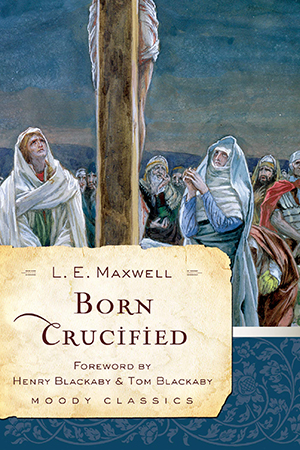
Moody – Born Crucified


Title: Born Crucified
Series:
Published by: Moody Classics
Release Date: June 1, 2010
Contributors: L. E. Maxwell (Author), Henry Blackaby (Foreword), Tom Blackaby (Foreword)
Genre:
Pages: 224
ISBN13: 978-0802454560

Back Cover
For L.E. Maxwell. the cross was everything. He wrote Born Crucified to "attempt in a small way to set forth, not as an exposition or theological statement, but in simple sermon and exhortation, the role of the Cross in the life of the believer." In doing so, Maxwell made clear the way to victory over sin and empowered service to God.

Maxwell's words come as strange comfort to our souls: "God's way of victory over sin is not through the suppression of sinful desires, nor through the eradication of the old nature, nor yet through the cleansing of inbred sin. God's way of victory is through crucifixion---deliverance is only through death."

_______________

L. E. Maxwell writes, “The cross is the key to all situations as well as to all Scripture.”

By relating the cross as essential to the life of the believer, Professor L.E. Maxwell simply and practically shows how an understanding of our identification with Christ in his death and resurrection can lead to life as it was meant to be lived. It is by living with a cross-centered perspective that we can have both victory over sin and power to serve God well.

Maxwell's heart and vision for training up young people with the truth of God's Word and the necessity of evangelism shines forth in this little book. Readers know authenticity when they read it--and Maxwell exudes it.

L.E. MAXWELL founded Prairie Bible Institute in Three Hills, Alberta, Canada, in 1922. In his fifty-seven years of service with the school, he held many titles, including professor, principal, and president. A prolific author, he wrote many including Women in Ministry, Born Crucified, and Crowded to Christ. He is now at home with his Lord.

Continue Reading ·

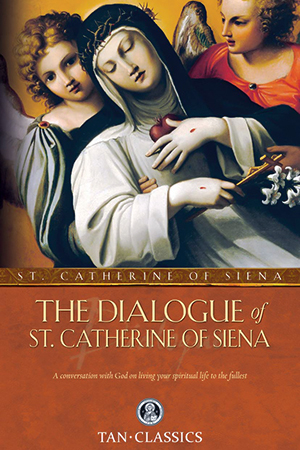
TAN – The Dialogue of St. Catherine Of Siena


Title: The Dialogue of St. Catherine Of Siena: A Conversation With God On Living Your Spiritual Life To The Fullest
Series:
Published by: Tan Classics
Release Date: September 1, 1991
Contributors: St. Catherine Of Siena (Author)
Genre:
Pages: 240
ISBN13: 978-0895551498

From the Back Cover
Saint Catherine of Siena's Dialogue describes the entire spiritual life through a series of conversations between God and the soul, represented by Catherine herself. Readers of The Dialogue will find Catherine's revelations from God as informative and formative as those who recognized her sanctity during her life. The universally applicable yet intimately personal messages she received from God are as much for us as they were for Catherine. We can read God's communications to his beloved daughter with detached awe or we can receive His messages to us through her writings.

Do you long for certainty that Divine Providence exists in the midst of our chaotic world? Does your prayer seem too dry, or too routine? Have you sought guidance for the challenges of your life from unhelpful people or things? Or has your pride kept you from humble obedience to the Church? If so, The Dialogue will provide consolation, encouragement, and hope.

About the Author
St. Catherine of Siena was born to Giacomo and Lapa Benincasa at Siena, Italy, in 1347, the second youngest of a very large family. She began to experience God mystically before she turned seven. Frequent visions of Christ, Mary, angels and saints inspired her holy, austere lifestyle and prompted her to take the habit of the Dominican Tertiaries at age 16, despite her parents' wish for her to marry and the untimely death of two of her sisters.

Enabled by a miracle to read and write, the formerly illiterate St. Catherine authored The Dialogue of St. Catherine of Siena and hundreds of letters asking for peace with the Papal States and the return of the Pope from Avignon to Rome. Her passionate yet humble pleas persuaded the Pope to return to Rome, where she herself died at the age of 33. She was canonized by Pope Pius II in 1461, and her feast is celebrated on April 29.

Continue Reading ·

Commentary on the New Testament Use of the Old Testament


Title: Commentary on the New Testament Use of the Old Testament
Series:
Published by: Baker Academic
Release Date: November 1, 2007
Contributors: D. A. Carson (Editor), G. K. Beale (Editor)
Genre:
Pages: 1280
ISBN13: 978-0801026935

Readers of the New Testament often encounter quotes or allusions to Old Testament stories and prophecies that are unfamiliar or obscure. In order to fully understand the teachings of Jesus and his followers, it is important to understand the large body of Scripture that preceded and informed their thinking. Leading evangelical scholars G. K. Beale and D. A. Carson have brought together a distinguished team to provide readers with a comprehensive commentary on Old Testament quotations, allusions, and echoes that appear from Matthew through Revelation. College and seminary students, pastors, scholars, and interested lay readers will want to add this unique commentary to their reference libraries.

From the Inside Flap
"Beale and Carson have given us a volume that will certainly become a standard for all serious Bible readers, ministers, and scholars. We are in their debt. As a preacher, I would especially encourage other preachers to use this volume in honing their understanding of God's Word and in leading their congregations to better understand the Old Testament, the same Scriptures that Jesus taught his disciples. I'm even planning on using this to help select appropriate Scripture readings for public services."
--Mark Dever, pastor, Capitol Hill Baptist Church, Washington, DC

"There has been a great need for a comprehensive study of the New Testament's use of the Old Testament. This arduous task has now been accomplished by very competent New Testament scholars, resulting in an excellent reference work. It is well thought out and the style makes it easy to use; a must for every serious student of the Bible."
--Harold W. Hoehner, Dallas Theological Seminary

Contributors
Craig L. Blomberg (Denver Seminary) on Matthew
Rikk E. Watts (Regent College) on Mark
David W. Pao (Trinity Evangelical Divinity School) and Eckhard J. Schnabel (Trinity Evangelical Divinity School) on Luke
Andreas J. Kostenberger (Southeastern Baptist Theological Seminary) on John
I. Howard Marshall (University of Aberdeen) on Acts
Mark A. Seifrid (Southern Baptist Theological Seminary) on Romans
Roy E. Ciampa (Gordon-Conwell Theological Seminary) and Brian S. Rosner (Moore Theological College) on 1 Corinthians
Peter Balla (Károli Gáspár Reformed University, Budapest) on 2 Corinthians
Moises Silva (author of Philippians in the Baker Exegetical Commentary on the New Testament) on Galatians and Philippians
Frank S. Thielman (Beeson Divinity School) on Ephesians
G. K. Beale (Wheaton College Graduate School) on Colossians
Jeffrey A. D. Weima (Calvin Theological Seminary) on 1 and 2 Thessalonians
Philip H. Towner (United Bible Societies) on 1 and 2 Timothy and Titus
George H. Guthrie (Union University) on Hebrews
D. A. Carson (Trinity Evangelical Divinity School) on the General Epistles
G. K. Beale (Wheaton College Graduate School) and Sean M. McDonough (Gordon-Conwell Theological Seminary) on Revelation

From the Back Cover
An Exploration of Old Testament Quotations, Allusions, and Echoes
Occurring from Matthew through Revelation

"This really is a new sort of commentary! For the first time we are given a continuous exegetical reading of the way each New Testament book quotes, alludes to, and evokes the Old Testament Scriptures. This volume will be an immensely useful resource for all kinds of study of the New Testament."
--Richard Bauckham, University of St. Andrews

"Every scholar would profit by having a copy of this thorough and judicious work on his or her desk. The authors have collected for us an immense amount of material and insight in a relatively short space, and many of us will be grateful for their efforts. This commentary is a profound witness to the unity of the Testaments in the mystery of Christ."
--Francis Martin, Sacred Heart Seminary

"Finally a volume that surveys the use of the Old Testament in each book of the New Testament. Written by top-tier scholars with unsurpassed expertise in New Testament exegesis, these essays model sound engagement with Scripture that quotes Scripture. This excellent collection is a must-read for all who wish to understand how the New Testament writers understood and used their Bible. This long-awaited volume deserves to become a standard text that will hopefully launch a new stage of fresh work in biblical research."
--Karen H. Jobes, Wheaton College

"More than a generation ago, C. H. Dodd and a few other scholars began sowing the seeds of a new and fruitful approach to reading Scripture, by studying the New Testament writers' use of Old Testament texts. The present commentary thus represents the harvest of decades of research into the relationship between the Old and New Testaments. By carefully observing various factors, ranging from the textual to the theological, each contributor shows how the New Testament writers were not only careful readers of the Old Testament but also profound theologians themselves. The scholars on this superb team assembled by Beale and Carson distill many new and remarkable insights for exegesis and theology, all of which serve to demonstrate the explanatory power of this approach for the present and the future. This landmark volume should prove to be an invaluable resource for both the church and the academy--for pastors, teachers, and students alike, whether Protestant or Catholic--and for anyone wanting to go deeper into the heart of sacred Scripture. Indeed, Beale and Carson are to be thanked and congratulated for a momentous accomplishment."
--Scott Hahn, Franciscan University of Steubenville

"Finally we have a work that examines the use of the Old Testament in the New Testament and covers the entirety of the New Testament in a single volume. Pastors, students, and scholars will profit from the careful attention to both the Old and New Testament contexts in which the citations occur, and they will be enriched by the theological depth represented in this important book."
--Thomas R. Schreiner, Southern Baptist Theological Seminary

"Few areas of New Testament study are as often discussed as the New Testament's use of the Old. There has long been a need for a careful case-by-case treatment, since the use we see in the New Testament is so varied and diverse. This commentary meets that need admirably. It is thorough yet concise, clear yet detailed. All will be led into helpful reflection on this important area of study. Well done to the editors and authors of this useful and unique commentary."
--Darrell L. Bock, Dallas Theological Seminary

Continue Reading ·

New Testament Theology: Magnifying God in Christ


Title: New Testament Theology: Magnifying God in Christ
Series:
Published by: Baker Academic
Release Date: June 1, 2008
Contributors: Thomas R. Schreiner (Author)
Genre:
Pages: 992
ISBN13: 978-0801026805

In this substantial volume, Thomas Schreiner takes up the study of New Testament theology, looking for the themes that emerge from a detailed reading of the whole rather than considering the individual writings separately.

Two themes in particular emerge. The first concerns redemptive history and the kingdom of God. The New Testament writers adopt the Old Testament vision of God's reign and affirm that it has come in Jesus Christ, although final fulfillment is yet to come. Second, the ultimate goal of the kingdom is God's glory. Schreiner goes on to relate these themes to the life of the believer and the community of faith.

Pastors and students will find this a comprehensive and illuminating survey of the unifying themes found throughout the New Testament.

From the Inside Flap
"Scholars frequently focus so tightly on the details of the New Testament documents that they miss the big picture. On the other hand, all too often attempts to summarize the message of the New Testament ignore the particular expressions and diverse emphases of its twenty-seven books. Without losing the trees for the wood, Schreiner's New Testament Theology offers a superb exposition of the New Testament's central message, the glory of God in Christ. Pastors and students will find it an invaluable resource for answering the question most readers are asking: what is the New Testament about?"--Brian S. Rosner, senior lecturer in New Testament and ethics, Moore Theological College

"Schreiner's New Testament Theology has long been awaited by colleagues, friends, and students. The appendix, which provides a helpful survey of the discipline of New Testament theology, and the discussion of justification, which contains a summary of the modern debate and a defense of a forensic interpretation of the Pauline teaching, are alone worth the price of the book."--Robert H. Stein, senior professor of New Testament interpretation, Southern Baptist Theological Seminary

In New Testament Theology, Thomas Schreiner's approach is based on solid exegesis of all the key texts, which leads him to a unified view of core New Testament teaching. He focuses particularly on two overarching themes. The first concerns the unity of redemptive history and the kingdom of God. The New Testament takes up Old Testament imagery and affirms that the kingdom has come (although it remains unfulfilled) in Jesus Christ. The second related theme concerns the goal of the kingdom--the glory of God through the work of Christ and the empowering presence of the Spirit. In the second half of the work, Schreiner takes up the question of what these themes mean for the life of the believer and the ministry of the community of faith.

Although this substantial and comprehensive volume will be of great interest to scholars, Schreiner's first concern is to provide an accessible guide for students and pastors. He has succeeded admirably, and readers will find here a lucid exposition of the theology of the New Testament.

From the Back Cover
While none of the New Testament documents claims to provide a "theology" on its own, Thomas Schreiner suggests that certain recurring themes emerge from the study of the whole. In this volume, he traces key themes as they appear throughout the New Testament canon, exploring the emphases that emerge from a detailed reading of the texts.

"Lucid, incisive, and above all devoted to listening to the text of the New Testament, Tom Schreiner's volume is like a cool drink in a postmodern desert. Schreiner unfolds the richness of New Testament theology through the lens of salvation history, showing how fruitful the promise-fulfillment, already-not yet paradigm is for understanding the New Testament. If you want a New Testament theology that is informed, exegetically grounded, canonically based, Trinitarian, and written from the standpoint of a sturdy faith, then this is the book for you!"
--Donald A. Hagner, George Eldon Ladd Professor Emeritus of New Testament, Fuller Theological Seminary

"A magnificent achievement! Schreiner has combined the breadth and depth of his knowledge of the New Testament with extensive discussion of the scholarly literature. Best of all, it follows the New Testament in testifying to the majesty and glory of God."-
-Simon J. Gathercole, lecturer in New Testament studies, University of Cambridge

"Tom Schreiner's New Testament Theology is a valuable addition to the field, providing to students the kind of overview that only a seasoned scholar can produce. The volume is particularly significant for taking a more thematic approach than have most other New Testament theologies. Schreiner therefore comes closer than most others to giving us a genuine New Testament 'theology' (rather than New Testament 'theologies')."
--Douglas J. Moo, Blanchard Professor of New Testament, Wheaton College

"Thomas Schreiner is known for being a skillful and careful New Testament scholar. In his New Testament Theology his abilities and his clear, concise style are on full display as he gives us a synthetic account of this complex subject, an account that reflects his high view of Scripture. This is probably the best New Testament theology written in the last several decades from a decidedly Reformed and evangelical point of view. While I disagree with the analysis at various points, it is still a fine piece of work, and I am happy to commend it."
--Ben Witherington III, professor of New Testament, Asbury Theological Seminary
About the Author

Thomas R. Schreiner (PhD, Fuller Theological Seminary) is James Buchanan Harrison Professor of New Testament Interpretation and professor of biblical theology at The Southern Baptist Theological Seminary in Louisville, Kentucky. He has taught at SBTS for twenty-five years. Schreiner is the author or editor of numerous books, including Romans in the BECNT series, Handbook on Acts and Paul's Letters, The King in His Beauty, New Testament Theology, Magnifying God in Christ, Interpreting the Pauline Epistles, and Paul, Apostle of God's Glory in Christ.

Continue Reading ·

Catherine of Siena


Title: Catherine of Siena
Series:
Published by: Must Have Books
Release Date: April 8, 2021
Contributors: Sigrid Undset (Author)
Genre:
Pages: 184
ISBN13: 978-1773236827

Sigrid Undset's Catherine of Siena was critically acclaimed as one of the best biographies of this well-known and amazing fourteenth-century saint.

Catherine of Siena (Italian: Caterina da Siena; 25 March 1347 – 29 April 1380), a member of the Third Order of Saint Dominic, was a mystic, activist, and author who had a great influence on Italian literature and on the Catholic Church. Canonized in 1461, she is also a Doctor of the Church.

Born and raised in Siena, she wanted from an early age to devote herself to God, against the will of her parents. She joined the "mantellates", a group of pious women, primarily widows, informally devoted to Dominican spirituality. Her influence with Pope Gregory XI played a role in his 1376 decision to leave Avignon for Rome. The Pope then sent Catherine to negotiate peace with Florence. After Gregory XI's death (March 1378) and the conclusion of peace (July 1378), she returned to Siena. She dictated to secretaries her set of spiritual treatises The Dialogue of Divine Providence. The Great Schism of the West led Catherine of Siena to go to Rome with the pope. She sent numerous letters to princes and cardinals to promote obedience to Pope Urban VI and to defend what she calls the "vessel of the Church". She died on 29 April 1380, exhausted by her rigorous fasting. Urban VI celebrated her funeral and burial in the Basilica of Santa Maria sopra Minerva in Rome.

Devotion around Catherine of Siena developed rapidly after her death. Pope Pius II canonized her in 1461; she was declared a patron saint of Rome in 1866 by Pope Pius IX, and of Italy (together with Francis of Assisi) in 1939 by Pope Pius XII. She was the second woman to be declared a "doctor of the Church," on 4 October 1970 by Pope Paul VI – only days after Teresa of Ávila. In 1999 Pope John Paul II proclaimed her a (co-)patron saint of Europe.

Catherine of Siena is one of the outstanding figures of medieval Catholicism, by the strong influence she has had in the history of the papacy and her extensive authorship. She was behind the return of the Pope from Avignon to Rome, and then carried out many missions entrusted to her by the pope, something quite rare for a woman in the Middle Ages. Her Dialogue, hundreds of letters, and dozens of prayers, also give her a prominent place in the history of Italian literature.

-Wikipedia, 12/2022
______________
Sigrid Undset (20 May 1882 – 10 June 1949) was a Norwegian novelist who was awarded the Nobel Prize for Literature in 1928.

Known for her historical fiction, which won her the Nobel Prize for literature in 1928, Undset based this factual work on primary sources about Catherine of Siena, her own experiences living in Italy, and her profound understanding of the human heart.

Undset was born in Kalundborg, Denmark, but her family moved to Norway when she was two years old. In 1924, she converted to Catholicism. She fled Norway for the United States in 1940 because of her opposition to Nazi Germany and the German invasion and occupation of Norway, but returned after World War II ended in 1945.

Her best-known work is Kristin Lavransdatter, a trilogy about life in Scandinavia in the Middle Ages, portrayed through the experiences of a woman from birth until death. Its three volumes were published between 1920 and 1922.

Bio from Wikipedia, the free encyclopedia. Photo by Aage Remfeldt / Aage Rasmussen (1889-1983) [Public domain], via Wikimedia Commons.

Continue Reading ·

MacArthur – The Master’s Plan for the Church


Title: The Master's Plan for the Church
Series:
Published by: Moody Publishers
Release Date: March 1, 2008
Contributors: John MacArthur (Author)
Genre:
Pages: 368
ISBN13: 978-0802478450

It is absolutely essential that a church perceive itself as an institution for the glory of God, and to do that—claims John MacArthur—the local church must adhere unfalteringly to biblical leadership principles.

Christ never intended church leadership to be earned by seniority, purchased with money, or inherited through family ties. He never compared church leaders to governing monarchs, but rather to humble shepherds; not to slick celebrities, but to laboring servants.

Drawing from some of the best-received material on church leadership, this updated edition guides the church with crucial, effective lessons in leadership. This book is valuable not only for pastors and elders, but for anyone else who wants the church to be what God intended it to be.

Review
John MacArthur is on the cutting edge of church leadership and church development. He not only knows this critical area biblically but pragmatically as well, since his own church models the principles in this book.
-Dr. Tony Evans, pastor and author

The book The Master’s Plan for the Church is indeed a masterwork. Like other works by John MacArthur, it shows solid biblical scholarship and practical application.
-Dr. Adrian Rogers, pastor, Bellview Baptist Church, Memphis, Tennessee

John MacArthur has done church leaders a great service. His new edition of The Master’s Plan for the Church is the thorough, biblically-based book we are used to finding when we read MacArthur. I commend it to church leaders everywhere.
-Dr. Jerry Vines, pastor, First Baptist Church of Jacksonville, Florida

About the Author
JOHN MACARTHUR is the pastor-teacher of Grace Community Church in Sun Valley, California; president of The Master's College and Seminary; and featured teacher for the Grace to You media ministry. Weekly telecasts and daily radio broadcasts of "Grace to You" are seen and heard by millions worldwide. John has also written several bestselling books, including The MacArthur Study Bible, The Gospel According to Jesus, The New Testament Commentary series, Twelve Ordinary Men, and The Truth War. He and his wife, Patricia, have four married children and fifteen grandchildren.

Continue Reading ·

Bavinck – Reformed Dogmatics, Volume 4


Title: Reformed Dogmatics: Holy Spirit, Church, and New Creation
Series:
Published by: Baker Academic
Release Date: June 1, 2008
Contributors: Herman Bavinck (Author), John Bolt (Author), John Vriend (Author)
Genre:
Pages: 944
ISBN13: 978-0801026577

In partnership with the Dutch Reformed Translation Society, Baker Academic is proud to offer in English for the very first time the fourth and final volume of Herman Bavinck's complete Reformed Dogmatics, now also available as a four-volume set. This volume includes the combined indexes for all four volumes. In addition, editor John Bolt introduces each chapter and has enhanced the footnotes and bibliography. This masterwork will appeal not only to scholars, students, pastors, and laity interested in Reformed theology but also to research and theological libraries.

From the Inside Flap
"For those struggling with the most critical issue facing theology today, namely, the question of the truth of the Christian faith, this volume is a godsend. . . . To read it is to take a large step back from the theological currents that swirl around and through the theological academy. . . . While the content of [t]his volume is identical with the original, the layout in the translation renders the material far more accessible. . . . Most helpful of all are the splendid chapter synopses that have been crafted with obvious care by the editor and inserted before each chapter. . . . The translation is eloquent, lucid, and faithful to the original."
--George Vandervelde, Calvin Theological Journal

"Bavinck's serious engagement with the biblical text, the history of Christian theology, non-Christian thought, and with other non-Reformed theological traditions, particularly Roman Catholicism and liberal Protestantism, makes for enjoyable theological reading. . . . The translation of these volumes into English is a welcome addition to the resources for study of Reformed theology. . . . Those who desire to understand the faith once for all delivered to the saints will be rewarded by a careful and systematic reading."
--Glenn R. Kreider, Bibliotheca Sacra

"Bavinck's "Reformed Dogmatics" has been the fountainhead of Reformed theology for the last hundred years. It is by far the most profound and comprehensive Reformed systematic theology of the twentieth century. The reader will be amazed by Bavinck's erudition, creativity, and balance. Bavinck is confessionally orthodox, but he recognizes the need to rethink the traditional formulations from Scripture in the context of contemporary discussion. I hope it will have a large readership and will bring forth much theological and spiritual fruit."
--John M. Frame, Reformed Theological Seminary

"This magisterial work exhibits Bavinck's vast knowledge and appreciation of the Christian tradition. Written from a Reformed perspective, it offers a perceptive critique of modern theology. . . . Recommended for university, church, and seminary libraries because of its historical importance."
--Augustine J. Curley, "Library Journal

From the Back Cover
"What a wonderful gift to the English-speaking theological world! The topics explored by Bavinck are still of the utmost importance, and he addresses them here in a theological voice that is amazingly fresh. I pray that the appearance of this volume signals the beginnings of a Bavinck revival!"
--Richard J. Mouw, Paul B. Henry Institute for the Study of Christianity and Politics, Calvin University

"Bavinck's Dutch masterwork was the Everest of which the textbooks by Louis Berkhof and Auguste Leoerf were foothills and Berkouwer's studies in dogmatics were outliers. Like Augustine, Calvin, and Edwards, Bavinck was a man of giant mind, vast learning, ageless wisdom, and great expository skill. Solid but lucid, demanding but satisfying, broad and deep and sharp and stabilizing, Bavinck's magisterial Reformed Dogmatics remains after a century the supreme achievement of its kind."
--J. I. Packer, Regent College

"Kudos to Baker Academic, and the Dutch Reformed Translation Society, on the completion of a highly important project. . . . The key work of a central Dutch Reformed theologian is at last available in its entirety to the English-speaking world."
--Michael Potemra, National Review

"The translation of Bavinck's work into English is a welcome addition to resources for study of Reformed theology. . . . Those who desire to understand the faith once for all delivered to the saints will be rewarded [by] a careful and systematic reading of the work in these four volumes. The theological community owes a debt of gratitude to the Dutch Reformed Translation Society for its excellent work in bringing this project to completion."
--Glenn R. Kreider, Bibliotheca Sacra

About the Author
Herman Bavinck (1854-1921) succeeded Abraham Kuyper as professor of systematic theology at the Free University of Amsterdam in 1902.

Continue Reading ·