Archive | Theology RSS feed for this section

Way of Escape

“For by grace you have been saved through faith. And this is not your own doing; it is the gift of God, not a result of works, so that no one may boast. ” -Eph 2:8-9

Obedience must accompany faith. As evidence of authentic faith made real by grace as given by God.

Sola Gratia (Grace Alone)
Solus Christus (Christ Alone)
Sola Fide (Faith Alone)
Soli Deo Gloria (To the Glory of God Alone)
Sola Scriptura (Scripture Alone)

These are five principles that give us hope that we could live. And that God could be eternally 100% for us rather than against us and objects of his wrath (Ep 2:3). Principles recognized, understood, and followed to spiritually become made alive in Christ. This is what it is to be made alive in Christ. God sets His love and grace upon His elect for authentic repentance to obey the Son. We are otherwise dead spiritually and completely unable to believe and obey.

The Holy Bible: English Standard Version. (2016). (Eph 2:8–9). Wheaton: Standard Bible Society.


Continue Reading ·

Book of Nature

What I consider fascinating is this idea of the “Book of Nature” just as there is a book of scripture. First introduced to me by Dr. Hugh Ross as a scientific companion for observation and study. Not necessarily as a book per se, but as a philosophical idea that we are living within to read, measure, observe, test, and understand. To quote Wikipedia, “The first use of the phrase [book of nature] is unknown. However, Galileo used the phrase, quoting Tertullian, when he wrote of how ” “We conclude that God is known first through Nature, and then again, more particularly, by doctrine; by Nature in His works, and by doctrine in His revealed word.” 

Book of Nature
(Buch der Natur).

To further see a physical manifestation of a book of nature, there is a medieval book of incunabula (Buch der Natur) which serves as a guide which also testifies of Ps 24:1, “The Earth is the Lord’s, and everything in it. ” Both the book of scripture and the book of nature are used as a means to bring people to faith in Jesus Christ. Both books corroborate each other. 

Contents of Buch of Natur (yr. 1475)
by Conrad of Megenberg

  • The nature of man
  • Sky, 7 planets, astronomy and meteorology
  • Zoology
  • Ordinary and aromatic trees
  • Plants and vegetables
  • Invaluable and semi-precious stones
  • 10 kinds of metals
  • Water and rivers.

What isn’t so obvious between these books is their relationship to God’s spiritual book of life as written about in Revelation 20:12. The books that were opened in John’s vision when he saw the dead, great and small, standing before the throne. So in addition to the book of life, were the books of “nature” and scripture opened among them?


Continue Reading ·

Risen Above

Vision of the Valley of Dry Bones (Ezekiel 37:1–14)

Can such things be? In Ezekiel’s vision, he saw before him a valley of dry bones. A multitude of God’s people dead, scattered, and dried out to bones. Then suddenly the bones began to come together among them with flesh, tendons, and muscle. Yet still dead, but just corpses, as a multitude of the dead before Ezekiel. God’s people were dead from their rebellion before Him. Laid to waste without life.

Until thereafter the Lord breathed again the breath of life to them all. As with creation and with Pentecost, to revive them. To give them life. A new life unlike anything before. His promise that He would restore the people of Israel.  That “He would deliver them from the grave of exile, place His Spirit among them, and settle them once more in the promised land.”

A precursor of what was to come as written about in the Acts of the Apostles (Acts 2:2-5). As now the Holy Spirit dwells within His people today. 

Chisholm, R. B. (1998). The Major Prophets. In D. S. Dockery (Ed.), Holman concise Bible commentary (p. 327). Nashville, TN: Broadman & Holman Publishers.

Continue Reading ·

Test & Affliction

A man of God, who questions his creator. Job asked God why he paid enough attention to him to harm him. When it just wasn’t so. God allowed an Enemy to bring harm to Job (Job 1:8–12).

Affliction

“Remember that my life is but breath;
My eye will not again see good.
“The eye of him who sees me will behold me no longer;
Your eyes will be on me, but I will not be.

“When a cloud vanishes, it is gone,
So he who goes down to Sheol does not come up.
“He will not return again to his house,
Nor will his place know him anymore.

“Therefore I will not restrain my mouth;
I will speak in the anguish of my spirit,
I will complain in the bitterness of my soul.

“Am I the sea, or the sea monster,
That You set a guard over me?
“If I say, ‘My bed will comfort me,
My couch will ease my complaint,’
Then You frighten me with dreams
And terrify me by visions;
So that my soul would choose suffocation,
Death rather than my pains.

“I waste away; I will not live forever.
Leave me alone, for my days are but a breath.

“What is man that You magnify him,
And that You are concerned about him,
That You examine him every morning
And try him every moment?

“Will You never turn Your gaze away from me,
Nor let me alone until I swallow my spittle?
“Have I sinned? What have I done to You,
O watcher of men?

Why have You set me as Your target,
So that I am a burden to myself?

“Why then do You not pardon my transgression
And take away my iniquity?
For now I will lie down in the dust;
And You will seek me, but I will not be.”

New American Standard Bible: 1995 update. (1995). (Job 7:7–21). La Habra, CA: The Lockman Foundation.


Continue Reading ·

Poetry & Prose

“For these things I weep;
My eyes run down with water;
Because far from me is a comforter,
One who restores my soul.
My children are desolate
Because the enemy has prevailed.” – Lam 1:16

This week I spent a few days reading through Lamentations. More of personal study time in prayerful meditation over the words in five chapters of the book. While the book of Lamentations concerns the prophet’s Jeremiah’s lamentations over the destruction of Judah, Jerusalem, and Solomon’s temple, the deep and lasting sorrow speaks of the woes of separation from YHWH our Creator. 

Numerous highlights and notes were marked and written to gather a building sense, meaning, and theme as a point of the text. Translated in my spirit as grief, suffering, and mourning of our time and the struggles we see today. Tornadoes, fires, earthquakes, hurricanes, a mass shooting, political strife, cultural warfare, foreign instabilities, a corrupt government, and the evils of Jihad. All these adversities are passing with far more to come in frequency and intensity. So it is of the highest priority to abide in prayer, abide in God’s word, and remain in fellowship as a continuing necessity.


Continue Reading ·

Emerald River

This week under my breath I’ve had the passing desire to just say to the Lord that I love Him. Several times throughout these days just a simple “I love you Lord.” Here and there spontaneous utterances from my soul because He is the love that is in me. In all sincerity and with nothing watched in return. Just an overflow from the heart because my heart is full. 

Emerald River

You are the same yesterday, today and forever
Just the mention of your name
You are my strength
You are my anchor
You never fail

You are my hope
You are my healer
You will deliver
Emmanuel

You are my King
I am a child of the Most High King
As fire to iron, everything again is changed
You are the same yesterday, today and forever

Continue Reading ·

The Diet of Worms

Exurge Domine to Christian Nobility, on the Babylonian captivity and the Freedom of the Christian. Where we have justification by faith affirmed. On December 10th, 1520, Luther burns the Exurge Domine in a bonfire. The questions of Exurge Domine were burned. On January 3rd, 1521, Decet Romanum Pontificem is delivered to Luther. For the full rejection of opulent religious order and heresy.


Luther was handed over to the Imperial Diet, a collective meeting of rulers of the empire. About 300 princes and rulers with the emperor at the time. All to meet in the city of Worms.

On April 18th, 1521, Luther arrived at the city of Worms to go before the Diet. When he entered the room before the rulers and princes, before Johann Maier von Eck and before Gasparo Contarini, his written works were sitting in view of everyone. Luther is asked to confirm that those are his works. Upon acknowledgment, Eck insists Luther must recant everything he has written. To which Luther requests one night to think about it.

Luther spends the night in prayer. Am I Alone Wise? He asks repeatedly. A night of doubt, yet he becomes reassured and confident. To which the next day, he returns to examination before the rulers and princes. Luther is asked yet again, “are these your books?” Eck demands Luther to recant and rescind his views to save Luther’s life.

Alone and steadfast, Luther proclaims:

“Unless I am convinced by scripture and plain reason. I do not accept the authority of Popes and Councils. For they have contradicted each other. My conscience is captive to the word of God. I cannot and will not recant anything. For to go against conscience is neither safe nor wise. Here I stand. I can do no other. God help me.”

In open defiance and by offering his life if they want to take it, he responds. He as much said you have to convince him that he is wrong. Even as he told them that he knows he is right, because Scripture says so, he in full view of everyone acknowledges that they intend to kill him for it.

On May 25th, 1521, Luther was made an outlaw. He is banished with a bounty put on him. Once his safe-conduct passage for trial expires, he will become sought and hunted for arrest and execution. Emperor Charles, by intentional delay, allows Luther to flee.

After that, Frederick the Wise, who saw the diet outcome as unjust, ordered several of his men to kidnap Luther and hide. Knowing he would be compelled to reveal where Luther was hidden, he ordered his men not to tell him where they hid Luther. In distress, it eventually came about where Frederick rightfully told authorities He had no idea where Luther was.

Luther was hidden at a castle in Wartburg. He assumes the name Junker George. Excommunicated from the Catholic church, he solidified his convictions and began the Protestant movement. He translated the Bible from Hebrew, Greek, and Latin to German. By doing so, with the newly invented Gutenberg Printing Press, he put the Bible into the hands of common people. In an effort to break down the medieval understanding of the Catholic church. It was to take society from the dark ages to an ordained understanding of our Holy God and His church.

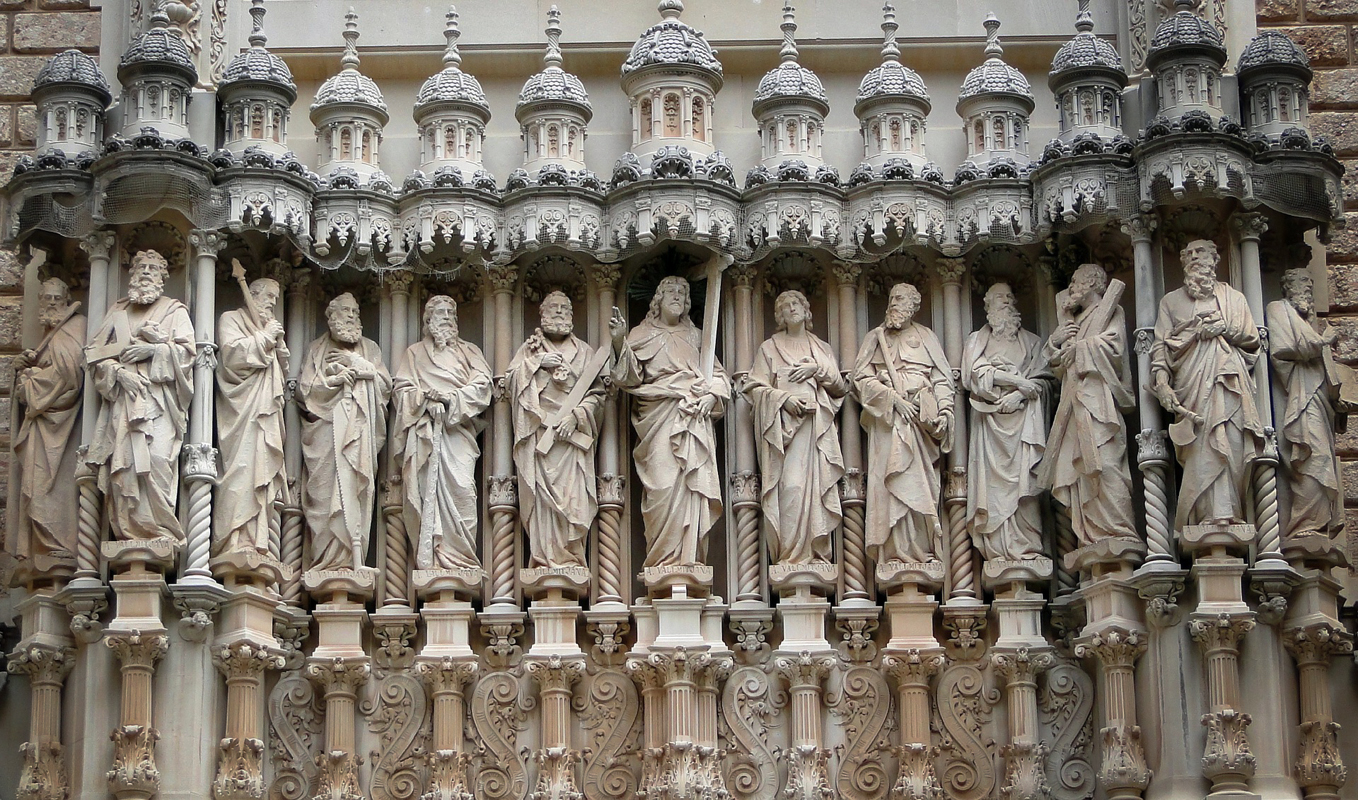
Yeshua the Messiah and His 12 Apostles

Continue Reading ·

The Plight of Linearity

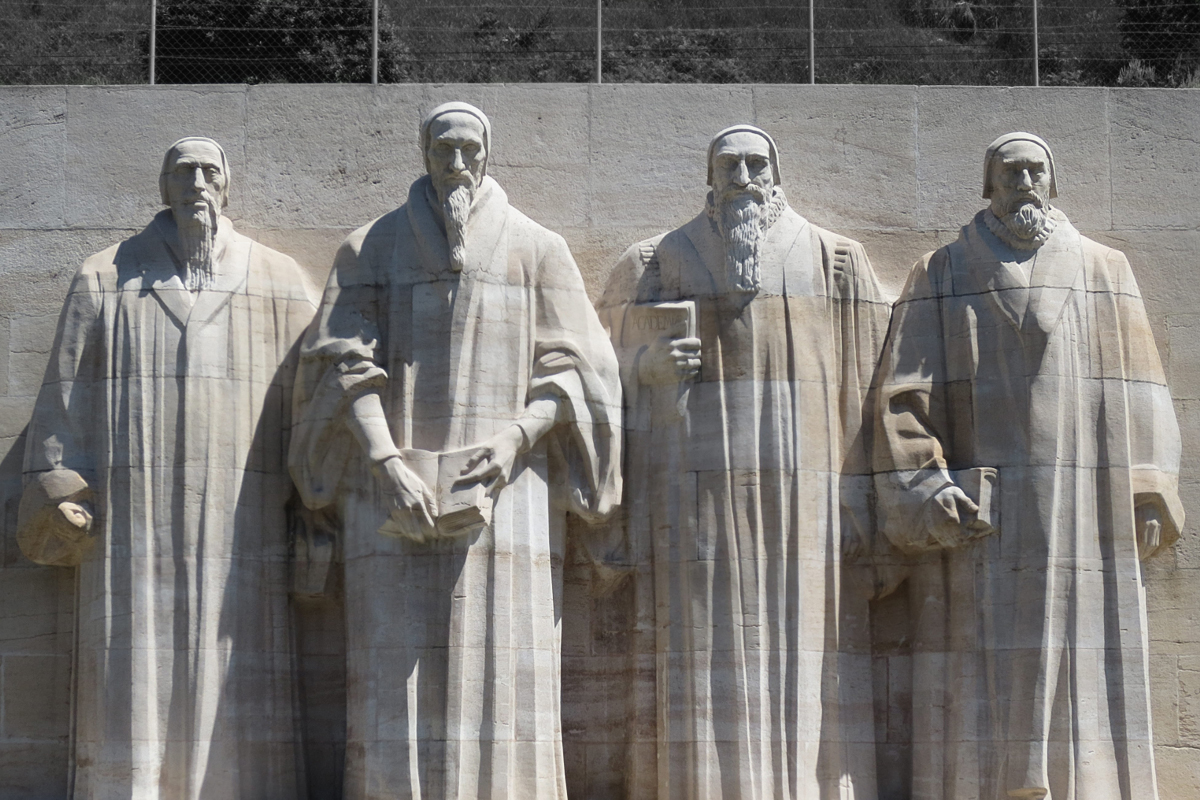
The meaning of the sovereign redemption of humanity by YHWH through His Son Jesus the Messiah originates from Scripture. Among various Christian doctrinal systems or denominations, we are today more aware of the differences between monergism and synergism which explains how and who God chooses people for honor and some for dishonor. This post concerns the TULIP acronym that briefly explains the scriptural rationale of Calvinists.

T- Total Depravity

(Total Inability)

Total Depravity is probably the most misunderstood tenet of Calvinism. When Calvinists speak of humans as “totally depraved,” they make an extensive, rather than an intensive statement. The effect of the fall upon man is that sin has extended to every part of his personality — his thinking, his emotions, and his will. Not necessarily that he is intensely sinful, but that sin has extended to his entire being.

The unregenerate (unsaved) man is dead in his sins (Romans 5:12). Without the power of the Holy Spirit, the natural man is blind and deaf to the message of the gospel (Mark 4:11f). This is why Total Depravity has also been called “Total Inability.” The man without a knowledge of God will never come to this knowledge without God’s making him alive through Christ (Ephesians 2:1-5).

U- Unconditional Election

Unconditional Election is the doctrine that states that God chose those whom he was pleased to bring to a knowledge of himself, not based upon any merit shown by the object of his grace and not based upon his looking forward to discovering who would “accept” the offer of the gospel. God has elected, based solely upon the counsel of his own will, some for glory and others for damnation (Romans 9:15,21). He has done this act before the foundations of the world (Ephesians 1:4-8).

This doctrine does not rule out, however, man’s responsibility to believe in the redeeming work of God the Son (John 3:16-18). Scripture presents a tension between God’s sovereignty in salvation, and man’s responsibility to believe which it does not try to resolve. Both are true — to deny man’s responsibility is to affirm an unbiblical hyper-Calvinism; to deny God’s sovereignty is to affirm an unbiblical Arminianism.

The elect is saved unto good works (Ephesians 2:10). Thus, though good works will never bridge the gulf between man and God that was formed in the Fall, good works are a result of God’s saving grace. This is what Peter means when he admonishes the Christian reader to make his “calling” and “election” sure (2 Peter 1:10). Bearing the fruit of good works is an indication that God has sown seeds of grace in fertile soil.

L- Limited Atonement

(Particular Redemption)

Limited Atonement is a doctrine offered in answer to the question, “for whose sins did Christ atone?” The Bible teaches that Christ died for those whom God gave him to save (John 17:9). Christ died, indeed, for many people, but not all (Matthew 26:28). Specifically, Christ died for the invisible Church — the sum total of all those who would ever rightly bear the name “Christian” (Ephesians 5:25).

This doctrine often finds many objections, mostly from those who think that Limited Atonement does damage to evangelism. We have already seen that Christ will not lose any that the Father has given to him (John 6:37). Christ’s death was not a death of potential atonement for all people. Believing that Jesus’ death was a potential, symbolic atonement for anyone who might possibly, in the future, accept him trivializes Christ’s act of atonement. Christ died to atone for specific sins of specific sinners. Christ died to make holy the church. He did not atone for all men, because obviously all men are not saved. Evangelism is actually lifted up in this doctrine, for the evangelist may tell his congregation that Christ died for sinners and that he will not lose any of those for whom he died!

I- Irresistible Grace

The result of God’s Irresistible Grace is the certain response by the elect to the inward call of the Holy Spirit, when the outward call is given by the evangelist or minister of the Word of God. Christ, himself, teaches that all whom God has elected will come to a knowledge of him (John 6:37). Men come to Christ in salvation when the Father calls them (John 6:44), and the very Spirit of God leads God’s beloved to repentance (Romans 8:14). What a comfort it is to know that the gospel of Christ will penetrate our hard, sinful hearts and wondrously save us through the gracious inward call of the Holy Spirit (I Peter 5:10)!

P- Perseverance of the Saints

Perseverance of the Saints is a doctrine that states that the saints (those whom God has saved) will remain in God’s hand until they are glorified and brought to abide with him in heaven. Romans 8:28-39 makes it clear that when a person truly has been regenerated by God, he will remain in God’s stead. The work of sanctification that God has brought about in his elect will continue until it reaches its fulfillment in eternal life (Phil. 1:6). Christ assures the elect that he will not lose them and that they will be glorified at the “last day” (John 6:39). The Calvinist stands upon the Word of God and trusts in Christ’s promise that he will perfectly fulfill the will of the Father in saving all the elect.
Continue Reading ·