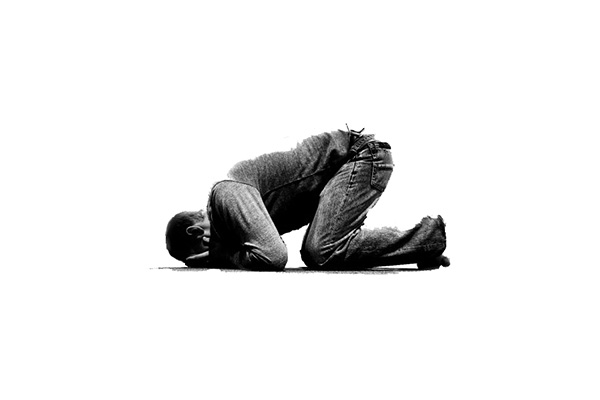
Last night was a full immersion in page after page of those Holy words again. Written to say what it does and not to appear as ink on pages and pixels in view. I went very late and lost track of time, but it didn’t matter—principles upon principles and definitions. Phrases in Greek read, spoken, and enunciated. These were parallel meanings and close antonyms.
“Tua Da Gloriam Non Nobis Domine Non Nobis Sed Nomini”
Saints and who they were and what they believed. What they did and did not do. Apostle Paul’s relationships and hardships, his offenses, and what he was committed to. His passion for the kingdom for the sake of the elect. By happenstance came upon the words ‘reign’ and ‘rebuke’ again and again—no idea why.
And today, while out and about it dawned on me that the reason I felt so alive and renewed was because of what came from that time spent—fully delved in meaning for the renewal. There were words I saw and felt that served as nourishment.
So I was reminded that what Jesus said is that the reborn shall not live by bread alone but by his Words. So very literally true, but that wasn’t what was so incredibly awakening. That evidence of the reborn is by what sustains it. It’s those words and meanings that were needed. They were craved then, and I don’t think that will ever go away. It was a promise made clear in an unexpected way.
So today was a different kind of energy. A gift of strength inside that comes for just long enough in the moment. Just long enough for the day. Long enough for eternity.
While watching session 2 of David Platt’s lessons on “Follow Me” (www.followmebook.org), I took notes on a 3×5 index card. To follow along and pay careful attention. Play, rewind, pause, replay, and so on. I have to go through all of these and keep reading his book. And with urgency, because I have to know.
Here are some of the notes etched on this card, with Christ at the center of a concentric circle that illustrates the biblical framework for a follower.
First and foremost, confessing Christ changes everything about us.
Thoughts
Rom 12:1; And to take captive every thought to the obedience of Christ.
Desires
To know God deeply is to love God wholeheartedly. – Matt 7:23.
Will
Our will is grounded in our thoughts and desires. We act and live as Jesus does based on what we believe.
Relationships
Sharing and fellowship to encourage and renew.
Purpose
John 15:5; Bear Fruit. So how do we know one is a follower?
1.) To abide in Christ, let his words remain in me. His words. God’s word cleanses us.
2.) To remain in his love, by doing what he says. God’s words empower us. God’s words compel us. God’s words satisfy us. God’s words bring joy, and our joy becomes complete.
Proclaim His words no matter how much it costs us.
For those who object to Pascale’s wager, here’s a beautiful series of words worth considering.
His delight is not in the strength of the horse, nor his pleasure in the legs of a man, but the LORD takes pleasure in those who fear him, in those who hope in his steadfast love.
The Holy Bible: English Standard Version. 2001 (Ps 147:10–11). Wheaton: Standard Bible Society.
Today I spent a bit of time in Ps. 147. Some of the best parts of my day were reading through that chapter to dwell on what it is to offer and give praise to the Most-High. And to consider that our heavenly father has given all the stars in space their names. That they are all known by name or being is amazing. And being settled by what it takes to believe is what brings me peace, comfort, and certainty.
Not all that long ago, I made the plunge into the Logos upgrade, and the enhanced portability is so very much needed. The power of what that does has such a significant influence on my day and mindset. I consider it an ever present gift to saturate my thoughts. Everything else is waste in comparison, and I use it a lot for personal and work interests.
Then he said to them all: “Whoever wants to be my disciple must deny themselves and take up their cross daily and follow me.” – Lk 9:23
I’ve been looking high and low for extra reading on the person of Christ. There are this sense and urgency within that I just have to know Him. Through and through and not just about Him, His attributes, His character, or about His doing, but about Him and His perfect will.
The Christ of Heaven and the Son of God, and to God Himself I just have to know Him. I’m not explaining it well, but it’s just to see, hear, and understand him. How he was, what he said, and what that means as one who seeks after Him. I want to make absolutely certain that when I stand before Him, it is never reasoned, ‘I never knew you’.
So the search is on and that is my prayer and mission for this week. To see what might happen and where that would go. An exercise in faith because I just know He’s the only way.
GREAT prayer time today. About coming back to basics and a softening of the heart. So, I’ve reordered a TMS (Topical Memory System) again to start fresh. You might want to consider the same.
“The steadfast of mind You will keep in perfect peace, because he trusts in You.”
Isaiah 26:3
Having memorized these over and over some while ago, they brought such life and renewal. And clarity and promise. So for today, I’m reciting some of them off from memory and I’m so pleased and grateful they came back to mind.
I very much miss them, so I’m getting back to it just to review and build upon what’s there. This Spirit is going to grow within because something is stirring inside much like my passion for wilderness and music, only much more and this is everlasting. Day by day heaven nears and even if this is just a single day at a time, that is enough because thereispeace.
Topical Memory System
LIVE THE NEW LIFE
PROCLAIM CHRIST
RELY ON GOD’S RESOURCES
BEING CHRIST’S DISCIPLE
GROW IN CHRIST
Christ the Center 2 Cor. 5:17; Gal. 2:20
All Have Sinned Romans 3:23; Isaiah 53:6
His Spirit 1 Cor. 3:16; 1 Cor. 2:12
Put Christ First Matthew 6:33, Luke 9:23
Love John 13:34-35; 1 John 3:18
Obedience to Christ Romans 12:1; John 14:21
Sin’s Penalty Romans 6:23; Hebrews 9:27
His Strength Isaiah 41:10; Phil. 4:13
Separate From the World 1 John 2:15-16; Romans 12:2
The “Works of God” through the disabilities of others (John 9:3). And not just for those of who have physical handicaps, I suppose.
“For you say, I am rich, I have prospered, and I need nothing, not realizing that you are wretched, pitiable, poor, blind, and naked.” – Rev 3:17
This afternoon on my Twitter stream, I saw an article come through, and it led me to get a second look and read further into it. I was not sure what it was going to be about, but I chose to spend the time with the article’s link anyway. The article is entitled “When Men Forget Who They Are” by John Knight. It’s on the desiringgod.org site.
What got my attention was the call for Pastors to join a Conference about “God, Manhood & Ministry: Building Men for the Body of Christ.” The time spent to involve somehow, “Fathers of children with disabilities need you to get biblical manhood.” It’s not clear to me what was meant, but it was enough to continue in the article.
The author’s boy is blind. And it feels like men or parents under such circumstances aren’t a priority given the church’s condition today and what is comparatively needed elsewhere relatively speaking. Still, here by happenstance, or by Providence, some will attend and maybe make a difference among some who have children with disabilities.
So, I spend some time thinking about who’s paying attention and what they would possibly do. Hoping for the best.
Likewise, the Holy Spirit dwells in each believer (Romans 8:9; 1 Corinthians 6:19). Scripture sometimes represents His presence and activity through the imagery of fire, as when tongues “as of fire” appeared at Pentecost and the disciples were filled with the Holy Spirit (Acts 2:3–4). He desires to express His holy work through our actions and attitudes. When believers do not allow the fruit of the Spirit to be evident in their conduct, and when we knowingly do what is wrong, we grieve the Spirit and resist His sanctifying work (Ephesians 4:30; Galatians 5:16–25). We therefore fail to display in our lives the holiness and character that He produces in those who walk by Him.
To understand what it means to grieve the Spirit, we must first understand that this indicates that the Spirit possesses personality. Only a person can be grieved; therefore, the Spirit is not an impersonal force but a personal being who speaks, teaches, wills, intercedes, and may be grieved (John 14:26; Acts 13:2; Romans 8:26–27; 1 Corinthians 12:11; Ephesians 4:30). Scripture also reveals that He is divine, for lying to the Holy Spirit is identified with lying to God, and He searches and knows the depths of God (Acts 5:3–4; 1 Corinthians 2:10–11). Once we understand that the Holy Spirit is a divine person, we can better understand how our sin grieves Him.
Ephesians 4:30 commands us not to grieve the Holy Spirit of God, by whom believers are sealed for the day of redemption. The surrounding passage shows that He is grieved when conduct within the body of Christ contradicts His holiness and the unity He creates. Falsehood violates the truth that binds believers together (Ephesians 4:25); sinful and prolonged anger gives opportunity to the devil (Ephesians 4:26–27); theft opposes honest labor and generosity (Ephesians 4:28); corrupt speech tears down rather than gives grace (Ephesians 4:29); and bitterness, wrath, clamor, slander, and malice oppose the kindness, tenderheartedness, and forgiveness that reflect God’s grace in Christ (Ephesians 4:31–32). Sexual immorality, impurity, covetousness, and filthy speech likewise contradict the holiness proper to those who belong to Christ (Ephesians 5:3–5). To grieve the Spirit, therefore, is to act against His holy character, His sanctifying work, and the life of unity and righteousness He produces among God’s people.
Both quenching and grieving the Holy Spirit describe sinful resistance to His work, though Scripture uses the terms in distinct contexts. We grieve the Spirit when our conduct opposes His holiness and sanctifying work in us and among the people of God (Ephesians 4:30–32; 5:1–5). We quench the Spirit when we suppress or reject His genuine activity rather than receiving and testing it faithfully; in 1 Thessalonians 5, Paul immediately connects this warning with not despising prophecies, testing everything, holding fast what is good, and abstaining from every form of evil (1 Thessalonians 5:19–22). In both cases, the concern is not merely that our behavior becomes less godly, but that we are resisting the Holy Spirit Himself—the One who indwells, sanctifies, leads, and forms believers into the likeness of Christ (Romans 8:9, 13–14; Galatians 5:16–25).
The following outline provides a shortlist of specifics concerning the significance and outcomes of the fall of humanity in Genesis 3. Throughout Scripture, from the Old Testament to the New, several facts about the catastrophic consequences are listed one-by-one: Genesis 3 is about the fall…
Hidden Light is a prayerful expression of the Holy Spirit’s abiding presence, bringing life, renewal, and hope into the broken and desolate places of the human soul. Through images of wilderness, falling kingdoms, trembling nations, and the passing of earthly glory, the song proclaims God’s…