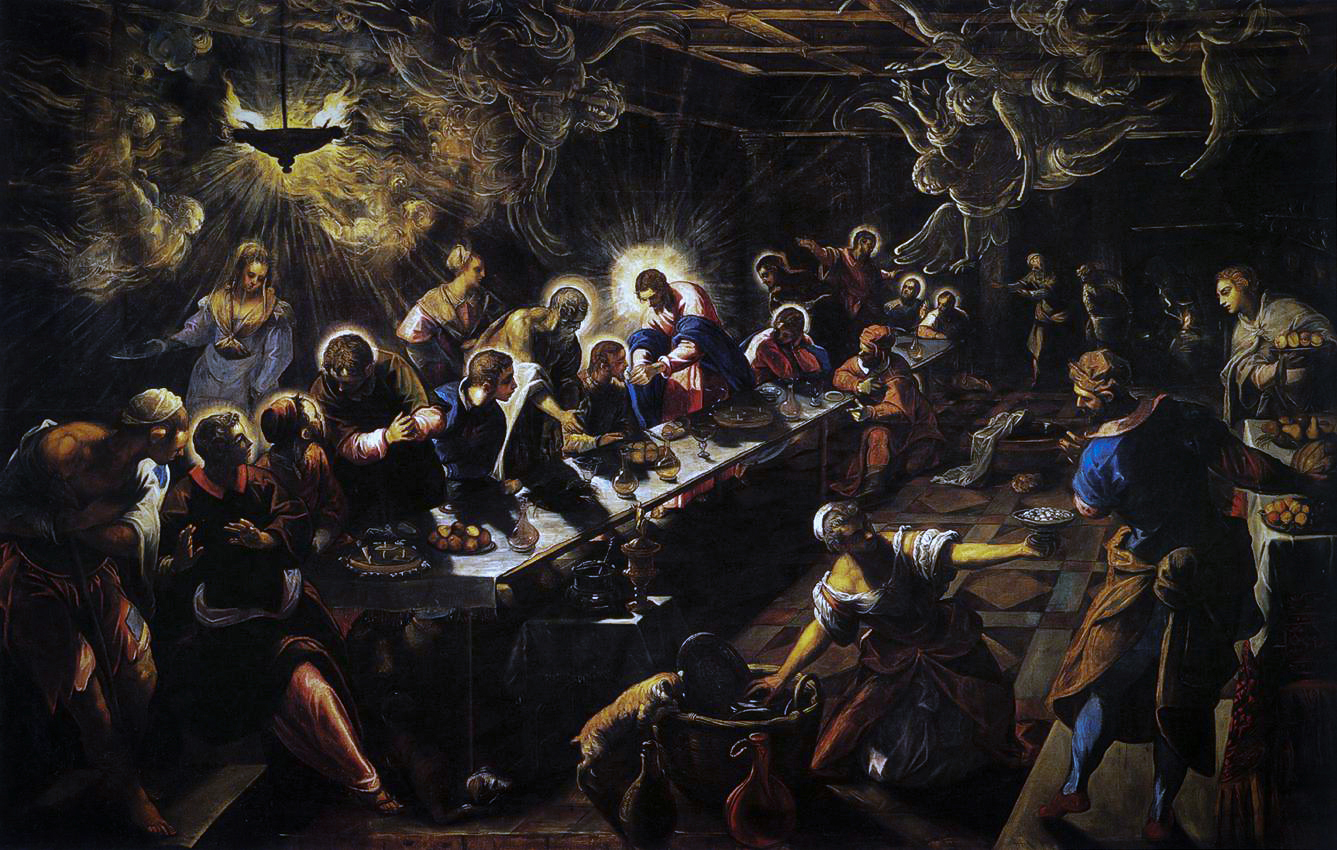
The Cardinal Dawn is an expression of life in union with God. It reflects the love, reverence, and holy fear of those who believe in Him and trust in His grace rather than their own understanding or efforts. The composition explores the beauty of God’s holiness, the inward transformation of the heart, and the assurance of His abiding presence. Each new morning brings renewed mercy, while His love and faithfulness remain constant through every uncertainty, struggle, and season of life.
Original Composition
The original composition brings together lyrics, melody, instrumentation, and arrangement to express personal experiences, observations, and reflections drawn from different seasons of life. Each work develops its own musical character, conveying meaning through both direct expression and the subtleties of imagery, symbolism, and interpretation.
The Cardinal Dawn
Before the windows gather gold, Before the earth begins to stir, I wake beneath a thousand thoughts, And find You waiting in their blur.
The questions left from yesterday, The judgments I mistook for sight, Lie scattered where my pride gave way To something deeper than the night.
And all the things I thought I knew Grow strangely small beneath Your gaze. My restless heart has nowhere left To hide its shadows from Your face.
O Love that brings me to my knees, O Fire that searches through my soul, I tremble where Your mercy breathes, And yield the things I cannot hold.
Let every hidden altar fall, Let every lesser kingdom fade. My heart is Yours beyond recall, Beneath the cardinal dawn.
I’ve walked the halls of borrowed truth, And weighed the words of wiser men. I’ve sought the boundaries of Your Church, Then searched my own heart once again.
How easily the mind enthrones The fragile measure of its sight. Yet through the hours I called my own, Your Word was burning in the night.
I love the One whose holiness Makes every secret thought appear. I dread the thought of grieving You, Yet find no darkness where You draw me near.
O Love that brings me to my knees, O Fire that searches through my soul, I tremble where Your mercy breathes, And yield the things I cannot hold.
Let every hidden altar fall, Let every lesser kingdom fade. My heart is Yours beyond recall, Beneath the cardinal dawn.
When all my arguments are ash, When every borrowed crown is dust, When even faith feels faint and small, You are the One in whom I trust.
Not by the strength within these hands, Not by the vows these lips have made. The wounded hands that purchased life Are all the refuge I can claim.
O Love that brings me to my knees, O Fire that makes the fallen whole, Your holiness is terrible, Your mercy reaches through my soul.
Let every hidden altar fall, Let every lesser kingdom fade. My life is hid with Christ in God, Beneath the cardinal dawn.
The windows fill with amber light. The shadows leave the eastern wall. And where I knelt before the night, The morning finds me after all.
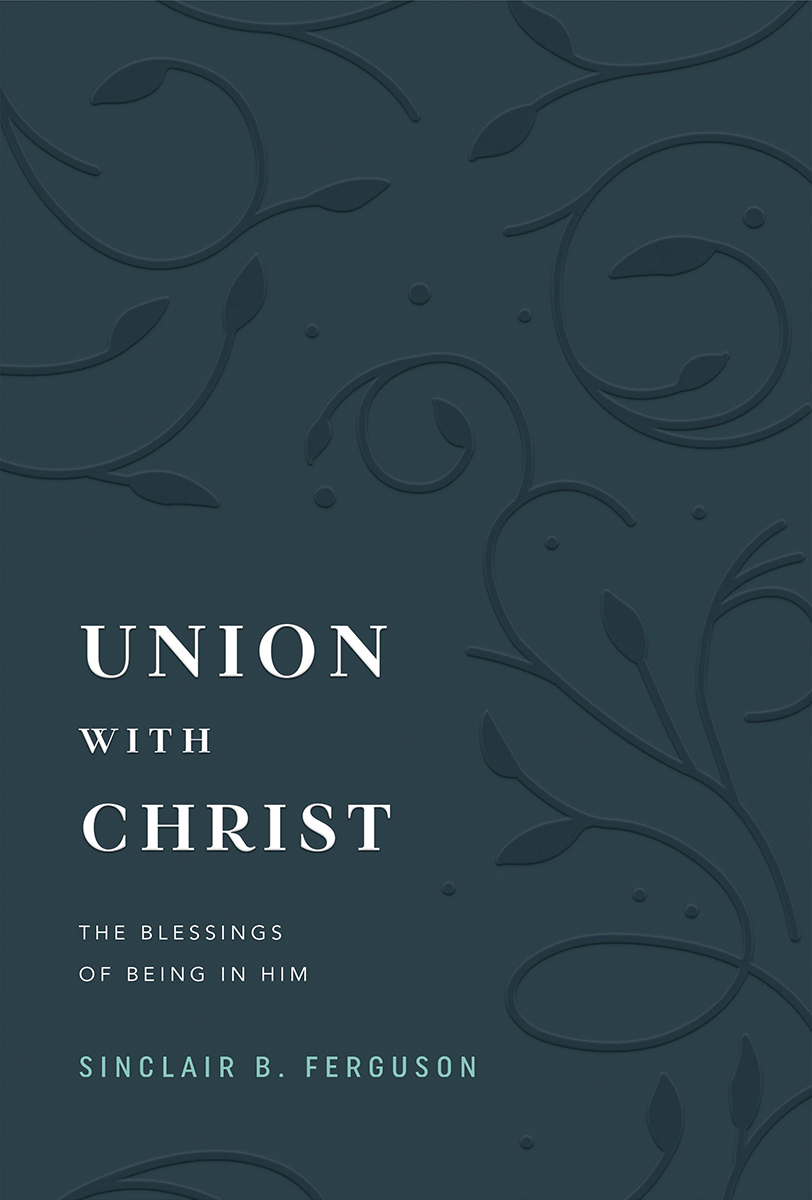
Having completed the book Union with Christ: The Blessings of Being in Him by Sinclair B. Ferguson (hardcover ISBN 978-1848717237) cover to cover, what stayed with me wasn’t just how the book explains union with Christ, but how it repositions everything without making a show of it. I found myself thinking less in terms of parts and more in terms of place. Not what I receive from Christ, but where I actually am. That shift settled in slowly. It made a lot of what I’ve read before feel like it had been handled too loosely. Here, it all stayed together. Nothing stood on its own. It all kept pointing back to a positional reality.
By the time I finished, it felt less like I had learned something new and more like something had been put back in order. It clarified what I’ve been sensing already, especially that life with God isn’t something I’m building or maintaining. It’s something I’m living from. That took pressure off without lowering or dismissing anything. It also made certain habits of thinking harder to return to. Once it’s seen this way, it’s difficult to go back to treating the Christian life as a pressing effort toward something instead of life already held in Christ.
Introduction
The work is intentionally introductory, yet its subject matter resists superficial treatment. Ferguson acknowledges that union with Christ has often been assumed rather than examined, and in some periods obscured beneath more isolated doctrinal categories. His method is to return to key scripture and allow their internal logic to unfold. This yields a presentation that is neither fragmented nor artificially ordered, but cohesive moving from the reality of being in Christ, through participation in His death and resurrection, to the lived expression of that union. The result is a work that is modest in scale yet substantial in theological reach.
Book Review
The opening chapter, “In Christ,” establishes the book’s governing center. Drawing particularly from Ephesians 1:3–14, Ferguson shows that the blessings of salvation are consistently located “in Him.” Election, redemption, inheritance, and sealing are not presented as discrete gifts distributed independently of Christ, but as dimensions of a single reality—participation in the Son. This initial chapter does not merely introduce the theme; it fixes the reader’s orientation. Salvation is not first a series of acts applied to the individual, but a relocation of the individual into Christ Himself, where all grace resides.
“Getting into Christ” (Philippians 3:1-21) addresses the question of how this union is effected. Ferguson resists reduction to a single explanatory mechanism and instead follows the biblical pattern in which the Spirit unites the believer to Christ through the gospel. Faith is neither isolated nor diminished; it is presented as the means by which the believer is brought into this union, yet always in the context of divine initiative. The emphasis remains on incorporation—on being brought into Christ—rather than on any merely external relation to Him.
In “The State of the Union” (2 Corinthians 5:17), the focus shifts to the nature and permanence of this reality. Ferguson underscores that union with Christ is not contingent upon fluctuating conditions within the believer, but rests upon the accomplished work of Christ and the unchanging purpose of God. The believer’s standing is therefore secure, not because of internal constancy, but because of the stability of the One to whom he is united. This chapter serves to guard the doctrine from being construed as fragile or reversible.
“Deep Foundations” (Romans 5:12-21) presses further into the grounding of union with Christ in the eternal counsel of God. The emphasis here is not speculative, but doxological: the union enjoyed by the believer is rooted in what God has purposed before the foundation of the world. Ferguson’s treatment reinforces the continuity between God’s eternal will and its historical realization in Christ, showing that union is not an afterthought but integral to the divine design of salvation.
“Reconciled in Christ” (2 Corinthians 5:9-21) narrows the lens to the removal of enmity and the restoration of peace. Ferguson treats reconciliation not as an isolated benefit but as a necessary expression of union itself. To be in Christ is to share in the reconciliation He has accomplished through His death. The chapter maintains clarity regarding both the objective nature of this accomplishment and its personal application, without detaching either from the central reality of union.
In “A Union of Prepositions” (Galatians 2:20), Ferguson turns to the language of Scripture, attending closely to the varied expressions— “in,” “with,” “through”—that articulate the believer’s relation to Christ. This chapter is particularly instructive in demonstrating that theological precision arises from linguistic attentiveness. The diversity of prepositions does not fragment the doctrine but enriches it, revealing the multiple dimensions of participation in Christ’s person and work.
“A Union in Death and Resurrection” (Romans 6:1-14) and “The Old Man Has Died” (Romans 6:5-14) develop the believer’s participation in the redemptive events of Christ’s history. Drawing from passages such as Romans 6, Ferguson shows that union with Christ entails a real sharing in His death to sin and His resurrection to new life. The language is not merely illustrative; it signifies a decisive transition from the old order to the new. The believer’s identity is thus reconstituted in relation to Christ’s own death and life, establishing both a definitive break with sin and the beginning of a transformed existence.
“The Union Rhythm” (Colossians 3:1-17) introduces the ongoing pattern of life that flows from this reality. Ferguson describes a dynamic in which what is objectively true of the believer in Christ is progressively expressed in daily life. This is not a movement from uncertainty to certainty, but from established reality to lived experience. The rhythm is grounded in what has already been accomplished, yet it unfolds through continual reliance upon Christ.
“Activating the Union” (Colossians 3:5-17) continues this line of thought by addressing how believers consciously appropriate the truth of their union with Christ. Ferguson does not suggest that union is activated in the sense of being brought into existence; rather, he speaks of the believer’s engagement with what is already true. The emphasis falls on faith, awareness, and the means by which the believer lives out of this union, without confusing foundation with expression.
“A Picture of Union” (John 15:1-11) gathers the preceding themes through biblical imagery, offering concrete representations of what it means to be united to Christ. These images serve not as embellishments but as clarifications, grounding the doctrine in forms that reflect its relational and participatory nature. The use of imagery reinforces the coherence of the doctrine, showing how it permeates both thought and life.
The final chapter, “Union in the Christ-Pattern” (Colossians 1:24, 2 Corinthians 1:3-7, 2 Corinthians 4:7-12), 2 Corinthians 13:2-4), brings the work to its practical culmination. Ferguson shows that the believer’s life is conformed to the pattern of Christ Himself—not externally, but as the outworking of an internal union. The pattern of death and resurrection, humility and exaltation, becomes the shape of the Christian life because it is first the reality of Christ’s own life in which the believer shares. This chapter gathers the threads of the book into a unified vision of conformity to Christ grounded in participation in Him.
Beyond the individual chapters, the book exhibits a consistent doctrinal integration. Justification, sanctification, and adoption are not treated as isolated categories but are implicitly gathered within the reality of union with Christ. Ferguson’s approach resists fragmentation by showing that each of these benefits is given in Christ and cannot be properly understood apart from Him. This integration is not imposed; it arises from the scriptural pattern itself.
The role of the Holy Spirit, while not treated as a separate locus, is nevertheless integral throughout. The Spirit is the one who unites the believer to Christ, who applies the benefits of His work, and who sustains the life that flows from this union. Ferguson’s presentation maintains this pneumatological dimension without abstraction, consistently situating the Spirit’s work within the framework of union with Christ rather than as an independent operation.
The experiential dimension of union with Christ is likewise present, though carefully ordered. Ferguson does not begin with experience, nor does he allow experience to define the doctrine. Instead, he shows how experience arises from what is objectively true. The believer comes to know, appropriate, and live out of union with Christ precisely because that union has been established by God. This preserves both the objectivity of the doctrine and its personal significance.
Conclusion
Taken as a whole, I think the book does what it set out to do. It puts union with Christ back where it belongs, not at the edge, but at the center. That is what stayed with me most. It works because it remains simple and clear. It does not go beyond what Scripture says, and it does not let the subject become vague or hard to grasp.
By staying close to the language and structure of Scripture, it gave me a faithful and coherent account of what it means to be in Christ. For me, that made the book more than an introduction. It became a reorientation. It brought me back to see that the whole of life is held within this one reality.
Fallen Titan in its final resting place. In a world of enormous creatures in this wilderness place, Titans such as this can fall and come to rest. After centuries of standing strong and tall, they fall from their stature and come to rest such as…
The Jetson Nano AI system set up was completed in preparation for various projects ahead. The process was very involved as it included the physical construction of the AI system hardware to also correspond to the associated Linux OS and GUI (Ubuntu). All configurations were…