The purpose of reading Plato’s Republic is to develop a deeper and richer understanding of Augustine’s The City of God. Before beginning to fully absorb The City of God, Plato’s Republic, written in 375 B.C., was a treatise about the city of Man as a secular and philosophical work concerning justice and the formation of social order (with serious moral flaws concerning slavery, prostitution, and the eradication of the family unit). It is widely understood as consisting of a rationale for the primitive framework of Western civilization. Much later, by comparison, Augustine wrote about the city of God as a theology to draw a contrast against the deeply corrupt, vain, and futile propositions of Plato’s Greek philosophical thought in the Republic.
While Plato’s work casts Socrates as the primary conversational figure throughout the book, he acknowledges the existence and necessity of the soul, but not as from Creator YHWH. Instead, he attributes too much to “the gods” as if they existed as such or as if there was an obligation to learn from them or attribute to them human well-being. Morality wasn’t an imperative concerning an obligation to daily living as much as the limited group of virtues attributed to city guardians. Guardians were a class of people set up in Plato’s Socratic dialog to raise an order of people that would defend the city from becoming a “city of pigs” or a “fevered state” to the demise of personal and social well-being. The prime virtues of the guardians were justice, courage, temperance, and wisdom. Absent were the other virtues of the Old Testament Tenak, or at the very least, they were subordinate.
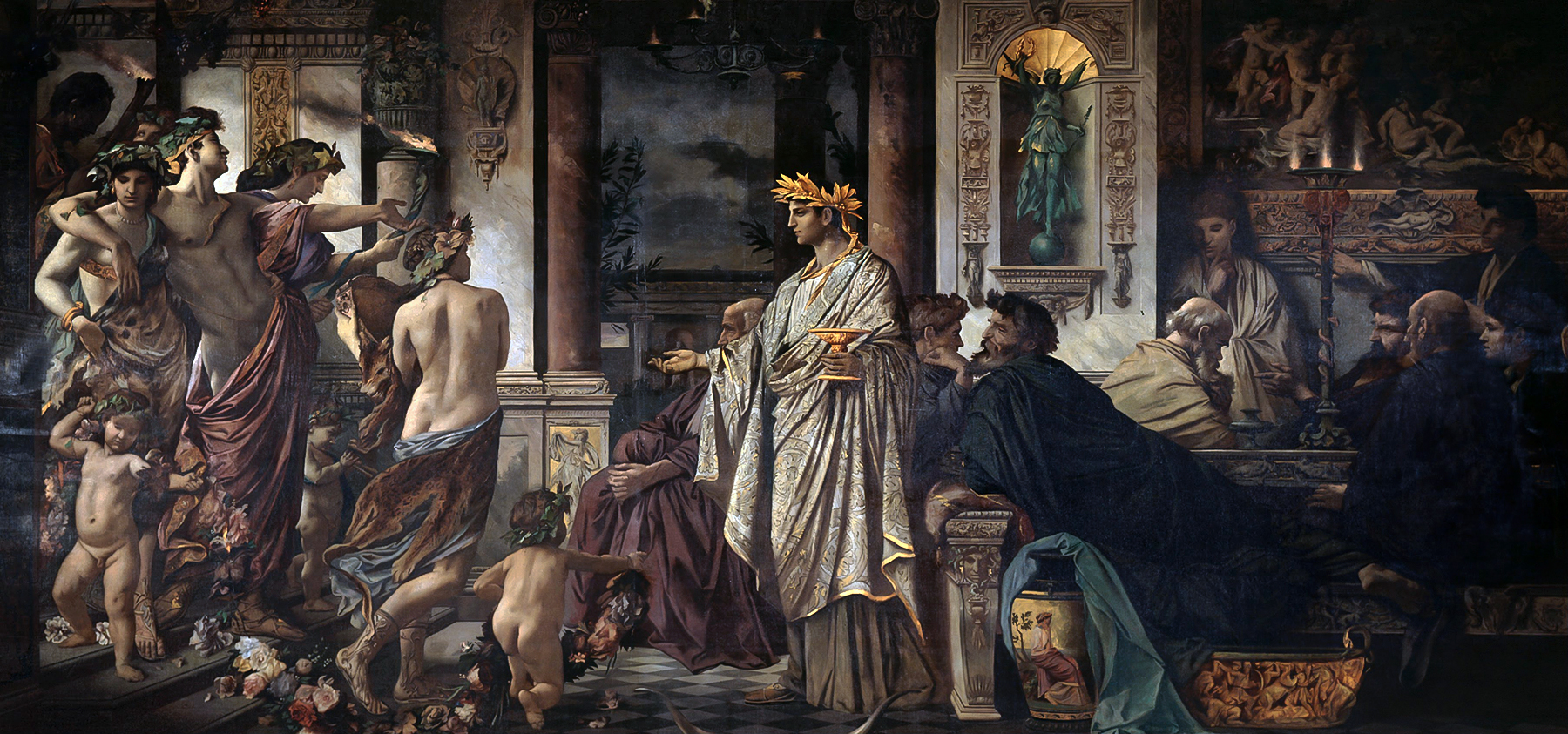
Characters of Republic
Overall, the book is an elaborate and deep treatise on the development of the individual, the State, and social interests around health, security, commerce, and justice. Its presuppositions largely rest upon presuppositions of Greek mythology that form human reason among philosophers who were captive to the cultural conditions of the time. As a well-known ancient philosopher, Plato set up the treatise around a fictional conversation between characters he developed throughout the dialog. The Cliff notes of each character in the Republic are as follows:
Socrates
The major speaker in the dialogue. His name means “master of life,” and it is he who advances all of Plato’s theories. Note that the Socrates who speaks in Plato’s Dialogues is not, of course, the man, Socrates. The Socrates of the Dialogues serves as a persona (a mask, or fictive character) for Plato himself, who hoped, perhaps, thus to grant a kind of immortality to his teacher.
Cephalus
A wealthy and retired old businessman, head of a business family. Socrates has known him a long time and admires him. Cephalus and Socrates initiate the dialogue, which begins with a casual friendly conversation. Cephalus’ significance in the dialogue is that he exemplifies the seasoned experienced man who, though not a philosopher, has tried to live the good life and to adopt the virtues he has heard about. His remarks to Socrates at the beginning of the dialogue foreshadow topics that Socrates will develop later in the dialogue.
Polemarchus
Cephalus’ son and the pupil of Lysias, a teacher of rhetoric. It is Polemarchus (whose name means “war-lord” or “general”) who instigates the flyting with Socrates during the festivities for the “goddess” Bendis before the dialogue proper begins. Polemarchus, perhaps true to his name, is very laconic in the dialogue, and he seems impatient with his “role” in it, seems resigned to his having “inherited” the responsibilities of host after Cephalus quits the conversation.
Thrasymachus
A sophist, a teacher of specious rhetoric. His name means “rash fighter.” Socrates seems particularly eager to engage Thrasymachus’ arguments in the dialogue, and the two nearly reduce a philosophical dialogue to a petty quarrel.
Adeimantus
An older half-brother of Plato. His name means “sooth-singer,” and in the dialogue, he is a young man and something of a poet.
Glaucon
Also a half-brother of Plato. His name means “owl” or “gleaming eyes,” and in the dialogue, he is a young man.
It is useful to understand a summary before reading through Republic as a preview of the dialog as a threaded conversation. That way, there’s a set of expectations and structure for the dialog to accompany the reading. There is a lot of dense subject matter to track the further the readers get, so Wikipedia’s summary offers a reasonable outline. For clarity and concise review, I heavily edited and abbreviated the Wikipedia summary to what Plato intended and what the translator rendered as follows:
Books I – II: Aging, Love and the Definitions of Justice
While visiting the city of Piraeus with Glaucon, Polemarchus tells Socrates to join him. They eventually end up at Polemarchus’ house, where Socrates encounters Polemarchus’ father, Cephalus.
In his first philosophical conversation with the group members, Socrates gets into a conversation with Cephalus. The first real philosophical question Plato poses in the book is when Socrates asks, “is life painful at that age, or what report do you make of it?” when speaking to Cephalus, who is older than Socrates.
Plato is seemingly interested in aging and love and in what effect they will have on him. It is a brief but salient point and the book’s first real discussion. Cephalus answers that many are unhappy about old age because they miss their youth. But he then says he has met other men who do not feel this way. Cephalus mentions a story when he was in the presence of one of these men named Sophocles, and he was asked, “how do you feel about love, Sophocles? Are you still capable of it? To which he replied, Hush! If you please: to my great delight, I have escaped from it. I feel as if I have escaped from a frantic and savage master.” Cephalus states that he feels that Sophocles has spoken wisely and that “unquestionably for old age brings us profound repose and freedom from this (love) and other passions. When the appetites have abated, and their force is diminished, the description of Sophocles is perfectly realized. It is like being delivered from a multitude of furious masters.” This seems to set Socrates at ease, and the conversations move on to discuss Justice.
Plato seems to be asking the question about both “love” (strong attachment and affection) and libido (sexual desire) in this section. Plato is indicating that as we age or enter the “threshold of age” (age above 65), we can escape/release/detach from our passions and desires (those frantic and savage masters) and can live contentedly in repose.
Socrates asks Cephalus, Polemarchus, and Thrasymachus for their definitions of justice. Cephalus defines justice as giving what is owed. Polemarchus says justice is “the art which gives good to friends and evil to enemies.” Thrasymachus proclaims, “justice is nothing else than the interest of the stronger.” Socrates refutes each in turn and says it is advantageous to be just and disadvantageous to be unjust. The first book ends in aporia concerning the essence of justice. In rhetoric, aporia is the expression of doubt. Accordingly, the meaning of justice was left as an irresolvable internal contradiction or logical disjunction in the text.
The first book proposes two definitions of justice but is deemed inadequate. Returning debts owed, and helping friends while harming enemies, are commonsense definitions of justice that, Socrates shows, are inadequate and thus lack the universality demanded of a definition. He does not completely reject them, for each expresses a commonsense notion that Socrates incorporates in books II through V.
At the end of Book I, Socrates agrees with Polemarchus that justice includes helping friends, but says the just man would never harm another. Thrasymachus believes that Socrates has done those present an injustice by saying this and attacks his character and reputation, partly because he suspects that Socrates does not believe that harming enemies is unjust. Thrasymachus gives his understanding of justice and injustice as “justice is what is advantageous to the stronger, while injustice is to one’s own profit and advantage”. Socrates asks whether the ruler who makes a mistake by making a law that lessens their well-being is still a just ruler according to that definition. Thrasymachus agrees that no just ruler would make such an error. This agreement allows Socrates to undermine Thrasymachus’ definition by comparing rulers to people of various professions. Thrasymachus consents to Socrates’ assertion that an artist is someone who does his job well, and is a practioner of some art, which allows him to complete the job well. In so doing Socrates gets Thrasymachus to admit that rulers who enact a law that does not benefit them firstly, are in the precise sense not rulers. Thrasymachus gives up, and falls silent. Socrates has trapped Thrasymachus into admitting that the strong man who makes a mistake is not strong in the precise sense, and that some type of knowledge is required to rule perfectly. However, it is far from a satisfactory definition of justice.
Book II – The Ring of Gyges
Socrates believes he has answered Thrasymachus and is done with the justice discussion. Socrates’ young companions, Glaucon and Adeimantus, continue to further the discussion. Glaucon argues that the origin of justice was first in social contracts aimed at preventing one from suffering injustice, unable to take revenge, second that all those who practice justice do so unwillingly and out of fear of punishment, and third that the life of the unjust man is far more satisfactory than that of the just man. Glaucon would like Socrates to prove that justice is desirable and belongs to the highest class of desirable things: those desired both for their own sake and their consequences.
To demonstrate the problem, he tells the story of Gyges, who – with the help of a ring that turns him invisible – achieves great advantages for himself by committing injustices. The only reason that men are just and praise justice is out of fear of punishment. The law is a product of compromise between individuals who agree not to treat others unjustly if others do the same. Glaucon says that if people had the power to withhold justice without fear of punishment, they would. Glaucon uses this argument to challenge Socrates to defend the position that a just life is better than an unjust life. Adeimantus adds to Glaucon’s speech the charge that men are only just for the results that justice brings: fortune, honor, and reputation. Adeimantus challenges Socrates to prove that behaving justly is worth something in and of itself, not only as a means to an end.
After Glaucon speaks his views, Adeimantus adds that, in this thought experiment, the unjust should not fear divine judgment since the very poets who wrote about such judgment also wrote that the “gods” would grant forgiveness to those who made religious sacrifices. Adeimantus demonstrates his reason by drawing two detailed portraits, an unjust man who grew wealthy by injustice, devoting a percentage of this gain to religion, thus rendering him innocent in the eyes of the “gods.”
The Ring of Gyges is a story from Greek mythology that explores the themes of morality, power, and the corrupting influence of absolute power. In the story, Gyges, a shepherd, finds a ring that grants him the power of invisibility. Using the power of the ring, Gyges becomes a powerful king and is able to fulfill all of his desires without consequences.
However, as time goes on, Gyges becomes increasingly corrupt and immoral, using his power to engage in illicit activities and to gain more power. The story ultimately raises the question of whether absolute power corrupts absolutely and whether individuals can remain moral and just when given unlimited power.
The story of The Ring of Gyges has had a significant impact on Western philosophy and literature, inspiring works such as Plato’s Republic and J.R.R. Tolkien’s The Lord of the Rings. The story continues to be discussed and analyzed in contemporary debates about the nature of power and morality.
Books II – IV: The City and the Soul
Socrates suggests that they use the city as an image to seek how justice comes to be in the soul of an individual. After attributing the origin of society to the individual not being self-sufficient and having many needs which he cannot supply himself, they describe the city’s development. Socrates first describes the “healthy state,” but Glaucon considers this hardly different than “a city of pigs.” Socrates then describes the luxurious city, which he calls “a fevered state.” This requires a guardian class to defend and attack on its account.
This begins a discussion concerning the type of education that should be given to these guardians in their early years, including the topic of appropriate stories. They conclude that stories that ascribe evil to the gods are untrue and should not be taught. They suggest guardians should be educated in these four cardinal virtues: wisdom, courage, justice, and temperance. They also suggest that the second part of the guardians’ education should be in gymnastics. With physical training, they can live without needing frequent medical attention: physical training will help prevent illness and weakness. Socrates asserts that both male and female guardians be given the same education, that all wives and children be shared, and that they be prohibited from owning private property.
In the fictional tale known as the myth or parable of the metals, Socrates presents the Noble Lie (γενναῖον ψεῦδος, gennaion pseudos) to explain the origin of the three social classes. Socrates proposes and claims that if the people believed “this myth…[it] would have a good effect, making them more inclined to care for the State and one another.” Socrates assumes each person will be happy engaging in the occupation that suits them best. The flawed assertion follows: if the city is happy, then individuals are happy. In the physical education and diet of the guardians, the emphasis is on moderation since both poverty and excessive wealth will corrupt them (422a). Without controlling their education, the city cannot control future rulers. Socrates says it is pointless to worry over specific laws, like contracts, since proper education ensures lawful behavior, and poor education causes lawlessness (425a–425c).
Socrates searches for wisdom, courage, and temperance in the city on the grounds that justice will be easier to discern in what remains (427e). They find wisdom among the guardian rulers, courage among the guardian warriors (or auxiliaries), and temperance among all city classes in agreeing about who should rule and who should be ruled. Finally, Socrates defines justice in the city as the State where each class performs only its own work, not meddling in the work of the other classes (433b).
The virtues discovered in the city are then sought in the individual soul. For this purpose, Socrates creates an analogy between the parts of the city and the soul (the city–soul analogy). He argues that psychological conflict points to a divided soul since a completely unified soul could not behave in opposite ways towards the same object, at the same time, and in the same respect (436b). He gives examples of possible conflicts between the rational, spirited, and appetitive parts of the soul, corresponding to the city’s rulers, auxiliaries, and producing classes. Having established the tripartite soul, Socrates defines the virtues of the individual. A person is wise if he is ruled by the part of the soul that knows “what is beneficial for each part and for the whole,” courageous if his spirited part “preserves in the midst of pleasures and pains” the decisions reached by the rational part, and temperate if the three parts agree that the rational part lead (442c–d). They are just if each part of the soul attends to its function and not the function of another. It follows from this definition that one cannot be just if one doesn’t have the other cardinal virtues.
Books V – VI: The Ship of State
Socrates, having to his satisfaction, defined the just constitution of both city and psyche, moves to elaborate upon the four unjust constitutions of these. Adeimantus and Polemarchus interrupt, asking Socrates instead first to explain how the sharing of wives and children in the guardian class is to be defined and legislated, a theme first touched on in Book III. Socrates is overwhelmed by their request, categorizing it as three “waves” of attack against which his reasoning must stand firm. These three waves challenge Socrates’ claims that male and female guardians should receive the same education and that the State should regulate human reproduction. All offspring should be ignorant of their actual biological parents. By this State-regulated means of reproduction and child development, such a city and its corresponding philosopher-king could actually come to be in the real world.
In Books V–VII, the abolition of riches among the guardian class leads to the abandonment of the family as it is defined and ordained by God, and as such, no child may know his or her parents, and the parents may not know their own children. Socrates tells a tale that is the “allegory of the good government.” The rulers assemble couples for reproduction based on breeding criteria. Thus, a stable population is achieved through eugenics, and social cohesion is projected to be high because familial links are extended to everyone in the city. In other words, the guardian class consists of drones with a hive mentality. Moreover, the education of the youth is such that they are taught of only works of writing that encourage them to improve themselves for the state’s good, and envision (the) god(s) as entirely good, just, and the author(s) of only that which is good.
Socrates argues that in the ideal city, a true philosopher with an understanding of forms will facilitate the harmonious cooperation of all the citizens of the city—the governance of a city-state is likened to the command of a ship, the Ship of State. This philosopher-king must be intelligent, reliable, and willing to lead a simple life. However, these qualities are rarely manifested on their own, so they must be encouraged through education and studying the Good.
Books VI–VII: Allegories of the Sun, Divided Line, and Cave
The Allegory of the Cave primarily depicts Plato’s distinction between the world of appearances and the ‘real’ world of the Forms. Just as visible objects must be illuminated in order to be seen, so must also be true of objects of knowledge if light is cast on them.
Plato imagines a group of people who have lived their entire lives as prisoners, chained to the wall of a cave underground so they cannot see the outside world behind them. However, a constant flame illuminates various moving objects outside, which are silhouetted on the cave wall visible to the prisoners. Through having no other experience of reality, these prisoners ascribe forms to these shadows, such as either “dog” or “cat.” Plato then goes on to explain how the philosopher is akin to a prisoner who is fr“ed ”rom “he c”ve. The light initially blinds the prisoner, but when he adjusts to the brightness, he sees the fire and the statues and how they caused the images witnessed inside the cave. He sees that the fire and statues in the cave are just copies of the real objects, merely imitations. This is analogous to the Forms. What we see from day to day are merely appearances, reflections of the Forms. The philosopher, however, will not be deceived by the shadows and will hence be able to see the ‘real’ world, the world above that of appearances; the philosopher will gain knowledge of things in themselves. At the end of this allegory, Plato asserts that it is the philosopher’s burden to reenter the cave. Those who have seen the ideal world, he says, have the duty to educate those in the material world. Since the philosopher recognizes what is truly good, only he is fit to rule society, according to Plato.
Books VIII–IX: Plato’s five regimes
In Books VIII–IX stands Plato’s criticism of the forms of government. Plato categorized governments into five types of regimes: aristocracy, timocracy, oligarchy, democracy, and tyranny.
The starting point is an imagined, alternate aristocracy (ruled by a philosopher-king); a just government ruled by a philosopher-king, dominated by the wisdom-loving element. Aristocracy degenerates into timocracy when, due to miscalculation on the part of its governing class, the next generation includes persons of an inferior nature, inclined not just to cultivate virtues but also to produce wealth. In a timocracy, governors will apply great effort in gymnastics and the arts of war, as well as the virtue of courage that pertains to them. As the emphasis on honor is compromised by wealth accumulation, it is replaced by oligarchy. The oligarchic government is dominated by the desiring element, in which the rich are the ruling class. Oligarchs do, however, value at least one virtue, that of temperance and moderation—not out of an ethical principle or spiritual concern, but because by dominating wasteful tendencies, they succeed in accumulating money. As this socioeconomic divide grows, so do tensions between social classes. From the conflicts arising from such tensions, the poor majority overthrew the wealthy minority, and democracy replaces the oligarchy preceding it. In a democracy, the lower class grows bigger and bigger. A visually appealing demagogue is soon lifted up to protect the interests of the lower class, who can exploit them to take power in order to maintain order. Democracy then degenerates into tyranny where no one has discipline, and society exists in chaos. In a tyrannical government, the city is enslaved to the tyrant, who uses his guards to remove the best social elements and individuals from the city to retain power (since they pose a threat) while leaving the worst. He will also provoke warfare to consolidate his position as leader. In this way, tyranny is the most unjust regime of all.
In parallel, Socrates considers the individual or soul corresponding to each of these regimes. He describes how an aristocrat may become weak or detached from political and material affluence, and how his son will respond to this by becoming overly ambitious. The timocrat, in turn, may be defeated by the courts or vested interests; his son responds by accumulating wealth in order to gain power in society and defend himself against the same predicament, thereby becoming an oligarch. The oligarch’s son will grow up with wealth without having to practice thrift or stinginess and will be tempted and overwhelmed by his desires so that he becomes democratic, valuing freedom above all. The democratic man is torn between tyrannical passions and oligarchic discipline and ends up in the middle ground: valuing all good and bad desires. The tyrant will be tempted like the democrat but without an upbringing in discipline or moderation to restrain him. Therefore, his most base desires and wildest passions overwhelm him, and he becomes driven by lust, using force and fraud to take whatever he wants. The tyrant is both a slave to his lusts and a master to whomever he can enslave. Socrates points out that the human tendency to be corrupted by power leads down the road to timocracy, oligarchy, democracy, and tyranny.
From this, he concludes that ruling should be left to philosophers, who are the most just and, therefore, least susceptible to corruption. This “good city” is depicted as being governed by philosopher-kings, disinterested persons who rule not for their personal enjoyment but for the good of the city-state (polis). The philosophers have seen the “Forms” and therefore think they know what is good. They think they understand the corrupting effect of greed and own no property and receive no salary.
Book X: Myth of Er
The Myth of Er is a story from Plato’s Republic that describes the journey of a soldier named Er who dies in battle and returns to life to tell of his experience in the afterlife. According to the story, after death, souls are judged and sent to either heaven or hell depending on their actions in life.
Er observes that the souls who had lived just lives were rewarded with eternal happiness in the heavens, while those who had lived unjust lives were punished in hell. However, he also notes that some souls were given a choice to be reincarnated and to live another life on Earth.
The story ultimately raises questions about the nature of justice, morality, and the afterlife. It also emphasizes the importance of living a just and moral life, as one’s actions in life will determine their fate in the afterlife.
The Myth of Er has had a significant impact on Western philosophy and literature, inspiring works such as Dante’s Divine Comedy and Milton’s Paradise Lost. It continues to be discussed and analyzed in contemporary debates about morality, the afterlife, and the nature of justice.
Concluding a theme brought up most explicitly in the Analogies of the Sun and Divided Line in Book VI, Socrates finally rejects any form of imitative art and concludes that such artists have no place in the just city. He continues to argue for the immortality of the psyche and even espouses a theory of reincarnation. He finishes by detailing the rewards of being just, both in this life and the next. Artists create things but are only different copies of the original idea. “And whenever anyone informs us that he has found a man who knows all the arts, and all things else that anybody knows, and every single thing with a higher degree of accuracy than any other man—whoever tells us this, I think that we can only imagine to be a simple creature who is likely to have been deceived by some wizard or actor whom he met, and whom he thought all-knowing, because he himself was unable to analyze the nature of knowledge and ignorance and imitation.”
And the same object appears straight when looked at out of the water, and crooked when in the water; and the concave becomes convex, owing to the illusion about colours to which the sight is liable. Thus every sort of confusion is revealed within us; and this is that weakness of the human mind on which the art of conjuring and deceiving by light and shadow and other ingenious devices imposes, having an effect upon us like magic.
He speaks about illusions and confusion. Things can look very similar, but be different in reality. Because we are human, at times we cannot tell the difference between the two.
And does not the same hold also of the ridiculous? There are jests which you would be ashamed to make yourself, and yet on the comic stage, or indeed in private, when you hear them, you are greatly amused by them, and are not at all disgusted at their unseemliness—the case of pity is repeated—there is a principle in human nature which is disposed to raise a laugh, and this which you once restrained by reason, because you were afraid of being thought a buffoon, is now let out again; and having stimulated the risible faculty at the theatre, you are betrayed unconsciously to yourself into playing the comic poet at home.
With all of us, we may approve of something, as long we are not directly involved with it. If we joke about it, we are supporting it.
Quite true, he said. And the same may be said of lust and anger and all the other affections, of desire and pain and pleasure, which are held to be inseparable from every action—in all of them poetry feeds and waters the passions instead of drying them up; she lets them rule, although they ought to be controlled, if mankind are ever to increase in happiness and virtue.
Sometimes we let our passions rule our actions or way of thinking, although they should be controlled, so that we can increase our happiness.