Today I finished the book Beloved by Francis Chan and Mercy Gordon, and it reminds me of what really matters. It returns to what is already true, allowing it to settle with time. Reading it felt less like moving forward and more like being brought back to something steady that had been there all along.
Book Review
The book’s opening point on insecurity is direct and familiar. It brings forward the causes of that instability without being just too much. There is a recognition that much of this comes from misplaced fear. The book distinguishes between a right fear of the Lord, one that honors Him as He is, and a distorted fear that pulls the heart away from Him. That clarity becomes practical. It leads to the use of simple means: the Word and prayer. To take God at what He has said, and to ask Him to reveal where one is still deceived.
The book also draws attention to what is greatest. The command to love God is not treated as an abstract idea, but as something central and present. This also brings a needed correction. It names false gospels plainly. One that treats Jesus as a way to reach something else. Another that treats works as a way to reach Him. Both are set aside in favor of what is true. The gospel is received as it stands, and from it comes a clear identity. Not earned or improved, but given. Beloved children, and a people being formed as a radiant bride.
That identity carries into what it means to abide. The language here is simple and steady. To remain in His love, not as an effort to hold on, but as a way of staying where one already belongs. The book also names what interrupts this. Distractions that scatter attention. Thoughts that do not settle. Personal failures that pull the mind inward. There is also a warning about what is taken in. The steady influence of what is corruptive, through media and other sources, is shown to shape the heart over time.
What remains central is that He loved first. That order does not change. From that, love begins to move outward. Toward the church, toward the poor, toward the lost. It is not presented as a separate task, but as something that follows from what has already been received. In daily life, this becomes visible in small ways. The way one listens, the way one responds, the way one carries the day.
The book also gives attention to what hinders endurance. It speaks of love growing cold, not all at once, but slowly. It warns against isolation, against trying to stand alone without the presence of others. It also does not ignore spiritual opposition. There is an awareness that influence comes through what is heard, seen, and received, and that it can shape the direction of the heart over time.
It closes with a reminder drawn from what Apostle John encountered in Revelation. Not as something distant, but as something certain. A restored dwelling with God. A people made whole. A place where what has been promised is fully seen. That vision remains in the background as the book ends, not pressing for response, but standing as a steady and final reminder.
Taken together, the book is a welcome reminder for daily reflection. It does not demand much, yet it returns the mind to what matters most. It brings attention back to what God has said, to what He has given, and to what remains. Over time, a continued return that offers clarity about how the day is lived. Without pressure, the book eases the reader into a settled understanding of what it is to love and be loved.
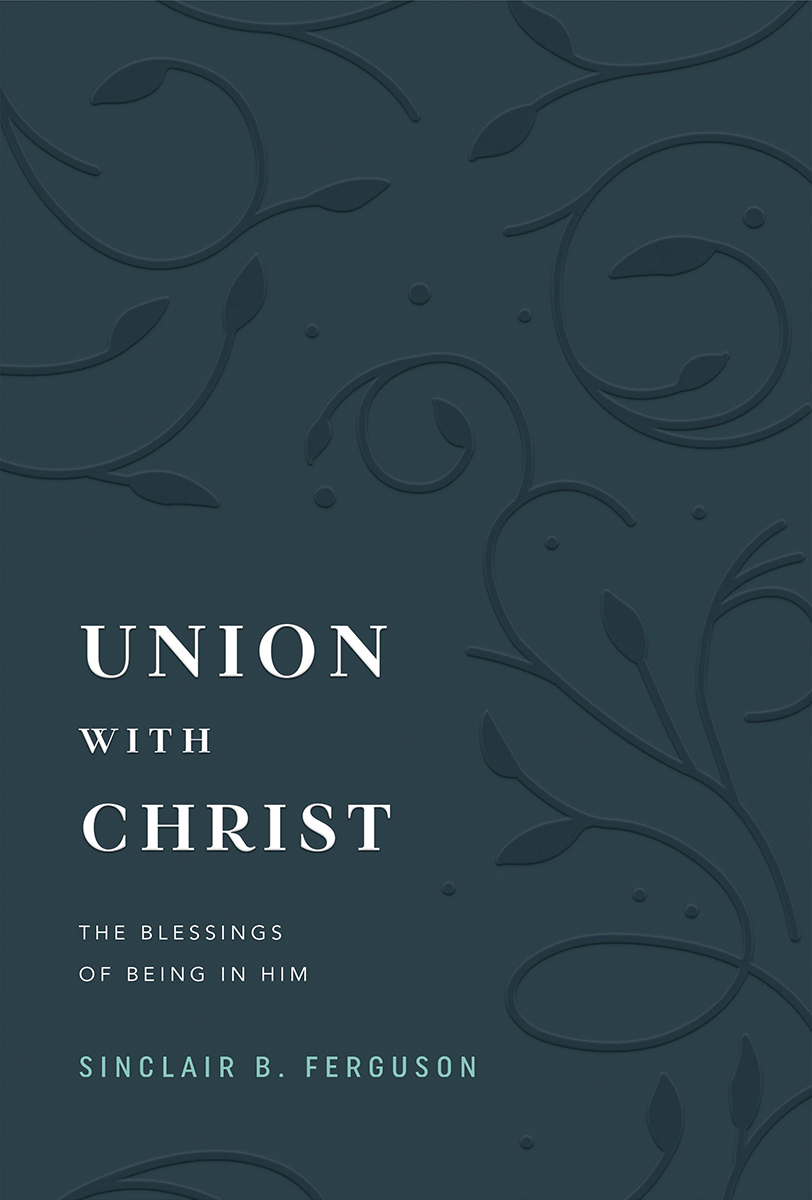
Having completed the book Union with Christ: The Blessings of Being in Him by Sinclair B. Ferguson (hardcover ISBN 978-1848717237) cover to cover, what stayed with me wasn’t just how the book explains union with Christ, but how it repositions everything without making a show of it. I found myself thinking less in terms of parts and more in terms of place. Not what I receive from Christ, but where I actually am. That shift settled in slowly. It made a lot of what I’ve read before feel like it had been handled too loosely. Here, it all stayed together. Nothing stood on its own. It all kept pointing back to a positional reality.
By the time I finished, it felt less like I had learned something new and more like something had been put back in order. It clarified what I’ve been sensing already, especially that life with God isn’t something I’m building or maintaining. It’s something I’m living from. That took pressure off without lowering or dismissing anything. It also made certain habits of thinking harder to return to. Once it’s seen this way, it’s difficult to go back to treating the Christian life as a pressing effort toward something instead of life already held in Christ.
Introduction
The work is intentionally introductory, yet its subject matter resists superficial treatment. Ferguson acknowledges that union with Christ has often been assumed rather than examined, and in some periods obscured beneath more isolated doctrinal categories. His method is to return to key scripture and allow their internal logic to unfold. This yields a presentation that is neither fragmented nor artificially ordered, but cohesive moving from the reality of being in Christ, through participation in His death and resurrection, to the lived expression of that union. The result is a work that is modest in scale yet substantial in theological reach.
Book Review
The opening chapter, “In Christ,” establishes the book’s governing center. Drawing particularly from Ephesians 1:3–14, Ferguson shows that the blessings of salvation are consistently located “in Him.” Election, redemption, inheritance, and sealing are not presented as discrete gifts distributed independently of Christ, but as dimensions of a single reality—participation in the Son. This initial chapter does not merely introduce the theme; it fixes the reader’s orientation. Salvation is not first a series of acts applied to the individual, but a relocation of the individual into Christ Himself, where all grace resides.
“Getting into Christ” (Philippians 3:1-21) addresses the question of how this union is effected. Ferguson resists reduction to a single explanatory mechanism and instead follows the biblical pattern in which the Spirit unites the believer to Christ through the gospel. Faith is neither isolated nor diminished; it is presented as the means by which the believer is brought into this union, yet always in the context of divine initiative. The emphasis remains on incorporation—on being brought into Christ—rather than on any merely external relation to Him.
In “The State of the Union” (2 Corinthians 5:17), the focus shifts to the nature and permanence of this reality. Ferguson underscores that union with Christ is not contingent upon fluctuating conditions within the believer, but rests upon the accomplished work of Christ and the unchanging purpose of God. The believer’s standing is therefore secure, not because of internal constancy, but because of the stability of the One to whom he is united. This chapter serves to guard the doctrine from being construed as fragile or reversible.
“Deep Foundations” (Romans 5:12-21) presses further into the grounding of union with Christ in the eternal counsel of God. The emphasis here is not speculative, but doxological: the union enjoyed by the believer is rooted in what God has purposed before the foundation of the world. Ferguson’s treatment reinforces the continuity between God’s eternal will and its historical realization in Christ, showing that union is not an afterthought but integral to the divine design of salvation.
“Reconciled in Christ” (2 Corinthians 5:9-21) narrows the lens to the removal of enmity and the restoration of peace. Ferguson treats reconciliation not as an isolated benefit but as a necessary expression of union itself. To be in Christ is to share in the reconciliation He has accomplished through His death. The chapter maintains clarity regarding both the objective nature of this accomplishment and its personal application, without detaching either from the central reality of union.
In “A Union of Prepositions” (Galatians 2:20), Ferguson turns to the language of Scripture, attending closely to the varied expressions— “in,” “with,” “through”—that articulate the believer’s relation to Christ. This chapter is particularly instructive in demonstrating that theological precision arises from linguistic attentiveness. The diversity of prepositions does not fragment the doctrine but enriches it, revealing the multiple dimensions of participation in Christ’s person and work.
“A Union in Death and Resurrection” (Romans 6:1-14) and “The Old Man Has Died” (Romans 6:5-14) develop the believer’s participation in the redemptive events of Christ’s history. Drawing from passages such as Romans 6, Ferguson shows that union with Christ entails a real sharing in His death to sin and His resurrection to new life. The language is not merely illustrative; it signifies a decisive transition from the old order to the new. The believer’s identity is thus reconstituted in relation to Christ’s own death and life, establishing both a definitive break with sin and the beginning of a transformed existence.
“The Union Rhythm” (Colossians 3:1-17) introduces the ongoing pattern of life that flows from this reality. Ferguson describes a dynamic in which what is objectively true of the believer in Christ is progressively expressed in daily life. This is not a movement from uncertainty to certainty, but from established reality to lived experience. The rhythm is grounded in what has already been accomplished, yet it unfolds through continual reliance upon Christ.
“Activating the Union” (Colossians 3:5-17) continues this line of thought by addressing how believers consciously appropriate the truth of their union with Christ. Ferguson does not suggest that union is activated in the sense of being brought into existence; rather, he speaks of the believer’s engagement with what is already true. The emphasis falls on faith, awareness, and the means by which the believer lives out of this union, without confusing foundation with expression.
“A Picture of Union” (John 15:1-11) gathers the preceding themes through biblical imagery, offering concrete representations of what it means to be united to Christ. These images serve not as embellishments but as clarifications, grounding the doctrine in forms that reflect its relational and participatory nature. The use of imagery reinforces the coherence of the doctrine, showing how it permeates both thought and life.
The final chapter, “Union in the Christ-Pattern” (Colossians 1:24, 2 Corinthians 1:3-7, 2 Corinthians 4:7-12), 2 Corinthians 13:2-4), brings the work to its practical culmination. Ferguson shows that the believer’s life is conformed to the pattern of Christ Himself—not externally, but as the outworking of an internal union. The pattern of death and resurrection, humility and exaltation, becomes the shape of the Christian life because it is first the reality of Christ’s own life in which the believer shares. This chapter gathers the threads of the book into a unified vision of conformity to Christ grounded in participation in Him.
Beyond the individual chapters, the book exhibits a consistent doctrinal integration. Justification, sanctification, and adoption are not treated as isolated categories but are implicitly gathered within the reality of union with Christ. Ferguson’s approach resists fragmentation by showing that each of these benefits is given in Christ and cannot be properly understood apart from Him. This integration is not imposed; it arises from the scriptural pattern itself.
The role of the Holy Spirit, while not treated as a separate locus, is nevertheless integral throughout. The Spirit is the one who unites the believer to Christ, who applies the benefits of His work, and who sustains the life that flows from this union. Ferguson’s presentation maintains this pneumatological dimension without abstraction, consistently situating the Spirit’s work within the framework of union with Christ rather than as an independent operation.
The experiential dimension of union with Christ is likewise present, though carefully ordered. Ferguson does not begin with experience, nor does he allow experience to define the doctrine. Instead, he shows how experience arises from what is objectively true. The believer comes to know, appropriate, and live out of union with Christ precisely because that union has been established by God. This preserves both the objectivity of the doctrine and its personal significance.
Conclusion
Taken as a whole, I think the book does what it set out to do. It puts union with Christ back where it belongs, not at the edge, but at the center. That is what stayed with me most. It works because it remains simple and clear. It does not go beyond what Scripture says, and it does not let the subject become vague or hard to grasp.
By staying close to the language and structure of Scripture, it gave me a faithful and coherent account of what it means to be in Christ. For me, that made the book more than an introduction. It became a reorientation. It brought me back to see that the whole of life is held within this one reality.
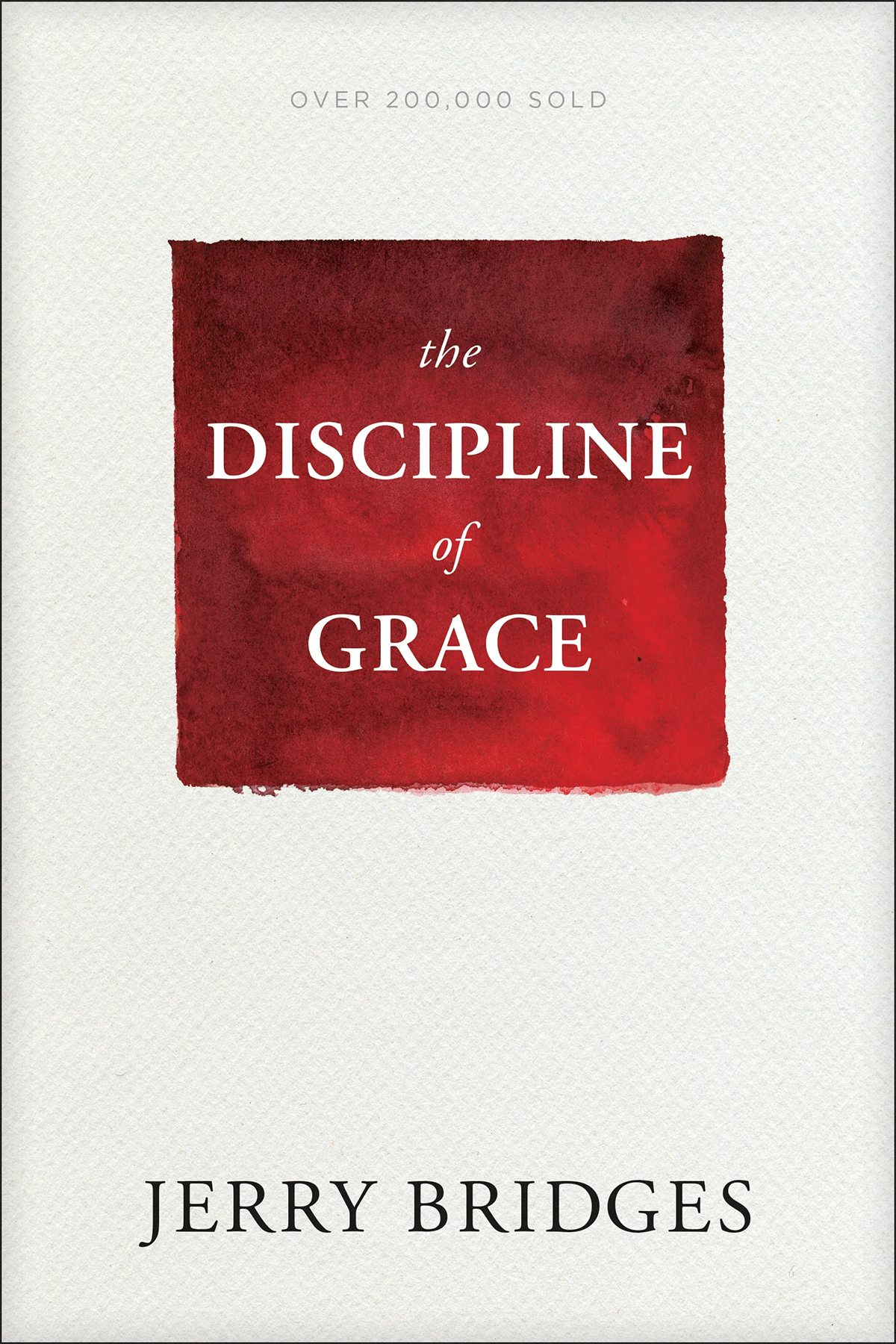
Today I completed the book The Discipline of Grace, and it was a helpful, clear grounding in what it means to live by discipline through grace. Various disciplines were covered, spanning thoughts, words, and actions, both internal and external to a person. The author covered not only the specifics but also why they exist and why they must be practiced as an exercise of grace.
Introduction
The Discipline of Grace stands as one of the most mature and refined works by Jerry Bridges, written in the later arc of his ministry with The Navigators. Whereas The Pursuit of Holiness presses the necessity and seriousness of sanctification with clarity and force, The Discipline of Grace turns inward and downward—seeking to correct the distortions that arise when holiness is pursued without a continual, governing return to the gospel.
Bridges does not retreat from holiness; he deepens its foundation. The book is not a softening of his earlier work, but a stabilization of it, guarding against both legalism and passivity. It is written not for the careless, but for the earnest believer who has already taken holiness seriously and now must learn to do so rightly—under grace, through dependence, and by means of the Spirit working through Scripture.
Book Review
What follows are not general impressions, but the principal burdens the book carries—those areas where Bridges is most intent on correcting, grounding, and directing the believer’s life.
1. Performance-Based Acceptance
Bridges identifies a deeply rooted error among serious Christians: the quiet assumption that one’s standing with God fluctuates with one’s obedience. Even where justification by faith is affirmed doctrinally, it is often denied functionally.
The believer feels:
Nearer to God after obedience
More distant after failure
Not merely in experience, but in perceived standing.
Bridges dismantles this by returning relentlessly to the objective ground of acceptance: the righteousness of Christ alone. This is not introductory doctrine—it is the daily ground upon which the Christian must stand.
This is the instinctive but fatal assumption that one’s moral effort can establish acceptability before God. The encounter of the rich young ruler in the Gospel of Mark 10:18 is not treated as an isolated episode, but as a mirror held up to the reader: a man sincere, disciplined, and outwardly obedient, yet fundamentally misaligned in his understanding of goodness. Bridges presses the point that God’s standard is not comparative or incremental, but absolute—rooted in His own character. Thus, even the most refined human obedience fails to meet the required threshold. The effect is not merely to humble, but to dismantle every residual confidence in personal performance as a basis for acceptance. What remains, by necessity rather than preference, is the righteousness of Christ. The chapter, therefore, does not simply critique moralism; it establishes the ground upon which the rest of the book must stand—that justification is entirely external to the believer, and that any attempt to supplement it, however subtle, is a return to the very error the gospel corrects.
2. Preach the Gospel to Oneself Daily
One of the book’s most defining contributions is the insistence that the gospel must be continually reapplied, not assumed.
This is not vague remembrance, but deliberate rehearsal:
No condemnation in Christ
Justification apart from works
Reconciliation already accomplished
Without this, the believer inevitably drifts toward either despair (after sin) or self-reliance (after obedience). The gospel is not left behind; it is the operating center of the Christian life.
3. Subtlety of Legalism
Bridges’ treatment of the Pharisee is not directed outward, but inward. Legalism is not merely external rule-keeping—it is the misplacement of confidence, even in sincere effort.
The danger is especially acute for those who:
Pursue discipline
Desire holiness
Structure their lives carefully
Because discipline itself can become a new ground of confidence, replacing Christ subtly rather than overtly.
This turns from the standard of righteousness to the posture of the heart before God, drawing from the parable in the Gospel of Luke 18:11–12. The Pharisee is not portrayed as outwardly corrupt, but as religiously exact, morally disciplined, and doctrinally correct—yet fundamentally deceived in the ground of his acceptance. His prayer reveals a subtle but decisive shift: he measures himself against others and quietly presents his obedience as evidence of worthiness. The tax collector, by contrast, offers nothing but a plea for mercy, grounded in the recognition of his own sinfulness. Bridges presses the reader to see that the issue is not the presence or absence of discipline, but the basis upon which one approaches God. Even sincere obedience becomes corrupt when it is allowed to function as a credential before Him. Thus, the chapter exposes how easily self-righteousness can inhabit a life that appears devout, and it reasserts that the only acceptable posture is one of continual dependence upon grace. The justified man is not the one who has achieved, but the one who has abandoned all claim to achievement and cast himself entirely upon the mercy of God.
4. Union with Christ by Death to Sin
Moving beyond justification, Bridges grounds sanctification in Romans 6: the believer has died to sin.
This is not experiential language, but positional reality:
Sin remains present
But its dominion has been broken
The Christian does not strive to achieve freedom, but fights from an already altered relationship to sin. This guards against both defeatism and false triumphalism.
Bridges anchors the pursuit of holiness in the believer’s union with Christ, drawing directly from Romans 6:1–2. He is careful to distinguish between sin’s continued presence and its broken authority: the believer still contends with sin, yet is no longer under its dominion. This death to sin is not an experiential claim to be measured by present feeling or success, but an objective reality established through participation in Christ’s death. Bridges presses that sanctification must proceed from this ground; otherwise, the believer either fights sin as though still enslaved, leading to discouragement, or assumes a level of victory that denies ongoing conflict. The proper stance is neither denial nor defeat, but a settled recognition that a decisive break has occurred. So, the exhortation is not to become dead to sin, but to live in accordance with what is already true—to reckon oneself as such, and to present one’s members accordingly. In this way, obedience is framed not as an attempt to secure freedom, but as the rightful expression of a life that has already been transferred out of sin’s reign into the sphere of Christ.
5. Grace as Training
This is a necessary correction:
Against viewing grace as mere pardon
Against viewing effort as inherently opposed to grace
The distinction is precise: “Grace is opposed to earning, not to effort.”
Thus, discipline is not negated—it is redefined and redirected.
This chapter clarifies the active and formative nature of grace, drawing from Titus 2:11–12. Grace is not presented merely as pardon for past sin, but as a present power that instructs, trains, and governs the believer’s life. Bridges is careful to dismantle the false opposition between grace and discipline: grace does not replace effort, nor does it excuse indifference; rather, it establishes the only proper context in which disciplined obedience can occur. The believer is not left to generate holiness independently, but neither is he permitted to remain passive. Grace teaches the renunciation of ungodliness and the pursuit of self-controlled, upright, and godly living, not as a means of earning favor, but as the necessary outworking of favor already received. Thus, discipline is redefined—not as self-imposed rigor aimed at securing acceptance, but as responsive obedience shaped and sustained by grace itself. In this way, the chapter preserves both sides: the necessity of effort and the primacy of grace, held together without confusion or separation.
6. Integration of Dependence and Discipline
One of the book’s most careful balances is held here:
The believer must pursue holiness actively
Yet never independently of the Holy Spirit
Bridges rejects both:
Self-reliant effort
Passive dependence
Instead, he calls for dependent exertion—a lived tension in which the believer acts, but is consciously and continually reliant on the Spirit’s enabling.
Here, the subject matter turns to the nature of sanctification itself, grounding it in the transforming work of the Holy Spirit as described in 2 Corinthians 3:18. The change he describes is neither self-produced nor instantaneous, but progressive and Spirit-wrought, as the believer beholds the glory of the Lord and is thereby conformed to His image. Bridges is careful to locate transformation not in mere external conformity or disciplined behavior alone, but in a deeper reformation of the inner person—affections, desires, and inclinations increasingly aligned with Christ. Yet this transformation does not occur apart from means; it is mediated through sustained engagement with Scripture, where the glory of Christ is revealed and contemplated. As the believer remains under that revelation, the Spirit effects real change over time, moving “from glory to glory.” The emphasis, therefore, is neither on passive waiting nor on self-driven effort, but on intentional exposure to the truth through which the Spirit works, producing a likeness to Christ that is both gradual and genuine.
7. Spirit Through Scripture
This is one of the most weight-bearing elements of the book, and one often underemphasized in summary.
Bridges assumes and teaches that: “The primary way the Holy Spirit transforms the believer is through Scripture.”
This carries significant implications:
Transformation is not detached from the Word
The Spirit does not ordinarily operate apart from it
The degree of engagement with Scripture affects the degree of transformation
Thus, Scripture is not merely informative—it is instrumental.
Naturally, Bridges draws the pursuit of holiness into its proper center by grounding it in love for God, as set forth in Matthew 22:36–40. Obedience, in his treatment, is not sustained by discipline alone, nor by fear of failure, but by a rightly ordered affection—heart, soul, and mind directed toward God Himself. Bridges is careful to distinguish this love from sentiment or mere intention; it is expressed concretely through obedience to His commands. At the same time, he guards against reducing the Christian life to external rule-keeping by showing that such obedience must arise from a relational posture rather than a mechanical one. The greatest commandment, therefore, functions as both motive and measure: it calls the believer beyond compliance into devotion, while also defining that devotion in terms of what God has actually required. Obedience is not something we create or sustain on our own, but something that flows from a love shaped by Scripture and empowered by grace.
8. Insufficiency of Daily Reading
In one of his more practical and corrective observations, Bridges states plainly that daily reading alone is insufficient.
The issue is not frequency, but depth and continuity.
He appeals implicitly to the biblical pattern (Psalm 1; Psalm 119):
Meditation “day and night”
Sustained reflection
Repeated return
This leads to a necessary conclusion: “Scripture must be carried into the day, not left behind in the morning.”
Here establishes the necessary union between effort and reliance, drawing from Psalms 127:1—“Unless the LORD builds the house, those who build it labor in vain.” He does not diminish the need for discipline; rather, he exposes the futility of discipline pursued in self-sufficiency. The believer is called to act—to pursue holiness deliberately, to structure life toward obedience—but never as though the outcome rests in personal resolve or method. Bridges is careful to show that dependence is not merely a posture at the beginning of the day, but one that must be maintained throughout action itself. Effort is real, but it is consciously carried out under the awareness that any true progress is the result of God’s working, not human achievement. In this way, discipline is preserved without becoming autonomous, and dependence is preserved without becoming passive. The chapter, therefore, calls the believer to a sustained posture in which every act of obedience is undertaken with effort, yet never apart from reliance upon God, who alone makes that effort effective.
9. Persistent Immersion
From that biblical model, Bridges presses toward a functional pattern:
Initial engagement with Scripture
Meditation—lingering, turning, pressing into meaning
Application—immediate and specific
Reinforcement—returning to the same truth throughout the day
This is not formalized as a system, but its intent is unmistakable.
The goal is not that one has read Scripture, but that one is living under its continual influence, where the Spirit recalls and applies it in real time.
It’s therefore necessary to turn to a settled and deliberate resolve in the pursuit of holiness, drawing from Psalms 119:106—“I have sworn an oath and confirmed it, to keep Your righteous rules.” He makes clear that growth in godliness does not proceed from vague desire or intermittent effort, but from a definite commitment of the will to obey God’s commands. This commitment is not impulsive or merely emotional; it is thoughtful, grounded in Scripture, and expressed in specific areas of life. Bridges presses that without such resolve, the believer remains governed by circumstance, mood, or momentary inclination. Yet even here, he guards against self-reliance: commitment is necessary, but it is exercised in dependence on grace, not as an independent source of strength. The point is not to generate confidence in one’s own resolve, but to bring the will into alignment with what God has already revealed. In this way, commitment functions as a stabilizing force—anchoring obedience not in fluctuating desire, but in a conscious, sustained decision to follow God’s Word.
Continuum of Influence
Bridges identifies an ongoing reality in the believer’s life: the mind is never neutral, but is continually shaped by competing influences—God’s truth, the world’s patterns, and the inclinations of the flesh. The issue is not whether influence is occurring, but which influence is dominant. Because most of the day is spent under non-biblical inputs, brief exposure to Scripture is insufficient to govern thought and action. The necessary response is not mere daily reading but sustained engagement, in which Scripture is carried, revisited, and applied throughout the day. In this way, the believer increasingly comes under the governing influence of God’s Word, such that its presence outweighs and overrides all competing influences.
Within this continuum, the Holy Spirit works through the Word as His primary means of shaping the believer. His work is not detached from Scripture, but occurs as it is actively engaged, recalled, and applied. As the Word remains present throughout the day, the Spirit brings it to mind, presses it into specific situations, and enables obedience in response to it. In this way, transformation is not produced by exposure alone, but by the Spirit working through sustained engagement with the truth.
10. Discipline through Adversity
The book’s closing situates the believer’s life within the Father’s hand.
Adversity is not incidental—it is formative:
Confirming sonship
Shaping holiness
Training endurance
This extends discipline beyond personal effort into providence itself. The believer is not only disciplining himself; he is being disciplined by God.
This is beneath outward obedience to the level of settled belief, as given by Romans 12:2. Bridges distinguishes between preferences, which move with circumstances, and convictions, which are formed through Scripture and remain fixed. Without convictions, the believer is left vulnerable to pressure, impulse, and the subtle influence of the surrounding culture. He emphasizes the necessity of shaping the mind with truth until it arrives at clear, governing conclusions about what is right before God. These convictions do not arise automatically; they are developed through intentional engagement with Scripture and must be held with intentional firmness. Yet they are not ends in themselves—they exist to guide conduct, ensuring that obedience is not reactive but principled. In this way, convictions become the internal framework that steadies the believer, enabling consistent obedience even when external conditions or internal inclinations would suggest otherwise.
Analysis: Use of the OICA Model
The framework is an inductive analysis method using canonical correlation, often referred to as OICA (Observation, Interpretation, Correlation, and Application). It’s an expanded form of a classic inductive study method, widely taught within discipleship traditions such as The Navigators. At its core, the inductive method follows a simple approach: what does the text say (Observation), what does it mean (Interpretation), and what does it require (Application). The addition of Correlation makes explicit a principle already assumed in sound interpretation: that Scripture must be read in light of Scripture, allowing the whole canon to inform the meaning of any given passage as it was intended. In this way, OICA functions not as a foreign method of understanding, but as a more explicit and guarded form of inductive reason, ensuring that interpretation remains anchored in authorial intent and canonical coherence.
Bridges’ use of Scripture throughout The Discipline of Grace consistently follows this OICA pattern. He begins with the text itself, draws out its meaning, relates it to the broader witness of Scripture, and then presses it into the life of the believer. His argument is not constructed from isolated verses or impressions, but from a disciplined handling of the text that moves in a deliberate sequence.
Observation — Careful Attention to the Text
Mark 10:18; Luke 18:11–12; Romans 6 & 8; Titus 2:11–12
What the scripture says, what the language implies; what is revealed about God and man
Interpretation — Determining Authorial Meaning
Romans 8:1 → no condemnation
Romans 6:1–2 → death to sin as a change in dominion
Titus 2:11–12 → grace as active teacher
Correlation — Scripture Interpreting Scripture
Justification (Romans 8) with sanctification (Romans 6)
Grace (Titus 2) with discipline
Doctrinal coherence across passages
Application — Directed Response
Preach the gospel to yourself daily
Depend on the Spirit
Form convictions; practice watchfulness; receive adversity as discipline
The result is a method that gives both clarity and stability to his theology. Meaning is not derived from a single passage, and application is not imposed externally. Each conclusion arises from the text as it is read in light of the whole of Scripture, and each exhortation flows from that established meaning into the believer’s daily life.
Conclusion
This book gathers the believer’s life into a single, governing reality: grace is not only the ground of acceptance, but the ongoing power that stabilizes and propels obedience. The believer is not left to move from justification into a separate mode of self-directed effort. Instead, the same grace that justifies continues to train, direct, and sustain. This requires a continual return to the gospel, a refusal to measure standing before God by performance, and a deliberate dependence upon the Spirit in every act of obedience.
At the same time, grace does not diminish responsibility. Bridges presses for real discipline as a commitment of the will, formation of convictions, watchfulness in conduct, and perseverance under adversity. These are not techniques for self-improvement, but the proper response to grace already given. The believer acts, chooses, and endures in dependence on God, with the understanding that He is at work and that obedience flows from what He has already accomplished.
The result is a life stabilized by a settled understanding of grace. Discipline remains, now carried out from that foundation—steady in direction, consistent in practice, and sustained by the same grace that first established the believer before God.
Discipleship, as I’ve known it, is not an event or a study. It is not a group you attend or a curriculum you complete. It is a way of life that is intentionally formed in another person over time. Scripture speaks plainly: “If you abide in My word, you are truly My disciples” (John 8:31). That abiding is not casual. It shows up in decisions, habits, and responses. It shows up day-to-day in interpersonal contexts, whether 1:1, 1:5, or some combination.
Introduction
When I step into most church environments now, I don’t see that same thing. I see parts of it, sometimes strong parts, but rarely the whole held together. There’s teaching, often good teaching. But it’s not always tied to sustained, personal formation. There’s fellowship, but it’s usually informal—encouragement without direction. There are small groups, but they often function as discussion spaces rather than as places where a life is being intentionally shaped. There’s activity, sometimes a lot of it, but activity alone doesn’t produce transformation.
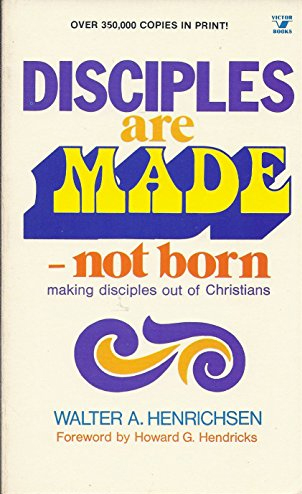
This post is a review of the book “Disciples are Made, Not Born.”
So what gets called “discipleship” is often an experience—something you attend, something you participate in—but not necessarily something that results in spiritual development over time through deeper, biblically centered mentorship.
Scripture doesn’t leave much room for that kind of separation. “By this My Father is glorified, that you bear much fruit and so prove to be My disciples” (John 15:8). The evidence is fruit. Not intention, not participation—fruit. And fruit takes time, continuity, and care. It doesn’t come from occasional input.
It also doesn’t stop with the individual. “What you have heard from me… entrust to faithful men, who will be able to teach others also” (2 Timothy 2:2). That’s the pattern—life passed on in a way that continues. In everything I was trained in, that was assumed. You weren’t just growing—you were being prepared to help someone else do the same.
That’s another place where the difference shows up. In many settings, growth is treated as personal and self-contained. There’s no clear expectation that what’s being learned will be reproduced in someone else. Without that, something essential is missing.
This isn’t about criticizing churches or their leadership. It’s about recognizing a gap between what Scripture describes and what is often practiced. The language is still there—discipleship is talked about, valued, and encouraged. But the content has shifted in many places. The term now covers a wider range of activities, not all of which lead to formation. From experience, discipleship requires more than structure. It requires a yielded life. It requires clarity about what is being aimed at. And it requires time—real, sustained investment that doesn’t fit neatly into programs.
Even then, it’s not something that can be manufactured. “Apart from Me you can do nothing” (John 15:5). Whatever is real is given, not produced. But it is given in a way that calls for response. “Work out your own salvation… for it is God who works in you” (Philippians 2:12–13). Both are present. When those pieces come together—truth, life, obedience, time, and reproduction—the result is unmistakable. It doesn’t need to be labeled. It can be seen.
Where they are separated, the name may still be used. But the outcome is different. And over time, that difference becomes clear. Alongside this, I also worked through and practiced the material from Disciples Are Made Not Born. What that book did was take what I was already experiencing and make it explicit. It wasn’t abstract theory—it described exactly what I had seen work.
The emphasis there was unmistakable: disciples are not accidental. They are formed through intentional investment. That included selecting a few, not trying to reach everyone at once; building through association, not distance; pressing toward obedience, not just understanding; and moving toward reproduction from the beginning, not as an afterthought.
I didn’t just read those principles—I applied them. That meant sitting with someone consistently, opening Scripture together, watching how it translated into real decisions, and coming back to those same areas until there was follow-through. It meant giving responsibility early, not waiting for someone to feel ready. It meant staying involved long enough to see whether something actually took root.
That process clarified something important: clarity of content is not enough. Without intentional, personal investment over time, nothing holds. And without an expectation of reproduction, the process stops with the individual. So when I look at what is commonly called discipleship now, that grid is always in the background. Not as a standard imposed from a book, but as something that has been tested in practice.
Where that kind of intentional, sustained formation is present, the results are consistent. Where it is absent, something else takes its place—even if the language remains the same. And again, over time, that difference becomes clear.
Book Review
Disciples Are Made, Not Born by Walter A. Henrichsen (239 pages, ISBN: 9780781438834) is not a theoretical treatment of discipleship. It is a practical, structured account of how disciples are actually formed. The book does not attempt to redefine discipleship, nor does it broaden the term. It narrows it—carefully, deliberately—until it corresponds to something that can be carried out in real life.
The opening chapters establish a foundation that is often assumed but rarely examined. “The Kind of Person God Uses” and “Jesus as Lord” move directly to the condition of the individual. Discipleship does not begin with method, but with the man himself. There is no attempt to separate belief from submission. The lordship of Christ is not treated as an advanced concept, but as the starting point. “Why do you call Me ‘Lord, Lord,’ and do not do what I say?” (Luke 6:46). The question is not rhetorical in the book—it governs everything that follows.
“The Cost of Discipleship” and “A Proper View of God and Man” continue in the same direction. The cost is not softened. It is stated plainly. A disciple is not formed apart from denial of self and reordering of life (cf. Luke 9:23). At the same time, the author grounds this in a right understanding of God and man. Without that, effort becomes either inflated or misdirected. “Apart from Me you can do nothing” (John 15:5) is not cited as a limitation, but as a necessary frame. Whatever is done in discipleship is dependent, not self-generated.
From there, the book moves outward. “Evangelism and the Disciple” and “Recruiting a Prospective Disciple” make clear that discipleship is not passive. It does not begin with whoever happens to be present. There is intentionality. There is selection. Christ Himself did not invest equally in all. He called, observed, and chose. The language of recruiting is deliberate. It implies that not every person is immediately positioned for this kind of formation, and that discernment is required.
The center of the book is found in chapters seven through ten. This is where Henrichsen is most concrete. “How to Train a Disciple—Follow-Up” establishes continuity. Initial contact is not the work. It is the beginning of the work. “Imparting the Basics” assumes nothing. Foundational truths are taught, reinforced, and revisited. “Conviction and Perspective” moves beyond information into internal formation. It addresses how a person thinks, not just what he knows. “Gifts and Calling” brings direction. A disciple is not formed in isolation, but toward a purpose that aligns with the work of God.
This structure is not unfamiliar to me. I did not encounter it first in the book, but in practice. Working through Design for Discipleship, leading others through it, and using the Topical Memory System alongside tools like the Bridge, Hand, and Wheel illustrations provided a working framework. Scripture was not treated as reference material, but as something to be internalized and used. Meetings were not the center. Life was. What the book does is articulate that process with clarity. It names what is happening when it is done well.
One of the consistent elements, both in the book and in practice, is that nothing is left at the level of agreement. Truth is tied to obedience. “If anyone is willing to do His will, he will know of the teaching” (John 7:17). The order matters. Understanding is not detached from response. In practice, this meant returning to the same areas repeatedly until there was follow-through. It meant that knowledge alone was insufficient. Without application, it did not count as progress.
“Multiplying Your Efforts” brings the process to its intended outcome. Discipleship does not terminate with the individual. It continues. “The things which you have heard from me… entrust these to faithful men who will be able to teach others also” (2 Timothy 2:2). This is not presented as an additional step, but as the natural extension of the work. Without it, something essential is missing. Growth that does not reproduce remains incomplete.
The final chapter, “Choosing a Life Objective,” clarifies what holds all of this together. Discipleship is not a temporary focus or a ministry category among others. It becomes a governing aim. Without that, the process fragments. With it, the elements align—time, attention, and direction are ordered around something defined.
What stands out throughout the book is its refusal to generalize. Terms are not left open-ended. Discipleship is described in a way that can be recognized when present and identified when absent. It is not equated with activity, participation, or exposure to teaching. It is defined by formation—observable, sustained, and extending into others.
That clarity explains why the book remains useful. It does not depend on a particular setting or structure. It depends on whether what it describes is actually carried out. Where it is, the results are consistent. Where it is not, other forms take its place, often using the same language.
The book does not attempt to resolve every question. It does not expand beyond its scope. It remains focused on the formation of disciples in a way that corresponds to the pattern seen in Christ and continued in the New Testament. As a result, it avoids abstraction. It stays close to what can be done, observed, and passed on. Over time, this distinction becomes clear.
Shepherds for Sale by Megan Basham documents how influential areas within American evangelical leadership have permitted political interests, major philanthropic funding, and concerns about institutional reputation to shape the public expression of theology. Drawing on extensive citations, financial disclosures, archived statements, interviews, and organizational records, the book traces how public witness has been redirected in subtle yet measurable ways. Basham presents her findings as documented relationships and observable patterns rather than conjecture, assembling a detailed account of how influence operates within denominational agencies, nonprofit ministries, and media platforms.
The work proceeds chapter by chapter through some of the most degraded cultural matters of recent years, maintaining that alliances and donor networks have contributed to a shift in moral emphasis and a softening of doctrinal application. The concern throughout is not that formal confessions have been rewritten, but that faith and practice have been recalibrated under external pressure. What follows reflects the substance and progression of her eight chapters, presented in the order they appear, tracing the scope of her documentation and the cumulative effect of her findings.
Book Review
The book as a whole calls for vigilance regarding financial influence, institutional alliances, and rhetorical shifts within evangelical leadership. Whether one agrees fully with Basham’s conclusions or not, her central assertion is that shepherds bear responsibility not only for stated doctrine but for the sources shaping their voice. The work presses readers to weigh transparency, accountability, and theological coherence with sobriety rather than compromise.
Climate Change
In the opening chapter on climate change, Basham documents how language, policy goals, and strategic priorities commonly associated with environmental activism have entered prominent evangelical institutions under the stated aim of “creation care.” She traces partnerships, joint statements, advisory boards, and funding relationships that align church leaders and ministries with large foundations and global policy networks. The issue she raises is not the biblical duty of stewardship—Scripture plainly affirms mankind’s responsibility before God to cultivate and guard the created order—but whether the categories, urgency, and policy prescriptions now attached to that duty are being shaped from outside the church rather than derived from careful exegesis and theological reflection.
She further observes that certain conferences, coalitions, and public campaigns frame climate advocacy as a gospel-adjacent cause, sometimes presenting environmental priorities as moral litmus tests of Christian fidelity. In her documentation, philanthropic grants and institutional alliances often precede or coincide with rhetorical shifts, suggesting that funding streams may influence programmatic emphasis. Basham shows that when external policy frameworks supply both language and direction, shepherds end up adopting priorities that mirror secular activism while retaining biblical vocabulary.
Another dimension of her concern centers on proportionality. When environmental messaging occupies disproportionate space in public witness—through sermons, denominational statements, lobbying efforts, or media campaigns—questions arise regarding pastoral focus. The mandate of a shepherd is first the formation of souls through preaching, formation, discipleship, and the gospel. If climate policy becomes a defining feature of ecclesial identity, the church’s core mission may be reframed in terms more aligned with civic reform than spiritual regeneration.
Finally, Basham highlights how these developments can reconfigure moral categories. Appeals to impending environmental catastrophe may be presented in urgent, near-apocalyptic tones that generate a sense of collective guilt and responsibility. In that environment, dissent or prudential disagreement with particular policy solutions can be cast as a moral deficiency. This chapter, therefore, situates climate activism not merely as a matter of ecological prudence, but as a revealing case study of how philanthropic influence, political partnership, and theological language can converge—redirecting pastoral energy and subtly redefining the church’s public vocation.
Illegal Immigration
Addressing illegal immigration, Basham documents how leading evangelical organizations and voices have advanced policy positions under the language of biblical compassion, hospitality, and care for the stranger. She does not dispute that Scripture commands mercy toward the sojourner, nor does she diminish the church’s call to minister to those in need. Her focus is on whether the rhetorical framing of immigration advocacy has, in certain cases, mirrored secular policy platforms without equally emphasizing biblical teachings on civil order, the rule of law, and national responsibility. In her assessment, appeals to passages concerning the foreigner are often presented in isolation from the broader scriptural witness regarding government authority and the maintenance of just boundaries.
Through correspondence records, public statements, conference sponsorships, and documented funding streams, she traces coalitions between evangelical agencies and policy groups whose objectives extend beyond pastoral care into legislative reform. Basham notes instances where denominational leaders or ministry executives supported comprehensive immigration proposals aligned with particular political agendas while presenting their stance primarily as a theological obligation. The concern she surfaces is not generosity itself, but whether external partnerships and philanthropic grants influenced the posture and messaging of church leaders in ways that were not always transparent to their constituencies.
She further examines how immigration rhetoric was sometimes cast in moral absolutes, framing opposition to specific policy measures as a failure of Christian love. In doing so, prudential debates over border enforcement, legal process, and economic impact could be portrayed as spiritual deficiency rather than as legitimate differences among believers. Basham suggests that this dynamic risked binding the conscience where Scripture allows room for policy discretion. By elevating particular legislative outcomes to the level of moral necessity, pastoral authority became intertwined with partisan advocacy.
Finally, Basham situates the chapter within her larger thesis about institutional influence. When advocacy networks, donor organizations, and lobbying groups collaborate closely with evangelical institutions, the lines between pastoral ministry and policy activism can blur. Her documentation seeks to show how these alignments may redirect ecclesial energy toward shaping immigration law while simultaneously softening or sidelining broader doctrinal instruction about citizenship, authority, and ordered liberty. The resulting tension lies not between mercy and justice, but between biblically grounded discipleship and externally shaped policy agendas.
Pro-Life Movement
In her discussion of the pro-life movement, Basham documents what she views as a measurable shift in emphasis from the historically singular defense of unborn life toward a broader agenda often described as a “whole life” or “consistent life” framework. She acknowledges the moral legitimacy of caring for mothers, children, and families beyond birth, yet examines whether institutional leaders have expanded the movement’s mandate in ways that reposition abortion as one concern among many rather than as a distinct moral urgency. Her concern centers on the clarity that once defined pro-life advocacy: that the deliberate taking of unborn human life is a grave moral evil requiring direct and focused opposition.
Drawing on public statements, coalition agreements, and grant disclosures, she traces how pro-life organizations and evangelical networks entered partnerships that encouraged a widened policy platform—addressing matters such as economic inequality, healthcare access, climate initiatives, and immigration reform alongside abortion. Basham documents how funding priorities and collaborative initiatives sometimes incentivized messaging that integrated these concerns under a unified banner of justice. The question she raises is whether the distinct moral gravity of abortion is diminished when it is rhetorically subsumed into a larger policy matrix shaped by institutional alliances.
She also examines how strategic language evolved. In some cases, emphases on incremental political progress or bipartisan credibility appeared to temper direct moral confrontation. Basham notes shifts in tone that prioritized coalition preservation and public image, suggesting that the urgency historically attached to unborn life was moderated in favor of broader access and influence. Her analysis points to moments where clarity about personhood and culpability seemed to recede behind more generalized appeals to social reform.
At the theological level, she frames the issue as one of proportionality and authority. Scripture’s prohibition against shedding innocent blood is neither ambiguous nor peripheral. When advocacy for the unborn becomes intertwined with expansive social platforms whose policy details are prudential rather than morally absolute, the church risks binding the conscience beyond what Scripture explicitly commands. For Basham, the danger is not compassion toward families, but the diffusion of a clear moral witness through strategic realignment influenced by partnerships and funding considerations.
Media & Money
In examining Christian media, Basham broadens her scope beyond individual pastors to the institutions that shape evangelical narrative at scale—news outlets, publishing arms, podcast networks, and digital platforms that function as gatekeepers of information and tone. She traces patterns of financial patronage, foundation grants, sponsorship arrangements, and shared board memberships, documenting how philanthropic influence intersects with editorial posture. Rather than alleging overt directives, she highlights how recurring funding relationships coincide with thematic emphases that align with broader cultural currents rooted in socially progressive activism.
Her research catalogs specific donations, cross-organizational advisory roles, and collaborative initiatives that bind media outlets to philanthropic networks with articulated policy aims. She observes that repeated financial support often accompanies editorial shifts in emphasis—greater attention given to certain cultural narratives, diminished visibility for dissenting theological voices, and framing that privileges particular social priorities. The pattern she presents suggests not explicit censorship, but influence through access, prestige, and sustained funding.
Basham also examines how reputational ecosystems form within evangelical media. Conferences, speaker circuits, endorsements, and publishing contracts create reinforcing networks in which certain perspectives are amplified while others are quietly sidelined. In such an environment, editorial decisions may reflect not formal doctrinal revision, but subtle recalibration toward positions that preserve institutional relationships and donor confidence. The effect, she suggests, is cumulative: a narrowing of what is considered respectable within evangelical discourse.
At its core, the chapter underscores how financial dependency shapes incentives. When ministries rely on substantial external funding or institutional alliances, the cost of dissent rises—even if no explicit pressure is applied. Writers and editors may internalize the boundaries that preserve partnership. Basham’s documentation portrays a media landscape in which conformity can be rewarded with platform, credibility, and access, while dissent is marginalized through reduced visibility rather than public rebuke. The concern is therefore structural: influence operates quietly through patronage, forming the tone and limits of evangelical conversation over time.
COVID
In the chapter addressing pandemic-era responses, Basham maintains that certain pastors and evangelical leaders did not merely adopt public health guidance but framed compliance as a moral test of neighbor-love. She reasons that appeals to “loving thy neighbor” were at times employed in a manner that cast spiritual suspicion or guilt upon those who questioned or declined specific measures. What might have remained within the realm of prudential judgment, she suggests, was elevated to the level of moral obligation.
According to her reading, this amounted to a form of spiritual manipulation: disagreement over policy was recast as a deficiency in charity. By attaching conscience-binding language to evolving governmental directives, the distinction between pastoral exhortation and state compliance blurred. The central concern, as she presents it, is whether shepherds preserved the integrity of Christian liberty and the church’s authority, or whether guilt was leveraged to secure conformity where Scripture itself had not bound the conscience.
Critical Race Theory
In her treatment of critical race theory, Basham frames the concern less as an abstract engagement with academic sociology and more as a revival of the social gospel in activist form. She argues that categories emphasizing structural injustice and collective guilt function not merely as analytical tools, but as moral imperatives that reorient the church’s mission toward ongoing political remediation. In this view, the language of systemic reform can eclipse the primacy of individual repentance and reconciliation through Christ.
For Basham, the issue is not the acknowledgment of social sin, but the displacement of the gospel’s center. When activism becomes the organizing principle of ecclesial identity, doctrines of sin, grace, and redemption risk being reframed in predominantly societal terms rather than covenantal and personal ones. She therefore treats this development not as a passing policy dispute. She accordingly presents this development not as a passing policy dispute, but as a doctrinal and missional hijacking—accomplished, in her view, through the quiet smuggling in of liberation theology principles under the language of justice and compassion. By adopting frameworks that interpret Scripture primarily through the lens of oppressed and oppressor categories, she argues that the church’s moral authority and gospel vocabulary are redirected toward a program of sociopolitical emancipation, displacing the historic proclamation of personal repentance, atonement, and reconciliation in Christ.
Abuse & Ethics
In the chapter addressing #MeToo and related movements within the church, Basham affirms the grievous reality of abuse in ecclesial contexts and does not excuse pastors who exploited authority. She maintains that genuine cases of coercion, predation, or spiritual manipulation demand exposure and appropriate accountability. At the same time, she questions the interpretive frameworks sometimes adopted in reform efforts, particularly when structural narratives of power and oppression are treated as determinative explanations for every case.
Basham argues that while some pastors acted abusively and without justification, not all situations fit a unilateral model of victim and aggressor. She contends that in certain instances, there were patterns of mutual impropriety, emotional entanglement, or consensual wrongdoing that later required moral clarity rather than categorical ideological framing. Her concern is that broad structural theories can blur necessary distinctions, obscure witness standards, diminish due process, and displace biblical categories of repentance and personal responsibility. In this account, reform must preserve justice and accountability while remaining anchored in individual culpability rather than in sweeping sociological generalization.
Identity & Compromise
Finally, in addressing LGBTQ debates within the church, Basham shows that pastoral language in some influential settings has moved from clarity toward accommodation. She maintains that rhetoric centered on identity and orientation—especially when adopted without careful qualification—risks obscuring the plain teaching of Scripture regarding creation, marriage, sexual holiness, repentance, and transformation in Christ. The concern, in her framing, is not only tone but also whether biblical authority remains determinative in defining sin, grace, and obedience.
For Basham, this issue represents the culmination of a broader pattern traced throughout the book. Doctrinal statements may remain formally unchanged—confessions still cite biblical texts and traditional definitions—yet their application is recalibrated in practice: discipline is softened, categories are redefined, moral boundaries are expressed as matters of personal journey rather than commanded obedience, and pastoral care is shaped to avoid cultural reproach. Over time, this creates a situation in which the written doctrinal statements remain the same, but in everyday teaching and practice, the clear moral meaning of those doctrines is applied less firmly, so that their practical authority is gradually weakened—even though Scripture’s unchanged teaching that unrepented sin brings divine condemnation remains formally acknowledged.
Conclusion
Rooted in documented patterns and cumulative evidence, Basham’s final pages move beyond summary into firm exhortation. She does not merely invite reflection; she presses for discernment joined to action. Shepherds, in her framing, are stewards accountable to Christ, not managers of institutional reputation or brand preservation.
Shepherds for Sale has exerted a clarifying and, in some areas, destabilizing effect upon evangelical institutions and their leadership. Pastors and ministry heads named within its pages have been compelled to respond publicly, to clarify funding relationships, or to restate theological commitments in more precise terms. Agencies and nonprofit networks have faced renewed scrutiny regarding donor transparency and institutional alignment.
Part of the force behind this cultural impact lies in the density of documentation presented. Basham’s work includes extensive endnotes, excerpts from correspondence, grant disclosures, archived web statements, and cross-referenced public records. The cumulative weight of these citations broadens the scope of the argument beyond opinion and into traceable institutional patterns. By assembling a wide network of names, boards, foundations, conferences, and public statements, she constructs an argument not of isolated incidents but of interconnected relationships. That breadth has amplified the book’s reach: even readers skeptical of its conclusions must contend with the documentary trail it presents. As a result, the broader evangelical culture has been drawn into rebuke over transparency, theological boundaries, and the moral responsibilities of influence.
Basham further turns from documentation to exhortation. She does not end with policy prescriptions or partisan alignment, but with a call for shepherds to recover the primacy of biblical fidelity over institutional approval. The closing chapters emphasize repentance where compromise has occurred, courage where silence has prevailed, and vigilance against the subtle shaping power of money and reputation. She presses leaders to examine not only what they confess doctrinally, but whom they partner with, who funds them, and how those relationships may influence the tone and substance of their ministry. Her conclusion gathers the threads of climate activism, immigration policy, pro-life reframing, media patronage, pandemic rhetoric, social justice frameworks, and sexual ethics into a unified assertion: none of these movements, funding networks, cultural pressures, or political incentives possesses rightful authority over the church. Basham closes by reaffirming that Christ alone governs His church through His Word, and that no external agenda—however benevolent in appearance or influential in stature—carries binding weight over doctrine, conscience, or mission.
Basham’s conclusion urges readers to be both observant and outspoken—to examine influences carefully, name compromise where it exists, and act on biblical convictions within the life of the Church. The accumulated documentation culminates in a clear directive: fidelity requires vigilance, and vigilance requires courage. For readers, that concluding insistence alone justifies the book’s cost. It channels the evidence into a call for accountability, boldness, and active obedience rather than passive agreement.
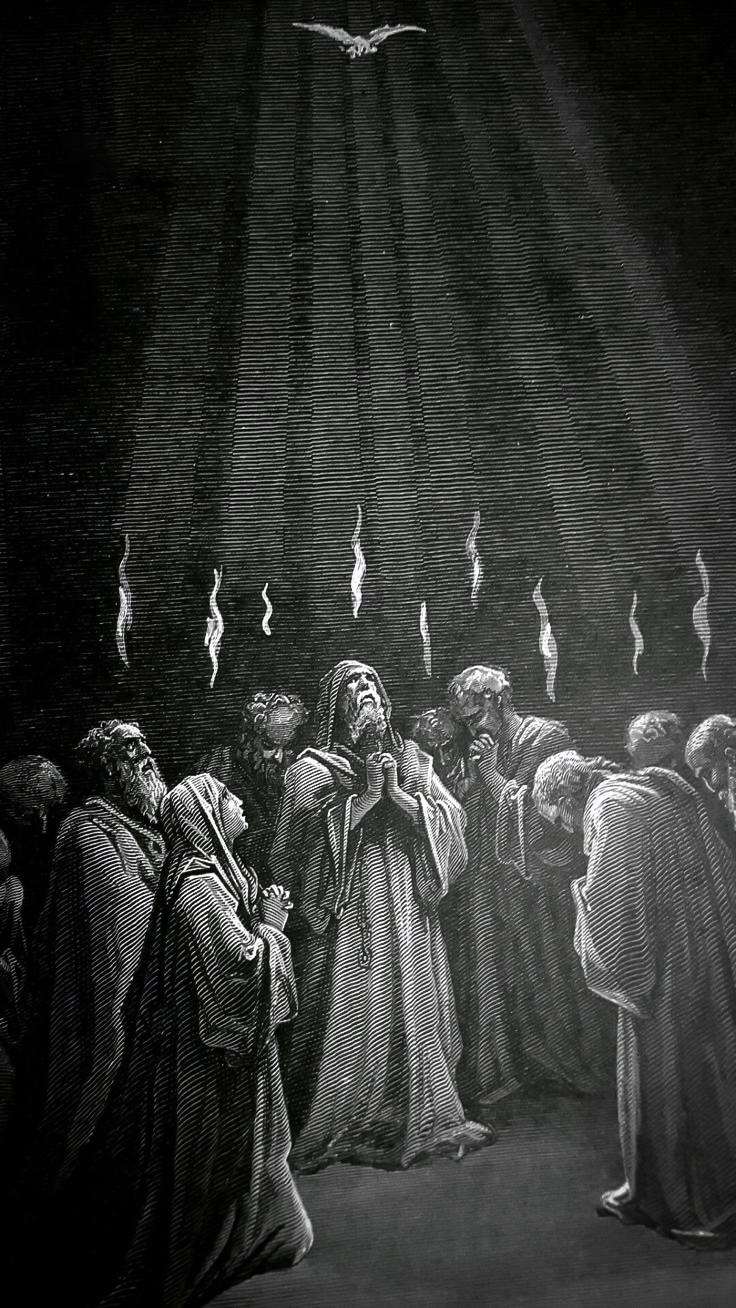
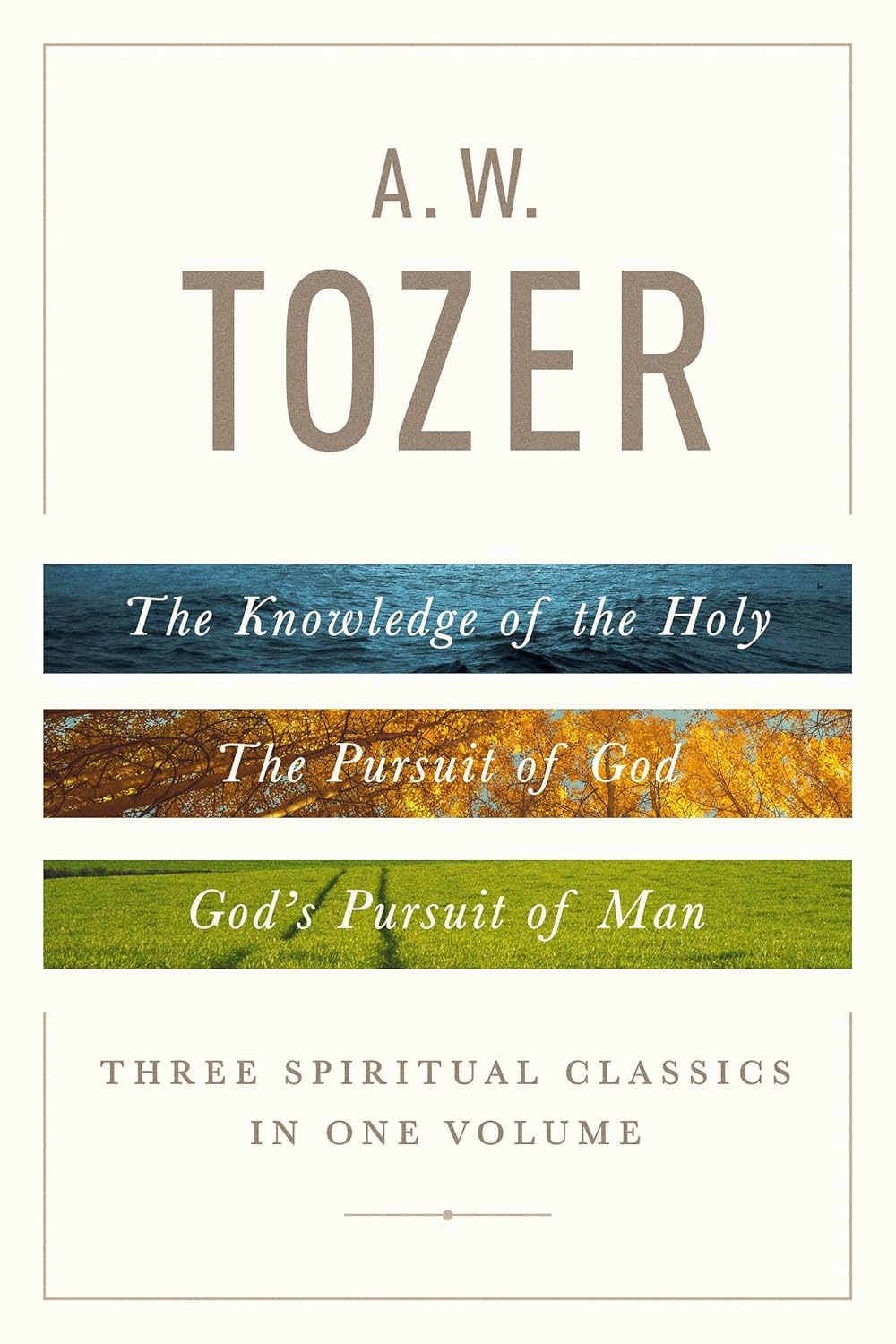
Today I finished the book How to Be Filled with the Holy Spirit by Moody Publishers. The book is a compilation of sermons from A.W. Tozer about the Holy Spirit and His indwelling presence. The book is a direct appeal to take seriously what Scripture teaches about the Spirit’s person and work in the believer’s life. Tozer does not approach the subject sentimentally or experientially first; he begins doctrinally. In “Who Is the Holy Spirit?”, he carefully affirms the Spirit’s full deity, drawing on the language of the Nicene Creed and tracing its claims back to their biblical foundations. The Spirit is confessed as Lord, as God, and as one with the Father and the Son—not an influence or religious force. From there, “The Promise of the Father” unfolds the scriptural testimony that the Spirit’s coming is rooted in divine promise, not human initiative, grounded in Christ’s words and fulfilled according to God’s covenant faithfulness.
The final two chapters move from confession to the inward conditions under which the Spirit’s presence is unhindered. In “How to Be Filled with the Holy Spirit,” Tozer describes fullness not as acquiring more of the Spirit, but as yielding more of oneself. The Spirit rests where there is clean ground—where sin is not defended, where pride is not protected, and where the will is surrendered without reserve. He speaks of honesty before God, restitution where necessary, and the removal of inward duplicity. In “How to Cultivate the Spirit’s Companionship,” he explains that ongoing fellowship requires watchfulness: refusing what grieves Him, maintaining obedience in small matters, and guarding the interior life from gradual compromise. The Spirit’s fullness, as Tozer frames it, is not secured through intensity but through cleared space—a life brought into alignment so that His holy presence is not resisted.
Review
The publisher’s title for the book isn’t what I would generally expect, as it suggests a method or technique, as though the Spirit’s presence could be invoked by human activity. Tozer does not write that way. He moves carefully from doctrine to personal examination, and he does not rush the reader into application. He begins with the Spirit Himself—His deity, His personhood, and His full equality with the Father and the Son. By anchoring his treatment in the language of the Nicene Creed and its scriptural foundations, he makes clear that fullness is not summoned or engineered. The Spirit is Lord. His presence is not commanded; it is invited and welcomed. Any discussion of being “filled” must begin with a right confession of who He is and a posture that recognizes we are responding to His promise, not initiating His arrival.
From there, he clarifies an important distinction between inhabitation and filling. Every true believer is indwelt by the Spirit; that is the settled gift of God. But filling refers to governing influence. In Tozer’s language, it is possible to be inhabited yet not fully yielded. The Spirit may be present without being obeyed. Filling, therefore, concerns control, not quantity. It is not that the believer receives more of the Spirit, but that the Spirit is permitted fuller possession of the believer.
This distinction shapes the entire argument. Tozer insists that one must not confuse new birth with ongoing surrender. Regeneration places the Spirit within; obedience allows Him to direct the life without resistance. The tension he exposes is sober rather than dramatic. The Spirit does not force control. He rests where He is welcomed, not tolerated.
The conditions he describes are inward before they are outward. He speaks plainly about pride, self-protection, cherished sin, and inward duplicity. These are not minor hindrances. They crowd the heart and leave little room for the Spirit’s unhindered presence. Fullness, in his telling, requires cleared ground. Repentance is not an emotional moment but an honest reckoning. Restitution, confession, and surrender of ambition are part of making oneself available. The Spirit comes to rest where there is integrity.
The Word of God plays a central role in this process. Tozer does not separate the Spirit from Scripture. He points repeatedly to meditation on the Word as the appointed means by which the conscience is exposed and aligned. The Spirit does not operate apart from what He has already spoken. A person who neglects Scripture should not expect sustained fullness. The mind must be instructed so the will can be bent. Meditation is not mystical abstraction; it is steady attention to revealed truth until it governs thought and behavior.
Behavior itself matters, not as performance, but as evidence of alignment. Tozer stresses obedience in daily life—small decisions, speech, conduct, habits. The Spirit is not an accessory to spiritual enthusiasm; He shapes actual life. A careless pattern of disobedience cannot coexist with His steady companionship. Availability is demonstrated, not declared.
One of the more sobering elements of the book is his warning to be sure of what one is asking. To ask for fullness is to ask for exposure, purification, and removal of what resists Christ. The Spirit’s work is not merely comforting. He convicts, corrects, and restructures. Tozer makes clear that the prayer for filling is not safe in the sense of preserving self-rule. It is a request for God’s rightful authority.
The overall movement of the book is deliberate: from creed, to promise, to surrender, to vigilance. It is not technical theology, but it is not careless exhortation either. By distinguishing inhabitation from filling, grounding the work of the Spirit in Scripture, and tying fullness to yielded obedience, Tozer avoids both sensationalism and passivity. The result is a straightforward reminder that the Spirit’s presence is given in the new birth, but His governing fullness belongs to those who are willing to be wholly His.
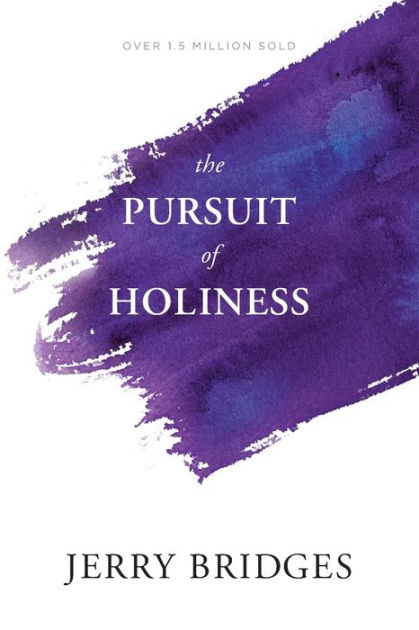
Having completed The Pursuit of Holiness by Jerry Bridges, the book presents biblically grounded principles showing that Christians pursue holiness only because they are already united to Christ and strengthened by the indwelling Holy Spirit. Bridges makes clear that God does not command holiness and then abandon His people to self-effort; rather, Christ shares His resurrected life with believers, and the Spirit abides in them, granting power, guidance, and rightly ordered desires for obedience. Because of this union, Christians are called to fight sin and practice obedience—not to earn salvation, but because they have been transferred into a new kingdom and now live under Christ’s lordship. Holiness, then, is a life of humble dependence upon God’s active grace: trusting Christ, submitting to the Spirit, and choosing obedience even when it is costly. Bridges teaches that growth in holiness requires real effort, but it is achieved through continual dependence on the Spirit and through conscious, persistent personal obedience rather than self-confidence.
Introduction
The Pursuit of Holiness is written under the weight of a simple reality: God is holy, and those who belong to Him do not remain unchanged. Jerry Bridges begins with God Himself—His holiness, His rule, His claim upon His people—and places the reader beneath that claim. Holiness is not presented as a special calling for the few, but as the proper life of those who have been brought into Christ’s kingdom. The book moves steadily from who God is to what life before Him must become, keeping grace primary and obedience necessary, never allowing one to be set against the other.
As the book progresses, attention turns to the long obedience of ordinary days: resisting sin, cultivating discipline, and continuing in faith when progress is slow and costly. Bridges writes with clear-eyed realism about the struggle, yet without despair, insisting that effort belongs to the Christian life precisely because the Spirit is present and active. Holiness is shown as a walk of repentance, dependence, and persistent obedience in a world that remains resistant to God.
Review
In The Pursuit of Holiness, Jerry Bridges sets in place a steady and clear appeal that holiness is neither optional for the believer nor achievable by unaided human effort. The book moves in clear sequence, first setting God’s holiness before the reader, then pressing the believer toward obedience: God is holy, and those who belong to Him are called to reflect His character through obedient lives empowered by the Holy Spirit. Bridges does not treat holiness as advanced spirituality for the mature few. He grounds it in the plain command of Scripture: “Pursue peace with all men, and the holiness without which no one will see the Lord” (Hebrews 12:14). The call is universal, binding, and rooted in the character of God Himself.
The Holiness of God as Foundation
Drawing attention to passages such as Isaiah 6:1–5, where the prophet is undone before the overwhelmingly holy Lord, Bridges establishes that holiness is first an attribute of God before it is a requirement for man. The summons of 1 Peter 1:15–16—“Be holy, for I am holy,” echoing Leviticus 11:44—links the believer’s conduct directly to the moral purity of God. Holiness is not cultural separation nor religious severity. It is moral likeness to God’s character. Because God is holy in all His works, those who bear His name must not treat sin lightly.
Bridges emphasizes that this foundation protects holiness from distortion. If holiness begins with human resolve, it becomes legalism. If it is detached from God’s character, it becomes vague spirituality. It must be anchored in who God is.
Holiness Is Not Optional
From that foundation, Bridges confronts the modern tendency to treat holiness as secondary. He points again to Hebrews 12:14 and to 2 Corinthians 7:1, which calls believers to “cleanse ourselves from all defilement of body and spirit, perfecting holiness in the fear of God.” Holiness is commanded. It is not an enhancement to the Christian life but its necessary fruit.
At the same time, Bridges is careful to root obedience in grace. The command to pursue holiness is addressed to those already redeemed. He consistently resists any suggestion that effort earns acceptance. The order remains clear: justification first, then sanctification.
The Holiness of Christ
Bridges moves from the holiness of God to the holiness of Christ. The believer’s pattern is not abstract morality but the incarnate Son. Christ’s perfect obedience provides both the ground of acceptance and the example to follow. Yet Bridges’ argument does not rest in imitation alone. He turns decisively to union with Christ and the believer’s new position.
Romans 6:6–14 forms a structural center. Believers have died with Christ; they have been raised with Him; sin is no longer their master. The imperative to “consider yourselves dead to sin but alive to God in Christ Jesus” (Romans 6:11) rests on an accomplished reality. Colossians 1:13 speaks of transfer into “the kingdom of His beloved Son.” The Christian life begins with a change of dominion. Holiness flows from this transfer. The believer does not fight for entry into the kingdom but because he already belongs to it.
The Battle for Holiness
With identity established, Bridges addresses the daily conflict. Galatians 5:17 describes the flesh and the Spirit set against one another. 1 Peter 2:11 warns that sinful desires wage war against the soul. Holiness, therefore, is not passive. It requires vigilance.
Bridges distinguishes between seeking “victory” as an emotional experience and practicing obedience as a deliberate choice. He emphasizes that Scripture calls believers to obedience, not to a constant feeling of triumph. This correction guards against discouragement. The measure is not intensity but faithfulness.
Romans 8:13 states plainly: “If by the Spirit you put to death the deeds of the body, you will live.” Colossians 3:5 commands, “Put to death therefore what is earthly in you.” Mortification is active. The language of warfare is explicit. Sin is not tolerated.
Help in the Daily Battle
Though the struggle is real, Bridges repeatedly anchors effort in dependence. Galatians 5:16—“Walk by the Spirit, and you will not gratify the desires of the flesh”—links obedience to the Spirit’s enabling power. Romans 8 does not merely command resistance; it promises the Spirit’s presence.
John 15:4–5 provides the pattern of abiding. Without Christ, nothing can be accomplished; in Him, fruit is borne. This balance prevents holiness from becoming self-reliance. The Spirit is not an optional assistant but the agent of transformation.
Personal Discipline and Habit
Bridges then offers the principle of structured effort. 1 Timothy 4:7 calls believers to discipline themselves for godliness. Hebrews 12:10–11 shows that discipline yields “the peaceful fruit of righteousness.” Holiness grows where deliberate practices replace negligence.
He addresses practical areas: bodily purity (1 Corinthians 6:18–20), renewal of the mind (Romans 12:1–2), guarding desire (James 1:14–15). Habits either reinforce sin or cultivate obedience. The Christian must make conscious choices concerning environment, thoughts, speech, and conduct.
Philippians 2:12–13 offers the balance: “Work out your salvation with fear and trembling, for it is God who works in you.” Effort is required because God is at work. Divine operation does not cancel human responsibility; it grounds it.
Holiness in Body and Spirit
Bridges expands holiness beyond visible conduct. 2 Corinthians 7:1 speaks of cleansing “body and spirit.” External morality without inward transformation is insufficient. The will, the desires, the inner disposition must align with God.
Yet the body is not neglected. Scripture links sanctification to concrete behavior: fleeing immorality (2 Timothy 2:22), controlling the tongue (James 3), resisting conformity to the world (Romans 12:2). Holiness encompasses thought, motive, and action.
Faith in the Pursuit of Holiness
Toward the latter chapters, Bridges makes explicit that faith remains central. Holiness does not advance through anxiety but through trust in God’s promises. Romans 14:23 warns that whatever is not from faith is sin. The pursuit of obedience is sustained through confidence in God’s character and promises.
Dependence on the Spirit is not vague feeling but active reliance upon what God has said. Scripture, prayer, and obedience function together. The believer trusts, acts, repents, and continues.
Holiness in an Unholy World
Bridges acknowledges external resistance. Romans 12:2 commands nonconformity to the world. 1 John 2:15–17 warns against love for the world’s desires. The Christian remains situated within society but lives according to different priorities. Holiness creates distinction without withdrawal.
The world’s standards shift; God’s character does not. Persistent obedience in such a context requires conviction grounded in revelation.
The Joy of Holiness
The book does not conclude in strain. Psalm 16:11 speaks of fullness of joy in God’s presence. Hebrews 12:11 promises peaceable fruit following discipline. Bridges argues that obedience yields stability and peace. Joy is not emotional excess but settled alignment with God’s will.
Holiness leads not to deprivation but to freedom. Sin enslaves; obedience liberates. Romans 6 presents this contrast clearly: slavery to sin results in death; slavery to righteousness leads to sanctification and life.
Balance and Endurance
Throughout the book, Bridges maintains several essential tensions:
Holiness is commanded (Hebrews 12:14) yet enabled by the Spirit (Romans 8:13).
Effort is required (1 Timothy 4:7) yet grounded in God’s prior work (Philippians 2:13).
The believer has died to sin (Romans 6:6) yet must still put sin to death (Colossians 3:5).
The Christian lives in the world yet must resist conformity (Romans 12:2).
These tensions are not resolved by dissolving one side. They are held together under the authority of Scripture. So The Pursuit of Holiness endures because it refuses two errors: passivity that hides behind grace, and legalism that trusts discipline. Its thesis remains clear: growth in holiness requires real effort, but only as it is carried out in continual dependence on the Spirit through conscious and persistent personal obedience rather than self-confidence.
The book presents a clear and orderly treatment of biblical sanctification, grounded in Scripture throughout. It begins with the holiness of God, then moves to the believer’s union with Christ and the new life that follows. From there, it addresses the continuing struggle with sin and the need for disciplined obedience carried out in dependence on the Spirit. It concludes by showing that a life aligned with God’s will leads not to strain, but to steady and lasting joy.
Conclusion
Throughout the book, Bridges returns again and again to the necessity of abiding in Scripture. Holiness is not sustained by impulse or resolve alone, but by a mind continually renewed according to the Word (Romans 12:2). The Scriptures expose what lies hidden in the heart (Hebrews 4:12), preserve the way from corruption (Psalm 119:9–11), and supply promises sufficient for life and godliness (2 Peter 1:3–4). They are not treated as occasional counsel, but as daily bread. In this light, the pursuit of holiness stands upon God’s ongoing work: He has united His people to Christ (Romans 6:4–11), given them His Spirit (Romans 8:9–13), and set His Word before them as light for the path. What follows is obedience formed under that light—steady, deliberate, and dependent upon the One who first acted.
Today I finished reading The Knowledge of the Holy by A.W. Tozer, and what remains with me most is a renewed sense of wonder about who God is and why that matters beyond mere theology as an exercise. The book did not answer every question, but it sharpened my attention and deepened my awareness of God’s greatness in a way that feels suited to prayer, reflection, and daily obedience. Its usefulness lies in how it repeatedly brings God back into view—not as an idea to manage, but as a personal and holy presence who must be approached with reverence. I expect to return to it not for study alone, but as a steady reminder of who God is and how I am meant to stand before Him.
First published in 1961, The Knowledge of the Holy by A.W. Tozer stands as one of the most incisive and uncompromising treatments of classical Christian theism in modern Protestant literature. It is not a systematic theology in the academic sense, nor a devotional in the sentimental sense, but rather a doxological theology: theology written under the conviction that what a man believes about God is the most determinative truth about him. Tozer opens with the now-canonical claim that “what comes into our minds when we think about God is the most important thing about us,” a thesis he does not merely assert but relentlessly demonstrates throughout the book.
Introduction
The central burden of Tozer’s work is the recovery of God’s holiness, not as a single attribute among others, but as the moral and ontological majesty that renders God wholly “other” — absolute, self-existent, immutable, eternal, omniscient, omnipotent, omnipresent, sovereign, and morally pure. Tozer’s method is deliberately restrained: he refuses speculation beyond revelation and explicitly warns against mental images, analogies, and imaginative projections that reduce God to manageable proportions. In this respect, his theology is markedly apophatic in impulse, though articulated within an evangelical framework.
Particularly significant is Tozer’s sustained warning against idolatry of the mind. While he affirms the necessity of true knowledge of God, he insists that such knowledge is always governed by divine self-disclosure, never by human creativity. Any conception of God that contradicts or diminishes His revealed being, however well-intentioned, becomes a false god. This is why Tozer repeatedly returns to Scripture’s insistence that God cannot be domesticated, visualized, or psychologically neutralized without loss of truth and reverence.
The book is also notable for its pastoral severity. Tozer writes as one who believes the modern church suffers not from too little activity, but from too little fear of God. He connects doctrinal reductionism directly to moral decay, superficial worship, and spiritual anomie, arguing that when God is thought of lightly, obedience becomes negotiable and worship collapses into performance. In this regard, the book functions as a quiet indictment of pragmatic religion, entertainment-driven worship, and pedagogical methods that convey familiarity rather than awe.
Stylistically, the prose is spare, elevated, and deliberately unsentimental. Tozer writes as a prophet rather than a lecturer, and his authority rests not in academic apparatus but in fidelity to Scripture and continuity with the classical attributes confessed across the history of the Church. Though he stands outside Roman Catholic and Eastern Orthodox traditions institutionally, his doctrine of God aligns closely with the patristic and medieval consensus on divine simplicity, transcendence, and immutability.
In sum, The Knowledge of the Holy endures because it does not attempt to make God accessible by lowering Him, but rather calls man upward through repentance of thought, submission to revelation, and reverent obedience. It is a book that assumes — and demands — that true theology must finally terminate in worship, silence, and trembling joy.
Book Review
I. God’s Being
God is before all things and dependent on nothing. He does not exist within a framework that explains Him, nor does He require completion, validation, or movement toward fulfillment. Scripture presents Him as self-existent and sufficient, the one who simply is. This means God is not conditioned by time, circumstance, or response. He does not improve, adapt, or adjust. If God were capable of becoming something He is not, He would already lack what He ought to be. The starting point of theology, then, is not what God does, but that God is, whole and complete in Himself.
The Self-Existence of God (Aseity) God depends on nothing outside Himself to be what He is. He does not draw life, meaning, or purpose from another source, nor does He exist because something caused Him to begin. Scripture presents Him simply as the One who is, without explanation or qualification. This means God is not sustained by the world, affected by its changes, or diminished by its rejection of Him. All created things exist because they receive life; God exists because He is life. Theology begins here or it begins in error.
The Self-Sufficiency of God Because God is self-existent, He is also fully sufficient. He does not need creation to complete Him, nor does He gain anything by being obeyed, praised, or loved. God was no less God before anything was made, and He would remain no less God if nothing existed beside Him. This guards us from imagining God as lonely, incomplete, or dependent upon human response. What God gives, He gives freely, not out of lack.
The Eternity of God God does not move through time as creatures do. He does not remember the past or anticipate the future; all times are present to Him without succession. Scripture’s language of God acting “before” or “after” belongs to our experience, not His. Eternity is not endless time, but the absence of time’s limitations altogether. God does not wait, hurry, or arrive late. He simply is, without beginning or end.
God’s Infinitude God is not limited by space, measure, or boundary. He cannot be divided into parts or contained within categories larger than Himself. When we speak of God as infinite, we are confessing that He exceeds every frame we bring to Him. This does not make Him vague or impersonal; it makes Him incomparable. Any god small enough to be fully grasped would not be God at all.
The Immutability of God God does not change. He does not improve, diminish, or alter course. This does not mean He is unresponsive or indifferent, but that His responses are always consistent with who He eternally is. Scripture’s account of God acting differently toward different people reflects the change in the people, not a change in God. Because He is immutable, His promises remain secure and His character trustworthy.
The Divine Unity God is not composed of parts or qualities arranged together. He is one, whole, and undivided. His attributes are not additions to His being but ways we describe His single, simple reality. This guards us from thinking of God as a collection of traits that might compete or conflict. God is never partly merciful and partly just; He is fully Himself in all He is and does.
The Trinity God is one in essence and three in persons. The Father, Son, and Holy Spirit are not roles or manifestations, but real distinctions within the one divine being. This mystery is not explained by analogy or reduced to logic, but received as revealed. The Trinity does not divide God’s being or multiply gods; it tells us who God eternally is in Himself, apart from creation.
The Sovereignty of God God rules by right, not by force. His sovereignty is not reactive or threatened, nor is it dependent upon human cooperation. He does as He pleases, always in accordance with His nature, and nothing escapes His authority. This does not make God arbitrary; it makes Him supreme. His rule rests on who He is, not on what creatures permit Him to do.
The Transcendence of God God stands above and beyond all that He has made. He is not contained within the universe or subject to its laws. Transcendence does not place God at a distance, but affirms that He is not to be confused with what He has created. When this is lost, worship collapses into familiarity and reverence into casual speech. A God who is not transcendent is no longer God.
In these chapters, Tozer is at pains to show that God does not become anything, does not react in the human sense, and does not derive meaning or fulfillment from His works. God is complete in Himself.
II. God’s Knowledge and Power
Because God is self-existent and infinite, His knowledge is not gathered or processed. He does not observe reality from the outside or arrive at conclusions over time. God knows all things immediately, fully, and without effort, including Himself. Nothing surprises Him, and nothing escapes His awareness. His presence is not distributed or divided, and His knowledge is not reactive. What we call omniscience and omnipresence are not abilities God exercises, but the way finite minds describe the fullness of divine being encountering a created world.
The Divine Omniscience God knows all things completely and immediately. He does not learn by observation or inference, and He is never surprised. His knowledge includes all that is, all that has been, and all that could be, without uncertainty. God knows His creation more intimately than it knows itself. This knowledge is not cold awareness but perfect comprehension.
The Divine Omnipotence God’s power is the ability to do all that accords with His nature. He is not limited by external forces, yet He does not act contrary to Himself. Omnipotence does not mean God can contradict His holiness or deny His truth. His power is never reckless or uncontrolled. It is strength governed by wisdom and righteousness.
The Divine Omnipresence God is present everywhere without being spread thin. His presence is not physical extension, nor is it partial or divided. God is fully present to every place at once, not by movement but by being. This means there is no corner of creation beyond His knowledge or reach. We never move closer to God by distance, nor farther from Him by location.
The Divine Wisdom God’s wisdom is the perfect ordering of knowledge toward fitting ends. He never misjudges, miscalculates, or acts unwisely. What appears slow or obscure to us is never confusion in God. His wisdom is not merely intelligence, but understanding shaped entirely by holiness and purpose. God never acts first and reflects later.
These are not capacities acquired or exercised sequentially. Tozer repeatedly emphasizes that God does not “learn,” “decide,” or “arrive at conclusions.” Knowledge and power are not instruments God uses; they are perfections of His essence.
III. God’s Moral Perfection
God’s will is never uncertain, conflicted, or delayed. He does not weigh options or revise intentions. What God wills flows necessarily from who He is, and therefore His will is always holy, just, and faithful. Holiness is not a restriction placed upon His power; it is the moral clarity of His being expressed in every purpose. God does not conform to goodness—goodness conforms to Him. Because He is immutable, His promises do not fluctuate, and His judgments are not arbitrary. His faithfulness is simply God being God without contradiction.
The Holiness of God Holiness is the moral clarity of God’s being. It is not merely one attribute among others, but the light in which all others are seen. God is not holy by adherence to a standard; holiness is what God is. This is why His will is always right and His judgments always true. Holiness makes God both glorious and dangerous to approach on our own terms.
The Justice of God (Righteousness) God is just because He always acts in accordance with His own righteousness. He does not overlook evil, excuse sin, or distort truth. Justice is not opposed to grace, but grace presupposes justice rightly understood. God never punishes excessively or arbitrarily; He judges as One who sees all things clearly. His justice is an expression of His holiness, not a limitation upon it.
The Faithfulness of God God remains true to Himself and to His word. He does not promise lightly, nor does He forget what He has spoken. Faithfulness means God will not contradict His character, abandon His purposes, or deceive His people. What God has said, He will do—not because He is obligated, but because He is faithful. His reliability rests in His being, not in circumstances.
Although these attributes are often treated as ethical dispositions, Tozer insists they are ontological moral realities. God does not act justly because He conforms to a standard; justice is the standard because it is intrinsic to God’s being.
IV. God’s Relational Expression
When this God relates to creatures, He does so without ceasing to be who He is. Love, mercy, grace, and goodness are not changes in God, but the forms His unchanging being takes when encountered by finite and sinful persons. God does not need creatures in order to love, yet creatures truly experience His love because He wills their good. His nearness does not dilute His holiness, and His kindness does not suspend His justice. What we experience as grace is the gift of being met by God as He is, rather than as we would prefer Him to be.
The Divine Love God’s love is not sentiment or weakness, but the steady willing of good toward His creatures. He does not love because He needs, but because He chooses to give. Divine love is shaped by holiness and guided by wisdom, not driven by impulse. God’s love never competes with His justice or truth. It flows from who He is, not from what we offer.
The Mercy of God Mercy is God’s compassion toward the miserable and guilty. It does not deny justice, but withholds deserved judgment for a time and purpose. God is merciful because He is good, not because sin is insignificant. Mercy reveals God’s patience and kindness without trivializing evil. It is grace given to those who cannot demand it.
The Grace of God Grace is God’s free favor shown to those who deserve none. It is not earned, provoked, or negotiated. Grace flows from God’s nature, not from human effort or worth. It does not excuse sin, but overcomes it. What grace gives, it gives because God wills to give.
The Goodness of God God is good in Himself and therefore good toward His creation. His goodness is not measured by comfort or immediate outcomes, but by alignment with His holy purposes. Even His discipline flows from goodness rightly understood. God never acts with malice or indifference. Whatever comes from Him is ordered toward what is truly good.
The Immanence of God Though God is transcendent, He is not distant. He is near to His creation and involved in it without being absorbed by it. God’s nearness does not compromise His otherness, and His involvement does not lessen His majesty. He dwells with His people without ceasing to be God. What creatures experience as God’s presence is the encounter with the One who remains wholly Himself.
Tozer does not treat love as defining God’s essence in abstraction. Rather, God is holy, self-existent, and immutable. Therefore, when He wills the good of creatures, that willing appears to us as love. Love is thus necessary, but not constitutive in the modern slogan sense. God does not need creatures in order to be loving; rather, creatures encounter love because of what God eternally is.
Conclusion
To speak rightly of God is not an academic exercise but a moral one. Throughout this book, the question has never been whether God can be described, but whether He will be received as He is. A diminished view of God does not remain confined to theology; it reshapes worship, obedience, and conscience. When God is imagined as manageable, familiar, or psychologically accommodating, reverence gives way to negotiation, and faith quietly becomes self-directed. The corrective is not complexity or novelty, but attention—attention to what God has revealed about Himself and restraint from saying more than has been given.
The knowledge of the holy does not end in explanation but in how one stands before God. It leads not to confidence in one’s understanding, but to humility; not to speculation, but to obedience; not to worship shaped by taste, but by reverence and trust. God is not known by organizing His attributes, but by yielding rightly before them. If this book has done what it was meant to do, it has not supplied the reader with answers so much as stripped away false ones, bringing the mind into surrender before God who is greater, more exacting, and more worthy than anything anyone could construct.
As it is written in Isaiah’s pages, Yahweh gives a clear and direct understanding of who He is and what His interest are (Isaiah 58:6-7). Among them, He made explicit and unmistakable reference toward the kind of justice that He requires. Not the kind of…
The micro-fan project is done. The march to another one continues. Once templates are set among various project elements such as BOMs, CAD files, libraries, account settings, etc., the rest comes easier project after project.