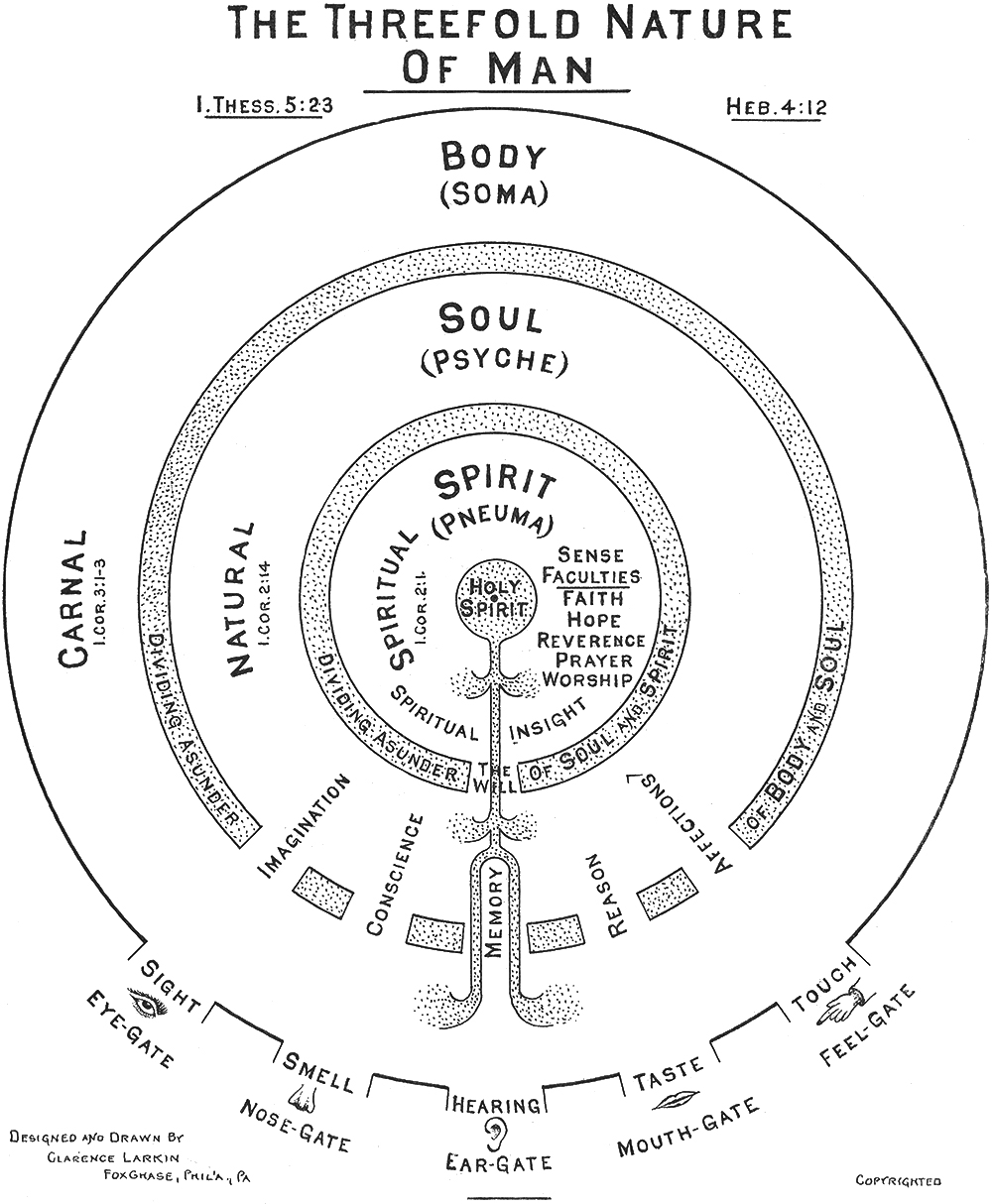
It is a grace and mercy that people who return to Christ Jesus as the vine (John 15:5) and the source of living water remain with Him. God through His word is an unending source of nourishment as His people are trees planted by streams of living water. Renewal by Christ Jesus through His Word produces fruits of the Spirit as believers are again drinking from streams of life to attain spiritual health and peace. More specifically, the cultivation of joy that renders deep faith and practice is necessary for continued nourishment, spiritual peace, and mental well-being. As necessary for challenges in life, that joy as a fruit of the trees comes from the inhabited Spirit who is a conduit for others blessed and comforted through their sanctification and sufferings. There are various fruits of the Spirit as articulated in Galatians 5:22.
Living from the well of life apart from God is to forsake Him (Jer 2:13). Instead of drawing from the spring of living water from God, believers who live by their own will and interests do so from broken cisterns that can not hold water. Accordingly, to set out on one’s own isn’t sustainable or long-term viable to draw from outside of fellowship with God. The fruits of the Spirit spoken as truth are united with His life-giving power from a daily encounter with God. Life-giving nourishment of the Spirit comes from time alone with God through His Word. As Christ Jesus modeled for us, while people were among Him in desperation for teaching, truth, and healing, He withdrew from them to draw close to Father God in prayer (Luke 5:15-16). His time with God was a crucial source of intimacy even with the pressures of ministry among people who wanted to hear Him and be healed of their infirmities.
The two threats that have the potential to separate believers from the intimate connection with God are distraction and self-dependence. In alignment with Matthew 13, Jesus spoke of the parable of the sower to make clear what chokes out, inhibits, or removes the Word from a person’s life. Valuing the wrong things over Christ Jesus and His Word takes our focus, priority, and intentionality elsewhere. As given by the example in Luke 10:38-42 with Mary and Martha, Jesus spoke of the necessity of choosing the good portion of fellowship with Him and intimacy with God over the busyness of daily necessities. Mary chose not to forfeit the most essential thing with Jesus as compared to Martha attending their gathering with the well-intentioned nobility of hospitality. A believer’s proper perspective about personal identity in Christ is best understood as the branch and vine analogy that He spoke about (John 15:5).
The warning signs about a believer disconnected from the vine include one or more of the following:
Absence of fruit of Spirit
Lack of margin, patience, humility, and charity
Presence of pride, self-interest, defensiveness
Fleshly interests and carnality, or appetites too fleshly
Emotional fatigue and tense attitude of the heart from the grind of work
While circumstances and incident-driven occurrences give temporary rise to these conditions, they cannot be permitted to remain in place. The overwhelming pattern in the life of a believer must be personal time alone in prayer, in God’s Word (the Holy Bible), and worship. In truth and purity, believers shall abide in Christ to regain and sustain the spiritual nourishment essential to walk in the Spirit. Remaining in despair, discouragement, and distress indicates that a believer is disconnected from the vine or drinking from a broken cistern. A pattern and practice of these categories is the absence of margin and joy in a believer’s life.
While doing work unto the Lord, it is with the engine and furnace of the Spirit of God within. Passion, focus, and joy contribute to attitude as a source of fruitful energy that comes from time with God alone. Sin breaks fellowship. Willfulness can break fellowship. Self-interest (sin) breaks fellowship, so there is a need to be in daily immersion in God’s Word. Without the continuous renewal of the Spirit, burnout and fatigue can begin to take hold. Some evident attitudes that point to the onset of burnout include the following:
You think you can fix everyone’s problems
You have to fix everything right now
You are responsible for everything that goes on in the church
You can control everything in the church
You have the answers for everything
You can never show any weakness and need for growth
These attitudes are contradictory to truth statements of Scripture. To remain in proper perspective, intake of the whole counsel of God grows through time alone with Him. Absorption of God’s Word is an intentional, persistent, and conscious effort that requires reserved time (scheduled time) with God first at the beginning of each day, as He matters most. Priorities drive schedule, and emphatic yeses set priorities with non-negotiable noes. So, if priorities are not on your schedule, they’re not as important. The danger of the best is not the bad, it’s the good.
Preparation to serve God’s people begins with inner joy and spiritual nourishment. This position of spiritual health derives from a consistent daily time in the Word and prayer while remaining in truth and purity. Believers will be held accountable for their spouses and the spiritual well-being of their families. Most immediate relationships among others before God is what matters most over all other endeavors. The source of life to support a family’s spiritual well-being comes from meditation on God’s Word. Ongoing intentional interaction with God’s Word is necessary to experience an inner life of peace and joy from the spring of living water. So, as a matter of process, some suggested methods of Scripture immersion include the following:
Before bedtime sleep, meditate on a Psalm or passage of interest for five minutes to set God’s Word as the last thing on your conscious mind.
In the morning, attempt to memorize a corresponding verse while in the restroom and preparing for the day. Have a verse pack on the go in the bathroom at the sink and shower.
Once ready for the day, meditate on the Word in an expanded way through morning devotion time. To evaluate the meaning and implications of a passage further by contemplation and prayer, highlight, underline, circle, and note what touches your heart, mind, and spirit in the Word.
Pray the passage of interest at lunch – a cadence of attention to his Word is characterized by a time of personalization throughout the day.
Draw or visualize compelling imagery about the time of contemplation to work out the truth of the verse or passage.
Share the experience in the Word with family, friends, and others. Talk it out to learn it.
Apply it – Not just to know it, but to do it.
Accountability and close personal relationships to encourage believers are necessary to assure personal alone time with God. However, close and careful attention must be paid to who a believer confides in about passages meditated upon as a matter of reflection and application (Prov 20:6, Sirach 6:5-17). Long-term relationships are often betrayed by unfaithful men or women who abandon confidentiality and cause undue harm for intentional or unintentional reasons. If someone reveals to a believer another person’s private life, renewal, and reflection experiences in the Word of God, it can be assured that the person is doing the same with others. Whether in an immediate context or later in time, the believer needs to know who is trustworthy.
The subject of “Seducing Spirits” is evaluated at length when considering the qualities of an excellent servant from the perspective of biblical writers. The subject of spiritual seduction centers upon the falling away of people from the faith. To understand apostasy, it is necessary to define it and recognize its predictability, chronology, source, character, and teachings. To grasp the meaning of it as profound error, apostasy has a common thread of misunderstanding and denial around the goodness of creation and God’s desire for gratitude and worship.
Long ago, during the growth and development of the early church, Paul warned Timothy about people who would leave the faith (1 Tim 4:1-3). In later times, without specificity, Paul characterized desertion by people who would become “devoted to deceitful spirits and teachings of demons.” People seduced away from the faith and who become devoted to false teaching are lured away by demonic spirits through the human agency of false teachers.
“Now the Spirit expressly says that in later times some will depart from the faith by devoting themselves to deceitful spirits and teachings of demons, through the insincerity of liars whose consciences are seared, who forbid marriage and require abstinence from foods that God created to be received with thanksgiving by those who believe and know the truth.” – 1 Timothy 4:1
People who become apostates will be lured away by deceitful and spiritually fierce predators (Acts 20:29-30) who desire to follow deceptive ideas about truth, God’s word, and the gospel. Some who leave the faith make an intentional effort to deconstruct learned principles and specifics concerning Scripture as revealed divine truth and doctrines of spiritual formation that represent the whole counsel of God.
Apostasy is expected as the Spirit has informed the prophets (Deut 13:12-15, 32:15-18, Dan 8:23-25). Where the specific cause is demonic deception, there is certain destruction to those who depart from the truth of God’s word and what He has revealed through the patriarchs, prophets, poets, and apostles. Christ Jesus also warned of people who would depart from the faith. There are very many who will choose to abandon their faith or who will be led away.
Identity of Apostates
Reference
“For many will come in my name, saying, ‘I am the Christ,’ and they will lead many astray. “
Matthew 24:5
“For false christs and false prophets will arise and perform signs and wonders, to lead astray, if possible, the elect.”
Mark 13:22
“Let no one deceive you in any way. For that day will not come, unless the rebellion comes first, and the man of lawlessness is revealed, the son of destruction”
2 Thessalonians 2:3
“knowing this first of all, that scoffers will come in the last days with scoffing, following their own sinful desires.”
2 Peter 3:3
“Children, it is the last hour, and as you have heard that antichrist is coming, so now many antichrists have come. Therefore we know that it is the last hour. They went out from us, but they were not of us; for if they had been of us, they would have continued with us. But they went out, that it might become plain that they all are not of us.”
1 John 2:18-19
There is a certain condition and trajectory of people who eventually fall away from the faith. The characterization of people who lose faith and abandon the “word of the kingdom” (gospel) is given by Christ Jesus’ explanation of His parable of the sower (Matt 13:18-23). To fulfill prophetic utterance, Christ spoke in parables about many subjects, but His parable of the sower has significant meaning about the states in which people have the word of the kingdom stolen from them, choked out, or pressured away by hardship and persecution.
Characteristics of people who receive God’s word and accept and understand it are those who bear fruit according to individual potential. All other conditions by which the word of the kingdom is received reveal an absence of understanding, shallow-rooted acceptance by the hardness of heart, and the possession of worldly distractions that remove further ability to yield fruit. The word of God heard and understood is meant to bear fruit within a person saved by faith. It is not by happenstance that Jesus spoke of the parable of the weeds (Matt 13:24-30, 36-43) after the parable of the sower (Matt 13:1-9, 18-23) to warn that apostates shall be gathered by the angels and thrown into the “fiery furnace” (Matt 13:42). The loss of faith among people who encounter the word of the kingdom isn’t only by circumstance. There is malevolent intentionality against fields of people who would receive and accept seeds of the kingdom and bear fruit as evidence of salvation.
Jesus spoke of the parable of the weeds to verbally illustrate the presence of Satan (powers of demonic deception), who implants tares (Matt 13:25) among seeds that bear the fruit of wheat. For the ultimate glory of YHWH, the Lord lets the wicked temporarily remain among people of faith and believers while there is risk and occurrence of deception and apostasy. The Lord’s people of the kingdom are retained by understanding and faith while there are demonic influences present among them with evil intent. People who succumb to distractions, hardships, the choking out of the Word, and false teaching will eventually apostatize to bear status as tares or weeds, which are gathered, bound up in bundles, and burned.
In the latter times of this church age initiated by the messianic era, apostasy is to be expected. During this period, people susceptible to false doctrines or contradictions to the truth of God’s word become lured away. More specifically, while the Holy Spirit guides believers into truth (John 16:13), deceitful spirits and false teachers lead people into error. Even in a church or spiritually pure context, the “doctrines of demons” are carried and spread by human agents who communicate lies (1 Tim 4:2). The errors people commit by thoughts, words, and actions are measured by the standard of what God reveals in Scripture. Contradictions to the Word of God originate from a spirit of error (1 John 4:6) compared to those who listen to the spirit of truth. Specifically, the Apostle John wrote to inform the church that those who listen to him by what he spoke and wrote are those who know God and are from Him. Refusal to listen to God’s biblical writers constitutes the error of apostates.
The spirit of apostasy is evident throughout scripture. Both in the Old and New Testaments, people who stop listening to God, or contradict His word, are those who no longer follow Him in truth. Examples of apostatized people throughout old and new covenant history who set their course do so from a posture of disobedience as they are often seduced away from faith and relationship with God toward His kingdom interests. To see who apostates were and how they became distant and alienated from God, it is helpful to understand how and why they were seduced to correlate the same outcomes among believers today. To both guard your heart and mind and warn people of false teaching, it is of utmost necessity to remain close to God’s word and the doctrines originating from the biblical writers.
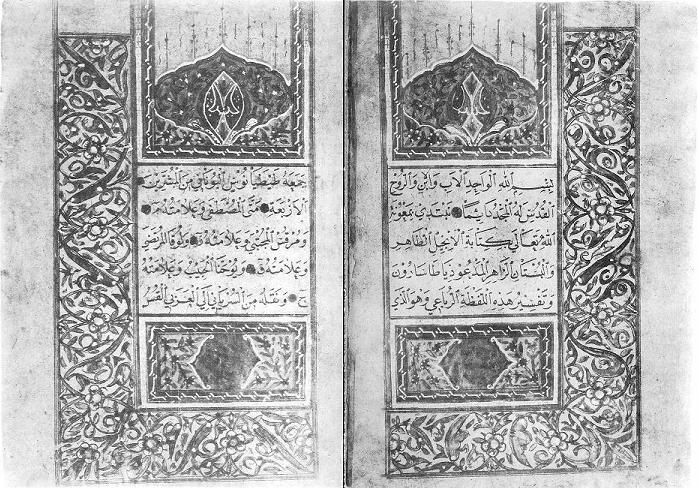
Translated by Rev. Hope W. Hogg, B.D. first published by T&T Clark in Edinburgh 1867
The Author of the Diatessaron
— The Diatessaron is such an impersonal work that we do not need to know very much about its compiler. It will suffice here to say that he tells us himself that he was born “in the land of the Assyrians,” and brought up a heathen. After travelling in search of knowledge, he settled at Rome, where he became a pupil of Justin Martyr, professed Christianity, and wrote in Greek his Address to the Greeks, translated in vol. iii. of the Ante-Nicene Christian Library. He was too independent in his attitude to maintain a permanent popularity, and after Justin’s death left Rome and returned to Mesopotamia. It was probably here that he issued in Syriac his most important work, the Diatessaron, which won such a warm place in the heart of the Syrian church. Among the Greek scholars, however, he became more and more regarded as a heretic, Encratite (ascetic), and Gnostic.
The Diatessaron as a Harmony.-Not very much need be said on this subject, as every reader can collect the facts for himself. In its present form the Harmony draws from all the four canonical gospels, and from very little else. Opinions differ as to whether it originally indicated the gospel from which any given piece was drawn, and some uncertainty must remain in special cases as to what gospel actually has been drawn upon. Professor G. F. Moore, in a very interesting article on the Diatessaron, having counted the references in the Arabic mss., states that the Arabic text contains 50 percent of Mark, 66 percent of Luke, 76.5 percent of Matthew, and 96 percent of John. The summation of his figures gives the following result: out of a total of 3780 verses in the four gospels, the Diatessaron quotes 2769 and omits 101 1. As to the order in which the whole is arranged, Moore thinks that Matthew has chiefly been followed; while Zahn regards the Fourth Gospel as normative. In the Arabic mss., and probably in the Syriac exemplar, the work is divided into fifty-four almost equal chapters, followed by one short one— a feature that agrees well with what we have learned of the work as being of old the lectionary of the Syrian church.
The aim has been to make a literal translation. As two freer translations already exist, it seemed best to incline to the side of being overliteral. If, however, features due simply to Arabic idiom have been preserved, this is an oversight. Uniformity could only have been secured by devoting a much longer time to the work than the editor was able to allow. The difficulties are due to the corrupt state of the Arabic text, and to the awkward reproduction or actual misunderstanding of the Syriac original by the author or authors of the Arabic translation. It has been impossible to maintain consistency in dealing with these phenomena. If any rendering seem strange, it will be well to consult the Syriac versions before deciding that it is wrong. A good deal of attention, too, has to be paid to the usage of the Arabic text, which, though it has many points of contact with other Arabic versions of the gospels, e.g., the ms. described by Gildemeister (De evangg. in arab. e simp. Syr., 1865), is as yet for us a distinct version, possessed of an individuality of its own, one pronounced feature being its very close adherence to its Syriac original. Another revision of the present translation, in the light of a fuller study of these features, would doubtless lead to changes both in the text and in the footnotes. The latter aim at preventing misunderstanding and giving some examples of the peculiarities of the text, and of the differences between the mss. To have dealt systematically with the text and various readings would have required much more time and space than was available. The consequence of this incompleteness has been some uncertainty at times what text to translate. Italics in the text denote words supplied for the sake of English idiom.
This is not a final translation. Few books have had a more remarkable literary history than the Diatessaron, and that history is by no means done. Much careful argument will yet be devoted to it, and perhaps discoveries as important as any hitherto made are yet to shed light on the problems that encircle it. If our work can help any one to take a step in advance, we shall not regret the toil.
Oxford, 21st December, 1895.
The Text of the Diatessaron
Section I
In the beginning was the Word, and the Word was with God, and God is the Word. This was in the beginning with God. Everything was by his hand, and without him not even one existing thing was made. In him was life, and the life is the light of men. And the light shineth in the darkness, and the darkness apprehended it not.
There was in the days of Herod the king a priest whose name was Zacharias, of the family of Abijah; and his wife was of the daughters of Aaron, and her name was Elizabeth. And they were both righteous before God, walking in all his commands, and in the uprightness of God without reproach. And they had no son, for Elizabeth was barren, and they had both advanced in age. And while he discharged the duties of priest in the order of his service before God, according to the custom of the priesthood it was his turn to bum incense; so he entered the temple of the Lord. And the whole gathering of the people were praying without at the time of the incense. And there appeared unto Zacharias the angel of the Lord, standing at the right of the altar of incense; and Zacharias was troubled when he saw him, and fear fell upon him. But the angel said unto him, Be not agitated, Zacharias, for thy prayer is heard, and thy wife Elizabeth shall bear thee a son, and thou shalt call his name John; and thou shalt have joy and gladness, and many shall rejoice at his birth. And he shall be great before the Lord, and shall not drink wine nor strong drink, and he shall be filled with the Holy Spirit while he is in his mother’s womb. And he shall turn back many of the children of Israel to the Lord their God. And he shall go before him in the spirit, and in the power of Elijah the prophet, to turn back the heart of the fathers to the sons, and those that obey not to the knowledge of the righteous; and to prepare for the Lord a perfect people. And Zacharias said unto the angel, How shall I know this, since I am an old man and my wife is advanced in years? And the angel answered and said unto him, I am Gabriel, that standeth before God; and I was sent to speak unto thee, and give hee tidings of this. Henceforth thou shalt be speechless, and shalt not be able to speak until the day in which this shall come to pass, because thou didst not trust this my word, which shall be accomplished in its time. And the people were standing awaiting Zacharias, and they were perplexed at his delaying in the temple. And when Zacharias went out, he was not able to speak unto them: so they knew that he had seen in the temple a vision; and he made signs unto them, and continued dumb. And when the days of his service were completed, he departed to his dwelling.
Arabic Diatessaron
And after those days Elizabeth his wife conceived; and she hid herself five months, and said, This hath the Lord done unto me in the days when he looked upon me, to remove my reproach from among men.
And in the sixth month Gabriel the angel was sent from God to Galilee to a city called Nazareth, to a virgin given in marriage to a man named Joseph, of the house of David; and the virgin’s name was Mary. And the angel entered unto her and said unto her, Peace be unto thee, thou who art filled with grace. Our Lord is with thee, thou blessed amongst women. And she, when she beheld, was agitated at his word, and pondered what this salutation could be. And the angel said unto her, Fear not, Mary, for thou hast found favour with God. Thou shalt now conceive, and bear a son, and call his name Jesus.
This shall be great, and shall be called the Son of the Most High; and the Lord God will give him the throne of David his father: and he shall rule over the house of Jacob for ever; and to his kingdom there shall be no end. Mary said unto the angel, How shall this be to me when no man hath known me? The angel answered and said unto her, The Holy Spirit will come, and the power of the Most High shall rest upon thee, and therefore shall he that is born of thee be pure, and shall be called the Son of God. And lo, Elizabeth thy kinswoman, she also hath conceived a son in her old age; and this is the sixth month with her, her that is called barren. For nothing is difficult for God. Mary said, Lo, I am the handmaid of the Lord; let it be unto me according unto thy word. And the angel departed from her.
And then Mary arose in those days and went in haste into the hill country, to a city of Judah; and entered into the house of Zacharias, and asked for the health of Elizabeth. And when Elizabeth heard the salutation of Mary, the babe leaped in her womb. And Elizabeth was filled with the Holy Spirit; and cried with a loud voice and said unto Mary, Blessed art thou amongst women, and blessed is the fruit that is in thy womb. Whence have I this privilege, that the mother of my Lord should come unto me? When the sound of thy salutation reached my ears, with great joy rejoiced the babe in my womb. And blessed is she who believed that what was spoken to her from the Lord would be fulfilled. And Mary said,
My soul doth magnify the Lord,
And my spirit hath rejoiced in God my Saviour,
Who hath looked upon the low estate of his handmaiden:
Lo, henceforth, all generations shall pronounce blessing on me.
Forhe hath done great things for me, who is mighty,
And holy is his name.
And his mercy embraceth them who fear him,
Throughout the ages and the times.
He wrought the victory with his arm,
And scattered them that prided themselves in their opinions.
He overthrew them that acted haughtily from their thrones,
And raised the lowly.
He satisfied with good things the hungry,
And left the rich without anything.
He helped Israel his servant,
And remembered his mercy (According as he spake with our fathers)
Unto Abraham and unto his seed for ever.
And Mary abode with Elizabeth about three months, and returned unto her house.
And Elizabeth’s time of delivery was come; and she brought forth a son. And her neighbours and kinsfolk heard that God had multiplied his mercy towards her; and they rejoiced with her. And when it was the eighth day, they came to circumcise the child, and called him Zacharias, calling him by the name of his father. And his mother answered and said unto them, Not so; but he shall be called John. And they said unto her, There is no man of thy kindred that is called by this name. And they made signs to his father, saying, How dost thou wish to name him? And he asked for a tablet, and wrote and said, His name is John. And every one wondered. And immediately his mouth was opened, and his tongue, and he spake and praised God. And fear fell on all their neighbours: and this was spoken of in all the mountains of Judah. And all who heard pondered in their hearts and said, What shall this child be? And the hand of the Lord was with him.
And Zacharias his father was filled with the Holy Spirit, and prophesied and said,
Blessed is the Lord, the God of Israel,
Who hath cared for his people, and wrought for it salvation;
And hath raised for us the horn of salvation In the house of David his servant
(As he spake by the mouth of his holy prophets from eternity),
That he might save us from our enemies,
And from the hand of all them that hate us.
And he hath performed his mercy towards our fathers,
And remembered his holy covenants,
And the oath which he sware unto Abraham our father,
That he would give us deliverance from the hand of our enemies,
And without fear we shall serve before him
All our days with equity and righteousness.
And as for thee, O child, prophet of the Most High shalt thou be called.
Thou shalt go forth before the face of the Lord to prepare his way,
To give the knowledge of salvation unto his people,
For the forgiveness of their sins,
Through the mercy of the compassion of our God,
With which he careth for us, to appear from on high
To give light to them that sit in darkness and under the shadow of death,
And to set straight our feet in the way of peace.
And the child grew and became strong in the spirit, and abode in the desert until the time of his appearing unto the children of Israel.
Section II
Now the birth of Jesus the Messiah was on this wise: In the time when his mother was given in marriage to Joseph, before they came together, she was found with child of the Holy Spirit. And Joseph her husband was a just man and did not wish to expose her, and he purposed to put her away secretly. But when he thought of this, the angel of the Lord appeared unto him in a dream, and said unto him, Joseph, son of David, fear not to take Mary thy wife, for that which is begotten in her is of the Holy Spirit. She shall bear a son, and thou shalt call his name Jesus, and he shall save his people from their sins. And all this was that the saying from the Lord by the prophet might be fulfilled:
Behold, the virgin shall conceive, and bear a son,
And they shall call his name Immanuel,
which is, being interpreted, With us is our God. And when Joseph arose from his sleep, he did as the angel of the Lord commanded him, and took his wife; and knew her not until she brought forth her firstborn son.
And in those days there went forth a decree from Augustus Caesar that all the people of his dominion should be enrolled. This first enrolment was while Quirinius was governor of Syria. And every man went to be enrolled in his city. And Joseph went up also from Nazareth, a city of Galilee, to Judaea, to the city of David which is called Bethlehem (for he was of the house of David and of his tribe), with Mary his betrothed, she being with child, to be enrolled there. And while she was there the days for her being delivered were accomplished. And she brought forth her firstborn son; and she wrapped him in swaddling cloths and laid him in a manger, because there was no place for them where they were staying.
And there were in that region shepherds abiding, keeping their flock in the watch of the night. And behold, the angel of God came unto them, and the glory of the Lord shone upon them; and they were
greatly terrified. And the angel said unto them, Be not terrified; for I bring you tidings of great joy which shall be to the whole world; there is born to you this day a Saviour, which is the Lord the Messiah, in the city of David. And this is a sign for you: ye shall find a babe wrapped in swaddling cloths and laid in a manger. And there appeared with the angels suddenly many heavenly forces praising God and saying,
Praise be to God in the highest,
And on the earth peace, and good hope to men.
And when the angels departed from them to heaven, the shepherds spake to one another and said, We will go to Bethlehem and see this word which hath been, as the Lord made known unto us. And they came with haste, and found Mary and Joseph, and the babe laid in a manger. And when they saw, they reported the word which was spoken to them about the child. And all that heard wondered at the description which the shepherds described to them. But Mary kept these sayings and discriminated them in her heart. And those shepherds returned, magnifying and praising God for all that they had seen and heard, according as it was described unto them.
And when eight days were fulfilled that the child should be circumcised, his name was called Jesus, being that by which he was called by the angel before his conception in the womb.
And when the days of their purification according to the law of Moses were completed, they took him up to Jerusalem to present him before the Lord (as it is written in the law of the Lord, Every male opening the womb shall be called the holy thing of the Lord), and to give a sacrificial victim as it is said in the law of the Lord, A pair of doves or two young pigeons. And there was in Jerusalem a man whose name was Simeon; and this man was upright and pious, and expecting the consolation of Israel; and the Holy Spirit was upon him. And it had been said unto him by the Holy Spirit, that he should not see death till he had seen with his eyes the Messiah of the Lord. And this man came by the Spirit to the temple; and at the time when his parents brought in the child Jesus, that they might present for him a sacrifice, as it is written in the law, he bare him in his arms and praised God and said,
Now loosest thou the bonds of thy servant, O Lord, in peace,
According to thy saying;
For mine eye hath witnessed thy mercy,
Which thou hast made ready because of the whole world;
A light for the unveiling of the nations,
And a glory to thy people Israel.
And Joseph and his mother were marvelling at the things which were being said concerning him. And Simeon blessed them and said to Mary his mother, Behold, he is set for the overthrow and rising of many in Israel; and for a sign of contention; and a spear shall pierce through thine own soul; that the thoughts of the hearts of many may be revealed. And Anna the prophetess, the daughter of Phanuel, of the tribe of Asher, was also advanced in years (and she dwelt with her husband seven years from her virginity, and she remained a widow about eighty-four years); and she left not the temple, and served
night and day with fasting and prayer. And she also rose in that hour and thanked the Lord, and she spake of him with every one who was expecting the deliverance of Jerusalem. And when they had accomplished everything according to what is in the law of the Lord, they returned to Galilee, to Nazareth their city.
Section III
And after that, the Magi came from the east to Jerusalem, and said, Where is the King of the Jews which was born? We have seen his star in the east, and have come to worship him. And Herod the king heard, and he was troubled, and all Jerusalem with him. And he gathered all the chief priests and the scribes of the people, and asked them in what place the Messiah should be born. They said, In Bethlehem of Judaea: thus it is written in the prophet,
Thou also, Bethlehem of Judah,
Art not contemptible among the kings of Judah:
From thee shall go forth a king,
And he shall be a shepherd to my people Israel.
Then Herod called the Magi secretly, and inquired of them the time at which the star appeared to them. And he sent them to Bethlehem, and said unto them, Go and search about the child diligently; and when ye have found him, come and make known to me, that I also may go and worship him. And they, when they heard the king, departed; and lo, the star which they had seen in the east went before them, until it came and stood above the place where the child was. And when they beheld the star, they rejoiced with very great joy. And they entered the house and beheld the child with Mary his mother, and fell down worshipping him, and opened their saddle-bags and offered to him offerings, gold and myrrh and frankincense. And they saw in a dream that they should not return to Herod, and they travelled by another way in going to their country.
And when they had departed, the angel of the Lord appeared in a dream to Joseph, and said unto him, Rise, take the child and his mother, and flee into Egypt, and be thou there until I speak to thee; for Herod is determined to seek the child to slay him. And Joseph arose and took the child and his mother in the night, and fled into Egypt, and remained in it until the time of the death of Herod: that that might be fulfilled which was said by the Lord in the prophet, which said, From Egypt did I call my son. And Herod then, when he saw that he was mocked of the Magi, was very angry, and sent and killed all the male children which were in Bethlehem and all its borders, from two years old and under, according to the time which he had inquired from the Magi. Then was fulfilled the saying in Jeremiah the prophet, which said,
A voice was heard in Ramah,
Weeping and much lamentation;
Rachel weeping for her children,
And not willing to be consoled for their loss.
But when Herod the king died, the angel of the Lord appeared in a dream to Joseph in Egypt, and said unto him, Rise and take the child and his mother, and go into the land of Israel; for they have died who sought the child’s life. And Joseph rose and took the child and his mother, and came to the land of Israel. But when he heard that Archelaus had become king over Judaea instead of Herod his father, he feared to go thither; and he saw in a dream that he should go into the land of Galilee, and that he should abide in a city called Nazareth: that the saying in the prophet might be fulfilled, that he should be called a Nazarene.
And the child grew, and became strong in spirit, becoming filled with wisdom; and the grace of God was upon him.
And his kinsfolk used to go every year to Jerusalem at the feast of the passover. And when he was twelve years old, they went up according to their custom, to the feast. And when the days were accomplished, they returned; and the child Jesus remained in Jerusalem, and Joseph and his mother knew not: and they supposed that he was with the children of their company. And when they had gone one day’s journey, they sought him beside their people and those who knew them, and they found him not; so they returned to Jerusalem and sought him again. And after three days they found him in the temple, sitting in the midst of the teachers, hearing them and asking them questions; and all who heard him wondered at his wisdom and his words. And when they saw him they wondered, and his mother said unto him, My son, why hast thou dealt with us thus? behold, I and thy father have been seeking for thee with much anxiety. And he said unto them, Why were ye seeking me? know ye not that I must be in the house of my Father? And they understood not the word which he spake unto them. And he went down with them, and came to Nazareth; and he was obedient to them: and his mother used to keep all these sayings in her heart.
And Jesus grew in his stature and wisdom, and in grace with God and men.
And in the fifteenth year of the reign of Tiberius Caesar, when Pontius Pilate was governor in Judaea, and one of the four rulers, Herod, in Galilee; and Philip his brother, one of the four rulers, in Ituraea and in the district of Trachonitis; and Lysanias, one of the four rulers, in Abilene; in the chief -priesthood of Annas and Caiaphas, the command of God went forth to John the son of Zacharias in the desert. And he came into all the region which is about Jordan, proclaiming the baptism of repentance unto the forgiveness of sins. And he was preaching in the wilderness of Judaea, and saying, Repent ye; the kingdom of heaven is come near. This is he that was spoken of in Isaiah the prophet,
The voice which crieth in the desert,
Prepare ye the way of the Lord,
And make straight in the plain, paths for our God.
All the valleys shall become filled,
And all the mountains and hills shall become low;
And the rough shall become plain, And the difficult place, easy;
And all flesh shall see the salvation of God.
This man came to bear witness, that he might bear witness to the light, that every man might believe through his mediation. He was not the light, but that he might bear witness to the light, which was the light of truth, that giveth light to every man coming into the world. He was in the world, and the world was made by him, and the world knew him not. He came unto his own, and his own received him not. And those who received him, to them gave he the power that they might be sons of God, those which believe in his name: which were born, not of blood, nor of the will of the flesh, nor of the will of a man, but of God. And the Word became flesh, and took up his abode among us; and we saw his glory as the glory of the only Son from the Father, which is full of grace and equity. John bare witness of him, and cried, and said, This is he that I said cometh after me and was before me, because he was before me.
And of his fullness received we all grace for grace. For the law was given through the mediation of Moses, but truth and grace were through Jesus Christ.
Section IV
No man hath seen God at any time; the only Son, God, which is in the bosom of his Father, he hath told of him.
And this is the witness of John when the Jews sent to him from Jerusalem priests and Levites to ask him, Who art thou? And he acknowledged, and denied not; and he confessed that he was not the Messiah. And they asked him again, What then? Art thou Elijah? And he said, I am not he. Art thou a prophet? He said, No. They said unto him, Then who art thou? that we may answer them that sent us. What sayest thou of thyself? And he said, I am the voice that crieth in the desert, Repair ye the way of the Lord, as said Isaiah the prophet. And they that were sent were from the Pharisees. And they asked him and said unto him, Why baptizest thou now, when thou art not the Messiah, nor Elijah, nor a prophet? John answered and said unto them, I baptize with water: among you is standing one whom ye know not: this is he who I said cometh after me and was before me, the latchets of whose shoes I am not worthy to unloose. And that was in Bethany beyond Jordan, where John was baptizing.
Now John’s raiment was camel’s hair, and he was girded with skins, and his food was of locusts and honey of the wilderness. Then went out unto him the people of Jerusalem, and all Judaea, and all the region which is about the Jordan; and they were baptized of him in the river Jordan, confessing their sins. But when he saw many of the Pharisees and Sadducees coming to be baptized, he said unto them, Ye children of vipers, who hath led you to flee from the wrath to come? Do now the fruits which are worthy of repentance; and think and say not within yourselves, We have a father, even Abraham; for I say unto you, that God is able to raise up of these stones children unto Abraham. Behold, the axe hath been laid at the roots of the trees, and so every tree that beareth not good fruit shall be taken and cast into the fire. And the multitudes were asking him and saying, What shall we do? He answered and said unto them, He that hath two tunics shall give to him that hath not; and he that hath food shall do likewise. And the publicans also came to be baptized, and they said unto him, Teacher, what shall we do? He said unto them, Seek not more than what ye are commanded to seek. And the servants of the guard asked him and said, And we also, what shall we do? He said unto them, Do not violence to any man, nor wrong him; and let your allowances satisfy you.
And when the people were conjecturing about John, and all of them thinking in their hearts whether he were haply the Messiah, John answered and said unto them, I baptize you with water; there cometh one after me who is stronger than I, the latchets of whose shoes I am not worthy to loosen; he will baptize you with the Holy Spirit and fire: who taketh the fan in his hand to cleanse his threshing-floors, and the wheat he gathereth into his gamers, while the straw he shall bum in fire which can not be put out.
And other things he taught and preached among the people.
Then came Jesus from Galilee to the Jordan to John, to be baptized of him. And Jesus was about thirty years old, and it was supposed that he was the son of Joseph. And John saw Jesus coming unto him, and said, This is the Lamb of God, that taketh on itself the burden of the sins of the world! This is he concerning whom I said, There cometh after me a man who was before me, because he was before me. And I knew him not; but that he should be made manifest to Israel, for this cause came I to baptize with water. And John was hindering him and saying, I have need of being baptized by thee, and comest thou to me? Jesus answered him and said, Suffer this now: thus it is our duty to fulfill all righteousness. Then he suffered him. And when all the people were baptized, Jesus was baptized. And immediately he went up out of the water, and heaven openedto him, and the Holy Spirit descended upon him in the similitude of the body of a dove; and lo, a voice from heaven, saying, This is my beloved Son, in whom I am well pleased. And John bare witness and said, I beheld the Spirit descend from heaven like a dove; and it abode upon him. But I knew him not; but he that sent me to baptize with water, he said unto me, Upon whomsoever thou shalt behold the Spirit descending and lighting upon him, the same is he that baptizeth with the Holy Spirit. And I have seen and borne witness that this is the Son of God.
And Jesus returned from the Jordan, filled with the Holy Spirit. And immediately the Spirit took him out into the wilderness, to be tried of the devil; and he was with the beasts. And he fasted forty days and forty nights. And he ate nothing in those days, and at the end of them he hungered. And the tempter came and said unto him, If thou art the Son of God, speak, and these stones shall become bread. He answered and said, It is written, Not by bread alone shall man live, but by every word that proceedeth out of the mouth of God. Then the devil brought him to the holy city, and set him on the pinnacle of the temple, and said unto him, If thou art the Son of God, cast thyself down: for it is written,
He shall give his angels charge concerning thee:
And they shall take thee on their arms,
So that thy foot shall not stumble against a stone.
Jesus said unto him, And it is written also, Thou shalt not tempt the Lord thy God. And the devil took him up to a high mountain, and shewed him all the kingdoms of the earth, and their glory, in the least time; and the devil said unto him, To thee will I give all this dominion, and its glory, which is delivered to me that I may give it to whomsoever I will. If then thou wilt worship before me, all of it shall be thine.
Section V
Jesus answered and said unto him, Get thee hence, Satan: for it is written, Thou shalt worship the Lord thy God, and him alone shalt thou serve. And when the devil had completed all his temptations, he departed from him for a season. And behold, the angels drew near and ministered unto him.
And next day John was standing, and two of his disciples; and he saw Jesus as he was walking, and said, Behold, the Lamb of God! And his two disciples heard him saying this, and they followed Jesus. And Jesus turned and saw them coming after him, and said unto them, What seek ye? They said unto him, Our master, where art thou staying? And he said unto them, Come and see. And they came and saw his place, and abode with him that day: and it was about the tenth hour. One of the two which heard
from John, and followed Jesus, was Andrew the brother of Simon. And he saw first Simon his brother, and said unto him, We have found the Messiah. And he brought him unto Jesus. And Jesus looked upon him and said, Thou art Simon, son of Jonah: thou shalt be called Cephas.
And on the next day Jesus desired to go forth to Galilee, and he found Philip, and said unto him, Follow me. Now Philip was of Bethsaida, of the city of Andrew and Simon. And Philip found Nathanael, and said unto him, JJe of whom Moses did write in the law and in the prophets, we have found that he is Jesus the son of Joseph of Nazareth. Nathanael said unto him, Is it possible that there can be any good thing from Nazareth? Philip said unto him, Come and see. And Jesus saw Nathanael coming to him, and said of him, This is indeed a son of Israel in whom is no guile. And Nathanael said unto him, Whence knowest thou me? Jesus said unto him, Before Philip called thee, while thou wast under the fig tree, I saw thee. Nathanael answered and said unto him, My Master, thou art the Son of God; thou art the King of Israel. Jesus said unto him, Because I said unto thee, I saw thee under the fig tree, hast thou believed? thou shalt see what is greater than this. And he said unto him, Verily, verily, I say unto you, Henceforth ye shall see the heavens opened, and the angels of God ascending and descending upon the Son of man.
And Jesus returned in the power of the Spirit to Galilee.
And on the third day there was a feast in Cana, a city of Galilee; and the mother of Jesus was there: and Jesus also and his disciples were invited to the feast. And they lacked wine: and his mother said unto Jesus, They have no wine. And Jesus said unto her, What have I to do with thee, woman? hath not mine hour come? And his mother said unto the servants, What he saith unto you, do. And there were there six vessels of stone, placed for the Jews’ purification, such as would contain two or three jars. And Jesus said unto them, Fill the vessels with water. And they filled them to the top. He said unto them, Draw out now, and present to the ruler of the feast. And they did so. And when the ruler of the company tasted that water which had become wine, and knew not whence it was (but the servants knew, because they filled up the water), the ruler of the company called the bridegroom, and said unto him, Every man presenteth first the good wine, and on intoxication he bringeth what is poor; but thou hast kept the good wine until now. And this is the first sign which Jesus did in Cana of Galilee, and manifested his glory; and his disciples believed on him. And his fame spread in all the country which was around them. And he taught in their synagogues, and was glorified by every man. And he came to Nazareth, where he had been brought up, and entered, according to his custom, into the synagogue on the sabbath day, and stood up to read. And he was given the book of Isaiah the prophet. And Jesus opened the book and found the place where it was written,
The Spirit of the Lord is upon me,
And for this anointed he me, to preach good tidings to the poor;
And he hath sent me to heal the broken-hearted,
And to proclaim forgiveness to the evil-doers, and sight to the blind,
And to bring the broken into forgiveness,
And to proclaim an acceptable year of the Lord.
And he rolled up the book and gave it to the servant, and went and sat down: and the eyes of all that were in the synagogue were observing him. And he began to say unto them, To-day hath this scripture
been fulfilled which ye have heard with your ears. And they all bare him witness, and wondered at the words of grace which were proceeding from his mouth.
And from that time began Jesus to proclaim the gospel of the kingdom of God, and to say, Repent ye, and believe in the gospel. The time is fulfilled, and the kingdom of heaven hath come near.
And while he was walking on the shore of the sea of Galilee, he saw two brethren, Simon who was called Cephas, and Andrew his brother, casting their nets into the sea; for they were fishers. And Jesus said unto them, Follow me, and I will make you fishers of men. And they immediately left their nets there and followed him. And when he went on from thence, he saw other two brothers, James the son of Zebedee, and John his brother, in the ship with Zebedee their father, mending their nets; and Jesus called them. And they immediately forsook the ship and their father Zebedee, and followed him.
And when the multitude gathered unto him to hear the word of God, while he was standing on the shore of the sea of Gennesaret, he saw two boats standing beside the sea, while the two fishers which were gone out of them were washing their nets. And one of them belonged to Simon Cephas. And Jesus went up and sat down in it, and commanded that they should move away a little from the land into the water. And he sat down and taught the multitudes from the boat. And when he had left off his speaking, he said unto Simon, Put out into the deep, and cast your net for a draught. And Simon answered and said unto him, My Master, we toiled all night and caught nothing; now at thy word I will cast the net. And when they did this, there were enclosed a great many fishes; and their net was on the point of breaking. And they beckoned to their comrades that were in the other boat, to come and help them. And when they came, they filled both boats, so that they were on the point of sinking.
Section VI
But when Simon Cephas saw this he fell before the feet of Jesus, and said unto him, My Lord, I beseech of thee to depart from me, for I am a sinful man. And amazement took possession of him, and of all who were with him, because of the draught of the fishes which they had taken. And thus also were James and John the sons of Zebedee overtaken, who were Simon’s partners. And Jesus said unto Simon, Fear not; henceforth thou shalt be a fisher of men unto life. And they brought the boats to the land; and they left everything, and followed him.
And after that came Jesus and his disciples into the land of Judaea; and he went about there with them, and baptized. And John also was baptizing in Amon, which is beside Salim, because there was much water there: and they came, and were baptized. And John was not yet come into prison. And there was an inquiry between one of John’s disciples and one of the Jews about purifying. And they came unto John, and said unto him, Our master, he that was with thee beyond Jordan, to whom thou hast borne witness, behold, he also baptizeth, and many come to him. John answered and said unto them, A man can receive nothing of himself, except it be given him from heaven. Ye are they that bear witness unto me that I said, I am not the Messiah, but I am one sent before him. And he that hath a bride is a bridegroom: and the friend of the bridegroom is he that standeth and listeneth to him, and rejoiceth greatly because of the bridegroom’s voice. Lo now, behold, my joy becometh complete. And he must increase and I decrease. For he that is come from above is higher than everything; and he that is of the earth, of the earth he is, and of the earth he speaketh; and he that came down from heaven is higher than all. And he beareth witness of what he hath seen and heard: and no man receiveth his witness. And he that hath received his witness hath asserted that he is truly God. And he whom God hath sent speaketh the words of God: God gave not the Spirit by measure. The Father loveth the Son, and hath put
everything in his hands. Whosoever believeth in the Son hath eternal life; but whosoever obeyeth not the Son shall not see life, but the wrath of God cometh upon him.
And Jesus learned that the Pharisees had heard that he had received many disciples, and that he was baptizing more than John (not that Jesus was himself baptizing, but his disciples); and so he left Judaea.
And JJerod the governor, because he used to be rebuked by John because of Herodias the wife of Philip his brother, and for all the sins which he was committing, added to all that also this, that he shut up John in prison.
And when Jesus heard that John was delivered up, he went away to Galilee. And he entered again into Cana, where he had made the water wine. And there was at Capernaum a king’s servant, whose son was sick. And this man heard that Jesus was come from Judaea to Galilee; and he went to him, and besought of him that he would come down and heal his son; for he had come near unto death. Jesus said unto him, Except ye see signs and wonders, ye do not believe. The king’s servant said unto him, My Lord, come down, that the child die not. Jesus said unto him, Go; for thy son is alive. And that man believed the word which Jesus spake, and went. And when he went down, his servants met him and told him, and said unto him, Thy son is alive. And he asked them at what time he recovered. They said unto him, Yesterday at the seventh hour the fever left him. And his father knew that that was at that hour in which Jesus said unto him, Thy son is alive. And he believed, he and the whole people of his house. And this is the second sign which Jesus did when he returned from Judaea to Galilee. And he was preaching in the synagogues of Galilee.
And he left Nazareth, and came and dwelt in Capernaum by the sea shore, in the borders of Zebulun and Naphtali: that it might be fulfilled which was said in Isaiah the prophet, who said,
The land of Zebulun, the land of Naphtali,
The way of the sea, the passage of the Jordan,
Galilee of the nations:
The people sitting in darkness
Saw a great light,
And those sitting in the region and in the shadow of death,
There appeared to them a light.
And he taught them on the sabbaths. And they wondered because of his doctrine: for his word was as if it were authoritative. And there was in the synagogue a man with an unclean devil, and he cried out with a loud voice, and said, Let me alone; what have I to do with thee, thou Jesus of Nazareth? art thou come for our destruction? I know thee who thou art, thou Holy One of God. And Jesus rebuked him, and said, Stop up thy mouth, and come out of him. And the demon threw him in the midst and came out of him, having done him no harm. And great amazement took hold upon every man. And they talked one with another, and said, What is this word that orders the unclean spirits with power and authority, and they come out? And the news of him spread abroad in all the region which was around them.
And when Jesus went out of the synagogue, he saw a man sitting among the publicans, named Matthew: and he said unto him, Come after me. And he rose, and followed him.
And Jesus came to the house of Simon and Andrew with James and John. And Simon’s wife’s mother was oppressed with a great fever, and they besought him for her. And he stood over her and rebuked her fever, and it left her, and immediately she rose and ministered to them. And at even they brought to him many that had demons: and he cast out their devils with the word. And all that had sick, their diseases being divers and malignant, brought them unto him. And he laid his hand on them one by one and healed them: that that might be fulfilled which was said in the prophet Isaiah, who said, He taketh our pains and beareth our diseases. And all the city was gathered together unto the door of Jesus. And he cast out devils also from many, as they were crying out and saying, Thou art the Messiah, the Son of God; and he rebuked them. And he suffered not the demons to speak, because they knew him that he was the Lord the Messiah.
Section VII
And in the morning of that day he went out very early, and went to a desert place, and was there praying. And Simon and those that were with him sought him. And when they found him, they said unto him, All the people seek for thee. He said unto them, Let us go into the adjacent villages and towns, that I may preach there also; for to this end did I come. And the multitudes were seeking him, and came till they reached him; and they took hold of him, that he should not go away from them. But Jesus said unto them, I must preach of the kingdom of God in other cities also: for because of this gospel was I sent. And Jesus was going about all the cities and the villages, and teaching in their synagogues, and preaching the gospel of the kingdom, and healing all the diseases and all the sicknesses, and casting out the devils. And his fame became known that he was teaching in every place and being glorified by every man. And when he passed by, he saw Levi the son of Alphaeus sitting among the tax-gatherers; and he said unto him, Follow me: and he rose and followed him. And the news of him was heard of in all the land of Syria: and they brought unto him all those whom grievous ills had befallen through divers diseases, and those that were enduring torment, and those that were possessed, and lunatics, and paralytics; and he healed them.
And after some days Jesus entered into Capernaum again. And when they heard that he was in the house, many gathered, so that it could not hold them, even about the door; and he made known to them the word of God. And there were there some of the Pharisees and the teachers of the law, sitting, come from all the villages of Galilee, and Judaea, and Jerusalem; and the power of the Lord was present to heal them. And some men brought a bed with a man on it who was paralytic. And they sought to bring him in and lay him before him. And when they found no way to bring him in because of the multitude of people, they went up to the roof, and let him down with his bed from the roofing, into the midst before Jesus. And when Jesus saw their faith, he said unto the paralytic, My son, thy sins are forgiven thee. And the scribes and Pharisees began to think within their hearts, Why doth this man blaspheme? Who is it that is able to forgive sins, but God alone? And Jesus knew by the spirit that they were thinking this within themselves, and he said unto them, Why do ye think this within your heart? Which is better, that it should be said to the paralytic, Thy sins are forgiven thee, or that it should be said to him, Arise, and take thy bed, and walk? That ye may know that the Son of man is empowered on earth to forgive sins (and he said to the paralytic), I say unto thee, Arise, take thy bed, and go to thine house. And he rose forthwith, and took his bed, and went out in the presence of all. And he went to his house praising God. And when those multitudes saw, they feared; and amazement took possession of them, and they praised God, who had given such power to men. And they said, We have seen marvellous
things to-day, of which we have never before seen the like.
And after that, Jesus went out, and saw a publican, named Levi, sitting among the publicans: and he said unto him, Follow me. And he left everything, and rose, and followed him. And Levi made him a great feast in his house. And there was a great multitude of the publicans and others sitting with him. And the scribes and Pharisees murmured, and said unto his disciples, Why do ye eat and drink with the publicans and sinners? Jesus answered and said unto them, The physician seeketh not those who are well, but those that are afflicted with grievous sickness. I came not to call the righteous, but the sinners, to repentance. And they said unto him, Why do the disciples of John fast always, and pray, and the Pharisees also, but thy disciples eat and drink? He said unto them, Ye cannot make the sons of the marriage feast fast, while the bridegroom is with them. Days will come, when the bridegroom is taken away from them; then will they fast in those days. And he spake unto them a parable: No man inserteth a new patch and seweth it in a worn garment, lest the newness of the new take from the worn, and there occur a great rent. And no man putteth fresh wine into old skins, lest the wine burst the skins, and the skins be destroyed, and the wine spilled; but they put the fresh wine in the new skins, and both are preserved. And no man drinketh old wine and straightway desireth fresh; for he saith, The old is better.
And while Jesus was walking on the sabbath day among the sown fields, his disciples hungered. And they were rubbing the ears with their hands, and eating. But some of the Pharisees, when they saw them, said unto him, See, why do thy disciples on the sabbath day that which is not lawful? But Jesus said unto them, Have ye not read in olden time what David did, when he had need and hungered, he and those that were with him? how he entered the house of God, when Abiathar was high priest, and ate the bread of the table of the Lord, which it was not lawful that any should eat, save the priests, and gave to them that were with him also? And he said unto them, The sabbath was created because of man, and man was not created because of the sabbath. Or have ye not read in the law, that the priests in the temple profane the sabbath, and yet they are blameless? I say unto you now, that here is what is greater than the temple. If ye had known this: I love mercy, not sacrifice, ye would not have condemned those on whom is no blame. The Lord of the sabbath is the Son of man. And his relatives heard, and went out to take him, and said, He hath gone out of his mind.
And on the next sabbath day he entered into the synagogue and was teaching. And there was there a man whose right hand was withered. And the scribes and the Pharisees were watching him, whether he would heal on the sabbath day, that they might find the means of accusing him. But he knew their thoughts, and said unto the man whose hand was withered, Rise and come near into the midst of the synagogue. And when he came and stood, Jesus said unto them, I ask you, which is lawful to be done on the sabbath day, good or evil? shall lives be saved or destroyed? But they were silent. Regarding them with anger, being grieved because of the hardness of their hearts. And he said unto the man,
Stretch out thy hand. And he stretched it out: and his hand became straight. Then he said unto them, What man of you shall have one sheep, and if it fall into a well on the sabbath day, will not take it and lift it out? And how much is man better than a sheep ! Wherefore it is lawful on the sabbath to do good.
Section VIII
And the Pharisees went out, and consulted together concerning him, that they might destroy him. And Jesus perceived, and removed thence: and great multitudes followed him; and he healed all of them: and he forbade them that they should not make him known: that the saying in Isaiah the prophet might be fulfilled, which said,
Behold, my servant with whom I am pleased;
My beloved in whom my soul hath delighted:
My spirit have I put upon him,
And he shall proclaim to the nations judgement.
He shall not dispute, nor cry out;
And no man shall hear his voice in the marketplace.
And a bruised reed shall he not break,
And a smoking lamp shall he not extinguish,
Until he shall bring forth judgement unto victory.
And the nations shall rejoice in his name.
And in those days Jesus went out to the mountain that he might pray, and he spent the night there in prayer to God. And when the morning was come, he called the disciples. And he went towards the sea: and there followed him much people from Galilee that he might pray, and from Judaea, and from Jerusalem, and from Idumaea, and from beyond Jordan, and from Tyre, and from Sidon, and from Decapolis; and great multitudes came unto him, which had heard what he did. And he spake to his disciples to bring him the boat because of the multitudes, that they might not throng him. And he healed many, so that they were almost falling on him on account of their seeking to get near him. And those that had plagues and unclean spirits, as soon as they beheld him, would fall, and cry out, and say, Thou art the Son of God. And he rebuked them much, that they should not make him known. And those that were under the constraint of unclean spirits were healed. And all of the crowd were seeking to come near him; because power went out from him, and he healed them all.
And when Jesus saw the multitudes, he went up to the mountain. And he called his disciples, and chose from them twelve; and they are those whom he named apostles: Simon, whom he named Cephas, and Andrew his brother, and James and John, and Philip and Bartholomew, and Matthew and Thomas, and James the son of Alphaeus, and Simon which was called the Zealot, and Judas the son of James, and Judas the Iscariot, being he that had betrayed him. And Jesus went down with them and stood in the plain, and the company of his disciples, and the great multitude of people. And these twelve he chose to be with him, and that he might send them to preach, and to have power to heal the sick and to cast out devils.
Then he lifted up his eyes unto them, and opened his mouth, and taught them, and said,
Blessed are the poor in spirit: for the kingdom of heaven is theirs.
Blessed are the sorrowful: for they shall be comforted.
Blessed are the humble: for they shall inherit the earth.
Blessed are they that hunger and thirst after righteousness: for they shall be satisfied.
Blessed are the merciful: for on them shall be mercy.
Blessed are the pure in their hearts: for they shall see God.
Blessed are the peacemakers: for they shall be called the sons of God.
Blessed are they that were persecuted for righteousness’ sake: for the kingdom of heaven is theirs.
Blessed are ye when men shall hate you, and separate you from them, and persecute you, and reproach you, and shall speak against you with all evil talk, for my sake, falsely. Then rejoice and be glad, for your reward is great in heaven: for so persecuted they the prophets before you.
But woe unto you rich! for ye have received your consolation.
Woe unto you that are satisfied! ye shall hunger.
Woe unto you that laugh now! ye shall weep and be sad.
Woe unto you when men praise you! for so did their fathers use to do to the false prophets.
Unto you do I say, ye which hear, Ye are the salt of the earth: if then the salt become tasteless, wherewith shall it be salted? For any purpose it is of no use, but is thrown outside, and men tread upon it. Ye are the light of the world. It is impossible that a city built on a mountain should be hid. Neither do they light a lamp and place it under a bushel, but on the lamp-stand, and it giveth light to all who are in the house. So shall your light shine before men, that they may see your good works, and glorify your Father which is in heaven. There is nothing secret that shall not be revealed, or hidden that shall not be known. Whoever hath ears that hear, let him hear.
Think not that I came to destroy the law or the prophets; I came not to destroy, but to complete. Verily I say unto you, Until heaven and earth shall pass, there shall not pass one point or one letter of the law, until all of it shall be accomplished. Every one who shall violate now one of these small commandments, and shall teach men so, shall be called lacking in the kingdom of heaven: every one that shall do and teach shall be called great in the kingdom of heaven. I say unto you now, unless your righteousness abound more than that of the scribes and Pharisees, ye shall not enter the kingdom of heaven.
Ye have heard that it was said to the ancients, Do not kill; and every one that killeth is worthy of the judgement. But I say unto you that every one who is angry with his brother without a cause is worthy of the judgement; and every one that saith to his brother, Thou foul one, is condemned by the synagogue; and whosoever saith to him, Thou fool, is worthy of the fire of Gehenna. If thou art now offering thy gift at the altar, and rememberest there that thy brother hath conceived against thee any grudge, leave thy gift at the altar, and go first and satisfy thy brother, and then return and offer thy gift. Join thine adversary quickly, and while thou art still with him in the way, give a ransom and free thyself from him; lest thine adversary deliver thee to the judge, and the judge deliver thee to the tax-collector, and thou fall into prison. And verily I say unto thee, Thou shalt not go out thence until thou payest the last farthing.
Ye have heard that it was said, Do not commit adultery: but I now say unto you, that every one that
looketh at a woman lusting after her hath forthwith already committed adultery with her in his heart. If thy right eye injure thee, put it out and cast it from thee; for it is preferable for thee that one of thy members should perish, and not thy whole body go into the fire of hell. And if thy right hand injure thee, cut it off and cast it from thee; and it is better for thee that one of thy members should perish, and not thy whole body fall into Gehenna. It was said that he that putteth away his wife should give her a writing of divorcement: but I say unto you, that every one that putteth away his wife, except for the cause of fornication, hath made it lawful for her to commit adultery: and whosoever taketh one that is put away committeth adultery.
Section IX
Ye have heard also that it was said unto the ancients, Lie not, but perform unto God in thy oaths: but I say unto you, Swear not at all; neither by heaven, for it is God’s throne; nor by the earth, for it is a footstool under his feet; nor yet by Jerusalem, for it is the city of the great King. Neither shalt thou swear by thy head, for thou canst not make in it one lock of hair black or white. But your word shall be either Yea or Nay, and what is in excess of this is of the evil one.
Ye have heard that it was said, Eye for eye, and tooth for tooth: but I say unto you, Stand not in opposition to the evil; but whosoever smiteth thee on thy right cheek, turn to him also the other. And he that would sue thee, and take thy tunic, leave to him also thy wrapper. And whosoever compelleth thee one mile, go with him twain. And he that asketh thee, give unto him: and he that would borrow of thee, prevent him not. And prosecute not him that taketh thy substance. And as ye desire that men should do to you, so do ye also to them.
Ye have heard that it was said, Love thy neighbour and hate thine enemy: but I say unto you, Love your enemies, and pray for those that curse you, and deal well with those that hate you, and pray for those who take you with violence and persecute you; that ye may be sons of your heavenly Lather, who maketh his sun to rise on the good and the evil, and sendeth down his rain on the righteous and the unrighteous. If ye love them that love you, what reward shall ye have? for the publicans and sinners also love those that love them. And if ye do a kindness to those who treat you well, where is your superiority? for sinners also do likewise. And if ye lend to him of whom ye hope for a reward, where is your superiority? for the sinners also lend to sinners, seeking recompense from them. But love your enemies, and do good to them, and lend, and cut not off the hope of any man; that your reward may be great, and ye may be the children of the Highest: for he is lenient towards the wicked and the ungrateful. Be ye merciful, even as your Lather also is merciful. And if ye inquire for the good of your brethren only, what more have ye done than others? is not this the conduct of the publicans also? Be ye now perfect, even as your Lather which is in heaven is perfect.
Consider your alms; do them not before men to let them see you: and if it be not so, ye have no reward before your Lather which is in the heavens. When then thou givest an alms now, do not sound a trumpet before thee, as do the people of hypocrisy, in the synagogues and the marketplaces, that men may praise them. And verily say I unto you, They have received their reward. But thou, when thou doest alms, let thy left hand not know what thy right hand doeth; that thine alms may be concealed: and thy Lather which seeth in secret shall reward thee openly.
And whenever thou prayest, be not as the hypocrites, who love to stand in the synagogues and in the corners of the marketplaces for prayers, that men may behold them. And verily say I unto you, They have received their reward. But thou, when thou prayest, enter into thy closet, and fasten thy door, and
pray to thy Father in secret, and thy Father which seeth in secret shall reward thee openly. And whenever ye pray, be not babblers, as the heathen; for they think that by the abundance of their words they shall be heard. Then be not ye now like unto them: for your Father knoweth your request before ye ask him. One of his disciples said unto him, Our Lord, teach us to pray, as John taught his disciples. Jesus said unto them, Thus now pray ye now: Our Father which art in heaven, Hallowed be thy name. Thy kingdom come. Thy will be done, as in heaven, so on earth. Give us the food of to-day. And forgive us our trespasses, as we forgave those that trespassed against us. And bring us not into temptations, but deliver us from the evil one. For thine is the kingdom, and the power, and the glory, for ever and ever. If ye forgive men their wrong-doing, your Father which is in heaven will forgive you. But if ye forgive not men, neither will your Father pardon your wrong-doing.
When ye fast, do not frown, as the hypocrites; for they make their faces austere, that they may be seen of men that they are fasting. Verily I say unto you, They have received their reward. But when thou fastest, wash thy face and anoint thy head; that thou make not an appearance to men of fasting, but to thy Father which is in secret: and thy Father which seeth in secret shall reward thee.
Be not agitated, little flock; for your Father hath delighted to give you the kingdom. Sell your possessions, and give in alms; take to yourselves purses that wax not old. Lay not up treasure on earth, where moth and worm corrupt, and where thieves break through and steal: but lay up for yourselves treasure in heaven, where moth and worm do not corrupt, nor thieves break through nor steal: for where your treasure is, there also will your heart be. The lamp of the body is the eye: if then thine eye now be sound, thy whole body also shall be light. But if thine eye be evil, all thy body shall be dark. And if the light which is in thee is darkness, how great is thy darkness! Be watchful that the light which is in thee be not darkness. Because that, if thy whole body is light, and have no part dark, it shall all be light, as the lamp giveth light to thee with its flame.
Section X
No man can serve two masters; and that because it is necessary that he hate one of them and love the other, and honour one of them and despise the other. Ye cannot serve God and possessions. And because of this I say unto you, Be not anxious for yourselves, what ye shall eat and what ye shall drink; neither for your bodies, what ye shall put on. Is not the life better than the food, and the body than the raiment? Consider the birds of the heaven, which sow not, nor reap, nor store in bams; and yet your Father which is in heaven feedeth them. Are not ye better than they? Who of you when he trieth is able to add to his stature one cubit? If then ye are not able for a small thing, why are ye anxious about the rest? Consider the wild lily, how it grows, although it toils not, nor spins; and I say unto you that Solomon in the greatness of his glory was not clothed like one of them. And if God so clothe the grass of the field, which to-day is, and to-morrow is cast into the oven, how much more shall be unto you, O ye of little faith! Be not anxious, so as to say, What shall we eat? or, What shall we drink? or, With what shall we be clothed? Neither let your minds be perplexed in this: all these things the nations of the world seek; and your Father which is in heaven knoweth your need of all these things. Seek ye first the kingdom of God, and his righteousness; and all these shall come to you as something additional for you. Be not anxious for the morrow; for the morrow shall be anxious for what belongs to it. Sufficient unto the day is its evil.
Judge not, that ye be not judged: condemn not, that ye be not condemned: forgive, and it shall be forgiven you: release, and ye shall be released: give, that ye may be given unto; with good measure, abundant, full, they shall thrust into your bosoms. With what measure ye measure it shall be measured
to you. See to it what ye hear: with what measure ye measure it shall be measured to you; and ye shall be given more. I say unto those that hear, He that hath shall be given unto; and he that hath not, that which he regards as his shall be taken from him.
And he spake unto them a parable, Can a blind man haply guide a blind man? shall they not both fall into a hollow? A disciple is not better than his master; every perfect man shall be as his master. Why lookest thou at the mote which is in the eye of thy brother, but considerest not the column that is in thine own eye? Or how canst thou say to thy brother, Brother, I will take out the mote from thine eye; and the column which is in thine eye thou seest not? Thou hypocrite, take out first the column from thine eye; and then shalt thou see to take out the mote from the eye of thy brother.
Give not that which is holy unto the dogs, neither cast your pearls before the swine, lest they trample them with their feet, and return and wound you.
And he said unto them, Who of you, that hath a friend, goeth to him at midnight, and saith unto him,
My friend, lend me three loaves; for a friend hath come to me from a journey, and I have nothing to offer to him: and that friend shall answer him from within, and say unto him, Trouble me not; for the door is shut, and my children are with me in bed, and I cannot rise and give thee? And verily I say unto you, If he will not give him because of friendship, yet because of his importunity he will rise and give him what he seeketh. And I also say unto you, Ask, and ye shall be given unto; seek, and ye shall find; knock, and it shall be opened unto you. Every one that asketh receiveth, and he that seeketh findeth, and he that knocketh, it shall be opened to him. What father of you, shall his son ask for bread will he, think you, give him a stone? and if he ask of him a fish, will he, think you, instead of the fish give him a serpent? and if he ask him for an egg, will he, think you, extend to him a scorpion? If ye then, although being evil, know the gifts which are good, and give them to your children, how much more shall your Father which is in heaven give the Holy Spirit to them that ask him? Whatsoever ye would that men should do to you, do ye even so to them: this is the law and the prophets.
Enter ye by the narrow gate; for the wide gate and the broad way lead to destruction, and many they be which go therein. How narrow is the gate and straitened the way leading to life ! and few be they that find it.
Beware of false prophets, which come to you in sheep’s clothing, while within they are ravening wolves. But by their fruits ye shall know them. For every tree is known by its fruit. For figs are not gathered of thorns, neither are grapes plucked of briers. Even so every good tree bringeth forth good fruit, but the evil tree bringeth forth evil fruit. The good tree cannot bring forth evil fruit, neither can the evil tree bring forth good fruit. The good man from the good treasures that are in his heart bringeth forth good things; and the evil man from the evil treasures that are in his heart bringeth forth evil things: and from the overflowings of the heart the lips speak. Every tree that beareth not good fruit is cut down and cast into the fire. Therefore by their fruits ye shall know them. Not all that say unto me, My Lord, my Lord, shall enter the kingdom of the heavens; but he that doeth the will of my Father which is in heaven. Many shall say unto me in that day, My Lord, my Lord, did we not prophesy in thy name, and in thy name cast out devils, and in thy name do many powers? Then shall I say unto them, I never knew you: depart from me, ye servants of iniquity. Every man that cometh unto me, and heareth my sayings, and doeth them, I will shew you to what he is like: he is like the wise man which built a house, and digged and went deep, and laid the foundations on a rock: and the rain came down, and the rivers overflowed, and the winds blew, and shook that house, and it fell not: for its foundation was laid on rocks. And every one that heareth these my words, and doeth them not, is like the foolish man which built his house
on sand, without foundation: and the rain descended, and the rivers overflowed, and the winds blew, and smote upon that house, and it fell: and the fall of it was great.
Section XI
And when Jesus finished these sayings, the multitudes were astonished at his teaching; and that because he was teaching them as one having authority, not as their scribes and the Pharisees.
And when he descended from the mountain, great multitudes followed him.
And when Jesus entered Capernaum, the servant of one of the chiefs was in an evil case, and he was precious to him, and he was at the point of death. And he heard of Jesus, and came to him with the elders of the Jews; and he besought him, and said, My Lord, my boy is laid in the house paralysed, and he is suffering grievous torment. And the elders urgently requested of him, and said, He is worthy that this should be done unto him: for he loveth our people, and he also built the synagogue for us. Jesus said unto him, I will come and heal him. That chief answered and said, My Lord, I am not worthy that my roof should shade thee; but it sufficeth that thou speak a word, and my lad shall be healed. And I also am a man in obedience to authority, having under my hand soldiers: and I say to this one, Go, and he goeth; and to another, Come, and he cometh; and to my servant that he do this, and he doeth it. And when Jesus heard that, he marvelled at him, and turned and said unto the multitude that were coming with him, Verily I say unto you, I have not found in Israel the like of this faith. I say unto you, that many shall come from the east and the west, and shall recline with Abraham and Isaac and Jacob in the kingdom of heaven: but the children of the kingdom shall be cast forth into the outer darkness: and there shall be weeping and gnashing of teeth. And Jesus said to that chief, Go thy way; as thou hast believed, so shall it be unto thee. And his lad was healed in that hour. And that chief returned to the house and found that sick servant healed.
And the day after, he was going to a city called Nain, and his disciples with him, and a great multitude. And when he was come near the gate of the city, he saw a crowd accompanying one that was dead, the only son of his mother; and his mother was a widow: and there was with her a great multitude of the people of the city. And when Jesus saw her, he had compassion on her, and said unto her, Weep not. And he went and advanced to the bier, and the bearers of it stood still; and he said, Young man, I say unto thee, Arise. And that dead man sat up and began to speak; and he gave him to his mother. And fear came on all the people: and they praised God, and said, There hath risen among us a great prophet: and, God hath had regard to his people. And this news concerning him spread in all Judaea, and in all the region which was about them.
And when Jesus saw great multitudes surrounding him, he commanded them to depart to the other side. And while they were going in the way, there came one of the scribes and said unto him, My Master, I will follow thee whithersoever thou goest. Jesus said unto him, The foxes have holes, and the birds of the heaven have nests; but the Son of man hath not a place in which to lay his head. And he said unto another, Follow me. And he said unto him, My Lord, suffer me first to go and bury my father. Jesus said unto him, Leave the dead to bury their dead; but thou, follow me and preach the kingdom of God. And another said unto him, I will follow thee, my Lord; but first suffer me to go and salute my household and come. Jesus said unto him, There is no one who putteth his hand to the plough and looketh behind him, and yet is fit for the kingdom of God.
And he said to them on that day in the evening, Let us go over to the other side of the lake; and he left
the multitudes. And Jesus went up and sat in the ship, he and his disciples, and there were with them other ships. And there occurred on the sea a great tempest of whirlwind and wind, and the ship was on the point of sinking from the greatness of the waves. But Jesus was sleeping on a cushion in the stern of the ship; and his disciples came and awoke him, and said unto him, Our Lord, save us; lo, we perish. And he rose, and rebuked the winds and the turbulence of the water, and said to the sea, Be still, for thou art rebuked; and the wind was still, and there was a great calm. And he said unto them, Why are ye thus afraid? and why have ye no faith? And they feared greatly. And they marvelled, and said one to another, Who, think you, is this, who commandeth also the wind and the waves and the sea, and they obey him?
And they departed and came to the country of the Gadarenes, which is on the other side, opposite the land of Galilee. And when he went out of the ship to the land, there met him from among the tombs a man who had a devil for a long time, and wore no clothes, neither dwelt in a house, but among the tombs. And no man was able to bind him with chains, because any time that he was bound with chains and fetters he cut the chains and loosened the fetters; and he was snatched away of the devil into the desert, and no man was able to quiet him; and at all times, in the night and in the day, he would be among the tombs and in the mountains; and no man was able to pass by that way; and he would cry out and wound himself with stones. And when he saw Jesus at a distance, he hastened and worshipped him, and cried with a loud voice and said, What have we to do with thee, Jesus, Son of the most high God? I adjure thee by God, torment me not. And Jesus commanded the unclean spirit to come out of the man: and he had suffered a long time since the time when he came into captivity to it. And Jesus asked him, What is thy name? fie said unto him, Legion; for there had entered into him many devils. And they besought him that he would not command them to depart into the depths. And there was there a herd of many swine, feeding in the mountain, and those devils besought him to give them leave to enter the swine; and he gave them leave. And the devils went out of the man and entered into the swine. And that herd hastened to the summit and fell down into the midst of the sea, about two thousand, and they were choked in the water. And when the keepers saw what happened, they fled, and told those in the cities and villages. And the people went out to see what had happened; and they came to Jesus, and found the man whose devils had gone out, clothed, modest, seated at the feet of Jesus; and they feared. And they reported what they saw, and how the man was healed who had a devil, and concerning those swine also.
Section XII
And all the multitude of the Gadarenes entreated him to depart from them, because that great fear took hold upon them.
But Jesus went up into the ship, and crossed, and came to his city. And that man from whom the devils went out entreated that he might stay with him; but Jesus sent him away, and said unto him, Return to thy house, and make known what God hath done for thee. And he went, and began to publish in Decapolis what Jesus had done for him; and they all marvelled.
And when Jesus had crossed in the ship to that side, a great multitude received him; and they were all looking for him. And a man named Jairus, the chief of the synagogue, fell before the feet of Jesus, and besought him much, and said unto him, I have an only daughter, and she is come nigh unto death; but come and lay thy hand upon her, and she shall live. And Jesus rose, and his disciples, and they followed him. And there joined him a great multitude, and they pressed him.
And a woman, which had a flow of blood for twelve years, had suffered much of many physicians, and
spent all that she had, and was not benefited at all, but her trouble increased further. And when she heard of Jesus, she came in the thronging of the crowd behind him, and touched his garments; and she thought within herself, If I could reach to touch his garments, I should live. And immediately the fountain of her blood was dried; and she felt in her body that she was healed of her plague. And Jesus straightway knew within himself that power had gone out of him; and he turned to the crowd, and said, Who approached unto my garments? And on their denying, all of them, Simon Cephas and those with him said unto him, Our Master, the multitudes throng thee and press thee, and sayest thou, Who approached unto me? And he said, Some one approached unto me; and I knew that power went forth from me. And that woman, when she saw that she was not hid from him, came fearing and agitated (for she knew what had happened to her), and fell down and worshipped him, and told, in the presence of all the people, for what reason she touched him, and how she was healed immediately. And Jesus said unto her, Be of good courage, daughter; thy faith hath made thee alive; depart in peace, and be whole from thy plague.
And while he was yet speaking, there came a man from the house of the chief of the synagogue, and said unto him, Thy daughter hath died; so trouble not the teacher. But Jesus heard, and said unto the father of the maid, Fear not: but believe only, and she shall live. And he suffered no man to go with him, except Simon Cephas, and James, and John the brother of James. And they reached the house of the chief of the synagogue; and he saw them agitated, weeping and wailing. And he entered, and said unto them, Why are ye agitated and weeping? the maid hath not died, but she is sleeping. And they laughed at him, for they knew that she had died. And he put every man forth without, and took the father of the maid, and her mother, and Simon, and James, and John, and entered into the place where the maid was laid. And he took hold of the hand of the maid, and said unto her, Maid, arise. And her spirit returned, and straightway she arose and walked: and she was about twelve years of age. And he commanded that there should be given to her something to eat. And her father wondered greatly: and he warned them that they should tell no man what had happened. And this report spread in all that land.
And when Jesus crossed over from there, there joined him two blind men, crying out, and saying, Have mercy on us, thou son of David. And when he came to the house, those two blind men came to him: and Jesus said unto them, Believe ye that I am able to do this? They said unto him, Yea, our Lord. Then he touched their eyes, and said, As ye have believed, it shall be unto you. And immediately their eyes were opened. And Jesus forbade them, and said, See that no man know. But they went out and published the news in all that land.
And when Jesus went out, they brought to him a dumb man having a devil. And on the going out of the devil that dumb man spake. And the multitudes marvelled, and said, It was never so seen in Israel
And Jesus was going about in all the cities and in the villages, and teaching in their synagogues, and proclaiming the good news of the kingdom, and healing every disease and sickness; and many followed him. And when Jesus saw the multitudes, he had compassion on them, for they were wearied and scattered, as sheep that have no shepherd. And he called his twelve disciples, and gave them power and much authority over all devils and diseases; and sent them two and two, that they might proclaim the kingdom of God, and to heal the sick. And he charged them, and said, Walk not in the way of the heathen, nor enter into the cities of the Samaritans. Go especially unto the sheep that are lost of the sons of Israel. And when ye go, proclaim and say, The kingdom of heaven is come near. And heal the sick, and cleanse the lepers, and cast out the devils: freely ye have received, freely give. Get you not gold, nor silver, nor brass in your purses; and take nothing for the way, except a staff only; nor bag, nor bread; neither shall ye have two tunics, nor shoes, nor staff, but be shod with sandals; for the labourer is worthy of his food. And whatever city or village ye enter, inquire who is worthy in it, and there be until
ye go out. And when ye enter into the house, ask for the peace of the house: and if the house is worthy, your peace shall come upon it; but if it is not worthy, your peace shall return unto you. And whosoever shall not receive you, nor hear your sayings, when ye go out from that house, or from that village, shake off the dust that is under your feet against them for a testimony. And verily I say unto you, To the land of Sodom and Gomorrah there shall be rest in the day of judgement, rather than to that city.
Section XIII
I am sending you as lambs among wolves: be ye now wise as serpents, and harmless as doves. Beware of men: they shall deliver you to the councils of the magistrates, and scourge you in their synagogues; and shall bring you before governors and kings for my sake, for a testimony against them and against the nations. And when they deliver you up, be not anxious, nor consider beforehand, what ye shall say; but ye shall be given in that hour what ye ought to speak. Ye do not speak, but the Spirit of your Father speaketh in you. The brother shall deliver up his brother to death, and the father his son; and the sons shall rise against their parents, and put them to death. And ye shall be hated of every man because of my name; but he that endureth unto the end of the matter shall be saved. When they expel you from this city, flee to another. Verily I say unto you, Ye shall not finish all the cities of the people of Israel, until the Son of man come.
A disciple is not superior to his lord, nor a servant to his master. For it is enough then for the disciple that he be as his lord, and the servant as his master. If they have called the master of the house Beelzebul, how much more the people of his house! Fear them not therefore: for there is nothing covered, that shall not be revealed; nor hid, that shall not be disclosed and published. What I say unto you in the darkness, speak ye in the light; and what ye have told secretly in the ears in closets, let it be proclaimed on the housetops. I say unto you now, my beloved, Be not agitated at those who kill the body, but have no power to kill the soul. I will inform you whom ye shall fear: him which is able to destroy soul and body in hell. Yea, I say unto you, Be afraid of him especially. Are not two sparrows sold for a farthing in a bond? and one of them shall not fall on the ground without your Father. But what concerns you: even the hair of your heads also is numbered. Fear not therefore; ye are better than many sparrows. Every man who confesseth me now before men, I also will confess him before my Father which is in heaven; but whosoever denieth me before men, I also will deny him before my Father which is in heaven.
Think ye that I am come to cast peace into the earth? I came not to cast peace, but to cast dissension. Henceforth there shall be five in one house, three of them disagreeing with two, and the two with the three. The father shall become hostile to his son, and the son to his father; and the mother to her daughter, and the daughter to her mother; and the mother in law to her daughter in law, and the daughter in law to her mother in law: and a man’s enemies shall be the people of his house. Whosoever loveth father or mother better than me is not worthy of me; and whosoever loveth son or daughter more than his love of me is not worthy of me. And every one that doth not take his cross and follow me is not worthy of me. Whosoever findeth his life shall lose it; and whosoever loseth his life for my sake shall find it.
And whosoever receiveth you receiveth me; and whosoever receiveth me receiveth him that sent me. And whosoever receiveth a prophet in the name of a prophet shall take a prophet’s reward; and whosoever shall receive a righteous man in the name of a righteous man shall take a righteous man’s reward. And every one that shall give to drink to one of these least ones a drink of water only, in the name of a disciple, verily I say unto you, he shall not lose his reward.
And when Jesus finished charging his twelve disciples, he removed thence to teach and preach in their cities. And while they were going in the way they entered into a certain village; and a woman named Martha entertained him in her house. And she had a sister named Mary, and she came and sat at the feet of our Lord, and heard his sayings. But Martha was disquieted by much serving; and she came and said unto him, My Lord, givest thou no heed that my sister left me alone to serve? speak to her that she help me. Jesus answered and said unto her, Martha, Martha, thou art solicitous and impatient on account of many things: but what is sought is one thing. But Mary hath chosen for herself a good portion, and that which shall not be taken from her.
And the apostles went forth, and preached to the people that they might repent. And they cast out many devils, and anointed many sick with oil, and healed them. And the disciples of John told him of all these things. And when John heard in the prison of the doings of the Messiah, he called two of his disciples, and sent them to Jesus, and said, Art thou he that cometh, or look we for another? And they came to Jesus, and said unto him, John the Baptist hath sent us unto thee, and said, Art thou he that cometh, or look we for another? And in that hour he cured many of diseases, and of plagues of an evil spirit; and he gave sight to many blind. Jesus answered and said unto them, Go and tell John everything ye have seen and heard: the blind see, and the lame walk, and the lepers are cleansed, and the blind hear, and the dead rise, and the poor have the gospel preached to them. And blessed is he who doubteth not in me.
And when John’s disciples departed, Jesus began to say to the multitudes concerning John, What went ye out into the wilderness to see? a reed shaken with the winds? And if not, then what went ye out to see? a man clothed in soft raiment? Behold, they that are in magnificent garments and in voluptuousness are in the abode of kings. And if not, then what went ye out to see? a prophet? Yea, I say unto you, and more than a prophet. This is he of whom it is written,
I am sending my messenger before thy face
To prepare the way before thee.
Section XIV
Verily I say unto you, There hath not arisen among those whom women have borne a greater than John the Baptist; but he that is little now in the kingdom of heaven is greater than he.
And all the people which heard, and the publicans, justified God, for they had been baptized with the baptism of John. But the Pharisees and the scribes wronged the purpose of God in themselves, in that they were not baptized of him. And from the days of John the Baptist until now the kingdom of heaven is snatched away by violence. The law and the prophets were until John; and after that, the kingdom of God is preached, and all press to enter it: and they that exert themselves snatch it away. All the prophets and the law until John prophesied. And if ye will, then receive it, that he is Elijah, which is to come. Whosoever hath ears that hear let him hear. Easier is the perishing of heaven and earth, than the passing away of one point of the law. To whom then shall I liken the people of this generation, and to whom are they like? They are like the children sitting in the market, which call to their companions, and say, We sang to you, and ye danced not; we wailed to you, and ye wept not. John the Baptist came neither eating bread nor drinking wine; and ye said, He hath demons: and the Son of man came eating and drinking; and ye said, Behold, a gluttonous man, and a drinker of wine, and an associate of publicans and sinners! And wisdom was justified of all her children. And when he said that, they came to the house. And there
gathered unto him again multitudes, so that they found not bread to eat. And while he was casting out a devil which was dumb, when he cast out that devil, that dumb man spake. And the multitudes marvelled. And the Pharisees, when they heard, said, This man doth not cast out the devils, except by Beelzebul the chief of the demons, which is in him. And others requested of him a sign from heaven, to tempt him. And Jesus knew their thoughts, and said unto them in parables, Every kingdom that withstandeth itself shall become desolate; and every house or city that disagreeth with itself shall not stand: and if a devil cast out a devil, he withstandeth himself; neither shall he be able to stand, but his end shall be. Then how now shall his kingdom stand? for ye said that I cast out devils by Beelzebul.
And if I by Beelzebul cast out the devils, then your children, by what do they cast them out? And for this cause they shall be judges against you. But if I by the Spirit of God cast out devils, then the kingdom of God is come near unto you. Or how can a man enter into the house of a valiant man, and seize his garments, if he do not beforehand secure himself from that valiant man? and then will he cut off his house. But when the valiant man is armed, guarding his house, his possessions are in peace. But if one come who is more valiant than he, he overcometh him, and taketh his whole armour, on which he relieth, and divideth his spoil. Whosoever is not with me is against me; and whosoever gathereth not with me scattereth abroad. For this reason I say unto you, that all sins and blasphemies with which men blaspheme shall be forgiven them: but whosoever shall blaspheme against the Holy Spirit, there is no forgiveness for him for ever, but he is deserving of eternal punishment: because they said that he had an unclean spirit. And he said also, Every one that speaketh a word against the Son of man, it shall be forgiven him; but whosoever speaketh against the Holy Spirit, it shall not be forgiven him, neither in this world, nor in the world to come. Either ye must make a good tree and its fruit good; or ye must make an evil tree and its fruit evil: for the tree is known by its fruit. Ye children of vipers, how can ye, being evil, speak good things? from the overflowings of the heart the mouth speaketh. The good man from the good treasures which are in his heart bringeth forth good things; and the wicked man from the evil treasures which are in his heart bringeth forth evils. I say unto you, that every idle word which men shall speak, they shall give an answer for in the day of judgement: for by thy sayings thou shalt be justified, and by thy sayings thou shalt be judged.
And he said to the multitudes, When ye see the clouds appear from the west, straightway ye say that there cometh rain; and so it cometh to pass. And when the south wind bloweth, ye say that there will be heat; and it cometh to pass. And when the evening is come, ye say, It will be fair weather, for the heaven has become red. And in the morning ye say, To-day there will be severe weather, for the redness of the heaven is dull. Ye hypocrites, ye know to examine the face of the heaven and the earth; but the signs of this time ye know not to discern.
Then they brought to him one possessed of a demon, dumb and blind; and he healed him, so that the dumb and blind began to speak and see. And all the multitudes wondered, and said, Is this, think you, the son of David?
And the apostles returned unto Jesus, and told him everything that they had done and wrought. And he said unto them, Come, let us go into the desert alone, and rest ye a little. And many were going and returning, and they had not leisure, not even to eat bread.
And after that, there came to him one of the Pharisees, and besought him that he would eat bread with him. And he entered into the house of that Pharisee, and reclined. And there was in that city a woman that was a sinner; and when she knew that he was sitting in the house of that Pharisee, she took a box of sweet ointment, and stood behind him, towards his feet, weeping, and began to wet his feet with her tears, and to wipe them with the hair of her head, and to kiss his feet, and anoint them with the sweet
ointment. And when that Pharisee saw it, who invited him, he thought within himself, and said, This man, if he were a prophet, would know who she is and what is her history: for the woman which touched him was a sinner.
Section XV
Jesus answered and said unto him, Simon, I have something to say unto thee. And he said unto him, Say on, my Master. Jesus said unto him, There were two debtors to one creditor; and one of them owed five hundred pence, and the other owed fifty pence. And because they had not wherewith to pay, he forgave them both. Which of them ought to love him more? Simon answered and said, I suppose, he to whom he forgave most. Jesus said unto him, Thou hast judged rightly. And he turned to that woman, and said to Simon, Dost thou see this woman? I entered into thy dwelling, and thou gavest me not water to wash my feet: but this woman hath bathed my feet with her tears, and dried them with her hair. And thou kissedst me not: but this woman, since she entered, hath not ceased to kiss my feet. And thou anointedst not my head with oil: but this woman hath anointed my feet with sweet ointment. And for this, I say unto thee, JJer many sins are forgiven her, because she loved much; for he to whom little is forgiven loveth little. And he said unto that woman, Thy sins are forgiven thee. And those that were invited began to say within themselves, Who is this that forgiveth sins also? And Jesus said to that woman, Thy faith hath saved thee; go in peace.
And many believed in him when they saw the signs which he was doing. But Jesus did not trusthimself to them, for he knew every man, and he needed not any man to testify to him concerning every man; for he knew what was in man.
And after that, Jesus set apart from his disciples other seventy, and sent them two and two before his face to every region and city whither he was purposing to go. And he said unto them, The harvest is abundant, and the labourers are few: entreat now the Lord of the harvest, that he send forth labourers into his harvest. Go ye: and lo, I am sending you as lambs among wolves. Take not with you purses, nor a wallet, nor shoes; neither salute any man in the way. And whatsoever house ye enter, first salute that house: and if there be there a son of peace, let your peace rest upon him; but if there be not, your peace shall return to you. And be ye in that house eating and drinking what they have: for the labourer is worthy of his hire. And remove not from house to house. And into whatsoever city ye enter, and they receive you, eat what is presented to you: and heal the sick that are therein, and say unto them, The kingdom of God is come near unto you. But whatsoever city ye enter, and they receive you not, go out into the market, and say, Even the dust that clave to our feet from your city, we shake off against you; but know this, that the kingdom of God is come near unto you. I say unto you, that for Sodom there shall be quiet in the day of judgement, but there shall not be for that city. Then began Jesus to rebuke the cities in which there had been many mighty works, and they repented not. And he said, Woe unto thee, Chorazin! woe unto thee, Bethsaida! if there had been in Tyre and Sidon the signs which were in thee, it may be that they would have repented in sackcloth and ashes. JJowbeit I say unto you, that for Tyre and Sidon there shall be rest in the day of judgement, more than for you. And thou, Capernaum, which art exalted unto heaven, shalt sink down unto Hades; for if there had been in Sodom the wonders which were in thee, it would have remained until this day. And now I say unto thee, that for the land of Sodom there shall be quiet in the day of judgement, more than for thee.
And he said again unto his apostles, Whosoever heareth you heareth me; and whosoever heareth me heareth him that sent me: and whosoever wrongeth you wrongeth me; and whosoever wrongeth me wrongeth him that sent me.
And those seventy returned with great joy, and said unto him, Our Lord, even the devils also are subject unto us in thy name. He said unto them, I beheld Satan fallen like lightning from heaven. Behold, I am giving you authority to tread upon serpents and scorpions, and the whole race of the enemy; and nothing shall hurt you. Only ye must not rejoice that the devils are subject unto you; but be glad that your names are written in heaven.
And in that hour Jesus rejoiced in the Holy Spirit, and said, I acknowledge thee, my Father, Lord of heaven and earth, that thou didst hide these things from the wise and understanding, and didst reveal them unto children: yea, my Father; so was thy will. And he turned to his disciples, and said unto them, Everything hath been delivered to me of my Father: and no man knoweth who the Son is, save the Father; and who the Father is, save the Son, and to whomsoever the Son willeth to reveal him. Come unto me, all of you, ye that are wearied and bearers of burdens, and I will give you rest. Bear my yoke upon you, and learn of me; for am gentle and lowly in my heart: and ye shall find rest unto your souls. For my yoke is pleasant, and my burden is light.
And while great multitudes were going with him, he turned, and said unto them, Whosoever cometh unto me, and hateth not his father, and his mother, and his brethren, and his sisters, and his wife, and his children, and himself also, cannot be a disciple to me. And whosoever doth not take his cross, and follow me, cannot be a disciple to me. Which of you desireth to build a tower, and doth not sit down first and reckon his expenses and whether he hath enough to complete it? lest when he hath laid the foundations, and is not able to finish, all that behold him laugh at him, and say, This man began to build, and was not able to finish. Or what king goeth to the battle to fight with another king, and doth not consider first whether he is able with ten thousand to meet him that cometh to him with twenty thousand? And if he is not able, he sendeth unto him while he is afar off, and seeketh peace. So shall every man of you consider, that desireth to be a disciple to me; for if he renounceth not all that he hath, he cannot be a disciple to me.
Section XVI
Then answered certain of the scribes and Pharisees, that they might tempt him, and said, Teacher, we desire to see a sign from thee. He answered and said, This evil and adulterous generation seeketh a sign; and it shall not be given a sign, except the sign of Jonah the prophet. And as Jonah was a sign to the inhabitants of Nineveh, so shall the Son of man also be to this generation. And as Jonah was in the belly of the great fish three days and three nights, so shall the Son of man be in the heart of the earth three days and three nights. The queen of the south shall rise in the judgement with the people of this generation, and condemn them: for she came from the ends of the earth that she might hear the wisdom of Solomon; and behold, here is a better than Solomon. The men of Nineveh shall stand in the judgement with this generation, and condemn it: for they repented at the preaching of Jonah; and behold, here is a greater than Jonah. The unclean spirit, when he goeth out of the man, departeth, and goeth about through places wherein are no waters, that he may find rest for himself; and when he findeth it not, he saith, I will return to my house whence I came out. And if he come and find it adorned and set in order, then he goeth, and associateth with himself seven other spirits worse than himself; and they enter and dwell in it: and the end of that man shall be worse than his beginning. Thus shall it be unto this evil generation.
And while he was saying that, a woman from the multitude lifted up her voice, and said unto him, Blessed is the womb that bare thee, and the breasts that nursed thee. But he said unto her, Blessed is he
that heareth the word of God, and keepeth it.
And while he was speaking unto the multitude, there came unto him his mother and his brethren, and sought to speak with him; and they were not able, because of the multitude; and they stood without and sent, calling him unto them. A man said unto him, Behold, thy mother and thy brethren are standing without, and seek to speak with thee. But he answered unto him that spake unto him, Who is my mother? and who are my brethren? And he beckoned with his hand, stretching it out towards his disciples, and said, Behold, my mother! and behold, my brethren! And every man that shall do the will of my Father which is in heaven is my brother, and my sister, and my mother.
And after that, Jesus was going about in the cities and in the villages, and proclaiming and preaching the kingdom of God, and his twelve with him, and the women which had been healed of diseases and of evil spirits, Mary that was called Magdalene, from whom he had cast out seven devils, and Joanna the wife of Chuza JJerod’s steward, and Susanna, and many others, who were ministering to them of their substance.
And after that, Jesus went out of the house, and sat on the sea shore. And there gathered unto him great multitudes. And when the press of the people was great upon him, he went up and sat in the boat; and all the multitude was standing on the shore of the sea. And he spake to them much in parables, and said, The sower went forth to sow: and when he sowed, some fell on the beaten highway; and it was trodden upon, and the birds ate it. And other fell on the rocks: and some, where there was not much earth; and straightway it sprang up, because it had no depth in the earth: and when the sun rose, it withered; and because it had no root, it dried up. And some fell among thorns; and the thorns sprang up with it, and choked it; and it yielded no fruit. And other fell into excellent and good ground; and it came up, and grew, and brought forth fruit, some thirty, and some sixty, and some a hundred. And when he said that, he cried, JJe that hath ears that hear, let him hear. And when they were alone, his disciples came, and asked him, and said unto him, What is this parable? and why spakest thou unto them in parables? He answered and said unto them, Unto you is given the knowledge of the secrets of the kingdom of God; but it is not given unto them that are without. He that hath shall be given unto, and there shall be added; and he that hath not, that which he hath shall be taken from him also. For this cause therefore I speak unto them in parables; because they see, and see not; and hear, and hear not, nor understand. And in them is being fulfilled the prophecy of Isaiah, who said,
Hearing they shall hear, and shall not understand;
And seeing they shall see, and shall not perceive:
The heart of this people is waxed gross,
And their hearing with their ears is become heavy,
And they have closed their eyes;
Lest they should see with their eyes,
And hear with their ears,
And understand with their hearts,
And should return,
And I should heal them.
But ye, blessed are your eyes, which see; and your ears, which hear. Blessed are the eyes which see what ye see. Verily I say unto you, Many of the prophets and the righteous longed to see what ye see, and saw not; and to hear what ye hear, and heard not. When ye know not this parable, how shall ye know all parables? Hear ye the parable of the sower. The sower which sowed, sowed the word of God. Every one who heareth the word of the kingdom, and understandeth it not, the evil one cometh and snatcheth away the word that hath been sown in his heart: and this is that which was sown on the middle of the highway. But that which was sown on the rocks is he that heareth the word, and straightway receiveth it with joy; only, it hath no root in his soul, but his belief in it is for a time; and whenever there is distress or persecution because of a word, he stumbleth quickly. And that which was sown among the thorns is he that heareth the word; and the care of this world, and the error of riches, and the rest of the other lusts enter, and choke the word, and it becometh without fruit. And that which was sown in good ground is he that heareth my word in a pure and good heart, and understandeth it, and holdeth to it, and bringeth forth fruit with patience, nd produceth either a hundredfold or sixtyfold or thirty.
And he said, So is the kingdom of God, like a man who casteth seed into the earth, and sleepeth and riseth by night and day, and the seed groweth and cometh up, whence he knoweth not. And the earth bringeth it to the fruit; and first it will be blade, and after it ear, and at last perfect wheat in the ear: and whenever the fruit ripeneth, he bringeth immediately the sickle, for the harvest hath come.
Section XVII
And he set forth to them another parable, and said, The kingdom of heaven is like a man who sowed good seed in his field; but when men slept, his enemy came and sowed tares among the wheat, and went away. And when the blade sprang up and brought forth fruit, there were noticed the tares also. And the servants of the master of the house came, and said unto him, Our lord, didst thou not sow good seed in thy field? whence are there tares in it? He said unto them, An enemy hath done this. His servants said unto him, Wilt thou that we go and separate it? He said unto them, Perhaps, when ye separate the tares, ye would root up with them wheat also. Leave them to grow both together until the harvest: and in the time of the harvest I will say unto the reapers, Separate the tares first, and bind them in bundles to be burned with fire; and gather the wheat into my bams.
And he set forth to them another parable, and said, To what is the kingdom of God like? and to what shall I liken it? and in what parable shall I set it forth? It is like a grain of mustard seed, which a man took, and planted in his field: and of the number of the things that are sown in the earth it is smaller than all of the things which are sown, which are upon the earth; but when it is grown, it is greater than all the herbs, and produceth large branches, so that the birds of heaven make their nests in its branches.
And he set forth to them another parable: To what shall I liken the kingdom of God? It is like the leaven which a woman took, and kneaded into three measures of flour, until the whole of it was leavened.
And Jesus spake all that to the multitudes by way of parables, according as they were able to hear. And without parables spake he not unto them; that the saying of the Lord through the prophet might be fulfilled:
I will open my mouth in parables;
And I will utter secrets which were before the foundations of the world.
But he explained to his disciples privately everything.
Then Jesus left the multitudes, and came to the house. And his disciples came unto him, and said unto him, Explain unto us that parable about the tares and the field. He answered and said unto them, He that sowed good seed is the Son of man; and the field is the world; and the good seed are the children of the kingdom; and the tares are the children of the evil one; and the enemy that sowed them is Satan; and the harvest is the end of the world; and the reapers are the angels. And as the tares are separated and burned in the fire, so shall it be in the end of this world. The Son of man shall send his angels, and separate from his kingdom all things that injure, and all the doers of iniquity, and they shall cast them into the furnace of fire: and there shall be weeping and gnashing of teeth. Then the righteous shall shine as the sun in the kingdom of their Father. Whosoever hath ears that hear, let him hear.
And again the kingdom of heaven is like treasure hid in a field: that which a man found and hid; and, for his pleasure in it, went and sold all that he had, and bought that field.
And again the kingdom of heaven is like a man that is a merchant seeking excellent pearls; and when he found one pearl of great price, he went and sold everything that he had, and bought it.
And again the kingdom of heaven is like a net that was cast into the sea, and gathered of every kind: and when it was filled, they drew it up on to the shore of the sea, and sat down to select; and the good of them they threw into the vessels, and the bad they threw outside. Thus shall it be in the end of the world: the angels shall go forth, and separate the wicked from among the good, and shall cast them into the furnace of fire: there shall be weeping and gnashing of teeth.
Jesus said unto them, Have ye understood all these things? They said unto him, Yea, our Lord. He said unto them, Therefore every scribe that becometh a disciple of the kingdom of heaven is like a man that is a householder, who bringeth out of his treasures the new and the old.
And when Jesus had finished all these parables, he removed thence, and came to his city; and he taught them in their synagogues, so that they were perplexed. And when the sabbath came, Jesus began to teach in the synagogue; and many of those that heard marvelled, and said, Whence came these things to this man? And many envied him and gave no heed to him, but said, What is this wisdom that is given to this man, that there should happen at his hands such as these mighty works? Is not this a carpenter, son of a carpenter? and is not his mother called Mary? and his brethren, James, and Joses, and Simon, and Judas? And his sisters, all of them, lo, are they not all with us? Whence hath this man all these things? And they were in doubt concerning him. And Jesus knew their opinion, and said unto them, Will ye haply say unto me this proverb, Physician, heal first thyself: and all that we have heard that thou didst in Capernaum, do here also in thine own city? And he said, Verily I say unto you, A prophet is not received in his own city, nor among his brethren: for a prophet is not despised, save in his own city, and among his own kin, and in his own house. Verily I say unto you, In the days of Elijah the prophet, there were many widows among the children of Israel, when the heaven held back three years and six months, and there was a great famine in all the land; and Elijah was not sent to one of them, save to Zarephath of Sidon, to a woman that was a widow. And many lepers were among the children of Israel in the days of Elisha the prophet; but not one of them was cleansed, save Naaman the Nabathaean. And
he was not able to do there many mighty works, because of their unbelief; except that he laid his hand upon a few of the sick, and healed them. And he marvelled at their lack of faith. And when those who were in the synagogue heard, they were all filled with wrath; and they rose up, and brought him forth outside the city, and brought him to the brow of the hill upon which their city was built, that they might cast him from its summit: but he passed through among them and went away.
And he went about in the villages which were around Nazareth, and taught in their synagogues.
Section XVIII
At that time Herod the tetrarch heard of the fame of Jesus, and all the things which came to pass at his hand; and he marvelled, for he had obtained excellent information concerning him. And some men said that John the Baptist was risen from among the dead; and others said that Elijah had appeared; and others, Jeremiah; and others, that a prophet of the old prophets was risen; and others said that he was a prophet like one of the prophets. Herod said to his servants, This is John the Baptist, he whom I beheaded; he is risen from among the dead: therefore mighty works result from him. For Herod himself had sent and taken John, and cast him into prison, for the sake of Herodias his brother Philip’s wife, whom he had taken. And John said to Herod, Thou hast no authority to take the wife of thy brother.
And Herodias avoided him and wished to kill him; and she could not. But Herod feared John, for he knew that he was a righteous man and a holy; and he guarded him, and heard him much, and did, and obeyed him with gladness. And he wished to kill him; but he feared the people, for they adhered to him as the prophet. And there was a celebrated day, and Herod had made a feast for his great men on the day of his anniversary, and for the officers and for the chief men of Galilee. And the daughter of Herodias came in and danced in the midst of the company, and pleased Herod and those that sat with him. And the king said to the damsel, Ask of me what thou wilt, and I will give it thee. And he sware unto her, Whatsoever thou shalt ask, I will give it thee, to the half of my kingdom. And she went out, and said unto her mother, What shall I ask him? She said unto her, The head of John the Baptist. And immediately she came in hastily to the king, and said unto him, I desire in this hour that thou give me on a dish the head of John the Baptist. And the king was exceeding sorry; but because of the oath and the guests he did not wish to refuse her. But immediately the king sent an executioner, and commanded that he should bring the head of John: and he went and cut off the head of John in the prison, and brought it on a dish, and delivered it to the damsel; and the damsel gave it to her mother. And his disciples heard, and came and took his body, and buried it. And they came and told Jesus what had happened. And for this cause Herod said, I beheaded John: who is this, of whom I hear these things.
And he desired to see him. And Jesus, when he heard, removed thence in a boat to a waste place alone, to the other side of the sea of the Galilee of Tiberias.
And many saw them going, and knew them, and hastened by land from all the cities, and came thither beforehand; for they saw the signs which he was doing on the sick. And Jesus went up into the mountain, and sat there with his disciples. And the feast of the passover of the Jews was near. And Jesus lifted up his eyes, and saw great multitudes coming to him. And he was moved with compassion for them, for they were like sheep that were without a shepherd. And he received them, and spake to them concerning the kingdom of God, and healed those who had need of healing.
And when the evening approached, his disciples came to him, and said unto him, The place is desert, and the time is past; send away the multitudes of the people, that they may go to the towns and villages which are around us, and buy for themselves bread; for they have nothing to eat. But he said unto them, They have no need to go away; give ye them what may be eaten. They said unto him, We have not here
enough. He said unto Philip, Whence shall we buy bread that these may eat? And he said that proving him; and he knew what he was resolved to do. Philip said unto him, Two hundred pennyworth of bread would not suffice them after every one of them hath taken a small amount. One of his disciples said unto him (namely, Andrew the brother of Simon Cephas), Here is a lad having five loaves of barley and two fishes: but this amount, what is it for all these? But wilt thou that we go and buy for all the people what may be eaten? for we have no more than these five loaves and the two fishes. And the grass was plentiful in that place. Jesus said unto them, Arrange all the people that they may sit down on the grass, fifty people in a company. And the disciples did so. And all the people sat down by companies, by hundreds and fifties. Then Jesus said unto them, Bring hither those five loaves and the two fishes. And when they brought him that, Jesus took the bread and the fish, and looked to heaven, and blessed, and divided, and gave to his disciples to set before them; and the disciples set for the multitudes the bread and the fish; and they ate, all of them, and were satisfied. And when they were satisfied, he said unto his disciples, Gather the fragments that remain over, that nothing be lost. And they gathered, and filled twelve baskets with fragments, being those that remained over from those which ate of the five barley loaves and the two fishes. And those people who ate were five thousand, besides the women and children. And straightway he pressed his disciples to go up into the ship, and that they should go before him unto the other side to Bethsaida, while he himself should send away the multitudes. And those people who saw the sign which Jesus did, said, Of a truth this is a prophet who hath come into the world. And Jesus knew their purpose to come and take him, and make him a king; and he left them, and went up into the mountain alone for prayer.
And when the nightfall was near, his disciples went down unto the sea, and sat in a boat, and came to the side of Capernaum. And the darkness came on, and Jesus had not come to them. And the sea was stirred up against them by reason of a violent wind that blew. And the boat was distant from the land many furlongs, and they were much damaged by the waves, and the wind was against them.
Section XIX
And in the fourth watch of the night Jesus came unto them, walking upon the water, after they had rowed with difficulty about twenty-five or thirty furlongs. And when he drew near unto their boat, his disciples saw him walking on the water; and they were troubled, and supposed that it was a false appearance; and they cried out from their fear. But Jesus straightway spoke unto them, and said, Take courage, for it is I; fear not. Then Cephas answered and said unto him, My Lord, if it be thou, bid me to come unto thee on the water. And Jesus said unto him, Come. And Cephas went down out of the boat, and walked on the water to come unto Jesus. But when he saw the wind strong, he feared, and was on the point of sinking; and he lifted up his voice, and said, My Lord, save me. And immediately our Lord stretched out his hand and took hold of him, and said unto him, Thou of little faith, why didst thou doubt? And when Jesus came near, he went up unto them into the boat, he and Simon, and immediately the wind ceased. And those that were in the ship came and worshipped him, and said, Truly thou art the Son of God. And straightway that ship arrived at the land which they made for. And when they came out of the ship to the land, they marvelled greatly and were perplexed in themselves: and they had not understood by means of that bread, because their heart was gross.
And when the people of that region knew of the arrival of Jesus, they made haste in all that land, and began to bring those that were diseased, borne in their beds to the place where they heard that he was. And wheresoever the place might be which he entered, of the villages or the cities, they laid the sick in the markets, and sought of him that they might touch were it only the edge of his garment: and all that touched him were healed and lived.
And on the day after that, the multitude which was standing on the shore of the sea saw that there was there no other ship save that into which the disciples had gone up, and that Jesus went not up into the ship with his disciples (but there were other ships from Tiberias near the place where they ate the bread when Jesus blessed it): and when that multitude saw that Jesus was not there, nor yet his disciples, they went up into those ships, and came to Capernaum, and sought Jesus. And when they found him on the other side of the sea, they said unto him, Our Master, when earnest thou hither? Jesus answered and said unto them, Verily, verily, I say unto you, Ye have not sought me because of your seeing the signs, but because of your eating the bread and being satisfied. Serve not the food which perisheth, but the food which abideth in eternal life, which the Son of man will give unto you: him hath God the Father sealed. They said unto him, What shall we do that we may work the work of God? Jesus answered and said unto them, This is the work of God, that ye believe in him whom he hath sent. They said unto him,
What sign hast thou done, that we may see, and believe in thee? what hast thou wrought? Our fathers ate the manna in the wilderness; as it was written, Bread from heaven gave he them to eat. Jesus said unto them, Verily, verily, I say unto you, Moses gave you not bread from heaven; but my Father gave you the bread of truth from heaven. The bread of God is that which came down from heaven and gave the world life. They said unto him, Our Lord, give us at all times this bread. Jesus said unto them, I am the bread of life: whosoever cometh unto me shall not hunger, and whosoever believeth in me shall not thirst for ever. But I said unto you, Ye have seen me, and have not believed. And all that my Father hath given to me cometh unto me; and whosoever cometh unto me I shall not cast him forth without. I came down from heaven, not to do my own will, but to do the will of him that sent me; and this is the will of him that sent me, that I should lose nothing of that which he gave me, but raise it up in the last day. This is the will of my Father, that every one that seeth the Son, and believeth in him, should have eternal life; and I will raise him up in the last day.
The Jews therefore murmured against him because of his saying, I am the bread which came down from heaven. And they said, Is not this Jesus, the son of Joseph, whose father and mother we know? then how saith this man, I came down from heaven? Jesus answered and said unto them, Murmur not one with another. No man is able to come unto me, except the Father which sent me draw him; and I will raise him up in the last day. It is written in the prophet, They shall all be the taught of God. Every one who heareth from the Father now, and leameth of him, cometh unto me. No man now seeth the Father; but he that is from God, he it is that seeth the Father. Verily, verily, I say unto you, Whosoever believeth in me hath eternal life. I am the bread of life. Your fathers ate the manna in the wilderness, and they died. This is the bread which came down from heaven, that a man may eat of it, and not die. I am the bread of life which came down from heaven: and if a man eat of this bread he shall live for ever: and the bread which I shall give is my body, which I give for the life of the world.
The Jews therefore quarrelled one with another, and said, How can he give us his body that we may eat it? Jesus said unto them, Verily, verily, I say unto you, If ye do not eat the body of the Son of man and drink his blood, ye shall not have life in yourselves. Whosoever eateth of my body and drinketh of my blood hath eternal life; and I will raise him up in the last day. My body truly is meat, and my blood truly is drink. Whosoever eateth my body and drinketh my blood abideth in me, and I in him, as the living Father sent me, and I am alive because of the Father; and whosoever eateth me, he also shall live because of me. This is the bread which came down from heaven: and not according as your fathers ate the manna, and died: whosoever eateth of this bread shall live for ever. This he said in the synagogue, when he was teaching in Capernaum. And many of his disciples, when they heard, said, This word is hard; who is he that can hear it?
Section XX
And Jesus knew within himself that his disciples were murmuring because of that, and he said unto them, Doth this trouble you? What if ye should see the Son of man then ascend to the place where he was of old? It is the spirit that quickeneth, and the body profiteth nothing: the words that I speak unto you are spirit and life. But there are some of you that do not believe. And Jesus knew beforehand who they were who should not believe, and who it was that should betray him. And he said unto them, Therefore I said unto you, No man can come unto me, if that hath not been given him by the Father.
And because of this word many of his disciples turned back and walked not with him. And Jesus said unto the twelve, Do ye haply also wish to go away? Simon Cephas answered and said, My Lord, to whom shall we go? thou hast the words of eternal life. And we have believed and known that thou art the Messiah, the Son of the living God. Jesus said unto them, Did not I choose you, ye company of the twelve, and of you one is a devil? JJe said that because of Judas the son of Simon Iscariot; for he, being of the twelve, was purposed to betray him.
And while he was speaking, one of the Pharisees came asking of him that he would eat with him: and he went in, and reclined to meat. And that Pharisee, when he saw it, marvelled that he had not first cleansed himself before his eating. Jesus said unto him, Now do ye Pharisees wash the outside of the cup and the dish, and ye think that ye are cleansed; but your inside is full of injustice and wickedness.
Ye of little mind, did not he that made the outside make the inside? Now give what ye have in alms, and everything shall be clean unto you.
And there came to him Pharisees and scribes, come from Jerusalem. And when they saw some of his disciples eating bread while they had not washed their hands, they found fault. For all of the Jews and the Pharisees, if they wash not their hands thoroughly, eat not; for they held to the ordinance of the elders. And they ate not what was bought from the market, except they washed it; and many other things did they keep of what they had received, such as the washing of cups, and measures, and vessels of brass, and couches. And scribes and Pharisees asked him, Why do thy disciples not walk according to the ordinances of the elders, but eat bread without washing their hands? Jesus answered and said unto them, Why do ye also overstep the command of God by reason of your ordinance? God said, Honour thy father and thy mother; and, Whosoever revileth his father and his mother shall surely die. But ye say, If a man say to his father or to his mother, What thou receivest from me is an offering, and ye suffer him not to do anything for his father or his mother; and ye make void and reject the word of God by reason of the ordinance that ye have ordained and commanded, such as the washing of cups and measures, and what resembles that ye do much. And ye forsook the command of God, and held to the ordinance of men. Do ye well to wrong the command of God in order that ye may establish your ordinance? Ye hypocrites, well did Isaiah the prophet prophesy concerning you, and say,
This people honoureth me with its lips;
But their heart is very far from me.
But in vain do they fear me,
In that they teach the commands of men.
And Jesus called all the multitude, and said unto them, Hear me, all of you, and understand: nothing
without the man, which then enters him, is able to defile him; but what goeth out of him, that it is which defileth the man. He that hath ears that hear, let him hear. Then his disciples drew near, and said unto him, Knowest thou that the Pharisees which heard this word were angry? He answered and said unto them, Every plant which my Father which is in heaven planted not shall be uprooted. Let them alone; for they are blind leading blind. And if the blind lead the blind, both of them shall fall into a hollow.
And when Jesus entered the house from the multitude, Simon Cephas asked him, and said unto him, My Lord, explain to us that parable. He said unto them, Do ye also thus not understand? Know ye not that everything that entereth into the man from without cannot defile him; because it entereth not into his heart; it entereth into his stomach only, and thence is cast forth in the cleansing which maketh clean all the food? The thing which goeth forth from the mouth of the man proceedeth from his heart, and it is that which defileth the man. From within the heart of men proceed evil thoughts, fornication, adultery, theft, false witness, murder, injustice, wickedness, deceit, stupidity, evil eye, calumny, pride, foolishness: these evils all of them from within proceed from the heart, and they are the things which defile the man: but if a man eat while he washeth not his hands, he is not defiled.
And Jesus went out thence, and came to the borders of Tyre and Sidon. And he entered into a certain house, and desired that no man should know it; and he could not be hid. But straightway a Canaanitish woman, whose daughter had an unclean spirit, heard of him. And that woman was a Gentile of Emesa of Syria. And she came out after him, crying out, and saying, Have mercy upon me, my Lord, thou son of David; for my daughter is seized in an evil way by Satan. And he answered her not a word. And his disciples came and besought him, and said, Send her away: for she crieth after us. He answered and said unto them, I was not sent except to the sheep that are gone astray of the house of Israel. But she came and worshipped him, and said, My Lord, help me, have mercy upon me.
Jesus said unto her, It is not seemly that the children’s bread should be taken and thrown to the dogs.
But she said, Yea, my Lord: the dogs also eat of the crumbs that fall from their masters’ tables, and live. Then said Jesus unto her, O woman, great is thy faith: it shall be unto thee as thou hast desired. Go then thy way; and because of this word, the devil is gone out of thy daughter. And her daughter was healed in that hour. And that woman went away to her house, and found her daughter laid upon the bed, and the devil gone out of her.
Section XXI
And Jesus went out again from the borders of Tyre and Sidon, and came to the sea of Galilee, towards the borders of Decapolis. And they brought unto him one dumb and deaf, and entreated him that he would lay his hand upon him and heal him. And he drew him away from the multitude, and went away alone, and spat upon his fingers, and thrust them into his ears, and touched his tongue; and looked to heaven, and sighed, and said unto him, Be opened. And in that hour his ears were opened, and the bond of his tongue was loosed, and he spake with ease. And Jesus charged them much that they should not tell this to any man: but the more he charged them, the more they increased in publishing, and marvelled much, and said, This man doeth everything well: he made the deaf to hear, and those that lacked speech to speak.
And while he was passing through the land of Samaria, he came to one of the cities of the Samaritans, called Sychar, beside the field which Jacob gave to Joseph to his son. And there was there a spring of water of Jacob’s. And Jesus was fatigued from the exertion of the way, and sat at the spring. And the time was about the sixth hour. And a woman of Samaria came to draw water; and Jesus said unto her,
Give me water, that I may drink. And his disciples had entered into the city to buy for themselves food. And that Samaritan woman said unto him, How dost thou, being a Jew, ask me to give thee to drink, while I am a Samaritan woman? (And the Jews mingle not with the Samaritans. ) Jesus answered and said unto her, If thou knewest the gift of God, and who this is that said unto thee, Give me to drink; thou wouldest ask him, and he would give thee the water of life. That woman said unto him, My Lord, thou hast no bucket, and the well is deep: from whence hast thou the water of life? Can it be that thou art greater than our father Jacob, who gave us this well, and drank from it, and his children, and his sheep? Jesus answered and said unto her, Every one that drinketh of this water shall thirst again: but whosoever drinketh of the water which I shall give him shall not thirst for ever: but the water which I shall give him shall be in him a spring of water springing up unto eternal life. That woman said unto him, My Lord, give me of this water, that I may not thirst again, neither come and draw water from here. Jesus said unto her, Go and call thy husband, and come hither. She said unto him, I have no husband. Jesus said unto her, Thou saidst well, I have no husband: five husbands hast thou had, and this man whom thou hast now is not thy husband; and in this thou saidst truly. That woman said unto him, My Lord, I perceive thee to be a prophet. Our fathers worshipped in this mountain; and ye say that in Jerusalem is the place in which worship must be. Jesus said unto her, Woman, believe me, an hour cometh, when neither in this mountain, nor yet in Jerusalem, shall ye worship the Lather. Ye worship that which ye know not: but we worship that which we know: for salvation is of the Jews. But an hour cometh, and now is, when the true worshippers shall worship the Lather in spirit and truth: and the Lather also seeketh such as these worshippers. Lor God is a Spirit: and they that worship him must worship him in spirit and in truth. That woman said unto him, I know that the Messiah cometh: and when he is come, he will teach us everything. Jesus said unto her, I that speak unto thee am he.
And while he was speaking, his disciples came; and they wondered how he would speak with a woman; but not one of them said unto him, What seekest thou? or, What speakest thou with her? And the woman left her waterpot, and went to the city, and said to the people, Come, and see a man who told me all that ever I did: perhaps then he is the Messiah. And people went out from the city, and came to him. And in the mean while his disciples besought him, and said unto him, Our master, eat. And he said unto them, I have food to eat that ye know not. And the disciples said amongst themselves, Can any one have brought him aught to eat? Jesus said unto them, My food is to do the will of him that sent me, and to accomplish his work. Said ye not that after four months cometh the harvest? behold, I therefore say unto you, Lift up your eyes, and behold the lands, that they have become white, and the harvest is already come. And he that reapeth receiveth his wages, and gathereth the fruit of eternal life; and the sower and the reaper rejoice together. Lor in this is found the word of truth, One soweth, and another reapeth. And I sent you to reap that in which ye have not laboured: others laboured, and ye have entered on their labour.
And from that city many of the Samaritans believed in him because of the words of that woman, who testified and said, He told me all that ever I did. And when those Samaritans came unto him, they besought him to abide with them; and he abode with them two days. And many believed in him because of his word; and they said to that woman, Now not because of thy saying have we believed in him: we have heard and known that this truly is the Messiah, the Saviour of the world.
And after two days Jesus went out thence and departed to Galilee. And Jesus testified that a prophet is not honoured in his own city. And when he came to Galilee, the Galilaeans received him.
Section XXII
And when Jesus came to a certain village, there drew near to him a leper, and fell at his feet, and besought him, and said unto him, If thou wilt, thou art able to cleanse me. And Jesus had mercy upon him, and stretched forth his hand, and touched him, and said, I will cleanse thee. And immediately his leprosy departed from him, and he was cleansed. And he sternly charged him, and sent him out, and said unto him, See that thou tell not any man: but go and shew thyself to the priests, and offer an offering for thy cleansing as Moses commanded for their testimony. But he, when he went out, began to publish much, and spread abroad the news, so that Jesus could not enter into any of the cities openly, for the extent to which the report of him spread, but he remained without in a desert place. And much people came unto him from one place and another, to hear his word, and that they might be healed of their pains. And he used to withdraw from them into the desert, and pray.
And after that, was the feast of the Jews; and Jesus went up to Jerusalem.
And there was in Jerusalem a place prepared for bathing, which was called in Hebrew the House of Mercy, having five porches. And there were laid in them much people of the sick, and blind, and lame, and paralysed, waiting for the moving of the water. And the angel from time to time went down into the place of bathing, and moved the water; and the first that went down after the moving of the water, every pain that he had was healed. And a man was there who had a disease for thirty -eight years. And Jesus saw this man laid, and knew that he had been thus a long time; and he said unto him, Wouldest thou be made whole? That diseased one answered and said, Yea, my Lord, I have no man, when the water moveth, to put me into the bathing-place; but when I come, another goeth down before me. Jesus said unto him, Rise, take thy bed, and walk. And immediately that man was healed; and he rose, and carried his bed, and walked.
And that day was a sabbath. And when the Jews saw that healed one, they said unto him, It is a sabbath: thou hast no authority to carry thy bed. And he answered and said unto them, He that made me whole, the same said unto me, Take thy bed, and walk. They asked him therefore, Who is this man that said unto thee, Take thy bed, and walk? But he that was healed knew not who it was; for Jesus had removed from that place to another, because of the press of the great multitude which was in that place. And after two days Jesus happened upon him in the temple, and said unto him, Behold, thou art whole: sin not again, lest there come upon thee what is worse than the first. And that man went, and said to the Jews that it was Jesus that had healed him. And because of that the Jews persecuted Jesus and sought to kill him, because he was doing this on the sabbath. And Jesus said unto them, My Father worketh until now, and I also work. And because of this especially the Jews sought to kill him, not because he profaned the sabbath only; but for his saying also that God was his Father, and his making himself equal with God. Jesus answered and said unto them, Verily, verily, I say unto you, The Son cannot do anything of himself, but what he seeth the Father do; what the Father doeth, that the Son also doeth like him. The Father loveth his Son, and everything that he doeth he sheweth him: and more than these works will he shew him, that ye may marvel. And as the Father raiseth the dead and giveth them life, so the Son also giveth life to whomsoever he will. And the Father judgeth no man, but hath given all judgement unto the Son; that every man may honour the Son, as he honoureth the Father. And he that honoureth not the Son honoureth not the Father which sent him. Verily, verily, I say unto you, Whosoever heareth my word, and believeth in him that sent me, hath eternal life, and cometh not into judgement, but passeth from death unto life. Verily, verily, I say unto you, An hour shall come, and now is also, when the dead shall hear the voice of the Son of God; and those which hear shall live. And as the Father hath life in himself, likewise he gave to the Son also that he might have life in himself, and authority to do judgement also, because he is the Son of man. Marvel not then at that: I mean the coming of the hour when all that are in the tombs shall hear his voice, and shall come forth: those that have done good, to
the resurrection of life; and those that have done evil deeds, to the resurrection of judgement.
I am not able of myself to do anything; but as I hear, I judge: and my judgement is just; I seek not my own will, but the will of him that sent me. I bear witness of myself, and so my witness is not true. It is another that beareth witness of me; and I know that the witness which he beareth of me is true. Ye have sent [ unto John, and he hath borne witness of the truth. But not from man do I seek witness; but I say that ye may live. That was a lamp which shineth and giveth light: and ye were pleased to glory now in his light. But I have witness greater than that of John: the works which my Father hath given me to accomplish, those works which I do, bear witness of me, that the Father hath sent me. And the Father which sent me, he hath borne witness of me. Ye have neither heard his voice at any time, nor seen his appearance. And his word abideth not in you; because in him whom he hath sent ye do not believe. Search the scriptures, in which ye rejoice that ye have eternal life; and they bear witness of me; and ye do not wish to come to me, that ye may have eternal life. I seek not praise of men. But I know you, that the love of God is not in you. I am come in the name of my Father, and ye received me not; but if another come in his own name, that one will ye receive. And how can ye believe, while ye receive praise one from another, and praise from God, the One, ye seek not? Can it be that ye think that I will accuse you before the Father? Ye have one that accuseth you, Moses, in whom ye have rejoiced. If ye believed Moses, ye would believe me also; Moses wrote of me. And if ye believed not his writings, how shall ye believe my words?
Section XXIII
And Jesus departed thence, and came to the side of the sea of Galilee, and went up into the mountain, and sat there. And there came unto him great multitudes, having with them lame, and blind, and dumb, and maimed, and many others, and they cast them at the feet of Jesus: for they had seen all the signs which he did in Jerusalem, when they were gathered at the feast. And he healed them all. And those multitudes marvelled when they saw dumb men speak, and maimed men healed, and lame men walk, and blind men see; and they praised the God of Israel.
And Jesus called his disciples, and said unto them, I have compassion on this multitude, because of their continuing with me three days, having nothing to eat; and to send them away fasting I am not willing, lest they faint in the way, some of them having come from far. His disciples said unto him, Whence have we in the desert bread wherewith to satisfy all this multitude? Jesus said unto them, How many loaves have ye? They said unto him, Seven, and a few small fishes. And he commanded the multitudes to sit down upon the ground; and he took those seven loaves and the fish, and blessed, and brake, and gave to his disciples to set before them; and the disciples set before the multitudes. And they all ate, and were satisfied: and they took that which remained over of the fragments, seven basketfuls. And the people that ate were four thousand men, besides the women and children. And when the multitudes departed, he went up into the boat, and came to the borders of Magada.
And the Pharisees and Sadducees came to him, and began to seek a discussion with him. And they asked him to shew them a sign from heaven, tempting him. And Jesus sighed within himself, and said, What sign seeketh this evil and adulterous generation? It seeketh a sign, and it shall not be given a sign, except the sign of Jonah the prophet. Verily I say unto you, This generation shall not be given a sign. And he left them, and went up into the boat, and went away to that side.
And his disciples forgot to take with them bread, and there was not with them in the boat, not even one loaf. And Jesus charged them, and said, Take heed, and guard yourselves from the leaven of the
Pharisees and Sadducees, and from the leaven of Herod. And they reflected within themselves that they had taken with them no bread. And Jesus knew, and said unto them, Why think ye within yourselves, O ye of little faith, and are anxious, because ye have no bread? until now do ye not perceive, neither understand? is your heart yet hard? And have ye eyes, and yet see not? and have ye ears, and yet hear not? and do ye not remember when I brake those five loaves for five thousand? and how many baskets full of broken pieces took ye up? They said, Twelve. He said unto them, And the seven also for four thousand: how many baskets full of broken pieces took ye up? They said, Seven. He said unto them, How have ye not understood that I spake not to you because of the bread, but that ye should beware of the leaven of the Pharisees and Sadducees? Then they understood that he spake, not that they should beware of the leaven of the bread, but of the doctrine of the Pharisees and Sadducees, which he called leaven.
And after that, he came to Bethsaida. And they brought to him a certain blind man, and besought him that he would touch him. And he took the hand of that blind man, and led him out without the village, and spat in his eyes, and laid his hand on him, and asked him, What seest thou? And that blind man looked intently, and said unto him, I see men as trees walking. And he placed his hand again on his eyes; and they were restored, and he saw everything clearly. And he sent him to his house, and said, Do not enter even into the village, nor tell any man in the village.
And Jesus went forth, and his disciples, to the villages of Caesarea Philippi. And while he was going in the way, and his disciples alone, he asked his disciples, and said, What do men say of me that I am, the Son of man? They said unto him, Some say, John the Baptist; and others, Elijah; and others, Jeremiah, or one of the prophets. He said unto them, And ye, what say ye that I am? Simon Cephas answered and said, Thou art the Messiah, the Son of the living God. Jesus answered and said unto him, Blessed art thou, Simon son of Jonah: flesh and blood hath not revealed it unto thee, but my Father which is in heaven. And I say unto thee also, that thou art Cephas, and on this rock will I build my church; and the gates of Hades shall not prevail against it. To thee will I give the keys of the kingdom of heaven: and whatsoever thou shalt bind on earth shall be bound in heaven; and whatsoever thou shalt loose on earth shall be loosed in heaven. And he sternly charged his disciples, and warned them that they should not tell any man concerning him, that he was the Messiah. And henceforth began Jesus to shew to his disciples that he was determined to go to Jerusalem, and suffer much, and be rejected of the elders, and of the chief priests, and of the scribes, and be killed, and on the third day rise. And he was speaking plainly. And Simon Cephas, as one grieved for him, said, Far be thou, my Ford, from that. And he turned, and looked upon his disciples, and rebuked Simon, and said, Get thee behind me, Satan: for thou art a stumblingblock unto me: for thou thinkest not of what pertains to God, but of what pertains to men.
And Jesus called the multitudes with his disciples, and said unto them, Whosoever would come after me, let him deny himself, and take his cross every day, and come after me. And whosoever would save his life shall lose it; and whosoever loseth his life for my sake, and for the sake of my gospel, shall save it. What shall a man profit, if he gain all the world, and destroy his own life, or lose it? or what will a man give in ransom for his life? Whosoever shall deny me and my sayings in this sinful and adulterous generation, the Son of man also will deny him, when he cometh in the glory of his Father with his holy angels. For the Son of man is about to come in the glory of his Father with his holy angels; and then shall he reward each man according to his works.
Section XXIV
And he said unto them, Verily I say unto you. There be here now some standing that shall not taste death, until they see the kingdom of God come with strength, and the Son of man who cometh in his kingdom.
And after six days Jesus took Simon Cephas, and James, and John his brother, and brought them up into a high mountain, the three of them only. And while they were praying, Jesus changed, and became after the fashion of another person; and his face shone like the sun, and his raiment was very white like the snow, and as the light of lightning, so that nothing on earth can whiten like it. And there appeared unto him Moses and Elijah talking to Jesus. And they thought that the time of his decease which was to be accomplished at Jerusalem was come. And Simon and those that were with him were heavy in the drowsiness of sleep; and with effort they roused themselves, and saw his glory, and those two men that were standing with him. And when they began to depart from him, Simon said unto Jesus, My Master, it is good for us to be here: and if thou wilt, we will make here three tabernacles; one for thee, and one for Moses, and one for Elijah; not knowing what he said, because of the fear which took possession of them. And while he was yet saying that, a bright cloud overshadowed them. And when they saw Moses and Elijah that they had entered into that cloud, they feared again. And a voice was heard out of the cloud, saying, This is my beloved Son, whom I have chosen; hear ye therefore him. And when this voice was heard, Jesus was found alone. And the disciples, when they heard the voice, fell on their faces from the fear which took hold of them. And Jesus came and touched them and said, Arise, be not afraid. And they lifted up their eyes, and saw Jesus as he was.
And when they went down from the mountain, Jesus charged them, and said unto them, Tell not what ye have seen to any man, until the Son of man rise from among the dead. And they kept the word within themselves, and told no man in those days what they had seen. And they reflected among themselves, What is this word which he spake unto us, I, when I am risen from among the dead? And his disciples asked him, and said, What is that which the scribes say, then, that Elijah must first come? JJe said unto them, Elijah cometh first to set in order everything, and as it was written of the Son of man, that he should suffer many things, and be rejected. But I say unto you, that Elijah is come, and they knew him not, and have done unto him whatsoever they desired, as it was written of him. In like manner the Son of man is to suffer of them. Then understood the disciples that he spake unto them concerning John the Baptist.
And on that day whereon they came down from the mountain, there met him a multitude of many people standing with his disciples, and the scribes were discussing with them. And the people, when they saw Jesus, were perplexed, and in the midst of their joy hastened and saluted him. And on that day came certain of the Pharisees, and said unto him, Get thee out, and go hence; for Herod seeketh to kill thee. Jesus said unto them, Go ye and say to this fox, Behold, I am casting out demons, and I heal to-day and to-morrow, and on the third day I am perfected. Nevertheless I must be watchful to-day and to-morrow, and on the last day I shall depart; for it cannot be that a prophet perish outside of Jerusalem.
And after that, there came to him a man from that multitude, and fell upon his knees, and said unto him, I beseech thee, my Lord, look upon my son; he is my only child: and the spirit cometh upon him suddenly. A lunacy hath come upon him, and he meeteth with evils. And when it cometh upon him, it beateth him about; and he foameth, and gnasheth his teeth, and wasteth; and many times it hath thrown him into the water and into the fire to destroy him, and it hardly leaveth him after bruising him. And I brought him near to thy disciples, and they could not heal him. Jesus answered and said, O faithless and perverse generation, till when shall I be with you? and till when shall I bear with you? bring thy son hither. And he brought him unto him: and when the spirit saw him, immediately it beat him about; and
he fell upon the ground, and was raging and foaming. And Jesus asked his father. How long is the time during which he hath been thus? He said unto him, From his youth until now. But, my Lord, help me wherein thou canst, and have mercy upon me. Jesus said unto him, If thou canst believe! All things are possible to him that believeth. And immediately the father of the child cried out, weeping, and said, I believe, my Lord; help my lack of faith. And when Jesus saw the hastening of the people, and their coming at the sound, he rebuked that unclean spirit, and said to it, Thou dumb spirit that speakest not, I command thee, come out of him, and enter not again into him. And that spirit, devil, cried out much, and bruised him, and came out; and that child fell as one dead, and many thought that he had died. But Jesus took him by his hand, and raised him up, and gave him to his father; and that child was healed from that hour. And the people all marvelled at the greatness of God.
And when Jesus entered into the house, his disciples came, and asked him privately, and said unto him, Why were we not able to heal him? Jesus said unto them, Because of your unbelief. Verily I say unto you, If ye have faith as a grain of mustard seed, ye shall say to this mountain, Remove hence; and it shall remove; and nothing shall overcome you. But it is impossible to cast out this kind by anything except by fasting and prayer.
And when he went forth thence, they passed through Galilee: and he would not that any man should know it. And he taught his disciples, and said unto them, Keep ye these sayings in your ears and your hearts: for the Son of man is to be delivered into the hands of men, and they shall kill him; and when he is killed, he shall rise on the third day. But they knew not the word which he spake unto them, for it was concealed from them, that they should not perceive it; and they feared to ask him about this word. And they were exceeding sorrowful.
Section XXV
And in that day this thought presented itself to his disciples, and they said, which haply should be the greatest among them. And when they came to Capernaum, and entered into the house, Jesus said unto them, What were ye considering in the way among yourselves? And they were silent because they had considered that matter.
And when Simon went forth without, those that received two dirhams for the tribute came to Cephas, and said unto him, Doth your master not give his two dirhams? He said unto them, Yea. And when Cephas entered the house, Jesus anticipated him, and said unto him, What thinkest thou, Simon? the kings of the earth, from whom do they receive custom and tribute? from their sons, or from strangers? Simon said unto him, From strangers. Jesus said unto him, Children then are free. Simon said unto him, Yea. Jesus said unto him, Give thou also unto them, like the stranger. But, lest it trouble them, go thou to the sea, and cast a hook; and the first fish that cometh up, open its mouth, and thou shalt find a stater: take therefore that, and give for me and thee.
And in that hour came the disciples to Jesus, and said unto him, Who, thinkest thou, is greater in the kingdom of heaven? And Jesus knew the thought of their heart, and called a child, and set him in the midst, and took him in his arms, and said unto them, Verily I say unto you, If ye do not return, and become as children, ye shall not enter the kingdom of heaven. Every one that shall receive in my name such as this child hath received me: and whosoever receiveth me receiveth not me, but him that sent me. And he who is little in your company, the same shall be great. But whosoever shall injure one of these little ones that believe in me, it were better for him that a great millstone should be hanged about his neck, and he should be drowned in the depths of the sea.
John answered and said. Our Master, we saw one casting out devils in thy name; and we prevented him, because he followed not thee with us. Jesus said unto them, Prevent him not; for no man doeth powers in my name, and can hasten to speak evil of me. Every one who is not in opposition to you is with you. Woe unto the world because of trials! but woe unto that man by whose hand the trials come! If thy hand or thy foot injure thee, cut it off, and cast it from thee; for it is better for thee to enter into life being halt or maimed, and not that thou shouldest have two hands or two feet, and fall into the hell of fire that bumeth for ever; where their worm dieth not, and their fire is not quenched. And if thine eye seduce thee, pluck it out, and cast it from thee; for it is better for thee to enter the kingdom of God with one eye, than that thou shouldest have two eyes, and fall into the fire of Gehenna; where their worm dieth not, and their fire is not quenched. Every one shall be salted with fire, and every sacrifice shall be salted with salt. How good is salt! but if the salt also be tasteless, wherewith shall it be salted? It is fit neither for the land nor for dung, but they cast it out. He that hath ears to hear, let him hear. Have ye salt in yourselves, and be in peace one with another.
And he arose from thence, and came to the borders of Judaea beyond Jordan: and there went unto him thither great multitudes, and he healed them; and he taught them also, according to his custom. And the Pharisees came unto him, tempting him, and asking him, Is it lawful for a man to put away his wife? He said, What did Moses command you? They said, Moses made it allowable for us, saying, Whosoever will, let him write a writing of divorcement, and put away his wife. Jesus answered and said unto them, Have ye not read, He that made them from the beginning made them male and female, and said, For this reason shall the man leave his father and his mother, and cleave to his wife; and they both shall be one body? So then they are not twain, but one body; the thing, then, which God hath joined together, let no man put asunder. And those Pharisees said unto him, Why did Moses consent that a man should give a writing of divorcement and put her away? Jesus said unto them, Moses because of the hardness of your hearts gave you leave to divorce your wives; but in the beginning it was not so. I say unto you, Whosoever putteth away his wife without fornication, and marrieth another, hath exposed her to adultery. And his disciples, when he entered the house, asked him again about that. And he said unto them, Every one who putteth away his wife, and marrieth another, hath exposed her to adultery. And any woman that leaveth her husband, and becometh another’s, hath committed adultery. And whosoever marrieth her that is divorced hath committed adultery. And his disciples said unto him, If there be between the man and the woman such a case as this, it is not good for a man to marry. He said unto them, Not every man can endure this saying, except him to whom it is given. There are eunuchs which from their mother’s womb were born so; and there are eunuchs which through men became eunuchs; and there are eunuchs which made themselves eunuchs for the sake of the kingdom of heaven. He that is able to be content, let him be content.
Then they brought to him children, that he should lay his hand upon them, and pray: and his disciples were rebuking those that were bringing them. And Jesus saw, and it was distressing to him; and he said unto them, Suffer the children to come unto me, and prevent them not; for those that are like these have the kingdom of God. Verily I say unto you, Whosoever receiveth not the kingdom of God as this child, shall not enter it. And he took them in his arms, and laid his hand upon them, and blessed them.
Section XXVI
And there came unto him publicans and sinners to hear his word. And the scribes and the Pharisees murmured, and said, This man receiveth sinners, and eateth with them. And Jesus, when he beheld their murmuring, spake unto them this parable: What man of you, having an hundred sheep, if one of them
were lost, would not leave the ninety-nine in the wilderness, and go and seek the straying one till he found it? Verily I say unto you, When he findeth it, he will rejoice over it more than over the ninety-nine that went not astray; and bear it on his shoulders, and bring it to his house, and call his friends and neighbours, and say unto them, Rejoice with me, since I have found my straying sheep. So your Father which is in heaven willeth not that one of these little ones that have strayed should perish, and he seeketh for them repentance. I say unto you, Thus there shall be rejoicing in heaven over one sinner that repenteth, more than over ninety-nine righteous persons that do not need repentance.
And what woman having ten drachmas would lose one of them, and not light a lamp, and sweep the house, and seek it with care till she found it; and when she found it, call her friends and neighbours, and say unto them, Rejoice with me, as I have found my drachma that was lost? I say unto you, Thus there shall be joy before the angels of God over the one sinner that repenteth, more than over the ninety-nine righteous persons that do not need repentance.
And Jesus spake unto them also another parable: A man had two sons: and the younger son said unto him, My father, give me my portion that belongeth to me of thy goods. And he divided between them his property. And after a few days the younger son gathered everything that belonged to him, and went into a far country, and there squandered his property by living prodigally. And when he had exhausted everything he had, there occurred a great dearth in that country. And when he was in want, he went and joined himself to one of the people of a city of that country; and that man sent him into the field to feed the swine. And he used to long to fill his belly with the carob that those swine were eating: and no man gave him. And when he returned unto himself, he said, How many hired servants now in my father’s house have bread enough and to spare, while I here perish with hunger! I will arise and go to my father’s house, and say unto him, My father, I have sinned in heaven and before thee, and am not worthy now to be called thy son: make me as one of thy hired servants. And he arose, and came to his father. But his father saw him while he was at a distance, and was moved with compassion for him, and ran, and fell on his breast, and kissed him. And his son said unto him, My father, I have sinned in heaven and before thee, and am not worthy to be called thy son. His father said unto his servants, Bring forth a stately robe, and put it on him; and put a ring on his hand, and put on him shoes on his feet: and bring and slay a fatted ox, that we may eat and make merry: for this my son was dead, and is alive; and was lost, and is found. And they began to be merry. Now his elder son was in the field; and when he came and drew near to the house, he heard the sound of many singing. And he called one of the lads, and asked him what this was. He said unto him, Thy brother hath arrived; and thy father hath slain a fatted ox, since he hath received him safe and sound. And he was angry, and would not enter; so his father went out, and besought him to enter. And he said to his father, How many years do I serve thee in bondage, and I never transgressed a commandment of thine; and thou hast never given me a kid, that I might make merry with my friends? but this thy son, when he had squandered thy property with harlots, and come, thou hast slain for him a fatted ox. His father said unto him, My son, thou art at all times with me, and everything I have is thine. It behoveth thee to rejoice and make merry, since this thy brother was dead, and is alive; and was lost, and is found.
And he spake a parable unto his disciples: There was a rich man, and he had a steward; and he was accused to him that he had squandered his property. So his lord called him, and said unto him, What is this that I hear regarding thee? Give me the account of thy stewardship; for it is now impossible that thou shouldest be a steward for me. The steward said within himself, What shall I do, seeing that my lord taketh from me the stewardship? To dig I am not able; and to beg am ashamed. I know what I will do, that, when I go out of the stewardship, they may receive me into their houses. And he called one after another of his lord’s debtors, and said to the first, How much owest thou my lord? He said unto
him, An hundred portions of oil. He said unto him. Take thy writing, and sit down, and write quickly fifty portions. And he said to the next, And thou, how much owest thou my lord? He said unto him, An hundred cors of wheat. He said unto him, Take thy writing, and sit down, and write eighty cors. And our lord commended the sinful steward because he had done a wise deed; for the children of this world are wiser than the children of the light in this their age. And I also say unto you, Make unto yourselves friends with the wealth of this unrighteousness; so that, when it is exhausted, they may receive you into their tents for ever. He who is faithful in a little is faithful also in much: and he who is unrighteous in a little is unrighteous also in much. If then in the wealth of unrighteousness ye were not trustworthy, who will intrust you with the truth? If ye are not found faithful in what does not belong to you, who will give you what belongeth to you?
Section XXVII
Therefore the kingdom of heaven is like a certain king, who would make a reckoning with his servants. And when he began to make it, they brought to him one who owed him ten talents. And because he had not wherewith to pay, his lord ordered that he should be sold, he, and his wife, and children, and all that he had, and payment be made. So that servant fell down and worshipped him, and said unto him, My lord, have patience with me, and I shall pay thee everything. And the lord of that servant had compassion, and released him, and forgave him his debt. And that servant went out, and found one of his fellow-servants, who owed him a hundred pence; and he took him, and dealt severely with him, and said unto him, Give me what thou owest. So the fellow-servant fell down at his feet, and besought him, and said, Grant me respite, and I will pay thee. And he would not; but took him, and cast him into prison, till he should give him his debt. And when their fellow-servants saw what happened, it distressed them much; and they came and told their lord of all that had taken place. Then his lord called him, and said unto him, Thou wicked servant, all that debt I forgave thee, because thou besoughtest me: was it not then incumbent on thee also to have mercy on thy fellow-servant, as I had mercy on thee?
And his lord became wroth, and delivered him to the scourgers, till he should pay all that he owed. So shall my Father which is in heaven do unto you, if one forgive not his brother his wrong conduct from his heart. Take heed within yourselves: if thy brother sin, rebuke him; and if he repent, forgive him.
And if he act wrongly towards thee seven times in a day, and on that day return seven times unto thee, and say, I repent towards thee; forgive him. And if thy brother act wrongly towards thee, go and reprove him between thee and him alone: if he hear thee, thou hast gained thy brother. But if he hear thee not, take with thee one or two, and so at the mouth of two or three every saying shall be established. And if he listen not to these also, tell the congregation; and if he listen not even to the congregation, let him be unto thee as a publican and a Gentile. Verily I say unto you, All that ye bind on earth shall be bound in heaven: and what ye loose on earth shall be loosed in heaven. I say unto you also, If two of you agree on earth to ask, everything shall be granted them from my Father which is in heaven. For where two or three are gathered in my name, there am I amongst them. Then Cephas drew near to him, and said unto him, My Lord, how many times, if my brother act wrongly towards me, should I forgive him? until seven times? Jesus said unto him, I say not unto thee, Until seven; but, Until seventy times seven, seven. And the servant that knoweth his lord’s will, and maketh not ready for him according to his will, shall meet with much punishment; but he that knoweth not, and doeth something for which he meriteth punishment, shall meet with slight punishment. Every one to whom much hath been given, much shall be asked of him; and he that hath had much committed to him, much shall be required at his hand. I came to cast fire upon the earth; and I would that it had been kindled already. And I have a baptism to be baptized with, and greatly am I straitened till it be accomplished. See that ye despise not one of these little ones that believe in me. Verily I say unto you, Their angels at all times see the face of my Father which is in heaven. The Son of man came to save the thing which was lost.
And after that, Jesus walked in Galilee; and he did not like to walk in Judaea, because the Jews sought to kill him. And there came people who told him of the Galilaeans, those whose blood Pilate had mingled with their sacrifices. Jesus answered and said unto them, Do ye imagine that those Galilaeans were sinners more than all the Galilaeans, so that this thing has come upon them? Nay. Verily I say unto you now, that ye shall all also, if ye repent not, likewise perish. Or perchance those eighteen on whom the palace fell in Siloam, and slew them, do ye imagine that they were to be condemned more than all the people that dwell in Jerusalem? Nay. Verily I say unto you, If ye do not all repent, ye shall perish like them.
And he spake unto them this parable: A man had a fig tree planted in his vineyard; and he came and sought fruit thereon, and found none. So he said to the husbandman, Lo, three years do I come and seek fruit on this fig tree, and find none: cut it down; why doth it render the ground unoccupied? The husbandman said unto him, My lord, leave it this year also, that I may dig about it, and dung it; then if it bear fruit! and if not, then cut it down in the coming year.
And when Jesus was teaching on the sabbath day in one of the synagogues, there was there a woman that had a spirit of disease eighteen years; and she was bowed down, and could not straighten herself at all. And Jesus saw her, and called her, and said unto her, Woman, be loosed from thy disease. And he put his hand upon her; and immediately she was straightened, and praised God. And the chief of the synagogue answered with anger, because Jesus had healed on a sabbath, and said unto the multitudes, There are six days in which work ought to be done; come in them and be healed, and not on the sabbath day. But Jesus answered and said unto him, Ye hypocrites, doth not each of you on the sabbath day loose his ox or his ass from the manger, and go and water it? Ought not this woman, who is a daughter of Abraham, and whom the devil hath bound eighteen years, to be loosed from this bond on the sabbath day? And when he said this, they were all put to shame, those standing, who were opposing him: and all the people were pleased with all the wonders that proceeded from his hand.
Section XXVIII
And at that time the feast of tabernacles of the Jews drew near. So the brethren of Jesus said unto him, Remove now hence, and go to Judaea, that thy disciples may see the deeds that thou doest. For no man doeth a thing secretly and wisheth to be apparent. If thou doest this, shew thyself to the world. For up to this time not even the brethren of Jesus believed on him. Jesus said unto them, My time till now has not arrived; but as for you, your time is alway ready. It is not possible for the world to hate you; but me it hateth, for I bear witness against it, that its deeds are evil. As for you, go ye up unto this feast: but I go not up now to this feast; for my time has not yet been completed. He said this, and remained behind in Galilee.
But when his brethren went up unto the feast, he journeyed from Galilee, and came to the borders of Judaea, to the country beyond Jordan; and there came after him great multitudes, and he healed them all there. And he went out, and proceeded to the feast, not openly, but as one that conceals himself. And the Jews sought him at the feast, and said, In what place is this man? And there occurred much murmuring there in the great multitude that came to the feast, on his account. For some said, He is good: and others said, Nay, but he leadeth the people astray. But no man spake of him openly for fear of the Jews.
But when the days of the feast of tabernacles were half over, Jesus went up to the temple, and taught. And the Jews wondered, and said, How doth this man know writing, seeing he hath not learned? Jesus
answered and said. My doctrine is not mine, but his that sent me. Whoever wisheth to do his will understandeth my doctrine, whether it be from God, or whether I speak of mine own accord. Whosoever speaketh of his own accord seeketh praise for himself; but whosoever seeketh praise for him that sent him, he is true, and unrighteousness in his heart there is none. Did not Moses give you the law, and no man of you keepeth the law? Why seek ye to kill me? The multitude answered and said unto him, Thou hast demons: who seeketh to kill thee? Jesus answered and said unto them, I did one deed, and ye all marvel because of this. Moses hath given you circumcision (not because it is from Moses, but it is from the fathers); and ye on the sabbath circumcise a man. And if a man is circumcised on the sabbath day, that the law of Moses may not be broken; are ye angry at me, because I healed on the sabbath day the whole man? Judge not with hypocrisy, but judge righteous judgement.
And some people from Jerusalem said, Is not this he whom they seek to slay? And lo, he discourseth with them openly, and they say nothing unto him. Think you that our elders have learned that this is the Messiah indeed? But this man is known whence he is; and the Messiah, when he cometh, no man knoweth whence he is. So Jesus lifted up his voice as he taught in the temple, and said, Ye both know me, and know whence I am; and of my own accord am I not come, but he that sent me is true, he whom ye know not: but I know him; for I am from him, and he sent me. And they sought to seize him: and no man laid a hand on him, because his hour had not yet come. But many of the multitude believed on him; and they said, The Messiah, when he cometh, can it be that he will do more than these signs that this man doeth?
And a man of that multitude said unto our Lord, Teacher, say to my brother that he divide with me the inheritance. Jesus said unto him, Man, who is it that appointed me over you as a judge and divider? And he said unto his disciples, Take heed within yourselves of all inordinate desire; for it is not in abundance of possessions that life shall be. And he gave them this parable: The ground of a rich man brought forth abundant produce: and he pondered within himself, and said, What shall I do, since I have no place to store my produce? And he said, I will do this: I will pull down the buildings of my barns, and build them, and make them greater; and store there all my wheat and my goods. And I will say to my soul, Soul, thou hast much goods laid by for many years; take thine ease, eat, drink, enjoy thyself. God said unto him, O thou of little intelligence, this night shall thy soul be taken from thee; and this that thou hast prepared, whose shall it be? So is he that layeth up treasures for himself, and is not rich in God.
And while Jesus was going in the way, there came near to him a young man of the mlers, and fell on his knees, and asked him, and said, Good Teacher, what is it that I must do that I may have eternal life? Jesus said unto him, Why callest thou me good, while there is none good but the one, even God? Thou knowest the commandments. If thou wouldest enter into life, keep the commandments. The young man said unto him, Which of the commandments? Jesus said unto him, Thou shalt not commit adultery,
Thou shalt not steal, Thou shalt not kill, Thou shalt not bear false witness, Thou shalt not do injury, Honour thy father and thy mother: and, Love thy neighbour as thyself. That young man said unto him, All these have I kept from my youth: what then is it that I lack? And Jesus looked intently at him, and loved him, and said unto him, If thou wouldest be perfect, what thou lackest is one thing: go away and sell everything that thou hast, and give to the poor, and thou shalt have treasure in heaven: and take thy cross, and follow me. And that young man frowned at this word, and went away feeling sad; for he was very rich. And when Jesus saw his sadness, he looked towards his disciples, and said unto them, How hard it is for them that have possessions to enter the kingdom of God!
Section XXIX
Verily I say unto you, It is difficult for a rich man to enter the kingdom of heaven. And I say unto you also, that it is easier for a camel to enter the eye of a needle, than for a rich man to enter the kingdom of God. And the disciples were wondering at these sayings. And Jesus answered and said unto them again, My children, how hard it is for those that rely on their possessions to enter the kingdom of God! And those that were listening wondered more, and said amongst themselves, being agitated, Who, thinkest thou, can be saved? And Jesus looked at them intently, and said unto them, With men this is not possible, but with God it is: it is possible for God to do everything. Simon Cephas said unto him, Lo, we have left everything, and followed thee; what is it, thinkest thou, that we shall have? Jesus said unto them, Verily I say unto you, Ye that have followed me, in the new world, when the Son of man shall sit on the throne of his glory, ye also shall sit on twelve thrones, and shall judge the twelve tribes of Israel. Verily I say unto you, No man leaveth houses, or brothers, or sisters, or father, or mother, or wife, or children, or kinsfolk, or lands, because of the kingdom of God, or for my sake, and the sake of my gospel, who shall not obtain many times as much in this time, and in the world to come inherit eternal life: and now in this time, houses, and brothers, and sisters, and mothers, and children, and lands, with persecution; and in the world to come everlasting life. Many that are first shall be last, and that are last shall be first.
And when the Pharisees heard all this, because of their love for wealth they scoffed at him. And Jesus knew what was in their hearts, and said unto them, Ye are they that justify yourselves before men; while God knows your hearts: the thing that is lofty with men is base before God.
And he began to say, A certain man was rich, and wore silk and purple, and enjoyed himself every day in splendour: and there was a poor man named Lazarus, and he was cast down at the door of the rich man, afflicted with sores, and he longed to fill his belly with the crumbs that fell from the table of that rich man; yea, even the dogs used to come and lick his sores. And it happened that that poor man died, and the angels conveyed him into the bosom of Abraham: and the rich man also died, and was buried. And while he was being tormented in Hades, he lifted up his eyes from afar, and saw Abraham with Lazarus in his bosom. And he called with a loud voice, and said, My father Abraham, have mercy upon me, and send Lazarus to wet the tip of his finger with water, and moisten my tongue for me; for, behold, I am burned in this flame. Abraham said unto him, My son, remember that thou receivedst thy good things in thy life, and Lazarus his afflictions: but now, behold, he is at rest here, and thou art tormented. And in addition to all this, there is between us and you a great abyss placed, so that they that would cross unto you from hence cannot, nor yet from thence do they cross unto us. He said unto him, Then I beseech thee, my father, to send him to my father’s house; for I have five brethren; let him go, that they also sin not, and come to the abode of this torment. Abraham said unto him, They have Moses and the prophets; let them hear them. He said unto him, Nay, my father Abraham: but let a man from the dead go unto them, and they will repent. Abraham said unto him, If they listen neither to Moses nor to the prophets, neither if a man from the dead rose would they believe him.
The kingdom of heaven is like a man that is a householder, which went out early in the morning to hire labourers for his vineyard. And he agreed with the labourers on one penny a day for each labourer, and he sent them into his vineyard. And he went out in three hours, and saw others standing in the market idle. He said unto them, Go ye also into my vineyard, and what is right I will pay you. And they went. And he went out also at the sixth and the ninth hour, and did likewise, and sent them. And about the eleventh hour he went out, and found others standing idle. He said unto them, Why are ye standing the whole day idle? They said unto him, Because no one hath hired us. He said unto them, Go ye also into the vineyard, and what is right ye shall receive. So when evening came, the lord of the vineyard said unto his steward, Call the labourers, and pay them their wages; and begin with the later ones, and end
with the former ones. And those of eleven hours came, and received each a penny. When therefore the first came, they supposed that they should receive something more; and they also received each a penny. And when they received it, they spake angrily against the householder, and said, These last worked one hour, and thou hast made them equal with us, who have suffered the heat of the day, and its burden. He answered and said unto one of them, My friend, I do thee no wrong: was it not for a penny that thou didst bargain with me? Take what is thine, and go thy way; for I wish to give this last as I have given thee. Or am I not entitled to do with what is mine what I choose? Or is thine eye perchance evil, because I am good? Thus shall the last ones be first, and the first last. The called are many, and the chosen are few.
And when Jesus entered into the house of one of the chiefs of the Pharisees to eat bread on the sabbath day, and they were watching him to see what he would do, and there was before him a man which had the dropsy, Jesus answered and said unto the scribes and the Pharisees, Is it lawful on the sabbath to heal? But they were silent. So he took him, and healed him, and sent him away. And he said unto them, Which of you shall have his son or his ox fall on the sabbath day into a well, and not lift him up straightway, and draw water for him? And they were not able to answer him a word to that.
Section XXX
And he spake a parable unto those which were bidden there, because he saw them choose the places that were in the highest part of the sitting room: When a man invites thee to a feast, do not go and sit at the head of the room; lest there be there a man more honourable than thou, and he that invited you come and say unto thee, Give the place to this man: and thou be ashamed when thou risest and takest another place. But when thou art invited, go and sit last; so that when he that invited thee cometh, he may say unto thee, My friend, go up higher: and thou shalt have praise before all that were invited with thee. For every one that exalteth himself shall be abased; and every one that abaseth himself shall be exalted.
And he said also to him that had invited him, When thou makest a feast or a banquet, do not invite thy friends, nor even thy brethren, nor thy kinsmen, nor thy rich neighbours; lest haply they also invite thee, and thou have this reward. But when thou makest a feast, invite the poor, and those with withered hand, and the lame, and the blind: and blessed art thou, since they have not the means to reward thee; that thy reward may be at the rising of the righteous. And when one of them that were invited heard that, he said unto him, Blessed is he that shall eat bread in the kingdom of God.
Jesus answered again in parables, and said, The kingdom of heaven hath been likened to a certain king, which made a feast for his son, and prepared a great banquet, and invited many: and he sent his servants at the time of the feast to inform them that were invited, Everything is made ready for you; come. And they would not come, but began all of them with one voice to make excuse. And the first said unto them, Say to him, I have bought a field, and I must needs go out to see it: I pray thee to release me, for I ask to be excused. And another said, I have bought five yoke of oxen, and I am going to examine them:
I pray thee to release me, for I ask to be excused. And another said, I have married a wife, and therefore I cannot come. And the king sent also other servants, and said, Say to those that were invited, that my feast is ready, and my oxen and my fatlings are slain, and everything is ready: come to the feast. But they made light of it, and went, one to his field, and another to his merchandise: and the rest took his servants, and entreated them shamefully, and killed them. And one of the servants came, and informed his lord of what had happened. And when the king heard, he became angry, and sent his armies; and they destroyed those murderers, and burned their cities. Then he said to his servants, The feast is prepared, but those that were invited were not worthy. Go out quickly into the markets and into the
partings of the ways of the city, and bring in hither the poor, and those with pains, and the lame, and the blind. And the servants did as the king commanded them. And they came, and said unto him, Our lord, we have done all that thou commandedst us, and there is here still room. So the lord said unto his servants, Go out into the roads, and the ways, and the paths, and every one that ye find, invite to the feast, and constrain them to enter, till my house is filled. I say unto you, that no one of those people that were invited shall taste of my feast. And those servants went out into the roads, and gathered all that they found, good and bad: and the banquet-house was filled with guests. And the king entered to see those who were seated, and he saw there a man not wearing a festive garment: and he said unto him, My friend, how didst thou come in here not having on festive garments? And he was silent. Then the king said to the servants, Bind his hands and his feet, and put him forth into the outer darkness; there shall be weeping and gnashing of teeth. The called are many; and the chosen, few.
And after that, the time of the feast of unleavened bread of the Jews arrived, and Jesus went out to go to Jerusalem. And as he went in the way, there met him ten persons who were lepers, and stood afar off: and they lifted up their voice, and said, Our Master, Jesus, have mercy upon us. And when he saw them, he said unto them, Go and shew yourselves unto the priests. And when they went, they were cleansed. And one of them, when he saw himself cleansed, returned, and was praising God with a loud voice; and he fell on his face before the feet of Jesus, giving him thanks: and this man was a Samaritan. Jesus answered and said, Were not those that were cleansed ten? where then are the nine? Not one of them turned aside to come and praise God, but this man who is of a strange people. JJe said unto him, Arise, and go thy way; for thy faith hath given thee life.
And while they were going up in the way to Jerusalem, Jesus went in front of them; and they wondered, and followed him fearing. And he took his twelve disciples apart, and began to tell them privately what was about to befall him. And he said unto them, We are going up to Jerusalem, and all the things shall be fulfilled that are written in the prophets concerning the Son of man. He shall be delivered to the chief priests and the scribes; and they shall condemn him to death, and deliver him to the peoples; and they shall treat him shamefully, and scourge him, and spit in his face, and humble him, and crucify him, and slay him: and on the third day he shall rise. But they understood not one thing of this; but this word was hidden from them, and they did not perceive these things that were addressed to them.
Then came near to him the mother of the (two) sons of Zebedee, she and her (two) sons, and worshipped him, and asked of him a certain thing. And he said unto her, What wouldest thou? And James and John, her two sons, came forward, and said unto him, Teacher, we would that all that we ask thou wouldest do unto us. He said unto them, What would ye that I should do unto you? They said unto him, Grant us that we may sit, the one on thy right, and the other on thy left, in thy kingdom and thy glory. And Jesus said unto them, Ye know not what ye ask. Are ye able to drink the cup that I am to drink? and with the baptism that I am to be baptized with, will ye be baptized? And they said unto him, We are able. Jesus said unto them, The cup that I drink ye shall drink; and with the baptism wherewith I am baptized ye shall be baptized: but that ye should sit on my right and on my left is not mine to give; but it is for him for whom my Father hath prepared it.
Section XXXI
And when the ten heard, they were moved with anger against James and John. And Jesus called them, and said unto them, Ye know that the rulers of the nations are their lords; and their great men are set in authority over them. Not thus shall it be amongst you: but he amongst you that would be great, let him be to you a servant; and whoever of you would be first, let him be to every man a bond-servant: even as
the Son of man also came not to be served, but to serve, and to give himself a ransom in place of the many. He said this, and was going aboutthe villages and the cities, and teaching; and he went to Jerusalem. And a man asked him, Are those that shall be saved few? Jesus answered and said unto them, Strive ye to enter at the narrow door: I say unto you now, that many shall seek to enter, and shall not be able from the time when the master of the house riseth, and closeth the door, and ye shall be standing without, and shall knock at the door, and shall begin to say, Our lord, open unto us; and he shall answer and say, I say unto you, I know you not whence ye are: and ye shall begin to say, Before thee we did eat and drink, and in our markets didst thou teach; and he shall say unto you, I know you not whence ye are; depart from me, ye servants of untruth. There shall be weeping and gnashing of teeth, when ye see Abraham, and Isaac, and Jacob, and all the prophets, in the kingdom of God, while ye are put forth without. And they shall come from the east and the west, and from the north and the south, and shall sit down in the kingdom of God. And there shall then be last that have become first, and first that have become last.
And when Jesus entered and passed through Jericho, there was a man named Zacchaeus, rich, and chief of the publicans. And he desired to see Jesus who he was; and he was not able for the pressure of the crowd, because Zacchaeus was little of stature. And he hastened, and went before Jesus, and went up into an unripe fig tree to see Jesus: for he was to pass thus. And when Jesus came to that place, he saw him, and said unto him, Make haste, and come down, Zacchaeus: to-day I must be in thy house. And he hastened, and came down, and received him joyfully. And when they all saw, they murmured, and said, He hath gone in and lodged with a man that is a sinner. So Zacchaeus stood, and said unto Jesus, My Lord, now half of my possessions I give to the poor, and what I have unjustly taken from every man I give him fourfold. Jesus said unto him, Today is salvation come to this house, because this man also is a son of Abraham. For the Son of man came to seek and save the thing that was lost.
And when Jesus went out of Jericho, he and his disciples, there came after him a great multitude. And there was a blind man sitting by the way side begging. And his name was Timaeus, the son of Timaeus. And he heard the sound of the multitude passing, and asked, Who is this? They said unto him, Jesus the Nazarene passeth by. And when he heard that it was Jesus, he called out with a loud voice, and said, Jesus, son of David, have mercy on me. And those that went before Jesus were rebuking him, that he should hold his peace: but he cried the more, and said, Son of David, have mercy on me. And Jesus stood, and commanded that they should call him. And they called the blind man, and said unto him, Be of good courage, and rise; for, behold, he calleth thee. And the blind man threw away his garment, and rose, and came to Jesus. Jesus said unto him, What dost thou wish that I should do unto thee? And that blind man said unto him, My Lord and Master, that my eyes may be opened, so that I may see thee. And Jesus had compassion on him, and touched his eyes, and said unto him, See; for thy faith hath saved thee. And immediately he received his sight, and came after him, and praised God; and all the people that saw praised God.
And he spake a parable because he was nearing Jerusalem, and they supposed that at that time the kingdom of God was about to appear. He said unto them, A man, a son of a great race, went into a far country, to receive a kingdom, and return. And he called his ten servants, and gave them ten shares, and said unto them, Trade till the time of my coming. But the people of his city hated him, and sent messengers after him, and said, We will not that this man reign over us. And when he had received a kingdom, and returned, he said that the servants to whom he had given the money should be called unto him, that he might know what each of them had traded. And the first came, and said, My lord, thy share hath gained ten shares. The king said unto him, Thou good and faithful servant, who hast been found faithful in a little, be thou set over ten districts. And the second came, and said, My lord, thy portion
hath gained five portions. And he said unto him also, And thou shalt be set over five districts. And another came, and said, My lord, here is thy portion, which was with me laid by in a napkin: I feared thee, because thou art a hard man, and takest what thou didst not leave, and seekest what thou didst not give, and reapest what thou didst not sow. His lord said unto him, From thy mouth shall I judge thee, thou wicked and idle servant, who wast untrustworthy. Thou knewest that I am a hard man, and take what I did not leave, and reap what I did not sow: why didst thou not put my money at usury, and so I might come and seek it, with its gains? And he said unto those that were standing in front of him, Take from him the share, and give it to him that hath ten shares. They said unto him, Our lord, he hath ten shares. He said unto them, I say unto you, Every one that hath shall be given unto; and he that hath not, that which he hath also shall be taken from him. And those mine enemies who would not that I should reign over them, bring them, and slay them before me.
Section XXXII
And when Jesus entered Jerusalem, he went up to the temple of God, and found there oxen and sheep and doves. And when he beheld those that sold and those that bought, and the money-changers sitting, he made for himself a scourge of rope, and drove them all out of the temple, and the sheep and the oxen, and the money-changers; and he threw down their money, and upset their tables, and the seats of them that sold the doves; and he was teaching, and saying unto them, Is it not written, My house is a house of prayer for all peoples? and ye have made it a den for robbers. And he said unto those that sold the doves, Take this hence, and make not my Father’s house a house of merchandise. And he suffered not any one to carry vessels inside the temple. And his disciples remembered the scripture, The zeal of thy house hath eaten me up. The Jews answered and said unto him, What sign hast thou shewn us, that thou doest this? Jesus answered and said unto them, Destroy this temple, and I shall raise it in three days.
The Jews said unto him, This temple was built in forty-six years, and wilt thou raise it in three days?
But he spake unto them of the temple of his body, that when they destroyed it, he would raise it in three days. When therefore he rose from among the dead, his disciples remembered that he said this; and they believed the scriptures, and the word that Jesus spake.
And when Jesus sat down over against the treasury, he observed how the multitudes were casting their offerings into the treasury: and many rich men were throwing in much. And there came a poor widow, and cast in two mites. And Jesus called his disciples, and said unto them, Verily I say unto you, This poor widow cast into the treasury more than all the people: and all of these cast into the place of the offering of God of the superfluity of their wealth; while this woman of her want threw in all that she possessed.
And he spake unto them this parable, concerning people who trusted in themselves that they are righteous, and despised every man: Two men went up to the temple to pray; one of them a Pharisee, and the other a publican. And the Pharisee stood apart, and prayed thus, O Lord, I thank thee, since I am not like the rest of men, the unjust, the profligate, the extortioners, or even like this publican; but I fast two days a week, and tithe all my possessions. And the publican was standing at a distance, and he would not even lift up his eyes to heaven, but was beating upon his breast, and saying, O Lord, have mercy on me, me the sinner. I say unto you, that this man went down justified to his house more than the Pharisee. Every one that exalteth himself shall be abased; and every one that abaseth himself shall be exalted.
And when eventide was come, he left all the people, and went outside the city to Bethany, he and his twelve, and he remained there. And all the people, because they knew the place, came to him, and he
received them; and them that had need of healing he healed. And on the morning of the next day, when he returned to the city from Bethany, he hungered. And he saw a fig tree at a distance on the beaten highway, having on it leaves. And he came unto it, expecting to find something on it; and when he came, he found nothing on it but the leaves it was not the season of figs and he said unto it, Henceforward for ever let no man eat fruit of thee. And his disciples heard.
And they came to Jerusalem. And there was there a man of the Pharisees, named Nicodemus, ruler of the Jews. This man came unto Jesus by night, and said unto him, My Master, we know that thou hast been sent from God as a teacher; and no man can do these signs that thou doest, except him whom God is with. Jesus answered and said unto him, Verily, verily, I say unto thee, If a man be not born a second time, he cannot see the kingdom of God. Nicodemus said unto him, How can a man who is old be born? can he, think you, return again to his mother’s womb a second time, to enter and be born? Jesus answered and said unto him, Verily, verily, I say unto thee, If a man be not born of water and the Spirit, he cannot enter the kingdom of God. For he that is born of flesh is flesh; and he that is born of Spirit is spirit. Wonder not that I said unto thee that ye must be born a second time. The wind bloweth where it listeth, and thou hearest its voice, but thou knowest not from what place it cometh, nor whither it goeth: so is every man that is born of the Spirit. Nicodemus answered and said unto him, How can that be? Jesus answered and said unto him, Art thou teaching Israel, and yet knowest not these things? Verily, verily, I say unto thee, What we know we say, and what we have seen we witness: and ye receive not our witness. If I said unto you what is on earth, and ye believed not, how then, if I say unto you what is in heaven, will ye believe? And no man hath ascended up into heaven, except him that descended from heaven, the Son of man, which is in heaven. And as Moses lifted up the serpent in the wilderness, so is the Son of man to be lifted up; so that every man who may believe in him may not perish, but have eternal life. God so loved the world, that he should give his only Son; and so every one that believeth on him should not perish, but should have eternal life. God sent not his Son into the world to judge the world; but that the world might be saved by his hand. He that believeth in him shall not be judged: but he that believeth not is condemned beforehand, because he hath not believed in the name of the only Son, the Son of God. This is the judgement, that the light came into the world, and men loved the darkness more than the light; because their deeds were evil. Whosoever doeth evil deeds hateth the light, and cometh not to the light, lest his deeds be reproved. But he that doeth the truth cometh to the light, that his deeds may be known, that they have been done in God.
Section XXXIII
And when evening came, Jesus went forth outside of the city, he and his disciples. And as they passed in the morning, the disciples saw that fig tree withered away from its root. And they passed by, and said, How did the fig tree dry up immediately? And Simon remembered, and said unto him, My Master, behold, that fig tree which thou didst curse hath dried up. And Jesus answered and said unto them, Let there be in you the faith of God. Verily I say unto you, if ye believe, and doubt not in your hearts, and assure yourselves that that will be which ye say, ye shall have what ye say. And if ye say to this mountain, Remove, and fall into the sea, it shall be. And all that ye ask God in prayer, and believe, he will give you. And the apostles said unto our Lord, Increase our faith. He said unto them, If there be in you faith like a grain of mustard, ye shall say to this fig tree, Be thou torn up, and be thou planted in the sea; and it will obey you. Who of you hath a servant driving a yoke of oxen or tending sheep, and if he come from the field, will say unto him straightway, Go and sit down? Nay, he will say unto him, Make ready for me wherewith I may sup, and gird thy waist, and serve me, till I eat and drink; and afterwards thou shalt eat and drink also. Doth that servant haply, who did what he was bid, receive his praise? I think not. So ye also, when ye have done all that ye were bid, say, We are idle servants; what it was our duty to do, we have done.
For this reason I say unto you, Whatever ye pray and ask, believe that ye receive, and ye shall have.
And when ye stand to pray, forgive what is in your heart against any man; and your Father which is in heaven will forgive you also your wrong-doings. But if ye forgive not men their wrong-doings, neither will your Father forgive you also your wrong-doings.
And he spake unto them a parable also, that they should pray at all times, and not be slothful: There was a judge in a city, who feared not God, nor was ashamed for men: and there was a widow in that city; and she came unto him, and said, Avenge me of mine adversary. And he would not for a long time: but afterwards he said within himself, If of God I have no fear, and before men I have no shame; yet because this widow vexeth me, I will avenge her, that she come not at all times and annoy me. And our Lord said, Flear ye what the judge of injustice said. And shall not God still more do vengeance for his elect, who call upon him in the night and in the day, and grant them respite? I say unto you, He will do vengeance for them speedily. Thinkest thou the Son of man will come and find faith on the earth?
And they came again to Jerusalem. And it came to pass, on one of the days, as Jesus was walking in the temple, and teaching the people, and preaching the gospel, that the chief priests and the scribes with the elders came upon him, and said unto him, Tell us: By what power doest thou this? and who gave thee this power to do that? And Jesus said unto them, I also will ask you one word, and if ye tell me, I also shall tell you by what power I do that. The baptism of John, from what place is it? from heaven or of men? Tell me. And they reflected within themselves, and said, If we shall say unto him, From heaven; he will say unto us, For what reason did ye not believe him? But if we shall say, Of men; we fear that the people will stone us, all of them. And all of them were holding to John, that he was a true prophet. They answered and said unto him, We know not. Jesus said unto them, Neither tell I you also by what power I work. What think ye? A man had two sons; and he went to the first, and said unto him, My son, go to-day, and till in the vineyard. And he answered and said, I do not wish to: but finally he repented, and went. And he went to the other, and said unto him likewise. And he answered and said, Yea, my lord: and went not. Which of these two did the will of his father? They said unto him, The first. Jesus said unto them, Verily I say unto you, The publicans and harlots go before you into the kingdom of God. John came unto you in the way of righteousness, and ye believed him not; but the publicans and harlots believed him; and ye, not even when ye saw, did ye repent at last, that ye might believe in him.
Hear another parable: A man was a householder, and planted a vineyard, and surrounded it with a hedge, and digged in it a winepress, and built in it a tower, and gave it to husbandmen, and went to a distance for a long time. So when the time of the fruits came, he sent his servants unto the husbandmen, that they might send him of the produce of his vineyard. And those husbandmen beat him, and sent him away empty. And he sent unto them another servant also; and they stoned him, and wounded him, and sent him away with shameful handling. And he sent again another; and they slew him. And he sent many other servants unto them. And the husbandmen took his servants, and one they beat, and another they stoned, and another they slew. So he sent again other servants more than the first; and they did likewise with them. So the owner of the vineyard said, What shall I do? I will send my beloved son: it may be they will see him and be ashamed. So at last he sent unto them his beloved son that he had. But the husbandmen, when they saw the son, said amongst themselves, This is the heir. And they said, We will slay him, and so the inheritance will be ours. So they took him, and put him forth without the vineyard, and slew him. When then the lord of the vineyard shall come, what will he do with those husbandmen? They said unto him, He will destroy them in the worst of ways, and give the vineyard to other husbandmen, who will give him fruit in its season. Jesus said unto them, Have ye never read in the scripture, The stone which the builders declared to be base, The same came to be at the head of the comer:
From God was this,
And it is wonderful in our eyes?
Therefore I say unto you, The kingdom of God shall be taken from you, and given to a people that will produce fruit. And whosoever falleth on this stone shall be broken in pieces: but on whomsoever it falleth, it will grind him to powder. And when the chief priests and the Pharisees heard his parables, they perceived that it was concerning them he spake. And they sought to seize him; and they feared the multitude, because they were holding to him as the prophet.
Section XXXIV
Then went the Pharisees and considered how they might ensnare him in a word, and deliver him into the power of the judge, and into the power of the ruler. And they sent unto him their disciples, with the kinsfolk of Herod; and they said unto him, Teacher, we know that thou speakest the truth, and teachest the way of God with equity, and art not lifted up by any man: for thou actest not so as to be seen of any man. Tell us now, What is thy opinion? Is it lawful that we should pay the tribute to Caesar, or not? shall we give, or shall we not give? But Jesus knew their deceit, and said unto them, Why tempt ye me, ye hypocrites? Shew me the penny of the tribute. So they brought unto him a penny. Jesus said unto them, To whom belongeth this image and inscription? They said unto him, To Caesar. He said unto them, Give what is Caesar’s to Caesar, and what is God’s to God. And they could not make him slip in a single word before the people; and they marvelled at his word, and refrained.
And on that day came the Sadducees, and said unto him, There is no life for the dead. And they asked him, and said unto him, Teacher, Moses said unto us, If a man die, not having children, let his brother take his wife, and raise up seed for his brother. Now there were with us seven brethren: and the first took a wife, and died without children; and the second took his wife, and died without children; and the third also took her; and in like manner the seven of them also, and they died without leaving children. And last of them all the woman died also. At the resurrection, then, which of these seven shall have this woman? for all of them took her. Jesus answered and said unto them, Is it not for this that ye have erred, because ye know not the scriptures, nor the power of God? And the sons of this world take wives, and the women become the men’s; but those that have become worthy of that world, and the resurrection from among the dead, do not take wives, and the women also do not become the men’s. Nor is it possible that they should die; but they are like the angels, and are the children of God, because they have become the children of the resurrection. For in the resurrection of the dead, have ye not read in the book of Moses, how from the bush God said unto him, I am the God of Abraham, and the God of Isaac, and the God of Jacob? And God is not the God of the dead, but of the living: for all of them are alive with him. And ye have erred greatly.
And when the multitudes heard, they were wondering at his teaching. And some of the scribes answered and said unto him, Teacher, thou hast well said. But the rest of the Pharisees, when they saw his silencing the Sadducees on this point, gathered against him to contend with him.
And one of the scribes, of those that knew the law, when he saw the excellence of his answer to them, desired to try him, and said unto him, What shall I do to inherit eternal life? and, Which of the commandments is greater, and has precedence in the law? Jesus said unto him, The first of all the commandments is, Hear, O Israel; The Lord our God, the Lord is one: and thou shalt love the Lord thy God with all thy heart, and with all thy soul, and with all thy thought, and with all thy strength. This is the great and preeminent commandment. And the second, which is like it, is, Thou shalt love thy neighbour as thyself. And another commandment greater than these two there is not. On these two commandments, then, are hung the law and the prophets. That scribe said unto him, Excellent! my Master; thou hast said truly that he is one, and there is no other outside of him: and that a man should love him with all his heart, and with all his thought, and with all his soul, and with all his strength, and that he should love his neighbour as himself, is better than all savours and sacrifices. And Jesus saw him that he had answered wisely; and he answered and said unto him, Thou art not far from the kingdom of God. Thou hast spoken rightly: do this, and thou shalt live. And he, as his desire was to justify himself, said unto him, And who is my neighbour? Jesus said unto him, A man went down from Jerusalem to Jericho; and the robbers fell upon him, and stripped him, and beat him, his life remaining in him but little, and went away. And it happened that there came down a certain priest that way; and he saw him, and passed by. And likewise a Levite also came and reached that place, and saw him, and passed by. And a certain Samaritan, as he journeyed, came to the place where he was, and saw him, and had compassion on him, and came near, and bound up his strokes, and poured on them wine and oil; and he set him on the ass, and brought him to the inn, and expended his care upon him. And on the morrow of that day he took out two pence, and gave them to the innkeeper, and said unto him, Care for him; and if thou spendest upon him more, when I return, I shall give thee. Who of these three now, thinkest thou, is nearest to him that fell among the robbers? And he said unto him, He that had compassion on him. Jesus said unto him, Go, and do thou also likewise. And no man dared afterwards to ask him anything.
And he was teaching every day in the temple. But the chief priests and scribes and the elders of the people sought to destroy him: and they could not find what they should do with him; and all the people were hanging upon him to hear him. And many of the multitude believed on him, and said, The Messiah, when he cometh, can it be that he will do more than these signs that this man doeth? And the Pharisees heard the multitudes say that of him; and the chief priests sent officers to seize him. And Jesus said unto them, I am with you but a short time yet, and I go to him that sent me. And ye shall seek me, and shall not find me: and where I shall be, ye shall not be able to come. The Jews said within themselves, Whither hath this man determined to go that we shall not be able to find him? can it be that he is determined to go to the regions of the nations, and teach the heathen? What is this word that he said, Ye shall seek me, and shall not find me: and where I am, ye cannot come?
Section XXXV
And on the great day, which is the last of the feast, Jesus stood, crying out and saying, If any man is thirsty, let him come unto me, and drink. Every one that believeth in me, as the scriptures said, there shall flow from his belly rivers of pure water. He said that referring to the Spirit, which those who believed in him were to receive: for the Spirit was not yet granted; and because Jesus had not yet been glorified. And many of the multitude that heard his words said, This is in truth the prophet. And others said, This is the Messiah. But others said, Can it be that the Messiah will come from Galilee? Hath not the scripture said that from the seed of David, and from Bethlehem, the village of David, the Messiah cometh? And there occurred a dissension in the multitude because of him. And some of them were wishing to seize him; but no man laid a hand upon him.
And those officers came to the chief priests and Pharisees: and the priests said unto them. Why did ye not bring him? The officers said. Never spake man thus as speaketh this man. The Pharisees said unto them, Perhaps ye also have gone astray? Hath any of the rulers or the Pharisees haply believed in him? except this people which knows not the law; they are accursed. Nicodemus, one of them, he that had come to Jesus by night, said unto them, Doth our law haply condemn a man, except it hear him first and know what he hath done? They answered and said unto him, Art thou also haply from Galilee? Search, and see that a prophet riseth not from Galilee.
And when the Pharisees assembled, Jesus asked them, and said, What say ye of the Messiah? whose son is he? They said unto him, The son of David. He said unto them, And how doth David in the Holy Spirit call him Lord? for he said,
The Lord said unto my Lord,
Sit on my right hand,
That I may put thine enemies under thy feet.
If then David calleth him Lord, how is he his son? And no one was able to answer him; and no man dared from that day again to ask him of anything.
And Jesus addressed them again, and said, I am the light of the world; and he that followeth me shall not walk in darkness, but shall find the light of life. The Pharisees said unto him, Thou bearest witness to thyself; thy witness is not true. Jesus answered and said unto them, If I bear witness to myself, my witness is true; for I know whence I came, and whither I go; but ye know not whence I came, or whither I go. And ye judge after the flesh; and I judge no man. And even if I judge, my judgement is true; because I am not alone, but I and my Father which sent me. And in your law it is written, that the witness of two men is true. I am he that beareth witness to myself, and my Father which sent me beareth witness to me. They said unto him, Where is thy Father? Jesus answered and said unto them, Ye know not me, nor my Father: for did ye know me, ye would know my Father. He said these sayings in the treasury, where he was teaching in the temple: and no man seized him; because his hour had not yet come. Jesus said unto them again, I go truly, and ye shall seek me and not find me, and ye shall die in your sins: and where I go, ye cannot come. The Jews said, Will he haply kill himself, that he saith, Where I go, ye cannot come? He said unto them, Ye are from below; and I am from above: ye are of this world; and I am not of this world. I said unto you, that ye shall die in your sins: if ye believe not that I am he, ye shall die in your sins. The Jews said, And thou, who art thou? Jesus said unto them, If I should begin to speak unto you, I have concerning you many words and judgement: but he that sent me is true; and I, what I heard from him is what I say in the world. And they knew not that he meant by that the Father. Jesus said unto them again, When ye have lifted up the Son of man, then ye shall know that I am he: and I do nothing of myself, but as my Father taught me, so I speak. And he that sent me is with me; and my Father hath not left me alone; because I do what is pleasing to him at all times. And while he was saying that, many believed in him.
And Jesus said to those Jews that believed in him, If ye abide in my words, truly ye are my disciples; and ye shall know the truth, and the truth shall make you free. They said unto him, We are the seed of Abraham, and have never served any man in the way of slavery: how then sayest thou, Ye shall be free children? Jesus said unto them, Verily, verily, I say unto you, Every one that doeth a sin is a slave of sin. And the slave doth not remain for ever in the house; but the son remaineth for ever. And if the Son
set you free, truly ye shall be free children. I know that ye are the seed of Abraham; but ye seek to slay me, because ye are unable for my word. And what I saw with my Father, I say: and what ye saw with your father, ye do. They answered and said unto him, Our father is Abraham. Jesus said unto them, If ye were the children of Abraham, ye would do the deeds of Abraham. Now, behold, ye seek to kill me, a man that speak with you the truth, that I heard from God: this did Abraham not do. And ye do the deeds of your father. They said unto him, We were not born of fornication; we have one Father, who is God. Jesus said unto them, If God were your Father, ye would love me: I proceeded and came from God; and it was not of my own self that I came, but he sent me. Why then do ye not know my word? Because ye cannot hear my word. Ye are from the father, the devil, and the lust of your father do ye desire to do, who from the beginning is a slayer of men, and in the truth standeth not, because the truth is not in him. And when he speaketh untruth, he speaketh from himself: for he is a liar, and the father of untruth. And I who speak the truth, ye believe me not. Who of you rebuketh me for a sin? And if I speak the truth, ye do not believe me. Whosoever is of God heareth the words of God: therefore do ye not hear, because ye are not of God. The Jews answered and said unto him, Did we not say well that thou art a Samaritan, and hast demons? Jesus said unto them, As for me, I have not a devil; but my Father do I honour, and ye dishonour me. I seek not my glory: here is one who seeketh and judgeth.
Section XXXVI
Verily, verily, I say unto you, Whosoever keepeth my word shall not see death for ever. The Jews said unto him, Now we know that thou hast demons. Abraham is dead, and the prophets; and thou sayest, Whosoever keepeth my word shall not taste death for ever. Art thou haply greater than our father Abraham, who is dead, and than the prophets, which are dead? whom makest thou thyself? Jesus said unto them, If I glorify myself, my glory is nothing: my Father is he that glorifieth me; of whom ye say, that he is our God; and yet ye have not known him: but I know him; and if I should say that I know him not, I should become a liar like you: but I know him, and keep his word. Abraham your father longed to see my day; and he saw, and rejoiced. The Jews said unto him, Thou art now not fifty years old, and hast thou seen Abraham? Jesus said unto them, Verily, verily, I say unto you, Before Abraham was, I am. And they take stones to stone him: but Jesus concealed himself, and went out of the temple. And he passed through them, and went his way.
And as he passed, he saw a man blind from his mother’s womb. And his disciples asked him, and said, Our Master, who sinned, this man, or his parents, so that he was born blind? Jesus said unto them, Neither did he sin, nor his parents: but that the works of God may be seen in him. It is incumbent on me to do the deeds of him that sent me, while it is day: a night will come, and no man will be able to busy himself. As long as I am in the world, I am the light of the world. And when he said that, he spat upon the ground, and made clay of his spittle, and smeared it on the eyes of the blind man, and said unto him, Go and wash thyself in the pool of Siloam. And he went and washed, and came seeing. And his neighbours, which saw him of old begging, said, Is not this he that was sitting begging? And some said, It is he; and others said, Nay, but he resembles him much. He said, I am he. They said unto him, How then were thine eyes opened? He answered and said unto them, A man named Jesus made clay, and smeared it on my eyes, and said unto me, Go and wash in the water of Siloam: and I went and washed, and received sight. They said unto him, Where is he? He said, I know not. And they brought him that was previously blind to the Pharisees. And the day in which Jesus made clay and opened with it his eyes was a sabbath day. And again the Pharisees asked him, How didst thou receive sight? And he said unto them, He put clay on mine eyes, and I washed, and received sight. The people of the Pharisees said,
This man is not from God, for he keepeth not the sabbath. And others said, How can a man that is a sinner do these signs? And there came to be a division amongst them. And again they said to that blind
man, Thou, then, what sayest thou of him that opened for thee thine eyes? He said unto them, I say that he is a prophet. And the Jews did not believe concerning him, that he was blind, and received sight, until they summoned the parents of him who received sight, and asked them, Is this your son, of whom ye said that he was born blind? how then, behold, doth he now see? His parents answered and said, We know that this is our son, and that he was born blind: but how he has come to see now, or who it is that opened his eyes, we know not: and he also has reached his prime; ask him, and he will speak for himself. This said his parents, because they were fearing the Jews: and the Jews decided, that if any man should confess of him that he was the Messiah, they would put him out of the synagogue. For this reason said his parents, He hath reached his prime; ask him. And they called the man a second time, him that was blind, and said unto him, Praise God: we know that this man is a sinner. He answered and said unto them, Whether he be a sinner, I know not: I know one thing, that I was blind, and I now see. They said unto him again, What did he unto thee? how opened he for thee thine eyes? He said unto them, I said unto you, and ye did not hear: what wish ye further to hear? ye also, do ye wish to become disciples to him? And they reviled him, and said unto him, Thou art the disciple of that man; but as for us, we are the disciples of Moses. And we know that God spake unto Moses: but this man, we know not whence he is. The man answered and said unto them, From this is the wonder, because ye know not whence he is, and mine eyes hath he opened. And we know that God heareth not the voice of sinners: but whosoever feareth him, and doeth his will, him he heareth. From eternity hath it not been heard of, that a man opened the eyes of a blind man, who had been born in blindness. If then this man were not from God, he could not do that. They answered and said unto him, Thou wast all of thee born in sins, and dost thou teach us? And they put him forth without.
And Jesus heard of his being put forth without, and found him, and said unto him, Dost thou believe in the Son of God? He that was made whole answered and said, Who is he, my Lord, that I may believe in him? Jesus said unto him, Thou hast seen him, and he that speaketh to thee is he. And he said, I believe, my Lord. And he fell down worshipping him.
Section XXXVII
And Jesus said, To judge the world am I come, so that they that see not may see, and they that see may become blind. And some of the Pharisees which were with him heard that, and they said unto him, Can it be that we are blind? Jesus said unto them, If ye were blind, ye should not have sin: but now ye say, We see: and because of this your sin remaineth.
Verily, verily, I say unto you, Whosoever entereth not into the fold of the sheep by the door, but goeth up from another place, that man is a thief and a stealer. But he that entereth by the door is the shepherd of the sheep. And therefore the keeper of the door openeth for him the door; and the sheep hear his voice: and he calleth his sheep by their names, and they go forth unto him. And when he putteth forth his sheep, he goeth before them, and his sheep follow him: because they know his voice. And after a stranger will the sheep not go, but they flee from him: because they hear not the voice of a stranger.
This parable spake Jesus unto them: but they knew not what he was saying unto them.
Jesus said unto them again, Verily, verily, I say unto you, I am the door of the sheep. And all that came are thieves and stealers: but the sheep heard them not. I am the door: and if a man enter by me, he shall live, and shall go in and go out, and shall find pasture. And the stealer cometh not, save that he may steal, and kill, and destroy: but I came that they might have life, and that they might have the thing that is better. I am the good shepherd; and the good shepherd giveth himself for his sheep. But the hireling, who is not a shepherd, and whose the sheep are not, when he seeth the wolf as it cometh, leaveth the
sheep, and fleeth, and the wolf cometh, and snatcheth away the sheep, and scattereth them: and the hireling fleeth because he is an hireling, and hath no care for the sheep. I am the good shepherd; and I know what is mine, and what is mine knoweth me, as my Father knoweth me, and I know my Father; and I give myself for the sheep. And I have other sheep also, that are not of this flock: them also I must invite, and they shall hear my voice; and all the sheep shall be one, and the shepherd one. And therefore doth my Father love me, because I give my life, that I may take it again. No man taketh it from me, but I leave it of my own choice. And I have the right to leave it, and have the right also to take it. And this commandment did I receive of my Father.
And there occurred a disagreement among the Jews because of these sayings. And many of them said, He hath a devil, and is afflicted with madness ;why listen ye to him? And others said, These sayings are not those of men possessed with demons. Can a demon haply open the eyes of a blind man?
And the feast of the dedication came on at Jerusalem: and it was winter. And Jesus was walking in the temple in the porch of Solomon. The Jews therefore surrounded him, and said unto him, Until when dost thou make our hearts anxious? If thou art the Messiah, tell us plainly. He answered and said unto
them, I told you, and ye believe not: and the deeds that I do in my Father’s name bear witness to me. But ye believe not, because ye are not of my sheep, as I said unto you. And my sheep hear my voice, and I know them, and they come after me: and I give them eternal life; and they shall not perish for ever, nor shall any man snatchthem out of my hands. For the Father, who hath given them unto me, is greater than all; and no man is able to take them from the hand of my Father. I and my Father are one. And the Jews took stones to stone him. Jesus said unto them, Many good deeds from my Father have I shewed you; because of which of them, then, do ye stone me? The Jews said unto him, Not for the good deeds do we stone thee, but because thou blasphemest; and, whilst thou art a man, makest thyselfGod. Jesus said unto them, Is it not thus written in your law, I said, Ye are gods? And if he called those gods for to them came the word of God (and it is not possible in the scripture that anything should be undone) he
then, whom the Father hath sanctified and sent into the world, do ye say that he blasphemeth; because I said unto you, I am the Son of God? If then I do not the deeds of my Father, ye believe me not. But if I do, even if ye believe not me, believe the deeds: that ye may know and believe that my Father is in me, and I in my Father. And they sought again to take him: and he went forth out of their hands.
And he went beyond Jordan to the place where John was baptizing formerly; and abode there. And many people came unto him; and they said, John did not work even one sign: but all that John said of this man is truth. And many believed in him.
And there was a sick man, named Lazarus, of the village of Bethany, the brother of Mary and Martha. And Mary was she that anointed with sweet ointment the feet of Jesus, and wiped them with her hair; and Lazarus, who was sick, was the brother of this woman. And his sisters sent unto Jesus, and said unto him, Our Lord, behold, he whom thou lovest is sick. But Jesus said, This sickness is not unto death, but for the glorifying of God, that the Son of God may be glorified because of it. And Jesus loved Martha, and Mary, and Lazarus. And when he heard that he was sick, he abode in the place where he was two days. And after that, he said unto his disciples, Come, let us go into Judaea. His disciples said unto him, Our Master, now the Jews desire to stone thee; and goest thou again thither? Jesus said unto them, Is not the day of twelve hours? If then a man walk in the day, he stumbleth not, because he seeth the light of the world. But ifa man walk in the night, he stumbleth, because there is no lamp in him. This said Jesus: and after that, he said unto them, Lazarus our friend hath fallen asleep; but I am going to awaken him. His disciples said unto him, Our Lord, if he hath fallen asleep, he will recover. But Jesus said that concerning his death: while they supposed that he spake of lying down to sleep. Then Jesus
said unto them plainly, Lazarus is dead. And I am glad that I was not there for your sakes, that ye may believe; but let us go thither. Thomas, who is called Thama, said to the disciples, his companions, Let us also go, and die with him.
Section XXXVIII
And Jesus came to Bethany, and found him already four days in the grave. And Bethany was beside Jerusalem, and its distance from it was a sum of fifteen furlongs; and many of the Jews came unto Mary and Martha, to comfort their heart because of their brother. And Martha, when she heard that Jesus had come, went out to meet him: but Mary was sitting in the house. Martha then said unto Jesus, My Lord, if thou hadst been here, my brother had not died. But I know now that, whatever thou shalt ask of God, he will give thee. Jesus said unto her, Thy brother shall rise. Martha said unto him, I know that he shall rise in the resurrection at the last day. Jesus said unto her, I am the resurrection, and the life: whosoever believeth in me, even though he die, he shall live: and every living one that believeth in me shall never die. Believest thou this? She said unto him, Yea, my Lord: I believe that thou art the Messiah, the Son of God, that cometh into the world. And when she had said that, she went and called Mary her sister secretly, and said unto her, Our Master hath come, and summoneth thee. And Mary, when she heard, rose in haste, and came unto him. (And Jesus then had not come into the village, but was in the place where Martha met him.) And the Jews also that were with her in the house, to comfort her, when they saw that Mary rose up and went out in haste, went after her, because they supposed that she was going to the tomb to weep. And Mary, when she came to where Jesus was, and saw him, fell at his feet, and said unto him, If thou hadst been here, my Lord, my brother had not died. And Jesus came; and when he saw her weeping, and the Jews that were with her weeping, he was troubled in himself, and sighed; and he said, In what place have ye laid him? And they said unto him, Our Lord, come and see. And the tears of Jesus came. The Jews therefore said, See the greatness of his love for him! But some of them said, Could not this man, who opened the eyes of that blind man, have caused that this man also should not die? And Jesus came to the place of burial, being troubled within himself. And the place of burial was a cave, and a stone was placed at its door. Jesus therefore said, Take these stones away. Martha, the sister of him that was dead, said unto him, My Lord, he hath come to stink for some time: he hath been four days dead. Jesus said unto her, Did not I say unto thee, If thou believest, thou shalt see the glory of God? And they removed those stones. And Jesus lifted his eyes on high, and said, My Father, I thank thee since thou didst hear me. And I know that thou at all times hearest me: but I say this unto thee because of this multitude that is standing, that they may believe that thou didst send me. And when he had said that, he cried with a loud voice, Lazarus, come forth. And that dead man came out, having his hands and feet bound with bandages, and his face wrapped in a scarf. Jesus said unto them, Loose him, and let him go.
And many of the Jews which came unto Mary, when they saw the deed of Jesus, believed in him. But some of them went to the Pharisees, and informed them of all that Jesus did.
And the chief priests and the Pharisees gathered, and said, What shall we do? for lo, this man doeth many signs. And if we leave him thus, all men will believe in him: and the Romans will come and take our country and people. And one of them, who was called Caiaphas, the chief priest he was in that year, said unto them, Ye know not anything, nor consider that it is more advantageous for us that one man should die instead of the people, and not that the whole people perish. And this he said not of himself: but because he was the chief priest of that year, he prophesied that Jesus was to die instead of the people;and not instead of the people alone, but that he might gather the scattered children of God together. And from that day they considered how to kill him.
And Jesus did not walk openly amongst the Jews, but departed thence to a place near the wilderness, to a town called Ephraim; and he was there, goingabout with his disciples. And the passover of the Jews was near: and many went up from the villages unto Jerusalem before the feast, to purify themselves.
And they sought for Jesus, and said one to another in the temple, What think ye of his holding back from the feast? And the chief priests and the Pharisees had given commandment, that, if any man knew in what place he was, he should reveal it to them, that they might take him.
And when the days of his going up were accomplished, he prepared himself that he might go to Jerusalem. And he sent messengers before him, and departed, and entered into a village of Samaria, that they might make ready for him. And they received him not, because he was prepared for going to Jerusalem. And when James and John his disciples saw it, they said unto him, Our Lord, wilt thou that we speak, and fire come down from heaven, to extirpate them, as did Elijah also? And Jesus turned, and rebuked them, and said, Ye know not of what spirit ye are. Verily the Son of man did not come to destroy lives, but to give life. And they went to another village.
Section XXXIX
And Jesus six days before the passover came to Bethany, where was Lazarus, whom Jesus raised from among the dead. And they made a feast for him there: and Martha was serving; while Lazarus was one of them that sat with him. And at the time of Jesus’ being at Bethany in the house of Simon the leper, great multitudes of the Jews heard that Jesus was there: and they came, not because of Jesus alone, but that they might look also on Lazarus, whom he raised from among the dead. And the chief priests considered how they might kill Lazarus also; because many of the Jews were going on his account, and believing in Jesus. And Mary took a case of the ointment of fine nard, of great price, and opened it, and poured it out on the head of Jesus as he was reclining; and she anointed his feet, and wiped them with her hair: and the house was filled with the odour of the ointment. But Judas Iscariot, one of the disciples, he that was to betray him, said, Why was not this ointment sold for three hundred pence, and given unto the poor? This he said, not because of his care for the poor, but because he was a thief, and the chest was with him, and what was put into it he used to bear. And that displeased the rest of the disciples also within themselves, and they said, Why went this ointment to waste? It was possible that it should be sold for much, and the poor be given it. And they were angry with Mary. And Jesus perceived it, and said unto them, Leave her; why molest ye her? a good work hath she accomplished on me: for the day of my burial kept she it. At all times the poor are with you, and when ye wish ye can do them a kindness: but I am not at all times with you. And for this cause, when she poured this ointment on my body, it is as if she did it for my burial, and anointed my body beforehand. And verily I say unto you, In every place where this my gospel shall be proclaimed in all the world, what she did shall be told for a memorial of her.
And when Jesus said that, he went out leisurely to go to Jerusalem. And when he arrived at Bethphage and at Bethany, beside the mount which is called the mount of Olives, Jesus sent two of his disciples, and he said unto them, Go into this village that is opposite you: and when ye enter it, ye shall find an ass tied, and a colt with him, which no man ever yet mounted: loose him, and bring them unto me. And if any man say unto you, Why loose ye them? say unto him thus, We seek them for our Lord; and straightway send them hither. All this was, that what was said in the prophet might be fulfilled, which said,
Say ye unto the daughter of Zion,
Behold, thy King cometh unto thee,
Meek, and riding upon an ass,
And upon a colt the foal of an ass.
And the disciples did not know this at that time: but after that Jesus was glorified, his disciples remembered that these things were written of him, and that this they had done unto him. And when the two disciples went, they found as he had said unto them, and they did as Jesus charged them. And when they loosed them, their owners said unto them, Why loose ye them? They said unto them, We seek them for our Lord. And they let them go. And they brought the ass and the colt, and they placed on the colt their garments; and Jesus mounted it. And most of the multitudes spread their garments on the ground before him: and others cut branches from the trees, and threw them in the way. And when he neared his descent from [the mount of Olives, all the disciples began to rejoice and to praise God with a loud voice for all the powers which they had seen; and they said, Praise in the highest; Praise to the Son of David: Blessed is he that cometh in the name of the Lord; and blessed is the kingdom that cometh, that of our father David: Peace in heaven, and praise in the highest.
And a great multitude, that which came to the feast, when they heard that Jesus was coming to Jerusalem, took young palm branches, and went forth to meet him, and cried and said, Praise: Blessed is he that cometh in the name of the Lord, the King of Israel. Certain therefore of the Pharisees from among the multitudes said unto him, Our Master, rebuke thy disciples. He said unto them, Verily I say unto you, If these were silent, the stones would cry out.
And when he drew near, and saw the city, he wept over it, and said, Would that thou hadst known the things that are for thy peace, in this thy day! now that is hidden from thine eyes. There shall come unto thee days when thine enemies shall encompass thee, and straiten thee from every quarter, and shall get possession of thee, and thy children within thee; and they shall not leave in thee a stone upon another; because thou knewest not the time of thy visitation.
And when he entered into Jerusalem, the whole city was agitated, and they said, Who is this? And the multitudes said, This is Jesus, the prophet that is from Nazareth of Galilee. And the multitude which was with him bare witness that he called Lazarus from the grave, and raised him from among the dead. And for this cause great multitudes went out to meet him, because they heard the sign which he did.
Section XL
And when Jesus entered the temple, they brought unto him blind and lame: and he healed them. But when the chief priests and the Pharisees saw the wonders that he did, and the children that were crying in the temple and saying, Praise be to the Son of David: it distressed them, and they said, Hearest thou not what these say? Jesus said unto them, Yea: did ye not read long ago, From the mouths of children and infants thou hast chosen my praise? And the Pharisees said one to another, Behold, do ye not see that nothing availeth us? for lo, the whole world hath followed him.
And there were among them certain Gentiles also, which had come up to worship at the feast: these therefore came to Philip, who was of Bethsaida of Galilee, and asked him, and said unto him, My lord, we wish to see Jesus. And Philip came and told Andrew: and Andrew and Philip told Jesus. And Jesus answered and said unto them, The hour is come nigh, in which the Son of man is to be glorified. Verily, verily, I say unto you, A grain of wheat, if it fall not and die in the earth, remaineth alone; but if it die, it
beareth much fruit. He that loveth his life destroyeth it; and he that hateth his life in this world shall keep it unto the life eternal. If a man serve me, he will follow me; and where I am, there shall my servant be also: and whosoever serveth me, the Father will honour him. Now is my soul troubled: and what shall I say? My Father, deliver me from this hour. But for this cause came I unto this hour. My Father, glorify thy name. And a voice was heard from heaven, I have glorified it, and shall glorify it. And the multitude that were standing heard, and said, This is thunder: and others said, An angel speaketh to him. Jesus answered and said unto them, Not because of me was this voice, but because of you. Now is the judgement of this world; and the prince of this world shall now be cast forth. And I, when I am lifted up from the earth, shall draw every man unto me. This he said, that he might shew by what manner of death he should die. The multitudes said unto him, We have heard out of the law that the Messiah abideth for ever: how then sayest thou, that the Son of man is to be lifted up? who is this, the Son of man? Jesus said unto them, Another little while is the light with you. Walk so long as ye have light, lest the darkness overtake you; for he that walketh in the darkness knoweth not whither he goeth. So long as ye have light, believe the light, that ye may be the children of the light.
And when certain of the Pharisees asked of Jesus, when the kingdom of God should come, he answered and said unto them, The kingdom of God cometh not with expectation: neither shall they say, Lo, it is here ! nor, Lo, it is there ! for the kingdom of God is within you.
And in the daytime he was teaching in the temple; and at night he used to go out, and pass the night in the mount called the mount of Olives. And all the people came to him in the morning in the temple, to hear his word.
Then spake Jesus unto the multitudes and his disciples, and said unto them, On the seat of Moses are seated the scribes and Pharisees: everything that they say unto you now to keep, keep and do: but according to their deeds do ye not; for they say, and do not. And they bind heavy burdens, and lay them on the shoulders of the people; while they with one of their fingers will not come near them. But all their deeds they do to make a shew before men. And all the multitude were hearing that with pleasure.
And in the course of his teaching he said unto them, Guard yourselves from the scribes, who desire to walk in robes, and love salutation in the marketplaces, and sitting in the highest places of the synagogues, and at feasts in the highest parts of the rooms: and they broaden their amulets, and lengthen the cords of their cloaks, and love that they should be called by men, My master, and devour widows’ houses, because of their prolonging their prayers; these then shall receive greater judgement. But ye, be ye not called masters: for your master is one; all ye are brethren. Call not then to yourselves any one father on earth: for your Father is one, who is in heaven. And be not called directors: for your director is one, even the Messiah. He that is great among you shall be unto you a minister. Whosoever shall exalt himself shall be abased; and whosoever shall abase himself shall be exalted.
Woe unto you, Pharisees! because ye love the highest places in the synagogues, and salutation in the marketplaces.
Woe unto you, scribes and Pharisees, hypocrites! because ye devour widows’ houses, because of your prolonging your prayers: for this reason then ye shall receive greater judgement.
Woe unto you, scribes and Pharisees, hypocrites! because ye have shut the kingdom of God before men.
Woe unto you that know the law! for ye concealed the keys of knowledge: ye enter not, and those that
are entering ye suffer not to enter.
Woe unto you, scribes and Pharisees, hypocrites! because ye compass land and sea to draw one proselyte; and when he is become so, ye make him a son of hell twice as much as yourselves.
Woe unto you, ye blind guides! because ye say, Whosoever sweareth by the temple, it is nothing; but whosoever sweareth by the gold that is in the temple, shall be condemned. Ye blind foolish ones: which is greater, the gold, or the temple which sanctifieth the gold? And, Whosoever sweareth by the altar, it is nothing; but whosoever sweareth by the offering that is upon it, shall be condemned. Ye blind foolish ones: which is greater, the offering, or the altar which sanctifieth the offering? Whosoever then sweareth by the altar, hath sworn by it, and by all that is upon it. And whosoever sweareth by the temple, hath sworn by it, and by him that is dwelling in it. And whosoever sweareth by heaven, hath sworn by the throne of God, and by him that sitteth upon it.
Woe unto you, scribes and Pharisees, hypocrites! because ye tithe mint and rue and dill and cummin and all herbs, and ye leave the important matters of the law, judgement, and mercy, and faith, and the love of God: this ought ye to do, and not to leave that undone. Ye blind guides, which strain out a gnat, and swallow camels.
Woe unto you, scribes and Pharisees, hypocrites! because ye cleanse the outside of the cup and of the platter, while the inside of them is full of injustice and wrong. Ye blind Pharisees, cleanse first the inside of the cup and of the platter, then shall the outside of them be cleansed.
Woe unto you, scribes and Pharisees, hypocrites! because ye resemble whited sepulchres, which appear from the outside beautiful, but within full of the bones of the dead, and all uncleanness. So ye also from without appear unto men like the righteous, but within ye are full of wrong and hypocrisy.
One of the scribes answered and said unto him, Teacher, in this saying of thine thou art casting a slur on us. He said, And to you also, ye scribes, woe! for ye lade men with heavy burdens, and ye with one of your fingers come not near those burdens.
Woe unto you, scribes and Pharisees, hypocrites! for ye build the tombs of the prophets, which your fathers killed, and adorn the burying-places of the righteous, and say, If we had been in the days of our fathers, we should not have been partakers with them in the blood of the prophets. Wherefore, behold, ye witness against yourselves, that ye are the children of those that slew the prophets. And ye also, ye fill up the measure of your fathers. Ye serpents, ye children of vipers, where shall ye flee from the judgement of Gehenna?
Section XLI
Therefore, behold, I, the wisdom of God, am sending unto you prophets, and apostles, and wise men, and scribes: and some of them ye shall slay and crucify; and some of them ye shall beat in your synagogues, and persecute from city to city: that there may come on you all the blood of the righteous that hath been poured upon the ground from the blood of Abel the pure to the blood of Zachariah the son of Barachiah, whom ye slew between the temple and the altar. Verily I say unto you, All these things shall come upon this generation.
O Jerusalem, Jerusalem, slayer of the prophets, and stoner of them that are sent unto her! how many times did I wish to gather thy children, as a hen gathereth her chickens under her wings, and ye would
not! Your house shall be left over you desolate. Verily I say unto you, Ye shall not see me henceforth, till ye shall say Blessed is he that cometh in the name of the Lord.
And many of the rulers also believed on him; but because of the Pharisees they were not confessing him, lest they be put out of the synagogue: and they loved the praise of men more than the praising of God. And Jesus cried and said, Whosoever believeth in me, believeth not in me, but in him that sent me. And whosoever seeth me hath seen him that sent me. I am come a light into the world, and so every one that believeth in me abideth not in the darkness. And whosoever heareth my sayings, and keepeth them not, I judge him not: for I came not to judge the world, but to give the world life. Whosoever wrongeth me, and receiveth not my sayings, there is one that judgeth him: the word that I spake, it shall judge him at the last day. I from myself did not speak: but the Father which sent me, he hath given me commandment, what I should say, and what I should speak; and I know that his commandment is eternal life. The things that I say now, as my Father hath said unto me, even so I say.
And when he said that unto them, the scribes and Pharisees began their evil-doing, being angry with him, and finding fault with his sayings, and harassing him in many things; seeking to catch something from his mouth, that they might be able to calumniate him.
And when there gathered together myriads of great multitudes, which almost trade one upon another, Jesus began to say unto his disciples, Preserve yourselves from the leaven of the Pharisees, which is hypocrisy. For there is nothing concealed, that shall not be revealed: nor hid, that shall not be known. Everything that ye have said in the darkness shall be heard in the light; and what ye have spoken secretly in the ears in the inner chambers shall be proclaimed on the roofs.
This said Jesus, and he went and hid himself from them. But notwithstanding his having done all these signs before them, they believed not in him: that the word of Isaiah the prophet might be fulfilled, who said,
My Lord, who is he that hath believed to hear us?
And the arm of the Lord, to whom hath it appeared?
And for this reason it is not possible for them to believe, because Isaiah also said,
They have blinded their eyes, and made dark their heart;
That they may not see with their eyes, and understand with their heart,
And turn,
So that I should heal them.
This said Isaiah when he saw his glory, and spake of him.
And when Jesus went out of the temple, certain of his disciples came forward to shew him the buildings of the temple, and its beauty and greatness, and the strength of the stones that were laid in it, and the elegance of its building, and that it was adorned with noble stones and beautiful colours. Jesus answered and said unto them, See ye these great buildings? verily I say unto you, Days will come, when there shall not be left here a stone upon another, that shall not be cast down.
And two days before the passover of unleavened bread, the chief priests and the scribes sought how they might take him by deceit, and kill him: and they said, It shall not be at the feast, lest the people be agitated.
And when Jesus sat on the mount of Olives opposite the temple, his disciples, Simon Cephas and James and John and Andrew, came forward unto him, and said unto him between themselves and him, Teacher, tell us when that shall be, and what is the sign of thy coming and the end of the world. Jesus answered and said unto them, Days will come, when ye shall long to see one of the days of the Son of man, and shall not behold. Take heed lest any man lead you astray. Many shall come in my name, and say, I am the Messiah; and they shall say, The time is come near, and shall lead many astray: go not therefore after them. And when ye hear of wars and tidings of insurrections, see to it, be not agitated: for these things must first be; only the end is not yet come. Nation shall rise against nation, and kingdom against kingdom: and great earthquakes shall be in one place and another, and there shall be famines and deaths and agitations: and there shall be fear and terror and great signs that shall appear from heaven, and there shall be great storms All these things are the beginning of travail. But before all of that, they shall lay hands upon you, and persecute you, and deliver you unto the synagogues and into prisons, and bring you before kings and judges for my name’s sake. And that shall be unto you for a witness. But first must my gospel be preached unto all nations. And when they bring you into the synagogues before the rulers and the authorities, be not anxious beforehand how ye shall answer for yourselves, or what ye shall say: because it is not ye that speak, but the Holy Spirit. Lay it to your heart, not to be anxious before the time what ye shall say: and I shall give you understanding and wisdom, which all your adversaries shall not be able to gainsay. And then shall they deliver you unto constraint, and shall kill you: and ye shall be hated of all nations because of my name. And then shall many go astray, and they shall hate one another, and deliver one another unto death. And your parents, and your brethren, and your kinsfolk, and your friends shall deliver you up, and shall slay some of you. But a lock of hair from your heads shall not perish. And by your patience ye shall gain your souls. And many men, false prophets, shall arise, and lead many astray. And because of the abounding of iniquity, the love of many shall wax cold. But he that endureth to the end, the same shall be saved. And this, the gospel of the kingdom, shall be preached in all the world for a testimony to all nations; and then shall come the end of all.
Section XLII
But when ye see Jerusalem with the army compassing it about, then know that its desolation is come near. Those then that are in Judaea at that time shall flee to the mountain; and those that are within her shall flee; and those that are in the villages shall not enter her. For these days are the days of vengeance, that all that is written may be fulfilled. And when ye see the unclean sign of desolation, spoken of in Daniel the prophet, standing in the pure place, he that readeth shall understand, and then he that is in Judaea shall flee in to the mountain: and let him that is on the roof not go down, nor enter in to take anything from his house: and let him that is in the field not turn behind him to take his garment. Woe to them that are with child and to them that give suck in those days! there shall be great distress in the land, and wrath against this nation. And they shall fall on the edge of the sword, and shall be taken captive to every land: and Jerusalem shall be trodden down of the nations, until the times of the nations be ended.
Then if any man say unto you, The Messiah is here; or, Lo, he is there; believe him not: there shall rise then false Messiahs and prophets of lying, and shall do signs and wonders, in order that they may lead
astray even the elect also, if they be able. But as for you, beware: for I have acquainted you with everything beforehand. If then they say unto you, Lo, he is in the desert; go not out, lest ye be taken: and if they say unto you, Lo, he is in the chamber; believe not. And as the lightning appeareth from the east, and is seen unto the west; so shall be the coming of the Son of man. But first he must suffer much and be rejected by this generation. Pray therefore that your flight be not in winter, nor on a sabbath: there shall be then great tribulation, the like of which there hath not been from the beginning of the world till now, nor shall be. And except the Lord had shortened those days, no flesh would have lived: but because of the elect, whom he elected, he shortened those days. And there shall be signs in the sun and the moon and the stars; and upon the earth affliction of the nations, and rubbing of hands for the confusion of the noise of the sea, and an earthquake: the souls of men shall go forth from fear of that which is to come upon the earth. And in those days, straightway after the distress of those days, the sun shall become dark, and the moon shall not shew its light, and the stars shall fall from heaven, and the powers of heaven shall be convulsed: and then shall appear the sign of the Son of man in heaven: and at that time all the tribes of the earth shall wail, and look unto the Son of man coming on the clouds of heaven with power and much glory. And he shall send his angels with the great trumpet, and they shall gather his elect from the four winds, from one end of heaven to the other. But when these things begin to be, be of good cheer, and lift up your heads; for your salvation is come near.
Learn the example of the fig tree: when it letteth down its branches, and putteth forth its leaves, ye know that the summer is come; so ye also, when ye see these things begun to be, know ye that the kingdom of God hath arrived at the door. Verily I say unto you, This generation shall not pass away, until all these things shall be. Heaven and earth shall pass away, but my sayings shall not pass away.
Take heed to yourselves, that your hearts become not heavy with inordinate desire, and drunkenness, and the care of the world at any time, and that day come upon you suddenly: for it is as a shock that shocks all the inhabitants that are on the face of the whole earth. Watch at all times, and pray, that ye may be worthy to escape from all the things that are to be, and that ye may stand before the Son of man. Of that day and of that hour hath no man learned, not even the angels of heaven, neither the Son, but the Father. See ye, and watch and pray: for ye know not when that time will be. It is as a man, who journeyed, and left his house, and gave his authority to his servants, and appointed every man to his work, and charged the porter to be wakeful. Be wakeful then: since ye know not when the lord of the house cometh, in the evening, or in the middle of the night, or when the cock croweth, or in the morning; lest he come unexpectedly, and find you sleeping. The thing that I say unto you, unto all of you do I say it, Be ye watchful.
For as it was in the days of Noah, so shall the coming of the Son of man be. As they were before the flood eating and drinking, and taking wives, and giving wives to men, until the day in which Noah entered into the ark, and they perceived not till the flood came, and took them all; so shall the coming of the Son of man be. And as it was in the days of Lot; they were eating and drinking, and selling and buying, and planting and building, on the day in which Lot went out from Sodom, and the Lord rained fire and brimstone from heaven, and destroyed them all: so shall it be in the day in which the Son of man is revealed. And in that day, whosoever is on the roof, and his garments in the house, let him not go down to take them: and he that is in the field shall not turn behind him. Remember Lot’s wife. Whosoever shall desire to save his life shall destroy it: but whosoever shall destroy his life shall save it. Verily I say unto you, In that night there shall be two on one bed; one shall be taken, and another left. And two women shall be grinding at one mill; one shall be taken, and another left. And two shall be in the field; one shall be taken, and another left. They answered and said unto him, To what place, our Lord? He said unto them, Where the body is, there will the eagles gather. Be attentive now: for ye know
not at what hour your Lord cometh. Know this: if the master of the house had known in what watch the thief would come, he would have been attentive, and would not make it possible that his house should be broken through. Therefore be ye also ready: for in the hour that ye think not the Son of man cometh.
Section XLIII
Simon Cephas said unto him, Our Lord, is it to us that thou hast spoken this parable, or also to every man? Jesus said unto him, Who, thinkest thou, is the servant, the master of the house, trusted with control, whom his lord set over his household, to give them their food in its season? Blessed is that servant, whom his lord shall come and find having done so. Verily I say unto you, He will set him over all that he hath. But if that evil servant say in his heart, My lord delayeth his coming; and shall begin to beat his servants and the maidservants of his lord, and shall begin to eat and to drink with the drunken; the lord of that servant shall come in the day that he thinketh not, and in the hour that he knoweth not, and shall judge him, and appoint his portion with the hypocrites, and with those that are not faithful: there shall be weeping and gnashing of teeth.
Then shall the kingdom of heaven be like unto ten virgins, those that took their lamps, and went forth to meet the bridegroom and the bride. Five of them were wise, and five foolish. And those foolish ones took their lamps, and took not withthem oil: but those wise ones took oil in vessels along with their lamps. When then the bridegroom delayed, they all slumbered and slept. But in the middle of the night there occurred a cry, Behold, the bridegroom cometh! Go forth therefore to meet him. Then all those virgins arose, and made ready their lamps. The foolish said unto the wise, Give us of your oil; for our lamps are gone out. But those wise answered and said, Perhaps there will not be enough for us and you: but go ye to the sellers, and buy for yourselves. And when they went away to buy, the bridegroom came; and those that were ready went in with him to the marriage feast: and the door was shut. And at last those other virgins also came and said, Our Lord, our Lord, open unto us. He answered and said unto them, Verily I say unto you, I know you not. Watch then, for ye know not that day nor that hour.
It is as a man, who went on a journey, and called his servants, and delivered unto them his possessions. And unto one he gave five talents, and another two, and another one; every one according to his strength; and went on his journey forthwith. He then that received the five talents went and traded with them, and gained other five. And so also he of the two gained other two. But he that received the one went and digged in the earth, and hid the money of his lord. And after a long time the lord of those servants came, and took from them the account. And he that received five talents came near and brought other five, and said, My lord, thou gavest me five talents: lo, I have gained other five in addition to them. His lord said unto him, Well done, thou good and faithful servant: over a little hast thou been faithful, over much will I set thee: enter into the joy of thy lord. And he that had the two came near and said, My lord, thou gavest me two talents: lo, other two have I gained in addition to them. His lord said unto him, Good, thou faithful servant: over a little hast thou been faithful, over much will I set thee: enter into the joy of thy lord. And he also that received the one talent came forward and said, My lord, I knew thee that thou art a severe man, who reapest where thou sowest not, and gatherest where thou didst not scatter: and so I was afraid, and went away and hid thy talent in the earth: lo, thou hast what is thine. His lord answered and said unto him, Thou wicked and slothful servant, thou knewest me that I reap where I sowed not, and gather where I did not scatter; it was incumbent on thee to put my money to the bank, and then I should come and seek it with its gains. Take now from him the talent, and give it to him that hath ten talents. Whosoever hath shall be given, and he shall have more: but he that hath not, even what he hath shall be taken from him. And the unprofitable servant, put him forth into the outer darkness: there shall be the weeping and gnashing of teeth.
Your loins shall be girded, and your lamps lit; and ye shall be like the people that are looking for their lord, when he shall return from the feast; so that, when he cometh and knocketh, they may at once open unto him. Blessed are those servants, whom their lord shall come and find attentive: verily I say unto you, that he will gird his waist, and make them sit down, and pass through them and serve them. And if he come in the second watch, or the third, and find thus, blessed are those servants.
But when the Son of man cometh in his glory, and all his pure angels with him, then shall he sit on the throne of his glory: and he will gather before him all the nations, and separate them the one from the other, like the shepherd who separateth the sheep from the goats; and will set the sheep on his right, and the goats on his left. Then shall the King say to those that are at his right, Come, ye blessed of my Father, inherit the kingdom prepared for you from the foundations of the world: I hungered, and ye gave me to eat; and I thirsted, and ye gave me to drink; and I was a stranger, and ye took me in; and I was naked, and ye clothed me; and I was sick, and ye visited me; and I was in prison, and ye cared for me. Then shall those righteous say unto him, Our Lord, when saw we thee hungry, and fed thee? or thirsty, and gave thee to drink? And when saw we thee a stranger, and took thee in? or naked, and clothed thee? And when saw we thee sick, or imprisoned, and cared for thee? The King shall answer and say unto them, Verily I say unto you, What ye did to one of these my brethren, the little ones, ye did unto me. Then shall he say unto those that are on his left also, Depart from me, ye cursed, into the eternal fire prepared for the devil and his hosts: I hungered, and ye fed me not; and I thirsted, and ye did not give me to drink; and I was a stranger, and ye took me not in; and I was naked, and ye clothed me not; and I was sick, and imprisoned, and ye visited me not. Then shall those also answer and say, Our Lord, when saw we thee an hungred, or athirst, or naked, or a stranger, or sick, or imprisoned, and did not minister unto thee? Then shall he answer and say unto them, Verily I say unto you, When ye did it not unto one of these little ones, ye did it not unto me also. And these shall go away into eternal punishment: but the righteous into eternal life.
Section XLIV
And when Jesus finished all these sayings, he said unto his disciples, Ye know that after two days will be the passover, and the Son of man is delivered up to be crucified. Then gathered together the chief priests, and the scribes, and the elders of the people, unto the court of the chief priest, who was called Caiaphas; and they took counsel together concerning Jesus, that they might seize him by subtilty, and kill him. But they said, Not during the feast, lest there take place a disturbance among the people; for they feared the people.
And Satan entered into Judas who was called Iscariot, who was of the number of the twelve. And he went away, and communed with the chief priests, and the scribes, and those that held command in the temple, and said unto them, What would ye pay me, and I will deliver him unto you? And they, when they heard it, were pleased, and made ready for him thirty pieces of money. And he promised them, and from that time he sought an opportunity that he might deliver unto them Jesus without the multitude.
And on the first day of unleavened bread the disciples came to Jesus, and said unto him, Where wilt thou that we go and make ready for thee that thou mayest eat the passover?
And before the feast of the passover, Jesus knew that the hour was arrived for his departure from this world unto his Father; and he loved his own in this world, and to the last he loved them. And at the time of the feast, Satan put into the heart of Judas, the son of Simon Iscariot, to deliver him up. And Jesus,
because he knew that the Father had delivered into his hands everything, and that he came forth from the Father, and goeth unto God, rose from supper, and laid aside his garments; and took a towel, and girded his waist, and poured water into a bason, and began to wash the feet of his disciples, and to wipe them with the towel wherewith his waist was girded. And when he came to Simon Cephas, Simon said unto him, Dost thou, my Lord, wash for me my feet? Jesus answered and said unto him, What I do, now thou knowest not; but afterwards thou shalt learn. Simon said unto him, Thou shalt never wash for me my feet. Jesus said unto him, If I wash thee not, thou hast no part with me. Simon Cephas said unto him, Then, my Lord, wash not for me my feet alone, but my hands also and my head. Jesus said unto him, He that batheth needeth not to wash save his feet, whereas his whole body is clean: and ye also are clean, but not all of you. For Jesus knew him that should betray him; therefore said he, Ye are not all clean.
So when he had washed their feet, he took his garments, and sat down, and said unto them, Know ye what I have done unto you? Ye call me, Master, and, Lord: and ye say well; so I am. If then I, now, who am your Lord and Master, have washed for you your feet, how needful is it that ye should wash one another’s feet! This have I given you as an example, that as I have done to you so ye should do also. Verily, verily, I say unto you, No servant is greater than his lord; nor an apostle greater than he that sent him. If ye know that, ye are happy if ye do it. My saying this is not for all of you: for I know whom I have chosen: but that the scripture might be fulfilled, He that eateth with me bread lifted against me his heel. Henceforth I say unto you before it come to pass, that, when it cometh to pass, ye may believe that I am he. Verily, verily, I say unto you, Whosoever receiveth whomsoever I send receiveth me; and whosoever receiveth me receiveth him that sent me.
Who is the great one, he that sitteth, or he that serveth? is it not he that sitteth? I am among you as he that serveth. But ye are they that have continued with me ] in my temptations; I promise you, as my Father promised me, the kingdom, that ye may eat and drink at the table of my kingdom.
And the first day came, the feast of unleavened bread, on which the Jews were wont to sacrifice the passover. And Jesus sent two of his disciples, Cephas and John, and said unto them, Go and make ready for us the passover, that we may eat. And they said unto him, Where wilt thou that we make ready for thee? He said unto them, Go, enter the city; and at the time of your entering, there shall meet you a man bearing a pitcher of water; follow him, and the place where he entereth, say to such an one, the master of the house, Our Master saith, My time is come, and at thy house I keep the passover. Where then is the lodging-place where I shall eat with my disciples? And he will shew you a large upper room spread and made ready: there then make ready for us. And his two disciples went out, and came to the city, and found as he had said unto them: and they made ready the passover as he had said unto them.
And when the evening was come, and the time arrived, Jesus came and reclined, and the twelve apostles with him. And he said unto them, With desire I have desired to eat this passover with you before I suffer: I say unto you, that henceforth I shall not eat it, until it is fulfilled in the kingdom of God.
Jesus said that, and was agitated in his spirit, and testified, and said, Verily, verily, I say unto you, One of you, he that eateth with me, shall betray me. And they were very sorrowful; and they began to say unto him, one after another of them, Can it be I, Lord? He answered and said unto them, One of the twelve, he that dippeth his hand with me in the dish, will betray me. And lo, the hand of him that betrayeth me is on the table. And the Son of man goeth, as it is written of him: woe then to that man by whose hand the Son of man is betrayed! for it would have been better for that man had he not been born. And the disciples looked one on another, for they knew not to whom he referred; and they began
to search among themselves, who that might be who was to do this.
Section XLV
And one of his disciples was sitting in his bosom, he whom Jesus loved. To him Simon Cephas beckoned, that he should ask him who this was, concerning whom he spake. And that disciple leaned on Jesus’ breast, and said unto him, My Lord, who is this? Jesus answered and said, He to whom I shall dip bread, and give it. And Jesus dipped bread, and gave to Judas, the son of Simon Iscariot. And after the bread, Satan entered him. And Jesus said unto him, What thou desirest to do, hasten the doing of it. And no man of them that sat knew why he said this unto him. And some of them thought, because Judas had the box, that he was bidding him buy what would be needed for the feast; or, that he might pay something to the poor. Judas the betrayer answered and said, Can it be I, my Master? Jesus said unto him, Thou hast said. And Judas took the bread straightway, and went forth without: and it was still night.
And Jesus said, Now is the Son of man being glorified, and God is being glorified in him; and if God is glorified in him, God also will glorify him in him, and straightway will glorify him.
And while they were eating, Jesus took bread, and blessed, and divided; and he gave to his disciples, and said unto them, Take and eat; this is my body. And he took a cup, and gave thanks, and blessed, and gave them, and said, Take and drink of it, all of you. And they drank of it, all of them. And he said unto them, This is my blood, the new covenant, that is shed for many for the forgiveness of sins. I say unto you, I shall not drink henceforth of this, the juice of the vine, until the day in which I drink with you new wine in the kingdom of God. And thus do ye in remembrance of me. And Jesus said unto Simon, Simon, behold, Satan asketh that he may sift you like wheat: but I entreat for thee, that thou lose not thy faith: and do thou, at some time, turn and strengthen thy brethren.
My children, another little while am I with you. And ye shall seek me: and as I said unto the Jews, Whither I go, ye cannot come; I say unto you now also. A new commandment I give you, that ye may love one another; and as I have loved you, so shall ye also love one another. By this shall every man know that ye are my disciples, if ye have love one to another. Simon Cephas said unto him, Our Lord, whither goest thou? Jesus answered and said unto him, Whither I go, thou canst not now follow me; but later thou shalt come.
Then said Jesus unto them, Ye all shall desert me this night: it is written, I will smite the shepherd, and the sheep of the flock shall be scattered. But after my rising, I shall go before you into Galilee. Simon Cephas answered and said unto him, My Lord, if every man desert thee, I shall at no time desert thee. I am with thee ready for imprisonment and for death. And my life will I give up for thee. Jesus said unto him, Wilt thou give up thy life for me? Verily, verily, I say unto thee, Thou shalt to-day, during this night, before the cock crow twice, three times deny me, that thou knowest me not. But Cephas said the more, Even if it lead to death with thee, I shall not deny thee, my Lord. And in like manner said all the disciples also.
Then Jesus said unto them, Let not your hearts be troubled: believe in God, and believe in me. The stations in my Father’s house are many, else I should have told you. I go to prepare for you a place. And if I go to prepare for you a place, I shall return again, and take you unto me: and so where I am, there ye shall be also. And the place that I go ye know, and the way ye know. Thomas said unto him, Our Lord, we know not whither thou goest; and how is the way for us to the knowledge of that? Jesus said unto
him, I am the way, and the truth, and the life: and no man cometh unto my Father, but through me. And if ye had known me, ye should have known my Father: and from henceforth ye know him, and have seen him. Philip said unto him, Our Lord, shew us the Father, and it sufficeth us. Jesus said unto him, Have I been all this time with you, and dost thou not know me, Philip? whosoever hath seen me hath seen the Father; how then sayest thou, Shew us the Father? Believest thou not that I am in my Father, and my Father in me? and the saying that I say, I say not of myself: but my Father who dwelleth in me, he doeth these deeds. Believe that I am in my Father, and my Father in me: or else believe for the sake of the deeds. Verily, verily, I say unto you, Whosoever believeth in me, the deeds that I do shall he do also; and more than that shall he do: I go unto the Father. And what ye shall ask in my name, I shall do unto you, that the Father may be glorified in his Son. And if ye ask me in my name, I will do it. If ye love me, keep my commandments. And I will entreat of my Father, and he will send unto you another Paraclete, that he may be with you for ever, even the Spirit of truth: whom the world cannot receive; for it hath not seen him, nor known him: but ye know him; for he hath dwelt with you, and is in you. I will not leave you orphans: I will come unto you. Another little while, and the world seeth me not; but ye see me that I live, and ye shall live also. And in that day ye shall know that I am in my Father, and ye in me, and I in you.
Section XLVI
Whosoever hath my commandments, and keepeth them, he it is that loveth me: and he that loveth me shall be loved of my Father, and I will love him, and will shew myself unto him. Judas (not Iscariot) said unto him, My Lord, what is the purpose of thy intention to shew thyself to us, and not to the world? Jesus answered and said unto him, Whosoever loveth me will keep my word: and my Father will love him, and to him will we come, and make our abode with him. But he that loveth me not keepeth not my word: and this word that ye hear is not my word, but the Father’s which sent me.
This have I spoken unto you, while I was yet with you. But the Paraclete, the Holy Spirit, whom my Father will send in my name, he will teach you everything, and he will bring to your remembrance all that I say unto you. Peace I leave you; my peace I give unto you: and not as this world giveth, give I unto you. Let your heart not be troubled, nor fearful. Ye heard that I said unto you, that I go away, and come unto you. If ye loved me, ye would rejoice, that I go away to my Father: for my Father is greater than I. And now I say unto you before it come to pass, that, when it cometh to pass, ye may believe me. Now I will not speak with you much: the Archon of the world will come, and he will have nothing in me: but that the world may know that I love my Father, and as my Father charged me, so I do.
And he said unto them, When I sent you without purses, or wallets, and shoes, lacked ye perchance anything? They said unto him, Nothing. He said unto them, Henceforth, whosoever hath a purse, let him take it, and likewise the wallet also: and whosoever hath not a sword, shall sell his garment, and buy for himself a sword. I say unto you, that this scripture also must be fulfilled in me, that I should be reckoned with the transgressors: for all that is said of me is fulfilled in me. His disciples said unto him, Our Lord, lo, here are two swords. He said unto them, They are sufficient. Arise, let us go hence. And they arose, and praised, and went forth, and went, according to their custom, to the mount of Olives, he and his disciples.
And he said unto them, I am the true vine, and my Father is the husbandman. Every branch that produceth not fruit in me, he taketh it: and that which giveth fruit, he cleanseth it, that it may give much fruit. Ye are already clean because of the word that I have spoken unto you. Abide in me, and I in you. And as the branch of the vine cannot produce fruit of itself, if it be not abiding in the vine; so too ye
also, if ye abide not in me. I am the vine, and ye are the branches: He then that abideth in me, and I in him, he giveth much fruit: for without me ye cannot do anything. And if a man abide not in me, he is cast without, like a withered branch; and it is gathered, and cast into the fire, that it may be burned. If ye abide in me, and my word abide in you, everything that ye desire to ask shall be done unto you. And herein is the Father glorified, that ye may give much fruit; and ye shall be my disciples. And as my Father loved me, I loved you also: abide in my love. If ye keep my commands, ye shall abide in my love; as I have kept my Father’s commands, and abode in his love. I have spoken that unto you, that my joy may be in you, and your joy be fulfilled. This is my commandment, that ye love one another, as I loved you. And no love is greater than this, namely, that a man should give his life for his friends. Ye are my friends, if ye do all that I command you. I call you not now servants; for the servant knoweth not what his lord doeth: my friends have I now called you; for everything that I heard from my Father I have made known unto you. Ye did not choose me, but I chose I you, and appointed you, that ye also should go and bear fruit, and that your fruit should abide; and that all that ye shall ask my Father in my name, he may give you. This I command you, that ye love one another. And if the world hate you, know that before you it hated me. If then ye were of the world, the world would love its own: but ye are not of the world: I chose you out of the world: therefore the world hateth you. Remember the word that I said unto you, that no servant is greater than his lord. And if they persecuted me, you also will they persecute; and if they kept my word, your word also will they keep. But all these things will they do unto you for my name’s sake, for they have not known him that sent me. And if I had not come and spoken unto them, they had not had sin: but now they have no excuse for their sins. Whosoever hateth me, also hateth my Father. And if I had not done the deeds before them that no other man did, they would not have had sin: but now they have seen and hated me and my Father also: that the word may be fulfilled that is written in their law, They hated me for nothing. But when the Paraclete is come, whom I will send unto you from my Father, even the Spirit of truth, which goeth forth from my Father, he shall bear witness of me: and ye also bear witness, because from the beginning ye have been with me.
I have said that unto you, that ye may not stumble. And they shall put you out of their synagogues: and there cometh an hour when every one that killeth you shall think that he hath offered unto God an offering. And they will do that, because they do not know me, nor my Father. I have said that unto you, so that when its time is come, ye may remember it, that I told you. And this hitherto I said not unto you, because I was with you. But now I go unto him that sent me; and no man of you asketh me whither I go. I have said that unto you now, and grief hath come and taken possession of your hearts But I say the truth unto you; It is better for you that I go away: for if I go not away, the Paraclete will not come unto you; but if I go away, I will send him unto you. And when he cometh, he will reprove the world for sin, and for righteousness, and for judgement: for sin, because they have not believed in me; and for righteousness, because I go to my Father; and for judgement, because the Archon of this world hath been judged. And further have I many things to speak unto you, but ye cannot tarry now. Howbeit when the Spirit of truth is come, he will remind you of all the truth: he will say nothing from himself; but everything that he heareth, that shall he say: and he shall make known unto you the things that are to be. And he shall glorify me; for from me shall he take and shew you. All that my Father hath is mine: therefore said I unto you, that he taketh of mine, and shall shew you.
Section XLVII
A little while, and ye shall not behold me; and a little while again, and ye shall behold me; because I go to the Father. His disciples therefore said one to another, What is this that he hath said unto us, A little while, and ye shall not behold me; and a little while again, and ye shall behold me: and, I go to my Father? And they said, What is this little while that he hath said? We know not what he speaketh. And
Jesus perceived that they were seeking to ask him, and said unto them, Do ye inquire among yourselves concerning this, that I said unto you, A little while, and ye behold me not, and a little while again, and ye shall behold me? Verily, verily, I say unto you, that ye shall weep and grieve, but the world shall rejoice: and ye shall be sorrowful, but your grief shall turn to joy.
For, a woman when the time is come for her that she should bring forth, the arrival of the day of her bringing forth distresseth her: but whenever she hath brought forth a son, she remembereth not her distress, for joy at the birth of a man into the world. And ye now also grieve: but I shall see you, and your hearts shall rejoice, and your joy no man taketh from you. And in that day ye shall ask me nothing. And verily, verily, I say unto you, All that ye ask my Father in my name, he will give you. Hitherto ye have asked nothing in my name: ask, and ye shall receive, that your joy may be complete.
I have spoken unto you now in aenigmas: but there will come an hour when I shall not speak to you in aenigmas, but shall reveal unto you the Father plainly, in that day when ye shall ask in my name: and I say not unto you, that I shall entreat the Father for you; for the Father loveth you, because ye have loved me, and have believed that I came forth from my Father. I came forth from my Father, and came into the world: and I leave the world, and go unto my Father. His disciples said unto him, Lo, thy speech is now plain, and thou hast not said one thing in an aenigma. Now, lo, we know that thou knowest everything, and needest not that any man should ask thee: and by this we believe that thou earnest forth from God. Jesus said unto them, Believe that an hour cometh, and lo, it hath come, and ye shall be scattered, every one of you to his place, and shall leave me alone: and yet I am not alone, because the Father is with me. This have I said unto you, that in me ye may have peace. And in the world trouble shall overtake you: but be of good courage; for I have overcome the world.
This said Jesus, and lifted up his eyes unto heaven, and said, My Father, the hour is come; glorify thy Son, that thy Son may glorify thee: as thou gavest him authority over all flesh, that all that thou hast given him, he might give them eternal life. And this is eternal life, that they should know that thou alone art true God, and that he whom thou didst send is Jesus the Messiah. I glorified thee in the earth, and the work which thou gavest me to do I have accomplished. And now glorify thou me, O Father, beside thee, with that glory which I had with thee before the world was. I made known thy name to the men whom thou gavest me out of the world: thine they were, and thou gavest them to me; and they have kept thy word. Now they know that all that thou hast given me is from thee: and the sayings which thou gavest me I have given unto them; and they received them, and knew of a truth that I came forth from thee, and believed that thou didst send me. And I ask for their sake: and my asking is not for the world, but for those whom thou hast given me; for they are thine: and all that is mine is thine, and all that is thine is mine: and I am glorified in them. And now I am not in the world, and they are in the world, and I come to thee. My holy Father, keep them in thy name which thou hast given unto me, that they may be one, as we are. When I was with them in the world, I kept them in thy name: and I kept those whom thou gavest unto me: and no man of them hath perished, but the son of perdition; that the scripture might be fulfilled. Now I come to thee: and this I say in the world, that my joy may be complete in them. I have given them thy word; and the world hated them, because they were not of the world, as I was not of the world. And I ask not this, that thou take them from the world, but that thou keep them from the evil one. They were not of the world, as I was not of the world. O Father, sanctify them in thy truth: for thy word is truth. And as thou didst send me into the world, I also send them into the world. And for their sake I sanctify myself, that they also may be sanctified in the truth. Neither for these alone do I ask, but for the sake of them that believe in me through their word; that they may be all one; as thou art in me, and I in thee, and so they also shall be one in us: that the world may believe that thou didst send me. And the glory which thou hast given unto me I have given unto them; that they may be one, as we are one; I in
them, and thou in me, that they may be perfect into one; and that the world may know that thou didst send me, and that I loved them, as thou lovedst me. Father, and those whom thou hast given me, I wish that, where I am, they may be with me also; that they may behold my glory, which thou hast given me: for thou lovedst me before the foundation of the world. My righteous Father, and the world knew thee not, but I know thee; and they knew that thou didst send me; and I made known unto them thy name, and will make it known to them; that the love wherewith thou lovedst me may be in them, and I shall be in them.
Section XLVIII
This said Jesus, and went forth with his disciples to a place which was called Gethsemane, on the side that is in the plain of Kidron, the mountain, the place in which was a garden; and he entered thither, he and his disciples. And Judas the betrayer knew that place: for Jesus oft-times met with his disciples there. And when Jesus came to the place, he said to his disciples, Sit ye here, so that I may go and pray; and pray ye, that ye enter not into temptations. And he took with him Cephas and the sons of Zebedee together, James and John; and he began to look sorrowful, and to be anxious. And he said unto them,
My soul is distressed unto death: abide ye here, and watch with me. And he withdrew from them a little, the space of a stone’s throw; and he kneeled, and fell on his face, and prayed, so that, if it were possible, this hour might pass him. And he said, Father, thou art able for all things; if thou wilt, let this cup pass me: but let not my will be done, but let thy will be done. And he came to his disciples, and found them sleeping; and he said unto Cephas, Simon, didst thou sleep? Could ye thus not for one hour watch with me? Watch and pray, that ye enter not into temptations: the spirit is willing and ready, but the body is weak. And he went again a second time, and prayed, and said, My Father, if it is not possible with regard to this cup that it pass, except I drink it, thy will be done. And he returned again, and found his disciples sleeping, for their eyes were heavy from their grief and anxiety; and they knew not what to say to him. And he left them, and went away again, and prayed a third time, and said the very same word. And there appeared unto him an angel from heaven, encouraging him. And being afraid he prayed continuously: and his sweat became like a stream of blood, and fell on the ground. Then he rose from his prayer, and came to his disciples, and found them sleeping. And he said unto them, Sleep now, and rest: the end hath arrived, and the hour hath come; and behold, the Son of man is betrayed into the hands of sinners. Arise, let us go: or he hath come that betrayeth me.
And while he was still speaking, came Judas the betrayer, one of the twelve, and with him a great multitude carrying lanterns and torches and swords and staves, from the chief priests and scribes and elders of the people, and with him the footsoldiers of the Romans. And Judas the betrayer gave them a sign, and said, He whom I shall kiss, he is he: take him with care, and lead him away.
And Jesus, because he knew everything that should come upon him, went forth unto them. And immediately Judas the betrayer came to Jesus, and said, Peace, my Master; and kissed him. And Jesus said unto him, Judas, with a kiss betrayest thou the Son of man? Was it for that thou earnest, my friend? And Jesus said to those that came unto him, Whom seek ye? They said unto him, Jesus the Nazarene. Jesus said unto them, I am he. And Judas the betrayer also was standing with them. And when Jesus said unto them, I am he, they retreated backward, and fell to the ground. And Jesus asked them again, Whom seek ye? They answered, Jesus the Nazarene. Jesus said unto them, I told you that I am he: and if ye seek me, let these go away: that the word might be fulfilled which he spake, Of those whom thou hast given me I lost not even one. Then came those that were with Judas, and seized Jesus, and took him.
And when his disciples saw what happened, they said, Our Lord, shall we smite them with swords? And Simon Cephas had a sword, and he drew it, and struck the servant of the chief priest, and cut off his right ear. And the name of that servant was Malchus. Jesus said unto Cephas, The cup which my Father hath given me, shall I not drink it? Put the sword into its sheath: for all that take with the sword shall die by the sword. Thinkest thou that I am not able to ask of my Father, and he shall now raise up for me more than twelve tribes of angels? Then how should the scriptures which were spoken be fulfilled, that thus it must be? Your leave in this. And he touched the ear of him that was struck, and healed it. And in that hour Jesus said to the multitudes, As they come out against a thief are ye come out against me with swords and staves to take me? Daily was I with you in the temple sitting teaching, and ye took me not: but this is your hour, and the power of darkness. And that was, that the scriptures of the prophets might be fulfilled.
Then the disciples all left him, and fled. And the footsoldiers and the officers and the soldiers of the Jews seized Jesus, and came. And a certain young man followed him, and he was wrapped in a towel, naked: and they seized him; so he left the towel, and fled naked. Then they took Jesus, and bound him, and brought him to Annas first; because he was the father in law of Caiaphas, who was chief priest that year. And Caiaphas was he that counselled the Jews, that it was necessary that one man should die instead of the people.
And Simon Cephas and one of the other disciples followed Jesus. And the chief priest knew that disciple, and he entered with Jesus into the court; but Simon was standing without at the door. And that other disciple, whom the chief priest knew, went out and spake unto her that kept the door, and she brought Simon in. And when the maid that kept the door saw Simon, she looked stedfastly at him, and said unto him, Art not thou also one of the disciples of this man, I mean Jesus the Nazarene? But he denied, and said, Woman, I know him not, neither know I even what thou sayest. And the servants and the soldiers rose, and made a fire in the middle of the court, that they might warm themselves; for it was cold. And when the fire burned up, they sat down around it. And Simon also came, and sat down with them to warm himself, that he might see the end of what should happen.
Section XLIX
And the chief priest asked Jesus about his disciples, and about his doctrine. And Jesus said unto him, I was speakingopenly to the people; and I ever taught in the synagogue, and in the temple, where all the Jews gather; and I have spoken nothing in secret. Why askest thou me? ask those that have heard, what I spake untothem: for they know all that I said. And when he had said that, one of the soldiers which were standing there struck the cheek of Jesus, and said unto him, Dost thou thus answer the chief priest? Jesus answered and said unto him, If I have spoken evil, bear witness of evil: but if well, why didst thou smite me? And Annas sent Jesus bound unto Caiaphas the chief priest.
And when Jesus went out, Simon Cephas was standing in the outer court warming himself. And that maid saw him again, and began to say to those that stood by, This man also was there with Jesus the Nazarene. And those that stood by came forward and said to Cephas, Truly thou art one of his disciples. And he denied again with an oath, I know not the man. And after a little one of the servants of the chief priest, the kinsman of him whose ear Simon cut off, saw him; and he disputed and said, Truly this man was with him: and he also is a Galilaean; and his speech resembles. And he said unto Simon, Did not I see thee with himin the garden? Then began Simon to curse, and to swear, I know not this man whom ye have mentioned. And immediately, while he was speaking, the cock crew twice. And in that hour Jesus turned, he being without, and looked stedfastly at Cephas. And Simon remembered the word of our Lord, which he said unto him, Before the cock crow twice, thou shalt deny me thrice. And Simon went forth without, and wept bitterly.
And when the morning approached, the servants of all the chief priests and the scribes and the elders of the people and all the multitude assembled, and made a plot; and they took counsel against Jesus to put him to death. And they sought false witnesses who should witness against him, that they might put him to death, and they found not; but many false witnesses came, but their witness did not agree. But at last there came two lying witnesses, and said, We heard him say, I will destroy this temple of God that is made with hands, and will build another not made with hands after three days. And not even so did their witness agree. But Jesus was silent. And the chief priest rose in the midst, and asked Jesus, and said, Answerest thou not a word concerning anything? what do these witness against thee? But Jesus was silent, and answered him nothing. And they took him up into their assembly, and said unto him, If thou art the Messiah, tell us. He said unto them, If I tell you, ye will not believe me: and if I ask you, ye will not answer me a word, nor let me go. And the chief priest answered and said unto him, I adjure thee by the living God, that thou tell us whether thou art the Messiah, the on of the living God. Jesus said unto him, Thou hast said that I am he. They all said unto him, Then thou art now the Son of God? Jesus said, Ye have said that I am he. say unto you, that henceforth ye shall see the Son of man sitting at the right hand of power, and coming on the clouds of heaven. Then the chief priest rent his tunic, and said, He hath blasphemed. And they all said, Why should we seek now witnesses? we have heard now the blasphemy from his mouth. What then think ye? They all answered and said, He is worthy of death. Then some of them drew near, and spat in his face, and struck him, and scoffed at him. And the soldiers struck him on his cheeks, and said, Prophesy unto us, thou Messiah: who is he that struck thee? And many other things spake they falsely, and said against him.
And all of their assembly arose, and took Jesus, and brought him bound to the praetorium, and delivered him up to Pilate the judge; but they entered not into the praetorium, that they might not be defiled when they should eat the passover.
And Jesus stood before the judge. And Pilate went forth unto them without, and said unto them, What accusation have ye against this man? They answered and said unto him, If he had not been doing evils, neither should we have delivered him up unto thee. We found this man leading our people astray, and restraining from giving tribute to Caesar, and saying of himself that he is the King, the Messiah. Pilate said unto them, Then take ye him, and judge him according to your law. The Jews said unto him, We have no authority to put a man to death: that the word might be fulfilled, which Jesus spake, when he made known by what manner of death he was to die.
And Pilate entered into the praetorium, and called Jesus, and said unto him, Art thou the King of the Jews? Jesus said unto him, Of thyself saidst thou this, or did others tell it thee concerning me? Pilate said unto him, Am I, forsooth, a Jew? The sons of thy nation and the chief priests delivered thee unto me: what hast thou done? Jesus said unto him, My kingdom is not of this world: if my kingdom were of this world, then would my servants fight, that I should not be delivered to the Jews: now my kingdom is not from hence. Pilate said unto him, Then thou art a king? Jesus said unto him, Thou hast said that I am a king. And for this was I born, and for this came I into the world, that I should bear witness of the truth. And every one that is of the truth heareth my voice. Pilate said unto him, And what is the truth? And when he said that, he went out again unto the Jews.
Section L
And Pilate said unto the chief priests and the multitude, I have not found against this man anything. But they cried out and said, He hath disquieted our people with his teaching in all Judaea, and he began from Galilee and unto this place. And Pilate, when he heard the name of Galilee, asked, Is this man a Galilaean? And when he learned that he was under the jurisdiction of Herod, he sent him to Herod: for he was in Jerusalem in those days.
And Herod, when he saw Jesus, rejoiced exceedingly: for he had desired to see him for a long time, because he had heard regarding him many things; and he counted on seeing some sign from him. And he questioned him with many words; but Jesus answered him not a word. And the scribes and chief priests were standing by, and they accused him vehemently. And Herod scoffed at him, he and his servants; and when he had scoffed at him, he clothed him in robes of scarlet, and sent him to Pilate. And on that day Pilate and Herod became friends, there having been enmity between them before that.
And Pilate called the chief priests and the rulers of the people, and said unto them, Ye brought unto me this man, as the perverter of your people: and I have tried him before you, and have not found in this man any cause of all that yeseek against him: nor yet Herod: for I sent him unto him; and he hath done nothing for which he should deserve death. So now I will chastise him, and let him go. The multitude all cried out and said, Take him from us, take him. And the chief priests and the elders accused him of many things. And during their accusation he answered not a word. Then Pilate said unto him, Hearest thou not how many things they witness against thee? And he answered him not, not even one word: and Pilate marvelled at that.
And when the judge sat on his tribune, his wife sent unto him, and said unto him, See that thou have nothing to do with that righteous man: for I have suffered much in my dream to-day because of him.
And at every feast the custom of the judge was to release to the people one prisoner, him whom they would. And there was in their prison a well-known prisoner, called Barabbas. And when they assembled, Pilate said unto them, Ye have a custom, that I should release unto you a prisoner at the passover: will ye that I release unto you the King of the Jews? And they all cried out and said, Release not unto us this man, but release unto us Barabbas. And this Barabbas was a robber, who for sedition and murder, which was in the city, was cast into the prison. And all the people cried out and began to ask him to do as the custom was that he should do with them. And Pilate answered and said unto them, Whom will ye that I release unto you? Barabbas, or Jesus which is called the Messiah, the King of the Jews? For Pilate knew that envy had moved them to deliver him up. And the chief priests and the elders asked the multitudes to deliver Barabbas, and to destroy Jesus. The judge answered and said unto them, Whom of the two will ye that I release unto you? They said, Barabbas. Pilate said unto them, And Jesus which is called the Messiah, what shall I do with him? They all cried out and said, Crucify him. And Pilate spake to them again, for he desired to release Jesus; but they cried out and said, Crucify him, crucify him, and release unto us Barabbas. And Pilate said unto them a third time, What evil hath this man done? I have not found in him any cause to necessitate death: I will chastise him and let him go.
But they increased in importunity with a loud voice, and asked him to crucify him. And their voice, and the voice of the chief priests, prevailed. Then Pilate released unto them that one who was cast into prison for sedition and murder, Barabbas, whom they asked for: and he scourged Jesus with whips.
Then the footsoldiers of the judge took Jesus, and went into the praetorium, and gathered unto him all of the footsoldiers. And they stripped him, and put on him a scarlet cloak. And they clothed him in garments of purple, and plaited a crown of thorns, and placed it on his head, and a reed in his right hand; and while they mocked at him and laughed, they fell down on their knees before him, and bowed
down to him, and said. Hail, King of the Jews! And they spat in his face, and took the reed from his hand, and struck him on his head, and smote his cheeks. And Pilate went forth without again, and said unto the Jews, I bring him forth to you, that ye may know that I do not find, in examining him, even one crime. And Jesus went forth without, wearing the crown of thorns and the purple garments. Pilate said unto them, Behold, the man! And when the chief priests and the soldiers saw him, they cried out and said, Crucify him, crucify him. Pilate said unto them, Take him yourselves, and crucify him: for I find not a cause against him. The Jews said unto him, We have a law, and according to our law he deserves death, because he made himself the Son of God. And when Pilate heard this word, his fear increased; and he entered again into the porch, and said to Jesus, Whence art thou? But Jesus answered him not a word. Pilate said unto him, Speakest thou not unto me? knowest thou not that I have authority to release thee, and have authority to crucify thee? Jesus said unto him, Thou hast not any authority over me, if thou wert not given it from above: therefore the sin of him that delivered me up unto thee is greater than thy sin. And for this word Pilate wished to release him: but the Jews cried out, If thou let him go, thou art not a friend of Caesar: for every one that maketh himself a king is against Caesar.
Section LI
And when Pilate heard this saying, he took Jesus out, and sat on the tribune in the place which was called the pavement of stones, but in the Hebrew called Gabbatha. And that day was the preparation of the passover: and it had reached about the sixth hour. And he said to the Jews, Behold, your King! And they cried out, Take him, take him, crucify him, crucify him. Pilate said unto them, Shall I crucify your King? The chief priests said unto him, We have no king except Caesar. And Pilate, when he saw it, and he was gaining nothing, but the tumult was increasing, took water, and washed his hands before the multitude, and said, I am innocent of the blood of this innocent man: ye shall know. And all the people answered and said, His blood be on us, and on our children. Then Pilate commanded to grant them their request; and delivered up Jesus to be crucified, according to their wish.
Then Judas the betrayer, when he saw Jesus wronged, went and returned the thirty pieces of money to the chief priests and the elders, and said, I have sinned in my betraying innocent blood. And they said unto him, And we, what must we do? know thou. And he threw down the money in the temple, and departed; and he went away and hanged himself. And the chief priests took the money, and said, We have not authority to cast it into the place of the offering, for it is the price of blood. And they took counsel, and bought with it the plain of the potter, for the burial of strangers. Therefore that plain was called, The field of blood, unto this day. Therein was fulfilled the saying in the prophet which said, I took thirty pieces of money, the price of the precious one, which was fixed by the children of Israel; and I paid them for the plain of the potter, as the Lord commanded me.
And the Jews took Jesus, and went away to crucify him. And when he bare his cross and went out, they stripped him of those purple and scarlet garments which he had on, and put on him his own garments. And while they were going with him, they found a man, a Cyrenian, coming from the country, named Simon, the father of Alexander and Rufus: and they compelled this man to bear the cross of Jesus. And they took the cross and laid it upon him, that he might bear it, and come after Jesus; and Jesus went, and his cross behind him.
And there followed him much people, and women which were lamenting and raving. But Jesus turned unto them and said, Daughters of Jerusalem, weep not for me: weep for yourselves, and for your children. Days are coming, when they shall say, Blessed are the barren, and the wombs that bare not, and the breasts that gave not suck. Then shall they begin to say to the mountains, Fall on us; and to the hills, Cover us. For if they do so in the green tree, what shall be in the dry?
And they brought with Jesus two others of the malefactors, to be put to death.
And when they came unto a certain place called The skull, and called in the Hebrew Golgotha, they crucified him there: they crucified with him these two malefactors, one on his right, and the other on his left. And the scripture was fulfilled, which saith, He was numbered with the transgressors. And they gave him to drink wine and myrrh, and vinegar which had been mixed with the myrrh; and he tasted, and would not drink; and he received it not.
And the soldiers, when they had crucified Jesus, took his garments, and cast lots for them in four parts, to every party of the soldiers a part; and his tunic was without sewing, from the top woven throughout. And they said one to another, Let us not rend it, but cast lots for it, whose it shall be: and the scripture was fulfilled, which saith,
They divided my garments among them,
And cast the lot for my vesture.
This the soldiers did. And they sat and guarded him there. And Pilate wrote on a tablet the cause of his death, and put it on the wood of the cross above his head. And there was written upon it thus: This is Jesus the Nazarene, the King of the Jews. And this tablet read many of the Jews: for the place where Jesus was crucified was near the city: and it was written in Hebrew and Greek and Latin. And the chief priests said unto Pilate, Write not, The King of the Jews; but, He it is that said, I am the King of the Jews. Pilate said unto them, What hath been written hath been written. And the people were standing beholding; and they that passed by were reviling him, and shaking their heads, and saying, Thou that destroyest the temple, and buildest it in three days, save thyself if thou art the Son of God, and come down from the cross. And in like manner the chief priests and the scribes and the elders and the Pharisees derided him, and laughed one with another, and said, The saviour of others cannot save himself. If he is the Messiah, the chosen of God, and the King of Israel, let him come down now from the cross, that we may see, and believe in him. He that relieth on God, let him deliver him now, if he is pleased with him: for he said, I am the Son of God. And the soldiers also scoffed at him in that they came near unto him, and brought him vinegar, and said unto him, If thou art the King of the Jews, save thyself. And likewise the two robbers also that were crucified with him reproached him.
And one of those two malefactors who were crucified with him reviled him, and said, If thou art the Messiah, save thyself, and save us also. But his comrade rebuked him, and said, Dost thou not even fear God, being thyself also in this condemnation? And we with justice, and as we deserved, and according to our deed, have we been rewarded: but this man hath not done anything unlawful. And he said unto Jesus, Remember me, my Lord, when thou comest in thy kingdom. Jesus said unto him, Verily I say unto thee, To-day shalt thou be with me in Paradise.
And there stood by the cross of Jesus his mother, and his mother’s sister, Mary that was related to Clopas, and Mary Magdalene. And Jesus saw his mother, and that disciple whom he loved standing by; and he said to his mother, Woman, behold, thy son! And he said to that disciple, Behold, thy mother! And from that hour that disciple took her unto himself.
And from the sixth hour darkness was on all the land unto the ninth hour, and the sun became dark. And at the ninth hour Jesus cried out with a loud voice, and said, Yail, Yaili, why hast thou forsaken me?
which is, My God, my God, why hast thou forsaken me? And some of those that stood there, when they heard, said, This man called Elijah.
Section LII
And after that, Jesus knew that all things were finished; and that the scripture might be accomplished, he said, I thirst. And there was set a vessel full of vinegar: and in that hour one of them hasted, and took a sponge, and filled it with that vinegar, and fastened it on a reed, and brought it near his mouth to give him a drink. And when Jesus had taken that vinegar, he said, Everything is finished. But the rest said, Let be, that we may see whether Elijah cometh to save him. And Jesus said, My Father, forgive them; for they know not what they do. And Jesus cried again with a loud voice, and said, My Father, into thy hands I commend my spirit. He said that, and bowed his head, and gave up his spirit.
And immediately the face of the door of the temple was rent into two parts from top to bottom; and the earth was shaken; and the stones were split to pieces; and the tombs were opened; and the bodies of many saints which slept, arose and came forth; and after his resurrection they entered into the holy city and appeared unto many. And the officer of the footsoldiers, and they that were with him who were guarding Jesus, when they saw the earthquake, and the things which came to pass, feared greatly, and praised God, and said, This man was righteous; and, Truly he was the Son of God. And all the multitudes that were come together to the sight, when they saw what came to pass, returned and smote upon their breasts.
And the Jews, because of the preparation, said, Let these bodies not remain on their crosses, because it is the morning of the sabbath (for that sabbath was a great day); and they asked of Pilate that they might break the legs of those that were cmcified, and take them down. And the soldiers came, and brake the legs of the first, and that other which was crucified with him: but when they came to Jesus, they saw that he had died before, so they brake not his legs: but one of the soldiers pierced him in his side with a spear, and immediately there came forth blood and water. And he that hath seen hath borne witness, and his witness is true: and he knoweth that he hath said the truth, that ye also may believe. This he did, that the scripture might be fulfilled, which saith, A bone shall not be broken in him; and the scripture also which saith, Let them look upon him whom they pierced.
And there were in the distance all the acquaintance of Jesus standing, and the women that came with him from Galilee, those that followed him and ministered. One of them was Mary Magdalene; and Mary the mother of James the little and Joses, and the mother of the sons of Zebedee, and Salome, and many others which came up with him unto Jerusalem; and they saw that.
And when the evening of the preparation was come, because of the entering of the sabbath, there came a rich man, a noble of Ramah, a city of Judah, named Joseph, and he was a good man and upright; and he was a disciple of Jesus, but was concealing himself for fear of the Jews. And he did not agree with the accusers in their desire and their deeds: and he was looking for the kingdom of God. And this man went boldly, and entered in unto Pilate, and asked of him the body of Jesus. And Pilate wondered how he had died already: and he called the officer of the footsoldiers, and asked him concerning his death before the time. And when he knew, he commanded him to deliver up his body unto Joseph. And Joseph bought for him a winding cloth of pure linen, and took down the body of Jesus, and wound it in it; and they came and took it. And there came unto him Nicodemus also, who of old came unto Jesus by night; and he brought with him perfume of myrrh and aloes, about a hundred pounds. And they took the body of Jesus, and wound it in the linen and the perfume, as was the custom of the Jews to bury.
And there was in the place where Jesus was crucified a garden; and in that garden a new tomb cut out in a rock, wherein was never man yet laid. And they left Jesus there because the sabbath had come in, and because the tomb was near. And they pushed a great stone, and thrust it against the door of the sepulchre, and went away. And Mary Magdalene and Mary that was related to Joses came to the sepulchre after them, and sat opposite the sepulchre, and saw the body, how they took it in and laid it there. And they returned, and bought ointment and perfume, and prepared it, that they might come and anoint him. And on the day which was the sabbath day they desisted according to the command.
And the chief priests and the Pharisees gathered unto Pilate, and said unto him, Our lord, we remember that that misleader said, while he was alive, After three days I rise. And now send beforehand and guard the tomb until the third day, lest his disciples come and steal him by night, and they will say unto the people that he is risen from the dead: and the last error shall be worse than the first. He said unto them, And have ye not guards? go, and take precautions as ye know how. And they went, and set guards at the tomb, and sealed that stone, with the guards.
And in the evening of the sabbath, which is the morning of the first day, and in the dawning while the darkness yet remained, came Mary Magdalene and the other Mary and other women to see the tomb. They brought with them the perfume which they had prepared, and said among themselves, Who is it that will remove for us the stone from the door of the tomb? for it was very great. And when they said thus, there occurred a great earthquake; and an angel came down from heaven, and came and removed the stone from the door. And they came and found the stone removed from the sepulchre, and the angel sitting upon the stone. And his appearance was as the lightning, and his raiment white as the snow: and for fear of him the guards were troubled, and became as dead men. And when he went away, the women entered into the sepulchre; and they found not the body of Jesus. And they saw there a young man sitting on the right, arrayed in a white garment; and they were amazed. And the angel answered and said unto the women, Fear ye not: for I know that ye seek Jesus the Nazarene, who hath been crucified. He is not here; but he is risen, as he said. Come and see the place where our Lord lay.
Section LIII
And while they marvelled at that, behold, two men standing above them, their raiment shining: and they were seized with fright, and bowed down their face to the earth: and they said unto them, Why seek ye the living one with the dead? He is not here; he is risen: remember what he was speaking unto you while he was in Galilee, and saying, The Son of man is to be delivered up into the hands of sinners, and to be crucified, and on the third day to rise. But go in haste, and say to his disciples and to Cephas, He is risen from among the dead; and lo, he goeth before you into Galilee; and there ye shall see him, where he said unto you: lo, I have told you. And they remembered his sayings; and they departed in haste from the tomb with joy and great fear, and hastened and went; and perplexity and fear encompassed them; and they told no man anything, for they were afraid. And Mary hastened, and came to Simon Cephas, and to that other disciple whom Jesus loved, and said unto them, They have taken our Lord from the sepulchre, and I know not where they have laid him. And Simon went out, and that other disciple, and came to the sepulchre. And they hastened both together: and that disciple outran Simon, and came first to the sepulchre; and he looked down, and saw the linen laid; but he went not in. And Simon came after him, and entered into the sepulchre, and saw the linen laid; and the scarf with which his head was bound was not with the linen, but wrapped and laid aside in a certain place. Then entered that disciple which came first to the sepulchre, and saw, and believed. And they knew not yet from the scriptures that the Messiah was to rise from among the dead. And those two disciples went to their place.
But Mary remained at the tomb weeping: and while she wept, she looked down into the tomb; and she saw two angels sitting in white raiment, one of them toward his pillow, and the other toward his feet, where the body of Jesus had been laid. And they said unto her, Woman, why weepest thou? She said unto them, They have taken my Lord, and I know not where they have left him. She said that, and turned behind her, and saw Jesus standing, and knew not that it was Jesus. Jesus said unto her, Woman, why weepest thou? whom seekest thou? And she supposed him to be the gardener, and said, My lord, if thou hast taken him, tell me where thou hast laid him, that I may go and take him. Jesus said unto her, Mary. She turned, and said unto him in Hebrew, Rabboni; which is, being interpreted, Teacher. Jesus said unto her, Touch me not; for I have not ascended yet unto my Father: go to my brethren, and say unto them, I ascend unto my Father and your Father, and my God and your God.
And on the First-day on which he rose, he appeared first unto Mary Magdalene, from whom he had cast out seven demons.
And some of those guards came to the city, and informed the chief priests of all that had happened. And they assembled with the elders, and took counsel; and they gave money, not a little, to the guards, and said unto them, Say ye, His disciples came and stole him by night, while we were sleeping.
And if the judge hear that, we will make a plea with him, and free you of blame. And they, when they took the money, did according to what they taught them. And this word spread among the Jews unto this day.
And then came Mary Magdalene, and announced to the disciples that she had seen our Lord, and that he had said that unto her.
And while the first women were going in the way to inform his disciples, Jesus met them, and said unto them, Peace unto you. And they came and took hold of his feet, and worshipped him. Then said Jesus unto them, Fear not: but go and say to my brethren that they depart into Galilee, and there they shall see me. And those women returned, and told all that to the eleven, and to the rest of the disciples; and to those that had been with him, for they were saddened and weeping. And those were Mary Magdalene, and Joanna, and Mary the mother of James, and the rest who were with them: and they were those that told the apostles. And they, when they heard them say that he was alive and had appeared unto them, did not believe them: and these sayings were before their eyes as the sayings of madness. And after that, he appeared to two of them, on that day, and while they were going to the village which was named Emmaus, and whose distance from Jerusalem was sixty furlongs. And they were talking the one of them with the other of all the things which had happened. And during the time of their talking and inquiring with one another, Jesus came and reached them, and walked with them. But their eyes were veiled that they should not know him. And he said unto them, What are these sayings which ye address the one of you to the other, as ye walk and are sad? One of them, whose name was Cleopas, answered and said unto him, Art thou perchance alone a stranger to Jerusalem, since thou knowest not what was in it in these days? He said unto them, What was? They said unto him, Concerning Jesus, he who was from Nazareth, a man who was a prophet, and powerful in speech and deeds before God and before all the people: and the chief priests and the elders delivered him up to the sentence of death, and crucified him. But we supposed that he was the one who was to deliver Israel. And since all these things happened there have passed three days. But certain women of us also informed us that they had come to the sepulchre; and when they found not his body, they came and told us that they had seen there the angels, and they said concerning him that he was alive. And some of us also went to the sepulchre, and found
the matter as the women had said: only they saw him not. Then said Jesus unto them, Ye lacking in discernment, and heavy in heart to believe! Was it not in all the sayings of the prophets that the Messiah was to suffer these things, and to enter into his Glory? And he began from Moses and from all the prophets, and interpreted to them concerning himself from all the scriptures. And they drew near unto the village, whither they were going: and he was leading them to imagine that he was as if going to a distant region. And they pressed him, and said unto him, Abide with us: for the day hath declined now to the darkness. And he went in to abide with them. And when he sat with them, he took bread, and blessed, and brake, and gave to them. And straightway their eyes were opened, and they knew him; and he was taken away from them. And they said the one to the other, Was not our heart heavy within us, while he was speaking to us in the way, and interpreting to us the scriptures?
And they rose in that hour, and returned to Jerusalem, and found the eleven gathered, and those that were with them, saying, Truly our Lord is risen, and hath appeared to Simon. And they related what happened in the way, and how they knew him when he brake the bread. Neither believed they that also.
Section LIV
And while they talked together, the evening of that day arrived which was the First-day; and the doors were shut where the disciples were, because of the fear of the Jews; and Jesus came and stood among them, and said unto them, Peace be with you: I am he; fear not. But they were agitated, and became afraid, and supposed that they saw a spirit. Jesus said unto them, Why are ye agitated? and why do thoughts rise n your hearts? See my hands and my feet, that I am he: feel me, and know that a spirit hath not flesh and bones, as ye see me having that. And when he had said this, he shewed them his hands and his feet and his side. And they were until this time unbelieving, from their joy and their wonder. He said unto them, Have ye anything here to eat? And they gave him a portion of broiled fish and of honey. And he took it, and ate before them.
And he said unto them, These are the sayings which I spake unto you, while I was with you, that everything must be fulfilled, which is written in the law of Moses, and the prophets, and the psalms, concerning me. Then opened he their heart, that they might understand the scriptures; and he said unto them, Thus it is written, and thus it is necessary that the Messiah suffer, and rise from among the dead on the third day; and that repentance unto the forgiveness of sins be preached in his name among all the peoples; and the beginning shall be from Jerusalem. And ye shall be witnesses of that. And I send unto you the promise of my Father. And when the disciples heard that, they were glad. And Jesus said unto them again, Peace be with you: as my Father hath sent me, I also send you. And when he had said this, he breathed on them, and said unto them, Receive ye the Holy Spirit: and if ye forgive sins to any man, they shall be forgiven him; and if ye retain them against any man, they shall be retained.
But Thomas, one of the twelve, called Thama, was not there with the disciples when Jesus came. The disciples therefore said unto him, We have seen our Lord. But he said unto them, If I do not see in his hands the places of the nails, and put on them my fingers, and pass my hand over his side, I will not believe.
And after eight days, on the next First-day, the disciples were assembled again within, and Thomas with them. And Jesus came, the doors being shut, and stood in the midst, and said unto them, Peace be with you. And he said to Thomas, Bring hither thy finger, and behold my hands; and bring hither thy hand, and spread it on my side: and be not unbelieving, but believing. Thomas answered and said unto him, My Lord and my God. Jesus said unto him, Now since thou hast seen me, thou hast believed: blessed are they that have not seen me, and have believed.
And many other signs did Jesus before his disciples, and they are they which are not written in this book: but these that are written also are that ye may believe in Jesus the Messiah, the Son of God; and that when ye have believed, ye may have in his name eternal life.
And after that, Jesus shewed himself again to his disciples at the sea of Tiberias; and he shewed himself unto them thus. And there were together Simon Cephas, and Thomas which was called Twin, and Nathanael who was of Cana of Galilee, and the sons of Zebedee, and two other of the disciples. Simon Cephas said unto them, I go to catch fish. They said unto him, And we also come with thee. And they went forth, and went up into the boat; and in that night they caught nothing. And when the morning arrived, Jesus stood on the shore of the sea: but the disciples knew not that it was Jesus. And Jesus said unto them, Children, have ye anything to eat? They said unto him, No. He said unto them, Cast your net from the right side of the boat, and ye shall find. And they threw, and they were not able to draw the net for the abundance of the fish that were come into it. And that disciple whom Jesus loved said to Cephas, This is our Lord. And Simon, when he heard that it was our Lord, took his tunic, and girded it on his waist (for he was naked), and cast himself into the sea to come to Jesus. But some others of the disciples came in the boat (and they were not far from the land, but about two hundred cubits), and drew that net of fish. And when they went up on the land, they saw live coals laid, and fish laid thereon, and bread. And Jesus said unto them, Bring of this fish which ye have now caught. Simon Cephas therefore went up, and dragged the net to the land, full of great fish, a hundred and fifty-three fishes: and with all this weight that net was not rent. And Jesus said unto them, Come and sit down. And no man of the disciples dared to ask him who he was, for they knew that it was our Lord. But he did not appear to them in his own form. And Jesus came, and took bread and fish, and gave unto them. This is the third time that Jesus appeared to his disciples, when he had risen from among the dead.
And when they had breakfasted, Jesus said to Simon Cephas, Simon, son of Jonah, lovest thou me more than these? He said unto him, Yea, my Lord; thou knowest that I love thee. Jesus said unto him, Feed for me my lambs. He said unto him again a second time, Simon, son of Jonah, lovest thou me? He said unto him, Yea, my Lord; thou knowest that I love thee. He said unto him, Feed for me my sheep. He said unto him again the third time, Simon, son of Jonah, lovest thou me? And it grieved Cephas that he said unto him three times, lovest thou me? He said unto him, My Lord, thou knowest everything; thou knowest that I love thee. Jesus said unto him, Feed for me my sheep. Verily, verily, I say unto thee, When thou wast a child, thou didst gird thy waist for thyself, and go whither thou wouldest: but when thou shalt be old, thou shalt stretch out thy hands, and another shall gird thy waist, and take thee whither thou wouldest not. He said that to him to explain by what death he was to glorify God. And when he had said that, he said unto him, Come after me. And Simon Cephas turned, and saw that disciple whom Jesus loved following him; he which at the supper leaned on Jesus’ breast, and said, My Lord, who is it that betrayeth thee? When therefore Cephas saw him, he said to Jesus, My Lord, and this man, what shall be in his case? Jesus said unto him, If I will that this man remain until I come, what is that to thee? follow thou me. And this word spread among the brethren, that that disciple should not die: but Jesus said not that he should not die; but, If I will that this man remain until I come, what is that to thee?
This is the disciple which bare witness of that, and wrote it: and we know that his witness is true.
Section LV
But the eleven disciples went into Galilee, to the mountain where Jesus had appointed them. And when
they saw him, they worshipped him: but there were of them who doubted. And while they sat there he appeared to them again, and upbraided them for their lack of faith and the hardness of their hearts, those that saw him when he was risen, and believed not.
Then said Jesus unto them, I have been given all authority in heaven and earth; and as my Father hath sent me, so I also send you. Go now into all the world, and preach my gospel in all the creation; and teach all the peoples, and baptize them in the name of the Father and the Son and the Holy Spirit; and teach them to keep all whatsoever I commanded you: and lo, I am with you all the days, unto the end of the world. For whosoever belie veth and is baptized shall be saved; but whosoever belie veth not shall be rejected. And the signs which shall attend those that believe in me are these: that they shall cast out devils in my name; and they shall speak with new tongues; and they shall take up serpents, and if they drink deadly poison, it shall not injure them; and they shall lay their hands on the diseased, and they shall be healed. But ye, abide in the city of Jerusalem, until ye be clothed with power from on high.
And our Lord Jesus, after speaking to them, took them out to Bethany: and he lifted up his hands, and blessed them. And while he blessed them, he was separated from them, and ascended into heaven, and sat down at the right hand of God. And they worshipped him, and returned to Jerusalem with great joy: and at all times they were in the temple, praising and blessing God. Amen.
And from thence they went forth, and preached in every place; and our Lord helped them, and confirmed their sayings by the signs which they did.
And here are also many other things which Jesus did, which if they were written every one of them, not even the world, according to my opinion, would contain the books which should be written.
In Borgian ms.
Here endeth the Gospel which Tatianus compiled and named Diatessaron, i.e., The Fourfold, a compilation from the four Gospels of the holy Apostles, the excellent Evangelists (peace be upon them). It was translated by the excellent and learned priest, Abu’l Faraj ‘Abdulla ibn-at-Tayyib (may God grant him favour), from Syriac into Arabic, from an exemplar written by ‘Isa ibn-‘Ali al-Motatabbib, pupil of Honain ibn-Ishak (God have mercy on them both). Amen.
In Vatican ms.
Here endeth, by the help of God, the holy Gospel that Titianus compiled from the four Gospels, which is known as Diatessaron. And praise be to God, as he is entitled to it and lord of it! And to him be the glory for ever.
The notion that biblical counseling is a type of discipleship is a different way of looking at the practice. Compared to the conventional way of living out a person’s life as a disciple of Christ, believers are expected to do what Christ instructed by how He defined discipleship in Scripture. Biblical counseling within a church is a ministry, but the character development and correction that happens through ministering the bible to people with real problems can have therapeutic value. Helping people who want counseling by getting into their lives involves specific one-to-one interest that requires a detailed understanding of a person and the issues faced. Targeted discipleship includes biblical counseling in contrast to group-wide discipleship in a church setting.
To further understand the meaning of biblical counseling, it would be helpful to understand how it is characterized. Or a description of the practice with distinctions about what it does as compared to secular counseling. Interpersonal counsel occurs between people with regularity as an informal type of ministry or discipleship. Still, the formal practice of biblical counseling should have a purpose where further levels of care by qualified counselors can offer more meaningful help to those with more deeply rooted issues. Qualified counselors acknowledge various clinical methods of help, but biblical counselors within the church context are better supported by God’s people. And how Scripture ministers to people at a more personal level don’t include dispensing biblical truth through its use by counsel that involves more careful attention unique to individual circumstances.
While problem resolution at individual granularity can be unpleasant, it’s a vital function of a pastor who helps people who undergo hardships. Pastors and elders minister to people not as a professional pursuit but as a ministry that reaches people to help solve problems that cause them to seek counseling for lasting change. Educated and qualified people who serve as counselors support churches as they minister to people. Still, vetting individuals for soul work should involve more than a standard background check among leaders. There are widespread abuse claims against leaders among evangelical churches that generally happen through counseling sessions that take advantage of the vulnerable. Counseling that occurs among elders and congregation members must involve much more than trust, but a high degree of certainty that there could not be undue social repercussions or stigma that follows without consequences to counselors. Confidentiality is of utmost importance as morally, ethically, and legally permitted by the magistrate.
Both public and private proclamation of God’s word is supported through Scripture (Acts 20:20). Meeting with people privately is a more direct and intimate way of getting at impediments to sanctification as believers mature in Christ. Compared to a public proclamation in the church where exhortations and corrective measures are not specific to a person, pastoral and elder messages are informative and potentially result in heart change among congregants. Individual and private sessions are more kinetic as they produce work within the believer to effect restoration or perspective among hardships. Pastoral counseling one-to-one with people was Apostle Paul’s work and of Christ himself. Shepherds of the church should do likewise. Refer to the Association of Certified Biblical Counselors (biblicalcounseling.com).
Pastors and elders are not to be isolated from church members and are integral to counseling efforts that occur with regularity involving elders, certified counselors, Stephen ministers, and the like. Biblical counseling takes persistence with people, and insights into the human heart, including a deeper understanding of Scripture. Bringing both together for the work of ministry as a biblical counselor is an integral and Scriptural approach to discipleship that honors God.
If the Distinctives of Christian Leadership is the criteria or functions of leadership as a matter of definition or performance, they wouldn’t always stand very well in a secular setting or context across various situational conditions. For example, a Christian leader couldn’t very well lead others in a mosque, abortion facility, or an illegal trafficking organization. There are often transferable leadership characteristics, but not always. I know the author says it’s applicable within reason, but it seems to me that it just depends on the circumstances.
Distinctives:
A Christian Leader is a Christian
A Christian Leader is a Committed Christ-Follower
A Christian Leader’s Source of Truth Is Divine Revelation
A Christian Leader Emphasizes Godly Character
A Christian Leader Understands the Importance of Motives
A Christian Leader Serves through the Power of the Holy Spirit
A Christian Leader Practices Godly Servant Leadership
A Christian Leader May Have the Gift of Leadership
The author doesn’t likely mean that all of these distinctives are necessarily and concurrently present with full proficiency at all times. So, there are some fields of vocation or context where some distinctives are evident in the character of believers. The author’s definition of Christian leaders and leadership appears in keeping with the book’s direction.
“First, Christian leaders are servants with the credibility and capabilities to influence people in a particular context to pursue their God-given direction. The second builds off the first. Christian leadership is the process whereby servants use their credibility and capability to influence people in a particular context to pursue their God-given direction” (pg. 10). – I would also simply add that Christian leaders and leadership are about the fulfillment of God-given kingdom objectives. Where there’s no overlap, the interests of God outweigh the interests of people, the church, culture, or society.
The responsibility and authority as “pastor” are commensurate with that of shepherd. With respect to the use of “pastor” (NIV) as a term corresponds to human leaders of the church (Eph 4:11). When compared to the use of the term in Acts 20:28, its meaning corresponds to overseer. An overseer is an overall church leader who watches over, directs, and is accountable for an assembly of believers.
Malphurs further explains, “The term overseer (ἐπίσκοπος) is found in such passages as Acts 20:28; Phil. 1:1; 1 Tim. 3:1–2; Titus 1:7; and 1 Peter 5:2. The term elder (πρεσβύτερος) is used in such passages as Acts 11:30; 14:23; 15:2, 22; 20:17; 1 Tim. 5:17; Titus 1:5; James 5:14; 1 Peter 5:1.”
To further compare definitions:
Elder (BDAG):
πρεσβύτερος, α, ον ① pert. to being relatively advanced in age, older, old [1]
Elder (Louw-Nida):
53.77 πρεσβύτεροςb, ου m: a person of responsibility and authority in matters of socio-religious concerns, both in Jewish and Christian societies—‘elder.’ ‘he sent a message from Miletus to Ephesus asking the elders of the church to meet him’ Ac 20:17. In some languages πρεσβύτεροςb is best rendered as ‘older leaders,’ but in other languages the more appropriate term would be the equivalent of ‘counselor,’ since it would be assumed that counselors would be older than the average person in a group as well as having authority to lead and direct activities.2
Overseer (BDAG):
ἐπίσκοπος, ου, ὁ Generic. ‘one who watches over, guardian.’ ② In the Gr-Rom. world ἐ. freq. refers to one who has a definite function or fixed office of guardianship and related activity within a group – Contradicts Malphurs (pg. 23). • The term was taken over in Christian communities in ref. to one who served as overseer or supervisor, with special interest in guarding the apostolic tradition (Iren., Orig., Hippol.). • Acts 20:28 3
Overseer (Louw-Nida):
53.71ἐπίσκοποςb, ου m: one who serves as a leader in a church—‘church leader.’ δεῖ γὰρ τὸν ἐπίσκοπον ἀνέγκλητον εἶναι ὡς θεοῦ οἰκονόμον ‘since he is in charge of God’s work, the church leader should be without fault’ Tt 1:7. For ἐπίσκοπος in 1 Pe 2:25, see 35.43.
In translating ἐπισκοπήb (53.69), ἐπισκοπέωc (53.70), or ἐπίσκοποςb, it is important to try to combine the concepts of both service and leadership, in other words, the responsibility of caring for the needs of a congregation as well as directing the activities of the membership. In some translations, an equivalent may be ‘helper and leader.’ 4
I’m confident about the definition accuracy of intended meaning from the original root text to the early churches. Paul’s specific instructions about eligibility requirements concerning church leadership are very clear. Whether the office itself, or its function, it’s clear that the overseer is the pastor while the elder is an older teacher, leader, or counselor.
By separating responsibilities according to biblical eligibility of both overseers (pastors) and elders by the gifts given to individuals, some specific roles and responsibilities correspond to their duties commensurate with the great commission to include support and protection of the church.
The biblical inference is that the overseer held more formal authority. Assuming matters concerning faith and practice while involved in teaching or shepherding, the overseer was more likely a pastor. Interestingly, the etymology of the term pastor concerns the shepherd who guides and guards sheep while they feed. And the shepherd would lead in terms of direction, gathering, and well-being. Conversely, the term and meaning “elder” suggests that it is subordinate to the overseer. As a person who holds the office of elder is of the church, his/her overseer would stand in authority. Overseers and elders are separate terms intentionally used within the biblical text to evoke differentiated meaning between them. Not to suggest that they are mutually exclusive to one another, but that there is viability to their roles as free-standing and separate responsibilities from one another. According to gifting for delegation, load sharing, synergy, individual strengths, talents, skills, etc.
The responsibilities of the early church pastor were to protect, teach, and lead the congregation toward the fulfillment of the great commission of Christ and to develop the Kingdom of God. The methods in which that was accomplished involved spreading the gospel (Mark 16:15), preaching (1 Tim 5:17), discipleship (Matt 28:19-20), church formation (Acts 20:28), the appointment of elders (Acts 11:29-30, 14:23, Jas 5:14), raising of funds (Acts 11:29-30), and the performance of God-given gifts (1 Cor 14:23).
The ESV’s use of the term “manage” (1 Tim 3:1-7) makes it clear that an “overseer” (3:2; ESV) is a male leader of the church who shall keep his household and children well managed (i.e., in proper order). The inference is that the character of an overseer who manages his home well will manage God’s church with due care.
As “manage” is also a modern practice, the first-century meaning of the idea does not translate well with the conventional functions of “management” that consist of leadership, control of resources, organization, and planning of a business or corporate organization. To further place the activity of the early church into modern terms and concepts, Malphurs made an effort to identify additional church functions as strategic thinking, goal setting, and vision casting familiar to first-century elders and overseers. The early church’s priority centered on Christ’s charge to make disciples of all nations and teach them all He commanded. In addition to the traditions of faith and practice involving fellowship, prayer, charity, teaching, and missions, there were explicit teachings that Jesus spoke to His followers. In addition to living in grace to walk by the Spirit, there were specific behaviors and actions (commands) that Jesus gave.
“Teach them to observe all that I have commanded you” – Jesus, Mt 28:20
#
Command of Christ
Reference
#
Command of Christ
Reference
1
Repent
Matt 4:17
26
Take my yoke
Matt 11:29-30
2
Let not your heart be troubled
Jn 14:27, Jn 16:33, Matt 6:25-26
27
Honor your parents
Matt 15:4
3
Follow Me
Matt 4:19
28
Beware of false teaching
Matt 16:6, Matt 16:11-12
4
Rejoice
Matt 5:11-12
29
Deny yourself
Luke 9:23, Matt 10:38, Mark 8:34
5
Let Your Light Shine
Matt 5:16
30
Do not despise little ones
Matt 18:10
6
Honor God’s Law
Matt 5:17
31
Go to Christians who offend you
Matt 18:15, Gal 6:1
7
Be Reconciled
Matt 5:23-25
32
Forgive offenders
Matt 18:21-22, Prov 19:11
8
Do Not Lust
Matt 5:28-30
33
Beware of covetousness
Luke 12:15
9
Keep Your Word
Matt 5:37
34
Honor marriage
Matt 19:6,9
10
Go the Second Mile
Matt 5:38-42
35
Lead by being a servant
Matt 20:26-28
11
Love Your Enemies
Matt 5:44-46
36
Make the church a house of prayer for all nations
Mark 11:17
12
Be Perfect
Matt 5:46-48
37
Pray in faith
Matt 21:21-22, Jn 15:7
13
Practice Secret Disciplines
Matt 6:1
38
Bring in the poor
Luke 14:12-14
14
Lay up treasures in heaven
Matt 6:19-20
39
Render unto Caesar
Matt 22:19-21
15
Seek first the kingdom of God
Matt 6:33
40
Love the Lord
Matt 22:37-38
16
Judge not
Matt 7:1-2
41
Love your neighbor
Matt 22:39
17
Do not throw your pearls to pigs
Matt 7:6
42
Be born again
Jn 3:7
18
Ask, seek, and knock
Matt 7:7-8
43
Await my return
Matt 24:42-44
19
Do unto others
Matt 7:12
44
Celebrate the Lord’s supper
Matt 26:26-27
20
Choose the narrow way
Matt 7:13-14
45
Watch and pray
Matt 26:41
21
Beware of false prophets
Matt 7:15
46
Keep my commandments
Jn 14:15
22
Pray for those who spread the word
Matt 9:37-38
47
Feed my sheep
Jn 21:15-16
23
Be as shrewd as serpents
Matt 10:16, Rom 16:19
48
Make and baptize disciples
Matt 28:19
24
Fear God. Do not fear man
Matt 10:28, Luke 12:4-5
49
Teach disciples to obey
Matt 28:20
25
Listen to God’s voice
Matt 11:15, 13:9, Matt 13:43, Mark 4:23
50
Receive God’s power
Luke 24:49
A pastor of a church is a leader who is kingdom minded. Pastoral care should be a function of responsibilities that maintain the church’s well-being. Later in the Malphurs reading (pg 79), he makes a strong case about a pastor’s leadership qualities that include pastoral care, but there are additional necessary and important responsibilities as well. The pastor’s passion is the underlying thread of all functions, responsibilities, and kingdom-minded endeavors. The pastor is always about shepherding, including the growth and care of the church as well.
numerous examples of historical figures who were identified as servant leaders. Moreover, it is necessary to take the entire corpus of Scripture to get a full picture of what servant leadership is. Of particular interest is the New Testament through various examples, but Christ Jesus is the best to more closely understand it.
Two passages stand out in terms of Christ’s explanations. Matthew 20:25-28 and John 13:1-17 are highlighted by Malphurs to bring attention to the characteristics of a servant leader. Specifically, humility, service, a focus on others, and love comprise biblical servant leadership that pastors and church leaders should develop within. These characteristics developed from two passages are supported by various examples and scripture references elsewhere in the life of Christ and His apostles. Furthermore, Malphurs identifies servant leadership examples by name to include:
Malphurs covers in some detail four specific misconceptions about servant leadership. They’re about doing ministry for others, being passive, focusing on the leader’s weaknesses, and ignoring the leader’s own needs. While all appear valid perspectives, servant leadership must be fully grounded in discipleship and have a biblical worldview.
I have encountered various pastors passionate about serving people, ministry, and growth opportunities but with a very shallow knowledge of Scripture. Baptism and communion had an incidental place within congregations. With some apostolic traditions entirely ignored. If pastors as servant leaders ignore the authority of God’s word, much of the work of ministry becomes subjective and a shallow form of worship.
I believe pastors should follow Christ as a model for discipleship and ministry. To know God and make Him known. Service or ministry is a by-product of what happens from discipleship to love and obey God. From a desire to glorify and serve Him in an organized and coherent manner as an outworking of Scripture and Godly counsel supports.
Due to my limited experience with churches, I know leaders and pastors who only serve and manage their ministries well. However, it has been my experience that leaders within churches of all sizes are not very accessible at significant length or depth. There is a surface level of relationship, but pastors I’ve known rely upon small groups or home groups for needed relationships among people who support one another.
Servant leaders I’ve known are more prevalent throughout the laity who have minimal leadership experience to support and develop a ministry biblically. When I’ve brought up my biblical studies coursework in conversation among pastors and leadership, there isn’t interest or curiosity about the reasons for pursuing biblical studies or theology. With volunteer work I’ve done, tithing and the initiative to communicate a desire to serve, results are mixed. Most times, pastors and leaders merely want congregants to sign up as per an announcement, show up, and help out where an opportunity or pressing need presents itself. It’s been my experience that the relationships formed must come from your initiative and persistence.
Servant leadership is a rarity from what I’ve observed and experienced. I’m sure it is present within churches, but I’m pretty sure it’s selective because it’s safe or comes with less risk. I have seen the same circumstances with new believers and people who want to get to know leaders within the church. Most often, unless you’re in an inner circle, you need to make an appointment to have a conversation. Or be close to someone close to leadership. Servant leaders get one-to-one time over coffee or personal time together, but the practice is narrow and insulated as a socially wise effort. At times, when I introduce myself to a leader or someone by phone, or if I reach out by other means, follow-up is avoided simply as there isn’t an apparent common interest aside from church (kids, golf, money, work, etc.).
This time of study on biblical servant leadership is very enlightening as I’m learning what challenges pastors face and their limitations compared to others.
Credibility is essential to people who want to trust leadership. For leaders to establish, form, and maintain a following among believers, there must be some level of Godly character and ministry competency at a bare minimum. Regardless of vision, experience, or some degree of wisdom, leadership needs to know what it’s doing from a biblical perspective.
Low credibility believers are those who do not accept or live by the full authority of Scripture. The whole counsel of God from His word must be accepted. Believers who are leaders that understand God’s word but do not accept all of it or abide by all of it have little to no credibility. I would not follow a pastor or teacher who picks and chooses what’s socially acceptable to believe and follow. It is unwise to follow any Christian leader who does not follow Christ, His apostles, or New Testament authors about the character, behavior, or the church. Moreover, leaders with a low view of Scripture, worship, and moral imperatives would have low credibility. Leaders are those who Scripture specifies as eligible to serve and exert biblical authority.
People given authority and leadership responsibilities without qualifications that assure competency will not satisfy expectations when it comes to duties and the role of the leader. It isn’t enough to have intelligence and experience in leadership. It is critical that leaders maintain “composure” (according to Malphurs), but more importantly, emotional intelligence if the fruits of the Spirit are less than fully developed or evident from a believer.
It occurs to me that where there is a contradiction of interest, there is the possibility of losing trust and confidence in leadership. For example, Scripture clearly specifies that the pastorate is not to be held by females. Yet, I’ve had pastors that would appoint females as “pastors,” and continue to expect me to abide by what Scripture expects of a believer in biblical decision-making principles. Even with the acknowledgment that such an appointment isn’t biblical according to proper hermeneutical principles, pastors that make decisions contrary to what is understood are unreasonable to expect further loyalty as a leader. Depending upon the circumstances, I would no longer follow a pastor or stop listening altogether.
I’ve held numerous leadership and management positions of authority within secular companies. Principles of leadership within corporations do not translate well to church organizations because of the profound differences in the spiritual nature of trust and how it relates to performance and corresponding expectations. What it means or what it takes to trust the leadership in secular business is nothing whatsoever like the church. I reject assertions to the contrary because corporations are not a spiritual body of believers with different functions and responsibilities.
Why do I think that it’s so hard for people to trust others? Why is it so hard to trust leaders in particular? People are generally unreliable, forgetful, and have significant limitations. Incompetent leaders tend to cast harmful expectations that can drain followers of time, resources, and energy. Regardless of age or standing, inexperienced or uneducated people in leadership positions for interpersonal or social reasons wouldn’t likely have the authority that inspires or supports people.
Qualified leaders still must earn credibility and trust to carry out leadership responsibilities with authority by formal or informal consent among followers or subordinates.
Many people have significant character issues, including low emotional intelligence. When leaders are rude, indifferent, or condescending, bad experiences can transfer to others in leadership positions. As ministry leaders choose not to submit to God and His word, they are also not inclined to follow the servant leader model Malphurs writes about.
Malphurs wrote that it takes about 5-years, in general, when it comes to pastors. More specifically, it’s his view that as pastors join a congregation, they are first chaplains. Then afterward, they become ‘the’ pastor, and finally, after a long while, they might become ‘my’ pastor.
Aside from a new pastor joining a church, trust in a leader depends on the circumstances. For example, a person might have gained trust and credibility as a congregation member before becoming a pastor. Or from among peers, the recognition could come much earlier. It depends on the circumstances, such as a young pastor compared to an older and more seasoned pastor with a favorable reputation.
Character is the top priority when it comes to developing credibility. Malphurs wrote that character is the sum total of a person’s distinct qualities. Character is foundational as a leader is expected to keep promises, remain honest, tell the truth, be authentic, accept responsibility, and so forth. Without the integrity of character, Malphurs’ other areas of development (competence, clarity of direction, communication, conviction, courage, care, and composure) have no grounding.
In terms of leadership competence, Malphurs wrote that “competence is the leader’s capability to perform well in a specific context, having the expertise and ability to get things done.” Following a person in a leadership capacity beyond their capability is an exercise in futility. Even with an attempt to compensate for limited capabilities, the risk can become very high with unacceptable entanglements. A more significant concern is where and how incompetent leaders are selected, appointed, or hired without properly evaluating capabilities before joining a church or organization.
If faced with following an incompetent leader, it would eventually become necessary to withdraw support or move on from the person who holds the leadership role. Not from error or missteps in direction, decisions, or action, but simply from the leader’s inability to know what to do or carry out sound courses of action.
Clarity of the leader’s direction is so important to building credibility. It is sometimes necessary to get buy-in through influence, persuasion, or interpersonal communication that comes from existing credibility. Depending on the group, the direction isn’t often at a leader’s sole discretion (such as with elders or board members). It is necessary to communicate directives from strategy or opportunity, but they can involve initiatives formed to execute and meet specific objectives. Executed directives affect budgets, staffing, facilities, and resources that shape projects or programs. Those initiatives involve methods from followers that may sometimes have a say in what direction the organization is going. Clarity is necessary, but it isn’t always exclusive to a single leader. The leader can guide, set initiatives, and develop plans, but they typically must include followers or those affected. If only to inform and get feedback or input.
On the other hand, it is vital for leaders to clearly communicate what they are internally thinking in terms of creative action, direction, vision, possibilities, etc. I’ve reported to leaders who held director and vice-president positions within companies who didn’t fully grasp their core responsibilities. I once reported to a director who lost control of an organization where the business dissolved. The director was put in the position by a more senior person of responsibility who thought he knew what he was doing but didn’t. He did not survive the organization and took many people with him at a significant loss.
People among congregations want their leaders to communicate with them. Leaders or pastors who communicate solely in a broadcast format through automated means (one-to-many) are disconnected from the congregation. Communication to the system has the advantages of leveraging time through automated means, but it is just too easy to ignore what is otherwise informative. Even if pastoral communication is delegated to people in groups with interpersonal interaction, that is a far better approach to reaching people with meaningful interaction. Not all methods of communication to inform congregants need to be in announcement format.
Speaking to people through a system where it’s obvious the person speaking to an impersonal system is easily dismissed as what is communicated carries less weight. Online internet sessions like Zoom are okay as there’s an opportunity for interaction, but live and in-person connections are at times necessary. Even with sessions closer to people who are heard with mutual expression, eye contact, mood, understanding, body language, etc. As Malphurs wrote, it is necessary to over-communicate to properly and thoroughly inform people, give status, update and listen. How communication is accomplished is just as important as what is communicated.
Conviction, passion, enthusiasm, and sincerity have an enormous bearing on leadership. If a leader feigns conviction, followers will know or find out. Conviction and passion are easily testable for authenticity, so the leader’s heart about a matter has to be consistent with messaging. Leaders who are disinterested in their role or duties will communicate an absence of passion or conviction in the manner by which they speak, write, or act. Scripted communication to manage a message for people at a distance is poisonous to the church. Worse than passively indifferent communication leaves followers without an interest in the message, as it’s an opaque way of communicating that can appear deceptive, evasive, or with hidden intent. The method, authenticity, and conviction of communication have a bearing on whether a leader and the message are trusted or not.
Leaders within churches today need a lot of support, encouragement, and gratitude. In addition to courage to face hardships and trying circumstances, leaders also need resilience to withstand the struggles people face, interpersonal drama, and contradictions of interest that are certain to arise. Leaders must know their strengths, weaknesses, and limitations as church members are largely influenced by culture and have unique needs or struggles. The same goes for elders or more seasoned members of influence who are accountable for the church’s health.
Malphurs notes that the relationship between courage and strength is that “courage supplies the strength to lead in difficult circumstances.” I would also add that character, conviction, and loyalty to God’s calling in life are of paramount concern to a leader who doesn’t readily resign from a church with a “younger, increasingly cynical generation.”
Malphurs is correct in his view that leaders must demonstrate concern for the well-being of followers and that concern must flow from love for them. When followers recognize that leaders have their best interests at heart, they naturally accept their views as credible. Leaders who take a sincere interest in people’s hurts, needs, and fears communicate that they care for the well-being of followers they love.
It is not surprising that church leaders must conduct themselves with an attitude of healthy, positive emotion. Masculinity is necessary within the church and needs to be more elevated among congregants and leaders in general. Malphurs’ use of the phrase “toxic masculinity” to degrade the naturally aggressive tendencies of some alpha males is unhelpful, counter-productive, and an attitude partly responsible for the withdrawal of male leadership and followers’ participation in the church. There can be no blurred distinctions in this regard. Often, male leaders in the church need to follow their balanced convictions as expected.
Male vulnerability doesn’t equate with weakness or a lack of emotional intelligence and composure. Men must be assertive, active, and masculine with appropriate emotions in their approach to ministry and leadership. If congregants or followers are overly sensitive to the God-given masculine traits of a male leader, that’s an issue with them. To expect males to take on a neutral posture between masculinity and femininity is very costly regarding leadership quality and credibility.
At times I refer to the work of Daniel Goleman I’ve read for more helpful material concerning male emotion within leadership roles:
While Malphurs doesn’t write that maleness or masculinity is all about anger or emotional outbursts, I hope he would concede that stereotyped male emotion isn’t useful in a negative sense to make a point about composure. Male potential to inspire, provide, lead, and pour their strength and hearts into God’s people is not to be squandered. Negativity is sometimes necessary, and it takes courage and conviction to spell it out with clear communication toward congregants who rely on strong and effective leadership, more positive than negative as necessary. The church has a dire situation of the absence of men or male participation among weaker congregations throughout evangelicalism. Churches need to throttle back on the indirect influences of feminist ideology.
It is impossible for some in the church to regain credibility or even attain forgiveness. More so for leaders. If mistakes are forgiven, they’re not forgotten and with that goes an erosion of confidence. To rebuild or counter-act lost credibility, refer to Stephen Covey’s book as follows:
This book I’ve read twice has an emotional bank account section of the reading that is most pertinent concerning credibility and status between leaders and followers.
Comparatively, Malphurs outlined five ways of regaining lost credibility.
Admit the Mistake
Acknowledge Responsibility
Apologize
Accept Consequences
Act to Correct the Situation
Malphurs’ approach to regaining credibility through all five means is reactive, while Covey’s approach is proactive and reactive. It is better to build up an account or reservoir of credibility (positive account balance) with trust, confidence, accomplishments, competence, and care so that when a withdrawal (account debit) happens from a mistake or falling out, there is enough of a balance to support recovery. With a positive balance, it is more feasible to correct a situation after necessary admission, acknowledgment, apologies, and acceptance of consequences.
Citations
__________________ 1 William Arndt et al., A Greek-English Lexicon of the New Testament and Other Early Christian Literature (Chicago: University of Chicago Press, 2000), 379. 2 Johannes P. Louw and Eugene Albert Nida, Greek-English Lexicon of the New Testament: Based on Semantic Domains (New York: United Bible Societies, 1996), 541–542. 3 ibid. BDAG. 4 Johannes P. Louw and Eugene Albert Nida, Greek-English Lexicon of the New Testament: Based on Semantic Domains (New York: United Bible Societies, 1996), 541.
A body of believers in Christ Jesus is rightfully viewed as an anatomy of a church. It consists of a skeletal structure, internal organs or systems, muscles, and the head. Specifically, as described throughout the book The Master’s Plan for the Church by John MacArthur, various characteristics and performative attributes are associated with the body. From the individual to subgroups of people, together they comprise functions that carry out God’s will for His people and the world. Through effective leadership, maturity, and experience, the church is guided by doctrines and principles centered upon the authority of Scripture. Scripture is the weight by which the church collective is obedient, unified, faithful, and disciplined in truth and righteousness. Among various additional attributes, such as humility, gratitude, accountability, and flexibility, the church’s abiding fruits produce spiritually healthy members to glorify God with outreach, missions, and community well-being.
The Skeletal Structure
There is an interdependence among these attributes that complement one another toward intended and proper functioning order. To meet its objectives and commissioning requirements of Christ, it consists of gifted or obedient people willing to serve in both love and honor. Unpolluted by sin and pervasive self-interest, the internal commitments of the church concerning Scripture, prayer, fellowship, worship, outreach, sacraments, giving, and discipleship are among its chief functions. The church exists with its skeletal structure to understand it as having a framework to include a foundation, specifically around its absolute commitment to sound doctrine, a high view of God, authoritative Scripture, personal holiness, and the supreme authority of Christ. These anatomical elements support the body of the church to perform its functions and achieve its objectives.
The underlying recognition and emphasis that God is the supreme point of attention and authority within the church are of vital necessity. Too often, the church is horizontally focused on community activities or social endeavors that don’t satisfy the church’s vertical purpose and mission. To look at church bulletins with week-by-week events having nothing to do with its purpose and functions dilute its effectiveness and marks congregations as social clubs with a weekly Tedtalk about better living. Churches loaded with bingo gatherings, bowling nights, and sewing events, among others, miss out on God’s plan for the church without paying as much attention to their purpose and mission. Elaborate youth programs that place incidental attention upon instruction, discipleship, or evangelism further indicate the priorities of a church with a low view of God. While social gatherings have their place, small groups for home bible studies are often little more than family or home fellowships without prayer, accountability, learning, time in the Word, etc. Small group gatherings become movie nights, trip planning efforts, or a single speaker-led point of social interest without discussion or God-centered objectives.
The church that supplants the authority of God for its interests instead is a church that at times abuses Scripture to drive outcomes and leverage social capital toward its ability to retain members or sustain economic prosperity or viability. Expositional preaching is a rarity, and there is very little structure around necessary doctrines about core beliefs such as justification, sanctification, holy living, sin, hell, condemnation, service, worship, and so forth. Shallow theology leads to shallow devotion, shallow worship, and shallow instruction. Leaders that set up churches as a source of entertainment to attract members run the risk of producing pleasure-oriented social clubs errant toward self-worship. Some churches seek to eject biblically oriented persons with a high view of God and His interests.
MacArthur writes, “One final component of the skeletal structure of a church is spiritual authority. A church must understand that Christ is the Head of the church (Eph. 1:22; 4:15) and that He mediates His rule in the church through godly elders (1 Thess. 5:13–14; Heb. 13:7, 17)” to stress that the church must accede and operate to the authority of Christ. If the church is a non-praying church, it’s because it has elders that are not praying. If the church is non-biblical, the elders and leadership are not in the Word or don’t accept its authority. The instructions that Christ gave to the church through His apostles are not the primacy of the church. They’re the supremacy of the church. Holy Spirit operates through the Word of God, and the church must abide by what is written in His holy Word.
As a follower of Christ, it is my solemn responsibility to share what I’ve learned and the grace I’ve been given. The abundance of mercy and patience I’ve been given is a model to follow as an instrument of God’s abiding love and grace. While I’m active online in sharing the gospel and biblical principles I’ve learned, I also write quite a lot to cover book reviews and topics of inspiration centered upon Scripture. As the church framework is entirely suitable and necessary for forming the body of Christ, it overlaps with the direct and extended family as a smaller body of believers. I pray and desire that the material I learn through studying church formation and function would lead to personal improvements toward readiness and more meaningful contributions among family, friends, and church members over time.
The Internal Systems
The internal systems of the church represent the various fruits of the Spirit (Gal 5:19-25) that correspond to the attitudes of its members. Conversely, as the church is metaphorically viewed as an anatomical body with a skeletal structure, muscles, and head, it also consists of internal systems such as organs to sustain life. These correspond to some behaviors that characterize people of God who live by the Spirit and produce purposeful behaviors as active and conscious efforts stemming from internal predispositions and mindsets. A range of character and behavior attributes operate within a congregation and distill to each individual living in a functional way. The range of internal systems is an organic set of virtues and behaviors predicated upon the attitudes listed within The Master’s Plan for the Church. With varying support from Scripture concerning the internal attitudes, the list is as follows:
The internal attitudes of the church listed represent a weight of obligation or ideal characteristics associated with a biblical body of believers. As the book was published in 1991, it still holds valid, relevant, and of significant necessity or merit, but it is by no means current or exhaustive. The onslaught of cultural Marxism, egalitarianism, and post-modern inclinations of society that plague the church is widespread across all denominations and traditions throughout Christendom. For example, MacArthur mentions the necessity of adherence to truth in a few places, but it isn’t highlighted as a pressing concern. Numerous church attendees today are given to the affirmation of lifestyles that Scripture clearly forbids.
Item
Attitude
Description
Reference
1.
Obedience
The church does what God says to do.
1 Sam 15:22
2.
Humility
Set yourself below others.
Phil 2:3-4
3.
Love
Apply biblical love to meet needs.
1 Cor 13:4-7
4.
Unity
Absence of contention and division.
John 17:21
5.
Willingness to Serve
Abilities actively applied to others.
1 Cor 4:1-2
6.
Joy
Outward exuberance of the heart, soul, and mind.
Rom 14:17
7.
Peace
Inward contentment of the heart, soul, and mind.
John 14:27
8.
Thankfulness
The continuous attitude of gratitude.
1 Thess 5:18
9.
Self-Discipline
Persons with persistent truth and righteousness.
Phil 4:8
10.
Accountability
Helping each other overcome sin.
Rom 7:15
11.
Forgiveness
Forgive others as God has forgiven you.
Matt 6:12-15
12.
Dependence
Attitude of personal insufficiency toward God.
Deut 6:10-11
13.
Flexibility
Absence of stubborn thoughts and practices.
Matt 15:1-39
14.
Desire for Growth
Persistent interest in feeding on God’s Word.
1 Pet 2:2
15.
Faithfulness
Long-term reliable attendants, servants, worship
1 Cor 4:2
16.
Hope
Confidence in future security and eternal life
Rom 12:12
Table – MacArthur’s View of Necessary Internal Attitudes of the Church Published in 1991 with an update in 2008.
Moreover, the rise of pluralistic thought among people significantly infects the church as it concerns various biblical claims of exclusivity. The church isn’t called to be a social activist group, and it can not tolerate harmful and errant ideologies that run counter to the gospel and the purpose of the church. The church’s commitment to truth as a subordinate matter of self-discipline (Phil 4:8) is a weak defense or posture against unwanted influences that degrade its effectiveness. Churches that compromise on truth and biblical principles often become something other than an authentic church, or it dies off by attrition through a loss of people who stop attending or forsake fellowship. Consequently, church leaders who succumb to the short-term confused interests of society and academia can face undue hardships to which there is no viable remedy.
As The Master’s Plan for the Church is a compilation of teachings, it offers a listed means of a well-formed church that isn’t meant to be fully explanatory. Through various specific church stories and lessons learned, biblical principles are explained and reinforced to guide the reader toward circumstances that positively affect individuals and the body as a whole. At times, the term “gift” arises to lead, support, or contribute to the church in a uniquely intended way. Not where service is a chore or the arbitrary efforts of volunteers, but according to what people are good at doing. Paul wrote of gifts in Romans 12:6-8 and 1 Corinthians 7:7 to underscore the spiritual nature of their purpose.
The idea of “just jumping in and doing something” is counter-productive unless a person is entirely flexible and open to serving in any capacity possible. However, suppose church leadership or administration offers opportunities to serve in a group capacity. In that case, that is often a rewarding and productive endeavor (e.g., short-term poverty relief, homeless veteran aid, etc.). Volunteer efforts that support the community through the church to achieve Kingdom objectives by loving people well is an entirely meaningful way to go; however, if it is quid-pro-quo for profit or partnership with a municipality that sets up an interdependency, unwanted entanglements are sure to follow.
Gifts given to people are meant to fulfill the functions of the body as a church to serve God, glorify Him, and satisfy the needs of people. Churches that broadcast to congregations opportunities to meet specific needs leave individuals to assess suitability as relevant. By contrast, spiritual gifts can involve competencies, skills, or talents that accompany people for a spiritual purpose. A close look at the “gift” term Paul uses in Romans 12:6 specifies a uniquely intended purpose supported by the authority of Scripture for the church (Rom 12:4-5).
Gift: χάρισμα, ατος, τό (χαρίζομαι) that which is freely and graciously given, favor bestowed, gift[1]
ⓑ of special gifts of a non-material sort, bestowed through God’s generosity on individual Christians 1 Pt 4:10; 1 Cl 38:1. • Of spiritual gifts in a special sense (Just., D. 82, 1 and Iren. 5, 6, 1 [Harv. II 334, 2] προφητικὰ χ.; Orig., C. Cels. 3, 46, 12; Hippol., Ref. 8, 19, 2) Ro 12:6; 1 Cor 12:4, 9, 28, 30, 31.[2]
The gifts of grace (Rom 12:3-8) do not correspond to free labor with “no experience required” toward service projects for profit as “doing ministry.” Contributions to the church involving spiritual gifting are not homogenous; as Paul wrote, “members do not all have the same function.” In this sense, service projects that operate as a business from labor or services are not specifically ministry, per se. The intended meaning of Paul’s message indicates that ministry or service to the church comes by grace and the gifts given to people for a specific spiritual purpose.
The church does not bestow gifting. God does this through various means unique to each person. The church adheres to the internal systems developed toward satisfying its purpose. MacArthur wrote, “There are many other areas of ministry a person can get involved in. Cultivate the giftedness that God has given you and become active in whatever ministry God leads you to.” Appropriately, this corresponds to Paul’s instructions to the first-century church of Rome.
The Head
Continuing the body analogy of the Church, “The Head” of the Church is the Lord Jesus Christ. As Paul wrote, “Rather, speaking the truth in love, we are to grow up in every way into him who is the head, into Christ, from whom the whole body, joined and held together by every joint with which it is equipped when each part is working properly, makes the body grow so that it builds itself up in love” (Eph 4:15-16), Christ Jesus operates having four functions of the Church as a body. Christ is the Savior, Shepherd, Sovereign, and Sanctifier, where they are a wholly exceptional yet a composite of His perfect Lordship as Messiah, Priest, and King. Together each has immeasurable value to the body of believers and right to each person who consists of that body.
As Savior, Jesus saves people from their sins (Matt 1:21). His very name is “Jehovah saves.” His name represents His identity as Mediator through His sacrificial blood given to satisfy the justice required to atone for sin and forgive them (Heb 9:22, 13:20). He was the perfect sacrifice for the sins of many who would turn to Him under a New Covenant of redemption (Matt 26:28). The New Covenant established by Christ’s sacrifice produced the “blood of the everlasting covenant” and it was full effectual once for all those being sanctified (Heb 10:14). Not as a temporary covenant, or a partially effective covenant. Still, a perfect sacrifice that by His blood of perfect offering sin is forgiven, and people are freed from sin.
His redemptive work on the cross pleased God that He returned Christ from the dead. To reiterate the astonishing biblical fact, God the Father approved Christ’s sacrifice to such an extent that He resurrected Him back to bodily life. With Christ Jesus risen and alive again, He became the great Shepherd to rule and teach His Church. Through His authority and Word (2 Tim 3:16), the teaching, correction, reproof, and training in righteousness represent His workmanship within the Church. From individual persons to the Church body itself, Christ reigns to accomplish His work so that every believer in God may be complete in Him.
Reiterating Christ Jesus’s authority as Head of the Church is necessary. The Church belongs to Him (Matt 16:18). As Shepherd, He leads the Church, but He also rules the Church through discipline and correction for it to accomplish His will. To instruct and guide the Church to abide by His interests as made evident through His Word within Scripture. As the Spirit speaks to the believer to convict, correct, and comfort, the believer is guided by His Word to bear fruit and live toward continual sanctification. To build His Church, individuals, or the Church itself could undergo sanctification toward greater righteousness pleasing to God.
By application, the Church does well to recognize that it is Christ who is head of the body of believers and the authority of church leadership is subordinate to Him. Christ’s plan and spoken intentions for the church must prevail over the plans and programs of the church for His kingdom. Projects not aligned with Christ’s interests for the church can dilute its effectiveness and purpose. This reading is a reminder about the prevailing and supreme authority of Christ over the Church as a body. I intend to become outspoken about the necessity of abiding in Christ as the head of the Church should circumstances present themselves in terms of initiatives to time spent on incidental endeavors.
I completely agree with the principles that Dr. MacArthur wrote about concerning Christ as the head of the Church. Moreover, the categories of Christ’s Lordship over the church are more than mere leadership. His position, status, and ownership of the Church bring any believer to obedience and submission as His authority comes from who He is and what He has accomplished. Believers in the Church are obligated to apply this truth as His obedient body.
The Muscles
The third chapter of The Master’s Plan for the Church covers in some depth the church’s various functions that correspond to the muscles of a body. As the previous two chapters of the book cover the skeletal structure and internal systems of the body, it is natural to view the functions or practices of the church with its behaviors. A range of inward and outward exertions of effort characterize a church as a means of strength, just as the muscles of a body spend energy to perform work. As individuals perform consistent acts of personal devotion and discipleship, the church applies effort to accomplish specific and repetitive tasks for the body’s spiritual development. Collectively, there are functions of worship, prayer, training, fellowship, outreach, missions, and more unique to the body as its various members constitute and extend its capabilities to fulfill its biblical charter.
The sections of this chapter read as a guidebook that serves as a reference for believers and churches who want to refer to the book as an operating guide. To form policy and develop processes or guidelines centered around a healthy congregation with proper attitudes, internal systems, and organizational structures in place. While there are no specific indications of relative priority, weights of concentrative effort, or distributed points of focus, numerous principles direct a church grounded in Scripture and the ministry of the Spirit. The functions of the church are identified and biblically described but without prescriptive one-size-fits-all techniques. The functions of preaching, teaching, shepherding, evangelism, and so forth are covered with the principles about how and what to do with some rationale about why. Much of the subject matter is about Grace Community Church, which stands as a model to emulate.
Some of the various topics within the text overlap or work together as adjacent and related functions toward individual believers or groups responsible for specific ministry areas. For example, both worship and giving are related. Or as teaching and training for instruction and application of discipleship functions such as prayer, fellowship, worship, and Scripture to remain obedient to the lordship of Christ. The degree to which impediments exist can be related to individual levels of sanctification or maturity in Christ. As there are areas of group weaknesses or unhelpful patterns of neglect or diverging interests among believers, the formation, character development, and growth of its members grow toward God’s intended purpose of the church nonetheless.
As a matter of personal interest, the “Building up Families” section has direct applicability. As MacArthur wrote, “In many Sunday school classes, people don’t learn much about the Bible, and they guess about what it teaches,” I continue to see this as a pressing area that needs attention. Especially within my family, there is an opportunity to better invest in bible reading time with my children. To build more Scripture instruction with my family to understand its truths and know God in a more productive or fruitful way. To apply what the functions of the church does, it is of high interest to spend personal prayer and bible time with my family as it also supports the church. Intentionally scheduling a periodic time to further grow in the Word of God separate from what does is sure to produce a valuable return on our efforts. As the church ministers to numerous people, we together haven’t reached sufficient range or depth to serve as a foundation for a lifetime.
A fully functional church requires its members to perform as it should as a body. If there is one single area that isn’t where it could be, there are limitations to its effectiveness that may inhibit its ability to love or serve Christ and His people well.
The Pattern of the Early Church
The first part of The Master’s Plan for the Church covered relevant topics about the church that functions as an anatomical body, and the second section pertains to the dynamic church. More specifically, the pattern of the early Church is examined from its founding to the ministry that grew within the first century. MacArthur makes connections between early churches in Jerusalem and Asia-Minor to churches today that involved formation, how they operated and their characteristics. The early church patterns and distinctions that shaped their founding included the roles of people, locale, governance, doctrine, and pronounced growth. As compared to today, the early church wasn’t fragmented by denominations. There was a unity within the church guided by the Holy Spirit and rooted in doctrines that propelled it well into enormous growth for decades and centuries into the future.
As the purity of the church supported convictions around truth, faith, and practice, it was situated to build its presence within secular societies in the form of ministries. Within the early church, there was a concentrated effort to protect new believers from false teaching and instead provide instruction on sound doctrine. Apostle Paul further supported the continuous effort to assure the doctrinal integrity of the church in his letters to the church. It was especially concerning conduct, organization, scriptural principles, and theological truths as written by the guidance of the Holy Spirit. The Holy Spirit was actively involved in the incubation and development of the early church both directly and through people to render and permanent and lasting understanding of what it means to exist and function within the Kingdom of God on Earth. Paul wrote passages of significant relevance to Timothy about the purpose of Scripture, service, and responsibility (2 Tim 2:1-2, 15, 24-25, 3:14-17, 4:1-2).
Further comparisons between early and modern churches are made concerning leadership. Paul guided New Testament church leadership formation to serve specific purposes according to gifts given to people. Functions, duties, and responsibilities were defined around pastors, deacons, elders, overseers, teachers, and evangelists to provide clarity about leadership and its framework. The early church was unified in its direction as its decision-making, defense, and discipline situated it to accomplish its mission and objectives. The church was rendered stable for organic and geometric growth through direct involvement from the Holy Spirit’s use of Paul.
Paul’s letters to the early church were directed to individuals and congregations susceptible to the influences of secular society (Greco-Roman culture and Judaism) and paganism. It was necessary to align new believers to correct doctrines through the teaching authority of leaders with decision-making capacity (1 Tim 5:17). Consensus among men to arrive at decisions through the study of Scripture, prayer, counsel, and fasting were able to solve church issues and keep it on its intended path. Where or when it was necessary to refute individuals or groups about false instructions or guidance for monetary gain or contradictory interest, a sound and fortified defense was necessary (Titus 1:9-11). Finally, errant individuals who were disruptive to the church were to be disciplined or ejected to protect a vulnerable congregation (1 Tim 1:20).
As the head of the Church is Christ Jesus, His leaders appointed to shepherd it are responsible for its care, feeding, guidance, and protection. The fulfillment of their duties is a privilege but also a divine appointment that brings joy and hardship through the service and obedience of leadership as it is answerable to Jesus Christ. Qualified and blameless leaders who are saturated in the Word of God and indwelt by the Holy Spirit are responsible for its ministry.
Elders, Deacons, Other Church Members
Church leadership is further examined by additional roles within the church. Beginning with the first-century churches in Asia Minor, Paul writes of leadership positions and responsibilities to explain qualifications and eligibility. For a growing church it was necessary to assure order and protection from false teachers and believers, so to prepare the church for unwanted and destructive influences, leadership stability was a high interest. With pervasive secular, pagan, or cultural influences, leadership must be installed and maintained according to the teachings of the apostles. Where the formation of doctrines is upheld and followed with the guidance and enforcement of appropriate leadership with strength and will. Unencumbered by social or cultural influences that advocate for special interests aside from the gospel, discipleship, and the life of the church.
When Elders are selected and placed into positions of authority, that occurs from God according to His word. Not according to what someone’s interests are to suit a specific organization for contradictory purposes. God’s word is the criteria for selection as His word is the method by which leaders are chosen. Selected elders are not chosen from the relationships that exist with leaders already present within the church, nor are they selected as most loyal to a church’s vision, or operating objectives. If an elder is selected and serves as a leader conducive to expected performance requirements, duties, and responsibilities, the church or leaders who choose a leader that way is off course and does not abide by the authority of Scripture. Performance, duties, and responsibilities are not mutually exclusive, but the requirements for eligibility to serve in key functions, as prescribed by Scripture, take an overriding concern and prevail regardless of other factors.
According to Scripture, elders are excluded from positions of leadership from a variety of conditions. In Paul’s letters to Timothy and the Corinthians, he outlines specific requirements concerning leadership (1 Tim 3:1-2). Furthermore, elders, or bishops, are to possess numerous character traits that render them blameless or of a background with a major impediment to leadership, or the church. The leader is to be faithful, temperate, sober-minded, of good behavior, hospitable, prepared to teach and share his faith, not given to alcohol, not violent, or a hot-head, not greedy, and someone who manages his home well (1 Tim 3:2-7). While today, this is a tall order, given the seasoned background of everyone, the prospects of leadership are very limited. Generally, everyone has baggage involving weaknesses or a history that brings pause.
Paul’s intent, under the guidance of the Holy Spirit, is to set leadership in place with continuity across the geographic locations. A standard to which there are consistent expectations about how leadership is to serve in the church. Deacons among those locations who serve as another functional level of leadership have specific requirements concerning qualifications, too. Proven leaders within the church and home, deacons are given delegated authority in positions of leadership to functionally guide the church and perform duties concerning its mission and purpose. Deacons are placed into positions of leadership with the authority necessary to accomplish tasks that render other leaders available to complete their primary duties. Elders and deacons who add formal organizational structure to the church provide the means by which men and women congregants work and care for one another.
Paul instructs the churches about suitable conduct befitting men and women within the church. As people minister to one another, they are given expectations concerning conduct according to male and female distinctions, authority, faith, and practice.
A Look at the Thessalonian Model
When apostle Paul wrote to the church in Thessalonica, he presented to readers down through the centuries essential attributes of the church. MacArthur originates categories to sort through the attributes and partition their meaning to bring understanding about the church is formed and how it functions. More specifically, there are several descriptive titles that are helpful to parse while, taken together, rendering a coherent view of what the biblical church is.
A Saved Church A church of individuals regenerated by the Holy Spirit who believed the gospel and placed their faith in Christ (1 Thess 1:5)
A Surrendered Church The pursuit of Christlike behavior is evident among individuals within the church. To Paul’s written testimony, the church of Thessalonica imitated Paul, Silas, and Timothy as models of faith and practice (1 Thess 1:6).
A Suffering Church The saved and the surrendered church is going to bring consternation to the world. With that will come persecution (1 Thess 2:14-16) and suffering. As the world hated Jesus, it will hate and persecute the church (John 15;18,20).
A Soul-Winning Church The church is characterized by outreach, missions, and the spread of the gospel. By living Godly and fruitful lives, the church becomes noticed and of appeal to some (1 Thess 1:7-8).
A Second-Coming Church Anticipation of the return of Christ is a source of motivation for believers within the church. Christ Jesus’ promise to return is deliverance from wrath as He gathers His church awaiting His return (1 Thess 1:10).
A Steadfast Church Even through affliction and distress by the faith of the Thessalonians, they remained persistent in their commitment and love of one another. They stood firmly on the Word of God and in the gospel (1 Thess 3:7-8).
A Submissive Church The church’s obedience to Christ and His word isn’t contentious, nor does it question the instructions of the biblical writers among believers concerning faith and practice (1 Thess 1:6, 2:13, 4:1).
All features of the church present a portrait of a model congregation that is modeled after the church pleasing to God and His apostolic servants. Through culture and secular society from this generation extending back to the first century, the aspirational characteristics carry the same weight. Departure from these principles is to depart from the biblical model of how the church is dispositioned and operates within the Kingdom. Christian unity is predicated upon these biblical principles to assure growth and effective use of Christ for His purposes.
As long as the church and its leadership are adherent to the Word of God as properly interpreted, then its congregants, followers, volunteers, and staff have an obligation to accept instruction and obey. A pastor’s perspectives incongruent or contradictory to biblical principles have no place in the lives of believers. The Word of God is not an instrument to compile verses to leverage authority and accomplish objectives and projects on interest outside the core principles of the biblical model. A church diluted in its effectiveness is a church that doesn’t abide by the new covenant structure given by the Holy Spirit through the biblical writers.
Marks of an Effective Church
From the first century to today, there is a marked contrast beyond the early church. Factors inherent within an effective church are widespread concerning its activity, leadership, and trajectories. Regarding its place in the world and its objectives, MacArthur derives biblical principles that cross a spectrum of pillars involving the authority and focus of leaders and believers within the church. The practices of those within an effective church live out their faith through people who are willing to change, have concern for one another, and bear a devotion to God and family to impact loved ones and the local community. To achieve its goals and objectives, the church reaches its functional imperatives through outreach and discipleship, while faith, sacrifice, and worship are at the heart of the church.
Marks of an Effective Church
Godly Leaders
Functional Goals and Objectives
Discipleship
Community Penetration
Active Church Members
Concern for One Another
Devotion to the Family
Bible Teaching and Preaching
Active Church Members
Concern for One Another
Devotion to the Family
Bible Teaching and Preaching
A Willingness to Change
The church is not a reckless assortment of programs that suit the interests of social culture through the local manifestation of the community. Kingdom objectives shall prevail at every turn and have their way through the Holy Spirit whether the local church organization cooperates or not. God assures that His people are brought to His kingdom and instructed to serve His interests. And He uses His church, large or small, to accomplish what He decreed necessary to build His Kingdom of people. God uses the work of the people within the church to meet His objectives as they have concern for one another and love God by doing what He has instructed by His word through the patriarchs, prophets, poets, and apostles.
There are numerous ways in which people show care for one another, as made clear from God’s words to the church. The stirring up of God’s people that his great commission becomes met involves the spiritual health and well-being of individuals committed to Him and each other through various means. It is among these means that God accomplishes what He intends to do through His church. MacArthur lists these in an integrated manner.
Passage
“One Another” Description
James 5:16
We are to confess our sins one to another.
Col 3:13
We are to forgive one another.
Gal 6:2
We are to bear one another’s burdens.
Titus 1:13
We are to rebuke one another.
1 Thess 4:18
We are to comfort one another.
Heb 10:25
We are to exhort one another.
Rom 4:19
We are to edify one another.
Rom 15:14
We are to admonish one another.
James 5:16
We are to pray for one another.
By fellowship and unity, as God’s people are gathered together in His name, He is among them (Matt 18:20). As believers conform to the Word of God, He works with them and through them. Churches recognized as “great” are effective according to a relative perspective from history, culture, society, or criteria established through the Word. Accordingly, as a Venn diagram would indicate overlapping characteristics to indicate relative levels of emphasis, there are weights and concentrations of effort and outcomes more suitable to where a church is appointed. All churches are not homogenously even in terms of strengths and what ministries or programs characterize their posture toward believers internal to a specific church. Among all the marks that identify an effective church, those marks bear descriptions of internal practices, whether present or at varying levels of capability and strength.
As church leaders evaluate its condition and effectiveness, these marks may also serve to recognize gaps and prayerfully gauge where to focus corrective action. It simply must be clear what biblical principle(s) to be effective about. Shaping what a church does to build its effectiveness would involve careful attention to what areas of shortcomings exist to develop a way forward. Attainment of goals and objectives that originate from the execution of a strategy assumes there are existing capabilities, capacity, and resources to bring together the initiatives that lead to fulfilling the biblical principles MacArthur outlines.
The Calling of the Church
While it is essential to understand how to recognize an effective church, apostles Peter and Paul make clear what the church is called to do. More specifically, a church can effectively accomplish its objectives and not Kingdom objectives if it sets its own course absent of what God’s word instructs. However, a church that abides by Scripture and obeys its instructions will meet the Kingdom objectives that God requires. A church can certainly meet objectives for social, economic, and community gain, but not for the Kingdom according to what God has given by His word. The calling of the saints as an assembly within the church is to attain states of position and action according to how the early church was instructed (Rom 1:6-7, 1 Cor 1:2, 26, Eph, 4:1-4, 1 Thess 2:12, 2 Tim 1:9, 1 Pet 5:10).
The calling of the authentic Christ-centered church is directional. Before its inception, it was elected and set to exist for God’s sovereign purpose. It is an eternal reality present before God along a corridor of time to accomplish what He knows and forms as an everlasting enteral now. The election of the church begins from its perspective the eternal calling to accomplish what God decreed. A sequence of states, events, and actions that follow from God’s created order bring within His Kingdom people for an everlasting fellowship. Created for His purposes and good pleasure, people who freely choose Him and the existence of a reality He has brought together.
The process in which people are created and brought together involves their redemption from a fall into sin that God foreknew in advance from a historical perspective of humanity. As a theodicy that involved humanity succumbing to evil and subsequent suffering to emerge within creation, His people who chose Him through redemption were appointed before time began. The purpose of redemption is to recover lost humanity and render to God a Kingdom of contingent beings. Beings who desire Him and each other for a purpose independent of time and free of disorder and decay.
As dross is melted away from precious metal, the church is called to sanctification and live in holiness as God is holy (1 Pet 1:16). Set apart from the world living under common grace, sanctification is an instrument by which God’s Kingdom of people are called out from it. Through its consecration, it is sorted and removed from the profane. A spiritual reality separated from the deeds of the flesh (Gal 5:16-25, Col 3:5), God’s sanctified people are separated from the world (2 Cor 6:17) to live holy lives. To live in the world, but not of the world, God’s people are not to love the world as that would set them in enmity with Him (Jas 4:4). Especially relevant to leadership in the church, but also to congregants who are willing and obedient to the Word concerning discipleship, where there is no culture and church staff inclination to become self-insulated.
A church in the Word with a high view of it as a treasure abides by its meaning. It is never neglected but relied upon with deep conviction that it communicates the voice of God about how it should live and what it must do. It isn’t enough to speak from platitudes to inform people of principles, guidance, and messages from the pulpit. It must be lived. The church must be shepherded where new and seasoned believers are encouraged and motivated in the Word, prayer, fellowship, worship, and evangelism. A church about the business of entertainment and social interest that sets a detached environment by which the laity self develops its spiritual formation only through small groups and church programs is utterly unacceptable. The core and peripheral interests that God wants, as made clear by His word, are the given necessities to live by. The pastorate and equipped leaders of the church must be attuned and engaged to the church’s unique needs for its sanctification and to reach its God-given objectives through outreach and biblical discipleship.
The vision of the church must be called to the glory of God. As the affections of the saints within the church are upon God and His interests, there is a separation between them and the world. The citizens of the Kingdom of heaven (Phil 3:20) are the believers among congregations throughout the church. The Lord and King of a different realm that require the loyalty and obedience of people who belong to Him involves a mutually exclusive relationship as biblically stipulated. The glorification of God by people who love Him is most satisfying and pleasing through worship where His people enjoy Him forever (WSC, Question 1; 1 Cor 10:31, Rom 11:36, Ps 73:24-26, John 17:22,24).
Finally, among all points of calling pertaining to the church, it is to proclaim the Kingdom of God and what it entails. As Christ Jesus proclaimed repentance and the Kingdom of Heaven at hand (Matt 4:17), so are His saints to do the same. The Kingdom of God proclaimed involves the gospel, public, private and corporate worship, and all matters pertaining to life and godliness. The whole counsel of God from His word is shared with the community and the world for His glory and the edification of the saints as the Kingdom grows for His good pleasure.
The Lord’s Work in the Lord’s Way
As the church and people of God set about doing the Lord’s work, there are biblical examples of how that is done. With purpose and intent, the worker doing the Lord’s work is doing what God has appointed through various means to accomplish specific objectives. The examples of apostle Paul’s work as he fulfilled his efforts to form and build the early church are readily apparent through specific instructions in his letters. However, his work’s nature is highlighted through his travels from city to city and among fellow workers. The Holy Spirit guided the circumstances in which he made a lasting difference as opportunities were opened and seemingly appropriate courses of action were blocked or closed. An apparent area of the Lord’s work can get redirected, or directions from the Lord can be held or set aside as “no,” or “yes, but not now.” MacArthur wrote that what seems to be less substantive spiritual material as scripture concerning the apostles’ activity and the early church is very informative about how the Lord’s work is done in the Lord’s way. It certainly appears that the Lord used letters to instruct and develop the church to intentionally inform believers about the meta details concerning Kingdom advancements to follow (1 Cor 16:5-12, 2 Cor 1:5-16, Phil 2:30).
MacArthur also writes about strategic thinking Paul which originates from a visionary perspective. A critical point he makes concerns the preparation and timing of what a worker does to make himself ready to pursue an opportunity God opens. Working now and in the present to prove ourselves useful to the Kingdom enables or supports our readiness for opportunities that should arise. The preparation specifics revolve around planning, setting a vision, and developing a strategy to accomplish the Lord’s work. Concurrent with the development of spiritual gifts, a worker’s ministry is intentional and of deliberate effort in terms of contribution and what the Lord has given. A passive approach to ministry involvement or pursuit is not the biblical model workers are given to undertake and complete the Lord’s work.
As given by the apostle’s work, what they set about to do was organic in nature. Their approach to ministry wasn’t mechanistic, haphazard, or rigidly structured, but persistently successive through the Spirit’s leading. While somewhat event-driven, any pressing circumstances or conditions in the field were of paramount concern. Paul demonstrated malleability in planning and where he would visit cities and towns as the network of churches formed in Asia minor. The methods by which Paul accomplished his work were marvelous examples of geographic growth, but his work was spectacular regarding the depth and range of his discipleship among believers. As churches were formed with the fellowship of believers, leaders would assume responsibility for the continuation of congregations. The Kingdom of God formed in the hearts of people who were together made alive in Christ and held loyalty and love among each other for retention in the Holy Spirit and what He was to accomplish.
MacArthur’s startling assertion is that “if you want God to use you in the future, you need to be ministering in the present.” Without elaboration, the point is that a worker must be committed to service in the present as there are expectations of service in the future. Workers involved in the Lord’s work must always be active in what the Lord can accomplish through them (1 Cor 15:58). This could include family ministry, evangelism, personal outreach, counseling, service projects, writing, encouragement, care for the poor and afflicted, or some combination of numerous possibilities. The workers’ efforts are an outworking of their spiritual gifts to serve the Lord and people for ministry work.
It must be understood and accepted that there will be opposition to ministry work. Both spiritual and natural impediments to equipping the saints and the development of the church are an expected challenge. From examples given in Paul’s work and those of the early church disciples, it is easy to understand the types of opposition that will arise (2 Cor 1). From private persons, businesses, and government, the world and its systems will take an interest in the soft and hard persecution of the saints and the church. Civic, cultural, and economic opposition to the saints and their objectives stem from conflicts of interest that are ultimately spiritual. Moreover, the church itself can run counter to what believers do to accomplish the Lord’s work as biblically described and expected (2 Cor 4:10). With the comfort of Paul’s letter to the church at Corinth, workers of Christ are encouraged to take up the work in such opposition even when the burdens are overwhelming because of the fellowship promised with the King we love (1 Cor 1:8-9). There will be church failures, individual abandonment, and apostasy among people who become adversaries to the gospel and workers of the Kingdom.
As evident through Scripture, various people contributed to the Lord’s work in a synergistic and coherent way. Specifically, by name, a growing number of people were together focused on the commission of Christ Jesus to take the gospel to the world and build His church. The living faith of people involved an interdependency in accomplishing ministry objectives and simply loving and supporting each other well. While there are levels of maturity and authority in the church, there are also, within reason, shared responsibilities that involve all people of the church without regard to any claim of status. Leadership within the church involves delegation of responsibilities as it did in the early church by appointing elders and those who would care for congregants. However, ongoing responsibilities are shared to minister the gospel and the Word of God among people who are being reached and sanctified. The authority and maturity of believers in the church who attain status and privilege do not supersede what responsibilities remain according to the spiritual gifts given among individuals.
A significant point MacArthur makes about leadership involves the dominant role of the Holy Spirit. While an assertive and driven leader presses to meet Kingdom objectives, yielding to the Spirit and not dominating a team is necessary. The Spirit of God works among people who seek His will for their efforts. The work of the Spirit overrides the intent, plans, and directions of a ministry and His workers as gains are produced according to what work God has established. A thorough understanding of what occurred in the book of Acts and from Paul’s letters to the saints provides meaningful guidance today about understanding the Spirit methods of early church development. Corresponding principles applicable today require at the very least a sensitivity to the Spirit’s leading.
Understanding the Seducing Spirit
The subject of “Seducing Spirits” is evaluated at length when considering the qualities of an excellent servant from MacArthur’s perspective. The subject of spiritual seduction centers upon the falling away of people from the faith. To understand apostasy, it is necessary to define it and recognize its predictability, chronology, source, character, and teachings. To grasp the meaning of it as a profound error, apostasy has a common thread of misunderstanding and denial around the goodness of creation and God’s desire for gratitude and worship.
Long ago, during the growth and development of the early church, Paul warned Timothy about people who would leave the faith (1 Tim 4:1-3). In later times, without specificity, Paul characterized desertion by people who would become “devoted to deceitful spirits and teachings of demons.” People seduced away from the faith and who becomes devoted to false teaching are lured away by demonic spirits through the human agency of false teachers (MacArthur, 160).
“Now the Spirit expressly says that in later times some will depart from the faith by devoting themselves to deceitful spirits and teachings of demons, through the insincerity of liars whose consciences are seared, who forbid marriage and require abstinence from foods that God created to be received with thanksgiving by those who believe and know the truth.” – 1 Timothy 4:1
People who become apostates will be lured away by deceitful and spiritually fierce predators (Acts 20:29-30) who desire to follow deceptive ideas about truth, God’s word, and the gospel. Some who leave the faith make an intentional effort to deconstruct learned principles and specifics concerning Scripture as revealed divine truth and doctrines of spiritual formation that represent the whole counsel of God.
Apostasy is expected as the Spirit has informed prophets (Deut 13:12-15, 32:15-18, Dan 8:23-25). Where the specific cause is demonic deception, there is certain destruction to those who depart from the truth of God’s word and what He has revealed through the patriarchs, prophets, poets, and apostles. Christ Jesus also warned of people who would depart from the faith. There are very many who will choose to abandon their faith or who will be led away.
Identity of Apostates
Reference
“For many will come in my name, saying, ‘I am the Christ,’ and they will lead many astray. “
Matthew 24:5
“For false christs and false prophets will arise and perform signs and wonders, to lead astray, if possible, the elect.”
Mark 13:22
“Let no one deceive you in any way. For that day will not come, unless the rebellion comes first, and the man of lawlessness is revealed, the son of destruction”
2 Thessalonians 2:3
“knowing this first of all, that scoffers will come in the last days with scoffing, following their own sinful desires.”
2 Peter 3:3
“Children, it is the last hour, and as you have heard that antichrist is coming, so now many antichrists have come. Therefore we know that it is the last hour. They went out from us, but they were not of us; for if they had been of us, they would have continued with us. But they went out, that it might become plain that they all are not of us.”
1 John 2:18-19
There is a certain condition and trajectory of people who eventually fall away from the faith. The characterization of people who lose faith and abandon the “word of the kingdom” (gospel) is given by Christ Jesus’ explanation of His parable of the sower (Matt 13:18-23). To fulfill prophetic utterance, Christ spoke in parables about many subjects, but His parable of the sower has significant meaning about the states in which people have the word of the kingdom stolen from them, choked out, or pressured away by hardship and persecution.
Characteristics of people who receive God’s word and accept and understand it are those who bear fruit according to individual potential. All other conditions by which the word of the kingdom is received reveal an absence of understanding, shallow-rooted acceptance by the hardness of heart, and the possession of worldly distractions that remove further ability to yield fruit. The word of God heard and understood is meant to bear fruit within a person saved by faith. It is not by happenstance that Jesus spoke of the parable of the weeds (Matt 13:24-30, 36-43) after the parable of the sower (Matt 13:1-9, 18-23) to warn that apostates shall be gathered by the angels and destroyed (Matt 13:42). The loss of faith among people who encounter the word of the kingdom isn’t only by circumstance. There is malevolent intentionality against fields of people who would receive and accept seeds of the kingdom and bear fruit as evidence of salvation.
Jesus spoke of the parable of the weeds to verbally illustrate the presence of Satan (powers of demonic deception), who implants tares (Matt 13:25) among seeds that bear the fruit of wheat. For the ultimate glory of YHWH, the Lord lets the wicked temporarily remain among people of faith and believers while there is risk and occurrence of deception and apostasy. The Lord’s people of the kingdom are retained by understanding and faith while there are demonic influences present among them with evil intent. People who succumb to distractions, hardships, the choking out of the Word, and false teaching will eventually apostatize to bear status as tares or weeds, which are gathered, bound up in bundles, and burned.
In the latter times of this church age initiated by the messianic era, apostasy is to be expected. During this period, people susceptible to false doctrines or contradictions to the truth of God’s word become lured away. More specifically, while the Holy Spirit guides believers into truth (John 16:13), deceitful spirits and false teachers lead people into error. Even in a church or spiritually pure context, the “doctrines of demons” are carried and spread by human agents who communicate lies (1 Tim 4:2). The errors people commit by thoughts, words, and actions are measured by the standard of what God reveals in Scripture. Contradictions to the Word of God originate from a spirit of error (1 John 4:6) compared to those who listen to the spirit of truth. Specifically, the Apostle John wrote to inform the church that those who listen to him by what he spoke and wrote are those who know God and are from Him. Refusal to listen to God’s biblical writers constitutes the error of apostates.
The spirit of apostasy is evident throughout scripture. Both in the Old and New Testaments, people who stop listening to God, or contradict His word, are those who no longer follow Him in truth. Examples of apostatized people throughout old and new covenant history who set their course do so from a posture of disobedience as they are often seduced away from faith and relationship with God toward His kingdom interests. To see who apostates were and how they became distant and alienated from God, it is helpful to understand how and why they were seduced to correlate the same outcomes among believers today. To both guard your heart and mind and warn people of false teaching, it is of utmost necessity to remain close to God’s word and the doctrines originating from the biblical writers.
Understanding the Duties of Ministry
A broad spectrum of activity appears entirely overwhelming on its surface to recognize and understand the “duties” of a minister. With biblical support to indicate how Paul instructed the early church, we get a limited sense of scope about what the work of ministry involves. There are standards and responsibilities inferred beyond the specifics of Paul’s guidance. To focus on a narrow segment of Paul’s letter to Timothy (1 Tim 4), we learn much about the duties of a minister to understand piecemeal what disposition and actions are becoming a servant of Christ.
Minister Duties and Attributes
References
Warns People of Error
1 Tim 4:6, Acts 20:29-32, Eph 4:14, 1 John 2:13-14, 2 Cor 11:14-15, Ezek 3:17-18, Heb 13:17
Expert Student of Scripture
1 Tim 4:6, 2 Tim 4:3, 1 Pet 2:2, 2 Tim 2:15, Eph 6:17, Col 3:16, 2 Tim 3:16-17
Avoids Influence of Unholy Teaching
1 Tim 4:7, 2 Tim 4:4, 1 Tim 1:4
Disciplined in Personal Godliness
1 Tim 4:7, 1 Cor 9:27, 2 Tim 2:3-5, Titus 3:8, 1 Tim 6:3, 5-8, 11, 2 Pet 1:3, 2 Tim 3:12
Committed to Hard Work
1 Tim 4:10-11, 1 Cor 3:11-15, 9:26-27, 2 Cor 5:9, 11:24-27, Acts 17:25,28, 27:34, Jas 5:15, Col 1:28
Teaches with Authority
1 Tim 4:11, Acts 17:30, Matt 7:28-29, 1 Tim 1:3, 5:7, 20, 6:17, Titus 2:15, Matt 17:5
Models Spiritual Virtue
1 Tim 4:12, 1 Cor 4:16, 10:31, 33, 11:1, Phil 3:17, 4:9, 1 Thess 1:5-6, 2 Thess 3:7,9, 2 Tim 1:13
In Word
Matt 12:34, 37, Eph 4:25, Col 4:6, 29
In Conduct
In Love
1 Thess 2:7-12, Phil 2:27-30
In Faith
1 Cor 4:2, Col 1:7, 4:7
In Purity
Has a Thoroughly Biblical Ministry
1 Tim 4:13
Reading
Neh 8:8
Exhortation
Doctrine (didaskalia; teaching)
1 Tim 3:2, 5:17
Fulfills Ministry Calling
1 Tim 4:14, Rom 12, 1 Cor 12, Eph 4, 1 Pet 4, 2 Tim 4:5, Acts 16:1-5
Diligent and Immersed in Ministry
Phil 2:25-27, 2 Tim 4:2
Continuous Spiritual Growth
1 Tim 4:15, Phil 3:12, 14, Acts 23:1-5
There is an even greater running set of activities that give a better sense of scope concerning ministers of the church today. Ministers support and administer sacraments of marriage, baptism, communion, and others, models faith practices, reproduce Godly leaders, set the environment and standards of fellowship, develop the gifts of others, set expectations, evaluate individual and ministry contributions and effectiveness, protect believers from corruptive influences, monitors and sustains the health of the church, sets the conditions to which the church makes disciples, equips believers for mission work and outreach, contributes to the greater ecclesiological efforts of the community, performs chaplain responsibilities, contributes to church culture of “loving your neighbor,” supervises theology of continuing worship activity, assures church leadership’s fidelity to biblical doctrine, counsels trusted peers and subordinates, shepherds people during times of crisis, and various other duties and responsibilities measured to standards of excellence. The weight of work upon a servant of Christ can be overwhelming with a considerable depth of attention.
The leadership of a shepherd is the most significant responsibility of assuring biblical faith and practice among believers in the church. It is not enough to be a pulpit speaker at a Sunday service each week. That is not what constitutes what Paul wrote to Timothy, nor is it an acceptable approach to what it is to speak a sermon or live as a sermon among people within the church. Leadership involves the initiative to perform what Paul wrote and what Christ Jesus spoke but to develop the same among others. It is of high value to zoom in on the cafeteria of attributes that make an “excellent servant.” Still, there must be an overarching guiding principle by which further imperatives are derived. A coherent sense of purpose around kingdom objectives concerning God’s interests overlays what occurs in a connected fashion. Where synergies, cooperation, and work of the Holy Spirit integrate as intended, there is scalability and longevity to support the spiritual development among new and seasoned believers. The “duties” of an excellent minister are useful to understand, but they are simply integral to a job description by which performance is measured.
Ministers who have defined duties and responsibilities help to clearly define expectations. The points to which measured performance is attained are wide and not easily remembered as a concentrated whole. As a balance of ongoing effort, the framework in which a minister performs duties is biblically structured around lifestyle and work with attention to individual potential and capacity. There is otherwise just too much to remember for consistent practice. Even if a minister is fully absorbed in his work, there are limits to individual capacity without attention to occupational efforts to earn a living (such as tent-making or carpentry) in the event there is insufficient monetary support available or possible from a church. Excellence as a modern notion of understanding infers the highest quality delivered with the least amount of resources necessary. Maximum value as a proposition toward ministry is sometimes a balance of effort by necessity. The idea or definition of excellence isn’t from subjective opinion. It comes with a recognition of quality workmanship, empathy, responsiveness, and assurance toward tangible and effective attributes. The various attributes to remember and put into practice take time and persistence. At times efforts will fall out of balance, and some attributes will go unattended as the minister performs duties in an inferior way. A dull tool is not always a completely ineffective tool. If the instrument is entirely broken and rendered inoperable, it will get attention around where a defect is present without the need for complete renewal from wear or aging. Diligence and persistence are marks of a servant of Christ. With continued attention to areas of concern, where leaders are undergoing development, growth in Christ is the means of workmanship they should walk by (Eph 2:10).
Shepherding the Flock of God
The final chapter, Shepherding the Flock of God, extensively covers the roles of church leadership in terms of biblical duties and responsibilities. The shepherd is metaphorically used throughout the Bible and ancient near eastern literature to identify a person as more than a leader, teacher, guide, counselor, or person with initiative. The title of shepherd denotes an overall set of functions to more fully capture a person’s role as caretaker with authority across a broader range of more significant responsibilities. The categories of duty and care by which shepherds perform their duties involve function by necessity due to the nature of people as a flock within the Church. In secular contexts, the notion of shepherding has become common in everyday use to portray a deeper or closer sense of responsibility of leaders among people.
In this final chapter of MacArthur’s book on the Church, he identifies several fundamental areas of attention about what shepherds do. Shepherds are rescuers, leaders, guardians, protectors, and comforters with the Church, as there are numerous correlating principles, biblical passages, and observations about how shepherds think and operate as driven by circumstances and conditions evident among people as sheep. The categories altogether describe the behavioral conditions associated with people who need very close attention and guidance due to vulnerability, helplessness, ineptitude, and pronounced inclination to error. Sheep need shepherds to survive and exist to serve their purpose in creation. Left to their own, sheep are prey to predators and susceptible to harm due to an absence of behaviors necessary for self-preservation. Within the context of the Church, people as sheep need to be guarded and protected from spiritual and cultural sources of destruction that are both external and self-inflicted.
A time of close observation of sheep’s behavior and innate disposition reveals a lot about the nature and behavior of people. There are numerous comparative attributes between people and sheep as one learns a lot about sheep’s inclination to wander or become incapacitated from an inability to attend to their well-being. As with people, sheep are messy and unable to take too much risk. They are easily disoriented and confused as they wander astray from others who together provide some limited measure of comfort and safety. On their own, sheep are defenseless, just as people need spiritual protection. People and sheep require shepherds to watch over them, care for them, guide them, protect them, and comfort them.
As the shepherds of the authentic Church watch over its congregations of sheep, they’re guarded and protected from all sources of harm, while the chief shepherd, Christ Jesus, keeps watch over them all. Through direct involvement among individuals and groups within the Church, elders and pastors are charged with the spiritual care of people they’re entrusted to keep. Vulnerable people are susceptible to the harmful influences of secular society and the culture in decay. And shepherds are accountable for the hearts and minds of believers who rely upon the Church and one another for safety and well-being. If sheep are harmed or lost, the shepherd takes the loss too. Shepherds, as leaders of the Church who neglect people by insulating themselves or setting themselves at a distance, do not escape the weight of responsibility they bear. The methods by which shepherds care for their sheep are developed through the equipping of discipleship and character development. The organizational leadership of pastors and elders must be structured and thoroughly girded with biblical principles and specifics about how congregants are led, guarded, protected, comforted, and, at times, rescued. They are to work together synergistically as people of God rely upon Him for ongoing relationships.
Appendices
As both church discipline and restoration are integral to the church’s life, it is important to understand what both involve from a biblical perspective. First, principles concerning church discipline are outlined as the six P’s of sequence in an effort to frame its practice and meaning topically. As the practice of discipline is consistently and equally carried out while subject to all members regardless of status or influence, the work of the church in this regard has a cleansing effect on congregations for purposes of protection and sanctification. Individuals confronted, corrected, or set outside the church for inwardly and outwardly unrepentant behaviors have restorative value to people who otherwise continue. Beginning with leadership with the clearest and most thorough standards brought into biblical and doctrinal focus, influential individuals must first be subject to uniform standards regarding morality and conduct within congregations.
The six P’s of church discipline are as follows:
The Place of Discipline
The Provocation of Discipline
The Purpose of Discipline
The Process of Discipline
The Person of Discipline
The Power of Discipline
As a pastoral theology from the early 1990s, the book offers perspectives on how to apply a court of believers within the church. From one-to-one accountability that involves a directed confrontation aimed at an individual’s repentance to a group setting that provides specifics concerning biblical offenses such as moral violations and sinful behaviors. Discipline must be defined by Scripture around the areas of sin and repentance and not the preferences of leaders or people within the church who are displeased with interpersonal style, strict adherence to tradition, or socioeconomic status to form the type of fellowship or environment that matches the church vision and objectives.
There are further subcategories of instruction about what discipline is, where it can occur, and its purpose to fully understand MacArthur’s views about the biblical principles around the practice. For example, four more P’s are subordinate points to form a framework for understanding The Purpose of Discipline. Those elements are “Privacy,” “Permissiveness,” “Pride,” and “Persecution,” involving his personal experience of MacArthur to describe the specifics of what each point entails. As a reader fully grasps what biblical church discipline looks like from MacArthur’s perspective, the process as it is applied is formulaic. The Process of Discipline involves four steps to describe the sequential order by which a person under discipline becomes confronted until put out of the church or rejected from participation in the fellowship of believers. To MacArthur’s words, “You put such a person out for the purity of the church, but you keep calling him back as well.” – A practice that intuitively appears perilous among many believers today, especially those in leadership, who have questionable (at best) internal holiness to the kind of sanctification by comparison that warrants such authority.
Therefore, I would add that such a process should involve a vetting or check to determine if anyone should execute such discipline. The person and associated believers involved before implementation should then undergo a review to determine if the same condition doesn’t exist among them, either externally or internally. I only add this as a step because the widespread and demonstrable hypocrisy in the church is stratospheric. Moreover, suppose a person is subject to disciple for cause in one area of sinful practice (e.g., drunkenness), yet its leadership and congregation continue to practice and support the sin of another type (e.g., homosexuality or same-sex “marriage”). In such cases, any “discipline” subject to an offender against church purity is meaningless and without merit. The biblical standards and authority for discipline are rooted in divine justice revealed by God through correctly interpreted Scripture.
The Power of Discipline is effective in bringing about repentance and restoration. It is not enough to simply welcome someone back into fellowship after repentance from an offender. Suppose someone is substance addicted or in need of therapy. In that case, restorative efforts are necessary to return to order someone captive in sin and toward a renewed trajectory of continued sanctification. When reading through the appendix concerning the restoration of “a sinning brother,” it is apparent the principle concerns overt external sin practiced where the circumstances negatively affect the church. “Pick him up,” “Hold him up,” and “Build him up” are further instructions in procedural format sequenced for qualified and eligible believers to follow as the restoration process should advance to closure.
The substantive efforts involved in restoration must involve sustained immersion in the Word of God for the Holy Spirit to continue working in the heart of a believer. Coupled with encouragement and continued accountability, leadership and congregants should show continued care and attention to anyone restored to have their burdens and struggles now shared. The biblical character development toward maturity and deeper sanctification transpire through the sharpening of the mind, growth in faith, and continued edification where spiritual stability is sustained and achieved.
The standards to which believers are restored involve external behaviors and internal holiness that are “beyond reproach” (1 Tim 3:2, Titus 1:7). Aside from outward behaviors aligned with the conduct becoming of a pastor or elder, the fruits of the Spirit must be testable, consistently present, authentic, and thoroughly apparent both in public and private life.
The biblical qualifications for spiritual leadership within the church are extensive, involving various character attributes suitable for people who serve and worship God in a holy congregation. When apostle Paul wrote to Timothy concerning the qualifications of elders within the church, he did so with explicit detail that leaves no question about eligibility requirements. Consistent with biblical writers elsewhere, Paul reinforces the required standards by which leaders serve with baseline character traits suitable and appropriate for the care of people in the first-century church as well as today. These traits complement one another to serve as a model and example of conduct for those in the church. Leadership that attempts to perform its shepherding duties with flaws in character in any of these areas presents problems to the church that ultimately affect congregants.
A leader with a reputation, social status, charisma, and wealth who has impeccable qualifications for leadership in a secular context doesn’t render that person suitable for leadership in the church. Godly character over functional capabilities prevails as qualifying attributes as described in 1 Timothy 3. MacArthur’s views in this appendix align with the intended meaning of how qualifications are explicitly transmitted to the early church as well as it is today. Each specific qualifying attribute parsed and defined serves as an individually identified requirement with explicit meaning. These attributes, separately or combined, are not guidelines to loosely follow but specify what requirements must be met to serve as an elder or pastor of a church. These requirements are not optional or subject to cultural conditions within secular society that have a bearing on governance, and commerce or impose contradictory regulatory requirements. God’s Word through the Apostle Paul has the greatest authority.
In comparison to MacArthur’s written views concerning the qualifications of the church, I traced his interpretation of each attribute. I compared all terms and phrases to the original manuscripts of the text to get the highest clarity about the expected qualifications of those who are to enter or maintain leadership roles in the church as either pastors or elders. This table closely corresponds to Paul’s epistle to Timothy and MacArthur’s interpretive and explanatory views. No consideration was given to church denominations that hold to contradictory traditions or social considerations involving cultural pressures.
Qualifications
Definitions and Descriptions
References
Blameless
Above reproach and not deserving or worthy of rebuke or criticism
1 Tim 3:2, 1 Tim 5:7
Husband of One Wife
Male, married only once, monogamous, and moral.
1 Tim 5:9-15
Temperate
Not given to excess or extremes in behavior
1 Tim 3:2,11, Titus 2:2
Sober-Minded
Self-disciplined and wisely keeping self-control over passions and desires
1 Tim 3:2, Titus 1:8, Titus 2:2,5
Good Behavior
Organized with admirable propriety and moderation
1 Tim 2:9, 1 Tim 3:2
Hospitable
Disposed to treat guests and strangers with cordiality and generosity
1 Tim 3:2, Titus 1:8, 1 Pet 4:9
Able or Apt to Teach
Ability to impart skills or knowledge to people and do it well
1 Tim 3:2, 2 Tim 2:24
Not a Drunkard
Not a drunkard who is especially predisposed to wine beverages
1 Tim 3:3, Titus 1:7
Not Violent but Gentle
Not a fighter, bully, or a cruel, violent, and brutal person
1 Tim 3:3, Titus 1:7
Patient
Lenient and easily pardons human failure – merciful or tolerant of slight deviations from moral or legal rectitude
1 Tim 3:3, Titus 3:2, Jas 3:17, 1 Pet 2:18
Not A Brawler
Not quarrelsome – Inclined and disposed to peace
1 Tim 3:3, Titus 3:2
Not Greedy (aischrokerdēs)
Not fond of dishonest gain – being so desirous of acquiring wealth that it brings disgrace and shame on a person
1 Tim 3:3,8, Titus 1:7
Not Covetous (aphilargyros)
Not a lover of money – not characterized by an immoderate desire to acquire wealth
1 Tim 3:3, Heb 13:5
Manages Household of Children Well
Manages a Godly family household in an exemplary manner
1 Tim 3:4-5, 1 Thess 5:12
Not a Recent Convert
A mature believer in Christ
1 Tim 3:6
Well Thought of By Outsiders
A confirmed testimony and witness of a person’s good character within the community
1 Tim 3:7
There is no single denomination in Western evangelicalism that holds to these requirements. There are individual churches within some denominations that are faithful to these requirements, but not many. While I don’t think it is possible to sustain 100% consistency among all pastors and elders in all areas of eligibility in the life of the mind of leaders, there are gaps in character and performance in this regard that will surface. MacArthur makes it clear that none of these attributes are negotiable. And he is correct; however, maintaining this standard of qualification without a lapse into sinful and flawed conduct is unattainable. If leaders could disqualify themselves over a lifetime of leadership, they would. There must be room for brief incidents with immediate recovery and repentance while serving in leadership. Provided there isn’t a pattern of disqualifying conduct, attitudes, or violations of requirements given in 1 Timothy 3, shepherds of the church have the grace necessary to recover without negatively affecting the flock’s health. The spiritual capacity of leadership is largely contingent upon its reputation, training, and maturity to satisfy biblical requirements and its character obligations. People who obtain a calling of leadership are not to enter ministry lightly. It is a sacred responsibility to shepherd the people of God as caretakers of their faith and practice. While today, pastors and elders often carry out their responsibilities at a distance from the flock, they do function with partial eligibility among closer relationships within smaller concentric circles of influence and accountability. Elders or bishops and deacons that see to the affairs of the church aside from pastoral work maintain their duties in ministry according to what they’re gifted to perform and accomplish. Their reach within the church should encompass the entire flock as shepherds who oversee congregants never permit the loss of even a single sheep. Each person’s sanctification is precious before God, and the shepherd’s responsibility is to care for His flock to the last person.
The final reading of The Master’s Plan for the Church includes subject matter about elders and deacons. Questions about their definition and qualifications around the gender of people as male and female are answered from a biblical approach to understand church leadership further. The general reading of Scripture to understand Apostle Paul’s writing about Elders and Deacons, whether male or female, serves as a codified spiritual authority concerning the health and development of the church. The details concerning elders and deacons revolve around their responsibilities and functions. As their relationships with one another are understood, boundaries are set to which church leaders conform to a biblical leadership model consistent with God’s interests for his people. The eligibility of leaders as elders and deacons is subject to a grounding of who they are as male or female. Two genders are explicitly and biologically formed and created as defined by Creator God according to the authority of His word through the biblical authors throughout the canon of holy Scripture.
In narrative form, Paul wrote to his disciple Timothy about the role of an elder. It is not an outline or a list of requirements but a descriptive letter with a rationale about their responsibilities. Specifically, elders possess the authority to oversee the affairs of the local church. As described before, the spiritual qualifications of elders are described in 1 Timothy 3:2, while 1 Timothy 5:17 clearly articulates their functions to include teaching and preaching. While these are performative functions, MacArthur observes that the remaining qualifications are related to individual character traits. There are subordinate activities to teaching and preaching that are instructive, and what elders do as a matter of faith and practice includes prayer and study. Without direct inference to worship, fellowship, or outreach and evangelism, elders appear to concentrate on these two areas of teaching and preaching as an outflow of prayer and study. Inherent among the responsibilities of an elder include the formation of policy and allocation of resources (Acts 15:22) while serving as caretakers who oversee the church (Acts 20:28). While serving as shepherds, elders rule over the church (1 Tim 5:17) and ordain people to service while carrying out interpersonal responsibilities that involve exhortation, refutation, and rebuke those who contradict biblical doctrine (Titus 1:9).
MacArthur’s views about the qualifications of men who exclusively serve as elders in the church align with what Paul explicitly wrote. Without specific Scriptural or principled reference, he asserts that men as elders manage their “household” well (1 Tim 3:5), including the “extended family, servants, lands, possessions, many in-laws, and other relatives.” Furthermore, MacArthur wrote, “If he is in debt, if his children are rebellious, or if his business affairs are not above reproach, he cannot be an elder.”1 Whereas by this standard, nearly every elder serving in the evangelical church today is not qualified to serve in such as capacity. For example, male leaders as elders who hold positions of authority cannot service a mortgage, and by extension, neither can a church itself finance its interests to operate. To this standard, those who have paid off mortgages or paid for their homes are suitable as elders. To hold to this standard would without question shrink the number of churches and their size throughout all traditions of Christendom today.
Further elaboration on MacArthur’s views could be helpful about “if his children are rebellious” as a disqualifier. All children are rebellious—some more than others. Whether internally, externally, or both, during spiritually formative years, youth in adolescence infers that parents who guide their children to faith cannot serve as elders. Or parents with children who have disabilities are not qualified to serve, either, as children must somehow show verifiable and authentic faith. John Piper is a board member of Desiring God Ministries and The Gospel Coalition. At the same time, his son Abraham Piper, John Piper’s son, is an avowed atheist in spiritual rebellion against his father’s household, extended or otherwise. John Piper is a speaking participant in the forthcoming Puritan conference at Grace Community Church. There are literally millions of additional examples among local evangelical and reformed churches and, more broadly, various organizations and institutions led by admired and faithful shepherds (such as John Piper). Further Scriptural rationale and support are necessary to understand better and accept qualifications in this regard from a biblical perspective (such as Levitical principles of the old covenant that extends to the church under grace by the new covenant). In everything, biblical adherence to faith and practice is necessary from root meaning as intended.
The remainder of the reading within The Master’s Plan for the Church includes sections about deacons. As deacon responsibilities are a subset of elders, there are personal and spiritual characteristics that describe and overlap what their qualifications are. Personal character traits of a deacon include a dignified stature (venerable, honorable, reputable, grave, serious, and stately), temperate, consistent, and righteous communication, and sober while unattracted to the pursuit of wealth.
Spiritually, four qualification areas are biblically defined through Paul’s instructions to the early church. First, a deacon understands and accepts the truth of Scripture and applies it to daily life. Second, deacons must be beyond reproach. Third, deacons must be morally pure to exclusively Scriptural standards. Finally, a deacon must manage their children and own households well (1 Tim 3:12). Not marginally with equivocation but managed well.
The Scriptural standards of leadership within the church are very high, as pioneered by the early church formed throughout early Christianity. As the ministry of leadership is a high calling, the sanctification and spiritual development of God’s people must be shepherded by people who are wholly eligible and qualified according to what God has decreed through His biblical writers.
____________________ [1] William Arndt et al., A Greek-English Lexicon of the New Testament and Other Early Christian Literature (Chicago: University of Chicago Press, 2000), 1081. [2] Ibid. Cl 1 Cl = 1 Clement—List 1, Just. Just(in) , II a.d.—List 5, Iren. Iren. = Irenaeus, Haereses, II a.d.—List 5, Harv. Harv. = WHarvey; s. Iren.—List 5, Orig Orig , var. works, II–III a.d.—List 5, Hippol Hippol , II–III a.d.—List 5. [3] John F. MacArthur Jr., The Master’s Plan for the Church (Chicago: Moody Publishers, 2008), 212-214.
The full-length paper I completed last week was about the covenants of both the Old and New Testaments. A lengthy survey of eight total topically covered the Edenic, Adamic, Noahic, Abrahamic, Mosaic, Deuteronomic, Davidic, and New covenants. It was a very wide look at salient points without much depth. My reason for doing the paper was to get a macro view of the framework of the canon from a kingdom perspective. Retroactive and backward in time to understand how God might view redemptive history (i.e., from our Lord Jesus’s viewpoint).
As God is outside or transcendent of space and time, and He set in order how free-will humanity would sovereignly become adopted, it was of interest to see how He would build and develop His kingdom. Contrary to traditional interpretation, I somewhat suspect we’re still in the seventh “day” of creation. Or that our existence and emerging kingdom fellowship as adopted people are predicated upon the context of the fall (Gen 3, Rom 8:22). The covenants were a means of the Exodus or a transition from one state of existence to another as a matter of development. More specifically, covenant theology from God’s perspective and dispensationalism from man’s perspective (without the baggage of tradition). So this project was simply to get oriented for added research to follow without any pre-loaded commitments. And it was necessary to do this from a biblically theological standpoint as no other definitive authority exists in my view. Especially from post-modern denominations that have their more basic issues aplenty. Still, I’m aware of the Westminster Confession (WCF) and others, and I’m fully respectful of those.
So, the effort was an attempt to recognize patterns of covenants as instruments of mediation between God and mankind. – As a foundation to see if the whole point of this ordeal was that the fall was part of God’s sovereignly creative and permissive will. From Genesis 3:15 onward. To better understand God’s heart about what historically occurred along a chronological timeline that led to fulfillment in Christ and to understand more about His revealed character.
“Fear not, little flock, for it is your Father’s good pleasure to give you the kingdom.” – Jesus, Luke 12:32
“For we know that the whole creation has been groaning together in the pains of childbirth until now.” – Paul, Romans 8:22
Birth into what? Allegorically, into what? My tentative view is this:
He intended all along to put His Spirit within us. And not as a fallback plan among people as contingent beings.
Knowing humanity could fall, it was His will to redeem His created beings to build a kingdom of people who are sanctified to love Him and each other. Beings who are shaped from free-will agency to glorify Him with a permanent and enduring love. Rightfully so, whether from Eden without the fall or the Cross with the fall, He will have His Kingdom.
James Hamilton, the author of God’s Indwelling Presence – The Holy Spirit in the Old & New Testaments writes about the Old Testament circumcision of the heart as compared to the regeneration and indwelling of the Holy Spirit. He makes a compelling and persuasive argument that there is a difference between regeneration and indwelling. And Old Testament believers were regenerated, but not indwelt by the Holy Spirit. The inferences and case he makes are that you can be in a state of regeneration for a period, or a lifetime, but never indwelt. Conversely, you can also lose the regeneration, but not the indwelling.
So where exactly is this indwelling within? The tripartite nature of people situates the body, soul, and spirit. The naturally born person without rebirth is spiritually “dead” (i.e., oblivious to a different internal reality) until regenerated. Upon acceptance and authentic belief in Christ happens, the spirit is superseded by the indwelling Spirit (at His choosing). Belief is not possible without regeneration.
He also surveys by category (patristics, reformation, modern) numerous positions of theologians who hold a continuum of distinctions about regeneration and indwelling.1 He also relies quite a bit on textual criticism and the morphology of terms within ancient manuscript texts (not translations) to get at definitions of Holy Spirit presence, internal and external, present state and future state, and regeneration or indwelling, to understand and write about the original intent of the biblical authors.
The textbook gets the attention of seminary students from various institutions. It covers in explicit detail what it means to be born again (indwelt), regenerative (external presence and grace), and spiritually unregenerate.
The protoevangelium decree of the living God set in motion a covenantal framework by which intervals of overlapping and sequential promises were rendered certain along a course of their fulfillment. This post attempts to trace what God has ordained, accomplished, and set forth toward the formation and redemption of humanity toward fellowship with Him for His good pleasure and glory. After the fall of humanity in the garden, through history, and by the projection of eschatological events, there would be a reckoning and reconciliation process to forge an everlasting Kingdom fellowship of people who live and abide with God forever. The subject of this research project is about how God develops His Kingdom through covenants, as traced from Scripture. God’s intentions were made clear throughout redemptive history toward His overall soteriological purpose for His glory and good pleasure.
Abstract
Jesus said, “it is your Father’s good pleasure to give you the kingdom” (Lk 12:32). Speaking to His “little flock” of sheep, Jesus made entirely clear our Father’s intentions. By the inexpressible magnitude and gravity of His love and sovereign will, God has formed regenerative humanity into a Kingdom through a series of covenants to reclaim humanity after the fall. Covenants that are not merely sequential but overlap and extend to individuals, tribes, and nations. The overwhelming beauty and magnificence of God’s covenantal progression of promises narrow further toward specific Messianic fulfillment. Sovereignly crafted circumstances around empires, kingdoms, and governments appear supported in Scripture through the lineage of peoples with types and conditions of covenantal advancement.
This post aims to show the validity of covenant purpose as it covers in some detail each covenant and corresponding contributions to the framework of God’s redemptive intent. Specifically, as revealed in Scripture, how God intends to give His flock the kingdom (Lk 12:32) through Christ Jesus. To answer the question, how does God perform the necessary actions to accomplish His perfect will, a Scriptural walkthrough of eight covenants represents a biblical theology of macro soteriological purpose. As salvation belongs to the LORD, this post topically traverses the Edenic covenant, the Adamic covenant, the Noahic covenant, the Abrahamic Covenant, the Mosaic Covenant, the Deuteronomic Covenant, the Davidic Covenant, and the New Covenant. The literary support that matches overlapping points of covenantal integration across time and generations (i.e., epochs or dispensations) shall be covered. From the point of Adam, through the table of nations, and the covenants of law and grace where biblical events unfold, and outcomes are tracked toward successive completion of kingdom objectives.
As a zoomed-out view of what occurred by God’s revealed Word, the post begins with a macro perspective. Each covenant examination entered into successive focus to understand their respective roles and intended purpose of involving a pervasive messianic thread. The prospective concluding idea concerns God’s work as the crowning glory of Jesus in Scripture; illuminated by His entire biblical path through all covenants. This post examines the biblical theology concerning covenantal fulfillment through a chronological timeline and divinely prescribed order while guided by sound hermeneutical methods necessary for proper exegetical interpretation. The authorial intent of the biblical writers shall be best effort honored throughout this entire research project.
Introduction
This post aims to highlight and explore the various covenants that chronologically appear within the Old and New Testaments. By carefully studying the canonical covenants of Scripture, there is a continuity of redemptive work from Yahweh as made evident over time. This post attempts to trace what God has ordained, accomplished, and set forth toward the formation and redemption of humanity toward fellowship with Him for His good pleasure and glory. After the fall of humanity in the garden, through history, and by the projection of eschatological events, there would be a reckoning and reconciliation process to forge an everlasting Kingdom fellowship of people who live and abide with God forever. The subject of this research project is how God develops His Kingdom on Earth through covenants, as traced from Scripture. God’s intentions were made clear throughout redemptive history toward His overall soteriological purpose for His glory and good pleasure.
The approach of this project involves a covenant-by-covenant review of Scripture to recognize and absorb what each meant. A cursory and above-the-surface level view to get at the purposes, methods, and trajectories of all covenants should provide a means of understanding God’s written Word to better value His redemptive work and its implications through covenants formed across generations. There is much to learn from each covenant, as each has a significant underlying depth. Throughout the biblical narratives, a sequence of promises and judgments were upon people to remedy and correct desperate circumstances and behaviors that thoroughly illustrate God’s mercies, justice, and sovereign intentions. There are several covenants with historical and functional distinctions that accomplish prescribed and necessary outcomes as a result of humanity’s fallen condition. Moreover, God, in His wisdom, chooses to return appointed humanity to Him through the instruments of covenantal lineage and retention.
Background
There are eight covenants that this post will cover topically. Due to this project’s limited scope and intent, the subject matter shall be limited to descriptions, definitions, or the plain meaning of covenants as interpreted from Scripture. Through principles of proper hermeneutical methodology, the intent of the biblical authors is sought and applied to understand the meaning and purpose of each covenant correctly—the relationship of each one along a timeline is examined to recognize which covenants overlap or supersede others. As covenant participants are covered by the terms and stipulations of each covenant, some are named after the inheritors to which they were enacted. For example, the “Noahic Covenant” was established with Noah and his family, where God spoke about its purpose and the unique conditions in which it was set in place.
From the time of the historical fall of literal Adam and Eve, the Adamic Covenant, a sequence of covenants was set in motion and propagated across history to restore humanity and creation toward redeemable states of existence. At any moment in time, there was never a covenant that lapsed or became suspended, as recorded by biblical events throughout the pages of Scripture. Covenants anchored by promises generally rendered and to specific men by name were set forth to enact means of reconciliation and standing position before God through His justice and mercy for salvific purposes. Initiation of covenants situated among individuals that originate from God align toward where redemptive history is projected from a retrospective view of covenants. Their interrelated characteristics assure continuity toward a prophetic New Covenant that becomes fulfilled according to promises that were messaged through various prophets. The collection of covenants interspersed with Scripture converges to fulfillment in Christ as God Himself satisfies the requirements necessary for the restored created order.
Old Testament
The seven Old Testament covenants that preceded the new covenant as fulfilled in the New Testament included existing conditions overlapping various biblical events over time. Intervals of time between the initiation of each covenant constitute periods of history that include further covenants followed by or succeeded by additional covenants. For example, before the Edenic covenant (Gen 3:14-19), there was a period of innocence and dominion (Gen 1:28-30) where it is written that God walked the garden among His created man and woman, both male and female (Gen 3:8). After Adam and Eve’s fall at the garden of Eden, an ante-diluvian period preceded the biblical account of Noah and the Mesopotamian flood1 that destroyed humanity for some duration before the inauguration of the Noahic covenant that followed. The Adamic covenant of Genesis 3:15 remained in effect while the Noahic covenant was established and ran its course throughout redemptive history. The duration of the Adamic covenant extends throughout the law and the prophets to the New Testament and beyond toward the eschatological Parousia.2 The propagating covenants within the Old Testament make evident a sovereignly orchestrated assembly of circumstances, events, conditions, and outcomes by which the proclamations between the serpent and the woman of Genesis 3:15 become fulfilled.
After a lengthy study of the various covenants throughout history, biblical readers get the impression they are not freestanding or isolated eras of time without unrelated purposes. They separately carry forward a necessity of a messianic figure who appears among various intertextual genres of Scripture. Numerous themes and recurring narratives identify the presence of God and His involvement, where He prominently appears among kingdoms, kings, prophets, tribes, and nations. His redemptive work throughout human history remains within a covenant context as He is directly and solely responsible for the eschatological purpose of humanity.
To understand the biblical context and use of the term “covenant,” it is necessary to view its meaning from an Ancient Near Eastern perspective. As the “covenant” term has largely fallen out of use in modern society, it will only at times appear within marriage or contract and property language in a legal sense. Historically, the meaning of covenant correlates to the semantic range of the Hebrew word bĕrı̂t. Namely, as a “loyalty oath,” “treaty,” or “charter,” the biblical history of the covenant term had a direct bearing upon individual and tribal behavior patterns that were socially enacted.3 As the contextual meaning of covenant within a biblical framework remains settled, the use of the term marks the nature of the relationship between God and humanity as He defines it by His Word within Scripture. In a more coarse way of looking at the broader meaning of covenant, both Old and New Testaments are viewed as Old and New Covenants by comparison.
The Old Testament of Old Covenants comprises of pre-incarnate arrival of God as Messiah within Creation. The New Testament of the New Covenant consists of Christ Jesus within the first century as the fulfillment of messianic prophecy from the Old Testament covenants. The genealogical relevance of subsequent lineages from Adam through Noah and his offspring assured a generational path of Christ’s arrival. To assure the transition from Old Covenant requirements of the law to New Covenant conditions of grace and indwelling regeneration, an emergence of created historical and social order was necessary for the life and redemptive work of Christ to bring the Kingdom of God to Earth. A kingdom of believers inhabited by the Holy Spirit as the presence of God to reclaim appointed humanity. The supremacy of Christ and His kingdom on Earth for eschatological purposes eventually returns all of redeemed creation to the Father. The spiritual mechanism to which that is achieved is through covenants.
The Edenic Covenant
(Genesis 1:28-30)
Before the fall of Adam and Eve in the garden of Eden, God’s work of creation was originated and formed to place humanity before Him in fellowship. In perfect harmony, the innocence of people was before God to satisfy His interests, as the apostle Matthew informs us that He made them male and female (Matt 19:4). There were two genders from creation to clarify the complementary order of human work and reproduction.4 No other genders were created before or after the formation of humanity from the garden, nor specified elsewhere throughout the pages of Scripture. Male and female were blessed and told to be fruitful, multiply, fill the earth and subdue it. The blessing of God was inherent and intentional toward the created order He situated around Adam and Eve. This blessing was antithetical to any withdrawal or curse as Adam and Eve were innocent before God even while there was the presence of evil in the Universe beforehand (Isa. 14:12, Luke 10:18, 2 Pet 2:4, Jude 1:6).5 As God provided food for both Adam and Eve in their innocence, there was an expectation to satisfy His interests while He knew of the presence of evil beings separated from Him. Uncorrupted, Adam and Eve were given a covenant charter to occupy and fill the earth according to the will of God.
God revealed humanity’s given ability to choose freely from the trees in the garden by voicing the existence of human agency and choice. He informed Adam and Eve that if they were to eat of the tree of the knowledge of good and evil or touch it, they would “surely die” (Gen 2:17, 3:3). Adam and Eve carried with them God’s blessing, yet they had the choice to obey God by keeping the covenant given to them within Eden. Under no circumstances were they to betray God by their disobedience and reject the covenant bestowed toward them. Yet of the fall inevitable by the sin Adam and Eve chose to commit, God’s purposes prevail.
The Adamic Covenant
(Genesis 3:14-19)
There are two main covenants within Scripture—first, the covenant of works initially described by Genesis in the garden of Eden. Second is the covenant of grace as narrated in the New Testament. From the Edenic Covenant to the Adamic Covenant, the fall narrative of Genesis informs readers of the circumstances surrounding the serpent’s deception and subsequent outcomes. The judgment and curses God put upon Adam meant condemnation upon humanity, and the suffering of sin brought into the world would remain upon all males and females across generations for thousands of years. The covenant of grace first appeared in Genesis as curses were applied to Adam and Eve in the garden. Subordinate to that covenant was the Adamic Covenant, in which God extends mercy to both. The male would be permitted to live the remaining years of his life, and the female would be redeemed through childbearing (1 Tim 2:15).6 Beyond the immediate pronouncement of judgment, there was hope as the deceptive serpent figure was cursed, made lower than all creatures, and rendered hidden from view throughout creation (Gen 3:14).
The first gospel appears immediately after the fall of man. Referred to as the protoevangelion by theologians, it was the first promise of redemption in Scripture.7 Sometimes referred to as the protoevangelium, and it is the promise and prophecy of a coming messianic savior. With the breaking of the Edenic covenant, the Adamic covenant takes effect as God’s pronouncement of curses, judgment, and the promise of coming salvation.8 Genesis 3:15 is the key by which it is necessary to understand the Adamic covenant.
To understand the Adamic covenant and its implications, Scripture informs its readers that the promise would last until the destruction and renewal of the heavens and the Earth, as described by Peter’s letter to the early Church (2 Pet 3:7-13). During the course of redemptive history, various subordinate covenants of works would follow until fulfilled in Christ. The Adamic covenant remains in effect through the first and second coming of Christ. In contrast, the new covenant of grace superseded the covenants of works that extend back to the protoevangelium. More explicitly, the Adamic covenant includes the Genesis 3:15 pronouncement to the serpent as follows (ESV):
“I will put enmity between you and the woman, and between your offspring and her offspring; He shall bruise your head, and you shall bruise his heel.”
God’s pronouncement upon the serpent wasn’t a one-and-done conflict. The hostility would remain continuous throughout the course of history. Again and again, the enemy of humanity would suffer violence to iterate upon the judgment and condemnation of the serpent. In the books of the law, the prophets, and the writings, the skull of the serpent’s seed (vis-à-vis) the serpent would be crushed in a recurring fashion.9 The continued animosity between the woman and her offspring reflects the present and ongoing war upon the evil where the incarnate messiah would prevail. At regular prophetic intervals, kingdoms would rise and fall with kingly accessions toward final fulfillment in Christ Jesus. The New Testament gospels record the arrival of Christ, where the Kingdom of God provides the second exodus as people are redeemed by grace through faith (Eph 2:8-9). The means of escape from the snare of the serpent became a bruising defeat as people were once held captive by sin and deception.
The Noahic Covenant
(Genesis 9:1-27)
The wider Scriptural account of the Noahic covenant is recorded in Genesis 8:20–9:17. More notably, the “covenant” term bĕrı̂t is again in view in Genesis 9:9, and the term carries the same meaning as prior covenants made. A covenant is an agreement enacted by two parties as actions, performances, or a refrain from behaviors stipulated in advance comprises a covenant between people or organizations. In the language of Genesis, the covenant pertains to the agreements between God and specific individuals or people groups. As such, the Noahic covenant is unique from the others due to preceding historical events and its conditions as Noah and his family recovered from the flooding God caused to wipe out all human life throughout the Mediterranean and Mesopotamian regions of the ancient near east.
The backstory to the Noahic covenant concerns the flood discourse of Genesis 7-8. The infamous accounts of interbreeding between human females and sons of God (Nephilim as evil spirits who inhabited men)10 predicated God’s regret and sorrow for the creation of humanity on the earth (Gen 6:1-4). The days of Noah were abundantly evil to the extent that humanity was entirely corrupted. Yet while the Edenic and Adamic covenants were historically made with eschatological implications, the fulfillment of the protoevangelium of Genesis 3:15 remained a future certainty. A new covenant was to follow with Noah and his offspring. Specifically, three proleptic covenant provisions were specified in Scripture as rendered distinct from the others, while prior covenants were precursors to reset the entire trajectory of the human condition.
Noah’s descendants were divided among the nations listed in Genesis 10. At the tower of Babel event of Genesis 11:1-9, they were placed under the governance of the “sons of God.” As a punitive action against the people for violating the Edenic, Adamic, and Noahic covenants, they were allotted (Deut 4:19–20; 29:25–26) to the sons of God, who were lesser divine beings.14 The peoples did not disperse, fill the earth and multiply but instead gathered in one language and concentrated humanity to serve their interests against the directives of God for covenant fulfillment. Placed over the nations were sons of God (elohim) who acted within and among rulers separated from God’s direct and abiding attention. Instead, God reserved a people as His portion through the Abrahamic descendants for covenant continuity and fulfillment (Deut 32:9). From Mesopotamia, the people of Babel were dispersed throughout regions surrounding the Mediterranean Sea, the Dead Sea, and the Jordan River. The positional locality of dispersed peoples was of the table of nations described in Genesis 10.
More specifically, the descendants of Shem, Japheth, and Ham, the sons of Noah, were the progenitors of peoples scattered and given over to the governance of corrupted rulers (Ps 82:2-8). However, God selected and appointed another man from Ur in the land of Shinar, who would continue through the Genesis 3:15 promise. Just as Noah believed God, Abraham did as well, and his faith was counted to him as righteousness (Gen 15:6, Rom 4:3, 5, 9, Jas 2:23). While Deut 32:9 is God’s spiritual claim upon His people from among all other nations, Genesis 12:1-3 is the Abrahamic foundation that extends to God’s relationship with all humanity.15
The propagation of the Abrahamic covenant was a supernatural endeavor. While the covenant was conditional upon Abraham’s obedience to leave his homeland, God puts upon him the obligation to obey to receive descendants and blessings. The intentionality of God’s call to Abraham was with blessings in mind. The tension between God’s displeasure at Babel, the scattering of nations, and His desire to favor Abraham and his offspring rests upon God’s desire to bless humanity or all the nations on earth. How Abraham attained blessings in fulfillment of the covenant wasn’t rationalistic or synergistic efforts.
Contrary to Abraham’s efforts and interests in how to attain the blessings, God’s method of bestowing land and offspring to Abraham and his descendants was a divinely monergistic activity. Abraham wanted Ishmael as first-born by natural means, while Isaac wasn’t born of God’s work toward fulfillment. God intentionally waited until Abraham was of the age that “he was as good as dead” before he conceived a child with Sarah.16 The arrival of Isaac was by necessity of God alone through supernatural means (i.e., flesh and promise of Gen. 17:18, 19; Gal. 4:23). To assure that the continuity of covenants reaches their intended purpose, God did not entirely leave the trajectory of Genesis 3:15 in the hands of His faithful people.
To clearly see the specifics of the Abrahamic covenant, it is necessary to parse and analyze Genesis 12:1-3. There are several components to the covenant that are both temporal and eternal through the extended reach of the blessings. First, God promised Abraham that He would make him a great nation both in a natural and spiritual sense. Genesis 13:16, 17:20 refers to the “dust of the earth” concerning both Isaac and Ishmael. Conversely, “the stars of heaven” (Gen 15:5) concerns the spiritual posterity of Abraham (Gal. 3:6-7, 29). Further depth of blessings was promised to Abraham as the covenant details were made more explicit.
Just as the natural and supernatural descendants were promised to Abraham, so were the more immediate blessings as well. Livestock and lands were given to Abraham (Gen. 13:14–18; 15:18–21; 24:34, 35) as well as a spiritual blessing from God’s confidence in Abraham’s faith (Gen 15:6). The notoriety of Abraham’s name became widely known as God would make his name great among nations and across generations. Extending to nations throughout the centuries, God blessed Abraham both in his time and to the Gentiles much later in time (Gal 3:14). All the families of the earth would become blessed as a promise fulfilled in Christ Jesus, who are spiritual heirs to the covenant of Abraham (Deut. 28:8–14; Isa. 60:3–5, 11, 16). Lastly, the covenant was permanently codified as a spiritual certainty when Abraham obeyed God’s voice and offered his only son as a sacrifice (Gen. 22:15–18). The Abrahamic covenant, still in effect, became an everlasting covenant (Gen. 17:1–8).
The Mosaic Covenant
(Exodus 20:1-26, 31:12-17)
The covenants propagated through the patriarchs of Genesis included Abraham, Isaac, and Jacob. Jacob becomes Israel through blessing and hardship, and his son Joseph was taken captive to Egypt as an enslaved person to gain authority later and rule over the nation by supernatural and divine activity. He became an administrator and protector from a devastating famine through God’s intervention to preserve the people of Israel as Jacob and his sons were reconciled to Joseph.17 As the nation of Israel itself became enslaved by political changes related to its prosperity, population growth, and the dread of the Egyptian people, the Mosaic covenant would take shape through a child born of Hebrews to lead people to freedom through an exodus of enormous natural and supernatural significance.
Both natural and supernatural activity is narrated through the biblical account of Exodus. While the prior patriarchs experienced their share of the presence of God and His work to continue the march toward Genesis 3:15 fulfillment, the spectacular work of God was abundantly evident in the life of Moses, Aaron, Joshua, and the tribes of Israel. The entire sequence of historical confrontations between Moses and the Pharaoh of Egypt was an epic undertaking of monumental proportions. The judgments of God against Pharaoh for refusing to release the Israelite people from slavery were directed against Pharaoh and the people of Egypt. Furthermore, God’s sovereignty and direct action were at work against the spiritual entities who opposed God’s people Israel (Ex 12:12, Rom 9:17).
Once God attained victory over the gods of Egypt, and Pharaoh released the people of Israel after numerous devastating and miraculous judgments, He led them through the parting of the Red Sea to safety in the Sinai wilderness. In the Sinai wilderness, the appearance of the Mosaic covenant emerges through the interaction between God and Moses. The continuity of the covenants that precede the Mosaic covenant propels its purpose as a covenant of works. The Mosaic covenant was developed by God’s design as His sovereign intent was clear about humanity’s inability to save or recover itself. Moreover, any spiritually evil entity or force that would accuse God of entering a covenant of grace toward humanity has no place in redemptive history. The gravity of sin and rebellion must undergo judgment as a necessity to bring about salvation for God’s glory.18 The Mosaic covenant that begins a new era of redemption by works takes its fullest expression in what not to do through behavioral commandments by divine revelation. The ten commandments (Ex 20:1-17) revealed God’s will as a set of moral imperatives God’s people could not escape. There would be many additional laws to follow.
The scope of the Mosaic covenant was more expansive than the decalogue of commandments that God gave to Moses on Mt Sinai.19 The initial covenant as ten commandments originated from Moses before God on behalf of his people to continue their relationship with Him as God’s chosen people. The development of the covenant as commandments soon after took shape as a body of laws around three primary categorical areas. As the ten commandments are foundational to natural law, it is written in the hearts of all people, so it binds all of humanity to it as a standard.20 First, this is the moral law (Ex 20:1-26) as the ten commandments that act as an external constraint, reveal sin, and serve as a body of rules for Godly living. The second categorical area of the Mosaic covenant as law is judicial or civil law (Ex 21:1-24:18). The political requirements of Israel between tribal members expired with the nation as its social equity changed over time to satisfy obligations according to legal and magisterial conditions. For example, the Westminster Confession of Faith specifies, “To them also he gave sundry judicial laws, which expired together with the state of that people, not obliging any now by virtue of that institution; their general equity only being of moral use” (WCF 19.4) to correspond to Paul’s letter to the Corinthians concerning principles of equity and justice (1 Cor 9:8-10). The third and final category of the Mosaic covenant involved ceremonial laws (Ex 25:1-40:38) now abrogated within the New Testament (Acts 10; 15; 1 Cor. 8; Heb. 10) to demonstrate its limited usefulness for its intended duration and purpose (WCF 19.3). For example, laws concerning the Tabernacle, the Priesthood, etc., are now extinct.21 These categories of the Mosaic covenant set a framework for a covenantal living before God.
The Deuteronomic Covenant
(Deuteronomy 28:69-30:20)
The decalogue within Deuteronomy widens the scope and depth. It fully expresses what is required to reiterate the Mosaic covenant. While the Mosaic covenant and the ten commandments were about what not to do in keeping the law and covenant of works, the Deuteronomic covenant is about what to do positively. The Deuteronomic structure of the decalogue further develops the Mosaic covenant by specifying what worshipers of Yahweh are not to do; The Deuteronomic Law is in contrast to what they are to do.22 Covenant loyalty to Yahweh was imperative as Israel was prone to covenantal and social injustices, idolatry, and ritualism that poisoned their worship (Deut 12:29-31, 32:16-17).
Before Israel was to leave the wilderness without Moses, they were called to repentance (Deut 30:1-10) and given a choice of life and death to love God and obey His voice (Deut 30:11-20). They were to hear the reading of the law (Deut 31:9-13) upon the renewal of the Mosaic covenant, and God’s promise to remain with Joshua (Deut 31:23) was voiced to bring them into the land of Canaan as promised. The perpetuated covenants that extended back from Genesis 3:15 reached further into the future as the Mosaic covenant was renewed after the Exodus generation died off (Deut 2:14) as the remaining Israelite people were to enter their new homeland.
The renewed Mosaic covenant in the form of the Deuteronomic covenant was more expansive about what to do and what not to do as the people of God. Compared to the moral, judicial, and ceremonial laws, there were more details of living from a nomadic people to a settled nation. However, it was the “covenant of the LORD” they were to obey (Deut 31:25).
The Davidic Covenant
(2 Samuel 7:6-17)
The harmonized covenant promises given to Abraham correlate to those promised to David. Namely, David was promised a great nation, peace, and a kingdom (Gen 12:1-3; 2 Sam 7:8-14).23 Just as Abraham was promised land, offspring, and blessing, the purpose of covenants stem from the Adamic covenant that makes the continuation of the Davidic kingdom and promises inevitable. From the time of David, kingly accessions took place where the prominence and failures of rulers led to messianic fulfillment many years later. The building of the Solomonic temple carried with it implications about a house God would build for David. When David intended to build a house for God out of gratitude for temporary covenant fulfillment of peace, he did so to honor God and the Mosaic covenant through priestly practices associated with the tabernacle, offerings, ceremonies, and judicial law.
While God did not permit David to build the temple, Solomon, David’s son, was enabled to do so. However, the crux of the covenant was that God would build David a house instead (2 Sam 7:11). A house that would endure forever as fulfillment toward God’s messianic intentions became the path where a covenant of grace through Christ would emerge. The promise of the Davidic covenant begins with the building of the house of David as it would never be destroyed. While his kingdom and successors would be destroyed and exiled as a consequence of disobedience and covenant violations, David’s throne and kingdom would never be destroyed (2 Sam 7:13). In fact, the Davidic covenant would extend to messianic fulfillment as the angel Gabriel sent from God informed Mary, Jesus’s mother, that she would give birth to a son who would be given the throne of David (Luke 1:32).
Synthesis of Old Testament Covenants
The redemptive path of humanity is along a series of covenants toward eschatological fulfillment. The New Testament is a continuation of the covenants throughout a redemptive-historical timeline that perpetuates recurring themes of the human dynasty, divine events, and God’s direct involvement.24 As there is an enormous background of redemptive history, it is clear that both natural and supernatural work takes place toward the salvation of humanity through judgment for the glory of God. The preservation of God’s people, and nations, even through the destruction of many peoples and nations, still assure that God’s glory would remain, and His promises of covenant fulfillment would eventually situate a kingdom of God both on Earth and within His domain.
The numerous Old Testament covenants consist of a threaded means of redemptive work through various means. Compared to the New Testament covenant of grace, a covenant of works was common among all Old Testament covenants. Both positive and negative expressions involve divine and human activity to recount what went wrong and return to God for His glory where humanity can enjoy Him forever.
The promises of blessings, protection, peace, prosperity and well-being in fellowship with God continued as a recurring cycle. From Adam to Noah and from Noah to Abraham and David, the biblical theology concerning the covenants they carried applied to them individually but also to their immediate surroundings, including families, relatives, property, creation, and humanity itself. Even before the arrival of Christ Jesus, there was a pattern of covenants that implied a convergence toward fulfillment through God’s sovereign will.
New Testament
The narratives of the New Testament gospels offer the clearest view of Christ Jesus’s life to understand what the new covenant would accomplish. The trajectory of Old Testament covenants culminates in the life of Christ and what He was to accomplish. The patriarchs, poets, and prophets wrote about the coming Messiah. And they looked for His arrival with hope and anticipation as they knew the promised fruit of the covenants God spoke to them about. The human appeal to the biblical covenants in the New Testament is compelling because of the desperate need for salvation from sin and condemnation by eternal separation from God.
There is a larger theological rationale concerning the Trinity that cannot be avoided or neglected. Guy M. Richard, in his paper “The Covenant of Redemption,” he offers a perspective that goes to the heart of what covenant theology is about. He makes the point that the inner life of God consists of genuine communication between the three persons of the trinity without lapsing into tritheism.24 While reaching back to the time of creation, the trinitarian effort to make man in their image was an act of divine will to share a cooperative covenant between them (Gen 1:26). References to the Christian life are found in the work of each triadic person’s contribution to the salvation of a person, the church and its leadership, and the Godly life.25
The revelation of Christ as God incarnate further reinforced the spiritual and physical realities of who God is and what His intentions involved. The Father, the Holy Spirit, and the Messiah were foretold across Old Testament covenants and worked toward humanity’s redemption, each carrying out their will according to Old and New Testament events.
As the new covenant fulfillment unfolds throughout the pages of the New Testament, eternal Christ Jesus enters into creation to accomplish the mission of the Adamic covenant in Genesis 3:15. From Christ’s birth to His life’s ministry and redemptive work, God made it fully known that He was to fulfill numerous prophecies and bring to completion the covenants of old that transitioned to the new covenant as promised through Jeremiah the prophet (Jer 31:31). As Jesus carried out His mission toward the end of His time on Earth, He spoke of the New covenant. The night before His capture, as recorded in Luke 22:20, Jesus was together with His disciples as they shared their Passover meal commemorating the Passover event related to the Exodus (Ex 12:14). The significance of this time in history cannot be overstated as Christ was the new and flawless Passover lamb without blemish (Ex 12:5, Lev 22:20-21, 1 Cor 5:7) and the new Moses who led His people out of captivity. To the Israelites under the old covenant of works by Moses and humanity under the new covenant of grace by Jesus, one exodus was physical while the other was spiritual.
The New Covenant
(Jeremiah 31:31-37, Luke 22:20, Hebrews 8:7-13)
New covenant theology is an enormous topic that takes multiple lifetimes to pursue without ever reaching its fullest extent. However, a minimal perspective about the new covenant must take into account the various covenants established before it. The various means by which God attains glory through the salvation of His people culminates in the life and work of Christ. Jesus said that His blood of the covenant was offered for the forgiveness of sins (Matt 26:28). This covenant Jesus refers to is the “new covenant,” as corroborated by Luke (Lk 22:20). While Clarence Larkin, in 1918, wrote that this is a covenant not yet made until Israel is back in their land, the inauguration of the new covenant is biblically supported by what Jesus said and did through the course of prophetic fulfillment. The covenant of grace was only possible and made effective by Christ’s work and His historical accomplishments. There is no scriptural basis to which the new covenant would only become effective after a lapse of time between Christ’s sacrificial death, resurrection, and ascension and the return of Israel to their homeland (which occurred on May 14th, 1948).26
From among the Old Testament covenants, Jesus is seen as the fulfilling agent throughout redemptive history. In the Adamic covenant, He is the woman’s offspring (Gen 3:15). In the Noahic covenant, the ark foreshadows a vessel by which humanity begins anew. In the Abrahamic covenant, Abraham’s willingness to sacrifice his son Isaac in obedience to God foreshadows God the Father’s relationship with God the Son in Christ Jesus (Gen 22:2). In the Mosaic covenant, Jesus was the second Moses who led many from captivity to freedom (Luke 4:18). From the Davidic covenant, Jesus is the eternal King of kings and Lord of lords of the new Jerusalem (Rev 21:9-10).
The new covenant, as articulated in depth throughout the New Testament, has abundant intertextual references throughout Scripture. The New Testament’s use of the Old reaches back in time to bring out numerous textual references such as “eternal covenant” (Jer 32:40), “covenant of peace” (Ezek 37:26), or “My covenant” (Isa 49:8; 59:21; Hos 2:18–23; Ezek 16:6–3).27 Particularly among the prophets Jeremiah and Ezekiel, there are numerous references to new covenant characteristics. Primarily, the new covenant is about spiritual regeneration (Titus 3:5), the forgiveness of sins (Matt 26:28), and the fulfillment of historical covenants concerning Israel and God’s people throughout humanity across many generations.
James Hamilton makes a compelling case about the Holy Spirit’s presence within believers who live within today’s new covenant of grace. He makes further distinctions between the Old and New Testaments as he surveys the continuity and discontinuity of the Holy Spirit among God’s people between old and new covenant believers. With the Holy Spirit either with them (old covenant), indwelling them (new covenant), or neither. While Ezekiel 36:27 explicitly translates as “And I will put My Spirit within you,” there is a range of corresponding and contradictory perspectives that Hamilton maps across theologians of various eras. Namely, from the early to modern church, various well-known names are attributed to the old and new covenant distinctions about the presence of the Spirit as encountered by Joshua (“I will be with you,” Deut 31:23) or at Pentecost (“They were filled with the Holy Spirit,” Acts 2:4).
The relatively even distribution of numerous theologians from different perspectives either affirms or denies the Holy Spirit’s continuity among old and new covenant believers. However, Hamilton makes a continuing persuasive case that God provided a means of regeneration and sanctification of saints from both old and new covenants. He argues that the full force of John 7:39, 14:16-17, and 16:7 stand along with the external presence of the Holy Spirit according to various Old Testament narratives.28
Conclusion
There are numerous ways in which the old and new covenants apply to believers today. Modeled throughout Scripture is God’s patience and willingness to stay the course with Israel, His chosen people. In the Old and New Testaments, He remained faithful to Israel while they repeatedly rejected Him. Believers today, as God’s people, can do the same with one another.
In the New Testament, the people of Israel were often hostile to Christ Jesus, their Messiah. The burden of individuals or leaders in the local church who are too often cruel, indifferent to fellow believers, and inattentive to the fruits of the Spirit (Gal 5:22-23) can have an adverse effect on fellowship or the kind of relationships that God expects. Tolerance and forgiveness of people by the guidance of the Word and the Holy Spirit are immediate ways in which believers can meet God’s expectations (Matt 18:21).
The long view of service within the church should reflect the work of God among the covenants among His people. Attainment of interpersonal synergies and weathering various hardships requires communication from a covenantal perspective. As the members of the Trinity remain in communication with one another, the three persons of God are an example to believers within the Church today.
A covenant commitment to the local church and individuals supports the space or spiritual environment in which personal development or discipleship can occur. Even with substantial resistance to instructions about living out the imperatives of Christ to love God and others, there is a covenant model of persistence to achieve peace and interpersonal advancement toward pleasing God and others for a more fruitful life.
Citations
1 Gleason Archer Jr., A Survey of Old Testament Introduction, 3rd. ed. (Chicago: Moody Press, 1994), 214–215. 2 James M. Hamilton, “The Skull Crushing Seed of the Woman: Inner-Biblical Interpretation of Genesis 3:15,” Southern Baptist Journal of Theology Volume 10 10, no. 2 (2006): 43. 3 George E. Mendenhall and Gary A. Herion, “Covenant,” ed. David Noel Freedman, The Anchor Yale Bible Dictionary (New York: Doubleday, 1992), 1180. 4 Craig L. Blomberg, “Matthew,” in Commentary on the New Testament Use of the Old Testament (Grand Rapids, MI; Nottingham, UK: Baker Academic; Apollos, 2007), 58. 5 P. W. Coxon, “Nephilim,” ed. Karel van der Toorn, Bob Becking, and Pieter W. van der Horst, Dictionary of Deities and Demons in the Bible (Leiden; Boston; Köln; Grand Rapids, MI; Cambridge: Brill; Eerdmans, 1999), 619. 6 Michael S. Heiser, The Unseen Realm: Recovering the Supernatural Worldview of the Bible, First Edition. (Bellingham, WA: Lexham Press, 2015), 90. 7 R. C. Sproul, ed., The Reformation Study Bible: English Standard Version (2015 Edition) (Orlando, FL: Reformation Trust, 2015), 19. 8 Clarence Larkin, Dispensational Truth, or “God’s Plan and Purpose in the Ages“ (Philadelphia, PA: Clarence Larkin, 1918), 162. 9 James M. Hamilton, “The Skull Crushing Seed of the Woman: Inner-Biblical Interpretation of Genesis 3:15,” Southern Baptist Journal of Theology Volume 10 10, no. 2 (2006): 34-39. 10 Thomas R. Schreiner, The King in His Beauty: A Biblical Theology of the Old and New Testaments (Grand Rapids, MI: Baker Academic, 2013), 11–12. 11 Miles V. Van Pelt, “The Noahic Covenant of the Covenant of Grace,” in Covenant Theology: Biblical, Theological, and Historical Perspectives, ed. Guy Prentiss Waters, J. Nicholas Reid, and John R. Muether (Wheaton, IL: Crossway, 2020), 118. 12 Miles V. Van Pelt, “The Noahic Covenant of the Covenant of Grace,” in Covenant Theology: Biblical, Theological, and Historical Perspectives, ed. Guy Prentiss Waters, J. Nicholas Reid, and John R. Muether (Wheaton, IL: Crossway, 2020), 120. 13 Daniel I. Block, Covenant: The Framework of God’s Grand Plan of Redemption (Grand Rapids, MI: Baker Academic: A Division of Baker Publishing Group, 2021), 2. 14 Michael S. Heiser, Angels: What the Bible Really Says about God’s Heavenly Host (Bellingham, WA: Lexham Press, 2018), 45. 15 T. Desmond Alexander, From Paradise to the Promised Land: An Introduction to the Pentateuch, Third Edition. (Grand Rapids, MI: Baker Academic, 2012), 175. 16 Geerhardus Vos, Biblical Theology: Old and New Testaments (Eugene, OR: Wipf & Stock Publishers, 2003), 81. 17 Eugene H. Merrill, Kingdom of Priests: A History of Old Testament Israel, Second Edition. (Grand Rapids, MI: Baker Academic, 2008), 70. 18 James M. Hamilton Jr., God’s Glory in Salvation through Judgment: A Biblical Theology (Wheaton, IL: Crossway, 2010), 91. 19 Walter A. Elwell and Barry J. Beitzel, “Decalogue,” Baker Encyclopedia of the Bible (Grand Rapids, MI: Baker Book House, 1988), 607. 20 J. Nicholas Reid, “The Mosaic Covenant,” in Covenant Theology: Biblical, Theological, and Historical Perspectives, ed. Guy Prentiss Waters, J. Nicholas Reid, and John R. Muether (Wheaton, IL: Crossway, 2020), 159. 21 Clarence Larkin, Dispensational Truth, or “God’s Plan and Purpose in the Ages“ (Philadelphia, PA: Clarence Larkin, 1918), 164. 22 John H. Walton, “The Decalogue Structure of the Deuteronomic Law.” In Interpreting Deuteronomy: Issues and Approaches, by David G Firth, & Philip S. Johnston (Downers Grove: IVP Academic, 2012), 93-117. 23 G. K. Beale, A New Testament Biblical Theology: The Unfolding of the Old Testament in the New (Grand Rapids, MI: Baker Academic, 2011), 29–30. 24 Guy M. Richard, “The Covenant of Redemption,” in Covenant Theology: Biblical, Theological, and Historical Perspectives, ed. Guy Prentiss Waters, J. Nicholas Reid, and John R. Muether (Wheaton, IL: Crossway, 2020), 59. 25 Millard J. Erickson, God in Three Persons: A Contemporary Interpretation of the Trinity (Grand Rapids, MI: Baker Books, 1995), 189. 26 Clarence Larkin, Dispensational Truth, or “God’s Plan and Purpose in the Ages“ (Philadelphia, PA: Clarence Larkin, 1918), 165. 27 Abner Chou, “New Covenant,” ed. John D. Barry et al., The Lexham Bible Dictionary (Bellingham, WA: Lexham Press, 2016). 28 James M. Hamilton Jr., God’s Indwelling Presence: The Holy Spirit in the Old & New Testaments (Nashville, TN: B&H Academic, 2006), 24.
Bibliography
Alexander, T. Desmond. From Eden to the New Jerusalem: Exploring God’s Plan for Life on Earth. Nottingham: Inter-Varsity, 2008.
—. From Paradise to the Promised Land. Grand Rapids: Baker Academic, 2012.
Archer, Gleason L. A Survey of Old Testament Introduction. Chicago: Moody, 2007.
Arndt, William et al. A Greek-English Lexicon of the New Testament and Other Early Christian Literature. Chicago: University of Chicago Press, 2000.
Beale, G.K. A New Testament Biblical Theology: The Unfolding of the Old Testament in the New. Grand Rapids: Baker Academic, 2011.
Beale, G.K., and D.A. Carson. Commentary on the New Testament Use of the Old Testament. Grand Rapids: Baker Academic, 2007.
Block, Daniel I. Covenant: The Framework of God’s Grand Plan of Redemption. Grand Rapids: Baker Academic, 2021.
Chou, Abner. I Saw the Lord: A Biblical Theology of Vision. Eugene: Wipf & Stock, 2013.
Chou, Abner. “New Covenant.” In The Lexham Bible Dictionary, by John D. ed, et al., Barry. Bellingham: Lexham Press, 2016.
Coxon, P.W. “Nephilim.” In Dictionary of Deities and Demons in the Bible, by Karel ed. van der Toorn, Bob Becking, & Pieter W. van der Horst, 619. Cambridge: Brill;, 1999.
Erickson, Millard J. God in Three Persons: A Contemporary Interpretation of the Trinity. Grand Rapids: Baker Books, 1995.
Hamilton Jr., James M. God’s Indwelling Presence: The Holy Spirit in the Old & New Testaments. Nashville: B&H Academic, 2006.
Hamilton, James M. God’s Glory in Salvation through Judgment: A Biblical Theology. Wheaton: Crossway, 2010.
Hamilton, James M. “The Skull Crushing Seed of the Woman: Inner-Biblical Interpretation of Genesis 3:15.” Southern Baptist Journal of Theology Volume 10 10, no. 2, 2006: 28-43.
Heiser, Michael. Angels, What the Bible Really Says about God’s Heavenly Host. Bellingham: Lexham Press, 2018.
—. The Unseen Realm. Bellingham: Lexham Press, 2015.
Horton, Michael. Introducing Covenant Theology. Grand Rapids: Baker Books, 2006.
Kline, Meredith G. Kingdom Prologue: Genesis Foundations for a Covenantal Worldview. Eugene: Wipf & Stock Publishers, 2006.
Koehler, Ludwig, and et al. The Hebrew and Aramaic Lexicon of the Old Testament. Leiden: E.J. Brill, 1994-2000.
Larkin, Clarence. Dispensational Truth; Rightly Dividing the Word. Philadelphia: Clarence Larkin, 1921.
Liddell, Henry George et al. A Greek-English Lexicon. Oxford: Clarendon Press, 1996.
Mendenhall, George E, Gary A Herion, and David Noel ed. Freedman. The Anchor Yale Bible Dictionary. New York: Doubleday, 1992.
Merrill, Eugene H. Kingdom of Priests: A History of Old Testament Israel. Grand Rapids: Baker Academic, 2008.
Richard, Guy M. “Parts I – Biblical Covenants.” In Covenant Theology: Biblical, Theological, and Historical Perspectives, by Guy Prentiss Waters, J. Nicholas Reid, & John R. Muether, 43-287. Wheaton: Crossway, 2020.
Schreiner, Thomas R. New Testament Theology: Magnifying God in Christ. Grand Rapids: Baker Academic, 2008.
—. The King in His Beauty: A Biblical Theology of the Old and New Testaments. Grand Rapids: Baker Academic, 2013.
Sproul, R.C. The Reformation Study Bible. Lake Mary: Ligonier Ministries, 2005.
Tremper Longman III, Raymond B. Dillard. An Introduction to the Old Testament. Grand Rapids: Zondervan, 2006.
Vos, Geerhardus. Biblical Theology: Old and New Testaments. Eugene: Wipf & Stock Publishers, 2003. Walton, John. “The Decalogue Structure of the Deuteronomic Law.” In Interpreting Deuteronomy: Issues and Approaches, by David G Firth, & Philip S. Johnston, 93-117. Downers Grove: IVP Academic, 2012.
I just finished the book “The Gospel According to Jesus: What Is Authentic Faith?” The book was written by John MacArthur of “Grace to You” and Chancellor Emeritus of Master’s University and Seminary. With decades of experience in ministry and service to his church and…
There are numerous meta-details around the poetry of Scripture, especially throughout the Psalms. An analysis of facts and details around the structure and background of poetry from a historical, theological, and literary perspective offers a deeper and more comprehensive view of ancient biblical literature and…