Seeker sensitive individuals can, at times, accept what is imagined among people in the reading of the biblical text. If imaginations both creative and wild reach too far to form vain ideas of theological relevance, the outcome can at best result in confusion and contradiction to Scriptural truths. The truths of Scripture are made clear and often simple according to the author’s biblical genre and the Spirit of the LORD. A practice colloquially known as “twisting scripture.” A perversion of meaning without contemplation, or careful thought. It’s that which accompanies the absence of critical thought for questionable gain.
Honor Intended Meaning
To find Jesus in every single area of the biblical text is to betray the intended meaning given by the authors of Scripture. The word of the Lord is precious and the source of life. It is written to save the souls of those who are His (James 1:21). It must be revered, loved, and honored with such a high view that it never becomes a Frankenstein to shape or give “spiritual” life to a hideous beast of confusion. It is possible to go too far in seeing Jesus in the Bible.
Consider the context of Proverbs 6:6-8, where it is written, “Go to the ant, O sluggard, Observe her ways and be wise, which having no chief, officer or ruler, prepares her food in the summer and gathers her provision in the harvest.” Where is Jesus in that segment of text?
We do have helpful guidelines to walk through and keep our conclusions coherent and on point. Specifically, with the intended meaning of Scripture. [1]
The principle should be reflected in the biblical text.
The principle should be timeless and not tied to a specific situation.
The principle should not be culturally bound.
The principle should be consistent with the teaching of the rest of Scripture.
The principle should be relevant to both the biblical and the contemporary audience.
This outline serves as a criterion to identify a valid theological principle. If we seek to find correlations of Christ and foreshadows of Him in Scripture, we can apply this outline to assure we are on the mark to form reliable conclusions about what the LORD wants us to understand and accept.
It is especially useful to reference the Biblical Map of written text across genres. A principle we come upon using this guideline must fit or correlate with the rest of the Bible as indicated in our outline.
This is to qualify theological principles eligible for acceptable use. An overall effort to include relevant passages about the person and deity of Jesus, His mission, and permanent status as our LORD and King.
[1] J. Scott Duvall and J. Daniel Hays, Grasping God’s Word, 3rd ed. (Grand Rapids, Mich.: Zondervan, 2012), 45, 262.
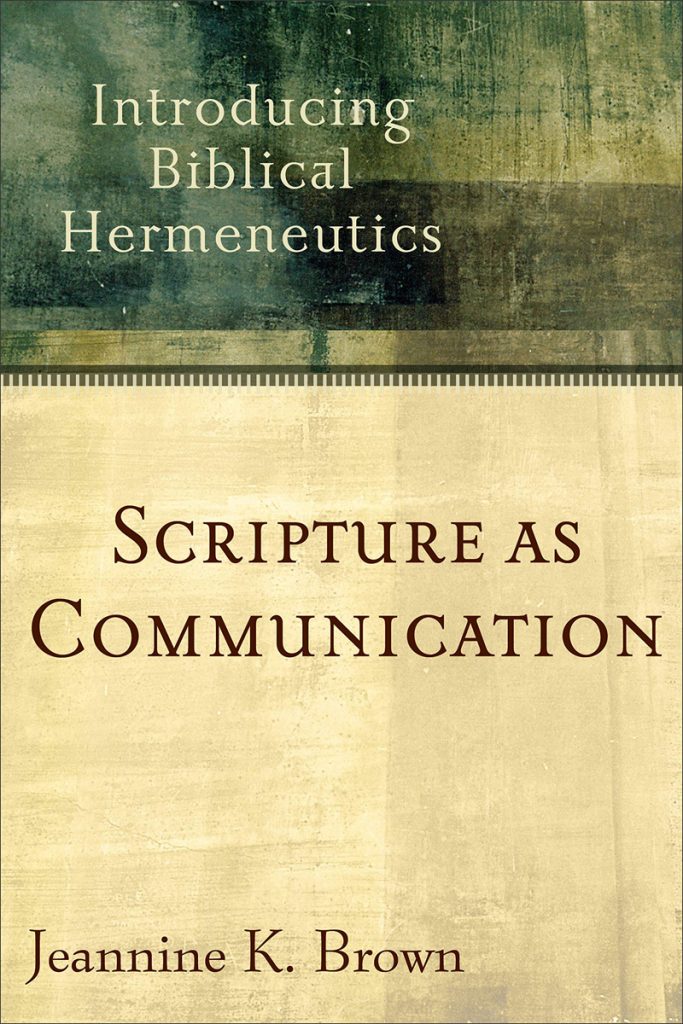
There are three broad areas of thought about where the meaning of Scripture is best originated. In that meaning either comes from the author, text, or the reader of Scripture in a more effective way to understand the communicative intent of what is written in the Living Word. To develop a reliable and effective hermeneutic, Dr. Brown has developed a Scriptural communication model that evaluates the merits of each approach and ties together a coherent way of developing a personal and community-based hermeneutic that honors the intent of the Bible and our LORD.
By spending a lot of time in Dr. Brown’s book, I have developed some opinions about what is largely of interest to the personal and structured study of Scripture and its relevance.
The meaning of Scripture best lies with the author. More specifically, meaning rests with Yahweh through various authors throughout Scripture.1 As Biblical writers communicate in their local contexts, they demonstrate perlocutionary intentions to their audience. Their literary expressions go beyond a full understanding of what becomes communicated.2 Their communicative act to warn, advise, praise, inform, invite, and so forth calls for interpretation and actualization among those who would listen or read what they have to say. Regardless of verbal and literary form, meaning becomes adapted and transposed to new contexts among listeners and readers. Meaning retains its purpose and integrity as to how it becomes applicable rests with individuals and communities.
Dr. Brown’s communication model about meaning comes
with several affirmations.3 Her arguments throughout the book were
summarized as having various contributing factors, one of which specifies
meaning as “author-derived but textually communicated.” Subordinate to the
communicative intention of Biblical authors, readers attend to Scripture by
contextualization. Readers who appropriate Scripture in their local culture by
interpretation and “illumination” from settled and reliable meaning for
relevant use as communicated from authors of the Bible.
These affirmations that Dr. Brown wrote coincide with what we come to understand and accept as the root and origin of meaning. Largely because of a newly developed view about the subjective nature of reader interpretation and the limits to what autonomous texts can provide without arbitration from an author.
1. Brown, Jeannine K. Scripture as Communication: Introducing Biblical Hermeneutics. Grand Rapids, Michigan: Baker Academic, 2007, 92 2. Ibid, 114 3. Ibid, 99
Throughout the pages of “Scripture as Communication,” we read and learn about concepts and methods around biblical communication and interpretation. We explore hermeneutical principles and perspectives from various schools of thought. From both a theoretical and practical frame of reference, readers become informed through illustrations, definitions, outlines, and models that educate students of Scripture on what it is to bring about the full and more productive study of God’s word.
Within this book review, various subjects covered among both practical and theoretical sections in Dr. Brown’s book reflect her walkthrough about what interpretation and meaning are and what they involve. Much of Dr. Brown’s use of technical language and prose to guide readers through these subjects is distilled in this review to gain a clear understanding of what a student of Scripture learns within her book about biblical hermeneutics. The first half of the book’s theoretical topics cover the roles of biblical authors, readers, and texts to arrive at conclusions intended for communicative purposes. A reader could view this first section as a survey of internal interest about textual meaning, its implications, historical development, and interest to both readers and authors of Scripture. The second half of the book pertains to practical or external applicability and relevance to what readers understand from the prior section.
Part 1 – Theoretical Perspectives on Scripture as Communication
Terminology & Context
The book begins with definitions and terminology that sets up a foundation of understanding within its chapters to follow. Specifically, the author builds upon various terms as new topics are introduced or reinforced. To further understand the definitional meaning of hermeneutics, exegesis, genre, literary context, social setting, and contextualization. These terms become further and progressively explored in-depth to one another. To bring understanding about how they are relevant to the interpretation and application of Scripture as intended.
Dr. Brown defines hermeneutics as the study of activity involving interpretation. It is a meta-textual analysis process that enables a reader or study to arrive at accurate and meaningful conclusions about what becomes communicated. This process gets applied across various genres to interpret and grasp meaning successfully. As readers, we reach an understanding of poetry, narratives, epistles, and legal texts of the Bible. While attending to literary and social contexts in which an author intended. Particularly in their original settings at the time, written works occur for transmission and delivery to readers centuries later.
The introductory topic of exegesis carries more practical relevance in later chapters. However, it is of significant interest from a theoretical perspective because it pertains to the historical context of Scripture as written. Dr. Brown refers to this as an “exegetical process” that is culturally significant concerning a gap between a modern reader and the author of Scripture during the time events, or literary occurrences become committed to text. Exegesis is a practice that a reader applies to get at the closest interpreted meaning of Scripture, most notably concerning its genre, literary context, and social setting.
Communication Models of Interpretation
A greater depth of theoretical understanding becomes developed across numerous models with their historical backgrounds. With examples of their usage, Dr. Brown describes each model in summary and detail. Among the first introduced is speech-act theory while accompanied by language theory, relevance theory, and literary theory. The speech-act theory stands out among all others in Dr. Brown’s further written work among later chapters. In due course, it then becomes necessary to refer back again to the definitions and descriptions associated with this theoretical model to get at its relevance and applicability.
The speech-act theory calls attention to the functional nature of language. In that, there are specific purposes of language recognized and put to use during a communicative process. There are four critical points of interest — First, a locution as defined by what is said. Second, an illocution to describe what is accomplished by what is said. Third, a perlocutionary intention is an intended response by hearers or readers. Finally, an unintended perlocution is what is accomplished by what is said, but not intended. In an effort to hold together these technical concepts for later reference, students of Scripture can find these terms of limited interest as they appear meant for academics or scholars. Still, the purpose of their definitions within this theoretical model helps to better understand the context of textual work completed thousands of years back in history.
To further draw into the various additional theoretical models of interpretation, Dr. Brown calls attention to their histories, academic contributors, and rationale about their suitability within the exegetical process.
Authors, Texts, Readers
There is a three-way contrast made between each functional role of communicative participants. Introduced are an original author, an implied or actual reader, and an autonomous text that bears its meaning in a free-standing way. It is here that “authorial intention” is introduced as a way to describe and emphasize meaning as best derived from what an author intends or expects. All essential attributes associated with an author such as language, social, economic, and political realities have a bearing on meaning. This meaning, in turn, contributes to the context that conveys understanding, research, application, and contextualization as further explained later in the book.
Further attention has been given to what form of meaning as developed from a reader’s perspective. Where what prevails is the subjective view and preferences of readers with their own biases, traditions, and influences. Over time, this emphasis on a reader’s interpretation to establish meaning has developed but does not hold weight among modern expositors.
Meaning becomes further categorized as intentionality types along a scale or continuum. Between transmissive and expressive intentionality, there are various Scripture genres to bring about outcomes that align with authorial intent — either expressive as apparent among works of poetry, or transmissive and instructional works found among epistles. The Bible’s authors have communicated meaning in their texts to convey intent. Whether in the narrative form or through instructional and emotive style, the method of communication chosen fits the purpose and substance of that which is conveyed. In a context of textual coherence appropriate to what a reader should come to understand and accept.
Developing Textual Meaning
There is a distinction between implicit and explicit meaning as covered by Dr. Brown to probe patterns of communication. Moreover, her book refers to inference beyond explicit intentions. To come closer to what an author intends by written Scripture, we can interpret patterns of meaning that are otherwise less available if we read and understand the Bible at a surface level. This poses certain risks toward false interpretation, but if a reader adheres to literary and historical context according to the purpose of Scripture, they become mitigated or reduced.
Of particular interest is the notion that authors can and do communicate beyond what they consciously express, where there is a (sub)meaning of context which holds validity to a pattern of meaning an author willed or infers. What is striking is that these authors are unaware of meaning and inference, which still carries validity. As explained, an author cannot explicitly attend to all expressive or transmissive meaning toward communicative intent because he or she is unable to pay attention to all aspects of meaning. Inferences and implications, therefore, emerge to further the body of work authors produce to communicate with their readers. Thus, implied meaning from New Testament sources compared to implied meaning from Old Testament sources provides opportunities for careful exegetical analysis less evident to many readers.
At the core of textual meaning is perlocutionary intention. Where it becomes recognized that words do things and say things. It is an extension of meaning as it helps form a theological hermeneutic. Both locution and illocution constitute meaning with perlocutionary intention giving activity to what becomes communicated. From this constructed view of Scripture, core textual, its extension, and continuing meaning together represent a total body of substance to interpret implications of written Scripture from an author and transmissive or expressive genre. In a context of textual coherence appropriate to what a reader should come to understand and accept.
Invitation to Active Engagement
It is somewhat surprising that each person who studies Scripture has an individual hermeneutic. There is a single hermeneutic, or linear formula as a checklist of sorts to exegete Scripture for consistent outcomes. We all have our own individual “location” of perspective and influence that affects our interpretive efforts. These are blind spots that keep us from gaining a clear understanding of Scripture. We have our traditions and preconceptions that predispose us to eisegesis of Scripture — all to keep original and intended meaning out of view. Worse yet to arrive at conclusions from Scriptural misinterpretation.
There is an additional discussion about the differences between an implied reader and an actual reader where the actual reader is at a separation some distance in meaning from an implied reader. This is where the implied reader is who an author intends to communicate. However, since there is a necessity for communication that involves interpretation with all of its exegetical issues, the actual reader applies the best effort to get a meaningful understanding. The closer an actual reader is to intended and accurate meaning, the more that the reader becomes an implied reader as biblical authors form their written work across various Scriptural genres. With this difference drawn in Dr. Brown’s book, it becomes apparent that a well-developed hermeneutical interpretation process should include an effort to get as close as possible to the original meaning. As an implied reader, rather than an actual reader who takes a superficial view of the engaging genre.
It is a mistake to assume that readers are free to read in isolation without any attention to a community at large. Such as a community or group of people who together read and interpret Scripture with various perspectives. Who can, in turn, more accurately apply hermeneutical practices, which contribute to the contextualization of those who seek the truth of the Bible. Moreover, either individually or in a group setting, a biblical hermeneutic must attend to biblical genres, languages, social settings, and literary contexts.
Part 2 – Practical Guidance for Interpreting Scripture
Genre and Communication
There are three genres in which Dr. Brown chooses to focus. Poetry, epistles, and narrative are the genres, and she goes into thorough detail about their function and role within Scripture. First, Poetic utterance and meaning as a communicative act involve various devices, imagery, and metaphor. Example after example, Dr. Brown highlights Psalms and Proverbs as a way to form concrete meaning from emotive expression in context with the cultural or traditional setting of biblical authors.
While we as readers tend to prefer prose in narrative form, we do accept and make use of poetry along more modern expressions. Such as found within music and other forms of entertainment. Imagery called upon to communicate sense and comparison provide the metaphors that bring about added depth and richness in meaning that gets even closer to what an author has conveyed.
The genre of epistle is one of coherent thought within social and cultural settings to affect how biblical meaning and principles are formed. As epistles are explicit letters to individuals and groups of people, there are found within the stories of interpersonal relationships and deeply theological subject matter. Common among all of them is a stream of thought from writers to communicate direct meaning with less room for ambiguity. Often these letters are instructions to early churches within development to include numerous people new to their faith in Christ. New to fellowship, church practices, worship, and other disciplines characteristic of what Jesus set in motion with Peter, His apostle.
Narrative types of Scripture are about stories and discourse. For example, the synoptic gospels are side-by-side perspectives of a common story about the life and ministry of Christ. As a subset to a narrative story, some discourses serve to communicate levels and shapes of Scriptural meaning. Either as thematical, chronological, or rhetorical devices to render comprehension of story participants and readers. With our understanding and interpretive efforts, learned principles, facts, and events of narrative Scripture must become recognized as having profound theological relevance. Gospel urgency, life lessons, spiritual guidance, kingdom awareness, missionary efforts, and so forth get their communicative depth from religious narrative discourse. All are originating from stories that come from gospel writers. They extend out to more immediate readers in their cultural setting as well as those of us who seek to learn and accept their truth and meaning to act upon.
The Language of the Bible
In her effort to share relevant guidance of communication involving languages of the Bible, Dr. Brown collects and records facts and opinions about linguistic challenges, academic perspectives, and the pragmatic inter-workings of biblical languages. Dr. Brown’s technical views about languages of the Bible are strenuously difficult to follow. As an effort to mindfully bring into structured order corresponding usefulness to the overall aim of understanding introductory hermeneutics.
It is widely understood that the Bible is written in Hebrew, Greek, and Aramaic. The absence of topics such as the Septuagint, Masoretic Text, and translations in this section is a point of wonder. Most especially concerning formative languages for interpretative examples. Since New Testament writers read Greek and earlier forms of the Old Testament, it would be highly enlightening what their interpretive process was to demonstrate examples for generations to consider or apply. Or at least to give added credence to the models earlier presented in her book. While much more attention gets placed upon the nature and function of language itself, its thereafter Biblical applicability is bolted on as having viable and legitimate suitability.
Dr. Brown’s book on Scripture as Communication is written for seasoned academics and linguistic scholars. Or at least this section of “Language of the Bible.” While we are presented with an explanation about how language works, various linguistic terms follow and have a considerable bearing upon an interpretive process from a scholarly and peer-reviewed perspective. The density and concentration of subject matter in this section are extraordinarily broad and comprehensive and should take several days of full absorption to grasp its informative and educational value. A first-pass read-through doesn’t do it justice with an outcome of limited retention in a short duration of time.
Context and Contextualization
Having read at length and depth through this entire section, primary and secondary sources of material to support the exegetical study of Scripture is outlined and explained to become oriented about what is most suitable for a given purpose. There are various suggestions about skills to develop toward the study of Scripture. Of outstanding value are the sections about outlining, summarizing, identifying themes, and identifying functions.
This is probably the most crucial topic throughout Dr. Brown’s book. While spanning across 41-pages of text at the end of the book, there are exceedingly useful tools covered here. Such as macro-contextualization that provides guidelines about how to traverse across scripture elements to interpret and study for meaning. To include principles and methods that have a bearing on the spiritual development and health of a believer in Christ.
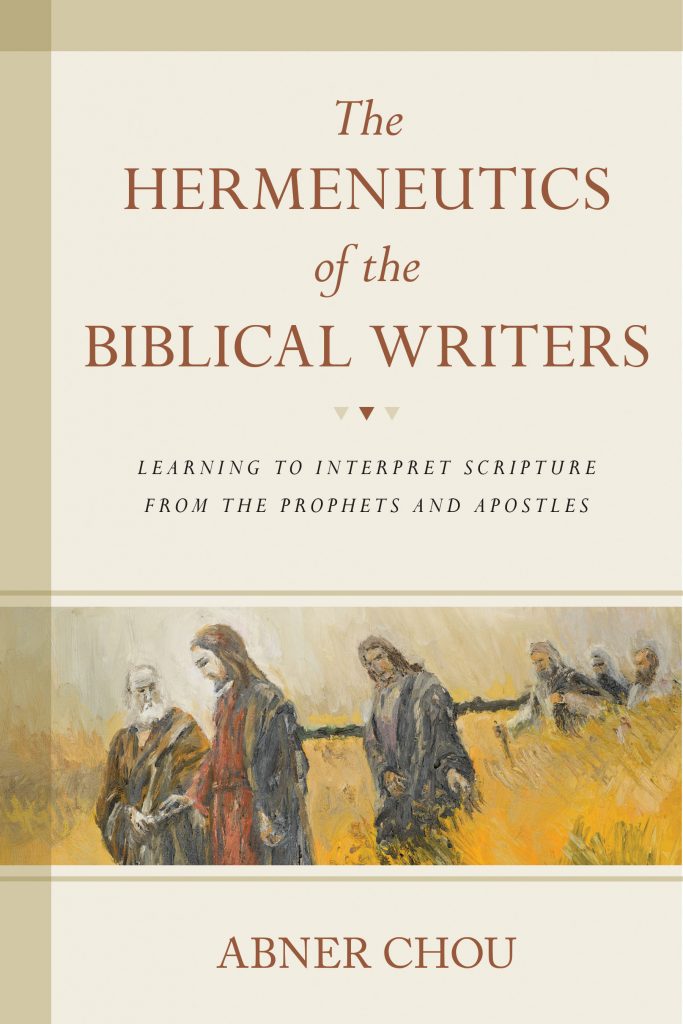
The book entitled “The Hermeneutics of
Biblical Writers” details the notion that Prophets and Apostles from both
the New and Old Testaments saturated themselves in Scripture. Specifically,
that they had a hermeneutical method of interpretation that produced both
meaning and significance. The book’s author Abner Chou sets out on a quest to
account for both authorial intent and authorial logic using principles of intertextuality.
Throughout the pages of the book, there are various examples of the use of Scripture involving biblical characters to highlight the specifics about their methods of interpretation. Often where it is necessary to go beyond the surface of Scriptural references elsewhere. Such as with allusions in language, or with word-by-word comparisons from one account of a biblical matter to another. The author uses numerous specifics with precision to demonstrate the interconnectedness and authorial logic to reveal to us how to draw upon Scripture to understand what the word of God says. As a Bible student, this is crucial to understand the word as the authors intended as we seek its significance and ramifications to follow it.
Early in my reading of this book, I was fascinated
by the idea of “authorial logic” as compared to “authorial intent.” Nearly
dismissive of the idea because I had come to recognize that God is not logical
or illogical, but alogical. Since logic or critical thinking is a human
framework of thought, and God is the Creator of such a framework, God is an
alogical being. It is currently my view that the explanation of the LORD’s ways
and thoughts rest within His aseity. After all, as we see in Scripture, “For My
thoughts are not your thoughts, either are your ways my ways (Isaiah 55:8).” So,
I have concluded that the LORD must be alogical, in the sense that the LORD is
beyond or outside the bounds of logic itself. Not illogical, or contrary to
logic, but separate or distinct. Where, more pointedly, logic and reason are
subordinate to the LORD.
Upon further reading and understanding Chou’s perspective, I became reminded about authorial intent and that the primary Author is divine who chooses to communicate through His created people. We are created in His image to include some of His attributes. If He wants to structure our way of thinking within a cause-and-effect framework for His glory and purposes, I want to make it my priority to embrace and honor that in the field of hermeneutics. So, reading on into the book, I was more tentatively open to see what Chou had to say. Specifically, I spent many hours with his work as he set about the quest of authorial logic, which is integral to both prophetic and apostolic hermeneutics. Toward the end of his book, Chou’s conclusion was to claim the prophetic and apostolic hermeneutic as the Christian hermeneutic and, ultimately, our hermeneutic.
The Prophetic Hermeneutic
It is with numerous references that Chou makes the
case that prophets were not only scholars of Scripture, but also exegetes and
theologians. They were steeped in the word of God as their writings and conduct
reflected an immersion of understanding among biblical authors from before
their time. Prophets were not unintelligent or biblically illiterate people. As
Old Testament authors, they referenced numerous earlier Old Testament writings.
A practice today understood as intertextuality to affirm and build upon new
revelation.
By various examples, theological development becomes written among Old Testament books to highlight the nature of the prophetic hermeneutic. Whereas precise exegesis of texts naturally flows into theological progression down through the centuries.
As demonstrated that the prophetic hermeneutic is widespread, prophets pay close attention to general ideas in addition to precise verses, phrases, and words. Indeed, this occurs throughout the entire canon. In just one example, Chou refers to the eagle metaphor in the language of Exodus. Israel’s corresponding delivery from exile was much later referenced by David and Isaiah. Such prophetic hermeneutical recognition applies to wisdom literature and law, along with major and minor prophets. In Chou’s words, “The evidence for exegetical accuracy is in the text not only in general tenor but also in its details.”
While I do not fully understand or agree with the counterpoint objections presented in the book, Chou makes Scripturally sound arguments to mitigate them — centered on progressive revelation that stem from ramifications of the text. The prophets knew “the what” of historical Scripture to further convey meaning in their writings. Prophets of old were also concerned with the “now what” or “what do we do with this” implications of what they understood. Redemptive history unfolded through the use of their hermeneutical outcomes.
Chou considerably enhances my view of the prophets and their role in the development of Systematic Theology in contrast to Biblical Theology. Due to the prophets’ overall composite view of Israel’s eschatological history. That is, they knew the theological implications from both a systematic and biblical perspective. They knew the development and advancement of God’s redemptive plan through the replacement of one covenant to another.
The Spirit of God’s influence toward directionality
and revelation appears sparsely placed. Particularly from Chou’s prophetic
hermeneutic rationale and arguments against objections. Did the prophets and
apostles write more than they knew? My view is both yes and no, rather than
only “no.” Yes, in the sense that God inspires all Scripture (2 Tim
3:16). No, in the sense that they were well studied in Scripture to support
Chou’s view of authorial logic. My view is ambidextrous in thinking this way
since two conditions can overlap or hold at once from an alogical perspective.
To walk through examples below, further theological
development among prophets shows how they are theologians with accurate
hermeneutical capabilities. They are said to set a trajectory about how God’s
plan develops to achieve His promises and aims.
The Abrahamic and Mosaic covenants become
intertwined into the Davidic covenant. While the Davidic covenant brings into
it some attributes of the Noahic covenant, meaning, Noah can plant a vineyard
as God restrains the effects of the Fall to move creation back toward its
original sabbath rest. No longer does the earth yield thorns, thistles, and
weeds. At least to the written extent and pronouncement at the curse of the
Fall.
The Davidic covenant obtains rest from the Mosaic conquest of Canaan through Joshua. As incorporated by the promises of Abrahamic, Mosaic, and Noahic covenants, “God has made the weight of redemptive history fall upon the Davidic dynasty.” All covenants converge into one Davidic covenant that, in turn, extends to an eschatological prophecy and reality in fulfillment of God’s promise to restore His people and creation.
Chou’s rationale is understood, accepted, and appreciated, but it concerns me that the Spirit of God does not get explicit theological treatment of this to understand the prophetic hermeneutic. That, in my mind, limits a full understanding and credibility of the prophetic hermeneutic as described and advocated. Let us know and interpret what the Lord is doing and is going to do as a continuing revelation as the canon becomes formed. The prophets were uniquely placed participants as vessels of the Lord. Interpreted revelation does not just sit with the people of God to figure things out within Scripture by their developed capabilities. When it comes to God’s purposes, they were not well developed among themselves. Without question, there is certain enlightenment that has occurred by divine involvement (1 Cor 1:27).
Theological development goes further as prophetic
hermeneutic recognition extends into the apostolic hermeneutic. Through the
prophets Amos, Hosea, and Micah. Amos clarifies that God will keep His promises
while the house of David has collapsed. Hosea affirms a new, or a second David
by God’s promises to fulfill His Davidic covenant. In time, Micah prophesies
that the Messiah shall be born in Bethlehem as a second King since David was
born there. The Messiah will enter the wilderness to be tempted to fulfill
David’s role and restore his royal house. Again, theological principles derived
from wisdom literature, and law, to include major and minor prophetic
contributions.
Accordingly, Chou wrote that the prophetic
hermeneutic came through great intellectual insight of people who excelled at
exegesis with profound capabilities. The hermeneutic of biblical prophets were
from their depth of understanding to rightfully interpret meaning and
significance. Cast, as they were, profound biblical thinkers and writers.
Exceptional exegetes and theologians due in part from their accuracy in
handling Scripture. Intertextual precision characterizes their hermeneutic
exceptionalism as necessary for careful application and theological formation.
In contrast, I would observe, this was their
specific intertextual methodology of interpretation. While Chou articulates his
view by compelling examples, it becomes demonstrated that the “what-of” their
hermeneutical process has relevance. Yet not the “how-to” at this point per se
as he continues in further depth during his treatment of the apostolic
hermeneutic.
While the LORD informs Moses that He would speak
through him before Pharaoh (Exodus 4:10-12), that situation occurred out of
concern that Moses was “slow of speech and tongue.” Moreover, it intuitively
feels somewhat out of character that prophets would confidently make
pronouncements from exegetical advancements because of verbiage such as “thus
saith the Lord.” So, I am highly nervous about the confidence Chou has about
the prophetic hermeneutic he claims. Certainly, no quarrel about prophetic
hermeneutic recognition and its support of an apostolic hermeneutic. It only
appears that specific methodology that involves the Spirit of God according to
His plan and trajectory seems missing or too distant.
It is my conviction that hermeneutics is a practice and process of exegetical interpretation. It is a “how-to” effort to understand the meaning and significance of biblical authors fully. It is a labor to understand Scriptural ramifications with suitable applicability to our life context. It is not solely a result or outcome of intuitive and meticulous effect or performance, but the practice of it with specific custodial methods (or gifts) with Spiritual guidance along an individual’s process. Yes, prophetic hermeneutic, but how? Not what, by naming it as intertextuality with examples along intervals of new revelation. How did their relationship with the Lord affect their interpretation? With others? What were the theological bridges they had to cross, and how did they pass them? I suggest that in the absence of theological criteria formed for eligibility and use, the LORD was an active participant to shape the thinking of His prophets. Without too much freestanding credit on their own, prophets and patriarchal fathers had an extraordinary and unique role in serving the LORD’s purposes. They are exceptional for more reasons than their ability to exegete and produce theological continuity. As well-read and articulate as they were, they were chosen and loved by YHWH with His influence upon them to set theological depth, revelation, and directionality. It is that which significantly contributed to the results we see. So, the question is about how it is they performed their hermeneutic and not what their hermeneutical outcome was through intertextual analysis. Not what we discover in the original languages for them, but instead by what it was that they were doing in terms of methodology. If prophets were proof-texting cross-references throughout the Old Testament to build theological relevance to demonstrate meaning and significance, is that then a valid and acceptable hermeneutic or methodology of interpretation?
Intent to write is not an explanation about how to
abide by the law, recognize the propagation of covenant promises, or follow
revelation and communicate accordingly. Neither is the perception about intended
meaning from prior Scriptural authors. Methodology is about process, not
identification of facts or the presence and acknowledgment of exceptional
performance.
It is my limited view that apostles and prophets were not ignorant but understood Scripture and wrote beyond natural understanding to deliver meaning that they intended under the inspiration of YHWH. They were not on their own to derive Scriptural and theological truth. Not by individual effort by their exceptionalism as exegetes or theologians. They were not empty vessels or as everyday people, but unique individuals of their being. Anthropomorphically speaking, set apart in the hands of the Lord while steeped in God’s word.
The Apostolic Hermeneutic
Continuing through this section, I reset my perspective with a fresh outlook. It became necessary to begin combing through Chou’s book in a nonlinear way and to skip back and forth between section conclusions and examples he provided. Primarily to come to grips with the legitimacy of authorial logic and most notably by the intertextual practices as led by the Spirit. I found this was necessary because of much less emphasis placed upon the role of the Spirit toward prophetic interpretation. It was through my apprehension about the accolades placed upon the stature prophets and apostles that I was entirely cautious and picky about what I accepted.
Especially while in the Old Testament since it serves as grounds for the apostles’ reasoning. As Chou wrote, due to introductory formulas like “it is written,” or “because of,” it is natural to make comparisons among segments of Scripture. Then afterward, to conclude a basis of formed rationale without error as the identified formulae claimed the foundation of legitimacy toward the apostle’s understanding. All leading to the recognized intent and developed logic of their Old Testament predecessors. Ultimately, the same authorial logic as continued in the New Testament as they were readers of Scripture and those who revealed Scripture by new revelation.
Chou advocates prophetic intertextuality within the
Old Testament. As a setup and projection of an apostolic hermeneutic.
Eventually, he takes a reader through the apostolic hermeneutic as a foundation
of new revelation and exegetical discovery from the Old Testament. Where it so
appears from Chou, authorial intent between human and divine contribution is
made distinct and separate from his following affirmation of the Lord’s work
and involvement.
As such, a human author was not always fully aware of what the divine author intended backward and forward in time. From the prophetic hermeneutic to the apostolic hermeneutic, new and continuous revelation unfolded over the course of history. Even with adopted authorial logic through prophetic intertextuality, the apostolic author did not on their own have the insight or clarity of view about the Lord’s near or long-term redemptive intentions. So, New Testament authors who read and wrote did so generally by instruction and inspiration as the new revelation came to them by the work of Christ while the hermeneutical examples of Old Testament prophets or New Testament apostles further revealed the truth of God’s word.
According
to Chou, apostolic interpretation of the Old Testament came from study and
exegesis by the prophetic hermeneutic made their own. Moreover, what theological
principles developed by Old Testament prophets discovered through their
hermeneutic is what the apostles did as well to inform their authorial logic. Yet
it is my view that it is not studying or analytical methods alone that brought
about a trajectory for overall directionality and later interpretation or
theological development. God was at work in the lives of those who were interpreting
and writing Scripture to communicate His intentions and redemptive plan.
From observations among the many examples given in
Chou’s book, I sought to identify contributing factors of authorial logic. Here
is an outline I noted during reading time to see if there is a more concrete
outline of practical advice to think through and use.
Contributors to Authorial Logic:
Consistent and Ongoing Immersion
Comprehensive Cross-Referencing Activity
Meticulous Attention to Languages
Use of Inductive Non-Linear Thinking
In Context Proof Texting
Chronologically Independent Correlations
Use of Root Translations (LXX, MT)
Recognition of Prophetic Speech-Acts
Detection of Divine Inference
Apostolic Consistency of Application
The Christian Hermeneutic
Chou makes the point that we are more than cross-referencers. That the intertextuality modeled for us is more than that. We should look to imitate the hermeneutic of the apostles. Look to the reading quality of their rationale and direct our efforts to standard hermeneutic textbooks. Chou asserts that what we learn in standard hermeneutical textbooks is similar to what biblical writers read in their Bible. As Chou wrote, “the prophetic hermeneutic and the apostolic hermeneutic becomes the Christian hermeneutic.” Much of which comes through the adoption of modern, conventional, and proven hermeneutical methods.
Moving from meaning to significance, we consistently set course toward application as we understand biblical implications and theology from Scripture. Just as biblical writers cared about the cultural, historical, and literary backgrounds of prior Scriptural authors, they serve as an example to us to derive meaning. Through interconnectedness or connecting dots to understand application as they did. Not only to clearly understand what they wrote and meant to follow them but also to recognize what they thought and what their motivations were. To get into their minds, so to speak.
To help us arrive at specifics about intended significance for application purposes, Chou concludes his work by giving us four areas to frame our approach in applying Scripture. (1.) Worship God for His Works, (2.) Learn Theology, (3.) Morally Respond, and (4.) Adopt a Worldview in Light of Redemptive History. All taken together, these areas represent a body of effort that Christians use to get practical application from the meaning and significance derived from biblical authors. By connecting the dots throughout Scripture to form an interconnectedness of authorial logic, we obtain an inspired way of getting to the significance and meaning of God’s word. This is the prophetic hermeneutic that the apostolic hermeneutic reaches into while we make them both our own.
On a 3 x 5 index card, I have been writing notes and symbols about the process of spiritual life and death. Also many other 3 x 5 cards with various thoughts and conclusions that come and go. Not to miss anything, but to write…
Today I completed the book entitled “Illustrated Life of Paul.” It was required reading for a course about the early Church and the book of Acts. The book is a walkthrough of the life of Paul the Apostle. Specifically, around his background, early experiences, conversion,…