Today I finished reading The Desecration of Man by Carl Trueman cover-to-cover (ISBN: 978-0593713853). The following review is based on notes taken during the reading. Trueman’s The Desecration of Man addresses a question that ought to concern every Christian: What does it mean to be human? Scripture teaches that man was created in the image of God (imago Dei), and that his dignity comes from his Creator rather than from anything he possesses or accomplishes. Intelligence, physical ability, independence, and social standing do not determine a person’s worth. Nor does man possess the authority to decide whether another human being deserves that dignity. Yet much of modern society has abandoned this understanding, often without considering what has been lost. Trueman examines how the rejection of God has gradually diminished our regard for humanity itself. The problem goes well beyond immoral conduct. It concerns the way man understands his own existence, his obligations toward others, and his relationship to the One who created him.
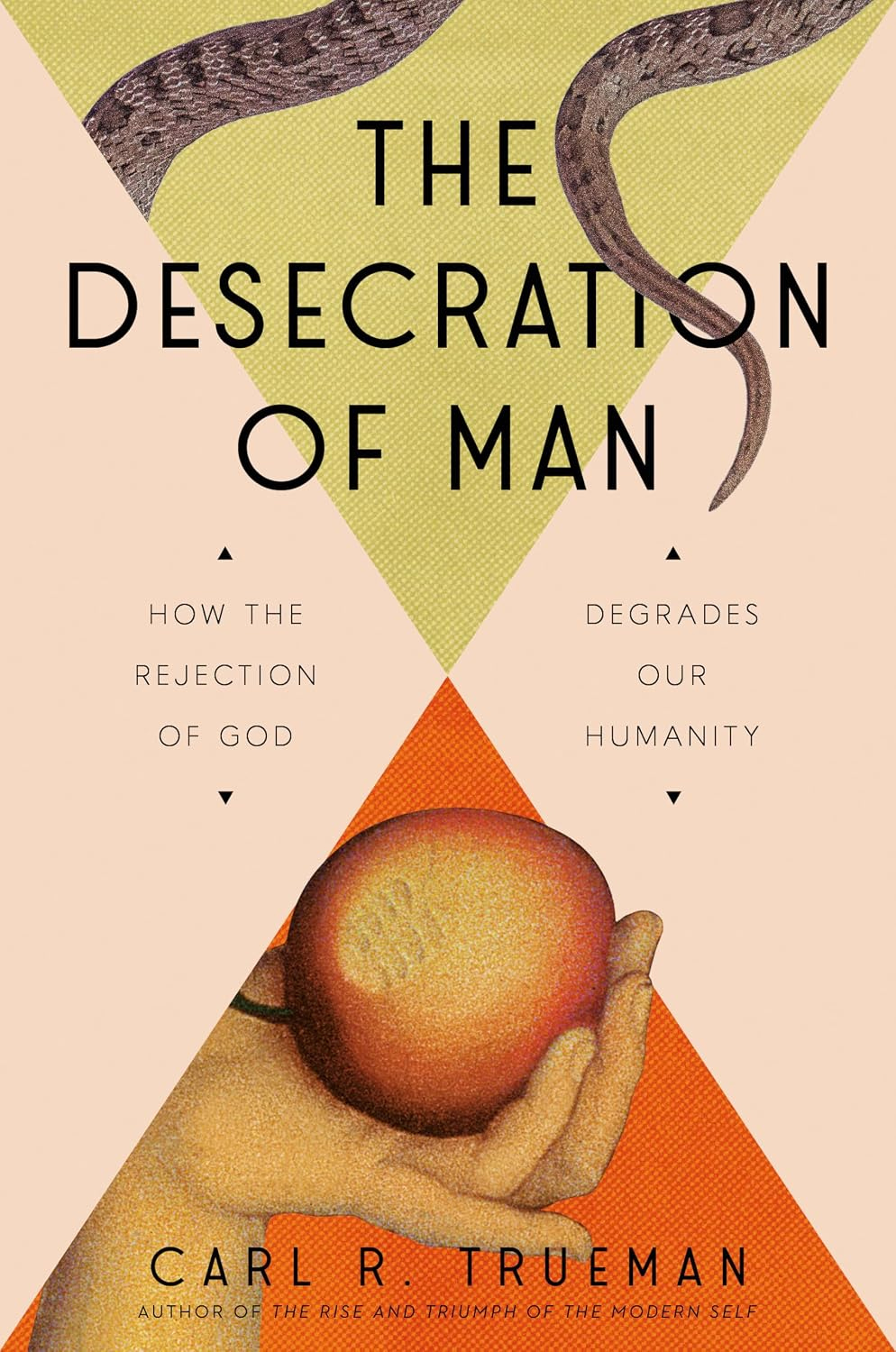
A central concept in the book is the social imaginary, the shared assumptions, customs, images, and expectations through which people make sense of the world. Trueman uses this concept to explain how philosophical ideas eventually find their way into ordinary life, often without people recognizing their origins. Most people do not study the intellectual movements that have shaped modern society. They simply grow accustomed to what surrounds them and come to regard it as normal. This is what I found particularly troubling. An entire culture can become accustomed to a distorted understanding of reality, accepting ideas that contradict human nature and divine revelation. What begins as an intellectual rejection of God eventually becomes embedded in education, entertainment, technology, public institutions, and personal relationships. Over generations, these assumptions acquire an authority of their own. The social imaginary can become a form of collective delusion when man begins to regard his own inventions about human nature as more authoritative than the created order itself.
The historical development of this condition was another important part of the book. Trueman follows the gradual erosion of Christian anthropology through centuries of philosophical and social change. The Enlightenment, naturalism, and subsequent intellectual movements contributed to a growing confidence that man could understand himself and determine his purpose without reference to God. These changes accumulated over time, frequently leaving older moral customs in place even after the beliefs supporting them had been discarded. Western society continues to speak of human dignity, rights, and justice, but the meaning of those terms has become increasingly uncertain. What grounds them when man is no longer understood as bearing the image of God? I found the cumulative nature of this erosion especially revealing. A civilization does not have to renounce its entire moral inheritance at once. It can surrender one conviction after another until the Christian understanding of man has been largely replaced by an individual who claims the authority to define himself. In seeking independence from his Creator, man loses sight of the very dignity he was given at creation.
The book also caused me to consider a weakness within contemporary Protestant Christianity. Protestant theology possesses an extensive biblical inheritance concerning creation, the fall, redemption, and the renewal of man in Christ. Yet I question whether much of Protestant church life has adequately developed and taught the implications of biblical anthropology. Roman Catholicism has a substantial tradition of moral and philosophical reflection concerning personhood, natural law, the human body, and the obligations arising from our created nature. Protestantism has resources of its own, and Scripture remains the final authority by which all such traditions must be judged. Still, I believe there is a deficiency when the doctrine of the imago Dei is affirmed without careful consideration of what it means for the whole of human life. Our understanding of sexuality, suffering, technology, relationships, and death should proceed from what God has revealed about man. Otherwise, Christians may find themselves adopting the prevailing assumptions of society while retaining the language of biblical faith.
Two sections of the book stood above the others for me: The Hour of the Madman and The Final Enemy. Nietzsche’s madman announced the death of God to people who had yet to appreciate the consequences of what they had rejected. Trueman argues that the hour Nietzsche anticipated has now arrived, and the evidence is difficult to ignore. The rejection of God has worked its way into the ordinary assumptions by which people understand human existence. The discussion of death was equally arresting. For all the extraordinary things technology has enabled man to accomplish, he remains unable to escape his mortality. What I had not considered with sufficient depth was the relationship between sex and death. Both concern the boundaries of embodied human existence and man’s growing determination to exercise authority over them. Reproductive technologies, the manipulation of the human body, and attempts to control the circumstances of death reveal a common desire to overcome the limitations of our created condition. Technological progress can accomplish genuine good, but the ability to do something does not establish its moral legitimacy. Increasingly, we seem to ask what technology can accomplish without first considering whether its purposes and consequences are pleasing to God.
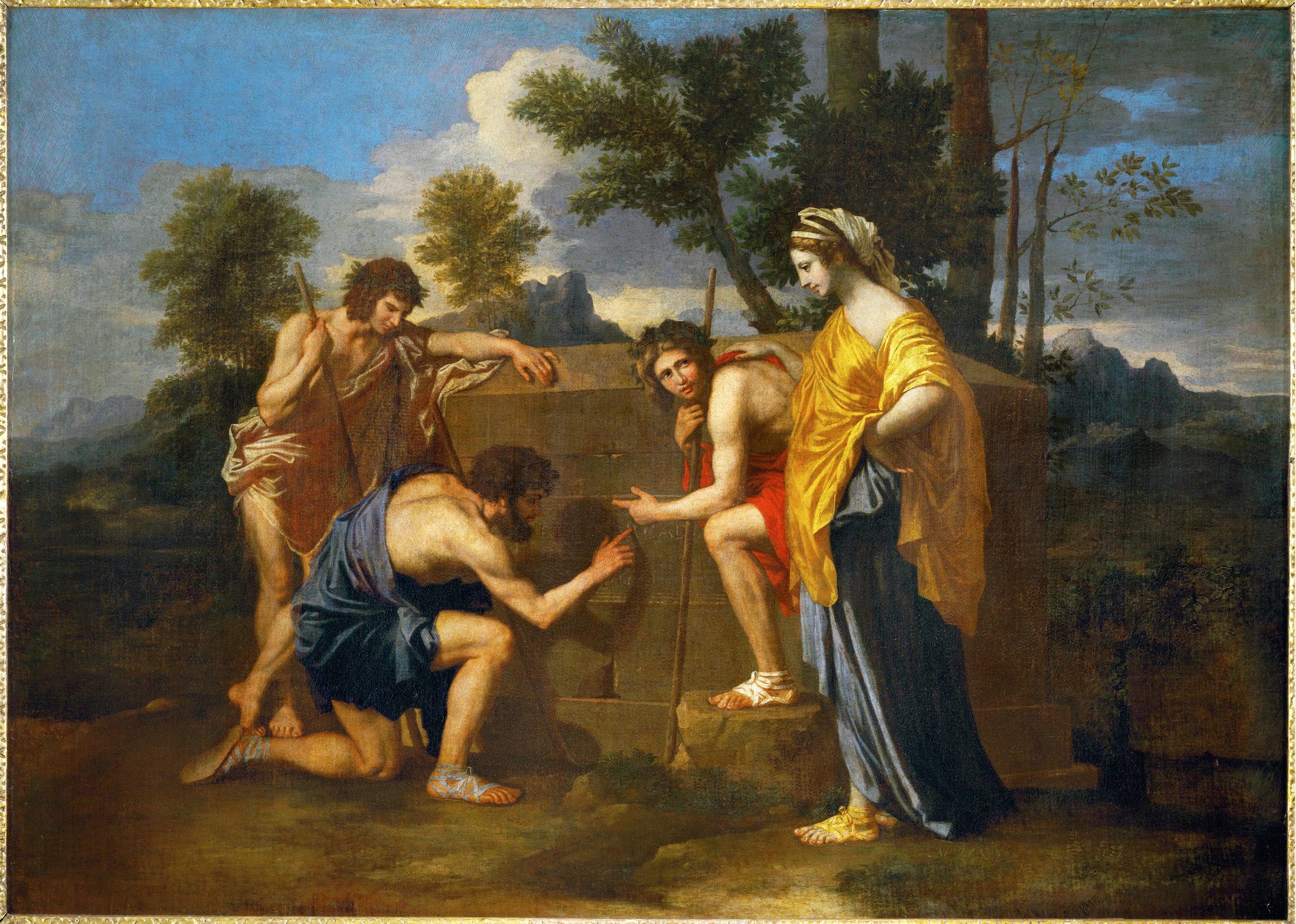
Trueman’s examination of sexual degradation was particularly disturbing. Sexual desire has become so closely bound to personal identity that many now regard it as the defining feature of who they are. The individual looks inward to discover his identity and then expects the world to recognize the person he has chosen to become. What is lost in this process is the understanding that human nature and personhood are received from God rather than constructed according to personal desire. The consequences extend beyond questions of identity. Pornography, sexual exploitation, and the treatment of the body as a commodity demonstrate what happens when another human being becomes principally an object of gratification. The person is displaced by the pleasure or usefulness he or she provides. Worse still, these practices are frequently defended as expressions of freedom and authenticity. I found it especially grievous that man, having been created in God’s image, should seek to remake himself according to his own imagination while treating other image-bearers as instruments of his desires. Romans 1 describes the spiritual disorder that follows when the creature turns from the Creator, and much of what Trueman examines bears a troubling resemblance to Paul’s account.
I appreciated that Trueman eventually turned from diagnosing the condition of modern society to considering how Christians ought to live within it. His discussion of creed, cult, and code emphasizes that Christian belief, worship, and conduct belong together. The Church cannot answer a corrupted social imaginary merely by defending doctrine or preserving religious customs. What Christians profess must find expression in how they worship, form relationships, care for their neighbors, and participate in the life of the Church. This point deserves more attention than it often receives. The social imaginary is formed through human relationships and the ordinary practices of daily life. It follows that Christians must be intentional about the people and communities with whom they share their lives. Scripture, prayer, worship, fellowship, service, and personal involvement are not peripheral matters. They belong to the life of faith and contribute to the formation of our understanding and affections. It is not enough to possess correct theological convictions while remaining detached from the responsibilities and relationships through which those convictions are lived. Christianity must be something we actually believe and practice together.
I came away from this book with a deeper concern for how easily the Christian understanding of man can be displaced, even among those who profess Christian faith. The desecration Trueman describes is not limited to obvious acts of immorality. It reaches into the imagination, the habits of thought we acquire, and the assumptions we seldom think to question. I believe this demands careful examination of what we read, watch, admire, and allow to occupy our minds, as well as the manner in which we treat other people. Yet I would not want the Christian response to become an endless preoccupation with cultural decline. Our hope is not found in restoring a previous age of Western civilization. It is found in Jesus Christ, the image of the invisible God (Colossians 1:15), through whom we are reconciled to our Creator and renewed according to His image (Colossians 3:9–10). The restoration of man is ultimately the work of God, not an achievement of cultural reform. Trueman has given me much to consider, particularly concerning the dignity of every human person, the influences that shape our understanding of reality, and the responsibility of Christians to live faithfully in the world without allowing the world to determine what it means to be human.


Comments are closed.