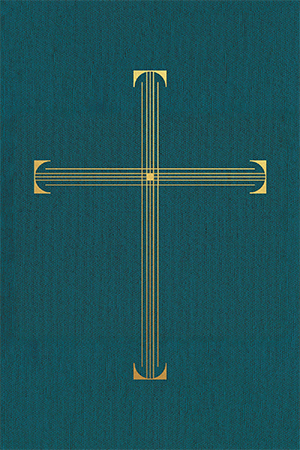
 Title: The 1662 Book of Common Prayer: International EditionSeries: Catholic
,
EvangelicalPublished by: IVP Academic
Release Date: March 2, 2021
Contributors: Samuel L. Bray (Editor), Drew N. Keane (Editor)
Genre: TheologyPages: 832ISBN13: 978-0830841929
The Book of Common Prayer (1662) is one of the most beloved liturgical texts in the Christian church, and remains a definitive expression of Anglican identity today. It is still widely used around the world, in public worship and private devotion, and is revered for both its linguistic and theological virtues. But the classic text of the 1662 prayer book presents several difficulties for contemporary users, especially those outside the Church of England. The 1662 Book of Common Prayer: International Edition gently updates the text for contemporary use. State prayers of England have been replaced with prayers that can be used regardless of nation or polity. Obscure words and phrases have been modestly revised―but always with a view towards preserving the prayer book's own cadence. Finally, a selection of treasured prayers from later Anglican tradition has been appended. The 1662 prayer book remains a vital resource today, both in the Anglican Communion and for Christians everywhere. Here it is presented for continued use for today's Christians throughout the world.
1662
The 1662 Prayer Book was printed two years after the restoration of the monarchy, following the Savoy Conference between representative Presbyterians and twelve bishops which was convened by Royal Warrant to "advise upon and review the Book of Common Prayer".Attempts by the Presbyterians, led by Richard Baxter, to gain approval for an alternative service book failed. Their major objections (exceptions) were: firstly, that it was improper for lay people to take any vocal part in prayer (as in the Litany or Lord's Prayer), other than to say "amen"; secondly, that no set prayer should exclude the option of an extempore alternative from the minister; thirdly, that the minister should have the option to omit part of the set liturgy at his discretion; fourthly, that short collects should be replaced by longer prayers and exhortations; and fifthly, that all surviving "Catholic" ceremonial should be removed. The intent behind these suggested changes was to achieve a greater correspondence between liturgy and Scripture. The bishops gave a frosty reply. They declared that liturgy could not be circumscribed by Scripture, but rightfully included those matters which were "generally received in the Catholic church." They rejected extempore prayer as apt to be filled with "idle, impertinent, ridiculous, sometimes seditious, impious and blasphemous expressions." The notion that the Prayer Book was defective because it dealt in generalisations brought the crisp response that such expressions were "the perfection of the liturgy".
The Savoy Conference ended in disagreement late in July 1661, but the initiative in prayer book revision had already passed to the Convocations and from there to Parliament. The Convocations made some 600 changes, mostly of details, which were "far from partisan or extreme". However, Edwards states that more of the changes suggested by high Anglicans were implemented (though by no means all) and Spurr comments that (except in the case of the Ordinal) the suggestions of the "Laudians" (Cosin and Matthew Wren) were not taken up possibly due to the influence of moderates such as Sanderson and Reynolds. For example, the inclusion in the intercessions of the Communion rite of prayer for the dead was proposed and rejected. The introduction of "Let us pray for the whole state of Christ's Church militant here in earth" remained unaltered and only a thanksgiving for those "departed this life in thy faith and fear" was inserted to introduce the petition that the congregation might be "given grace so to follow their good examples that with them we may be partakers of thy heavenly kingdom". Griffith Thomas commented that the retention of the words "militant here in earth" defines the scope of this petition: we pray for ourselves, we thank God for them, and adduces collateral evidence to this end. Secondly, an attempt was made to restore the Offertory. This was achieved by the insertion of the words "and oblations" into the prayer for the Church and the revision of the rubric so as to require the monetary offerings to be brought to the table (instead of being put in the poor box) and the bread and wine placed upon the table. Previously it had not been clear when and how bread and wine got onto the altar. The so-called "manual acts", whereby the priest took the bread and the cup during the prayer of consecration, which had been deleted in 1552, were restored; and an "amen" was inserted after the words of institution and before communion, hence separating the connections between consecration and communion which Cranmer had tried to make. After communion, the unused but consecrated bread and wine were to be reverently consumed in church rather than being taken away for the priest's own use. By such subtle means were Cranmer's purposes further confused, leaving it for generations to argue over the precise theology of the rite. One change made that constituted a concession to the Presbyterian Exceptions, was the updating and re-insertion of the so-called "Black Rubric", which had been removed in 1559. This now declared that kneeling in order to receive communion did not imply adoration of the species of the Eucharist nor "to any Corporal Presence of Christ's natural Flesh and Blood"—which, according to the rubric, were in heaven, not here.
While intended to create unity, the division established under the Commonwealth and the licence given by the Directory for Public Worship were not easily passed by. Unable to accept the new book, 936 ministers were deprived. The actual language of the 1662 revision was little changed from that of Cranmer. With two exceptions, some words and phrases which had become archaic were modernised; secondly, the readings for the epistle and gospel at Holy Communion, which had been set out in full since 1549, were now set to the text of the 1611 Authorized King James Version of the Bible. The Psalter, which had not been printed in the 1549, 1552 or 1559 books—was in 1662 provided in Miles Coverdale's translation from the Great Bible of 1538.
It was this edition which was to be the official Book of Common Prayer during the growth of the British Empire and, as a result, has been a great influence on the prayer books of Anglican churches worldwide, liturgies of other denominations in English, and of the English people and language as a whole. - Wikipedia
Further attempts at revision
1662–1832
Between 1662 and the 19th century, further attempts to revise the Book in England stalled. On the death of Charles II, his brother James, a Roman Catholic, became James II. James wished to achieve toleration for those of his own Roman Catholic faith, whose practices were still banned. This, however, drew the Presbyterians closer to the Church of England in their common desire to resist 'popery'; talk of reconciliation and liturgical compromise was thus in the air. But with the flight of James in 1688 and the arrival of the Calvinist William of Orange the position of the parties changed. The Presbyterians could achieve toleration of their practices without such a right being given to Roman Catholics and without, therefore, their having to submit to the Church of England, even with a liturgy more acceptable to them. They were now in a much stronger position to demand changes that were ever more radical. John Tillotson, Dean of Canterbury pressed the king to set up a commission to produce such a revision.[80] The so-called Liturgy of Comprehension of 1689, which was the result, conceded two thirds of the Presbyterian demands of 1661; but, when it came to convocation the members, now more fearful of William's perceived agenda, did not even discuss it and its contents were, for a long time, not even accessible.[81] This work, however, did go on to influence the prayer books of many British colonies. - Wikipedia
Review
"I think this is a beautiful project, and one that will be useful to churches and families that want to take advantage of the great beauty and theological power of the old prayer book, without being distracted by irrelevant or obscure language."
-- Alan Jacobs, Baylor University
"This splendid new edition of the Book of Common Prayer, adapted for international contemporary use, opens up a unique liturgical treasure for the benefit of all Christians and all nations."
-- Catherine Pickstock, Norris-Hulse Professor of Divinity, University of Cambridge
"The official prayer book of the Church of England remains the revised version of 1662. And beyond the United Kingdom, the 1662 edition continues to wield enormous influence in the Anglican Communion as well as in other churches around the world. Believers who still wish to pray from this time-tested prayer book now have a gorgeously produced, reader-friendly edition with which to do so. A greater gift for lovers of the Book of Common Prayer can hardly be imagined."
-- Wesley Hill, associate professor of New Testament at Trinity School for Ministry, Ambridge, Pennsylvania
"Anglicans in North America today are not sufficiently familiar with the classic Book of Common Prayer (1662). Accordingly, I heartily endorse this accessible new edition of this essential Anglican formulary. It has long been needed and the editors are to be strongly commended for their care and restraint."
-- Gillis Harp, Grove City College
"In an age when each new wave of liturgical reform seems doomed to obsolescence almost before it is completed, Bray and Keane's call to 'Look to the rock from whence you were hewn' is a breath of fresh air. Amid the wreckage of discarded innovations that litter the liturgical landscape, the 1662 Book of Common Prayer still stands as the classic expression of Anglican spirituality, the finest edition of a prayer book that has nurtured the faith of countless millions. Bray and Keane are to be praised and saluted for retrieving this forgotten gem, polishing it up, and demonstrating its enduring value as a guide for public and private devotion. In the process, they have also proven the folly of overhasty modernizations of older devotional texts, showing that archaic language can be not merely beautiful but still thoroughly intelligible. Judiciously edited and beautifully presented, this edition is a great gift to the church today; I pray that it will be gratefully received and widely adopted."
-- Brad Littlejohn, president of the Davenant Institute
"The Prayer Book―in the classic edition of 1662―has been attacked, denigrated, dismissed, damned with faint praise, patronized, patted on the head, and torn in shreds. It's too Protestant, it's too Catholic, it's a typical Anglican muddle, it does not express the new insight of the modern age, it's not open to the Spirit, it's not relevant. Yet all these cantankerous and often sophistical cavillations fall away when you pray according to the rule of prayer it sets forth with an open heart and an open mind. What then meets you in these pages is a pure scriptural teaching, deeply embedded in the catholic tradition, turned into the language of prayer, and in the corporate action of liturgy, with a craftmanship that is quietly breathtaking. Its prose is not Tudor but timeless, not purple but plain in its elegance (simplex munditiis); and in its clarity, dignity, and quiet beauty it carries the weight of conviction as almost nothing else does. That is why it survived the Marian reaction, the Puritan interregnum, and the diktats of modern liturgists; that's why it will encourage and embolden the faithful in the new dark ages of skepticism and hostility to religion. Though this prayer book came out of the Church of England, it belongs not to the English, nor even to Anglicans, much less to Anglophiles (fruity accents and whatnot)―as this edition makes clear, it is a prayer book for English-speaking Christians throughout the world."
-- Gavin Dunbar, rector of St. John's Church, Savannah, Georgia (the Episcopal Church), and president of the Prayer Book Society of the USA
"By sensitively updating the language and adapting the content for use by the worldwide Anglican Communion, this 1662 Book of Common Prayer, International Edition, makes a most welcome contribution toward making the classical liturgy of Anglicanism accessible to younger people and to a wider audience. Those who use it will rediscover a liturgical tradition that has shaped the spiritual life of generations of faithful Anglicans and be strengthened in their faith as they make their pilgrim way to the celestial city."
-- Gerald Bray, Beeson Divinity School
"The Book of Common Prayer is and has been the Anglican rule of life for centuries. While many Anglican provinces assert the 1662 Book of Common Prayer as one of their formularies, this assertion often remains an ideal rather than a practice. The 1662 Book of Common Prayer, International Edition, makes the 1662 Prayer Book more accessible to Anglicans and others today. It will be, I pray, an integrating force among Anglican churches in a global Anglicanism that is all too rapidly disintegrating."
-- Charles Erlandson, professor of church history at Cranmer Theological House
"The Book of Common Prayer―with its timeless liturgies, lectionary, psalms, and prayers―has long held worldwide Anglicanism together. This splendid new 1662 Book of Common Prayer, International Edition, preserves the beauty, power, and majesty of the original text while making modest linguistic updates throughout and offering judicious amendments to the prayers and psalter. The editors and publisher deserve high praise for presenting this authoritative, affordable, and accessible text for Christians worldwide to use in their private devotions and public worship."
-- John Witte Jr., Emory University
"The editors of The 1662 Book of Common Prayer, International Edition, are to be congratulated on making every effort to preserve the substance and form of traditional common prayer in a manner accessible to the widest possible community of Anglican worshippers. The rhythm, meter, and musicality of the language, so critically important for liturgical expression, have been preserved intact. The editors' discerning decision 'to update the language of rubrics most; prayers less; and Psalms, canticles, and biblical texts least of all' is admirable indeed, and strikes just the right balance of minimal but acceptable modification. 'O worship the Lord in beauty of holiness. Let the whole earth stand in awe of Him.'"
-- Torrance Kirby, McGill University
"Leading prayers focused on God and his people with words that are not obscure, and clearly communicating the truth of the gospel and the heart of God to Anglicans in the worldwide Communion so rich with cultural diversity, present a considerable challenge. This 2021 revised 1662 text of the Book of Common Prayer has ventured into this territory in order to provide a contextualized and expanded tool to help the church offer the ministry of worship to God. Leaders of worship and prayers in the Communion will find in the pages of this Book of Common Prayer the riches that will enable them to lead, feed, and affirm their faith within their own contexts. This book is the pride of Anglican Christians and yet another welcome step forward for the churches in the Communion."
-- Alfred Olwa, bishop of the Diocese of Lango, Uganda
"This project is very worthwhile because it reminds us of the lasting significance of the Book of Common Prayer, which represents both continuity with what went before and what was new. Common prayer in the vernacular was certainly new! We have gotten used to it now so that even the most resistant ecclesial traditions have accepted it, but it was the Reformation which began it all. The different ways in which the Prayer Book was adopted and adapted for use in widely differing cultures and contexts alerts us to its openness to worship appropriate for particular peoples and cultures. Cranmer wanted his Prayer Book to be centered on Scripture and to engage every sense of the worshiper. Both the centrality of Scripture and the needs of the worshipers are taken into account. The significance of the Prayer Book, great as it is for Anglicans, is not limited to them. Its services have had a huge impact on many different church traditions and continue to do so. Long live the BCP!"
-- Bishop Michael Nazir-Ali, president of Oxford Centre for Training, Research Advocacy and Dialogue
"Some eighty million Anglicans have reason to rejoice in the publication of The 1662 Book of Common Prayer, International Edition. It is masterfully edited by competent and judicious scholars. The 39 Articles, the Homily on Justification, a glossary, and abundant, well-chosen prayers are included. It is virtually an Anglican DNA from which we can weigh the subsequent Prayer Books developed over the years. It will be a treasure to own and a delight to use."
-- C. FitzSimons Allison, twelfth bishop of South Carolina, retired
"Many love the Prayer Book for its linguistic beauty, but greater than that is its ability to communicate the gospel. This new edition of the Book of Common Prayer makes gospel proclamation, as Cranmer wanted it, front and center without sacrificing its aesthetic value. Updated to speak the gospel into the context of today, this edition will not only be a valuable resource for those interested in liturgy, but a devotional companion for those seeking to hear the message of our redemption in the Lord Jesus Christ. I hope it finds a welcome place in our studies, homes, and churches."
-- Andrew Pearson, dean and rector of Cathedral Church of the Advent, Birmingham, Alabama
"The 1662 Book of Common Prayer is one of Anglicanism's core texts and key to understanding the formational events of the Reformation and Restoration in the shaping of the Anglican religious tradition. It owes much to its predecessors and has bequeathed much to its successors; it has been revised and adapted to circumstance, not only across the nations of the British Isles but around the globe. Bray and Keane's informed and sensitively updated edition re-presents the 1662 Prayer Book for a new readership as an important resource both for study and liturgical use."
-- Canon Judith Maltby, author of Prayer Book and People in Elizabethan and Early Stuart England and coeditor of Anglican Women Novelists
"Aside from the Bible itself, I can't think of a book that has had more impact on the Christian world in the last five hundred years than the Book of Common Prayer. I'm delighted to see it published in this new format that, I pray, will allow a whole new generation of people to access the rich and faithful theology, liturgy, prayers, and resources that it offers."
-- Bishop Jay Behan, Church of Confessing Anglicans, Aotearoa, New Zealand
"W. H. Auden was spot-on when he said the English Prayer Book had the singular good fortune of being 'composed and its Bible translated at exactly the right time: late enough for the language to be intelligible to any English-speaking person in this century (any child of six can be told what "the quick and the dead" means) and early enough, when people still had an instinctive feeling for the formal and the ceremonious, which is essential in liturgical language. This feeling has been, alas, as we all know, almost totally lost.' This labor of love brings forth something old in a way that will allow a whole new generation to meet the standard Prayer Book for the first time. The updating and adjustments are gentle, judicious, and reflect the proper reverence for a book that has nurtured the soul for countless Christians for centuries."
-- Matthew S. C. Olver, Nashotah House Theological Seminary
"The 1662 is the only official version of the Prayer Book for the Church of England. It is the standard on which all other versions since that time have been modeled. Both for that reason and because of its beauty, this publication is a boon for the worldwide Anglican Communion."
-- Gerald R McDermott, Anglican Chair of Divinity (retired), Beeson Divinity School
"These biblically infused prayers, full of the gospel of grace, are a wonderful resource for the global church."
-- Andrew Atherstone, Wycliffe Hall, University of Oxford
"The 1662 Book of Common Prayer has long been considered the high-water mark of the Anglican liturgy. It's called 'common prayer' not because the vernacular attempted the lowest common denominator of the speech of the day. To the contrary, the language of the Prayer Book reaches a majestic level. It reflects with theological purpose the linguistic patterns and liturgical protocols of the biblical, heavenly court, since worship is entrance into the throne room of the King of kings. The use of 'common' to describe this book instead means in one common place, overcoming the problem of multiple service books of the Middle Ages prior to the English Reformation. In achieving this purpose, Archbishop Thomas Cranmer brought together in one book, via ancient and streamlined templates of worship, the theology of Holy Scripture and the ancient church fathers in the beauty of holiness. Yet it took a hundred years of reform after Cranmer to reach, with the edition of the 1662 Book of Common Prayer, the balanced objectives of the church. Since then it has survived the test of time, being to this day the most commonly used version of the Book of Common Prayer around the world. Bray and Keane are therefore to be commended for making this paragon of praise and thanksgiving available to the international community while maintaining its historic language, patterns, prayers, and most importantly, its theology."
-- Bishop Ray Sutton, presiding bishop of the Reformed Episcopal Church and ecumenical dean of the Anglican Church in North America
"The Book of Common Prayer has kept its place at the center of Anglican identity in a remarkable way, considering the long and kaleidoscopic history of the churches that use it. This latest presentation of its riches is, like the original, marked by judicious common sense, but also by a sure instinct for how its many virtues can elegantly be augmented by the practice of later centuries. It is to be welcomed as a gift to Anglicans worldwide: not a trophy of antique display but a practical framework for everyday worship."
-- Diarmaid MacCulloch, professor emeritus of the history of the church, University of Oxford, and author of Thomas Cranmer: A Life
"The Book of Common Prayer, now nearly five hundred years old, is one of the historic witnesses of religious practice and feeling. This new International Edition, with additions and revisions to bring it up to date for a new global English-speaking audience, is the latest example of how it continues to be reimagined and reexperienced in every era."
-- Brian Cummings, Anniversary Professor at the University of York and author of The Book of Common Prayer: A Very Short Introduction
"I often hear from harried Christians, anxious about what they can 'do' in this time of extraordinary turbulence and disorder. There must be something―besides prayer, of course―some action to take. So far I have explained that praying is actually the best thing to do, no matter what, but now I will also hand them this book. It is such a gift to have a fresh, updated version of a resource that has anchored generations of Christians to the deep hope of the gospel. The person who uses this book in a disciplined way to orient himself or herself in Scripture, prayer, and worship will find the way not just to action but to a life transformed from one of wind-tossed anxiety to the settled rest of a tree, planted by a stream of water."
-- Anne Kennedy, author of Nailed It: 365 Readings for Angry or Worn-Out People
"I am privileged to write and commend the use of The 1662 Book of Common Prayer: International Edition. The 1662 Book of Common Prayer, together with the ordinal attached to the same, remains the standard for Anglican tradition and worship. I encourage the use of this international edition in both public and private devotions. In addition to the rich liturgy of the prayer book, I commend the use of the prayers that are found in the appendix, especially the prayers for the spread of the gospel and for those who are persecuted. My own life and ministry have been fashioned by the doctrine and order in the Book of Common Prayer 1662, which remains a treasure for Christians of every generation."
-- Bishop Julian Dobbs, Anglican Diocese of the Living Word
"This work is a great gift to our generation. The language and the teaching of the 1662 Prayer Book are essential not just to our heritage but to our understanding of the gospel in this day."
-- John Yates II, rector of The Falls Church Anglican, Falls Church, Virginia, 1979–2019
About the Author
Samuel L. Bray is a professor of law at the University of Notre Dame, as well as a McDonald Distinguished Fellow at the Center for the Study of Law and Religion at Emory University. He is a coauthor, with John F. Hobbins, of Genesis 1-11: A New Old Translation for Readers, Scholars, and Translators.
Drew N. Keane is a lecturer in the Department of Writing and Linguistics at Georgia Southern University. From 2012 to 2018, he served on the Standing Commission on Liturgy and Music for the Episcopal Church. Among the volumes he contributed to was Lesser Feasts and Fasts.