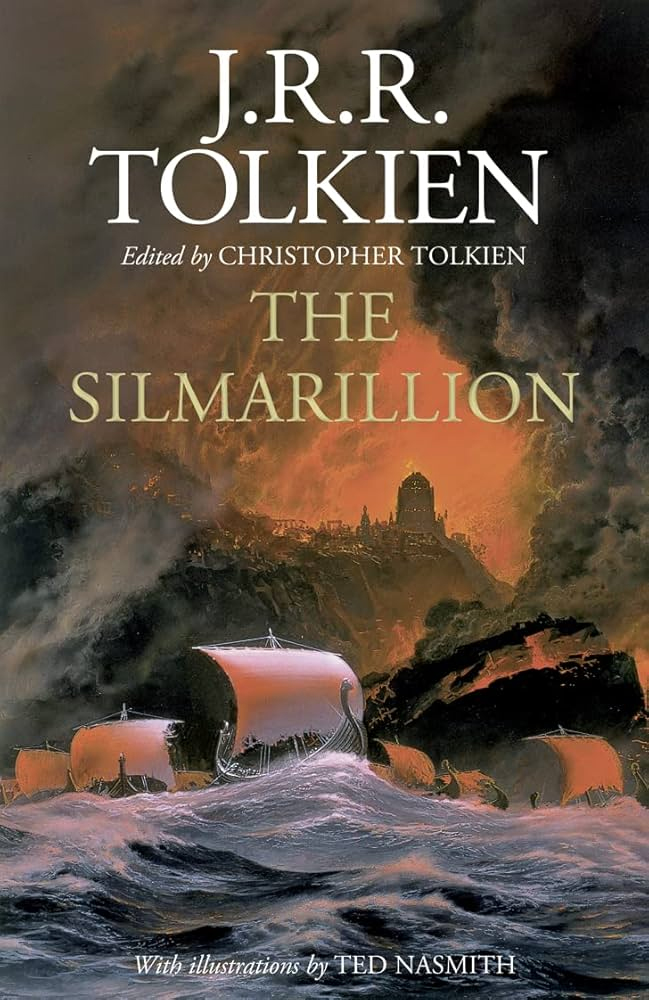
Today I completed The Silmarillion by J.R.R. Tolkien (358 pages, ISBN: 978-0008433949). When I first began reading, I quickly realized that it was not a conventional story, but a vast record of origins and destinies. The book opens with the creation of the world through the Ainulindalë, where Ilúvatar, the One, brings forth the Ainur and bids them to shape creation through music. This section sets the tone for all that follows—majestic, solemn, and cosmic in scope. The beauty of that opening is balanced by the first discord introduced by Melkor, whose pride will stain every chapter that comes after. It is not a story of one age or one hero, but of the whole world as it passes from innocence into tragedy.
Book Review
After the world is made, the Valar descend into it and begin to shape Arda according to Ilúvatar’s theme. Melkor’s rebellion continues in the physical world as he mars their works, introducing ruin and shadow even into the light of the Two Trees of Valinor. Here the story first takes on its moral tone—the struggle between creative harmony and destructive will. When the Elves awaken by Cuiviénen, the Valar summon them to the Blessed Realm, and the great division of Elven kindreds begins. Some go, and some stay behind, and from this early choice arises the long history of sorrow that fills the book.
The central tragedy begins when Fëanor, greatest of the Noldor, creates the Silmarils—three jewels that capture the pure light of the Two Trees. When Melkor steals them and destroys the Trees, Fëanor swears a dreadful oath to recover them, binding his sons to a curse that haunts every page thereafter. The rebellion of the Noldor, their defiance of the Valar, and their kinslaying of their own people at Alqualondë mark the first great fall of the Elves. The Doom of Mandos that follows becomes the moral sentence under which their entire history in Middle-earth unfolds.
When the Noldor return to Middle-earth, they find Morgoth (as Melkor is now called) fortified in the north at Angband. Fingolfin becomes High King, and his people establish their realms across Beleriand. Finrod founds Nargothrond, Turgon conceives Gondolin, and Thingol reigns in Doriath under the protection of Melian’s Girdle. These chapters, such as “Of Beleriand and Its Realms” and “Of the Noldor in Beleriand,” lay out the geography and politics of the First Age, a landscape that feels at once mythic and real. It is a world poised between hope and doom, where every new city already bears the shadow of its fall.
In “Of Maeglin” and the chapters surrounding it, Tolkien narrows the focus from nations to individuals. Aredhel’s wandering and captivity in Nan Elmoth by Eöl the Dark Elf lead to the birth of Maeglin, whose divided bloodline symbolizes the mingling of light and darkness within Elvendom itself. His eventual betrayal of Gondolin is prefigured by the very circumstances of his birth—a tragic thread woven early into the fabric of the story. Tolkien’s method here is not suspense but inevitability; we are watching the slow outworking of curses and oaths that can only end in ruin.
The middle section of the book recounts the Wars of Beleriand, in which the Noldor and their allies resist Morgoth’s might. The Dagor Bragollach, or Battle of Sudden Flame, breaks their long siege of Angband, and the Nirnaeth Arnoediad, the Battle of Unnumbered Tears, brings their great hope to nothing. Fingolfin’s single combat with Morgoth stands as one of the most heroic yet hopeless moments in the book—a duel that ends in honor but not victory. With each defeat, Beleriand becomes more fractured, its fortresses falling one by one until only hidden realms remain.
The story of Beren and Lúthien, though set amid this despair, brings a brief and luminous reprieve. Beren, a mortal man, and Lúthien, an Elven princess, achieve what even the Valar had not: they recover a Silmaril from Morgoth’s iron crown. Their love transcends the boundaries between mortal and immortal, and their courage alters the fate of both Elves and Men. Yet even their triumph is costly—Thingol’s greed for the jewel later brings ruin upon Doriath. Through their story, Tolkien balances tragedy with grace, showing that the light of the Silmarils, though perilous, can still inspire acts of redemption.
Next comes the tale of Túrin Turambar, the darkest narrative in the book. Cursed from birth by Morgoth’s malice, Túrin’s life becomes a succession of errors and misfortunes. Though noble and brave, he cannot escape the doom that follows him, and his story ends in despair and death. It is the most human section of The Silmarillion, where heroism and pride blur into ruin. Through Túrin, Tolkien captures the weight of fate in the First Age—the sense that even valor cannot undo what rebellion has begun.
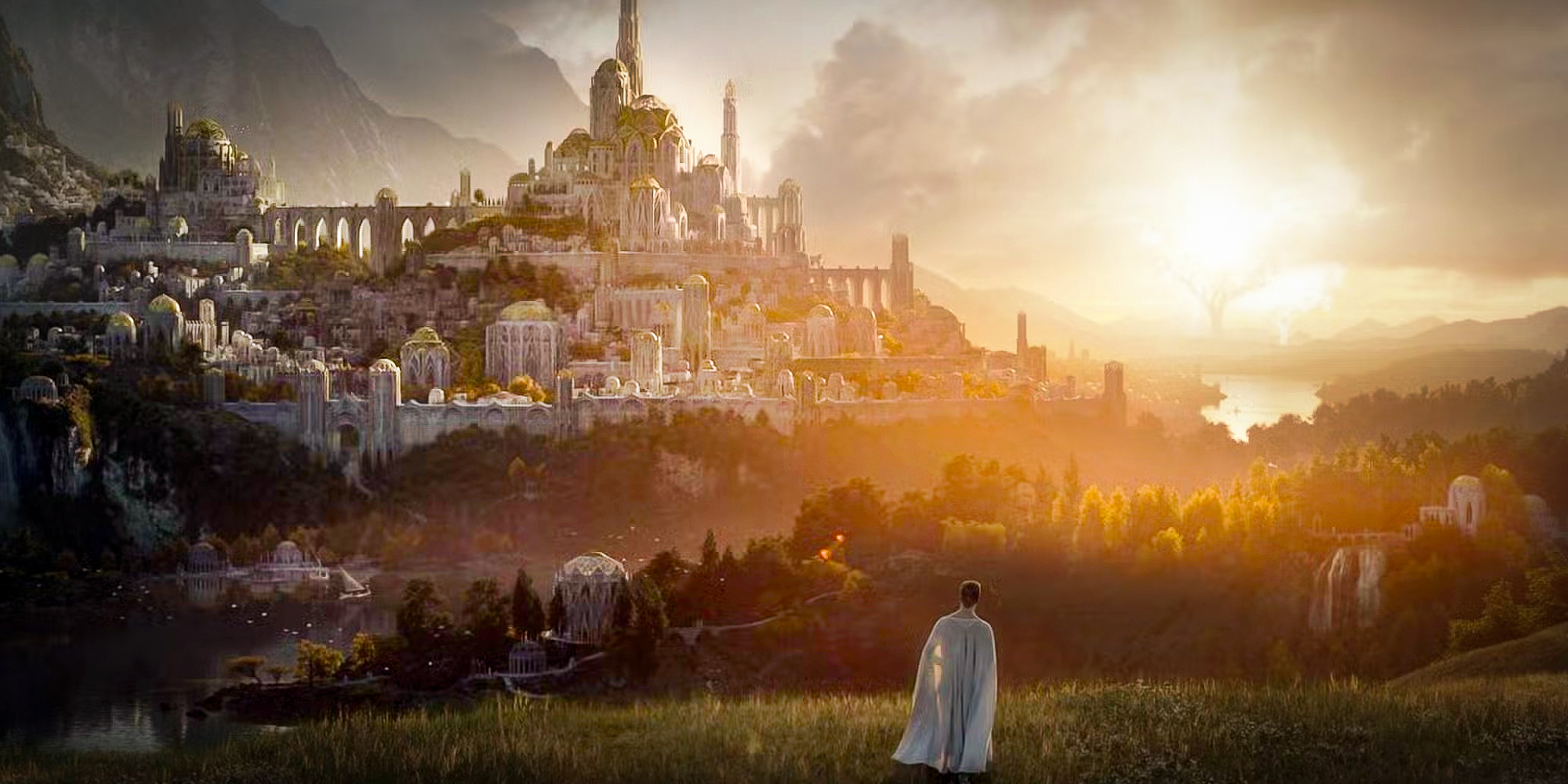
After Túrin’s fall, the hidden city of Gondolin becomes the last great bastion of hope. Turgon’s people live in splendor behind the Encircling Mountains, but their isolation becomes their weakness. Maeglin’s envy and secret dealings with Morgoth bring about Gondolin’s destruction. The city burns in one of the most dramatic passages of the book, where beauty and courage meet fire and betrayal. Out of its ruin, only a few escape—among them Tuor and Idril, whose union joins the lines of Elves and Men once again.
The final movement centers on Eärendil, their son, who sails west across the sea to plead for mercy from the Valar. His voyage succeeds where others failed, and the Valar at last move against Morgoth in the War of Wrath. The ensuing conflict reshapes the world: Morgoth is cast out beyond the walls of the world, and Beleriand is drowned beneath the sea. The Silmarils are scattered—one into the heavens, one into the sea, and one into the earth—signifying the dispersal of light that once unified creation.
When the dust settles, the First Age ends. The surviving Elves depart or fade, and the dominion of Men begins. The Silmarillion closes with both completion and loss. The glory of the Elder Days is gone, and what remains is only memory—echoes of light carried into later ages. Tolkien’s style is deliberately distant, like the chronicler of a sacred past, giving weight and finality to every event.
Conclusion
In finishing the book, I felt as though I had crossed an entire age of the world. It is not a narrative to be rushed, but one to be absorbed, as history layered with meaning. The rhythm of its prose, the solemn names, and the grandeur of its fall all contribute to a sense of immovable destiny. Reading it from beginning to end feels like traversing from creation to apocalypse, through every form of beauty and betrayal that lies between.
As a whole, The Silmarillion stands as the foundation of all Tolkien’s legendarium. It explains the deep past that gives weight to The Hobbit and The Lord of the Rings. Its tone is more austere, its scale more cosmic, but its power lies in the continuity it gives to Tolkien’s world. When I closed the final page, I did not feel the triumph of a completed tale but the gravity of a myth that ends where history begins. It is a book not of mere fantasy, but of remembrance—the record of a world that fell long before our own began.


