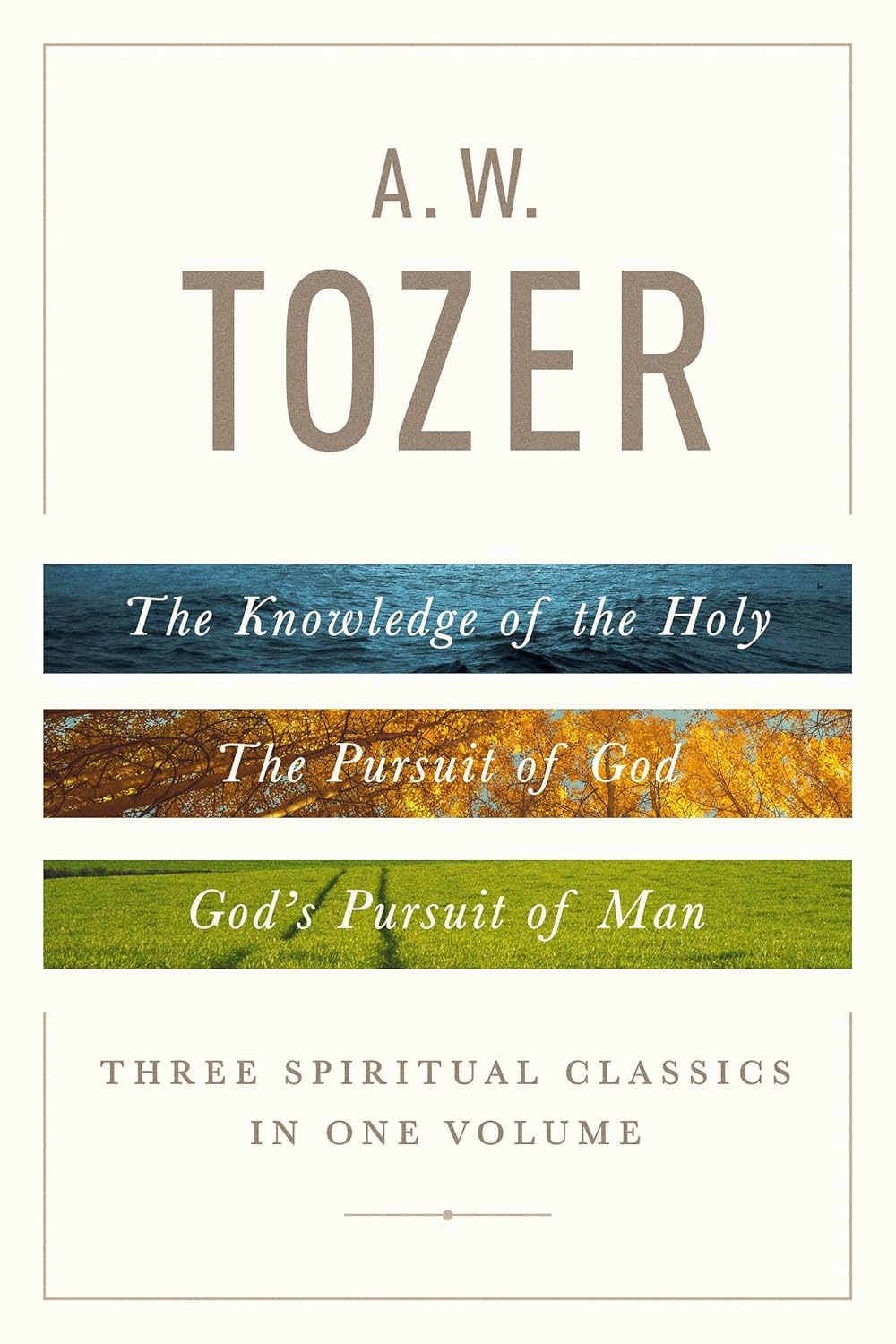
Today I finished reading The Knowledge of the Holy by A.W. Tozer, and what remains with me most is a renewed sense of wonder about who God is and why that matters beyond mere theology as an exercise. The book did not answer every question, but it sharpened my attention and deepened my awareness of God’s greatness in a way that feels suited to prayer, reflection, and daily obedience. Its usefulness lies in how it repeatedly brings God back into view—not as an idea to manage, but as a personal and holy presence who must be approached with reverence. I expect to return to it not for study alone, but as a steady reminder of who God is and how I am meant to stand before Him.
First published in 1961, The Knowledge of the Holy by A.W. Tozer stands as one of the most incisive and uncompromising treatments of classical Christian theism in modern Protestant literature. It is not a systematic theology in the academic sense, nor a devotional in the sentimental sense, but rather a doxological theology: theology written under the conviction that what a man believes about God is the most determinative truth about him. Tozer opens with the now-canonical claim that “what comes into our minds when we think about God is the most important thing about us,” a thesis he does not merely assert but relentlessly demonstrates throughout the book.
Introduction
The central burden of Tozer’s work is the recovery of God’s holiness, not as a single attribute among others, but as the moral and ontological majesty that renders God wholly “other” — absolute, self-existent, immutable, eternal, omniscient, omnipotent, omnipresent, sovereign, and morally pure. Tozer’s method is deliberately restrained: he refuses speculation beyond revelation and explicitly warns against mental images, analogies, and imaginative projections that reduce God to manageable proportions. In this respect, his theology is markedly apophatic in impulse, though articulated within an evangelical framework.
Particularly significant is Tozer’s sustained warning against idolatry of the mind. While he affirms the necessity of true knowledge of God, he insists that such knowledge is always governed by divine self-disclosure, never by human creativity. Any conception of God that contradicts or diminishes His revealed being, however well-intentioned, becomes a false god. This is why Tozer repeatedly returns to Scripture’s insistence that God cannot be domesticated, visualized, or psychologically neutralized without loss of truth and reverence.
The book is also notable for its pastoral severity. Tozer writes as one who believes the modern church suffers not from too little activity, but from too little fear of God. He connects doctrinal reductionism directly to moral decay, superficial worship, and spiritual anomie, arguing that when God is thought of lightly, obedience becomes negotiable and worship collapses into performance. In this regard, the book functions as a quiet indictment of pragmatic religion, entertainment-driven worship, and pedagogical methods that convey familiarity rather than awe.
Stylistically, the prose is spare, elevated, and deliberately unsentimental. Tozer writes as a prophet rather than a lecturer, and his authority rests not in academic apparatus but in fidelity to Scripture and continuity with the classical attributes confessed across the history of the Church. Though he stands outside Roman Catholic and Eastern Orthodox traditions institutionally, his doctrine of God aligns closely with the patristic and medieval consensus on divine simplicity, transcendence, and immutability.
In sum, The Knowledge of the Holy endures because it does not attempt to make God accessible by lowering Him, but rather calls man upward through repentance of thought, submission to revelation, and reverent obedience. It is a book that assumes — and demands — that true theology must finally terminate in worship, silence, and trembling joy.
Book Review
I. God’s Being
God is before all things and dependent on nothing. He does not exist within a framework that explains Him, nor does He require completion, validation, or movement toward fulfillment. Scripture presents Him as self-existent and sufficient, the one who simply is. This means God is not conditioned by time, circumstance, or response. He does not improve, adapt, or adjust. If God were capable of becoming something He is not, He would already lack what He ought to be. The starting point of theology, then, is not what God does, but that God is, whole and complete in Himself.
The Self-Existence of God (Aseity) God depends on nothing outside Himself to be what He is. He does not draw life, meaning, or purpose from another source, nor does He exist because something caused Him to begin. Scripture presents Him simply as the One who is, without explanation or qualification. This means God is not sustained by the world, affected by its changes, or diminished by its rejection of Him. All created things exist because they receive life; God exists because He is life. Theology begins here or it begins in error.
The Self-Sufficiency of God Because God is self-existent, He is also fully sufficient. He does not need creation to complete Him, nor does He gain anything by being obeyed, praised, or loved. God was no less God before anything was made, and He would remain no less God if nothing existed beside Him. This guards us from imagining God as lonely, incomplete, or dependent upon human response. What God gives, He gives freely, not out of lack.
The Eternity of God God does not move through time as creatures do. He does not remember the past or anticipate the future; all times are present to Him without succession. Scripture’s language of God acting “before” or “after” belongs to our experience, not His. Eternity is not endless time, but the absence of time’s limitations altogether. God does not wait, hurry, or arrive late. He simply is, without beginning or end.
God’s Infinitude God is not limited by space, measure, or boundary. He cannot be divided into parts or contained within categories larger than Himself. When we speak of God as infinite, we are confessing that He exceeds every frame we bring to Him. This does not make Him vague or impersonal; it makes Him incomparable. Any god small enough to be fully grasped would not be God at all.
The Immutability of God God does not change. He does not improve, diminish, or alter course. This does not mean He is unresponsive or indifferent, but that His responses are always consistent with who He eternally is. Scripture’s account of God acting differently toward different people reflects the change in the people, not a change in God. Because He is immutable, His promises remain secure and His character trustworthy.
The Divine Unity God is not composed of parts or qualities arranged together. He is one, whole, and undivided. His attributes are not additions to His being but ways we describe His single, simple reality. This guards us from thinking of God as a collection of traits that might compete or conflict. God is never partly merciful and partly just; He is fully Himself in all He is and does.
The Trinity God is one in essence and three in persons. The Father, Son, and Holy Spirit are not roles or manifestations, but real distinctions within the one divine being. This mystery is not explained by analogy or reduced to logic, but received as revealed. The Trinity does not divide God’s being or multiply gods; it tells us who God eternally is in Himself, apart from creation.
The Sovereignty of God God rules by right, not by force. His sovereignty is not reactive or threatened, nor is it dependent upon human cooperation. He does as He pleases, always in accordance with His nature, and nothing escapes His authority. This does not make God arbitrary; it makes Him supreme. His rule rests on who He is, not on what creatures permit Him to do.
The Transcendence of God God stands above and beyond all that He has made. He is not contained within the universe or subject to its laws. Transcendence does not place God at a distance, but affirms that He is not to be confused with what He has created. When this is lost, worship collapses into familiarity and reverence into casual speech. A God who is not transcendent is no longer God.
In these chapters, Tozer is at pains to show that God does not become anything, does not react in the human sense, and does not derive meaning or fulfillment from His works. God is complete in Himself.
II. God’s Knowledge and Power
Because God is self-existent and infinite, His knowledge is not gathered or processed. He does not observe reality from the outside or arrive at conclusions over time. God knows all things immediately, fully, and without effort, including Himself. Nothing surprises Him, and nothing escapes His awareness. His presence is not distributed or divided, and His knowledge is not reactive. What we call omniscience and omnipresence are not abilities God exercises, but the way finite minds describe the fullness of divine being encountering a created world.
The Divine Omniscience God knows all things completely and immediately. He does not learn by observation or inference, and He is never surprised. His knowledge includes all that is, all that has been, and all that could be, without uncertainty. God knows His creation more intimately than it knows itself. This knowledge is not cold awareness but perfect comprehension.
The Divine Omnipotence God’s power is the ability to do all that accords with His nature. He is not limited by external forces, yet He does not act contrary to Himself. Omnipotence does not mean God can contradict His holiness or deny His truth. His power is never reckless or uncontrolled. It is strength governed by wisdom and righteousness.
The Divine Omnipresence God is present everywhere without being spread thin. His presence is not physical extension, nor is it partial or divided. God is fully present to every place at once, not by movement but by being. This means there is no corner of creation beyond His knowledge or reach. We never move closer to God by distance, nor farther from Him by location.
The Divine Wisdom God’s wisdom is the perfect ordering of knowledge toward fitting ends. He never misjudges, miscalculates, or acts unwisely. What appears slow or obscure to us is never confusion in God. His wisdom is not merely intelligence, but understanding shaped entirely by holiness and purpose. God never acts first and reflects later.
These are not capacities acquired or exercised sequentially. Tozer repeatedly emphasizes that God does not “learn,” “decide,” or “arrive at conclusions.” Knowledge and power are not instruments God uses; they are perfections of His essence.
III. God’s Moral Perfection
God’s will is never uncertain, conflicted, or delayed. He does not weigh options or revise intentions. What God wills flows necessarily from who He is, and therefore His will is always holy, just, and faithful. Holiness is not a restriction placed upon His power; it is the moral clarity of His being expressed in every purpose. God does not conform to goodness—goodness conforms to Him. Because He is immutable, His promises do not fluctuate, and His judgments are not arbitrary. His faithfulness is simply God being God without contradiction.
The Holiness of God Holiness is the moral clarity of God’s being. It is not merely one attribute among others, but the light in which all others are seen. God is not holy by adherence to a standard; holiness is what God is. This is why His will is always right and His judgments always true. Holiness makes God both glorious and dangerous to approach on our own terms.
The Justice of God (Righteousness) God is just because He always acts in accordance with His own righteousness. He does not overlook evil, excuse sin, or distort truth. Justice is not opposed to grace, but grace presupposes justice rightly understood. God never punishes excessively or arbitrarily; He judges as One who sees all things clearly. His justice is an expression of His holiness, not a limitation upon it.
The Faithfulness of God God remains true to Himself and to His word. He does not promise lightly, nor does He forget what He has spoken. Faithfulness means God will not contradict His character, abandon His purposes, or deceive His people. What God has said, He will do—not because He is obligated, but because He is faithful. His reliability rests in His being, not in circumstances.
Although these attributes are often treated as ethical dispositions, Tozer insists they are ontological moral realities. God does not act justly because He conforms to a standard; justice is the standard because it is intrinsic to God’s being.
IV. God’s Relational Expression
When this God relates to creatures, He does so without ceasing to be who He is. Love, mercy, grace, and goodness are not changes in God, but the forms His unchanging being takes when encountered by finite and sinful persons. God does not need creatures in order to love, yet creatures truly experience His love because He wills their good. His nearness does not dilute His holiness, and His kindness does not suspend His justice. What we experience as grace is the gift of being met by God as He is, rather than as we would prefer Him to be.
The Divine Love God’s love is not sentiment or weakness, but the steady willing of good toward His creatures. He does not love because He needs, but because He chooses to give. Divine love is shaped by holiness and guided by wisdom, not driven by impulse. God’s love never competes with His justice or truth. It flows from who He is, not from what we offer.
The Mercy of God Mercy is God’s compassion toward the miserable and guilty. It does not deny justice, but withholds deserved judgment for a time and purpose. God is merciful because He is good, not because sin is insignificant. Mercy reveals God’s patience and kindness without trivializing evil. It is grace given to those who cannot demand it.
The Grace of God Grace is God’s free favor shown to those who deserve none. It is not earned, provoked, or negotiated. Grace flows from God’s nature, not from human effort or worth. It does not excuse sin, but overcomes it. What grace gives, it gives because God wills to give.
The Goodness of God God is good in Himself and therefore good toward His creation. His goodness is not measured by comfort or immediate outcomes, but by alignment with His holy purposes. Even His discipline flows from goodness rightly understood. God never acts with malice or indifference. Whatever comes from Him is ordered toward what is truly good.
The Immanence of God Though God is transcendent, He is not distant. He is near to His creation and involved in it without being absorbed by it. God’s nearness does not compromise His otherness, and His involvement does not lessen His majesty. He dwells with His people without ceasing to be God. What creatures experience as God’s presence is the encounter with the One who remains wholly Himself.
Tozer does not treat love as defining God’s essence in abstraction. Rather, God is holy, self-existent, and immutable. Therefore, when He wills the good of creatures, that willing appears to us as love. Love is thus necessary, but not constitutive in the modern slogan sense. God does not need creatures in order to be loving; rather, creatures encounter love because of what God eternally is.
Conclusion
To speak rightly of God is not an academic exercise but a moral one. Throughout this book, the question has never been whether God can be described, but whether He will be received as He is. A diminished view of God does not remain confined to theology; it reshapes worship, obedience, and conscience. When God is imagined as manageable, familiar, or psychologically accommodating, reverence gives way to negotiation, and faith quietly becomes self-directed. The corrective is not complexity or novelty, but attention—attention to what God has revealed about Himself and restraint from saying more than has been given.
The knowledge of the holy does not end in explanation but in how one stands before God. It leads not to confidence in one’s understanding, but to humility; not to speculation, but to obedience; not to worship shaped by taste, but by reverence and trust. God is not known by organizing His attributes, but by yielding rightly before them. If this book has done what it was meant to do, it has not supplied the reader with answers so much as stripped away false ones, bringing the mind into surrender before God who is greater, more exacting, and more worthy than anything anyone could construct.
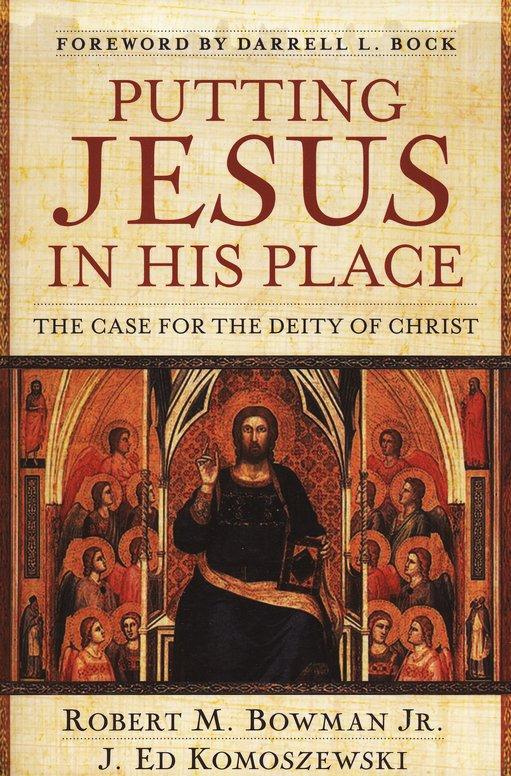
The book Putting Jesus in His Place: The Case for the Deity of Christ begins with Part one, entitled “The Devotion Revolution: Jesus Shares the Honors Due to God.” There are five parts of the book which correspond to a helpful acronym concerning the deity of Christ. HANDS, which stands for Honors, Attributes, Names, Deeds, and Seat, is a fitting and memorable way to retrieve biblical and decisive facts about Jesus’ deity. Part two is entitled “Like Father, Like Son: Jesus Shares the Attributes of God.” The following section is entitled “Name Above All Names: Jesus Shares the Names of God,” part three of the book. Next, Part Four is entitled “Infinitely Qualified: Jesus Shares in the Deeds that God Does.” Finally, Part five is the last section of the book entitled “The Best Seat in the House: Jesus Shares the Seat of God’s Throne.” While all five areas consist of numerous chapters, the authors make a comprehensive Old and New Testament case about the deity of Christ before presenting their conclusions.
The Honors of Christ
While the book’s title intends to evoke provocative interest, it is a somewhat culturally cynical way of situating a reader’s view about the rightful place and status of Jesus as God. Some chapters similarly communicate ideas to introduce the subject matter, but the book is not without exceptional subject matter and substance at both academic and theological levels. The book is a treasure of meaningful value concerning the deity of Jesus and is not to be taken lightly. The text is replete with intertextual references to Jesus as God well beyond His earthly offices as Prophet, Priest, King, and Messiah.
As the beginning of the book traverses Scripture to detail the numerous ways Jesus is glorified and worshiped as God, various participants are highlighted in explicit detail. Background facts concerning the historical practice of worship involved numerous New Testament references back to the Old Testament that connects to Christ Himself before He was born. Moreover, the methods of worship given in songs or by doxology and praise reference back to the same styles of reverence. Biblical writers persistently call attention to the due recognition and attention to Jesus the Messiah as Christ of the New Testament. Glory, Honor, and Praise was directed exclusively to Jesus, as made evident during the new covenant looking back through the prophets, poetry, and law narratives.
Exhaustive references are given about who the participants of worship include. Readers are given accounts of angels and disciples of Christ worshiping Jesus as God from specific historical instances in clear detail. It is demonstrated that there is no ambiguity about Jesus’ identity as God as His followers and creatures give Him due honor and glory. From the Old Testament to the New, worshipers of Christ widened in scale to eventually include everyone (Phil 2:10-11). How Jesus is worshiped within the gospels and the apocalyptic account of Revelation correspond to Scriptural details about total worship, including specifics concerning where, how, and why.
As Jesus was and is thoroughly recognized as God, He was the object of worship to assure confidence that He is deity. Specifically, as a deity is an object of prayer by definition, He remained the recipient of prayers shortly after His death, burial, resurrection, and ascension. For example, recall the martyr Stephen’s prayer right before being stoned to death, “Lord Jesus, receive my spirit” (Acts 7:59-60). Stephen’s act of prayer was an explicit acknowledgment and testimony of Jesus as God. His final act of life before death was an act of worship to God in the person of Jesus Christ.
From the first century, apostles, disciples, and believers, prayers were uttered before Jesus as forms of adoration, confession, thanksgiving, and supplication. Apostle Paul himself prayed for deliverance from an infirmity (2 Cor 12:8-9), and there were ongoing intercessions among members of the early church as Jesus invited His followers to prayer (John 14:14). Prayers offered were heard and answered as further evidence of Jesus’ deity, as made clear by recorded outcomes within the post-ascension New Testament.
Just as a deity is an object of prayer, God is an object of praise and worship by song and hymns. Songs of affection offered to Lord Jesus are further tacit acknowledgment, if not direct, of Christ as God. Songs and hymns of passion from the heart represent affections and devotions to God in the person of Jesus to further proclaim Him as divinity because of who He is, what He has done, and what His promises are. Worship and praise toward Jesus are an expression of authentic adoration given by the book of Psalms and materials unique to the first-century devotion from the heart. Whether individually or in a gathering of people, worship was a steady and specific way of encountering God as the deity of Jesus.
It can not be concluded that to worship Jesus as God is to exclude God the Father and Holy Spirit. Jesus Himself said that honor toward the Son is honor of the Father (John 5:23). Further references in honor of God call attention to belief in Christ in unison (John 14:1). Various examples demonstrate that God is the primary object of faith (Mark 11:22, Heb 6:1, Heb 11:6). Fear and reverence are the dispositions of the heart and mind among believers during worship. For example, the Old Testament prophet Isaiah instructs Israel to regard the LORD as holy and let Him be their fear and their dread (Isa. 8:12-13). The fear in this instance is not to revere as apparent among other passages having a sider semantic range. The fear in this context and semantic use is actual fear as an unpleasant emotion caused by the threat of danger, pain, or harm. Moreover, in this passage (ESV), “dread”‘ is to terrify or undergo a terrifying experience.1 By comparison, the reverence of Christ as God, as charged by Paul (Eph 5:21), is rendered as “the fear of Christ.” In this case, the underlying linguistic use of the term “fear” is a reverence or deep respect by definition and not out of alarm, terror, or fright.2
Further worship of Christ involves rites or sacraments of observance as He requires of His followers. Such practices directed toward another person, perhaps even venerated, would not historically or presently apply to a mortal being. The practice of rites instructed by Jesus, such as communion and baptism, involved the efforts of believers and followers to acknowledge and revere Him as God since it is demonstrated He was not merely a mortal being. Devotion to Christ involves obedience and service to Him out of an obligation of love, just as it was within the Old Testament. As made clear, the love for God pronouncement through the Shema (Deut 6:4-9) is also supported by further passages (Ex 20:6, Deut 5:10, Deut 11:1) that reflect what Jesus spoke of concerning obedience (John 14:15, John 14:21, John 15:10). As a direct correlation between the love of God as Father to include the Son and Holy Spirit, Christ has a rightful claim as God to what is due by worship from a heart of devotion, affection, and obedience.
The Attributes of Christ
While part one of the book about Christ’s deity concerns honors due to Him, part two is dedicated to His attributes. When considering His attributes, it is helpful to think through them relative to God the Father, as evident throughout the Old Testament. It is also useful to understand His attributes by way of definition as they’re properties or quality characteristics of Christ as God. To attain an essential understanding of His attributes, there are qualities about Him distinct from characteristics essential to His being. For example, God is well-known as holy, omniscient, omnipotent, and omnipresent, but some would associate goodness and love with His essential being. Conversely, many others would scripturally demonstrate that goodness, love, and perfection are set within God’s attributes.
One might infer that God’s incarnate and bodily dwelling as Jesus is limited, but that assertion contradicts what Paul wrote as “the fullness of God” within Christ (Col 1:19). As God is deity, it must follow that deity resides within Christ entirely. The bodily incarnation of God as Christ resides within Him as it is authoritatively written, “for in Him the whole fulness of deity dwells bodily” (Col 2:9). This is to say that the attributes of God and the essence of His being carries over to Christ. By the nature of Christ observed as God, the Father is in Him (John 14:10) to reveal Him as deity and the attributes that follow accordingly. It can not be concluded to the contrary that Jesus is separate from the Father or as a free-standing God or deity who possesses the exact attributes. Jesus is the perfect expression of the invisible God who always was in existence before His time with humanity on Earth (John 8:58).
As Christ has always existed eternally with God the Father and Holy Spirit as God, He was also present during generations past throughout Old Covenant history. Before Christ in the flesh lived, He was active among the patriarchs and prophets to give biblical evidence of this deity further. He attests to His involvement with ancient Israel to further support His claim to deity. He even says as much by declaring His dismay at Israel’s persistent obstinance (Matt 23:37, Luke 13:34). The context of Jesus’ heartfelt dismay at Israel corresponds to their rejection and killing of prophets who claimed to have been sent as God to protect them from sure judgment if they were to persist in rebellion.
Apostle Paul further shows that Christ, before God incarnate, was in the wilderness with Israel as the rock that was struck to produce water to quench their thirst for survival (1 Cor 10:4). He wrote explicitly that Christ was the rock that existed long before His presence on Earth as Jesus early in the first century. Some would argue that the rock was a type of Christ, but that is not what Paul wrote explicitly. The scriptural assertion that Jesus was the rock present among ancient Israelites further reinforces His divine nature, an attribute of eternality. Before Moses, Jesus claimed before Jewish leaders that He existed before Abraham (John 8:58). The strenuous objection of the Jewish leaders who took offense knew what Jesus claims as they knew that His claim of divinity would require His existence before His birth to therefore conclude He is God.
As if it wasn’t enough to claim his eternal status and existence before His followers and Jewish leaders, He performed many miracles of astonishing significance. The miracles in themselves were assuredly alarming and spectacular to witness, but the implications concerning He who performed those miracles were of far greater gravity. Questions concerning who and what must such a man be to carry out such actions (on numerous occasions) required anyone and everyone to contemplate who He claimed to be. Those who opposed Him and rejected Him knew exactly who He was, just as they did the prophets. The weight of their opposition added further credibility and strength to Christ’s claims about His divinity.
The depth of theological discourse continues around Christ’s divinity regarding His aseity, immutability, and transcendence. Jesus’ existence before He took bodily form is made apparent among numerous biblical passages of historical validity. Scriptural support for His existence offers detail about what that entailed (John 1:3, 10; 1 Cor. 8:6; Col. 1:16). It can not be overstated what His continuing roles were during the course of Creation events, as it is purported to have created all things (Col 1:16). Moreover, aside from Apostle Paul, the least of the Apostles (1 Cor 15:9), John the beloved, with direct one-to-one interaction with Christ, wrote, “All things came into being through him, and without him not one thing came into being” (John 1:3). As sure as a declarative statement can get concerning Jesus’ divinity, a first-hand witness account of Christ’s life and teachings reveal Him as Creator God.
In answer to anyone who claims Christ was created, there is a contradiction in the translation of Proverbs 8:22. The NRSV rendering, “The LORD created me at the beginning of his work, the first of his acts of long ago,” corresponds to NET, ISV, LEB, and LXX translations with the term “created” as compared to “possessed” among various other English translations. In his systematic theology, Grudem wrote that Proverbs 8:22 should not be understood as a reference to the Son of God but rather wisdom personified.3 However, it was also his view that the LORD “possessed” wisdom and did not create it.4 Moreover, the term “created” as rendered from the root language (and the Septuagint) to English is probably a homonym for “possessed” with the same spelling that has different meanings and origins.
Jehovah’s Witness (JW) claims that Christ is a created being as interpreted from Prov 8:22, Col 1:15, and Rev 3:14 stand in contradiction to John 1:3, 10; 1 Cor. 8:6; Col. 1:16; Heb. 1:2, 10–12. However, JW’s use of the “beginning” is generalized within the context of Christ as firstborn creation chronologically situated in time. More specifically, time itself had already been created for Jesus to become the beginning (to create all things). So the intended use of terms to explain conditions contrary to the nature of God and Christ’s being (and attributes) is made definitive and clear elsewhere as a matter of support for Jesus’ claims of divinity and aseity.
To further consider Christ’s divine nature, His immutability comes from numerous Scriptural passages and Old Testament inferences. However, no biblical reference is likely so explicit as Hebrews 13:8, “Jesus Christ is the same yesterday and today and forever.” Furthermore, during His time with humanity, numerous life events involved His character and actions to demonstrate His impeccable behaviors as a man consistent with His divine nature. Christ’s permanence and endless ways are enduring to help explain the conditions in which all things are created through Him.
The final areas of interest about Christ’s attributes are His omnipotence, omnipresence, omniscience, and incomprehensibility. To more directly put it, Christ’s divine nature is especially made evident by what he accomplished and claimed while present among people during the first century. His accomplishments were not merely achievements of human merit but thoroughly supernatural to make abundantly clear His capabilities as an attestation of what He claimed and required. God’s presence among people as Christ was His way of calling attention to their condition with proof of who He is. While there was a repugnant ongoing effort to deny Him as the Son of God, Messiah, and incarnate God, Jesus’ actions and His attributes could not be denied or dismissed through opposition or indifference. His actions demanded attention from everyone because they revealed who He is and what He claimed as true. No matter resistance, opposition, or inattention, His supernatural work preceding His death, resurrection, and ascension set the course of history for all time.
According to numerous biblical accounts of Jesus’ human nature, there is no question He endured physical limitations. He slept, ate, drank, and became tired and thirsty, yet He also made evident His omnipotence during His ministry. Through humility, He at times set aside His divine nature and emptied Himself to live as fully man among people. Yet, He fed thousands of people with scant food materials (Matt 14:15-21), removed demonic spirits from people (Matt 8:28-34), healed sick people (Luke 4:40), raised the dead (John 11:38-44), walked on water (Matt 14:22-33), and restored people’s health without His presence from afar (Matt 15:21-28, Matt 8:5-13, John 4:46-54). Among various recorded and unrecorded supernatural acts He performed with eyewitness accounts, it was only certain that no one could possess omnipotent and omnipresent capabilities without having the attributes of a deity. The gospel accounts of His omniscience further reinforced recognition of Jesus’ divine nature and not by what He said but by what He did. He knew in advance that Judas would betray Him. He knew of the husband’s married to the woman at the well. In advance, He knew Peter would deny Him. He knew about the forthcoming destruction of the temple. The evidence of Jesus’ divine attributes was overwhelming to people of His time as they are today, even after His resurrection and work to form the Church down through the centuries.
The Names of Christ
To further make a case for the deity of Christ, there are names He possesses that have spiritual power and authority. They are descriptive and indicate a title for a specific purpose and function, yet throughout Scripture, there are numerous names attributed to God that apply to Christ. Names given and applied to persons in proper form to associate with identity are a common means of recognition and distinction, but the differences are blurred with God. Sometimes, names associated with God are not merely for identification purposes, but they are also descriptive of His attributes and being. The names associated with Christ connote meaning related to the context in which they are used. Designations of Jesus are about honors, attributes, actions, and positions He receives.
The name “Jesus” means “Jehovah (YHWH) saves,” as the angel of the Lord (Gabriel) delivered this name to His parents as YHWH God has given this designation to Him (Matt 1:21, Luke 1:31). To convey eternal meaning from when He appeared in the world via virgin birth, He was designated the lamb of God to save His people from their sins. Jesus would do that through His life ministry, redemptive work, and everlasting Kingdom on Earth by the Holy Spirit’s presence and help. Yahweh God the Father bestowed upon Jesus the name Yahweh Jehovah as it is the name above all other names. It is the supreme and highest name in existence by which people must be redeemed, as there is no other name under heaven by which we must be saved (Acts 4:12). His name, the name of Christ, as Jehovah and Lord, is excellent in all the earth in this age and the age to come (Ps 8:1, Eph 1:21).
In numerous passages within the New Testament, there are various accounts of miracles performed in Jesus’ name, including healings and exorcisms that demonstrate power in the name (Mark 9:38–39; Luke 10:17; Acts 3:6, 16; 4:7, 10, 30; 16:18). The loyalty sacrament of baptism is performed in Jesus’ name (Acts 2:38; 8:16; 10:48; 19:5; cf. 22:16) for repentance and the washing away of sins. Repentance and the forgiveness of sins are proclaimed in His name for salvation (Luke 24:47). Through His name, people are saved (Acts 10:43), and it is for His namesake that the sins of people are forgiven (1 John 2:12). The name of the Lord is exceedingly significant and productive as it has the power to save anyone who calls upon it (Acts 2:21, Joel 2:32).
The meaning of the name of Christ Jesus as God is particularly explicit with the prophet Isaiah and the apostle John. Throughout generations, from the time of old covenants to the new, the significance and power of Christ’s name speak of His divinity as He is sought and cherished as Messiah. Through Christ, God transforms the hearts of people as He promised, which is a miracle of enormous and lasting power concerning regeneration, renewal, and salvific purpose. Back at the time of Isaiah’s prophecy, He foretold of the name of Jesus as Immanuel translated, “God is with us” (Isa. 1:23, 7:14). By this name, He will rule over His people and redeem and restore them (Isa. 40:9–11; 43:10–13; 59:15–20).
Of further significance is the name “Word” given to Jesus in John 1:1. To communicate His eternal place upon Creation as God and with God and demonstrate His deity, lordship, and authority over all (Rom 9:5) creation. He was and is declared and recognized as God and Savior (Titus 2:13, 2 Pet 1:1) within the New Testament who rules at His seat of power. The spiritually significant meaning of His name and title as “God of gods and Lord of lords and King of kings” (Dan 4:37 LXX) further establishes eschatological relevance as His will is ultimately accomplished upon His return as prophesied for thousands of years. The Lord Jesus, as God, is the great I AM, Alpha and Omega, beginning and the end as He is Lord and Savior.
The Deeds of Christ
The book’s next section that defends Christ’s deity is about His activity. When the entirety of everything He has done is taken as a whole, it is impossible to recognize His identity as anything other than God. From the beginning of the universe to its end, He is unchanging as He does what God the Father and Holy Spirit do. The universe, its fine-tuning, and sustained existence are held together by Him and through Him. As He created all that is in the universe, it is subjected to Him. The earth and all that is in it are made by Him, through Him, and for Him to render to God what is His. Created order that involves life is subjected to Him as He gives life to created sentient beings who breathe and understand their existence as alienated from God through rebellion (sin). Jesus, as Christ, saves people He chooses from their sins and sanctifies them with spiritual blessings and restoration. To set a path of redemption back to God, Jesus became the way, the truth, and the life (John 14:6) for believers in Him.
Jesus Christ, while on the earth, healed the sick, removed demonic spirits from people, gave sight to the blind, healed the sick and diseased, resurrected dead people, walked on water, calmed a raging storm, fed thousands by bringing food into existence, and did numerous further deeds of awe and wonder. If it wasn’t evident to first-century witnesses who He was, then His post-crucifixion resurrection from the dead and appearances among people certainly did.
The truths Jesus spoke and the foretelling of future events also revealed with clarity who He was and who He is today. He spoke about historical events concerning His identity and what would occur among nations, Jerusalem, and individuals as further evidence that verified His deity. Moreover, His teachings, blessings, and warnings that He spoke with authority about offered assurance, hope, and dire consequences as He spoke from God as God. The elaborate details of His deity and the prophetic fulfillment of His place within society and creation as incarnate God fully informed generations since the earliest Old Testament accounts of His activity and involvement among covenant and estranged people. His stated purpose among people from birth to death, resurrection, and ascension back to the Father was to bring eternal life to believers Jesus would choose to redeem. His deeds were in perfect alignment with what God the Father was doing, as Jesus was sent by the Father to accomplish His will.
God’s work of salvation through Christ was about bringing people He made eligible through grace and faith to Him. People drawn toward Christ by regeneration and God’s sovereign will, and as a matter of free will choice, become chosen by Him as made clear through scriptural promises to those who believe. Christ’s work by the Spirit to indwell people who believe is evidence of yet further work as He spoke of Himself as always working (John 5:17) just as the Father is working. The work of Christ throughout the course of human events was about the origination and development of His kingdom to bring chosen of humanity to Him as He would reign in the hearts and minds of people.
Throughout the course of time, past, present, and future, the eschatological prophecies and promises of God about Christ’s return bring expectations of further work to accomplish. Once Christ returns, His presence will become known by everyone who will know who He is as deity (God) and what He has done to retrieve His people, both dead and alive. At the time of the final apocalypse, it will again become abundantly clear, this time to billions, that He, in fact, is Messiah, but also God who will rule and perpetuate His kingdom by His deeds. Any and all suppressed truth against what He accomplished, including His redemptive work, will become immediately rendered nonsense as awareness of inevitable accountability strikes at the heart of everyone.
The Seat of Christ
Religious and government leaders were ultimately set on trial with Jesus’ proof and claims about His deity. Even after what they witnessed. How could anyone be so obstinately deluded, self-interested, and in denial about who Jesus is and what He was due as God incarnate? His authority and seat of power on earth, as it is in heaven, was objectively undeniable by the eyewitness testimonies of people concerning His supernatural work and their own observations concerning the miracles He performed. What He did to demonstrate His powers was concurrent to God the Father.
Just as very many religious leaders and adherents rejected Jesus as the living word during His ministry then, His word is rejected today for the same reasons by the same classes of people. Not as a generalization, but by a widespread self-justified insistence on getting their way about religious practices, traditions, and preferences to suit lifestyles and social or personal interests. Opposition to Him as the Word and Wisdom of God is common resistance lived out as objections to His word today by splintering and fragmentation from every denomination without exception (i.e., often “denominational distinctives”).
While Jesus faced the Sanhedrin, Pharisees, religious rulers, and Roman authorities during the final days of His ministry, He made it entirely certain that He was completely on par with God in terms of authority, status, and power (John 5:17-18). Even as He was confronted at various times within the gospel narratives and finally apprehended before religious leaders, He was routinely falsely accused of wrongdoing. The Sanhedrin sought a way to kill Him, and religious leaders plotted to turn Rome against Him despite evidence of His power and capabilities as God. Some asserted His exorcistic work was satanic (Luke 11:15). The lengths religious leaders went to destroy and dismiss Jesus’ authority as God served as a reinforcement to His claims compared to prophetic utterances generations before. To assure Jesus’ success at laying down His life for His sheep (John 10:15-21), he affirmatively answered charges about His identity as the Messiah. As a work of sovereign intent, Jesus would be led to his death through the rejection of religious leaders who wanted Jesus deceased. He would become the acceptable and pleasing sacrifice to save His people from their sins.
Jesus’ claim of equality is supported by His attributes, work, and honors bestowed upon Him as God substantiates His position of authority. His name was permanently set above every other name as dominion was given to Him to rule at the right hand of God (Dan 7:13-14) as the Son of Man. This proclamation and assertion from Christ, as foretold by the prophetic words of Daniel, revealed to everyone precisely who Jesus was and is. Jesus was the Messiah and King the Jews were looking to receive for liberation from Rome, but what they encountered instead was the divine LORD who was the rightful and most pleasing prophet and Messianic King they could ever hope to love and serve as they were set free from sin until all the nations were made in subjection to Him. The forthcoming death of Jesus before them was an act of God they were entirely oblivious about and yet that was another proof of Jesus’ divinity given His earlier prophetic words, those of the prophets, and the Psalms (e.g., Ps. 22).
To further explicitly detail how Jesus is portrayed in the New Testament as occupying God’s seat of power, there are several points of interest the author makes. Together, both Jesus and the Father rule the universe together (all of creation), as made clear through His word.
Jesus exercises universal rule (Matt. 11:25–27; 28:18; Luke 10:21–22; John 3:35; 13:3; 16:15; Acts 10:36; 1 Cor. 15:27–28; Eph. 1:22; Phil. 2:10; 3:21; Heb. 1:2; 2:8; Rev. 5:13)
Jesus is exalted in the same location and space as God the Father (Eph. 1:20-21, Eph. 4:10, Phil 2:9, Heb 1:3)
Jesus is exalted over God’s heavenly court (1 Pet. 3:22, Eph. 1:21, Phil 2:10, Heb 1:3b-6, 13, Rev. 5:11-13)
Jesus sits on God’s throne (occupies His space of dominion and authority at His right hand while on the throne with God) (Ps 9:4, 7, Matt 19:28, Matt 25:31, Luke 22:30, 2 Cor. 5:10, cf. Rev. 20:11, Heb 8:1-2, Heb. 12:2)
Jesus functions as God while at His right hand as ascendant to His throne (Acts 2:33, 34-36, Ps. 68:18, Eph 4:8)
Jesus is worshiped from His position on the throne of the Father (Rev. 4:9-11, then Rev. 5:8-12, then together Rev. 5:13-14)
When all proofs are taken together as a whole, recognition of Jesus as God isn’t just persuasive and compelling. There is overwhelming scriptural evidence to assert that He is God and that the doctrine of His divinity is assured. Even with any or all objections refuted to cast doubt on Jesus on an equal level of God the Father, it is the word of God itself that attests to the status of Christ as worthy of worship and recognition that He is God. Accordingly, Jesus as God being the Son to the Father is a relationship that renders in the minds of worshipers His rightful place as Lord and King over all people. All creation that witnesses Christ for who and what He is corroborates with God’s heavenly court for His most worthy stature. As worship is made due, He is bestowed above all and set in authority over everyone and everything. The nations, great and small, are put into subjection to Him, including those in the distant past aware of His prophesied forthcoming reign or those responsible for His betrayal, suffering, and death.
Evidence
The volume of scriptural evidence between the Old and New Testaments concerning the deity of Christ is overwhelming. The range and depth of all claims of honor, attributes, names, deeds, and seat of power rightfully placed with God are also associated and shared with Christ by the authority of God through His word. The book in review offers these passage references related to each principal area of interest.5
Matt. 8:23–27 (cf. Mark 4:35–41; Luke 8:22–25); Matt. 14:13–21 (cf. Mark 6:32–44; Luke 9:10–17; John 6:1–15); Matt. 14:22–33 (cf. Mark 6:45–52; John 6:16–21); Matt. 15:32–39 (cf. Mark 8:1–10); Matt. 17:24–27; Mark 5:19–20 (cf. Luke 8:39); Luke 5:1–11; 7:11–16; John 2:1–11; 21:1–14
Illumination and revelation
Gen. 40:8; 41:15–16; Ps. 119:18; Dan. 2:20–23; Amos 3:7
2:20–23; Amos 3:7 Matt. 11:27; Luke 10:22; John 1:4–5, 9, 18; 2 Thess. 2:8; 1 Tim. 6:14; 2 Tim. 1:10; 4:1, 8; Titus 2:13
Speaking with divine authority
Cf. “Thus says the Lord” (over 400×); Isa. 40:8; 52:6; 55:11–12
Matt. 5:20–22, 7:24–29; 24:35; Mark 1:22; 13:31; Luke 4:32; John 4:26; 7:46; cf. “Amen I say to you” (74×)
The book’s acronym offered to recall the proof-elements of Jesus’ divinity is a helpful way to see Him as God readily. Again, HANDS, which stands for Honors, Attributes, Names, Deeds, and Seat, puts into people’s minds a decisive way to recognize who, what, where, when, and why details concerning Jesus’ deity. The many scriptural references to support each element reach far in breadth and depth between the Old and New Testaments for solid retention and confidence about who Jesus is. Pre-incarnate Jesus is God, incarnate Jesus is God, and post-incarnate Jesus is God.
While the New Testament identifies Jesus as God, He is revered and honored as the Father is. Prayers, benedictions, and doxologies are offered before Him. He is remembered and honored in the rites of communion and baptism. Songs and hymns are written and sang before Him. Service and work of the Kingdom are done continuously on the earth in His name as an offering of love and devotion.
Jesus is utterly perfect in every way (Rom. 8:35–39; Rev. 1:5). The totality of His being is incomprehensible (Matt. 11:27) as He is all-powerful (Col. 1:16–17; Heb. 1:2–3), all-knowing (John 16:30–31; Acts 1:24; Rev. 2:23), and present everywhere at once as God (Matt. 18:20; 28:20; Eph. 4:10–11). He is transcendent and immutable (John 1:1–3; Col. 1:15–17; Heb. 1:2, 10–12; 13:8), just as He is the exact imprint of God the Father (John 14:9; Col. 1:15; Heb. 1:3).
While Jesus’ name is theophoric, as with numerous other biblical figures, He also has functional and identity names to communicate who He is and what He can do uniquely as God. As a way for people to see Him uniquely divine as God the Son, He has the name above every other name. His name is YHWH (i.e., Jehovah Saves), and He is the King of kings, Lord of lords, Savior, Son of Man, and Great I AM.
It is impossible to fully account for the depth and stature of Jesus from His work alone. What He historically and miraculously performed and accomplished corresponds to His wisdom and teaching to reach millions for thousands of years across numerous time zones, languages, cultures, and nations. What He has done past, present, and future brings attention to His being as God makes it obvious that He is the deity everyone desperately needs in a punctuated way. Jesus is God the Son. In perfect union with God the Father and God the Holy Spirit, He is our treasured possession.
Citations
_______________________ 1 Ludwig Koehler et al., The Hebrew and Aramaic Lexicon of the Old Testament (Leiden: E.J. Brill, 1994–2000), 888. 2 William Arndt et al., A Greek-English Lexicon of the New Testament and Other Early Christian Literature (Chicago: University of Chicago Press, 2000), 1062. 3 Wayne Grudem, Systematic Theology: An Introduction to Biblical Doctrine, Second Edition. (Grand Rapids, MI: Zondervan Academic, 2020), 286–287. 4 Biblical Studies Press, The NET Bible First Edition Notes (Biblical Studies Press, 2006), Ex 15:16. 5 Scripture reference tables: Robert M. Bowman Jr. and J. Ed Komoszewski, Putting Jesus in His Place: The Case for the Deity of Christ (Grand Rapids, MI: Kregel Publications, 2007), 281.