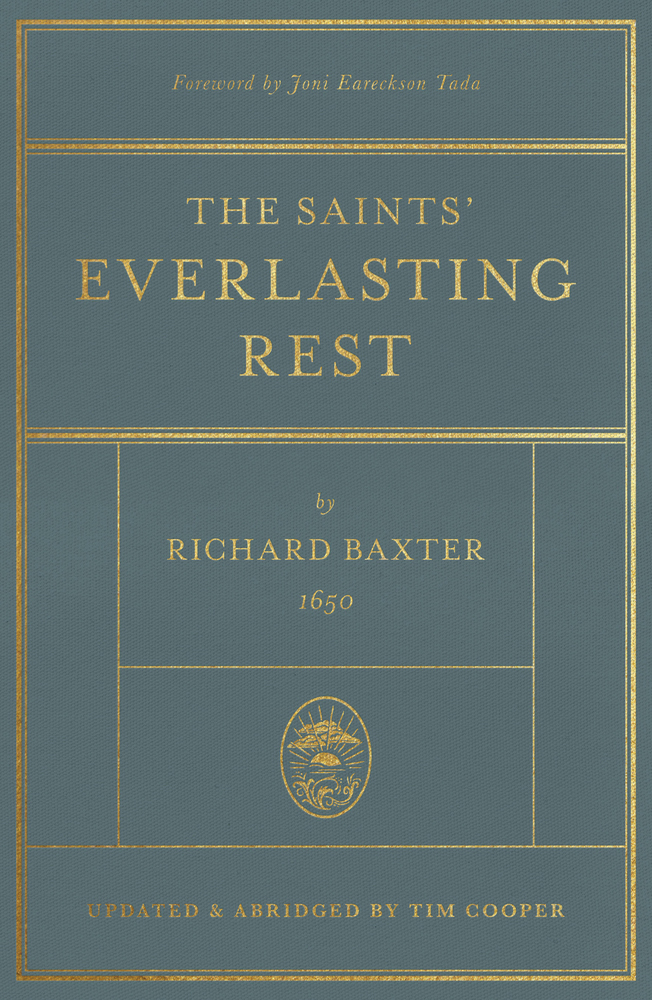
Today, I fully completed The Saints’ Everlasting Rest by Richard Baxter, edited by Tim Cooper. This is a 2022 abridgment of The Saint’s Everlasting Rest and a restoration of devotion more than an act of editing. It rescues Richard Baxter’s 1650 masterpiece from linguistic obscurity while keeping its pulse unaltered — the rhythm of eternity beating through mortal time. Where the original sprawled across hundreds of pages of Puritan prose, Cooper compresses without distortion, cutting away the thickets of repetition but preserving the fruit of heaven-minded thought. The result is not a modernization that cheapens but a refinement that illumines, allowing Baxter’s writing and meditative reflections to breathe again in our century of noise.
Title: The Saint’s Everlasting Rest: Updated and Abridged. Publisher: Crossway. Publication date: May 2022 (192 pages). Format: Modernized language, abridged length. The original work runs to many hundreds of pages (often cited ~350,000 words), whereas the abridgement is condensed to roughly 35,000 words. Foreword by Joni Eareckson Tada. Each chapter ends with reflective questions for group or personal use.
Introduction
Richard Baxter wrote The Saint’s Everlasting Rest while he was sick and expecting death. From that place of weakness, he started thinking about heaven—not as a faraway dream, but as something real and certain for every believer in Christ. The book he produced is honest and steady. It reminds readers that life is short, but God’s promises aren’t. Baxter wanted people to look past fear and hardship and to remember where their true rest lies.
Tim Cooper’s abridged edition makes Baxter’s words sound like they were written for today. It’s shorter, clearer, and easier to read, but the heart of it stays the same. Cooper keeps Baxter’s focus on hope, endurance, and the call to live faithfully with heaven in view. Reading it feels less like studying an old text and more like sitting with a wise pastor who’s learned through suffering to keep his eyes on Christ.
Review
1. Heaven Defined
In the first chapter, What This Rest Contains, Baxter describes heaven as more than peace and quiet—it’s life made whole again. Cooper’s abridgment keeps this simple and clear: believers will rest not in sleep, but in joy, worship, and nearness to God. There’s no boredom or passivity; it’s active delight, free from sin and fear. Reading this chapter, you sense Baxter’s longing for a world unbroken by sickness and regret.
2. The Foundation of Glory
The Four Corners of This Portico lays out Baxter’s foundation. The “four corners” are the truths that hold heaven steady: it’s real, excellent, necessary, and available through Christ. Each point calls the reader to stop treating eternity as theory. Heaven isn’t a dream—it’s the fulfillment of everything faith expects. Cooper’s phrasing helps these truths land with simplicity and assurance.
3. The Excellence of Heaven
In The Excellent Properties of This Rest, Baxter celebrates heaven’s quality. Cooper trims Baxter’s long lists but keeps the wonder. Heaven, he says, lasts forever, shines with purity, and satisfies completely. It’s excellent because God Himself is there. The focus isn’t on imagery but on fellowship—the believer’s joy in the presence of the Lord.
4. Rest from Labor and Fear
In What We Will Rest From, Baxter shows how heaven ends every struggle. This isn’t about escaping life but finishing it well. Cooper keeps Baxter’s thought clear: believers will finally be free from sin, fear, pain, and weakness. Heaven means holiness comes easily because the battle is over.
5. Stirring the Heart
A Multitude of Reasons to Move You captures Baxter’s preacher’s heart. He gives reason after reason to set one’s mind on eternity—life is short, death is certain, and Christ is enough. Cooper condenses it to a steady voice urging readers to live awake to what truly lasts. The tone is gentle but firm, calling readers to live deliberately.
6. Facing Death Honestly
In Why Are We So Reluctant to Die?, Baxter faces fear head-on. He knew even faithful people hesitate to leave this world. Cooper modernizes that thought beautifully: our fear of death comes from loving this life too tightly. Baxter reminds us that death for the believer is not loss but homecoming.
7. Living with Heaven in View
The Heavenly Christian Is the Lively Christian brings the theme from heaven down to earth. Baxter insists that the more we think about heaven, the more useful and steady we become here. Cooper’s language makes this practical—heavenly-minded people are not detached but faithful, patient, and compassionate.
8. Helps and Hindrances
In Dangerous Hindrances and Positive Helps, Baxter lists what keeps believers from thinking often of heaven—distraction, comfort, worry, sin—and what can help—Scripture, prayer, reflection, and gratitude. Cooper’s version sounds like wise advice from a seasoned pastor: practical, balanced, and pastoral.
9. The Practice of Meditation
The chapter I Now Proceed to Direct You in the Work serves as a simple guide to heavenly meditation. Cooper makes Baxter’s old instructions clear: set time aside, focus on heaven, speak truth to your heart, and close with prayer. It’s a pattern anyone can practice.
10. Mind and Heart Together
How to Fire Your Heart by the Help of Your Head joins mind and heart together. Baxter believed right thinking should stir affection. Cooper’s edition makes that connection natural: let truth warm love, and let reflection fuel faith. It’s theology lived rather than studied.
11. Strength for the Journey
In Advantages and Helps, Baxter explains how thinking about heaven strengthens life on earth. “A sight of the crown makes the cross easy,” he said, and Cooper keeps that wisdom central. Meditation on eternity gives courage, clarity, and peace for daily trials.
12. Speaking Truth to Yourself
The final chapter, Preaching to Oneself, closes the book with practical faith. Baxter teaches that every believer must speak God’s truth to his own soul—reminding, correcting, and encouraging it with Scripture. Cooper ends on that same steady note, turning reflection into action.
Conclusion
Tim Cooper’s edition succeeds because it makes Baxter’s message readable without softening it. The twelve chapters move naturally from what heaven is to how to live with it in view. The old Puritan voice becomes clear, kind, and still urgent. Reading it feels less like revisiting history and more like receiving direction for life today. Baxter’s message remains the same: when the heart rests in heaven, the hands work better on earth.


