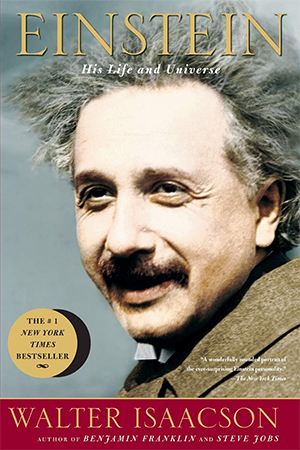
Today I completed Walter Isaacson’s book on Elon Musk, a monolithic 671-page biography that charts the ascent of one of the most dynamic minds of the modern era. More than a chronicle of innovation, the work unfolds as a study in courage, intellect, and creative endurance. Elon Musk emerges not as a man divided by ambition, but as one unified by purpose—a thinker whose vision fuses the precision of physics with the enterprise of imagination.
Isaacson writes with precision and control, charting the disciplined progression of a life shaped by first principles and a conviction that progress is both necessary and ethical. He presents Musk’s story as one of steady ascent—driven by ingenuity, defined by persistence, and sustained by an unyielding commitment to improvement.
Origins of Vision
Born in Pretoria in 1971, Musk’s childhood in South Africa instilled in him a sense of persistence. The environment around him was marked by intelligence and challenge, yet it became the soil of his resolve. His father, Errol Musk, an engineer of exacting intellect, imparted to him a respect for technical mastery and disciplined thought. His mother, Maye, a model of grace and perseverance, embodied dignity and quiet strength.
From these twin influences—precision and perseverance—young Elon learned that excellence is not inherited but constructed. Books, tools, and ideas became his companions. He read deeply, not broadly; he preferred depth to quantity, comprehension to collection. In the ordered worlds of science fiction and physics, he found early blueprints for his imagination.
At twelve, he sold a computer game he had programmed himself. That single act of creation became his first encounter with an enduring truth: intellect, when harnessed to perseverance, possesses creative power. Isaacson depicts a mind born to synthesis—a thinker who approaches the universe not as chaos to be endured, but as order to be revealed.
Formation of Purpose
Leaving South Africa in his late teens, Musk sought a world where freedom and technological advancement could flourish together. Canada was his bridge; North America became his workshop. At Queen’s University and later at the University of Pennsylvania, he earned degrees in physics and economics, disciplines that would later converge in every company he built.
Those early years were marked by simplicity and resolve. He lived with little, often sleeping in offices and subsisting on ideas. Yet these were not hardships; they were investments in destiny. His notebooks, filled with speculative designs and theoretical models, became early sketches of revolutions yet to come—electric vehicles, reusable rockets, planetary colonization.
By the time he arrived in Silicon Valley, Musk was already a man of habit and momentum: analytical, focused, and unwilling to concede that any boundary was permanent. What began as an inward search for clarity matured into a lifelong commitment to humanity’s forward motion. Isaacson reveals this transformation with meticulous grace, portraying not rebellion but refinement—the shaping of purpose through disciplined imagination.
The Architect’s Mind
At the heart of Musk’s genius lies a method—what Isaacson terms first-principles reasoning. It is the art of rebuilding thought from the ground up: stripping away assumptions until only truth remains, then constructing from logic outward. This principle allows Musk to navigate across disciplines others keep apart: aerospace, energy, artificial intelligence, and infrastructure.
He treats each field as a single continuum of possibility, every equation a step toward order. His rigor is not severity but reverence—the belief that reason is the language of creation. He demands from his teams what he first demands of himself: focus, endurance, and intellectual honesty. For Musk, leadership is not command but contagion—the spread of conviction through example.
Isaacson captures this spirit vividly, portraying a man for whom progress is a moral duty. Where others see constraint, he perceives design. Where others hesitate, he acts. His vision is the union of courage and comprehension—the conviction that humanity’s future is written by those who build it.
Accomplishments
1. PayPal
Musk’s first great triumph arrived with PayPal, a venture that transformed the landscape of digital commerce. His vision was characteristically clear and bold: to make online transactions effortless, instantaneous, and universally secure. In an era still uncertain about the future of the internet, Musk perceived what others could not—the inevitability of a connected global marketplace. Under his direction, PayPal became the cornerstone of trust in digital exchange, uniting technology and simplicity in a way that redefined how the world transacts.
When eBay later acquired the company, the success not only affirmed Musk’s genius for systems design but furnished the capital and confidence for the monumental enterprises to follow. Isaacson depicts this period as a study in excellence under pressure—an environment where Musk’s exacting standards refined teams and technologies alike. Far from deterring collaboration, his relentless pursuit of perfection forged a culture of innovation that would become the signature of his later achievements.
2. SpaceX
SpaceX stands among Musk’s most astonishing achievements—a testament to courage wedded to intellect. Defying every expectation, he built the first privately developed rockets capable of reusability, restoring American access to orbit and revolutionizing the economics of spaceflight. The Falcon 9, Dragon, and Starship programs together form a new chapter in aerospace history, transforming what was once the realm of governments into the workshop of human imagination.
Isaacson portrays Musk as both architect and commander, uniting engineering precision with the resolve of exploration’s great pioneers. Under his leadership, teams learned to reach beyond precedent, turning failure into refinement and risk into discovery. Through vision, endurance, and faith in human ingenuity, Musk made the extraordinary attainable—and in doing so, reawakened the world’s belief that the stars are still within our reach.
3. Tesla
Tesla stands as one of the defining enterprises of the modern age, the moment when Elon Musk transformed the electric car from novelty to necessity. He made sustainability not merely responsible but exhilarating—uniting beauty, speed, and intelligence in motion. Refusing to delegate the heart of innovation, Musk insisted on vertical integration and total mastery of the technology itself. The result was a company that designed not just automobiles, but ecosystems of energy, efficiency, and design.
The Model S and Model 3 became symbols of precision and aspiration, merging aesthetic grace with engineering brilliance. The rise of the Gigafactories extended this vision to the scale of civilization—cathedrals of production where automation and human ingenuity coexist in harmony. Isaacson portrays Tesla as the fullest realization of Musk’s creed: that progress must be elegant, efficient, and continuous. Through his unyielding standards and tireless pursuit of excellence, Musk redefined what an industry could be—and what humanity could expect from its machines.
4. Gigafactories
The Gigafactories stand as Elon Musk’s cathedrals of industry—vast sanctuaries where imagination takes physical form. Rising in Nevada, Shanghai, Berlin, and Austin, they unite every element of creation beneath one roof: battery design, manufacturing, assembly, and software in seamless harmony. Their purpose is grandeur through precision—the transformation of vision into volume, and of concept into consequence.
Isaacson portrays Musk as the master builder of this new industrial age, guiding every contour of design, from the flow of conveyors to the logic of algorithms. In these monumental structures, one perceives more than machinery; one sees a philosophy—the conviction that matter itself can be redeemed by order. The Gigafactories are consecrated to a single belief: that innovation must dwell in the tangible world, shaping steel, circuit, and cell until the invisible becomes real. They are not merely factories; they are the architecture of progress.
5. SolarCity
Before its integration into Tesla, SolarCity embodied Elon Musk’s vision to complete the circle of sustainable energy. Founded by his cousins under his inspiration, guidance, and financial backing, it became the vanguard of rooftop solar power across the United States—bringing renewable generation from theory to neighborhood reality. Musk saw in SolarCity not a subsidiary, but a necessary pillar in the architecture of a sustainable world.
When Tesla absorbed the company, the fusion of solar generation with energy storage and intelligent consumption formed a seamless continuum of clean power. What emerged was not diversification but harmony—an ecosystem in which sunlight becomes motion, and technology becomes stewardship. Isaacson records that Musk regarded this union as the fulfillment of an ideal: that humanity’s energy, transport, and innovation should converge into a single, coherent design for the preservation of life itself.
6. Starlink
Starlink carries Elon Musk’s vision beyond the boundaries of Earth itself. Through thousands of satellites in low orbit, SpaceX has woven a living network around the planet—an architecture of connection linking even the most remote and forgotten regions. What began as an engineering challenge became a humanitarian triumph, extending knowledge, communication, and opportunity to places where none had existed before.
Isaacson depicts Starlink as both benevolent and strategic, a union of compassion and precision. It empowers education, navigation, and emergency relief, sustaining communities when terrestrial infrastructure fails. In times of crisis, it has upheld the light of communication where darkness sought to fall. Starlink stands as the embodiment of Musk’s conviction that technology, rightly used, can preserve both freedom and human dignity. It is not merely an internet constellation—it is a constellation of hope.
7. Neuralink
Neuralink represents one of Elon Musk’s most visionary undertakings—the attempt to bridge the living mind with the precision of technology. Conceived as a frontier of healing and advancement, its purpose is both humane and audacious: to restore movement, sight, and speech to those whose bodies have been silenced by injury or disease.
Isaacson portrays Neuralink as an enterprise born of conviction—that humanity must not merely coexist with artificial intelligence but rise in harmony with it. In Musk’s view, the brain is not a relic of limitation but a vessel for expansion, capable of communion with the systems it has created. This pursuit, carried by the same creative force that defines all his endeavors, stands as his most intimate form of innovation: a testament to faith in the boundless potential of the human spirit joined to the power of the machine.
8. The Boring Company
The Boring Company arises from Elon Musk’s unwavering desire to refine the flow of human movement. Seeing congestion as a solvable equation rather than an enduring flaw, he envisioned a world where underground transport could restore grace and efficiency to modern cities. By dramatically reducing tunneling costs through engineering innovation, Musk transformed an age-old obstacle into an opportunity for renewal.
Isaacson presents this venture as a perfect reflection of Musk’s creative instinct: when confronted with delay, he designs speed; when faced with inefficiency, he invents order. The Boring Company demonstrates its guiding conviction that every problem yields to reason and that progress begins wherever imagination refuses to accept limitation. What others call an impasse, Musk calls a blueprint.
9. Robotaxi
Tesla’s autonomous driving program, culminating in the forthcoming Robotaxi fleet, stands as Elon Musk’s next revolution in motion. Its purpose is nothing less than to redefine transportation—creating vehicles that drive themselves with precision, safety, and grace, operating as shared resources in a connected urban world. Through this innovation, Musk seeks to reduce accidents, reclaim time, and transform mobility into a collective good.
Isaacson portrays autonomy as, for Musk, a moral pursuit: machines that preserve life by removing human error from the road. In this endeavor, technology becomes a guardian rather than a gamble. Each advance, each refinement of the system, reflects his enduring conviction that progress can be both ethical and exhilarating. The Robotaxi project embodies the heart of his philosophy—that human creativity and artificial intelligence, working together, can elevate civilization toward efficiency, safety, and freedom.
10. Optimus
Optimus, the humanoid robot under development at Tesla, embodies Elon Musk’s vision of automation in its most inspired form. Conceived to perform repetitive and hazardous tasks, it represents a new harmony between human intellect and mechanical precision—liberating people to focus on creativity, discovery, and the higher work of thought.
Isaacson depicts Musk’s direction as unwavering: Optimus must not remain a prototype or an idea but must walk, grasp, and serve as a living instrument of progress. For Musk, robotics is not a spectacle but a calling—the natural evolution of an industrial civilization seeking both safety and purpose. In Optimus, one perceives his abiding faith in human ingenuity: the conviction that labor and intelligence can be replicated with reverence, and that machines, rightly built, can extend the reach of human dignity rather than replace it.
11. Twitter (X)
Musk’s acquisition of Twitter in 2022 marked one of the most principled acts of his career—a direct stand for freedom of expression in the digital age. Where others saw risk, he saw responsibility: the moral duty to reopen the world’s public square to dialogue unfiltered by ideology or suppression. For Musk, free speech was not a slogan but a cornerstone of civilization, the precondition of discovery and dissent alike.
Isaacson recounts this bold venture as a moment of both courage and conviction. The transition was immense—new leadership, structural change, and the birth of a renewed identity—but its purpose remained singular: to safeguard the open exchange of thought. In reclaiming Twitter —now X —Musk reaffirmed a timeless truth: that communication, unshackled and honest, is the lifeblood of progress. His defense of speech was not disorder, but restoration: the revival of discourse in an age that had nearly forgotten how to listen.
12. Artificial Intelligence and OpenAI
Musk’s early support of OpenAI arose from a deep moral concern for the future of artificial intelligence. Long before the subject became mainstream, he recognized both its power and its peril and sought to guide its growth toward service to humanity. Isaacson notes that his involvement sprang from conviction rather than ambition: the belief that technology must advance within the bounds of wisdom, transparency, and truth.
Though Musk later stepped away from OpenAI, the experience reflected his abiding principle—that intelligence, whether natural or artificial, must remain accountable to the good of humankind. His later founding of xAI continues this ethical pursuit on renewed terms, joining innovation with conscience. For Musk, the goal is not merely to create intelligent systems, but to ensure that intelligence itself remains aligned with truth, purpose, and the preservation of human dignity.
The Edge of Possibility
Isaacson portrays with clarity the sheer intensity that surrounds Elon Musk’s pursuit of advancement—a force so great that few can stand near it without feeling its power. His pace is extraordinary, his standards absolute, and his vision consuming. Yet even if there’s turbulence that follows him, it serves a higher design, for it is the rhythm of creation itself, where great works are given birth in the fire of unrelenting purpose.
Those who labor beside him encounter not chaos, but conviction: the rare energy of a leader who refuses mediocrity and demands from reality the same excellence he demands from himself. Isaacson’s interviews convey deep respect from those who have shared that journey, their fatigue not from disillusionment but from having glimpsed the edge of possibility. The book reminds us that peace is not always the companion of genius—sometimes greatness must burn brightly to illuminate the path ahead.
Achievement and Integrity
Across industries and continents, Elon Musk’s record stands unparalleled—a constellation of achievements that have redefined energy, exploration, and enterprise. Isaacson reveals not simply a chronicle of accomplishment, but the unfolding of a character shaped by vision, endurance, and the relentless pursuit of possibility. True leadership, he suggests, is measured not only by what one constructs but by how one uplifts those who labor within that creation.
Musk’s world moves with relentless urgency, its rhythm set by an unyielding sense of purpose. Yet within that ceaseless advance lies another, quieter labor—the work of shaping the man who shapes the age. Isaacson reveals that Musk’s greatest challenge may not be building machines that reach the stars, but mastering the storms within himself. To persist among such vast endeavors while confronting his own extremes of temperament is itself an accomplishment on the same scale as his innovations.
In this tension between drive and discipline, Musk continues to ascend—learning that strength without self-governance exhausts its power, and that creation without reflection risks consuming its creator. The portrait that emerges is not merely of a builder of rockets or cars, but of a man striving to bring order to his own intensity. In that pursuit, he becomes both architect and apprentice: teaching the world to move faster even as he slowly learns the greater art of inner control.
Closing Thoughts
Walter Isaacson’s book Elon Musk concludes not with a verdict, but with a portrait of humanity in motion. Musk’s contribution to civilization is beyond dispute: he made spaceflight reusable, energy sustainable, and the digital public square open once more to free speech. Yet his story presses a deeper question—what is progress for, and what becomes of the soul in its pursuit?
I hold that every person bears immeasurable worth, being created in the image of God. The human being is not a mechanism within a system but a sacred life designed for communion, not consumption. Progress divorced from reverence risks turning dominion into domination. Musk’s enterprises display the brilliance of man’s stewardship over creation, but they also reveal the need for humility before the Creator who grants it.
Musk’s defiance of cultural falsehoods—his stand against censorship and conformity—reflects a moral courage rare in our age. When he warns of the “woke mind virus,” he names, in secular terms, the corrosion of truth and gratitude by grievance and deception. Civilization cannot stand upon falsehood; freedom of speech and conscience are not human inventions but divine trusts. To defend them, however imperfectly, is an act of moral realism.
Yet even courage must yield to grace. The world is not redeemed by intellect or innovation but by truth illuminated through mercy. God appoints great builders like Musk to expose corruption, awaken courage, and remind us that excellence still matters—but even the greatest must bow before the Architect of meaning.
Musk’s life mirrors the tension of our time: the mind of man reaching outward while the soul of man longs for rest. His achievements invite gratitude; his restlessness invites prayer. May the same sovereign hand that governs the stars he seeks to reach one day grant his spirit peace.