Having completed The Brothers Karamazov cover to cover, I find it hard to overstate its density and its power. Dostoevsky did not write a mere novel but constructed a comprehensive moral and theological drama, clothed in the immediacy of a family’s collapse and elevated into a timeless wrestling with the deepest questions of human existence. The book confronts us with the interplay of freedom and responsibility, the tension of faith and doubt, and the unavoidable weight of sin and redemption. Though Russian in setting and nineteenth century in circumstance, it bears a universality that feels neither foreign nor dated.
Background
The Karamazov family embodies the fractured human condition. At the root is Fyodor Pavlovich, the father, a debauched, cynical, and negligent man whose corruption poisons his sons. From him the three legitimate sons diverge along archetypal lines: Dmitri, the sensualist ruled by passions and impulses; Ivan, the intellectual torn between cold rationalism and a thirst for truth; Alyosha, the novice monk who lives by love, faith, and grace. To these is added the illegitimate Smerdyakov, whose embittered servility carries within it both resentment and cunning malice. Dostoevsky thus structures his story not simply as a family tragedy but as a theological map of man: body, mind, and spirit divided, corrupted, and brought into collision.
The central crime of the novel—the murder of Fyodor Pavlovich—serves as both literal event and moral crucible. It is less important that the elder Karamazov is killed than that each son, in his own way, is complicit. Dmitri’s violent threats, Ivan’s intellectual justifications, Smerdyakov’s cold execution, and even Alyosha’s silent failures to intervene demonstrate Dostoevsky’s piercing conviction: sin is corporate, guilt is shared, and no man can claim innocence while humanity bleeds. In this Dostoevsky dramatizes the Apostle Paul’s words, that “all have sinned and fall short of the glory of God,” not as abstraction but as lived fact.
Perhaps the most enduring section for readers is Ivan’s “Rebellion” and “Grand Inquisitor” passages, where he presents the most articulate and devastating case against God ever put into fiction. Ivan catalogues the sufferings of children, the incoherence of justice, and the absurdity of freedom, all with a weight that cannot be lightly dismissed. His parable of the Grand Inquisitor, accusing Christ Himself of burdening mankind with the gift of freedom, remains a mirror to every age that would rather trade liberty for bread and authority. Dostoevsky allows the rebellion full expression, for he knew that faith cannot be forced by silencing doubt—it must be tested by fire.
And yet Dostoevsky does not leave the rebellion unanswered. Alyosha’s life and testimony provide no philosophical refutation but something far stronger: the embodied witness of love, humility, and faith. He responds not with abstract syllogisms but with compassion, forgiveness, and steadfast presence. Dostoevsky’s intention is clear: Christianity is not first an argument to be won but a life to be lived. Alyosha’s answer to Ivan is Christ Himself, the incarnate Word who endured injustice and suffering not to explain it away but to transform it. In this way Dostoevsky affirms the mystery of faith, not as irrational escape but as the only sufficient foundation for life.

The trial of Dmitri, which dominates the latter part of the novel, crystallizes these themes. The proceedings demonstrate not the search for truth but the manipulation of appearances, the power of rhetoric, and the sway of public opinion. The jury condemns Dmitri despite the facts, not because the evidence is clear but because man’s heart is always inclined to error when untethered from truth. In this Dostoevsky prophesies much about modern culture: trials in the court of public opinion, truth bent by ideology, and innocence crushed under narrative. The parallels are uncanny, proving the enduring relevance of his vision.
Equally significant are Dostoevsky’s portrayals of the women in the novel—Grushenka, Katerina Ivanovna, and the many peasant women who seek Alyosha’s counsel. They are not passive figures but living embodiments of temptation, loyalty, shame, sacrifice, and repentance. Through them Dostoevsky illustrates that salvation is not abstract but worked out in relationships, in vows kept or broken, in the humiliations of pride and the reconciliations of forgiveness. The novel reminds us that spiritual warfare is fought not in distant heavens but in the entanglements of love and betrayal here on earth.
As I close the book, what lingers is Dostoevsky’s insistence that man is always poised between heaven and hell, and that each choice—each act of belief or denial, each embrace of love or indulgence of hatred—matters eternally. The Brothers Karamazov is both tragedy and hope: tragedy because human sin runs so deep, and hope because redemption remains real through Christ. In today’s culture, where faith is mocked, freedom cheapened, and justice distorted, Dostoevsky’s testimony is sharper than ever. He saw through the illusions of progress and rationalism to the heart of man, and he knew that without God, we collapse into cruelty; with Him, even the vilest may be forgiven.
For me, the novel stands as both warning and invitation. Warning, because like Ivan we are tempted to believe rebellion makes us strong when in truth it makes us hollow. Invitation, because like Alyosha we are called to bear one another’s burdens in love. Dostoevsky did not leave us comforted with illusions but pressed upon us the necessity of decision. We must choose whom to follow: the pride that kills or the humility that gives life. That choice is as urgent now as when Dostoevsky first set pen to paper.
Book Review
The Brothers Karamazov is not structured primarily to tell a story but to expose a moral world. From the opening pages, Dostoevsky establishes that the central problem is not crime but corruption of order—especially the collapse of fatherhood, responsibility, and inheritance. Fyodor Karamazov is not merely immoral; he is spiritually corrosive, dissolving the conditions under which sons might become whole men. The brothers emerge not as symbols but as accountable persons shaped by neglect, indulgence, and resentment. The novel refuses the modern excuse that dysfunction absolves guilt. Sin is shown as something learned, tolerated, and eventually chosen, reproducing itself unless confronted by repentance and truth.
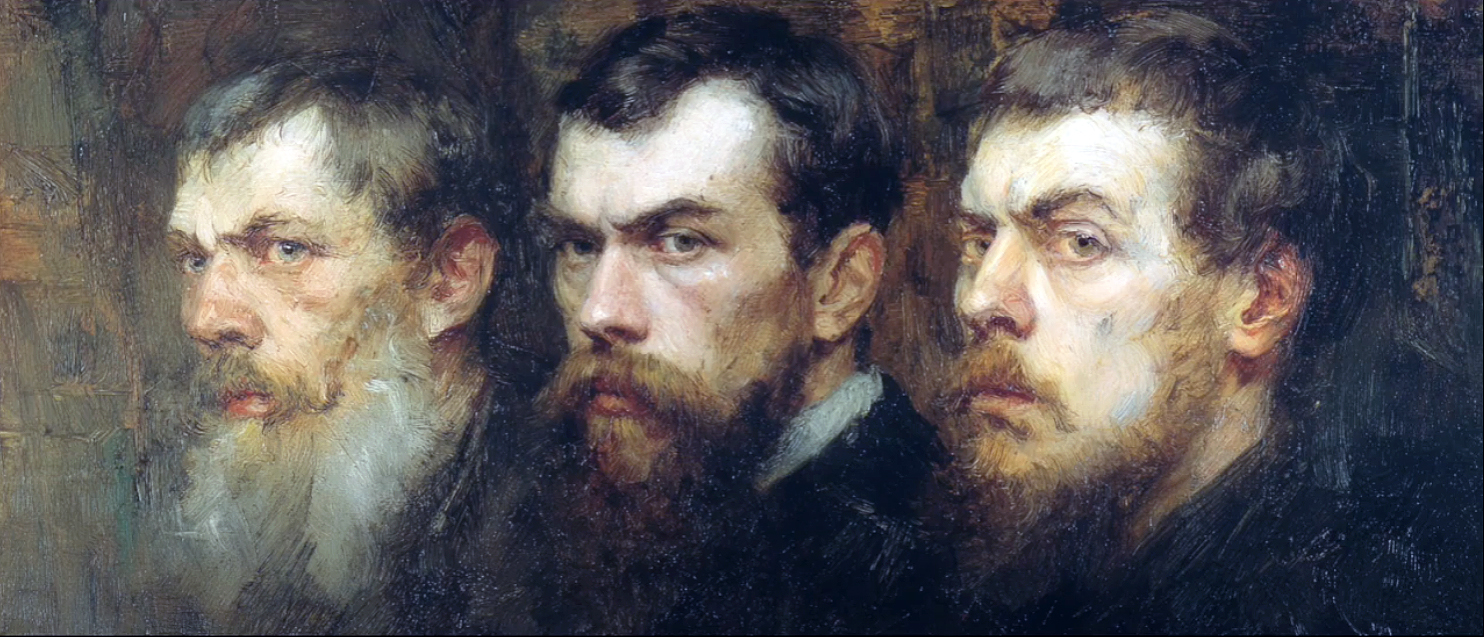
The early confrontation at the monastery sharpens this moral framework. The gathering exposes the insufficiency of civility, intellect, and social polish when set against holiness. Ivan’s rational detachment, Fyodor’s blasphemous mockery, and Dmitri’s volatility all falter in the presence of Elder Zosima. What fails here is not intelligence but humility. Dostoevsky insists that reason unsubmitted to truth becomes a shield against conscience. Authority, as Zosima embodies it, does not arise from power or argument, but from truth lived and suffering borne. Scripture’s pattern is unmistakable: God resists the proud, even when they are clever.
As the novel descends into the world of passion, it strips away any lingering romanticism. Dmitri’s enslavement to desire is not framed as excess but as disintegration. His fixation is violent, destabilizing, and self-consuming. Fyodor’s sensuality is shown as predatory rather than indulgent. Dostoevsky makes clear that appetite is never morally neutral. Desire either submits to order or becomes tyrannical, destroying both the one who indulges it and those caught in its wake. Lust fractures judgment, corrodes trust, and invites destruction—precisely because it masquerades as sincerity.
The narrative then turns inward, from overt sin to woundedness. Shame, humiliation, and resentment simmer beneath the surface, testing whether suffering will soften the soul or harden it. Alyosha moves among the wounded not as a solver but as a faithful presence. This is one of the novel’s quiet correctives: pain does not confer moral authority. Suffering tests faith; it does not replace obedience. Dostoevsky rejects any spirituality that treats affliction as virtue. Alyosha’s restraint—his refusal to exploit pain for insight or leverage—proves more truthful than eloquence.
Ivan’s rebellion brings the novel to its intellectual and spiritual crisis. His protest against God is framed as compassion for the innocent, and this is what gives it force. Yet Dostoevsky exposes the fatal inversion at its heart: man presumes to judge God. The Grand Inquisitor embodies the temptation to replace faith with management, obedience with comfort, and freedom with control. Systems that promise peace without repentance and order without truth inevitably crush the soul. Ivan’s arguments sound humane precisely because they detach mercy from submission.
Zosima’s teaching then stands as the novel’s moral axis. Responsibility is universal, guilt is shared, and repentance is active. Holiness is not withdrawal from the world but accountability within it. “Each is guilty for all” does not dissolve justice; it deepens it. Dostoevsky dismantles every attempt to outsource conscience—to institutions, ideologies, or abstractions—and restores moral weight to the individual soul. Judgment, Scripture reminds us, begins with the household of God.
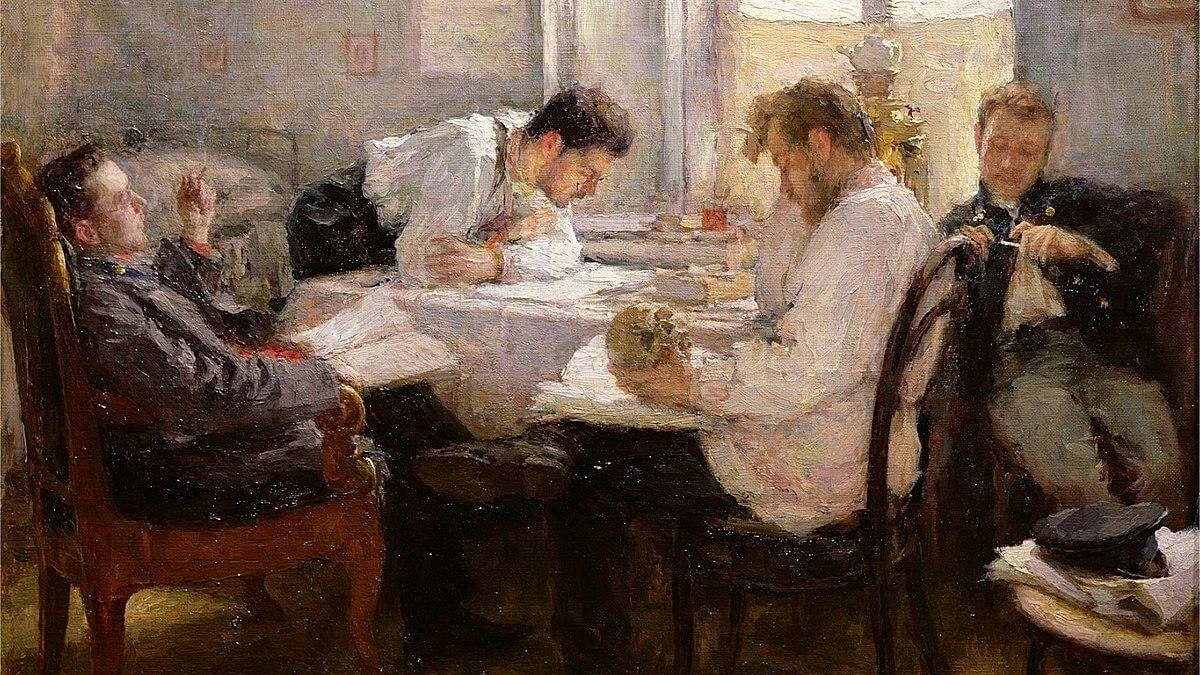
Alyosha’s own crisis confirms this theology. His faith is not rewarded with triumph but tested by humiliation and apparent failure. Zosima’s body decays; expectations collapse. Alyosha does not receive explanation—he receives a call to obedience. He turns outward rather than inward, choosing love over despair. The novel rejects triumphalist spirituality: faith that depends on signs will not survive the world. Belief is proven by endurance when consolation is withdrawn.
Dmitri’s arc reveals a different truth. His repentance precedes clarity, vindication, or acquittal. His conscience awakens before justice resolves. He begins to accept guilt not merely for what he may have done, but for who he has been. Dostoevsky insists on a hard distinction modern readers resist: repentance is not a legal strategy, and salvation is not identical with acquittal. Justice may fail, courts may err, and systems may convict wrongly—yet moral awakening remains real, costly, and necessary.
The trial and its aftermath refuse narrative satisfaction. Legal certainty misses truth; evidence misleads; judgment is rendered imperfectly. The novel denies the fantasy that institutions can redeem. It ends instead with children, memory, and formation. Alyosha binds the boys together through remembrance and hope, entrusting the future rather than controlling it. Evil is not undone, yet it does not have the final word. The last act is not argument, but formation—seeds planted rather than outcomes secured. That posture, Dostoevsky suggests, is the only one that remains truthful in a fallen world.
The Brothers
Alyosha Karamazov — the spiritual brother, governed by love, conscience, and self-giving faith
Dmitri Karamazov — the eldest, openly acknowledged, governed by passion and honor, capable of repentance
Ivan Karamazov — the intellectual brother, governed by reason detached from obedience
Pavel Smerdyakov — the illegitimate son, hidden and denied, governed by resentment, negation, and borrowed ideas
Alyosha: The Brother Who Bears Others
Alyosha Karamazov stands apart for me not by brilliance, intensity, or authority, but by availability. I recognize quickly that I am not like him—and that recognition is neither accidental nor shaming. Alyosha does not dominate the narrative through argument or decisive action. He absorbs it. He remains present where others withdraw, faithful where others justify distance, and patient where others demand resolution. Dostoevsky does not offer him as a fantasy of moral perfection, but as a living rebuke to the habits that often pass for realism in my own life.
I find myself admiring Alyosha without doubting the plausibility of his way of being. What I question is not whether such a posture is real, but whether I am willing to bear its cost. His gentleness is not impractical or evasive, even when it appears so to others. He does not fix systems, correct injustices decisively, or protect himself through detachment, not because he cannot, but because he refuses to confuse control with faithfulness. Dostoevsky makes clear—and I accept—that this is not weakness but discipline. Alyosha’s restraint is chosen. He refuses the temptation to make himself central—to be the solver, the judge, or the savior. Instead, he bears others as they are, without requiring them to justify themselves first.
What distinguishes Alyosha most sharply from his brothers is not temperament but posture. Dmitri acts openly and violently, then repents. Ivan reasons abstractly, then collapses under the weight of his conclusions. Smerdyakov hides, manipulates, and negates. Alyosha does none of these. He does not dramatize guilt, intellectualize rebellion, or disappear into resentment. He accepts responsibility without spectacle. His goodness is not reactive; it is steady. That steadiness is what makes him rare—and unsettling.
I feel, uncomfortably, that Alyosha represents a standard I do not meet. He is the brother and friend I would want to have, yet know I have not consistently been to others. He listens without exploiting weakness. He remains loyal without enabling sin. He speaks truth without sharpening it into a weapon. This combination is difficult precisely because it requires constant self-denial. Alyosha does not retreat into solitude to preserve holiness; he enters broken situations and remains there without securing outcomes.
Dostoevsky is careful not to shield Alyosha from disappointment or humiliation, and that matters to me. His faith is tested, not rewarded. Zosima’s body decays; expectations collapse; consolation is withdrawn. Alyosha’s obedience is therefore not sustained by spiritual comfort but by commitment. Faith that depends on affirmation will not endure the world. Alyosha’s return to life after disillusionment confirms what Scripture insists: belief is proven not by exemption from scandal, but by faithfulness through it.
What Alyosha ultimately embodies is not innocence, but responsibility freely accepted. He does not deny evil, nor does he attempt to manage it. He refuses despair without denying reality. His final gathering of the boys remains emblematic for me: he does not promise justice, success, or safety. He commits them to memory, goodness, and loyalty. The future is not controlled; it is entrusted.
For me, Alyosha becomes less an object of admiration than of aspiration—not because I believe I can become him, but because I recognize the poverty of the alternatives. Detached intelligence, ungoverned passion, and resentful withdrawal all collapse under their own weight. Alyosha’s way is costly, slow, and often unseen—but it is the only one that does not corrode the soul.
Dostoevsky does not ask me to imitate Alyosha in temperament, but in orientation: to remain present, to bear others truthfully, and to resist the instinct to excuse myself from responsibility. Alyosha is not great because he escapes the world, but because he refuses to abandon it.
Dmitri: The Brother Who Repents Without Acquittal
Dmitri Karamazov provokes an immediate moral recoil in me. His obsession with Grushenka is not romantic excess; it is degrading—possessive, humiliating, and unrestrained. I find it repulsive, and I think that response is right. Dostoevsky is not asking me to excuse it. He shows what happens when desire becomes tyrannical and pushes out judgment, loyalty, and gratitude. Mitya does not love. He fixates. His passion consumes him instead of ordering him toward anything good.
That reaction makes it easy to think the problem is simply that he chose the wrong woman. It is tempting to believe that if he had chosen Katerina Ivanovna instead—disciplined, serious, and principled—things might have turned out differently. But Dostoevsky does not allow that explanation, and neither do I. Mitya’s disorder is not about who he loves; it is about his lack of self-rule. His chaos would corrupt any relationship, no matter how respectable it looked. The problem is not the object of desire. It is the will.
What separates Mitya from his brothers is not virtue, but openness. He sins openly. He confesses impulsively. He does not hide behind cleverness or irony. That makes him reckless—and capable of change. I wanted him acquitted, not because I thought he was innocent, but because I could see something shifting in him. His conscience wakes up before the verdict is delivered. He starts to accept guilt not just for what he may or may not have done, but for the man he has been. That is not strategy. It is recognition.
Dostoevsky is clear that repentance does not guarantee justice as courts administer it. Mitya’s inner change comes before his condemnation, and the two never line up cleanly. I felt the frustration of wanting repentance to be rewarded and truth to be recognized. But the novel refuses that comfort. Salvation and acquittal are not the same thing. Scripture says the same. A man can turn toward God and still live with the consequences of a broken world.
Mitya’s repentance is incomplete. He remains volatile, dramatic, and unstable. He does not become wise or settled by the end of the book. But something real happens. He stops dodging responsibility. He stops insisting on his own righteousness. He stops seeing himself only as a victim of other people or circumstances. He begins to suffer honestly instead of resentfully. That change matters more than the outcome.
Mitya leaves me with a conflicted hope. His passion is exhausting. His judgment is unreliable. His attachments are destructive. And yet, among the brothers, he is the one who moves from chaos toward truth without collapsing into denial or despair. He does not explain evil. He confesses it. He does not defend himself. He submits to judgment, however flawed it is.
Dostoevsky is not asking me to admire Mitya. He is asking me to see the mercy at work in him. Mitya is not freed by innocence, intelligence, or virtue. He is changed by repentance that comes too early for the court and just in time for the soul.
Ivan: The Brother Who Bears the Weight of His Ideas
Ivan Karamazov is usually described as the intellectual brother, yet I feel the most distant from him. That distance is not confusion or indifference. It exists because Ivan’s intellect does not draw people near; it separates. His brilliance isolates him. He reasons clearly, speaks persuasively, and identifies real injustice, but he stands apart from the human cost of his conclusions. Dostoevsky does not present him as the triumph of reason, but as the place where reason is most severely tested.
I did not want to see Ivan suffer. His torment felt excessive, even cruel. He does not commit the obvious sins of the others. He does not act violently or indulgently. And yet Dostoevsky makes it clear that Ivan’s suffering is not imposed on him from the outside. It comes from within. His rebellion against God is framed as moral outrage, but it rests on a refusal to submit reason to truth. He cannot accept a world in which innocence suffers, so he rejects the world’s Author. What he cannot escape is that this rejection does not leave him untouched. It leaves him alone with judgment he cannot resolve.
The most disturbing moment for me is Ivan’s exchange with Smerdyakov. This is where the idea that thoughts remain harmless collapses. Ivan believes himself innocent because he does not act. He does not kill. He does not strike. He does not steal. But Smerdyakov receives Ivan’s ideas not as protest, but as permission. What Ivan frames as philosophical rebellion becomes justification in another man’s hands. The exchange is horrifying because Ivan realizes—too late—that he has already participated.
This moment drives home a truth Dostoevsky refuses to soften: ideas carry moral weight. Words are not neutral. Teaching binds the one who teaches. Ivan’s failure is not that he asks hard questions, but that he refuses responsibility for the consequences of his answers. He wants the moral clarity of judgment without the burden of obedience. Smerdyakov becomes the living result of that refusal—the shadow Ivan cannot disown.
Ivan’s collapse is not an arbitrary punishment. It is the inward unraveling of a man who has removed God without finding anything capable of carrying guilt in His place. Reason, once cut loose from fear of God, turns inward and consumes itself. Ivan’s devil is not spectacle; it is fragmentation. His mind divides because it no longer submits to any authority beyond itself.
I recognize that my distance from Ivan is not hostility toward intellect. It is moral alignment. I value order, responsibility, and truth lived, not just argued. Dostoevsky does not ask me to admire Ivan’s brilliance. He asks me to see its danger. Ivan’s tragedy is not doubt, but refusal. His suffering is painful because it remains unresolved. It does not yet turn into repentance, nor does it settle into peace.
And yet Dostoevsky does not discard him. Ivan is left suspended—alive, fractured, and accountable. Judgment is unfinished, and so is redemption. That unresolved state is deliberate. It forces the recognition that intellect alone cannot bear the weight of the world’s evil. Rejecting God on moral grounds does not remove guilt; it inherits it without remedy.
Ivan stands not as a villain, but as a warning. He shows that a man can speak powerfully against injustice and still enable it indirectly; that he can refuse violence and still make room for it; that he can condemn evil loudly while lacking the obedience required to resist it. His distance from me as a reader feels intentional. It prevents admiration where repentance is needed.
Dostoevsky leaves Ivan where reason without submission must end—not in clarity, but in crisis—so that I can see what intellect alone cannot save.
Smerdyakov: The Brother Most Easily Missed
The most unsettling figure for me is not the most passionate, the most intelligent, or the most visibly conflicted, but the one I almost overlooked: Smerdyakov. I am naturally drawn to the brothers who stand openly before truth—Dmitri in his guilt, Ivan in his rebellion, Alyosha in his obedience. Smerdyakov resists that pattern. He stays at the edges, speaks indirectly, acts quietly, and avoids clear moral posture. Dostoevsky places him there on purpose. He is not meant to test my intelligence or my sympathy, but my moral attention.
To gloss over Smerdyakov is to follow the same instinct shared by nearly everyone in the novel, and I did the same. It is easier to focus on visible, articulate, socially recognizable forms of evil than on the quiet, malformed, resentful kind that lives on the margins. Smerdyakov is easy to dismiss as a servant, an irritant, or a secondary mind borrowing Ivan’s ideas. But Dostoevsky makes it clear that seeing him rightly requires more than sharp thinking. It requires attention to what is morally inconvenient, unattractive, and disordered.
I recognize that my tendency to overlook him does not come from indifference, but from a strong pull toward responsibility, order, and clear agency. I am drawn to people who act openly and bear visible consequences. Smerdyakov offends that structure. He works in shadows, evades responsibility, and refuses dignity even when it is offered. He represents a kind of evil that does not announce itself and therefore does not immediately provoke resistance. Instead, it invites neglect—and then shock when it finally erupts into destruction.
Dostoevsky treats this as a serious danger. Loud evil draws opposition. Quiet, resentful evil often goes unnoticed. Scripture speaks in similar terms about the stone the builders rejected—not because the builders are foolish, but because they are focused on what looks solid and weight-bearing. Smerdyakov does not appear weight-bearing until he becomes catastrophic. By then, attention comes too late.
When I recognized this, I did not feel self-condemnation so much as clarity. It exposed a pattern in how I see rather than a failure of conscience. Dostoevsky does not invite me to stand above the characters, but among them—to notice where my habits of attention align with theirs. That recognition does not feel like failure. It feels like illumination. It is exactly the kind of seeing the novel is meant to produce.
At the same time, Smerdyakov draws out something more difficult than judgment in me: sympathy mixed with a desire to extend mercy. Dostoevsky gives him circumstances that rightly call for compassion. He is conceived through degradation, denied acknowledgment, raised close to belonging but never included, and educated just enough to despise both himself and others. He is sinned against long before he sins. To see that clearly is not sentimentality. It is moral honesty. Scripture consistently condemns those who crush the weak through neglect, mockery, and abandonment, and Fyodor’s treatment of Smerdyakov stands as a real indictment.
Yet Dostoevsky refuses to let circumstance excuse what follows, and I agree with that refusal. Smerdyakov is not only wounded; he chooses concealment, manipulation, and negation. He does not seek mercy. He turns resentment into a weapon. This is where the tension sharpens. Mercy, in the Christian sense, is not pity poured into a closed container. It requires truth, repentance, and exposure to light. Smerdyakov wants relief without repentance and vindication without confession. He does not want to be restored; he wants the world declared meaningless so that his hatred makes sense.
What unsettles me most is the desire to offer Smerdyakov what the novel never allows him to receive: a brother who sees him fully and does not look away. Alyosha moves toward that posture briefly, but Smerdyakov recoils from it. Mercy offered to a soul like this is costly because it must accept refusal. The Gospels show the same tragedy. Christ weeps not because mercy is insufficient, but because it is rejected.
In the end, my sympathy for Smerdyakov does not feel misplaced. It feels human. But Dostoevsky insists on a hard truth I cannot ignore: mercy that is refused does not transform. Smerdyakov reveals the frightening reality that some people would rather indict God than be healed by Him. To want mercy for him is to stand on the side of grace. To accept that it may be refused is to stand within reality.
Holding both truths together—compassion without excuse, mercy without naïveté—does not feel like confusion to me. It feels like the level of seriousness this novel demands.


