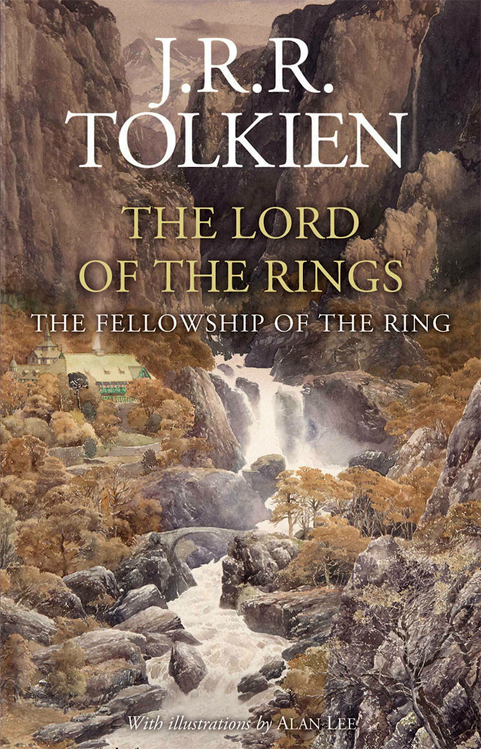
Today I completed The Fellowship of the Ring by J.R.R. Tolkien (407 pages). Unlike The Silmarillion, which unfolds as a record of origins and long decline, this book begins in a settled land whose boundaries appear sufficient for those who dwell within them. The early chapters remain in the Shire—within fields, gardens, family lines, and long-kept habits. Tolkien allows the reader to dwell there without urgency. Nothing outward presses in at once. Yet time is marked with care, and conversations gather meaning as they unfold. What seemed incidental in earlier years is reconsidered with greater attention.
Having already read The Hobbit, I was aware of the earlier discovery of the Ring. In that tale, it solved immediate problems and passed without a full explanation. Here, the same object is subjected to patient scrutiny. Gandalf’s long absence and careful return frame the shift in understanding. The Shire itself does not alter suddenly; rather, Frodo’s position within it changes. What he inherits includes more than a home. The choice before him develops quietly, and when it comes, it is shaped less by impulse than by necessity.
Book Review
The book opens with Bilbo’s departure, which closes one life and begins another. The continuity of the Shire remains intact as years pass under Frodo’s care. Only when Gandalf speaks plainly does the wider history of the Ring enter the foreground. From that point, departure becomes inevitable. Preparations are made gradually. Companions are drawn in through loyalty and trust rather than proclamation.
The Black Riders enter the story with measured presence. They do not storm or shout. They ask questions, wait at crossroads, and pass silently through villages. Their searching alters the ordinary landscape. Roads that once led comfortably from farm to farm now carry risk. As Frodo and his companions move through the Shire, into Buckland, and beyond its borders, pursuit follows without haste and without retreat. Fear gathers by degrees.
The passage through the Old Forest and the encounter with Tom Bombadil widen the sense of the world without shifting the course already set. There are regions and powers not ordered by the same struggle. The Ring remains small in the hand, yet it binds the company’s direction steadily eastward.
At Bree, the company enlarges. Strider joins not by spectacle but through knowledge of the land and steady conduct. The road toward Weathertop brings exposure. There, beneath the remnants of ancient watchtowers, concealment no longer holds. The attack is swift. Frodo’s wound remains beyond the moment itself, shaping each step that follows. The journey to the Ford presses on without rest until Rivendell is reached.
In Rivendell, memory and counsel gather into speech. The Council recounts events across many years and peoples. No extended debate alters the Ring’s nature. It cannot be mastered without mastering the bearer. The decision to carry it to its end is accepted openly. The Fellowship forms in clear understanding of what lies ahead.
The attempt to cross Caradhras gives way beneath snow and wind. The descent into Moria follows. Within those halls, torchlight reveals carved pillars and broken chambers. Echoes precede the threat itself. Weariness accumulates before battle does. Gandalf’s fall upon the bridge is final and without elaboration. The company emerges fewer in number and marked by loss.
Lothlórien receives them under high trees and quiet light. Rest there is neither forgetful nor celebratory. Each member stands under scrutiny without accusation. Gifts are given for use, not display. When they depart in boats along the Great River, motion replaces footstep. The Anduin carries them southward between cliffs and wooded banks, placing a greater distance between the present company and the places left behind.
Along the river and at its edges, signs of pursuit appear again. Gollum is glimpsed among rocks and ledges, climbing and withdrawing by night. He does not yet stand within the company’s sight, but his presence is noted. The Ring’s history reaches beyond open enemies.
At Parth Galen, rest becomes uncertain. Boromir speaks to Frodo apart from the others and presses the matter of bringing the Ring to Minas Tirith. Frodo withdraws alone and ascends the high seat of Amon Hen. From there, he looks out across the lands of Middle-earth and hears the call that seeks him. When he returns, he moves without declaration. Merry and Pippin run through the woods in search of him. Aragorn gives direction, and the company disperses. Frodo descends to the riverbank and pushes out a boat. Sam follows him into the water and climbs aboard. They cross the Anduin and set foot upon the eastern shore. There, the first volume ends.
Across its course, the book traces a road from enclosed fields to open land. The Shire stands at the beginning, then recedes behind hedge and hill. The Riders pass along roads once untroubled. A wounded hobbit rides toward Rivendell beneath watchful care. Snow closes a mountain pass. Drums sound in deep halls of stone. Boats travel south between ancient shores. A small craft touches the far bank of a wide river. The company no longer stands assembled in one place. The Ring remains in Frodo’s keeping.
Conclusion
Throughout the book, the journey unfolds through specific places and events that leave their mark. The Black Riders follow the road through the Shire and into Bree. Frodo stands upon Weathertop beneath the broken stones of an ancient watchtower and receives a wound that does not quickly fade. Snow turns the company back from Caradhras. In Moria, they pass by torchlight through carved halls and narrow bridges, hearing drums long before steel is drawn, and there Gandalf falls beyond the broken span. In Lothlórien, they rest beneath tall trees and depart with gifts fitted for the miles ahead. The boats drift down the Great River past cliffs and wooded banks while Gollum moves along the rocks at a distance. At Parth Galen, words are spoken that strain the company. Frodo climbs Amon Hen, looks out across Middle-earth, and then descends to the water. By the final page, he and Sam have crossed the Anduin, leaving the western shore behind.
If I were to place myself within that course, I would accompany them through those same hours. I would have stood upon Weathertop keeping watch against the night wind. I would have entered Moria with torch in hand, feeling the weight of stone overhead and hearing the echo of our own steps. I would have sat in the boats upon the Anduin, marking the current and the changing light. And when Frodo set his face toward the east, I would have stepped from the boat with him and begun the inland climb. I would carry what I had been given to carry, rise each morning to the same direction, and continue beside them through hardship, through fear, and through the quiet confidence that the road, once taken up, is to be walked to its end.


