Frank Herbert’s Dune first impressed me with the sheer depth of its world. Arrakis is not just a desert planet but a complete ecosystem that controls every choice people make. Its sandstorms, water scarcity, and the massive sandworms make survival an achievement in itself. I appreciated how the setting shaped politics, trade, and even religion—reminding me that the environment often dictates the direction of human history. Herbert’s world felt believable because it was built on details that showed how fragile life can be when nature sets the terms.
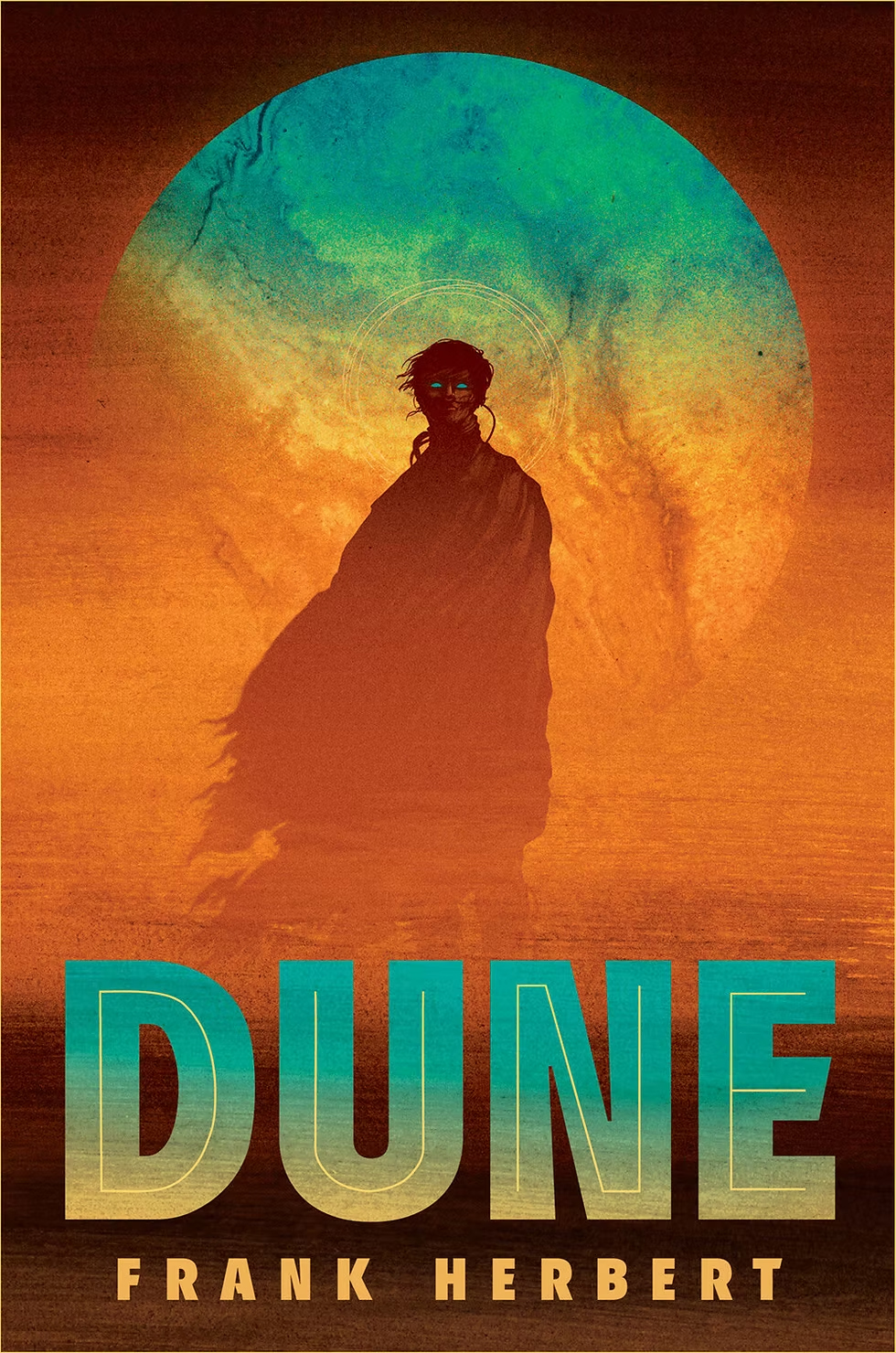
The characters added another layer of weight to the story. Paul Atreides stood out most of all, not only because of his growth from heir to leader, but also because of the burden that came with it. His mother, Lady Jessica, and the Fremen people added depth to his journey, showing how loyalty, culture, and tradition could either support or complicate his rise. At times, I admired Paul’s strength and foresight, but I also felt uneasy about how quickly power and prophecy gathered around him. That tension made the story feel real because leaders are rarely only heroes.
The deeper themes tied everything together. Dune is more than political intrigue or a survival tale—it is a reflection on how ambition, faith, and environment shape destiny. Herbert shows both the hope of unity and the danger of messianic expectation. The book left me thinking less about victory and more about cost. It was a reminder that whenever humans try to control nature or place too much trust in leaders, the results can spiral far beyond what was first intended. That is what gave Dune its lasting weight for me: a story both thrilling in scope and sobering in its warning.
At 687 pages, the book is divided into three parts—DUNE, MUAD’DIB, and THE PROPHET—each building upon the last in scale and consequence. First published in 1965, the book opens Herbert’s six-volume saga and has since become a touchstone for science fiction. Its strength lies not only in the action of its plot but in the seamless integration of ecology, politics, religion, and human ambition into one coherent whole.
The characters are central to this integration. Paul Atreides, the young heir of House Atreides, is at the heart of the story, yet the book’s power comes from the way Herbert surrounds him with figures who represent distinct strands of the human condition. His mother, Lady Jessica, embodies the tension between personal loyalty and institutional duty. Duke Leto, Paul’s father, represents honorable leadership under systemic pressure. The villainous Baron Harkonnen personifies cruelty and greed taken to strategic extremes. Among the Fremen, figures like Stilgar, Chani, and Liet-Kynes give the desert people depth and complexity beyond stereotype. Even the Emperor, Shaddam IV, though largely offstage, exerts influence that shapes the entire plot.
The appendices, supplemental reports, and reference sections at the back of the book reinforce Herbert’s method. Rather than being throwaway extras, they are part of the novel’s design. They supply historical, religious, and ecological frameworks that make the reader’s understanding of Arrakis richer. The result is that Dune does not feel like a single adventure—it reads as a documented moment in a long, interconnected history.
Book 1: DUNE
The first part, DUNE, establishes the foundation: the stakes, the power structure, and the key players. House Atreides has been ordered by the Emperor to take control of Arrakis, replacing their enemies, the Harkonnens. On the surface, this is a political promotion. In reality, it is a calculated move to weaken the Atreides and set them up for destruction. Herbert spends this section carefully introducing the political architecture of the Imperium—how the Emperor, the Great Houses, the Landsraad, and the Spacing Guild interact in a delicate balance of power. For a first-time reader, these explanations are not overwhelming because they are embedded in conversations and decisions that have immediate consequences for the Atreides family.
Paul emerges as more than just the story’s central character; he is the lens through which the reader sees the convergence of political, cultural, and prophetic forces. His early training—both in statecraft from his father and in Bene Gesserit disciplines from his mother—positions him to respond intelligently to the pressures ahead. Duke Leto’s role in this section is crucial. He is not merely a father figure but a model of principled leadership, willing to risk personal and political cost to govern with fairness. Lady Jessica’s presence is equally important. By choosing to bear a son against the orders of the Bene Gesserit, she alters their centuries-long breeding program, setting in motion changes neither she nor the Sisterhood can fully control.
This part also introduces the antagonists in detail. Baron Harkonnen is more than a caricature of villainy—Herbert gives him a strategic mind and a deep understanding of manipulation. His nephews, Glossu Rabban and Feyd-Rautha, are positioned as tools in the Harkonnen scheme: Rabban as the brute enforcer and Feyd as the cultivated heir. The interplay between Atreides honor and Harkonnen ruthlessness defines the conflict that propels the story forward. By the end of DUNE, betrayal has arrived in full force. The Emperor’s Sardaukar troops, disguised as Harkonnen forces, overwhelm the Atreides, killing Leto and scattering his forces. Paul and Jessica’s escape into the desert closes the first section and transitions naturally into the second, where survival becomes the primary concern.
Scope
Part I introduces the reader to a balance of courtly politics (Caladan, Kaitain, Harkonnen intrigue) and desert survival (Arrakis, Fremen, ecology). It sets up the opposition between imperial machinations and the raw, untamed environment of Arrakis, with its people poised to become central in Paul’s destiny.
People
House Atreides
- Duke Leto Atreides – Ruler of Caladan, then fief-holder of Arrakis.
- Paul Atreides – His son, heir of House Atreides.
- Lady Jessica – Leto’s concubine, Bene Gesserit, mother of Paul.
- Thufir Hawat – Mentat, Master of Assassins for House Atreides.
- Gurney Halleck – Warmaster, troubadour-warrior, loyal to Leto and Paul.
- Duncan Idaho – Swordmaster, envoy to the Fremen.
- Dr. Wellington Yueh – Suk Doctor, secretly betrays the Atreides.
House Harkonnen
- Baron Vladimir Harkonnen – Head of House Harkonnen, sworn enemy of Atreides.
- Glossu “Beast” Rabban – The Baron’s brutish nephew, former governor of Arrakis.
- Feyd-Rautha Harkonnen – The Baron’s younger nephew, groomed as his heir.
- Piter de Vries – Twisted Mentat, advisor to the Baron.
Bene Gesserit
- Reverend Mother Gaius Helen Mohiam – Truthsayer to the Emperor- tests Paul with the Gom Jabbar.
- Bene Gesserit Sisterhood (unnamed presence) – Referenced in Jessica’s training and mission.
Imperial Figures
- Padishah Emperor Shaddam Corrino IV – Mentioned, not directly appearing in Part I.
- Count Hasimir Fenring – Imperial courtier and assassin, referenced as an associate of the Emperor.
- Princess Irulan – Appears in epigraphs, though not in the main narrative of Part I.
Fremen
- Stilgar – Naib of a Fremen sietch, first appears in Part I when Paul and Jessica encounter him.
- Chani – Mentioned in visions/dreams, not yet active in Part I.
- Liet-Kynes – Imperial Planetologist, secretly Fremen leader; plays a role in Part I.
Other Figures
- Shadout Mapes – A Fremen servant in the Atreides household on Arrakis.
- The Guild Navigators – Not named individually but referenced as the power behind interstellar travel.
- The Spacing Guild – Present in background; Paul hears of their interests.
Places
Planets
- Caladan – Oceanic homeworld of House Atreides.
- Arrakis (Dune) – Harsh desert planet, sole source of the spice melange.
- Giedi Prime – Industrialized homeworld of House Harkonnen.
- Kaitain – Capital planet of the Imperium, home of the Emperor (referenced).
Arrakis Locations
- Arrakeen – City on Arrakis, chosen as House Atreides’ seat.
- Carthag – Harkonnen city on Arrakis.
- Sietches – Fremen settlements scattered in the deep desert (Stilgar’s sietch noted).
- Desert Wastes – Home of the sandworms, spice fields, and Fremen hidden strongholds.
Book 2: MUAD’DIB
The second part, MUAD’DIB, shifts the story’s focus from political chess to survival, adaptation, and transformation. With Duke Leto dead, Paul and Jessica must navigate the lethal environment of the deep desert, where the smallest mistake can mean death. The sandworms, the scarcity of water, and the unrelenting heat form a backdrop that is as dangerous as any human enemy. This is where Herbert’s ecological worldbuilding shines: every Fremen custom and piece of equipment, from the stillsuit to the crysknife, exists because of environmental necessity.
Paul’s acceptance by the Fremen is not instantaneous. Herbert allows this relationship to develop gradually, with trust earned through action. Jessica’s victory over the tribe’s champion in ritual combat and Paul’s displays of competence lay the groundwork for their integration. The Fremen leader Stilgar emerges as one of the novel’s most compelling characters—pragmatic, disciplined, and open to new possibilities. Through him, Herbert shows that leadership in the desert is about balancing communal survival with adaptability.
Chani, introduced here as Paul’s guide and later his partner, becomes the human anchor in Paul’s journey. Her knowledge of the desert and her understanding of Fremen values help Paul navigate both the practical and cultural challenges of leadership. Liet-Kynes, the planet’s imperial ecologist and a secret Fremen ally, adds another layer. His vision of transforming Arrakis into a more hospitable world connects the environmental narrative to the political one.
By the end of MUAD’DIB, Paul has grown from a displaced noble into a leader with a clear strategic goal: unite the Fremen, seize control of Arrakis, and use its spice monopoly to challenge the Emperor himself. His new name, Muad’Dib, is more than a title—it is the beginning of a transformation that will have galaxy-wide repercussions.
Scope
If Part I was about court intrigue and the transfer of Arrakis, Part II turns fully to the desert. It shifts focus from the fall of House Atreides to Paul’s initiation among the Fremen. We see Paul’s first steps toward messianic leadership, Jessica’s elevation as Reverend Mother, and the harsh rites of passage that bind them to Fremen survival. Meanwhile, the Harkonnen–Imperial axis of power consolidates offstage, preparing the stage for Part III.
People
House Atreides (Survivors & Legacy)
- Paul Atreides (Muad’Dib) – Now a fugitive in the desert, he grows into leadership among the Fremen and begins to embrace his role as their prophesied figure.
- Lady Jessica – Escaping with Paul, she demonstrates her Bene Gesserit training and becomes a Reverend Mother to the Fremen.
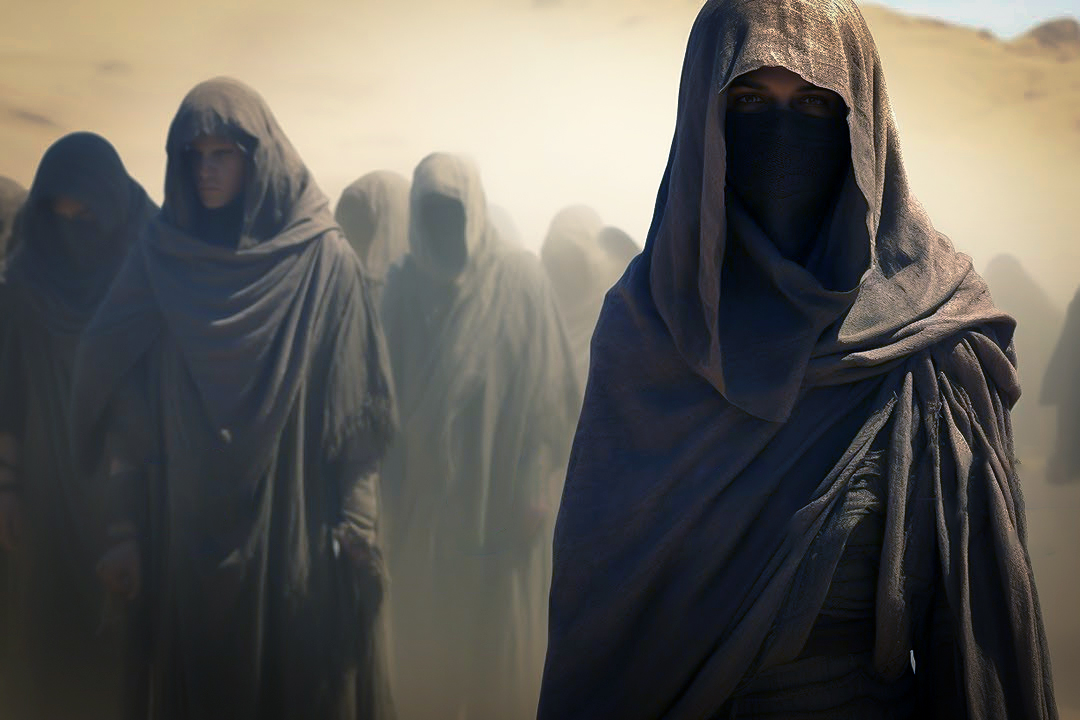
Fremen
- Stilgar – Naib of the sietch that shelters Paul and Jessica; loyal, pragmatic leader.
- Chani (Chani Kynes) – Daughter of Liet-Kynes; becomes Paul’s companion and love interest, fulfilling his earlier visions.
- Liet-Kynes (Pardot’s son) – Imperial Planetologist, secretly a Fremen leader. He dies in the desert early in Part II.
- Harah – Fremen woman briefly pledged to Paul after a ritual duel, later caretaker figure.
- Jamis – Fremen who challenges Paul; killed in ritual combat. His death becomes Paul’s rite of passage.
- Fremen tribespeople (unnamed collectively) – Warriors, women, and children of Stilgar’s sietch, who receive Paul and Jessica.
House Harkonnen / Imperial Agents
- Baron Vladimir Harkonnen – Continues plotting on Giedi Prime; now consolidating control of Arrakis after the fall of House Atreides.
- Glossu “Beast” Rabban – Installed by the Baron as governor of Arrakis to rule with brutality and fear.
- Feyd-Rautha – Mentioned in Baron’s plotting as his heir.
- Piter de Vries – Dead by Part II, though referenced.
- Padishah Emperor Shaddam IV – Mentioned more strongly now, as the unseen hand that enabled Harkonnen’s ambush.
- Count Hasimir Fenring – Reappears in political discussions with the Baron and Emperor’s court.
Bene Gesserit
- Reverend Mother Gaius Helen Mohiam – Recalled in Jessica’s thoughts, and referenced in Bene Gesserit responses to the Atreides crisis.
- The Bene Gesserit Sisterhood – In the background, disturbed at Jessica’s choices and Paul’s survival.
Places
Arrakis Locations
- Arrakeen – The city sacked in Part I, now firmly under Harkonnen control.
- Carthag – Reinstated as the Harkonnen capital on Arrakis.
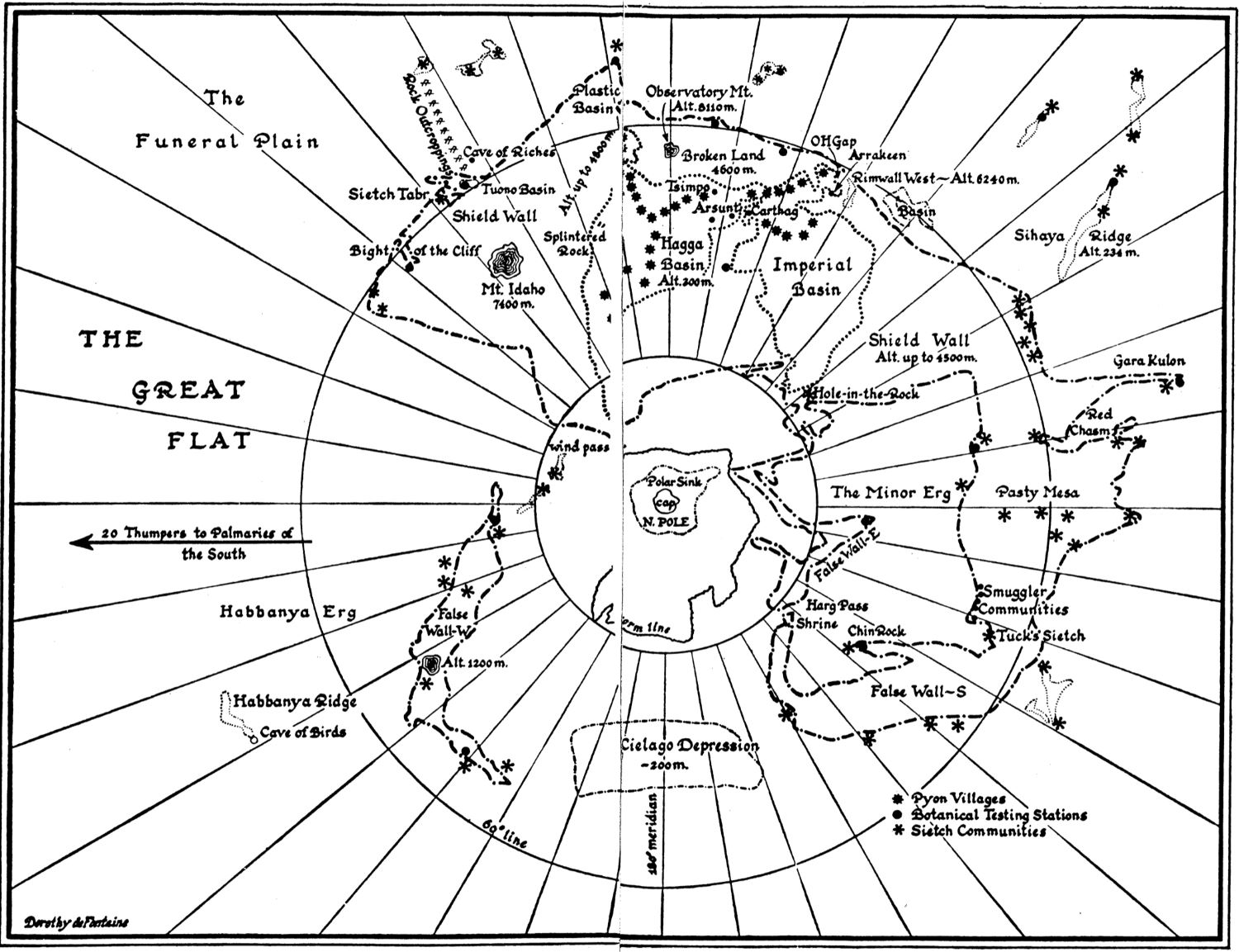
- Funeral Plain – Where Paul and Jessica first join Stilgar’s band after Duke Leto’s fall.
- The Deep Desert / Sietch Tabr – Fremen stronghold where Paul and Jessica find refuge.
- The Desert Cave / Water Storage Chambers – Scene of rituals, including Jessica’s Reverend Mother transformation.
- Sandworm Territories – Expanding presence in Part II as Paul and Fremen adapt to desert life.
Other Planets / Imperial Settings
- Giedi Prime – Harkonnen homeworld, where political scheming continues.
- Kaitain – Imperial seat of power; referenced in political calculations between the Emperor and Baron.
Book 3: THE PROPHET
The final part, THE PROPHET, delivers the culmination of the previous sections. Paul, now firmly established as the leader of the Fremen, begins executing a plan to overthrow both the Harkonnens and the Emperor. The desert, once a hostile obstacle, has become his strategic ally. Fremen forces, trained for survival in the harshest conditions, are unmatched in mobility and endurance. The massive sandworms, once feared, are now weapons of war under Fremen control.
Herbert uses this section to show how power consolidates when political legitimacy, military capability, and economic leverage align. Paul’s prescient visions, increasingly precise, guide his strategy while also revealing the potential dangers of the path ahead. Stilgar becomes more than a military subordinate—he is the bridge between Paul’s leadership and the Fremen’s traditions. Chani remains central as both partner and advisor, grounding Paul’s ambition in personal loyalty. Feyd-Rautha reappears as the Harkonnen challenger, but his defeat in single combat serves more as a symbolic close to the old rivalry than as the climax of the novel.
The true climax is Paul’s confrontation with the Emperor. By threatening to destroy the spice, Paul forces Shaddam IV into a position where surrender is the only rational choice. This victory is decisive but not without cost. Herbert closes the novel with the awareness that Paul’s rise to power will ignite forces he cannot fully control—a thread that will carry into the sequels.
Scope
Part III is the culmination of prophecy and politics. It shifts from survival and initiation (Part II) to apocalyptic victory and imperial confrontation. The key people are Paul, Chani, Stilgar, Alia, the Emperor, and Feyd—each representing one strand of the novel’s great conflict: prophecy, love, loyalty, birthright, empire, and vengeance. The places narrow mainly to Arrakeen and the Shield Wall, symbols of the fate of Arrakis itself. By the end, Paul has become Emperor not merely by force, but by the inevitability of prophecy fulfilled.
People
House Atreides (Fulfillment of the Line)
- Paul Atreides (Muad’Dib) – Fully recognized as the leader of the Fremen and the messianic figure of their prophecy; launches the final war to seize Arrakis and confront the Emperor.
- Lady Jessica – Now the Fremen Reverend Mother; continues to guide Paul and safeguard the Bene Gesserit legacy through Alia.
- Alia Atreides – Paul’s younger sister, born with full consciousness as a result of Jessica’s spice agony. Plays a decisive role in the climax against Baron Harkonnen.
Fremen
- Stilgar – Paul’s chief ally, Naib of Sietch Tabr, and trusted war leader.
- Chani – Paul’s beloved and companion, mother of his first child (Leto II, who dies in infancy). She strengthens Paul personally and prophetically.
- Harah – Still present in Paul’s household; less prominent in the closing chapters.
- Korba (the Panegyrist) – A Fremen figure emerging as a religious zealot around Paul.
- Other Fremen Fedaykin – The elite fighters who form Paul’s shock troops in the desert jihad.
Imperial & Harkonnen
- Padishah Emperor Shaddam Corrino IV – Brought personally to Arrakis by the Guild and Sardaukar; directly confronted by Paul at the climax.
- Princess Irulan – Eldest daughter of Shaddam IV; given in political marriage to Paul at the close of the novel, though his heart remains with Chani.
- Baron Vladimir Harkonnen – Finally meets his end on Arrakis through Alia’s hand.
- Glossu “Beast” Rabban – Overwhelmed by Paul’s Fremen victories; his brutality fails to hold Arrakis.
- Feyd-Rautha Harkonnen – Brought to the Emperor’s side as the last hope of the Harkonnen line; faces Paul in single combat and is killed.
- Count Hasimir Fenring – Present in the Emperor’s retinue; a near-equal to Paul in potential but refuses to assassinate him.
- Reverend Mother Gaius Helen Mohiam – Also present with the Emperor; attempts to control Paul through Bene Gesserit political maneuvering.
Other Powers
- Spacing Guild Representatives – Their Navigators and envoys bring the Emperor to Arrakis and are forced to bargain with Paul once he threatens the spice monopoly.
Places
Arrakis Locations
- Sietch Tabr – Paul’s home base among the Fremen; the stronghold of his leadership.
- Deep Desert – Where Paul trains Fremen forces and develops spice-based prescience.
- Arrakeen – Becomes the battleground for Paul’s final assault; the city where the climactic confrontation with the Emperor unfolds.
- Shield Wall – Natural rock formation protecting Arrakeen; destroyed by Paul’s forces, allowing a sandstorm to overrun Sardaukar positions.
- Funeral Plain & Southern Wastes – Broader battle areas for the Fremen jihad.
- Carthag – Harkonnen city, ultimately irrelevant after Paul consolidates victory.
Other Planets / Seats of Power
- Kaitain – Imperial capital, the courtly world Shaddam leaves to deal with Paul. (Referenced, not visited.)
- Giedi Prime – Harkonnen homeworld, still referenced in terms of inheritance (through Feyd).
Conclusion
Reading Dune to its end, I was left with the sense that Herbert laid bare how civilizations rise and collapse when politics and religion are divorced from ultimate truth. Arrakis becomes a mirror of humanity’s long struggle: the lust for power, the manipulation of faith, and the frailty of empires when they exalt themselves. The Bene Gesserit imagine they can control prophecy, the Emperor thinks he can command loyalty through force, and Paul himself stands on the edge of becoming a figure of worship who cannot contain the storm he unleashes. In every case, the absence of submission to divine truth leaves their power empty and their victories poisoned.
The conclusion Herbert gives us is not one of peace, but of fragile power seized through force and sealed by political convenience. Paul may have taken the Emperor captive and secured the throne, but the cost is the unleashing of a religious war that cannot be restrained. The Fremen victory is quickly turned into empire, and prophecy becomes a tool of conquest. What Herbert shows is that without grounding in divine truth, even the most heroic figure is bent into the shape of tyranny. This is not triumph, but tragedy veiled as destiny.
In that way, Dune is a warning that speaks directly to the spirit of modernity. Just as Paul becomes the center of messianic hope divorced from revelation, so modern liberalism elevates man, culture, and ideology above God’s immutable authority and power. When politics dresses itself in the garments of faith, or when religion surrenders itself to the shifting ambitions of the age, destruction follows. The book makes plain that zeal without truth is dangerous; it consumes nations, just as the jihad of Paul consumes Arrakis and the known universe.
This is the great error of our time. Modernity imagines it can command history, just as Paul imagined he could command the jihad, yet both end in forces beyond their control. Liberalism in particular takes human will and names it progress, while attempting to unseat the place of God’s revelation quietly. Dune, though a work of fiction, shows the futility of that path. Thrones can be won, institutions built, and ideologies enthroned, but without the truth of God as their foundation, they collapse into misery and oppression. The true contrast is clear: kingdoms of men rise and fall, but the kingdom of Christ remains unshaken, because it alone rests upon eternal truth.


