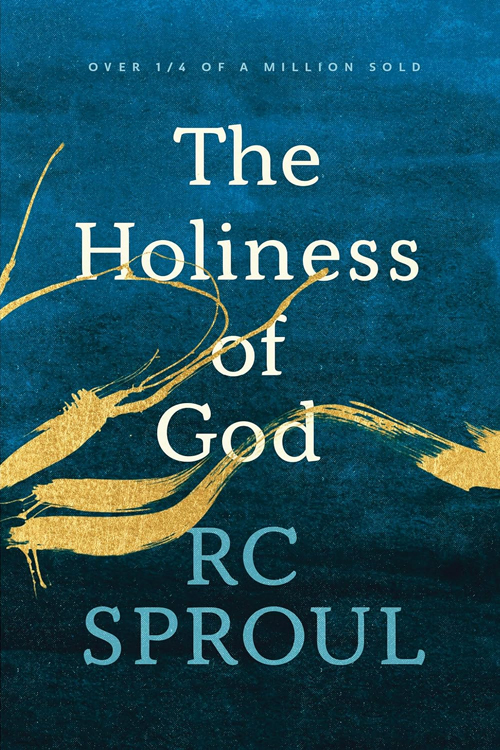
Having today completed The Holiness of God by R. C. Sproul (ISBN: 978-0842314985), it becomes clear that the book unfolds according to Sproul’s Reformational approach to Scripture. Rather than presenting holiness through abstract definition, he develops the theme through a series of biblical episodes examined through his exegetical lens. Encounters such as the rich young ruler, the three visitors who appear at Abraham’s camp in Genesis 18, and other scriptural moments are used as illustrative contrasts that reveal how human assumptions about righteousness fail when set against the holiness of God. In this way, the reader is led toward what God has actually disclosed of Himself in Scripture. The volume itself is not structured as a technical or academic study; it contains only limited endnotes and is written for a broad readership. Its aim is to bring readers into clearer contact with the biblical testimony to God’s holiness as Sproul understands and presents it.
Book Review
Since its publication in 1985, The Holiness of God has been widely read and recommended within evangelical and Reformed circles as an introduction to the biblical doctrine of divine holiness. The book emerged from a series of lectures delivered at Ligonier Ministries and was intended to restore a neglected attribute of God to the center of Christian thought and devotion. Sproul argues that modern Christianity often treats God as familiar, manageable, or sentimental, whereas Scripture presents Him as utterly transcendent, morally perfect, and dangerous to approach without mediation. The book’s central burden is therefore not merely doctrinal but corrective: believers must recover the biblical vision of God’s holiness if they are to understand sin, grace, and redemption rightly.
Encounters with Holiness
Sproul begins by grounding his argument in the overwhelming biblical encounters with the divine presence. One of the most significant is the vision of Isaiah in Isaiah 6, where the prophet beholds the Lord enthroned while seraphim cry, “Holy, holy, holy.” Sproul draws careful attention to the effect of that vision upon Isaiah himself. Rather than experiencing comfort, the prophet immediately pronounces a curse upon himself, recognizing that exposure to divine holiness reveals the corruption of human sinfulness. Holiness, in Sproul’s exposition, is not merely one attribute among many but the blazing center of God’s being—an attribute that exposes the immeasurable gulf between Creator and creature.
From this foundation, the book explores how Scripture repeatedly portrays divine holiness as both compelling and terrifying. Sproul turns to the encounter of Moses before the burning bush in the Book of Exodus, where the command to remove sandals signals that ordinary ground has become sacred. The ground itself possesses no inherent sanctity; it is rendered holy because the presence of God has set it apart. Through such scenes, Sproul shows that holiness exerts a kind of moral gravity around the presence of God. Those who approach that presence must do so with reverence, humility, and obedience.
These biblical episodes establish the pattern that runs throughout Sproul’s treatment. Whenever human beings encounter the holiness of God, the result is not casual familiarity but profound self-awareness. Prophets, priests, and ordinary individuals alike respond with fear, repentance, and a renewed sense of the distance between divine purity and human corruption. Sproul’s purpose in drawing together these accounts is to restore a sense of awe that has largely faded from contemporary religious sensibilities.
Crisis of Righteousness
The book then turns from biblical narrative to historical experience in its treatment of Martin Luther. Luther’s spiritual struggle serves as a vivid illustration of what occurs when the doctrine of divine holiness is taken with full seriousness. As a young Augustinian monk, Luther became profoundly troubled by the realization that God’s righteousness demands perfect obedience. Determined to meet that standard, he devoted himself to confession, penance, fasting, and rigorous spiritual discipline.
Yet these efforts brought him no peace. The more seriously Luther contemplated the holiness of God, the more acutely he perceived the impossibility of satisfying that holiness through human effort. Sproul emphasizes that Luther’s turmoil did not arise from mere psychological scrupulosity but from a sober recognition of the biblical claim that God is perfectly righteous while humanity is fundamentally sinful.
This crisis centered upon Luther’s struggle with the phrase “the righteousness of God” in the Epistle to the Romans 1:17. At first, Luther understood the phrase to refer only to the righteousness by which God judges sinners. If that interpretation were correct, the gospel would offer no relief from the terror of divine judgment. Instead, it would simply announce the standard by which humanity stands condemned.
Sproul recounts Luther’s eventual breakthrough—often described as the “tower experience”—in which Luther came to see that the righteousness revealed in the gospel is not merely the righteousness God requires but the righteousness God provides through faith in Christ. What once appeared as a message of condemnation became a proclamation of grace. The holiness that exposes sin becomes, through Christ, the holiness that justifies the believer.
Strange Fire & Presumption
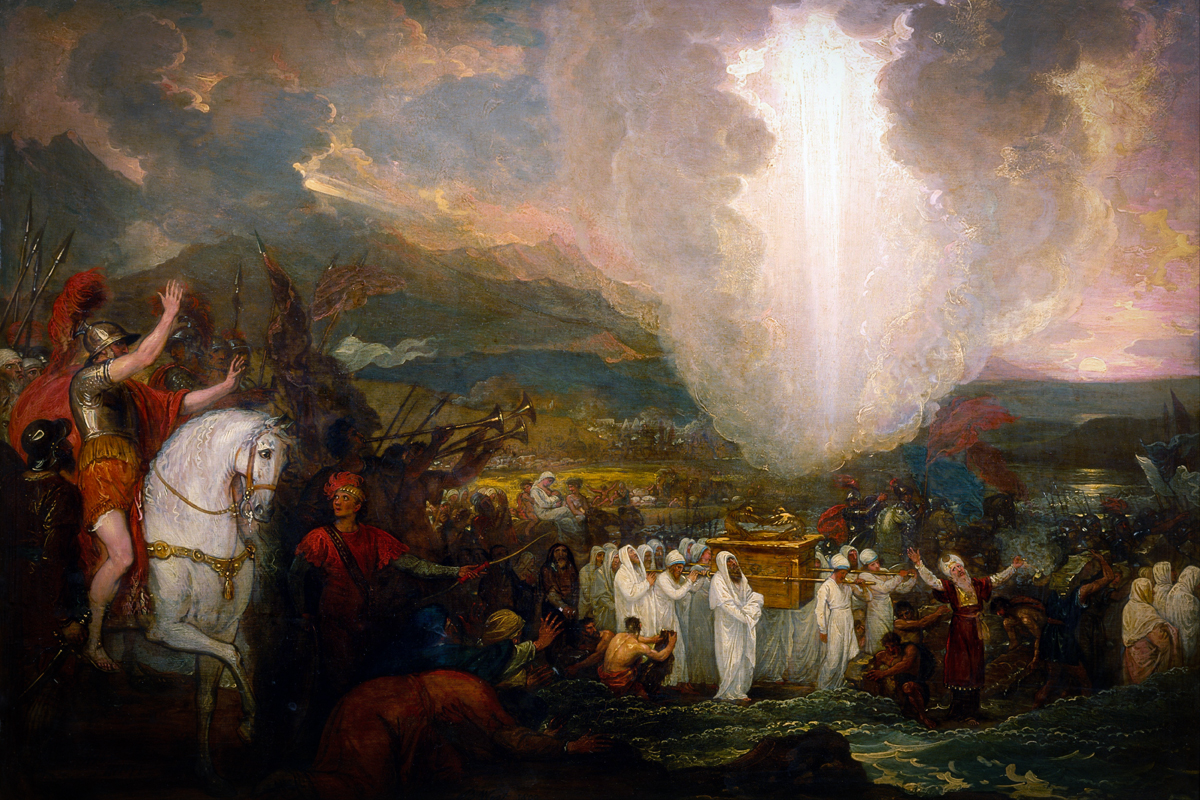
One of the most striking moments in Sproul’s argument appears in his treatment of the death of Uzzah in the Second Book of Samuel 6. As the Ark of the Covenant was being transported, the oxen stumbled, and the Ark appeared in danger of falling. Uzzah instinctively reached out to steady it and was struck dead. Sproul notes that many readers instinctively recoil at this account, judging the punishment disproportionate to the offense.
For Sproul, however, this reaction reveals how profoundly modern sensibilities underestimate the holiness of God. The deeper problem was not merely that Uzzah touched the Ark. The Ark had already been placed on a cart in violation of God’s explicit instructions that it be carried by Levites using poles. The entire situation arose from human presumption—the assumption that divine commands could be adjusted according to human judgment.
Sproul’s interpretation presses the reader to reconsider the assumptions underlying the narrative. In attempting to prevent the Ark from touching the ground, Uzzah implicitly assumed that his own hands were less defiling than the earth itself. The episode thus becomes a powerful illustration of how lightly human beings often regard their own sinfulness when compared with the holiness of God.
Through this account, Sproul draws out a broader principle. Obedience to God cannot be governed merely by good intentions. Divine holiness demands careful submission to the commands God has revealed. What appears harmless or practical from a human perspective may nevertheless violate the order God has established.
Holiness and Divine Justice
Sproul further develops the implications of holiness by showing its inseparable connection to divine justice. A perfectly holy God cannot ignore sin or treat evil as a trivial matter. Holiness establishes the moral structure of the universe, ensuring that wrongdoing cannot remain indefinitely unresolved.
This line of reasoning leads naturally to the question of redemption. If God is perfectly holy and humanity is irreversibly sinful, reconciliation seems impossible. Sproul, therefore, turns to the significance of the cross, where divine justice and mercy converge. The judgment demanded by holiness falls upon Christ, while the righteousness required by holiness is granted to those who trust in Him.
Throughout the book, Sproul repeatedly returns to the contrast between the biblical portrayal of God and the softened conceptions often found in modern religious culture. Contemporary spirituality frequently prefers a God who is approachable without reverence and forgiving without justice. Sproul’s work challenges that assumption by restoring holiness to its central place within the character of God.
Rather than presenting holiness as an abstract theological attribute, Sproul demonstrates how it shapes the entire drama of redemption—from prophetic encounters with divine glory to the crisis that ignited the Protestant Reformation. The result is a portrait of God whose holiness both exposes human sin and magnifies the wonder of divine grace.
The change from the chapters on holiness and divine justice to the section discussing the believer as a saint represents a deliberate theological transition. Sproul first establishes the overwhelming reality of God’s holiness and the unavoidable demands of His justice. Only after the reader has confronted the seriousness of divine holiness does he turn to the question of how human beings—who are sinful—can nevertheless belong to God and live as His people.
The earlier chapters emphasize that God’s holiness is not merely an abstract attribute but the defining quality of His character. God is morally perfect, utterly set apart from sin, and therefore perfectly just in His judgments. Because of this holiness, divine justice cannot ignore sin. Sproul illustrates this severity through biblical episodes, such as the death of Uzzah as covered above (2 Sam. 6:6–7), which shows that approaching God casually or presumptuously is incompatible with His holiness. These chapters establish the central tension of the book: if God is truly holy and just, then human sin places humanity in a perilous position before Him.
Once this tension is firmly established, Sproul transitions to the question of how sinners can stand before such a God. The discussion shifts from divine attributes to the gospel itself. The reader is introduced to the doctrine of justification—the means by which sinners are declared righteous through the righteousness of Christ. This provides the bridge between divine holiness and the believer’s standing before God. If God were not holy, justification would not be necessary; if justification were not provided, the holiness of God would remain an insurmountable barrier.
From this point, Sproul introduces the biblical concept of the saint. A saint, in the New Testament sense, is not a spiritually elite person but an ordinary believer who has been set apart by God and declared righteous through faith in Christ. Though still imperfect, the believer is counted righteous because the righteousness of Christ is credited to them. The term therefore reflects a new standing before God rather than a completed moral state.
The transition also introduces the theme of sanctification, the process by which those who have been justified are gradually transformed into lives that reflect God’s holiness. Sproul emphasizes that the saint’s life involves active growth through the renewal of the mind and disciplined engagement with the Word of God (Rom. 12:2). In this way, the believer’s daily conduct begins to mirror the holiness of the God who has called them.
Thus, the structure of the book moves from God’s holiness to God’s justice, to the gospel provision that allows sinners to stand before God, and finally to the life of the saint who has been justified and is being sanctified. The discussion of sainthood, therefore, functions as the practical outworking of the earlier theological foundations: once the holiness and justice of God are understood, the wonder of justification and the calling to holy living become clear.
To Be a Saint
A saint, in the biblical sense, is an ordinary believer who has been set apart by God and declared righteous through faith in Christ. Scripture teaches that God “justifies the ungodly” and counts righteousness to the one who believes (Rom. 4:5), not because of personal merit but because the righteousness of Christ is credited to the believer (2 Cor. 5:21; Phil. 3:9). At the same time, believers are not yet morally perfected, for “if we say we have no sin, we deceive ourselves” (1 John 1:8). Yet those whom God has justified are also being transformed, as Scripture says believers are “being transformed into the same image from one degree of glory to another” (2 Cor. 3:18). In this way the saint stands before God justified through the righteousness of Christ while continuing to be renewed and sanctified in daily life.
1. The Biblical Meaning of “Saint.”
In the New Testament, the word saint does not describe an unusually holy or spiritually elite person. It simply means holy one—someone set apart for God. Early Christians were called saints not because they had achieved moral perfection but because they belonged to God and had been separated from the world. The title describes their new standing before God rather than the completion of their spiritual growth. The apostle Paul addresses ordinary believers this way when writing to the church in Rome (Rom. 1:7) and to the church in Corinth (1 Cor. 1:2), even though the latter letter rebukes them for serious moral failures.
2. Holiness as Separation
When Scripture applies the word holy to God, it refers both to His absolute purity and His complete otherness. The prophetic vision captures this reality when the heavenly beings proclaim, “Holy, holy, holy is the Lord of hosts” (Isa. 6:3). When applied to human beings, however, holiness begins primarily as separation. Believers are holy because they have been set apart by God for His purposes. This calling echoes the language given to Israel: “You shall be holy, for I the Lord your God am holy” (Lev. 19:2).
3. The Calling to Purity
Although holiness begins with separation, it does not end there. Those whom God sets apart are called to pursue purity in their lives. The New Testament urges believers to reflect the character of the God who called them: “As He who called you is holy, you also be holy in all your conduct” (1 Pet. 1:15–16).
4. The Paradox of the Christian Condition
This tension between calling and imperfection is captured in the phrase used by Martin Luther: simul justus et peccator—“at the same time just and sinner.” Scripture acknowledges that believers still sin: “If we say we have no sin, we deceive ourselves” (1 John 1:8). Yet at the same time, the believer stands righteous before God.
5. The Basis of Justification
The reason a saint can be called righteous lies in justification. When a person trusts in Christ, God credits the righteousness of Christ to that believer. As Paul writes, Christ was made sin “so that in Him we might become the righteousness of God” (2 Cor. 5:21).
6. The Legal Standing of the Believer
Sproul describes justification as a legal declaration or accounting transaction. Christ’s righteousness is credited to the believer even though personal sin remains. Paul explains that God “justifies the ungodly” and that righteousness is “counted” to those who believe (Rom. 4:5).
7. The Ongoing Work of Sanctification
Because justification does not instantly transform character, believers enter into a lifelong process of sanctification. Sanctification is the gradual work by which life increasingly reflects the holiness of God. Scripture describes this growth plainly: “This is the will of God, your sanctification” (1 Thess. 4:3).
8. The Renewal of the Mind
Scripture identifies the primary means by which this transformation occurs. Paul writes that believers are transformed through “the renewal of the mind” (Rom. 12:2). The transformed life begins with transformed understanding.
9. Disciplined Education in the Things of God
For Sproul, this renewal requires serious and disciplined Christian education. The mind must be formed through sustained engagement with the Word of God. Scripture itself declares that all Scripture is given by God and equips believers for maturity and good works (2 Tim. 3:16–17).
10. The Daily Standing of the Saint
The saint, therefore, lives within two simultaneous realities. On the one hand, the believer stands justified before God through the righteousness of Christ. On the other hand, the believer is engaged in the ongoing pursuit of holiness through sanctification and the renewal of the mind. Scripture describes this continuing transformation as believers being changed “from one degree of glory to another” (2 Cor. 3:18).
The Walk of the Saint
After establishing the believer’s standing as justified yet still being sanctified, Sproul turns attention to the fruit of the Spirit as the practical outworking of the saint’s life. Scripture teaches that those who belong to Christ are to walk by the Spirit so that their lives increasingly display the character that God produces within them. As Paul writes, “the fruit of the Spirit is love, joy, peace, patience, kindness, goodness, faithfulness, gentleness, self-control” (Gal. 5:22–23). These qualities are not achieved through human effort alone but emerge as the Spirit works within the believer. For the saint, then, the pursuit of holiness takes concrete form in cultivating these virtues, putting to death the works of the flesh while learning to walk in step with the Spirit (Gal. 5:16, 24–25). In this way, the saint’s daily life becomes visible evidence of the inward renewal that God is producing.
The Good, the True, and the Beautiful
Sproul turns from the moral dimension of holiness to the broader philosophical question of how truth, goodness, and beauty ultimately find their source in God. Drawing on a well-known insight associated with Fyodor Dostoevsky—that “if there is no God, then all things are permissible”—Sproul emphasizes that moral order cannot exist independently of the character of God. If there were no transcendent standard beyond human opinion, moral categories such as good and evil would collapse into subjective preference. The holiness of God, therefore, provides the necessary foundation for moral reality itself.
From this foundation, Sproul moves to the nature of truth. He appeals to what philosophers call the correspondence theory of truth, which defines truth as that which corresponds to reality. Yet Sproul notes that the definition becomes unstable when filtered through merely human perception. People disagree because they interpret reality differently. The question inevitably arises: truth as perceived by whom? To resolve this difficulty, Sproul grounds truth in the perfect knowledge of God. Truth, properly understood, is that which corresponds to reality as God perceives it, for God’s perception is flawless and free from distortion. In this way, all genuine truth converges in God, because He alone sees reality exactly as it is.
This perspective leads Sproul to a broader vision in which every sphere of truth ultimately belongs to God. All disciplines—whether moral, intellectual, or aesthetic—find their coherence in Him. What appears fragmented or partial in human knowledge is unified in the divine mind. At the summit of reality, truth converges because it originates from the same source. Every true insight, wherever it is discovered, points beyond itself to the God who is the author of truth.
Sproul then extends this reasoning to the realm of beauty. Just as truth and goodness are grounded in God’s character, so beauty also reflects the nature of God. God Himself is the source of all order, harmony, and proportion. His being contains no distortion, contradiction, or disorder. The works of His hands form a cosmos, not chaos. Chaos is characterized by confusion and irrationality, but the beauty of God reflects perfect order and coherence. Wherever beauty is perceived in creation or art, it bears witness to the underlying rationality and harmony that originate in the Creator.
In exploring the nature of beauty, Sproul observes that beauty engages more than intellectual reasoning. He notes that the experience of beauty often involves what might be called a transrational dimension—not irrational, but extending beyond the limits of analytical thought. When people encounter profound works of art, music, or natural splendor, they experience something that moves the soul as well as the mind. Sproul refers to the insight of Edgar Allan Poe, who recognized that beauty carries a sense of the sublime, a dimension that awakens deep emotional and spiritual response.
Thus beauty becomes another avenue through which the human mind is directed toward God. The appreciation of beauty is not merely aesthetic enjoyment but a participation in a deeper recognition of divine order. When beauty is perceived rightly, it becomes a signpost pointing beyond itself to its ultimate source. To cultivate a love for the beautiful is, therefore, in Sproul’s view, to orient oneself toward the Creator whose own being is the perfect unity of truth, goodness, and beauty.
Holy Time and Space
In the chapter devoted to holy time and space, Sproul returns to one of the recurring themes that holiness is fundamentally about separation and consecration. Just as people can be set apart as holy, Scripture also speaks of certain places and times as holy when they are claimed by God for His purposes. Holiness in this sense does not arise from the inherent quality of the object itself, but from the presence or appointment of God.
Sproul illustrates this principle with the familiar scene of Moses at the burning bush. When Moses approaches the bush, he is commanded to remove his sandals because the ground on which he stands has become holy (Ex. 3:5). The ground itself possessed no intrinsic sanctity. It became holy because God’s presence had set it apart. This episode demonstrates that holiness is not a mystical property embedded in matter but a relational reality created by God’s presence.
The same principle appears throughout the Old Testament in the structure of Israel’s worship. The tabernacle and later the temple contained progressively restricted spaces, culminating in the Holy of Holies, where the Ark of the Covenant stood as the symbolic throne of God (Ex. 26:33–34). Access to this inner sanctuary was strictly limited because the holiness of God required reverence and a careful approach. The spatial arrangement of the sanctuary was therefore a visible representation of the distance between divine holiness and human sinfulness.
Sproul also observes that Scripture treats time in a similar way. Certain days are designated as holy because God has set them apart. The clearest example is the Sabbath, which God blessed and sanctified at creation (Gen. 2:3) and later commanded Israel to observe (Ex. 20:8–11). Like holy space, holy time does not possess intrinsic sacredness. A day becomes holy because God appoints it as such and calls His people to honor it.
This concept reveals an important aspect of biblical worship. God determines how and when He is to be approached. Holiness is not something human beings can manufacture through their own preferences or creativity. Instead, holiness is defined by God’s own acts of consecration. Whether in sacred places or sacred times, the pattern of worship reflects God’s initiative rather than human invention.
Sproul notes that these categories of holy space and holy time ultimately direct attention to the presence of God Himself. The tabernacle, the temple, and the sacred calendar all served as signs pointing toward God’s dwelling among His people. Yet these institutions were never ends in themselves. They functioned as shadows that pointed beyond themselves to a deeper reality.
Within the broader argument of the book, this chapter reinforces the central theme that holiness belongs to God alone and extends outward wherever God chooses to place His presence or authority. Sacred places, sacred times, and even sacred people derive their holiness from Him. The concept therefore strengthens the reader’s understanding that holiness is not an abstract moral quality but a relational reality grounded in the character and presence of God.
By examining how Scripture treats both space and time as capable of consecration, Sproul shows that the holiness of God touches every dimension of life. The same God who declares places holy and appoints sacred times also calls His people to live as saints—set apart for His purposes and increasingly shaped by His holiness.
Conclusion
Taken together, The Holiness of God is ultimately an attempt to recover a vision of God that Scripture presents but modern sensibilities often obscure. Throughout the book, Sproul leads the reader through the overwhelming reality of divine holiness, the severity of God’s justice, the necessity of justification through Christ, and the calling of believers to live as saints who are continually being sanctified. By exploring biblical encounters with God, the paradox of justification, the renewal of the mind, the fruit of the Spirit, and even the concepts of holy time and space, Sproul consistently directs attention back to the same central truth: God is utterly holy, and all of reality—truth, goodness, beauty, justice, and redemption—finds its coherence in Him. The book’s enduring message is that only when the holiness of God is rightly understood can the depth of human sin, the necessity of grace, and the wonder of the gospel be fully appreciated.