When I first started reading Scripture seriously, my world was shaped mostly by the NASB, particularly the 1977 edition. I didn’t sit down with a plan to go from Genesis to Revelation in one sweep. Instead, I bounced around by sections — a prophet here, a gospel there, some poetry, a chunk of the law. It was patchwork, but those readings were formative. They gave me something to wrestle with spiritually, even if they were also tied up with plenty of conversations, questions, and, to be honest, misunderstandings.
For years, I didn’t bother with other critical text versions like the NIV or RSV. They were around, sure, but I wasn’t reaching for them. Once in a while, I dipped into the KJV, though I had no sense of its background. I didn’t know it was loaded with history, or that it carried centuries of Protestant, Puritan, and Reformed influence. At the time, it was just another Bible with slightly strange English.
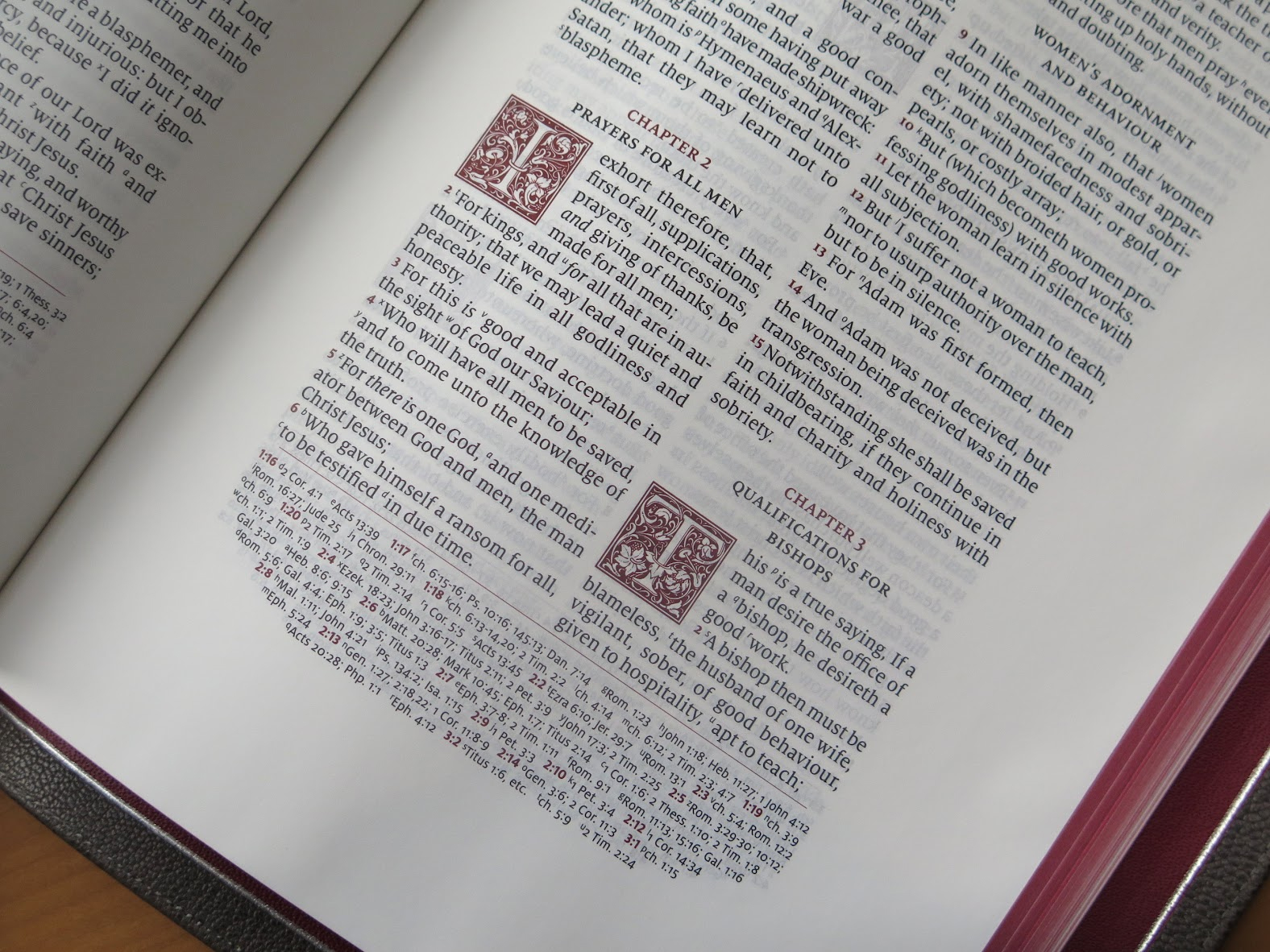
The Bibles I used through those years are still with me, full of markings and annotations. They serve as time capsules, each margin note a little window into what I thought I understood then. Looking back, those readings were surface-level — I skimmed across ideas with an interpretive simplicity that felt enough at the time. Of course, that meant plenty of errors in understanding, but also room to grow.
My church background didn’t give me a Reformation framework. I came up through the Church of the Nazarene — a Wesleyan-Arminian world — and then into a Baptist church that had no real Reformational roots. From the start, my reading was driven less by tradition and more by a plain evangelical impulse: read the Bible, figure out what it means, and live like a disciple. That was the mindset, even if it was narrow.
Along the way, I picked up some personalized Bibles. My pastor gave me a Ryrie Study Bible in high school, not long after he baptized me. A year later, in 1982, I got a KJV Bible as a birthday gift, just after coming to faith in the eleventh grade. Those two carried me a long way — the Ryrie stayed in heavy use all through my military years until I eventually shifted to the International Inductive Study Bible.
Over time, though, I came to distrust having someone’s name stamped across the cover. Whether it was the MacArthur Bible, Stanley Bible, or Ryrie Bible, I started steering clear. Even “King James,” if you think about it, is just another individual’s name fronting a translation. These days, I’d rather see a translation identified by its language base or tradition — English Standard, Greek Septuagint, Byzantine Majority — instead of by a person or even a national identity. “The Holy Bible” with a clear note about its translation type is enough.
Life carried me through long stretches of work where I was only keeping up light contact with Scripture. But eventually I settled into the ESV as my primary reading Bible. And today, after widening my scope through theological study, I’ve landed in a different place: I give the highest weight to the Majority Text and the Septuagint. In practice, that means I want to read what the apostles themselves read — the Old Testament from the Greek LXX, the New Testament from the Greek manuscripts of their own time.
It wasn’t until just before finishing my theological degree that this whole process really expanded. I began moving beyond the handful of translations I knew and dug into the manuscript traditions behind them. That was when my reading turned into something broader, something richer — not just bouncing between genres or paging through one familiar translation, but learning to navigate the wide river of Scripture as it’s come down to us across languages, traditions, and centuries.
And that’s the winding path of my Bible reading life — from NASB ’77 margins in my youth, through the Ryrie and KJV gifts, into long seasons with the ESV, and now down to the roots of the text itself. Each stage has been more than just an academic exercise; it has been a drawing closer to the Lord Jesus Christ. The notes and highlights I left behind remind me less of my own insight and more of His patience in guiding me. The longer I’ve stayed with the Word, the more I’ve discovered that Scripture is not merely about comprehension but communion — growing in affection for Christ, loving Him more deeply as He reveals Himself in every page.
If I had to sum it up for anyone beginning their own journey, it would be this: don’t worry if your first steps feel shallow or uneven. Start where you are, and stay with the Word. Over time, the text will lead you past the margins and into the heart of Christ Himself. What began for me as scattered readings in one translation has become a lifelong encounter with the living Lord. The joy isn’t just in finishing another Bible, but in learning to love the One who speaks through it, again and again.
King James Bible (KJV)
When I turned eighteen, stepping into adulthood, I was given a copy of the King James Version, Thomas Nelson 1972 edition. This Bible carried a certain weight to it — not just because of its black leather cover and gold lettering, but because of what it represented at that point in life: a gift of Scripture placed in my hands as I crossed the threshold from youth into responsibility. The language of the KJV, lofty and archaic as it seemed to me then, forced a kind of reverence. Even when I stumbled over “thees” and “thous,” I couldn’t shake the sense that I was standing on old, sacred ground, reading a text that had shaped generations before me.
Over time, I came to see this particular Bible not just as a book, but as a marker of my spiritual beginnings. Its margins are tied to the earliest days of my faith — simple underlines, early attempts at notes, and the wonder of first discovery. Looking back, I realize how much it influenced my affection for the Word. This edition of the KJV wasn’t chosen for its study notes or readability; it was given as a witness, a statement that the Scriptures should anchor me in life. Even though I’ve gone on to read many translations, this one remains set apart — the Bible of my eighteenth year, reminding me that God’s Word entered my adulthood not as an abstract text, but as a living gift.
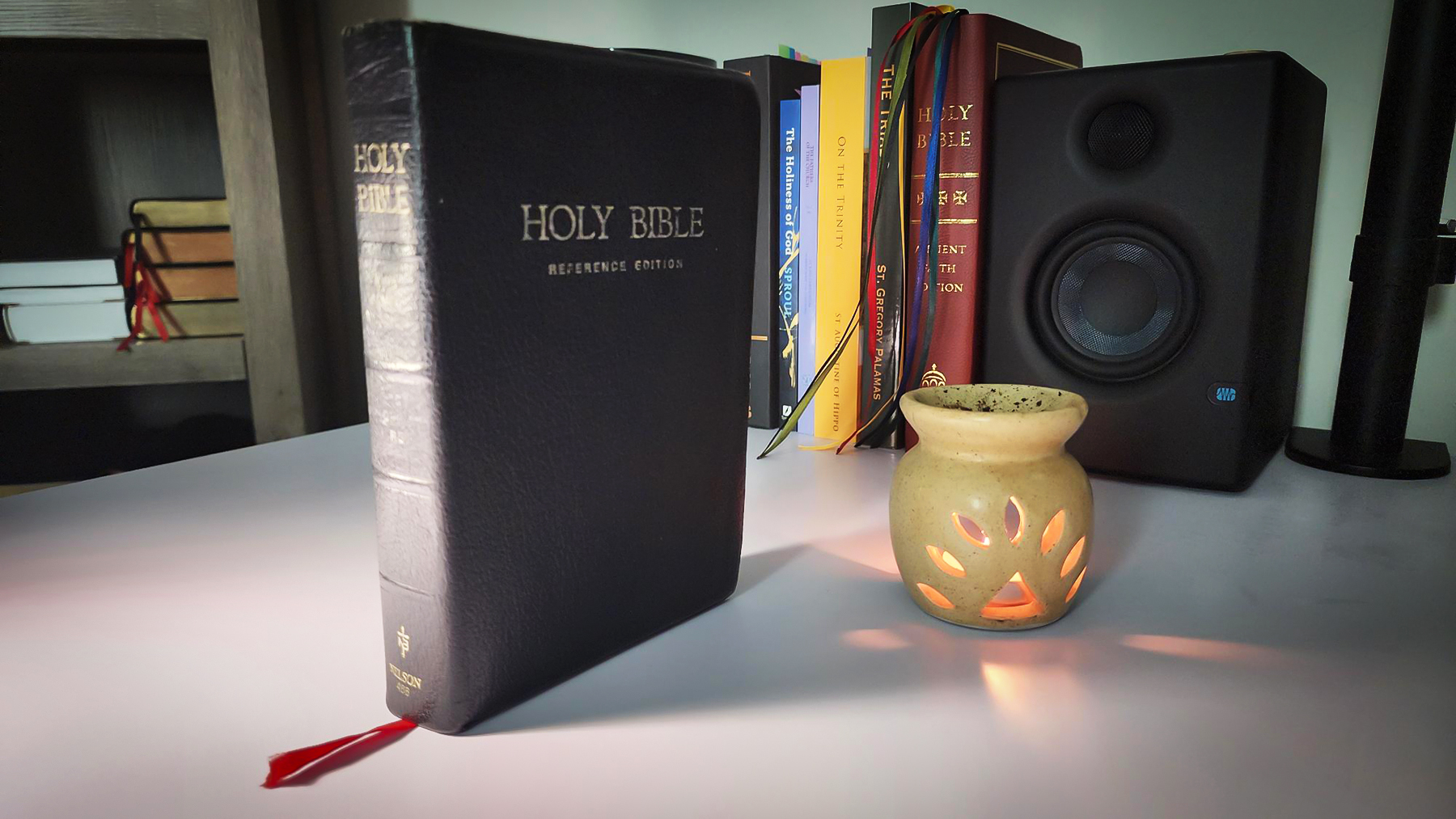
This bible is a classic example of mid-20th-century Bible publishing. Bound in black leatherette with gold lettering on the spine and cover, it carries the familiar gravitas of the KJV tradition. The text is laid out in a clean two-column format with cross-references, offering both readability and study utility without overwhelming notes. Like most Nelson Bibles of that period, the paper is thin but durable, designed to withstand years of page-turning and light annotation, with red-letter text for the words of Christ. Its size strikes a balance between being portable and substantial — the kind of Bible meant to be carried to church as well as kept at home for daily reading.
What sets this edition apart is its sense of timelessness. The Thomas Nelson printing holds close to the traditional 1769 Oxford text of the KJV, with familiar spellings and phrasing that readers across generations would recognize. There are no modern editorial intrusions, just the translation itself, surrounded by references to guide deeper study. For someone receiving this Bible at the threshold of adulthood, it was more than just a book — it was a trusted edition of a text that has stood unchanged for centuries, presented in a form sturdy enough to last through the years. Even today, it holds its place as a reliable, reverent copy of the King James Bible, a reminder of both continuity and permanence in Scripture.
The Ryrie Study Bible (NASB)
The NASB Ryrie Study Bible, 1976 copyright by Moody Press, became my constant companion during my military years. Its brown textured cover and sturdy build gave it the feel of something meant to be used, carried, and relied upon day after day. The layout paired the New American Standard Bible’s clean double-column text with Ryrie’s notes beneath, so that the words of Scripture stood clear while interpretive help was always close at hand. It wasn’t ornate or ceremonial — it was practical, steady, and built for study and use in the everyday.
What I appreciated most about this edition was its study apparatus. Each book opened with a concise introduction, the notes pointed out key theological details, and Ryrie included doctrinal summaries that connected the pieces into a larger picture. His dispensational perspective was evident, but what struck me then was how approachable the notes were. They didn’t overwhelm the text; instead, they gave me a framework to understand how one part of Scripture tied into another. It felt like having a teacher on the page, steady and consistent, guiding me while still letting the Bible itself speak.
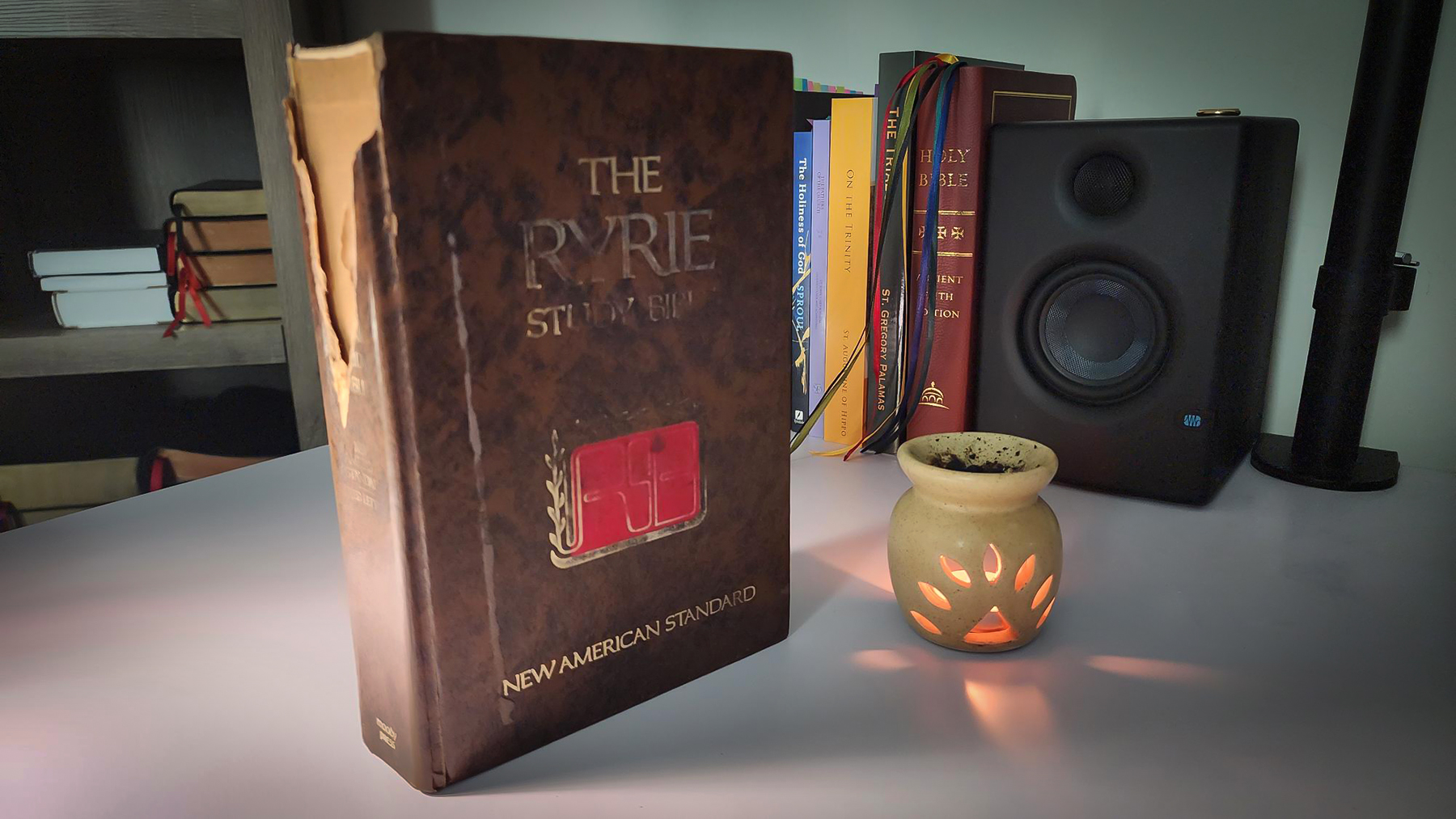
During those years in uniform, this Bible was far more than a study tool; it became the base text of my memory and formation. The NASB’s precision made it ideal for committing verses to heart, and countless passages I can still recall today are in the cadence of this edition. I carried it through transitions, kept it close during quiet moments, and leaned on it in seasons of discipline and duty. Its margins show the marks of those years — early notes, underlines, and reminders that faith was being worked out in the midst of real demands.
Looking back, the 1976 NASB Ryrie Study Bible is both a product of its time and a cornerstone of my spiritual growth. Unlike modern study Bibles overloaded with charts and commentary, this one held to a balance: clear translation, faithful notes, and space for me to engage directly with the text. In the intensity of military life, it was exactly the kind of Bible I needed — reliable, instructive, and rooted in the Word itself. Even now, it remains more than just a book on a shelf; it’s a witness to those formative years, when Scripture was not only read but lived.
The International Inductive Study Bible (NASB)
The NASB International Inductive Study Bible, copyright 1993 by Harvest House Publishers, became my primary Bible during my college years, picking up where the Ryrie Study Bible had left off in my military days. What stood out about this edition was its unique purpose: it wasn’t just a study Bible with notes at the bottom of the page, but a tool designed to teach me how to study the Scriptures for myself. The NASB text, already familiar to me from years of memorization and use, gave continuity and stability, while the inductive method trained me to observe, interpret, and apply the text in a much more deliberate way.
This Bible was structured for participation. Wide margins, helpful charts, and guided outlines invited me to mark key words, underline repeated themes, and trace the flow of argument through entire books. Instead of passively receiving a commentator’s conclusions, I was asked to slow down, to notice details, and to wrestle directly with what the text was saying. That process deepened my confidence in Scripture, showing me that careful observation could yield clarity and insight without having to lean solely on outside helps.
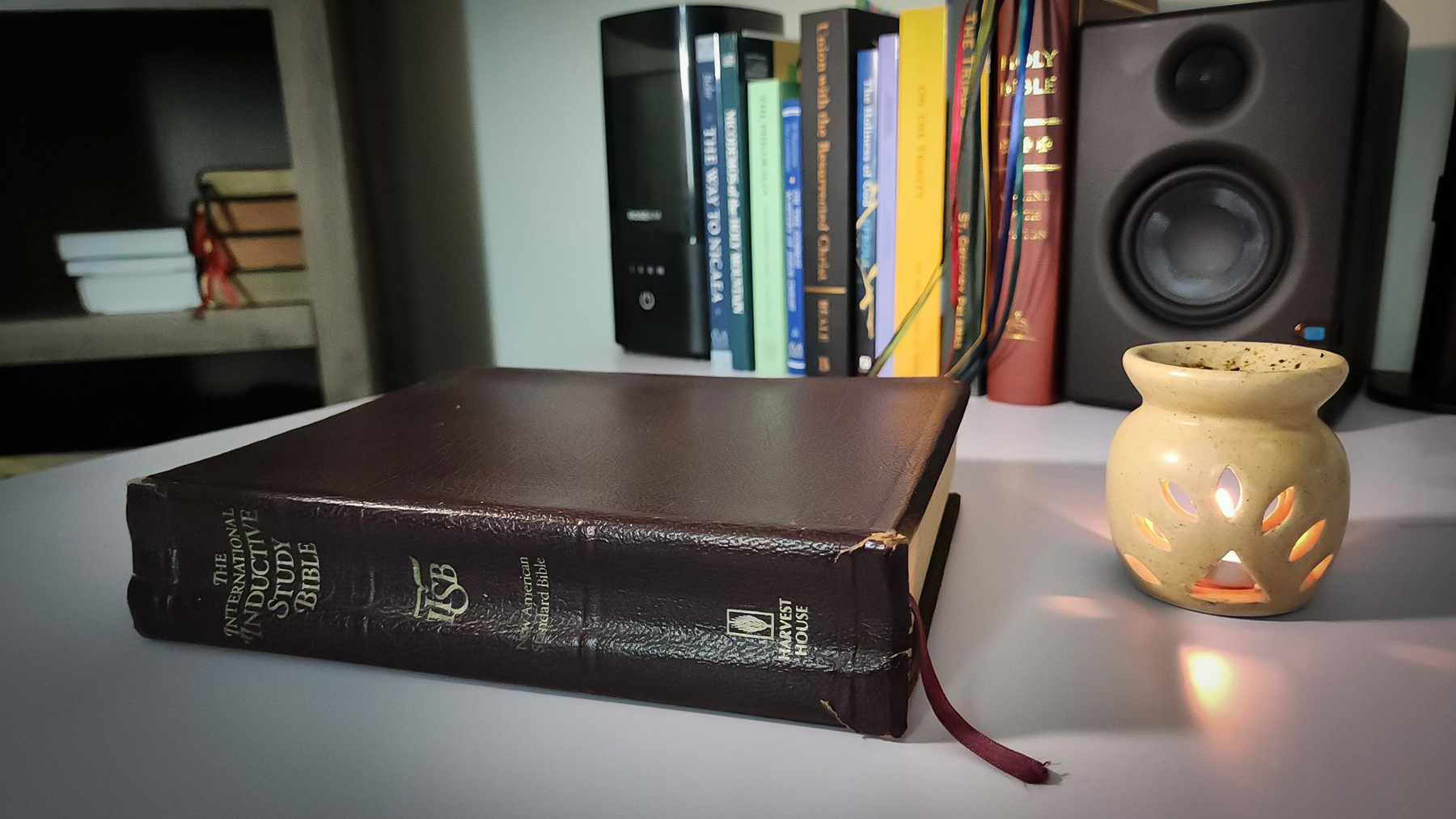
In practice, this Bible became my training ground for disciplined reading. The NASB’s precision provided the framework for accurate study, and the inductive format helped me take the verses I had already memorized in the earlier years and now place them in their broader biblical context. It was the bridge between raw memorization and theological understanding, a place where faith and intellect began to meet in structured devotion. During long hours of study in those college years, this Bible kept me grounded, pressing me not just to gather knowledge but to let the Word speak freshly and personally.
Looking back, the 1993 NASB International Inductive Study Bible was more than a continuation of my time in the NASB — it was a step forward in maturity. Where the Ryrie Bible gave me doctrinal guardrails, the Inductive Bible gave me tools to build my own framework of study, always returning to the text itself. Its durability shows the years of heavy use, and its margins bear the marks of learning to listen more carefully to the voice of Scripture. To this day, I see it as one of the most formative Bibles of my life — not because it told me what to believe, but because it taught me how to read.
Classic Thinline (ESV)
The ESV Classic Thinline Edition, copyright 2002 by Crossway and using the 2007 text, became my Bible of choice in the years following my MBA. Slim, lightweight, and bound in a simple brown cover, it had the portability and durability to go wherever I did. After years of carrying heavier, note-filled study Bibles, the thinline format felt refreshing — easy to slip into a bag, hold during church, or read late at night without distraction. The format alone encouraged me to focus on the text itself, without the constant pull of notes and cross-references dominating the page.
This edition marked the beginning of my departure from the NASB, which had been my anchor for memorization and study through military and college years. The English Standard Version struck me differently: smoother in cadence, more literary in phrasing, and easier to read aloud. It wasn’t a betrayal of precision — the ESV still carried the weight of formal equivalence — but it opened up the Scriptures in a way that felt more natural, less rigid, and better suited for meditation. That shift signaled a new phase in my reading life, where I began to value readability and continuity alongside precision.
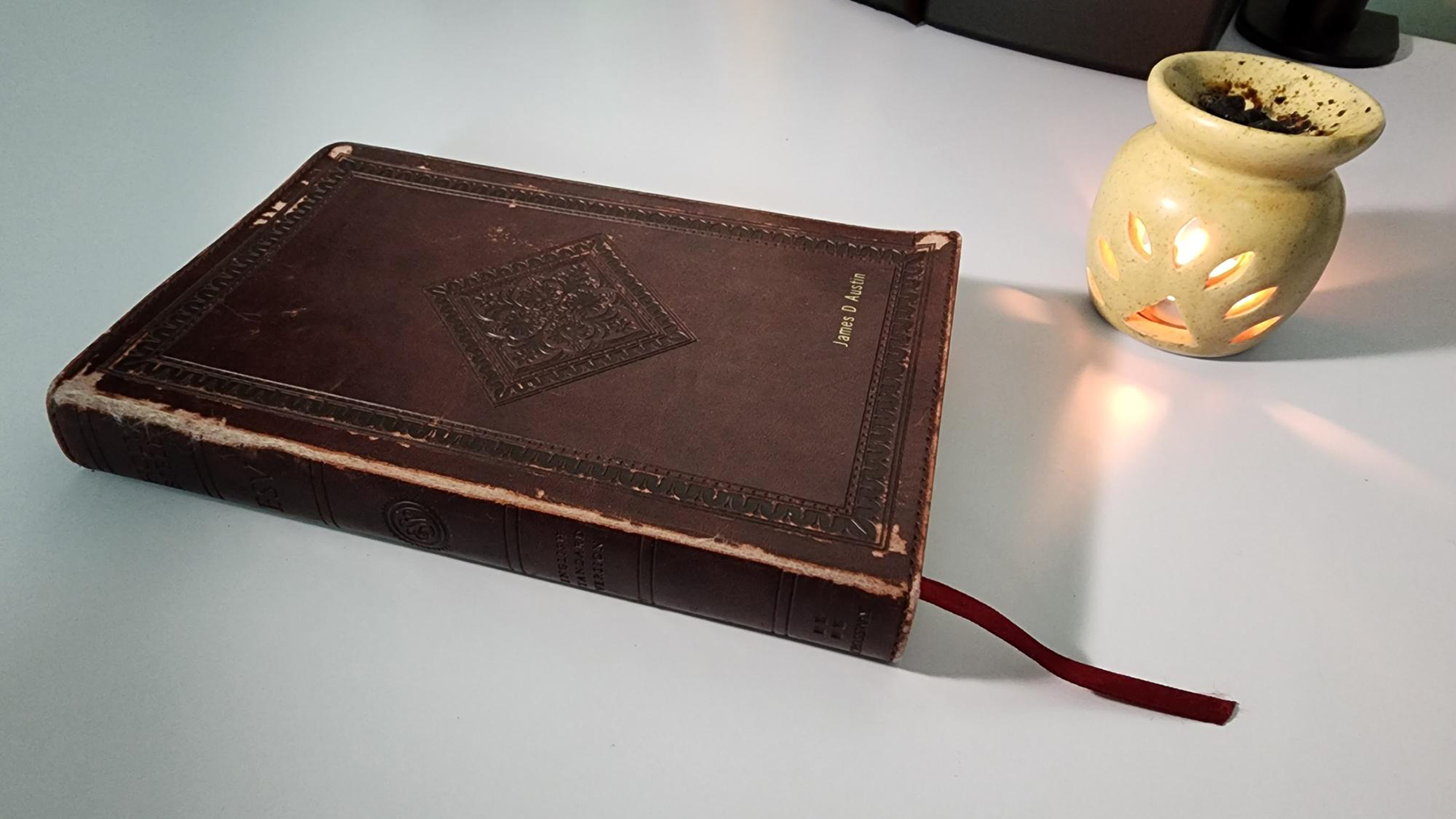
The 2007 text of the ESV refined what Crossway had launched in 2001, smoothing out wording and consistency across the canon. I noticed those refinements, especially since I was so used to the granular detail of the NASB. Over time, I came to appreciate the balance it struck — still serious and faithful to the original languages, but written in English that read as if it belonged to my own generation rather than a technical classroom. This balance made the ESV an ideal Bible for devotion, teaching, and daily use.
Looking back, this thinline edition served as a quiet but significant pivot point. It wasn’t loaded with features or designed for scholarly depth, but it carried the ESV text in a form that was both practical and elegant. It represented a transition from the strict discipline of NASB precision toward a broader, more literary engagement with Scripture. Even as I’ve moved through other translations since then, I still remember this Bible as the one that opened the door to reading Scripture not only as data to be studied and memorized, but as a narrative and testimony to be absorbed with affection.
Conclusion: The Steady Voice of Scripture
Looking back across these years, every Bible I’ve used has carried its own place in my life. The NASB gave me discipline and accuracy, grounding me in the very words of Scripture. The Ryrie Study Bible steadied me through my military years, the Inductive Bible taught me to slow down and study for myself, and the KJV impressed on me the weight of tradition and permanence. Later, the ESV brought a lighter touch — still faithful, but with a cadence that made the text easier to read and absorb.
What threads through all of these is not the translation choice or the cover design, but the steady voice of Scripture itself. My underlines, notes, and even the places where I misunderstood were part of the process of growing in Christ. These Bibles show their years with worn edges and fading print, but they have carried me through again and again. In the end, it isn’t about which edition sits on the table or goes with me to church — it’s about meeting the Lord in His Word, letting those pages shape me, and carrying that truth into the life He has given me.


