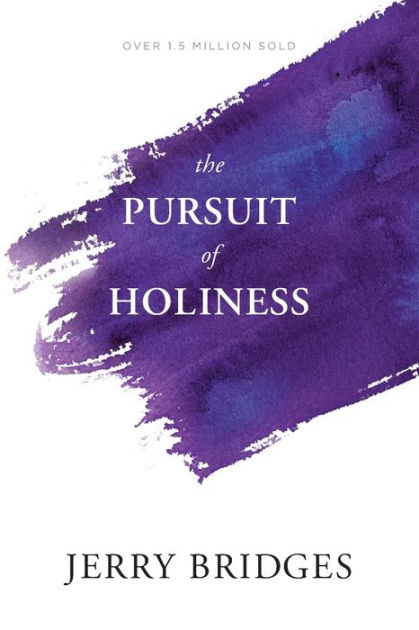
Having completed The Pursuit of Holiness by Jerry Bridges, the book presents biblically grounded principles showing that Christians pursue holiness only because they are already united to Christ and strengthened by the indwelling Holy Spirit. Bridges makes clear that God does not command holiness and then abandon His people to self-effort; rather, Christ shares His resurrected life with believers, and the Spirit abides in them, granting power, guidance, and rightly ordered desires for obedience. Because of this union, Christians are called to fight sin and practice obedience—not to earn salvation, but because they have been transferred into a new kingdom and now live under Christ’s lordship. Holiness, then, is a life of humble dependence upon God’s active grace: trusting Christ, submitting to the Spirit, and choosing obedience even when it is costly. Bridges teaches that growth in holiness requires real effort, but it is achieved through continual dependence on the Spirit and through conscious, persistent personal obedience rather than self-confidence.
Introduction
The Pursuit of Holiness is written under the weight of a simple reality: God is holy, and those who belong to Him do not remain unchanged. Jerry Bridges begins with God Himself—His holiness, His rule, His claim upon His people—and places the reader beneath that claim. Holiness is not presented as a special calling for the few, but as the proper life of those who have been brought into Christ’s kingdom. The book moves steadily from who God is to what life before Him must become, keeping grace primary and obedience necessary, never allowing one to be set against the other.
As the book progresses, attention turns to the long obedience of ordinary days: resisting sin, cultivating discipline, and continuing in faith when progress is slow and costly. Bridges writes with clear-eyed realism about the struggle, yet without despair, insisting that effort belongs to the Christian life precisely because the Spirit is present and active. Holiness is shown as a walk of repentance, dependence, and persistent obedience in a world that remains resistant to God.
Review
In The Pursuit of Holiness, Jerry Bridges sets in place a steady and clear appeal that holiness is neither optional for the believer nor achievable by unaided human effort. The book moves in clear sequence, first setting God’s holiness before the reader, then pressing the believer toward obedience: God is holy, and those who belong to Him are called to reflect His character through obedient lives empowered by the Holy Spirit. Bridges does not treat holiness as advanced spirituality for the mature few. He grounds it in the plain command of Scripture: “Pursue peace with all men, and the holiness without which no one will see the Lord” (Hebrews 12:14). The call is universal, binding, and rooted in the character of God Himself.
The Holiness of God as Foundation
Drawing attention to passages such as Isaiah 6:1–5, where the prophet is undone before the overwhelmingly holy Lord, Bridges establishes that holiness is first an attribute of God before it is a requirement for man. The summons of 1 Peter 1:15–16—“Be holy, for I am holy,” echoing Leviticus 11:44—links the believer’s conduct directly to the moral purity of God. Holiness is not cultural separation nor religious severity. It is moral likeness to God’s character. Because God is holy in all His works, those who bear His name must not treat sin lightly.
Bridges emphasizes that this foundation protects holiness from distortion. If holiness begins with human resolve, it becomes legalism. If it is detached from God’s character, it becomes vague spirituality. It must be anchored in who God is.
Holiness Is Not Optional
From that foundation, Bridges confronts the modern tendency to treat holiness as secondary. He points again to Hebrews 12:14 and to 2 Corinthians 7:1, which calls believers to “cleanse ourselves from all defilement of body and spirit, perfecting holiness in the fear of God.” Holiness is commanded. It is not an enhancement to the Christian life but its necessary fruit.
At the same time, Bridges is careful to root obedience in grace. The command to pursue holiness is addressed to those already redeemed. He consistently resists any suggestion that effort earns acceptance. The order remains clear: justification first, then sanctification.
The Holiness of Christ
Bridges moves from the holiness of God to the holiness of Christ. The believer’s pattern is not abstract morality but the incarnate Son. Christ’s perfect obedience provides both the ground of acceptance and the example to follow. Yet Bridges’ argument does not rest in imitation alone. He turns decisively to union with Christ and the believer’s new position.
Romans 6:6–14 forms a structural center. Believers have died with Christ; they have been raised with Him; sin is no longer their master. The imperative to “consider yourselves dead to sin but alive to God in Christ Jesus” (Romans 6:11) rests on an accomplished reality. Colossians 1:13 speaks of transfer into “the kingdom of His beloved Son.” The Christian life begins with a change of dominion. Holiness flows from this transfer. The believer does not fight for entry into the kingdom but because he already belongs to it.
The Battle for Holiness
With identity established, Bridges addresses the daily conflict. Galatians 5:17 describes the flesh and the Spirit set against one another. 1 Peter 2:11 warns that sinful desires wage war against the soul. Holiness, therefore, is not passive. It requires vigilance.
Bridges distinguishes between seeking “victory” as an emotional experience and practicing obedience as a deliberate choice. He emphasizes that Scripture calls believers to obedience, not to a constant feeling of triumph. This correction guards against discouragement. The measure is not intensity but faithfulness.

Romans 8:13 states plainly: “If by the Spirit you put to death the deeds of the body, you will live.” Colossians 3:5 commands, “Put to death therefore what is earthly in you.” Mortification is active. The language of warfare is explicit. Sin is not tolerated.
Help in the Daily Battle
Though the struggle is real, Bridges repeatedly anchors effort in dependence. Galatians 5:16—“Walk by the Spirit, and you will not gratify the desires of the flesh”—links obedience to the Spirit’s enabling power. Romans 8 does not merely command resistance; it promises the Spirit’s presence.
John 15:4–5 provides the pattern of abiding. Without Christ, nothing can be accomplished; in Him, fruit is borne. This balance prevents holiness from becoming self-reliance. The Spirit is not an optional assistant but the agent of transformation.
Personal Discipline and Habit
Bridges then offers the principle of structured effort. 1 Timothy 4:7 calls believers to discipline themselves for godliness. Hebrews 12:10–11 shows that discipline yields “the peaceful fruit of righteousness.” Holiness grows where deliberate practices replace negligence.
He addresses practical areas: bodily purity (1 Corinthians 6:18–20), renewal of the mind (Romans 12:1–2), guarding desire (James 1:14–15). Habits either reinforce sin or cultivate obedience. The Christian must make conscious choices concerning environment, thoughts, speech, and conduct.
Philippians 2:12–13 offers the balance: “Work out your salvation with fear and trembling, for it is God who works in you.” Effort is required because God is at work. Divine operation does not cancel human responsibility; it grounds it.
Holiness in Body and Spirit
Bridges expands holiness beyond visible conduct. 2 Corinthians 7:1 speaks of cleansing “body and spirit.” External morality without inward transformation is insufficient. The will, the desires, the inner disposition must align with God.
Yet the body is not neglected. Scripture links sanctification to concrete behavior: fleeing immorality (2 Timothy 2:22), controlling the tongue (James 3), resisting conformity to the world (Romans 12:2). Holiness encompasses thought, motive, and action.
Faith in the Pursuit of Holiness
Toward the latter chapters, Bridges makes explicit that faith remains central. Holiness does not advance through anxiety but through trust in God’s promises. Romans 14:23 warns that whatever is not from faith is sin. The pursuit of obedience is sustained through confidence in God’s character and promises.
Dependence on the Spirit is not vague feeling but active reliance upon what God has said. Scripture, prayer, and obedience function together. The believer trusts, acts, repents, and continues.
Holiness in an Unholy World
Bridges acknowledges external resistance. Romans 12:2 commands nonconformity to the world. 1 John 2:15–17 warns against love for the world’s desires. The Christian remains situated within society but lives according to different priorities. Holiness creates distinction without withdrawal.
The world’s standards shift; God’s character does not. Persistent obedience in such a context requires conviction grounded in revelation.
The Joy of Holiness
The book does not conclude in strain. Psalm 16:11 speaks of fullness of joy in God’s presence. Hebrews 12:11 promises peaceable fruit following discipline. Bridges argues that obedience yields stability and peace. Joy is not emotional excess but settled alignment with God’s will.
Holiness leads not to deprivation but to freedom. Sin enslaves; obedience liberates. Romans 6 presents this contrast clearly: slavery to sin results in death; slavery to righteousness leads to sanctification and life.
Balance and Endurance
Throughout the book, Bridges maintains several essential tensions:
- Holiness is commanded (Hebrews 12:14) yet enabled by the Spirit (Romans 8:13).
- Effort is required (1 Timothy 4:7) yet grounded in God’s prior work (Philippians 2:13).
- The believer has died to sin (Romans 6:6) yet must still put sin to death (Colossians 3:5).
- The Christian lives in the world yet must resist conformity (Romans 12:2).
These tensions are not resolved by dissolving one side. They are held together under the authority of Scripture. So The Pursuit of Holiness endures because it refuses two errors: passivity that hides behind grace, and legalism that trusts discipline. Its thesis remains clear: growth in holiness requires real effort, but only as it is carried out in continual dependence on the Spirit through conscious and persistent personal obedience rather than self-confidence.
The book presents a clear and orderly treatment of biblical sanctification, grounded in Scripture throughout. It begins with the holiness of God, then moves to the believer’s union with Christ and the new life that follows. From there, it addresses the continuing struggle with sin and the need for disciplined obedience carried out in dependence on the Spirit. It concludes by showing that a life aligned with God’s will leads not to strain, but to steady and lasting joy.
Conclusion
Throughout the book, Bridges returns again and again to the necessity of abiding in Scripture. Holiness is not sustained by impulse or resolve alone, but by a mind continually renewed according to the Word (Romans 12:2). The Scriptures expose what lies hidden in the heart (Hebrews 4:12), preserve the way from corruption (Psalm 119:9–11), and supply promises sufficient for life and godliness (2 Peter 1:3–4). They are not treated as occasional counsel, but as daily bread. In this light, the pursuit of holiness stands upon God’s ongoing work: He has united His people to Christ (Romans 6:4–11), given them His Spirit (Romans 8:9–13), and set His Word before them as light for the path. What follows is obedience formed under that light—steady, deliberate, and dependent upon the One who first acted.