Today I finished reading The Knowledge of the Holy by A.W. Tozer, and what remains with me most is a renewed sense of wonder about who God is and why that matters beyond mere theology as an exercise. The book did not answer every question, but it sharpened my attention and deepened my awareness of God’s greatness in a way that feels suited to prayer, reflection, and daily obedience. Its usefulness lies in how it repeatedly brings God back into view—not as an idea to manage, but as a personal and holy presence who must be approached with reverence. I expect to return to it not for study alone, but as a steady reminder of who God is and how I am meant to stand before Him.
First published in 1961, The Knowledge of the Holy by A.W. Tozer stands as one of the most incisive and uncompromising treatments of classical Christian theism in modern Protestant literature. It is not a systematic theology in the academic sense, nor a devotional in the sentimental sense, but rather a doxological theology: theology written under the conviction that what a man believes about God is the most determinative truth about him. Tozer opens with the now-canonical claim that “what comes into our minds when we think about God is the most important thing about us,” a thesis he does not merely assert but relentlessly demonstrates throughout the book.
Introduction
The central burden of Tozer’s work is the recovery of God’s holiness, not as a single attribute among others, but as the moral and ontological majesty that renders God wholly “other” — absolute, self-existent, immutable, eternal, omniscient, omnipotent, omnipresent, sovereign, and morally pure. Tozer’s method is deliberately restrained: he refuses speculation beyond revelation and explicitly warns against mental images, analogies, and imaginative projections that reduce God to manageable proportions. In this respect, his theology is markedly apophatic in impulse, though articulated within an evangelical framework.
Particularly significant is Tozer’s sustained warning against idolatry of the mind. While he affirms the necessity of true knowledge of God, he insists that such knowledge is always governed by divine self-disclosure, never by human creativity. Any conception of God that contradicts or diminishes His revealed being, however well-intentioned, becomes a false god. This is why Tozer repeatedly returns to Scripture’s insistence that God cannot be domesticated, visualized, or psychologically neutralized without loss of truth and reverence.
The book is also notable for its pastoral severity. Tozer writes as one who believes the modern church suffers not from too little activity, but from too little fear of God. He connects doctrinal reductionism directly to moral decay, superficial worship, and spiritual anomie, arguing that when God is thought of lightly, obedience becomes negotiable and worship collapses into performance. In this regard, the book functions as a quiet indictment of pragmatic religion, entertainment-driven worship, and pedagogical methods that convey familiarity rather than awe.
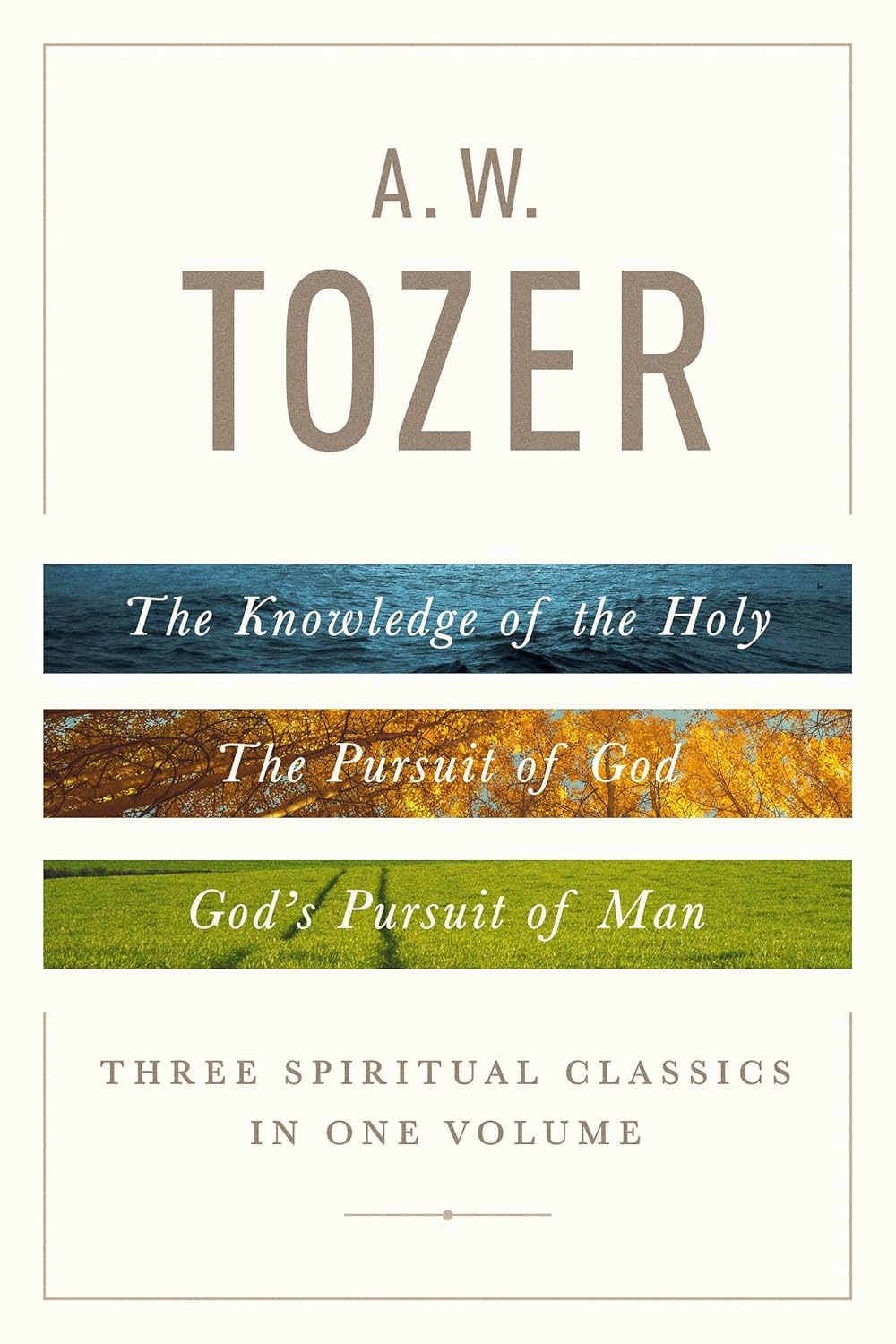
Stylistically, the prose is spare, elevated, and deliberately unsentimental. Tozer writes as a prophet rather than a lecturer, and his authority rests not in academic apparatus but in fidelity to Scripture and continuity with the classical attributes confessed across the history of the Church. Though he stands outside Roman Catholic and Eastern Orthodox traditions institutionally, his doctrine of God aligns closely with the patristic and medieval consensus on divine simplicity, transcendence, and immutability.
In sum, The Knowledge of the Holy endures because it does not attempt to make God accessible by lowering Him, but rather calls man upward through repentance of thought, submission to revelation, and reverent obedience. It is a book that assumes — and demands — that true theology must finally terminate in worship, silence, and trembling joy.
Book Review
I. God’s Being
God is before all things and dependent on nothing. He does not exist within a framework that explains Him, nor does He require completion, validation, or movement toward fulfillment. Scripture presents Him as self-existent and sufficient, the one who simply is. This means God is not conditioned by time, circumstance, or response. He does not improve, adapt, or adjust. If God were capable of becoming something He is not, He would already lack what He ought to be. The starting point of theology, then, is not what God does, but that God is, whole and complete in Himself.
- The Self-Existence of God (Aseity)
God depends on nothing outside Himself to be what He is. He does not draw life, meaning, or purpose from another source, nor does He exist because something caused Him to begin. Scripture presents Him simply as the One who is, without explanation or qualification. This means God is not sustained by the world, affected by its changes, or diminished by its rejection of Him. All created things exist because they receive life; God exists because He is life. Theology begins here or it begins in error. - The Self-Sufficiency of God
Because God is self-existent, He is also fully sufficient. He does not need creation to complete Him, nor does He gain anything by being obeyed, praised, or loved. God was no less God before anything was made, and He would remain no less God if nothing existed beside Him. This guards us from imagining God as lonely, incomplete, or dependent upon human response. What God gives, He gives freely, not out of lack. - The Eternity of God
God does not move through time as creatures do. He does not remember the past or anticipate the future; all times are present to Him without succession. Scripture’s language of God acting “before” or “after” belongs to our experience, not His. Eternity is not endless time, but the absence of time’s limitations altogether. God does not wait, hurry, or arrive late. He simply is, without beginning or end. - God’s Infinitude
God is not limited by space, measure, or boundary. He cannot be divided into parts or contained within categories larger than Himself. When we speak of God as infinite, we are confessing that He exceeds every frame we bring to Him. This does not make Him vague or impersonal; it makes Him incomparable. Any god small enough to be fully grasped would not be God at all. - The Immutability of God
God does not change. He does not improve, diminish, or alter course. This does not mean He is unresponsive or indifferent, but that His responses are always consistent with who He eternally is. Scripture’s account of God acting differently toward different people reflects the change in the people, not a change in God. Because He is immutable, His promises remain secure and His character trustworthy. - The Divine Unity
God is not composed of parts or qualities arranged together. He is one, whole, and undivided. His attributes are not additions to His being but ways we describe His single, simple reality. This guards us from thinking of God as a collection of traits that might compete or conflict. God is never partly merciful and partly just; He is fully Himself in all He is and does. - The Trinity
God is one in essence and three in persons. The Father, Son, and Holy Spirit are not roles or manifestations, but real distinctions within the one divine being. This mystery is not explained by analogy or reduced to logic, but received as revealed. The Trinity does not divide God’s being or multiply gods; it tells us who God eternally is in Himself, apart from creation. - The Sovereignty of God
God rules by right, not by force. His sovereignty is not reactive or threatened, nor is it dependent upon human cooperation. He does as He pleases, always in accordance with His nature, and nothing escapes His authority. This does not make God arbitrary; it makes Him supreme. His rule rests on who He is, not on what creatures permit Him to do. - The Transcendence of God
God stands above and beyond all that He has made. He is not contained within the universe or subject to its laws. Transcendence does not place God at a distance, but affirms that He is not to be confused with what He has created. When this is lost, worship collapses into familiarity and reverence into casual speech. A God who is not transcendent is no longer God.
In these chapters, Tozer is at pains to show that God does not become anything, does not react in the human sense, and does not derive meaning or fulfillment from His works. God is complete in Himself.
II. God’s Knowledge and Power
Because God is self-existent and infinite, His knowledge is not gathered or processed. He does not observe reality from the outside or arrive at conclusions over time. God knows all things immediately, fully, and without effort, including Himself. Nothing surprises Him, and nothing escapes His awareness. His presence is not distributed or divided, and His knowledge is not reactive. What we call omniscience and omnipresence are not abilities God exercises, but the way finite minds describe the fullness of divine being encountering a created world.
- The Divine Omniscience
God knows all things completely and immediately. He does not learn by observation or inference, and He is never surprised. His knowledge includes all that is, all that has been, and all that could be, without uncertainty. God knows His creation more intimately than it knows itself. This knowledge is not cold awareness but perfect comprehension. - The Divine Omnipotence
God’s power is the ability to do all that accords with His nature. He is not limited by external forces, yet He does not act contrary to Himself. Omnipotence does not mean God can contradict His holiness or deny His truth. His power is never reckless or uncontrolled. It is strength governed by wisdom and righteousness. - The Divine Omnipresence
God is present everywhere without being spread thin. His presence is not physical extension, nor is it partial or divided. God is fully present to every place at once, not by movement but by being. This means there is no corner of creation beyond His knowledge or reach. We never move closer to God by distance, nor farther from Him by location. - The Divine Wisdom
God’s wisdom is the perfect ordering of knowledge toward fitting ends. He never misjudges, miscalculates, or acts unwisely. What appears slow or obscure to us is never confusion in God. His wisdom is not merely intelligence, but understanding shaped entirely by holiness and purpose. God never acts first and reflects later.
These are not capacities acquired or exercised sequentially. Tozer repeatedly emphasizes that God does not “learn,” “decide,” or “arrive at conclusions.” Knowledge and power are not instruments God uses; they are perfections of His essence.
III. God’s Moral Perfection
God’s will is never uncertain, conflicted, or delayed. He does not weigh options or revise intentions. What God wills flows necessarily from who He is, and therefore His will is always holy, just, and faithful. Holiness is not a restriction placed upon His power; it is the moral clarity of His being expressed in every purpose. God does not conform to goodness—goodness conforms to Him. Because He is immutable, His promises do not fluctuate, and His judgments are not arbitrary. His faithfulness is simply God being God without contradiction.
- The Holiness of God
Holiness is the moral clarity of God’s being. It is not merely one attribute among others, but the light in which all others are seen. God is not holy by adherence to a standard; holiness is what God is. This is why His will is always right and His judgments always true. Holiness makes God both glorious and dangerous to approach on our own terms. - The Justice of God (Righteousness)
God is just because He always acts in accordance with His own righteousness. He does not overlook evil, excuse sin, or distort truth. Justice is not opposed to grace, but grace presupposes justice rightly understood. God never punishes excessively or arbitrarily; He judges as One who sees all things clearly. His justice is an expression of His holiness, not a limitation upon it. - The Faithfulness of God
God remains true to Himself and to His word. He does not promise lightly, nor does He forget what He has spoken. Faithfulness means God will not contradict His character, abandon His purposes, or deceive His people. What God has said, He will do—not because He is obligated, but because He is faithful. His reliability rests in His being, not in circumstances.
Although these attributes are often treated as ethical dispositions, Tozer insists they are ontological moral realities. God does not act justly because He conforms to a standard; justice is the standard because it is intrinsic to God’s being.
IV. God’s Relational Expression
When this God relates to creatures, He does so without ceasing to be who He is. Love, mercy, grace, and goodness are not changes in God, but the forms His unchanging being takes when encountered by finite and sinful persons. God does not need creatures in order to love, yet creatures truly experience His love because He wills their good. His nearness does not dilute His holiness, and His kindness does not suspend His justice. What we experience as grace is the gift of being met by God as He is, rather than as we would prefer Him to be.
- The Divine Love
God’s love is not sentiment or weakness, but the steady willing of good toward His creatures. He does not love because He needs, but because He chooses to give. Divine love is shaped by holiness and guided by wisdom, not driven by impulse. God’s love never competes with His justice or truth. It flows from who He is, not from what we offer. - The Mercy of God
Mercy is God’s compassion toward the miserable and guilty. It does not deny justice, but withholds deserved judgment for a time and purpose. God is merciful because He is good, not because sin is insignificant. Mercy reveals God’s patience and kindness without trivializing evil. It is grace given to those who cannot demand it. - The Grace of God
Grace is God’s free favor shown to those who deserve none. It is not earned, provoked, or negotiated. Grace flows from God’s nature, not from human effort or worth. It does not excuse sin, but overcomes it. What grace gives, it gives because God wills to give. - The Goodness of God
God is good in Himself and therefore good toward His creation. His goodness is not measured by comfort or immediate outcomes, but by alignment with His holy purposes. Even His discipline flows from goodness rightly understood. God never acts with malice or indifference. Whatever comes from Him is ordered toward what is truly good. - The Immanence of God
Though God is transcendent, He is not distant. He is near to His creation and involved in it without being absorbed by it. God’s nearness does not compromise His otherness, and His involvement does not lessen His majesty. He dwells with His people without ceasing to be God. What creatures experience as God’s presence is the encounter with the One who remains wholly Himself.
Tozer does not treat love as defining God’s essence in abstraction. Rather, God is holy, self-existent, and immutable. Therefore, when He wills the good of creatures, that willing appears to us as love. Love is thus necessary, but not constitutive in the modern slogan sense. God does not need creatures in order to be loving; rather, creatures encounter love because of what God eternally is.
Conclusion
To speak rightly of God is not an academic exercise but a moral one. Throughout this book, the question has never been whether God can be described, but whether He will be received as He is. A diminished view of God does not remain confined to theology; it reshapes worship, obedience, and conscience. When God is imagined as manageable, familiar, or psychologically accommodating, reverence gives way to negotiation, and faith quietly becomes self-directed. The corrective is not complexity or novelty, but attention—attention to what God has revealed about Himself and restraint from saying more than has been given.
The knowledge of the holy does not end in explanation but in how one stands before God. It leads not to confidence in one’s understanding, but to humility; not to speculation, but to obedience; not to worship shaped by taste, but by reverence and trust. God is not known by organizing His attributes, but by yielding rightly before them. If this book has done what it was meant to do, it has not supplied the reader with answers so much as stripped away false ones, bringing the mind into surrender before God who is greater, more exacting, and more worthy than anything anyone could construct.