Tag Archives | union with christ

The Divine Imperative

Across the major traditions of Christian theology, the doctrine of humanity’s ultimate destiny is described in terms of participation in the divine life—though expressed through different concepts and emphases.

Introduction

Eastern Orthodoxy speaks of Theosis, a transformative union with God through participation in His uncreated energies, becoming “partakers of the divine nature” (2 Peter 1:4), yet without sharing in God’s essence (John 17:22-23). Roman Catholic theology articulates Deification as the elevation of human nature by sanctifying grace, drawing upon Augustine and Aquinas to affirm that through Christ, believers are adopted as sons and made participants in divine life (Romans 8:14-17; John 1:12-13). Reformed theology centers on Union with Christ, the vital spiritual incorporation into Christ through faith by the Holy Spirit, securing all the benefits of His redemptive work—justification, sanctification, and glorification (Galatians 2:20; Ephesians 1:3-14). Anglican theology, drawing from Scripture and the Church Fathers, speaks of Participation in the Divine Nature as a sacramental and mystical communion with God through Word, Sacrament, and holy living (John 15:4-5; 1 Corinthians 10:16-17), without becoming God in essence but sharing, as glorified sons, in His divine life as elohim (Psalm 82:6; John 10:34-35). These traditions collectively affirm that participation in God does not entail becoming God by nature, but rather, by grace, entering into the life and glory of the Triune God through Christ.

Anglican

In Anglican theology, the doctrine of Participation in the Divine Nature (2 Peter 1:4) is deeply rooted in both Scripture and the witness of the Church Fathers. Richard Hooker, in his Laws of Ecclesiastical Polity (V.56.7), teaches that the life of grace is a real participation in Christ, echoing Augustine’s assertion that “God was made man that man might be made God” (Sermon 192.1). Lancelot Andrewes, drawing upon Athanasius’ On the Incarnation, emphasizes the Eucharist as the means by which Christ dwells in us and we in Him (John 6:56). The Anglican tradition, particularly among the Caroline Divines, affirms the teaching of Cyril of Alexandria, who wrote that through the sacramental life we are “conformed to Him who is by nature Son and God” (Commentary on John, 1:9). The Book of Common Prayer reflects this theology in its Eucharistic prayers: “that we may evermore dwell in him, and he in us,” which is not merely symbolic, but a sacramental participation in Christ’s life (John 15:4–5). Thus, Anglican participation in God is a real, though mediated, sharing in the divine life through Word, Sacrament, and sanctified living, anticipating the full glorification promised in 1 John 3:2.

Catholic

The Roman Catholic understanding of Deification (Deificatio) shares much with the Eastern tradition but is articulated within the Western framework of grace and merit. Rooted in the writings of Augustine (Romans 8:29) and Thomas Aquinas (Summa Theologiae I-II q.112), deification in Catholic thought refers to the elevation of human nature through created sanctifying grace, whereby the soul becomes an adoptive child of God (Galatians 4:5–7; John 1:12–13). Participation in the divine life is mediated by the sacraments, especially Baptism and the Eucharist (John 6:56; Romans 6:4), and progresses through justification, sanctification, and ultimately the Beatific Vision (1 John 3:2). Although Catholicism does not typically use the term Theosis, the concept is central to its soteriology, as reflected in the Catechism of the Catholic Church (§460), where God became man so that man might become God (cf. Athanasius, De Incarnatione).

Orthodox

In Eastern Orthodox theology, Theosis (θέωσις), or deification, represents the central goal of salvation: human beings are called to become “partakers of the divine nature” (2 Peter 1:4). This transformative union does not involve becoming God by essence (οὐσία), but by participation in His uncreated energies (ἐνέργειαι), as articulated by Gregory Palamas. Through ascetic struggle, sacramental life, and divine grace, the faithful undergo a process of deification, progressing from purification (κάθαρσις) to illumination (φωτισμός), and finally union (ἕνωσις) with God. The Incarnation of the Logos makes this participation possible (John 1:14), and believers are mystically united with God through the sacramental life of the Church, especially the Eucharist (John 6:56). Theosis, then, is both the restoration of the divine image and the fulfillment of humanity’s destiny in the likeness of God (Genesis 1:26–27; 1 John 3:2).

Reformed

In Reformed theology, the concept of Union with Christ is the foundation of all soteriological benefits. This union is established by the Holy Spirit through faith (Ephesians 2:8–9), incorporating believers into Christ’s death, resurrection, and exaltation (Romans 6:3–5). Unlike Theosis, Reformed theology rejects any notion of ontological participation in the divine essence, emphasizing instead a covenantal and representative union grounded in Christ’s mediatorship (1 Corinthians 15:22). This spiritual union grants believers all of Christ’s benefits: justification (Romans 8:1), sanctification (Galatians 2:20), adoption (Galatians 4:4–7), and glorification (Romans 8:30). Reformed theologians such as John Calvin emphasized that all grace flows from this mystical union (Ephesians 1:3–14), maintained through the ministry of the Word and Sacraments as means of grace (1 Corinthians 10:16–17).

Distinctives

CategoryEastern Orthodox Roman Catholic Reformed Anglican
Terminology
2 Peter 1:4 – “Partakers of the divine nature.”
John 17:21-23 – “That they may all be one… as we are one.”
Psalm 82:6 / John 10:34-35 – “I said, you are gods.”
Theosis
(2 Peter 1:4; John 17:21-23; Psalm 82:6)
Deification, Divinization
(2 Peter 1:4; Romans 8:29; John 1:12-13)
Union with Christ
(Galatians 2:20; Ephesians 1:3-14; Colossians 1:27)
Participation in God, Union with Christ, Deification
(John 15:4-5; 1 Corinthians 1:30; 2 Peter 1:4)
Theological Focus
Union with Christ and participation in divine life run through John 17, Romans 8, and 2 Corinthians 3:18.
Participation in uncreated energies
(2 Peter 1:4; 2 Corinthians 3:18; John 17:22-23)
Participation in divine life
(2 Peter 1:4; Romans 8:14-17; John 1:16)
Spiritual union with Christ
(Romans 6:5; Ephesians 2:4-7; John 17:21)
Participation in Christ through sacramental grace
(John 6:56; Galatians 3:27-28; 1 Corinthians 10:16-17)
Grace
James 1:17 – “Every perfect gift is from above.”
Ephesians 2:8-10 – “By grace you have been saved through faith.”
Titus 3:5-7 – “He saved us… according to His mercy.”
Uncreated energies as grace
(James 1:17; 2 Corinthians 12:9; John 1:16)
Sanctifying grace perfects nature
(Ephesians 2:8-10; Romans 5:5; Titus 3:5-7)
Effectual grace unites to Christ
(John 6:44; Ephesians 2:4-5; Romans 8:29-30)
Sacramental grace enables participation
(Acts 2:38; Romans 6:3-4; 1 Corinthians 12:13)
Goal of Salvation
2 Peter 1:4 – Deification / participation in divine nature.
1 John 3:2 – “We shall be like Him.”
Romans 8:14-17 – Adoption as sons and heirs.
Participation in divine nature
(2 Peter 1:4; John 10:34-35; 1 John 3:2)
Adoption as sons and daughters of God
(Romans 8:14-17; Galatians 4:4-7; John 1:12)
Union with Christ’s benefits
(Galatians 2:20; Romans 8:1-2; 2 Corinthians 5:17)
Communion with God
leading to holiness
(Philippians 3:10-11; 1 John 1:3; John 17:24)
Means of Participation
John 6:56 – “He who eats my flesh and drinks my blood abides in me.”
Acts 2:42 – Apostles’ teaching, fellowship, breaking of bread, prayers.
Galatians 3:27-28 – Baptized into Christ.
Prayer, asceticism, Eucharist
(Matthew 6:6; 1 Corinthians 9:27; John 6:56)
Sacraments and virtue
(John 3:5; Matthew 5:48; Ephesians 5:25-27)
Faith, Word, Sacraments
(Romans 10:17; 1 Corinthians 1:21; Ephesians 4:4-6)
Word, Sacraments, Prayer
(Acts 2:42; John 17:17-23; James 5:14-16)
Christology
John 1:14 – “The Word became flesh.”
Colossians 1:19-20 – “In Him all fullness dwells.”
Romans 5:18-19 – Christ as the new Adam.
Incarnation enables Theosis
(John 1:14; Hebrews 2:14-17; Colossians 2:9-10)
Hypostatic union basis for deification
(Colossians 1:19-20; Philippians 2:5-11; John 1:14-16)
Christ as Mediator and Head
(Romans 5:18-19; 1 Corinthians 15:22; Ephesians 1:22-23)
Christ unites humanity and divinity
(2 Corinthians 5:19; Colossians 1:27-28; Ephesians 1:9-10)
Nature of Union
Galatians 2:20 – “It is no longer I who live, but Christ who lives in me.”
John 15:4-5 – “Abide in me and I in you.”
1 Corinthians 6:17 – “He who is joined to the Lord becomes one spirit with Him.”
Ontological participation in energies
(John 14:23; Galatians 2:20; 1 Corinthians 6:17)
Participation through sanctifying grace
(2 Corinthians 5:17; John 17:22-23; Romans 5:5)
Covenantal, spiritual union with Christ
(Romans 6:3-5; Ephesians 1:3-4; Galatians 3:26-28)
Mystical union through sacramental grace
(John 15:4-5; 1 Corinthians 10:16-17; Romans 8:9-11)
Theologians
(Pre-20th Century)
John Chrysostom
(Matthew 6:33)
Gregory Palamas
(John 17:21-23);
Maximus the Confessor
(Ephesians 1:10);
Athanasius
(John 1:14);
Basil the Great
(Galatians 2:20);
Gregory Nazianzus
(2 Peter 1:4);
Cyril of Alexandria
(John 6:56)
Augustine of Hippo
(Romans 8:29);
Anselm of Canterbury
(Philippians 2:5-11);
Thomas Aquinas
(2 Peter 1:4);
Bonaventure
(Colossians 1:27);
John of the Cross
(1 John 4:16);
Teresa of Ávila
(John 14:23)
John Calvin
(Romans 6:5);
Herman Bavinck
(Ephesians 1:3-14);
Louis Berkhof
(Galatians 2:20);
John Owen
(John 17:21-23);
Thomas Goodwin
(Ephesians 1:10);
Jonathan Edwards
(1 Corinthians 6:17)
Richard Hooker
(1 Corinthians 1:30);
Lancelot Andrewes
(John 6:56);
John Donne
(1 Corinthians 6:17);
George Herbert
(John 15:4-5);
Thomas Traherne
(Psalm 34:8);
John Cosin
(Galatians 3:27-28);
William Laud
(John 17:21-23);
John Keble
(1 John 3:2);
E.B. Pusey
(John 17:22-23);
John Henry Newman
(pre-conversion)
(Colossians 3:3-4)

Each tradition draws from common biblical sources, emphasizing participation in Christ, adoption, and union with God:

  • Eastern Orthodoxy stresses ontological transformation through Theosis.
  • Roman Catholicism frames Deification through sanctifying grace and adoption.
  • Reformed theology emphasizes spiritual union with Christ and the appropriation of His benefits.
  • Anglicanism, especially via its Patristic and Caroline traditions, emphasizes participation in God and union with Christ, often combining Reformed, Catholic, and Patristic insights.

Anglican Theology of Union with Christ

Theological Context
Anglicanism stands in a via media (middle way), integrating Catholic, Reformed, and Patristic traditions. Its doctrine of salvation affirms that union with Christ is central to redemption, sanctification, and glorification.

This participation is:

  1. Sacramental (rooted in Baptism and the Eucharist)
  2. Mystical (deep spiritual communion with Christ and God)
  3. Moral (transformation into Christ-likeness)

Sources

  • Scripture (primary authority)
  • The Early Church Fathers (Athanasius, Augustine, the Cappadocians)
  • The Book of Common Prayer (BCP)
  • The Thirty-Nine Articles
  • Caroline Divines (Hooker, Andrewes, Cosin)

Anglican Foundations for Union with Christ

1. Union with Christ as the Core of Salvation

Anglican theology holds that all benefits of salvation flow from union with Christ.

  • John 15:4-5 – “Abide in me, and I in you. As the branch cannot bear fruit by itself unless it abides in the vine, neither can you, unless you abide in me.” Anglican Use: Regularly quoted in sermons and BCP prayers on sanctification and Eucharistic communion.
  • Galatians 2:20 – “I have been crucified with Christ. It is no longer I who live, but Christ who lives in me.” Richard Hooker: Interpreted this as the mystical participation of believers in Christ’s life through faith and sacrament.
  • Colossians 1:27 – “Christ in you, the hope of glory.” Preached by John Donne as the hope of union, experienced already in the Eucharist and fulfilled in heaven.

2. Participation in the Divine Nature (Deification / Theosis)

While Theosis isn’t the central term, the concept of participation in God’s life appears frequently.

  • 2 Peter 1:4 – “He has granted to us his precious and very great promises, so that through them you may become partakers of the divine nature…” Quoted by Lancelot Andrewes in his sermons, emphasizing sanctification and God’s indwelling as a process of deification.
  • 1 John 3:2 – “We shall be like him, because we shall see him as he is.” Thomas Traherne saw this as the consummation of participation in God’s glory, aligning it with beatific vision.
  • John 17:22-23 – “The glory you have given me I have given them, that they may be one even as we are one.” Jeremy Taylor used this passage in his Holy Living to argue that union with Christ leads to sharing in God’s glory.

3. Adoption and Sonship: Participation as Children of God

Anglicans view adoption as incorporation into Christ—becoming God’s children through Baptism and sanctifying grace.

  • Romans 8:15-17 – “You have received the Spirit of adoption as sons, by whom we cry, ‘Abba! Father!’ … heirs of God and fellow heirs with Christ.” E.B. Pusey saw this as the foundation for deification, since sons partake in the Father’s life.
  • Galatians 4:4-7 – “God sent forth his Son… so that we might receive adoption as sons.” John Keble preached on this in his Parish Sermons, emphasizing divine filiation through Baptism.
  • John 1:12-13 – “But to all who did receive him… he gave the right to become children of God.” The BCP Baptismal Rite refers to this explicitly, declaring the baptized as regenerate and God’s children.

4. Sacramental Participation and the Real Presence

For Anglicans (especially Anglo-Catholics and Caroline Divines), the Eucharist is the foretaste of deification and union with Christ.

  • John 6:56 – “Whoever feeds on my flesh and drinks my blood abides in me, and I in him.” John Cosin in Notes on the Book of Common Prayer called this real mystical union through the Eucharist.
  • 1 Corinthians 10:16-17 – “The cup of blessing… is it not a participation in the blood of Christ? The bread… a participation in the body of Christ?” William Laud defended real spiritual presence, insisting this passage refers to true participation.
  • Romans 6:3-5 – “All of us who have been baptized into Christ Jesus were baptized into his death… we shall certainly be united with him in a resurrection like his.” The BCP Baptismal Liturgy echoes this, proclaiming baptismal union with Christ’s death and resurrection.

5. Mystical and Moral Union with God

Anglicans emphasize holy living as a progressive participation in God’s holiness, often connecting ethics with union.

  • Matthew 5:48 – “You therefore must be perfect, as your heavenly Father is perfect.” Jeremy Taylor’s Holy Living guides Christians in progressing toward divine likeness.
  • Ephesians 4:22-24 – “Put on the new self, created after the likeness of God in true righteousness and holiness.” Central to Richard Hooker’s teaching on sanctification as deification.
  • 2 Corinthians 3:18 – “We all… beholding the glory of the Lord, are being transformed into the same image from one degree of glory to another.” Thomas Traherne referenced this as evidence of progressive participation in God’s glory.

Summary

Biblical ConceptEmphasis
Union with ChristThe basis for salvation; initiated in Baptism, nourished in Eucharist, lived out in holy living (John 15:4-5; Galatians 2:20; Colossians 1:27).
Participation in GodScriptural foundation for deification, emphasizing sharing in divine life (2 Peter 1:4; John 17:22-23; 1 John 3:2).
Adoption and SonshipBaptismal incorporation into God’s family, leading to sharing in Christ’s inheritance (Romans 8:15-17; Galatians 4:4-7).
Sacramental RealismReal participation in Christ through Eucharist and Baptism (John 6:56; 1 Corinthians 10:16-17; Romans 6:3-5).
Moral TransformationHoly living as evidence of union with Christ and growth into God’s likeness (Matthew 5:48; Ephesians 4:22-24).

Anglican theology of union and participation stands on Scripture, deeply rooted in Patristic and Reformation insights, balancing Catholic sacramentalism, Protestant soteriology, and Eastern mystical theology. It aims at communion with God through Christ, mediated by the Word, the Sacraments, and the sanctified life. It culminates in deification, understood as sharing in the divine life, without erasing the Creator-creature distinction.

Anglican Union with Christ in the Book of Common Prayer

The Book of Common Prayer (BCP), first compiled in 1549 by Thomas Cranmer, reflects deep theological convictions regarding Union with Christ, participation in the divine life, and communion with God. These themes are not just theological abstractions but are embedded in Anglican liturgical life, shaping how Anglicans pray, worship, and live their faith.

1. Baptismal Union with Christ

The BCP’s Baptismal Liturgy expresses the foundational union with Christ that occurs in Baptism.
Anglican theology views Baptism as incorporation into Christ, the beginning of participation in the divine life, and adoption as God’s child.

Key Texts (BCP 1662 and modern versions)

  • “Seeing now, dearly beloved brethren, that this child is regenerate, and grafted into the body of Christ’s Church…”
  • “We receive this child into the congregation of Christ’s flock; and do sign him with the sign of the cross…”
  • “…burying the old man, and rising again unto righteousness…” (Romans 6:3-5)

Theological Implication

  • Baptism is not merely symbolic. The BCP affirms real incorporation into Christ, reflecting Romans 6 and Galatians 3:27-28.
  • This is participation in Christ’s death and resurrection, the first step in deification or union.

2. Eucharistic Participation in the Divine Life

The Holy Communion service in the BCP profoundly expresses union with Christ through sacramental participation in His Body and Blood.
The prayers and rubrics show that the Eucharist is more than a remembrance—it is a real participation (cf. 1 Corinthians 10:16-17).

Prayers and Language

  • “Grant us therefore, gracious Lord, so to eat the flesh of thy dear Son Jesus Christ, and to drink his blood, that our sinful bodies may be made clean by his body, and our souls washed through his most precious blood…” (Prayer of Humble Access, BCP 1662)
  • “Dwell in him, and he in us.” (Post-Communion Prayer)
  • “That we may evermore dwell in him and he in us.” (John 6:56)

Theological Implication

  • This language echoes John 6 and expresses mystical union: Christ dwells in the communicant, and the communicant in Christ.
  • The Eucharist is a means of grace by which believers participate in the divine life, prefiguring Theosis.

John Cosin (1594–1672):

  • Described the Eucharist as “the most mystical union that can be betwixt God and man.”

3. The Collects and Prayers Emphasizing Union and Deification

The Collects (short prayers that gather the themes of the liturgy) often petition God for participation in the divine life and for transformation.

Examples

  1. Collect for Purity (Holy Communion)
    “Cleanse the thoughts of our hearts by the inspiration of thy Holy Spirit, that we may perfectly love thee…”
    → Points to moral transformation as part of sanctifying union.
  2. Collect for the 4th Sunday after Easter (1662)
    “Grant unto thy people, that they may love the thing which thou commandest… that among the sundry and manifold changes of the world, our hearts may surely there be fixed where true joys are to be found.” (Colossians 3:1-3)
    → Longing for union with God beyond the transient world.
  3. Collect for Trinity Sunday
    “That by the confession of a true faith, we may acknowledge the glory of the eternal Trinity, and in the power of the divine majesty worship the Unity.”
    → Participation in Trinitarian life, reflecting John 17 and 2 Peter 1:4.

4. Participation in God through Sanctification and Holiness

The Daily Offices (Morning and Evening Prayer) and Penitential Rites reinforce growth in holiness, which Anglicans view as progress in union with God.

  • The General Confession:
    “Restore thou them that are penitent; according to thy promises declared unto mankind in Christ Jesus our Lord.”
    → Restoration and renewal in Christ’s life.
  • The Benedictus (Luke 1:68-79):
    “…that we might serve him without fear, in holiness and righteousness before him all our days.”
    → Emphasizes life lived in union with God, reflecting Ephesians 4:24.

5. The Burial Office and the Hope of Glorification

The BCP burial rites conclude with the hope of the resurrection and union with Christ in glory, pointing to final theosis.

  • “In sure and certain hope of the resurrection to eternal life through our Lord Jesus Christ…”
    → Union with Christ’s glorified body (1 Corinthians 15).
  • “We give thee hearty thanks for the good examples of all thy servants… beseeching thee to give us grace so to follow their examples…”
    → Emphasizes participation in the Communion of Saints, sharing in their glorified life.

Anglicans on Union with Christ

Richard Hooker (1554–1600)

  • Emphasized participation in Christ through Word and Sacrament.
  • “Participation is that mutual inward hold which Christ hath of us, and we of him.” (Laws of Ecclesiastical Polity, V.56.7)
  • Saw sanctification as a mystical participation in God’s life through Christ, mediated by faith and sacraments.

Lancelot Andrewes (1555–1626)

  • Stressed real participation in the divine life through Eucharistic communion.
  • In his sermons on Pentecost, he described the indwelling of the Spirit as deifying the believer.

John Donne (1572–1631)

  • Focused on mystical union with Christ.
  • His sermons often explored Christ dwelling in the soul, preparing the believer for beatific union.
  • “Our life is hid with Christ in God” (Colossians 3:3)—our future deification is hidden but certain.

George Herbert (1593–1633)

  • His poetry (e.g., The Temple) portrays union with God as intimacy, emphasizing humility and participation through prayer and sacrament.
  • In Love (III):
    “Love bade me welcome… so I did sit and eat.”
    → Implies Eucharistic participation in God.

Thomas Traherne (1637–1674)

  • A mystic focused on participation in the divine glory.
  • “God is mine, and I am His… I am united to Him.”
  • Saw deification as the goal of human life, through divine love and contemplation.

E.B. Pusey (1800–1882)

  • Translated Cyril of Alexandria and revived Patristic theology in the Oxford Movement.
  • Taught deification as sharing in the divine life, primarily through Eucharistic communion and ascetical holiness.

Conclusion

Anglicanism’s Theology of Union in Scripture and Worship:

  • Scripture, sacrament, and liturgy in Anglicanism are saturated with the doctrine of union with Christ and participation in the divine life.
  • While Anglicanism does not formally adopt the theological language of Theosis as in the East, its Patristic, liturgical, and mystical traditions closely parallel it.
  • The Book of Common Prayer weaves together Reformed, Catholic, and Orthodox emphases on union with God, making participation in Christ a lived, sacramental reality.

Continue Reading ·

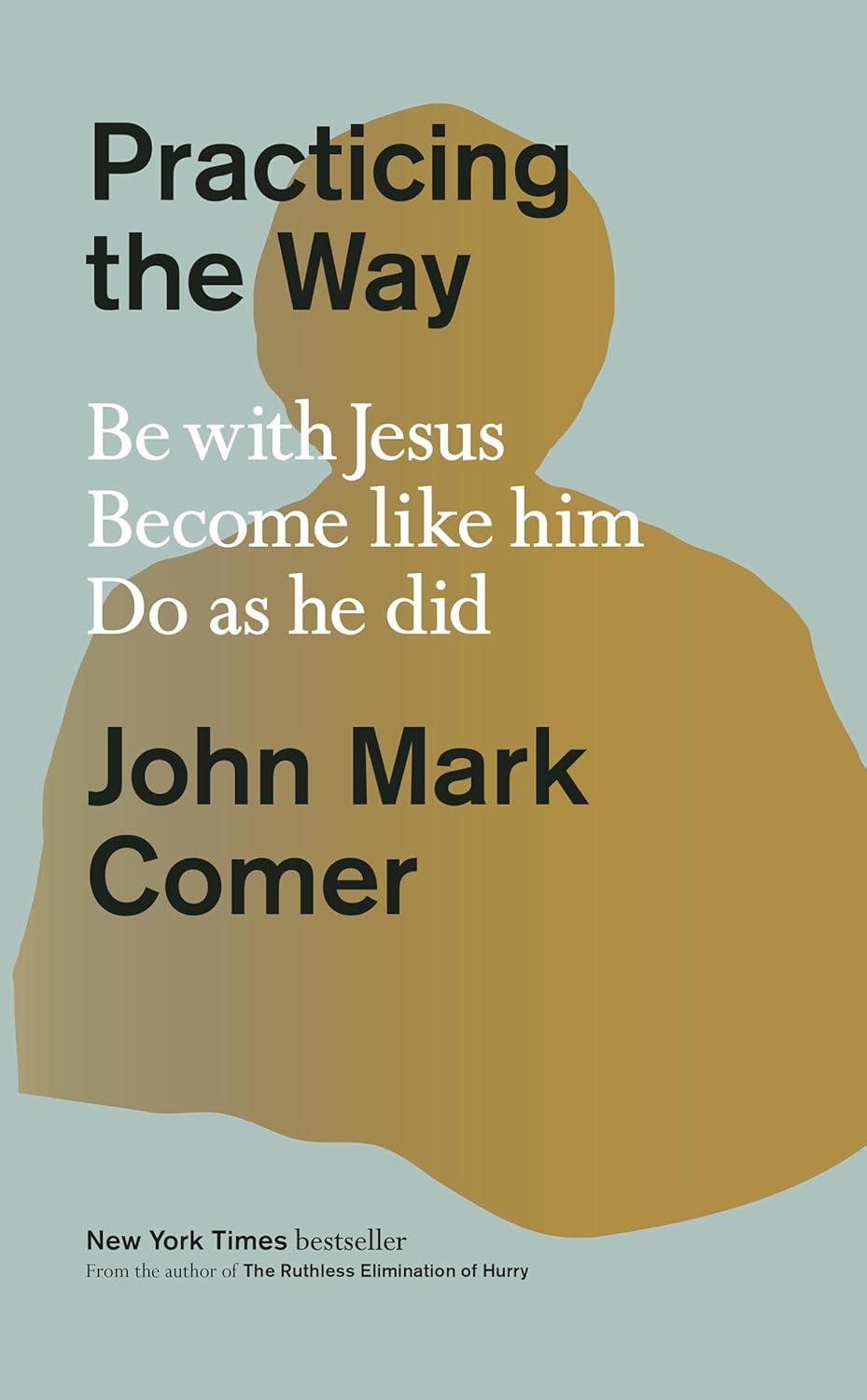
Practicing the Way

Having read “Practicing the Way: Be with Jesus. Become Like Him. Do as He Did” by John Mark Comer (WaterBrook, 2024, hardcover, ISBN 978-0-593-44615-9), I found the book to be both theologically coherent and pastorally grounded (I’m aware of Comer’s views or questions about Penal Substitutionary Atonement). Across its 289 pages, Comer offers what is less a theory of discipleship than a lived theology of union through practice—an apprenticeship of presence, formation, and participation patterned after the life of Christ. What first drew me in was his ability to speak from experience rather than abstraction. He begins with the crisis of formation that pervades modern discipleship—our habits, devices, and culture quietly molding us—and then methodically reintroduces what it means to abide in Christ as the central reality of faith. His writing blends clarity and candor; at no point does it feel instructional in the academic sense, but personal, persuasive, and devotional in tone.

By the time I reached the closing chapters (pp. 251–289), where Comer reflects on surrender and the joy of taking up one’s cross, the structure of his vision had become unmistakably clear: apprenticeship is the visible outworking of union with the indwelling Christ. The pages that lingered with me most—particularly pp. 183–210, on crafting a personal Rule of Life—captured his distinctive gift for translating ancient Christian wisdom into the language of a hurried modern world. WaterBrook’s publication serves this vision well: the book’s design, typography, and layout mirror the unhurried clarity of its message. Reading it cover to cover left me convinced that Comer’s project succeeds where many modern works on spirituality falter—it reclaims discipleship as a rhythm of grace, making the life of Christ not merely studied, but practiced.

Introduction

John Mark Comer’s Practicing the Way unfolds from a single conviction—that discipleship to Jesus is not intellectual assent but participatory union. Drawing from John 15:4-5, he insists that the life of the believer is one of abiding: “Abide in me, and I in you.” Union with Christ, in this vision, is a lived reality wherein the branches draw constant life from the Vine. Comer traces this abiding rhythm through the Gospels’ portrayal of Jesus’ intimacy with the Father—His pre-dawn prayer in solitude (Mark 1:35), His retreat to desolate places (Luke 5:16), His invitation to the weary, “Come to me…and you will find rest for your souls” (Matthew 11:28-29). These moments, he argues, are not peripheral devotions but the very pattern of divine-human communion. To be with Jesus thus becomes the foundation of transformation; Scripture, prayer, and stillness are not obligations but the Spirit’s chosen means of participation in the indwelling Christ (Ephesians 3:16-17). Comer presents this as the antidote to the hurried fragmentation of modern life: to dwell with Christ in every ordinary hour is to let eternal life begin now (John 17:3).

From this center, the book expands outward—becoming like Him and doing as He did—each movement expressing the dynamism of union. Comer turns to Romans 8:29—“to be conformed to the image of His Son”—to describe formation as the Spirit’s slow work of reshaping our desires and habits. He recalls Paul’s confession, “I have been crucified with Christ; it is no longer I who live, but Christ who lives in me” (Galatians 2:20), as the interior grammar of apprenticeship: not imitation by effort, but transformation by participation. From this inner likeness flows outward action—obedience born of love—as believers learn to “walk in the same way in which He walked” (1 John 2:6). Comer’s Rule of Life—structured rhythms of Sabbath (Genesis 2:2–3; Mark 2:27), prayer (Luke 11:1–2), fasting (Matthew 6:16–18), generosity (Acts 2:44–47), and witness (Matthew 28:19–20)—forms a trellis upon which divine life grows. Each discipline is an embodied confession of union: the daily, deliberate “putting on the Lord Jesus Christ” (Romans 13:14). His purpose is therefore both pastoral and incarnational—to recover discipleship as the practical outworking of the believer’s participation in the life of the Son, so that the presence once confined to Galilee might now inhabit every disciple’s table, calendar, and vocation.

Book Review

Be with Jesus — The Abiding Center

John Mark Comer begins Practicing the Way by naming what he calls the crisis of formation that underlies modern discipleship. Every person, he observes, is already being formed—by habits, devices, and culture—and the question is never whether we are apprentices but to whom. Citing Romans 12:2, “Do not be conformed to this world, but be transformed by the renewal of your mind,” he reminds readers that formation is inevitable; the only choice is its direction. The first act of apprenticeship, therefore, is presence: to live in conscious, moment-by-moment awareness of the risen Christ. Drawing from John 15:4–5, “Abide in me, and I in you… apart from me you can do nothing,” Comer describes union not as mystical vagueness but as relational participation—the life of the vine flowing through its branches. Presence becomes the antidote to distraction, echoing Colossians 3:1–3, where Paul commands believers to “set your minds on things above, where Christ is.” For Comer, this abiding awareness is the living root from which every other dimension of discipleship grows.

He sketches this presence through the practices of silence, solitude, and Sabbath, each a return to simplicity and unhurried communion. Pointing to Jesus’ own rhythm—“rising very early in the morning, while it was still dark, he departed and prayed” (Mark 1:35) and “withdrew to desolate places to pray” (Luke 5:16)—Comer interprets such passages as invitations into the cadence of the Son’s life with the Father. Sabbath, he notes, is not merely cessation but participation in God’s delight (Genesis 2:2–3; Mark 2:27). Through these patterns the restless soul learns the quiet steadiness of Christ’s own peace, the rest promised in Matthew 11:28–29, “Come to me… and you will find rest for your souls.” Thus the disciplines are not mechanical techniques but openings—ways of aligning time, body, and attention to the indwelling presence of the Spirit (Ephesians 3:16–17). Presence becomes both the ground and the grammar of apprenticeship: life lived in continual recollection of Christ within, until every ordinary moment hums with the awareness, “Christ in you, the hope of glory” (Colossians 1:27).

Become like Him — Formation as Participation

The second movement of Practicing the Way deepens Comer’s theology of union through transformation, grounding it firmly in Scripture’s vision of sanctification as participation in divine life. He begins with Romans 8:29, reminding that those whom God foreknew “He also predestined to be conformed to the image of His Son.” Spiritual formation, Comer explains, is the Spirit’s patient re-creation of our interior structure—desires, instincts, and reflexes—so that Christ’s likeness becomes not merely admired but embodied. He contrasts the cultural “default setting” of formation (Ephesians 2:2–3, being shaped by “the course of this world”) with the deliberate yielding of the self to the Spirit’s renewing power (Romans 12:2). Borrowing Paul’s image of transformation—“we all… are being transformed into the same image from one degree of glory to another” (2 Corinthians 3:18)—Comer calls this the automation of love: a condition in which virtue flows freely because the heart’s circuitry has been rewired by grace. Formation, then, is not moral training but the slow artistry of the Spirit who reorders the mind and affections until Christ Himself becomes the believer’s native impulse.

Here the book reaches its richest theological clarity. Comer insists that apprenticeship is not the pursuit of moral polish but the participation in divine life, echoing Galatians 2:20, “It is no longer I who live, but Christ who lives in me.” Union, he argues, is not static but kinetic—a living reciprocity between the indwelling Christ and the responsive disciple (Philippians 2:12–13). His language of habitus—the re-patterning of the self through repeated practices—recalls the early church’s exhortation to “train yourself for godliness” (1 Timothy 4:7–8) and the letter to the Hebrews where maturity comes through “constant practice” (Hebrews 5:14). “You become what you practice,” Comer writes, translating this apostolic principle into the language of modern psychology. For him, grace does not abolish effort; it sanctifies it, transforming discipline into delight. Every repeated act of obedience becomes participation in the Spirit’s reshaping of the soul, until love itself becomes instinctive—the spontaneous overflow of a heart fully united to Christ.

Do as He Did — Action as the Overflow of Union

The third arc of Practicing the Way turns outward. Having dwelt with Christ and been reshaped in His likeness, the apprentice now acts in His pattern. Comer anchors this movement in 1 John 2:6, “Whoever says he abides in Him ought to walk in the same way in which He walked.” The pattern of Jesus’ life—healing the sick (Matthew 10:7–8), proclaiming good news (Mark 1:14–15), welcoming the stranger (Luke 14:12–14), feeding the hungry (Mark 6:41–44), and confronting injustice (Luke 4:18–19)—becomes, in Comer’s framework, not a distant ideal but a practical vocation. To do as He did is the fruit of abiding union; the Spirit who indwells believers is the same Spirit who empowered the incarnate Son to serve and to love unto death (Philippians 2:5–8). This participation in Christ’s mission is not an optional extension of discipleship but its natural culmination, the visible expression of the inner communion described in John 20:21, “As the Father has sent Me, even so I am sending you.”

Comer’s tone throughout this section is quietly pastoral rather than triumphalist. The disciple’s deeds, he writes, are the spontaneous overflow of divine love—“We love because He first loved us” (1 John 4:19). Acts of hospitality (Romans 12:13), generosity (2 Corinthians 9:7), mercy (Luke 6:36), and proclamation (Matthew 28:19–20) are not strategies but sacraments of communion, extensions of Christ’s own compassion into the fractures of the world. Comer deliberately avoids abstraction, stressing small fidelity—the faithfulness of the table, the neighbor, the parish, and the street. In his hands, the imitation of Christ becomes a humble realism: discipleship lived not in spectacle but in constancy, not in spiritual heroics but in the quiet endurance of everyday love, echoing Colossians 3:17, “Whatever you do, in word or deed, do everything in the name of the Lord Jesus.”

A Rule of Life — The Trellis of Grace

The practical centerpiece of Practicing the Way—and the heart of Comer’s legacy—is his recovery of the Rule of Life. He portrays it as a “trellis” supporting the vine of devotion, echoing John 15:5, “I am the vine; you are the branches.” A trellis, he explains, does not cause growth but provides the structure through which life can flourish. Every life, he argues, already operates by a rule—habits and patterns that silently shape desire. Citing 1 Corinthians 9:24–27, Comer urges believers to live with intentional spiritual rhythm, “running in such a way as to obtain the prize,” rather than by unexamined chaos. To craft a conscious Rule is to align one’s time, body, relationships, work, and rest with the Way of Jesus, forming a daily liturgy of abiding. In this sense, the Rule becomes a living exegesis of Ephesians 5:15–16, “Look carefully then how you walk… making the best use of the time, because the days are evil.”

Comer’s Rule integrates nine enduring practices—Sabbath, solitude, prayer, fasting, Scripture, community, generosity, service, and witness—each drawn from the pattern of Jesus’ own life. He references Mark 2:27 to show Sabbath as divine gift, Mark 1:35 for solitude, Luke 11:1–2 for prayer, and Matthew 6:16–18 for fasting. Scripture meditation reflects Psalm 1:2, community echoes Acts 2:42, generosity draws from 2 Corinthians 9:7, service from John 13:14–15, and witness from Matthew 28:19–20. Each practice is not moral effort but participation in divine life—habits that make space for grace. Comer likens this to the “training” Paul commends in 1 Timothy 4:7–8, “Train yourself for godliness.” He advises small beginnings, communal accountability (Ecclesiastes 4:9–10), and seasonal reevaluation, emphasizing that the Rule must remain dynamic and life-giving. In his portrayal, practice becomes participation—the doing of what Jesus did, not as mimicry but as manifestation of shared life, “Christ in you, the hope of glory” (Colossians 1:27).

A. What Is a Rule of Life? — A Garden Trellis for the Soul

Comer defines a Rule of Life as a pattern of practices and relational rhythms that help the disciple remain in abiding union with Jesus. The term rule comes from the Latin regula—the same root as “trellis”—a frame that guides a living vine. Drawing from John 15:5, “I am the vine; you are the branches,” he teaches that the trellis does not make the plant grow but simply supports the life already pulsing within it. Every person, Comer insists, already lives by a rule, usually unspoken and chaotic; the task of apprenticeship is to make that rule conscious, ordered, and Christ-centered. The Rule is not legalism but love structured into time: a design for flourishing that creates the conditions for grace to circulate freely. Comer’s goal is simple—turn spiritual aspiration into embodied rhythm.

B. Why a Rule Matters — Guarding Habits, Guiding Loves

In this section Comer explains why structure is essential for transformation. Our habits, he says, always disciple us; therefore, the follower of Jesus must craft habits that lead toward Him rather than away. He cites Romans 12:2, “Be transformed by the renewal of your mind,” and insists that renewal must be ritualized in daily and weekly routines. The Rule guards what he calls the “five centers of formation”—time, body, relationships, work, and rest—helping each conform to Christ’s pattern. He reminds that even Jesus lived by rhythm: prayer at dawn (Mark 1:35), work by day, rest by night, and Sabbath joy (Luke 4:16; Mark 2:27). The Rule thus becomes a “spiritual architecture” that protects attention from the tyranny of distraction and aligns affection with the kingdom of God.

C. The Nine Core Practices — How to Live the Way of Jesus

Comer then outlines nine specific practices—each modeled in the life of Christ and rooted in Scripture—through which disciples learn to remain in His love:

  1. Sabbath – A full day each week for worship, rest, delight, and restoration (Genesis 2:2–3; Exodus 20:8–11; Mark 2:27).
  2. Solitude – Regular withdrawal from noise to meet the Father in secret (Mark 1:35; Luke 5:16).
  3. Prayer – Both set times and spontaneous communion (Luke 11:1–2; 1 Thessalonians 5:17).
  4. Fasting – Periodic abstention from food or comfort to sharpen dependence on God (Matthew 6:16–18).
  5. Scripture – Daily reading and meditation on God’s Word (Psalm 1:2; 2 Timothy 3:16–17).
  6. Community – Covenant relationships that nurture confession, accountability, and joy (Acts 2:42–47; Hebrews 10:24–25).
  7. Generosity – Open-handed stewardship of resources (Luke 12:33–34; 2 Corinthians 9:7–8).
  8. Service – Humble acts of love patterned after Christ washing His disciples’ feet (John 13:14–15; Mark 10:45).
  9. Witness – Sharing the good news of the kingdom in word and deed (Matthew 28:19–20; Acts 1:8).

Comer encourages readers to begin modestly—perhaps one or two practices at a time—so that devotion remains joyful rather than burdensome. Over time, these disciplines become what he calls “the automation of love,” habits through which divine life flows naturally.

D. How to Build Your Own Rule — Small, Simple, Sustainable

After presenting the nine practices, Comer gives a step-by-step process for crafting a personal or communal Rule.

  1. Name your season of life. Be realistic about capacity and calling (Ecclesiastes 3:1).
  2. Discern your loves. Identify what draws you toward or away from Christ (Matthew 6:21).
  3. Choose a few core practices. Focus on quality, not quantity.
  4. Schedule them concretely. Block time for Scripture, prayer, Sabbath, and fellowship—structure your calendar around abiding, not activity.
  5. Share it in community. Let trusted friends hold you accountable (Ecclesiastes 4:9–10).
  6. Review it seasonally. Adapt your Rule as life changes; allow it to breathe like a living organism.

Comer urges that a good Rule will be honest, humble, and flexible. He compares it to “training wheels for love,” helping disciples learn balance until grace becomes second nature.

E. The Rule in Community — Practicing the Way Together

Comer insists the Rule is not meant for private asceticism but for shared apprenticeship. Drawing from Acts 2:42, he envisions small groups of believers adopting common rhythms—shared meals, prayer, service, and Scripture—so that spiritual formation becomes mutual rather than solitary. The church, he writes, must be re-imagined as “a community of practice,” not merely a weekly event. Through communal Rule, disciples help one another stay with Jesus when individual resolve falters, embodying Hebrews 3:13, “Encourage one another daily… that none of you may be hardened by sin’s deceitfulness.”

F. The Fruits of a Rule — Freedom, Joy, and Grace

The Rule’s purpose, Comer concludes, is not control but communion. When lived with sincerity, it yields the freedom of rhythm rather than rigidity: unhurried time, deeper relationships, and a heart more attuned to Christ’s peace. Echoing Galatians 5:25, he writes that a Spirit-shaped Rule allows us to “keep in step with the Spirit.” Grace flows through structure, just as a river flows through its banks. The final fruit is joy—the same joy Jesus promised in John 15:11, “that My joy may be in you, and that your joy may be full.” For Comer, the Rule of Life is therefore nothing less than the framework for union through practice—a pattern of days through which divine life takes form in the disciple’s own flesh, habits, and hours.

Take up Your Cross — The Cost and the Joy

The final chapters of Practicing the Way return to the paradox of grace and surrender. To follow the Way, Comer writes, is to take up the cross—the surrender of autonomy, the acceptance of limitation, the willingness to die daily. He grounds this in Luke 9:23, “If anyone would come after Me, let him deny himself and take up his cross daily and follow Me.” True apprenticeship, he explains, involves the daily relinquishing of self-rule in order to live under Christ’s gentle lordship. Comer contrasts the cost of discipleship with what he calls the cost of non-discipleship, echoing Matthew 16:24–26, where Jesus warns that gaining the world at the expense of one’s soul is ultimate loss. Refusal to follow, Comer reminds, exacts its own ruin—a slow spiritual decay beneath the illusion of freedom. Yet the cross, rightly seen, is not mere burden but the narrow gate to joy: “Whoever loses his life for My sake will find it.”

For Comer, the cross-shaped life is entrance into communion with the Crucified and Risen One. He points to Romans 6:4–5, where baptism symbolizes dying and rising with Christ, and to Philippians 3:10, where Paul longs “to know Him and the power of His resurrection, and may share His sufferings.” The way of surrender thus becomes participation in resurrection life—death as doorway to renewal. Comer writes tenderly of failure and of beginning again, echoing Lamentations 3:22–23, “His mercies are new every morning.” Grace, he insists, is the atmosphere of discipleship; the apprentice lives not by perfection but by perseverance within mercy. To take up the cross is therefore not an act of grim austerity but an awakening to joy—the gladness of sharing Christ’s life and love, as He Himself declared: “These things I have spoken to you, that My joy may be in you, and that your joy may be full” (John 15:11).

Stylistic and Pastoral Distinctives

Comer writes as one who walks the road he describes. His words are pastoral but unpretentious, grounded more in Scripture than in style. He speaks as a disciple still learning, echoing Paul’s own confession: “Not that I have already obtained this, or am already perfect, but I press on.” That honesty makes his teaching believable. Discipleship, as he presents it, is not a system to master but a life to grow into. His tone follows the gentleness of Christ’s own call: “Take My yoke upon you, and learn from Me.” Formation, for Comer, is not performance but participation—a shared life of grace, one step at a time.

Practicing the Way holds together the truth of theology and the substance of ordinary days. Comer writes not as a theorist, but as one learning to live what he teaches. Like Paul, he disciplines himself so that his life confirms his words (1 Cor. 9:27). Yet he does not harden into rule; he remains open to the frailty and growth that mark every soul beginning the spiritual path. His counsel reflects James’s call to be “doers of the word, and not hearers only” (Jas. 1:22). When he turns to the older wisdom of silence, simplicity, and stability, it is not nostalgia but obedience—“whatever you do, in word or deed, do all in the name of the Lord Jesus” (Col. 3:17). His vision is not of theory but of practice, where faith is formed in the quiet labor of ordinary days.

Synthesis — Union by Action

At its heart, Practicing the Way is a theology of union expressed through practice—a life shaped by the pattern of Scripture. To be with Jesus is to enter the stillness of contemplative union: “Abide in Me, and I in you… apart from Me you can do nothing” (John 15:4–5). To become like Him is the work of transformation, “to be conformed to the image of His Son” (Rom. 8:29). And to do as He did is participation in His life: “Whoever says he abides in Him ought to walk in the same way in which He walked” (1 John 2:6). These movements—presence, formation, and mission—trace the rhythm of divine life within the believer. The Rule of Life, then, is not a structure by which one ascends, but a posture by which one abides. It orders time so that grace might find room to dwell—“If we live by the Spirit, let us also keep in step with the Spirit” (Gal. 5:25). It is the pattern of grace meeting the hours, the sanctification of the ordinary.

Comer’s vision binds the ancient and the near at hand. He joins Benedict’s ordered stability with the immediacy of evangelical faith. His counsel echoes Paul’s charge, “Whatever you do, in word or deed, do everything in the name of the Lord Jesus” (Col. 3:17), and James’s reminder that faith finds its wholeness in action (Jas. 2:22). In reclaiming the discipline of ordered life, Comer restores the nearness of obedience—prayer given form in the day’s rhythm, mercy practiced among one’s own, love carried quietly through habit. Practicing the Way becomes the daily embodiment of Christ’s life within His people: “Christ in you, the hope of glory” (Col. 1:27). Union, as Comer describes it, is not a theory to be understood but a grace to be lived—faith traced through time, until every act bears the likeness of its Lord.

Conclusion

Practicing the Way stands as one of the most lucid contemporary guides to embodied discipleship. Its language of apprenticeship re-enchants daily obedience, grounding spirituality in imitation that flows from indwelling. The Rule of Life it commends can be adopted, adapted, or expanded, but its essence remains: to practice the life of Jesus until His life becomes our own.

If the modern church has often separated belief from being, Comer’s work reunites them. To practice the Way is to live our union with Christ openly—thinking, resting, working, and loving as extensions of His presence in the world.

Continue Reading ·