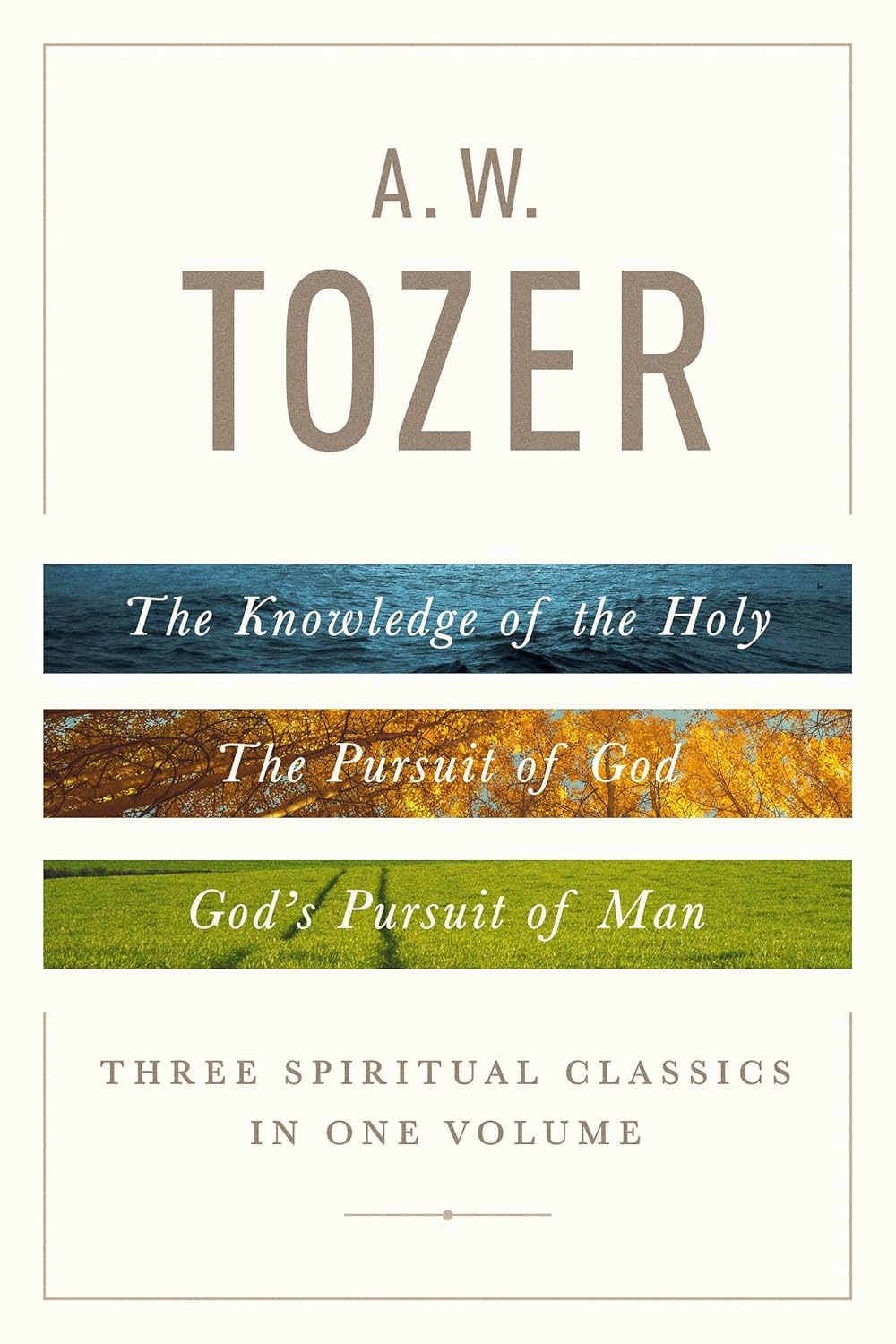
God’s Pursuit of Man is the third book I’ve read by A. W. Tozer, and it stands in clear continuity with the others in both concern and direction. This book is about God’s initiative toward humanity as Scripture presents it—not as a theological abstraction, but as God’s active pursuit carried out by His own presence. Tozer organizes the work around the ways God acts across time and within history: speaking by His word, calling men and women to Himself, illuminating the mind, and exercising power that does not arise from human effort. The movement of the book remains deliberate, beginning with God’s eternal nature and pressing steadily toward how that eternal purpose takes form in lived encounter rather than human construction or control.
As the chapters unfold, the focus narrows toward the person and work of the Holy Spirit, treated not as an added element of Christian belief but as central to how God makes Himself known and present. Tozer addresses illumination, power, purification, and reception, showing why spiritual life cannot be sustained by intellect, form, or discipline alone. A recurring contrast is drawn—not between belief and unbelief, but between what can be maintained by religious structure and what comes only through God’s active indwelling presence. The book moves toward its conclusion by clarifying the Spirit-filled life in strictly biblical terms, presenting it not as a special category or heightened state, but as the ordered condition of life lived under the ongoing action of God who has drawn near and remains.
God’s Pursuit and the Indwelling Spirit
Contents
- God’s Pursuit and the Indwelling Spirit
- Abstract
- I. The Eternal Continuum
- II. In Word, or in Power
- III. The Mystery of the Call
- IV. Victory through Defeat
- V. The Forgotten One
- VI. The Illumination of the Spirit
- VII. The Spirit as Power
- VIII. The Holy Spirit as Fire
- IX. Why the World Cannot Receive
- X. The Spirit-Filled Life
- XI. Conclusion:
A Theological Exposition of A. W. Tozer’s God’s Pursuit of Man
Abstract
This monograph interprets God’s Pursuit of Man (1950) as a theology of divine initiative culminating in indwelling presence. Whereas The Pursuit of God articulates the regenerate soul’s conscious seeking of God, this later work reverses the axis of attention, presenting salvation and spiritual life as grounded in God’s prior movement toward man by the Holy Spirit. Tozer traces the pursuit of God from eternity into time, through divine calling, illumination, empowerment, purification, and abiding presence, insisting that human response never precedes divine action. The book advances a pneumatological realism in which the Spirit is neither metaphor nor adjunct, but the active agent by whom God takes up residence within the believer.
Situated within classical Christian theology, Tozer’s treatment aligns closely with Augustinian grace and Reformed insistence upon divine primacy, while drawing deeply from patristic categories of participation without dissolving the Creator–creature distinction. His account of Spirit-filling is not experiential inflation, but the ordered condition of life governed by indwelling presence. The Spirit’s work is shown to be continuous rather than episodic, interior before demonstrative, and relational rather than method-driven. God’s Pursuit of Man thus presents a theology of Christian life in which obedience, illumination, and power flow not from human construction, but from the sustained activity of God who dwells within those He has called.
Author’s Note
This work has been written in the tone of theological synthesis rather than pastoral exhortation, approaching A. W. Tozer as a disciplined theologian of divine presence rather than a mere devotional writer. Composed as a complement to The Pursuit of God, God’s Pursuit of Man carries a quieter but weightier emphasis, shifting attention from the soul’s seeking to God’s abiding action. Its argument is not speculative, but ordered—moving from God’s eternal nature to His indwelling presence by the Spirit, and in so doing clarifying the ground upon which all genuine spiritual life stands.
The intention here is not to modernize or extend Tozer’s thought, but to unfold it along its own internal logic. His theology of the Holy Spirit remains resolutely biblical, drawing implicitly from Augustine’s doctrine of grace, Calvin’s teaching on inward illumination, and the broader patristic witness to participation through divine indwelling. Yet Tozer resists both mysticism untethered from Scripture and formalism detached from presence. What emerges is a sober evangelical theology of the Spirit, in which God’s pursuit finds its end not in religious attainment, but in restored communion—God dwelling within man by grace, and governing the life He has claimed.
I. The Eternal Continuum
Tozer begins by situating God not within time but above it, establishing at the outset that God’s dealings with man proceed from eternity rather than unfolding as reactions to history. Scripture consistently presents God as the One who “inhabits eternity” and declares the end from the beginning (Isaiah 57:15; Isaiah 46:10), and Tozer presses this truth to steady the reader’s understanding of salvation itself. The key idea is not metaphysical distance but continuity: God’s pursuit of man does not begin when man becomes aware of God, but because God has already purposed to act. This eternal grounding explains why divine calling, grace, and redemption are not sporadic or conditional, but consistent and purposeful. Hebrews affirms this continuity plainly—“Jesus Christ is the same yesterday and today and forever” (Hebrews 13:8)—and by anchoring the entire discussion here, Tozer prepares the reader to see every subsequent chapter not as a separate movement, but as the unfolding of one eternal intention carried forward into time.
II. In Word, or in Power
Having established the eternal source of God’s action, Tozer turns to the means by which that action is made known, drawing a careful distinction between words spoken and power at work. Scripture never treats God’s word as inert or merely informative, and Paul’s insistence that “the kingdom of God does not consist in talk but in power” (1 Corinthians 4:20) serves as a quiet corrective to religious speech untethered from divine action. The central concern here is effectiveness, not accuracy: God’s word accomplishes its purpose only as God Himself attends it. This is why the gospel is described not simply as truth, but as “the power of God for salvation” (Romans 1:16). Tozer allows this tension to remain unresolved at the practical level, pressing the reader to recognize that where God’s word is heard without God’s power, religious life may multiply explanations while remaining unchanged, setting the stage for the deeper question of how God Himself must act upon the soul.
III. The Mystery of the Call
From word and power, Tozer moves inward to the call of God, treating it not as an emotional experience or vocational idea, but as a direct summons that originates entirely in God’s will. Christ’s statement—“No one can come to me unless the Father who sent me draws him” (John 6:44)—stands behind the chapter as both explanation and boundary. The call of God, Tozer insists, is not produced by readiness, persuasion, or desire, but arrives as God’s initiative toward a person. This calling carries authority because it precedes consent, and Scripture binds it inseparably to God’s redemptive action: “those whom he called he also justified” (Romans 8:30). Rather than explaining how the call is perceived, Tozer allows its mystery to remain, leaving the reader with the weight of a God who speaks first and calls men not when conditions are ideal, but when His purpose unfolds.
IV. Victory through Defeat
Tozer next addresses the tension that arises when God’s calling collides with human self-reliance, tracing a pattern Scripture repeats with quiet insistence. Christ’s words—“Whoever loses his life for my sake will find it” (Matthew 16:25)—and Paul’s confession that God’s power is “made perfect in weakness” (2 Corinthians 12:9) reveal a divine logic that runs counter to natural expectation. The heart of the chapter lies here: God often advances His work by dismantling the structures man depends upon. What appears as defeat—loss of control, exposure of weakness, failure of self-direction—is frequently the means by which God establishes genuine dependence. Tozer does not glorify loss for its own sake, but shows how surrender clears the ground for obedience, preparing the reader to see yielding not as regression, but as necessary movement toward alignment with God’s will.
V. The Forgotten One
With dependence now in view, Tozer turns directly to the Holy Spirit, addressing the quiet absence that results when the Spirit is acknowledged in belief but neglected in practice. Jesus’ promise of another Helper who would dwell with and in believers (John 14:16–17) sets the framework, establishing the Spirit not as an aid to be invoked, but as God’s abiding presence. The key issue Tozer raises is not denial, but displacement—allowing structure, effort, or habit to take the place of living dependence. Scripture speaks plainly here: “Anyone who does not have the Spirit of Christ does not belong to him” (Romans 8:9). By presenting the Spirit as essential rather than supplemental, Tozer gently shifts the reader away from organized religion toward relational life, opening the way for a deeper consideration of how God makes truth known.
VI. The Illumination of the Spirit
Turning from presence to perception, Tozer addresses the question of understanding, drawing attention to Scripture’s insistence that divine truth requires divine illumination. Paul’s words—“The natural person does not accept the things of the Spirit of God” (1 Corinthians 2:14)—clarify the limitation, while the psalmist’s prayer, “Open my eyes, that I may behold wondrous things out of your law” (Psalm 119:18), gives voice to the proper posture. The central claim is simple but demanding: truth is not grasped merely by study or sincerity, but must be made known by God Himself. Without this illumination, Scripture may be read faithfully yet remain external, accumulating knowledge without shaping life. Tozer leaves the reader here not with technique, but with dependence, preparing the ground for understanding spiritual power rightly.
VII. The Spirit as Power
From illumination, Tozer moves to empowerment, anchoring the discussion in Christ’s promise that the Spirit would bring power upon His coming (Acts 1:8). This power, however, is carefully distinguished from energy, ambition, or religious momentum. The chapter’s central concern is origin: true spiritual power flows from God’s presence rather than human capacity. Tozer reinforces this by showing how Scripture associates power not with dominance, but with faithfulness, endurance, and witness aligned with God’s purpose. Where the Spirit supplies power, obedience is sustained and testimony strengthened, not by amplifying personality, but by governing direction, leading naturally into the refining work that accompanies true empowerment.
VIII. The Holy Spirit as Fire
Here Tozer develops the biblical imagery of fire, drawing from John the Baptist’s words that Christ would baptize “with the Holy Spirit and fire” (Matthew 3:11), and from the declaration that “our God is a consuming fire” (Hebrews 12:29). Fire, as Scripture presents it, purifies before it comforts and refines before it reassures. The chapter centers on removal rather than addition: what cannot coexist with God’s holiness must be burned away. Echoing Malachi’s image of the refiner (Malachi 3:2–3), Tozer frames this work not as punishment, but as preparation, allowing the reader to see purification as a necessary condition for deeper fellowship rather than an obstacle to it.
IX. Why the World Cannot Receive
Tozer then addresses the contrast between the Spirit’s work and the world’s understanding, grounding the discussion in Christ’s statement that the world cannot receive the Spirit because it neither sees nor knows Him (John 14:17). This inability is not presented as moral failure, but as spiritual incompatibility, rooted in differing foundations. Paul’s assertion that spiritual things are discerned only by the Spirit (1 Corinthians 2:14) reinforces the limitation. By framing this as description rather than condemnation, Tozer allows the reader to recognize why spiritual life remains unintelligible outside God’s initiative, clearing the way for his final synthesis of what life governed by the Spirit looks like.
X. The Spirit-Filled Life
In the closing chapter, Tozer returns to Paul’s instruction to “be filled with the Spirit” (Ephesians 5:18), treating it not as an isolated experience but as the settled condition toward which all of God’s pursuing work has been moving. Filling is presented as the shaping influence of God’s indwelling presence over the whole life, revealed not in excess, but in order. Paul’s description of worship, gratitude, and mutual submission (Ephesians 5:19–21) provides the scriptural grounding, showing that Spirit-filled life expresses itself through coherence rather than display. With this, Tozer allows the argument to rest where it began—not in human striving, but in God’s abiding presence ordering the life He has sought and claimed.
XI. Conclusion:
God’s Pursuit of Man refuses to let the reader think of God as merely near, helpful, or occasionally involved. Tozer keeps pressing toward something more demanding and more decisive: God’s aim is to dwell. Not to influence from a distance or assist improved effort, but to take up residence. When Scripture speaks of “Christ in you” (Colossians 1:27) or of the Spirit dwelling within (Romans 8:10), Tozer treats this language as literal, not figurative or sentimental. God’s pursuit, in his framing, does not reach its end when man holds true beliefs about God; it reaches its end when God is present within the person He has sought.
Once that is settled, the language of being “filled with the Spirit” falls into place. Tozer is not directing the reader toward an experience to be chased or a state to be measured, but describing what occurs when the indwelling presence of God is no longer resisted. Filling is not God arriving again, but God ordering what is already His—thoughts, desires, obedience, worship. The life that follows is not marked by outward intensity but by ordered obedience; not by urgency, but by steadiness; not by display, but by governance from within. What is set aside is not responsibility, but self-direction, and what is received is a life brought into coherence under the quiet rule of the God who dwells within.


Comments are closed.