Today I completed Saint Basil the Great’s On the Holy Spirit, translated by Stephen M. Hildebrand in the Popular Patristics Series from St. Vladimir’s Seminary Press (ISBN 978-0-88141-876-7). This reading was recommended to me while I was still making my way through Augustine’s De Trinitate, which I have been reading slowly with heavy annotations. Basil’s book is much shorter and stays close to the Holy Spirit, while Augustine takes up the Trinity on a much larger scale. Reading Basil before completing Augustine gave me another fourth-century perspective while that larger study was still underway.
I wanted to understand more clearly what the early Church was saying about the Spirit, especially in relation to sanctification, participation in the life of God, and the believer’s life in Christ. Basil gave me an eastern fourth-century voice while I continued working through Augustine, and that alone made the reading worthwhile.
That is also why this book deserves more than a brief note before moving on. I found much in Basil that seems plainly rooted in Scripture: the Spirit gives life, sanctifies, distributes gifts, brings adoption, illumines, restores, and brings the believer into communion with God. At the same time, there are places where I want to slow down and test his reasoning more carefully, especially where he moves from Scripture to ecclesiastical tradition and practices not explicitly given in the written text.
I do not read Basil because he is early and therefore must be right, nor because a later tradition claims him. I read him because he stands close enough to the Church’s early doctrinal struggles to be worth hearing carefully, while still needing to be judged by the same Scripture he so often appeals to. The review ahead is therefore less about whether Basil fits neatly into a later camp and more about what he actually says, what Scripture supports, and what I learned from reading him.
Introduction
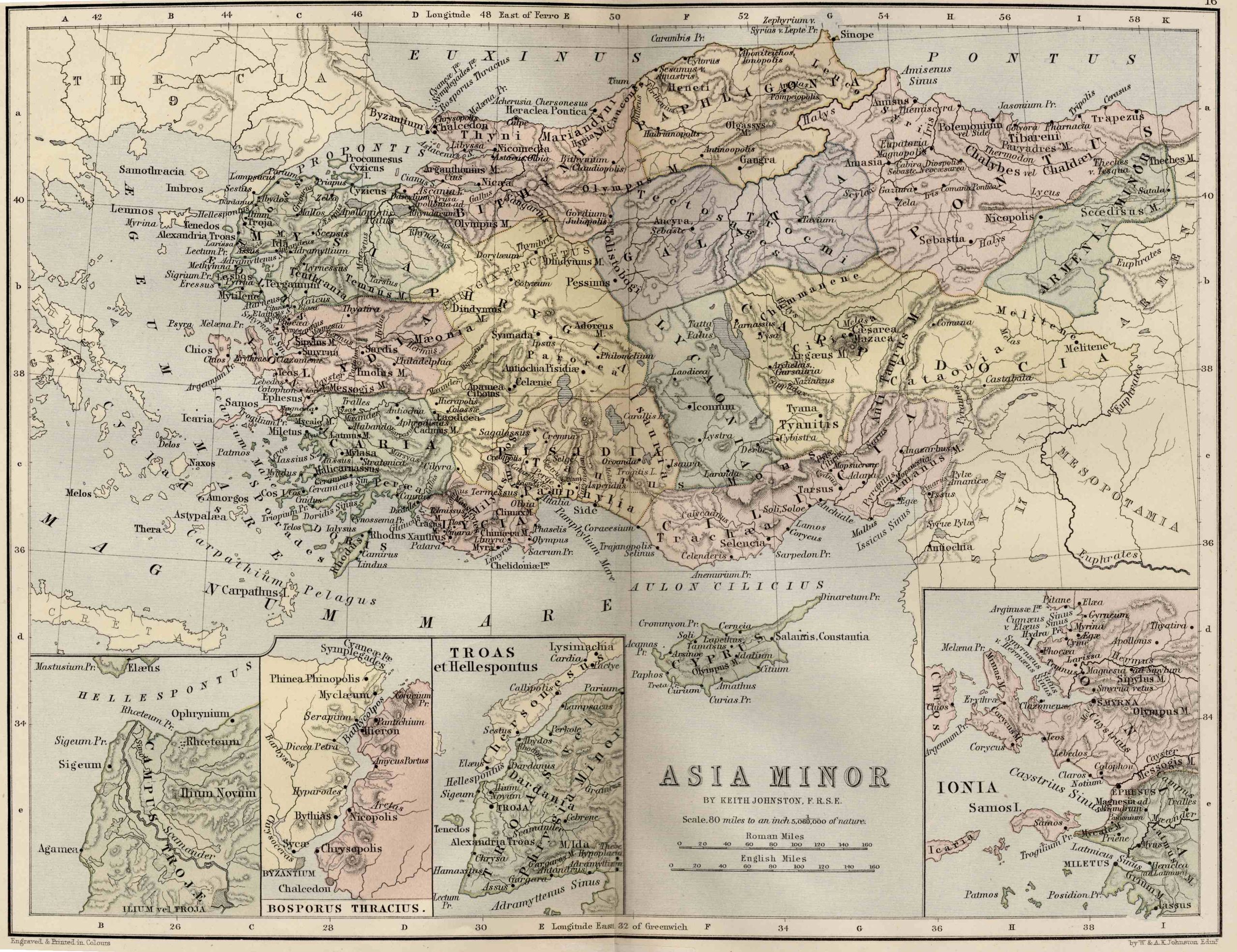
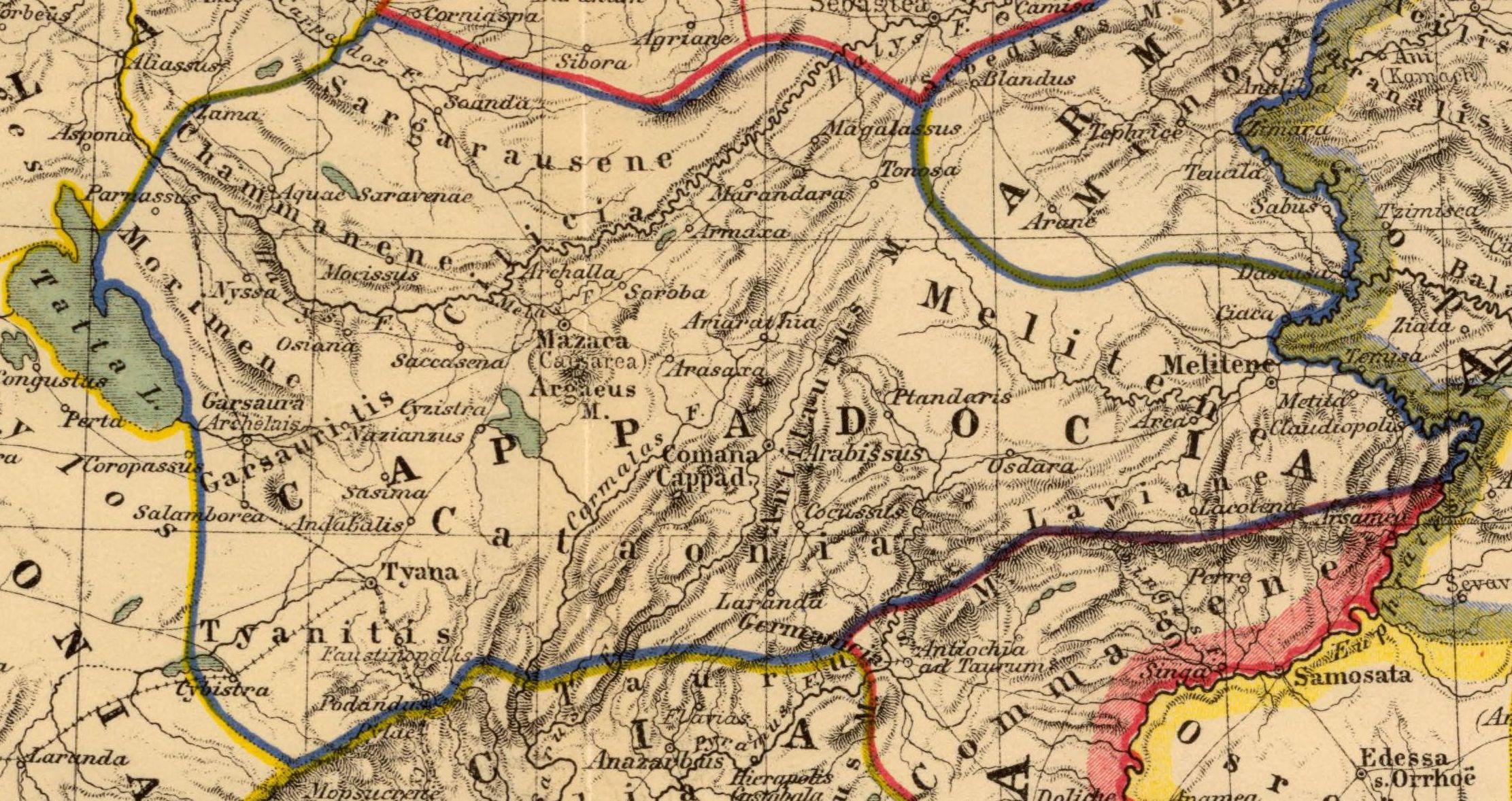
On the Holy Spirit, long known under the Latin title De Spiritu Sancto, was written by Saint Basil the Great around A.D. 374–375. Basil lived from about 329 to 379 and became bishop of Caesarea in Cappadocia in 370. This was Caesarea Mazaca in central Asia Minor, near modern Kayseri in Turkey, not the coastal Caesarea found in the New Testament. Basil is often called Saint Basil the Great, Archbishop of Caesarea. In his own time, he was bishop and metropolitan of Caesarea, which meant that as bishop of the provincial capital he held a senior place among the bishops of Cappadocia and had influence beyond his own city. The later title “archbishop” reflects that standing. “The Great” reflects the lasting importance of his work as a pastor, theologian, ascetic teacher, administrator, and defender of Nicene Christianity.
Basil came from a wealthy Christian family that had already suffered during earlier Roman persecutions. He received a strong classical education in Caesarea, Constantinople, and Athens, studying rhetoric, philosophy, literature, and other subjects expected of an educated man in the Greco-Roman world. In Athens, he formed a lasting friendship with Gregory of Nazianzus, while his younger brother Gregory of Nyssa later became another major theologian of the fourth century. Basil could have pursued a public career but eventually turned toward the ascetic life and then ordained ministry.
As bishop, he did much more than preach. He dealt with disputes, government officials, clergy, surrounding churches, and the care of the poor. He also established the charitable complex later called the Basileiad, which cared for the poor, sick, travelers, and others in need. Basil’s theology came out of that setting. He was writing as a bishop responsible for churches and people, not simply as a scholar discussing theology at a distance.
The setting was not peaceful. Basil wrote while churches were divided over these questions; bishops could be removed from office or exiled, churches could be taken from Nicene congregations, and imperial officials could use confiscation, intimidation, and even threats of torture or death to force conformity. Basil faced some of those threats himself under Emperor Valens. He wanted unity, but he was not willing to get there by leaving the identity of the Holy Spirit vague.
The need for On the Holy Spirit came from a doctrinal question that Nicaea had not fully developed. The Council of Nicaea in 325 focused mainly on the Son’s relation to the Father and said only briefly, “and in the Holy Spirit.” In the decades that followed, the controversy moved to the Spirit. Some who rejected Arian teaching about the Son were still unwilling to give the Holy Spirit the same divine honor given to the Father and the Son. These opponents became known as Pneumatomachians, or “fighters against the Spirit,” and were later associated with the Macedonian controversy. Basil wrote after Nicaea had confessed the Son’s full deity, while the Church was still working through what Scripture required Christians to confess about the Spirit. About two years after Basil’s death, the creed associated with Constantinople in 381 would confess the Holy Spirit as “the Lord and Giver of Life,” worshiped and glorified with the Father and the Son.
The immediate occasion was a dispute over worship. Basil had been criticized for using a doxology that gave glory to the Father with the Son and the Holy Spirit, rather than limiting himself to formulas such as glory to the Father through the Son in the Holy Spirit. What sounds like an argument over prepositions was really an argument about the Spirit’s identity. If the Spirit could rightly be glorified with the Father and the Son, then He could not simply belong to the created order that worships God.
Amphilochius of Iconium, a younger bishop and friend of Basil who was also related to Gregory of Nazianzus, asked Basil for a fuller explanation. Their conversations around 374 became the occasion for On the Holy Spirit, which Basil dedicated to Amphilochius. This helps explain why the book spends so much time on words such as through, in, from, and with. Basil was not arguing about grammar for its own sake. He believed the way Christians spoke about God had doctrinal consequences. That also raises a larger question I return to later: what weight should be given to practices received and accepted by the early Church, and preserved in Christian practice for centuries, even when they are not explicitly commanded in Scripture?
The Cappadocian Fathers
The Cappadocian Fathers were Basil the Great, Gregory of Nazianzus, and Gregory of Nyssa, three fourth-century bishops and theologians from Cappadocia in Asia Minor. Basil and Gregory of Nyssa were brothers, while Gregory of Nazianzus was Basil’s close friend. They belonged to the same theological struggle, but they were not simply three versions of the same man. Their personalities, ministries, and ways of arguing were different, and each contributed something distinctive to the Church’s developing language about the Trinity.
What joined their work was the need to confess the Father, Son, and Holy Spirit as truly divine without either dividing God into three beings or confusing the distinction between the persons. The distinction between ousia and hypostasis became especially important in expressing one divine nature while preserving the real distinction of Father, Son, and Holy Spirit. Basil often argued with considerable care from Scripture, worship, and the Church’s received language; Gregory of Nazianzus stated the divinity of the Spirit more explicitly; and Gregory of Nyssa developed many of the same questions through sustained theological reflection.
Their importance for me is partly historical. They were working through these questions before the later divisions between Eastern Orthodox, Roman Catholic, and Protestant churches had taken their mature form. Reading them therefore gives access to an earlier stage of Christian theological reasoning, when Christians were testing, defending, and clarifying some of the language they still use about the Trinity. That does not place their conclusions beyond examination by Scripture, but it does make their reasoning worth hearing on its own terms.
Basil of Caesarea
Basil’s other writings give a clearer picture of the kind of theologian and pastor behind On the Holy Spirit. His classical education is obvious, but he does not seem interested in displaying learning for its own sake. In the Hexaemeron, his homilies on the six days of creation, he works closely with the language of Genesis and repeatedly resists interpretations that allow speculation to move too far beyond the text. At the same time, he does not leave exegesis at the level of explanation. Creation becomes a reason for worship, moral reflection, humility, and obedience. Even his observations about animals can turn abruptly into warnings about greed, injustice, diligence, or the way one person treats another.
The same orientation from Scripture to Christian life appears in his ascetic writings. Basil’s concern is not simply withdrawal or bodily severity. Prayer, Scripture, work, self-control, obedience, common life, and care for others belong together. Work is valuable not only as discipline but because it allows Christians to provide for the weak and serve their neighbors. His asceticism is therefore strongly communal. The Christian is being formed into a life ordered toward God and toward the good of other people, which helps explain why Basil’s concern for discipline could exist alongside his extensive work for the poor and sick.
His letters reveal another side of him. Basil could be forceful, frustrated, affectionate, diplomatic, and deeply concerned about the fragmentation of the churches. He repeatedly sought peace and the restoration of communion, but not by treating doctrinal differences as unimportant. He could appeal for patience and negotiation while also insisting that unity had to preserve the Nicene faith and the proper confession of the Holy Spirit. What emerges is a bishop for whom doctrine, worship, church order, and Christian conduct could not finally be separated. That helps explain the character of On the Holy Spirit. His attention to words such as with, through, and in was not grammatical precision for its own sake. He believed the way Christians spoke about God eventually affected the way they worshiped, confessed the faith, and lived together.
Gregory of Nazianzus
Gregory of Nazianzus was a theologian, poet, and pastor born near Nazianzus in Cappadocia around A.D. 329. His father, who later became bishop of Nazianzus, had belonged before his conversion to the Hypsistarians, a monotheistic religious movement that combined Jewish and pagan elements. They were not a Christian sect, although some descriptions of the group note features that overlapped with Christianity as well as Judaism and pagan religion. Gregory received an extensive education in Caesarea, Alexandria, and Athens, where his friendship with Basil became one of the defining relationships of his life.
His ecclesiastical career was marked by reluctance and instability. His father ordained him a priest, and Basil later appointed him bishop of Sasima, a post he strongly disliked. He eventually served at Nazianzus and then, during a period of intense Trinitarian controversy, became bishop of Constantinople. There he helped reestablish Nicene teaching and briefly presided over the Council of Constantinople in 381 before resigning amid disputes over his position. Throughout these conflicts, he sought unity without treating doctrinal clarity as expendable.
Gregory is especially important for the clarity with which he defended the full divinity of the Son and the Holy Spirit. His five Theological Orations became some of the most influential Trinitarian writings of the fourth century. He also left an extensive body of sermons, letters, and poetry, and he worked with Basil in preserving selections from Origen. Compared with Basil, Gregory can be more openly rhetorical and personal, but the two shared the conviction that Christian language about Father, Son, and Holy Spirit carried consequences for worship and faith.
Gregory of Nyssa
Gregory of Nyssa was Basil’s younger brother and another of the three Cappadocian Fathers. He belonged to the same deeply Christian family as Basil and their sister Macrina the Younger. Gregory did not follow the same path as his brother from the beginning. He served for a time as a reader in the Church and later pursued rhetoric before turning more fully toward the ascetic and ecclesiastical life.
Macrina the Younger, their older sister, was one of the strongest spiritual influences within the family. After the death of the young advocate to whom she had been betrothed, she remained unmarried and devoted herself to prayer, Scripture, ascetic discipline, and care for others, eventually helping transform the family estate at Annisa into a Christian ascetic community. Her influence extended especially to Gregory, who later portrayed her as his teacher in On the Soul and the Resurrection and wrote The Life of Macrina after her death. Seen in the larger history of the family, the course of her life also has a striking providential character: the life she formed helped shape the spiritual world from which Basil and Gregory emerged. Through those works, she appears not simply as Basil and Gregory’s sister, but as a gifted teacher whose life helped form the ascetic and theological world in which both brothers developed.
Basil appointed Gregory bishop of Nyssa, partly because he needed dependable Nicene bishops during the continuing conflict with Arian and pro-Arian opponents. Gregory’s early episcopate revealed real administrative weaknesses. He could lack firmness in dealing with people, and Basil himself criticized his judgment in practical affairs. Financial accusations were later used against him, and in 376 a synod dominated by hostile bishops and court interests deposed him in his absence. His removal, however, should not be confused with theological failure against Arianism. Gregory remained firmly Nicene, and the political environment under the pro-Arian Emperor Valens was central to what happened. After Valens died in 378, Gregory returned to Nyssa and received an enthusiastic welcome.
Gregory’s strengths became much clearer in his preaching and theological writing. After Basil’s death he emerged as an important defender and interpreter of Nicene theology and took a prominent role in the period surrounding the Council of Constantinople in 381. His writings range from biblical interpretation and spiritual theology to sustained reflection on the Trinity, the Incarnation, creation, the Christian life, and humanity’s participation in God.
Gregory was not the administrator Basil was, and Basil seems to have known some of his brother’s practical limitations. Yet Gregory became one of the major theological voices of the later fourth century. His later contribution makes Basil’s decision to place him in the episcopate look less like a judgment about administrative ability than a recognition that Gregory’s theological gifts were needed in the larger struggle facing the Church.
Amphilochius of Iconium
Amphilochius of Iconium (c. A.D. 340–395), a relative of Gregory of Nazianzus and close associate of the Cappadocian Fathers, studied rhetoric and practiced law before becoming bishop of Iconium in 374 with Basil’s encouragement. His relationship with Basil is especially important here because Basil addressed On the Holy Spirit to him after Amphilochius asked for a fuller explanation of the questions surrounding the Spirit. Amphilochius later took part in the Council of Constantinople in 381 and became known for defending the divinity of the Holy Spirit against the Pneumatomachian or Macedonian position. Most of his writings have been lost, but his surviving work and later reception show that he remained an important theological voice in the generation immediately following Basil.

Book Review
The dispute over how Christians spoke of the Spirit explains why grammar appears so often throughout On the Holy Spirit. Basil spends a surprising amount of time on words such as from, through, in, and with. I first expected these discussions to form one early section and then give way to other subjects, but the grammatical questions return later in the book.
The chapters do not always read as one smooth line of thought. There are clear connections, but there are also places where Basil seems to move into another subject and then return to something raised much earlier. Some chapters almost stand on their own. I do not think the book should be forced into a modern outline where every chapter becomes one step in a straight proof. There is a clear purpose holding the work together, but the reasoning often moves through Scripture, worship, baptism, grammar, received practice, and earlier Christian testimony before circling back to the original question.
Basil’s method is one of the things I noticed most while reading. He doesn’t spend the book repeating that the Holy Spirit is God. He builds the case from Scripture. The Spirit gives life, sanctifies, distributes gifts, searches the things of God, is named with the Father and the Son, and is involved in baptism and the believer’s life. Basil keeps returning to what Scripture says the Spirit does and what that means about who He is.
The Spirit does not simply receive holiness as a creature who needs to be made holy. He sanctifies others. He gives life. He dwells in believers. He brings them into the knowledge and life of God. At times Basil’s wording can seem unusually careful compared with later theological language, but that is part of the book’s value. The doctrine is being argued from the biblical material while the language used to express it is still being worked out.
The parts dealing with the believer’s life in the Spirit were especially important to me. Basil connects the Spirit with holiness, illumination, adoption, communion with God, restoration of the image, and participation in divine life. These ideas are not presented as something separate from salvation. They belong to what the Spirit actually does in those who belong to Christ. His language helped me see more clearly why sanctification and participation cannot be treated as secondary subjects added after salvation. The Christian life is life in the Spirit.
Basil describes the Spirit as the One who makes believers spiritual through communion with Himself and leads them toward likeness to God. That language needs to be read carefully, especially when later traditions use words such as deification or theosis, but the biblical ground underneath it is recognizable in Romans 8, 1 Corinthians 12, 2 Corinthians 3, Galatians 4, and other passages where the Spirit indwells, sanctifies, gives gifts, brings adoption, and transforms the believer.
Chapter 27 gave me a different kind of question. Basil speaks about written teaching and practices received in the Church without an explicit written command. He mentions making the sign of the cross and facing East in prayer among his examples. His point is not simply that these practices were old. They had been accepted into Christian life and worship and were still being practiced by believers in his own time.
Basil understood these same believers to be baptized, sanctified, and indwelt by the Holy Spirit. Their continued practice across the centuries therefore carries more weight than the observation that an old custom happened to survive. He is describing something received and accepted within the Church’s life. Some of these practices continued for centuries afterward and remain among Christians today.
That makes Basil’s larger point about tradition harder to reduce to whether tradition can independently prove something Scripture does not. He describes how Christians understood what they had received: some things through written teaching and others through practices handed down and accepted in the Church. Continuity presses on my mind because the Church continued to receive and practice them.
This does not make every old custom equal to Scripture, and Basil’s claims still need to be examined carefully. The question for me is broader than whether I can locate a direct biblical command for every practice. I also have to ask what weight to give something accepted by the early Church, lived by believers Basil understood to be indwelt by the Holy Spirit, and preserved in Christian practice for centuries afterward. Basil made that question more serious for me than it was before I read him.
The final chapter stayed with me for another reason. Basil ends by describing the condition of the churches. The dispute over the Spirit was not happening in a calm setting. Bishops opposed one another, churches were divided, imperial power entered church disputes, and arguments over doctrine became mixed with rivalry and personal conflict.
Basil’s description brought several biblical warnings about strife to mind. James asks where wars and fighting come from and points to desires at war within us (James 4:1–2). Proverbs compares a contentious man to wood added to a fire (Proverbs 26:21), while a soft answer turns away wrath (Proverbs 15:1). Paul tells Timothy to avoid foolish disputes because they produce quarrels, and he says the Lord’s servant must not be quarrelsome but gentle and able to teach (2 Timothy 2:23–24). Those verses do not make doctrinal disagreement unimportant. They make the manner and source of contention important.
I finished On the Holy Spirit with a greater appreciation for why Basil remains important. I do not need to make him Protestant, Catholic, or Orthodox before hearing what he says. Those later divisions had not taken their mature form in his lifetime. What matters to me is how he reads Scripture, what he understands Christians to have received, how he connects the Spirit’s identity with His work in believers, and where his claims require further examination.
Some parts confirmed things I already believed about the Spirit. Other parts, especially his treatment of accepted tradition and continuity, raised questions I don’t want to dismiss. The book brought me closer to the questions Christians were actually facing, showed me how one major fourth-century bishop answered them, and sent me back to Scripture with more to consider as I continue working through Augustine’s De Trinitate.


Comments are closed.