Tag Archives | spirit

De Spiritu Sancto by St. Basil

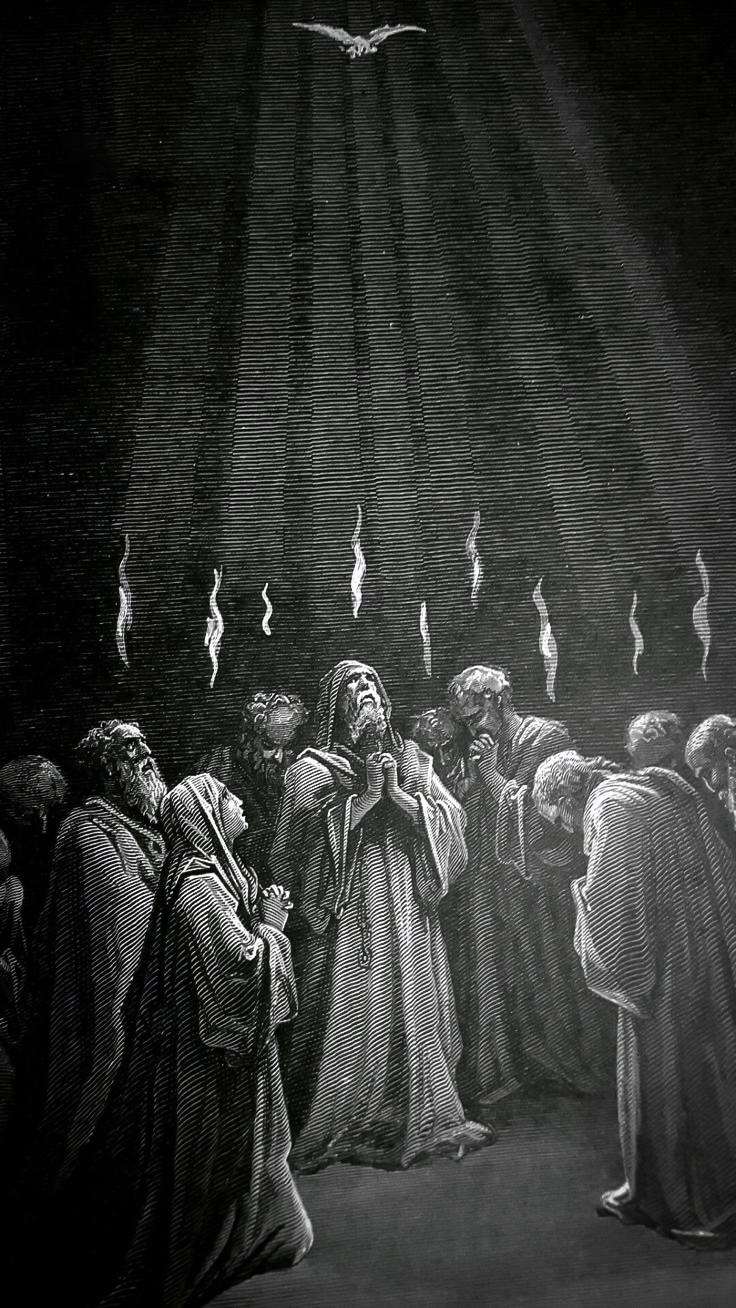
Today I completed Saint Basil the Great’s On the Holy Spirit, translated by Stephen M. Hildebrand in the Popular Patristics Series from St. Vladimir’s Seminary Press (ISBN 978-0-88141-876-7). This reading was recommended to me while I was still making my way through Augustine’s De Trinitate, which I have been reading slowly with heavy annotations. Basil’s book is much shorter and stays close to the Holy Spirit, while Augustine takes up the Trinity on a much larger scale. Reading Basil before completing Augustine gave me another fourth-century perspective while that larger study was still underway.

I wanted to understand more clearly what the early Church was saying about the Spirit, especially in relation to sanctification, participation in the life of God, and the believer’s life in Christ. Basil gave me an eastern fourth-century voice while I continued working through Augustine, and that alone made the reading worthwhile.

That is also why this book deserves more than a brief note before moving on. I found much in Basil that seems plainly rooted in Scripture: the Spirit gives life, sanctifies, distributes gifts, brings adoption, illumines, restores, and brings the believer into communion with God. At the same time, there are places where I want to slow down and test his reasoning more carefully, especially where he moves from Scripture to ecclesiastical tradition and practices not explicitly given in the written text.

I do not read Basil because he is early and therefore must be right, nor because a later tradition claims him. I read him because he stands close enough to the Church’s early doctrinal struggles to be worth hearing carefully, while still needing to be judged by the same Scripture he so often appeals to. The review ahead is therefore less about whether Basil fits neatly into a later camp and more about what he actually says, what Scripture supports, and what I learned from reading him.

Introduction

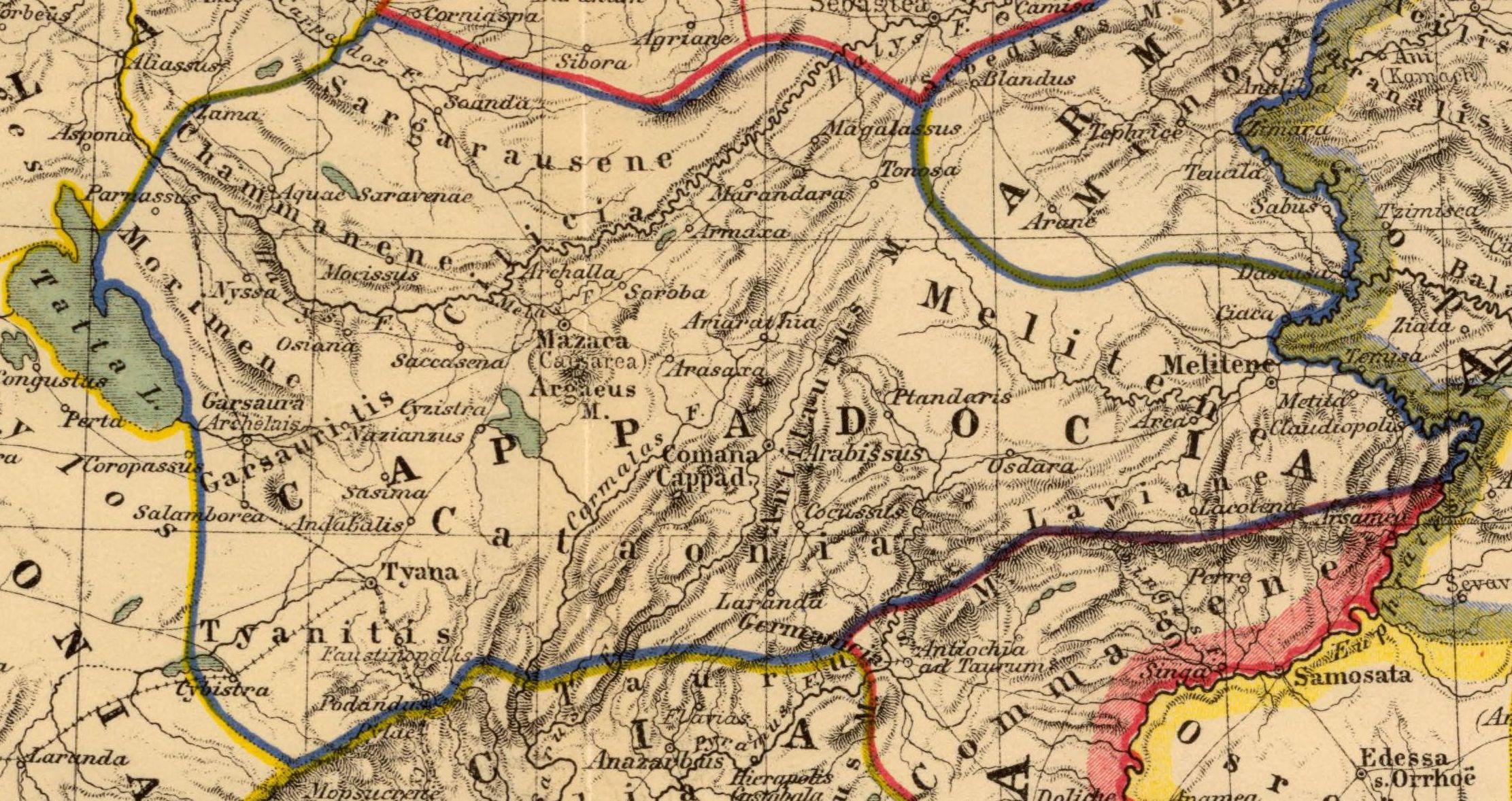
On the Holy Spirit, long known under the Latin title De Spiritu Sancto, was written by Saint Basil the Great around A.D. 374–375. Basil lived from about 329 to 379 and became bishop of Caesarea in Cappadocia in 370. This was Caesarea Mazaca in central Asia Minor, near modern Kayseri in Turkey, not the coastal Caesarea found in the New Testament. Basil is often called Saint Basil the Great, Archbishop of Caesarea. In his own time, he was bishop and metropolitan of Caesarea, which meant that as bishop of the provincial capital he held a senior place among the bishops of Cappadocia and had influence beyond his own city. The later title “archbishop” reflects that standing. “The Great” reflects the lasting importance of his work as a pastor, theologian, ascetic teacher, administrator, and defender of Nicene Christianity.

Basil came from a wealthy Christian family that had already suffered during earlier Roman persecutions. He received a strong classical education in Caesarea, Constantinople, and Athens, studying rhetoric, philosophy, literature, and other subjects expected of an educated man in the Greco-Roman world. In Athens, he formed a lasting friendship with Gregory of Nazianzus, while his younger brother Gregory of Nyssa later became another major theologian of the fourth century. Basil could have pursued a public career but eventually turned toward the ascetic life and then ordained ministry.

As bishop, he did much more than preach. He dealt with disputes, government officials, clergy, surrounding churches, and the care of the poor. He also established the charitable complex later called the Basileiad, which cared for the poor, sick, travelers, and others in need. Basil’s theology came out of that setting. He was writing as a bishop responsible for churches and people, not simply as a scholar discussing theology at a distance.

The setting was not peaceful. Basil wrote while churches were divided over these questions; bishops could be removed from office or exiled, churches could be taken from Nicene congregations, and imperial officials could use confiscation, intimidation, and even threats of torture or death to force conformity. Basil faced some of those threats himself under Emperor Valens. He wanted unity, but he was not willing to get there by leaving the identity of the Holy Spirit vague.

The need for On the Holy Spirit came from a doctrinal question that Nicaea had not fully developed. The Council of Nicaea in 325 focused mainly on the Son’s relation to the Father and said only briefly, “and in the Holy Spirit.” In the decades that followed, the controversy moved to the Spirit. Some who rejected Arian teaching about the Son were still unwilling to give the Holy Spirit the same divine honor given to the Father and the Son. These opponents became known as Pneumatomachians, or “fighters against the Spirit,” and were later associated with the Macedonian controversy. Basil wrote after Nicaea had confessed the Son’s full deity, while the Church was still working through what Scripture required Christians to confess about the Spirit. About two years after Basil’s death, the creed associated with Constantinople in 381 would confess the Holy Spirit as “the Lord and Giver of Life,” worshiped and glorified with the Father and the Son.

The immediate occasion was a dispute over worship. Basil had been criticized for using a doxology that gave glory to the Father with the Son and the Holy Spirit, rather than limiting himself to formulas such as glory to the Father through the Son in the Holy Spirit. What sounds like an argument over prepositions was really an argument about the Spirit’s identity. If the Spirit could rightly be glorified with the Father and the Son, then He could not simply belong to the created order that worships God.

Amphilochius of Iconium, a younger bishop and friend of Basil who was also related to Gregory of Nazianzus, asked Basil for a fuller explanation. Their conversations around 374 became the occasion for On the Holy Spirit, which Basil dedicated to Amphilochius. This helps explain why the book spends so much time on words such as through, in, from, and with. Basil was not arguing about grammar for its own sake. He believed the way Christians spoke about God had doctrinal consequences. That also raises a larger question I return to later: what weight should be given to practices received and accepted by the early Church, and preserved in Christian practice for centuries, even when they are not explicitly commanded in Scripture?

The Cappadocian Fathers

The Cappadocian Fathers were Basil the Great, Gregory of Nazianzus, and Gregory of Nyssa, three fourth-century bishops and theologians from Cappadocia in Asia Minor. Basil and Gregory of Nyssa were brothers, while Gregory of Nazianzus was Basil’s close friend. They belonged to the same theological struggle, but they were not simply three versions of the same man. Their personalities, ministries, and ways of arguing were different, and each contributed something distinctive to the Church’s developing language about the Trinity.

What joined their work was the need to confess the Father, Son, and Holy Spirit as truly divine without either dividing God into three beings or confusing the distinction between the persons. The distinction between ousia and hypostasis became especially important in expressing one divine nature while preserving the real distinction of Father, Son, and Holy Spirit. Basil often argued with considerable care from Scripture, worship, and the Church’s received language; Gregory of Nazianzus stated the divinity of the Spirit more explicitly; and Gregory of Nyssa developed many of the same questions through sustained theological reflection.

Their importance for me is partly historical. They were working through these questions before the later divisions between Eastern Orthodox, Roman Catholic, and Protestant churches had taken their mature form. Reading them therefore gives access to an earlier stage of Christian theological reasoning, when Christians were testing, defending, and clarifying some of the language they still use about the Trinity. That does not place their conclusions beyond examination by Scripture, but it does make their reasoning worth hearing on its own terms.
Basil of Caesarea

Basil’s other writings give a clearer picture of the kind of theologian and pastor behind On the Holy Spirit. His classical education is obvious, but he does not seem interested in displaying learning for its own sake. In the Hexaemeron, his homilies on the six days of creation, he works closely with the language of Genesis and repeatedly resists interpretations that allow speculation to move too far beyond the text. At the same time, he does not leave exegesis at the level of explanation. Creation becomes a reason for worship, moral reflection, humility, and obedience. Even his observations about animals can turn abruptly into warnings about greed, injustice, diligence, or the way one person treats another.

The same orientation from Scripture to Christian life appears in his ascetic writings. Basil’s concern is not simply withdrawal or bodily severity. Prayer, Scripture, work, self-control, obedience, common life, and care for others belong together. Work is valuable not only as discipline but because it allows Christians to provide for the weak and serve their neighbors. His asceticism is therefore strongly communal. The Christian is being formed into a life ordered toward God and toward the good of other people, which helps explain why Basil’s concern for discipline could exist alongside his extensive work for the poor and sick.

His letters reveal another side of him. Basil could be forceful, frustrated, affectionate, diplomatic, and deeply concerned about the fragmentation of the churches. He repeatedly sought peace and the restoration of communion, but not by treating doctrinal differences as unimportant. He could appeal for patience and negotiation while also insisting that unity had to preserve the Nicene faith and the proper confession of the Holy Spirit. What emerges is a bishop for whom doctrine, worship, church order, and Christian conduct could not finally be separated. That helps explain the character of On the Holy Spirit. His attention to words such as with, through, and in was not grammatical precision for its own sake. He believed the way Christians spoke about God eventually affected the way they worshiped, confessed the faith, and lived together.

Gregory of Nazianzus

Gregory of Nazianzus was a theologian, poet, and pastor born near Nazianzus in Cappadocia around A.D. 329. His father, who later became bishop of Nazianzus, had belonged before his conversion to the Hypsistarians, a monotheistic religious movement that combined Jewish and pagan elements. They were not a Christian sect, although some descriptions of the group note features that overlapped with Christianity as well as Judaism and pagan religion. Gregory received an extensive education in Caesarea, Alexandria, and Athens, where his friendship with Basil became one of the defining relationships of his life.

His ecclesiastical career was marked by reluctance and instability. His father ordained him a priest, and Basil later appointed him bishop of Sasima, a post he strongly disliked. He eventually served at Nazianzus and then, during a period of intense Trinitarian controversy, became bishop of Constantinople. There he helped reestablish Nicene teaching and briefly presided over the Council of Constantinople in 381 before resigning amid disputes over his position. Throughout these conflicts, he sought unity without treating doctrinal clarity as expendable.

Gregory is especially important for the clarity with which he defended the full divinity of the Son and the Holy Spirit. His five Theological Orations became some of the most influential Trinitarian writings of the fourth century. He also left an extensive body of sermons, letters, and poetry, and he worked with Basil in preserving selections from Origen. Compared with Basil, Gregory can be more openly rhetorical and personal, but the two shared the conviction that Christian language about Father, Son, and Holy Spirit carried consequences for worship and faith.

Gregory of Nyssa

Gregory of Nyssa was Basil’s younger brother and another of the three Cappadocian Fathers. He belonged to the same deeply Christian family as Basil and their sister Macrina the Younger. Gregory did not follow the same path as his brother from the beginning. He served for a time as a reader in the Church and later pursued rhetoric before turning more fully toward the ascetic and ecclesiastical life.

Macrina the Younger, their older sister, was one of the strongest spiritual influences within the family. After the death of the young advocate to whom she had been betrothed, she remained unmarried and devoted herself to prayer, Scripture, ascetic discipline, and care for others, eventually helping transform the family estate at Annisa into a Christian ascetic community. Her influence extended especially to Gregory, who later portrayed her as his teacher in On the Soul and the Resurrection and wrote The Life of Macrina after her death. Seen in the larger history of the family, the course of her life also has a striking providential character: the life she formed helped shape the spiritual world from which Basil and Gregory emerged. Through those works, she appears not simply as Basil and Gregory’s sister, but as a gifted teacher whose life helped form the ascetic and theological world in which both brothers developed.

Basil appointed Gregory bishop of Nyssa, partly because he needed dependable Nicene bishops during the continuing conflict with Arian and pro-Arian opponents. Gregory’s early episcopate revealed real administrative weaknesses. He could lack firmness in dealing with people, and Basil himself criticized his judgment in practical affairs. Financial accusations were later used against him, and in 376 a synod dominated by hostile bishops and court interests deposed him in his absence. His removal, however, should not be confused with theological failure against Arianism. Gregory remained firmly Nicene, and the political environment under the pro-Arian Emperor Valens was central to what happened. After Valens died in 378, Gregory returned to Nyssa and received an enthusiastic welcome.

Gregory’s strengths became much clearer in his preaching and theological writing. After Basil’s death he emerged as an important defender and interpreter of Nicene theology and took a prominent role in the period surrounding the Council of Constantinople in 381. His writings range from biblical interpretation and spiritual theology to sustained reflection on the Trinity, the Incarnation, creation, the Christian life, and humanity’s participation in God.

Gregory was not the administrator Basil was, and Basil seems to have known some of his brother’s practical limitations. Yet Gregory became one of the major theological voices of the later fourth century. His later contribution makes Basil’s decision to place him in the episcopate look less like a judgment about administrative ability than a recognition that Gregory’s theological gifts were needed in the larger struggle facing the Church.

Amphilochius of Iconium

Amphilochius of Iconium (c. A.D. 340–395), a relative of Gregory of Nazianzus and close associate of the Cappadocian Fathers, studied rhetoric and practiced law before becoming bishop of Iconium in 374 with Basil’s encouragement. His relationship with Basil is especially important here because Basil addressed On the Holy Spirit to him after Amphilochius asked for a fuller explanation of the questions surrounding the Spirit. Amphilochius later took part in the Council of Constantinople in 381 and became known for defending the divinity of the Holy Spirit against the Pneumatomachian or Macedonian position. Most of his writings have been lost, but his surviving work and later reception show that he remained an important theological voice in the generation immediately following Basil.

Book Review

The dispute over how Christians spoke of the Spirit explains why grammar appears so often throughout On the Holy Spirit. Basil spends a surprising amount of time on words such as from, through, in, and with. I first expected these discussions to form one early section and then give way to other subjects, but the grammatical questions return later in the book.

The chapters do not always read as one smooth line of thought. There are clear connections, but there are also places where Basil seems to move into another subject and then return to something raised much earlier. Some chapters almost stand on their own. I do not think the book should be forced into a modern outline where every chapter becomes one step in a straight proof. There is a clear purpose holding the work together, but the reasoning often moves through Scripture, worship, baptism, grammar, received practice, and earlier Christian testimony before circling back to the original question.

Basil’s method is one of the things I noticed most while reading. He doesn’t spend the book repeating that the Holy Spirit is God. He builds the case from Scripture. The Spirit gives life, sanctifies, distributes gifts, searches the things of God, is named with the Father and the Son, and is involved in baptism and the believer’s life. Basil keeps returning to what Scripture says the Spirit does and what that means about who He is.

The Spirit does not simply receive holiness as a creature who needs to be made holy. He sanctifies others. He gives life. He dwells in believers. He brings them into the knowledge and life of God. At times Basil’s wording can seem unusually careful compared with later theological language, but that is part of the book’s value. The doctrine is being argued from the biblical material while the language used to express it is still being worked out.

The parts dealing with the believer’s life in the Spirit were especially important to me. Basil connects the Spirit with holiness, illumination, adoption, communion with God, restoration of the image, and participation in divine life. These ideas are not presented as something separate from salvation. They belong to what the Spirit actually does in those who belong to Christ. His language helped me see more clearly why sanctification and participation cannot be treated as secondary subjects added after salvation. The Christian life is life in the Spirit.

Basil describes the Spirit as the One who makes believers spiritual through communion with Himself and leads them toward likeness to God. That language needs to be read carefully, especially when later traditions use words such as deification or theosis, but the biblical ground underneath it is recognizable in Romans 8, 1 Corinthians 12, 2 Corinthians 3, Galatians 4, and other passages where the Spirit indwells, sanctifies, gives gifts, brings adoption, and transforms the believer.

Chapter 27 gave me a different kind of question. Basil speaks about written teaching and practices received in the Church without an explicit written command. He mentions making the sign of the cross and facing East in prayer among his examples. His point is not simply that these practices were old. They had been accepted into Christian life and worship and were still being practiced by believers in his own time.

Basil understood these same believers to be baptized, sanctified, and indwelt by the Holy Spirit. Their continued practice across the centuries therefore carries more weight than the observation that an old custom happened to survive. He is describing something received and accepted within the Church’s life. Some of these practices continued for centuries afterward and remain among Christians today.

That makes Basil’s larger point about tradition harder to reduce to whether tradition can independently prove something Scripture does not. He describes how Christians understood what they had received: some things through written teaching and others through practices handed down and accepted in the Church. Continuity presses on my mind because the Church continued to receive and practice them.

This does not make every old custom equal to Scripture, and Basil’s claims still need to be examined carefully. The question for me is broader than whether I can locate a direct biblical command for every practice. I also have to ask what weight to give something accepted by the early Church, lived by believers Basil understood to be indwelt by the Holy Spirit, and preserved in Christian practice for centuries afterward. Basil made that question more serious for me than it was before I read him.

The final chapter stayed with me for another reason. Basil ends by describing the condition of the churches. The dispute over the Spirit was not happening in a calm setting. Bishops opposed one another, churches were divided, imperial power entered church disputes, and arguments over doctrine became mixed with rivalry and personal conflict.

Basil’s description brought several biblical warnings about strife to mind. James asks where wars and fighting come from and points to desires at war within us (James 4:1–2). Proverbs compares a contentious man to wood added to a fire (Proverbs 26:21), while a soft answer turns away wrath (Proverbs 15:1). Paul tells Timothy to avoid foolish disputes because they produce quarrels, and he says the Lord’s servant must not be quarrelsome but gentle and able to teach (2 Timothy 2:23–24). Those verses do not make doctrinal disagreement unimportant. They make the manner and source of contention important.

I finished On the Holy Spirit with a greater appreciation for why Basil remains important. I do not need to make him Protestant, Catholic, or Orthodox before hearing what he says. Those later divisions had not taken their mature form in his lifetime. What matters to me is how he reads Scripture, what he understands Christians to have received, how he connects the Spirit’s identity with His work in believers, and where his claims require further examination.

Some parts confirmed things I already believed about the Spirit. Other parts, especially his treatment of accepted tradition and continuity, raised questions I don’t want to dismiss. The book brought me closer to the questions Christians were actually facing, showed me how one major fourth-century bishop answered them, and sent me back to Scripture with more to consider as I continue working through Augustine’s De Trinitate.

Continue Reading ·

The Divine Indwelling

Today I finished the book How to Be Filled with the Holy Spirit by Moody Publishers. The book is a compilation of sermons from A.W. Tozer about the Holy Spirit and His indwelling presence. The book is a direct appeal to take seriously what Scripture teaches about the Spirit’s person and work in the believer’s life. Tozer does not approach the subject sentimentally or experientially first; he begins doctrinally. In “Who Is the Holy Spirit?”, he carefully affirms the Spirit’s full deity, drawing on the language of the Nicene Creed and tracing its claims back to their biblical foundations. The Spirit is confessed as Lord, as God, and as one with the Father and the Son—not an influence or religious force. From there, “The Promise of the Father” unfolds the scriptural testimony that the Spirit’s coming is rooted in divine promise, not human initiative, grounded in Christ’s words and fulfilled according to God’s covenant faithfulness.

The final two chapters move from confession to the inward conditions under which the Spirit’s presence is unhindered. In “How to Be Filled with the Holy Spirit,” Tozer describes fullness not as acquiring more of the Spirit, but as yielding more of oneself. The Spirit rests where there is clean ground—where sin is not defended, where pride is not protected, and where the will is surrendered without reserve. He speaks of honesty before God, restitution where necessary, and the removal of inward duplicity. In “How to Cultivate the Spirit’s Companionship,” he explains that ongoing fellowship requires watchfulness: refusing what grieves Him, maintaining obedience in small matters, and guarding the interior life from gradual compromise. The Spirit’s fullness, as Tozer frames it, is not secured through intensity but through cleared space—a life brought into alignment so that His holy presence is not resisted.

Review

The publisher’s title for the book isn’t what I would generally expect, as it suggests a method or technique, as though the Spirit’s presence could be invoked by human activity. Tozer does not write that way. He moves carefully from doctrine to personal examination, and he does not rush the reader into application. He begins with the Spirit Himself—His deity, His personhood, and His full equality with the Father and the Son. By anchoring his treatment in the language of the Nicene Creed and its scriptural foundations, he makes clear that fullness is not summoned or engineered. The Spirit is Lord. His presence is not commanded; it is invited and welcomed. Any discussion of being “filled” must begin with a right confession of who He is and a posture that recognizes we are responding to His promise, not initiating His arrival.

From there, he clarifies an important distinction between inhabitation and filling. Every true believer is indwelt by the Spirit; that is the settled gift of God. But filling refers to governing influence. In Tozer’s language, it is possible to be inhabited yet not fully yielded. The Spirit may be present without being obeyed. Filling, therefore, concerns control, not quantity. It is not that the believer receives more of the Spirit, but that the Spirit is permitted fuller possession of the believer.

This distinction shapes the entire argument. Tozer insists that one must not confuse new birth with ongoing surrender. Regeneration places the Spirit within; obedience allows Him to direct the life without resistance. The tension he exposes is sober rather than dramatic. The Spirit does not force control. He rests where He is welcomed, not tolerated.

The conditions he describes are inward before they are outward. He speaks plainly about pride, self-protection, cherished sin, and inward duplicity. These are not minor hindrances. They crowd the heart and leave little room for the Spirit’s unhindered presence. Fullness, in his telling, requires cleared ground. Repentance is not an emotional moment but an honest reckoning. Restitution, confession, and surrender of ambition are part of making oneself available. The Spirit comes to rest where there is integrity.

The Word of God plays a central role in this process. Tozer does not separate the Spirit from Scripture. He points repeatedly to meditation on the Word as the appointed means by which the conscience is exposed and aligned. The Spirit does not operate apart from what He has already spoken. A person who neglects Scripture should not expect sustained fullness. The mind must be instructed so the will can be bent. Meditation is not mystical abstraction; it is steady attention to revealed truth until it governs thought and behavior.

Behavior itself matters, not as performance, but as evidence of alignment. Tozer stresses obedience in daily life—small decisions, speech, conduct, habits. The Spirit is not an accessory to spiritual enthusiasm; He shapes actual life. A careless pattern of disobedience cannot coexist with His steady companionship. Availability is demonstrated, not declared.

One of the more sobering elements of the book is his warning to be sure of what one is asking. To ask for fullness is to ask for exposure, purification, and removal of what resists Christ. The Spirit’s work is not merely comforting. He convicts, corrects, and restructures. Tozer makes clear that the prayer for filling is not safe in the sense of preserving self-rule. It is a request for God’s rightful authority.

The overall movement of the book is deliberate: from creed, to promise, to surrender, to vigilance. It is not technical theology, but it is not careless exhortation either. By distinguishing inhabitation from filling, grounding the work of the Spirit in Scripture, and tying fullness to yielded obedience, Tozer avoids both sensationalism and passivity. The result is a straightforward reminder that the Spirit’s presence is given in the new birth, but His governing fullness belongs to those who are willing to be wholly His.

Continue Reading ·

The Practice of Presence

Today, I completed a book about an affective mystic who loved God in every moment, with all his heart, and encouraged others to do the same, wherever they were and whatever they were doing. That quiet consistency drew people to him. He was sought for advice—monks, visitors, even nobles—often left with a sense that knowing God wasn’t just for the few, but for anyone willing to trust Him in the little things. Brother Lawrence lived what he believed: that you could talk to God at any moment, and that doing so, even in small ways, changed everything. His life became proof that deep faith doesn’t require a platform, achievements, status, or asceticism, just a heart set on God.

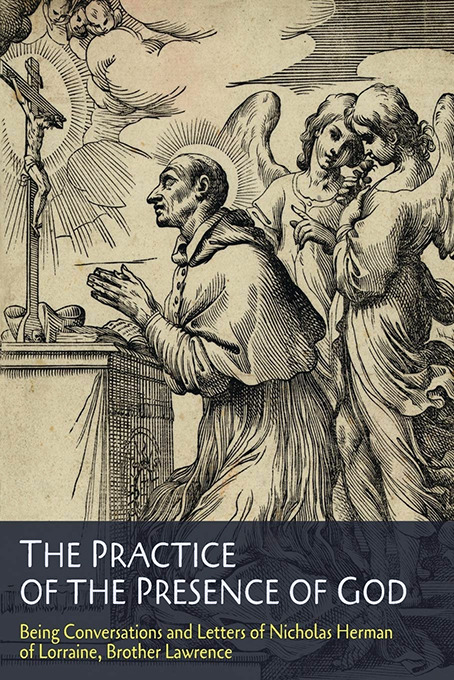
This book, “The Practice of the Presence of God,” is a spiritual classic that stands as a witness to the message of Brother Lawrence, a 17th-century Carmelite monk (1605–1691). Born Nicolas Herman of Lorraine, Lawrence found his calling in the everyday tasks of monastery life, discovering an extraordinary path to a transcendent spiritual reality while immersed in ordinary daily activities.

Introduction

Joseph de Beaufort titled the compilation of Nicolas Herman’s writings “The Practice of the Presence of God.” This book is a collection of letters, conversations, and spiritual insights, offering readers a unique perspective on cultivating a constant awareness of God’s presence. It surpasses the need for structured prayers or religious rituals, proposing instead that one can reach a deep, ongoing communion with God in every moment of life, even in the most routine tasks. The author’s perspective is rooted in the notion that God is intimately involved in every part of our lives and that awareness of His presence can transform ordinary experiences into profound spiritual activity. Lawrence’s approach is simple, supporting a direct and heartfelt relationship with God, unencumbered by complex theological doctrines.

This reading is a compilation of three separate translations of individual books. The first book was published by H.R. Allenson (1906), the second by Whitaker House (1982), and finally, a reading from a self-published translation, “In Modern English” by Davis (2013; ISBN 978-1-5212997-5-3). The “Spiritual Maxims” notes are omitted from this review, as two of the three books were readings that didn’t closely correspond by prose and word choice to render comparative meaning.

The book is a well-known guide ideal for those seeking a more intimate and continuous connection with God. It appeals to various readers, from devout believers to those interested in growing sanctification in daily life. Lawrence’s gentle wisdom reminds us that God’s presence can be found in every moment and every task, turning the mundane into the spiritual and the ordinary into the extraordinary.

Nicolas Herman, later known as Lawrence, was born around 1614 in Lorraine, now part of modern-day France. Like many of his era, his early years were not well-documented, but what is known provides a deep insight into the life of a man whose humble existence belied an intensely spiritual and influential character. Little is known about Lawrence’s family or upbringing. His early life was largely unremarkable and typical of the time. As a young man, Nicolas Herman enlisted in the army during the Thirty Years’ War, a decision possibly motivated by poverty rather than patriotism or a sense of adventure. His military service, however, was cut short by an injury that left him with a permanent disability.

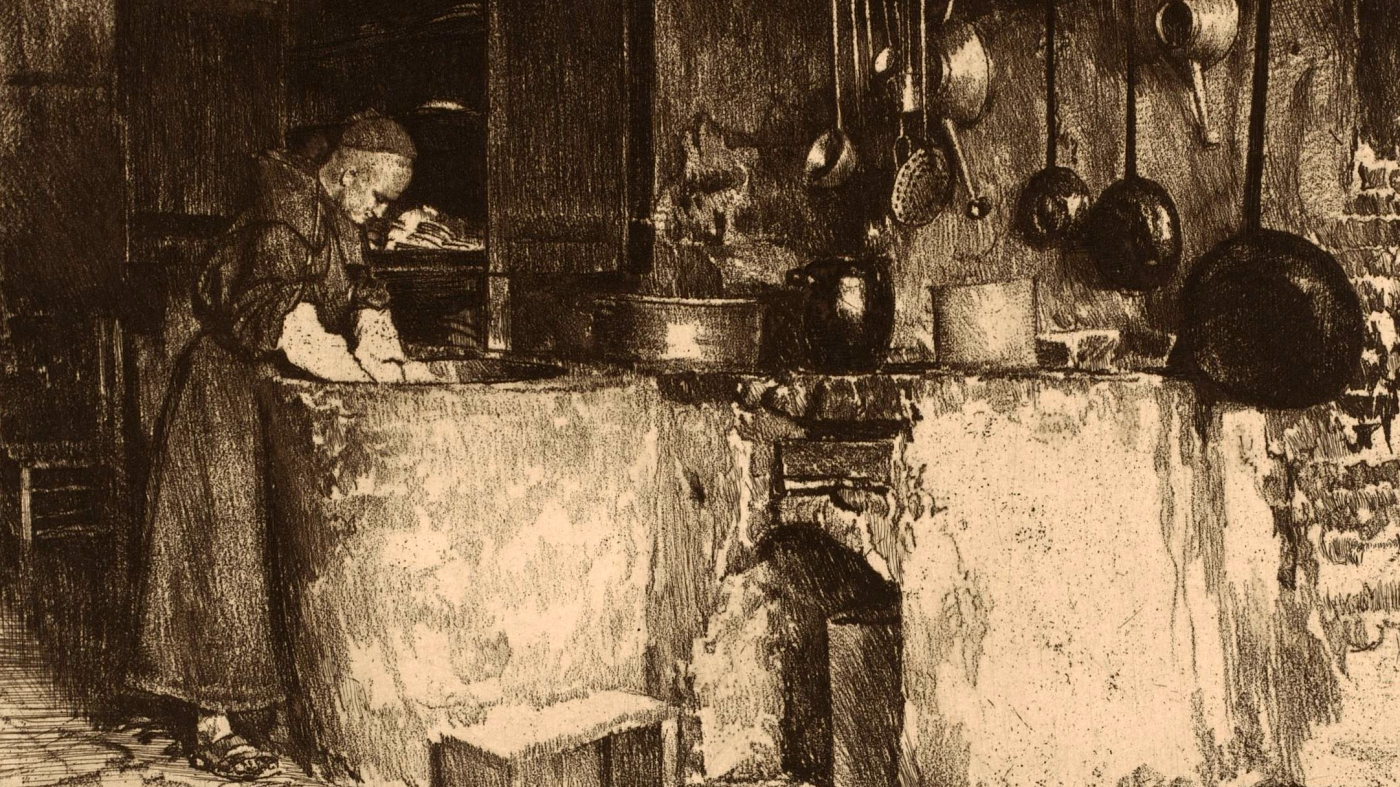
The turning point in Herman’s life came during his recovery. It is said that, while gazing at a barren tree in winter, he experienced a profound spiritual awakening. He became convinced of the steadfast love and presence of God, much like the tree’s potential to bloom in the spring. This epiphany set him on a spiritual path, leading to his decision to dedicate his life to God. In 1666, Nicolas Herman joined the Discalced Carmelite Priory in Paris. His duties were humble, initially assigned to the monastery’s kitchen and later, due to his advancing age and infirmity, to the task of sandal repair.

The Practice of the Presence of God

Lawrence’s approach was not based on rigorous ascetic practices or theological scholarship but on finding God in ordinary and everyday tasks. He believed that one could and should cultivate a constant, loving awareness of God’s presence, regardless of one’s activity or situation.

Lawrence’s ideas were compiled posthumously from his letters and conversations recorded by others, particularly by Father Joseph de Beaufort, the vicar general to the Archbishop of Paris. This compilation, known as “The Practice of the Presence of God,” has since become a classic in Christian literature. Its appeal lies in its simplicity and the universal nature of its message.

Despite his menial position within the monastery, Lawrence’s wisdom and humility significantly impacted those around him, both during his life and long after his death in 1691. His approach to spirituality has influenced many individuals seeking a deeper relationship with God, transcending boundaries of tradition or denomination.

Brother Lawrence mattered deeply to the people around him because he showed them what it looked like to walk closely with God in everyday life. He wasn’t a priest or a scholar, and he didn’t hold a high position in the monastery. He worked in the kitchen, cooking meals and fixing sandals. Yet despite the simplicity of his role, those who met him noticed something rare: a deep, steady peace and joy that flowed from his constant awareness of God’s presence.

The Conversations

The conversations begin with the author’s introduction about Lawrence (likely Joseph de Beaufort). He writes about Lawrence’s conversion and his struggles. He describes his approach to life as one of simplicity and a focus on God’s presence. He tells of his first years in the monastery and how he learned to maintain a sense of God’s presence amidst his daily duties.

First Conversation

In his first recorded conversation, dated August 3rd, 1666, Brother Lawrence recounts his conversion at the age of eighteen, prompted by the sight of a leafless tree in winter. Considering how the tree would soon be renewed with leaves, flowers, and fruit, he was struck by a profound awareness of the providence and power of God—a view that permanently marked his soul. From that moment, he became inwardly detached from the world and filled with such love for God that even after forty years, he could not say whether that love had grown, so complete had it been from the beginning. He shared humbly that he had once served as a footman, clumsy and awkward, breaking whatever he handled. Thinking the monastic life would provide correction through suffering, he was instead surprised to find only satisfaction in the life God had given him.

He exhorted that the soul should be established in the presence of God by continual conversation with Him. It is, he said, a shame to leave this holy company for empty thoughts or distractions. The soul, rather, should be nourished on great and lofty thoughts of God, from which flows joy in devotion. He lamented that faith was so little alive in most Christians, who entertained themselves with changing and superficial devotions instead of letting faith govern their lives. This, he affirmed, was the true spirit of the Church and sufficient to lead one to a high degree of holiness. To be entirely given to God in all things, and to find satisfaction only in His will—this was the pattern of life he urged.

Brother Lawrence also expressed his response to the world’s evils not with surprise, but with peace and prayer, trusting God’s power to heal where He willed. He encouraged careful watch over one’s passions, even in spiritual matters, trusting that God gives light to those who sincerely desire to serve Him. He concluded the conversation by offering to receive the visitor as often as he wished—provided he truly desired to seek and serve God. Otherwise, he advised, it would be better not to return.

Second Conversation

In this second letter, Brother Lawrence reflects on a life governed wholly by love for God, without seeking reward, consolation, or even certainty of salvation. He shares that for years he endured deep interior suffering under the belief that he was lost, a conviction none could dissuade him from. Yet his response to this trial was simple fidelity: he resolved to act always out of love for God, whether saved or condemned. That resolve, maintained over four years of darkness, eventually gave way to a life of inward liberty and joy. He continued to place his sins before God, not to excuse them, but to acknowledge his unworthiness—yet God, in mercy, continued to bless him. What began with effort became habitual, as the love of God stirred him inwardly to continual communion without strain or method.

He notes that all his labors—however mundane, distasteful, or difficult—were offered entirely for God. Whether rolling over wine barrels while lame, working in the kitchen, or praying in obscurity, he found peace by making God the sole object of his attention. He distinguished between the understanding and the will, saying that acts of love and desire for God far surpassed intellectual exercises or bodily mortifications. These, he believed, had value only insofar as they led to union with God through love. Meditation and structured devotions, useful at first, later fell away as unnecessary. He did not burden himself with spiritual directors, for he knew clearly his obligation to love God in all things and trusted the confessional for forgiveness, not for guidance in that love.

He spoke candidly about failure and distraction: when he sinned, he simply acknowledged it, confessed it, and returned to God without discouragement. He cautioned that useless thoughts disrupt communion with God and must be quickly rejected. While he had once struggled in prayer with wandering thoughts, over time, the practice of loving God in all things became steady and natural. He affirmed that the greatest torments or joys of this world could not compare with the inward experiences of union with God, which had made him fearless and content. His only desire was not to offend the One he loved, and whether he failed or stood, he traced all to God—his falls to his own nature, and his strength to divine grace.

Third Conversation

In this conversation dated November 22nd, 1666, Brother Lawrence explains that the foundation of his spiritual life was a profound esteem for God conceived in faith. Once this was firmly established, his sole concern was to reject every other thought so that all his actions might be performed purely for the love of God. He did not become troubled when he realized he had forgotten God for a time; instead, he would humbly acknowledge his poverty and return to God with even greater trust. Such trust, he says, greatly honors God and draws down abundant grace. He affirmed that it is not only impossible for God to deceive, but also that He does not permit a surrendered soul to suffer long without comfort. Through repeated experience, Brother Lawrence had learned to rely on divine grace in every task, approaching each moment without forethought or anxiety, confident that when the time came, God would show him what to do as clearly as looking into a mirror.

His manner of life was marked by simplicity and constancy in the presence of God, so much so that he paid no attention to what he was doing, eating, or accomplishing, but gave thanks that God directed each act. If his mind was momentarily drawn away, a gentle and powerful recollection from God would inflame him anew. He confessed he was often more united to God during his regular work than in times of formal devotion, which left him dry. He expected future trials but feared nothing, assured that God’s goodness would sustain him. Experience had taught him that he gained no help from consulting others about his soul; his inner abandonment to God gave him clarity and courage. He warned that many Christians fail to make progress because they fixate on external disciplines rather than the love of God, which is the true end. The way to God, he insisted, required neither learning nor skill—only a heart wholly resolved to love and seek Him in all things.

Fourth Conversation

In his fourth conversation, he begins by stating plainly that the heart of the spiritual life is a decisive and sincere turning away from everything that does not lead to God. From this renunciation comes the habit of speaking with God simply and constantly. This conversation is neither complicated nor reserved for specific times, but consists in acknowledging God’s nearness and addressing Him at every moment, especially for help in knowing what to do when things are unclear, and for rightly doing what is already known. One offers each action to God beforehand and then gives thanks when it is done. In this simple practice, one remains occupied with God by praise and prayer throughout the day. Even when he forgets God or fails in this, Brother Lawrence is not disturbed, but returns with greater trust, recognizing that God always offers grace if one remembers to ask. He notes that failure to receive grace most often occurs when one forgets God’s presence or neglects to seek Him.

“The whole substance of religion is faith, hope, and love. By the practice of these, we become united to the will of God. Everything else is unimportant and should be used as a means to our end, which is to be swallowed up by faith and love.” – Brother Lawrence

He affirms that the way to live with clarity is to have no other goal but to please God in all things. This aim makes even uncertain matters clear in time. Importantly, he warns that our growth does not come from changing what we do, but from doing what we already do out of love for God instead of for self. Many, he observes, confuse the means with the end—becoming attached to particular religious exercises, but doing them with impure motives. The best method he has found is to perform all tasks, however common, without concern for others’ approval, and as much as possible, for God alone. He rejects any division between prayer and work, saying that one is as bound to attend to God while acting as in prayer. For him, prayer is simply the sense of the presence of God. He states that the time of prayer and the time afterward are no different; both are lived in the same continuous attention to God. This produces lasting joy. Yet he hopes that in time, as he grows stronger, God will give him some suffering to bear.

He insists that one must place full trust in God once and for all and continue on with confidence. Nothing done for God is too small. In the beginning, one will often fail, but with time, the habit will form, and the acts of devotion will flow with ease and delight. The entire content of religion, he says, lies in faith, hope, and love—these unite the soul to the will of God. All other practices are indifferent and only useful as tools for reaching that end. He says that what is possible for the one who believes becomes less difficult with hope, easier with love, and easiest for the one who perseveres. The goal we should set for ourselves is to become, in this life, the best worshippers of God we can, as we hope to be in eternity. Beginning the spiritual life, however, requires honest self-examination: to see ourselves as miserable, changeable, and subject to physical and emotional instability. These troubles, both internal and external, are the means by which God humbles us. Therefore, we should not be surprised when we suffer trials or contradiction, but instead receive them with submission and endurance, for they are good for us.

Finally, he explains how this practice began for him: from the moment he entered the monastery, he resolved that God would be the end and aim of all his thoughts and desires. In the beginning, during his private prayer, he focused not on reasoning but on pressing devout awareness of God deeply into his heart. When he went to his kitchen work, he would prepare his duties thoughtfully, then use every spare moment before and after for prayer. He began each task with a prayer for God’s help, offered each action to Him, and maintained a steady conversation with God throughout his work. Afterward, he examined himself—giving thanks if he had done well, asking pardon if he had not, and returning without discouragement to the practice. Over time, this became so natural that forgetting God was more difficult than remembering Him. His example bore quiet testimony: even in the busiest and noisiest moments, he remained recollected and composed, stating that he found God in the kitchen amidst the noise as clearly as if he were kneeling before the Blessed Sacrament.

The Letters

Lawrence’s letters contain correspondence that offers a window into his deep yet simple spirituality. Written to various individuals seeking spiritual counsel, the letters reveal Lawrence’s commitment to living in continual awareness of God’s presence. With warmth and humility, he encourages his correspondents to develop a habitual, intimate communion with God in all areas of daily life. His advice emphasizes that holiness is not confined to grand or common acts of devotion but is instead found in performing even the smallest tasks out of love for God. Through these letters, Lawrence’s message resonates with an enduring clarity: true peace and contentment come from surrendering oneself to God and remaining constantly attuned to His presence, regardless of life’s challenges or distractions.

First Letter

Brother Lawrence writes to a reverend mother, reluctantly sharing how he came to live with a constant awareness of God’s presence. He emphasizes that he’s only doing so because of her persistent requests and insists the letter remain private. He explains that after reading many spiritual books with differing methods on how to approach God, he found them confusing. Instead, he decided to give himself completely to God—surrendering everything that wasn’t of Him—and began living as though it was just God and himself in the world. Whether seeing God as Judge or Father, he worked to keep his thoughts fixed on Him throughout the day. Even when his mind wandered, he calmly brought it back without distress.

He admits it wasn’t easy, but over time, it became more natural, and he began to feel the blessings of living in God’s presence. He stresses that none of it came from his own ability—it was all God’s mercy. Remaining faithful to this practice helped him avoid sin and gave him a kind of freedom and closeness with God, even in the middle of daily work. By continually turning to God in this way, His presence became a habit. He closes by asking her to join him in thanking God for His kindness to someone as unworthy as himself.

The identity of the Reverend Mother addressed in Brother Lawrence’s letters remains uncertain, as historical records do not provide a definitive name. However, considering the context and the titles used, it’s plausible that she was the Mother Superior of a Carmelite convent in 17th-century France, possibly in Paris, where Brother Lawrence resided. As Mother Superior, she would have been responsible for the spiritual and administrative leadership of her religious community.

Second Letter

June 1st, 1682 –

Brother Lawrence shares with the Reverend Mother the experience of a fellow brother in their religious community who has lived for over forty years devoted to God. This man’s main goal has always been to live in a way that pleases God, not for reward or fear, but purely out of love because he believes God deserves that devotion. Over the years, he has become so used to being in God’s presence that he receives constant help and deep joy from it—so much so that he often has to keep those feelings hidden. Even when he’s distracted by work, he feels God gently calling him back. He responds simply with love—short prayers or inward glances toward God—and immediately feels God settle peacefully in his soul again.

This brother no longer searches for God’s presence because he’s already living in it and drawing from it freely. Lawrence says this brother grieves that most people settle for such small tastes of God’s grace—just a passing feeling—when God wants to pour out so much more. He compares God’s grace to a massive ocean, but says we block its flow through our own blindness or neglect. When faith makes space for it, grace rushes in like a flood. He urges the Reverend Mother not to miss the opportunity while there’s still time. Death comes once, and it’s final. Now is the time to break down anything that holds us back from receiving all God has for us.

Lawrence encourages her to stay alert and not lose heart. He believes she’s taken steps in the right direction, but reminds her that we must keep pressing on—because in the spiritual life, if we’re not moving forward, we’re sliding backward. Even when we’re unaware, the Spirit can lead us forward. And when life gets rough, we should call on Christ, who brings peace. He ends by asking her to reflect on these thoughts, to renew her early fire for God, and to be encouraged by the example of this quiet, unknown brother—known not to the world, but deeply known and loved by God. He promises to pray for her and asks her to pray earnestly in return.

Third Letter

1685 –

In this third letter, the author writes with warmth and spiritual earnestness to a revered Mother Superior, acknowledging the receipt of books and a request for intercession on behalf of a sister preparing for religious profession. He urges that their community’s prayers not be withheld, as the sister is placing great spiritual hope in them. Above all, he emphasizes that her offering must be grounded solely in the love of God, with an unwavering resolve to be wholly His. In that context, he offers to send a book treating on the subject of the Presence of God, which he esteems as encompassing the entirety of the spiritual life. The proper practice of divine presence, he insists, depends on a heart emptied of all but God—since God, being jealous for the heart’s full possession, will not work amidst rival affections.

Brother Lawrence then testifies, from experience, to the ineffable sweetness and delight of walking constantly with God, though he warns that such joy must not be the goal. One must enter this practice not for pleasure’s sake but purely out of love and obedience. Were he given a pulpit or the spiritual direction of others, he says, his singular message would be this abiding in God’s presence, so indispensable and accessible does he consider it. He laments how little people perceive their need for God’s grace and help, urging his correspondent to make, in that very moment, a holy and irrevocable resolution never again to willingly depart from God’s presence. Such a surrender, even if it costs one every earthly pleasure, would be love’s proper offering to the God who seeks such devotion.

He concludes with strong encouragement: should the Reverend Mother undertake this discipline with sincere diligence, she will soon perceive its holy effects. Though he considers his own prayers poor, he assures her of his intercession and earnestly entreats hers and that of her community. In closing, he affirms his affectionate bond with them, expressing humility and belonging as their spiritual companion and servant. Through this simple and reverent appeal, Brother Lawrence draws the soul into the heart of true devotion—a life wholly lived in the presence of God, for His sake alone.

Fourth Letter

November 3rd, 1685 –

In this letter to the same Reverend Mother, Brother Lawrence expresses gentle reproach at her silence concerning a spiritual book he previously sent, urging her to begin its practice even in her old age, insisting that it is never too late to enter into the continual presence of God. He declares his own experience of inward retirement with God at the center of his soul, where he finds peace and immunity from fear; but even the smallest departure from this communion is, for him, intolerable. While the exercise does not burden the body, he encourages the voluntary renunciation of innocent pleasures, since God does not allow the soul wholly given to Him to be satisfied with joy outside His presence—a demand that he affirms as entirely just.

Brother Lawrence warns, however, against harsh austerity or the anxious imposition of rigid devotions. True service to God must be undertaken in holy freedom, with minds gently turned back to Him whenever they wander. Trusting fully in God requires even letting go of some external forms of devotion, which—though good—are but means, and become unnecessary once the soul abides with God Himself, who is the true end. In that abiding, the soul may offer acts of adoration, praise, desire, sacrifice, or thanksgiving in whatever form arises from love. He encourages perseverance through natural reluctance, acknowledging that the beginning often feels fruitless, but assuring that faithful continuation to the end will not be in vain. He concludes, as always, commending himself to the prayers of her and her community.

Fifth Letter

In this fifth letter, he tenderly urges Madame to surrender the burdens of worldly care and spend her remaining years in quiet worship of God, whom he describes as gentle and easily pleased by even the smallest acts of remembrance. He emphasizes that God requires no great effort—only simple prayers, offerings of sorrow, thanksgivings, and moments of humble adoration, even in the midst of meals or company. Encouraging her to make an inner oratory of the heart, he insists that private, loving communion with God is accessible to all, regardless of age or station, and that God may be awaiting only one firm, courageous act of devotion. As both approach the end of their earthly life, he exhorts her to live and die in God’s presence, where even suffering becomes sweet, and all joy without Him is empty. Finally, he urges her to cultivate this devotion with sincerity and freedom, not bound by rigid forms, but by faith, love, and humility.

Sixth Letter

In this correspondence, Lawrence is writing to a spiritual father, wanting feedback on how he’s been living his faith. He says he hasn’t really followed the traditional spiritual methods laid out in books or taught by others. Instead, he just gave himself completely to God early in his religious life, letting go of everything else out of love for Him. At first, he spent his prayer time reflecting on sin, judgment, and eternity, but he also tried to keep his mind on God during his daily work. Over time, this simple awareness of God grew into a natural habit, bringing him great peace and joy—even though, for about ten years, he struggled deeply with doubts, guilt over his sins, and fears of self-deception. But one day, unexpectedly, God gave him a lasting inner calm that changed everything.

Now, after thirty years, he lives constantly aware of God’s presence—not through complicated prayers or rituals, but by staying inwardly attentive to God in love. He sees himself as a sinner standing before a merciful King, who—far from punishing him—welcomes and treasures him like a close friend. Sometimes, his love for God feels so deep and sweet it overwhelms him. He even compares it to the way an infant rests at its mother’s breast. Even when his mind wanders, God gently draws him back. In prayer, he simply presents himself like a stone in the hands of a sculptor, asking God to shape him into His likeness. Some might accuse this way of being too passive or self-focused, but he says he desires only God and trusts Him completely. He ends the letter by asking for the Father’s opinion, saying he values it highly.

The “Reverend Father” addressed in Brother Lawrence’s letters is widely believed to be Father Joseph de Beaufort, a cleric who played a significant role in compiling and preserving Brother Lawrence’s teachings. Father de Beaufort conducted interviews with Brother Lawrence and collected his letters, which were later published as The Practice of the Presence of God after Brother Lawrence’s death in 1691.

In the Catholic Church, the title “Reverend Father” is commonly used to address ordained male clergy, such as priests and monks, as a sign of respect and acknowledgment of their spiritual authority. Therefore, Brother Lawrence’s use of this title in his correspondence aligns with the customary practices of his time.

Seventh Letter

Lawrence writes to the Reverend Mother with a steadfast assurance of his prayers for her, encouraging her to persevere in the search for the spiritual Treasure spoken of in the Gospel—a treasure so infinite that the more one labors to find it, the more abundant it becomes. He exhorts continual, unwearied pursuit of this divine wealth until it is fully possessed. Reflecting personally, he confesses a profound inner tranquility that abides even in sleep, so deep that he would consider purgatory itself bearable so long as this peace remains. Uncertain of God’s future purposes for him, he rests without fear, content in the divine Presence, which he strives to remain within as constantly as he is able, ending in a doxology of praise.

Eighth Letter

October 12th, 1688 –

He again write with assurance that God, Who is infinitely gracious and attentive to every need, has permitted Madame to come to extremity so that He might visit her in His own appointed time, unexpectedly yet faithfully. He encourages her to give thanks for the divine graces already received—especially fortitude and patience amid suffering—as clear signs of God’s care. He also commends M. de —— for his courage and good disposition, though noting that youth and worldly influence still linger in him; thus, his present affliction should be embraced as a healing providence to draw him nearer to God. Lawrence urges that even brief inward remembrances of God—acts of worship while on the march or in peril—are sufficient and strengthen true bravery; these exercises, though hidden and easy, are fitting and essential for a soldier frequently in mortal and spiritual danger. He concludes by exhorting that M. de —— accustom himself to this holy habit, offering his prayers and service to the whole household.

Ninth Letter

In this letter, Lawrence responds to the Reverend Mother’s concern about wandering thoughts in prayer by affirming that such distraction is a common human weakness, not unique to her. He identifies the cause as habitual mental dissipation formed through a lack of early discipline in devotion. Since the will governs the faculties, he encourages her to gently recall her mind to God without distress when it strays, for anxiety only furthers distraction. He likens the posture of prayer to that of a helpless beggar waiting silently before a generous master, urging a disposition of humble perseverance in God’s presence, trusting that God will show mercy to one who persists sincerely.

He further counsels that guarding the mind from unnecessary wandering outside of prayer prepares it to remain settled during prayer. Constant recollection throughout the day strengthens the soul’s ability to rest in God when engaged in direct worship. Brother Lawrence reiterates the value he has previously explained about living in the continual presence of God, urging her to take up this sacred practice seriously. He closes by requesting prayer from the sisters, offering his own in return, and signs off with fraternal affection in the Lord.

Tenth Letter

March 28th, 1689 –

In this letter, commends a sister who shows spiritual eagerness, though he cautions that she seeks to progress more swiftly than grace permits. Holiness, he reminds, is not attained instantly, but through patient, obedient growth. He exhorts the Reverend Mother to assist the sister by counsel and godly example, and to keep him informed of her fervor and obedience. Reflecting on their decades of religious life, Brother Lawrence laments the disproportion between God’s abundant mercies and his own inadequate response, urging that they redeem the remaining time by turning wholly to God in trust and love, casting off all that is not His.

He emphasizes that the Christian life cannot be lived safely or fruitfully without God’s constant assistance. Therefore, prayer must be unceasing, and this necessitates constant recollection of God. He admits repeating himself, yet insists that this simple method—continual remembrance of God—is the surest and most effective path. Knowing God comes through frequent meditation on Him; loving God causes the soul to dwell on Him naturally, for where the treasure is, the heart will be also. Thus, he urges her to form this holy habit of thought, promising that in doing so, she will find the grace to do all things well.

Eleventh Letter

October 29th, 1689 –

In this letter, he shows reluctance to write to M. de —— but consents out of obedience to the wishes of Madame and Mme. de ——. He commends Madame’s trust in God and prays it may increase, affirming that no confidence placed in such a faithful Friend is ever misplaced. Encouraging M. de —— to respond to his loss with faith, he suggests that God, who governs hearts, may soon provide a better friend if his attachment was excessive. Brother Lawrence exhorts Madame to maintain continual remembrance of God throughout all activities, comparing divine presence to that of a visiting friend whom it would be rude to ignore. He urges that thinking often of God is the very calling of a Christian and concludes with a promise of his prayers.

Twelfth Letter

November 17th, 1690 –

Lawrence writes with earnest compassion to the Reverend Mother, not asking that her sufferings be removed, but that she might receive from God the strength and patience to bear them well. He exhorts her to take comfort in the One who has fastened her to the cross and will loose her in His own time, reminding her that to suffer with Christ is a blessing incomprehensible to those who love the world. He contrasts the natural view of sickness with the spiritual: the worldly see only pain, while the devout discern mercy and salvation in the affliction. He urges her to entrust herself wholly to God, the true Physician, who often uses bodily illness to heal the soul. Though remedies may be employed, they serve only as far as God allows. He gently corrects any false sense of his own ease, describing how even his communion with God is mingled with sorrow over his sins and the fear of unpardoned guilt, and yet this sorrow becomes his joy.

He then urges her to be content with her lot, declaring that he envies her suffering, for to suffer with God is to dwell in paradise, while to enjoy pleasure without Him is to taste hell. He longs not for relief but for union with Christ through suffering. He confesses that his own time on earth draws to a close, and what strengthens him is not mere belief, but the vivid apprehension of God by faith—so clear that at times it seems sight rather than faith. This experience, he says, will sustain him in life and in death. He entreats the Reverend Mother to persevere in constant communion with God, who alone can sustain her, and assures her of his prayers.

Thirteenth Letter

November 28th, 1690 –

Lawrence, writing to the Reverend Mother, urges her to embrace the exercise of the Presence of God, particularly amid physical suffering, which he views as a divine means of purification and sanctification. He encourages her to continually offer her afflictions to God, seeking strength and conformity to His will through humble, childlike prayer, and to form the habit of constant interior communion with Him. Though he acknowledges that God may sometimes seem hidden, he insists that faith must remain the soul’s foundation, assuring her that God never forsakes those who do not first forsake Him. He confesses his own joy and peace despite his unworthiness and weakness, affirming that this constancy of joy comes from God’s nearness through faith, not merit. In closing, he entreats her to remain always with God, to live and die in His Presence, and to pray for him as he does for her.

Fourteenth Letter

Brother Lawrence, writing with tender compassion to the Reverend Mother, expresses sorrow at her prolonged suffering but urges her to view her afflictions as signs of God’s deep love. He gently counsels her to cease reliance on ineffective human remedies and instead place complete trust in the providence of God, believing that such resignation may be the very condition God awaits to bring healing. He exhorts her to seek not deliverance from pain, but the strength to endure it with courage and love, reminding her that love renders even suffering sweet when it is borne for God. Encouraging her to draw comfort from the divine Physician, who tenderly governs every affliction, he affirms that God, infinitely loving and merciful, will be her only true and needed relief, and assures her of his continued prayers.

Fifteenth Letter

January 22nd, 1691 –

Lawrence writes with deep spiritual affection to the Reverend Mother, expressing gratitude that the Lord has granted her some relief and sharing that he himself has often been near death, yet entirely content in such moments. Rather than praying for deliverance, he sought strength to suffer with grace and love, proclaiming the sweetness of suffering when borne in God’s presence. He exhorts her to commune humbly and lovingly with God at all times, to make the heart a temple of constant adoration, and to vigilantly guard thoughts, words, and deeds so that nothing offends Him. While he acknowledges the difficulty of beginning this path of faith, he assures her that divine grace will supply what is lacking to the earnest soul. Encouraging her to persist in seeking, he promises that God will open the door in due time, and concludes by committing himself to prayer for her, as he prepares with longing to behold the face of God.

Sixteenth Letter

February 6th, 1691 –

Lawrence writes to his spiritual correspondent with a firm conviction that all things, whether bitter or sweet, come from God’s hand for the soul’s good. He exhorts her to see suffering not as a burden, but as a tender expression from a loving Father, whose afflictions, rightly viewed, transform mourning into joy. He urges that the soul’s chief business is to know God more deeply, for such knowledge will proportionately deepen love, which in turn enables the soul to receive both sorrow and joy alike. Spiritual favors, he warns, should not be sought for their own sake; rather, God must be sought by faith alone, simply and frequently, since He dwells within. Brother Lawrence calls for a wholehearted devotion to God, the expulsion of distractions, and a prayerful petition for grace to give God the heart entirely, promising that such surrender will bring about the inward change longed for. As he nears death, he gives thanks for God’s mercy and expresses his hope of soon beholding the Lord, asking mutual remembrance in prayer.

Afterward, Brother Lawrence passed away within a week.

Continue Reading ·

The Indwelling Presence

As Yahweh made clear to the prophet Jeremiah concerning Israel, “they will be My people and I will be their God,” it was obvious that He kept faithful to the covenant agreed upon at Mt Sinai and in the Moab desert. Yet after the many years and continued failures of His people, He would form an everlasting covenant for those who would be caused to seek and follow Him. It was and is now a new type of covenant that would change how His people would remain faithful (Ezekiel 16:60) to give hope for renewal and permanent restoration. This renewal would involve the restoration of His presence in the lives of His people. As planned from long ago, the fellowship between Yahweh and His people would become planted to grow in grace as His further interest progresses.

Prior to Judah’s exile into Babylon, and the removal of His presence among them, Yahweh’s people did not yet have the transformed heart that God said He would give them. In fact, He said that His Spirit placed within them would mean that He intends to take up residence within His people as compared to where He was before at the wilderness tabernacle and later in Solomon’s temple at Jerusalem (Ezekiel 36:25-27). It was to become His indwelling Spirit that defines the type of presence that would now occupy the inner-being of His people. They were to become a distributed personal space He would occupy as compared to a centralized location in Jerusalem at the temple.

In due course, the nation or tribes of Israel would become superseded through messianic prophecies about the kingdom of God that comes to the Earth via the way of the sea (Isaiah 9:1-2, Matthew 4:14-17). Not to replace Israel, God’s people, but to build upon it as His kingdom extends from Jerusalem to all individuals among the nations who would come to Christ in faith. Through a new covenant first for the Jews and then also for the Gentiles (Romans 1:16) where it is fulfilled that Yahweh’s Spirit would live within them. As born-again individuals with the Spirit of God within them among the nations across numerous generations, the new covenant applies to those who are of God’s kingdom.

The key point is that the God transforms the heart of His people. He does so through His Spirit and His word through Scripture. In order that His people would love, honor, and serve Him as their delight and ongoing desire. Where it is therefore made possible to consistently walk in the Spirit as described in Galatians 5:16-18 and fulfill the instructions that are given to us as a body of believers.

Continue Reading ·

In Spirit & Truth

It is written that Christ demands we treasure God above all (Matt 6:24). Our whole lives are supposed to be centered upon service to the Father through Christ. In addition to praise, gratitude, and affection, our rational service of worship rests in our efforts for Him (Rom 12:1 NASB).

In contrast to where we would worship, we would begin to worship God in our spirit and in truth in His presence. Not solely in a dedicated location as it is written (Jn 4:20), but specifically in spirit and truth (Jn 4:23-24). Through Jesus, having access to God to worship Him by our spirit, His Holy Spirit, and in truth.

The people honor me with their lips, but their heart is far from me; in vain do they worship me, teaching as doctrines the commandments of men.

Matt 15:8-9

Whereas the LORD Himself makes alive our spirit, we are engaged and sensitive to cast our affections upon Him. To glorify, praise, and worship Him. For who and what He is. For what he has done and is going to do. For all His attributes and everything revealed.

It is in this spirit, by His Spirit, that we are able to recognize, serve, and overflow with the truth of our Lord Jesus. The truth by which to see and worship God for His glory through Christ.


Continue Reading ·

Valley of Dry Bones

After a long while, I have come to the end of Ezekiel. A word-for-word slow and careful look at what the words and Spirit within me would say. Here is an outline of notes below what really stood out because of what the Lord’s people did to betray Him as their everlasting and loving Lord and God YHWH. He applied a just and harsh punishment to them and surrounding nations. There is a place (Ezekiel 18:21-32) on a page where I could not catch a welled-up tear before it dropped on one the pages (pg 1344 of Heirloom).

“And I will give you a new heart, and a new spirit I will put within you. And I will remove the heart of stone from your flesh and give you a heart of flesh. And I will put my Spirit within you, and cause you to walk in my statutes and be careful to obey my rules. You shall dwell in the land that I gave to your fathers, and you shall be my people, and I will be your God.”  – Ezekiel 36:26-28

HIGHLIGHTS

  • The glory of God is an unspeakable thing to witness. Unless we are given the strength and charge to speak.
  • The physical sense of holiness is transmittable over physical matter. From the attire of Godly men and the sacrifices made to YHWH.
  • He did this to vindicate the holiness of His great name. 
  • The geographical position and place of Israel were given by YHWH to the 12 tribes of Jacob.
  • The Lord causes calamity as an outcome of rebellion; he doesn’t just let disasters or invasions happen.
  • He is fiercely jealous for His people and His glory.
  • “Then, they will know I am the Lord.” Often appears throughout the book. I found myself wanting to apologize for His people and what they had done to Him before all other nations. 
  • The priestly order “Sons of Zadok” remained faithful throughout all the betrayal and defilement. The Lord honored them for that in His third temple that will get built on the temple mount in Jerusalem. 

For all the events that have occurred, the Lord revealed Himself by his glory, by his judgment and restoration. If narrowly following a single story at a time, one might conclude that the Lord God YHWH is unjustly vindictive. Yet it’s a love story—a story of redemption through horrific circumstances.

A foreshadowing of Yeshua, our Most High king. The incredible gravity of His mercy, a descriptive and fearsome glory to witness. Ultimately His restoration of fellowship with His people.

Continue Reading ·

The Layers of Being

Seated in these places—still and quiet for long hours—I contemplate their nature and their purpose. In these moments, I am nourished and made whole. It is the Lord’s enduring kindness and His indwelling Spirit that sustains me.

At birth, every human being possesses three essential components: body, soul, and spirit. These form the substance of our nature and the condition of our humanity. The body serves with its senses, appetites, and physical functions. The soul encompasses our desires, intellect, personality, and emotions. But the spirit—though present from the beginning—is disconnected from God. It lies dormant, inaccessible, and unresponsive to divine life.

Yet it is by the spirit that life truly flows. Just as a mirror reflects the appearance of the body, so the Word of God perfectly reflects the nature of the spirit. When one is born from above—born of the Most High, in Christ—a decisive transformation occurs. The former spirit, alienated from God, is put away. It dies and is no more.

The very power of God that formed the cosmos is the power that pierces between soul and spirit. When the new birth takes place, a new spirit is created within. The body remains as it was; the soul, too, remains unchanged in its faculties. But the spirit is made new—instantly, irrevocably. In that moment, the Spirit of Christ is imparted to you. Your spirit is perfected, made whole, and brought into union with God.

Even when the body and soul stumble or resist, the truth remains: in Christ, you are a new creation—holy, righteous, and pure. Following this rebirth, a gradual sanctifying process begins. The body and soul are awakened, made sensitive to divine reality, and increasingly responsive to God’s presence.

As it is written, “That the communication of thy faith may become effectual by the acknowledging of every good thing which is in you in Christ Jesus” (Philemon 1:6). This acknowledgment—believing what God has accomplished—initiates and sustains the renewal and transformation of the soul.

This is why I am drawn to the wilderness: to behold the works of God and to witness His glory in creation. In those places, my spirit communes with God. Just as the rivers, rocks, forests, and mountains proclaim His majesty and beauty, I too offer a quiet voice in echo. Through this gift of faith, I believe—and in believing, I give thanks, deeply and completely.

Continue Reading ·