After finishing Dune, I was interested in seeing what became of Paul Atreides after his victory over the Emperor. He had defeated the enemies of his family, gained control of Arrakis, and taken the imperial throne. Yet the first novel ended with the knowledge that his rise would bring a terrible religious war. Dune Messiah takes up the story twelve years later, when that war has already taken billions of lives. Paul has become one of the most powerful men in history, but his position is far from secure.
What interested me most was the change in Paul himself. His ability to see the future helped him survive and defeat his enemies in Dune, but it now seems to govern nearly every part of his life. He knows that terrible events are approaching and spends much of his time trying to find a way around them. His followers worship him, his enemies fear him, and the people closest to him struggle to understand what he has become. I found it troubling that a man with so much knowledge and authority could have so little freedom in his own life.
I also found the changes among the Fremen worth considering. These were once desert people whose lives were shaped by hardship, discipline, and loyalty to one another. Now many have become soldiers, priests, and officials of a vast empire. Their victories have given them wealth and power, but much of their former way of life is disappearing. Herbert gives us a closer look at what Paul’s victory has done to the people who helped him achieve it.
Introduction

Dune Messiah, by Frank Herbert, was published in 1969 and is the second novel in the six book Dune Chronicles. It first appeared in Galaxy magazine during 1969, four years after Dune was published in 1965. The 2020 Ace paperback edition contains 304 pages, making it much shorter than the first novel. The story begins twelve years after Paul Atreides defeated Emperor Shaddam IV and took control of the Imperium. He now rules from the desert planet Arrakis, where he is known throughout the universe as Muad’Dib. His Fremen armies have carried his religion to distant worlds, and the holy war fought in his name has killed billions. Paul has gained the throne that once belonged to his enemies, but the empire has grown into something he can no longer fully control.
The story takes place during a time of growing trouble within Paul’s empire. The Great Houses resent his authority, the Spacing Guild fears his control over the spice, and the Bene Gesserit have lost control of the man they once hoped to use for their own plans. The Fremen are also changing as their old customs give way to imperial life and organized religion. Paul is troubled by the suffering caused by his armies, and his visions of the future offer little comfort. He can see many events before they happen, but this knowledge does not always give him a way to prevent them. Much of the story follows his efforts to protect his family while enemies within his own court work to bring him down.
Most of the familiar characters return. Chani remains Paul’s beloved companion, while Princess Irulan, daughter of the former Emperor, is his wife through a political marriage. Paul’s younger sister, Alia, has become a powerful religious figure whose unusual abilities still cause others to fear her. Stilgar remains faithful to Paul, although his former friendship has become overshadowed by his worship of Muad’Dib. Several new characters also appear. Edric is a Spacing Guild Navigator who helps conceal a secret plot against Paul. Scytale belongs to the Bene Tleilax and can change his appearance to imitate other people. Another important character is Hayt, a man created from the remains of Duncan Idaho, the loyal Atreides swordsman who died in the first novel. Reverend Mother Gaius Helen Mohiam also returns, working with others who want to weaken Paul’s rule. Their plans will place the Emperor and his family in great danger.
Book II: DUNE MESSIAH
The novel opens with an account of Bronso of Ix, a historian condemned for speaking against the accepted history of Muad’Dib. His questioning of Paul’s religious rule gives the reader an early look at the kind of empire that has developed. Paul has become both Emperor and the central figure of a religion spread by his armies. The Fremen holy war has killed sixty one billion people, a number Paul himself considers with horror. Yet the empire continues to honor him as a great ruler and prophet. His palace is filled with officials, religious leaders, guards, and visitors who treat his words as sacred. Paul has become deeply unhappy with much of what surrounds him. He remembers the people he lost and the life he once knew, but he cannot return to either. His authority depends upon the same religious devotion that now troubles him.
The danger to Paul becomes clear through a secret meeting on Wallach IX. Reverend Mother Gaius Helen Mohiam, Princess Irulan, Edric, and Scytale have joined together to plot against him. Each has something to gain from his removal. The Bene Gesserit want control of the Atreides bloodline, while the Spacing Guild fears Paul’s power over the spice needed for space travel. Scytale and the Bene Tleilax have their own plans, involving methods of restoring dead people to life. Irulan wants to bear Paul’s child and secure her place within the ruling family, but Paul refuses to have a child with her. She has secretly been giving Chani drugs to prevent her from becoming pregnant. Edric provides another advantage to the conspirators. As a Guild Navigator, he possesses a limited ability to see the future, which helps hide their plans from Paul’s visions. The group agrees to send Paul a gift that they hope will disturb him enough to make him easier to control.
That gift is Hayt, a ghola made from the dead body of Duncan Idaho. Duncan had been one of Paul’s most trusted friends and teachers, and his death during the fall of House Atreides remained a painful memory. Hayt has Duncan’s appearance, but his original memories are hidden. He has also been trained as a Mentat, giving him unusual powers of reasoning and calculation. Paul understands that the gift is dangerous, but he accepts it. I found this part of the story especially interesting because Hayt is never quite what he appears to be. He speaks with Duncan’s voice and bears his face, yet he cannot fully remember the man he once was. Alia also becomes interested in Hayt, and their conversations slowly lead to a personal attachment. His arrival raises a question that stays with the reader throughout the novel. If a man’s body survives death and his memories can be restored, is he still the same person?
Meanwhile, Chani becomes increasingly troubled by her inability to have another child. She turns to an old Fremen diet in the hope of becoming pregnant, and it eventually works. Her happiness is soon mixed with fear when she learns that Irulan has been secretly preventing her from having children. The drugs have also placed her pregnancy in danger. Paul already knew about Irulan’s actions, but he had allowed them to continue because his visions showed that Chani would die in childbirth. Keeping the truth from her had given them more time together. I found Paul’s decision difficult to accept, even with his knowledge of what was coming. He believed he was protecting Chani, but he had also denied her the chance to know what was happening to her own body. His love for her is clear, and so is his fear of losing her. Yet there is something deeply troubling about a man who uses his knowledge of the future to make decisions that belong to someone else.
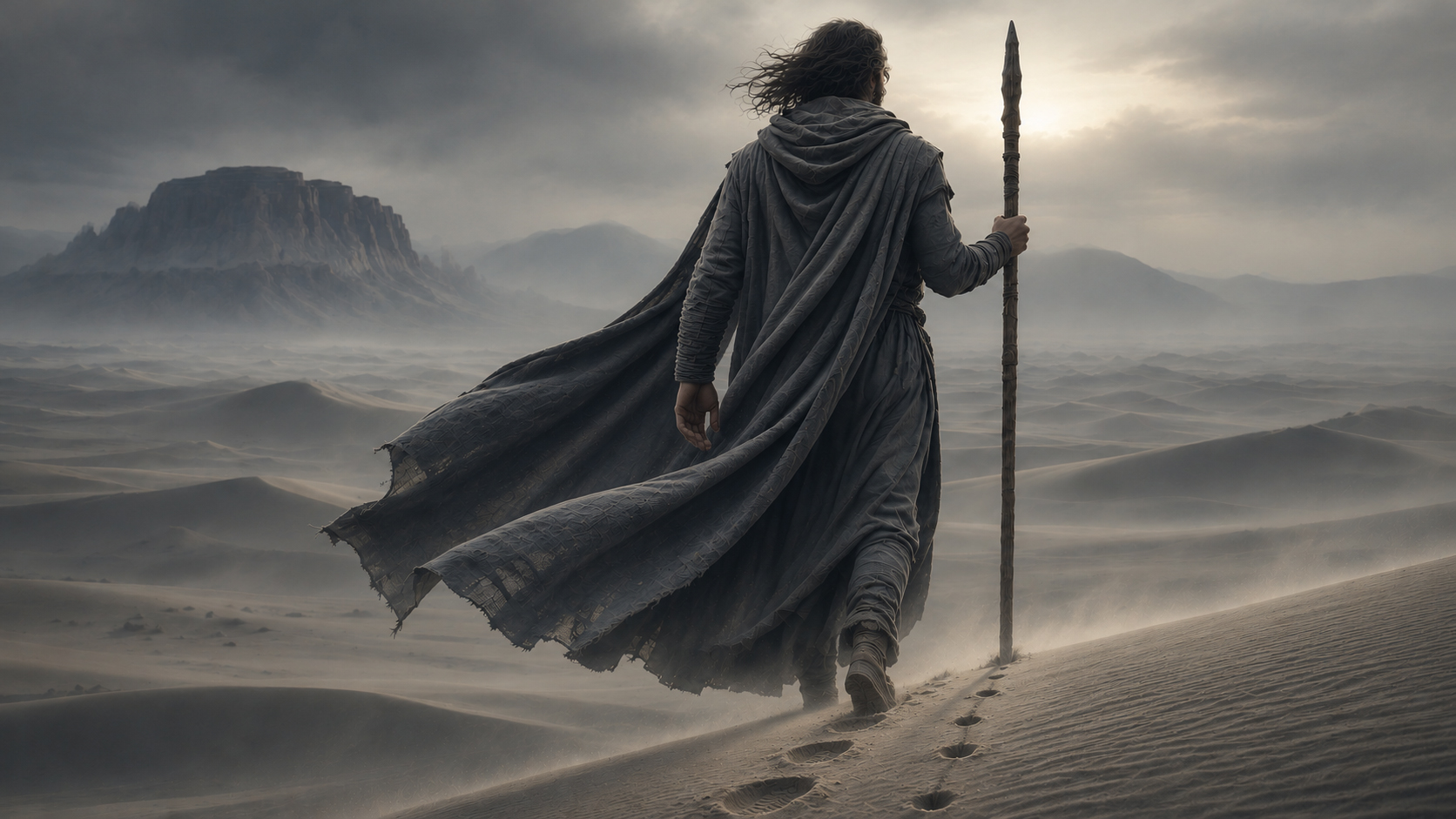
The conspiracy also reaches into the Fremen themselves. Scytale visits Farok, a former Fremen commander who fought in Paul’s holy war and has become bitter about what followed. Farok remembers the old desert life and speaks of how much his people have changed. During his travels to other worlds, he saw an ocean for the first time. The experience changed his understanding of the universe and caused him to question the war he had helped fight. His son has also been blinded by a powerful weapon called a stone burner. Scytale kills Farok and his son, then uses his ability to change appearance as part of a plan involving Lichna, the daughter of Paul’s loyal follower Otheym. He later takes Lichna’s appearance to approach Paul. These events introduce a darker side of the Fremen victory. Many of the men who fought for Muad’Dib have returned to a world they scarcely recognize, and some have come to hate the empire they helped create.
Paul’s visions become more disturbing as the plot moves forward. One vision includes the sight of a falling moon, which troubles him because he senses that his understanding of the future is failing. He is drawn toward events he cannot fully explain, even though he knows that danger lies ahead. When Scytale appears in the form of Lichna and asks him to visit her father, Paul recognizes the deception but agrees to go. He knows that Otheym has information about a plot among the Fremen. Before the meeting, Paul visits the temple where Alia is worshiped by great crowds. The religious devotion surrounding his sister has become much like the worship directed toward him. Paul then travels in disguise to Otheym’s home, where he finds his old follower seriously ill. Otheym gives him a strange dwarf named Bijaz, who has been trained to remember the names and details of those involved in the plot. Paul leaves with Bijaz, knowing that he has entered another part of the conspiracy.
Soon after Paul leaves Otheym’s house, a stone burner explodes nearby. The weapon destroys the surrounding area and blinds Paul and many of his men. Under Fremen custom, a blind person is expected to walk alone into the desert rather than remain dependent upon others. Paul, however, continues to move and act as though he can still see. His visions have shown him the events ahead in such detail that he can follow them without the use of his eyes. The Fremen are amazed, and many take this as further proof that he possesses powers beyond those of an ordinary man. Yet Paul is now dependent upon following a future he has already seen. Any change could leave him helpless. The investigation that follows exposes Korba, one of the chief priests of Paul’s religion, as a member of the plot. Korba has used his position to gain wealth and authority, and his betrayal shows how far the religious government has departed from the old Fremen life. Bijaz also reveals his true purpose when he secretly places a command within Hayt’s mind, preparing him to kill Paul at a moment of deep grief.
The final events take Paul and Chani back to Sietch Tabr, where she prepares to give birth. Paul knows that the death he has feared is near, but he remains with her. When Chani dies during childbirth, the secret command within Hayt is awakened. He turns against Paul with a weapon, but the order to kill him comes into conflict with Duncan Idaho’s former loyalty. The struggle breaks the control placed upon him by the Bene Tleilax, and Duncan’s memories return. He recognizes Paul and becomes himself again. This was one of the strongest moments in the novel for me. Duncan’s loyalty survives even the attempts to destroy and rebuild his identity. Yet Paul’s loss is overwhelming. Chani has given birth to twins, a son named Leto and a daughter named Ghanima. Paul had foreseen only a daughter, and the unexpected birth of his son reveals another limit to his visions. With Chani gone and his knowledge of the future failing, Paul is left physically blind and unable to rely upon the power that has guided him for so long.
Scytale makes his final move while Paul is grieving. Still disguised as Lichna, he threatens the newborn children and offers Paul a way to restore Chani through the same methods used to create Hayt. Duncan’s recovered memories have already shown that the Bene Tleilax can bring back something of a person’s former life. For Paul, the offer is almost unbearable. He could see Chani again, hear her voice, and perhaps recover the woman he loves. Yet he knows that a restored Chani could be used to control him, just as Duncan had been given a hidden command. Paul refuses the offer. Although his own visions have failed, he suddenly finds that he can see through the eyes of his infant son. Using this unexpected sight, he throws a knife and kills Scytale before the children can be harmed. Bijaz later repeats the offer to restore Chani, but Paul orders Duncan to kill him. With the plot defeated, Paul gives up the throne and leaves his children under the care of Alia, who will rule until they are old enough. He then follows the Fremen custom for the blind and walks alone into the desert. His departure brings the story to a sorrowful end. The man who once commanded armies and ruled an empire leaves everything behind, with no one to guide him and no promise that he will return.
Scope
Dune Messiah follows the rule of Paul Atreides twelve years after the events of Dune. Most of the story takes place on Arrakis, where Paul rules an empire troubled by religious warfare, political enemies, and growing division among the Fremen. The Bene Gesserit, Spacing Guild, and Bene Tleilax join in a secret plot against him, while members of his own court work to protect their power. Paul’s ability to see the future allows him to recognize many of these dangers, but his efforts to protect Chani draw him further into the events he fears. The story also follows the return of Duncan Idaho through Hayt, the changes in Alia’s life, and the birth of Paul’s children. By the end, the plot against Paul has failed, but Chani is dead, his visions are gone, and he has given up the throne. The fate of House Atreides now rests with the next generation.
People
House Atreides and the Imperial Household
- Paul Atreides (Muad’Dib): Emperor of the known universe and ruler of Arrakis. His visions of the future help him govern, but also leave him troubled by events he believes he cannot change. He gives up his throne after Chani’s death.
- Chani: Paul’s Fremen companion and the woman he loves. She longs to give him another child and eventually bears twins, dying during childbirth.
- Alia Atreides: Paul’s younger sister, born with the knowledge of earlier generations. She holds great religious authority and becomes regent for Paul’s children after his departure.
- Princess Irulan Corrino: Daughter of the former Emperor Shaddam IV and Paul’s wife through a political marriage. She secretly prevents Chani from becoming pregnant but later turns away from the Bene Gesserit and devotes herself to Paul’s children.
- Hayt (Duncan Idaho): A ghola created from Duncan Idaho’s remains by the Bene Tleilax. His original memories return when he resists a hidden command to kill Paul.
- Leto Atreides II: Newborn son of Paul and Chani, named after Paul’s father. His unexpected birth reveals a limit to Paul’s visions, and his unusual awareness helps Paul defeat Scytale.
- Ghanima Atreides: Newborn daughter of Paul and Chani. Like her twin brother, she possesses knowledge beyond that of an ordinary infant and becomes an heir to the Atreides throne.
Fremen and Religious Leaders
- Stilgar: Former leader of Sietch Tabr and one of Paul’s closest followers. His loyalty remains firm, although his old friendship with Paul has changed under the influence of religious worship.
- Korba: A former Fremen warrior who becomes a powerful priest in Paul’s religion. He uses his office to gain influence and takes part in the conspiracy against the Emperor.
- Otheym: A loyal Fremen veteran and former member of Paul’s personal fighting force. Though seriously ill, he warns Paul about a plot among the Fremen and gives him Bijaz.
- Farok: A former Fremen commander who has become unhappy with the changes brought by Paul’s holy war. His memories of desert life and his travels to other worlds reveal his loss of faith in the empire.
- Farok’s Son: A young man blinded by a stone burner during the holy war. He helps pass secret information to Scytale before both he and his father are murdered.
- Lichna: Daughter of Otheym. She is killed by the conspirators, and Scytale later assumes her appearance to gain access to Paul.
- Harah: A Fremen woman who once belonged to Paul’s household. She remains close to the Atreides family and helps care for Chani’s newborn children.
Bene Gesserit
- Reverend Mother Gaius Helen Mohiam: A senior member of the Bene Gesserit who helped test Paul in the first novel. She joins the conspiracy to regain influence over the Atreides bloodline.
- Princess Irulan: A member of the Bene Gesserit who uses her position as Paul’s wife to serve the Sisterhood’s plans. Her growing concern for Chani and the children eventually leads her to abandon those plans.
Gene Gesserit
- Reverend Mother Gaius Helen Mohiam: A senior member of the Bene Gesserit who helped test Paul in the first novel. She joins the conspiracy to regain influence over the Atreides bloodline.
- Princess Irulan: A member of the Bene Gesserit who uses her position as Paul’s wife to serve the Sisterhood’s plans. Her growing concern for Chani and the children eventually leads her to abandon those plans.
Spacing Guild and Bene Tleilax
- Edric: A Spacing Guild Navigator whose body has been changed by long exposure to spice. He lives within a tank filled with spice gas and uses his limited knowledge of the future to help hide the conspiracy from Paul.
- Scytale: A Face Dancer of the Bene Tleilax who can change his appearance to imitate others. He directs much of the plot against Paul and later attempts to gain control of him through the offer to restore Chani.
- Bijaz: A dwarf created and trained by the Bene Tleilax. He possesses an unusual memory and secretly carries commands intended to control Hayt. Paul orders his death after the failure of Scytale’s plan.
Other Figures
- Bronso of Ix: A historian condemned for questioning the accepted account of Muad’Dib’s rise. His interview at the beginning of the novel reveals the danger of speaking against Paul’s religious government.
Places
Planets
- Arrakis (Dune): The desert planet where Paul rules as Emperor. It remains the only natural source of the spice melange, giving Paul great power over the Imperium.
- Wallach IX: Home of the Bene Gesserit, where Mohiam, Irulan, Edric, and Scytale meet to discuss their plans against Paul.
- Caladan: The former homeworld of House Atreides. It remains part of Paul’s family history, although it is not a main setting in the novel.
- Ix: A world known for advanced technology and the home of Bronso, the historian whose account opens the story.
Arrakis Locations
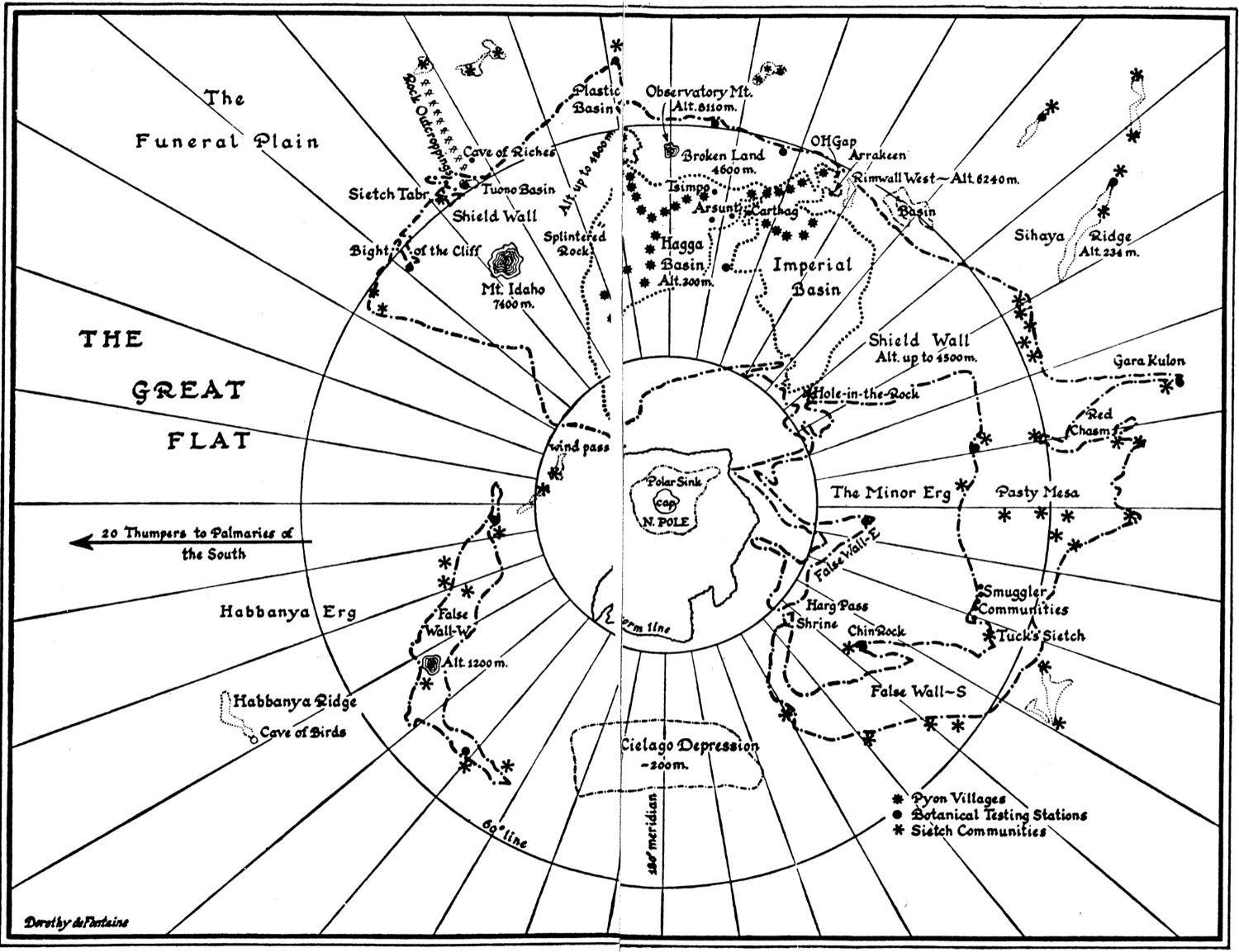
- Arrakeen: The main city and center of Paul’s imperial government. Much of the political and religious activity surrounding his rule takes place here.
- Imperial Palace: Paul’s residence and seat of government, where he meets advisers, receives visitors, and struggles with the demands of his office.
- Alia’s Temple: A major center of worship where large crowds gather to honor Alia and the religion of Muad’Dib.
- Otheym’s House: Home of Paul’s loyal Fremen follower. Paul visits to learn about the plot against him and receives Bijaz shortly before the stone burner attack.
- Sietch Tabr: The Fremen settlement closely tied to Paul’s earlier life in the desert. Chani gives birth here, and Paul later leaves to begin his final journey.
- Habbanya Ridge: A region of Arrakis connected with the older Fremen way of life and recalled by Farok when speaking about the changes brought by the empire.
- The Deep Desert: The vast wilderness beyond the cities and Fremen settlements. It remains a place governed by the old customs of Arrakis and becomes Paul’s final destination.
Other Planets / Seats of Power
- Kaitain – Imperial capital, the courtly world Shaddam leaves to deal with Paul. (Referenced, not visited.)
- Giedi Prime – Harkonnen homeworld, still referenced in terms of inheritance (through Feyd).
Conclusion
I found Dune Messiah to be a sad account of what followed Paul’s victory in the first novel. Much of what he fought for has become a source of suffering, and the people who once stood beside him now live under a government that treats him as more than a man. His enemies are dangerous, but they are not responsible for every problem he faces. Paul has made choices of his own, and some of them have harmed the people he wanted to protect. His decision to hide the truth from Chani troubled me as much as the actions of those who plotted against him. He wanted to keep her alive, but his knowledge of the future had given him a sense of authority over decisions that were not his alone to make.
The return of Duncan Idaho was among the more interesting parts of the novel. His body had been recovered and changed by the Bene Tleilax, who hoped to use him against Paul. Yet his old loyalty proved stronger than the commands placed within him. I found this worth considering because the story raises questions about memory, identity, and the nature of a person. Duncan’s restored life does not settle all of those questions, but it leaves the reader with something to think about. His return also makes the offer to restore Chani much more troubling. Paul knows the offer may be real, but he also knows that accepting it would place Chani and himself under the control of people who have already shown what they are willing to do.
The religious life of Paul’s empire deserves close attention as well. His followers have built a system of worship around him, and the priests who serve that religion have gained great power. Korba is a good example of what has happened. He was once a Fremen warrior, but now uses his position to protect his own interests. The people continue to honor Muad’Dib, even while those who claim to speak for him work against him. Farok’s account of the old Fremen life makes the change more apparent. The men who once fought for survival in the desert have carried their religion across the universe, but conquest has not made them better men. Some have lost the very customs and loyalties that once held their people together.
From a Christian understanding, the worship of Muad’Dib is one of the most serious matters in the story. Scripture warns against placing ultimate trust in human rulers (Psalm 146:3), and worship belongs to God alone (Matthew 4:10). Paul possesses powers beyond those of ordinary men, but he remains subject to suffering, error, and death. The people who worship him do not seem to understand that distinction. His knowledge of the future cannot save Chani, protect him from every enemy, or give him peace. The priests who speak in his name cannot make him greater than he is. I found the contrast between the claims made about Muad’Dib and the actual condition of Paul Atreides difficult to overlook.
The final scene in the desert stayed with me. Paul leaves the palace, the empire, and his children behind, following a Fremen custom he can no longer escape. I cannot regard his departure as a complete victory, since Chani is dead and his children must grow up without him. Yet his decision also ends his personal rule and leaves the future of House Atreides in other hands. Herbert closes the novel without telling us whether Paul survives his journey. The man who began the first book as the young heir of Duke Leto has now become a blind wanderer in the desert where his rise to power began. There is a strange sadness in that ending. Paul gained an empire, but he could not keep the life he loved. The future now belongs to Leto and Ghanima, whose story continues in Children of Dune.


Comments are closed.