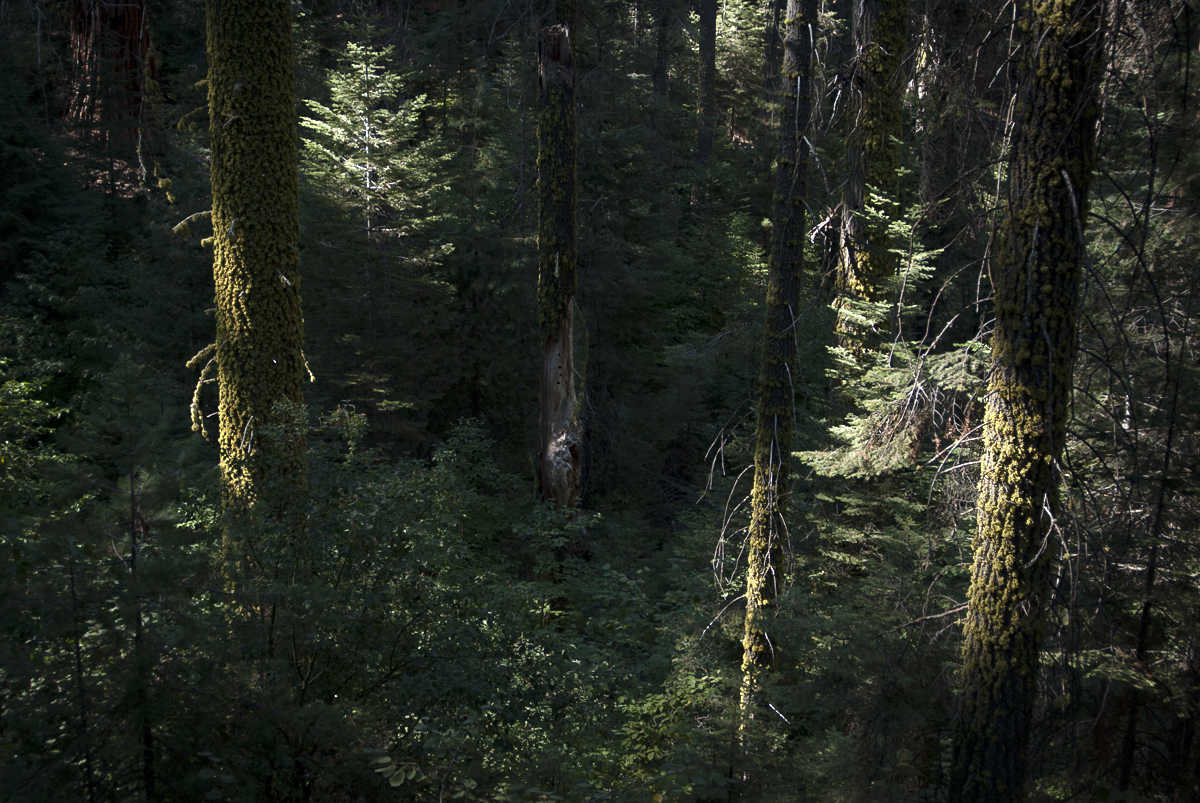
This is why there is sometimes the false choice of seeing the forest through the trees. To dismiss detail, beauty, and a way to go. Where there is shelter, safety, and acuity in the detail. The forest gives context, situational awareness, and bearing. There is just as much unseen here as there is seen and observed. What is the place doing? What happened here? Who or what feeds off this place? How are the vertical surfaces formed? What do the leaves, wind, and birds say? What angle of elevation is this at? What is dying and what is thriving? Why is moss predominately concentrated on one side of most trees? When did that lightning strike? How much snow weight did those small branches have to bear before being stripped of their growth?


Comments are closed.