Today I finished the book The Iliad (595 pages, ISBN: 978-1857150605). It’s the first of two books, including The Odyssey, that tell of the Trojan War and the Achaean return voyage to their homeland. The Iliad records a portion of the war between the Greeks and the Trojans, yet it does not cover the whole war. It begins with a dispute between Achilles and Agamemnon and follows the horrific events that come from that. The events move through the Greek camp, to the battlefields, and the city of Troy. Leaders and warriors are named, battles are fought, and outcomes follow in a nonlinear order. The poem remains guided by these events and is brought to a close with Hector’s burial.
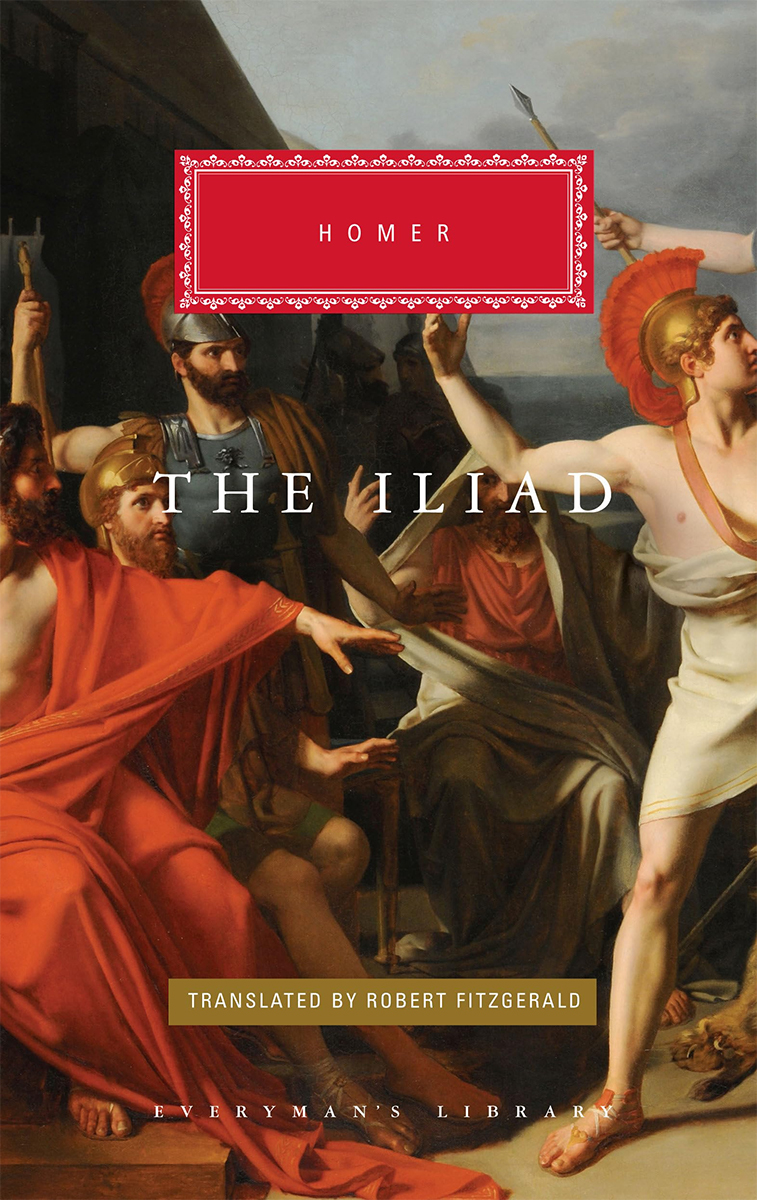
The work is attributed to Homer, whose life is not preserved in detail. The poem shows a pattern suited for spoken delivery, with repeated lines and fixed expressions that carry the narrative forward. This allowed the material to be held and passed on before it was written. The result is a single enduring work that preserves both the events recounted and the form in which it was delivered.
Book Review
The Iliad stands as one of the foundational works of ancient literature, set within the long conflict between the Achaeans, that is the Greek coalition, and the people of Troy. It does not attempt to recount the whole war. It narrows its focus to a brief stretch near the end, where the course begins to turn. The poem opens with a rupture between Achilles and Agamemnon, a dispute rooted in honor and possession that leads Achilles to withdraw from the fighting. That decision does not remain contained. It sets the rest of the account in motion and establishes the line that will be followed to the end.
From that point, the account moves outward across the Greek camp, the battlefield, and the city itself, while also rising at times into the councils of the gods. The absence of Achilles is felt at once. The Greek line weakens, the Trojans press forward, and the balance shifts. The army continues to fight, but not with the same force. Others take the field, yet none carry what has been removed. The strain shows, and what had been held begins to give way under pressure.
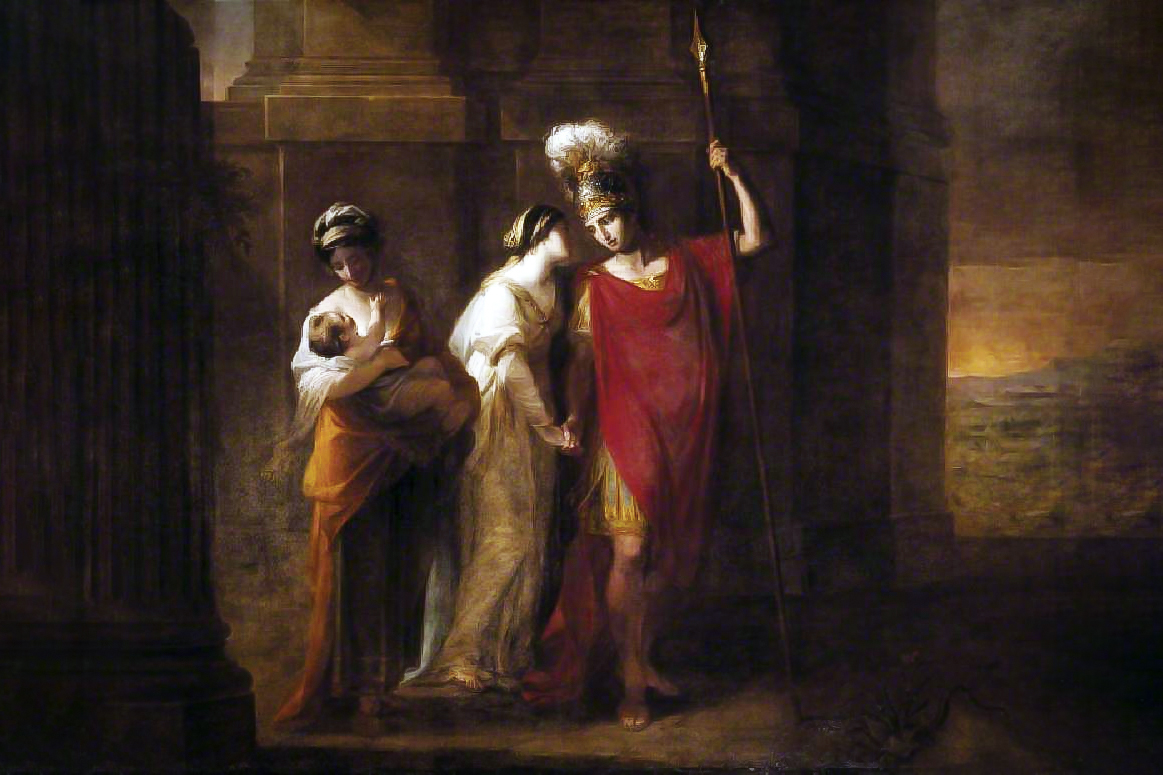
Hector stands at the center of the defense. He moves between the field and the city, bearing both at once. He is seen in battle and with Andromache and their child. The life within the walls is not set apart from the danger outside. It is bound to it. What is risked on the field reaches into the home, and what is held in the home gives weight to what is done in the field.
The fighting unfolds in detail. Men are brought forward, named, and placed before they fall. The account pauses to tell where they come from and who they belong to, then returns to the action that takes them. A strike is not left general. It is shown as it lands, and the result is carried through. The field fills with these moments, one following another, until the cost is set in place.
Alongside this, the gods move within the same line. Zeus, Athena, Apollo, Hera, and others take sides and act within what is already unfolding. They do not remain distant. They influence, protect, and oppose. What happens among men is often tied to what has already been set among them, so that the course of the battle carries both lines together.
Into this comes Patroclus, who enters the field wearing the armor of Achilles. He takes his place for a time and drives the Trojans back. The ground that had been lost is being regained. But the advance does not hold. He is struck down by Hector, and the line turns again. What had been absent is now called back.
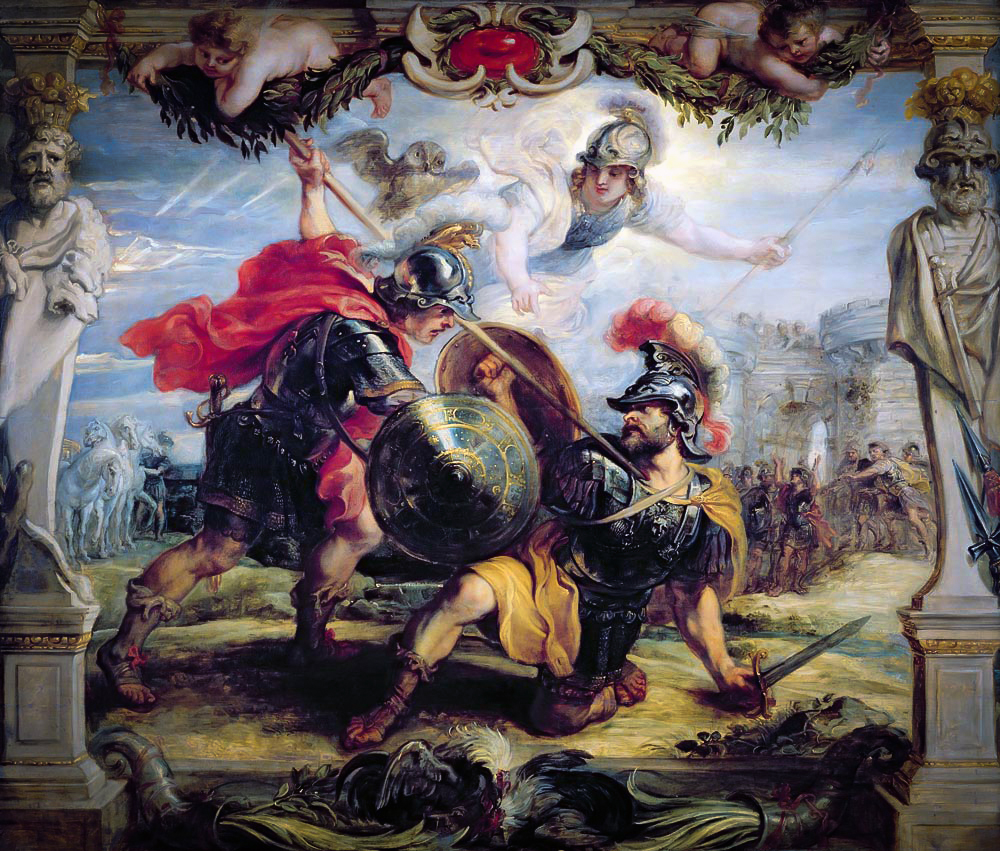
Achilles returns, and the force that had been removed is restored at once. He does not reenter slowly. He moves directly toward Hector, and their meeting is set outside the city’s walls. Hector stands and faces him. The two engage, and Hector falls. Achilles takes his body, and the act marks the point toward which the account has been moving.
From there, the focus narrows. Priam comes from the city and enters the camp of the Greeks. He stands before Achilles and asks for the return of his son. The request is received, and the body is released. The violence pauses to allow for what must be done.
The account closes with the burial of Hector. The city mourns, and the rites are carried out in full. The war itself is not resolved here. It remains beyond the boundary of what has been set down. What is given is this portion, held from beginning to end.
The whole follows a single line from the first dispute to the final burial. The settings do not shift beyond the camp, the field, and the city. The figures are named, their actions are set in order, and the presence of the gods runs alongside them. What stands is a fixed account of a defined portion of the war, carried through without loss.
“Iron must be the heart within you. We’ll probe our wounds no more, but let them rest though grief lies heavy on us. Tears heal nothing, drying so stiff and cold.” – Achilles, to Priam, the Father of Hector.
Reflection
What I value in The Iliad is the way it holds to its course without breaking from it. I am carried along a single line that begins with the dispute between Achilles and Agamemnon and continues until the burial of Hector. Each act stands with what follows from it. When Achilles withdraws, I see the Greeks weakened. When Patroclus falls, I see what rises in Achilles. When Hector is struck down, the account moves toward its end with nothing left unsettled. The language holds this same steadiness. The repeated lines do not distract me. They keep the account from shifting or losing its place, and I can remain with the text without confusion.
What I find most compelling in The Iliad is its unwavering course. It does not wander or dilute its purpose. From the first rupture between Achilles and Agamemnon to the burial of Hector, the account advances with a kind of inevitability, each moment bound to the next. Nothing is left suspended. When Achilles withdraws, the Greeks’ weakening is immediate and visible. When Patroclus falls, the consequence is not abstract but embodied in Achilles’ return. When Hector is struck down, the arc begins to close with a sense of completion. The language supports this continuity. Its repetition is not excess, but reinforcement. It holds the structure together and keeps the reader anchored within the unfolding line.
Yet I do not move through the account without being affected by what it sets before me. The violence is not veiled. It is brought forward with precision and without relief. Each blow is placed, each death accounted for, and the body is not removed from the telling. It is central to it. I am not permitted distance. I am made to see, and in seeing, I am pressed to respond. I cannot help but recall what Augustine of Hippo writes in Confessions regarding Alypius, who entered the arena resolved not to look, yet was overcome when he did. The act of seeing is not neutral. What passes through the eyes does not remain external. It reaches inward. Because of this, I read with caution. I do not want to be shaped by what I behold, but to remain ordered over it, aware of its force without yielding to it.
What remains unsettled for me is the persistent intervention of the gods. They do not stand apart from the events but enter them, altering outcomes in ways that do not always stem from the men’s actions. This disrupts the direct relation I expect between deed and consequence. A man does not always stand or fall by what he has done.


Comments are closed.