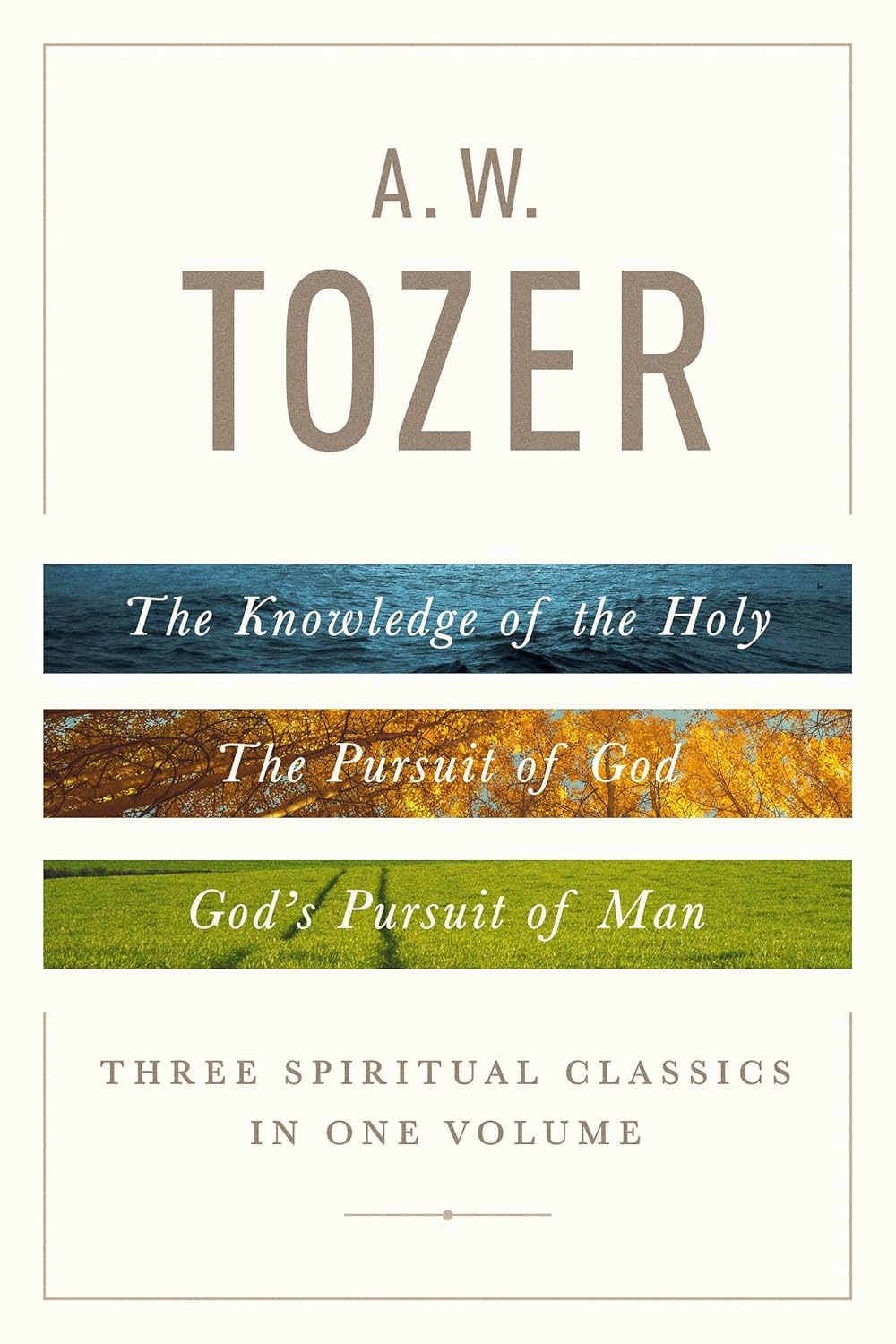
Today I fully completed A.W. Tozer’s The Pursuit of God, a first reading of his work and one that left a piqued impression upon both mind and spirit. Tozer’s pages develop with the gravity of a man who has truly sought God—not as an idea to be affirmed, but as the Living One to be known. His insights, born of Scripture and seasoned with reverent awe, possess a depth and permanence that resist mere sentiment. Each chapter pressed the soul toward inward honesty and the relinquishment of self, drawing the reader to recognize that the greatest knowledge is not intellectual mastery of divine things, but surrender before the divine presence.
What makes Tozer’s work enduringly relevant is his unwavering Christ-centeredness. He sought union with God in the only way that is authentic—through what God has revealed of Himself in the person of Jesus Christ and in the written Word. His theology is neither mystical abstraction nor moralism, but a living participation in the reality of grace. Tozer’s voice reminds us that true faith consists not in activity but in adoration, not in the accumulation of truths but in communion with Truth Himself. Finishing this book feels less like closing a volume and more like opening a door; its invitation to pursue God remains, quiet yet commanding, as the abiding call of the Spirit.
The Soul’s Pursuit and the Indwelling Presence
A Theological Exposition of A.W. Tozer’s The Pursuit of God
Abstract
This monograph interprets A. W. Tozer’s The Pursuit of God (1948) as a theology of Union with Christ—a participation of the regenerate soul in God’s own life through grace. Tozer’s appeal to experiential knowledge situates him between Reformed monergism and Patristic theosis: he preserves divine initiative while affirming that the believer, quickened by the Spirit, may truly “apprehend God.” Drawing from Augustine, Calvin, and the Cappadocians, this study shows that Tozer’s “pursuit” is not a human climb toward deity but the Spirit’s self-movement realized in the believer’s conscious love. His spirituality is therefore mystical yet scriptural, reasoned yet intimate. It is an evangelical restoration of the classic doctrine that the knowledge of God, being divinely revealed and spiritually apprehended, is not developed by intellect but received in the very act of communion with Him.
Author’s Note
Written in the tone of reverent analysis rather than commentary, this work approaches Tozer as a genuine theologian of presence. His slender volume, composed in a single train journey, carries the intensity of an Augustinian confession and the clarity of a Protestant sermon. Here, the intent is to unfold his thought along the axis of Union with Christ, showing how his vision harmonizes with both Augustinian interiority and Patristic participation, yet remains wholly faithful to the Reformation witness that salvation is of grace alone.
I. Tozer’s Context and the Recovery of Divine Immediacy
Aiden Wilson Tozer (1897 – 1963), the self-taught preacher of the Christian and Missionary Alliance, wrote The Pursuit of God after years of pastoral ministry among believers who, though orthodox in creed, seemed estranged from the living reality of God. He lamented that “religion has accepted the monstrous heresy that noise, size, activity, and bluster make a man dear to God.” [1] For him, the crisis of modern Christianity was not atheism but the absence of awareness. The transcendent God was acknowledged in doctrine yet ignored in experience.
Tozer’s corrective belongs to the current, sometimes called Evangelical Mysticism—not speculative but devotional, insisting that truth must become encounter. The believer’s task is not to summon a distant deity but to awaken to the God already indwelling through Christ. Here Tozer stands with Augustine: “You were within me, but I was outside myself, seeking You among created things.” [2] The Pursuit of God, therefore, calls for a re-entry into the interior sanctuary where the Spirit dwells.
He saw the world as spiritually anesthetized by intellectualism and materialism. The “pursuit” is not escape from creation but recovery of its sacramental depth—the recognition that the universe is charged with the presence of God. In this sense, Tozer becomes a twentieth-century interpreter of Psalm 63:8, “My soul followeth hard after Thee; Thy right hand upholdeth me.” The psalmist’s paradox of human longing upheld by divine grasp is the seed of Tozer’s whole theology.
II. The Principle of Pursuit: Divine Initiative and Human Response
At first reading, the title The Pursuit of God appears to ascribe initiative to man. Yet Tozer clarifies the paradox:
“We pursue God because, and only because, He first put an urge within us that spurs us to the pursuit.” [3]
This is Augustinian gratia praeveniens—grace preceding every motion of the will [4]—and entirely consonant with Reformed monergism, which holds that regeneration births faith rather than the reverse [5]. For Tozer, every genuine desire for God originates in God Himself: “No man can come to Me except the Father draw him” (John 6:44). Thus, pursuit is participation—the Spirit’s own desire echoing within the creature.
This understanding rescues Tozer from Pelagian misreading. His verbs seek, follow, pursue describe not independent striving but synergic response (συνεργεία)—a cooperation within grace, never apart from it [6]. The soul’s motion is God’s motion mirrored.
In theological structure, the pattern is double:
- Divine Initiation – God awakens the heart.
- Human Response – The awakened will consents to that drawing.
Such consent is the very form of faith working by love (Galatians 5:6). Pursuit, therefore, becomes the liturgy of desire: the continual yes of the regenerate soul to the perpetual call of God.
Tozer’s language resonates with Gregory of Nyssa’s doctrine of epektasis, the soul’s endless stretching forth into God [7]. Yet unlike the Eastern ascent through deification, Tozer’s progression is grounded in Christic possession: “To have found God and still to pursue Him is the soul’s paradox of love.” Here finding and seeking are one act, mirroring the Pauline rhythm of Philippians 3:12—“I press on to make it my own, because Christ Jesus has made me His own.”
The pursuit is thus not a climb but a circulation of grace. The Spirit initiates; the believer answers; and that answer is itself Spirit-empowered. In Tozer’s idiom, grace is not static favor but dynamic presence. It is the indwelling Christ drawing the soul ever deeper into communion, until faith becomes awareness and awareness becomes worship.
III. “The Blessedness of Possessing Nothing”: Kenotic Detachment
In the second chapter of The Pursuit of God, Tozer turns to Abraham’s surrender of Isaac (Genesis 22). He calls it “the blessedness of possessing nothing,” for in yielding the dearest earthly treasure Abraham was set free from the tyranny of ownership. > “God let the suffering father endure the anguish until all was out of him; then He forbade the act of self-immolation. It was then that Abraham was a man wholly surrendered.” [8]
This moment embodies kenosis (κένωσις)—self-emptying patterned after Christ, “who… made Himself of no reputation” (Philippians 2:7). Yet Tozer interprets it morally rather than metaphysically: the stripping of possessiveness so that God alone may possess the heart. The believer must bring every “Isaac” to the altar; the sacrifice purges not love itself but idolatrous attachment.
Here Tozer stands in continuity with Calvin’s doctrine of self-denial: “We are not our own; therefore, neither our reason nor our will should dominate our plans and actions.” [9] The inward renunciation of the self-life is also the Reformed path to sanctificatio. The soul, once freed from false possession, becomes transparent to grace.
Patristic tradition frames the same principle apophatically. Gregory of Nyssa and Dionysius the Areopagite taught that one comes to God by negation—via negativa—letting go of every created image that obscures the uncreated Light [10]. Tozer’s Protestant idiom echoes this precisely: he calls the self-life “a veil woven of pride and self-love.” The goal is not detachment from creation but freedom within it: to behold all things as God’s rather than one’s own.
Thus “possessing nothing” becomes paradoxical richness. The emptied heart becomes the dwelling of the Spirit; poverty of spirit (Matthew 5:3) becomes the portal of the kingdom. In Augustine’s phrase, tranquillitas ordinis—the tranquility of order [11]—is restored when love is rightly directed: the creature delights in the Creator through detachment from self.
IV. “Removing the Veil”: The Interior Sanctuary and the Doctrine of Access
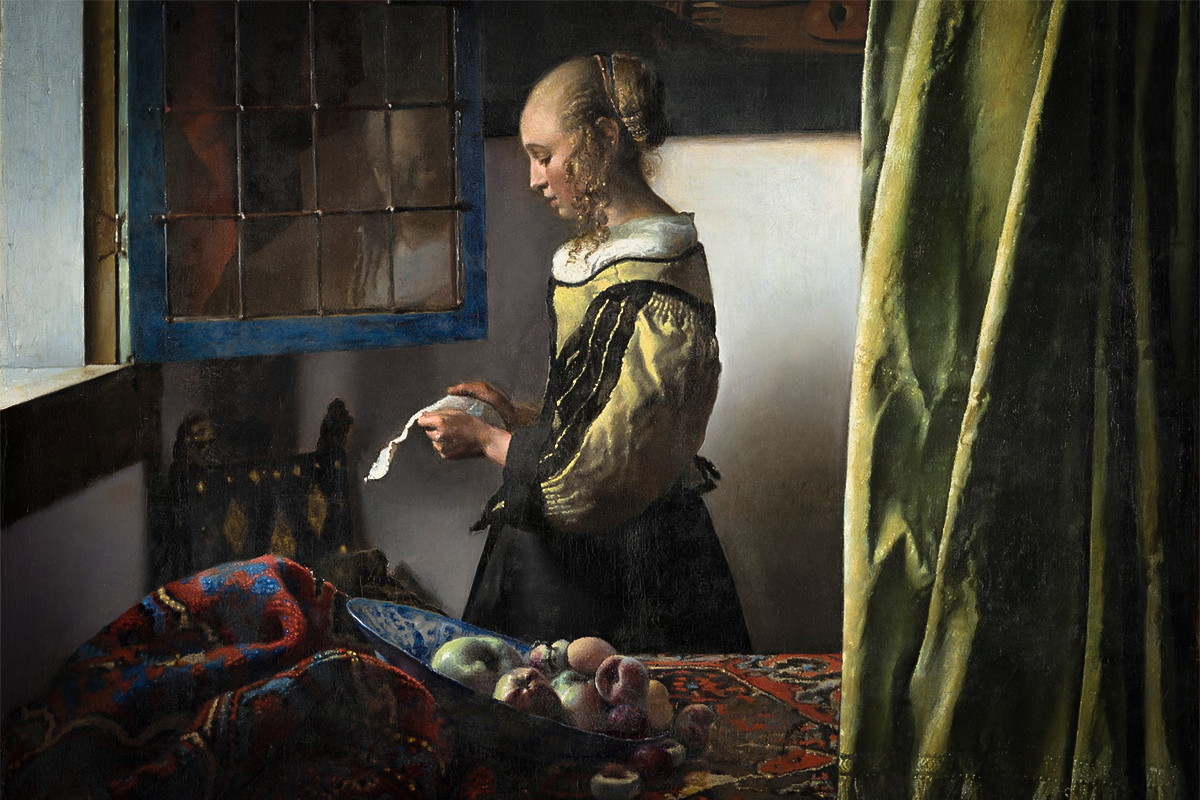
Tozer next develops his most penetrating metaphor: the inner veil. Drawing from Matthew 27:51, he writes that while the temple veil was torn by Christ’s death, an interior veil still hangs across the heart.
“We must invite the cross to do its deadly work within us; we must bring our self-sins to the cross for judgment.” [12]
This “veil of self” represents the residual opacity of the fallen ego even after conversion. The believer has access by right of Christ’s atonement (Hebrews 10:19-22), yet subjectively the way remains clouded until pride yields. Tozer, therefore, unites objective justification with subjective sanctification: the rent veil of Calvary must be inwardly realized.
The doctrine parallels Augustine’s summons, “Return into yourself; truth dwells in the inner man.” [13] The rending of the veil is an inward pilgrimage from self-consciousness to God-consciousness. Calvin expresses the same movement when he writes that the Spirit “draws us within the heavenly sanctuary, that we may enjoy the presence of God Himself.” [14]
Patristically, Tozer’s image anticipates the katharsis of the Eastern fathers—the purification that precedes theoria, vision of God. For Gregory Palamas, the heart must be cleared of the passions so that it may perceive the divine energies [15]. Tozer, without the technical language, describes the same transformation: the self-veil is not destroyed by moral effort but crucified through participation in Christ’s death (Galatians 2:20).
Once the veil is gone, worship ceases to be external. The believer enters the Holy of Holies of his own regenerated spirit, where God speaks in stillness. The cross thus becomes both historical event and interior operation—the principle of continual death unto life.
“The moment we cross the threshold of our hearts and bow in humility, the veil is gone and we are in God’s presence.”
In this brief sentence lies Tozer’s entire theology of union: the torn veil of the soul reveals the indwelling God.
V. “Removing the Veil” (continued): From Access to Awareness
Tozer’s doctrine of access culminates in his insistence that “God is nearer to us than our own soul.” The problem, he explains, is not distance but blindness. Divine presence fills all things (Jeremiah 23:24), yet the self-occupied mind remains veiled. The believer must therefore “practice inwardness,” learning to dwell consciously before God.
This concept approximates Brother Lawrence’s Practice of the Presence of God, yet Tozer grounds it more firmly in Christ’s atoning mediation: we enter the sanctuary “by the blood of Jesus” (Hebrews 10:19). The resulting awareness is not mystic absorption but relational consciousness—the realization that “Thy right hand upholdeth me” (Psalm 63:8). In this way, Tozer transforms the contemplative tradition into evangelical prayer.
VI. “Apprehending God”: Knowledge by Presence
In Apprehending God, Tozer laments that “modern Christianity knows God only as inference.” He contrasts this with the biblical theoria—the perception of God’s reality by purified faith.
“The soul has eyes with which to see and ears with which to hear; when they are open, reality is perceived.” [16]
This “seeing” is the operation of faith itself, corresponding to 2 Corinthians 4 : 6—“God… hath shined in our hearts.” Calvin calls faith “a firm and certain knowledge of God’s benevolence toward us, revealed to our minds and sealed upon our hearts by the Holy Spirit.” [17] Tozer thus retrieves the experiential side of Reformed epistemology: knowing God through participation in illumination.
Patristically, this parallels the doctrine of the nous—the inner eye restored by grace. Gregory Palamas distinguishes between knowing God’s essence (impossible) and His energies (possible and salvific). [18] Tozer’s “apprehension” describes precisely that contact: a knowledge by communion rather than by concept. The intellect remains servant to love; theology becomes doxology.
VII. “The Speaking Voice”: Revelation as Continuous Presence
Tozer’s chapter The Speaking Voice defends the immediacy of divine revelation. God has not fallen silent; His Word still speaks through Scripture and Spirit.
“The voice of God is speaking within the heart of every believer; it is the Voice that gave life at the beginning and still gives life today.” [19]
This is illumination, not new revelation. The Reformed tradition calls it testimonium Spiritus Sancti internum—the inward witness of the Spirit that makes the written Word alive. [20] Patristic theology frames the same mystery through Athanasius: the Logos who created the world continues to sustain and address it. [21] For Tozer, the “speaking Voice” is the Logos personally present. The believer who listens in stillness finds Scripture not a record of past speech but the living utterance of the ever-speaking God.
Thus Tozer’s doctrine of revelation fuses the objective and the experiential. The Bible remains final, yet God is not confined to past tense. The Spirit interprets, convicts, and communes; revelation becomes relationship. “Faith comes by hearing” (Romans 10:17), and hearing itself is grace.
VIII. “The Gaze of the Soul”: Contemplative Faith
Faith, writes Tozer, “is the gaze of the soul upon God.”[22] It is not mere assent but sustained attention—the posture of Hebrews 12:2, “Looking unto Jesus.” While the Reformation defined faith as the instrument of justification, Tozer restores its contemplative dimension: believing is beholding.
“While we are looking at God, we do not see ourselves—blessed riddance.”
This resonates with Calvin’s notion that faith unites the believer to Christ so that His life flows into ours. [23] Yet Tozer’s emphasis is affective rather than forensic: the steady turning of desire God-ward. It mirrors the Cappadocian theoria, the upward look that transforms. [24] As the soul gazes, it is changed “from glory to glory” (2 Corinthians 3:18).
In practical terms, this gaze is prayer without ceasing. It requires neither retreat nor formula, only the interior orientation of love. Faith thus becomes vision, and vision becomes likeness—the rhythm of union.
IX. “Restoring the Creator–Creature Relation”: Ontological Alignment
For Tozer, sin is disordered relation. When the creature places itself at the center, creation falls out of harmony.
“When the creation is once again aligned with the Creator, harmony returns to the universe.” [25]
Here Tozer reaches beyond ethics into metaphysics. The soul’s healing is the re-centering of being around God, a restoration of ordo amoris—the right order of love [26]. The Reformed analogue is reconciliation through union with Christ (Colossians 3:10); the Patristic parallel is theosis, humanity renewed in the divine image. [27]
Tozer avoids speculative language yet conveys its reality: grace re-establishes the proper axis of existence. The believer no longer lives as an autonomous individual but as one who adores. In this alignment, all vocation becomes sacrament. Creation, once profaned by self-will, becomes Eucharistic—offered back to God in thanksgiving. [28]
X. “Meekness and Rest”: Participation in Christ’s Humility
In Meekness and Rest Tozer directs the soul from contemplation to imitation. Christ’s call, “Learn of Me; for I am meek and lowly in heart” (Matthew 11:29), becomes both pattern and power.
“The meek man cares not at all who is greater than he, for he has long ago decided that the esteem of the world is worthless.” [29]
This meekness is not psychological timidity but ontological harmony with the Lamb of God (Philippians 2:5-11). It is the kenotic posture of existence, the yielding of self-will into divine will. Within Reformed categories, this is sanctification—the Spirit’s conforming of the believer to Christ (Romans 8:29). In Patristic idiom, it corresponds to homoiosis Theou, likeness to God, which Athanasius describes: “He became what we are, that He might make us what He is.” [30] Thus, meekness is not a mere virtue but participation: humility is communion with the humbled Christ.
XI. “The Sacrament of Living”: The Sanctification of the Ordinary
Tozer closes with a vision of integrated holiness.
“It is not what a man does that determines whether his work is sacred or secular, but why he does it.” [31]
Every task becomes worship when offered to God (1 Corinthians 10:31). This dissolves the false dualism of sacred versus secular. The Reformed expression is coram Deo—life before the face of God [32]; the Patristic parallel is Maximus the Confessor’s “cosmic liturgy,” in which humanity unites creation to its Creator [33]. Tozer translates both into evangelical idiom: awareness of Christ in all things.
Work, study, rest, and suffering become liturgical acts when performed in obedience and love. The Christian life thus becomes a continual Eucharist: receiving and returning all to God.
XII. Synthesis: Tozer Between Reformed and Patristic Currents
| Theological Theme | Reformed Emphasis | Patristic Emphasis | Tozer’s Expression |
|---|---|---|---|
| Union with Christ | Judicial and participatory; grounded in election and justification | Ontological participation (theosis) | Experiential communion through awareness and love |
| Grace and Initiative | Monergistic; grace precedes will | Synergic cooperation within grace | Divine initiative, responsive pursuit |
| Sanctification | Progressive conformity to Christ | Ascetical purification and illumination | Continual surrender to indwelling Presence |
| Knowledge of God | Illumined faith through Word & Spirit | Theoria via purified nous | “Apprehending God” through interior perception |
| Goal of Life | Glorification, communion with Christ | Theosis, participation in divine energies | “The Sacrament of Living”—perpetual adoration |
Tozer thus stands as a bridge between scholastic piety and mystical immediacy. His theology never departs from evangelical orthodoxy, yet it breathes the atmosphere of the Fathers: divine love as both origin and end. He re-integrates knowledge and presence, intellect and affection, truth and adoration. For him, theology culminates not in system but in presence—the intellect kneeling before mystery.
XIII. Conclusion: The Pursuit as Realized Union
The Pursuit of God ends where it began—in longing satisfied by continual desire. The believer does not chase an absent deity but awakens to the God already indwelling. “God is here waiting our attention,” Tozer writes [34]; union is therefore awareness.
The pursuit is the Spirit’s own life moving within the human heart, drawing it into the eternal communion of Father and Son (John 17:21-23). Reason and intimacy converge: truth becomes love experienced. In this rhythm, theology becomes worship and worship becomes theology—the endless circulation of grace.
O God of burning love, Thou who hast pursued us from eternity,
Rend the veil of self within us; empty us of all that is not Thee.
Speak Thy living Word again, that our hearts may hear and obey.
Teach us to look steadfastly upon Thy beauty,
To labor as worshipers, to rest as children,
Until every act and thought be sacrament, and every breath praise.
Through Jesus Christ our Lord, in whom Thou art perfectly revealed. Amen.
Citations
[1] A. W. Tozer, The Pursuit of God (1948), ch. 1.
[2] Augustine, Confessions X.27.
[3] Tozer, The Pursuit of God, ch. 1.
[4] Augustine, De gratia et libero arbitrio 17.33.
[5] John Calvin, Institutes of the Christian Religion III.3.1.
[6] Synergy as in John Damascene, De Fide Orthodoxa II.30.
[7] Gregory of Nyssa, De Vita Moysis II.232–240 (on epektasis).
[8] Tozer, The Pursuit of God, ch. 2.
[9] Calvin, Institutes III.7.1.
[10] Pseudo-Dionysius, Mystical Theology 1.3.
[11] Augustine, City of God XIX.13.
[12] Tozer, The Pursuit of God, ch. 3.
[13] Augustine, De vera religione 39.
[14] Calvin, Institutes III.20.37.
[15] Gregory Palamas, Triads I.3.23.
[16] Tozer, The Pursuit of God, ch. 4.
[17] Calvin, Institutes III.2.7.
[18] Palamas, Triads I.3.10.
[19] Tozer, The Pursuit of God, ch. 5.
[20] Westminster Confession of Faith I.v.
[21] Athanasius, Contra Gentes 41.
[22] Tozer, The Pursuit of God, ch. 7.
[23] Calvin, Institutes III.11.10.
[24] Gregory Nazianzen, Oration 28.4.
[25] Tozer, The Pursuit of God, ch. 8.
[26] Augustine, City of God XV.22.
[27] Athanasius, De Incarnatione Verbi Dei §54.
[28] Maximus the Confessor, Ambigua 41 (on cosmic liturgy).
[29] Tozer, The Pursuit of God, ch. 9.
[30] Athanasius, De Incarnatione §54.
[31] Tozer, The Pursuit of God, ch. 10.
[32] Calvin, Commentary on Psalm 16:8.
[33] Maximus the Confessor, Ambigua 7.
[34] Tozer, The Pursuit of God, Conclusion.
[35] Scripture quotations: King James Version (Public Domain).


Comments are closed.