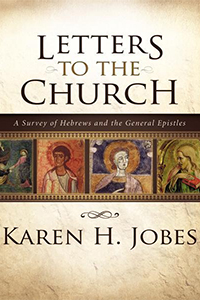
Today I finished reading through this textbook that is an overview of the New Testament books Hebrews, James, 1 Peter, 2 Peter, Jude, 1 John, 2, John, and 3 John. Some sections I read through more than once and each NT letter was read twice in preparation for the time in the textbook. It’s a survey of Hebrews and the General Epistles written by Karen Jobes. The book is organized into four major parts:
Part 1: Hebrews: The Book of Better Things
Part 2: Letters from Jesus’ Brothers
Part 3: Letters from Peter
Part 4: Letters from John
The breadth and depth of the book are significant as the text traverses the various subjects of interest. It serves as an introduction and analysis of the NT text as the topically relevant subject matter is presented to the first-century Church throughout Palestine and Asia Minor. There are sparse common threads across the letters, such as Christology, Soteriology, and Heresy in the early Church. The book recognizes and covers the various writings directed to people who comprised the Church, and it addresses disputes and contentions that were emergent at the time.
The text itself is 450-pages in length without including the glossary that comes with the text. Along with the companion digital lectures that accompany the book, it is a fantastic standing reference to the Church’s letters. It is also valuable to get a digital copy from Logos for ease of search and retrieval for citation and research purposes. It is a highly visual textbook with images, quotes, questions, and “going further” reference materials.
I believe the textbook belongs on the bookshelf of every serious student of the New Testament.


Comments are closed.