Archive | Monographs RSS feed for this section

Emergence of a Kingdom

This summary concerns this week’s reading between both texts ‘One Perfect Life, The Complete Story of the Lord Jesus’ (MacArthur), and ‘The Earthly Career of Jesus, the Christ, A Life in Chronological, Geographical and Social Context (Culver).’ As with this written summary, the prior material I wrote during this course culminates into a final project around the ultimate kingship and supremacy of Christ. The spiritual and messianic royalty of Christ as a spiritual reality to reclaim mankind for the Kingdom Jesus frequently articulated in this week’s reading. The “Kingdom of God” was upon humanity within Israel as prophesied centuries before.
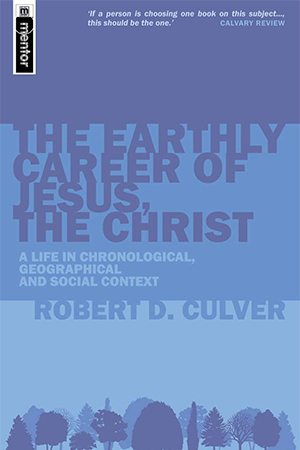
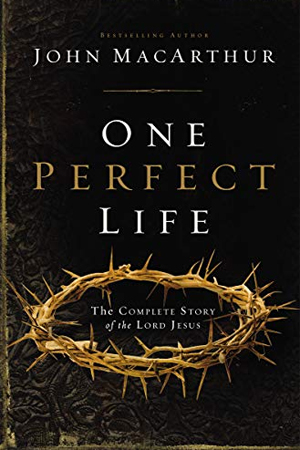
In preparation for this post, I rewrote by hand the given content outlines of both books to bring together a coherent synopsis of this week’s reading. Just like last week to reinforce what both texts cover and speak about concerning Jesus’ work and life. This time, most significantly, was during a specific period that covers His time in Northern Israel around Galilee’s towns. Moreover, to prepare this week’s reading summary, I specifically concentrated on the early history of Jesus including the Galilean period of His life and ministry. As a comparison of both outlines between each text, my observations attempt to cover what was presented to get at what Jesus said and accomplished.

Within the Culver text, the author writes about the interval of ministry between the opening and completion of Jesus’ efforts within the Galilee region in Northern Israel. As organized as a written walkthrough, the author establishes that Jesus worked from a centralized location of his ministry and extended His work through time and throughout the region to His sermon on the mount. In so doing, Jesus gathered to Himself men who would become leaders to inaugurate the apostolic age. The Apostolate became formed through teaching and anointing from God through Christ to originate the Church and form the Kingdom of God on Earth.

The work of the ministry of Jesus and His apostles did not come without controversy and confrontation. With the Jewish leadership in opposition to Jesus, numerous recounted miracles, signs, wonders, messages, assertions, and teachings demonstrated a conflict between them and what He claimed. Even further, a growing rejection of Jesus from among townspeople developed due to conflicts of interest. They were especially concerning the Gentiles’ given place within the emergent Kingdom of God and what Jesus spoke about in terms of His flesh and blood as the bread of life for everyone who would believe in Him (John 6:29). To further illustrate the conflict Jesus faced, the synagogue leaders of Capernaum had objections to Jesus’ claim that the prophecy of Isaiah was fulfilled in their hearing (Luke 4:16-23).

In between the opening and closure of Jesus’ ministry in Galilee, He performed numerous astonishing miracles. Undeniable was His impact upon the people of the region and everywhere else among adjacent territories. Through His persistent efforts, He revealed to people His identity as their messiah—a savior from sin made possible through belief as a work of God. A redemption made effective for those who would believe in Him. As Jesus performed miracles, gained a reputation, taught wisdom, and proved his claims, people would place their trust in Him. To each person, Jew and Gentile, the Holy Spirit’s work produced regeneration to cement a permanently restored fellowship before God.

This was the growing Kingdom of God, as people believed in Christ by what He said and accomplished in the area. Many people were led to saving faith, and Jesus’ continued visits to towns in the Galilean area proved fruitful despite the continued opposition and hostilities.

Throughout the MacArthur text, the explicit interwoven scripture references give numerous accounts where Jesus feeds thousands, heals ailments, cures disease, casts out demons, heals the blind, makes the lame walk, walks on water, and speaks numerous parables to those who could hear. Event after event, in action, and by words of the incarnate God, Jesus demonstrates the presence of the Kingdom of God upon people of many types and various locales. To give a reason for the belief that many would come to recognize and accept Him as the Source of eternal life, He performed many supernatural wonders.

From Passover AD 29 to Passover AD 30

  1. Jesus Feeds the 5,000
  2. Jesus Walks on Water
  3. Jesus is the Bread of Life
  4. Reaction to Jesus’ Claim to Be the Bread of Life
  5. Jesus Confronts the Traditions of Men
  6. Jesus Ministers to a Syro-Phoenician Woman
  7. Jesus Heals in Decapolis
  8. Jesus Feeds 4,000 in Decapolis
  9. The Leaven of the Pharisees
  10. Jesus Heals a Blind Man
  11. Peter Identifies Jesus as the Messiah
  12. Jesus Foretells His Future Suffering and Glory
  13. Jesus Is Gloriously Transfigured
  14. Jesus Heals a Demon-Possessed Boy
  15. Jesus Predicts His Resurrection a Second Time
  16. Jesus Pays the Temple Tax
  17. Jesus Confronts the Disciples’ Rivalry
  18. Jesus Warns Against Stumbling Blocks
  19. Jesus Teaches About Forgiveness
  20. Jesus Is Ridiculed by His Half-Brothers
  21. Jesus Journeys to Jerusalem
  22. Jesus Teaches at the Feast of Tabernacles
  23. The Jewish Leaders Try to Arrest Jesus
  24. Jesus Forgives an Adulterous Woman
  25. Jesus Is the Light of the World
  26. Jesus’ Relationship to Abraham
  27. Jesus Commissions the Seventy
  28. The Seventy Return
  29. The Story About a Good Samaritan
  30. Jesus Visits Mary and Martha
  31. Jesus Teaches About Prayer
  32. The Pharisees Again Make Blasphemous Claims
  33. Jesus Warns the Scribes and Pharisees
  34. Jesus Warns Against Hypocrisy
  35. Jesus Teaches About True Wealth
  36. Warning to Be Ready for the Master’s Return

It is notable that through the various accounts of Jesus’ activity, there is a distinct absence of substantive transition between one event or activity and another. Each event is a freestanding occurrence of its own without an apparent reference back to what had occurred prior, where Jesus and His apostles might have called attention to His work in the past as specific recurring types of incidents that gave added weight to His authority, power, and identity.

As intertextually presented by MacArthur, the passages of Scripture account for what Jesus did, where He went, and what He taught. To give an organized rationale for message segmentation and recount what occurred to achieve or produce belief among people to develop God’s Kingdom—made apparent piece by piece to present discrete stories that together inform by staccato (not by legato) a message of supreme necessity. That, per se, this is about the life of Christ, His accomplishments, identity, and teaching, and more explicitly concerning the Kingdom of God as one synergistic and integrated whole around Christ’s body of work in Galilee and beyond.


Continue Reading ·

The Unseen Realm

Today I completed this book word-for-word, all 387-pages. It took a few months to get through it as I’m normally reading several books at a time due to coursework, but I read through it carefully and some chapters more than once. Every once in a while, a book comes along that completely calls into question your perspective on the way things are. Or about facts concerning what happened in a historical sense. Some books further deepen your theological understanding of Scripture and the meaning of essential principles among modern writers and our forebears in antiquity.

That is not this book.

This book entirely upends a reader’s biblical worldview. It is not only in terms of the text and its historical, theological, or cultural meaning but also in terms of the underlying spiritual reality and the way things are. It concerns why the world is the way it is, how the human condition came to be, what was done about it, and what follows. This book doesn’t merely align or crowbar your thinking in a certain way. The book simultaneously exposes sunlight to your way of thinking and then drives a wooden stake into your mind to get your attention. It raises awareness concerning present spiritual realities to alert you about what shapes the physical existence we live out.

The book goes quite far to reveal spiritual entities that exist in a realm of existence unlike our own, but in many ways that overlap with our plane of reality. There are angels, seraphim, cherubim, demons, disembodied dead, and elohim, with distinctions identified within Scripture to highlight their place, purpose, and function in numerous ways that get our attention. Their metaphysical properties extend beyond our notions of space and time to surface an awareness within us that we are not alone. You are watched, guided, directed, and influenced unawares as part of society within a tide of human inevitability either for good or evil. You have a say; you have decisions of consequence, and your eternal outcome concerning God’s plan of salvation or demise is certain.

The book is divided into eight sections. Each section successively builds upon the prior terms and rationale set with appropriate hermeneutical principles with significant ancient literary research that spans all chapters. Dr. Heiser rigorously applies intertextuality principles in the use of Scripture to demonstrate the biblical authors’ intended meaning. Moreover, the theological meaning stitched together reveals deeper truths that span across the canon over time as intended and inspired in its Authorship.

The sections of the book are titled:

  1. First Things
  2. The Households of God
  3. Divine Transgressions
  4. Yahweh and His Portion
  5. Conquest and Failure
  6. Thus Says the Lord
  7. The Kingdom Already
  8. The Kingdom Not Yet

These areas of the book’s organization are a very high-level view of its content. Somewhat a play on words to evoke a reader’s imagination about how the subject matter brings out the biblical text’s meaning. The pseudepigrapha and other intertestamental writings are referenced to bring into perspective first-century biblical writers’ views. Largely about familiar Old Testament and Judaic beliefs about the spiritual realm.

The territory this book covers is significant in terms of its substance concerning the work of Christ and what He recognized about spiritual realities that were in effect throughout humanity. From His arrival to His death and resurrection, the presence of dark spiritual beings was within the world He occupied and traveled. Within the New Testament, we read about numerous encounters where Jesus reveals supernatural activity by what He does. Within the Old Testament, we read prophecies foretold and fulfilled both across the entire canon. How they were fulfilled deeply involves spiritual entities that call attention to how events and circumstances are orchestrated for intended outcomes less evident to casual observers of history or people in their daily lives.

The book continuously refers to people, places, and things that concern the Lord’s order within physical and spiritual Creation. Overall, there is a critical literary analysis of the sacred texts to demonstrate an ancient and modern worldview that involves a divine council before the Most-High to fulfill and achieve his purposes. Christ, the incarnate and embodiment of God, is thoroughly immersed and situated in this reality, both seen and unseen. To bring awareness further that the heavenly realm exists and applies continuous pressure to physical realities within the Universe. Namely, all elements of the Earth and its occupants.

The book covers events of the Edenic garden, the great flood, the Nephilim, the Rephaim, and their background, the dispersal of peoples at Babel, numerous messianic references in the Psalms, the prophetic references to the watchers and enormous spiritual forces, the redemptive work of Christ as a spiritual conquest, the revelation of Jesus’s divine identity, humanity’s spiritual nature, and destiny, and some eschatological discussion.

The book is well-known and now read by many. Dr. Heiser has substantial support for the content of this book. He has written others such as Reversing Hermon, Angels, Demons, and others, all surrounding his work as an academic scholar in the field of biblical studies. For more information about Spiritual beings, the BibleProject people have put together a playlist of videos that cover a few topics to a limited extent. It is just a taste of what this book The Unseen Realm covers. Playlist: Spiritual Beings.


Continue Reading ·

Imagine Heaven

I just finished reading “Imagine Heaven” by John Burke. While there were numerous Near-Death Experiences (NDEs) reported from clinical studies, the author does well at recounting some of them in explicit detail. The unique stories of individuals who passed away came from a variety of causes, as recorded from testimony accounts. Each of these pertains to what happened immediately after the death of individuals as collected and interpreted by Burke coming from his research across various studies.

Book Review

The book is structured in a way to give a reader a sense of tangibility about heaven; the spiritual domain of God in terms of encounters, place, beauty, occupants, and well-being. It is acknowledged and reviewed by reputable philosophy and theology authors (and professors) Moreland, Strobel, and Habermas. While the book is stimulating, it often references scripture concerning the necessity of Jesus Christ for eternal salvation.

While there is sufficient reason to dismiss some experiences as having no evidentiary value, a reader is further served by looking at what the subconscious mind is and does as a point of reference and comparison. The book doesn’t cover enough of that to separate dream-state conditions, from actual out-of-body experiences that occurred. More attention could have been placed upon valid skepticisms touched on in the book.

Two qualified and quantified considerations are presented within the book to capture a reader’s attention. The relevance of these areas has significance as the population of participants offers aggregated detail about their experiences.

States of Transition

What happens with a person during the transition from life to “death?” There were 1300 participants in a clinical study of qualified members with controlled eligibility. Percentages reported were from among the total participants written about in the book.

1. Out-of-body experience: separation of consciousness from the physical body (75.4%)
2. Heightened senses: (74.4% said “more conscious and alert than normal”)
3. Intense and generally positive emotions or feelings (76.2% “incredible peace”)
4. Passing into or through a tunnel (33.8%)
5. Encountering a mystical or brilliant light (64.6%)
6. Encountering other beings, either mystical beings or deceased relatives or friends (57.3%)
7. A sense of alteration of time or space (60.5%)
8. Life review (22.2%)
9. Encountering unworldly (“heavenly”) realms (52.2%)
10. Encountering or learning special knowledge (56%)
11. Encountering a boundary or barrier (31%)
12. A return to the body (58.5% were aware of a decision to return)

The Core NDE Experience (pg 46); [1]

Hellish Conditions & Encounters

Twelve different studies involving 1,369 participants reported NDEs that were disturbing, terrifying, or of despair/distress. Among this population of participants, there were three general categories of experience grouped to understand distribution and frequency.

Familiar Spaces

A high density of discarnate people jammed together. Abuses, writhing, gouging, punching, etc., but unable to destroy. Creatures are generally locked into habits of mind and emotion into hatred, lust, and destructive thought/behavior patterns — individuals who “welcome” newcomers seem kind at first.

A Void

Surrounding profound darkness with a continued falling sensation.

A Pit

Involves a locked-in or trapped-in awareness. An enclosure of sorts such as a cave, a bottomless pit, or a large wide hole. Consists of grotesque evil creatures that accompany a perception or smell of death, feces, vomit, and putrid substances. Individuals are exposed to either extreme heat or cold.

All three NDE groups were concerned about a sense of a barrier that wasn’t crossed. Where to go across would be to “eternalize” their placement.

The participants were individuals who experienced fatal accidents, trauma, cardiac arrest, etc. Each involves clinical death for a short duration.

Hellish NDEs (pg 215); General type categories as cited: [2]

Citations

Throughout the book, there are cited references with an exhaustive bibliography to support your own personal research. There are two I touch on in this posting as given here.

1] John Burke and Don Piper, Imagine Heaven: Near-Death Experiences, God’s Promises, and the Exhilarating Future That Awaits You (Grand Rapids, MI: Baker, 2015). Reference to Long and Perry, “Evidence of the Afterlife”, 6-7.
[2] Holden, Greyson, and James, etc., Handbook of Near-Death Experiences, 70, cited in Miller, Near-Death Experiences as Evidence, 170. Miller gives many other studies on hellish NDEs in notes 30-31 on p. 170.


Continue Reading ·