Archive | Monographs RSS feed for this section

The Hallways of Silence

In recent months, I’ve had a growing interest in prayer, and I’ve been gathering subject matter about the reasons for it and how its continued use is critical within the believer’s life of faith and practice. Prayer is how people communicate with God, and there are many biblical examples within the Old and New Testaments concerning what that means and involves. Jesus spoke of prayer to teach His followers how to pray properly in spirit, sincerity, and truth according to individual and group needs according to God’s will and interests (Matt 6:5-15). With some further interest, I’ve brought together additional relevant titles that shall be read to understand prayer at a greater depth, but this written work is from R.A. Torrey’s short book, How to Pray.

Background

From a Protestant perspective, they are from Reformed and Wesleyan traditions to get a narrowly diverse view about what prayer is, how it functions, and its purposes by examples from within Scripture. Catholic & Orthodox perspectives are considered for further understanding and review in forthcoming separate reviews. These titles are read and closely tracked with notes to clarify what prayer is from various traditions and confessional commitments. The book, How to Pray is a public-domain classic historically read widely among evangelicals. The author has written numerous books and comes from a faith tradition relevant to early perspectives from 20th-century Western Christianity to today. The book review and summary presented here are from the unabridged text within the Moody Classics series from Moody Publishers (ISBN-13 978-0-8024-5652-6).

R.A. Torrey’s “Little Book on Prayer” is 121 pages in a 5” x 7” format, and it covers vital concerns about life in “conversation” with God. While his writing comes from the worldview of Torrey as an early 20th-century Protestant minister, it is clear that the terms and principles come from language inherent in Western civilization at the time. The book has a wild-west tone as Torrey’s spiritual development is from the late 1800s. The book was written and in circulation just after the U.S. Civil War (1861–1865) but before World war I (1914–1918) and II (1939–1945). While How to Pray was written after the industrial revolution between about 1820 through 1840, Western civilization slid into decades of moral descent while humanity underwent the historical “development” of modernity beginning about 1910. After modernism peaked in the 1960s, U.S. cultural and sexual revolutions gave a further pretext for postmodern worldviews to shape societies, governments, academia, economies, and liberalism.

Before some evangelical denominations from liberal traditions sank into moral relativism and decay through their participation in postmodern society’s interests, it surrendered biblical imperatives concerning racial, social, and economic justice with warnings about moral and sexual ethics contrary to centuries of Scriptural interpretation according to the intent of Old and New Testament writers. As R.A. Torrey’s written views come from this era, he objected to the pressures of modernity upon seminaries and the church. And while he didn’t ascribe to a single denomination,1 he was a proponent of Keswick theology,2 which was a partition of theological persuasion aside from the “Arminian strain of Wesleyan thought” and unlike Methodist leaders who dominated the Holiness Movement. As Keswick theology was more within the Calvinist tradition,3 Torrey was a congregationalist in alignment with presbyterian polity. Torrey routinely informed his audiences that he was ‘Episcopresbygationalaptist!‘

From the 19th century to today, the historical presence of Wesleyan thought, and feminist ideology among Methodist traditions of evangelicalism had a significant bearing on the development of Western Protestantism. In contrast to the social and ecclesial priorities of Methodist interests concerning capitulations to modernity, R.A. Torrey was a revivalist and anti-modernist. He was one of the founders of the fundamentalist movement4 before broader evangelicalism superseded it to import various denominations with hidden egalitarian leanings to assert progressive “unity” and soften the edge of biblical adherence of believers to Scriptural faith and practice within modern society. “Fundamentalism” had become a pariah and a pejorative within Western Christianity, just as “Protestantism” was to Catholicism for different reasons. Today, the readership of R.A. Torrey’s How to Pray is situated within evangelicalism that is largely spiritually weak, biblically illiterate to a significant extent, and either in denial or uninformed concerning what Christ expects of His church.
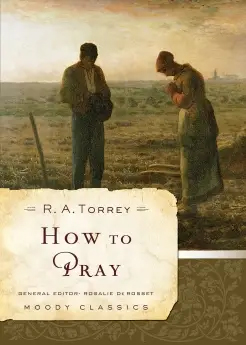
As indicated before, this title, How to Pray, is accompanied by further reading among other faith traditions. Namely, these additional titles shall be reviewed and cited among various others to balance how I begin with Torrey’s work. Eastern Orthodox and Puritan writings on prayer shall also get due attention, but these are well-known with favorably earned reputations.

  1. The Complete Works of E.M. Bounds
    by E.M. Bounds – The Essentials of Prayer, The Necessity of Prayer, The Possibilities of Prayer, Power through Prayer, Prayer and Praying Men, Purpose in Prayer, The Reality of Prayer, The Weapon of Prayer
  2. An Exposition on Prayer in the Bible
    by Dr. James Rosscup – Volumes 1 through 4, Expositions from Genesis to Revelation
  3. Fire Within
    by Dr. Thomas Dubay – St. Teresa of Avila, St. John of the Cross, and the Gospel – on Prayer

R.A. Torrey’s book on prayer spans 12 chapters concerning methods of communication with God involving preparation, state of being, and intentionality. As Christ Jesus taught His disciples how to pray (Luke 11:2-4), He provides a model to follow (Matt 6:5-15). Moreover, he gave guidelines about what not to do during prayer. It is His prayer that sets the New Covenant baseline model for prayer, but there are numerous prayers throughout Scripture that serve as examples. Prayers offered to YHWH originate from the patriarchs and extend to kings, priests, prophets, poets, saints, and puritans throughout the centuries. God heard the prayers we read in Scripture, and believing readers are inspired and motivated to understand their meaning to pray familiarly as models for us to aspire. The prayer of God incarnate to God the Father is the pedagogical model we witness in Scripture, but we also have Jesus’ prayer within the gospels to learn much from. For example, the prayer through John 17 is for all people to marvel at its substance and beauty as the LORD’s relationship to the Father is of enormous spiritual significance.

Yet during the course of daily life, as a disciple asked Jesus how to pray, these were His words for us today.

The Lord’s Prayer

And he said unto them, When ye pray, say,
Our Father which art in heaven,
Hallowed be thy name.
Thy kingdom come.
Thy will be done, as in heaven, so in earth.
Give us day by day our daily bread.
And forgive us our sins; for we also forgive every one that is indebted to us.
And lead us not into temptation; but deliver us from evil.

– Luke 11:2-3 KJV

In The Dark Hallway of Prayerlessness

The editor of this book, Dr. Rosalie de Rosset, wrote an utterly delightful introduction to Torrey’s little book on prayer, How to Pray. Dr. Rosset is a retired Literature, English, and Homiletics professor at Moody Bible Institute. She earned an M.A. in English from Northeastern Illinois University, M.Div. from Trinity Evangelical Divinity School and a Ph.D. in Language, Literacy, and Rhetoric from The University of Illinois at Chicago. Her summary of Dr. Torrey’s life work was also recounted with her own experiences and affections about prayer that draw the reader into the book with a fresh and open perspective. As prayer is a blessing and privilege, she reminds us that the discipline of it is a source of reward that suggests peace, joy, rest, and contentment. She read numerous books on prayer, both old and new, and she served as a wonderful and fitting editor of this book by R.A. Torrey. Her passing through the dark hallway of prayerlessness was written touchingly by her reading and heartful presentation of this little prayer book. A book that should inspire anyone who may want to draw close to God and speak.

The Importance of Prayer

As Torrey begins his book, he answers the questions about why prayer is essential. He specifically wrote that prayer must be constant, persistent, sleepless, overcoming, and necessary. There were eleven reasons Torrey listed to explain why prayer carries such an urgency to remain disciplined and continuously about it.
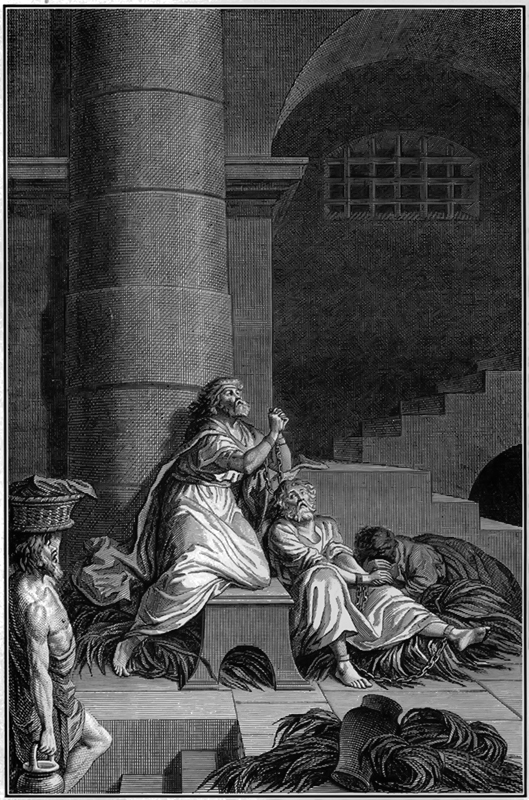
  1. There is a devil -An evil influence that seeks to ensnare believers who relax in prayer.
  2. Prayer is God’s appointed way of obtaining things, and the great secret of all lack in our experience, in our life and in our work is neglect of prayer.
  3. Men whom God set forth as a pattern of what He expected Christians to be—the apostles —regarded prayer as the most important business of their lives (Rom 1:9, Eph 1:15-16, Col 1:9, 1 Thess 3:10, 2 Tim 1:3).
  4. Prayer occupied a very prominent place and played a very important part in the earthly life of our Lord (Mark 1:35 Luke 6:12).

    A startling quote from this section of the book: “a man or woman who does not spend much time in prayer cannot properly be called a follower of Jesus Christ.”5

  5. Prayer that seems if possible even more forcible than this, namely, praying is the most important part of the present ministry of our risen Lord (Rom. 8:34, Heb. 7:25).
  6. Prayer is the means that God has appointed for our receiving mercy, and obtaining grace to help in time of need (Luke 11:8, Heb. 4:14-16).
  7. Prayer in the name of Jesus Christ is the way Jesus Christ Himself has appointed for His disciples to obtain fullness of joy (Ps. 16:11, John 16:24).
  8. With thanksgiving, every care, anxiety, and need of life is the means that God has appointed for our obtaining freedom from all anxiety, and the peace of God which passes all understanding (Phil 4:6-7).
  9. Prayer is the method that God Himself has appointed for our obtaining the Holy Spirit (Luke 11:13).
  10. Prayer is the means that Christ has appointed whereby our hearts shall not become overcharged with surfeiting and drunkenness and cares of this life, and so the day of Christ’s return come upon us suddenly as a snare (Luke 21:34-36, Acts 4:31, Acts 8:15, Eph. 6:18).
  11. Prayer accomplishes the following:
    a. Prayer promotes our spiritual growth as almost nothing else, indeed as nothing else but Bible study; and true prayer and true Bible study go hand in hand.
    b. Prayer brings power into our work.
    c. Prayer avails for the conversion of others.
    d. Prayer brings blessings to the church.

Torrey doesn’t offer scriptural support on this last point (11).

Praying to God

Torrey makes the point that the recipient of prayer is God and that it is necessary to offer prayer to Him constantly. However, he begins by noting that this continuous prayer is also about how to pray with power. To at least infer that the length and intensity by which prayer is offered have a bearing on the recipient when two or more believers gather together in prayer. He elaborates further on three areas of interest.  

  1. In the twelfth chapter of the Acts of the Apostles, we have the record of a prayer that prevailed with God and brought to pass great results (Acts 12:5).
  2. The second secret of effective praying is found in the same verse, in the words without ceasing. Rendered as “earnest” in other translations, it carries the tone of a serious, persevering, eager, fervent, and constant heart and intent.
  3. A third secret of right praying is also found in this same verse, Acts 12:5. It appears in the three words “of the church”; there is a special blessing as Torrey interprets Matthew 18:19. Translated quote of Christ Jesus: “If two of you shall agree on earth as touching anything that they shall ask, it shall be done for them of my Father which is in heaven.”

    Note: The word “touching” (προσψαύω) rendered by the KJV, ASV, or ERV doesn’t appear in early manuscripts [4th-century Alexandria (Sinaiticus majuscule)].

The duration and intensity of group prayer appear to have a bearing on how effective prayer is in terms of power. Still, it must be said that God is not beholden to group pressure or the substance of a group’s prayer (and its persistence or intensity) to get what’s requested, even if motives are pure. God’s promises are true, and He fulfills them as recorded within Scripture; however, as He does fulfill His promises, it is by His will and sovereign intent about how He does that.

Obeying and Praying

The book comes to a critical point regarding the relationship between prayer and obedience. Torrey brings the reader’s attention to 1 John 3:22, where the biblical author makes clear a correlation between what we ask and receive to doing what He instructs and what pleases him. In this context, the term “because” is set as a conjunction, not to indicate a cause-and-effect relationship between an antecedent and result but a correlation between obedience, loyalty, and love with answered prayer.

“Beloved, if our heart does not condemn us, we have confidence before God; and whatever we ask we receive from him, because we keep his commandments and do what pleases him.” – 1 John 3:22

Torrey stresses the point that it is necessary to do what pleases God, not only that which constitutes simple obedience according to His Word through Scripture. The spirit of what pleases God in a believer’s faith and practice is a matter of principle according to what the Spirit produces as fruit (Galatians 5:22). Moreover, an internal conviction of the Holy Spirit that serves as a source of discernment shall be sought and honored to please God as well.

Praying in the Name of Christ and According to the Will of God

Consistent with each chapter of this book on prayer, Torrey structures his points in an ordered and numbered fashion. Previous chapters pertain to the reasons for prayer, prayer directed to God individually or in the corporate gathering of believers, and the necessity of obedience with a right heart of love for God. In this way, the believer is advised to pray in the name of Christ Jesus, as the name of Christ has power with God. God the Father is well pleased with Jesus Christ. Christ Jesus, the Great Advocate of believers, is heard by God the Father.

  1. It was a wonderful word about prayer that Jesus spoke to His disciples on the night before His crucifixion, “Whatsoever ye shall ask in My name, that will I do, that the Father may be glorified in the Son. If ye shall ask anything in My name, I will do it.”
  2. Great light is thrown upon the subject “How to Pray” by 1 John 5:14-15: “And this is the boldness which we have toward Him, that if we ask anything according to His Will, He heareth us: and if we know that He heareth us whatsoever we ask, we know that we have the petitions which we have asked of Him.”

To further understand the will of God either by general or special revelation from Him, Torrey draws the reader’s attention to Scripture as the Word of God (Luke 11:13, James 1:5) and by the help of the Holy Spirit. To quote Torrey’s emphasis on God’s word to discern the Lord’s will, he wrote the following:

“To study the Word to find what God’s will is as revealed there in the promises, and then simply take these promises and spread them out before God in prayer with the absolutely unwavering expectation that He will do what He has promised in His Word.”6

Apostle Paul wrote to the church at Rome (Rom. 8:26-27) concerning the help from the Holy Spirit as He intercedes for us. He prays for the saints according to the will of God. As the Holy Spirit intercedes for us, Torrey also draws our attention to the confidence we have in Christ, as made clear in 1 John 5:14-15. Furthermore, this love banishes self-condemnation, resulting in confidence in every believer’s relationship with God.7

Praying in the Spirit

Torrey references two passages that call attention to prayer in the Spirit. Ephesians 6:18 and Jude 20 explicitly refer to “praying in the Spirit” to indicate a person’s state of being while communicating before God. The Holy Spirit helps believers in Christ before the Father (John 14:16-17) through personal weakness (i.e., “the Spirit helpeth our infirmity” according to Romans 8:26). Torrey says explicitly that the Holy Spirit teaches us how to pray.8 And that “true prayer is prayer in the Spirit; that is, the prayer the Spirit inspires and directs.” Torrey makes this point about the authenticity of prayer because of a concern over praying for the right things in the right way. Where to accompany joy and power, prayer in the Spirit is a necessity. However, his accurate observations from authoritative Scripture appear to be about requests, supplications, or petitions and not explicitly about confession, thanksgiving, or adoration. These further categories of prayer involve praying in the Spirit yet are unaddressed in this chapter.

  1. Over and over again in what has already been said, we have seen our dependence upon the Holy Spirit in prayer.
  2. If we are to pray with power we must pray with faith.

As Torrey makes Scripturally sound points about praying in the Spirit, he also covers the point about praying with faith. Jesus informs His followers that belief is necessary for effective prayer (Mark 11:24), and Torrey includes faith or belief as a component of prayer that requires due attention. Together, prayer in the Spirit and prayer in faith work as a methodology or condition about communication with God that bears undeniable merit as the points are grounded in Scripture, and the teachings of Christ are clear and unambiguous in this area. However, it is essential to recognize that the wider context of Christ’s teachings extends to the scope and the state of the heart of prayer. Carefully observing the gospel witness accounts of prayer serve as a model for prayer, yet what Jesus further said about prayer in the context of faith and reconciliation carries enormous weight.

And Jesus answered them, “Have faith in God. Truly, I say to you, whoever says to this mountain, ‘Be taken up and thrown into the sea,’ and does not doubt in his heart, but believes that what he says will come to pass, it will be done for him. Therefore I tell you, whatever you ask in prayer, believe that you have received it, and it will be yours. And whenever you stand praying, forgive, if you have anything against anyone, so that your Father also who is in heaven may forgive you your trespasses.” – Mark 11:22-25

Later in the book (chapter 9), Torrey lists various hindrances to prayer. Reconciliation is one of them (Mark 11:25). However, this prayer in faith is spiritually affected by the interpersonal status of relationships we have among believers and people in general, where resentments, grudges, and attitudes of unforgiveness remain held against those who have offended. Faith, as a required state of mental and spiritual belief in the absence of doubt, represents a stable mind confident of who God is and what He can do (James 1:5-6).   

It is reasonable to ask where faith comes from where there is no faith and faith is expected for prayer. Torrey points to Scripture as the origination and development of faith as supported by Romans 10:17. More specifically, the “word of Christ” produces faith where it becomes further possible to pray in the Spirit in a growing way among the spiritual lives of believers. As people read or intake the words of Christ, faith is developed to support prayer for various purposes, as outlined in chapter one of this book. It is yet unwise to let it go unrecognized that faith is a gift (Ephesians 2:8). At the same time, faithfulness is a fruit of the Spirit (Galatians 5:22). This faith is “a confident trust and reliance upon Christ Jesus and is the only means by which one can obtain salvation.”9 The passage in Ephesians 2:8, “For by grace you have been saved through faith. And this is not your own doing; it is the gift of God,” captures the gift’s essence to include grace and faith as one gift together. There is providence and sovereignty at work in the lives of believers in this area of confidence and belief involving faith given to those who would decide to trust Christ Jesus.

In contrast to prayer in the Spirit and by faith, recited prayers and benedictions stand alongside the examples given in Scripture and what Torrey wrote about in this book. Torrey doesn’t touch upon this form of devotion expressed as prayer, but the presence of it in the lives of believers is undeniable. Psalms and prayers are sung and read from prepared materials from Scripture, the Church, Spirit-indwelt individuals, institutions, and the magisterium, where there are true and important spiritual facts and principles that contribute to the development of personal and public faith. Furthermore, fellowship and outreach have an additional effect on the development of faith as believers acknowledge every good thing they have in Christ Jesus (Philemon 1:6). A growing, effective and powerful prayer life rests upon faith as it is formed through the Holy Spirit, Scripture, fellowship among believers, and outreach toward society as belief and spiritual truth is proclaimed. There are benedictions, both written and spoken in person and written in the Word, that have significant biblical and theological meanings. More specifically, the Aaronic and apostolic benedictions commonly appear in ceremonial, worship, and instructional settings directed to YHWH God for His glory and the edification of the saints (Num 6:24-26, Rom 15:13, 2 Cor 13:14, Heb 13:20-21).10

Prayers among believers from structured writings offer a consistent and formatted use of terms, phrases, and recited truths directed inward, just as they are in prayers of sincere reflection and outward expression of petitions. Aside from confessional documents that summarize doctrines, prayer books serve as acknowledgments, devotional, and liturgical aids that help frame spiritual thought and practice. Prayer books appear among theological traditions and denominations that are recited by millions of people and across generations. The Common Book of Prayer is an example of verbiage prescribed and applied by faithful followers of Christ who follow methods of spoken words uttered and thoughts formed to communicate to God about events, instruction, devotion, and worship as a matter of recited effort. Either as empty words outward or to the inward life of the mind. Also, they are as heartfelt words claimed and recited, just as benedictions are to convey meaning and personal or corporate interest within the Church.

Prayer in the Spirit and by faith as an attitude of the softened heart given by God to commune with Him and others is an authentic mode of prayer that substantiates how prayer is formed. Prayers both as free-form thoughts to speak and as read and recited with a warmth of conviction to yield a personal heart of faith and fellowship in the Spirit. Prayers in the Spirit and by faith are not auto-repeated (vain repetitions) empty words that Christ taught against (Matt 6:7) but appropriated words that speak through us and for us by the Spirit as an expression of faith. Singing the Psalms, reciting the Lord’s prayer, and repeating the Aaronic and apostolic benedictions are just a few examples.

Always Praying and Not Fainting

In this section (chapter 6), Torrey wrote about persistence and stamina in prayer. Torrey draws upon the parables of Christ directly from passages within the gospel of Luke. Among two parables, Jesus spoke to His followers about the necessity of continuous prayer as a matter of persistence and great faith. As God is pleased by the faith of His people, it can take continued attention from a believer to press in prayer what is desired to please Him, worship Him, serve Him, and love others through service. Beginning with Luke 11:5-13, Jesus invited understanding about what it meant to ask, seek, and knock, as necessary to receive in faith what was sought. People who appear before God in prayer have, at times, a need to remain persistent as an expression of faith where their importunity demonstrates the sincerity and urgency of petitions. This importunity (Luke 11:8) is a lack of sensitivity about what is proper, and it is a carelessness about the opinion of others. It is a shameless immodesty without concern for propriety or one’s own dignity, and it ignores convention.11 In a manner of speaking, it is shameless persistence.

The example given to us about this importunity is from the Syro-Phœnician (Canaanite) woman who appeared before Jesus in desperation concerning her daughter, who was oppressed by a demon (Matt 15:21-28). While Jesus was initially unresponsive to her and then declined her request for help, she remained persistent with Him in her pleas for help. As Jesus’s disciples were disturbed about her manner of approach and wanted her sent away, her request was heard even after Jesus reasoned that she was not entitled to “the children’s bread.” Jesus’ made the point that His ministry wasn’t for the Gentiles, who were foreign to the work of the Messiah at the time. Jesus’ use of the term “dogs” was correlated to Gentile peoples (Matt 1:26), while the lost people of Israel were “sheep” (Matt 1:24). The sheep were lost, and the dogs were not entitled or eligible as they were not of the house of Israel. While she knew she was an outsider, her persistence prevailed as she confessed and proclaimed Him as Lord and Master. Jesus granted her prayer, and He acknowledged her dignity as a woman who would see her daughter delivered while her faith was made evident before God and the lost sheep of Israel.

An important takeaway in this parable of the Canaanite woman is the recognition that persistence in prayer shows “great faith” that pleases God immensely. We are reminded that without faith, it is impossible to please God (Heb 11:6), and persistence in prayer is a way to exercise faith to gain what is sought, but more importantly, to please God by seeking Him continually and, when necessary, with importunity.

Abiding in Christ

When considering what it means to abide in Christ, it is easy to miss how this imperative relates to prayer. Apostle wrote to the church what he witnessed of Christ’s teaching, “If ye abide in Me, and My words abide in you, ye shall ask what ye will, and it shall be done unto you” (John 15:7). What Jesus spoke is a conditional proposition. That is, specifically, “if you abide in Me” and “My words abide in you” results in an outcome involving prayer that pleases God (by inference from the point above). Abiding in Christ is inseparable from abiding in His words. It is impossible to abide in Christ without dwelling upon what He said. And by what was recorded in Scripture to state what He said. What Christ spoke and what the biblical writers convey to generations and all nationalities reach individuals who would appear before God in prayer with the grace and mercy to be heard. Torrey further parses the verse between phrases for readers to understand the conditions for answered prayer.

  1. The first condition is, “If ye abide in Me.”
  2. But there is another condition stated in this verse, though it is really involved in the first: “And My words abide in you.”

The words of Christ settled within and richly observed afresh in the hearts and minds of believers yield a disposition of “abiding in Christ.” It isn’t enough to become familiar with God’s Word and the words of Christ by reading the Bible once or less than infrequently and expect to be heard in prayer. It is necessary to feed upon the word. Dwelling in the Word, living in the Word, and spiritually washing oneself in the word bring sanctification (John 17:17) as a means of worship in spirit and truth. Prayers thought and spoken are in the absence of neglect of the Word for petitions to be heard, accepted, and answered insofar as God chooses.

Torrey makes a further point that is quite astonishing. He asserted, “The Holy Spirit works His prayers in us through the Word, and neglect of the Word makes praying in the Holy Spirit an impossibility” (Rom 8:26-27). In contrast to empty ritualistic words uttered by a person in dry prayer and worship, the Spirit works with believers’ meditations upon God’s Word. And by this assertion of Christ, “if you abide in Me, and My words abide in you,” we understand and sit upon the ground of faith for the Spirit to intercede before God the Father on our behalf. God answers the prayers He inspires by His Word indwelt within believers who live by faith.

Of significant interest as a counter-weight to Torrey’s assertion here, consider the parable of the Pharisee and the Tax Collector (Luke 18:12-14). Notice the contrast between the religious leader immersed in the Torah as Old Covenant Scripture as compared to the tax collector, an adversary of the Jewish people, who lifted his eyes and pleaded in desperation, “God, have mercy on me, a sinner!” That man in Christ’s parable was heard and went away justified, even as an illustration of spiritual truth, the LORD hears those who reach out to Him in faith. To further reinforce this point, consider the thief on the cross executed alongside Jesus, “Lord, remember me when you enter into your Kingdom” (Luke 23:42). God incarnate heard the man’s petition and, by His mercy, gave him the grace to die in peace assured of God’s presence to come. There isn’t a contradiction here about what Jesus teaches us about prayers heard and answered. Torrey highlights that those in a relationship with Jesus are expected to abide in His words as necessary for His people to be heard.

Praying with Thanksgiving

In addition to what apostle Paul wrote about thanksgiving during the course of prayer (Phil 4:6-7), Jesus spoke of gratitude beforehand during His ministry. Torrey points out, “God is deeply grieved by the thanklessness and ingratitude of which many of us are guilty.” He telegraphs Jesus’ experience to people today according to the healing of the ten lepers (Luke 17:11-19) at a village between Samaria and Galilee. As the gospel record makes clear, Jesus sent them on their way to present themselves to priests, and as they went, they were healed. As glorious as this miraculous event was, one Samaritan returned to praise God in gratitude to Jesus. Ten percent of the people who were obedient to present themselves to the priests returned to thank Jesus for the cleansing. They asked for help, “Jesus, Master, have mercy on us” (Luke 17:13), and their request was answered with a miracle Jesus performed. One out of ten returned in gratitude. All could have returned to praise God and glorify Him with thanksgiving to Christ and then go to the priests as instructed. One might surmise that the Samaritan did return to Christ Jesus as the high priest in a spiritual sense because He gave the cleansed leper freedom to “Rise and go your way; your faith has made you well” (c.f. Mark 10:52). In any case, the Samaritan’s attitude was of praise to express authentic, heartfelt gratitude by faith that pleased God.

While Apostle Paul stressed the necessity of thanksgiving during prayer to the church at Philippi (Phil 4:6-7), he also wrote to the church as Thessalonica, “in everything give thanks” (1 Thess 5:18). It is in these passages that we recognize that relevant, valid, and necessary methods of prayer extend beyond supplication, intercession, and petition. And even with the Lord’s model, prayer is recorded in Matthew 6:5-15 where there isn’t a specific meaning of terms to indicate a heart or words spoken of gratitude. Prayer with meaning from believers by faith includes thanksgiving as fitting the occasion for prayer. However, thanksgiving is never neglected.

Hindrances to Prayer

There are several hindrances to prayer that Torrey wrote about over 120 years ago. Taken together, they constitute selfish motives [(1) James 4:3], personal sin [(2) Isa 59:1-2], idolatry [(3) Ezek 14:3], neglect of the poor [(4) Prov 21:13], unforgiveness [(5) Mark 11:25], spousal dishonor [(6) 1 Pet 3:7], and doubt or disbelief [(7) James 1:5-7]. The following list is what Torrey offers as hindrances. While Torrey cites scripture from the English Revised Version (ERV), the English Standard Version (ESV) translation is substituted here for improved readability.  

  1. The first hindrance to prayer we will find in James 4:3 (ESV): “You ask and do not receive, because you ask wrongly, to spend it on your passions.”
  2. The second hindrance to prayer we find in Is. 59:1-2 (ESV): “Behold, the LORD’s hand is not shortened, that it cannot save, or his ear dull, that it cannot hear; but your iniquities have made a separation between you and your God, and your sins have hidden his face from you so that he does not hear.”
  3. The third hindrance to prayer is found in Ezek. 14:3 (ESV): “Son of man, these men have taken their idols into their hearts, and set the stumbling block of their iniquity before their faces. Should I indeed let myself be consulted by them?” Idols in the heart cause God to refuse to listen to our prayers.
  4. The fourth hindrance to prayer is found in Prov. 21:13 (ESV): “Whoever closes his ear to the cry of the poor will himself call out and not be answered.”
  5. The fifth hindrance to prayer is found in Mark 11:25 (ESV): “And whenever you stand praying, forgive, if you have anything against anyone, so that your Father also who is in heaven may forgive you your trespasses.”
  6. The sixth hindrance to prayer is found in 1 Peter 3:7 (ESV): “Likewise, husbands, live with your wives in an understanding way, showing honor to the woman as the weaker vessel, since they are heirs with you1 of the grace of life, so that your prayers may not be hindered.” Here we are plainly told that a wrong relation between husband and wife is a hindrance to prayer.
  7. The seventh hindrance to prayer is found in James 1:5–7 (ESV): “If any of you lacks wisdom, let him ask God, who gives generously to all without reproach, and it will be given him. But let him ask in faith, with no doubting, for the one who doubts is like a wave of the sea that is driven and tossed by the wind. For that person must not suppose that he will receive anything from the Lord;” Prayers are hindered by unbelief.

Torrey titles chapter nine, “Hindrances to Prayer.” However, when reading the verse references carefully, Torrey accurately proves from Scripture what conditions negatively affect prayer in believers’ lives. However, there doesn’t appear to be room for reading some of these verses as impediments per se as compared to prayers outright obstructed for various reasons. Apostle Peter applied the term “hindered” (ἐγκόπτεσθαι) in 1 Peter 3:7 concerning prayer impediments due to spousal dishonor, whereas that same term doesn’t appear among the other verses where Torrey makes his points about prayers going unheard or unanswered. However, there isn’t another term among these concerns that indicates “hindrance” with a wider semantic range of understanding. The term “hindrance” Torrey uses here indicates the presence of something that interferes, delays, or damages prayers accepted and heard. Compared to the loosely applied word “hindrance,” which infers a strained reach in prayer as opposed to a sense of obstruction or obstacle that altogether prevents the hearing and answering of prayers as an apparent interpretation according to the intent of the biblical authors. There is a big difference between hindered and blocked prayers, and both situations appear as biblical truths from the translations we read.

When to Pray

While not explicitly made evident, the “when” question is answered in terms of chronology, durations, intervals, and events. In this sense, Torrey indicates the circumstances in which it is appropriate and necessary to pray. He rightfully draws upon Christ’s life and ministry examples to answer questions about “when to pray.” As this classic book is entitled “How to Pray,” this chapter offers thoughts about “When to Pray.” In a limited way, Torrey’s various chapters answer questions about when, where, how, why, and what to pray. The verse passages Torrey quoted here are kept in the ERV.

  1. In the 1st chapter of Mark, the 35th verse, we read, “And in the morning, rising up a great while before day, He went out, and departed into a solitary place, and there prayed.” See Mark 1:35 ESV as a comparison.
  2. In the 6th chapter of Luke in the 12th verse, we get further light upon the right time to pray. We read, “And it came to pass in those days, that He went out into a mountain to pray, and continued all night in prayer to God.” See Luke 6:12 ESV as a comparison.
  3. Jesus Christ prayed before all the great crises in His earthly life. (Luke 6:12, 13; Luke 9:18, 21, 22; Luke 3:21, 22; Mark 1:35–38; Luke 22:39–46)
  4. Christ prayed not only before the great events and victories of His life, but He also prayed after its great achievements and important crises. (Matt 14:23, John 6:15).
  5. Jesus Christ gave a special time to prayer when life was unusually busy. He would withdraw at such a time from the multitudes that thronged about Him, and go into the wilderness and pray. For example, we read in Luke 5:15-16 (ERV), “But so much the more went abroad the report concerning Him: and great multitudes came together to hear, and to be healed of their infirmities. But He withdrew Himself in the deserts and prayed.” (Mark 3:20, 6:31, 33, 46)
  6. Jesus Christ prayed before the great temptations of His life. (Mark 26:36)
  7. In 1 Thess. 5:17 we read, “Pray without ceasing,” and in Eph. 6:18 (ERV), “praying at all seasons.” In the life of the mind, prayers thought and offered should accompany spoken prayers out loud. As a constant walk in communication with God, prayer should be an ever-present state or presence before God with thanksgiving, adoration, confession, and supplication.

General Revival and Its Preparatory Prayer

The final two chapters of Torrey’s book are about his views concerning a pressing need for spiritual revivals during a historical period where such events were more culturally recognized than the old-time thought of revival to modern sensibilities today. From a biblical perspective, spiritual renewal is a theologically relevant matter of interest. The sapiential value of renewal, where people become spiritually restored and reoriented toward a rightful life of faith and practice, there is repentance and a prevailing heart’s desire to return to God and remain with Him.

Torrey was an independent congregationalist educator committed to revival events with a reputation for bringing spiritual renewal to thousands of people. Known for his organizational capabilities, Torrey was an influential Christian leader in the late 1800s and early 1900s who wrote over 40 books and reminded Protestants about the fundamentals of the faith. His contributions to the Kingdom in this little book about prayer now also comes at a time today when his message and guidance are urgently needed.

Citations

___________________
1 John Calvin, Institutes of the Christian Religion & 2, ed. John T. McNeill, trans. Ford Lewis Battles, vol. 1, The Library of Christian Classics (Louisville, KY: Westminster John Knox Press, 2011), 926.
2 Jack W. Hayford and S. David Moore, The Charismatic Century: The Enduring Impact of the Azusa Street Revival (New York City, NY: FaithWords, 2009).
3 Daniel G. Reid et al., Dictionary of Christianity in America (Downers Grove, IL: InterVarsity Press, 1990).
4 W. V. Trollinger, Jr, “Torrey, Reuben Archer,” ed. Timothy Larsen et al., Biographical Dictionary of Evangelicals (Leicester, England; Downers Grove, IL: InterVarsity Press, 2003), 675.
5 St Augustine et al., Moody Classics Complete Set: Includes 18 Classics of the Faith in a Single Volume (Chicago, IL: Moody Publishers, 2010).
6 Reuben Archer Torrey, How to Pray (Chicago; New York: Fleming H. Revell company, 1900), 55.
7 John F. MacArthur Jr., The MacArthur Study Bible: New American Standard Bible. (Nashville, TN: Thomas Nelson Publishers, 2006), 1 Jn 3:21.
8 Ibid. Torrey, 58.
9 Crossway Bibles, The ESV Study Bible (Wheaton, IL: Crossway Bibles, 2008), 2265.
10 Leland Ryken et al., Dictionary of Biblical Imagery (Downers Grove, IL: InterVarsity Press, 2000), 87.
11 William Arndt et al., A Greek-English Lexicon of the New Testament and Other Early Christian Literature (Chicago: University of Chicago Press, 2000), 63.


Continue Reading ·

Beyond the Sacred Page

As I begin the book Four Views on Moving Beyond the Bible to Theology, the first of four proposed models involves what it takes to transition study, research, and inquiry from the Bible to the origination of theological interest and tentative conclusions about God and His created order. While the Bible remains the authority and the source of all Truth, it is of significant interest to develop and understand facts, conditions, circumstances, and doctrines around the theological reality surrounding all of God’s created order. The authors of this book offer perspectives about the processes in which the bridge to theology is advocated. Applied for meaningful value while subordinate to established doctrines of the faith, areas of theological development are endless. With divine revelation through Scripture and all truth that belongs to God as observed within Creation, there are innumerable ways in which He is sought.

The Principlizing Model

The book’s first section involves a Principlizing Model (PM) that Walter C. Kaiser Jr. presented as a method of forming Scriptural principles to help to resolve modern and social questions from a theistic perspective. The inference that biblical exegesis provides a way to social utility and the betterment of humanity is welcomed to an extent, but to call that a theological outcome runs counter to what it is by definition. I agree with much of Dr. Kaiser’s assertions and conclusions about the methods of principlizing and the resolutions to the social, historical, and cultural offered from a biblical perspective. However, I would not call those outcomes or the process of arriving at various conclusions doing theology. The book’s intended purpose is to move beyond the Bible to theology. And Dr. Kaiser’s approach doesn’t get the reader there, which means that theological principles are not attempted by the PM to recognize and understand further truth.

The substance of Dr. Kaiser’s PM and its process involves a three-step generalization method that derives principles founded upon the Bible. He offers three steps of principlizing to further elaborate upon what it is and how it functions: 

  1. Get the big idea of the passage 
    Identify the subject, emphasis, and interconnectivity to passages and references elsewhere to substantiate the primary point of the text under consideration.

  2. Identify propositional concerns 
    From the prose, scene, or strophe, derive meaning applicable to the interpreter by use of first-person or plural pronouns to evoke potential suitability or application coherent with the biblical writers’ proper hermeneutical method and intent.

  3. Personalize the passage 
    Use language in an active sense and direct action toward future tense imperatives to lead the reader into the present and put the matter into practice.

In contrast to this process of principlizing, Kaiser introduces a “Ladder of Abstraction” method of understanding both specific and general subject matter. The ladder of abstraction is usually a powerful tool for writers who create meaningful subject matter around fictional or nonfictional content, but Kaiser calls attention to it in his essay. To originate principles from concrete meaning from the first century and long before to those who wish to generalize and then substantiate specific and concrete meaning today. The idea of a ladder of abstraction is generally understood as bringing out meaning from low levels of specificity to high levels of generality and back again toward specificity within a current or modern context. 

While Kaiser doesn’t offer added detail about the ladder of abstraction in his essay, it does appear in other written work he has produced. As I wrote about earlier concerns about the social utility of interpretive principles for practical use (aside from theological formation), he wrote again of going “beyond the Bible” to get answers to modern ethical questions. He casts this proposition as a “theological framework for ethics of the Bible.”1In this monograph, Kaiser elaborates further on the “Ladder of Abstraction” to show how principlization functions. While he uses case law to illustrate an example of its use, there is value in the point of what it does. Specific circumstances, messages, or stories in the Bible move from specific situations up the ladder to arrive at general principles about norms. The ladder is then descended where a similar situation applies to a contemporary rationale or set of circumstances—ascending and descending the ladder of abstraction yields questions about general situations that may correspond to similar situations or notions of inquiry to produce theological subject matter.

To further explain what Dr. Kaiser was getting at, it occurs to me there is merit in the ladder of abstraction. Not just as a writing instrument of value but to aid in biblical interpretation, according to authorial intent, where theological principles are generally and specifically derived. For example, consider a passage from A Tale of Two Cities by Charles Dickens.

“It was the best of times, it was the worst of times, it was the age of wisdom, it was the age of foolishness, it was the epoch of belief, it was the epoch of incredulity, it was the season of light, it was the season of darkness, it was the spring of hope, it was the winter of despair.”

From generality to specificity, there is the substance of meaning and tension between each contrasting point. The points made draw the reader in to ask questions and investigate what happened and what other supporting passages might add further depth to illuminate specific theological principles applicable today. Just as well, there are literary realities conveyed in Scripture that bear out theological truths that reveal God’s intended messaging.

The Redemptive Historical Model

Chapter two of Four Views on Moving Beyond the Bible to Theology transitions to the Redemptive-Historical Model, where the task of the redemptive-historical theologian (RHT) interprets Scripture from a grammatical-historical approach. Involving sound exegetical interpretation through the intended meaning of Scripture, the hermeneutic of the RHT, according to Daniel M. Doriani, is centered around Reformed tradition. Still, his essay is written in the same orientation as that of Kaiser. That is, what it means to go beyond the sacred page to faith and practice from inferring or surmising that meaning is derived from the context of humanity’s interests. As compared to the messaging about theological principles about who God is, what He has done, what He is doing, and what spiritual and technical realities exist to inform people how we should believe and behave, there remains a pressing need to set a course toward lives that glorify God and love everyone through theological reason and understanding beyond the sacred page, tradition, and confessional obligations.

Scripture, as the closed canon of God’s Word, has been of immeasurable value through the centuries. From when it originated to where it goes through contemporary contexts (regardless of geography or ethnicity), it is the bedrock of all truth from which further theological understanding is derived. The book’s title, Four Views on Moving Beyond the Bible to Theology, does not accurately describe what the book holds itself out to be. The book is not a text about how theological doctrine or systematics are historically or presently derived from understanding the study of God. Whether Biblical, Historical, Systematic, Philosophical, Practical theology, or some overlapping combination, the convergence of these areas of thought, research, and discovery should center around revelation and a progressive understanding of God from various approaches unencumbered by what we can get out of it for consumption that goes nowhere. The RHT and theologians of all stripes would do well to apply sound hermeneutical methods around literary realities, OT, NT, and intertestamental beliefs. The Ancient Near East context by which divine revelation is situated influences spiritual concerns which have a bearing on the physical and spiritual realms that intersect. The written essays from this book concerning redemptive history offer the fruit of theology for the picking, but it should be asked, “redemptive history” from what? Or that does what? The substantive formation of theological thought and understanding that produces doctrine is not a closed endeavor. For example, from underlying literary analysis alone from a second temple period or ANE perspective, there are theological truths from revelation throughout history that together form a composite of new and better-informed questions that puts weight upon what it means to fulfill all of what Jesus spoke.

While the purpose of theology isn’t an end to itself, it isn’t to be forged as an instrument directed to humanity’s interests separate from what God revealed through Creation and His Word that informs us about His Kingdom and intentions. Best I can tell, I understand and agree with everything Doriani wrote. Yet, he also wrote about the social implications of what it means to go beyond the Bible as “theology.” Of course, Scripture has much to say to us about gambling, women, slavery, ministry roles, and so much more about cultural and social entanglements today. Of course, we understand the given specifics and principles to draw from as made evident to acknowledge and accept. Still, I am persuaded that there is value in moving “Beyond the Bible” insofar as what Scripture reveals and supports by proper interpretive rationale. Doriani offers four steps about the origination of accurate interpretation, synthesis of biblical data, and the application of Scripture as the obvious rudimentary utility to what we learn and understand. However, there is a richer and deeper meaning beyond the sacred page that helps to develop a more thorough understanding of doctrines and theological interests without betraying our commitment to the sufficiency of Scripture for faith and practice. The theology of divine revelation isn’t merely narrowed to what confessional statements prescribe. It isn’t desiccated by what juice we can siphon from it. So my response to Doriani and the others through the remainder of the book is about theology proper, and not all forms of its study that converges on a pragmatic approach to practical theology. Read Jeremiah 33:3, settle upon it for a few minutes, then reread it to see what God meant by the “unsearchable” in context to what the prophet meant.

This is where I understand that theology is meant to go as it is studied through human effort. From what it accomplishes, how can we not act upon what we are shown through revelation? That’s painfully obvious. We are wading through the disputes and interactions of people who interact from different and, at times, contentious perspectives (i.e., Doriani, a complementarian, and Webb, an egalitarian). All to arrive at personal conclusions about contested positions. Not so helpful when God’s Word is explicitly clear about social and ethical expectations from the authority of Scripture. Webb’s views are pick-and-choose and easily refuted by an abundance of reasons to conclude what God revealed and intended in His Word. Yet, not as a contrary and static expression of meaning (Webb’s mischaracterization of Doriani and the RHT).

Webb offers various unsubstantiated perspectives about the merits of Doriani’s model but doesn’t refute them on their merits. Instead, Webb advocates an indirect liberation theology as a pick-and-choose garden of social justice grievance fruit to a Scriptural basket. Webb’s objections are not to Doriani but to what the Bible plainly says. To Webb, Scripture is for humanity to claim in its image as modern life recklessly requires (progressivism) and not for God and humanity described by a redemptive-historical model Doriani articulates. Because Webb is egalitarian, it is demonstrated that he does not accept the full authority of Scripture (contrary to what he claims), and he rejects the redemptive-historical model. Webb chooses a partial view of Scriptural authority with a worrisome weak grip on other revelatory facts with authority about cultures today.

Like the claims of Liberation Theology advocates, Webb would presumably find a way in Scripture to advocate a social theology that extends to a corresponding modernist worldview. Consequently, by inference, Scripture and its relevance to advancing society will eventually become further diluted in its relevance until rendered obsolete or entirely subjective. To this rationale, we can ask, “did God really say” (Gen 3:1)? Then conclude that it is okay to eat the fruit after all. Or, instead, do we consider God’s warning as the fodder of particularities and contemplation about its relevance and what He really meant so long as we get to consume the fruit? Whether metaphorical or not, the implied meaning of the garden remains the same.

The redemptive-historical model that Doriani wrote about has significant weight regarding what Scripture is and does. Doriani is faithful to proper exegetics and hermeneutics as he proposes and defends the redemptive-historical model. He offers specific steps in which a theologian can go beyond the sacred page without going against it. With constructive arcs and trajectories of Scripture and literary (“narrative”) considerations, the author proposes that RHTs can ask questions to arrive at conclusions along a path of faith and reason. Including casuistry to understand general rules and principles about moral behaviors that govern specific ethical issues.

The Drama-of-Redemption Model

Chapter three of Four Views on Moving Beyond the Bible to Theology transitions to the Drama-of-Redemption Model (DoR). Over the course of 60-pages of reading, Dr. Kevin J. Vanhoozer develops a manner in which going beyond the Bible is an active and participative approach toward understanding and living theology. He introduces the notion of theological reasoning as a Theodrama. More aptly, Theology is the shadow cast by the theodrama set in place by God’s doing. Where the Bible is Holy Script, theology is the program, and doctrine is the direction in which God’s story advances. Doctrines derived from the theological development of holy script guide participants along the fulfillment of what God has purposed from His interests. Numerous questions are answered in anticipation of expectations around order, reason, causality, instructions, place, plot, redemption, polemic, and context. Depth of understanding and situational awareness arises about the Writer and Producer who originated the story that defines who and what people are. As Vanhoozer intimated, “Theology is God-centered biblical interpretation that issues in performance knowledge on the world stage to the glory of God.” For this reason, I believe that Vanhoozer’s proposition is exactly correct and definitively makes a case for the DoR model.

Finally, someone in this book has a closer bearing on the purpose of doctrine and theology from a perspective that originates from divine revelation and not solely by interpreting it for personal or social interests (correct or not). In their response to Vanhoozer, both Kaiser and Webb appeal to what traction, utility, and tone are attained as he forms an intrapersonal allegory about what God has done and is doing during the entire redemptive story. As theology is both rooted in divine revelation and interwoven throughout sacra pagina (holy scripture), sacra doctrina (holy teaching), and sacra vita (holy living), it exists to develop a theodramatic understanding of God’s speech-act in the world and what people must do in response. As theatrical systems and designs, theology is formed to serve, worship, and do God’s will as participants in the story of redemption. As Vanhoozer put it, the story’s play is “doing the truth while in the midst of Babylon.” It is an outcome and not a matter of continuous points of scriptural extraction to accomplish what redemption means to a person or society with its own ideas of what redemption or theological imperatives mean. The theodrama is God’s story and we are participants. This is not our story. This story is for His glory, and we are the recipients of His grace, mercy, and love. We are objects, or better, persons, of His love that satisfies the rightful order of Creation as it was and is intended.

Riding the theological raft of holy script, we go beyond the Bible to do what it says. Christ Jesus’ parable of the sower clearly punctuates why it is necessary to get beyond theory and understanding (Matt 13:14-15, 18-23). Faith, practice, individual sanctification, and biblical justice are the outgrowth of living (sacra vita) theodramatic order as formed through the Bible (sacra pagina) and communicated (sacra doctrina). To jump right from human-centered predilections of interpretation, where rightful living is in the image of the interpretive activist, is to miss the precision and meaning of worship, service, and roles within the theodramatic production as described and specified by sacra pagina and sacra doctrina. There can be no Christ-centered unity without truth. Partial truth is partial unity. And unity with Holy Spirit produces work within a person receptive to Scripture who bears fruit. To walk by the Spirit is to present oneself to God as one approved, a worker who correctly handles the word of truth (2 Tim 2:15).

In this way, Vanhoozer points out that proper and effective theological understanding is performative. Scripture implies the ideal reader drawn into the reading to live the text as an active participant of the theodrama. Knowing how to act within the theological construct of the theodrama is faithful improvisation; the process of acting both spontaneously and fittingly comes through spiritual formation and discernment. Faithful adherence to the intended meaning of Scripture includes an honest recognition of the real world as compared to the world as a stage of redemptive history. The already and not yet themes of Christ throughout Scripture, from Creation to the final scene of the theodramatic story, is the reason for the biblical genre. Telling the theodramatic story through modes of translation, modulation, and resonance produces insight and awareness guided by the Holy Spirit to work out roles (Eph 2:10) within existence as it really is. Not how it is defined and understood purely through tradition, a magisterium, or siloed and ecumenically held secular interests. Existence as a world of reality that stands in witness to the theodrama is told by a story of genre for the fulfillment of redemptive drama unfolding before everyone.

The comparative and propositional models the authors advocated originate from the perspective of the reader as a person who has salvific and social interests in a subset of theology beyond the Bible. While the perspectives of God and His created beings are not necessarily mutually exclusive, humanity on the world stage is inherently subordinate. It is necessary to be in unison with the Spirit to the extent possible to understand divine intent revealed through the pages of Scripture. as Vanhoozer wrote, to know God and love God is to live as persons whose hearts, minds, and minds are captive to the Word. This is what it is to embody the gospel in new contexts as a theology that originates from what God does as a speech act. Ever learning without arriving at the knowledge of the truth (2 Tim 3:7) is what it means to attain a form of godliness while denying its power. Increasingly becoming informed without the Spirit in the theodrama of living the text, is to live out of step with the participative roles we perform. Walking by the Spirit is in step with the Spirit according to the divine intention as proposed by Vanhoozer’s dramatic redemptive approach to moving beyond the Bible to theology.

Vanhoozer further elaborates, “the Bible trains us to see things not simply from the perspective of eternity (sub specie aeternitatis) but from the perspective of the theodrama (sub specie theodramatis)” to drive home his propositional model. The DoR is a framework for persons in step with the Spirit to understand and perform by faith and grace the living Word. For purposes of redemption, placed into a theodramatic creative endeavor, people are reconciled to God, where His kingdom is formed. People are brought to God through Christ Jesus, and His redemptive work is a creative expression of passion on the world scene as it really is both physically and spiritually. In contrast to an upside-down unitary perspective cast in a historical light for principled utility, the DoR goes beyond the limited dimensions of human reason.

The Redemptive-Movement Model

Chapter Four of Four Views on Moving Beyond the Bible to Theology transitions to the Redemptive-Movement (RM) model. Dr. William J. Webb develops a manner in which going beyond the Bible is more of a social endeavor. The hard-to-read words of the Bible are set against modern sensibilities about justice and common themes about liberal interests with ecclesiological concerns involving interpretation. The reading has much to do with Webb’s prior work concerning slavery, corporal punishment, women, and sexuality. He is sensitive to how readers within contemporary society would read slavery, corporal punishment, and war passages within the Bible. In his essay, he wrote about a way of interpreting the Word along transitional cultural conditions that move across time toward criteria of social acceptability and justice on its terms. As incidents, periods, and conditions of human cruelty within the Bible bring upon the modern reader objections and grievances about what it conveys, there are contentious objections that Webb attempts to assuage by offering his RM model toward the development of modern theology.

The way Webb writes indicates he is a conscientious and compassionate person who is interested in people’s well-being. And he appears to sympathize with the victims of those wronged throughout history and today. Whether slaves, women, children, and the sexually divergent, he doesn’t want to see false beliefs and behaviors perpetuated upon the oppressed, victimized, and abused. In his essay, he doesn’t specifically elaborate upon why he has developed the RM model from selected passages to advance the cause of faith in the direction of human interest. One could surmise that he wants to see human suffering eased, whether from the outright harmful actions of others or by distress or animus that readers of Scripture might bear. 

Rather than a hermeneutic of surrender to the intended, inspired, and authoritative meaning of the original texts to develop people’s hearts around biblical redemption, Webb further raises contradictions around the coherent interpretations of biblical writers. The New Testament’s use of the Old offers numerous examples of fulfilled promises, redeemed people, and themes of rescue, relief, freedom, healing, and forgiveness that deepens a robust and proper understanding of what God has done through the patriarchs, poets, prophets, and apostles. Moreover, the incarnate Christ entered the world fraught with conditions far worse than what displeases Webb. The New Testament writers who interpreted the Old Testament as divine revelation further unfolded didn’t sit upon the plight and liberation of people such as the Israelites who were oppressed throughout the Greco-Roman empire. Jesus didn’t come to rescue people from the Romans or people’s oppressors. He came to set people free from sin and spiritual oppression that will always plague all humanity—redemption from the effects of sin and its corresponding condemnation that results in death is what Jesus accomplished. There is no greater oppressor or abuser than the self enslaved and held captive to sin.

The point isn’t to suggest that society’s oppression is mutually exclusive from the ravages of sin. If what it takes to accept moral decay from liberal preferences in denial of the Word is an exchange of biblical truth and the intended redemptive message of spiritual rescue, there will be no surrender of that sort. Liberal advocates to the contrary, who have succumbed to grievance hermeneutic, would instead place the redemptive message of Scripture they understand subordinate to the interests of liberal activists who want to dismantle patriarchy, give voice to the marginalized immoral, and spread far a comprehensive “restorative justice” among those of continued lawless conduct. Society, governments, and human development can never replace God’s redemptive work through Christ. The State and people can ease suffering and support a more just society, and rightfully so, but never to the extent that biblical truth is sacrificed or redefined around deceptive changes in meaning.

In Psalm 82:1-8, God’s concern for the weak and needy is evident to readers. The afflicted and destitute treated unjustly brought judgment upon the elohim (Eph 6:12) responsible for the care and attention of the oppressed. The afflicted, fatherless, and destitute were abused, neglected, and oppressed by the “hand” of the wicked, as elohim (Deut 32:8) did not attend to them as justly governed while they were set over scattered humanity (Gen 11:8, Deut 32:7-9). When God disinherited the nations during the Babel event, they were set under the spiritual rulers (Eph 6:12) responsible for the governance of the people. These rulers were eventually condemned to “die like men” (Ps 82:7) because they would not deliver or ease the suffering afflicted by the wicked. Until the fallen rulers (spiritual powers/angels) were condemned because they did not obey (1 Pet 3:18-22, 2 Pet 2:4), the world was further captive to the control of entities hostile to God. Those among the nations who would later become drawn to God through the Mosaic law of Israel as a kingdom of priests would eventually become free of oppression, suffering, and affliction through judgment and the promised Messiah. Only how deliverance was produced wasn’t to the expectations of God’s people as a correlation to today’s liberation theology. Deliverance was produced in the reclamation of the nations and by the deliverance of each person captive to sin, both physically and spiritually.

Webb’s essay was a written work of progressive activism that comes from liberal ideology. Whether he realizes it or not, the decay of moral and social order is the effect of it, as carefully concluded by Vanhoozer. Webb’s essay was political and around the theology of liberation adherents who have his ear. Furthermore, what Vatican II was to cede to the pressures of modernity, is what Webb and Kaiser were to modern epistemology. To “bridge the ugly ditch between the Bible and the Englightenment separation,” they’re both stuck on the flypaper of modern epistemology, as Vanhoozer puts it.

I agree with nearly all the counterpoint perspectives that Vanhoozer articulates. For example, in Vanhoozer’s words, “he (Webb) does provide them with examples of how to “trump” the specific things the Bible says by identifying redemptive movement and then plotting its logical trajectory.” Webb is the author of Slaves, Women & Homosexuals: Exploring the Hermeneutics of Cultural Analysis with a charitable forward by Darrell Bock.

“In essentials unity, in non-essentials liberty, in all things charity.”
– Meldenius

While Vanhoozer, on the one hand, acknowledges the importance of sharing a place in the Kingdom with Webb while occupying a different theological foxhole, on the other hand, he was disturbed by Webb’s perspective and the implications of his “Redemptive Movement” model. As if it is offered a viable way of going beyond the sacred page to develop a more palatable way of interpreting the Bible for modern social interests. In contrast, I am reminded of what Spurgeon said long ago.

“To pursue union at the expense of truth is treason to the Lord Jesus.” 
–Spurgeon., The Sword and Trowel, October 1887, p. 558

Given the popularity of cultural Marxism within evangelicalism, Webb’s views accord with those who advance against Truth as a sort of Thermopylae upon the Kingdom. Webb appears oblivious to the theodicy of sovereign intent all the way from the garden to the eschaton.

How would Webb rally modern thought to form theology beyond the sacred page with these questions?

  • On corporal punishment, how could Jesus use the whip against money changers in the temple?
  • On women and slaves, the womb is a brutal theater of Islamic Jihad in war and conquest.

“My Kingdom is not of this world.”
– Jesus, Jn 18:36

While I thoroughly read and understood Webb’s essay as illustrated, I just don’t accept the use of the model to undermine the whole redemptive message as intended through the human condition, the covenants, and the gospel. Where the Redemptive Movement (RM) model goes is about social ethics as people wish to claim civil liberties around lifestyles, divergent sexual practices, and a myriad of growing gender identities. This is the stuff by which God has permitted devastating and long-lasting consequences.

Let’s move toward biblical justice and compassion without diluting the plain sense of the Word with the authority and inspiration that goes with it. Going beyond the sacred page doesn’t mean we get to form a modernist apologetic for special interests with valid grievances. Going beyond the sacred page to Theology is both a vertical (Kingdom) and horizontal (missional) endeavor.

Pray then like this:
“Our Father in heaven,
hallowed be your name.
Your kingdom come,
your will be done, on earth as it is in heaven.”
– Matt 6:9-10

The Redemptive-Movement model successively moves people incrementally away from the true meaning and work of Christ Jesus right back into the camp of the oppressors (or keeps them there) as readers of the Word are more interested in how to make displeasing Scripture more progressively and culturally palatable today. Because where there is one grievance to resolve, there will surely be others as resentments, objections, or impediments to the gospel as society remains governed by the “prince of the power of the air” (Eph 2:2, Jn 8:44). The perpetual burden of progressivism cycles through what it deems correct in its own image. The beauty, depravity, splendor, and evil of humanity are captured by it through its arguments, appeals, and actions contrary to the missional work of the Kingdom.

I want to be careful here because God has high expectations about the necessity of human justice as the formation of theology develops through His word as divine revelation with redemptive specifics and themes. Pleading the cause of the widow and the orphan is necessary. Poverty relief is necessary. Slavery is unacceptable, as is child abuse. What is worse is to hijack the gospel and the true meaning of redemptive intent (including biblical justice) in an effort to leverage it for immoral individual “freedoms” and evil social outcomes. The nations are reclaimed through the biblical gospel of Christ Jesus as the Messiah to Jews and Gentiles who populate the Kingdom of God on Earth. Webb’s illustration about the absence of a “redemptive spirit” of the biblical text doesn’t mean Scripture is regressive among believers today.

“An unregenerate heart lies at the bottom of modern thought.”
-Spurgeon

Contrary to Webb’s perspective, the absence of social progressivism isn’t regressive or antithetical to an “ultimate ethic” that he says is reflected in the spirit of the biblical text. He illustrates the standard by which a social or personal ethic is situated in Culture today (as if Culture has authority and not the Word). In Webb’s words, the Bible consists of concrete words that inform readers of an ethic “frozen in time.” Suppose Webb’s RM model was a movement toward the Kingdom as a missional emphasis that involved policy and State governance in spiritual subjection to God’s biblical interests. In that case, his model could make a substantial difference in people’s lives with specific attention to relief areas with redemptive intent while within a moral framework without compromising the plain sense of the biblical text. I would recommend Webb retool his RM model away from progressivism to place it within a family of interpretive approaches to going beyond the sacred page.

Reflections on Moving Beyond the Bible to Theology

Chapter Five of Four Views on Moving Beyond the Bible to Theology transitions to the reflections of three additional contributors who offer their perspectives about the four views. The contributors were Mark L. Strauss, PhD., Al Wolters, PhD., and Christopher J.H. Wright, Ph.D., who offered reviews of selected perspectives among the four. Their assessments of the four views were about how they could offer further opinions concerning the interpretive models discussed between Kaiser, Doriani, Vanhoozer, and Webb. These opinions were set up as reflections as the reviewers wrote separate essays within their individual framework of thought. At the same time, maintaining coherence about the subject matter, each of the three contributors structured their responses according to their freedom of interest to ascertain each model’s particular strengths and weaknesses.

With the first assessment, Strauss engages two models as a hermeneutic (Kaiser and Webb), not as a method or interest in “going beyond the sacred page.” In the other two, Strauss engages the propositional models on their terms (Doriani and Vanhoozer). Through the course of observations that Strauss makes about the written dialogs between the various contributing members, he inserts his opinions with further opinions where he agrees. Still, within the theme of ethics concerning slavery within Scripture, there are no specifics about how Doriani’s RHM approach goes beyond the sacred page concerning theological matters of interest. With oppositional and supporting views of Doriani’s RHM model, Strauss offers various counter-speculations equivocated to fit his interpretive predilections. On the whole, Strauss is much more critical of Doriani’s views, and the RHM model than Webb’s views about biblical ethics insisted upon by social interests today. So, Strauss, by inference, was more interested in the “better ethic” espoused by the Redemptive-Movement Model as he defended it within his response to Doriani.

As Strauss further makes fragmented points about the comparative models, he turns his attention to Vanhoozer’s contribution as a whole. Strauss engages Vanhoozer’s DoR model with the anecdotal what-about-isms characteristic of the liberal mind. He zeroes in on Vanhoozer’s engagement around “non-binary” gender conclusions about the formative intent of creation while throwing shade over “many biologists, psychologists, and medical doctors” who do not necessarily adhere to a biblical worldview or hold to kingdom perspectives that Strauss presumably does. Strauss calls attention to the ambiguous sexuality of persons as a theological situation, while his previous perspectives about biblical narratives of slavery and Canaanite genocide were ethical matters of concern. With Strauss’s views this way, his further and more developed ideas around a “Criteria of Contextualization” are of no interest and, in my view, would carry no weight of persuasion. Engaging in ethics and theology from clarity and truth is necessary.

Dr. Wolters’s response to the four views is unstructured without topical separation across about 20-pages of the book. His response essay has no outline, but he offers further in-depth perspectives about the four models limited in scope. Wolters organizes his response around four senses of response from the primary contributors. He characterizes his response as narrowing the diversity of focus among all contributors. The areas of interest that Wolters considered were the following:

1. The authority of Scripture concerning ethics
2. Ethically troubling biblical injunctions or assumptions
3. Development of biblical teaching around theological categories
4. Focus on the reception history and exegesis of biblical themes.

Wolters wrote at length about points 1 and 2 having to do with ethical concerns from among the four contributors and their models of “going beyond the sacred page.” That is, going beyond the Bible to ethics or ethical questions and difficulties within Scripture.

As Dr. Wolters makes his way through the first two points of his outline, he goes into further depth about Doriani and Vanhoozer’s chapters. His analysis of both contributions concentrates on the viability of both models while extensively using modern ethical expectations read into Scripture to test how applicable and effective each model is. His criteria for both come from what he could understand or, by reason, conclude as workable to resolve “difficulties” within the text of Scripture. He also assesses the utility of both the DoR and RHM models to determine their viability concerning faith and practice. Wolters does not take a position of favorability between both, but he offers supportive thoughts toward Webb’s views and is sympathetic to Vanhoozer’s drama of redemption rationale. Dr. Wolters strongly resonates with Doriani’s redemptive-historical model but finds weaknesses in how Doriani defends and expresses it.

In the final essay, Dr. Wright concentrated on supporting and salvaging the perspectives of all four authors who advocated their models of going beyond the sacred page. He had positive and constructive thoughts that he wrote about all models to support the purportedly correct value of their rationale in separate areas of interest centered upon the individual models. More specifically, Dr. Wright summarizes his interpretation of what the book’s authors meant about moving beyond the Bible to Theology. In my view, they do not move beyond the Bible to theology but to the ethical difficulties that are hard to reconcile in today’s cultural context. All four models, as restated here, set up his further analysis of applied principles, redemptive history, theodrama, and movement meaning.

  • Principalizing Model (Kaiser): Contains objective revealed truth that can be grasped and expressed by human minds in indicative and imperative moods.
  • RHM Model (Doriani): The Bible is seen as fundamentally bearing witness to what God has done in Christ for the world’s salvation, such that Christ is the central point of all biblical hermeneutics.
  • DoR Model (Vanhoozer): The Bible is not merely a narrative that we read “from the outside” but is the script of a divine drama that requires self-involvement and performative effort as people are participants.
  • RM Model (Webb): A perception about the historically embedded nature of the biblical text to urge people to recognize God has given us His Word within the flow of human history and culture, such that we must take account of that progression within the Bible itself, and to discern the direction and destination of that progression as we seek to be faithful and obedient to the Lord in our own historical context.

What is especially useful from Dr. Wright’s approach is that he puts each proposal against the lens of Scripture. As the closest theological rationale to assess the merits of each model regarding ethical concerns, Scripture is the furnace by which each proposal survives or perishes.

The biblical storyline is set against the ethical underpinnings of theological truth to offer safeguards and guidelines about going beyond the sacred page. I admire and appreciate Dr. Wright’s efforts to ground the divergent thoughts among all contributors to situate God’s Word as the final authority across the entire canon. As a sort of mediator on Job’s behalf between Eliphaz, Bildad, and Zophar, Dr. Wright interjects God’s Word involving Creation, the Fall, and Redemption as deeply theological topics to set a forger’s fire upon each model biblically. Furthermore, Wright takes Vanhoozer’s points about the missional value of going beyond the sacred page for the horizontal purpose and interests of the kingdom. He decouples the reservations contributors have about ethical difficulties to redirect the reader’s attention to the direction, purpose, locatedness, and engagement of missional aspirations. In my mind, this is the closest to proper theological endeavor beyond the Bible as God has revealed Himself (both generally and specifically), who we are as a people, and what the world is (cold, dark, and brutal) for His glory, our redemption, and our return to Him through Christ Jesus.

The final chapter offers the perspectives of Strauss, Wolters, and Wright. Among them, I found Wright’s perspectives more faithful to the purpose of the book and very helpful. For example, what he wrote on page 331 was very helpful because to draw proper and truthful conclusions, it is necessary to take into account the whole counsel of God. 

“Whenever Christians start to thrash out some moral issue—personal or social—sooner or later they bring the Bible into the argument. But the trouble is, this is frequently haphazard: a verse here or there, overemphasizing some texts and ignoring others. Such deficient practice does not take the Bible seriously for what it is—structurally, namely, a story. Or rather, the story, by which the whole Christian worldview is shaped.” 2

However, it isn’t clear what Wright meant about that worldview. I suspect he means the physical world, and not both the physical and spiritual world that is the foundation upon which the whole Christian worldview should rest (i.e., the Kingdom). 

The following notes and observations were made about the reading of this final chapter while looking back at the book as a whole. There are various other notes, but I’ve limited this post to the following. 

  • This is not a book on theology. It’s a book on ethics. The title should have been Moving Beyond the Bible to Ethics. When I run a digital scan throughout the entire text of the terms “ethic” or “ethical” as compared to “theology” or “theological,” the occasion of the former quantitatively overwhelms the latter.
  • The text is about the perspectives of hermeneutical models around ethical concerns as compared to theological matters of interest. More specifically, about knowing the study, matters, and interests of God for worship and fellowship for His glory. The use of theology in an effort to go beyond the sacred page is incidental. Wright’s perspectives in chapter five come closest to perspectives concerning theological study. Vanhoozer’s perspectives prevail when it comes to hermeneutical methodology. 
  • Upon completing the book in full (no skipping around), I’ve concluded that this book produces insight into ethics and the range of interpretive variability coming from divergent hermeneutical models. Nothing is gained by theological insight as knowing society and its interests are subordinate to knowing God. Making Him known will always be subordinate to knowing Him. The book’s title is disingenuous. 
  • About the offensiveness of Scripture: In the words of Jesus, “I am the way, the truth, and the life, no one comes to the Father but by me” (John 14:6) is on a growing collision course with hermeneutical models advocated by individuals or ethicists who wish to reshape how Scripture is read, interpreted, and understood to suit social sensibilities so as to not offend anyone. After all, how are we understand God’s Word in contrast to the adversary who offers the following proposition: “You will not surely die, the serpent said to the woman. ‘For God knows that when you eat of it (the fruit of the knowledge of good and evil) your eyes will be opened, and you will be like God, knowing good and evil. You will not surely die” (Gen 3;4). Society, and the people within it, don’t get to reshape God’s Word into its own image. 
  • It is necessary to avoid and reject doctrinal fencing – just as the Pharisees constructed in reaction to Israel’s enslavement in Babylon according to its violations of the Mosaic covenant. It is necessary to understand the spirit of the text (which makes Vanhoozer nervous) in terms of what the biblical authors meant. While Scripture was not written to us, it is written for us. 
  • Progressive revelation in history is locked within the canon. It is not a trajectory that magisterium or ecumenical leaders get to decide or cast as “tradition.” Whether anyone likes it or not, Scripture is the authority. Jesus is Lord and everyone will confess that. 
  • To know God (and his intentions for glory, fellowship, and worship) precede the subordinate imperative of making Him known. 

Citations

_____________________________
1 Walter C. Kaiser Jr, Recovering the Unity of the Bible (Grand Rapids, MI: Zondervan, 2009), 163.
2. Stanley N. Gundry and Gary T. Meadors, eds., Four Views on Moving beyond the Bible to Theology, Zondervan Counterpoints Collection (Grand Rapids, MI: Zondervan, 2009), 331.


Continue Reading ·

The Systems of Discontinuity

The book Dispensationalism: Essential Beliefs & Common Myths is a short-written work by Michael Vlach that explains Dispensational theology in terms of what it means to believe in it (i.e., essential beliefs) or its principles concerning its core features. It is also a defense of the theology as its adherents are aware of criticisms developed by its proponents. While the history of dispensationalism is traced in detail, the origination of its framework as a system of eschatological and ecclesiological belief comes from various influential figures in recent decades. Namely, John Nelson Darby, C.I. Scofield, and Charles Ryrie, among others, were primarily responsible for the advancement of dispensationalism as a way to understand the administration of covenants within eras of time that established linear rationale concerning end times. Considering that God’s whole counsel is exhaustive in terms of events (past, present, and future), dispensationalism suggests that there is a sensus plenior understanding from God’s perspective of what is to occur either descriptively or prescriptively.

To capture the available clarity of meaning and to understand how eschatological events unfold, the Scriptural basis of what the biblical writers conveyed is formed and traced where dispensationalists fit together historical periods toward future expectations—especially concerning the second coming and Christ’s presence on Earth during a millennial period. Dispensationalists do not accept the millennial period of eschatological concern situated in heaven (Rev 20:1-5). Among the several essential beliefs that Vlach outlines, he clarifies that dispensationalism includes a “future earthly millennial kingdom”.

Essentials

As Dr. Vlach informs his readers about the essential beliefs of dispensationalism, he does so with precision to explain the views and positions of dispensationalists. While I do not know enough about the claims and assertions of dispensationalists, I only offer this review to understand what it is and how it compares to its rival in the form of Covenant Theology. Dr. Vlach presents several points about what is at the heart of dispensationalism.1 Among them, there are key points of interest about the framework to include:

  1. The literal meaning of the Old Testament as interpreted by original authorial intent and the meaning of a passage is retained in its plain reading
  2. Israel’s status as a nation and distinct people of God is not superseded
  3. The church doesn’t replace Israel to assume its identity as a new Israel
  4. Jews and Gentiles alike are in spiritual unity concerning salvation while Israel remains a future nation
  5. A future earthly kingdom includes a redeemed and restored nation of Israel and will attain a functional role unique to it as a people
  6. The “seed of Abraham” promises include both Israel of the Old and New Covenants and the Church of the New Covenant – both are not mutually exclusive as the “seed of Abraham” as the phrase applies to both Jews and Gentiles

A careful review of these points appears to rest upon Israel as a nation during the church age and its eschatological role and status according to the literal interpretation of Scripture. According to Vlach, these are essential beliefs at the heart of dispensationalism. Each point is covered at length to explain their contribution to the correct understanding of dispensationalism. These are core principles to grasp and accept as a believer in the dispensational framework and further understand dispensations along a linear timeline of redemptive history. To firmly understand the meaning and implications of dispensationalism, each of these critical points within the outline must hold throughout the interpretive analysis of the system. To get a more explicit definition that describes the term “dispensationalism,” it is helpful to consult a dictionary for clarity of understanding.

As Dr. Vlach makes further efforts to identify the myths surrounding dispensationalism, he identifies with explicit detail, including citations, misconceptions about what it is, and what theological commitments are necessary to accept the system as valid. First, a handbook definition of the “dispensationalism” term is fitting:

Dispensationalism: “A system of theology popularized mainly in twentieth-century North America, especially through the influence of the Scofield Reference Bible. The dispensationalism delineated by Scofield suggested that God works with humans in distinct ways (dispensations) through history; that God has a distinct plan for Israel over against the church; that the Bible, especially predictive prophecy, needs to be interpreted literally; that the church will be secretly raptured from earth seven years prior to Christ’s second coming; and that Christ will rule with Israel during a literal thousand-year earthly reign. Contemporary, or progressive, dispensationalism remains thoroughly premillennial but rejects the ontological distinction between Israel and the church as two peoples of God, seeing them instead as two salvation-historical embodiments of a single people.”2

A noticeably different definition compared to how Dr. Vlach defined the term:

Dispensationalism: “A system of theology primarily concerned with the doctrines of ecclesiology and eschatology that emphasizes applying historical-grammatical hermeneutics to all passages of Scripture (including the entire Old Testament). It affirms a distinction between Israel and the church, and a future salvation and restoration of the nation Israel in a future earthly kingdom under Jesus the Messiah as the basis for a worldwide kingdom that brings blessings to all nations.“3

Myths

As further consideration is given to the points about dispensationalism, Dr. Vlach writes about several myths concerning the theological framework. From descriptions about what it is to what dispensationalism is not specifically. Dr. Vlach offers responses to counter assertions by those opposed to dispensationalism. Or at least segments of the theology as it developed from the 20th century onward. Several myths were identified to refute people’s objections to individual tenets of dispensationalism. Objection claims were substantiated by numerous citations serving as a collection of valuable references upon which the pioneers of dispensationalism stood. To Dr. Vlach’s credit, he cites journal articles and monographs that articulate the specific objections from well-known and credible scholars, academics, and church leaders as each objection is named and described, interacting around the specifics in defense of dispensationalism. The objections Dr. Vlach sought to discredit include the following:

  1. Soteriology: Dispensationalism infers multiple paths to Salvation
  2. Synergism: Dispensationalism is linked to Arminianism
  3. Ethics and Morality: Dispensationalism is linked to Antinomianism
  4. Faith and Practice: Dispensationalism eventually falls into Non-lordship Salvation
  5. Theology: Dispensationalism is chiefly about several dispensational eras

These came from multiple sources, and there was a period when the proponents of dispensationalism were in rigorous defense of theology more recently advocated and supported within the 20th century.

Continuity & Discontinuity

The book continues with the section entitled, Continuity and Discontinuity in Dispensationalism. While Dr. Vlach acknowledges a discontinuity that appears between eras of time, he also stresses there are points of continuity throughout redemptive history. First, about the storyline of the Old Testament and the fulfillment of Christ’s coming at the beginning and end of the church age. The presence of the Kingdom of God on Earth with the Messiah, Israel, and its status, role, and land among the nations, the salvific work accomplished among believing Gentiles, salvation by grace through faith alone, the Day of the Lord, and the use of the Old Testament from the New together constitute areas of continuity within dispensationalism. Interestingly, Vlach writes of eight areas of continuity interwoven throughout redemptive history yet does not include the various covenants.

There are also various areas of discontinuity acknowledged within dispensationalism. Namely, Israel and the church, the Mosaic covenant to the new covenant, dispensations (eras of administrative time), the people of God, and the role of the Holy Spirit are individually listed as points of discontinuity. These points of discontinuity are not stops and starts along their presence throughout history. Instead, each instance of discontinuity arrives at points in time as sequenced by linear arrival. As a rebuttal or balance to the notion of change and disconnect as transitions happen from one dispensation to another, there is a transition of states countered by periods, events, or conditions of continuity. John S. Feinberg’s “Systems of Discontinuity,” in his work Continuity and Discontinuity: Perspectives on the Relationship Between the Old and New Testaments (Crossway, 1988), identified dispensationalism as a discontinuity system because of the distinction between Israel and the church.

Rather than blur the lines of distinction between Israel and the church, a system of discontinuity is stood up to preserve Israel’s unique status and role. In comparison to the dismissal or absence of distinction in correlation to the arrival of the Kingdom of God on Earth through the Messiah of Jews and Gentiles, a principle of continuity is set in place alongside Feinberg’s observations about a discontinuous system as dispensationalism. What appears as an effort to preserve Israel as a protective measure of a separate people (c.f. The Jerusalem Council of Acts 15), disparate continuous and discontinuous parsing of time is set as a governing framework of what occurs as an administrative structure along God’s sovereignty. God’s plan dispensationalists cast or follow in this way honor God’s historically unique people of Israel.

As social gospel advocates or the church itself at times historically leverages soteriological imperatives around salvation attained by faith and ecclesiological efforts, the system of dispensationalism is suspect as a manner in which biblical principles and storylines are leveraged to preserve Israel’s role and status before God and throughout humanity. While Israel’s unique and permanent role and status are accurate and correct throughout redemptive history and eschatological prophecy, the use of Scripture to form continuous and discontinuous systems must withstand high levels of scrutiny as a matter of exegetical integrity. For example, Paul’s letter to Timothy about “rightly dividing” the word of truth in 2 Timothy 2:15 doesn’t, in context, appear to be informing readers about eras of discontinuity. Instead, Paul’s message to Timothy was about properly handling Scripture as the word of truth to function as a worker who honorably resolves disputes as approved by God.

To draw comparisons between covenant and dispensational theology, Dr. Vlach makes an excellent point that both perspectives recognize the weight of meaning within Hebrews 1:1-2.

“Long ago, at many times and in many ways, God spoke to our fathers by the prophets, but in these last days he has spoken to us by his Son, whom he appointed the heir of all things, through whom also he created the world.” – Hebrews 1:1-2

To highlight the actual means and differences to which God has verbally expressed His intentions and interests, there are distinctions inherent in “at many times and in many ways” that calls attention to the authority of His Word. The term “Polymerōs” translates to “at many times,” defined as “in many parts” with “Polytropōs” as “many ways.”4 The Greek translation, in this sense, indicates many portions or allotments by which God speaks as a manner of revelation to accomplish His purposes and objectives.

Furthermore, Dr. Vlach makes clear, in his view, that biblical hermeneutics and storyline are the most fundamental differences between covenant and dispensation theology. While both covenantalists and dispensationalists affirm various covenants through redemptive history, there are three that covenant theology generally views as most important. In contrast to the covenants identified by Clarence Larkin (1850-1924), a dispensationalist, the three overarching covenants of covenant theology recognized as the “covenant of redemption,” the “covenant of works,” and the “covenant of grace” sometimes distill down to covenants of works and grace. Clarence Larkin’s covenants, according to his “The Covenants” illustration, there are eight covenants as follows: 5

  1. Edenic Covenant
  2. Adamic Covenant
  3. Noahic Covenant
  4. Abrahamic Covenant
  5. Mosaic Covenant
  6. Davidic Covenant
  7. Palestinian Covenant
  8. New Covenant

Figure: Covenants of “Dispensational Truth, by Clarence Larkin.
Covenants interspersed among various dispensations in accordance with the dispensation theology of the 20th century.

Citations

____________________
1
Vlach, Michael. Dispensationalism: Essential Beliefs and Common Myths: Revised and Updated (p. 31). Theological Studies Press. Kindle Edition.
2 Stanley Grenz, David Guretzki, and Cherith Fee Nordling, Pocket Dictionary of Theological Terms (Downers Grove, IL: InterVarsity Press, 1999), 39–40.
3 Vlach, Michael. Dispensationalism: Essential Beliefs and Common Myths: Revised and Updated (p. 93). Theological Studies Press. Kindle Edition.
4 William Arndt et al., A Greek-English Lexicon of the New Testament and Other Early Christian Literature (Chicago: University of Chicago Press, 2000), 847.
5 Clarence Larkin, Dispensational Truth, or “God’s Plan and Purpose in the Ages: Charts“ (Philadelphia, PA: Clarence Larkin, 1918).

Continue Reading ·

Five Views on Biblical Inerrancy

The following are chapter notes from the book, “Five Views on Biblical Inerrancy.” The book is a compilation of essays from R. Albert Mohler Jr., Peter Enns, Michael F. Bird, Kevin J. Vanhoozer, and John R. Franke. The general editors are J. Merrick and Stephen M. Garrett. The textbook is in the Counterpoints of Bible & Theology Series. It was published in 2013 by Zondervan.

Chapter One:    When the Bible Speaks, God Speaks: The Classic Doctrine of Biblical Inerrancy

The editors of the book “Five Views on Biblical Inerrancy” have put together a conversation in written form between academics who discuss the doctrine of inerrancy. The discussion is structured in a counterpoint format where four contributors frame the narrative by an opening statement to challenge thought and debate. Participants of the discussion include four prominent individuals within an academic context who bring together multiple perspectives about what inerrancy is. And if it is a valid way to understand and accept Scripture, its merits or flaws. Participants include Albert Mohler Jr (President of Southern Baptist Theological Seminary), Michael F. Bird (Anglican Priest, Theologian, and NT Scholar), Peter Enns (Author, Biblical Studies Professor), John R. Franke (Theologian, Professor of Religious Studies), and Kevin Vanhoozer (Theologian, Systematic Theology Professor).

As anyone would understand the term inerrancy, a common definition is generally accepted as follows: “The idea that Scripture is completely free from error. It is generally agreed by all theologians who use the term that inerrancy at least refers to the trustworthy and authoritative nature of Scripture as God’s Word, which informs humankind of the need for and the way to salvation. Some theologians, however, affirm that the Bible is also completely accurate in whatever it teaches about other subjects, such as science and history.”1 In comparison, the Second Vatican Council defines it as: “Therefore, since everything asserted by the inspired authors or sacred writers must be held to be asserted by the Holy Spirit, it follows that the books of Scripture must be acknowledged as teaching solidly, faithfully and without error that truth which God wanted put into sacred writings2 for the sake of salvation.” 3 To further recognize Protestant or Evangelical attestation of inerrancy, the Chicago Statement on Biblical Inerrancy (CSBI) is widely understood as informative to clarify what is meant and accepted as Scripture inerrant of facts and truth.

Mohler offered the prescriptive “When the Bible Speaks, God Speaks: The Classic Doctrine of Biblical Inerrancy” to open the first of a five-part series of declarations. He makes a case for inerrancy as Scripture is a testimony to itself while serving the faith and needs of the Church. To anchor the testimony of God’s Word as trustworthy, Mohler makes a further compelling and persuasive point that Scripture corresponds to God’s personal nature as his own self-revelation (44).

According to Mohler, our comprehension and understanding of God’s Word to support formulaic doctrines are not freestanding. A theology stems from God’s Word as it produces a realism to “affirm the irreducible ontological reality of the God of the Bible.” As “God wrote a book” (45), Mohler affirms that human authors were guided into truth and protected from all error by the Holy Spirit. The absence of error, as a result, explains the propositional value of inerrancy. As such, the terms infallible and inerrant reject the claims the Word of God is theologically incorrect or without truthfulness in its intent to bring salvific, theological, and historiological messaging to its readers.

Therefore, it is affirmed by the CSBI that the Word of God constitutes plenary inspiration for faith and practice. It is helpful as it is authoritative for belief and instruction.

Chapter Two:    Inerrancy, However Defined, Does Not Describe What the Bible Does

As ideological fencing was placed by Pharisees who set up regulations around the Mosaic law, they did so to provide insulative barriers at some distance to prevent people from breaking the Old Testament covenant after their return from Babylonian exile. By comparison, it intuitively seems like evangelicals set up theological fencing around the doctrine of inerrancy to prevent people from corrupting the closed Biblical canon and the interpretive meaning of Scripture for valid soteriological purposes. As Enns referred to John Frame’s view about inerrancy as a theologically propositional idea, he wrote that he would rather do away with the term but could not do so because of certain corruptions to follow from theologians (scholars).4

Before Enns began to deconstruct each of the three test cases of Biblical inerrancy initiated by Mohler in chapter one, he spent considerable effort on the disharmony of evangelicals over inerrancy (i.e., socially liberal objections to Scriptural authority) and the Chicago Statement on Biblical Inerrancy (CSBI). He grieves over the disconnect between academics and inerrantist evangelicals over the doctrine of inerrancy, and he makes clear that it sells the Bible short. Enns also declares that inerrancy sells God short as it is merely a theory of inferior purpose. In his view, it’s a doctrine that needs to be scrapped as it preempts discussion about scholarly conclusions about Scripture’s accuracy, facts, and truths (or at least evangelical interpretation of it). Through Enns’ perspective, it is clear that some academic scholars are certain inerrantists are intellectually dishonest (84) and a disservice to culture as ineffectual spiritual witnesses.5

To add further detail to Enns’ objections to the CSBI, he walks through each of its four assertions point-by-point. All four assertions pertain to the authority of Scripture, its witness of Christ and the Holy Spirit, its commitments to faith, life, and mission, and discontinuity between lifestyle and faith claims of inerrantists. Stemming from each, as there is his distinction made between authority and inerrancy, this is deconstruction. As God’s testimony of himself is true, His Word is undoubtedly accurate without error by extension. Conversely, Enns supposes that as inerrantists view the inseparable linkage between authority and inerrancy, that is a perspective should require a defense. The type of authority recognized by inerrantists is questioned in a further effort to dilute the purpose and intent of the CSBI as merely an affirmation document. The CSBI carries no creedal weight, but it is simply a point of reference or a marker to ascertain what someone concludes or supposes about the nature of Scripture, its truth claims, self-witness, and testimony. Enns and like-minded evangelicals prefer to eliminate the doctrine to render it subject to open-ended critical interaction.

While Enns wants to see “a valid definition of the word truth” (87), he wants Scripture held up to critical review without immunity to our interpretive cultural assumptions. It appears he wants the plain truth and meaning of Scripture and its message rendered impotent to guide and protect believers. Consider the interchange between Jesus and the religious leaders of John 8:12-58 as it concerns how He defines Truth of Himself and that of the Father. By His verbal expression of meaning, it is absolute and without error.

Finally, in so many words, Enns says he genuinely wants to introduce a way to make Scripture compatible with scholars’ research concerning ANE facts, archeological discoveries, and literary analysis of ancient civilizations. So Enns wrote what he thought about an “incarnation model” as an alternative in opposition to the doctrine of inerrancy. An “incarnation model” was set up as a counterpoint to an “inerrancy model” to frame the discussion with a new category of false or foreign meaning. As if generations of the doctrine of inerrancy had no bearing, it was set up as an objective comparison or alternative to inerrancy overall to include the CSBI statement. Contributors Bird, Franke, and Vanhoozer’s views about what Enns wrote weren’t comprehensive or well developed, but they revealed a tension between the doctrine of inerrancy and the incarnation model as if there was something to explore further according to Enns’ perspective.

To consider what the incarnation model implies, Bird’s restatement of John Webster’s view is an eye-opening refutation: “this incarnational model is, as John Webster calls it, ‘Christologically disastrous.’ It’s disastrous because it threatens the uniqueness of the Christ event, since it assumes that hypostatic union is a general characteristic of divine self-disclosure in, through, or by a creaturely agent. Furthermore, it results in a divinizing of the Bible by claiming that divine ontological equality exists between God’s being and his communicative action.”6 Moreover, Irenaeus of Lyons (130-230 A.D.), a disciple of Polycarp, separated incarnation between the Word and Christ within his work Against Heresies. He wrote of the incarnation of Jesus but not of the Word itself to exclude incarnational participation. To quote Irenaeus, “For they will have it, that the Word and Christ never came into this world; that the Saviour, too, never became incarnate, nor suffered, but that He descended like a dove upon the dispensational Jesus; and that, as soon as He had declared the unknown Father, He did again ascend into the Pleroma.” 7

Chapter Three:    Inerrancy Is Not Necessary for Evangelicalism Outside the USA

The book’s third part, Five Views on Biblical Inerrancy, entitled “Inerrancy is Not Necessary for Evangelicalism Outside the USA,” concerns Michael F. Bird’s views on American understanding of inerrancy concerning the CSBI. Without much interaction with inerrancy in general as a contribution to the work of the book about Biblical Inerrancy, there is an absence of the distinction. The work of chapter 3 in the text is primarily a discourse on affirmations, objections, and concerns about the CSBI. As Bird narrows his thoughts around the particulars of the CSBI, he goes well beyond the purpose and intent of the Chicago Statement’s purpose of upholding the doctrine of inerrancy. Bird takes exception to various points of CSBI inerrancy verbiage around the Biblical creation account in Genesis. He would presumably agree that the truth and principles of inerrancy refer to the trustworthiness and authoritative nature of God’s word as authoritative.

From Bird’s various perspectives, he would not entirely affirm what the Bible infers about other subjects such as science and history. In fact, Bird’s views about inerrancy are better stated as a better categorization of veracity. From the inner witness of the Church by the Holy Spirit, Scripture’s “divine truthfulness” (158) is a way to set aside the claims or proclamations of  negative statements in defense of “inerrancy.” Whether on its own merits or as an apologetic expression of the CSBI by American evangelicalism concerning the doctrine inerrancy or inspiration of Scripture.

What the Bible says about itself pertains to its use and inspiration (2 Tim 3:16). Among the various genres of Scripture, the Old and New Testaments are attestations of divine truth whether in narrative, poetic, prophetic, apocalyptic, epistolary form. Scripture best interprets Scripture and reservations about exceptions concerning inerrancy as it does so, whether supported by the CSBI or not, isn’t productive on the grounds of harmonization, literary discrepancies, nation of origination, or supposed contradictions without historiographical refutation. Particularly when so much antipathy exists around the meaning and purpose of God’s Word as it is intended by define revelation for God’s glory and for salvific outcomes. The doctrine of inerrancy doesn’t claim for itself authority over matters concerning self-contradictory postmodern assertions (i.e., opposition to absolute truth and authority). The CSBI and the doctrine of inerrancy are assembled to support a high view of Scripture toward confidence for its intended purpose.

Some objections to inerrancy appear to stem from the term itself. As the Word of God is without error and reliable as God is Truth, Bird calls attention to its comparative infallibility and inspiration. Bird doesn’t indicate that the Word of God is with error or without truth, nor does he suggest that it is uninspired. His reservations are around what interpreters understand about the idea of inerrancy and how that pertains to conclusions involving life and practice. Particularly across cultures of different nationalities that do not hold to the doctrine of inerrancy, especially as it is defined and understood in the West or America more narrowly.

The difference between inerrancy and infallibility is essential and necessary to recognize and understand. To put it clearly, inerrancy, at a minimum, refers to the trustworthy and authoritative nature of God’s word for salvific purposes. By comparison, infallibility refers to Scripture’s inability to fail in its ultimate purpose of revealing God and the way to salvation. It is counterproductive to conflate the two terms or to use them interchangeably. The doctrines of infallibility and inerrancy are not for a social utility or to shape social justice initiatives for society or the State. While Catholicism shares the same definition of inerrancy as Protestantism, it differs in defining infallibility. Infallibility within Catholicism includes the church (i.e., the magisterium and its dogma) under the pope’s authority.

Bird’s assessment and criticism about tirades against God’s Word is exactly the correct posture against those who stand in opposition to its truth, authority, reliability, and inspiration of Scripture. However, it isn’t so much secular culture or atheists who so much pose a harmful threat to the doctrines of inerrancy and infallibility as does Christian academics or scholars, well-meaning or not. It is for internal reasons of mishandling God’s Word that it is served by assertive statements of inerrancy to prevent its surrender to a multitude of professing Christians who have a large range of worldviews (including liberalism, or socialism) and would rather see God’s Word rendered insufficient and irrelevant to a postmodern society. Professing Christians, especially progressive Christians, are just as readily inclined to make God’s Word into its own image as secular society.

Unrelated Note: In support of feminist egalitarianism, Bird makes an inflammatory assertion that complementarians enable abuse: Article

Chapter Four:    Augustinian Inerrancy: Literary Meaning, Literal Truth, and Literate Interpretation in the Economy of Biblical Discourse

As affirmed by Vanhoozer, the doctrine of inerrancy has an important presupposition. That most important presupposition is: God speaks. Or, more specifically, God the Creator communicates through human language and literature as a means of communicative action to people. Vanhoozer also points out that the works of the Trinity are undivided (opera trinitatis ad extra indivisa sunt) as triune discourse indicative of communicative action involving subjects, objects, and purpose. He makes the case that language is functional and cognitive in nature to support the intent of divine revelation. Therefore, it is recognized that Scripture is a corpus of written communicative work consisting of historical assertions, commands, and explanations. According to Carl Henry (20th-century theologian), Scripture is propositional, but it is also trustworthy as true as it is a correspondence of Christ’s witness to what and who God is.

Inerrancy is a claim that the Bible is true and trustworthy through critical testing and cross-examination. Just as Augustine speaks of the incarnation as humans give tangibility of thoughts as words, Christ is the exact imprint of God’s being (Heb 1:3). Jesus is the image of the invisible God (Col 1:15) and what Christ speaks is Truth because He originates as God from the Father who is Truth and communicates truth. Whether verbally while with us in Creation or in Scripture by the testimonies of eye-witness accounts of his verbal speech acts. Within the old or new covenants, by God’s presence or His Spirit among people, He cannot lie in Scripture as His personal veracity is made clear through the inspiration of the Canon.

As made evident through divine revelation, truth is a correspondence of covenantal and redemptive meaning. The modes of its conveyance have a bearing on the methods of truth messaging by which it is delivered and understood. Allegory, metaphors, poetic expressions, and narrative discourses together establish the means of language utilized to accomplish its desired intent. Therefore, as Vanhoozer proved, it isn’t helpful when critics of inerrancy confuse matters by suggesting that inerrantists believe every word of the Bible as literal truth. Vanhoozer distinguishes between “sentence meaning” and “speaker, or writer meaning” when readers seek to understand what the author is doing or saying within Scriptural messaging. Analogies defy critical assertions about literalist interpretations of meaning.

Literalism, irrespective of context, can produce contradictions in meaning. Or it can confuse the intent of messaging through various linguistic methods, especially as prophecies and parables were verbally uttered and recorded in Scripture to convey imagery or parallel thoughts and ideas to achieve Spiritual understanding among listeners or readers. The communication method and its content are intentional, just as the assembly, formation, and preservation of God’s Word are true, sure, and lasting for those of faith to believe.

Inerrancy doesn’t claim to affirm or validate scientific or philosophical observations and constructs precisely. Observations of physical behaviors and explanations of metaphysical reality originating from beings in natural order don’t have reach to ascertain spiritual truth and meaning as propositioned and asserted from God’s Word. Supposed contradictions in Scripture that serve as proof-text “gotchas” do not subvert the inerrant truth and meaning of intended spiritual messaging, and theological truth held out as spiritually factual from different authorial perspectives. Even with elaborate and effective explanations to reconcile apparent differences, there isn’t much acceptance to recover veracity among many who object to the doctrine of inerrancy.

Whether believers or unbelievers interpret Scripture according to cognitive reason and comprehension for rational thought and conclusion, gathered facts can become assembled incorrectly to arrive at false notions of belief or disbelief. To quote Vanhoozer, “God’s words are wholly reliable; their human interpretation, not so much” (224). To further explain, biblical inerrancy requires biblical literacy. It is a yoke of burden that people of postmodern culture view Scriptural literality by its terms and expectations of meaning. People within modern society expect a reality of the time of the Old and New Covenants to conform to how things are expected today. The claims of inerrancy do not imply there is only one way to map the reality of the world correctly, either then or now. Proper hermeneutical stands separate from inerrancy as necessary to understand and accept Truth from Scripture.

Chapter Five:    Recasting Inerrancy: The Bible As Witness to Missional Plurality

John R. Franke’s contribution to the evangelical conversation around inerrancy is driven by his aspirations around what he calls a plurality of truth toward God’s missional objectives. By missional theology in keeping with the mission of God, Franke means humanitarian relief and advancement as chief of concerns. When Franke speaks of missional imperatives that involve the gospel and discipleship, it is always within a social and cultural context to improve the human condition. To Franke, the meaning of Scripture as inerrant is not so much about its salvific relevance as humanity is lost in sin and stands condemned without redemption. The authority of Scripture as a witness to the mission of God comes from the truth claims of Christ and the veracity of His words as He is the incarnate expression of God.

Franke’s sympathy toward postmodern theology explains his objections to static biblicism. The Spirit continues to speak through Scripture as he puts it but doesn’t offer thoughts about the meaning and purpose of Holy Spirit inspired Scripture for the actual gospel purpose of salvation and restoration of people to God. Franke’s contribution rests very much on the here and now for people in terms of missional objectives, not the already but not yet. The concern isn’t so much that people are perishing and headed toward hell, as it is their earthly well-being. The concern should rather be primary-secondary prioritization from a missional perspective. The truth of the Old and New Covenant’s meaning entirely revolves around how humanity would return to God. The confidence believers have about what Christ does to reconcile people to God comes from truth spoken and written without error and infallibly. With authority, believers can meet people’s spiritual and physical needs by missional endeavor rooted in sound theology and a commitment to the truth claims of Christ and God’s Word at work.

As Franke writes, “I believe that inerrancy challenges this notion and serves to deconstruct the idea of a single normative system of theology” (277), he is revealing his thoughts about what postmodern progressives do to reject conformity to the text of Scripture “for the sake of systematic unity.” The assertion illegitimate interpretive assumptions make clear postmodern thought, as there is no acceptance of universal truth. According to Franke, truth must be plural to accomplish contextual missional objectives relative to individual interpretation from Scripture. As conventionally defined by Protestants and Catholics, the doctrine of inerrancy is recast by Franke as an open and flexible tradition for pluralistic perspectives, practices, and experiences. It is unacceptable to Franke that the whole Bible is interpretive as an inerrant description of the gospel and Christ’s commands to love God and neighbor. Essentially, it is his call to redefine inerrancy such that the Bible is what we make of it and not what the authors intended.

Franke’s final thoughts about the cultural relevance of the gospel bring further alarm as he calls on his readers to surrender universal and timeless theology. He attempts to message a desire to redefine inerrancy to accomplish a culturally relativistic notion of God’s Word. That is, to rewrite Scripture to shape truth suitable for cultural conditions toward various human interests aside from salvific reconciliation. Where truth as concrete or abstract meaning carries less utility to accomplish objectives and instructions explicitly set forth by the Creator. Objectives and instructions delivered through human language expressed in truth as God is truth that must be accepted and theologically contextualized without compromise. It is crucial to ensure there is no loss or corruption of meaning. It is necessary to further God’s kingdom and bring people together in redemption toward their salvation and physical well-being without surrendering absolute truth and our acceptance of Scriptural authority.

Citations

__________________________
1 Stanley Grenz, David Guretzki, and Cherith Fee Nordling, Pocket Dictionary of Theological Terms (Downers Grove, IL: InterVarsity Press, 1999), 66.
2 cf. St. Augustine, “Gen. ad Litt.” 2, 9, 20: PL 34, 270–271; Epistle 82, 3: PL 33, 277: CSEL 34, 2, p. 354. St. Thomas, “On Truth,” Q. 12, A. 2, C.Council of Trent, session IV, Scriptural Canons: Denzinger 783 (1501). Leo XIII, encyclical “Providentissimus Deus:” EB 121, 124, 126–127. Pius XII, encyclical “Divino Afflante Spiritu:” EB 539.
3 Catholic Church, “Dogmatic Constitution on Divine Revelation: Dei Verbum,” in Vatican II Documents (Vatican City: Libreria Editrice Vaticana, 2011).
4 John M. Frame, Systematic Theology: An Introduction to Christian Belief (Phillipsburg, NJ: P&R Publishing, 2013), 598.
5 Cited by Enns: “For a focused critique of the CSBI (and its later sister document the Chicago Statement on Biblical Hermeneutics 1982), see Iain Provan, ” ‘How Can I Understand, Unless Someone Explains It to Me?’ (Acts 8:30–31): Evangelicals and Biblical Hermeneutics,” BBR 17.1 (2007): 1–36. See also Carlos Bovell, Rehabilitating Inerrancy in a Culture of Fear (Eugene, Ore.: Wipf & Stock, 2012), 44–65; Kevin J. Vanhoozer, “Lost in Interpretation? Truth, Scripture, and Hermeneutics,” JETS 48, no. 1 (March 2005): 89–114. For an appeal for a more prominent role the Chicago statements should play in evangelicalism today, see Jason Sexton, “How Far beyond Chicago? Assessing Recent Attempts to Reframe the Inerrancy Debate,” Themelios 34 (2009): 26–49.”
6 Peter Enns, “Inerrancy, However Defined, Does Not Describe What the Bible Does,” in Five Views on Biblical Inerrancy, ed. J. Merrick, Stephen M. Garrett, and Stanley N. Gundry, Zondervan Counterpoints Series (Grand Rapids, MI: Zondervan, 2013), 125.
7 Irenaeus of Lyons, “Irenæus against Heresies,” in The Apostolic Fathers with Justin Martyr and Irenaeus, ed. Alexander Roberts, James Donaldson, and A. Cleveland Coxe, vol. 1, The Ante-Nicene Fathers (Buffalo, NY: Christian Literature Company, 1885), 427.


Continue Reading ·

The Awakened Harp

This week I finished reading “Awake O Harp” by William Varner. It is a devotional commentary on the Psalms and highly instructive about the meaning and application of the ancient songs and poetry of antiquity. The book offers numerous practical thoughts about what Psalms are about and how they practically apply to us today. From an exegetically valid method of interpretation, life principles for worship, and our everyday walk are offered to prayerfully think through and bring into continued focus. I’ve learned an immense wealth of useful knowledge from this time well-spent. The book covers all 150 Psalms along with various historical and literary detail that is topical exposure for additional study (e.g. Kidner Psalms Vols 1 & 2; Estes, Handbook on the Wisdom Books and Psalms; IVP, Dictionary of the Old Testament Wisdom, Poetry & Writings). It is about 387-pages in length.

In poetic and unique literary form, the Psalms are for praise and worship meant for the accompaniment of music. It was written for ancient Israel as a collection of songs for praise in corporate worship in the temple and synagogues or personal worship as suitable. There are numerous principles at work within the book of Psalms. As a reader explores the content of the 150 chapters throughout the Old Testament text, there is a breadth and depth of meaning made evident as a unique form of genre pertaining to the value of Scripture. The Psalms appear within the New Testament further out in time from when they were individually authored eventually formed within codices down through the ages.

Scope

The Psalms are multigenerational. The Psalms span across generations from the time of Moses to down through the time of King David’s offspring and probably further out in time as numerous Psalm authorship is unknown. The genealogical reach and cultural context of the written work of Psalms are transferrable to all nationalities today who seek to praise and worship God in their native setting.

Formation

There are four types of parallelism that are within Psalms. They’re given technical names to describe the different types where it becomes easy to detect the type of poetic expression presented within a respective Psalm. Namely, these types are Synonymous, Antithetical, Synthetic, Emblematic, Formal, and Climactic Parallelism. These forms of poetry are distinct in their rhythm and formation of meaning to aid in memorization and evoke thought for contrast, reinforcement, polemics, and to drive a point home.

Structure

The structure of the various books, chapters, passages, and verses in Psalms correlate to the forms of poetic parallelism. Either as acrostics, inclusio, chiastic expressions of thought, or otherwise, each chapter is a free-standing self-evident way of worship and praise to glorify our beloved Most High. Each Psalm can be recited as a song to sing through corporate or personal worship, separate from the others without concern of contradiction or error.

Interpretation

There are various methods by which Psalms are read. They have interpretive value as a prophetic source of study, and they are thoroughly instructive for literary or grammatical understanding. They bear significant allegorical and historical weight for purposes of investigative research concerning matters of antiquity.

Categories

There are numerous categories of the Psalms by which they are recognized and ordered by their substantive meaning. Namely, Psalms fit eight specific types or categories as a reader seeks to identify how to view what an author intended. To list these Psalms, there are Pilgrimage, Wisdom, Lament, Thanksgiving, Imprecatory, Praise, Royal, and Messianic categories, where they’re grouped or collected for practical or spiritual use and application.

Authorship

While all Scripture is inspired by God, the authors of the Psalms span across numerous individuals. The perspective of individual contributions to Scripture often correlates to historical contexts that appear within Samuel, the Torah, and even the New Testament pertaining to Jesus’ life and mission. Reading these Psalms by the author given, if available, provides us an intertextual path to gain better depth about what principles apply to us today.

Theology

Generally speaking, the book of Psalms is not an extensive treatise of theological subject matter to derive a cross-section of Church doctrines. It is a compilation of relational theology between Israel and God, and for us today, between each other and before God as a matter of enduring principle.

Divisions

At a macro-level, the book of Psalms (aka the Psalter) is sub-partitioned as five separate books contained within it. Books 1 through 5 spanning through the Psalms provide to us a way of viewing and understanding Scripture as sections that correlate to the five books of the Torah. So, aside from any physical partitioning, the themes of each book offer a sectional perspective around Genesis (Book 1, Ps. 1-14), Exodus (Book 2, Ps. 42-72); Leviticus (Book 3, Ps. 73-89); Numbers (Book 4, Ps. 90-106); and Deuteronomy (Book 5, Ps. 107-150). If these divisional sections were ordered within an ancient Israelite hymnal, they might be grouped by each correlated theme. And therefore, of transferable for practical use toward worship, contemplation, benediction, or prayer today.

Prophecy

There are 23 messianic Psalms in the Old Testament written to produce prophesies up for fulfillment by the Son of God in due time. Looking back in time from what the New Testament authors wrote in the gospels, Acts, Hebrews, and Revelation, modern readers have a definitive way to validate the identity of Jesus as the Jewish Messiah and Christ over all nations. As a way to worship God for the mission of Christ, soteriological value, and the redemptive work of Jesus, one only needs to look as far as the Psalms and corresponding fulfillment many generations later as recorded in the New Testament.


Continue Reading ·

Letters to the Church

Today I finished reading through this textbook that is an overview of the New Testament books Hebrews, James, 1 Peter, 2 Peter, Jude, 1 John, 2, John, and 3 John. Some sections I read through more than once and each NT letter was read twice in preparation for the time in the textbook. It’s a survey of Hebrews and the General Epistles written by Karen Jobes. The book is organized into four major parts:

Part 1: Hebrews: The Book of Better Things
Part 2: Letters from Jesus’ Brothers
Part 3: Letters from Peter
Part 4: Letters from John

The breadth and depth of the book are significant as the text traverses the various subjects of interest. It serves as an introduction and analysis of the NT text as the topically relevant subject matter is presented to the first-century Church throughout Palestine and Asia Minor. There are sparse common threads across the letters, such as Christology, Soteriology, and Heresy in the early Church. The book recognizes and covers the various writings directed to people who comprised the Church, and it addresses disputes and contentions that were emergent at the time.

The text itself is 450-pages in length without including the glossary that comes with the text. Along with the companion digital lectures that accompany the book, it is a fantastic standing reference to the Church’s letters. It is also valuable to get a digital copy from Logos for ease of search and retrieval for citation and research purposes. It is a highly visual textbook with images, quotes, questions, and “going further” reference materials.

I believe the textbook belongs on the bookshelf of every serious student of the New Testament.


Continue Reading ·

Incubation of a Kingdom

The book entitled “Backgrounds of Early Christianity” by Everett Ferguson is a comprehensive survey of historiographical topics centered around the Mediterranean world of the first century. While topics span subject matter that primarily concentrated on what the first-century Christian world looked like within its historical setting, the book provides a limited and topical view of what significant events preceded it. Namely, the political and military histories to explain how and why ancient Empires flooded the area to achieve their objectives and interests. From historical Macedonia that gave rise to the Diadochi and its Ptolemaic and Seleucid empires to Rome and its rulership through conquest, administration, and oppression were conditions that set the context of what transpired during the first century.

Introduction

The historical conditions present during this period were not just political and militaristic. There were enormously significant social, cultural, religious, and philosophical advances favorable and corruptive. Altogether they were imported into the worlds of early Judaism and Christianity that had a direct and significant bearing upon lifestyle, language, education, and overall social order. While these conditions and pressures weighed heavily on the people of ancient Judeo-Christian development, the States, or governing bodies, changed from one to another, all having competing interests over time. Over time, from all geographical directions, there remained a persistent convergence of imported good and evil that imposed circumstances orchestrated upon the region that were not as deeply applied elsewhere beyond the perimeter of the Mediterranean.

Structure & Substance

Throughout the historical context of early Christianity, interwoven was the background of Greek culture, Roman authority, and their religious practices deeply rooted in ancient paganism. These key areas had a significant bearing on how society conducted itself while integrated within Jewish and Christian life. From government to everyday families in the area, social structures placed enormous weight upon how laws were originated and implemented. Local and regional economies required the support of governing authorities to provide stability for mixed cultures to form and produce the human outcomes sought by often unwanted influences. Intermingled within Jewish and Christian traditions were the new and advancing forms of thought and expression. When considering the reach of influential Greek and seductive Roman pressures brought to the region, there is a wide swath of social conditions that placed weight upon individuals and interrelated societies between Jews and neighboring nations.  

The text in this review covers numerous areas of interest. From the mundane to the controversial, there are categories of social constructs that would take a long period to absorb and understand to recognize what lasting effect they had upon early Christianity. Military, law, slavery, trade, friendships, morality, family life, economies, taxes, personal attire, entertainment, education, athletics, music, art, literature, language, and so on are just the beginning of what deeply invaded the Jewish way of life among early Christians of the first century. Fundamental assumptions about the nature of human existence translated into how people of first-century Christianity were to live their lives.

Modes of expression were downstream from cultural beliefs that formed cultures of the first century. It is not accurate to conclude from the text that a single culture was formed to define a single set of beliefs. Yet, there were forms of European, Egyptian, and Aramaic lifestyles that shaped various categories of daily activity and the presence of influences and conditions by which they existed. It can be concluded that a primitive form of civilization emerged differently than what Yahweh earlier designed by covenantal intent with the nation of Israel. After the exilic period of the Jews and their return to build the second temple, the mandate of the Jews was transformed. There was no longer to be a kingdom of priests for the nations. Instead, the nations would intersperse throughout Mediterranean territories and Palestine, while the diaspora also added to the national incoherence of Israel.  

The national purpose of the twelve tribes of Israel gave way to early Christianity with its twelve apostles of the Church. As such, the book covers the framework of cultural categories that formed and supported the primitive civilization of the region with numerous counter-intuitive specifics. For example, the range and quantity of gods served and worshipped among the Greeks were accepted and assimilated into Roman society, inhabiting its various conquered regions to include Israel. The polytheism of the time was an offset to Judaic and Christian thought yet was in place to construct the framework of social existence. Gentile education brought language, entertainment, holidays, and economic life embraced by much of the people of Israel and early Christianity.

 The book covers at significant depth the formation and presence of numerous religious and philosophical beliefs that existed within first-century Christianity. These beliefs translated into groups of ideas and organizations stemming from Hellenistic and Roman thought. More specifically, the distinctions between religious expression and philosophical thought were presented as a clear and altogether foreign means of social interaction with an alien understanding of the world in which they lived. Philosophy and religion among the Greeks and Romans were often intertwined, with deities worshipped involving prayers, hymns, offerings, and observances that corresponded to popular social views.

Compared to other sections of the book, the author wrote at significant length and detail about the historical religions and philosophies of the time. The range of subject matter around these topics was given roughly equal weight around the other surrounding subjects of political histories, society, culture, early Judaism, and Christianity. It is entirely fitting that the author places an emphasis upon the philosophies and religions of the Gentiles who invaded Israel to provide the relevant discussions to follow. While the text serves as a useful handbook reference to get a clear understanding of specific subject matter, it is best to first read it through from beginning to end. The book works as a dictionary of topics researched, but it is best to understand the preceding and succeeding context. Before the discussion around first-century Judaism and emergent Christianity, the cultural context and background of Roman and Greek religion and philosophy are critical to recognize and understand. Especially around the time of Christ and the later missionary journeys of the apostle Paul throughout Asia Minor.

The spiritual world of false and foreign gods was revered and celebrated by many among the Gentile nations in and around Israel. The characteristics of foreign gods were personified and anthropomorphic in nature to largely serve a functional purpose that involved bartering. Especially among the Greek gods such as Artemis, Salus, Libertas, and Victoria, in exchange for reverence, worship, and service, the gods were to bestow benevolent outcomes to the efforts of Greco-Roman occupants of the Mediterranean world. Further around ancient and foreign gods were cults formed that organized around “sacramental” activities and roles to include rituals, festivals, sacrifices, and more. The book clarifies the personal practices of Greco-Roman religion and cults formed for deeper levels of devotion. The book is organized with topical partitioning that makes it clear and easy for readers to compare for further exploration and research.

The author presents a thorough and comprehensive section about the Greco-Roman philosophies of early Christianity. Philosophies that were often stemming from individual, influential, outspoke thought figures included Plato, Socrates, Aristotle, and numerous others. The book does an exceptional job at chronologically lining up what the systems of philosophical methods of understanding were to include its factions and derivative offshoots of Greco-Roman thinking. Separate from the intellectual figures were free-standing systems of belief about interpreted reality and the human condition. Namely, topics and originators of skepticism, cynicism, stoicism, epicureanism, and various others stand out in the book to situate their meaning amid the arrival and development of Christianity. The author makes it necessary to understand the extensive body of Greco-Roman schools of philosophy to recognize the background conditions in which Judaism and Christianity co-existed together.

From 620 pages of the text, the sections on early Judaism and formative Christianity equal roughly 36% of the total subject matter (220-pages between them). With the former two-thirds of the book’s material, a full and widened view of numerous historical factors set the backdrop and circumstances by which each becomes understood. Since Judaism itself extends back well beyond Alexander the Great and the conquests of Rome, the author covers these periods and earlier toward the intertestamental period.

Various ancient manuscripts accompany the historical authors of Judaism to gain a high degree of confidence about historical events, people, and developments. From the Persian period (538-332 B.C.) to the Roman period (63 B.C.), Jewish literature and authors provide source materials by which readers derive reliable historical facts around took place before the arrival of Christianity. The Jewish context within Israel is fundamental to understanding what occurred during the emergence and development of Christianity. The specific details in which Old and New Testament historical events occurred are written about the author by Jewish literature, both canonical and extra-biblical. A walkthrough of the Apocrypha, pseudepigrapha works, the Dead Sea Scrolls and various writings illustrate what forms or genres of Jewish literature covered history. A history by which readers gain an understanding of what led up to the intertestamental period. The time of Judaism during the first century is interconnected with Christianity in the ancient world. It is better to understand what categories of Jewish life existed throughout Judaism during the first century and who the major groups were during the time. These groups prominent within Judaism help the reader to understand what religious organizations and figures populated the New Testament scenes given within the gospels. Such as to include Pharisees, Sadducees, Herodians, Zealots, Samaritans, Essenes, and others, like the Sanhedrin and Rabbis, the prototypical organization of the Church and its roles arose to provide later and further context around roles, functions, and responsibilities. The ways in which Jewish religious authorities organized and were operated are covered in-depth down to different beliefs, whether they contradict or complement each other.

When pressing into these areas of first-century Judaism, it is informative to collect a running view of what transpired until Jewish Christianity. The author presents numerous meta details around literature, archaeological artifacts, and historical records that accompany biblical facts through the gospels and various epistles. References to visual artifacts like architectural remnants, coinage, papyri, inscriptions, tombs, and the writings of first-century authors altogether provide a composite picture of early Christianity.

Conclusion

This book serves as an ongoing standing reference for continuing biblical and theological studies. It contains highly valuable reference material with citations for research to broaden and deepen historical and technical depth. It is highly recommended in both printed and digital copies to efficiently absorb what materials were compiled here for the reader to further explore substantive meaning around early Christianity and the biblical text.


Continue Reading ·

The Trajectory of Adummim

This summary concerns this week’s reading between both texts ‘One Perfect Life, The Complete Story of the Lord Jesus’ (MacArthur), and ‘The Earthly Career of Jesus, the Christ, A Life in Chronological, Geographical and Social Context (Culver).’ Throughout the written comments and observations given here, both texts’ substance is brought together to form a coherent view about the time of Jesus in the Jericho area to the beginning of the passion week. More generally, from the time of Jesus’ travels from Jericho, Bethany, and Jerusalem to His withdrawal to the Mount of Olives just East of Jerusalem. Throughout this period of Jesus’ life, there is a lot of activity packed into a short period. His triumphal entry into Jerusalem as Israel’s King was presented to Jerusalem’s population and its leaders their Messiah as promised and prophesied over the many centuries before.

At the temple, in the midst of many miraculous signs, wonders, events, and proclamations, Jesus appeared before the people to endure numerous confrontations from the Sanhedrin, Pharisees, Sadducees, Herodians, and others to withstand and counter their trappings. Which altogether amounted to their rejection of Him as their Messiah regardless of all that He had done to fulfill prophecy, heal people, and raise the dead to demonstrate who He is. Nevertheless, as the sovereign will of God came about to seal His rejection as the Jewish Messiah, Jesus and His disciples share a final meal together at the last supper in an Upper Room. Where well-known traditions become formed to establish sacraments such as communion and the washing of feet, their significance is of enormous gravity. Framed around Jesus’ warnings that He was about to be tried and executed, He encouraged His apostles to give them hope and to remind them of what it was to love and serve one another. To live in remembrance of Him and to accomplish what He modeled for them.

As I read through the entire texts of both Culver and MacArthur, the upper room to the following withdrawal toward the Mount of Olives is of utmost importance. Especially due to the events and circumstances that arose throughout the day. Right after His rejection in Jerusalem from Jewish authorities, and the betrayal of Jesus, He and His disciples returned to the Mount of Olives to recount what had occurred and to prepare for the days ahead. Jesus spoke of parables and the coming persecution, which would culminate in His death just hours before where they now would wait for His captors’ arrival. Jesus knew what was coming, where His apostles were not aware of the specifics to which they would become scattered, and He was to be placed on trial and condemned to death.

Just outside Jerusalem, up higher to the East, Jesus spoke to His disciples about numerous principles concerning the Kingdom, what was to befall Jerusalem, and His return as King before all creation. At the garden of Gethsemane in the same general area, Jesus’ prayer for His disciples and for followers in generations to come would echo throughout time to unity, safety, and fellowship as they were to remain in Him as they were given for the Kingdom as a promise fulfilled. The prayer also amounted to tremendous hardship as He knew of His imminent arrest and forthcoming sufferings.

The MacArthur text read through this week stops at Jesus’ arrest. Where the Culver text continues to cover His last night before Annas, Caiaphas, and the Sanhedrin put together a coordinated effort to capture Jesus and place Him before the Roman court. They together sought to have Jesus crucified. Their timing of arrest, interrogation, and method of placing Him before the Roman court were all unjust evils that were permitted. It was Jesus Himself who willingly gave Himself up as a sacrifice as intended. When Jesus’ response to Caiaphas was spoken,

 Jesus said to him, “You have said it yourself; nevertheless I tell you, hereafter you will see the Son of Man sitting at the right hand of Power, and coming on the clouds of heaven.”  – Matt 26:64

It would appear from what was spoken at the time of Daniel (Dan 7:13) to then before His accusers, He was in full control of the situation, and He willingly set His face to undergo the sufferings as described by the prophet Isaiah (Is 53). For a purpose that they were otherwise oblivious to, His mission as Messianic King was well beyond them as there was far more at stake. Specifically, as Paul, the Apostle later wrote,

“Yet we do speak wisdom among those who are mature; a wisdom, however, not of this age nor of the rulers of this age, who are passing away; but we speak God’s wisdom in a mystery, the hidden wisdom which God predestined before the ages to our glory; the wisdom which none of the rulers of this age has understood; for if they had understood  it they would not have crucified the Lord of glory; but just as it is written,

Things which eye has not seen and ear has not heard,
And which have not entered the heart of man,
All that God has prepared for those who love Him.”

-1 Cor 2:6–9

On the surface, it appears that the setup was placed upon Jesus. In fact, YHWH placed upon spiritual forces opposed to Him a set of circumstances by which the Kingdom of God was ushered into creation as humanity was reclaimed. The King who was about to be executed was on the cusp of conquering enemies of far more consequence than the trivial Jewish authorities before Him. They were veritable tools in the tool shed to help form an outcome that nearly everyone was oblivious about.


Continue Reading ·