It is on this resurrection day in the year 2020 that this post is written to rediscover the meaning and relevance of Genesis 1 – 11. Specifically, about the promised seed in Genesis 3:15 that would come to redeem humanity as a result of its rebellion and fall in the Edenic garden of God. Where after the sin of Adam and Eve, God in His infinite wisdom and mercy curses the earth and the enemy to begin a series of the covenant promises to restore creation and proper order for His glory and redemptive purposes. The account in Scripture that begins our journey to recovery through Jesus and by the infinite, yet sufficient grace of God is traced all throughout the Bible. This post is a walkthrough of what occurred after Genesis 3:15 to bring about the lineage of Christ throughout the early covenants.
The Curses and Enmity of God
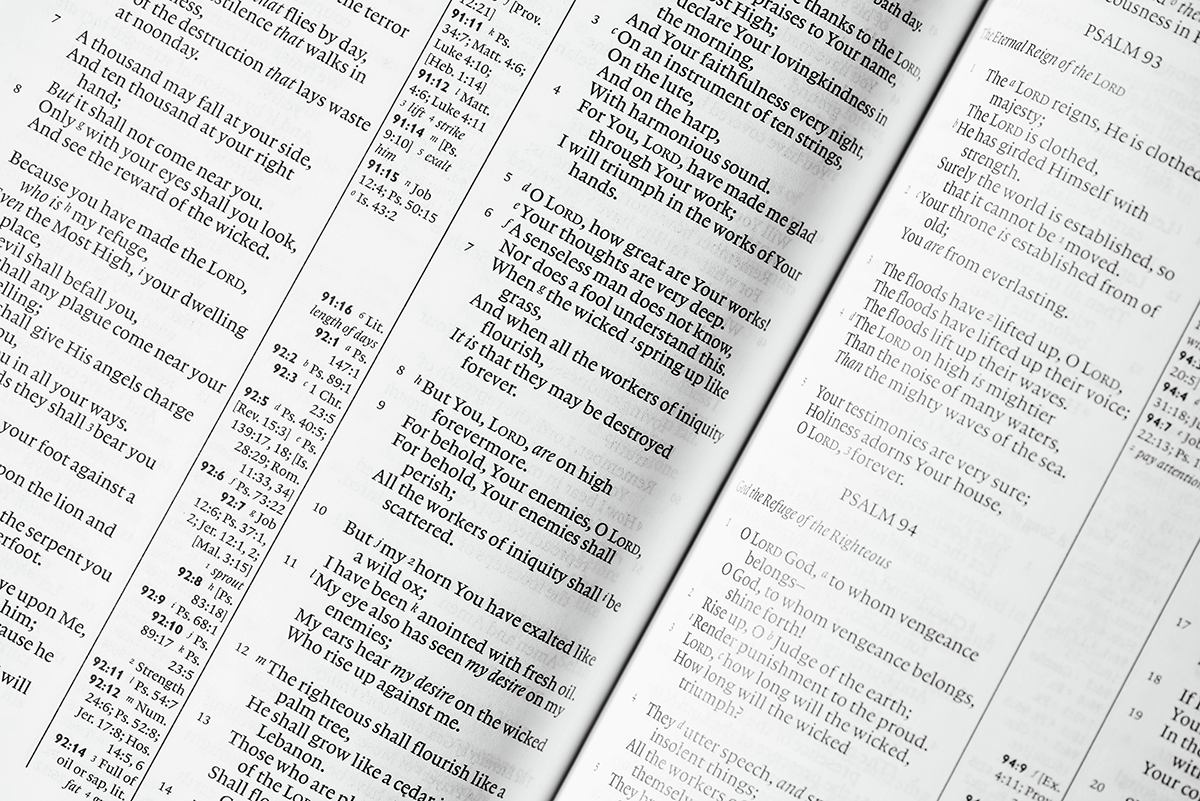
To set about an understanding of what occurred in the garden of Eden, it is necessary to recognize what YHWH spoke was prophetic to bring about the certainty of what was to occur in the future as a matter of judgment and enmity. As we see in Genesis 3:15, we are given anthropomorphic language to see what is to occur between Satan and the seed of the woman. The verse specifics read as follows (NASB):
After the metaphorical serpent deceived the woman (Eve) that led to the rebellion of both her and her mate (Adam), we are given a full explanation of what took place. The earliest progenitors of humanity consumed a forbidden fruit that would surely bring them death (Gen 2:17) as decreed by God. Upon the contradiction and outright lie of the enemy upon the woman, both she and Adam partook of the fruit of the forbidden tree. They ate the fruit of the tree of knowledge of good and evil to seal their fate.
God’s proclamation of death, curses, and enmity upon recognition of sinful rebellion is an expected consequence that would bring a certain separation between Him and His creation. As it became corrupted, there were necessary outcomes that prompted God to set in motion His condemnation and justice through an adversarial relationship between humanity and spiritual forces of darkness. Namely, the evil that set itself against God and the relationship He formed with humanity to fellowship and dwell with Him. The forthcoming prophetic conflict specifically affected humanity in that as they suffer the consequences of their sin, the seed or offspring of the woman would strike against evil.
“And I will put enmity between you and the woman, and between your seed and her Seed; He shall bruise you on the head, and you shall bruise him on the heel.” – Genesis 3:15
The Meta-Narrative and Formation of Covenants
Structurally, we see an overall dispensational period of covenant intervals throughout Scripture. Across epochs of time, we are gripped in Scripture by how God makes His covenant oaths to fulfill His promises. Both unconditional and conditional, we observe by the Lord’s revealed truth the Adamic covenant preceding the Noahic covenant. Whereas their distinction somewhat rests in the difference between the innocent and blameless nature of God’s people. With the post-diluvian call of Abraham and the Lord’s covenant with him, we encounter the Mosaic covenant and the dispensational period of the Law. To give context to sacrificial offerings and hold some semblance of God’s continued fellowship with the 12-tribes of Israel. The Davidic covenant, as given in 2 Samuel 7:4-17, provides insight into how the seed, as spoken about in Genesis 3:15, also extends through his royal descendants. Specifically, through Solomon as David’s “throne shall be established forever” (2 Sam 7:16).

In continuation of all covenants bestowed from God by His astonishing mercy and wisdom, we read of His new covenant promise in Jeremiah 31:31-37. A new covenant from the words of the prophet Jeremiah was spoken to reveal further yet another promise. Only this time, it is a covenant of salvation that He will bring to restore the right relationship with Him as He will forgive iniquity and remember the sin of His people no more (Jer 31:34). While this new covenant promise was written for the people of Israel, in principle, it applies to those who belong to Him as spoken about by Jesus in Luke 22:20.1
Fulfillment of Covenant Promises
Over the course of history, the lineage of Adam and his wife Eve genealogically led to Noah, who God regarded as blameless in His view (Gen 6:9). As God would eventually destroy all of humanity in the flood of Genesis 7, Noah and his family became singled out to survive and reset the emergence of humanity throughout Mesopotamia and beyond. The formation of the Noahic covenant (Gen 8:20 – 9:17) thereafter involved the replenishment of the earth and the renewal of seasonal cycles.2 As Noah’s sons Shem, Japheth, and Ham gave rise to the table of nations (Genesis 10), separate individual lineages would again run the course of history. As a kernel of hope extended through the descendants of Shem within the biblical narrative, there were continued setbacks that ran counter to God’s plans of redemptive history in an all-out effort to restore humanity. God’s covenant with Noah would further reach toward its fulfillment as a backdrop of what occurs throughout the remainder of Genesis and beyond. Namely, the Abrahamic covenant via Isaac and Jacob to the Davidic covenant that would propagate the seed of Eve in Genesis 3:15 NASB. This seed in Genesis 3:15 NASB narrows to Christ from a plural to a singular sense, who would fulfill God’s judgment on the enemy as our Messianic God in the person of Jesus.
As readers of Scripture, we recognize the progenitors of Noah through the descendants of Terah to include Shem. Namely, a foundation of individuals and families to originate nations and populations of people that grow in size and take up residence throughout the Middle East. As peoples are scattered by language and geological position from the Babel account in Genesis 11:1-9,3 we come upon the life of Abram to set the stage for God’s work throughout early humanity. It was first beginning with His chosen servant Abraham and by the Hebrew people to ultimately all nations of the Earth as promised (Gen 22:18). There are numerous stories within the biblical record that continue to give us circumstances by which God operates among the nations while within the fallen state of humanity. First through the Jews of Israel and then through the Gentiles upon the blessings or fruits of the new covenant established as described by the Apostle Paul (Rom 11:26-27).
Prior to the fulfillment of the Abrahamic covenant concerning the land of Canaan (Deut. 29:1-30:20), we can trace the seed of Adam & Eve, Abraham & Sarah, to David & Bathsheba along 14 generations thereafter and validate the royal lineage of Christ (Matt 1:6-17).4 To conclude with His arrival and intent to ultimately bruise the head of the serpent by His death, resurrection, ascension, coronation, and forthcoming permanent defeat of Satan. Meanwhile, to place a New Testament capstone on God’s redemptive work, we read in Luke 22:20 that Jesus offers His blood of the new covenant. This by which YHWH speaks through the prophet Jeremiah to give certainty our iniquity and sins will be forgiven and remembered no more.
Conclusion
From creation, the fall of man, and to the flood that destroyed all of humanity except Noah and his family, the pre-patriarchal period of Genesis 1 – 11 sets the stage for scattered nations propelled throughout the Earth for thousands of years. Pivotal to this early period of formative history, Genesis 3:15 explicitly identifies the seed of Adam & Eve as carrying a redemptive purpose as a corrective and restorative action that returns creation and humanity to God’s originally intended purpose. Across numerous covenants from Adam to Christ, we have full biblical recognition of God’s mercy and wisdom beyond understanding. He has given our patriarchal and spiritual forefathers the resources, blessings, and offspring to return to Him in fulfillment of Jeremiah 31:31-37.
Citations
1. John MacArthur, The MacArthur Study Bible, 2nd Edition, (Nashville, Thomas Nelson, 2019), 990.
2. The Noahic Covenant. Ligonier Ministries Table Talk.https://www.ligonier.org/learn/devotionals/noahic-covenant-1670/ (accessed April 11th, 2020).
3. Michael Heiser, The Unseen Realm, The Tower of Babel (Bellingham, Lexham Press, 2015), 112-113.
4. T. Desmond Alexander, From Paradise to the Promised Land, An Introduction to the Pentateuch, 3rd Edition (Grand Rapids, Baker Publishing Group, 2012), 144.
Bibliography
MacArthur, John. The MacArthur Study Bible – 2nd Edition. Nashville, Thomas Nelson Publishers, 2019.
Sproul, R.C. The Noahic Covenant – Ligonier Ministries Tabletalk Magazine. Ligonier Pennsylvania.
Heiser, Michael. The Unseen Realm – 1st Edition. Bellingham, Lexham Press, 2015.
Alexander, Desmond T. From Paradise to the Promised Land. – 3rd Edition, Grand Rapids, Baker Publishing Group, 2012.