Discipleship, as I’ve known it, is not an event or a study. It is not a group you attend or a curriculum you complete. It is a way of life that is intentionally formed in another person over time. Scripture speaks plainly: “If you abide in My word, you are truly My disciples” (John 8:31). That abiding is not casual. It shows up in decisions, habits, and responses. It shows up day-to-day in interpersonal contexts, whether 1:1, 1:5, or some combination.
Introduction
When I step into most church environments now, I don’t see that same thing. I see parts of it, sometimes strong parts, but rarely the whole held together. There’s teaching, often good teaching. But it’s not always tied to sustained, personal formation. There’s fellowship, but it’s usually informal—encouragement without direction. There are small groups, but they often function as discussion spaces rather than as places where a life is being intentionally shaped. There’s activity, sometimes a lot of it, but activity alone doesn’t produce transformation.
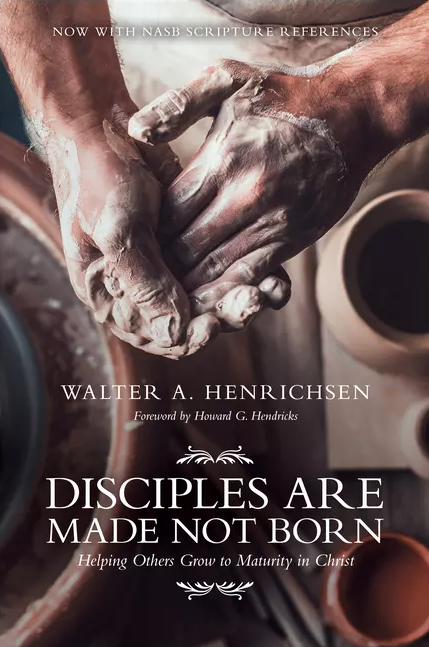
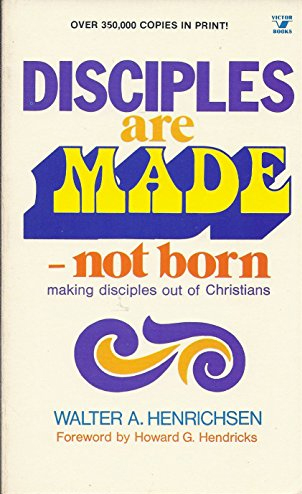
This post is a review of the book “Disciples are Made, Not Born.”
So what gets called “discipleship” is often an experience—something you attend, something you participate in—but not necessarily something that results in spiritual development over time through deeper, biblically centered mentorship.
Scripture doesn’t leave much room for that kind of separation. “By this My Father is glorified, that you bear much fruit and so prove to be My disciples” (John 15:8). The evidence is fruit. Not intention, not participation—fruit. And fruit takes time, continuity, and care. It doesn’t come from occasional input.
It also doesn’t stop with the individual. “What you have heard from me… entrust to faithful men, who will be able to teach others also” (2 Timothy 2:2). That’s the pattern—life passed on in a way that continues. In everything I was trained in, that was assumed. You weren’t just growing—you were being prepared to help someone else do the same.
That’s another place where the difference shows up. In many settings, growth is treated as personal and self-contained. There’s no clear expectation that what’s being learned will be reproduced in someone else. Without that, something essential is missing.
This isn’t about criticizing churches or their leadership. It’s about recognizing a gap between what Scripture describes and what is often practiced. The language is still there—discipleship is talked about, valued, and encouraged. But the content has shifted in many places. The term now covers a wider range of activities, not all of which lead to formation. From experience, discipleship requires more than structure. It requires a yielded life. It requires clarity about what is being aimed at. And it requires time—real, sustained investment that doesn’t fit neatly into programs.
Even then, it’s not something that can be manufactured. “Apart from Me you can do nothing” (John 15:5). Whatever is real is given, not produced. But it is given in a way that calls for response. “Work out your own salvation… for it is God who works in you” (Philippians 2:12–13). Both are present. When those pieces come together—truth, life, obedience, time, and reproduction—the result is unmistakable. It doesn’t need to be labeled. It can be seen.
Where they are separated, the name may still be used. But the outcome is different. And over time, that difference becomes clear. Alongside this, I also worked through and practiced the material from Disciples Are Made Not Born. What that book did was take what I was already experiencing and make it explicit. It wasn’t abstract theory—it described exactly what I had seen work.
The emphasis there was unmistakable: disciples are not accidental. They are formed through intentional investment. That included selecting a few, not trying to reach everyone at once; building through association, not distance; pressing toward obedience, not just understanding; and moving toward reproduction from the beginning, not as an afterthought.
I didn’t just read those principles—I applied them. That meant sitting with someone consistently, opening Scripture together, watching how it translated into real decisions, and coming back to those same areas until there was follow-through. It meant giving responsibility early, not waiting for someone to feel ready. It meant staying involved long enough to see whether something actually took root.
That process clarified something important: clarity of content is not enough. Without intentional, personal investment over time, nothing holds. And without an expectation of reproduction, the process stops with the individual. So when I look at what is commonly called discipleship now, that grid is always in the background. Not as a standard imposed from a book, but as something that has been tested in practice.
Where that kind of intentional, sustained formation is present, the results are consistent. Where it is absent, something else takes its place—even if the language remains the same. And again, over time, that difference becomes clear.
Book Review
Disciples Are Made, Not Born by Walter A. Henrichsen (239 pages, ISBN: 9780781438834) is not a theoretical treatment of discipleship. It is a practical, structured account of how disciples are actually formed. The book does not attempt to redefine discipleship, nor does it broaden the term. It narrows it—carefully, deliberately—until it corresponds to something that can be carried out in real life.
The opening chapters establish a foundation that is often assumed but rarely examined. “The Kind of Person God Uses” and “Jesus as Lord” move directly to the condition of the individual. Discipleship does not begin with method, but with the man himself. There is no attempt to separate belief from submission. The lordship of Christ is not treated as an advanced concept, but as the starting point. “Why do you call Me ‘Lord, Lord,’ and do not do what I say?” (Luke 6:46). The question is not rhetorical in the book—it governs everything that follows.
“The Cost of Discipleship” and “A Proper View of God and Man” continue in the same direction. The cost is not softened. It is stated plainly. A disciple is not formed apart from denial of self and reordering of life (cf. Luke 9:23). At the same time, the author grounds this in a right understanding of God and man. Without that, effort becomes either inflated or misdirected. “Apart from Me you can do nothing” (John 15:5) is not cited as a limitation, but as a necessary frame. Whatever is done in discipleship is dependent, not self-generated.
From there, the book moves outward. “Evangelism and the Disciple” and “Recruiting a Prospective Disciple” make clear that discipleship is not passive. It does not begin with whoever happens to be present. There is intentionality. There is selection. Christ Himself did not invest equally in all. He called, observed, and chose. The language of recruiting is deliberate. It implies that not every person is immediately positioned for this kind of formation, and that discernment is required.
The center of the book is found in chapters seven through ten. This is where Henrichsen is most concrete. “How to Train a Disciple—Follow-Up” establishes continuity. Initial contact is not the work. It is the beginning of the work. “Imparting the Basics” assumes nothing. Foundational truths are taught, reinforced, and revisited. “Conviction and Perspective” moves beyond information into internal formation. It addresses how a person thinks, not just what he knows. “Gifts and Calling” brings direction. A disciple is not formed in isolation, but toward a purpose that aligns with the work of God.
This structure is not unfamiliar to me. I did not encounter it first in the book, but in practice. Working through Design for Discipleship, leading others through it, and using the Topical Memory System alongside tools like the Bridge, Hand, and Wheel illustrations provided a working framework. Scripture was not treated as reference material, but as something to be internalized and used. Meetings were not the center. Life was. What the book does is articulate that process with clarity. It names what is happening when it is done well.
One of the consistent elements, both in the book and in practice, is that nothing is left at the level of agreement. Truth is tied to obedience. “If anyone is willing to do His will, he will know of the teaching” (John 7:17). The order matters. Understanding is not detached from response. In practice, this meant returning to the same areas repeatedly until there was follow-through. It meant that knowledge alone was insufficient. Without application, it did not count as progress.
“Multiplying Your Efforts” brings the process to its intended outcome. Discipleship does not terminate with the individual. It continues. “The things which you have heard from me… entrust these to faithful men who will be able to teach others also” (2 Timothy 2:2). This is not presented as an additional step, but as the natural extension of the work. Without it, something essential is missing. Growth that does not reproduce remains incomplete.
The final chapter, “Choosing a Life Objective,” clarifies what holds all of this together. Discipleship is not a temporary focus or a ministry category among others. It becomes a governing aim. Without that, the process fragments. With it, the elements align—time, attention, and direction are ordered around something defined.
What stands out throughout the book is its refusal to generalize. Terms are not left open-ended. Discipleship is described in a way that can be recognized when present and identified when absent. It is not equated with activity, participation, or exposure to teaching. It is defined by formation—observable, sustained, and extending into others.
That clarity explains why the book remains useful. It does not depend on a particular setting or structure. It depends on whether what it describes is actually carried out. Where it is, the results are consistent. Where it is not, other forms take its place, often using the same language.
The book does not attempt to resolve every question. It does not expand beyond its scope. It remains focused on the formation of disciples in a way that corresponds to the pattern seen in Christ and continued in the New Testament. As a result, it avoids abstraction. It stays close to what can be done, observed, and passed on. Over time, this distinction becomes clear.
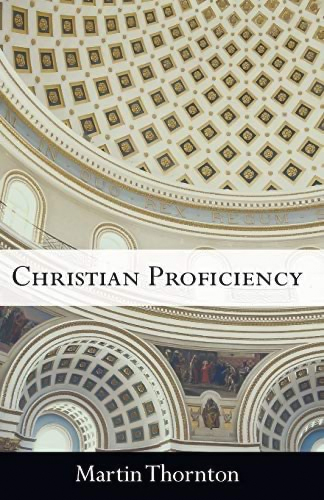
Christian Proficiency by Martin Thornton is a published work on disciplined spirituality and serves as a practical and theological guide for integrating faith into daily life. Thornton emphasizes the concept of “proficiency” as the mature stage of Christian discipleship, marked by disciplined growth, balanced spiritual practices, and a deepening relationship with God. He advocates for a “threefold rule” comprising regular corporate worship, personal prayer, and communal office prayer, encouraging Christians to develop a rule of life that harmonizes these elements. While firmly rooted in Anglican spirituality, Thornton’s insights resonate with all Christians seeking to live faithfully, transforming ordinary routines into pathways for holiness and devotion.
Christian Proficiency was first published in 1959, during a period of renewed interest in practical and theological approaches to Christian discipleship within the Anglican tradition. Its author, Martin Thornton (1915–1986), was an English Anglican priest, theologian, and influential writer on spirituality. Known for his emphasis on integrating historical Christian practices with the needs of modern believers, Thornton championed a practical, accessible approach to spiritual growth that resonated with both clergy and laity. Thornton’s writing is marked by his ability to blend theological depth with practical application, making his insights enduringly relevant for Christians seeking to deepen their faith.
Living a Proficient Faith
Christian Proficiency is introduced as a state of steady progress beyond the beginning and less mature stages of faith and practice. Where the proficient Christian adopts spiritual practices into daily life where consistent attitudes and actions correspond to a life commitment, it’s more than a lifestyle as it’s an intentional embrace of faith and practice outflowing from personal action. It stems from ongoing effort as the fruit of faith, and it’s a personal outworking of grace characterized by perseverance and intentionality toward regular prayer, sacramental participation, self-discipline, and engagement with the church community.
While the terms “proficiency” and “efficiency” or “effective” bring to mind secular categories of thought, Thornton seeks to capture what it means for Christians to practice their faith within the context of the activity of becoming a mature believer on a fruitful life trajectory. More specifically, more than going through the motions but living out a framework of life that reaches into the core of being and identity.
The word “proficiency” carries meaning having a semantic range centered on the idea of competence and skill in a particular area. At its core, it refers to the ability to perform tasks effectively, often with precision and expertise. This general sense applies broadly, from technical disciplines to creative or practical endeavors. Beyond mere competence, proficiency frequently implies mastery—an advanced level of understanding or capability that distinguishes the proficient individual as highly skilled or knowledgeable. Historically, the term also conveyed the idea of progress or growth, especially in personal or intellectual development, highlighting a journey toward expertise rather than just the end state.
In this book’s context, proficiency takes on a distinct meaning to imply fluency in practice concerning the spiritual life. For instance, in theological and spiritual contexts, as seen the term denotes growth in faith and the disciplined integration of spiritual practices into daily life. Despite its variations in meaning, proficiency always emphasizes the result of intentional effort, whether through practical application, ongoing improvement, or advanced mastery. Across all its uses, the word encapsulates the journey of growth and the excellence achieved through dedication.
Spiritual Direction
Thornton views spiritual direction as a way to understand biblical and traditional discipleship, offering a framework for individuals to grow continuously in their faith. Unlike mere counseling or mentorship, spiritual direction encourages ongoing development, echoing the purpose of God’s Word as described in 2 Timothy 3:16-17: to equip believers for every good work. However, Thornton focuses on this growth without emphasizing specific markers like personal holiness, sanctification, or the fruits of the Spirit. Instead, he frames spiritual maturity as an increasing “proficiency”—a call to move beyond basic Christian practices toward a disciplined and deeply integrated faith. This growth involves active cooperation with God’s grace, not as a means of earning salvation but as a way of living out the Gospel in daily life. Thornton also encourages laypeople, affirming that spiritual maturity is not reserved for clergy or monastics but is attainable for all Christians committed to deepening their faith.
The Rule
Overall, the importance of the Rule as a guiding principle for living a disciplined and spiritually mature Christian life, drawing inspiration from the Rule of Saint Benedict. However, Thornton clarifies that the Rule is far more than a rigid list of “do’s” or an overly ascetical approach to existence; it is an intentional embrace of the Christian life as it was meant to be lived. To be “regular” in one’s faith is to be “proficient,” a connection deeply rooted in ascetical theology. Thornton suggests that “Rule” is best understood as “Order,” representing the harmony and structure underpinning a civilized and purposeful life.
Thornton further clarifies key aspects of the Rule, highlighting its pastoral and flexible nature. First, a Rule is “embraced,” not “promised,” signifying a voluntary commitment rather than an obligation. It directly opposes legalism, avoiding the pitfalls of rigid Pharisaic practices. A true Rule is neither artificial nor burdensome but is instead the principle that brings order and rhythm to life. Breaching a Rule is not inherently sinful, as its purpose is formative rather than punitive. Lastly, Thornton insists that the Rule must remain variable, adapting to each individual’s unique circumstances and needs, ensuring it remains a practical and life-giving framework for spiritual growth.
On a personal level, the book further revealed to me the importance of having a personal Rule as a practical framework for spiritual growth, recommending that it be developed in consultation with a spiritual director whenever possible. A well-formed Rule should become unobtrusive, integrating seamlessly into daily life rather than feeling like an artificial imposition. Simplicity is key—Thornton emphasizes that a Rule should be as straightforward as possible while developing spiritual efficiency and depth. It should encourage creative discipline, challenging me to grow without becoming an undue burden or source of stress.
Thornton also highlights the communal dimension of living out a Rule, particularly within the Anglican tradition. Many individuals adopt a Rule in the context of religious orders, such as “oblates, tertiaries, or companions,” or through participation in a prayer group with friends or parishioners. Joining an established community of prayer—whether a monastery, a fellowship, or even a parish—provides a collective commitment to a Rule grounded in close social proximity and shared spiritual goals. This communal approach reinforces accountability, encouragement, and a sense of belonging, making the Rule a vibrant and life-giving foundation for Christian discipleship.
Presence as Spiritual Practice
According to the author, the proficient Christian experiences an awareness of Christ’s presence throughout daily life, whether during routine tasks or during moments of great significance. This ongoing consciousness of God is not confined to set prayer times but is intentionally set within daily existence. It is the practice of the presence of God, where prayer is not restricted to church attendance, feast day observances, or structured prayer but is instead an active and continual recollection of Christ’s nearness. Whether engaging in corporate prayer, personal devotions, or commemorating the saints among the great cloud of witnesses, the proficient live with an acute sense that every moment is an opportunity for communion with God.
Thornton explains that this awareness is deeply connected to the threefold reality of the Church—Earth, Paradise, and Heaven—which together form a continuous act of worship. Regardless of whether one is alive in time and space or dwelling in eternity, the act of recollection is a way of living eternity in the present moment. The Christian’s worship transcends time, reflecting the reality that divine life is not bound by past, present, or future. As Thornton writes, “The Christian has… a peculiar dual character. Being a life in which nature, without any destruction of its own proper being, is progressively supernaturalized, the Christian is, in one sense, successively becoming what, in another sense, he already is. He increasingly makes his own the supernatural and eternal life which is the life of God. Hence on the supernatural plane he transcends the separation of past-present-and-future.” In this way, recollection is not merely a spiritual practice but a profound participation in eternity while still rooted in the temporal world.
This participation in eternity, or recollection, is a vital link between time and eternity, earth and heaven, nature and grace. It is not merely a passive awareness but an active engagement with the eternal now of God’s presence. The Church’s liturgical life provides tangible ways to cultivate this awareness, particularly through the Kalendar of the Book of Common Prayer, which structures time in a way that mirrors the rhythms of heaven. Following the cycles of feasts, fasts, and seasons, the Christian sees earthly time as a reflection of eternal reality. Recollection is not an abstract concept but a lived experience—an intentional response to “the something that has happened to us,” transforming ordinary moments into encounters with the divine.
Internal Prayer, Meditation, and Contemplation
Thornton wrote that mental prayer is both valid and necessary in the Christian life, functioning as a distinct yet complementary practice alongside verbal prayer. Thornton also affirms that the use of mental images can aid devotion, particularly when centered on the Person of Christ. He reassures the reader not to be troubled by the natural emergence of meditative images, as they can serve as valuable tools in deepening one’s relationship with God. Drawing on the insights of Saint Teresa of Ávila, Thornton emphasizes that our imaginative contemplation of Christ during mental prayer is both valid and spiritually beneficial, provided it remains grounded in scripturally sound Christology. This means that visualizing Christ in a glorified state—such as envisioning His resurrected presence or meditating on His earthly ministry—is acceptable, so long as these images do not reflect theological errors such as Nestorianism, Arianism, or Apollinarianism, which distort the true nature of Christ’s divinity and humanity.
Beyond Christological meditation, Thornton also advocates for using iconography, sacred art, or images, for intercessory prayer to Mary and the saints as valuable aids in devotion. According to the author, when rightly understood, these practices support a deeper engagement with mental prayer and reinforce the unity of the faithful across time and eternity. In keeping with this principle, Thornton also advocates for the presence of the Crucifixas a necessary fixture in every church and every home, serving as a powerful focal point for prayer and contemplation. Through these visual and devotional aids, mental prayer becomes a way of meditating on divine truths and immersing oneself in the living reality of Christ and the communion of saints.
The Depth of Prayer
Thornton defines colloquy as the practice of prayer understood as a dialogue with Christ, rather than a monologue of human petition. This dialogue is structured through the four essential components of prayer: Petition, Intercession, Thanksgiving, and Adoration. Thornton contrasts this with the Reformed and Protestant perspective, which typically sees prayer as one-way communication from the believer to God, while God speaks to us through His Word, Scripture. From this view, any claim that God speaks directly to an individual in private revelation would resemble prophetic utterance, whereas Reformed traditions generally affirm the inner witness and convictions of the Holy Spirit as a non-verbal form of divine guidance. Thornton asserts that private prayer without this mystical engagement of the Holy Spirit becomes a monologue rather than a dialogue, lacking the richness of true communion with God.
The author also examines the differences in prayer emphasis between Protestants and Catholics, noting that Protestant devotion often focuses on personal petitions, whereas Catholic spirituality is rooted in the Mass and the Divine Office. While Protestant prayer often centers on personal needs and supplications, Catholic prayer incorporates liturgical and communal worship, allowing individuals to enter into a structured pattern of devotion. The use of formal prayers in Catholic practice does not diminish their authenticity but rather aligns personal prayer with the broader worship of the Church. Moreover, Thornton emphasizes that Caroline English, with its elaborate and formal phrasing, has no necessary place in private, informal prayer, which should be more intimate and reflective. In private prayers, he views such ornate language as dishonest, while in a liturgical setting, such language use is more appropriate to a limited extent. He also advises that while the Authorized Version (KJV) is suitable for liturgical use, the Revised Standard Version (RSV) is preferred for personal bible study, and modern translations provide fresh inspiration for meditative prayer.
Further along in this chapter, Thornton describes colloquy as an active and disciplined engagement in prayer, requiring meditative preparation and honesty, particularly in petition and intercession. Yet he clarifies that supplication is a composite term that blends petition and intercession, reflecting personal needs and prayers on behalf of others. True intercession, he argues, goes beyond verbal requests—it involves placing oneself mentally and spiritually in solidarity with the hardships of another. In this sense, intercessory prayer carries a sacrificial quality, where the intercessor shares in the burdens of others, at least at an emotional or contemplative level. Within a structured prayer life, praying the Divine Office becomes an effective way to incorporate intercession into daily devotion. Still, Thornton acknowledges that moments of urgent prayer—particularly in times of crisis—can rightly interrupt a person’s established Rule of Prayer.
A personal Rule of Prayer ensures consistency in devotion and brings order to the complexity of multiple intercessory requests. Then Thornton notes that thanksgiving is closely tied to intercession because recognizing God’s presence in both successes and failures should naturally result in gratitude. Prayer, he insists, should be a continual act throughout daily life, shaping how individuals perceive and respond to God’s providence. By recalling God’s faithfulness even in difficult moments, the believer develops a habit of thankfulness, reinforcing the reality that prayer is not merely a request-driven practice but a form of relationship and communion with God.
Ultimately, Thornton asserts that adoration is the highest form of prayer, the culmination of all spiritual and mystical dialogue with God. He relates this to the biblical Greek term latreia (λατρεία), which denotes the supreme form of divine worship given exclusively to God. In contrast, he acknowledges dulia (δουλεία) as the veneration given to saints, sacred persons, and holy images, reinforcing the Catholic and Orthodox distinction between worship and honor. This structured approach to colloquy in prayer, guided by set forms and spiritual discipline, ultimately leads the believer to the fullness of worship. Through this rhythm of prayer—petition, intercession, thanksgiving, and adoration—the soul moves beyond mere words to a deep encounter with the divine, wherein adoration becomes the perfect expression of one’s relationship with God.
Penitence, Examination, and Confession
The author further writes about the necessity of Penance as an integral component of the Rule he outlines throughout his work. Penance, far from being an isolated spiritual exercise, functions in harmony with the broader framework of Christian discipline—encompassing counsel from a spiritual director, mental prayer, and recollection. These elements work together to guide a well-ordered, spiritually mature life, reinforcing the believer’s journey toward holiness.
Yet, without specific biblical support, Thornton says that the practice of confession, if pursued in isolation, will not yield its full spiritual benefits. Furthermore, those who confess their sins regularly but neglect corporate worship and the saying of the Divine Office will find their spiritual development stunted. By comparison, it’s my view that Christian life is not merely about acknowledging and confessing sin; it flourishes through active participation in the life of the Church, full immersion reading of Scripture, fellowship with other believers, and the sharing of one’s faith. Without these, spiritual growth remains constrained, and the believer risks becoming spiritually stagnant.
Addressing the persistence of temptation, Thornton offers a realistic and encouraging perspective. And, in my view, temptations will certainly be an ever-present concern to the believer until the very moment of death. Yet, he insists, Christian growth is marked not by an eradication of all sinful inclinations but by an increasing sorrow for sin. True penitence deepens as one matures in the faith. However, he clearly warns against anxious fixation on past sins, reminding the reader that worry about one’s failures is itself a sin—rooted in doubt regarding the mercy and love of God. Instead, he exhorts believers to approach self-examination with regularity, quietude, and efficiency, embracing it as a means of liberation rather than a burdensome obligation. In this sense, the Rule provides structure and stability, guiding the conscience rather than oppressing it.
As one grows in the knowledge of God, penitence also deepens. A clearer vision of divine holiness necessarily brings about a greater awareness of human sinfulness, leading to a more profound contrition and joy. Yet, this growth in penitence is not meant to produce despair; rather, it fosters humility and reliance on God’s grace. The Rule serves as a training ground for the conscience, shaping it in accordance with divine truth and guarding against both laxity and scrupulosity.
Thornton recommends a manual structured around the Seven Capital Sins to prepare for confession. Yet, from the importance of the Ten Commandments and Christ’s imperatives in the Gospels, his emphasis on the Capital Sins suggests a practical and limited approach to self-examination. While Thornton thinks that the Decalogue and Christ’s imperatives roll into the theology of capital sins, it’s best to focus on those areas and not bother with the rest. However, I believe a more holistic perspective would incorporate all three—the Seven Capital Sins, the Ten Commandments, and Christ’s teachings—as essential guides for the Christian seeking to live according to the Rule of Prayer within daily life.
However, one assertion of Thornton’s invites strong disagreement: the suggestion that rectors or parish priests might “forget all about it” when individuals confess their sins before them and receive Penance. Such a notion seems entirely implausible and even absurd. The gravity of confession, the pastoral responsibility of the priest, and the spiritual significance of absolution make it unlikely—if not impossible—that such matters would simply slip from the mind of the confessor. The sacramental act of reconciliation carries profound weight, both for the penitent and the priest, and it is unthinkable that it would be treated with casual indifference.
Thornton’s reflections in this chapter reinforce a vision of Penance as a necessary, regular, and deeply formative aspect of Christian living. When integrated into the broader Rule, confession becomes a means of growth, not merely a routine admission of guilt. It aligns the believer more closely with God’s mercy, nurtures true contrition, and fosters a disciplined life of prayer, worship, and fellowship. In this way, according to Thornton, Penance is not a solitary act but a necessary component of a rich and ordered spiritual life.
Aids to Deeper Formation
Thornton further brings attention to the importance of theological and devotional reading as essential components of a believer’s spiritual development. Each serves a distinct purpose: theology provides intellectual clarity and doctrinal foundation, while devotional reading nurtures personal affection and emotional connection to God. However, Thornton advises against an imbalance in either direction. Too much theological study can lead to a cold intellectualism. Conversely, an excess of devotional reading may produce excessive sentimentality, fostering an emotionally driven spirituality that lacks depth and structure. True proficiency in the Christian life requires a balanced integration of both, ensuring that knowledge informs devotion and devotion enriches understanding.
Thornton’s perspective on fellowship and evangelism is somewhat distinct from the emphasis found in Philemon 1:6-7, which speaks of sharing faith in a way that produces mutual encouragement and spiritual enrichment. He approaches fellowship primarily as a utility or aid to prayer rather than as a broad means of spiritual growth or mission. While he acknowledges the value of communal gatherings—such as luncheons, festivals, and informal church events—he does not view these as the core of Christian fellowship. Instead, in my view, this places greater emphasis on structured accountability within small, intentional relationships, particularly those formed under the guidance of a spiritual director (or mentor more spiritually mature). I believe fellowship involves modeling godly character and virtue, typically in 1:1 or 3:1 settings, where deeper accountability and discipleship can occur. This form of fellowship is not merely social but formative, leading to joy and spiritual maturity.
Much of Thornton’s work about supplemental aids is not for general spiritual development per se but rather the role of elements that serve as “aids to prayer.” In this context, liturgical seasons play a critical role. They are not merely commemorative cycles but reinforcing mechanisms that strengthen and deepen the believer’s prayer life. Each season presents an opportunity for focused reflection, drawing attention to particular areas of spiritual need. Advent, Lent, and other seasons of the Church calendar serve as times of renewal and recalibration, prompting believers to engage more intentionally in their spiritual disciplines.
One of the most practical aids to prayer, according to Thornton, is the spiritual retreat. Retreats provide a dedicated space and time for believers to step away from the distractions of daily life and center their focus wholly on God. He highlights several key benefits of retreats:
They foster deeper spiritual health by creating an environment where participants are surrendered and immersed in silence before God.
They provide an opportunity for forming new and meaningful spiritual connections with people who might not otherwise engage in Christian relationships fruitfully.
They accelerate the process of internalizing the Rule, helping participants become more familiar with the structured prayer and lessons found in the Book of Common Prayer (BCP) and apply them consistently.
They serve as a source of renewal, especially for those experiencing spiritual dryness. A well-structured retreat can reignite devotion, offering rest, restoration, and a renewed sense of purpose.
Thornton presents these aids to prayer not as ends in themselves but as tools for deepening one’s spiritual discipline. Whether through balanced reading, intentional fellowship, engagement with the liturgical calendar, or participation in retreats, each of these practices strengthens and supports a well-ordered life of prayer.
Proficiency Through Hardships & Modernity
In the final sections of the book Christian Proficiency, Martin Thornton brings his work to a close by offering pastoral guidance and practical counsel for navigating the complexities and challenges of modern life. Having laid out a framework for Proficient Christian living, he now turns to the difficulties that believers inevitably face, both in their personal spiritual lives and in their engagement with the world.
Thornton acknowledges that seasons of hardship and trial are unavoidable for the faithful. These include spiritual dryness, in which prayer feels empty or fruitless; scrupulosity, excessive anxiety over sin that can become spiritually paralyzing; periodicity, or the tendency for spiritual enthusiasm to wane and fluctuate over time; and distractions, both internal and external, that disrupt the life of prayer. Far from being arbitrary or meaningless, Thornton affirms that all of these experiences serve sovereign purposes. Trials refine the believer, teaching perseverance, humility, and reliance on grace rather than on mere human effort.
Beyond these internal struggles, Thornton also recognizes the external challenges posed by modern life. He does not shy away from the reality that contemporary circumstances often complicate, interfere with, or even seem to contradict spiritual formation and the pursuit of maturity in Christ. Professional obligations, family responsibilities, social expectations, and the increasing pace of life can make it difficult to adhere strictly to the Rule of life he advocates. Yet rather than advocating rigidity or despair, he offers principles and creative approaches to maintaining commitments to prayer, church attendance, and other spiritual disciplines within the constraints of one’s vocation and state in life. His counsel is practical: rather than viewing obstacles as barriers, believers should seek alternative ways to integrate spiritual habits into daily living, adapting their Rule as necessary while maintaining its core intent.
At the heart of Thornton’s approach is Ascetical Theology, which he defines as the science of cooperation with the Holy Spirit. Spiritual growth is not about forcing oneself into an external mold but about responding faithfully to God’s grace, discerning how best to live out one’s faith amid changing circumstances. As both guide and sustainer, the Holy Spirit directs this process, ensuring that the believer’s efforts are neither in vain nor misplaced.
Thornton also addresses the role of apologetics and evangelism within the life of a Proficient Christian. He firmly rejects confrontational or aggressive street evangelism, which often devolves into fruitless arguments and disputes over doctrine, philosophy, or personal beliefs. Instead, he advocates for a more organic, relational approach to sharing the faith—one that prioritizes witness within one’s immediate sphere of influence. Family, friends, colleagues, classmates, and social circles provide the most fruitful context for evangelism, as these relationships offer opportunities for authentic, personal engagement rather than impersonal debate.
Regarding apologetics, Thornton warns that Proficients must resist the temptation to reduce religion to mere intellectual discourse. Christianity is not primarily an abstract philosophy or an intellectual system; it is a personal and communal living faith. It is best demonstrated, not argued, and a life visibly shaped by Christian principles is far more persuasive and compelling than the efforts of a street preacher engaging in polemics. A Proficient’s evangelism should therefore stem from lived witness rather than from rhetorical persuasion.
Ultimately, Thornton reminds the believer that the Holy Spirit is the supreme director and unifier of all Christian efforts. In a world filled with distractions, difficulties, and conflicting responsibilities, the Holy Spirit harmonizes our intentions, desires, and actions, ensuring that even in ambiguity and struggle, the faithful continue to grow in Christ. Through this divine guidance, Proficients navigate both personal challenges and the broader call to Christian witness, embodying a mature, stable, and prayer-centered faith amid a complex world.
Above the desert region of the Mojave are the rolling San Gabriel mountains within the Sierra. On top of Mt Emma, a lovely mountain name, you take in the full view of occupied wilderness before you. You breathe the same air as angels.
Today I completed The Silmarillion by J.R.R. Tolkien (358 pages, ISBN: 978-0008433949). When I first began reading, I quickly realized that it was not a conventional story, but a vast record of origins and destinies. The book opens with the creation of the world through…