Tag Archives | mercy

Reflections on Renewal

This post provides a 30-day journey of renewal by repentance with scripture, prayer, reflection, and application for each day. If you would like, check off each item daily as you progress in humility and grace. A printable copy of this 30-day time of renewal is given at the bottom of this post.

Day 1: The First Step Toward God

  • [ ] Old Testament: Joel 2:12–13
    “Yet even now,” declares the Lord, “return to me with all your heart, with fasting, with weeping, and with mourning; and rend your hearts and not your garments.” Return to the Lord your God, for he is gracious and merciful, slow to anger, and abounding in steadfast love; and he relents over disaster.
  • [ ] Gospel: Luke 15:17–20
    “But when he came to himself, he said, ‘How many of my father’s hired servants have more than enough bread, but I perish here with hunger! I will arise and go to my father, and I will say to him, ‘Father, I have sinned against heaven and before you. I am no longer worthy to be called your son. Treat me as one of your hired servants.’” And he arose and came to his father. But while he was still a long way off, his father saw him and felt compassion, and ran and embraced him and kissed him.”
  • [ ] Epistle: 2 Corinthians 7:10
    For godly grief produces a repentance that leads to salvation without regret, whereas worldly grief produces death.
  • [ ] Heart Prayer: Lord God, call me back to You. I come with sorrow for my sins and a longing for Your mercy. Tear from me pride and self-deception, and draw me to Your embrace.
  • [ ] Application: Kneel in silence for 10 minutes today as a gesture of humility and surrender.

Day 2: Cleansing the Heart

  • [ ] Old Testament: Psalm 51:10–12
    Create in me a clean heart, O God, and renew a right spirit within me. Cast me not away from your presence, and take not your Holy Spirit from me. Restore to me the joy of your salvation, and uphold me with a willing spirit.
  • [ ] Gospel: Matthew 5:8
    “Blessed are the pure in heart, for they shall see God.”
  • [ ] Epistle: James 4:8
    Draw near to God, and he will draw near to you. Cleanse your hands, you sinners, and purify your hearts, you double-minded.
  • [ ] Heart Prayer: Create in me, O Lord, a heart that desires only You. Let my thoughts, words, and actions be purified by Your Spirit.
  • [ ] Application: Write down three distractions or habits that cloud your spiritual vision. Pray for grace to remove them.

Day 3: The Mercy of God

  • [ ] Old Testament: Isaiah 55:6–7
    “Seek the Lord while he may be found; call upon him while he is near; let the wicked forsake his way, and the unrighteous man his thoughts; let him return to the Lord, that he may have compassion on him, and to our God, for he will abundantly pardon.”
  • [ ] Gospel: Luke 18:13–14
    “But the tax collector, standing far off, would not even lift up his eyes to heaven, but beat his breast, saying, ‘God, be merciful to me, a sinner!’ I tell you, this man went down to his house justified, rather than the other.”
  • [ ] Epistle: 1 Timothy 1:15
    The saying is trustworthy and deserving of full acceptance, that Christ Jesus came into the world to save sinners, of whom I am the foremost.
  • [ ] Heart Prayer: Jesus, Son of David, have mercy on me. You came not for the righteous but to call sinners. Count me among them and cover me in Your grace.
  • [ ] Application: Recite the Jesus Prayer throughout the day: “Lord Jesus Christ, Son of God, have mercy on me, a sinner.”

Day 4: Turning from Evil

  • [ ] Old Testament: Ezekiel 18:30–31
    “Therefore I will judge you, O house of Israel, every one according to his ways, declares the Lord God. Repent and turn from all your transgressions, lest iniquity be your ruin. Cast away from you all the transgressions that you have committed, and make yourselves a new heart and a new spirit!”
  • [ ] Gospel: John 5:14
    Afterward Jesus found him in the temple and said to him, “See, you are well! Sin no more, that nothing worse may happen to you.”
  • [ ] Epistle: Romans 6:12–13
    Let not sin therefore reign in your mortal body, to make you obey its passions. Do not present your members to sin as instruments for unrighteousness, but present yourselves to God as those who have been brought from death to life.
  • [ ] Heart Prayer: God of holiness, give me strength to turn away from all evil. Let not sin reign in me but cleanse me completely.
  • [ ] Application: Fast from something today that tempts you toward sin. Replace it with Scripture reading or silent prayer.

Day 5: The Sorrow that Heals

  • [ ] Old Testament: Lamentations 3:40–41
    Let us test and examine our ways, and return to the Lord! Let us lift up our hearts and hands to God in heaven.
  • [ ] Gospel: Matthew 26:75
    And Peter remembered the saying of Jesus, “Before the rooster crows, you will deny me three times.” And he went out and wept bitterly.
  • [ ] Epistle: Hebrews 12:11
    For the moment all discipline seems painful rather than pleasant, but later it yields the peaceful fruit of righteousness to those who have been trained by it.
  • [ ] Heart Prayer: O Lord, I grieve the pain my sins have caused You. Let my sorrow not end in despair, but in Your healing righteousness.
  • [ ] Application: If you feel sorrow today, do not hide it. Offer your sorrow to God. If you feel none, pray for a softened heart.

Day 6: The Path of Humility

  • [ ] Old Testament: Proverbs 3:7
    Be not wise in your own eyes; fear the Lord, and turn away from evil.
  • [ ] Gospel: Matthew 23:12
    Whoever exalts himself will be humbled, and whoever humbles himself will be exalted.
  • [ ] Epistle: Philippians 2:3
    Do nothing from selfish ambition or conceit, but in humility count others more significant than yourselves.
  • [ ] Heart Prayer: O God who dwells with the lowly, help me to humble myself under Your hand. Break my pride and teach me Your gentleness.
  • [ ] Application: Today, serve someone without seeking recognition. Offer this act in silence as worship to God.

Day 7: Returning with All the Heart

  • [ ] Old Testament: Deuteronomy 30:2–3
    And return to the Lord your God, you and your children, and obey his voice in all that I command you today, with all your heart and with all your soul. Then the Lord your God will restore your fortunes and have mercy on you.
  • [ ] Gospel: Mark 12:30
    And you shall love the Lord your God with all your heart and with all your soul and with all your mind and with all your strength.
  • [ ] Epistle: Hebrews 10:22
    Let us draw near with a true heart in full assurance of faith, with our hearts sprinkled clean from an evil conscience and our bodies washed with pure water.
  • [ ] Heart Prayer: Lord, I return to You with all that I am. Cleanse my conscience and renew in me full-hearted love for You.
  • [ ] Application: Examine what competes for your heart. Remove one distraction or idol and dedicate that time to prayer.

Day 8: Bearing the Fruit of Repentance

  • [ ] Old Testament: Hosea 14:1–2
    Return, O Israel, to the Lord your God, for you have stumbled because of your iniquity. Take with you words and return to the Lord; say to him, “Take away all iniquity; accept what is good.”
  • [ ] Gospel: Matthew 3:8
    Bear fruit in keeping with repentance.
  • [ ] Epistle: Galatians 5:22–23
    But the fruit of the Spirit is love, joy, peace, patience, kindness, goodness, faithfulness, gentleness, self-control; against such things there is no law.
  • [ ] Heart Prayer: Lord of the harvest, let my repentance be seen in the fruit of Your Spirit growing in me.
  • [ ] Application: Write down which fruit of the Spirit you most lack. Practice it intentionally in one relationship today.

Day 9: The Light of Forgiveness

  • [ ] Old Testament: Micah 7:18–19
    Who is a God like you, pardoning iniquity and passing over transgression for the remnant of his inheritance? He does not retain his anger forever, because he delights in steadfast love. He will again have compassion on us; he will tread our iniquities underfoot.
  • [ ] Gospel: John 8:11
    And Jesus said, “Neither do I condemn you; go, and from now on sin no more.”
  • [ ] Epistle: Colossians 1:13–14
    He has delivered us from the domain of darkness and transferred us to the kingdom of his beloved Son, in whom we have redemption, the forgiveness of sins.
  • [ ] Heart Prayer: Jesus, thank You for delivering me from darkness. Help me to walk as a forgiven child of light.
  • [ ] Application: Confess a sin and visualize it being placed at the foot of the Cross. Then walk in that forgiveness throughout your day.

Day 10: Perseverance in the Journey
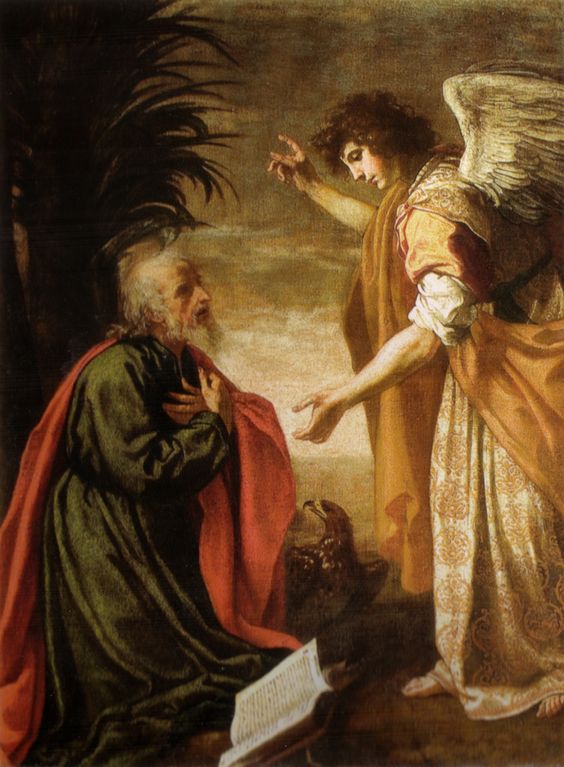
Saint John on Patmos. Vignali.
  • [ ] Old Testament: Isaiah 40:29–31
    He gives power to the faint, and to him who has no might he increases strength… they who wait for the Lord shall renew their strength; they shall mount up with wings like eagles; they shall run and not be weary; they shall walk and not faint.
  • [ ] Gospel: Matthew 24:13
    But the one who endures to the end will be saved.
  • [ ] Epistle: Romans 5:3–4
    We rejoice in our sufferings, knowing that suffering produces endurance, and endurance produces character, and character produces hope.
  • [ ] Heart Prayer: Lord, grant me the grace to endure the path of repentance. When I am weak, be my strength and stay.
  • [ ] Application: Do not neglect your devotional today even if weary. Offer your perseverance as an act of love to Christ.

Day 11: A Heart That Listens

  • [ ] Old Testament: Deuteronomy 5:27
    Go near and hear all that the Lord our God will say, and speak to us all that the Lord our God will speak to you, and we will hear and do it.
  • [ ] Gospel: Luke 11:28
    But he said, “Blessed rather are those who hear the word of God and keep it!”
  • [ ] Epistle: James 1:22
    But be doers of the word, and not hearers only, deceiving yourselves.
  • [ ] Heart Prayer: Lord, open my ears to hear You, and my heart to obey You. Let me not be content with listening alone but grant me the will to act upon Your Word.
  • [ ] Application: After reading Scripture today, write down one command or promise and live it intentionally.

Day 12: Repentance in Truth

  • [ ] Old Testament: Psalm 32:5
    I acknowledged my sin to you, and I did not cover my iniquity; I said, “I will confess my transgressions to the Lord,” and you forgave the iniquity of my sin.
  • [ ] Gospel: John 4:24
    God is spirit, and those who worship him must worship in spirit and truth.
  • [ ] Epistle: 1 John 1:8–9
    If we say we have no sin, we deceive ourselves, and the truth is not in us. If we confess our sins, he is faithful and just to forgive us our sins and to cleanse us from all unrighteousness.
  • [ ] Prayer from the Heart: Faithful God, I confess my sin without excuse. Let my repentance be honest and my worship sincere.
  • [ ] Application: In your journal, confess one hidden sin to God with full honesty. Do not justify—just bring it to Him.

Day 13: Desiring the Things Above

  • [ ] Old Testament: Ecclesiastes 12:1
    Remember also your Creator in the days of your youth, before the evil days come and the years draw near of which you will say, “I have no pleasure in them.”
  • [ ] Gospel: Matthew 6:33
    But seek first the kingdom of God and his righteousness, and all these things will be added to you.
  • [ ] Epistle: Colossians 3:1–2
    If then you have been raised with Christ, seek the things that are above, where Christ is, seated at the right hand of God. Set your minds on things that are above, not on things that are on earth.
  • [ ] Heart Prayer: Lord, lift my desires from earthly distractions to Your heavenly kingdom. Give me longing for Your righteousness.
  • [ ] Application: Replace one worldly pursuit today with quiet prayer or reflection on eternity.

Day 14: Broken and Contrite

  • [ ] Old Testament: Psalm 51:17
    The sacrifices of God are a broken spirit; a broken and contrite heart, O God, you will not despise.
  • [ ] Gospel: Luke 7:38
    And standing behind him at his feet, weeping, she began to wet his feet with her tears and wiped them with the hair of her head and kissed his feet and anointed them with the ointment.
  • [ ] Epistle: 2 Corinthians 12:9
    But he said to me, “My grace is sufficient for you, for my power is made perfect in weakness.” Therefore, I will boast all the more gladly of my weaknesses, so that the power of Christ may rest upon me.
  • [ ] Heart Prayer: God, I bring You not strength but sorrow. Accept the broken offering of my heart and mend me with Your mercy.
  • [ ] Application: Write a prayer of brokenness today, expressing your grief before God. Offer it without fear.

Day 15: Holding Firm to Grace

  • [ ] Old Testament: Isaiah 30:15
    For thus said the Lord God, the Holy One of Israel, “In returning and rest you shall be saved; in quietness and in trust shall be your strength.”
  • [ ] Gospel: John 6:37
    All that the Father gives me will come to me, and whoever comes to me I will never cast out.
  • [ ] Epistle: Hebrews 4:16
    Let us then with confidence draw near to the throne of grace, that we may receive mercy and find grace to help in time of need.
  • [ ] Heart Prayer: Jesus, I trust in Your grace. Though I am weak, I come before you in Your mercy.
  • [ ] Application: Sit quietly for 10 minutes today. Repeat slowly: “Your grace is sufficient for me.” Let the truth settle your soul.

Day 16: Confessing with the Mouth and Heart

  • [ ] Old Testament: Isaiah 1:18
    “Come now, let us reason together, says the Lord: though your sins are like scarlet, they shall be as white as snow; though they are red like crimson, they shall become like wool.”
  • [ ] Gospel: Matthew 10:32
    “So everyone who acknowledges me before men, I also will acknowledge before my Father who is in heaven.”
  • [ ] Epistle: Romans 10:9–10
    Because, if you confess with your mouth that Jesus is Lord and believe in your heart that God raised him from the dead, you will be saved. For with the heart one believes and is justified, and with the mouth one confesses and is saved.
  • [ ] Heart Prayer: Lord Jesus, I confess You before heaven and earth. Let my heart and mouth together proclaim Your mercy and my need of Your saving grace.
  • [ ] Application: Speak or write public or private thoughts today about your faith or share your trust with someone who needs hope.

Day 17: The Lord is Near to the Brokenhearted

  • [ ] Old Testament: Psalm 34:18
    The Lord is near to the brokenhearted and saves the crushed in spirit.
  • [ ] Gospel: Luke 4:18
    “The Spirit of the Lord is upon me, because he has anointed me to proclaim good news to the poor. He has sent me to proclaim liberty to the captives and recovering of sight to the blind, to set at liberty those who are oppressed.”
  • [ ] Epistle: 2 Corinthians 1:3–4
    Blessed be the God and Father of our Lord Jesus Christ, the Father of mercies and God of all comfort, who comforts us in all our affliction, so that we may be able to comfort those who are in any affliction…
  • [ ] Heart Prayer: O Comforter of the sorrowful, draw near to my wounds. Heal me not only in body but in spirit, that I may rise again with joy.
  • [ ] Application: Write down your what’s sorrowing you. Fold the paper and lay it at the cross, in a journal, or in your Bible as an offering of trust.

Day 18: Walking in Newness of Life

  • [ ] Old Testament: Ezekiel 36:26
    And I will give you a new heart, and a new spirit I will put within you. And I will remove the heart of stone from your flesh and give you a heart of flesh.
  • [ ] Gospel: John 3:3
    Jesus answered him, “Truly, truly, I say to you, unless one is born again he cannot see the kingdom of God.”
  • [ ] Epistle: Romans 6:4
    We were buried therefore with him by baptism into death, in order that, just as Christ was raised from the dead by the glory of the Father, we too might walk in newness of life.
  • [ ] Heart Prayer: Lord of new beginnings, make me new again today. Let my life be a testimony of Your power to raise the dead in spirit.
  • [ ] Application: Clean something neglected—your room, desk, inbox—as a symbol of inner renewal. Invite God to make your heart clean as well.

Day 19: Receiving Correction

  • [ ] Old Testament: Proverbs 3:11–12
    My son, do not despise the Lord’s discipline or be weary of his reproof, for the Lord reproves him whom he loves, as a father the son in whom he delights.
  • [ ] Gospel: Revelation 3:19
    “Those whom I love, I reprove and discipline, so be zealous and repent.”
  • [ ] Epistle: Hebrews 12:10–11
    For they disciplined us for a short time as it seemed best to them, but he disciplines us for our good, that we may share his holiness. For the moment all discipline seems painful rather than pleasant…
  • [ ] Heart Prayer: Father, though correction stings, I know it is love. Give me grace to receive it with humility and grow in holiness.
  • [ ] Application: Reflect on a recent correction or failure. Journal how it may be God’s tool to refine your soul.

Day 20: Laying Aside Every Weight

  • [ ] Old Testament: Isaiah 43:18–19
    “Remember not the former things, nor consider the things of old. Behold, I am doing a new thing; now it springs forth, do you not perceive it?”
  • [ ] Gospel: Matthew 11:28–30
    “Come to me, all who labor and are heavy laden, and I will give you rest. Take my yoke upon you, and learn from me, for I am gentle and lowly in heart, and you will find rest for your souls.”
  • [ ] Epistle: Hebrews 12:1–2
    Therefore, since we are surrounded by so great a cloud of witnesses, let us also lay aside every weight, and sin which clings so closely, and let us run with endurance the race that is set before us, looking to Jesus…
  • [ ] Heart Prayer: O Christ, help me lay down the burden of sin and regret. Let me walk free, with eyes fixed only on You.
  • [ ] Application: Write down one weight you are carrying—spiritually, emotionally, or relationally. Lay it at the Lord’s feet in prayer.

Day 21: A Life of Continual Turning

  • [ ] Old Testament: Jeremiah 3:12
    Return, faithless Israel, declares the Lord. I will not look on you in anger, for I am merciful, declares the Lord; I will not be angry forever.
  • [ ] Gospel: Mark 1:15
    “The time is fulfilled, and the kingdom of God is at hand; repent and believe in the gospel.”
  • [ ] Epistle: 1 Thessalonians 1:9
    For they themselves report concerning us the kind of reception we had among you, and how you turned to God from idols to serve the living and true God.
  • [ ] Heart Prayer: Faithful Father, I return again to You. Help me walk in repentance daily—not once, but always turning back to You.
  • [ ] Application: At three points today—morning, midday, and evening—pause to say: “Lord, I return to You again.”

Day 22: Sincere Worship and Holy Fear

  • [ ] Old Testament: Psalm 130:3–4
    If you, O Lord, should mark iniquities, O Lord, who could stand? But with you there is forgiveness, that you may be feared.
  • [ ] Gospel: John 4:23–24
    But the hour is coming, and is now here, when the true worshipers will worship the Father in spirit and truth, for the Father is seeking such people to worship him.
  • [ ] Epistle: Hebrews 12:28
    Therefore let us be grateful for receiving a kingdom that cannot be shaken, and thus let us offer to God acceptable worship, with reverence and awe.
  • [ ] Heart Prayer: Lord of mercy and majesty, may my worship be sincere, full of awe, and shaped by truth. Let Your forgiveness deepen my reverence.
  • [ ] Application: Bow before God today when you pray. Offer your body in reverence as you offer your heart in worship.

Day 23: Restoring What Is Broken

  • [ ] Old Testament: Leviticus 6:4–5
    If anyone sins and realizes his guilt and restores what he took by robbery or by oppression or the deposit entrusted to him or the lost thing that he found… he shall restore it in full and shall add a fifth to it.
  • [ ] Gospel: Luke 19:8
    And Zacchaeus stood and said to the Lord, “Behold, Lord, the half of my goods I give to the poor. And if I have defrauded anyone of anything, I restore it fourfold.”
  • [ ] Epistle: Philemon 1:18–19
    If he has wronged you at all, or owes you anything, charge that to my account. I, Paul, write this with my own hand: I will repay it…
  • [ ] Heart Prayer: God of justice and mercy, teach me to repair what I have broken. Let my repentance restore others as well as myself.
  • [ ] Application: Make restitution today if possible. If not, write a plan and begin it this week.

Day 24: Hating Sin, Loving Righteousness

  • [ ] Old Testament: Proverbs 8:13
    The fear of the Lord is hatred of evil. Pride and arrogance and the way of evil and perverted speech I hate.
  • [ ] Gospel: Matthew 6:24
    “No one can serve two masters, for either he will hate the one and love the other… You cannot serve God and money.”
  • [ ] Epistle: Romans 12:9
    Let love be genuine. Abhor what is evil; hold fast to what is good.
  • [ ] Heart Prayer: Lord, give me holy hatred for sin and burning love for what is good. Change what I treasure, that I may truly treasure You.
  • [ ] Application: Identify one sin you’ve become too comfortable with. Renounce it aloud and ask God to make you hate it.

Day 25: Faith That Bears the Cross

  • [ ] Old Testament: Isaiah 53:3–5
    He was despised and rejected by men; a man of sorrows, and acquainted with grief… But he was pierced for our transgressions; he was crushed for our iniquities… and with his wounds we are healed.
  • [ ] Gospel: Luke 9:23
    “If anyone would come after me, let him deny himself and take up his cross daily and follow me.”
  • [ ] Epistle: Galatians 2:20
    I have been crucified with Christ. It is no longer I who live, but Christ who lives in me. And the life I now live in the flesh I live by faith in the Son of God…
  • [ ] Heart Prayer: Crucified Lord, I take up my cross with You. Help me walk the way of death to self and life in You.
  • [ ] Application: Embrace one inconvenience or hardship today for Christ’s sake. Offer it to God in silence.

Day 26: Returning in Weakness

  • [ ] Old Testament: Hosea 6:1
    “Come, let us return to the Lord; for he has torn us, that he may heal us; he has struck us down, and he will bind us up.”
  • [ ] Gospel: Matthew 11:28
    “Come to me, all who labor and are heavy laden, and I will give you rest.”
  • [ ] Epistle: 2 Corinthians 12:9
    But he said to me, “My grace is sufficient for you, for my power is made perfect in weakness.” Therefore I will boast all the more gladly of my weaknesses, so that the power of Christ may rest upon me.
  • [ ] Heart Prayer: Healing Lord, I return to You not in strength, but in weakness. Let Your grace meet me in my frailty and restore me in Your mercy.
  • [ ] Application: Reflect today on an area of weakness you usually hide. Offer it openly to God in prayer.

Day 27: Living for God Alone

  • [ ] Old Testament: Joshua 24:15
    And if it is evil in your eyes to serve the Lord, choose this day whom you will serve… But as for me and my house, we will serve the Lord.
  • [ ] Gospel: Matthew 6:33
    But seek first the kingdom of God and his righteousness, and all these things will be added to you.
  • [ ] Epistle: Galatians 1:10
    For am I now seeking the approval of man, or of God? Or am I trying to please man? If I were still trying to please man, I would not be a servant of Christ.
  • [ ] Heart Prayer: Lord, I choose You again today. Teach me to live only for Your glory and not for the approval of others.
  • [ ] Application: Do one act of devotion today in secret. Let no one know but God.

Day 28: A New Mindset

  • [ ] Old Testament: Isaiah 55:8–9
    For my thoughts are not your thoughts, neither are your ways my ways, declares the Lord. For as the heavens are higher than the earth, so are my ways higher than your ways and my thoughts than your thoughts.
  • [ ] Gospel: Mark 8:33
    But turning and seeing his disciples, he rebuked Peter and said, “Get behind me, Satan! For you are not setting your mind on the things of God, but on the things of man.”
  • [ ] Epistle: Romans 12:2
    Do not be conformed to this world, but be transformed by the renewal of your mind, that by testing you may discern what is the will of God, what is good and acceptable and perfect.
  • [ ] Heart Prayer: God of wisdom, renew my mind today. Help me set my thoughts on You and think as You think.
  • [ ] Application: Take five minutes to examine your thoughts. Write down one that needs to be surrendered to God.

Day 29: Dying to the Old Self

  • [ ] Old Testament: Ezekiel 18:31
    Cast away from you all the transgressions that you have committed, and make yourselves a new heart and a new spirit! Why will you die, O house of Israel?
  • [ ] Gospel: John 12:24
    Truly, truly, I say to you, unless a grain of wheat falls into the earth and dies, it remains alone; but if it dies, it bears much fruit.
  • [ ] Epistle: Ephesians 4:22–24
    Put off your old self, which belongs to your former manner of life and is corrupt through deceitful desires, and… put on the new self, created after the likeness of God in true righteousness and holiness.
  • [ ] Heart Prayer: Lord, help me die to who I was without You. Clothe me in the new self, formed in Your holiness.
  • [ ] Application: Identify one part of your life that still reflects the “old self.” Pray for the strength to overcome it.

Day 30: Repentance for Life

  • [ ] Old Testament: Joel 2:13
    Rend your hearts and not your garments. Return to the Lord your God, for he is gracious and merciful, slow to anger, and abounding in steadfast love; and he relents over disaster.
  • [ ] Gospel: Luke 24:47
    …that repentance for the forgiveness of sins should be proclaimed in his name to all nations, beginning from Jerusalem.
  • [ ] Epistle: Acts 11:18
    Then to the Gentiles also God has granted repentance that leads to life.
  • [ ] Heart Prayer: God of mercy and truth, I thank You for the gift of repentance. Let it lead me not just to sorrow, but to life everlasting in You.
  • [ ] Application: Review your 30-day journey. Write a prayer of thanksgiving and commit to walk in continual repentance and newness of life.

A printable copy of this 30-day plan is available for download here as a PDF.

Powered By EmbedPress

Continue Reading ·

Gentle & Lowly by Ortlund

“Gentle and Lowly: The Heart of Christ for Sinners and Sufferers” is a book by Dane Ortlund that delves into the character and heart of Jesus Christ. Published in 2020, the book provides readers with an exploration of Jesus’s compassion, grace, and love, especially for those who are burdened by their sins or undergoing suffering. Ortlund bases his exploration primarily on the Bible, particularly the Gospels, as well as insights from Puritan writings.

Here’s a summary and review of the book:

  1. Introduction: Ortlund begins by emphasizing how Christians, while knowing about Jesus’s love, often don’t plunge into the depths of His compassionate heart. He argues that understanding Christ’s heart is crucial for our relationship with Him. The title itself is derived from Jesus’s words in Matthew 11:29, where He describes His heart as “gentle and lowly.”

  2. Jesus’s Heart for Sinners: Throughout the Gospels, Jesus often moves toward, rather than away from, those who are outcasts and sinners. Ortlund points out that Christ’s heart is drawn to our sins not to condemn us but to offer grace and redemption. This pattern can be observed in numerous New Testament stories, from the woman caught in adultery to Zacchaeus.

  3. Suffering and the Savior: Beyond sin, Jesus also has a profound heart for those who suffer. Whether it’s physical ailments, societal rejection, or spiritual torment, Christ’s response to human suffering is not detachment but deep, heartfelt compassion. This can be observed in the stories of Him healing the sick, raising the dead, or comforting the distressed.

  4. Insights from the Puritans: Ortlund frequently cites Puritan writers to reinforce and elaborate on his points. The Puritans, despite sometimes being seen as strict or joyless, had a profound understanding of the grace and love of Christ. Their writings often dwell on the inexhaustible depths of Christ’s mercy and His ever-welcoming heart.

  5. The Heart of God the Father: While the primary focus of the book is on Jesus, Ortlund also addresses the heart of God the Father. The Father’s heart is not different from that of Jesus. They are in perfect unity. Thus, God the Father also deeply loves and is moved by the plight of sinners and sufferers.

  6. The Role of the Holy Spirit: The Holy Spirit is the one who applies the work of Christ to believers. Ortlund points out that the Spirit, too, is gentle with believers, slowly and patiently molding them into Christ’s image, sealing them for redemption, and assuring them of their place in God’s family.

  7. Living in the Light of Christ’s Heart: Towards the end, Ortlund discusses the implications of understanding Christ’s heart. Believers are called to rest in Christ’s love, to approach Him without fear or hesitation, and to extend the same grace they’ve received to others.

In “Gentle and Lowly,” Dane Ortlund offers a refreshing and deeply comforting portrayal of Christ, challenging believers to move beyond a mere intellectual acknowledgment of Jesus’s love to a heartfelt embrace of His compassion. For those feeling distant from God because of sin or suffering, the book serves as a reminder that Jesus’s heart is most strongly drawn to them in those very moments.

Continue Reading ·

The Sheep & The Goats

Introduction

Jesus speaks a message of hope and warning about the coming judgment of believers and unbelievers, both righteous and unrighteous among the nations. This is a meticulous verse by verse walk-through of Matthew 25:31-46.

For many centuries Jesus’s words have echoed among readers of Scripture. As they contemplate parables and biblical passages to make distinctions between two types of people that Jesus our Messiah spoke about. They are both Jews and Gentiles, those who believe and accept Christ and those who do not. They are those who have embraced Him in faith and repentance and choose to live a life of service and mercy toward others who are suffering or in need. As Jesus spoke of the Sheep and Goats in our exegetical passage, it is a lasting source of motivation and warning about judgment to come. This verbal illustration is an urgent message to readers of Scripture who listen in on what Jesus told His disciples about what is to happen at the “end of the age.”  It is urgent because it is a preview of what impending judgment looks like. It is what will happen as also written about during the life of Jesus. In the gospel of John, Jesus spoke these words to the religious leaders during the second temple period who were critical of Him:

“Truly, truly, I say to you, an hour is coming, and is now here, when the dead will hear the voice of the Son of God, and those who hear will live. For as the Father has life in himself, so he has granted the Son also to have life in himself. And he has given him authority to execute judgment, because he is the Son of Man. Do not marvel at this, for an hour is coming when all who are in the tombs will hear his voice and come out, those who have done good to the resurrection of life, and those who have done evil to the resurrection of judgment (John 5:25-29 ESV).”

As a matter of theological principle and inescapable reality, this is the glory or the pressure to comprehend and act upon. It is especially concerning the Lord’s judgment upon people, depending upon your perspective. These are the circumstances Jesus informs us about concerning coming judgment. His message in Scripture pertains to everyone as each of us will one day pass into eternity.

Historical and Scriptural Context

This section of Scripture is referred to as the Eschatological Discourse, or more popularly as the Olivet Discourse. It is the second half of a full discourse beginning in chapter 24 just before this section. It references Jesus’s end times messages about the destruction of the temple, His second coming, and exhortations to remain ready (Mt. 24:1-31) for His return. To set up the scene, we must go back to the time and location to get a fuller sense of meaning in this passage. Just before the Lord’s death between 27-30 AD,1 He met with His apostles on the Mount of Olives outside Jerusalem while just across from the Kidron valley. From their vantage point, they could see across the valley and into Jerusalem. In full view of the temple, they were together listening to Jesus speak about the end times and His parables.

Matthew was present during the time of Jesus’s teaching with His followers. Matthew was an eyewitness and direct listener of what Jesus said. As recorded in the book of Matthew from that time period, we have a first-person account of what was spoken by Jesus. Once He and His disciples came up to the Mount of Olives, they saw the temple and the surrounding buildings within Jerusalem. Without inquiry, Jesus proclaims that the temple will undergo destruction as “not one stone shall be left here upon another (Mt. 24:1-2).” Jesus was apparently in distress from Matthew 23 during His interaction with the religious leaders of Jerusalem. More specifically, Matthew 23:1-33 gives precise detail about why Jesus was rightfully upset. His people, the Lord’s people, had rejected Him as prophesied (Ps. 118:22, Is. 53:3) when He had longed to gather them to Himself. He, in turn, proclaimed, “your house is left to you desolate,” and worse yet, “you shall see Me no more.” The glory of the Lord has left the temple, and the people of Israel shall see it (Him) no more.  

The conflict with the Jewish people leading up to their confrontations with Jesus involved His claims that He is equal with God (Jn 5:18). These claims were contradictory to their expectations and view of who and what the Messiah should be. He was expected to be a normal man of great stature and power, but not divine in origin to redeem people from their sins and usher the Kingdom of God to the world. The religious, political, and social tensions between the Jews, the Romans, and Christ were recorded in contrast to Jesus’s continuing mission and their prophetic assertions made over thousands of years prior.

The parables immediately spoken after Jesus’s final encounter in the temple with religious leaders were about the end times. As asked by His apostles, they wanted Jesus to inform them about when destruction would come, what signs to watch, and when He will return (Mt. 24:3). With very little time before Jesus is taken to trial and crucifixion, He sets forward instructions and warnings that will remain permanently forged into the minds of millions of people. People who have not rejected Him but have accepted His words with gratitude, love, and due humility as He is worthy of all worship, honor, and glory.

This is the backdrop by which Jesus delivers a series of parables after He left the temple and ascended the Mount of Olives. He laments over Jerusalem (Mt. 23:37-39), He predicts the destruction of the temple (Mt. 24:1-2), He informs His disciples about the end of the age (Mt. 24:3-14), He warns of the Great Tribulation and false messiahs (Mt. 24:15-28), He reveals the details about His second coming (Mt. 24:29-31), and He exhorts His followers to be fruitful and wait for His return with their good work for the Kingdom (Mt. 24:32-25:30). While He was likely hurt and felt rejected by His people, His extraordinary love, mercy, and grace came through the clear detail of how His people should prepare for the times ahead.

Exegetical Content

Jesus arrives in His glory to separate all nations before Him (v. 31-33).

31 “But when the Son of Man comes in His glory, and all the angels with Him, then He will sit on His glorious throne. 32 “All the nations will be gathered before Him; and He will separate them from one another, as the shepherd separates the sheep from the goats; 33 and He will put the sheep on His right, and the goats on the left.

The parable begins with the conjunction “But when” in the NASB to indicate that what Jesus said just prior is of relevance to the forthcoming message. Nearly all other translations exclude the conjunction word “But” as a transitional expression. Namely, the primary particle term “δέ” does not translate to English except for a rendering in Strong’s dictionary as a connective, continuative, or adversative term.2 So while the ESV, NIV, KJV, NKJV, NET, RSV, NRSV, and NCV translations do not indicate a transition from the prior parables Jesus spoke, the NASB, NLT, and ASV translations do. Therefore, the definitive authority by which the Greek term is conjunctive as “δέ” for “But when” is uncertain without substantial analysis among manuscripts. This means that the transition from prior parables on the Mount of Olives is tentative if we are to accept the weight of meaning in the NASB, ASV, or NLT over the other translations.

The prior context favors the conjunctive transition of this parable in Matthew 25:31-46 as a way to get a fuller meaning of what Jesus said. Then more critically, the outcomes or consequences of what He meant as Matthew gave his firsthand eyewitness account. The Parable of the Talents in Matthew 25:14-30 just before also spoke of a comparative scenario between those who were entrusted by the Lord’s literary proxy and what happens when there is favor or disfavor. In a natural setting between a man and his servants (Mt. 25:14-30) as compared to the Lord and His servants (Mt. 25:31-46). Therefore, in the pure meaning of Jesus’s words, taken in context as a whole, we are given confidence about what He was speaking during His continued eschatological discourse on the Mount of Olives. We are then free to understand and live out the connected truth of the remaining verses found in this passage.

As recorded in the gospel of Matthew, the Apostles asked Jesus about signs about the end times. What will occur, what they were to watch for, and what shall happen at the time they were concerned about (Mt. 24:3). In response, Jesus elaborates with His remarkable and concrete revelation about His return. He has said, when He returns to the earth at His second coming, He will reign as King. He will return in His glory accompanied by angels with Him. Jesus, the Son of Man, to assume His seat of power and judge individuals separately among all the nations that appear before Him. All nations of people gathered in voluntary or involuntary acknowledgment and submission before Him (Phil. 2:10). All together, they are gathered and become separated into two groups as a Shepherd separates His sheep and His goats.  

Notice the translated words reference a separation of sheep from goats. After all the people are assembled, the sheep among them become extracted or removed and set apart as a specific group before Jesus. The wicked people were unbelievers represented as goats and the Lord’s people as sheep that were “the sheep from the goats.” The sheep as submissive, gentle, and easily persuaded as compared to the stubborn, egotistical, and wild nature of goats. Positionally, the goats will go to the left while the sheep will go to the right of the Judge and King of nations. The right side to which represents favor and honor.3

Righteous and blessed people of the Father are accepted into the Kingdom (v. 34-36).

34 “Then the King will say to those on His right, ‘Come, you who are blessed of My Father, inherit the kingdom prepared for you from the foundation of the world. 35 ‘For I was hungry, and you gave Me something to eat; I was thirsty, and you gave Me something to drink; I was a stranger, and you invited Me in; 36 naked, and you clothed Me; I was sick, and you visited Me; I was in prison, and you came to Me.’

Once the separation is made between the people of nations, Jesus as King begins to communicate in the judgment of both believers who accept Him and unbelievers who reject Him. As by evidence in what they did and didn’t do. Evidence that indicates the nature of their relationship with Jesus and the Father. Just as this discourse follows the rejection of Jesus by religious leaders (Mt. 23:1-36), they are condemned among the wicked as those who were people seemingly in a right relationship with God but were not. The goats in total were a people who are outright unbelievers and those who are not authentic believers at His second coming. By comparison, genuine believers are depicted as sheep in Scripture called to inherit the blessing of the King’s kingdom (Mt 9:36, 10:6, 15:24, 18:12, 26:31).4

The righteous and wicked people were made to stand in the presence of Jesus upon His second coming as foretold (Dan. 7:13-14). Jesus will speak judgment while the Holy angels are with Him, while the goats and creation shall witness the decree of Jesus as King of all that is His. All shall recognize and understand the blessings of the sheep. That genuine believers as sheep were those “blessed of My Father,” the subjects of the Lord’s doing. They are people who have bestowed a spiritual blessing in Christ as written about by the Apostle Paul (Eph. 1:3). These people are those who were brought into the Kingdom as their access was pre-planned before the beginning of the world. The passage doesn’t provide specific identities of people, but rather a people as a whole who would believe and accept Jesus (i.e., sheep) by grace through faith (Eph 2:8-9).  

The phrase in this passage, “prepared for you from the foundation of the world,” has far-reaching theological significance. A keyword here is “foundation,” which transliterates as the root Greek word “katabolē.” It is a word reference with the root meaning to “conceive of” with a “foundation.” To lay an initial plan, especially concerning a creative effort. The term “refers to the basis God has established, upon which all people can know Him. This was laid down before the first ray of sunshine or drop of water touched the earth.”5 What is incredibly astonishing is that this foundation plan was designed and set before the world was formed.

Moreover, the inheritance was then prepared for His people, the sheep in this passage, at the setting of this foundation Jesus spoke about to His disciples. That there is this path of access to the kingdom of God. It is through belief, as evidenced by what His people do to care for others.

Righteous believers are surprised by their good works for the Lord (v. 37-39).

37 “Then the righteous will answer Him, ‘Lord, when did we see You hungry, and feed You, or thirsty, and give You something to drink? 38 ‘And when did we see You a stranger, and invite You in, or naked, and clothe You? 39 ‘When did we see You sick, or in prison, and come to You?’

The closest in context meaning of the term “righteous” in this passage articulates the idea of a person characterized with righteous actions and morals. Yet, in this sense, the righteous are represented as a group of people and not only a single person. Even though each person is judged individually, they together answer the King with questions about when He was helped and cared about. The repeated word in this verse is the term “when.” Comparatively, not as “how” or “where,” but “when” to indicate a desire for a specific time reference. The time interest suggests that if they knew each specific instance in their past, the details about who, where, what and how should follow.

Of substantial theological relevance, Dr. John MacArthur wrote by a commentary of this section in Matthew as follows, “The deeds are not the basis for their entrance into the kingdom, but merely manifestations of God’s grace in their lives. They are the objective criteria for judgment because they are evidence of saving faith (Js 2:14-26).”6 The fact that the righteous did not have specifics about when their good works were performed, they were not relied upon for their justification and salvation. What they did without conscious effort did not justify themselves. Instead, they became rewarded for their efforts as an outcome of the faith that saved them. By so much that their identity in Scripture was “the righteous.”

What righteous believers did for the Lord’s people is what they did for Jesus (v.40).

40 “The King will answer and say to them, ‘Truly I say to you, to the extent that you did it to one of these brothers of Mine, even the least of them, you did it to Me.’

Jesus, as Judge and King, answers the questions of His people. With a response about who it was, they as the righteous had helped. It was not a response about “when” they helped people with their charity and good works. So, in responding this way, Jesus answered the question of the righteous sheep more directly and in no uncertain terms. By the King’s volition, He explains, in a surprising way. Those who were there among them, the sheep set apart, were His brothers. They loved and cared for one another — even those who were of the least in social stature, notoriety, or economic status. When there was a need for help among them, they were in unity; they were loved and looked after. The word given in the Greek for “brothers” is ἀδελφός or ho adelphon or adelphoi which is to mean, a believing brother or siblings (brothers and sisters) (Mt. 28:10, Jn. 20:17, Rom 8:29, Heb 2:11). Remarkably, Jesus reveals that their righteousness applied to others was to Him as well.

Wicked unbelievers before the Lord are condemned to eternal fire (v. 41-43).

41 “Then He will also say to those on His left, ‘Depart from Me, accursed ones, into the eternal fire which has been prepared for the devil and his angels; 42 for I was hungry, and you gave Me nothing to eat; I was thirsty, and you gave Me nothing to drink; 43 I was a stranger, and you did not invite Me in; naked, and you did not clothe Me; sick, and in prison, and you did not visit Me.’

In full view of what Jesus said will transpire, the wicked and unbelieving people shall hear what is to befall them in judgment. Jesus speaks to the people, or goats as they are called, and He tells them to depart from His presence. This is the same phrase that appears in Matthew 7:23 when Jesus earlier tells the workers of lawlessness to depart from him. While the phrase “Depart from Me” appears in this passage (v.41), it also appears in Matthew 7:23 as having a further reference to Psalm 6:8. Jesus quotes Scripture in the Matthew 7:23 instance to reference the Psalm, but not here in verse 41. As it is written in the Psalm of David, “Depart from me, all you who do iniquity.”

So, it is explicit that by knowing Jesus in Matthew 7:23, He was loved by helping, comforting, serving, and relieving others of pain and suffering. Specifically, those affected who were His adelphoi (believer siblings) as spoken earlier in this passage.

It is necessary to reiterate that the nations spoken about in this passage are those who are in the Tribulation. They are present as Jesus again returns to earth in His glory. While the context here is concerning specific individuals among all the nations, the theological principle of accountability holds for believers and unbelievers throughout history. As there will be a separate Great White Throne judgment that takes place according to Scripture (Rev. 20:11-15), this prior judgment of the nations is an indication of what is to come among all people both dead and alive. Not just those who are present in judgment at the Lord’s second coming (the sheep & the goats). This judgment at the Lord’s second coming is a glimpse of the final judgment in the distant future. Everyone, according to Scripture, shall be judged by what he or she has done. That is, specifically, those who believe in Jesus, love Him, and by faith act upon what He has commanded. As compared to those who get judged by their actions and do not believe in Christ to simply live for themselves.

The reference of condemnation here pertains to accursed individuals. Notice as compared to verse 34, the “of My Father” phrase is absent from the condemnation to suggest their eternal demise is self-inflicted. Their destination is everlasting punishment. In contrast to what the prophet Daniel wrote about the end times, “Many of those who sleep in the dust of the ground will awake, these to everlasting life, but the others to disgrace and everlasting contempt (Dan. 12:2).” So, both in the Old Testament and the New, there is a difference between the destination of people groups as reiterated with specificity from Jesus in His discourse on the Mount of Olives.

In 2 Peter 2:4, the Apostle Peter makes a remarkable and punctuated point about how God did not spare the devil and his angels, but instead, He cast them into hell. They became bound by the chains of darkness as a place committed to them due to their sin. It is this place that Jesus refers to in His illustration about the sheep and the goats (v.41). A form of due punishment expressed as a place of fire, this is a place of an eternal burning, or an everlasting consuming fire as again spoken about in many places throughout Scripture (Mk. 9:48, Lk. 16:24, Jude 7). Those who became separated to the left of Jesus for judgment get condemned in the presence of everyone there. It is speculative, but inferential that the angels who arrived with Jesus (v.31) have a role in gathering the people together, setting up the separation, with finally the removal and placement of people at their destination of either heaven (the kingdom) or hell (eternal fire).   

As the wicked are driven into darkness and eternal torment, Jesus declares the reasons for their destruction. There were sins of omission and rejection of Christ together committed during a lifetime period of grace. His specifics made plain the absence of what the righteous did by explicit communication. Jesus intended to mean what He said in verses 35-36. Jesus exacted the right and effective judgment against the wicked because they did not demonstrate a love for people. To care for the sick, feed His sheep (Jn 21:17), and visit the persecuted, or captive in prison. These were the specifics that communicate the necessity of loving and caring for those who are in need. To the eternal condemnation of those who do not, they are permanently and eternally separated as they leave the Lord or depart the King’s presence.  

Wicked unbelievers are surprised by their lack of good works for the Lord (v. 44-45).

44 “Then they themselves also will answer, ‘Lord, when did we see You hungry, or thirsty, or a stranger, or naked, or sick, or in prison, and did not take care of You?’45 “Then He will answer them, ‘Truly I say to you, to the extent that you did not do it to one of the least of these, you did not do it to Me.’

It is incredible that verses 44-45 are a mirror image of 35-36 yet were spoken together precisely about what explains the judgment and eternal demise of the wicked. These pronouncements of Jesus were a testimony of what the people would not do to care, help, and serve others. More specifically, these are the people who would not extend mercy to the remnant population of Jewish believers during the Tribulation.7 They are not the “brothers of Mine” that Jesus spoke about in verse 40. Their condemnation was unambiguous as Jesus made His comparison before everyone present in the coming judgment. The sheep population helped others as those who are righteous, while it is the very same thing that the goats would not or did not do. Since it was the nations gathered before Jesus, they were not just professing believers who became separated from genuine believers. It is everyone who appears in judgment at the second coming of Jesus, the Messiah.

Wicked unbelievers enter punishment. Righteous believers enter eternal life (v. 46).

46 “These will go away into eternal punishment, but the righteous into eternal life.”

After the rejection of Jesus by Jewish authorities and by the people in the town of His upbringing (Luke 4:14-30), He spoke of ultimate end-time acceptance and condemnation of everyone who are witnesses of Him, His work, and His glory throughout their lives. Everyone is to face judgment, either from His second coming (Matt 25:31-46) or at an end in the final gathering (Rev 20:11-15) before Him.

As prophesied by the prophet Isaiah (Is 53:1), we see through the course of history, a divine decree about what is to become of those who accept Him, repent and bear the fruit of their faith. Conversely, those who profess that they belong to Christ without receiving Him in faith will perish. In either case, where their works reveal redemption or a lack thereof. Both groups shall “go away” to a destination and state of being due to their temporal condition and circumstances. Either to an eternity of punishment, or reward.

The reward for the righteous is more specific as it is a life of far better quality with Jesus in His kingdom. In contrast, the punishment of wicked unbelievers who reject Jesus becomes driven to where the Devil and his angels are. Two outcomes, two domains, with God in everlasting happiness, satisfaction, contentment, joy, and glory (Mt. 19:29; Jn.3:15f, 36; 5:24; 6:27, 40, 47, 54; 17:2f; Acts 13:46, 48; Rom 2:7; 5:21; 6:23; Gal. 6:8, 1 Jn. 5:11). While the other, according to Jesus, the prophets, and apostles, is unspeakable misery, pain, and torment (Dan. 12:2, John 5:29, Acts 24:15).

Application

Where the gospel is shared, believers and unbelievers today have an unmistakable and clear opportunity to accept Christ and serve Him well by caring for others who are in need. Most notably, by caring for those who are of the faith, those He considers His siblings (Heb 2:11). This is an imperative given to us in Jesus’s answer to His apostles on the Mount of Olives. His words must resonate with us today to act upon them. As Scripture speaks to us about the sheep and the goats, we understand the true meaning of judgment to come. What is to come when we all appear before the Lord to account for our actions or omissions. This specific theological principle explicitly informs us that we are each accountable. For our relationship to and acceptance of Jesus and what it is we do to help, comfort, and serve others.

As a practical matter, to reflect God’s love upon us, we are to love one another by what we do in terms of charity, giving, selflessness, volunteer work, missions, ministry, how we conduct ourselves during employment, in family life, and so forth. Take an interest in sharing your faith with strangers. Encourage your family members with words of Scripture. Give money to causes that support the Lord’s kingdom. Give money to those in poverty, in prison, or who are homeless because you may not know who belongs to the Lord and who does not. Pray about what you can do with conviction which testifies of your love and faith in Christ. Make it your practice to love others well. Not only because of the reward Jesus speaks to us about, but because as He loved us, we are to love others. By doing so, we demonstrate in full assurance that it is He who recognizes our love for Him.

If you are looking for an opportunity to care for others, in one of many innumerable ways, please consider Compassion International. This is an organization that teaches a Christ-centered life while alleviating poverty in numerous locations. You can sponsor a child, or give as desired as your heart leads.

Citations

1 Rose Book of Bible & Christian History Timelines. (Peabody, Mass.: Hendrickson Publishers)
2 A Concise Dictionary of the Words in The Greek New Testament and The Hebrew Bible with their Renderings in the Authorized English Version. (2009) (Logos Research Systems, Inc.), term #1161
3 John Peter Lange and Philip Schaff, A Commentary on the Holy Scriptures: Matthew. (Logos Research Systems, Inc.), Part 5, Section 5, Exegetical and Critical
4 English Standard Version, Classic Reference Bible: 2016. (Crossway Bibles, Good News Publishers). Footnotes: Matthew 25:31-46
5 HelpsTM Word Studies, 2011. Helps Ministries, Inc. (https://biblehub.com/greek/2602.htm)
6 John MacArthur, MacArthur Study Bible 2nd Edition NKJV, 2019. (Thomas Nelson Publishers), 1310
7 John F. Walvoord and Roy B Zuck, The Bible Knowledge Commentary, Sixth Printing, 1986. (Victor Books, SP Publications), 81


Continue Reading ·

Debtor’s Prison

The kingdom of heaven is closely compared to the power to forgive. The LORD has made clear that as necessary to keep forgiveness, it is also necessary to in turn forgive others.

“Then Peter came and said to Him, “Lord, how often shall my brother sin against me and I forgive him? Up to seven times?” Jesus said to him, “I do not say to you, up to seven times, but up to seventy times seven.” – Mt 18:21–22

To keep and love mercy and forgiveness is directly tied to your willingness to give the same at any scale and by any frequency. To experience the kingdom of heaven is to receive mercy and forgiveness. To experience the kingdom of heaven is to give mercy and forgiveness.

The absence of a person’s willingness to forgive demonstrates missing acceptance of the Lord’s incalculable forgiveness. Where there is anger from an injustice, offense, or abuse and each continues without mercy, that person has not changed and therefore has not accepted an enormous sin debt forgiven of the Lord. A debt that an individual is personally responsible to pay.

In such circumstances, Jesus presses us to understand and accept that forgiveness and mercy are reversed from the person who was given both but has not returned the same to others. Where there was anger from a continued or repeated offense from a debt that was comparatively minuscule and unpaid.

As it is written (Matt 18:32-35), the person who does not forgive and demonstrate mercy is thrown in prison until the enormity of all debt is paid. Jesus the living God clearly articulates as impossible.

So the kingdom of heaven is closely compared to the power to forgive (Matt 18:23). Where if we claim the forgiveness and mercy of Jesus, but there is no forgiveness in our hearts for other people, God’s mercy and forgiveness are not present (Matt 6:14-15, Mark 11:25). Not that God’s mercy and forgiveness depend upon our willingness or transformation, but that both must come from within us the same if we are to receive salvation and experience heaven.


Continue Reading ·