Today, September 12th, 2025, I finished reading the King James Version of the Bible from cover to cover. The copy was 1,647 pages long, and I revisited many books, chapters, and passages multiple times. The reading took well over a year.
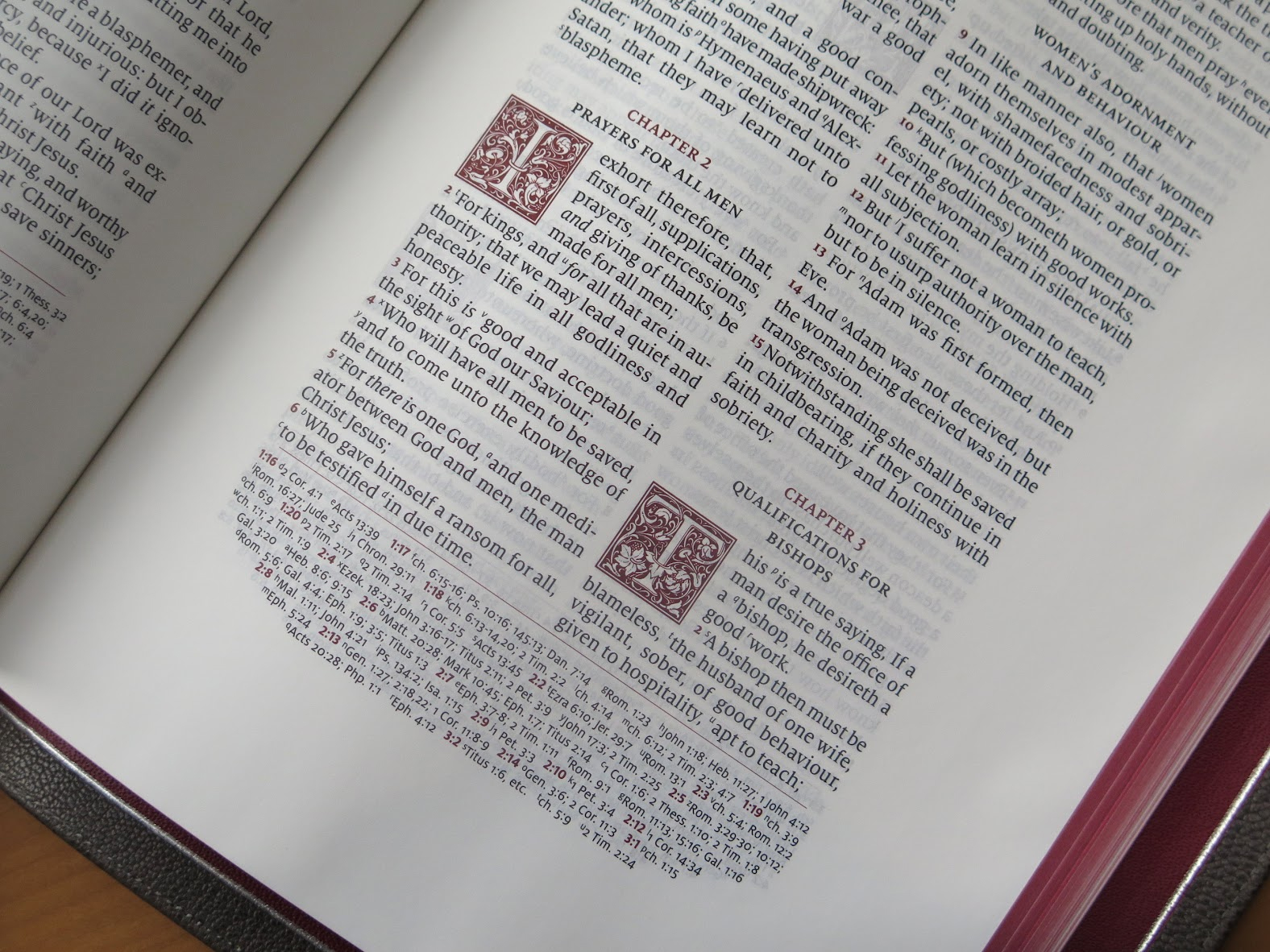
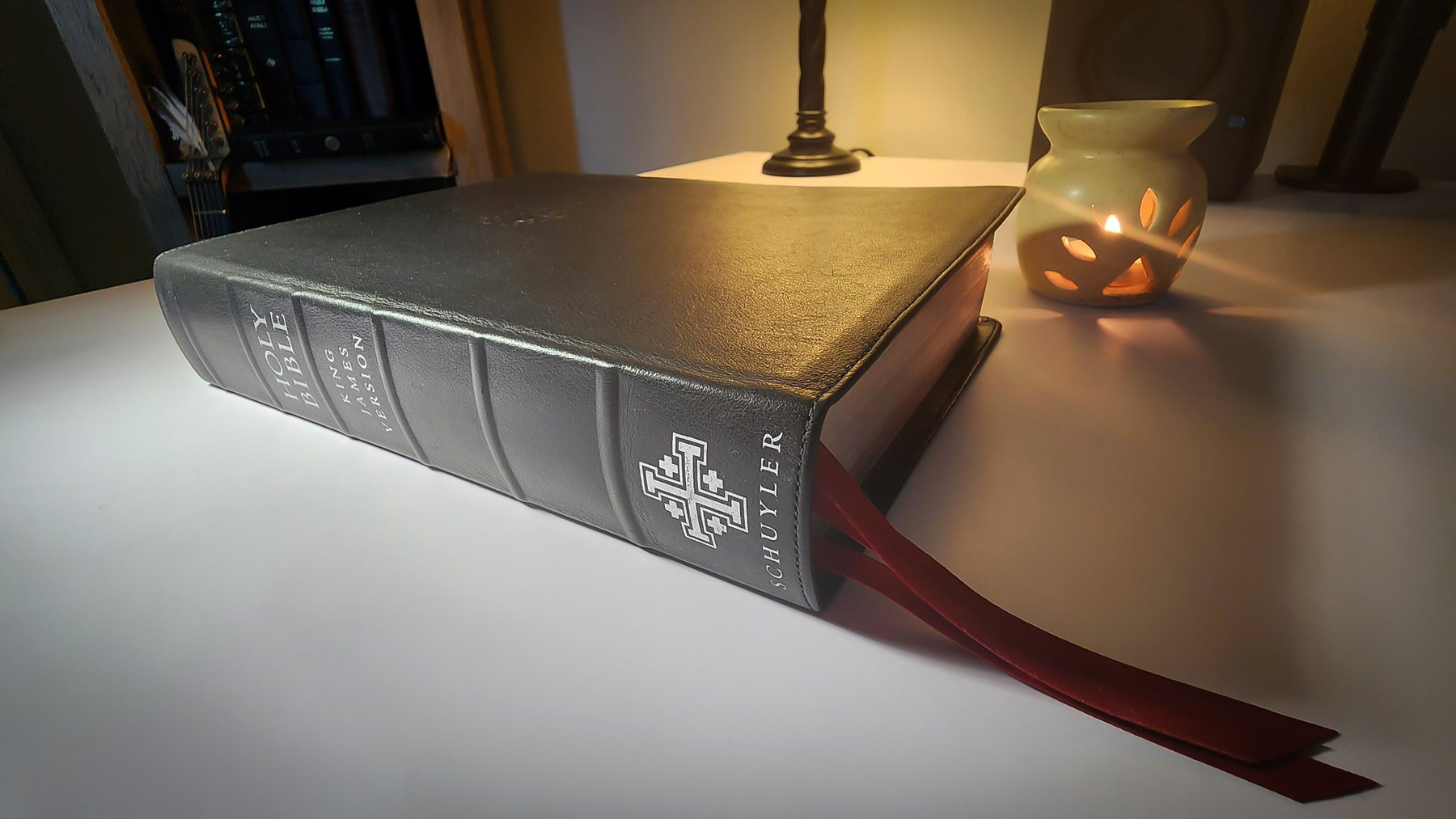
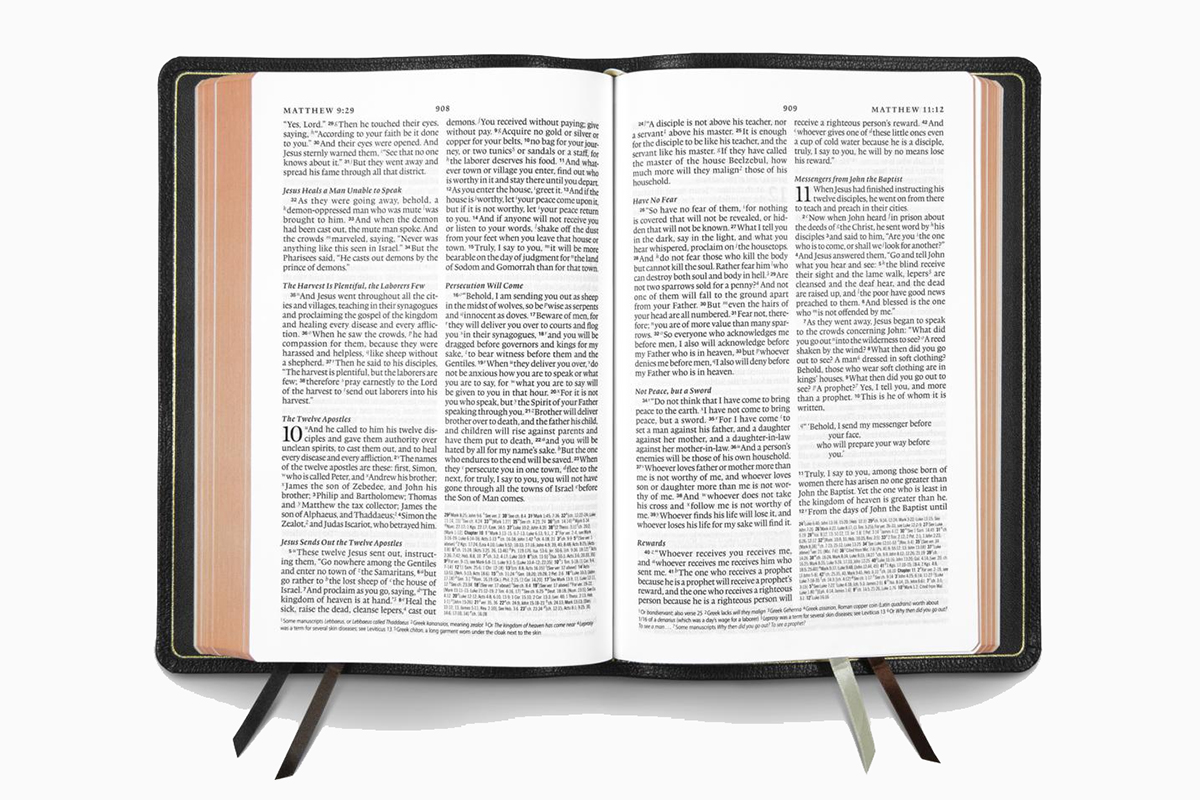
Having already completed both the ESV (2016) and NASB (1977 and 1995) translations from beginning to end, I undertook the King James Version as my third full reading of the Bible. This edition—the Authorized (King James) Version, Schuyler Canterbury Wide Margin, 2019—ran to 2,007 pages, and its breadth made the undertaking substantial. The reading experience differed from the others not only in translation choices but also in cadence, phrasing, and presentation. The archaism of the KJV created a certain gravity, while the wide margins of the edition allowed the text to breathe on the page.
Completing the King James Bible today from beginning to end was a long and layered experience. It took well over a year. The text held together by its distinctive phrasing and rhythm, while each book added its own character. Reading continuously through all sixty-six books allowed the movement of the canon to stand out—themes rising, falling, and returning in unexpected ways. The translation’s cadence gave consistency even as the genres shifted sharply.
The Pentateuch opened with grandeur. Genesis set the stage with its narrative of creation, early humanity, and the beginnings of Israel through the patriarchs. Exodus was dramatic, filled with plagues, deliverance, and covenant law at Sinai. Leviticus, slower in pace, emphasized detail and order, focusing heavily on offerings and regulations. Numbers alternated between census data, travels, and rebellion. Deuteronomy functioned like a series of speeches, reviewing the past and preparing for what lay ahead. The impression across these five books was one of origin and foundation.
The Historical books presented a national storyline. Joshua carried the tone of conquest and settlement. Judges was repetitive, marked by cycles of disobedience and deliverance. Samuel and Kings tracked the rise and decline of the monarchy, mixing political detail with personal drama. Chronicles revisited much of the same history but emphasized temple and worship. Ezra and Nehemiah, in contrast, were quieter, centered on rebuilding after exile. Esther concluded the section without naming God, but providence was implied in its turns of fortune. Together these works created a sense of continuity and fracture, success and collapse.
The Wisdom and Poetry books were different in texture. Job stood apart with its sustained dialogue about suffering and divine justice. Psalms offered an anthology of prayer, praise, lament, and thanksgiving, spanning moods across its 150 entries. Proverbs presented compact sayings with moral and practical guidance. Ecclesiastes was reflective, with a sober tone on the vanity of life. Song of Solomon was lyrical and intimate, celebrating love in striking imagery. The diversity here gave a range of voices, moving from lament to celebration, from brevity to extended meditation.
The Major Prophets were weighty. Isaiah combined judgment and hope, moving between warnings and visions of restoration. Jeremiah was lengthy, marked by laments and oracles of both doom and promise. Lamentations provided a poetic record of devastation. Ezekiel stood out for its elaborate visions and symbolic actions. Daniel mixed narrative accounts of faithfulness in exile with apocalyptic imagery of kingdoms and their succession. These books conveyed scale and intensity, often shifting between historical events and cosmic visions.
The Minor Prophets, shorter but sharp, came like a series of concentrated messages. Hosea employed personal imagery to illustrate unfaithfulness. Amos spoke forcefully on justice. Micah balanced rebuke with future hope. Habakkuk unfolded as a dialogue between prophet and God. Malachi, closing the Old Testament, warned against ritual without sincerity and looked forward to a future messenger. Their brevity gave them force, making each book a direct statement before moving to the next.
The Gospels formed the centerpiece of the canon. Matthew structured its narrative around fulfillment of earlier prophecy. Mark was brisk, urgent, and direct. Luke offered fuller accounts with attention to detail and compassion. John emphasized theological reflection, presenting extended discourses and unique imagery. Reading all four consecutively brought both harmony and variation, multiple perspectives converging on the same figure and events.
Acts functioned as a continuation and expansion, narrating the spread of the early movement beyond Jerusalem. It blended speeches, journeys, and conflicts, with recurring emphasis on boldness and opposition. The structure carried a sense of outward momentum, as the message traveled from city to city and crossed cultural boundaries.
The Epistles shifted in form, presenting themselves as letters rather than narratives. Romans gave a structured exposition of doctrine. Corinthians addressed divisions and practices within a community. Galatians emphasized freedom from law, while Ephesians and Colossians developed themes of unity and Christ’s supremacy. Philippians was personal and warm in tone. The pastoral letters gave guidance for leadership and endurance. Hebrews offered a sustained argument connecting the old covenant symbols with their fulfillment. James was concise and practical. Peter and John’s letters highlighted perseverance and truth, while Jude issued warnings. The effect of reading them in order was like receiving a stream of counsel, some formal, others more personal.
Revelation closed the canon with its apocalyptic visions. The letters to the seven churches gave direct assessments, while the cycles of seals, trumpets, and bowls built in intensity. Symbolic beasts, judgments, and cosmic battles alternated with scenes of worship around the throne. The conclusion turned to images of restoration—a new heaven, a new earth, and the descent of the holy city. The language was dense with imagery, requiring slow and deliberate reading and re-reading.
Taken together, the experience of reading the KJV Bible cover-to-cover was both varied and unified. Some sections demanded patience, others moved quickly. The prose of the translation, though at times archaic, provided weight and continuity. Each genre—law, history, poetry, prophecy, gospel, letter, vision—contributed a distinct layer, yet they all pointed toward a coherent whole. The impression left was of a vast work, diverse in voice and form, yet bound together by its scope and intention.
On September 4, 2021, I completed another read-through of the Bible, this time in the English Standard Version (ESV).
The journey began in September 2017 with a deliberate goal: to read carefully, giving word-by-word attention to the text. Over four years, I maintained a consistent daily habit, reading about ninety percent of the days, with only occasional lapses. My pattern was to proceed straight through in chronological sequence from New Testament to Old Testament. Certain sections were read more than once, and throughout this extended effort I experienced enduring life changes.
During these years, my father passed away. I left one company, joined another, and advanced further in my vocation. I also completed two years of Bible college, with one year remaining, while navigating the sale of two homes in California and the building of one in Arizona. All of this unfolded against the backdrop of a global pandemic in which friends and acquaintances succumbed to COVID-19. Many other transitions occurred, yet through them all, I remain profoundly grateful for having been able to complete another reading of God’s Word—at least in its English form.
My reading habits varied with season and circumstance. Most sessions took place in the mornings, though stretches occurred in the evenings, and almost never in the afternoons. The length of each session ranged from as little as twenty to thirty minutes to several hours. Only rarely—perhaps in fewer than twenty chapters scattered across various books—did I accompany the reading with audio.
I used a color-coordinated marking system, which I intend to continue in future readings. When encountering an unfamiliar word, I often turned to the original languages—Hebrew, Greek, or Aramaic—for clarity, and compared additional translations to confirm nuance. My notes drew both from personal reflection and from hermeneutics coursework, often cross-referencing passages, recording historical background, and tracing patterns in people, places, and events that carried significance.
The physical Bible for this effort was the ESV Heirloom Wide Margin Reference Edition. I selected it for its generous, balanced margins on both left and right, which proved excellent for extensive annotation. Though the top and bottom margins are less uniform, they are still sufficient for markings. My chosen pens were Sakura Pigma Micron 005 fine tips, in red, blue, black, brown, green, orange, purple, and pink. Across four years, I consumed four packs of these pens. They performed well on the thin pages without bleeding. For highlighting, I used a yellow gel marker from Thornton’s Office Supplies. Unlike ink-based highlighters, it does not bleed, though it wrinkles pages as it dries. Even so, its retention has proven stable, and I expect the markings to endure for many years.
Below is a video that conveys what the work itself looked like. The time was well spent. It provided nourishment, strength, and clarity—gifts not found anywhere else.
Looking back, I see that this reading of Scripture intertwined with every part of my life: family, vocation, study, loss, and change. The Word of God stood constant while the world shifted around me. Pens, pages, and margins preserve the notes, but the greater record is written upon my life itself. My prayer is that these years of reading will not end as a closed chapter, but continue as living testimony that man does not live by bread alone, but by every word that comes from the mouth of God.
When I first started reading Scripture seriously, my world was shaped mostly by the NASB, particularly the 1977 edition. I didn’t sit down with a plan to go from Genesis to Revelation in one sweep. Instead, I bounced around by sections — a prophet here, a gospel there, some poetry, a chunk of the law. It was patchwork, but those readings were formative. They gave me something to wrestle with spiritually, even if they were also tied up with plenty of conversations, questions, and, to be honest, misunderstandings.
For years, I didn’t bother with other critical text versions like the NIV or RSV. They were around, sure, but I wasn’t reaching for them. Once in a while, I dipped into the KJV, though I had no sense of its background. I didn’t know it was loaded with history, or that it carried centuries of Protestant, Puritan, and Reformed influence. At the time, it was just another Bible with slightly strange English.
The Bibles I used through those years are still with me, full of markings and annotations. They serve as time capsules, each margin note a little window into what I thought I understood then. Looking back, those readings were surface-level — I skimmed across ideas with an interpretive simplicity that felt enough at the time. Of course, that meant plenty of errors in understanding, but also room to grow.
My church background didn’t give me a Reformation framework. I came up through the Church of the Nazarene — a Wesleyan-Arminian world — and then into a Baptist church that had no real Reformational roots. From the start, my reading was driven less by tradition and more by a plain evangelical impulse: read the Bible, figure out what it means, and live like a disciple. That was the mindset, even if it was narrow.
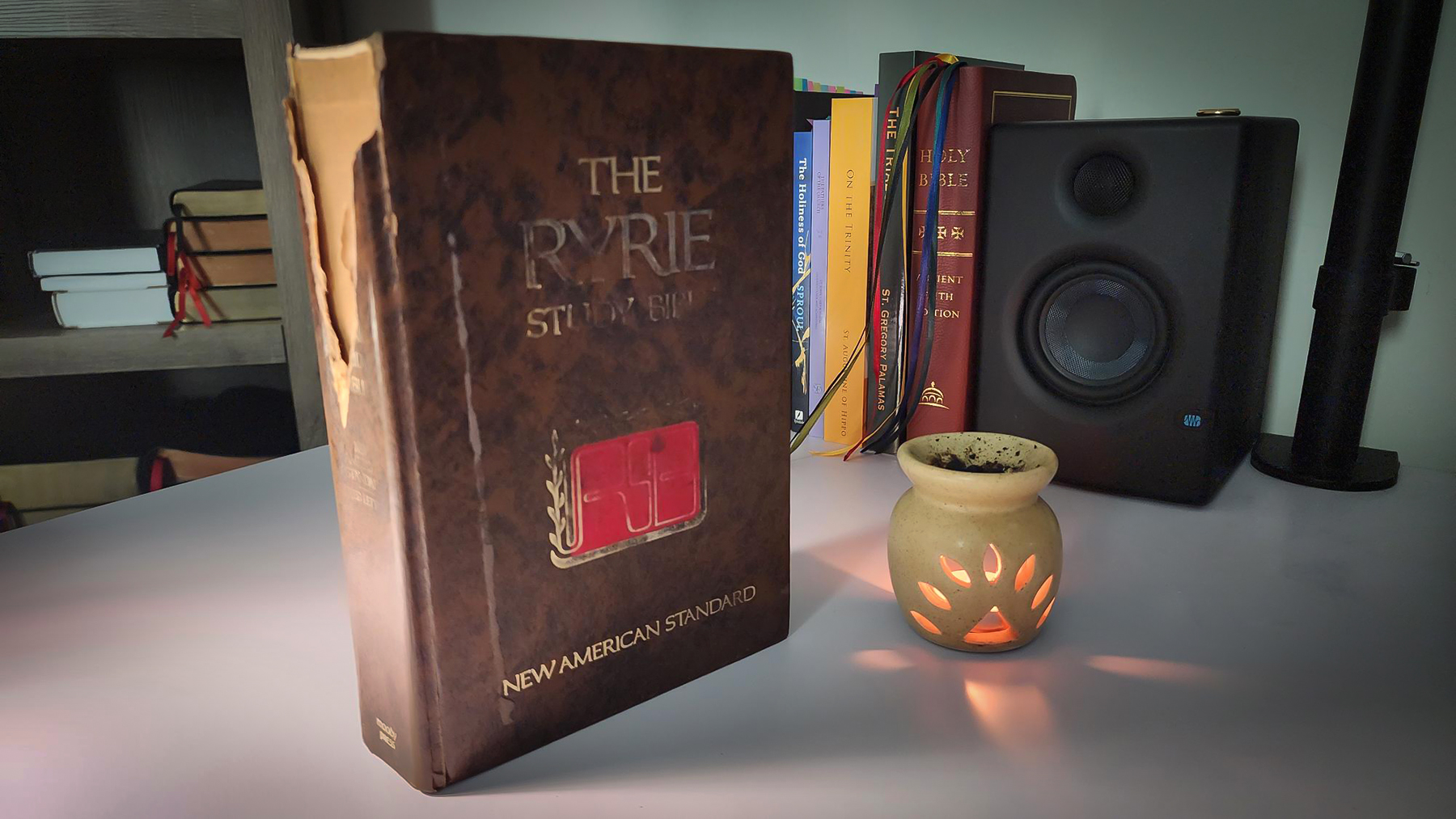
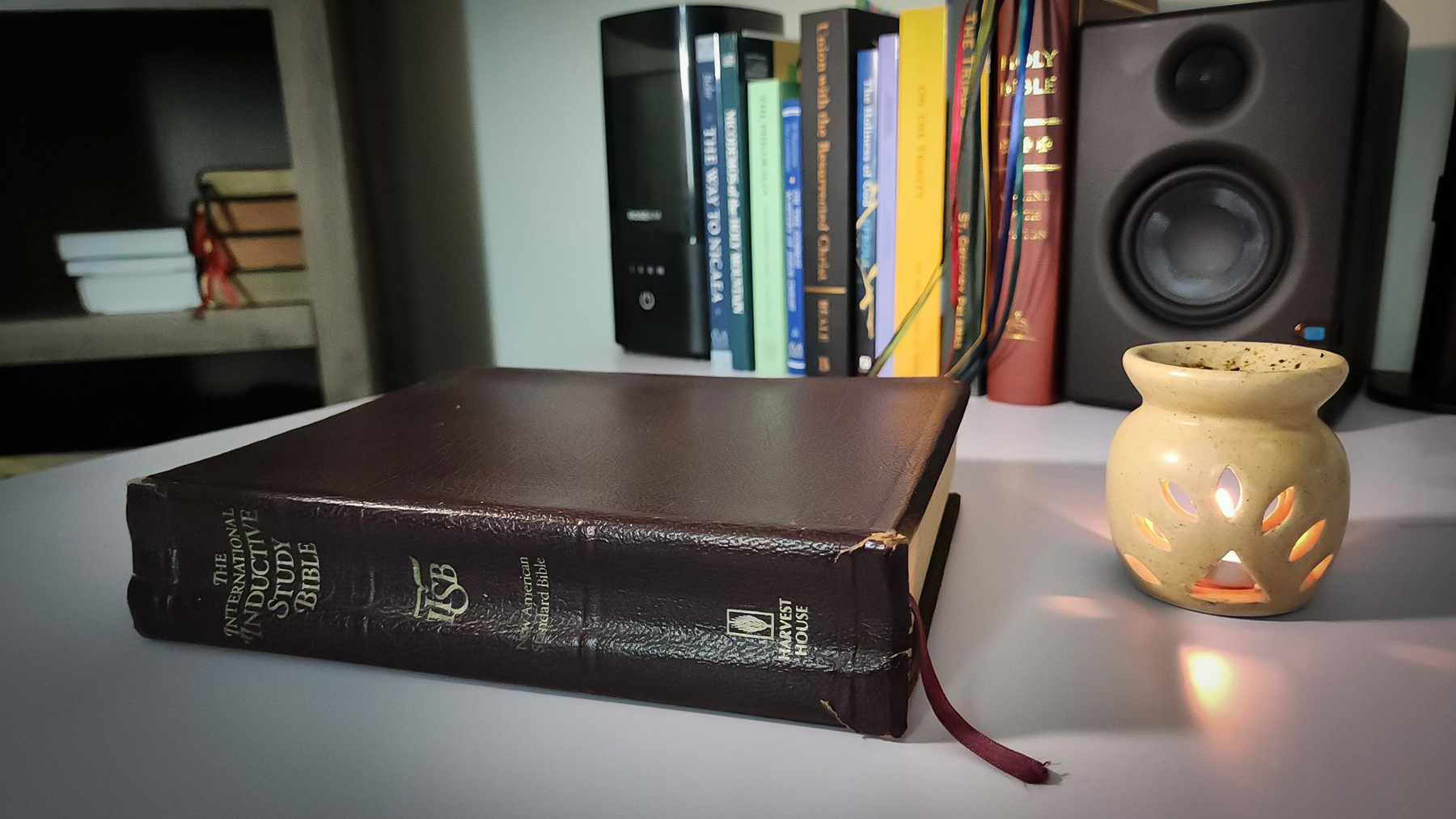
Along the way, I picked up some personalized Bibles. My pastor gave me a Ryrie Study Bible in high school, not long after he baptized me. A year later, in 1982, I got a KJV Bible as a birthday gift, just after coming to faith in the eleventh grade. Those two carried me a long way — the Ryrie stayed in heavy use all through my military years until I eventually shifted to the International Inductive Study Bible.
Over time, though, I came to distrust having someone’s name stamped across the cover. Whether it was the MacArthur Bible, Stanley Bible, or Ryrie Bible, I started steering clear. Even “King James,” if you think about it, is just another individual’s name fronting a translation. These days, I’d rather see a translation identified by its language base or tradition — English Standard, Greek Septuagint, Byzantine Majority — instead of by a person or even a national identity. “The Holy Bible” with a clear note about its translation type is enough.
Life carried me through long stretches of work where I was only keeping up light contact with Scripture. But eventually I settled into the ESV as my primary reading Bible. And today, after widening my scope through theological study, I’ve landed in a different place: I give the highest weight to the Majority Text and the Septuagint. In practice, that means I want to read what the apostles themselves read — the Old Testament from the Greek LXX, the New Testament from the Greek manuscripts of their own time.
It wasn’t until just before finishing my theological degree that this whole process really expanded. I began moving beyond the handful of translations I knew and dug into the manuscript traditions behind them. That was when my reading turned into something broader, something richer — not just bouncing between genres or paging through one familiar translation, but learning to navigate the wide river of Scripture as it’s come down to us across languages, traditions, and centuries.
And that’s the winding path of my Bible reading life — from NASB ’77 margins in my youth, through the Ryrie and KJV gifts, into long seasons with the ESV, and now down to the roots of the text itself. Each stage has been more than just an academic exercise; it has been a drawing closer to the Lord Jesus Christ. The notes and highlights I left behind remind me less of my own insight and more of His patience in guiding me. The longer I’ve stayed with the Word, the more I’ve discovered that Scripture is not merely about comprehension but communion — growing in affection for Christ, loving Him more deeply as He reveals Himself in every page.
If I had to sum it up for anyone beginning their own journey, it would be this: don’t worry if your first steps feel shallow or uneven. Start where you are, and stay with the Word. Over time, the text will lead you past the margins and into the heart of Christ Himself. What began for me as scattered readings in one translation has become a lifelong encounter with the living Lord. The joy isn’t just in finishing another Bible, but in learning to love the One who speaks through it, again and again.
King James Bible (KJV)
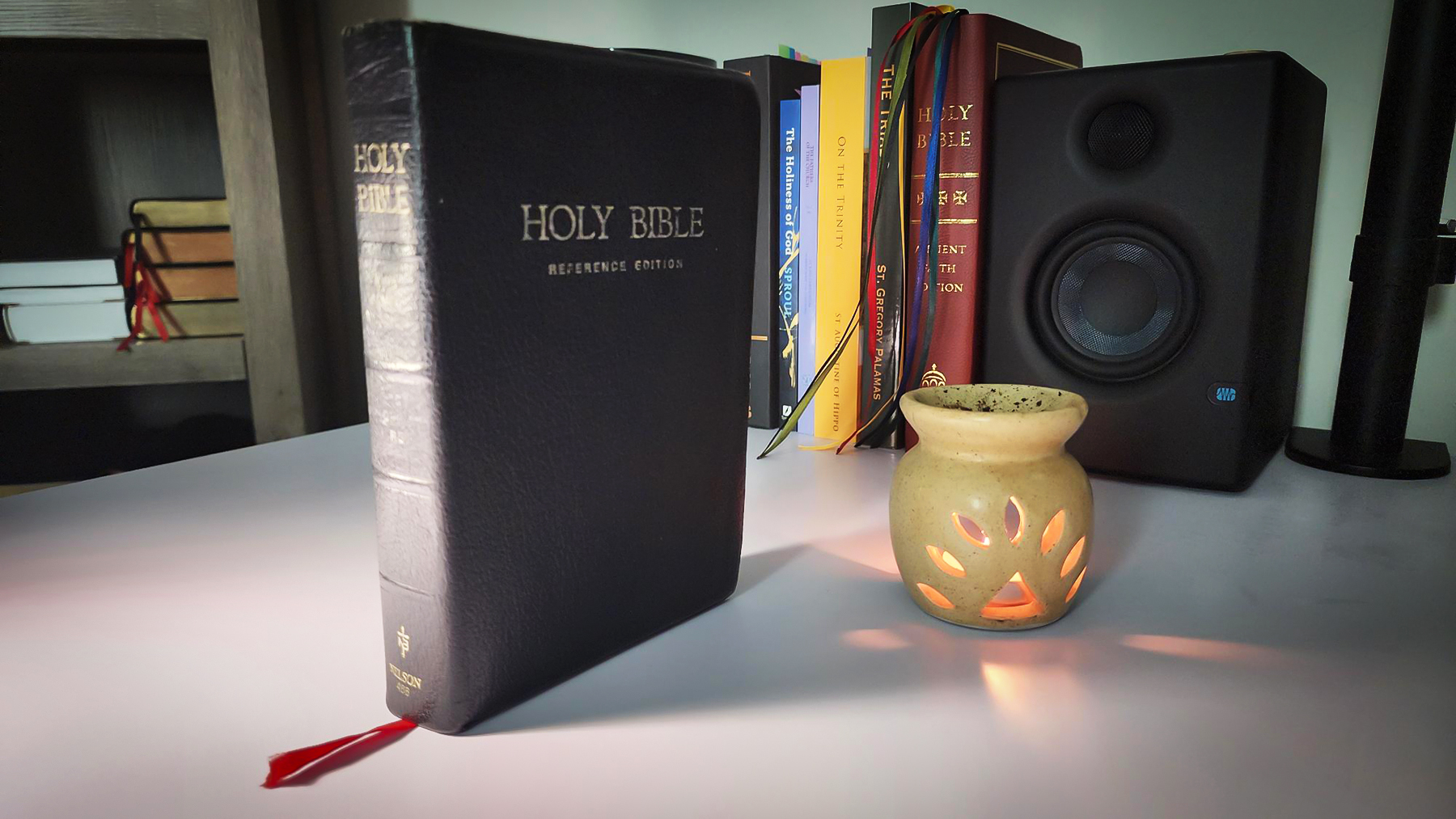
When I turned eighteen, stepping into adulthood, I was given a copy of the King James Version, Thomas Nelson 1972 edition. This Bible carried a certain weight to it — not just because of its black leather cover and gold lettering, but because of what it represented at that point in life: a gift of Scripture placed in my hands as I crossed the threshold from youth into responsibility. The language of the KJV, lofty and archaic as it seemed to me then, forced a kind of reverence. Even when I stumbled over “thees” and “thous,” I couldn’t shake the sense that I was standing on old, sacred ground, reading a text that had shaped generations before me.
Over time, I came to see this particular Bible not just as a book, but as a marker of my spiritual beginnings. Its margins are tied to the earliest days of my faith — simple underlines, early attempts at notes, and the wonder of first discovery. Looking back, I realize how much it influenced my affection for the Word. This edition of the KJV wasn’t chosen for its study notes or readability; it was given as a witness, a statement that the Scriptures should anchor me in life. Even though I’ve gone on to read many translations, this one remains set apart — the Bible of my eighteenth year, reminding me that God’s Word entered my adulthood not as an abstract text, but as a living gift.
This bible is a classic example of mid-20th-century Bible publishing. Bound in black leatherette with gold lettering on the spine and cover, it carries the familiar gravitas of the KJV tradition. The text is laid out in a clean two-column format with cross-references, offering both readability and study utility without overwhelming notes. Like most Nelson Bibles of that period, the paper is thin but durable, designed to withstand years of page-turning and light annotation, with red-letter text for the words of Christ. Its size strikes a balance between being portable and substantial — the kind of Bible meant to be carried to church as well as kept at home for daily reading.
What sets this edition apart is its sense of timelessness. The Thomas Nelson printing holds close to the traditional 1769 Oxford text of the KJV, with familiar spellings and phrasing that readers across generations would recognize. There are no modern editorial intrusions, just the translation itself, surrounded by references to guide deeper study. For someone receiving this Bible at the threshold of adulthood, it was more than just a book — it was a trusted edition of a text that has stood unchanged for centuries, presented in a form sturdy enough to last through the years. Even today, it holds its place as a reliable, reverent copy of the King James Bible, a reminder of both continuity and permanence in Scripture.
The Ryrie Study Bible (NASB)
The NASB Ryrie Study Bible, 1976 copyright by Moody Press, became my constant companion during my military years. Its brown textured cover and sturdy build gave it the feel of something meant to be used, carried, and relied upon day after day. The layout paired the New American Standard Bible’s clean double-column text with Ryrie’s notes beneath, so that the words of Scripture stood clear while interpretive help was always close at hand. It wasn’t ornate or ceremonial — it was practical, steady, and built for study and use in the everyday.
What I appreciated most about this edition was its study apparatus. Each book opened with a concise introduction, the notes pointed out key theological details, and Ryrie included doctrinal summaries that connected the pieces into a larger picture. His dispensational perspective was evident, but what struck me then was how approachable the notes were. They didn’t overwhelm the text; instead, they gave me a framework to understand how one part of Scripture tied into another. It felt like having a teacher on the page, steady and consistent, guiding me while still letting the Bible itself speak.
During those years in uniform, this Bible was far more than a study tool; it became the base text of my memory and formation. The NASB’s precision made it ideal for committing verses to heart, and countless passages I can still recall today are in the cadence of this edition. I carried it through transitions, kept it close during quiet moments, and leaned on it in seasons of discipline and duty. Its margins show the marks of those years — early notes, underlines, and reminders that faith was being worked out in the midst of real demands.
Looking back, the 1976 NASB Ryrie Study Bible is both a product of its time and a cornerstone of my spiritual growth. Unlike modern study Bibles overloaded with charts and commentary, this one held to a balance: clear translation, faithful notes, and space for me to engage directly with the text. In the intensity of military life, it was exactly the kind of Bible I needed — reliable, instructive, and rooted in the Word itself. Even now, it remains more than just a book on a shelf; it’s a witness to those formative years, when Scripture was not only read but lived.
The International Inductive Study Bible (NASB)
The NASB International Inductive Study Bible, copyright 1993 by Harvest House Publishers, became my primary Bible during my college years, picking up where the Ryrie Study Bible had left off in my military days. What stood out about this edition was its unique purpose: it wasn’t just a study Bible with notes at the bottom of the page, but a tool designed to teach me how to study the Scriptures for myself. The NASB text, already familiar to me from years of memorization and use, gave continuity and stability, while the inductive method trained me to observe, interpret, and apply the text in a much more deliberate way.
This Bible was structured for participation. Wide margins, helpful charts, and guided outlines invited me to mark key words, underline repeated themes, and trace the flow of argument through entire books. Instead of passively receiving a commentator’s conclusions, I was asked to slow down, to notice details, and to wrestle directly with what the text was saying. That process deepened my confidence in Scripture, showing me that careful observation could yield clarity and insight without having to lean solely on outside helps.
In practice, this Bible became my training ground for disciplined reading. The NASB’s precision provided the framework for accurate study, and the inductive format helped me take the verses I had already memorized in the earlier years and now place them in their broader biblical context. It was the bridge between raw memorization and theological understanding, a place where faith and intellect began to meet in structured devotion. During long hours of study in those college years, this Bible kept me grounded, pressing me not just to gather knowledge but to let the Word speak freshly and personally.
Looking back, the 1993 NASB International Inductive Study Bible was more than a continuation of my time in the NASB — it was a step forward in maturity. Where the Ryrie Bible gave me doctrinal guardrails, the Inductive Bible gave me tools to build my own framework of study, always returning to the text itself. Its durability shows the years of heavy use, and its margins bear the marks of learning to listen more carefully to the voice of Scripture. To this day, I see it as one of the most formative Bibles of my life — not because it told me what to believe, but because it taught me how to read.
Classic Thinline (ESV)
The ESV Classic Thinline Edition, copyright 2002 by Crossway and using the 2007 text, became my Bible of choice in the years following my MBA. Slim, lightweight, and bound in a simple brown cover, it had the portability and durability to go wherever I did. After years of carrying heavier, note-filled study Bibles, the thinline format felt refreshing — easy to slip into a bag, hold during church, or read late at night without distraction. The format alone encouraged me to focus on the text itself, without the constant pull of notes and cross-references dominating the page.
This edition marked the beginning of my departure from the NASB, which had been my anchor for memorization and study through military and college years. The English Standard Version struck me differently: smoother in cadence, more literary in phrasing, and easier to read aloud. It wasn’t a betrayal of precision — the ESV still carried the weight of formal equivalence — but it opened up the Scriptures in a way that felt more natural, less rigid, and better suited for meditation. That shift signaled a new phase in my reading life, where I began to value readability and continuity alongside precision.
The 2007 text of the ESV refined what Crossway had launched in 2001, smoothing out wording and consistency across the canon. I noticed those refinements, especially since I was so used to the granular detail of the NASB. Over time, I came to appreciate the balance it struck — still serious and faithful to the original languages, but written in English that read as if it belonged to my own generation rather than a technical classroom. This balance made the ESV an ideal Bible for devotion, teaching, and daily use.
Looking back, this thinline edition served as a quiet but significant pivot point. It wasn’t loaded with features or designed for scholarly depth, but it carried the ESV text in a form that was both practical and elegant. It represented a transition from the strict discipline of NASB precision toward a broader, more literary engagement with Scripture. Even as I’ve moved through other translations since then, I still remember this Bible as the one that opened the door to reading Scripture not only as data to be studied and memorized, but as a narrative and testimony to be absorbed with affection.
Conclusion: The Steady Voice of Scripture
Looking back across these years, every Bible I’ve used has carried its own place in my life. The NASB gave me discipline and accuracy, grounding me in the very words of Scripture. The Ryrie Study Bible steadied me through my military years, the Inductive Bible taught me to slow down and study for myself, and the KJV impressed on me the weight of tradition and permanence. Later, the ESV brought a lighter touch — still faithful, but with a cadence that made the text easier to read and absorb.
What threads through all of these is not the translation choice or the cover design, but the steady voice of Scripture itself. My underlines, notes, and even the places where I misunderstood were part of the process of growing in Christ. These Bibles show their years with worn edges and fading print, but they have carried me through again and again. In the end, it isn’t about which edition sits on the table or goes with me to church — it’s about meeting the Lord in His Word, letting those pages shape me, and carrying that truth into the life He has given me.
Over a series of sessions, I attended a course of lectures on the Prayer Rule from an Orthodox perspective. I didn’t go looking for something new or exotic. I came already convinced that prayer isn’t an add-on to the Christian life but the center of it, and already cautious of approaches that turn prayer into a method or a system to master. What these lectures kept returning to, again and again, was something much simpler and harder: prayer orders a life because it brings the whole person—body, attention, time, and desire—before God every day. Repentance, thanksgiving, intercession, the Jesus Prayer, and spiritual reading were not treated as separate devotions you pick and choose from, but as parts of a single pattern meant to be lived together.
I was also hearing these lectures after earlier reading in Martin Thornton’s work on an Anglican Rule of Life, where he reasons that a prayer rule is not private spirituality but a steady way of sharing in the Church’s life through time, common prayer, and sacrament. Thornton helped me see that love doesn’t remain love for long without some kind of shape, and that without that shape, devotion tends to slide into impulse or inconsistency. The Orthodox material didn’t overturn that; it pushed it further. Where Thornton writes with measured restraint about balance and stability, these lectures were more direct, especially about repentance, bodily prayer, and staying attentive to God. What follows isn’t an argument between traditions, but a straightforward account of what was taught, checked against Scripture, and received as a serious and demanding way of living a life of prayer.
These notes are from the lecture series on The Prayer Rule located here at Patristic Nectar.
Lecture I – Importance of a Prayer Rule
The opening lecture made a clear point from the start: the prayer rule isn’t mainly about organization or discipline. It’s about presence. Prayer was described as the basic way a person actually stands before God in reality, not in theory. If prayer isn’t there, nothing else quite holds.
One thing emphasized early was that no two prayer rules are identical. A rule has to fit a real person with real limits, not an imagined version of ourselves. That said, prayer isn’t something we simply design on our own. Christ Himself assumes prayer as part of following Him. When He speaks about prayer, fasting, and almsgiving, He doesn’t treat them as optional. They are simply part of life with God.
Prayer was also described as something God does in us before it is something we do for God. Paul’s language about the Spirit praying within us matters here. The fact that someone prays at all is already evidence of grace at work. Quoting the fathers, the lecturer made the point that God gives prayer to those who pray. Prayer reveals that something has already been given.
From there, the lecture pressed into love. Prayer isn’t neutral. It shows where love actually lives. Saying “I love God” means very little if there is no space in life given to prayer. This wasn’t presented gently. The claim was simple and uncomfortable: if I don’t pray, I don’t love God. Prayer is how love is practiced, not how it’s described.
That seriousness carried over into commitment. A prayer rule isn’t a hope or a preference. It’s a resolve. The language used was strong: missing the prayer rule is a matter for repentance, not excuse. At the same time, the rule has to be realistic. It must be something that can actually be kept, and only expanded slowly over time.
Morning and evening prayers were recommended as a basic starting point. Additional prayer can happen during the day when time allows, but the emphasis wasn’t on quantity. It was on attention. Inherited prayers—from Scripture and the saints—were described as gifts. They say things we couldn’t invent on our own. As we pray them attentively, they slowly become ours.
The lecture also outlined the basic shape of prayer: when and where we pray, how we pray, and whether prayer is offered alone or with others. Bodily prayer was included from the beginning. Bows and prostrations aren’t meant to be dramatic. They wake the body up and remind it what’s happening. The body learns humility even before the mind does.
Thanksgiving, intercession, and the Jesus Prayer complete the structure. Prayer, we were told, is the highest human work—not because it makes us impressive, but because it places us where we belong. Like breathing, it’s not optional if life is going to continue.
My Notes on Lecture I
A personal reality of presence and existence.
Every person’s prayer rule is unique. Unique to a person’s experience and strength.
The rule is taught to us by the LORD Himself.
Prayer with almsgiving and fasting is what the LORD assumes per Christ in scripture.
The Holy Spirit prays within those who are baptized, per Paul in scripture.
‘God grants the prayer of he who prays.’ Evagrius in Philokalia.
The one who prays demonstrates that he has God’s gift of prayer.
Deeper, sincerely, authentically.
The prayer rule shows us love for God. It shows us where we stand. If we pray to God, we love God. If we don’t, we don’t love God. ‘The time and practice of prayer shows love for God.’ – John Climacus. If we don’t pray, we don’t love.
Prayer is a matter of love. If we don’t pray, we do not love God.
Unshakable personal commitment. It’s not a hope. It’s a law—a personal resolve, no matter what.
Never miss your prayer rule for any reason whatsoever. To violate is a sin to confess.
The prayer rule fulfills the highest commandment.
To say you love God are empty words without a personal prayer life.
To keep the commandments is to keep in prayer.
The prayer rule should be accomplishable or doable. Reasonable to perform as a measure of strength. Fashion rules to strengthen and expand over time as advancement becomes possible.
Morning and evening prayers as a simple starting point, then separate prayers during free time if/as possible. Feel them. Don’t just recite them. Assimilate their meaning as if they came from our minds and hearts. This is the glory of the prayers of the saints and the scriptures.
We inherit prayers that are inspired that we could never invent ourselves. When we speak them, they’re ours as we come to understand them.
The parts of the prayer are: a.)when, b.)where, c.)how, and d.)why. Family prayer is separate.
Prayers consist of opening invocations.
Rule of prostrations or bows. Usually during the trisagion. Usually at the beginning of your prayers. They wake you up. Bodily prayer of contrition. Deepest humility. Creates within you a spirit of contrition. To water the rest of your prayers.
Thanksgiving is the heart of prayer, acknowledging the benefits received for God’s glory and your salvation. Fills you with joy.
Followed by intercessions.
Usually ends with the Jesus prayer. Because that’s our hope: that the prayer will stay with us. This is the prayer that never really stops, to keep it alive.
Prayer, according to the holy fathers, is the highest of all human endeavors. To be a co-creator of the God of reality. It’s the deifying virtue.
Prayer is like breathing.
Scripture References
Prayer as assumed, commanded, and relational Matthew 6:5–8 — “When you pray…” prayer is assumed by Christ, not optional Luke 18:1 — the necessity of continual prayer Psalm 27:8 — seeking the presence of the Lord as relational reality
Prayer as Spirit-given and Spirit-led Romans 8:26–27 — the Spirit intercedes within believers Galatians 4:6 — filial prayer produced by the Spirit
Prayer as love and obedience John 14:15 — love expressed in obedience John 15:10 — abiding in Christ through obedience Deuteronomy 6:5 — loving God with heart, soul, and strength Revelation 2:4–5 — neglect of love revealed through neglect of devotion
Prayer as continual, disciplined commitment Psalm 55:17 — evening, morning, and noon prayer Daniel 6:10 — fixed prayer discipline regardless of cost Colossians 4:2 — perseverance and watchfulness in prayer
Lecture II – Repentance & Bodily Prayer
The second lecture made it clear that prayer is learned. No one knows how to pray naturally. We learn by being taught, by imitating those who pray faithfully, and by submitting ourselves to instruction over time.
The lecturer described prayerlessness as the defining feature of secular life. Not disbelief exactly, but life lived as though prayer were unnecessary. Against that, the saints place prayer at the center of everything.
This led directly into bodily worship. The body isn’t a problem to work around. It’s part of the offering. Scripture assumes that prayer involves posture—standing, kneeling, bowing, lifting hands, remaining still. All of these teach the heart something before the heart knows how to teach itself.
Saint Theophan’s description of the stages of prayer was brought in here: bodily prayer, attentive prayer, and prayer of the heart. Bodily prayer isn’t something to rush past. It sets the conditions for everything that follows.
Prostrations were explained carefully. They cultivate humility and repentance. They aren’t used on Sundays because Sunday is a day of resurrection and dignity, but they are used during the week and especially during Lent. Two forms were described: the full prostration and the smaller bow, or metania.
Quantity, again, was said to be a matter of personal ability or choice. One person may make a few prostrations—another more. The point isn’t exhaustion. It’s reverence, attentiveness, and honesty. Without humility, bodily prayer becomes dangerous. With humility, it trains the whole person.
My Notes on Lecture II
Prayer is a learned virtue by the holy spirit. We know how prayer went by how we feel inside. Learned by study. Learned by imitation of those accomplished and those more innocent. And to consult with a spiritual elder.
The lack of prayer defines secular life most. The plague of secular life is prayerlessness.
Discipline of prayer is the central concern of the saints. This is the keeping of holy tradition. Praying the way they pray (both holy fathers and mothers).
The Philokalia is on the spiritual life. The common theme is prayer. It’s an apostolic spiritual life. It’s the old, rich wine, and nobody wants the new wine.
Catechumens learn to pray as the experienced.
Praying is what it means to be spiritual.
It is to be in communion with the Holy Spirit.
Becoming spiritual is cultivating the presence of the Holy Spirit.
Bodily worship is how we use our bodies in prayer—offering of prayers of body and soul.
Saint Theophan the Recluse (the path to salvation): three stages of prayer. 1 – bodily prayer, 2 – attentive prayer, 3 – feeling prayer of the heart
Rom 12:1 rationale for bodily prayer (to include prostrations)
Bodily positions: bowing to the ground, kneeling, bowing at the waist, standing, hands lifted, arms outstretched, bowing of the head, making the sign of the cross, sleeping on the ground, and singing. All of these are bodily acts of prayer and worship.
There are over 200 references in scripture about bodily prayer.
Kathisma (sitting) Psalms or Hymns: There are some cases in which it is appropriate for prayer. The church prescribes sitting during extended psalmody during vespers and orthros (Kathisma – a collection of psalms; 150 psalms are broken into 20 Kathisma. 1. read in vespers, 2. in orthros service). “Kathisma” in Greek means to sit. When doing your prayer rope with the Jesus prayer, do it while seated, relaxed, and undisturbed.
Akathist Songs: On the Fridays of Lent. Hymn to the Mother of God. You don’t sit.
Bodily worship is part of who we are. We’re not just souls in shells. We are embodied souls.
A heart’s disposition is in cooperation with bodily actions of humility. Your body can lead the way.
Bodily worship fosters an interior disposition through the connection among the body, soul, and mind.
Bowing to the ground furthers humility. It gives birth to repentance and contrition. It’s body language as expression.
Prostrations are not made on Sunday as to the dignity of man. It’s the Lord’s day, a day of resurrection, and it’s a celebration of the dignity of man.
On weekdays or during Lent, you’ll see prostrations. Proscribed in the Lenten services and chiefly in the prayer of Saint Ephrem the Syrian.
Muslim’s got prostrations from the Christian church.
In individual prayer, prostrations are usually appointed where they are. Usually at the beginning of the Trisagion prayer, and the Lord’s prayer. Because it enables the person to wake up and to scatter prayers into the person where they’re offered in compunction.
Two kinds of prostration: Great (full) Prostration and Metania (repentance in Greek). Full prostration while looking at an icon of Jesus Christ, and making the sign of the cross while reciting the Jesus Prayer. Then, making a full bow to the ground and touching the forehead to the ground. Then, coming up to continue or stop.
Metania is a small prostration from the waist while making the sign of the cross, praying the Jesus prayer, and touching the ground. Metania during Pascha. No great (full) prostrations during Pascha.
Ignatius says ascetic prayers have a different taste after bows (the arena) because you’ve put yourself in a mode of compunction.
Quantity is person-specific: 1, 3, 5, 10,… as bodily worship. But not to exhaust you, but they must be reverent and unhurried. Can be used for both the Jesus prayer and intercession.
Prostrations are used as an act of humility toward others. To others before them, asking for forgiveness. It’s the extremity of humility.
Must be done with a humble and loving heart; without these, they’re more harmful and can lead to grotesque pride.
We pray what we believe and believe what we pray (Prosper of Aquitaine (c. 390–455), Lex orandi, lex credendi (“The law of prayer is the law of belief.”)). Prosper of Aquitaine, a disciple and defender of Augustine of Hippo, during the Pelagian controversy.
Position of lowliness to proclaim the faith. Bodily acts are expressions of the heart. Without expressions of the heart, they’re occasions of great pride.
After the six Psalms are said, no sign of the cross is made. The worshiper remains still, as it’s a solemn time of judgment.
Scripture References
Prayer as learned, disciplined, and cultivated Luke 11:1 — “Lord, teach us to pray” Hebrews 5:14 — virtue trained by habitual practice Proverbs 13:20 — formation through wise companionship
Prayerlessness as defining secular life Psalm 10:4 — life lived without reference to God Hosea 7:14 — hearts that do not truly cry out to God
Bodily worship commanded and assumed Romans 12:1 — bodily offering as spiritual worship Psalm 95:6 — bowing and kneeling before the Lord 1 Corinthians 6:19–20 — the body belonging to God
Prostration, humility, and contrition Ezra 9:5–6 — kneeling and bodily repentance Nehemiah 9:5 — posture accompanying corporate worship Luke 18:13 — bodily posture of repentance and humility
Liturgical restraint and reverence Habakkuk 2:20 — silence before the Lord Ecclesiastes 5:1–2 — guarded speech and posture in worship
Lecture III – Thanksgiving and Praise
If repentance tells the truth about us, thanksgiving tells the truth about God. The third lecture insisted that prayer without thanksgiving doesn’t line up with reality. Gratitude isn’t optional. It’s how prayer becomes truthful.
Paul’s repeated calls to give thanks always were highlighted here. Gratitude is the Spirit’s work in us. To withhold thanksgiving isn’t neutrality; it’s resistance.
The prayer of Saint Basil was given as a model. It begins with praise and thanks before any request. God is thanked not only for visible blessings, but for mercy that goes unseen—especially the simple fact of waking up each day under grace and not judgment.
Thankfulness depends on humility. Pride assumes entitlement. Gratitude recognizes mercy. The lecture didn’t avoid saying plainly that realizing we are not in hell is already reason for thanksgiving.
Thanksgiving was extended to everything: creation, the Church, family, friends, teachers, saints, even hardship and correction. Chastisement was described as mercy when it leads us back to God.
The Eucharist itself was named as the center of this posture. Thanksgiving isn’t just personal feeling. It’s the Church’s public way of standing before God. Learning gratitude, we were told, prepares us for heaven, where thanksgiving is the language spoken.
A Basilian Prayer from the Antiochian Prayer Book We bless thee, O God most high and Lord of mercies, who ever workest great and mysterious deeds for us, glorious, wonderful, and numberless who providest us with sleep as a rest from our infirmities and as a repose for our bodies tired by labor We thank thee that thou hast not destroved us in our transgressions, but in thy love toward mankind thou hast raised us up, as we lay in despair, that we may glorify thy majesty. We entreat thine infinite goodness, enlighten the eyes of our understanding and raise up our minds from the heavy sleep of indolence; open our mouths and fill them with thy praise, that we may unceasingly sing and confess thee, who art God glorified in all and by all, the eternal Father, with thine only-begotten Son and thine all-holy and good and life-giving Spirit, now and ever, and unto ages of ages. Amen.
My Notes on Lecture III
Prayers must be permeated by thanksgiving if they’re going to be acceptable to Him. They’re to be offered to Him with an attitude of Thanksgiving.
It should be ceaseless. Apostle Paul has repeatedly written on this in his letters to the church.
Rejoicing and giving thanks is the work of the Spirit within us. Without giving thanks, we’re suppressing the work of the Spirit within us. It’s a form of quenching.
Saint Basil – Applied to morning devotions, (pg 14 of red prayer book) as a model. Beginning with adoration.
Show and voice gratitude for what you can see, and for what is unseen and innumerable.
For how he works for every good blessing. His character superintends mercies to us.
We must live in awe of what He has done.
Gratitude for time, health, and a clear mind.
Raised each morning into grace.
To be thankful, you have to cultivate humility for use within the prayer rule. Combined with a true estimation of ourselves under the weight of sins. To wake up and recognize we’re not in hell is a point of immense gratitude.
God lets us sleep without retribution. The magnificient never sleeping mercy of God.
The cultivation of a humble spirit is one of the intentions of liturgical prayer.
The proud are never thankful. They think that everything they receive, they deserve.
Thank God for Creation, the Church, Fellowship, Priesthood, Bishop, spiritual mentors, and important people in your life. Your spouse. Your children. Guardian Angel. For the patron saint, and rejoiced in a shared name. For His patience, your friends.
Thank Him for chastisement. And for the hardship of bearing a cross. For returning to Him by grace through repeated sinful behavior.
The prayer rule includes prayers of thanksgiving for meals.
After communion.
For national blessings and holidays.
Get a copy of the Akathist of Thanksgiving.
Your whole approach to the divine liturgy is one of thanksgiving. The Eucharist means thanksgiving.
To practice this gratitude that helps you to become fit for heaven.
Scripture References
Thanksgiving as essential and continual prayer 1 Thessalonians 5:16–18 — rejoicing, prayer, and thanksgiving united Ephesians 5:18–20 — thanksgiving as evidence of the Spirit’s filling Colossians 3:15–17 — life saturated with gratitude
Thanksgiving grounded in humility James 1:17 — every good gift from God Psalm 103:2 — remembering divine benefits Luke 17:17–18 — thanklessness as spiritual failure
Thanksgiving for mercy amid sin Lamentations 3:22–23 — mercy renewed each morning Psalm 130:3–4 — mercy leading to reverent fear Romans 2:4 — kindness leading to repentance
Thanksgiving fulfilled liturgically Luke 22:19 — Eucharist instituted with thanksgiving 1 Corinthians 11:24 — thanksgiving central to communion
Lecture IV – Intercession
Intercessory prayer was treated as a responsibility, not an option. To pray is always to pray for others. Refusing to pray for others is a failure of love.
Christ’s prayer in John 17 was the model here. Intercession means standing before God for others, asking for their preservation in truth and holiness. We are instructed specifically to pray for those in authority, not because they deserve it, but because peace is a gift.
The lecturer reminded us that we aren’t Abraham. We don’t intercede as patriarchs, but as dependent members of the Church. The prayer of the righteous matters, but righteousness here means faithfulness and humility, not status.
Prayer is shared. We ask others to pray for us. We bring names to the Church. Priestly prayer carries particular weight because of the office, especially within the liturgy, but no one prays alone.
Strong attention was given to family prayer. Husbands and wives are to pray for each other daily. Parents are to pray for their children daily. Job’s practice of early prayer for his children was given as a pattern worth copying.
The lecture briefly addressed saints as intercessors. Saints are powerful not because they are impressive, but because they stand close to God. Prayer is offered only to those recognized as saints, and icons reflect this clearly.
My Notes on Lecture IV
To pray for those we love, all men, all women. Even our enemies.
Unceasing prayer for others always.
To not pray for others is to sin against God Himself.
Jesus gives us an example in John 17 of what it means to intercede for people. This is an essential part of the prayer rule.
Pray for Kings and for those in authority. For those who govern to lead a quiet and dignified live.
This is a tangible expression of love. We pray for those we love—a common dictum.
Our prayers are not like those of the ancient patriarchs, such as Abraham.
The effectual prayer of a righteous man accomplishes much (St. James).
Labor to make our prayers count.
Those who intercede for loved ones ask others to pray for them too.
The prayer of a priest is powerful as it is of the office, even from the divine liturgy.
We ask for the prayers of the prayer warriors (those who are highly practiced).
We bring the names of our loved ones to others for prayer, where numerous people pray to bring petitions before God.
Paul requested prayer multiple times. In alignment with the will of God. To pray for dependence accordingly.
The husband and wife pray for each other every day.
Pray for children each day.
Job 1:5 – Rising early in the morning according to the number of them all. For his sons continually. And this was pleasing to God. To stand before guiltless and in peace.
Get up early each morning to pray for your children.
A Paraklesis means supplication. An Akathist means standing. These are Greek terms.
The Holy Fathers teach the doctrine of Divine Impassability. Yet God listens to the prayers of His people. To the fathers, such questions are unwise.
Saints are powerful intercessors on Earth and much more powerful in heaven.
Praying to those who are not saints is not sanctioned by the church. Icons of individuals without a halo indicate those who are not prayed to.
Scripture References
Intercession as commanded expression of love 1 Timothy 2:1–4 — intercession for all, including rulers Matthew 5:44 — prayer for enemies Ezekiel 22:30 — standing in the gap before God
Christ as the model intercessor John 17 — Christ’s high-priestly intercession Hebrews 7:25 — Christ living to intercede
Efficacy and humility in intercessory prayer James 5:16 — righteous prayer effective 2 Corinthians 1:11 — shared intercession within the Church Romans 15:30 — Paul’s repeated requests for prayer
Family and parental intercession Job 1:5 — continual prayer for one’s children Deuteronomy 6:6–7 — household spiritual responsibility
Intercession of the righteous beyond death Revelation 5:8 — prayers of the saints before God Revelation 8:3–4 — prayers offered in heaven
Lecture V – The Jesus Prayer
The fifth lecture focused entirely on the Jesus Prayer. It was described as the prayer that gathers everything else together, not because it replaces other prayers, but because it stays with us when formal prayer ends.
The day begins with a simple acknowledgment that the day belongs to God. Then the Jesus Prayer: “Lord Jesus Christ, Son of God, have mercy on me.” When the fathers speak of “the Prayer,” this is often what they mean.
The prayer is simple and focused. It gives the mind one thing to hold. Repetition builds familiarity and affection. Over time, it moves from the mouth to the mind, and from the mind into the heart.
The use of a prayer rope was encouraged, not as a technique but as help. The prayer can also be used for intercession, carrying others before God by name.
Scripture was clear here: we ask in the Name of Jesus because there is no other name by which we are saved. Saying the prayer often doesn’t heighten emotion so much as it establishes presence. Darkness recedes not through effort, but through staying near Christ.
My Notes on Lecture V
This is the highest form of prayer.
We insist on being with Him for each day.
Let the first words be these. This is the day that the Lord has made. Let us rejoice and be glad in it. Then make the sign of the cross.
Thoughts should be I belong to God and the day belongs to God.
Recite the Jesus prayer. John of the Ladder says that the Jesus Prayer should be said upon waking and before going to sleep.
“The Prayer” is meant as the Jesus Prayer. As found within the gospel, with a deep sense of need. “Lord, have mercy upon me.”
It’s precious because it’s a monological prayer (a single thought to focus our attention on it).
It’s useful throughout the day as a single thought centered on Jesus.
To repeat this prayer is to cultivate a great affection for it.
The demons hate this name and this practice.
Say it often with reference. To destroy darkness within us.
Trisagion, then prostrations at the beginning produces a spirit of compunction to fertilize the rest of the prayers. Prostrations get the blood flowing so we can remember what we’re saying.
Then comes the Thanksgiving prayers.
Then, petitions are at the end of our prayers.
The Jesus prayer completes the prayer rule because the end of the prayer discipline stays with us. To keep it present within the mind. To keep it in mind.
Keep a prayer rope with you. And say the prayer with each knot of the rope, as many times as pertaining to you.
Keep the Jesus Prayer with you throughout your day.
John of the Ladder says to be concentrated on the prayer. To acquire watchfulness.
Use the prayer in the family. Let your children read it and recite it. Use a prayer rope (chotki).
The Jesus Prayer is also for intercession, where you can pray the rope for someone. As, “Lord Jesus Christ, Son of God, have mercy upon your servant, or child […name…]. Then, “by their prayers save my soul.”
Jesus said, “Whatsoever you shall ask in My name, that will I do that the Father may be glorified in the Son. If you ask anything in My name, I will do it.
“There is no salvation in any other name. For there is no other name under heaven given among men whereby we must be saved” (Acts 4:2).
Repetition helps move the Jesus Prayer from our mouths to our minds.
Noetic prayer of the mind is more developed and advanced than intentional voice.
The prayer is pressed through the demonic and distraction by volume, persistence, and increasing intensity.
Vices will become reduced and set aside.
Scripture References
Prayer offered in the Name of Jesus John 14:13–14 — asking in Christ’s Name Acts 4:12 — salvation found in no other name Philippians 2:9–11 — the exalted Name of Jesus
Continual prayer and watchfulness Luke 18:1 — perseverance in prayer 1 Thessalonians 5:17 — unceasing prayer Colossians 4:2 — watchfulness through prayer Mark 14:38 — vigilance against temptation
Repetition without vain babbling Luke 18:13 — repeated cry for mercy Psalm 136 — faithful repetition grounded in covenant remembrance
Lecture VI – Spiritual Reading
The final lecture made clear that prayer isn’t only spoken. It also listens. Spiritual reading belongs inside the prayer rule, not alongside it.
Scripture comes first. The writings of the saints follow. These texts aren’t read mainly for information but for formation. Chrysostom’s claim was blunt: no one is saved without taking advantage of spiritual reading.
Reading teaches us how to pray. Prayer teaches us how to read humbly. Vigil, fasting, and reading together deepen prayer.
Practical patterns were suggested—reading through Scripture steadily, reading the Psalms continually, and reading the New Testament repeatedly. Patristic works written by saints were preferred over academic treatments. Holiness matters more than novelty.
Reading was encouraged throughout daily life, even in small moments, and with family. In this way, prayer, reading, and life stop being separated.
My Notes on Lecture VI
Spiritual reading within the prayer rule itself.
The first degree of the priesthood is to be a reader. A reader who is obsessed with the work of studying scripture.
Read sacred literature. Patristic literature. It is to receive grace.
“It is not possible for anyone to be saved without taking advantage of spiritual reading.” -Chrysostom
Spiritual books, or holy literature and sacred scripture.
Read the works of the saints. Books that have divine thoughts.
Mixing this type of reading with prayer helps make it more fruitful.
Vigil, spiritual reading, and fasting, to yield improved prayer.
Scripture and holy spiritual books help to build a conversation with the Spirit.
Reading is included in the prayer rule.
Patterns for reading include: reading it as the highest treasure. The reading of the scriptures is a meadow according to Chrysostom, with flowers of fragrance and fruit. Not to be read hastily.
Read through the Bible in a year. Or the Psalter continually, or the reading manner of Sarov (NT only). Read the Epistles according to the calendar of the church.
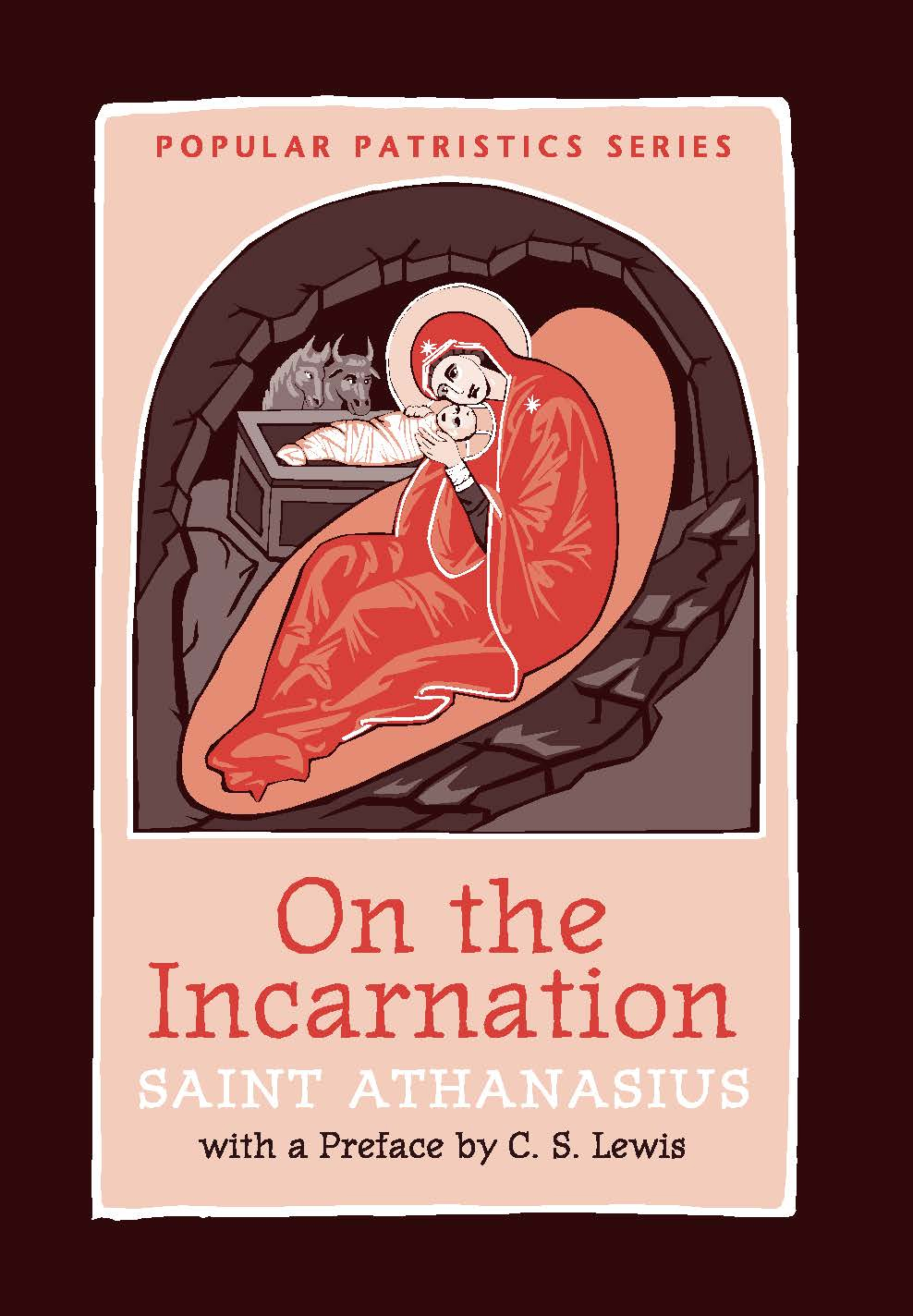
Reading Patristic literature: For example, the Popular Patristic Series. Most books are good, but some are horrible. Patristic literature by the Saints is preferred. Five patristic works for every academic work or monograph. Read the saints, East and West.
Read them throughout your available time. Read with family. Before eating, or after.
Scripture References
Scripture as necessary for salvation and formation Psalm 1:1–3 — delight in the law of the Lord Joshua 1:8 — meditation day and night 2 Timothy 3:15–17 — Scripture forming for salvation and obedience
Scripture shaping prayer and communion John 15:7 — God’s Word abiding shapes prayer Psalm 119:105 — illumination through divine instruction
Attentive and reverent reading Nehemiah 8:8 — reading with understanding Luke 10:39 — attentive listening at the Lord’s feet
Transmission through holy teachers and saints Hebrews 13:7 — remembering faithful leaders Philippians 3:17 — imitation of godly examples
The seeming tension between apophatic theology and the cultivation of phronema (φρόνημα)—the Orthodox mind or spiritual consciousness—resolves when we understand that apophaticism is not an epistemological nihilism nor an avoidance of dogma, but a method and discipline that purifies the soul for true knowledge. This kind is acquired by participation rather than detached speculation.
Apophaticism & Phronema
I. Definition and Distinction
A. Apophatic Theology (Via Negativa)
Derived from the Greek ἀπόφασις (apophasis, “negation”), it is the theological method of describing God by negation—saying what God is not, rather than what He is.
Rooted in the writings of Gregory of Nyssa, Dionysius the Areopagite, and later Gregory Palamas, it resists rational reductionism or anthropomorphism.
It acknowledges that God, in His essence (οὐσία), is unknowable and incommunicable, yet He reveals Himself through His energies (ἐνέργειαι), allowing real union without comprehension of essence.
Antonym: Cataphatic – A positive conception about God that uses words, symbols, or ideas. A cataphatic expression focuses on what we can definitely know about God, such as “God is holy” or “God is omnipotent.”
B. Phronema
The term φρόνημα means “mindset,” “disposition,” or more richly, “the spiritual consciousness of the Church.”
In Orthodox theology, developing the Orthodox phronema is synonymous with acquiring the mind of Christ (cf. Philippians 2:5 NASB, KJV: “Let this mind [φρόνημα] be in you, which was also in Christ Jesus”).
It is not merely intellectual assent to doctrines but an existential and spiritual assimilation of the Church’s life: its liturgical rhythm, ascetic practices, dogmas, and patristic witness.
II. How Phronema Is Formed in an Apophatic Tradition
Despite the apophatic rejection of rationalist theology, Orthodoxy offers a robust pathway for forming the phronema in the faithful. This development happens not by philosophical deduction but by incorporation into the Church’s life, where the mystery of God is encountered, not dissected.
A. Liturgical Participation and Sacramental Immersion
Orthodox theology is primarily lived, not lectured. The Liturgy itself is “theology in action” (cf. lex orandi, lex credendi).
The faithful acquire phronema through the liturgical year, feasts, fasts, hymns, and iconography—each expressing doctrinal truths in holistic, experiential, and symbolically rich forms.
For example, the Paschal hymns do not explain the Resurrection; they manifest it. This affects the soul more deeply than abstract speculation.
B. Obedience and Spiritual Guidance
The apophatic path includes kenosis (self-emptying), which fosters humility before mystery.
This humility is learned through obedience to a spiritual father or mother, whose guidance aids in discernment and personal purification.
As St. Silouan the Athonite taught, “Keep your mind in hell, and despair not”—a deeply apophatic yet profoundly phronetic saying, rooted in lived spiritual experience.
C. Ascetical Practice as Purification
Through fasting, prayer, vigils, and confession, the faithful undergo purification of the heart (κάθαρσις), which precedes illumination (φωτισμός) and union (θέωσις).
This ascetical regimen is not a moralistic burden, but the very crucible in which the phronema is formed: by removing passions and false reasoning, the mind becomes receptive to divine truth.
D. Learning through the Lives of the Saints and the Fathers
Unlike Western scholasticism that builds theology through academic systems, Orthodoxy embodies theology in the saints, who are considered theologians by experience (e.g., St. Gregory Nazianzen: “Not everyone who speaks about God is a theologian, but only he who has lived in God”).
Reading patristic homilies, lives of the saints, and participating in synaxaria allows one to “catch” the phronema like one catches a fire—from others already burning with it.
E. Dogma in Service of Mystery
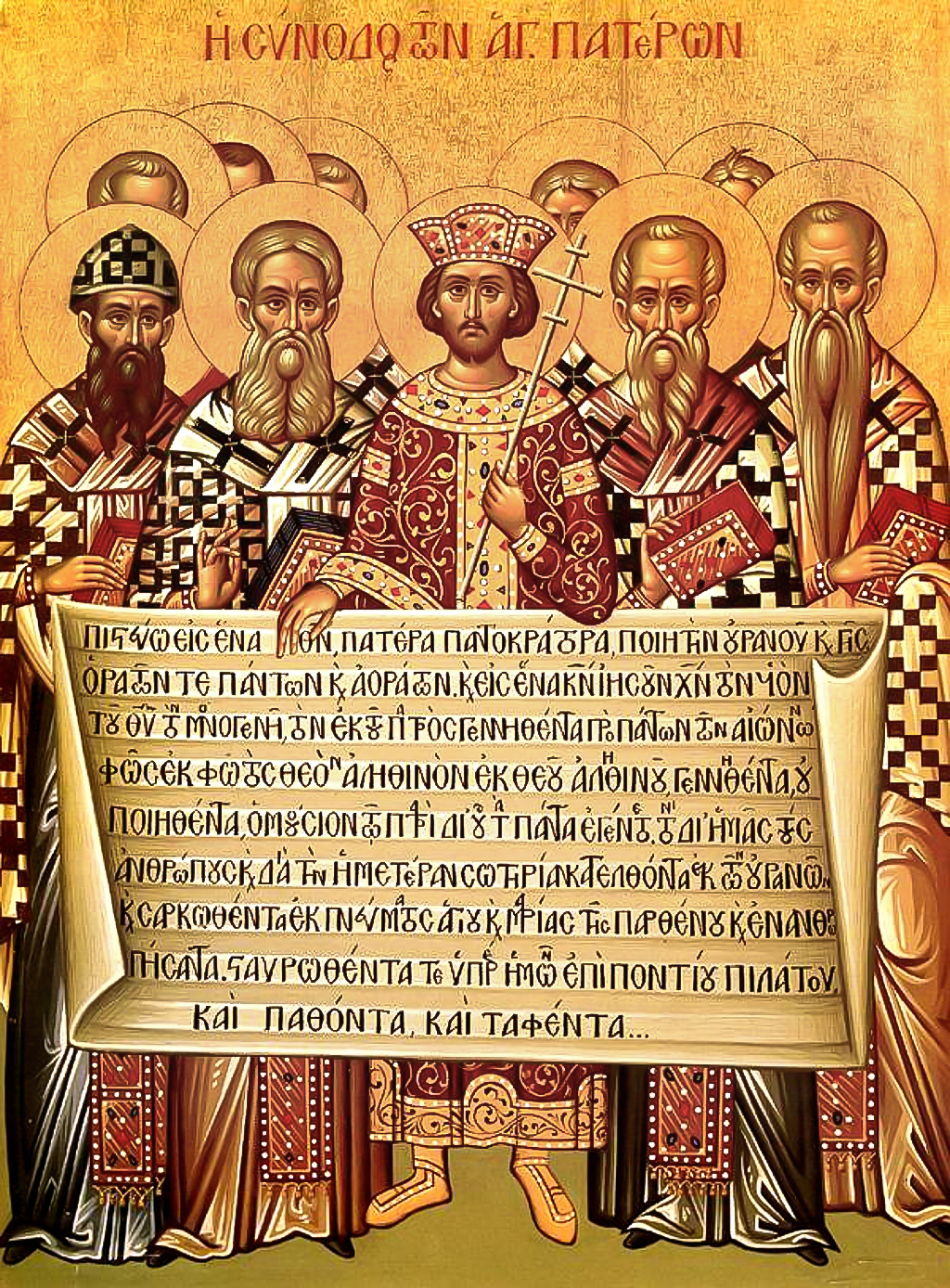
The Ecumenical Councils, while dogmatic, express theology in boundaries that protect the mystery of the Incarnation and Trinity, rather than explaining them exhaustively.
Phronema embraces the limits of language and the necessity of revealed dogma (e.g., the homoousios) without pretending to grasp God’s essence.
III. Apparent Paradox Reconciled
The apophatic way, therefore, is not an impediment to the formation of faith but its essential environment. By resisting the urge to define God in merely propositional terms, Orthodoxy fosters a kind of interior stillness and reverence (ἡσυχία) where God may be known in a deeper, transformative sense—not through syllogisms, but through synergy.
As St. Gregory Palamas taught:
“We know that God exists because we experience His uncreated energies, though we do not know His essence.”
Thus, apophaticism humbles the mind, purifies the heart, and prepares the soul to enter into communion, thereby forming phronema not despite the unknowability of God, but precisely through it.
IV. The Apophatic Ethos as the Cradle of Orthodox Phronema
In sum, the apophatic character of Eastern Orthodox theology is not a vacuum but a sacred silence-a silence filled with presence, not absence. Within this reverent stillness, the believer is not left alone but is immersed in the ecclesial life, where the mystery of God is encountered in the Eucharist, in the ascetic life, and in the communion of the saints. Through this, phronema is formed: shaped not by dialectics, but by doxology.
“The theologian is one who prays truly, and one who prays truly is a theologian.” – Evagrius Ponticus
This is the Orthodox mind. It is born not in logic, but in love of God, shaped by silence, illumined in worship, and sealed in the communion of saints.
Scriptural & Patristic Sources
I. Scriptural Foundations for Phronema and Apophatic Theology
Although the technical terms “apophatic” or “phronema” do not appear explicitly in the English Bible, their underlying concepts are deeply rooted in biblical tradition. They are derived by faithful synthesis of the inspired texts, particularly concerning the following themes:
A. Phronema: The Mind of Christ and Spiritual Understanding
Romans 8:5–9: “For those who live according to the flesh set their minds (φρόνημα) on the things of the flesh, but those who live according to the Spirit, the things of the Spirit. For the mind of the flesh is death, but the mind (φρόνημα) of the Spirit is life and peace.” Here, phronema is directly named and contrasted between flesh and Spirit. The spiritual phronema is a disposition toward life in God.
Philippians 2:5: “Let this mind (φρόνημα – phronema) be in you which was also in Christ Jesus…” A foundational verse exhorting the believer to internalize Christ’s own humble, obedient disposition.
1 Corinthians 2:14–16: “But the natural man does not receive the things of the Spirit of God… But we have the mind of Christ.” This “mind of Christ” is spiritual discernment (linked with phronema tou Christou), available to those taught by the Spirit.
Colossians 3:2: “Set your minds on things that are above, not on things that are on earth.” This echoes the continuous reorientation of the phronema toward divine things.
2 Corinthians 10:5: “Taking every thought captive to obey Christ.” Indicative of the inward battle to purify one’s inner disposition, a prerequisite to forming the proper phronema.
B. Apophaticism: God’s Incomprehensibility and Transcendence
Exodus 33:20: “You cannot see My face, for man shall not see Me and live.” An early biblical witness to the unapproachable essence of God.
1 Kings 8:27: “But will God indeed dwell on the earth? Behold, heaven and the highest heaven cannot contain You…” Suggests the utter transcendence of God beyond created categories.
Job 11:7: “Can you find out the deep things of God? Can you find out the limit of the Almighty?” Emphasizes God’s inscrutability—an early form of apophatic reverence.
Isaiah 55:8–9: “For My thoughts are not your thoughts, neither are your ways My ways…” Shows divine otherness that cannot be grasped by the unaided human mind.
John 1:18: “No one has ever seen God; the only-begotten God, who is in the bosom of the Father, He has made Him known.” This verse bridges the apophatic and the incarnational: God in essence is unseen, but revealed through the Logos.
1 Timothy 6:16: “[God] who alone has immortality, dwelling in unapproachable light, whom no man has seen or can see…” A definitive apostolic assertion of God’s ineffable nature.
Romans 11:33: “Oh, the depth of the riches both of the wisdom and knowledge of God! How unsearchable are His judgments, and His ways past finding out!” A hymn of doxology affirming the mystery of God.
These Scriptures provide the basis for the Orthodox apophatic tradition, which affirms God’s knowability through revelation (His “energies”) and His essential unknowability (His “essence”).
II. Patristic Witness to Phronema and Apophatic Theology
The Fathers of the Church never divorced theology from spirituality. Their writings consistently exhibit both an apophatic restraint in speaking of God and a phronetic cultivation of the mind and heart through the life of the Church.
A. On Apophatic Theology
St. Gregory of Nyssa The Life of Moses (esp. Book II): Gregory develops the ascent from darkness to light to deeper darkness, where God is most truly found. “The true vision of the One we seek… is in the darkness of unknowing.”
St. Dionysius the Areopagite Mystical Theology, ch. 1: “Leave behind the senses and the operations of the intellect… and strive upward as much as possible to union with Him who is above all being and knowledge.”He writes of God as hyper-ousios—“beyond being”—and teaches that theology begins with negation, not affirmation.
St. Gregory Nazianzen Oration 28 (Theological Orations): “It is difficult to conceive God, but to define Him in words is impossible. To comprehend Him is still more impossible.”
St. Basil the Great On the Holy Spirit, ch. 9: “We know our God from His energies, but we do not claim that we can approach His essence. For His energies descend to us, but His essence remains unapproachable.”
St. Maximus the Confessor Ambigua (esp. Ambiguum 10, 41): He develops the distinction between essence and energies, showing how apophaticism undergirds theosis without collapsing into pantheism.
St. Gregory Palamas Triads in Defense of the Holy Hesychasts: A defense of mystical knowledge acquired through purification, illumination, and union, rejecting purely rationalistic theology. “One knows God truly not by essence but by participation in His divine energies.”
B. On the Formation of Phronema
St. Irenaeus of Lyons Against Heresies, Book IV.20: “Where the Church is, there is the Spirit of God… and where the Spirit of God is, there is the Church and every grace.” Shows that proper faith is ecclesial and not isolated, highlighting the need for phronema shaped by Church communion.
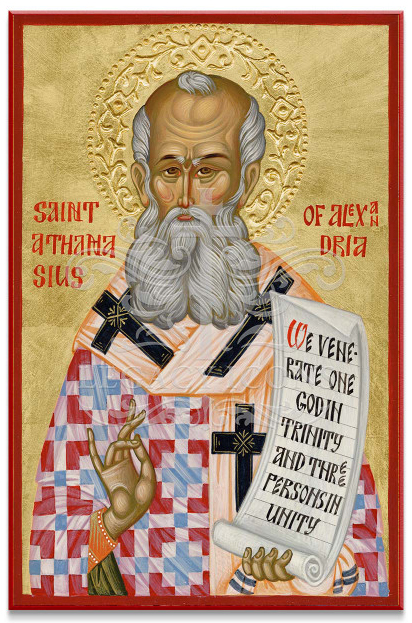
St. Athanasius On the Incarnation, §1–3: Although affirming God’s transcendence, he shows that the Word took on flesh to restore us to true knowledge of God—a knowledge received by humility and faith.
St. John Chrysostom Homily on 1 Corinthians 2:16: “The spiritual man discerns all things. What is spiritual is hidden from the natural man… You must be spiritual to receive spiritual things.”
St. Symeon the New Theologian Hymns of Divine Love, Hymn 1: He describes intimate knowledge of God acquired not by book learning but by direct experience: “I saw the light of the invisible God and the mind found rest…”
The Philokalia (esp. Evagrius, St. Diadochos of Photiki, St. Theophan) Offers instructions for acquiring a “pure mind,” a calm heart, and a watchful inner life that reflect the Orthodox phronema.
St. Silouan the Athonite Writings, esp. “Wisdom of the Saints”: “The Lord is not known through study, but by the Holy Spirit.”
Apophatic Dialectics
The apophatic path in Orthodoxy—affirming God’s ineffability and the limits of human reason—does not hinder spiritual formation but rather creates the proper conditions for the development of the phronema. Scripture underlines that true knowledge of God comes through humility, purification, and spiritual discernment, not speculative theology. The Church Fathers consistently teach that God reveals Himself to the purified heart, not to the curious mind alone.
Thus, the Orthodox phronema is not merely a system of thought but a spiritual organ developed by immersion in the Church’s sacramental life, dogmatic precision, ascetical struggle, and liturgical beauty—all under the guidance of the Holy Spirit and the communion of the saints.
“Be transformed by the renewal of your mind [νοός], that you may discern what is the will of God…” (Romans 12:2) — Here begins the work of the Orthodox phronema.
I. The Question of Formative Epistemology
Eastern Orthodoxy is often characterized by its apophatic theological method, which emphasizes the unknowability of God in His essence and guards against over-definition in theological language. Yet this raises a fundamental concern: How can one develop the Orthodox phronema (mind or disposition) if the theological method is grounded in negation and mystery? Does this method hinder the faithful from forming a positive, saving knowledge of God as revealed in the Gospel? And more critically, does this posture risk departing from the apostolic deposit revealed plainly in Holy Scripture?
II. Apophaticism: Proper Role and Boundaries
Apophatic theology (via negativa), articulated by figures such as Dionysius the Areopagite and Gregory of Nyssa, emphasizes that God cannot be comprehended in His essence and that theological speech must proceed with humility, recognizing the limits of human language. The goal is not epistemological nihilism but purification of the soul through reverent silence and negation of error.
However, when applied to areas where Scripture speaks with clarity (e.g., the Incarnation, the Cross, justification, the resurrection), apophaticism becomes dangerous. It must never suppress the clear affirmations of the Gospel, nor may it be used to justify doctrinal or liturgical accretions that obscure the apostolic message.
III. Phronema: The Mind of Christ or the Mind of the Church?
The term phronema (Rom. 8:5-9; Phil. 2:5) denotes a mindset or spiritual disposition. In Orthodox usage, it is often described as “the mind of the Church” formed through liturgical, ascetical, and dogmatic continuity.
However, Scripture reveals that phronema is properly rooted in the mind of Christ (1 Cor. 2:16; Phil. 2:5), and any reference to a “mind of the Church” must be strictly derivative and submissive to Christ’s mind as revealed in Scripture. The Church does not possess a mind independent of her Head. Where tradition or consensus contradicts or veils the Gospel, it must be reformed.
IV. Scripture: Supremacy, Not Mere Primacy
Scripture is not merely one authority among many. It is the Spirit-breathed, norming norm (2 Tim. 3:16-17; John 17:17) through which Christ speaks. Faith is born through hearing the Word of Christ (Rom. 10:17). The Word is able to save souls (James 1:21), grant new birth (1 Pet. 1:23), and instruct in righteousness.
The Church receives and proclaims this Word; she does not stand over it. Tradition, when true, serves Scripture and never supersedes or obscures it. Thus, the formation of phronema must begin with and continually return to Scripture, under the illumination of the Holy Spirit.
V. Against the Misuse of Apophaticism
When apophatic language is extended beyond its appropriate bounds—into soteriology, the doctrine of Christ, the clarity of Scripture—it becomes a veil rather than a guide. The Gospel is not uncertain. The apostles declared it with boldness, and their testimony, inscripturated, is the touchstone of true doctrine (Gal. 1:6-9).
VI. Toward a Positive Theological Method: Gospel-Centered Formation
The formation of Orthodox phronema must be fundamentally Gospel-shaped:
Christ crucified and risen as the center (1 Cor. 15:3-4).
The Word of God as the source and measure (John 5:39; Acts 17:11).
The indwelling Spirit as the teacher and guide (John 14:26).
Tradition as the humble servant of Scripture, not its master.
The Church must recover the apostolic mode of positive proclamation: not the abstraction of mystery over clarity, but the doxological joy of the Gospel revealed. Apophatic reverence must always yield to kerygmatic confidence where Christ has spoken.
VII. On Anathemas and the Danger of Ecclesial Self-Preservation Against Scripture
Orthodoxy has historically issued anathemas against doctrines perceived to threaten the unity and sanctity of its tradition. However, these pronouncements are not always grounded in rejection of falsehood per se, but in rejection of interpretations that arise outside the canonical structure of the Orthodox Church. In this framework, even conclusions that are scripturally faithful and Gospel-aligned may be anathematized if they are judged to undermine the Church’s self-understanding as the visible and continuous Body of Christ.
The danger here is ecclesial self-preservation overtaking ecclesial repentance. When the Church’s traditions, liturgical forms, or patristic consensus are treated as functionally irreformable, the living voice of Scripture is muted. Anathemas, in such cases, become instruments of identity maintenance rather than of truth. The Reformers were right to return to the apostolic Gospel as the criterion of doctrine. The same Gospel must be the standard by which all ecclesial structures are continually measured and reformed.
To anathematize those who uphold the supremacy of Scripture, justification by faith, and the perspicuity of the Gospel is to risk setting the Church against the Word. In so doing, the Church ceases to be a faithful Bride who hears her Husband’s voice and becomes instead a self-defending institution.
VIII. On the Complementarity of Affective Theology and Apophaticism
Affective theology—rooted in love for God, heartfelt repentance, and joy in the Gospel—is not foreign to Orthodoxy’s heritage. Rather, when rightly ordered, it complements apophatic reverence by revealing the purpose behind divine mystery: not intellectual paralysis but relational communion. Scripture is replete with affective engagement with God (Ps. 42:1, Rom. 5:5, John 20:28). Paul’s epistles and the Psalms embody a spiritual life marked by longing, joy, and assurance.
Patristic figures such as Gregory of Nazianzus, Macarius the Great, and Isaac the Syrian articulate a union of tears and theology, in which the soul moves toward God not only in silence, but in fire. Even in the Philokalic tradition, hesychasm is not void but fullness—a silence echoing with yearning.
However, where apophaticism becomes dominant to the point of negating Scriptural clarity and the Gospel’s invitation to love and assurance, it stifles affective theology. When the mystery of God obscures the love of God, apophaticism has become misapplied.
The formation of phronema, therefore, must include not only reverent restraint but also Gospel-born affection. Love for Christ, born through hearing the Word and illumined by the Spirit, is not a lower mode of theology but its telos.
IX. On Iconography and Ritualism in Light of the Prophetic Witness
The major and minor prophets consistently rebuked Israel for idolatry, ritualism, and injustice—offenses that led to the destruction of Jerusalem and exile (cf. Isa. 1:11–17; Jer. 7:9–15; Amos 5:21–24). These were not crimes of paganism alone, but failures within the covenant community to worship the true God in spirit and truth.
Iconography and liturgy, though defended within Orthodoxy as venerable expressions of the Incarnation and ecclesial continuity, risk becoming modern analogues of those very sins when they obscure the Word of God, cultivate visual dependency, or substitute form for substance. Scripture forbids the making of images for worship (Exod. 20:4–5), and Christ Himself declares that true worship is in spirit and truth (John 4:24).
When icons become objects of emotional reliance, or when liturgy proceeds without Gospel preaching, repentance, and faith, they functionally echo the very errors the prophets condemned. What God desires is not the multiplication of rites, but broken and contrite hearts (Ps. 51:17). Liturgy must be the servant of the Gospel—not its master or veil.
Therefore, the Church must guard her worship practices to ensure that all visible and ritual elements serve the revealed Word, not replace it. The Church must resist aestheticism, restore the supremacy of the preached Word, and exalt Christ alone as the image of the invisible God (Col. 1:15).
Moreover, just as the post-exilic Jewish leaders created fences around the Law to prevent a return to idolatry—yet those very fences blinded many to the Messiah when He came—so too may ecclesial traditions, once meant to protect, ultimately obscure Christ if they are elevated above Scripture. The Gospel cannot be fenced by human custom without risk of obscuring the One it proclaims.
Excursus: On the Procession of the Holy Spirit and the Filioque
The doctrine of the Spirit’s procession is grounded in Scripture and developed through both patristic theology and conciliar debate. John 15:26 states, “the Spirit of truth… proceeds from the Father.” Yet other texts—such as John 14:26, Acts 2:33, Rom. 8:9, and Gal. 4:6—also show the Spirit sent and associated with the Son.
Patristic sources affirm:
The Father as the sole source (arche) of the Godhead (Cappadocians);
The Son as the one through whom the Spirit is manifested and sent (Athanasius, Basil);
Augustine’s Western view: the Spirit proceeds from the Father and the Son as from one principle (De Trinitate);
Maximus the Confessor: the West’s “through the Son” is not a doctrinal error if referring to manifestation, not origination.
Eastern theology distinguishes “procession” (ekporeusis) as hypostatic origin from the Father alone. Western theology uses “procession” (processio) more broadly. Thus, the East favors “from the Father through the Son” to preserve the monarchy of the Father while honoring the Spirit’s mission in salvation history.
The best Scriptural and patristic synthesis affirms:
The Holy Spirit proceeds from the Father through the Son.
This formulation:
Maintains the Father as fountainhead (John 15:26);
Honors the Son’s economic role (Acts 2:33);
Upholds both the theological and historical faith of the undivided Church.
This distinction invites charity in ecumenical understanding and reinforces that fidelity to Scripture must govern even ancient theological expression.
Addendum: Palamas, Theosis, and the Spirit’s Procession
In the theology of Gregory Palamas (1296–1359), the doctrine of theosis—the believer’s participation in the divine life—hinges not upon speculative metaphysics but upon the actual union with God through His uncreated energies, not His essence. Palamas affirms that the Spirit is the agent of deification, making present in the soul the energy of the divine life, and thus actualizing the phronema of one united to Christ.
Palamas maintained the Eastern affirmation that the Holy Spirit proceeds from the Father alone as to hypostatic origin, in keeping with John 15:26. However, he acknowledged, without condemnation, the Latin phrase “through the Son” so long as it referred to the Spirit’s temporal manifestation and sanctifying action. For Palamas, union with God is made possible by the Spirit sent from the Father through the Son in the economy, but not from the Son in eternal generation.
Thus, Palamas’s doctrine harmonizes with the Scriptural-patristic affirmation: “The Spirit proceeds from the Father through the Son” in the economy of salvation, which fosters the believer’s participation in divine grace. The one united to Christ in this manner receives the Spirit as both pledge and presence of the age to come (Eph. 1:13–14), forming a phronema not of rational speculation but of transfigured participation. This safeguards both the monarchy of the Father and the economic role of the Son, ensuring that the formation of phronema through theosis remains Scriptural, relational, and transformative.
Conclusion
Eastern Orthodoxy possesses a rich theological and liturgical heritage. Yet fidelity to Christ demands that this heritage be continually guarded by the Word. The phronema of the faithful must be formed not by inherited customs alone, nor by mystical negation, but by the clear, saving truth of Christ revealed in Scripture. Apophaticism, rightly applied, guards humility; but the Gospel, boldly proclaimed, gives life.
The Didache, or The Teaching of the Twelve Apostles, is one of the earliest extant documents outside the New Testament canon that offers a structured outline of Christian moral teaching, liturgical practice, and ecclesial order. Dated by most scholars to the late first century A.D.—approximately between A.D. 70 and 110—the Didache likely emerged from a Jewish-Christian community in Syria or Palestine, possibly in the vicinity of Antioch. Its anonymity lends it a sense of communal authorship, rather than that of a single individual, and the title’s attribution to “the twelve apostles” reflects the authority of apostolic tradition rather than direct apostolic penmanship (Holmes, The Apostolic Fathers, 2007). The document may thus be understood as an early church manual intended for catechumens and leaders alike, serving to bridge the gap between apostolic teaching and the growing needs of organized church life in the post-apostolic age.
Introduction
The text is structured in sixteen brief chapters and opens with a moral catechesis known as the “Two Ways”: the Way of Life and the Way of Death. This segment mirrors the ethical rigor of Jewish wisdom literature and early Christian exhortation (cf. Matthew 5–7; Romans 12). Following this, the Didache lays out instructions concerning baptism (ch. 7), fasting and prayer (ch. 8), and the Eucharist (chs. 9–10), marking it as one of the earliest liturgical texts in Christian history. The latter chapters (11–15) shift focus toward the regulation of traveling prophets, itinerant apostles, the appointment of local bishops and deacons, and community reconciliation. The closing chapter (16) is an eschatological exhortation, reflecting an early Christian hope in the imminent return of Christ, aligning in tone with texts like Matthew 24 and the Apocalypse.
The Didache was lost to the Western church for centuries and known only through fragments and references in patristic writings, such as those by Eusebius (Ecclesiastical History, III.25) and Athanasius (Festal Letter, 39). Its rediscovery in 1873 by Philotheos Bryennios, Metropolitan of Nicomedia, in the Jerusalem Codex (codex Hierosolymitanus), marked a watershed moment in patristic scholarship. Published in 1883, this manuscript—dated to A.D. 1056—contained not only the Didache but also the Epistle of Barnabas, the First and Second Epistles of Clement, and other early Christian texts. The recovery of the Didache thus provided a vital window into the subapostolic age, illuminating the devotional and ecclesial practices of the primitive Church during its formative years (Lake, The Apostolic Fathers, 1912).
The Didache’s significance lies not merely in its antiquity, but in its practical role within the early church as a guide for community life and ecclesial order. It evidences a time when oral tradition was being codified into formal instruction, sacramental rites were being standardized, and local church leadership was being distinguished from charismatic itinerants. It also exemplifies the church’s gradual movement from apostolic preaching toward structured episcopacy and liturgy, making it a crucial document for understanding the continuity and development of doctrine, worship, and governance. Its moral and liturgical instructions also underscore the unity between orthodoxy (right teaching) and orthopraxy (right conduct), an emphasis that continues to shape ecclesial life in both Eastern and Western traditions. As such, the Didache remains an indispensable document for those studying the roots of Christian ethics, sacramental theology, and the apostolic foundations of church order.
Citations
Holmes, Michael W., The Apostolic Fathers: Greek Texts and English Translations, 3rd ed. (Baker Academic, 2007).
Eusebius of Caesarea, Ecclesiastical History, III.25.
Athanasius of Alexandria, Festal Letter 39 (c. 367 A.D.).
Lake, Kirsopp, The Apostolic Fathers, Loeb Classical Library (Harvard University Press, 1912).
Bryennios, Philotheos, ed., Didache ton Dodeka Apostolon (Constantinople, 1883).
The DIDACHE
The Didache (Teaching of the Twelve Apostles) Translated by J.B. Lightfoot (1885)
– THE WAY OF LIFE –
Chapter 1
There are two ways, one of life and one of death; but a great difference between the two ways.a The way of life, then, is this: First, thou shalt love God who made thee; second, thy neighbour as thyself;b and all things whatsoever thou wouldst should not occur to thee, do not also to another.c
And of these sayings the teaching is this: Bless them that curse you,d and pray for your enemies, and fast for them that persecute you.e For what thank is there, if ye love them that love you?f Do not also the Gentiles do the same?g But do ye love them that hate you;h and ye shall not have an enemy.i
Abstain thou from fleshly and bodily lusts.j If one give thee a blow upon thy right cheek, turn to him the other also;k and thou shalt be perfect.l If one impress thee to go with him one mile, go with him twain.m
If one take away thy cloak, give him also thy coat.n If one take from thee thine own,o ask it not back,p for indeed thou art not able.q Give to every one that asketh thee, and ask it not back;r for the Father willeth that from our own blessings we should give to all. Blessed is he that giveth according to the commandment; for he is guiltless.
Woe to him that receiveth; for if one having need receiveth, he is guiltless; but he that receiveth not having need shall pay the penalty, why he received and for what, and coming into straits he shall be examined concerning the things which he hath done, and he shall not escape thence until he pay the last farthing.s
But also now concerning this, it hath been said, Let thine alms sweat into thy hands, until thou know to whom thou shouldst give.
ᵃ Jer. 21:8, Matt. 7:13. ᵇ Lev. 19:18, Matt. 22:37–39. ᶜ Matt. 7:12. ᵈ Luke 6:28, Matt. 5:44. ᵉ Matt. 5:44, Luke 6:27. ᶠ Luke 6:32, Matt. 5:46. ᵍ Matt. 5:47. ʰ Luke 6:27, Matt. 5:44. ⁱ Rom. 12:18–21. ʲ 1 Pet. 2:11, Gal. 5:16. ᵏ Matt. 5:39, Luke 6:29. ˡ Matt. 5:48. ᵐ Matt. 5:41. ⁿ Matt. 5:40, Luke 6:29. ᵒ Matt. 5:42a. ᵖ Luke 6:30. q 1 Cor. 6:7. ʳ Matt. 5:42, Luke 6:30. ˢ Matt. 5:26, Luke 12:59.
Chapter 1 in Modern Text: There are two ways, one of life and one of death; but a great difference between the two ways. The way of life, then, is this: First, you shall love God who made you; second, your neighbour as yourself; and all things whatsoever you would should not occur to you, do not also do to another. And of these sayings the teaching is this: Bless those who curse you, and pray for your enemies, and fast for those who persecute you. For what reward is there, if you love those who love you? Do not also the Gentiles do the same? But love those who hate you, and you shall not have an enemy. Abstain from fleshly and worldly lusts. If someone gives you a blow upon your right cheek, turn to him the other also, and you shall be perfect. If someone impresses you for one mile, go with him two. If someone takes away your cloak, give him also your coat. If someone takes from you what is yours, ask it not back, for indeed you are not able. Give to every one that asks you, and ask it not back; for the Father wills that to all should be given of our own blessings (free gifts). Happy is he that gives according to the commandment; for he is guiltless. Woe to him that receives; for if one having need receives, he is guiltless; but he that receives not having need, shall pay the penalty, why he received and for what, and, coming into straits (confinement), he shall be examined concerning the things which he has done, and he shall not escape thence until he pay back the last farthing. Matthew 5:26 But also now concerning this, it has been said, Let your alms sweat in your hands, until you know to whom you should give.
Chapter 2
And the second commandment of the Teaching;
Thou shalt not kill [murder].a
Thou shalt not commit adultery.b
Thou shalt not corrupt boys.c
Thou shalt not commit fornication.d
Thou shalt not steal.e
Thou shalt not use magic.f
Thou shalt not use philtres [practice sorcery or witchcraft].g
Thou shalt not slay thy child by abortion, nor kill that which is begotten.
Thou shalt not covet the things of thy neighbour.h
Thou shalt not forswear thyself.i
Thou shalt not bear false witness, Thou shalt not speak evil.j
Thou shalt not bear a grudge.k
Thou shalt not be double-minded nor double-tongued; for to be double-tongued is the snare of death.l
Thy speech shall not be false, nor empty, but fulfilled by deed.
Thou shalt not be covetous,m nor rapacious, nor a hypocrite, nor evil disposed, nor haughty. Thou shalt not take evil counsel against thy neighbor.
Thou shalt not hate any man; but some thou shalt reprove, and concerning some thou shalt pray, and some thou shalt love more than thy own life.n
Chapter 2 in Modern Text: And the second commandment of the Teaching; You shall not commit murder, you shall not commit adultery, Exodus 20:13-14 you shall not commit pederasty, you shall not commit fornication, you shall not steal, Exodus 20:15 you shall not practice magic, you shall not practice witchcraft, you shall not murder a child by abortion nor kill that which is begotten. You shall not covet the things of your neighbour, Exodus 20:17 you shall not forswear yourself, Matthew 5:34 you shall not bear false witness, Exodus 20:16 you shall not speak evil, you shall bear no grudge. You shall not be double-minded nor double-tongued; for to be double-tongued is a snare of death. Your speech shall not be false, nor empty, but fulfilled by deed. You shall not be covetous, nor rapacious, nor a hypocrite, nor evil disposed, nor haughty. You shall not take evil counsel against your neighbour. You shall not hate any man; but some you shall reprove, and concerning some you shall pray, and some you shall love more than your own life.
Chapter 3
My child, flee from every evil thing, and from every likeness of it. Be not prone to anger, for anger leadeth to murder; nor jealous, nor contentious, nor passionate; for of all these things murders are begotten.
My child, be not a lustful one, for lust leadeth to fornication; nor a filthy talker, nor of lofty eye; for of all these things adulteries are begotten.
My child, be not an observer of omens, since it leadeth to idolatry; nor an enchanter, nor an astrologer, nor a purifier, nor be willing to look at these things; for from all these idolatry is begotten.
My child, be not a liar, since a lie leadeth to theft; nor money-loving, nor vainglorious; for from all these thefts are begotten.
My child, be not murmuring, since it leadeth to blasphemy; neither self-willed nor evil-minded, for from all these blasphemies are begotten. But be thou meek, for the meek shall inherit the earth.a
Be long-suffering and pitiful and guileless and gentle and good and always trembling at the words which thou hast heard.b
Thou shalt not exalt thyself, nor give over-confidence to thy soul. Thy soul shall not be joined with lofty ones,c but with just and lowly ones shall it have its intercourse.
The workings that befall thee receive as good, knowing that apart from God nothing cometh to pass.
ᵃ Matt. 5:5, Ps. 37:11. ᵇ Gal. 5:22–23, Isa. 66:2, Phil. 2:15. ᶜ Rom. 12:16, Ps. 138:6.
Chapter 3 in Modern Text: My child, flee from every evil thing, and from every likeness of it. Be not prone to anger, for anger leads the way to murder; neither jealous, nor quarrelsome, nor of hot temper; for out of all these murders are engendered. My child, be not a lustful one; for lust leads the way to fornication; neither a filthy talker, nor of lofty eye; for out of all these adulteries are engendered. My child, be not an observer of omens, since it leads the way to idolatry; neither an enchanter, nor an astrologer, nor a purifier, nor be willing to look at these things; for out of all these idolatry is engendered. My child, be not a liar, since a lie leads the way to theft; neither money-loving, nor vainglorious, for out of all these thefts are engendered. My child, be not a murmurer, since it leads the way to blasphemy; neither self-willed nor evil-minded, for out of all these blasphemies are engendered. But be meek, since the meek shall inherit the earth. Matthew 5:5 Be long-suffering and pitiful and guileless and gentle and good and always trembling at the words which you have heard. You shall not exalt yourself, Luke 18:14 nor give over-confidence to your soul. Your soul shall not be joined with lofty ones, but with just and lowly ones shall it have its intercourse. The workings that befall you receive as good, knowing that apart from God nothing comes to pass.
Chapter 4
My child, him that speaketh to thee the word of God remember night and day;a and thou shalt honour him as the Lord; for in the place whence lordly rule is uttered, there is the Lord.
And thou shalt seek out day by day the faces of the saints, in order that thou mayest rest upon their words.
Thou shalt not long for division, but shalt bring contending parties to peace. Thou shalt judge righteously,b thou shalt not respect persons in reproving for transgressions.
Thou shalt not be undecided whether it shall be or no.
Be not a stretcher forth of the hands to receive and a drawer of them back to give.
If thou hast aught, thou shalt give by thy hands a ransom for thy sins.
Thou shalt not hesitate to give, nor murmur when thou givest; for thou shalt know who is the good repayer of the hire.
Thou shalt not turn away from him that is in want, but shalt share all things with thy brother, and shalt not say that they are thine own.c
For if ye are partakers in that which is immortal, how much more in things which are mortal? Thou shalt not remove thy hand from thy son or from thy daughter, but from their youth shalt teach them the fear of God.
Thou shalt not command thy bondservant or thine handmaid in thy bitterness, who trust in the same God, lest perchance they shall not fear God who is over both; for he cometh not to call according to the outward appearance, but unto them whom the Spirit hath prepared.
And ye bondmen shall be subject to your masters as to a type of God, in modesty and fear.d Thou shalt hate all hypocrisy and everything which is not pleasing to the Lord.
Do thou in no wise forsake the commandments of the Lord; but thou shalt keep what thou hast received, neither adding thereto nor taking away therefrom.e
In the church thou shalt acknowledge thy transgressions, and thou shalt not come near for thy prayer with an evil conscience.
Chapter 4 in Modern Text: My child, him that speaks to you the word of God remember night and day; and you shall honour him as the Lord; for in the place whence lordly rule is uttered, there is the Lord. And you shall seek out day by day the faces of the saints, in order that you may rest upon their words. You shall not long for division, but shall bring those who contend to peace. You shall judge righteously, you shall not respect persons in reproving for transgressions. You shall not be undecided whether it shall be or no. Be not a stretcher forth of the hands to receive and a drawer of them back to give. If you have anything, through your hands you shall give ransom for your sins. You shall not hesitate to give, nor murmur when you give; for you shall know who is the good repayer of the hire. You shall not turn away from him that is in want, but you shall share all things with your brother, and shall not say that they are your own; for if you are partakers in that which is immortal, how much more in things which are mortal? You shall not remove your hand from your son or from your daughter, but from their youth shall teach them the fear of God. Ephesians 6:4 You shall not enjoin anything in your bitterness upon your bondman or maidservant, who hope in the same God, lest ever they shall fear not God who is over both; Ephesians 6:9; Colossians 4:1 for he comes not to call according to the outward appearance, but unto them whom the Spirit has prepared. And you bondmen shall be subject to your masters as to a type of God, in modesty and fear. Ephesians 6:5; Colossians 3:22 You shall hate all hypocrisy and everything which is not pleasing to the Lord. Forsake in no way the commandments of the Lord; but you shall keep what you have received, neither adding thereto nor taking away therefrom . Deuteronomy 12:32 In the church you shall acknowledge your transgressions, and you shall not come near for your prayer with an evil conscience. This is the way of life.
– THE WAY OF DEATH –
Chapter 5
But the way of death is this. First of all it is evil and full of curse; murders, adulteries, lusts, fornications, thefts, idolatries, magic arts, witchcrafts, rapines, false witnessings, hypocrisies, double-heartedness, deceit, haughtiness, depravity, self-will, greediness, filthy talking, jealousy, over-confidence, loftiness, boastfulness;a
Persecutors of the good, hating truth, loving a lie, not knowing a reward for righteousness, not cleaving to good nor to righteous judgment, watching not for that which is good but for that which is evil; from whom meekness and patience are far, loving vanities,b pursuing revenge, not pitying a poor man, not laboring for the afflicted, not knowing Him that made them, murderers of children, destroyers of the handiwork of God, turning away from him that is in want, afflicting him that is distressed, advocates of the rich, lawless judges of the poor, utter sinners. Be delivered, children, from all these.
ᵃ Gal. 5:19–21, 1 Cor. 6:9–10, Rev. 21:8. ᵇ Rom. 1:28–32, 2 Tim. 3:2–4, Ps. 4:2, Isa. 5:20.
Chapter 5 in Modern Text: And the way of death is this: First of all it is evil and full of curse: murders, adulteries, lusts, fornications, thefts, idolatries, magic arts, witchcrafts, rapines, false witnessings, hypocrisies, double-heartedness, deceit, haughtiness, depravity, self-will, greediness, filthy talking, jealousy, over-confidence, loftiness, boastfulness; persecutors of the good, hating truth, loving a lie, not knowing a reward for righteousness, not cleaving to good nor to righteous judgment, watching not for that which is good, but for that which is evil; from whom meekness and endurance are far, loving vanities, pursuing requital, not pitying a poor man, not labouring for the afflicted, not knowing Him that made them, murderers of children, destroyers of the handiwork of God, turning away from him that is in want, afflicting him that is distressed, advocates of the rich, lawless judges of the poor, utter sinners. Be delivered, children, from all these.
Chapter 6
See that no one cause thee to err from this way of the Teaching, since apart from God it teacheth thee. For if thou art able to bear all the yoke of the Lord, thou wilt be perfect; but if thou art not able, what thou art able, that do.a
– INSTRUCTION FOR CATECHUMENS –
Concerning Food
And concerning food, bear what thou art able; but against that which is sacrificed to idols be exceedingly on thy guard; for it is the service of dead gods.b
Chapter 6 in Modern Text: See that no one cause you to err from this way of the Teaching, since apart from God it teaches you. For if you are able to bear all the yoke of the Lord, you will be perfect; but if you are not able, what you are able that do. And concerning food, bear what you are able; but against that which is sacrificed to idols be exceedingly on your guard; for it is the service of dead gods.
Chapter 7
Concerning Baptism
And concerning baptism, baptize ye thus. Having first rehearsed all these things, baptize in the Name of the Father and of the Son and of the Holy Spirit in living water.a
But if thou hast not living water, baptize into other water; and if thou canst not in cold, then in warm. But if thou hast neither, pour water thrice upon the head in the Name of Father and Son and Holy Spirit. But before the baptism let the baptizer and him that is to be baptized fast, and any others also who are able; and thou shalt order him that is to be baptized to fast a day or two before.
ᵃ Matt. 28:19, John 3:5, Acts 8:36–38.
Chapter 7 in Modern Text: And concerning baptism, baptize this way: Having first said all these things, baptize into the name of the Father, and of the Son, and of the Holy Spirit, Matthew 28:19 in living water. But if you have not living water, baptize into other water; and if you can not in cold, in warm. But if you have not either, pour out water thrice upon the head into the name of Father and Son and Holy Spirit. But before the baptism let the baptizer fast, and the baptized, and whatever others can; but you shall order the baptized to fast one or two days before.
Chapter 8
Concerning Fasting
But let not your fasts be with the hypocrites;a for they fast on the second and the fifth day of the week; but do ye keep your fast on the fourth day and on the Preparation (Friday).
Concerning Prayer
Neither pray ye as the hypocrites,b but as the Lord commanded in His Gospel, thus pray ye:
“Our Father, who art in heaven, hallowed be Thy name. Thy kingdom come. Thy will be done, as in heaven, so also on earth. Give us this day our daily bread. And forgive us our debt, as we also forgive our debtors. And bring us not into temptation, but deliver us from evil; for Thine is the power and the glory forever.c ” Thrice in the day, thus pray.
ᵃ Matt. 6:16, Luke 18:12. ᵇ Matt. 6:5. ᶜ Matt. 6:9–13, Luke 11:2–4.
Chapter 8 in Modern Text: But let not your fasts be with the hypocrites; Matthew 6:16 for they fast on the second and fifth day of the week; but fast on the fourth day and the Preparation (Friday). Neither pray as the hypocrites; but as the Lord commanded in His Gospel, thus pray: Our Father who art in heaven, hallowed be Your name. Your kingdom come. Your will be done, as in heaven, so on earth. Give us today our daily (needful) bread, and forgive us our debt as we also forgive our debtors. And bring us not into temptation, but deliver us from the evil one (or, evil); for Yours is the power and the glory forever. Thrice in the day thus pray.
The Mystical Supper
Chapter 9
Concerning The Eucharist
But as touching the eucharistic thanksgivinga give ye thanks thus.
First, concerning the cup: We thank Thee, our Father, for the holy vine of David Thy servantb, which Thou madest known to us through Jesus Thy Servant;c to Thee be the glory forever.
And concerning the broken bread: We thank Thee, our Father, for the life and knowledge which Thou madest known to us through Jesus Thy Servant; to Thee be the glory forever. Even as this broken bread was scattered over the hills, and was gathered together and became one, so let Thy Church be gathered together from the ends of the earth into Thy kingdom; for Thine is the glory and the power through Jesus Christ forever.
But let no one eat or drink of your Eucharist, but they who have been baptized into the Name of the Lord; for concerning this also the Lord hath said, Give not that which is holy to the dogs.d
ᵃ 1 Cor. 10:16, 1 Thess. 5:18. ᵇ Isa. 11:1, Jer. 23:5. ᶜ John 17:3, Matt. 11:27. ᵈ Matt. 7:6.
Chapter 9 in Modern Text: Now concerning the Thanksgiving (Eucharist), thus give thanks. First, concerning the cup: We thank you, our Father, for the holy vine of David Your servant, which You made known to us through Jesus Your Servant; to You be the glory forever. And concerning the broken bread: We thank You, our Father, for the life and knowledge which You made known to us through Jesus Your Servant; to You be the glory forever. Even as this broken bread was scattered over the hills, and was gathered together and became one, so let Your Church be gathered together from the ends of the earth into Your kingdom; for Yours is the glory and the power through Jesus Christ forever. But let no one eat or drink of your Thanksgiving (Eucharist), but they who have been baptized into the name of the Lord; for concerning this also the Lord has said, Give not that which is holy to the dogs. Matthew 7:6
Chapter 10
But after ye are filled, thus give thanks:
We thank Thee, holy Father, for Thy holy Name which Thou didst cause to tabernacle in our hearts,a and for the knowledge and faith and immortality, which Thou madest known to us through Jesus Thy Servant; to Thee be the glory forever.
Thou, Master Almighty, didst create all things for Thy Name’s sake; and didst give food and drink to men for enjoyment, that they might render thanks to Thee; but didst bestow upon us spiritual food and drink and eternal life through Thy Servant.
Before all things we thank Thee that Thou art mighty; to Thee be the glory forever.
Remember, Lord, Thy Church,b to deliver it from all evil and to perfect it in Thy love; and gather it from the four winds,c even the Church which has been sanctified, into Thy kingdom which Thou hast prepared for it; for Thine is the power and the glory forever.
Let grace come, and let this world pass away.d Hosanna to the God of David.e If anyone is holy, let him come; if anyone is not, let him repent. Maranatha.f Amen.
But permit the prophets to make Thanksgiving as much as they desire.
Concerning The Ointment
And concerning the ointment, give thanks as follows: We give you thanks, our Father, for the fragrant ointment which you have made known to use through your Son Jesus. Yours is the glory unto ages of ages. Amen.
Chapter 10 in Modern Text: But after you are filled, thus give thanks: We thank You, holy Father, for Your holy name which You caused to tabernacle in our hearts, and for the knowledge and faith and immortality, which You made known to us through Jesus Your Servant; to You be the glory forever. You, Master almighty, created all things for Your name’s sake; You gave food and drink to men for enjoyment, that they might give thanks to You; but to us You freely gave spiritual food and drink and life eternal through Your Servant. Before all things we thank You that You are mighty; to You be the glory forever. Remember, Lord, Your Church, to deliver it from all evil and to make it perfect in Your love, and gather it from the four winds, sanctified for Your kingdom which You have prepared for it; for Yours is the power and the glory forever. Let grace come, and let this world pass away. Hosanna to the God (Son) of David! If any one is holy, let him come; if any one is not so, let him repent. Maranatha. Amen. But permit the prophets to make Thanksgiving as much as they desire.
– LIFE IN THE COMMUNITY –
Chapter 11
The Approved Teacher
Whoever comes and teaches you all these things that have been taught before, receive him. But if the teacher himself turns aside and teaches a different doctrine that subverts what has been taught before, do not listen to him.a If his teaching fosters righteousness and the knowedge of the Lord, receive him as the Lord.b
Apostles and Prophets
But concerning the apostles and prophets,c so do ye according to the ordinance of the Gospel.d Let every apostle, when he cometh to you, be received as the Lord.e But he shall not abide more than a single day, or if there be need, a second likewise; but if he abide three days, he is a false prophet. And when he departeth let the apostle receive nothing save bread, until he findeth shelter; but if he ask money, he is a false prophet.f
And any prophet speaking in the Spirit ye shall not try neither discern; for every sin shall be forgiven, but this sin shall not be forgiven.g But not every one that speaketh in the Spirit is a prophet, but only if he have the ways of the Lord. From their ways therefore shall the false prophet and the prophet be known.
And no prophet when he ordereth a table in the Spirit shall eat of it; otherwise he is a false prophet.
And every prophet teaching the truth, if he doeth not what he teacheth, is a false prophet.
And every prophet, approved and found true, if he doeth things for the mystery of the Church, which teacheth not others to do as he doeth, shall not be judged of you; for with God he hath his judgment; for so also did the ancient prophets.
But whosoever shall say in the Spirit, Give me money, or any other things, ye shall not listen to him;h but if he bid you give for others’ sake who are in need, let no man judge him.
ᵃ Gal. 1:8–9, 2 John 1:10. ᵇ Matt. 10:40, John 13:20. ᶜ 1 Cor. 12:28, Eph. 4:11. ᵈ Matt. 10:5–15, Luke 10:1–9. ᵉ Matt. 10:40, John 13:20. ᶠ Matt. 10:8–10, Acts 20:33–35. ᵍ Matt. 12:31–32, Mark 3:28–29. ʰ 2 Pet. 2:1–3, 1 Tim. 6:5.
Chapter 11 in Modern Text: Whosoever, therefore, comes and teaches you all these things that have been said before, receive him. But if the teacher himself turn and teach another doctrine to the destruction of this, hear him not; but if he teach so as to increase righteousness and the knowledge of the Lord, receive him as the Lord. But concerning the apostles and prophets, according to the decree of the Gospel, thus do. Let every apostle that comes to you be received as the Lord. But he shall not remain except one day; but if there be need, also the next; but if he remain three days, he is a false prophet. And when the apostle goes away, let him take nothing but bread until he lodges; but if he ask money, he is a false prophet. And every prophet that speaks in the Spirit you shall neither try nor judge; for every sin shall be forgiven, but this sin shall not be forgiven. But not every one that speaks in the Spirit is a prophet; but only if he hold the ways of the Lord. Therefore from their ways shall the false prophet and the prophet be known. And every prophet who orders a meal in the Spirit eats not from it, except indeed he be a false prophet; and every prophet who teaches the truth, if he do not what he teaches, is a false prophet. And every prophet, proved true, working unto the mystery of the Church in the world, yet not teaching others to do what he himself does, shall not be judged among you, for with God he has his judgment; for so did also the ancient prophets. But whoever says in the Spirit, Give me money, or something else, you shall not listen to him; but if he says to you to give for others’ sake who are in need, let no one judge him.
Chapter 12
Hospitality to Travelers
But let every one that cometh in the name of the Lord be received,a and then when ye have tested him ye shall know him, for ye shall have understanding on the right hand and on the left. If he that cometh is a passer-by, assist him as far as ye are able; but he shall not abide with you more than two or three days, if it be necessary. But if he willeth to abide with you, being an artisan, let him work and eat;b But if he hath no trade, according to your understanding provide that he shall not live idle among you as a Christian. But if he will not do so, he is a Christ-monger. Watch that ye keep aloof from such.c
Chapter 12 in Modern Text: But let every one that comes in the name of the Lord be received, and afterward you shall prove and know him; for you shall have understanding right and left. If he who comes is a wayfarer, assist him as far as you are able; but he shall not remain with you, except for two or three days, if need be. But if he wills to abide with you, being an artisan, let him work and eat; 2 Thessalonians 3:10 but if he has no trade, according to your understanding see to it that, as a Christian, he shall not live with you idle. But if he wills not to do, he is a Christ-monger. Watch that you keep aloof from such.
Chapter 13
Supporting God’s Ministers
But every true prophet that willeth to abide among you is worthy of his support. So also a true teacher is himself worthy, as the workman, of his support.a Every firstfruit then of the products of the wine-press and threshing-floor, of oxen and of sheep, thou shalt take and give to the prophets; for they are your high priests.b But if ye have not a prophet, give it unto the poor.
If thou makest a baking of bread, take the firstfruit and give according to the commandment. Likewise, when thou openest a jar of wine or of oil, take the firstfruit and give to the prophets; Yea, of money and raiment and every possession take the firstfruit, as it may seem good to thee, and give according to the commandment.
Chapter 13 in Modern Text: But every true prophet that wills to abide among you is worthy of his support. So also a true teacher is himself worthy, as the workman, of his support. Matthew 10:10; cf. Luke 10:7 Every first-fruit, therefore, of the products of wine-press and threshing-floor, of oxen and of sheep, you shall take and give to the prophets, for they are your high priests. But if you have not a prophet, give it to the poor. If you make a batch of dough, take the first-fruit and give according to the commandment. So also when you open a jar of wine or of oil, take the first-fruit and give it to the prophets; and of money (silver) and clothing and every possession, take the first-fruit, as it may seem good to you, and give according to the commandment.
Chapter 14
The Sacrifice
And on the Lord’s day of the Lord come togethera and break bread and give thanks, after having confessed your transgressions, that your sacrifice may be pure. But let no one that is at variance with his fellow come together with you, until they be reconciled, that your sacrifice be not profaned;b For this is that which was spoken by the Lord: In every place and time offer to Me a pure sacrifice;c for I am a great King, saith the Lord, and My name is wonderful among the nations.d
Chapter 14 in Modern Text: But every Lord’s day gather yourselves together, and break bread, and give thanksgiving after having confessed your transgressions, that your sacrifice may be pure. But let no one that is at variance with his fellow come together with you, until they be reconciled, that your sacrifice may not be profaned. For this is that which was spoken by the Lord: In every place and time offer to me a pure sacrifice; for I am a great King, says the Lord, and my name is wonderful among the nations.
Chapter 15
Church Leaders
Appoint for yourselves therefore bishops and deacons worthy of the Lord, men meek and not covetous, and faithfula and approved; for unto you they also minister the ministry of the prophets and teachers. Therefore despise them not; for they are your honored ones together with the prophets and teachers.b
Community Discipline
And reprove one another, not in anger but in peace, as ye have it in the Gospel; and let no one speak to any that has gone wrong towards his neighbour, nor let him hear a word from you, until he repent.c But your prayers and alms and all your deeds so do, as ye have it in the Gospel of our Lord.d
Chapter 15 in Modern Text: Therefore, appoint for yourselves bishops and deacons worthy of the Lord, men meek, and not lovers of money, 1 Timothy 3:4 and truthful and proven; for they also render to you the service of prophets and teachers. Despise them not therefore, for they are your honoured ones, together with the prophets and teachers. And reprove one another, not in anger, but in peace, as you have it in the Gospel; Matthew 18:15-17 but to every one that acts amiss against another, let no one speak, nor let him hear anything from you until he repents. But your prayers and alms and all your deeds so do, as you have it in the Gospel of our Lord.
– THE LORD IS COMING –
Chapter 16
Watch for your life; let your lamps not be quenched and your loins not be loosed,a but be ye ready; for ye know not the hour in which our Lord cometh.b
But be ye often gathered together, seeking the things which are befitting to your souls; for the whole time of your faith shall not profit you, if ye be not made perfect in the last time.c For in the last days the false prophets and the corrupters shall be multiplied,d and the sheep shall be turned into wolves, and love shall be turned into hate;e
For when lawlessness increaseth, they shall hate and persecute and betray one another,f and then shall appear the world-deceiver as Son of God, and shall do signs and wonders,g and the earth shall be delivered into his hands, and he shall do iniquitous things which have not been since the beginning.h
Then shall the creation of men come into the fire of trial,i and many shall be made to stumble and shall perish;j but they that endure in their faith shall be saved from under the curse itself.k
And then shall appear the signs of the truth; first the sign of an outspreading in heaven;l then the sign of the sound of the trumpet;m and third, the resurrection of the dead—n
Yet not of all, but as it is said:
The Lord shall come and all His saints with Him.n Then shall the world see the Lord coming upon the clouds of heaven with power and dominiono to repay each man according to his works, with justice, before all men and the angels. AMEN.
Chapter 16 in Modern Text: Watch for your life’s sake. Let not your lamps be quenched, nor your loins unloosed; but be ready, for you know not the hour in which our Lord comes. Matthew 24:42 But often shall you come together, seeking the things which are befitting to your souls: for the whole time of your faith will not profit you, if you be not made perfect in the last time. For in the last days false prophets and corrupters shall be multiplied, and the sheep shall be turned into wolves, and love shall be turned into hate; Matthew 24:11-12 for when lawlessness increases, they shall hate and persecute and betray one another, Matthew 24:10 and then shall appear the world-deceiver as the Son of God, and shall do signs and wonders, and the earth shall be delivered into his hands, and he shall do iniquitous things which have never yet come to pass since the beginning. Then shall the creation of men come into the fire of trial, and many shall be made to stumble and shall perish; but they that endure in their faith shall be saved from under the curse itself. And then shall appear the signs of the truth; first, the sign of an outspreading in heaven; then the sign of the sound of the trumpet; and the third, the resurrection of the dead; yet not of all, but as it is said: The Lord shall come and all His saints with Him. Then shall the world see the Lord coming upon the clouds of heaven.
Today, I completed reading St. Athanasius’s On the Incarnation to understand the meaning of Theosis, or Union with Christ. This writing from St. Athanasius of Alexandria is a masterpiece of early Christian theology, offering a deep reflection on the central mystery of the Christian faith: the Word of God becoming flesh. Written in the 4th century, this treatise provides a clear and compelling explanation of why the Incarnation of Christ was necessary and how it accomplished the salvation of humanity. For Athanasius, the Incarnation is a historical event and a necessary point along God’s redemptive plan. He took on human nature to heal, restore, and elevate it. Christ united God and humanity by becoming man, opening the way for believers to share in the divine life (2 Peter 1:4).
Introduction
Athanasius anchors his argument in the doctrine of theosis, the idea that humanity is called to participate in the divine nature. He famously summarizes this profound truth with the statement, “God became man so that man might become god.” In his view, humanity’s original purpose was to live in communion with God, reflecting His image and likeness. However, sin disrupted this union, plunging humanity into corruption and death. Through the Incarnation, Christ reversed this tragic trajectory. By taking on human flesh, He sanctified it, defeating death through His death and resurrection. In doing so, He restored humanity’s capacity to become like God—not in essence, but by grace (energia) through union with Him.
On the Incarnation offers more than just theological insight; it presents a vision of the Christian life as a transformative journey. The Incarnation is not merely an abstract theological concept but the foundation of a believer’s hope. Through Christ’s assumption of human nature, every person is invited to participate in His divine life. This process, known as theosis, is both a gift and a calling, requiring the believer’s active response in faith, repentance, and love. For Athanasius, the Incarnation is the ultimate demonstration of God’s love, revealing a Creator so committed to His creation that He became one with it to redeem and glorify it. In these pages, readers find a defense of the Christian faith and an invitation to experience its transformative power.
Preface: C.S. Lewis’s Perspectives
C.S. Lewis’s book preface highlights the timeless value of reading classical theological works, particularly those of the Church Fathers. He reasons that modern Christians rely too heavily on contemporary authors, who are shaped by the same cultural and intellectual limitations as their readers. Lewis emphasizes that reading “old books” provides a broader and more balanced perspective, allowing readers to encounter ideas untainted by the biases of the modern era. He praises On the Incarnation for its clarity and depth, describing it as a work that addresses universal truths of the Christian faith without being bogged down by later theological controversies or denominational divisions. For Lewis, St. Athanasius offers an unfiltered glimpse into the early Church’s understanding of the Incarnation, providing modern readers with spiritual nourishment and doctrinal stability.
Lewis also reflects on the accessibility of Athanasius’ writing, noting its simplicity and directness despite addressing profound theological topics. He acknowledges that some readers might initially find the ancient style challenging but assures them that perseverance will reward them with a richer understanding of the Christian faith. The preface concludes with a call to engage directly with primary sources like Athanasius’ work rather than relying solely on secondary interpretations. Lewis sees On the Incarnation as an essential read for any Christian seeking to understand the mystery of the Word made flesh and its implications for faith and life. Through his preface, Lewis not only endorses the work but also encourages readers to cultivate a habit of learning from the foundational writings of Christianity.
Introduction: John Behr’s Perspectives
In his background profile of St. Athanasius, Behr presents Athanasius as one of the most influential figures in early Christianity, revered for his theological brilliance and unwavering defense of orthodox doctrine. Born in the late 3rd century and serving as Bishop of Alexandria during a tumultuous period, Athanasius is best known for his unwavering opposition to Arianism, which denied the full divinity of Christ. Behr highlights Athanasius’ role at the First Council of Nicaea (325 AD), where he championed the Nicene Creed, affirming the Son as “of one essence with the Father.” Despite enduring repeated exiles and political opposition, Athanasius remained steadfast in his commitment to preserving the faith of the Church. His writings, particularly On the Incarnation, reflect his profound theological insight, emphasizing the unity of creation, redemption, and humanity’s call to theosis through Christ. Behr underscores Athanasius’ enduring legacy as a defender of truth and a central figure in shaping Christian dogma and theology.
Against the Gentiles
In his analysis of Against the Gentiles, Behr emphasizes its foundational role in St. Athanasius’ theological framework, presenting the Incarnation as the ultimate answer to humanity’s search for truth. Behr highlights Athanasius’ critique of paganism, arguing that idolatry and polytheism are corruptions of humanity’s innate knowledge of God, rooted in creation. According to Athanasius, failing to honor the Creator leads to moral decay and a false understanding of reality. Behr notes how Athanasius systematically demonstrates that the Incarnation restores humanity’s capacity to know God by revealing the divine Logos, who created and redeems the world. This work sets the stage for On the Incarnation, where Athanasius expands upon the divine remedy for human corruption through Christ. Behr emphasizes how Against the Gentiles and On the Incarnation form a cohesive apologetic and theological argument, establishing Athanasius as a profound defender of Christian truth.
On the Incarnation
Behr further delves into what is termed “the apology of the cross,” presenting it as a profound theological defense of the Incarnation and crucifixion. Behr explains that Athanasius views the cross not merely as an instrument of death but as a demonstration of divine wisdom and power. The crucifixion, in this light, is an apology or a defense, showing that what appears as weakness or defeat is, in reality, the ultimate victory over death and sin. This perspective reframes the narrative of the cross from one of humiliation to one of divine triumph, where Christ’s voluntary submission to death reveals the depth of God’s love and His sovereignty over all creation, including death itself.
Behr also explores Athanasius’s view of the divine works of Christ, which are central to understanding the purpose of the Incarnation. Athanasius argues that Christ accomplishes the renewal of human nature through His divine works. The Incarnation is seen as God’s intimate involvement in humanity’s existence, where Christ sanctifies it by taking on human flesh. This act of becoming human allows Christ to heal the corruption caused by sin from within humanity itself, offering a path to Theosis, where humans can partake in the divine life.
The divine predicament, as Behr interprets Athanasius, involves the necessity for God to reconcile humanity to Himself in a way that esteems humanity as image bearers, which the Incarnation and the works of Christ recover and preserve. The divine predicament was to challenge how a just God can forgive sin without undermining His justice or the integrity of the moral order He created. Through his apology of the cross, Athanasius provides a solution where God, in Christ, becomes subject to death, thus defeating it from the inside. This act of divine self-giving not only satisfies justice but also demonstrates love, thereby resolving the divine predicament by fulfilling the Law, defeating death, and making it possible for humans to be reconciled with God. Behr stresses that this view transforms our understanding of God’s interaction with the world, emphasizing that the divine works of Christ are not merely about retribution for sin but about the restoration and elevation of human nature to divine union.
In the second part of “The Divine Dilemma,” the Incarnation resolves humanity’s plight of corruption and death. Athanasius identifies a divine “dilemma”: how could God remain true to His justice, which demands the consequences of sin (death), while also fulfilling His love for humanity by restoring it to life? Behr highlights Athanasius’ answer that the Word of God, through His Incarnation, addresses this dilemma by taking on human nature and offering Himself as a perfect sacrifice. Through His death on the cross, Christ fulfills the demands of justice by bearing the penalty of sin, while simultaneously manifesting the love of God by defeating death and restoring humanity to its intended state of immortality. Behr underscores how Athanasius integrates creation, fall, and redemption into a cohesive vision, where the Incarnation is not merely a response to sin but the ultimate expression of God’s eternal purpose for humanity: union with Him through theosis.
In his discussion of the second part of “The Divine Dilemma,” Behr further emphasizes St. Athanasius’ insight into how God’s wisdom intimately connects the Passion to the Incarnation. Behr explains that Athanasius views the Word’s taking on flesh as inherently tied to His suffering and death, which were not incidental but essential to God’s plan for the restoration of humanity. Through the Passion, the Word fulfills the demands of justice by taking upon Himself the penalty of human sin, while His Incarnation ensures that this act of self-offering is both divine and universal in its redemptive scope. Behr highlights how Athanasius frames the Passion as the culmination of the Incarnation, demonstrating God’s wisdom in addressing humanity’s corruption not through mere power but by entering fully into human frailty to heal and transform it from within. This profound connection reveals the Incarnation and the Passion as two inseparable aspects of God’s salvific plan, showing the unity of divine justice and love in the person of Christ.
The Life of Anthony
Saint Anthony’s ascetic life reflects the theological significance of the Incarnation, particularly concerning the preservation and sustainment of the body. Behr emphasizes that for Athanasius, Antony’s life demonstrates the transformative power of Christ’s Incarnation, as Antony’s discipline and holiness exemplify humanity’s restoration through Christ. Antony’s ascetic practices, centered on prayer, fasting, and solitude, reveal a life fully aligned with the divine, showcasing how the body—once subject to corruption—is preserved and sustained by participation in the life of the Incarnate Word. Behr points out that Antony’s triumph over bodily passions and the frailties of the flesh is a direct result of Christ’s victory over death and corruption, which Athanasius attributes to the Incarnation’s sanctification of human nature.
Behr further connects Antony’s life to the theological framework of On the Incarnation, showing how the saint’s asceticism serves as a practical witness to the Word’s transformative work in creation. Through the Incarnation, Christ not only redeems the soul but also renews the body, enabling it to partake in divine life. Anthony’s 20-year-long spiritual struggles in the desert, particularly against demonic forces, highlight the reality of this renewal, as his purified body becomes a vessel of divine strength and grace. Behr argues that Anthony’s ability to sustain himself with minimal physical nourishment and his resilience against physical temptations underscore the Incarnation’s power to preserve and uplift the body as part of God’s redemptive plan. Anthony’s life thus serves as a concrete example of the potential for human beings to live in harmony with the divine image, overcoming the effects of sin and corruption.
In conclusion, Behr presents Anthony’s life as a profound testimony to the Incarnation’s impact on the whole person—body and soul—illustrating the Word’s restorative work in creation. The preservation and sustainment of Anthony’s body through divine grace point to the Incarnation’s purpose of uniting humanity with God, not only spiritually but physically as well. Antony’s ascetic practices, far from being mere personal piety, reveal the universal truth that through Christ’s Incarnation, death, and resurrection, the human body is no longer bound by corruption but is sustained and preserved by divine life. Behr highlights that The Life of Antony offers readers an invitation to reflect on their own lives in light of the Incarnation, encouraging them to seek the transformation of their entire being through the life-giving power of the Word made flesh.
Dilemma: Life and Death
St. Athanasius’s discourse about the Divine Dilemma regarding Life and Death focuses on humanity’s fall into corruption and God’s response through the Incarnation. Athanasius begins by explaining that humanity was created in the image of God, intended for eternal communion with Him. However, through sin, humanity chose disobedience, leading to separation from God, spiritual corruption, and the inevitability of death. Athanasius frames the dilemma: God’s justice required that humanity face the consequences of sin (death), yet His goodness and love could not allow His creation to perish entirely. This tension between justice and mercy sets the stage for the divine solution: the Word of God taking on flesh to restore humanity and defeat death.
Athanasius explains that only the Incarnation could resolve this dilemma. The Word, who created humanity, enters creation to renew it from within. By assuming human nature, the Word sanctifies it, reversing the corruption brought about by sin. In His death on the cross, Christ fulfills the demands of justice by taking the penalty of death upon Himself, while simultaneously manifesting God’s love by offering humanity a path back to life. Athanasius emphasizes that this act is not arbitrary but reflects God’s wisdom: the divine Word, as both fully God and fully human, bridges the gap between mortal humanity and the immortal God. Through His resurrection, Christ destroys the power of death, offering all who are united with Him a share in His victory and the promise of eternal life.
In conclusion, St. Athanasius presents the Divine Dilemma as a profound revelation of God’s character, where justice and mercy are perfectly united in the Incarnation. The solution to the dilemma—the Word made flesh—demonstrates God’s commitment to His creation and His desire to restore humanity to its original purpose: life in communion with Him. Athanasius’ exploration of life and death in this context provides a theological foundation for understanding salvation, showing that through Christ’s Incarnation, death, and resurrection, the human condition is transformed, and the way to eternal life is opened. This teaching remains a cornerstone of Christian soteriology, illustrating the depth of God’s love and the profound significance of the Incarnation.
Dilemma: Knowledge and Ignorance
St. Athanasius addresses the Divine Dilemma regarding Knowledge and Ignorance, focusing on humanity’s loss of the knowledge of God due to sin and the Incarnation as God’s solution to restore it. Athanasius begins by explaining that humanity was created with the capacity to know God, as bearers of His image. This knowledge was meant to be nurtured through communion with Him. However, through sin, humanity turned away from God, resulting in spiritual ignorance and idolatry. Instead of perceiving God through creation, humans began to worship the creation itself, falling into error and losing sight of their Creator. This ignorance not only distorted their understanding of God but also led to moral and spiritual corruption, alienating humanity further from the divine purpose.
Athanasius argues that the Incarnation was necessary to resolve this dilemma and restore humanity’s knowledge of God. While God had revealed Himself through the Law, the prophets, and creation, these means were insufficient to overcome humanity’s ignorance. Therefore, the Word of God took on flesh and entered creation so that humanity could once again recognize and know Him. By assuming human form, Christ made the invisible God visible and accessible to all. Athanasius emphasizes that the Incarnation provides a direct and tangible revelation of God’s character, will, and purpose. Through His teachings, miracles, and ultimate sacrifice, Christ not only revealed the truth about God but also demonstrated God’s profound love for humanity.
In conclusion, Athanasius presents this Divine Dilemma regarding Knowledge and Ignorance as a fundamental aspect of humanity’s fall and redemption. The Incarnation resolves this dilemma by re-establishing the relationship between Creator and creation, enabling humanity to rediscover the true knowledge of God. Through Christ, Athanasius argues, humanity is restored to its original purpose, empowered to know and worship God as intended. This renewal of knowledge transforms not only the intellect but also the heart and soul, leading believers back to the divine life for which they were created. Athanasius’ reflections on this dilemma underscore the Incarnation’s pivotal role in overcoming humanity’s estrangement from God and restoring the fullness of divine truth.
Death and Resurrection
St. Athanasius presents the Death and Resurrection of the Body as central to God’s plan of salvation, achieved through the Incarnation of the Word. Athanasius begins by addressing the problem of death, which entered the world through humanity’s sin and disobedience. Created in the image of God and intended for immortality, humanity’s turning away from God led to separation from the source of life, resulting in corruption and physical death. Athanasius emphasizes that death was not part of God’s original plan but a consequence of humanity’s fall, necessitating divine intervention to restore life. The Word’s taking on of human flesh was the means by which God could directly confront death and overcome it from within.
Athanasius explains that through His death on the cross, Christ defeated the power of death, fulfilling the demands of justice and nullifying death’s hold on humanity. By willingly entering death, the Word transformed it into a gateway to eternal life. Athanasius underscores that Christ’s resurrection is not merely a miraculous event but the definitive act that restores the body and soul to their intended harmony. The resurrection of Christ’s body is both the proof and the firstfruits of the universal resurrection, guaranteeing that those united with Him will also rise to eternal life. Athanasius highlights that the Incarnation was essential for this victory, as only the Word made flesh could redeem human nature and conquer death.
Finally, St. Athanasius portrays the Death and Resurrection of the Body as the culmination of the Incarnation’s salvific purpose. By taking on a mortal body, Christ sanctified human nature and reversed the effects of sin and death. His resurrection ensures the eventual resurrection of all believers, restoring the body to its original dignity and purpose in communion with God. Athanasius’ teaching on this subject underscores the transformative power of the Incarnation and its implications for both individual and cosmic redemption. Through the death and resurrection of Christ, the ultimate enemy—death itself—is defeated, and the hope of eternal life is secured for all who participate in the life of the Incarnate Word.
Conclusion
On the Incarnation by St. Athanasius is a theological masterpiece that presents a profound explanation of the mystery of the Word made flesh. Written in the 4th century, this immensely important work defends the Christian doctrine of the Incarnation as the cornerstone of Christology as a necessary dogma for biblical belief. Athanasius begins by addressing humanity’s fall into sin and its devastating consequences—corruption, ignorance, and death. He explains that humanity, created in the image of God and meant for eternal communion with Him, had turned away from the Creator, forfeiting its intended purpose. The Incarnation, Athanasius reasons, is God’s ultimate response to this crisis: the Word of God takes on human nature, entering creation to heal, restore, and elevate it. By assuming flesh, Christ sanctifies humanity, overcomes death through His own death, and opens the way for humanity to participate in the divine life.
Athanasius also emphasizes the cosmic and universal scope of the Incarnation. He presents it as not only a remedy for sin but also a renewal of creation itself, revealing the love, wisdom, and justice of God. Through His life, death, and resurrection, Christ reveals God’s character, defeats the power of sin and death, and restores humanity’s ability to know and worship God rightly. Athanasius portrays the Incarnation as the ultimate demonstration of God’s justice, fulfilling the demands of divine law, and His mercy, offering salvation to all. The book’s enduring appeal lies in its theological clarity, spiritual depth, and relevance to the Christian life, as it portrays the Incarnation as the pivotal act through which God reconciles and transforms creation, inviting humanity into eternal communion with Him.
Across the major traditions of Christian theology, the doctrine of humanity’s ultimate destiny is described in terms of participation in the divine life—though expressed through different concepts and emphases.
Introduction
Eastern Orthodoxy speaks of Theosis, a transformative union with God through participation in His uncreated energies, becoming “partakers of the divine nature” (2 Peter 1:4), yet without sharing in God’s essence (John 17:22-23). Roman Catholic theology articulates Deification as the elevation of human nature by sanctifying grace, drawing upon Augustine and Aquinas to affirm that through Christ, believers are adopted as sons and made participants in divine life (Romans 8:14-17; John 1:12-13). Reformed theology centers on Union with Christ, the vital spiritual incorporation into Christ through faith by the Holy Spirit, securing all the benefits of His redemptive work—justification, sanctification, and glorification (Galatians 2:20; Ephesians 1:3-14). Anglican theology, drawing from Scripture and the Church Fathers, speaks of Participation in the Divine Nature as a sacramental and mystical communion with God through Word, Sacrament, and holy living (John 15:4-5; 1 Corinthians 10:16-17), without becoming God in essence but sharing, as glorified sons, in His divine life as elohim (Psalm 82:6; John 10:34-35). These traditions collectively affirm that participation in God does not entail becoming God by nature, but rather, by grace, entering into the life and glory of the Triune God through Christ.
Anglican
In Anglican theology, the doctrine of Participation in the Divine Nature (2 Peter 1:4) is deeply rooted in both Scripture and the witness of the Church Fathers. Richard Hooker, in his Laws of Ecclesiastical Polity (V.56.7), teaches that the life of grace is a real participation in Christ, echoing Augustine’s assertion that “God was made man that man might be made God” (Sermon 192.1). Lancelot Andrewes, drawing upon Athanasius’ On the Incarnation, emphasizes the Eucharist as the means by which Christ dwells in us and we in Him (John 6:56). The Anglican tradition, particularly among the Caroline Divines, affirms the teaching of Cyril of Alexandria, who wrote that through the sacramental life we are “conformed to Him who is by nature Son and God” (Commentary on John, 1:9). The Book of Common Prayer reflects this theology in its Eucharistic prayers: “that we may evermore dwell in him, and he in us,” which is not merely symbolic, but a sacramental participation in Christ’s life (John 15:4–5). Thus, Anglican participation in God is a real, though mediated, sharing in the divine life through Word, Sacrament, and sanctified living, anticipating the full glorification promised in 1 John 3:2.
Catholic
The Roman Catholic understanding of Deification (Deificatio) shares much with the Eastern tradition but is articulated within the Western framework of grace and merit. Rooted in the writings of Augustine (Romans 8:29) and Thomas Aquinas (Summa Theologiae I-II q.112), deification in Catholic thought refers to the elevation of human nature through created sanctifying grace, whereby the soul becomes an adoptive child of God (Galatians 4:5–7; John 1:12–13). Participation in the divine life is mediated by the sacraments, especially Baptism and the Eucharist (John 6:56; Romans 6:4), and progresses through justification, sanctification, and ultimately the Beatific Vision (1 John 3:2). Although Catholicism does not typically use the term Theosis, the concept is central to its soteriology, as reflected in the Catechism of the Catholic Church (§460), where God became man so that man might become God (cf. Athanasius, De Incarnatione).
Orthodox
In Eastern Orthodox theology, Theosis (θέωσις), or deification, represents the central goal of salvation: human beings are called to become “partakers of the divine nature” (2 Peter 1:4). This transformative union does not involve becoming God by essence (οὐσία), but by participation in His uncreated energies (ἐνέργειαι), as articulated by Gregory Palamas. Through ascetic struggle, sacramental life, and divine grace, the faithful undergo a process of deification, progressing from purification (κάθαρσις) to illumination (φωτισμός), and finally union (ἕνωσις) with God. The Incarnation of the Logos makes this participation possible (John 1:14), and believers are mystically united with God through the sacramental life of the Church, especially the Eucharist (John 6:56). Theosis, then, is both the restoration of the divine image and the fulfillment of humanity’s destiny in the likeness of God (Genesis 1:26–27; 1 John 3:2).
Reformed
In Reformed theology, the concept of Union with Christ is the foundation of all soteriological benefits. This union is established by the Holy Spirit through faith (Ephesians 2:8–9), incorporating believers into Christ’s death, resurrection, and exaltation (Romans 6:3–5). Unlike Theosis, Reformed theology rejects any notion of ontological participation in the divine essence, emphasizing instead a covenantal and representative union grounded in Christ’s mediatorship (1 Corinthians 15:22). This spiritual union grants believers all of Christ’s benefits: justification (Romans 8:1), sanctification (Galatians 2:20), adoption (Galatians 4:4–7), and glorification (Romans 8:30). Reformed theologians such as John Calvin emphasized that all grace flows from this mystical union (Ephesians 1:3–14), maintained through the ministry of the Word and Sacraments as means of grace (1 Corinthians 10:16–17).
Distinctives
Category
Eastern Orthodox
Roman Catholic
Reformed
Anglican
Terminology 2 Peter 1:4 – “Partakers of the divine nature.” John 17:21-23 – “That they may all be one… as we are one.” Psalm 82:6 / John 10:34-35 – “I said, you are gods.”
Theosis (2 Peter 1:4; John 17:21-23; Psalm 82:6)
Deification, Divinization (2 Peter 1:4; Romans 8:29; John 1:12-13)
Union with Christ (Galatians 2:20; Ephesians 1:3-14; Colossians 1:27)
Participation in God, Union with Christ, Deification (John 15:4-5; 1 Corinthians 1:30; 2 Peter 1:4)
Theological Focus Union with Christ and participation in divine life run through John 17, Romans 8, and 2 Corinthians 3:18.
Participation in uncreated energies (2 Peter 1:4; 2 Corinthians 3:18; John 17:22-23)
Participation in divine life (2 Peter 1:4; Romans 8:14-17; John 1:16)
Spiritual union with Christ (Romans 6:5; Ephesians 2:4-7; John 17:21)
Participation in Christ through sacramental grace (John 6:56; Galatians 3:27-28; 1 Corinthians 10:16-17)
Grace James 1:17 – “Every perfect gift is from above.” Ephesians 2:8-10 – “By grace you have been saved through faith.” Titus 3:5-7 – “He saved us… according to His mercy.”
Uncreated energies as grace (James 1:17; 2 Corinthians 12:9; John 1:16)
Sanctifying grace perfects nature (Ephesians 2:8-10; Romans 5:5; Titus 3:5-7)
Goal of Salvation 2 Peter 1:4 – Deification / participation in divine nature. 1 John 3:2 – “We shall be like Him.” Romans 8:14-17 – Adoption as sons and heirs.
Participation in divine nature (2 Peter 1:4; John 10:34-35; 1 John 3:2)
Adoption as sons and daughters of God (Romans 8:14-17; Galatians 4:4-7; John 1:12)
Union with Christ’s benefits (Galatians 2:20; Romans 8:1-2; 2 Corinthians 5:17)
Communion with God leading to holiness (Philippians 3:10-11; 1 John 1:3; John 17:24)
Means of Participation John 6:56 – “He who eats my flesh and drinks my blood abides in me.” Acts 2:42 – Apostles’ teaching, fellowship, breaking of bread, prayers. Galatians 3:27-28 – Baptized into Christ.
Prayer, asceticism, Eucharist (Matthew 6:6; 1 Corinthians 9:27; John 6:56)
Sacraments and virtue (John 3:5; Matthew 5:48; Ephesians 5:25-27)
Faith, Word, Sacraments (Romans 10:17; 1 Corinthians 1:21; Ephesians 4:4-6)
Word, Sacraments, Prayer (Acts 2:42; John 17:17-23; James 5:14-16)
Christology John 1:14 – “The Word became flesh.” Colossians 1:19-20 – “In Him all fullness dwells.” Romans 5:18-19 – Christ as the new Adam.
Nature of Union Galatians 2:20 – “It is no longer I who live, but Christ who lives in me.” John 15:4-5 – “Abide in me and I in you.” 1 Corinthians 6:17 – “He who is joined to the Lord becomes one spirit with Him.”
Participation through sanctifying grace (2 Corinthians 5:17; John 17:22-23; Romans 5:5)
Covenantal, spiritual union with Christ (Romans 6:3-5; Ephesians 1:3-4; Galatians 3:26-28)
Mystical union through sacramental grace (John 15:4-5; 1 Corinthians 10:16-17; Romans 8:9-11)
Theologians (Pre-20th Century)
John Chrysostom (Matthew 6:33) Gregory Palamas (John 17:21-23); Maximus the Confessor (Ephesians 1:10); Athanasius (John 1:14); Basil the Great (Galatians 2:20); Gregory Nazianzus (2 Peter 1:4); Cyril of Alexandria (John 6:56)
Augustine of Hippo (Romans 8:29); Anselm of Canterbury (Philippians 2:5-11); Thomas Aquinas (2 Peter 1:4); Bonaventure (Colossians 1:27); John of the Cross (1 John 4:16); Teresa of Ávila (John 14:23)
John Calvin (Romans 6:5); Herman Bavinck (Ephesians 1:3-14); Louis Berkhof (Galatians 2:20); John Owen (John 17:21-23); Thomas Goodwin (Ephesians 1:10); Jonathan Edwards (1 Corinthians 6:17)
Richard Hooker (1 Corinthians 1:30); Lancelot Andrewes (John 6:56); John Donne (1 Corinthians 6:17); George Herbert (John 15:4-5); Thomas Traherne (Psalm 34:8); John Cosin (Galatians 3:27-28); William Laud (John 17:21-23); John Keble (1 John 3:2); E.B. Pusey (John 17:22-23); John Henry Newman (pre-conversion) (Colossians 3:3-4)
Each tradition draws from common biblical sources, emphasizing participation in Christ, adoption, and union with God:
Eastern Orthodoxy stresses ontological transformation through Theosis.
Roman Catholicism frames Deification through sanctifying grace and adoption.
Reformed theology emphasizes spiritual union with Christ and the appropriation of His benefits.
Anglicanism, especially via its Patristic and Caroline traditions, emphasizes participation in God and union with Christ, often combining Reformed, Catholic, and Patristic insights.
Anglican Theology of Union with Christ
Theological Context
Anglicanism stands in a via media (middle way), integrating Catholic, Reformed, and Patristic traditions. Its doctrine of salvation affirms that union with Christ is central to redemption, sanctification, and glorification.
This participation is:
Sacramental (rooted in Baptism and the Eucharist)
Mystical (deep spiritual communion with Christ and God)
Moral (transformation into Christ-likeness)
Sources
Scripture (primary authority)
The Early Church Fathers (Athanasius, Augustine, the Cappadocians)
The Book of Common Prayer (BCP)
The Thirty-Nine Articles
Caroline Divines (Hooker, Andrewes, Cosin)
Anglican Foundations for Union with Christ
1. Union with Christ as the Core of Salvation
Anglican theology holds that all benefits of salvation flow from union with Christ.
John 15:4-5 – “Abide in me, and I in you. As the branch cannot bear fruit by itself unless it abides in the vine, neither can you, unless you abide in me.” Anglican Use: Regularly quoted in sermons and BCP prayers on sanctification and Eucharistic communion.
Galatians 2:20 – “I have been crucified with Christ. It is no longer I who live, but Christ who lives in me.” Richard Hooker: Interpreted this as the mystical participation of believers in Christ’s life through faith and sacrament.
Colossians 1:27 – “Christ in you, the hope of glory.” Preached by John Donne as the hope of union, experienced already in the Eucharist and fulfilled in heaven.
2. Participation in the Divine Nature (Deification / Theosis)
While Theosis isn’t the central term, the concept of participation in God’s life appears frequently.
2 Peter 1:4 – “He has granted to us his precious and very great promises, so that through them you may become partakers of the divine nature…” Quoted by Lancelot Andrewes in his sermons, emphasizing sanctification and God’s indwelling as a process of deification.
1 John 3:2 – “We shall be like him, because we shall see him as he is.” Thomas Traherne saw this as the consummation of participation in God’s glory, aligning it with beatific vision.
John 17:22-23 – “The glory you have given me I have given them, that they may be one even as we are one.” Jeremy Taylor used this passage in his Holy Living to argue that union with Christ leads to sharing in God’s glory.
3. Adoption and Sonship: Participation as Children of God
Anglicans view adoption as incorporation into Christ—becoming God’s children through Baptism and sanctifying grace.
Romans 8:15-17 – “You have received the Spirit of adoption as sons, by whom we cry, ‘Abba! Father!’ … heirs of God and fellow heirs with Christ.” E.B. Pusey saw this as the foundation for deification, since sons partake in the Father’s life.
Galatians 4:4-7 – “God sent forth his Son… so that we might receive adoption as sons.” John Keble preached on this in his Parish Sermons, emphasizing divine filiation through Baptism.
John 1:12-13 – “But to all who did receive him… he gave the right to become children of God.” The BCP Baptismal Rite refers to this explicitly, declaring the baptized as regenerate and God’s children.
4. Sacramental Participation and the Real Presence
For Anglicans (especially Anglo-Catholics and Caroline Divines), the Eucharist is the foretaste of deification and union with Christ.
John 6:56 – “Whoever feeds on my flesh and drinks my blood abides in me, and I in him.” John Cosin in Notes on the Book of Common Prayer called this real mystical union through the Eucharist.
1 Corinthians 10:16-17 – “The cup of blessing… is it not a participation in the blood of Christ? The bread… a participation in the body of Christ?” William Laud defended real spiritual presence, insisting this passage refers to true participation.
Romans 6:3-5 – “All of us who have been baptized into Christ Jesus were baptized into his death… we shall certainly be united with him in a resurrection like his.” The BCP Baptismal Liturgy echoes this, proclaiming baptismal union with Christ’s death and resurrection.
5. Mystical and Moral Union with God
Anglicans emphasize holy living as a progressive participation in God’s holiness, often connecting ethics with union.
Matthew 5:48 – “You therefore must be perfect, as your heavenly Father is perfect.” Jeremy Taylor’s Holy Living guides Christians in progressing toward divine likeness.
Ephesians 4:22-24 – “Put on the new self, created after the likeness of God in true righteousness and holiness.” Central to Richard Hooker’s teaching on sanctification as deification.
2 Corinthians 3:18 – “We all… beholding the glory of the Lord, are being transformed into the same image from one degree of glory to another.” Thomas Traherne referenced this as evidence of progressive participation in God’s glory.
Summary
Biblical Concept
Emphasis
Union with Christ
The basis for salvation; initiated in Baptism, nourished in Eucharist, lived out in holy living (John 15:4-5; Galatians 2:20; Colossians 1:27).
Participation in God
Scriptural foundation for deification, emphasizing sharing in divine life (2 Peter 1:4; John 17:22-23; 1 John 3:2).
Adoption and Sonship
Baptismal incorporation into God’s family, leading to sharing in Christ’s inheritance (Romans 8:15-17; Galatians 4:4-7).
Sacramental Realism
Real participation in Christ through Eucharist and Baptism (John 6:56; 1 Corinthians 10:16-17; Romans 6:3-5).
Moral Transformation
Holy living as evidence of union with Christ and growth into God’s likeness (Matthew 5:48; Ephesians 4:22-24).
Anglican theology of union and participation stands on Scripture, deeply rooted in Patristic and Reformation insights, balancing Catholic sacramentalism, Protestant soteriology, and Eastern mystical theology. It aims at communion with God through Christ, mediated by the Word, the Sacraments, and the sanctified life. It culminates in deification, understood as sharing in the divine life, without erasing the Creator-creature distinction.
Anglican Union with Christ in the Book of Common Prayer
The Book of Common Prayer (BCP), first compiled in 1549 by Thomas Cranmer, reflects deep theological convictions regarding Union with Christ, participation in the divine life, and communion with God. These themes are not just theological abstractions but are embedded in Anglican liturgical life, shaping how Anglicans pray, worship, and live their faith.
1. Baptismal Union with Christ
The BCP’s Baptismal Liturgy expresses the foundational union with Christ that occurs in Baptism. Anglican theology views Baptism as incorporation into Christ, the beginning of participation in the divine life, and adoption as God’s child.
Key Texts (BCP 1662 and modern versions)
“Seeing now, dearly beloved brethren, that this child is regenerate, and grafted into the body of Christ’s Church…”
“We receive this child into the congregation of Christ’s flock; and do sign him with the sign of the cross…”
“…burying the old man, and rising again unto righteousness…” (Romans 6:3-5)
Theological Implication
Baptism is not merely symbolic. The BCP affirms real incorporation into Christ, reflecting Romans 6 and Galatians 3:27-28.
This is participation in Christ’s death and resurrection, the first step in deification or union.
2. Eucharistic Participation in the Divine Life
The Holy Communion service in the BCP profoundly expresses union with Christ through sacramental participation in His Body and Blood. The prayers and rubrics show that the Eucharist is more than a remembrance—it is a real participation (cf. 1 Corinthians 10:16-17).
Prayers and Language
“Grant us therefore, gracious Lord, so to eat the flesh of thy dear Son Jesus Christ, and to drink his blood, that our sinful bodies may be made clean by his body, and our souls washed through his most precious blood…” (Prayer of Humble Access, BCP 1662)
“Dwell in him, and he in us.” (Post-Communion Prayer)
“That we may evermore dwell in him and he in us.” (John 6:56)
Theological Implication
This language echoes John 6 and expresses mystical union: Christ dwells in the communicant, and the communicant in Christ.
The Eucharist is a means of grace by which believers participate in the divine life, prefiguring Theosis.
John Cosin (1594–1672):
Described the Eucharist as “the most mystical union that can be betwixt God and man.”
3. The Collects and Prayers Emphasizing Union and Deification
The Collects (short prayers that gather the themes of the liturgy) often petition God for participation in the divine life and for transformation.
Examples
Collect for Purity (Holy Communion) “Cleanse the thoughts of our hearts by the inspiration of thy Holy Spirit, that we may perfectly love thee…” → Points to moral transformation as part of sanctifying union.
Collect for the 4th Sunday after Easter (1662) “Grant unto thy people, that they may love the thing which thou commandest… that among the sundry and manifold changes of the world, our hearts may surely there be fixed where true joys are to be found.” (Colossians 3:1-3) → Longing for union with God beyond the transient world.
Collect for Trinity Sunday “That by the confession of a true faith, we may acknowledge the glory of the eternal Trinity, and in the power of the divine majesty worship the Unity.” → Participation in Trinitarian life, reflecting John 17 and 2 Peter 1:4.
4. Participation in God through Sanctification and Holiness
The Daily Offices (Morning and Evening Prayer) and Penitential Rites reinforce growth in holiness, which Anglicans view as progress in union with God.
The General Confession: “Restore thou them that are penitent; according to thy promises declared unto mankind in Christ Jesus our Lord.” → Restoration and renewal in Christ’s life.
The Benedictus (Luke 1:68-79): “…that we might serve him without fear, in holiness and righteousness before him all our days.” → Emphasizes life lived in union with God, reflecting Ephesians 4:24.
5. The Burial Office and the Hope of Glorification
The BCP burial rites conclude with the hope of the resurrection and union with Christ in glory, pointing to final theosis.
“In sure and certain hope of the resurrection to eternal life through our Lord Jesus Christ…” → Union with Christ’s glorified body (1 Corinthians 15).
“We give thee hearty thanks for the good examples of all thy servants… beseeching thee to give us grace so to follow their examples…” → Emphasizes participation in the Communion of Saints, sharing in their glorified life.
Anglicans on Union with Christ
Richard Hooker (1554–1600)
Emphasized participation in Christ through Word and Sacrament.
“Participation is that mutual inward hold which Christ hath of us, and we of him.” (Laws of Ecclesiastical Polity, V.56.7)
Saw sanctification as a mystical participation in God’s life through Christ, mediated by faith and sacraments.
Lancelot Andrewes (1555–1626)
Stressed real participation in the divine life through Eucharistic communion.
In his sermons on Pentecost, he described the indwelling of the Spirit as deifying the believer.
John Donne (1572–1631)
Focused on mystical union with Christ.
His sermons often explored Christ dwelling in the soul, preparing the believer for beatific union.
“Our life is hid with Christ in God” (Colossians 3:3)—our future deification is hidden but certain.
George Herbert (1593–1633)
His poetry (e.g., The Temple) portrays union with God as intimacy, emphasizing humility and participation through prayer and sacrament.
In Love (III): “Love bade me welcome… so I did sit and eat.” → Implies Eucharistic participation in God.
Thomas Traherne (1637–1674)
A mystic focused on participation in the divine glory.
“God is mine, and I am His… I am united to Him.”
Saw deification as the goal of human life, through divine love and contemplation.
E.B. Pusey (1800–1882)
Translated Cyril of Alexandria and revived Patristic theology in the Oxford Movement.
Taught deification as sharing in the divine life, primarily through Eucharistic communion and ascetical holiness.
Conclusion
Anglicanism’s Theology of Union in Scripture and Worship:
Scripture, sacrament, and liturgy in Anglicanism are saturated with the doctrine of union with Christ and participation in the divine life.
While Anglicanism does not formally adopt the theological language of Theosis as in the East, its Patristic, liturgical, and mystical traditions closely parallel it.
The Book of Common Prayer weaves together Reformed, Catholic, and Orthodox emphases on union with God, making participation in Christ a lived, sacramental reality.
Thesis: The OT in the book of Revelation and John’s use of corresponding apocalyptic work in the book of Revelation. The following are presentation notes concerning the literary nature of the book of Revelation, not its eschatological intent. The Old Testament in the Book of…
Nestled up high among remote places are these pockets of wilderness. Both wet and dry again in a short period of time. Where wild creatures of many types thrive and find their place in the foreboding Summer storms that come and go. While natural sources…