Today I completed The Life of Antony by St. Athanasius. I read it in the nineteenth-century English edition contained in St. Athanasius: Select Works and Letters, Volume IV of the Nicene and Post-Nicene Fathers of the Christian Church, Second Series, edited under the supervision of Philip Schaff and Henry Wace and published in New York by The Christian Literature Company in 1892. This places Antony’s life within the larger patristic witness of Athanasius, not as an isolated devotional work, but as part of the same Athanasian world that defended the true deity of the Son, resisted Arianism, and understood the Christian life as something to be embodied, not merely confessed.
I read The Life of Antony as part of my wider inquiry into Union with Christ, especially the question of ascetic practice as a form of participation rather than as self-made holiness or moral discipline for its own sake. The book stood out because Athanasius does not give a system, but a life: Antony hears the words of Christ, believes them, and his whole life begins to take shape under that claim. I read it to see what faith, love, obedience, prayer, fasting, watchfulness, doctrine, and death look like when they are no longer separate religious interests, but the visible form of a man being gathered under Christ.
Bibliographic form:
Philip Schaff and Henry Wace, eds., St. Athanasius: Select Works and Letters, vol. 4, A Select Library of the Nicene and Post-Nicene Fathers of the Christian Church, Second Series (New York: The Christian Literature Company, 1892), i–ii.
Introduction
A reader should read Athanasius’s account of Antony because it shows what Christianity looked like when Christ’s words captured a man’s heart and mind so deeply that they reordered the whole of life. Antony’s withdrawal into the desert is not the chief reason for reading him; it is the consequence of something prior. He heard Christ, believed Him, and from that point, his possessions, appetites, fears, solitude, bodily discipline, speech, doctrine, and death were brought under a new claim. Athanasius does not give us Antony as a religious curiosity or as a holy man to admire from a distance, but as a life in which faith became visible. His account reaches the reader by refusing to let Christianity remain merely believed, discussed, or admired. It shows a man being mastered by Christ’s words.
St. Athanasius of Alexandria
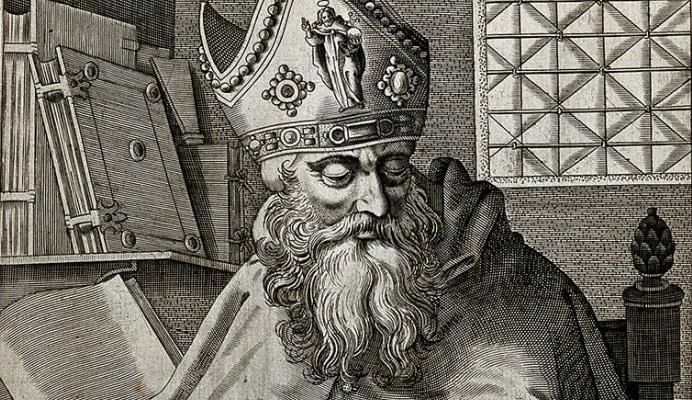
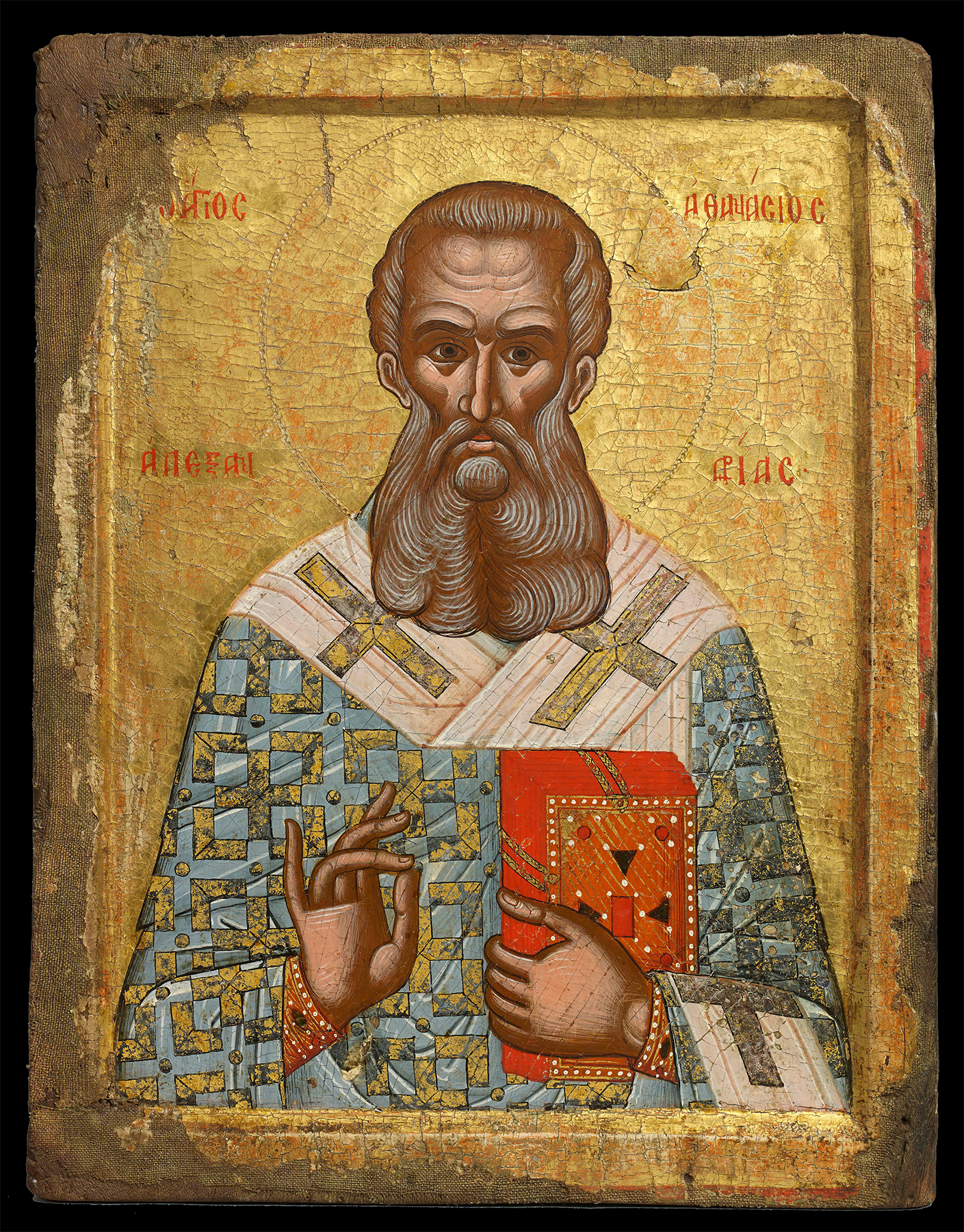
Athanasius of Alexandria, usually dated c. AD 296–373, was bishop of Alexandria and one of the central theological figures of the fourth-century Church. His name is especially bound to the defense of the Nicene faith against Arianism because he insisted that the Son is not a creature but the true God, eternally begotten of the Father. His episcopal life was marked by conflict, exile, and endurance; he was not merely a writer working at a safe distance from controversy, but a bishop whose status and suffering were tied to the Church’s confession of Christ. His legacy rests in that combination: doctrinal clarity, pastoral courage, and writings that still bear weight, especially On the Incarnation, the anti-Arian works, the Festal Letter on the canon, and The Life of Antony. He is remembered as a Church Father, a confessor, and in many traditions as “the Father of Orthodoxy,” not because he invented orthodoxy, but because he stood so firmly for the truth of the Son when the pressure against that confession was severe.
St. Antony the Great of Egypt
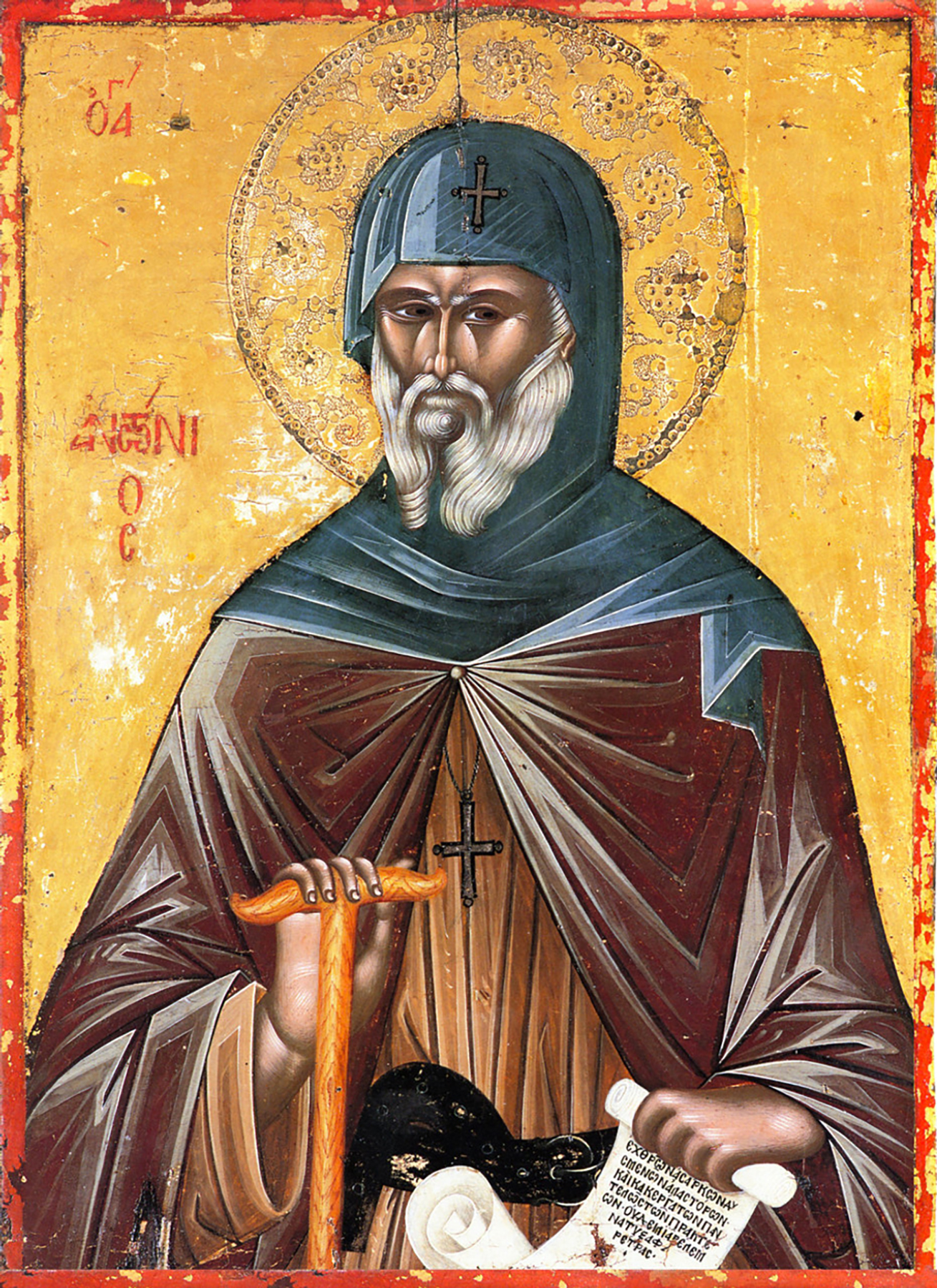
Antony of Coma in Upper Egypt, commonly dated AD 251–356, was an Egyptian Christian ascetic and hermit whose life became a great model for Christian monasticism. He was not the first Christian ascetic, but his withdrawal, discipline, warfare, prayer, and spiritual fatherhood made him one of the most famous Desert Fathers and earned him the title “Father of Monasticism.” Athanasius presents him as a man born to Christian parents, formed by Scripture, captured by the words of Christ, and drawn into a life where possessions, appetite, fear, solitude, and death were brought under obedience. His status in Christian memory is not based on office, education, or public rank, but on holiness, endurance, discernment, and the visible fruit of a life hidden before God. His legacy spread through Athanasius’s account, which helped carry the ascetic ideal across the Christian world and made Antony a lasting witness to Christianity as a whole life, not merely a belief held in the mind.
The book also confronts the modern habit of reducing the Christian life to sincerity, moral effort, personal preference, or psychological explanation. Athanasius writes from a world in which the unseen is real, Christ rules over it, and Scripture is received as the living word that calls, judges, strengthens, and directs the whole person. The purpose of the account is not entertainment, and not a biography for religious interest. It was written to be remembered and imitated.
Book Review
The Life of Antony by Saint Athanasius
| Subjects | Sections | Coverage |
|---|---|---|
| Prologue | Prologue | Athanasius explains why he is writing: Antony’s life is meant to be imitated, not merely admired. (Christian Classics Ethereal Library) |
| I. The Beginning | 1–4 | Birth, Christian upbringing, death of parents, selling possessions, care for his sister, and first ascetic training. |
| II. Early Conflict | 5–15 | Temptations, demonic attacks, the tombs, the ruined fort, and Antony becoming a recognized father of monks. |
| III. The Monks | 16–43 | The central teaching section: perseverance, watchfulness, demons, fear, discernment, prayer, fasting, and courage. The CCEL table explicitly groups §§16–43 as Antony’s address to the monks. (Christian Classics Ethereal Library) |
| IV. The Desert | 44–55 | Monastic life grows; Antony renews his discipline, moves deeper into solitude, and gives practical counsel. |
| V. Miracles, Visions, & Discernment | 56–66 | Healings, visions, knowledge of distant events, and Antony’s discernment of souls and spirits. |
| VI. The Church | 67–71 | Antony honors clergy, rejects schism, rejects Manichaeans and Arians, and publicly condemns Arianism. |
| VII. The Philosophers | 72–80 | Greek philosophers come to test him; Antony answers them with simple Christian wisdom and the power of Christ. |
| VIII. Public Authority | 81–88 | Emperors write to him, he warns against Arian corruption, heals through prayer, counsels many, and remains humble. |
| IX. Final Counsel & Death | 89–94 | Antony gives final warnings, asks for hidden burial, dies peacefully, and Athanasius closes the account. |
Prologue
Athanasius begins by explaining why he is writing. Monks in another region have asked him to tell them about Antony. Athanasius says Antony’s life is worth remembering because it helps the soul. Already, the purpose is clear: this is a book about formation, discipline, and faithfulness.
I. The Beginning
Antony was born in Egypt to Christian parents. He grows up simply and attends church faithfully. After his parents die, he hears Christ’s words to the rich young ruler: “Sell what you have and give to the poor.” Antony takes the words seriously. He gives away his property, provides for his sister, and begins the ascetic life.
II. Early Conflict
After Antony begins the ascetic life, the devil attacks him through memories, desires, fear, comfort, and sexual temptation. Then the attacks become more violent and visible. Antony lives in tombs, then later in a ruined fort, and endures severe demonic assaults.
Athanasius is showing that the Christian life is a real war. Antony does not defeat temptation by strength of personality. He resists by prayer, fasting, Scripture, courage, and faith in Christ.
The major lesson is simple: the demons are loud, but they are not sovereign. Christ is Lord.
III. The Monks
The long speech in sections 16–43 is the heart of the book. Antony teaches the monks to persevere, to begin each day again, to remember death, to avoid pride, to resist fear, and to discern the tricks of demons.
This section is practical. Antony does not want the monks to be fascinated by spiritual warfare. He wants them to be sober, watchful, humble, and faithful.
One of the strongest points is that Christians should not rejoice in power over demons, but that their names are written in heaven. That keeps the whole life centered on salvation, not spiritual display.
IV. The Desert
After Antony’s years of hidden discipline, the desert begins to fill with monks. What was once barren becomes a place of prayer. Antony then goes deeper into solitude at the inner mountain.
This part of the book shows that solitude does not make Antony useless. His hidden life bears fruit. People come to him for counsel, healing, correction, and encouragement.
Antony’s life is severe, but it is not selfish. He prays, works, receives people, counsels them, and points them back to God.
V. Miracles, Visions, & Discernment
Athanasius records many healings, visions, and acts of spiritual discernment. Antony knows things from afar, prays for the sick, casts out demons, and sees visions concerning souls.
These stories can feel strange to a modern reader, but Athanasius is careful about the main point. Antony does not heal by his own power. Christ heals. Antony prays. The glory belongs to God.
This section also shows Antony’s humility. He does not want people to marvel at him. He wants them to trust Christ.
VI. The Church
Antony is not a private spiritual expert detached from the Church. He honors bishops, presbyters, and deacons. He rejects schism. He rejects heresy. He especially condemns Arianism.
This is one of the most important parts of the book. Antony’s holiness does not make him vague about doctrine. He confesses the true Son of God and stands against those who deny Him.
Athanasius wants us to see that prayer, holiness, and true doctrine belong together.
VII. The Philosophers
Greek philosophers come to test Antony. He is not formally educated, but he answers them with wisdom. He shows that Christian faith is not defeated by clever arguments. He also exposes the weakness of pagan idolatry.
This section is not anti-learning in a childish way. It is against prideful learning that refuses God. Antony’s wisdom is simple because it is grounded in Christ.
VIII. Public Authority
Even emperors write to Antony. He is not impressed. He reminds them that it is far greater that God has spoken through His Son. Antony also warns against Arian corruption, helps the afflicted, and counsels many people.
This part of the book shows that Antony’s authority comes from holiness, not office, wealth, education, or political power. He is influential because he belongs to God.
IX. Final Counsel & Death
At the end, Antony gives the monks final instructions. He tells them to continue in discipline, avoid heresy and schism, remember judgment, and not display his body after death. He wants to be buried quietly.
This ending fits his whole life. Antony does not want glory. He wants Christ. Even in death, he refuses spectacle.
Chapter by Chapter
Athanasius presents Antony as a man whose Christianity became actual. He hears Scripture and obeys it. He gives away what would bind him, cares for his sister without using discipline as an excuse to abandon duty, learns virtue from faithful men, and then enters a long life of prayer, fasting, watchfulness, conflict, solitude, and service. The demons threaten, flatter, deceive, appear in terrifying forms, and even use religious language, but Antony answers through faith, prayer, Scripture, the Cross, and confidence that Christ has conquered. His discipline does not make him theatrical, bitter, or useless. It makes him sober, hidden, fruitful, compassionate, and free from self-glory.
He prays for sufferers without claiming power for himself, receives healings as the mercy of Christ, refuses fascination with signs, guards doctrine against Arians and schismatics, honors the Church, answers philosophers without submitting to their game, warns rulers to remember judgment, and finally dies as he lived: simply, quietly, and without spectacle. What stands out to me is not that I must copy Antony’s desert, tombs, food, clothing, or severity. What stands out is that I cannot dismiss the undivided devotion of his life. In Antony, faith becomes obedience, love becomes renunciation, prayer orders the day, Scripture arms the mind, fasting trains the body, watchfulness guards the heart, humility hides the man, doctrine keeps the true Christ before the soul, and death is remembered before God.
| Chapters | Chapter Reviews |
|---|---|
| Chapter 1 | Antony was born in Egypt to Christian parents. He grows up simply, without much interest in worldly learning or social life. He attends church, listens carefully to Scripture, and keeps what is useful in his heart. That matters. Before Antony becomes the great desert ascetic, he is first a Christian boy shaped by worship, obedience, and Scripture. |
| Chapter 2 | After his parents die, Antony is left with his younger sister and his family property. Then he hears Christ’s words to the rich young ruler: “Sell what you have and give to the poor.” Antony does not treat the passage as theory. He obeys. This is one of the strongest moments in the whole book. Antony does not first explain the verse away. He acts. |
| Chapter 3 | Antony hears another passage: “Do not be anxious for tomorrow.” He gives away what remains, entrusts his sister to faithful virgins, and begins the ascetic life. The point is not that every Christian must copy the same outward act. The point is that Antony’s obedience is immediate, serious, and costly. |
| Chapter 4 | Antony begins learning from other holy men. He studies their virtues: prayer, patience, fasting, kindness, freedom from anger, endurance, love, and devotion to Christ. This is very practical. He does not invent holiness from himself. He receives examples, learns from them, and seeks to gather their virtues into his own life. |
| Chapter 5 | The devil begins to attack Antony. The first attacks are ordinary: memories of wealth, concern for family, love of money, comfort, pleasure, and fear of the difficulty of virtue. Then the temptations become sexual. Antony answers with prayer, fasting, faith, and thoughts fixed on Christ. Athanasius is showing that holiness is not passive. It involves war. |
| Chapter 6 | The devil appears defeated and exposed. Antony sees that the enemy is weaker than he pretends. This becomes a major lesson in the book: demons threaten, frighten, and deceive, but they are not sovereign. Christ is Lord. |
| Chapter 7 | Antony increases his discipline. He treats each day as a new beginning. This is important. He does not live on yesterday’s obedience. He presses on. Athanasius connects this with Paul’s language of forgetting what lies behind and pressing forward. |
| Chapter 8 | Antony goes to live in the tombs. The setting is severe and lonely. The demons attack him violently, and he is beaten so badly that he appears nearly dead. This is not written like a gentle spiritual metaphor. Athanasius presents the Christian life as a real conflict against evil. |
| Chapter 9 | After being carried away, Antony asks to be taken back to the tombs. That is the moment when his courage becomes obvious. He does not retreat because the battle is hard. He returns and declares that nothing shall separate him from the love of Christ. |
| Chapter 10 | Christ gives Antony help. A ray of light appears, the demons vanish, and Antony is healed. Antony asks where the Lord was. The answer is that the Lord was present, watching his struggle. The point is not that Antony was alone. The point is that Antony had to endure before the help was shown. |
| Chapter 11 | Antony moves farther away from ordinary life. The devil tries to lure him with silver and gold on the road. Antony passes by as if passing over fire. That detail matters. He knows the danger of even turning to look. |
| Chapter 12 | Antony settles in an old abandoned fort. He shuts himself in and lives there in solitude. This is not escapism in the soft sense. It is a deliberate withdrawal for prayer, discipline, and combat. |
| Chapter 13 | People outside the fort hear demonic voices and are afraid. Antony tells them not to fear, but to sign themselves with the cross and depart boldly. He is calm because he knows the demons are weak before Christ. Athanasius is teaching the reader not to be impressed by noise. |
| Chapter 14 | After about twenty years, Antony comes out of the fort. He is not ruined, bitter, wild, or unstable. He is balanced, whole, and filled with grace. Many are healed, comforted, and reconciled. The desert begins to be filled with monks. Antony’s hidden life becomes fruitful for others. |
| Chapter 15 | Antony crosses a canal full of crocodiles after prayer. This chapter continues the picture of Antony as a man whose fear has been reordered. He fears God, not beasts, men, or demons. |
| Chapter 16 | Antony begins a long speech to the monks. He tells them not to grow careless. The Christian life requires perseverance. This is one of the main lessons of the book: beginning is not enough. |
| Chapter 17 | Antony teaches that giving up earthly things is small compared with the kingdom of heaven. Even if someone gave up the whole earth, it would still be little next to what God gives. This corrects pride. A man should not boast over what he has surrendered. |
| Chapter 18 | Antony says the servant of the Lord must serve daily. Yesterday’s obedience does not excuse today’s negligence. This is severe, but true. The soul cannot live on old zeal. |
| Chapter 19 | He tells them to live as though they may die each day. That sounds harsh, but it produces watchfulness. If I remember death rightly, I forgive, repent, pray, and stop pretending that sin can be managed later. |
| Chapter 20 | Antony warns them not to turn back like Lot’s wife. Once the hand is put to the plow, turning back is deadly. The ascetic life here is not about personal achievement. It is about not returning to the old life. |
| Chapter 21 | He says virtue is not far away. It is not across the sea. The kingdom of God is near. The issue is the will, the heart, and obedience. This keeps the book from becoming romantic. Holiness is not found by travel. It is found by obedience before God. |
| Chapter 22 | Antony turns to the subject of demons. He tells the monks not to be ignorant of their devices. The Christian must be watchful, but not fearful. That balance is important. |
| Chapter 23 | The demons first attack through thoughts. If that fails, they try appearances, fear, noise, and false displays. Antony keeps pressing the same point: do not fear them. Faith, prayer, fasting, and the sign of the cross expose their weakness. |
| Chapter 24 | Antony describes the devil’s boasting through biblical images. The devil speaks great things, but Christ has already bound and defeated him. This is a strong Christ-centered section. The enemy is terrible only when Christ is forgotten. |
| Chapter 25 | He says demonic visions are deceptive. They appear for a time and vanish. They cannot finally harm the faithful without God’s permission. Again, Athanasius wants the reader to see through spiritual intimidation. |
| Chapter 26 | Antony explains that God permits these struggles for our training. The battle humbles the soul and teaches dependence. Without trial, the soul would not learn watchfulness. |
| Chapter 27 | He warns again against fear. Demons are bold in appearance, but weak in power. The Christian should not be fascinated with them. |
| Chapter 28 | Antony points to Job. Satan could not touch Job without permission. This is a needed correction. The devil is real, but he is not free to do whatever he wants. |
| Chapter 29 | He also points to the demons who asked Christ for permission to enter the swine. If demons had no authority even over swine without permission, then they do not have independent rule over those made in God’s image. |
| Chapter 30 | Antony says Christians should fear God alone. A good life, faith, fasting, prayer, humility, love for the poor, freedom from anger, and devotion to Christ are weapons. The enemy fears actual holiness, not empty religious talk. |
| Chapter 31 | He warns against demons pretending to foretell the future. They may report what they have already seen, but they do not know the future as God knows it. The Christian does not need secret knowledge from unclean sources. |
| Chapter 32 | He gives the example of the Nile flood. Demons may observe signs and report them before men know, but that is not true divine knowledge. Antony strips away the glamour of false prophecy. |
| Chapter 33 | He connects this deception to pagan oracles. The coming of Christ has broken the power of demons and exposed their tricks. This is a very Athanasian point: Christ’s appearing changes the world. |
| Chapter 34 | Antony says we should not pray to know the future. We should pray for victory over the devil and help from the Lord. That is clean spiritual counsel. Curiosity is not holiness. |
| Chapter 35 | He explains the difference between good and evil visions. Holy visions bring peace, courage, joy, and calm. Evil visions bring disorder, fear, confusion, and pride. This is practical discernment. |
| Chapter 36 | Antony tells them to test what appears. If a vision brings terror and disorder, do not trust it. The soul must be sober, not dazzled. |
| Chapter 37 | He continues warning against demonic displays. The point is simple: do not trust spiritual appearances merely because they are impressive. Light, sound, and power are not the same as truth. |
| Chapter 38 | Antony warns them not to boast in miracles or exorcisms. Christ told His disciples to rejoice that their names are written in heaven, not that demons are subject to them. This is one of the most important corrections in the book. Power is not the measure of holiness. Faithfulness is. |
| Chapter 39 | Antony gives examples from his own battles. Demons appeared as soldiers, horses, wild beasts, false light, and even sang psalms. He answered with prayer and Scripture. The enemy may use religious forms. That is worth noticing. |
| Chapter 40 | A demon appears claiming to be the power of God. Antony rejects him in the name of Christ. Another comes like a monk with bread and tells him to stop fasting. Antony discerns the trick and prays. This is very important: temptation can appear religious and reasonable. |
| Chapter 41 | Demons show him gold in the desert and beat him, but Antony answers with Scripture. His strength is not self-confidence. It is confidence in Christ. |
| Chapter 42 | The devil complains that Christians have filled the desert. This is almost humorous. The devil wanted the desert as his place, and now monks are there praying. The wilderness becomes a place of spiritual resistance. |
| Chapter 43 | Antony ends his speech by urging the monks to keep courage and despise the demons. He does not tell them to be reckless. He tells them to be faithful, watchful, and confident in Christ. |
| Chapter 44 | The monks leave strengthened. The desert becomes like a city of worship. This is one of the beautiful images in the book: the desert, once barren and feared, becomes filled with psalms, prayer, and discipline. |
| Chapter 45 | Antony returns to solitude and continues his discipline. He thinks often of heaven and the shortness of life. He teaches that the body should serve the soul, not rule it. This is not hatred of the body. It is ordered life. |
| Chapter 46 | During persecution, Antony goes to Alexandria and serves the confessors and martyrs. He desires martyrdom, but does not force it. This is important. He is courageous, but not theatrical. He serves those who suffer and stands openly as a Christian. |
| Chapter 47 | After the persecution ends, Antony returns to his cell. Athanasius says he becomes a daily martyr in conscience. This is a powerful idea. Not every faithful Christian is killed for the faith, but every faithful Christian must die daily. |
| Chapter 48 | A military officer asks Antony to help his demon-afflicted daughter. Antony refuses to make himself the center. He tells the man to believe in Christ and pray. The daughter is healed. Antony’s point is clear: healing belongs to Christ, not to Antony. |
| Chapter 49 | Antony becomes troubled by crowds and signs. He fears pride, and he fears that others will think too highly of him. So he seeks a more hidden place. That is a mark of holiness. He flees fame as dangerous. |
| Chapter 50 | He settles in the inner mountain. He grows food so he will not burden others. He even plants herbs for visitors. His solitude is not selfish. It is ordered, humble, and practical. |
| Chapter 51 | In the inner mountain, Antony continues in prayer and discipline. Demons still attack him, but he remains steady. The war does not end simply because he is old. |
| Chapter 52 | Hyenas surround him, but he tells them that if they have authority from God, he is ready; if they are sent by demons, they must leave. They flee. Antony’s courage is rooted in surrender to Christ. |
| Chapter 53 | A strange beast appears while Antony is working. Antony signs himself and confesses that he is a servant of Christ. The creature flees. Again, the pattern is the same: no panic, no fascination, no bargaining. Christ is named, and the enemy is dismissed. |
| Chapter 54 | Antony visits the outer monks. When water fails in the desert, he prays, and water is given. He also sees his sister, now old and leading other virgins. This chapter shows the wider fruit of his life: men and women alike are being ordered toward God. |
| Chapter 55 | Antony gives deeply practical counsel: believe in the Lord, love Him, avoid impure thoughts, pray continually, sing psalms, remember Scripture, examine yourself daily, do not let the sun go down on sin, and even write down your thoughts as if they were to be shown to others. This is one of the most useful chapters in the book for ordinary life. Watchfulness becomes concrete. |
| Chapter 56 | Athanasius says Antony sympathized with sufferers and prayed for them, but never boasted when God answered. If healing came, he gave glory to God. If it did not, he urged patience. This is sound. Antony does not treat prayer like control over God. |
| Chapter 57 | Fronto, an officer with a terrible disease, comes to Antony. Antony tells him to leave and says he will be healed. When Fronto obeys and returns toward Egypt, he is healed. The point is faith and obedience, not proximity to Antony. |
| Chapter 58 | A young girl with a horrible illness is brought near Antony. Antony already knows her condition before being told and says the Savior will heal her where she is. She is healed. Again, Athanasius keeps placing the glory on Christ. |
| Chapter 59 | Two brothers travel to Antony and run out of water. One dies, and the other is near death. Antony knows this by revelation and sends monks with water. The surviving brother is rescued. Athanasius does not answer every question we might ask. He presents the matter under God’s judgment and providence. |
| Chapter 60 | Antony sees the soul of Amun being carried upward after death. The report is later confirmed by those who knew when Amun died. Athanasius uses this to show Antony’s purity and spiritual sight. |
| Chapter 61 | Count Archelaus asks Antony to pray for Polycration, a Christian maiden who is ill from too much discipline. Antony prays, and she is healed at that time. This chapter also quietly warns that discipline itself can become physically damaging when not governed wisely. |
| Chapter 62 | Antony often knows why people are coming before they arrive. Yet he tells people not to marvel at him, but at the Lord. That is the repeated pattern: marvel at Christ, not the instrument. |
| Chapter 63 | On a boat, Antony senses an evil presence by a terrible smell. A demon-afflicted youth is discovered, the demon is rebuked in the name of Christ, and the man is healed. Athanasius presents Antony as spiritually discerning, not merely observant. |
| Chapter 64 | Another possessed man is brought to Antony. The man attacks him, but Antony is not angry with the man because he understands the demon is the enemy. This is an important pastoral lesson: pity the afflicted person; oppose the evil. |
| Chapter 65 | Antony has a vision in which he sees himself being carried through the air and opposed by hostile powers. The accusation against him fails because the Lord has forgiven his sins. This chapter is sobering. Athanasius wants the reader to think seriously about sin, accusation, repentance, and the need to stand clean before God. |
| Chapter 66 | Antony sees souls passing upward, while the enemy tries to stop some of them. The vision makes him strive harder. That is the right use of spiritual vision in the book: not pride, not curiosity, but repentance and greater seriousness. |
| Chapter 67 | Antony honors bishops, presbyters, and deacons. Though famous, he remains humble and willing to learn. His face and manner show peace. This matters because Athanasius does not present Antony as a rebel against the Church. He is a desert monk, but not a law unto himself. |
| Chapter 68 | Antony rejects the Meletian schismatics, the Manichaeans, and the Arians. He is not careless about doctrine. His life of prayer does not make him vague. Holiness and truth belong together. |
| Chapter 69 | When Arians falsely claim Antony agrees with them, he goes to Alexandria and denounces Arianism. He confesses that the Son is not a creature, but the eternal Word and Wisdom of the Father. This chapter is crucial. Antony is not merely a man of discipline. He is Nicene in faith. |
| Chapter 70 | The people rejoice to hear Antony condemn Arianism. Many come to see him, and many are healed or converted. Antony is not troubled by the crowds. He has faced worse in the desert. |
| Chapter 71 | As Antony leaves Alexandria, a woman cries out for her demon-afflicted daughter. Antony prays in the name of Christ, and the child is healed. Then he returns to the mountain as to his home. He belongs more to prayer than to public honor. |
| Chapter 72 | Greek philosophers come to test Antony. He answers simply: if they came to him because he is foolish, their trip was useless; if they came because he is wise, they should become as he is, a Christian. That is a sharp answer. |
| Chapter 73 | Other philosophers mock him because he lacks formal education. Antony asks whether mind or letters came first. They answer that mind came first. He says that a sound mind does not need letters. This is not anti-learning in a crude sense. It is a rebuke to pride in education without wisdom. |
| Chapter 74 | The philosophers ask him for a reason for faith in Christ. Antony defends the Cross and the Incarnation. He argues that the Christian confession is not shameful, while pagan myths are full of moral corruption. The center here is Christ come in the flesh for salvation. |
| Chapter 75 | Antony continues defending the Cross and points to the resurrection, miracles, and works of Christ. He says they have not read the Scriptures carefully. This is a good line: unbelief often presents itself as wisdom, but it may simply be ignorance of what God has done. |
| Chapter 76 | Antony attacks pagan idolatry. Even if pagans explain their myths as symbols of nature, they still give honor to creation rather than the Creator. This is basic biblical truth: worship must go to God, not what God made. |
| Chapter 77 | Antony challenges their love of arguments. He says faith that comes through God’s working is stronger than verbal proof. This is not an excuse for stupidity. It is a statement that saving truth is not mastered by clever talk. |
| Chapter 78 | He says Christians hold the mystery of faith not by Greek argument, but by the power of God through Christ. The faith is spreading; paganism is weakening. Christ is doing what human philosophy could not do. |
| Chapter 79 | Antony asks where the old oracles and magical powers have gone. He says they have weakened because of the Cross of Christ. The martyrs, virgins, and self-controlled lives of Christians are evidence that Christ has conquered. |
| Chapter 80 | Antony calls forward demon-afflicted people and challenges the philosophers to heal them by their arguments or magic. They cannot. Antony calls on Christ and signs them with the cross, and they are healed. He then says Christ is the one who works. The philosophers leave humbled. |
| Chapter 81 | Emperors write to Antony, but he is not impressed. He says it is more wonderful that God has spoken to us through His Son. He answers the emperors by urging them toward mercy, justice, care for the poor, and remembrance of judgment. This is the proper order: earthly power is small beside Christ the eternal King. |
| Chapter 82 | Antony has a vision of the Arians defiling the Lord’s altar. Athanasius later connects this to Arian violence against the churches. Antony warns the monks not to be defiled by Arian teaching. Again, doctrine is not treated as a side issue. False Christology corrupts worship. |
| Chapter 83 | Athanasius explains that the healings should not be doubted, because Christ promised power to His disciples. The point is not Antony’s greatness. The point is Christ’s mercy and faithfulness. |
| Chapter 84 | Antony heals not by command, but by prayer and the name of Christ. Athanasius is careful here. Antony’s part is prayer and discipline. The Lord is the healer. That distinction protects the whole book from becoming man-centered. |
| Chapter 85 | A military commander asks Antony to stay longer, but Antony says monks are like fish: if fish stay too long on dry land, they die; monks lose strength if they linger too long among worldly affairs. It is a simple image and a strong one. A man must know the place where his soul is kept alive. |
| Chapter 86 | Antony warns Balacius, a harsh persecutor who favors the Arians. Balacius mocks the warning and soon dies miserably. Athanasius presents this as judgment. It is a severe chapter. The persecutor of Christ’s people is not safe. |
| Chapter 87 | Antony helps many kinds of people: the grieving, angry, poor, tempted, doubtful, and wronged. Athanasius says he was like a physician given by God to Egypt. This is one of the best summaries of Antony’s public fruit. Solitude did not make him useless. It made him useful in the right way. |
| Chapter 88 | Antony has discernment and teaches others how to fight temptation. People leave him strengthened. This is fatherhood in the spiritual sense: he does not gather people to himself; he prepares them to stand. |
| Chapter 89 | At 105 years old, Antony tells the monks that his death is near. He exhorts them not to grow idle, not to faint in discipline, to live as though dying daily, to imitate the saints, and to keep away from schismatics and Arians. His final counsel is the same as his life: Christ, discipline, Scripture, and true faith. |
| Chapter 90 | Antony does not want his body displayed after death according to Egyptian custom. He wants to be buried quietly. This fits the whole man. He flees glory even at the end. |
| Chapter 91 | He gives instructions about his clothing. His garments are to be given to Athanasius and Serapion. He wants nothing elaborate done with his body. The simplicity of his death matches the simplicity of his life. |
| Chapter 92 | Antony dies peacefully and joyfully. His disciples bury him secretly, as he commanded. No one knows the place except the two who buried him. This is fitting. Antony’s grave is hidden because Antony himself wanted Christ, not a shrine to himself. |
| Chapter 93 | Athanasius reflects on Antony’s long life. Antony remained steady from youth to old age. His body was preserved with remarkable strength, and his zeal did not fade. The point is perseverance. Antony did not simply begin well. He finished well. |
| Chapter 94 | Athanasius ends by saying Antony became known everywhere, not because of education, wealth, political power, or social rank, but because of his devotion to God. This is the final lesson: God made a hidden man fruitful. Antony went into the desert to be alone with God, and his life became a witness to the whole Church. |
Applicability
Antony’s practices are highly translatable, though not always by literally copying the desert form. The point is not: “Go live in a tomb.” The point is: remove what wrongly governs the soul, order the body in obedience, keep the heart before Christ, and refuse a divided life.
Athanasius’s table of contents shows that the central teaching section is Antony’s long address to the monks in §§16–43, but the practical ascetical material appears throughout the whole book, especially §§3–7, §§16–23, §55, §§83–84, and §§89–91. These are the principles that appear with some repetition and reinforcement.
| Antony’s Ascesis | Sections | Meaning for Today |
|---|---|---|
| Daily beginning again | §§16, 18, 91 | Do not live from yesterday’s zeal. Begin again each day before God. Antony says to live “as though making a beginning daily,” and near death repeats the same counsel. |
| Holding fast to the discipline | §§16–19, 89, 91 | Keep the rule when tired, bored, tempted, or discouraged. The life is not kept by intensity alone, but by continuance. |
| Remembering death daily | §§19, 45, 89, 91 | Live as one who may not reach evening, and sleep as one who may not rise. This kills delay, wrath, lust, pride, and worldliness. |
| Renunciation of possession and worldly attachment | §§17, 45 | Do not be ruled by money, security, property, food, clothing, or comfort. Antony’s point is not merely poverty, but freedom from being governed by what cannot be carried into the kingdom. |
| Guarding the heart and thoughts | §§20–23, 55, 89 | Watch the first movements of lust, wrath, fear, pride, despair, and vainglory. Antony treats thoughts as morally serious, not harmless private weather. |
| Prayer | §§22–23, 34–35, 39–40, 55, 84 | Turn immediately to God. Prayer is not an ornament. It is the soul’s movement under Christ in temptation, fear, need, and intercession. |
| Fasting and bodily restraint | §§23, 30, 40, 45, 47, 55 | Keep the body under obedience. Antony does not present the body as evil, but he does insist that appetite must not rule the soul. |
| Psalmody | §§13, 39–40, 44, 55 | Sing or pray the Psalms, especially on waking and before sleep. The Psalms give the soul holy speech when temptation, fear, or disorder presses in. |
| Keeping Scripture in the heart | §§1, 3, 16, 55, 75, 89 | Scripture is not only read; it is remembered, obeyed, and used in battle. Antony begins with Scripture and continues by Scripture. |
| Writing down actions and impulses | §55 | Keep a conscience record. Antony says to note and write actions and impulses as though they were to be told to others. This is one of his most concrete safeguards against sin. |
| No anger or sin carried overnight | §55 | Let not the sun go down on wrath, and Antony extends this to sin generally. Do not sleep while nursing anger, lust, resentment, or hidden rebellion. |
| Self-examination | §55 | Review the day and night before God. If sin is found, stop. If no known sin is found, do not boast. Continue humbly. |
| Discernment of spirits | §§22–38 | Do not trust every inward movement, religious thought, apparition, fear, or impressive spiritual display. Antony repeatedly says not to be deceived by appearances. |
| No curiosity about the future | §§31–34 | Do not seek secret knowledge, predictions, omens, or spiritual information for its own sake. Antony says this is not productive of virtue. Pray instead for the Lord’s help against the devil. |
| Protection under Christ | §§9–10, 13, 23, 35, 39–43, 78–80 | Protection is real, but it is not mechanical. Antony’s protection pattern is faith in Christ, prayer, the Cross, Scripture, Psalmody, courage, and refusal of fear. |
| The sign of the Cross | §§13, 23, 35, 53, 78–80 | Antony uses and commends the sign of the Cross as confession of Christ’s victory. It is not magic. It is embodied faith in Christ crucified. |
| Refusal of fear | §§23–30, 35–43, 51–52, 91 | Do not fear demons, threats, death, or appearances. Antony’s repeated point is that the demons are fierce in display but weak before Christ. |
| Humility and refusal of vainglory | §§38, 49, 55–56, 62, 84 | Do not boast in discipline, signs, knowledge, healing, or reputation. Antony points away from himself and toward Christ. |
| Manual work and not being burdensome | §§3, 50, 53 | Work faithfully. Antony works with his hands, grows food, weaves baskets, and avoids burdening others. This is asceticism against idleness. |
| Charity and bearing burdens | §§17, 44, 55–56, 87 | Discipline must become love. Antony counsels almsgiving, love for the poor, sympathy for sufferers, patience, and bearing one another’s burdens. |
| Submission to the Church’s order | §67 | Antony remains humble toward bishops, presbyters, and deacons. His ascetic life is not private spiritual autonomy. |
| Separation from heresy and schism | §§68–69, 82, 89, 91 | Keep the true confession of Christ. Antony specifically rejects Arians, schismatics, and false teaching. Doctrine protects communion with the true Christ. |
| Imitation of the saints | §§4, 55, 89, 91 | Learn from holy examples. Antony studies the virtues of others and teaches others to remember the saints so that their zeal may stir the soul. |
| Hiddenness before God | §§49, 90–94 | Avoid religious display. Antony flees fame, refuses self-importance, and even arranges his burial to avoid spectacle. |
Final Thoughts
The book is stronger than I expected because it does not treat holiness as vague inspiration. It treats holiness as obedience, watchfulness, fasting, prayer, Scripture, courage, humility, and doctrinal faithfulness.
Antony is not impressive because he is strange. He is impressive because he is undivided. That is the word that keeps coming to mind. He is not trying to preserve a normal life and add Christ to it. His life is centered around Christ.
The book also corrects modern weaknesses. We tend to think comfort is neutral. Antony does not. We tend to think thoughts are private and harmless. Antony does not. We tend to think doctrine can be separated from devotion. Antony does not. We tend to think spiritual warfare is either embarrassing or symbolic. Antony does not. We tend to think public influence is gained by platform. Antony gains it by hidden obedience.
The danger in reading this book is to admire Antony without obeying anything. That would miss the point. Athanasius did not write so that we could say, “What an unusual man.” He wrote so that Christians would be stirred to repentance, discipline, and love for Christ.
The book should not be read as a command that every Christian must flee to the desert. But it should be read as a rebuke to divided living. Antony’s outward form may not be every Christian’s calling. But the inward demand is not optional: Christ must be loved above possessions, pleasures, reputation, fear, and even life itself.