Archive | Monographs RSS feed for this section

The Institutes: Prolegomena

In the turbulent backdrop of the 16th-century Reformation, a profound voice emerged that would shape the contours of Protestant theology for generations to come. In his seminal work “Institutes of the Christian Religion,” John Calvin (1509–1564) embarked on an ambitious journey to elucidate the Christian faith in its entirety. “Institutes of the Christian Religion” is Calvin’s magnum opus and represents one of the most comprehensive and systematic presentations of Protestant theology during the Reformation. Initially published in 1536, Calvin revised and expanded it in several editions, with the final version appearing in 1559.

Introduction

The narrative of the “Institutes” begins with the human quest for knowledge. Calvin underscores that knowledge of oneself and knowledge of God are intertwined. But how can finite humans comprehend the infinite? The magnificence of creation, for Calvin, acts as a mirror, reflecting the divine attributes of the Creator. Yet, this reflection is marred by humanity’s fallen state. Sin clouds our natural faculties, leading us to suppress or distort this knowledge. Still, Calvin delves into the profound tragedy of the Fall. Adam and Eve’s rebellion in the Garden of Eden plunged humanity into a state of total depravity. Every facet of the human being—mind, will, emotions—is now tainted by sin. We are alienated from God, ensnared by death, and incapable of achieving righteousness by our efforts.

But the story doesn’t end in despair. Into this bleak tableau enters Jesus Christ—the Redeemer. Calvin paints Christ as the mediator, bridging the Holy God and sinful humanity. Christ atones for sin, defeats death, and offers reconciliation through His sacrificial death on the cross and triumphant resurrection. It’s a cosmic redemption story where love, justice, and mercy converge. So how does one partake in this redemptive act? Calvin emphatically speaks of faith – Not just intellectual assent, but a deep, heartfelt trust in Christ’s redemptive work. It’s through faith that we are justified—declared righteous before God. This is the heart of Calvin’s soteriology: justification by faith alone, apart from works. Yet, faith isn’t stagnant; it’s the starting point of sanctification—the lifelong process where believers gradually conform to Christ’s image.

Calvin’s work ventures into the communal dimension of faith. For Calvin, faith isn’t merely an individual endeavor; it thrives within the community of believers—the Church. Described as the body of Christ, the Church is where the Word of God is proclaimed, and the sacraments (baptism and the Lord’s Supper) are celebrated. These sacraments act as visible signs of invisible grace, anchors that tether believers to the promises of God. So as the believer journeys through life, Calvin emphasizes the importance of prayer as a means of communion with God. Moreover, he acknowledges the challenges and tribulations that believers often face. However, with the assurance of God’s providence, believers can navigate these challenges, confident that everything, even suffering, is under God’s sovereign control.
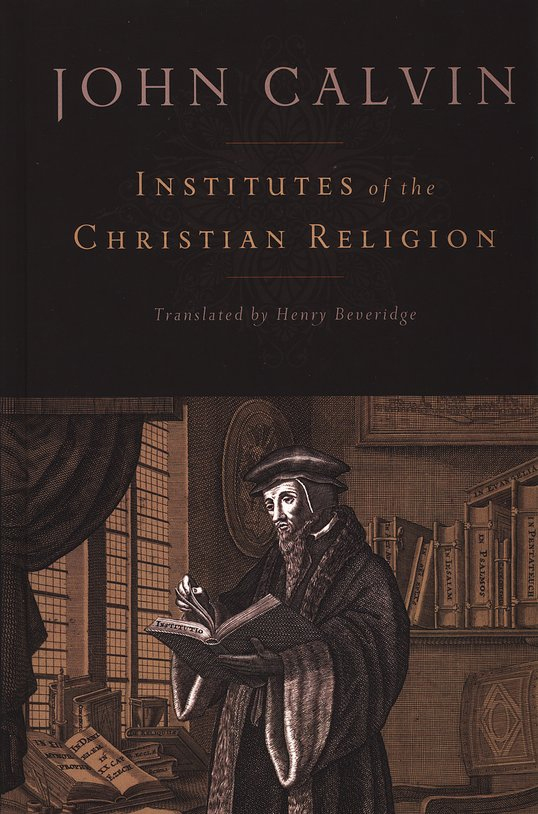
The narrative concludes with a reflection on the Christian’s role in society. While church and state are distinct realms, both are divinely instituted. The Christian, therefore, has duties toward both. Calvin envisions a harmonious relationship between the two, with civil government maintaining societal order and the church nurturing spiritual life. So, in the vast tapestry of the “Institutes,” Calvin weaves a grand narrative of creation, fall, redemption, and consummation. Through meticulous exegesis and profound theological insights, he invites readers on a transformative journey to the heart of the Christian faith—a journey that transcends the annals of history and beckons souls toward eternity. Through the “Institutes,” Calvin didn’t merely pen a theological treatise; he crafted a narrative that encapsulates the Christian odyssey from the depths of sin to the heights of glory. Its echoes of grace continue to resonate in the corridors of time, beckoning every reader to the boundless love of God.

Background

Born Jean Cauvin in Noyon, France, Calvin grew up in a devout Catholic family. He was initially groomed for a career in the Church and went on to study Latin and humanities at the Collège de la Marche in Paris. Later, Calvin shifted his focus to law at the behest of his father, studying in Orléans and Bourges. While in Paris, Calvin was introduced to Renaissance humanism, which emphasized the value of classical learning and the study of the original biblical texts.

John Calvin’s father, Gérard Cauvin, was an attorney and a notary who worked for the local cathedral in Noyon, France. Gérard played a pivotal role in Calvin’s early education, intending for John to enter into the priesthood. He secured a chaplaincy for his young son, which funded John’s education. However, due to a conflict with the local bishop, Gérard advised John to study law instead of theology. Calvin’s mother, Jeanne le Franc, was known for her piety. Little is documented about her, but she bore several children before her premature death. John was very young at the time of her death, and the loss may have profoundly impacted him.

While John Calvin had several brothers and sisters, a few are noteworthy here. Charles Cauvin, one of Calvin’s brothers, followed a career in the church but faced excommunication due to his alignment with Protestant beliefs. He died in 1537. Another brother, Antoine Cauvin, joined John in Geneva and played a supportive role in his life. He worked in various capacities in the city, including as a clerk. While not much is known about Calvin’s sisters, it’s known that Marie Cauvin, one of his sisters, took refuge in Geneva following the rise of Protestant persecution in France.
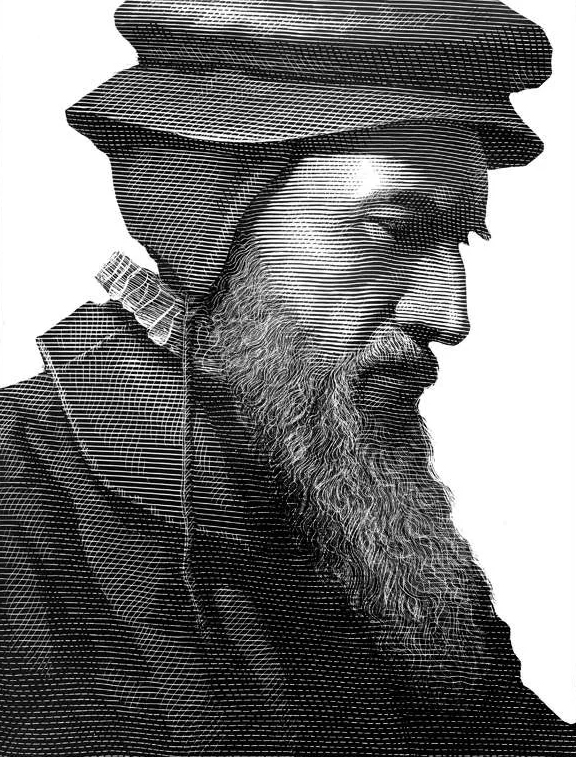
In 1540, after residing in Strasbourg, Calvin married Idelette de Bure, a widow with children from her first marriage. Idelette was originally an Anabaptist but converted to Calvin’s Reformed theology. Their marriage was described as affectionate and supportive, with Idelette often aiding refugees and being actively involved in the life of the church. The couple had one child together, but the child died in infancy. Idelette’s passing in 1549 deeply affected Calvin, and he never remarried. While the exact number of Idelette’s children from her first marriage is not well-documented, it’s known that she had children from her first marriage, whom Calvin adopted as his own after their union.

Understanding Calvin’s familial ties and personal relationships offers a more holistic view of the man. His relationships, particularly the deaths of close family members, may have shaped his theological understanding of suffering, God’s providence, and the human condition. Although often overshadowed by his public persona, Calvin’s family and personal life provide a poignant backdrop against which his immense theological contributions can be more deeply understood.

In the early 1530s, Calvin was forced to flee Paris due to rising anti-Protestant sentiment in France. After a brief stay in Basel, Switzerland, Calvin intended to settle in Strasbourg. However, political and military obstacles led him to Geneva. In Geneva, Calvin was soon recruited by local reformer Guillaume Farel to assist in the city’s nascent Protestant Reformation. Though Calvin initially resisted, he eventually agreed and quickly became a leading figure in the movement. His time in Geneva was not without challenges. Differences in religious and social views led to Calvin’s expulsion from the city in 1538. However, he returned in 1541 and remained there for the rest of his life, during which he established a theocratic governance system.

Calvin’s influence persisted long after his death. The Reformed churches and various Protestant denominations can trace their roots to his teachings. Though often associated primarily with his doctrine of predestination, Calvin’s thought encompasses a wide range of theological, ecclesiastical, and social issues, making him one of the most influential Christian theologians in history.

Roman Catholicism

The Christian reform movement in the 16th century challenged the Roman Catholic Church’s doctrines and practices. Calvin’s thoughts on theology, ecclesiology, and social issues have profoundly influenced Protestantism, shaping a tradition known as Reformed theology. And by the mid-1530s, Calvin experienced what he described as a “sudden conversion.” The exact nature of this conversion remains a matter of debate among historians, but its result was clear: Calvin embraced the Protestant cause, distancing himself from the Roman Catholic Church. His theological views, crystallized in his magnum opus, “Institutes of the Christian Religion,” placed him squarely at odds with Catholic doctrine. Theological disagreements on topics like the nature of the Eucharist, the role of Church tradition, the authority of the Pope, and the doctrine of justification, to name a few, were foundational to his break with the Church.

Calvin’s association with the city of Geneva exemplified his definitive break from the Roman Catholic Church. In Geneva, Calvin aimed to create a godly city-state where every aspect of life, both public and private, aligned with Scriptural teachings. His ecclesiastical ordinances instituted a form of church government and discipline sharply distinct from the Catholic model. Calvin’s rigorous moral and doctrinal standards sometimes put him at odds even with the city’s residents, but they unmistakably distinguished Genevan Protestantism from Roman Catholicism.

Throughout his ministry, Calvin engaged in polemical writings against the Catholic Church. He criticized what he viewed as superstitious practices, corrupt clergy, and erroneous doctrines. His stance made him a significant target for Catholic apologists. The Council of Trent (1545-1563), the Catholic Church’s answer to the Reformation, denounced several Protestant teachings, including many of Calvin’s key doctrines. Calvin, not one to remain silent, responded with his writings, defending the Reformed faith against Catholic hostilities. Calvin’s relationship with the Roman Catholic Church was undoubtedly adversarial. Yet, viewing it within the broader context of the 16th-century religious upheaval is essential. To Calvin, his disagreements with the Church were not about mere theological nitpicking; they were about the essence of the Gospel and the salvation of souls. The Roman Catholic Church, on the other hand, viewed Calvin (and other Reformers) as schismatics, challenging the unity of Christendom and leading many astray with their teachings.

In the end, John Calvin’s status with the Roman Catholic Church can be summarized as that of a profound reformer, a staunch critic, and an unwavering advocate for what he believed was the pure, apostolic Christianity—a Christianity he argued had been obscured by the Roman Catholic Church of his day.

Eastern Orthodoxy

In contrast to Calvin’s historical background with the Roman Catholic Church, his relationship with the Eastern Orthodox Church (often called the Orthodox Church) is less pronounced in his writings and actions. The Protestant Reformation primarily unfolded in Western Europe, where the Roman Catholic Church dominated. Eastern Orthodoxy was primarily in the eastern regions of Europe and the Near East. Thus, there was less direct contact between Reformation leaders like Calvin and the Orthodox Church than the Roman Catholic Church.

Calvin and the Orthodox Church had some overlapping criticisms of the Roman Catholic Church, especially concerning certain late medieval practices and the role of the papacy. While both Calvin and the Orthodox tradition held a high view of the early church councils and the Nicene Creed, there were still significant theological differences. The Orthodox Church did not adhere to the Reformed emphases on doctrines like predestination or sola scriptura in the way Calvin articulated them. Also, the nature of the Eucharist, liturgical practices, and church governance would have been points of divergence.

Calvin’s writings contain relatively few explicit references to the Eastern Orthodox Church. Where references exist, they are often lumped in with broader discussions about the “ancient church” or early church fathers rather than a distinct engagement with Orthodoxy as a separate tradition. It’s worth noting that later Reformed theologians and representatives interacted with the Orthodox Church. For instance, in the early 17th century, Cyril Lucaris, the Patriarch of Constantinople, showed a strong interest in Reformed theology. However, his views and subsequent declarations were highly controversial within the Orthodox context and were ultimately condemned by the Orthodox Church.

While Calvin’s primary theological and ecclesiastical engagements were with the Roman Catholic Church and other Protestant groups, his relationship with the Eastern Orthodox Church was more peripheral. His limited engagement with Orthodoxy was a function of geography, historical context, and the pressing religious debates of his day.

Prefatory Address – 1536

In the opening to Calvin’s “Institutes of the Christian Religion,” he wrote an address to King Francis I of France in 1536. This introductory letter is more than just a simple introduction; it is a profound defense of the Reformed faith and an appeal for religious tolerance. In its historical context, the address should be understood against the backdrop of the religious tensions of the time. The Protestant Reformation had been spreading rapidly across Europe, and in France, those who subscribed to Reformed views (often pejoratively called “Huguenots”) faced severe persecution. King Francis I, while initially showing some leniency towards the Lutherans, began to take a harder stance against Protestantism as the movement grew in influence and as political pressures mounted.

Calvin’s primary aim in writing to Francis I was twofold. First to defend the Reformed faith against accusations of heresy and sedition, and second to appeal to the king for protection and fair treatment of the French Protestants. As the purpose of his appeal was comprehensive, he wrote of specifics concerning various misunderstandings, the true church, the authority of Scripture, accusations against believers in Christ, religious tolerance, and personal respect.

Calvin expressed concern that the king had been misinformed about the beliefs and intentions of the Reformed believers. He sought to clear up misunderstandings and to counteract the negative propaganda spread by their adversaries. Calvin asserted that the true Church is where the Word of God is rightly preached and the sacraments are rightly administered. By this definition, he argued, the Reformed believers should be recognized as a legitimate part of the Church, not as heretics. A cornerstone of Calvin’s argument is the supreme authority of Scripture. He emphasized that the doctrines he and other Reformers teach are rooted in the Bible, not innovations. This was in contrast to the Roman Catholic Church, which Calvin argued had deviated from scriptural truths.

Calvin refuted accusations of sedition and political revolt. He emphasized that the Reformed faith teaches obedience to rulers and authorities, and the goal of the Reformers is spiritual reformation, not political upheaval. So Calvin implored Francis I to show leniency and protect the Protestants from unjust persecutions. He argues that the use of force in matters of faith contradicts the spirit of Christianity and appeals to the king’s sense of justice. Throughout the address, Calvin maintained a tone of respect for the king. While he firmly defended the Reformed faith, he acknowledged Francis I’s authority and position. While Calvin’s appeal was eloquent and impassioned, it did little to change the immediate situation for French Protestants. Persecutions continued, and the divide between the Roman Catholic Church and the burgeoning Reformed movement in France deepened. However, from a broader historical perspective, Calvin’s address to Francis I stands as a testament to the Reformers’ commitment to their faith and their willingness to defend their beliefs before the highest earthly authorities. It’s a snapshot of the larger struggles of the Reformation era, encapsulating the courage, convictions, and challenges of those tumultuous times.

Epistle to the Reader – 1539

In 1539, John Calvin prepared a new edition of his Institutes. This edition was more extensive than the first, representing a significant expansion and restructuring of his initial ideas. To introduce this work, Calvin wrote an “Epistle to the Reader,” which serves as an introduction to his expanded work and a summary of his theological aims and intentions. The “Epistle to the Reader” is Calvin’s introduction and contextualizes the revised “Institutes.” Having released the first edition of the Institutes in 1536, just three years prior, Calvin had already seen the need for more comprehensive teaching due to feedback and the further clarification he believed was necessary to counter various misunderstandings about Protestant beliefs.

Calvin wrote of the “Institutes,” even in its 1536 version, as a work of extensive labor. And it was not a hastily prepared document but was a product of careful reflection and engagement with Scripture. Aware of the myriad misconceptions and misrepresentations of Protestant doctrine, Calvin emphasized that a principal motive behind the revision was to clarify and systematically present the faith. His effort aimed to benefit those curious about Protestant beliefs and those who might be hostile to the Reformation. Calvin underscored that the “Institutes” was intended to be a comprehensive summation of the Protestant faith, an organized presentation of doctrines drawn from and aligned with the Bible. It wasn’t just about highlighting disagreements with the Roman Catholic Church but more about affirming a positive, scripturally-grounded theology.

Throughout the “Epistle,” Calvin alluded to the many accusations and misrepresentations about the Reformers. He hoped that this clarified and expanded edition would serve as a defense against such charges, demonstrating the scriptural fidelity and intellectual rigor of Reformed beliefs. Beyond just theological precision, there’s a pastoral undertone in Calvin’s letter. He expressed a deep concern for the spiritual well-being of his readers. Calvin desired that through understanding the true Christian doctrine, believers would grow in their faith and draw closer to God.

John Calvin's Church in Geneva Switzerland - St. Pierre Cathedral
John Calvin’s Church in Geneva Switzerland – St. Pierre Cathedral

In summary, John Calvin’s 1539 “Epistle to the Reader” is a window into the Reformer’s heart and mind as he presented a more mature version of his Institutes. It reflects Calvin’s dedication to Scripture, his desire for clarity in presenting the gospel, his defense against misconceptions, and, importantly, his pastoral concern for his readers’ spiritual health and growth. The “Epistle” sets the stage for the reader, preparing them for the deep theological exploration that follows in the body of the “Institutes.”

Preface to the French – 1545

John Calvin’s 1545 preface to the French edition of the Institutes is a particularly notable piece of Reformation literature. This preface is often referred to as the “Dedication to King Francis I” or simply the “Preface to King Francis,” as it is directed towards the King of France. This preface is different from the original one penned in the 1536 Latin edition, and its significance lies not just in its theological exposition but also in its political and cultural implications. In the mid-16th century, Protestants in France, who came to be known as Huguenots, were experiencing increasing persecution. King Francis I, initially somewhat tolerant of Protestant views due to political reasons, began taking a harder stance against them as they grew in influence. This preface can be seen as Calvin’s attempt to advocate for French Protestants, seeking a reprieve from their mistreatment.

In defense of the Protestant faith,Calvin again asserted that the beliefs of the French Protestants were neither seditious nor heretical. He emphasizes the Biblical foundation of their doctrines and disputes the charges of novelty frequently levied against them. He recognized that the king had been surrounded by advisors who maligned the Protestants, and Calvin endeavored to correct the misconceptions. He argued against the idea that the Reformers were stirring up political rebellion or that their teachings were radically new or dangerous. While he acknowledged the king’s authority in civil matters, Calvin subtly challenged the idea that civil rulers should control individual consciences or dictate religious beliefs.

One of the primary aims of this preface was to urge King Francis I to show leniency to the Protestants. Calvin made a case for religious freedom, implying that threats or violence could not force true faith. Despite his disagreements and implicit criticisms, Calvin maintained a respectful tone. He again addressed the king with deference, recognizing his authority and hoping to sway him through reasoned argument rather than confrontation. In addressing the king, Calvin also offered a brief overview of Protestant beliefs. This served as a defense and an evangelistic effort, hoping perhaps to convince the monarch of the truth of the Reformed faith.

The 1545 preface to the French edition of the “Institutes” is a masterful blend of theology, apologetics, and diplomacy. While Calvin’s immediate plea for tolerance was not heeded (persecutions continued and even intensified), this document remains a testament to the Reformers’ commitment to their faith, their willingness to defend their beliefs even before the highest earthly authorities, and their passion for the clarity and truth of the Gospel.

Epistle to the Reader – 1559

John Calvin’s 1559 “Epistle to the Reader” is his final and most comprehensive edition of the “Institutes.” By this time, the “Institutes” had become not only the foundational text for Reformed Protestantism but also one of the most significant theological works of the Protestant Reformation. This final version is more extensive, detailed, and polished than the preceding versions.

Calvin acknowledged how the Institutes have grown over the years. Initially intended as a basic manual for those unfamiliar with the faith, it transformed into a thorough compendium of Reformed doctrine. Calvin spoke about the multiple editions and expansions, with the 1559 version culminating his efforts. His ongoing objective was to elucidate the beliefs of the Reformation in contrast to the misunderstandings and misconceptions propagated against them. By 1559, the Institutes had become an exhaustive defense and exposition of Reformed beliefs rooted in Biblical interpretation. Calvin consistently reflected upon pastoral concerns throughout his writings. His primary goal was always the spiritual edification of his readers. He wanted Christians to deeply understand their faith, leading to a closer relationship with God. This pastoral impulse is evident in the 1559 “Epistle,” where he underscores the practical application of theology.

The 1559 edition was carefully structured to provide a more systematic presentation of Reformed theology. Calvin highlighted this structure, guiding the reader through the logical progression of topics, which mirrors the Apostle’s Creed’s structure. This structure comprises knowledge of God the Creator, knowledge of God the Redeemer in Christ, the means of receiving Christ’s grace, and the effects of Christ’s redemption. Calvin wrote in this “Epistle” that the 1559 edition was the final version of the Institutes. While he never ceased studying and reflecting on God’s Word, this edition represented his mature and considered theology. Throughout his ministry, Calvin faced opposition from various quarters, including Catholics, Anabaptists, and other Protestant factions. The Institutes, particularly this final edition, served as a robust defense of Reformed doctrine against these detractors.

The 1559 epistle encapsulated Calvin’s purpose and hopes for the Institutes. While he was a systematic theologian of the highest order, Calvin was also a pastor at heart, deeply concerned with the spiritual well-being of Christians. This dual focus on rigorous theology and pastoral concern is evident throughout the Institutes, and the epistle serves as a fitting introduction to this monumental work. Calvin’s dedication to clarity, Biblical fidelity, and the edification of the Church has ensured that the Institutes remains a significant theological work to this day.

Credal Alignment

As John Calvin’s “Institutes” underwent several editions during his lifetime, the final and most comprehensive edition was published in 1559. This edition was systematically structured to mirror the Apostles’ Creed, which is a concise statement of the Christian faith. Calvin didn’t necessarily intend for the “Institutes” to be a direct commentary on the Apostles’ Creed, but the thematic connection is clear. A prominent Reformed theologian, Caspar Olevianus (or Olevian), recognized this structural alignment with the Apostles’ Creed in Calvin’s “Institutes.”

To understand the alignment, let’s first look at Calvin’s organizational structure:

  1. Book I – The Knowledge of God the Creator
  2. Book II – The Knowledge of God the Redeemer in Christ, First Disclosed to the Fathers Under the Law, and Then to Us in the Gospel
  3. Book III – How We Receive the Grace of Christ: What Benefits Come to Us from It, and What Effects Follow
  4. Book IV – The External Means or Helps by Which God Invites Us Into the Society of Christ and Holds Us Therein

Now, aligning this with the Apostles’ Creed:

  1. “I believe in God, the Father Almighty, Creator of heaven and earth.” This corresponds with Book I of the “Institutes,” focusing on the knowledge of God as Creator.
  2. “And in Jesus Christ, His only Son, our Lord, who was conceived by the Holy Spirit, born of the Virgin Mary,” And so on through the sections on Christ’s death, resurrection, and ascension – This can be seen in Book II, which concentrates on Christ as Redeemer.
  3. “I believe in the Holy Spirit,” Leading into the benefits of Christ’s work – This aligns with Book III, exploring how believers receive the grace of Christ and its benefits.
  4. “The holy catholic Church, the communion of saints, the forgiveness of sins, the resurrection of the body, and the life everlasting.” This fits with Book IV, which deals with the external means (like the Church and sacraments) that God employs to keep believers in communion with Christ.

While Calvin didn’t write the “Institutes” as a direct exposition of the Apostles’ Creed, the alignment is evident. Olevianus, familiar with the “Institutes” and the Creed, would have recognized this thematic and structural parallelism. This observation is crucial because it illustrates how Reformed theology, as articulated by Calvin, was deeply rooted in the broader Christian tradition. The Creed served as a foundational touchstone of orthodoxy, and Calvin’s alignment with it in the “Institutes” underscores his commitment to the essential truths of Christianity.

Continue Reading ·

The Abolition of Man

C.S. Lewis’s “The Abolition of Man” is a defense of objective values against the encroachments of subjectivism and relativism. While Lewis’s arguments are informed by various sources, the classical Greek philosophies of Plato and Aristotle can be seen as offering foundational support to many of the principles Lewis defends. The following review is an interpretive understanding of the subject matter.

Introduction

This written work by C.S. Lewis is a profound philosophical and moral critique of modern subjectivism and naturalistic reductionism. It is a short book, consisting of three interconnected essays, which aim to defend the idea of objective values and natural law against modern relativistic trends.

Christian Worldview

While the book isn’t written from a Christian perspective, it refers to biblical and Judeo-Christian principles and values in various locations throughout the text. The book consists of three interconnected essays, which aim to defend the idea of objective values and natural law against modern relativistic trends.

  • Men Without Chests

Lewis starts with a critique of an English textbook for students, which he feels promotes subjectivism, the idea that values and meanings are purely the product of personal feelings and have no objective basis. This subjective approach, Lewis argues, produces “men without chests” – individuals without a moral compass or appreciation for objective value and beauty. He contends that the “chest,” symbolizing the heart or moral sentiment, should be educated to resonate with universal truths and values. Such education should shape character and virtue rather than just intellect.

  • The Way

In the second essay, Lewis dives deeper into the philosophy underpinning his critique. He discusses the Tao, an Eastern concept, which he uses to describe the universal moral law or Natural Law that many cultures and religions have recognized throughout history. This Tao represents objective values that are inherent to human nature. These values aren’t arbitrary but grounded in a moral order, which Christianity would recognize as being rooted in the nature of God. He suggests that all major religions and ethical systems share a core understanding of these basic principles, which provide the framework for human flourishing and moral behavior.

  • The Abolition of Man

In the concluding essay, Lewis presents a vision of the future if society continues down the path of rejecting objective values. He warns that the “Conditioners,” those who reject traditional values in favor of constructing their own, will have the power to reshape humanity according to their whims. This could be through psychological conditioning or even biological manipulation. By rejecting the Tao and believing that they can define and create their own values, these individuals ironically become slaves to their own base instincts and desires. Lewis argues that this trajectory could lead to the “abolition” of genuine humanity. From a Christian perspective, this can be seen as the consequence of humanity turning away from God and the inherent design and purpose He established.

Throughout the book, Lewis, a Christian apologist, underscores the dangers of a world divorced from God-given objective moral standards. He argues for the timeless relevance of natural law, suggesting that humanity’s well-being is rooted in aligning with these eternal truths. The rejection of this moral framework doesn’t lead to greater freedom, as some might believe, but to the potential dehumanization of mankind.

In essence, “The Abolition of Man” is not just a critique of educational trends or philosophical shifts, but an urgent call for a return to understanding and valuing the objective moral order that Lewis, from a Christian worldview, believes is woven into the very fabric of the universe by its Creator.

Humanist Worldview

C.S. Lewis further provides a philosophical critique of subjectivism and the growing trend in the mid-20th century to view human values as mere social constructs or personal feelings, devoid of any objective foundation. From a humanist perspective, the book can be seen as a defense of universal values and the importance of cultivating moral sentiment in human beings, even if one might not necessarily agree with all the religious implications Lewis brings in.

  • Men Without Chests

Lewis starts by examining an English school textbook, which he believes encourages students to see values and aesthetic judgments as merely subjective. He argues that this approach risks producing individuals (“men without chests”) who lack a strong moral compass and an appreciation for things of objective value. For humanists who believe in the importance of ethics and moral cultivation, this critique underscores the necessity of education that nurtures not just intellect but also character.

  • The Way

Lewis delves deeper into the philosophy underpinning his arguments, introducing the concept of the Tao. While he borrows this term from Eastern philosophy, he uses it to represent what he sees as a shared, universal moral law or Natural Law recognized across various cultures and times. While humanists may not ascribe these shared values to a divine origin, many would agree with Lewis on the importance of recognizing a set of core ethical principles shared by humanity, principles that form the basis for human rights, justice, and moral reasoning.

  • The Abolition of Man

In this final essay, Lewis offers a cautionary vision of the future, suggesting that if society drifts away from these shared values, it might end up in the hands of “Conditioners” who, freed from any moral constraints, could manipulate humanity according to their own desires and ideologies, potentially through psychological or even biological means. For Lewis, this could lead to the “abolition” of true humanity. From a humanist viewpoint, this is a reminder of the potential dangers of unchecked scientific and technological progress without a guiding ethical framework.

Throughout “The Abolition of Man,” Lewis’s central contention is the importance of recognizing and upholding objective values that he believes are inherent to human nature. While his defense is rooted in a Christian worldview, humanists, who emphasize the importance of ethics, reason, and shared human values, can find much to appreciate in Lewis’s critique of moral relativism. The book underscores the dangers of a world that loses touch with shared human values and the importance of moral and ethical education.

To a humanist, “The Abolition of Man” might serve as a reminder of the inherent worth of every individual, the universality of certain moral principles, and the necessity of grounding advancements, be they in education, science, or technology, in a framework that prioritizes human well-being and ethical considerations.

Philosophical Alignment

  • Objective Reality and Forms (Plato)

Plato: Plato believed in the existence of the Forms (or Ideas), which are eternal, unchanging, and objective realities or ideals of which things in the material world are but imperfect copies. For instance, there’s an objective Form of Beauty, and individual beautiful things partake in this Form.

Lewis: This aligns with Lewis’s defense of objective values. When Lewis speaks of the universal moral law or Tao, he references a kind of objective standard beyond individual or cultural opinion, much like Plato’s Forms.

  • Moral Virtue and Reason (Aristotle)

Aristotle: Aristotle’s ethical theory, as presented in his “Nicomachean Ethics,” is centered on the idea of virtue and the role of reason in achieving eudaimonia (often translated as “flourishing” or “well-being”). For Aristotle, virtues are objective qualities of character that individuals should cultivate to live by reason and achieve the good life.

Lewis: Lewis’s critique of “men without chests” can be seen in light of Aristotle’s emphasis on virtue. Lewis laments an education system that fails to cultivate the “chest” or moral sentiment, leaving individuals with raw emotion (the belly) and cold reason (the head) but no guiding moral sentiment (the chest). This aligns with Aristotle’s emphasis on moral virtues as guiding principles.

  • Moral Universals (Both Plato and Aristotle)

Plato and Aristotle: While they had different approaches to ethics, both Plato and Aristotle believed there are objective truths about morality. For Plato, these were grounded in the Forms, while for Aristotle, they were derived from understanding human nature and purpose.

Lewis: His concept of the Tao aligns with this idea of moral universals. For Lewis, the Tao represents the universal moral truths acknowledged by various cultures across history, which he sees as evidence of their objective reality.

  • Rational Souls and the Hierarchical Nature of Reality

Plato and Aristotle believed in the soul’s rational aspect, distinguishing humans from other creatures. They also viewed the universe as having a hierarchical structure, with different levels of beings possessing different levels of reality or actuality.

Lewis: This aligns with Lewis’s view of human nature and his concerns about “conditioners” reshaping it. For Lewis, attempts to redefine or “condition” human nature without referencing its true, objective essence (as understood through the Tao or traditional morality) are doomed to fail and lead to dehumanization.

In summary, while C.S. Lewis doesn’t exclusively rely on Platonic or Aristotelian thought in “The Abolition of Man,” the principles of objective moral values, the cultivation of virtue, and the rational nature of humanity advocated by these ancient philosophers offer strong support to Lewis’s arguments against modern subjectivism and in favor of universal moral standards.

CHAPTER 1

Men Without Chests

“Men Without Chests” is the opening chapter of C.S. Lewis’s philosophical book, “The Abolition of Man.” “Men Without Chests” begins with Lewis critically examining an English textbook for students, which he pseudonymously names “The Green Book” and its authors as “Gaius and Titius.” This textbook, he says, embodies and promotes a certain kind of subjective relativism, which he believes is dangerous. Lewis uses the book as a starting point to delve into deeper philosophical issues.

One particular excerpt from “The Green Book” that draws Lewis’s attention involves a story about a tourist who calls a waterfall “sublime.” The authors correct the tourist, stating that he isn’t actually commenting on the waterfall itself but rather on his own feelings about it. They argue that he’s merely saying he has “sublime feelings.” Lewis takes issue with this interpretation. He believes it represents a broader educational trend, which teaches students to dismiss objective value in favor of mere subjective feelings. By doing so, Lewis argues, we create “men without chests” – that is, individuals who lack the heart, the moral compass, to discern objective value and beauty in the world.

For Lewis, the “chest” represents the seat of sentiments or moral feelings that should be cultivated and educated to align with objective virtues. It serves as a mediator between rational thought (the head) and basic, instinctual desires (the stomach). If the chest, or moral sentiment, is removed from the equation, then it’s just pure reason trying to control base desires, and this, Lewis claims, is bound to fail. We are left with either sheer egoistic pursuit or cold, detached reasoning, both of which neglect true humanity.

Lewis further criticizes modern educators for producing analytical and skeptical minds at the cost of cultivating virtue. He argues that such an education doesn’t liberate the student but instead enslaves them, for they are left without the guiding star of moral objective values. He touches upon the role of tradition, claiming that the time-tested values and sentiments that were passed down through generations were not arbitrary but grounded in something real. Modernity’s rejection of these sentiments, Lewis warns, could lead to the abolition of genuine humanity, setting the stage for the arguments he’ll develop in the subsequent chapters.

In essence, “Men Without Chests” is a critique of modern relativism and a defense of objective values. Lewis argues that we are stripping humanity of its ability to recognize and appreciate objective beauty, virtue, and morality by relegating them to mere subjective feelings. This, he believes, is a deeply dehumanizing trend.

CHAPTER 2

The Way

This chapter delves deeper into the philosophical underpinnings of his argument against moral subjectivism and his defense of objective values. Here is a summary of this chapter:

  • The Concept of the Tao

Lewis introduces the idea of the Tao, a term borrowed from Chinese philosophy, to represent the overarching moral and philosophical tradition that spans across various cultures and times. In this context, the Tao is akin to what many might call Natural Law or Universal Morality. It’s the collection of moral principles recognized as true and valid across diverse civilizations, regardless of their cultural, historical, or geographical differences.

  • The Universality of Moral Principles

Lewis argues that when we look across different cultures and civilizations, from ancient to contemporary, from East to West, we find a remarkable agreement on core moral principles. Whether it’s the ancient Egyptians, Babylonians, Hindus, Greeks, or Chinese, certain values like courage, justice, and honor are universally esteemed, while treachery, cowardice, and injustice are universally condemned.

  • Implications of Rejecting the Tao

If one tries to establish a system of values outside of the Tao, Lewis argues, it becomes either arbitrary or self-contradictory. One cannot justify any value or moral stance without implicitly appealing to some aspect of the Tao. For instance, any argument for a “new” morality based on the welfare of the majority ultimately relies on the pre-existing Tao principle that human welfare is good. This means that every attempt to define a morality apart from the Tao either collapses into incoherence or merely modifies the Tao, rather than replacing it.

  • The Limitations of Instinct

Lewis counters the argument that our moral behaviors are merely a product of instinct. While humans have various instincts (like the instinct to protect one’s young or the instinct to compete), these instincts in themselves do not tell us what we ought to do. Often, instincts conflict, and choosing between them requires some higher moral framework. This framework, which helps us judge between competing instincts, is what Lewis identifies with the Tao.

  • The Danger of Modern Innovations

The “innovators” of morality, those who advocate for moralities outside of the Tao, often do so believing that they’re advancing human welfare. However, Lewis warns that their innovations can often lead to disastrous consequences because they are unmoored by the tried-and-true moral realities in the Tao. Detached from this foundational moral code, they might justify all sorts of actions that, in the long run, could be detrimental to humanity.

Lewis concludes “The Way” by reemphasizing the importance of the Tao as the only solid foundation for morality. Without this grounding, any attempt at moral philosophy becomes untethered and risks leading society astray. For Lewis, the Tao isn’t just a relic of the past but is essential for humanity’s moral and philosophical health. Moreover, Lewis presents a powerful defense of traditional morality, asserting that objective moral values exist and are recognized universally across different cultures and times. In doing so, he challenges modern trends that dismiss or seek to replace these foundational principles.

CHAPTER 3

The Abolition of Man

In the third and final essay of his book, C.S. Lewis extrapolates from the philosophical and educational trends he critically traverses in the earlier essays to present a cautionary vision of the future.

  • Conditioning the Conditioners

Lewis begins by contemplating a future where those in power, whom he terms “Conditioners,” utilize science and technology to modify humanity’s basic nature, thus effectively controlling and reshaping the fabric of human thought and feeling. This future, for Lewis, becomes possible once the objective values and traditional morality (represented by the Tao in the previous essay) are rejected.

  • Moral Relativity and Power

When objective values are discarded, the Conditioners don’t have any external moral compass to guide their actions. Instead, they operate based on their own whims, desires, or what they believe is best for humanity. But, as Lewis argues, without an objective standard, notions of what’s “best” are rendered meaningless. Hence, the Conditioners’ actions become solely about power and control.

  • Man’s Conquest of Nature

One of Lewis’s key arguments is that, in seeking to conquer nature, man ultimately conquers himself. With advancements in science and technology, especially those that allow for the manipulation of human biology and psychology, humanity attempts to gain power over its own nature. However, this “power” is always held by some humans over others. It’s not humanity mastering nature in general, but rather some people mastering their fellow humans.

  • Loss of True Humanity

With the rise of the Conditioners and their unchecked power, humanity risks losing its essence. The modifications made by the Conditioners, whether biological, psychological, or societal, could strip away the very qualities that make humans unique, leading to the “abolition” of man in a metaphysical sense. Humanity might continue, but it would be a version shaped and defined by the Conditioners, detached from the traditional moral and philosophical heritage (the Tao) that, according to Lewis, has underpinned human civilizations for millennia.

  • The End of Progress

Lewis sets fire to the notion of “progress” as understood by the innovators and Conditioners. True progress, for him, would be moving closer to a deeper understanding and embodiment of the Tao—the universal moral law. By contrast, what the Conditioners see as progress is mere change, chaotic or dangerous change at that. By detaching from the Tao, they lead humanity into an abyss of relativism and certain destruction from impulses of the moment that result in accumulated evil and corrupted power. To more fully grasp Lewis’s point about the outcome of Conditioners’ detachment from Tao, he articulates the dire and inevitable specifics about the destruction sought along the way. More specifically, as Conditioners who self-detach from Tao pursue “progress” (which is really just arbitrary change by visceral impulses), they seek the use of magic (that does not work)and applied science to subdue reality to the wishes of men – efforts of the Conditioners accordingly described by the fitting metaphor of Man in futility digging up and mutilating the dead.

Summary

In “The Abolition of Man,” Lewis pronounces a warning that spans decades concerning the consequences of abandoning belief in objective values, and the dangers of technological and scientific power sought for the purpose of subduing natural law and reality. He argues that true human dignity, freedom, and virtue lie in alignment with the Tao—the traditional moral law—and that deviations from it, especially those driven by a desire for power and control, threaten the very essence and existence of humanity.

Throughout this essay, Lewis combines philosophical rigor with a deep concern for the trajectory of human civilization, presenting a compelling case for the timeless relevance of objective morality and the utmost necessity for humanity to reject people of influence or in positions of power who actively seek to reshape people and what they believe to serve their own impulses and evil desires.

Continue Reading ·

In the Lord I Take Refuge

In the book “In The LORD I Take Refuge,” the author, Dane Ortlund, wrote a commentary alongside each chapter of the book of Psalms. As a Presbyterian pastor with a Ph.D., he offers reflections and observations of substantive value about the Psalter one chapter at a time. The book is with the ESV text of the Psalms prepared in a format where 150 devotions are presented to readers with the author’s encouragement, exhortation, rebuke, and the occasional call to repentance. He often echoes the Psalmists’ sentiments about the lovingkindness of the LORD through song and poetry. He also explores the range of literary meaning as the Psalms are sometimes imprecatory, messianic, prophetic, and musical in lyric and instruction. The range of inspired material prepared throughout the Psalms is covered in a practical way made relevant to readers immersed in everyday life.

The consistent pattern throughout the text is to bring practical application to the lives of believers. In a sense, this book is a work of ministry from the author to comfort readers, challenge them, and remind them of what God meant through the writers of Scripture. This book is not an academic work of interest but a personal journey of the heart and mind. To reflect on what God says to the reader about highly relevant and pertinent topics of interest. Praise, hardships, enmity, comfort, assurance, and promise are touched upon without scripture references elsewhere but are kept to the message within each Psalm at hand. The title chosen for the book is appropriate because it anchors the reader into the thread of meaning throughout the devotional commentary. In The LORD I Take Refuge covers a lot of ground as it is a call and response, or inform and response way to which the material is absorbed day by day. The book’s central point that the author returns to is the refuge of the LORD as the only true and lasting means of safety, protection, and peace from the issues of life with deep spiritual relevance.

The book’s title draws upon Psalm 11:1 phrase, “In the Lord I Take Refuge.” While the majority text, KJV and NKJV, reference the term “trust” instead of “refuge,” the critical text makes use of the translation rendering “refuge” from the original Hebrew Word defined as a place of safety or shelter. This poetic language brings to mind an image of withdrawal and separation to a place of security for protection. The title aligns with what the author intended to convey as he sought to capture what the Psalmists wrote as a body of work. There wasn’t attention placed on the structural or technical features of the text, as the book is intended as a daily companion of both practical and spiritual messages.

The author also uses the writings of historical figures within early Christianity, including the Reformers and the Puritans, to highlight substantive meaning about perspectives rendered by the Psalmists. In support of the author’s reading and comprehension of the subject matter, with its authoritative scriptural weight, correlating and pertinent perspectives from historical people of influence help drive home the points he continues to offer. The wide array of perspectives Ortlund presents from these historical people of God goes a long way to substantiate the credibility of his observations and perspective. The author likely has much to say about the scriptural references, prayers, and reflections of the Patristic fathers, the Reformers, and the Puritans. The wide use of influential people throughout history isn’t for analytical purposes but for their unique perspectives from a time and setting set apart from post-modern society.

As Crossway is the publisher of this devotional book (ISBN: 978-1-4335-7770-3; hardcover, 409 pages), it is suitable for use among numerous people within the Reformed and Renewed traditions of the universal church. While the reflections about each Psalm are from a Reformed perspective, it is evangelical in tone and delivery without compromising the truth and intended meaning of Scripture. While it isn’t recommended that devotional time should be dedicated exclusively to the Psalter, it is a valuable companion to Scripture during personal time in the Word, during family worship and reading, or as a component of private liturgy.

Continue Reading ·

Mere Christianity

Mere Christianity is a profound work of theological literature written by British writer and lay theologian C.S. Lewis. First published in 1942, the book is a timeless and influential work in Christian apologetics. Much of its content originated from a series of BBC radio talks made by Lewis during World War II, from 1941 to 1944. The book is a compelling testament to Lewis’s thoughtfulness, creativity, and ability to articulate complex theological concepts in a manner that is engaging and accessible to everyone.

Having completely read through this book, it is obvious how it came to be a foundational text for many individuals exploring Christian belief. Especially as its significance lies not only in its clear, inviting prose but also in the scope and depth of its thought. Lewis’s intellectual approach to the Christian faith and his rational arguments for its principles and tenets are aimed at a broad audience. He hoped to describe a “mere” Christianity, a set of core beliefs that all Christians, regardless of their denominational background, could agree upon.

Introduction

Mere Christianity is divided into four parts, each addressing a distinct area of Christian belief and practice. The first section, titled “Right and Wrong as a Clue to the Meaning of the Universe,” proposes the existence of a universal moral law that all humans innately understand. Lewis argues that this moral law cannot result from biological or social evolution but must come from a divine source, thereby providing a moral argument for the existence of God.

The second part, “What Christians Believe,” delves deeper into Christian doctrine. Here, Lewis explores the nature of good and evil, the concepts of free will, and the Christian understanding of God and the universe. He discusses the concept of dualism and then introduces the Christian understanding of God’s nature, presenting Jesus not merely as a good moral teacher, but as the Son of God, thereby addressing the crux of Christian belief.

“Christian Behavior,” the third part of the book, elaborates on the practical application of Christianity in daily life. Lewis talks about Christian morality in terms of personal ethics and the broader context of justice, charity, forgiveness, and the importance of love, amongst others. He illuminates the concept of ‘the cardinal virtues,’ the theological virtues, and discusses topics like sexual morality, marriage, forgiveness, and the love of God.

In the final section, “Beyond Personality: Or First Steps in the Doctrine of the Trinity,” Lewis explores the concept of the Trinity and explains the transformation process of a human becoming a part of the “Body of Christ.” This section presents some of Christian doctrine’s more complex theological aspects, which Lewis simplifies with brilliant and relatable analogies.

Throughout Mere Christianity, Lewis’s style is conversational yet scholarly, with a thought-provoking approach that invites believers and skeptics to examine their beliefs. The book uniquely blends philosophical argumentation, theological instruction, and spiritual encouragement. With his literary talent and depth of understanding, Lewis provides a persuasive case for the Christian faith.

At the same time, Lewis carefully avoids delving into the divisive specifics of different Christian denominations, focusing instead on the shared tenets of the faith. This is the ‘mere’ Christianity he proposes – a vision of faith that aims to be inclusive rather than exclusive. This focus on shared belief has helped the book gain wide acceptance among Christians of many different traditions.

Mere Christianity is more than just a book; it is an immersive experience in understanding one’s faith. Whether you are a devoted believer, a skeptic exploring the Christian faith, or someone interested in religious philosophy, this classic work provides deep insights and promotes thoughtful reflection. Regardless of your perspective, Mere Christianity invites you on a journey of exploration and discovery that has the potential to transform your understanding of Christianity and the world. 

Book I

RIGHT AND WRONG AS A CLUE TO THE MEANING OF THE UNIVERSE

Book One of Mere Christianity begins with Lewis’s exploration of morality and the concept of right and wrong, which he uses as a clue to discerning the existence and nature of God. He argues that moral law, the internal code of conduct recognized universally by humans, points to a lawgiver—God.

The first chapter, “The Law of Human Nature,” introduces the notion that humans have an innate sense of right and wrong, an idea that transcends cultural differences. Despite varied societal norms and customs, people universally understand fundamental concepts of fairness, justice, and moral conduct. Lewis argues that this moral law or ‘Law of Human Nature’ suggests the existence of a moral lawgiver, or God.

In “Some Objections,” the second chapter, Lewis refutes the notion that morality is a social or biological construct. He suggests that while instincts may often guide our actions, the decisions we make when instincts conflict reveal a deeper moral law. He also contends that societal norms, though influential, don’t define morality because societies themselves can be corrupt or unjust.

“The Reality of the Law” is the third chapter. Here, Lewis discusses how people often fail to follow the moral code they recognize, a state he terms ‘quarreling.’ Quarreling, he argues, is an implicit recognition of a universal moral law because it entails appealing to an accepted standard of fairness when one feels wronged. Lewis implies that the regularity of quarreling in human interaction signifies the universal reality of moral law.

In the fourth chapter, “What Lies Behind the Law,” Lewis moves from discussing moral law’s existence to speculation about the universe’s nature. He proposes two views: the Materialist view, which states that the universe is a random occurrence without a higher power, and the Religious view, which argues that a mind orchestrates the universe. Lewis suggests that the existence of the moral law, which does not fit into the mechanics of the survival of the fittest, supports the religious view.

“We Have Cause to Be Uneasy” is the last chapter of the first book. Lewis concludes that God, as the moral lawgiver, must be righteous and just, implying that humans, who frequently disobey this moral law, have cause to be concerned. Despite this, he also points to the sense of comfort people find in recognizing this moral lawgiver, suggesting that the Christian journey provides hope.

By the end of Book One, Lewis lays a foundation for the Christian faith by arguing that humanity’s shared, universal morality indicates a shared source of this morality, a higher power or God. According to Lewis, moral law is not a creation of humanity but an indication of the divine within and beyond us. This line of reasoning establishes a context for Lewis’s subsequent discussion of Christian doctrine and beliefs in the remaining sections of this book.

Book II

WHAT CHRISTIANS BELIEVE

Book 2, titled “What Christians Believe,” elucidates key Christian doctrines, making them accessible to his lay readership. His central themes include the nature of God, the concept of the Trinity, the nature of good and evil, and the figure of Jesus Christ. Lewis begins this book by clarifying what God is not. He argues against the popular notion of God as a vague spiritual force, instead asserting the Christian belief in a personal God, the sort of God who has a will, can love, and can relate to us as individuals. This is the foundation of Lewis’s theistic view, where God is both the cause and the purpose of the universe.

From there, Lewis moves on to the question of the nature of good and evil, arguing against a dualistic interpretation of the universe. Dualists, according to Lewis, see the world as a battleground of equal opposing forces of good and evil. But Lewis maintains that evil is not a thing in its own right, but rather a perversion or corruption of good. Evil is parasitic on good and is only possible when good things go wrong. In this perspective, God is entirely good, and evil originated from free will when creatures chose to misuse their God-given freedom. Lewis stresses that, despite evil’s apparent power, it is ultimately subordinate to God’s goodness.

The problem of evil leads Lewis to the figure of Christ. He addresses the issue of why, if God is good, the world is filled with suffering. Lewis introduces the idea of the Fall, the moment when human beings first chose to turn away from God. According to Lewis, this choice introduced sin and suffering into the world. Yet, God, in his mercy, offered a solution to the problem of sin: Jesus Christ.

Lewis then takes on one of his most famous arguments: “Liar, Lunatic, or Lord,” often paraphrased as “Mad, Bad, or God.” Lewis argues against those who would relegate Jesus to the status of a great moral teacher but deny his divinity. Lewis points out that Jesus made claims that would, if not true, make him either a madman or a devil. He claims that he will forgive people their sins; he says that he has always existed; he says he is coming to judge the world at the end of time. No one who made such claims could be considered a great moral teacher but not divine. Thus, we are left with three options: Jesus was a liar (a deliberate fraud), a lunatic (a man of unsound mind), or he was who he said he was: Lord.

In the final chapters, Lewis grapples with the Christian concept of the Trinity. Lewis analogizes the Trinity with the dimensions of space. Just as a single dimension can contain an infinite number of lines, and two dimensions can contain an infinite number of lines and shapes, so too, he argues, can God be both three and one. The three persons of the Trinity – Father, Son, and Holy Spirit – are distinct, but they are all contained within the oneness of God.

Lewis continues to use everyday language and familiar analogies to unpack the essential beliefs of the Christian faith. His approachable style and thoughtful arguments continue to make this book a valuable resource for both Christians seeking to deepen their understanding of their faith and skeptics exploring Christianity.

Book III

CHRISTIAN BEHAVIOR

The third book, “Christian Behavior,” lays out Lewis’s vision of what ethical conduct, under the influence of Christian teachings, should look like. In this book, Lewis explores different virtues and vices, the nature of morality, and the character of a ‘good man’ according to Christian morality. Here Lewis begins by suggesting that Christian morality is like a map. Just as maps help us navigate the physical world, so Christian morals help us navigate the spiritual world. He then proceeds to discuss the ‘Cardinal Virtues’, which are wisdom, courage, temperance, and justice. These virtues are not exclusive to Christianity and are recognized by various philosophical traditions as key aspects of good moral character.

The conversation then shifts to social morality. Lewis contends that Christianity does not dictate a specific political or economic system. Instead, it sets forth general principles that should guide human interactions. He argues that Christianity encourages a love that extends beyond personal affections. This is ‘Agape,’ an unconditional love that expects nothing in return, a love that should be extended to all, including enemies.

Lewis also emphasizes the importance of sexual morality, devoting a significant portion of this book to the subject. He clarifies that he does not see sex as evil, but argues that, like all powerful desires, it can be dangerous when not properly controlled. He is critical of the prudishness about sex and the modern casual attitude toward it. Lewis supports traditional Christian teachings about marriage and sexual purity, arguing that casual sex treats people as objects rather than as individuals with inherent dignity.

In subsequent chapters, Lewis explores a variety of other ethical topics. He argues that the Christian virtues of hope and charity should guide all aspects of life, including work, play, and even laughter. He explains that Christianity teaches the importance of individual morality and the necessity of a just and compassionate society.

He then moves to the topics of forgiveness and pride. Lewis contends that forgiveness is a crucial virtue for Christians, even when it’s hard. He acknowledges that forgiving those who’ve wronged us can be extremely difficult but asserts that it’s a necessary part of following Christ. He considers pride the ‘great sin,’ the root of all evil, and humility its antidote.

Book III concludes with a chapter on faith, in which Lewis distinguishes between the faith that affirms belief in Christian doctrines and the faith that continues to trust God even in the face of difficulties and doubts. Lewis presents the moral and ethical standards set forth by Christianity rationally and logically, aiming to demonstrate that these standards, while challenging, are designed for the good of individuals and societies alike. His discussions are not solely based on faith; they also integrate philosophical, psychological, and social perspectives to examine Christian morality comprehensively.

Book IV

BEYOND PERSONALITY; OR FIRST STEPS IN THE DOCTRINE OF THE TRINITY

In this final book, Lewis investigates the nature of God as a trinity, a concept central to Christian doctrine but often difficult to understand. He admits that human language is inadequate to express this complex idea fully, but still, he uses accessible metaphors and analogies to give us a glimpse of the idea.

Lewis starts by discussing the distinction between begetting and making, which he uses to explain the relationship within the Godhead further. God the Father “begets” God the Son, but doesn’t “make” Him, in the sense that human parents beget their children, but a carpenter makes a table. In the former, the offspring share the same nature as the parents, while in the latter, the creation is fundamentally different from the creator. Hence, Jesus, the Son of God, shares the same divine nature as God the Father, and isn’t a created being.

Next, Lewis explores the idea of God as a timeless entity existing in the eternal present. God isn’t limited by past, present, and future constraints in the way humans are. As such, he explains that when Christians talk about Christ being begotten “before all worlds,” it doesn’t mean there was a time when He wasn’t. It means that Christ is eternally begotten, always coming from the Father but never separate from Him.

In addition, Lewis discusses the concept of the Holy Spirit and His role in the lives of Christians. Lewis presents the Holy Spirit as the very life of God living within believers, transforming them into the likeness of Christ. This transformative process, which he calls “good infection,” is the crux of Christian morality and spirituality.

Furthermore, Lewis addresses the importance of prayer and the Christian’s direct interaction with God. He emphasizes that prayer isn’t a way of making God do what we want but a process of learning to align ourselves with what He wants. He likens God to a new dimension of existence that humans can’t comprehend, and states that through prayer, a divine life enters and transforms us.

Toward the end of the book, Lewis discusses the paradoxical concept of surrendering to gain, arguing that a person can only find true life and self by giving it up to God. He also clarifies misconceptions about God’s omnipresence, asserting that God isn’t spread thinly across the universe, but entirely present at every point of it.

Lastly, he grapples with the idea of God’s joy, which results from our unity with Him. Our true nature, he says, is derived from God, and we are most ourselves when we align with His will. Lewis doesn’t aim to provide a comprehensive or exact explanation of the complex doctrine of the Trinity. Instead, he uses his unique approach to make these profound ideas more accessible and relatable, guiding readers to understand the Christian conception of God and the transformative nature of His relationship with humanity.

Continue Reading ·

The Pilgrim’s Progress

Having read The Pilgrim’s Progress by John Bunyan, it is helpful to understand Bunyan’s background as the author of this widely-known book. The Pilgrim’s Progress is a long-time classic about living as a Christian throughout one’s lifetime. Pilgrim’s Progress is a comprehensive allegorical look at believers’ physical and spiritual hardships en route to Heaven, or in the Pilgrim’s case, the Celestial City. From the time of conversion to entry into the Celestial City, numerous detours, afflictions, and setbacks involved captivity and suffering unique to the Pilgrims in the story but still relevant to believers today. While each stage of the Pilgrim’s Progress is meant to mirror a believer’s faith journey, numerous scriptural principles are interwoven throughout the narrative. While believers at the time of Bunyan have a better way of relating to the setting and primitive nature of the story, the protagonist encounters still offer timeless lessons, warnings, and examples to follow.

Introduction

John Bunyan was a prominent English Puritan writer and devoted follower of Christ who lived during the 17th century. He was born in 1628 in Elstow, Bedfordshire, England. Bunyan’s family was of modest means, and his father, Thomas Bunyan, worked as a tinker, repairing pots and pans. Bunyan’s early life was marked by the turbulent events of the English Civil War, which erupted in 1642. He was raised in a period of political and religious upheaval, with the country divided between the Royalists and the Parliamentarians. As a young man, Bunyan served briefly as a soldier in the Parliamentary army during the war. After the war, Bunyan struggled with a deep spiritual crisis and feelings of guilt over his moral failings. He eventually found peace in the Puritan faith and became a committed follower of Christ in their vein of devotion and worship. Puritans pursued personal holiness and a strong work ethic and held to the absolute authority of the Bible.

In 1653, Bunyan joined a Puritan congregation in Bedford, England, led by John Gifford. This congregation consisted of Protestant Christians who refused to conform to the unbiblical practices of the Church of England, which was the State established church at the time. Bunyan’s religious convictions and objections to tradition led him to become a preacher, and he began delivering sermons and exhortations to fellow believers. However, in 1660, the political climate shifted with the restoration of the monarchy under King Charles II. The new government’s anti-Christian views were propagated through the Church of England, and Bunyan faced persecution for fellowship with other believers without the consent of the Church of England. He was arrested in November 1660 and spent twelve years in prison. Bunyan wrote The Pilgrim’s Progress during his imprisonment, published in 1678. The book, an allegorical tale of a Christian’s journey toward salvation, became immensely popular and remains a classic of English literature.

After his release from prison in 1672, Bunyan returned to Bedford and resumed activities befitting a Christian. He continued to write numerous other highly regarded works, including theological treatises, fictional novels, and spiritual reflections. Bunyan’s works have been in circulation throughout Christendom for centuries. Moreover, John Bunyan’s contributions as a writer and preacher made him one of the most influential figures of the Puritan movement. His works continue to be studied and deeply valued for their biblical insights, spiritual wisdom, literary value, and historical significance.

Review – Part I

“The Pilgrim’s Progress from This World, to That Which Is to Come” is an allegorical novel written by John Bunyan and published in 1678. Part The book has been widely translated and is considered one of the most significant works of English literature. In part 1 of the book, the story is centered on a man named Christian and his journey from his hometown, the “City of Destruction” (representing earthly existence), to the “Celestial City” (representing Heaven). The story begins in the City of Destruction, where a man named Christian lives. One day, he finds a book (the Bible) that warns of the city’s impending doom. Tormented by this knowledge and burdened by a heavy load (representing his sins), Christian leaves his wife and children to set off on a pilgrimage to the Celestial City, the only place of safety.

Along his journey, Christian encounters various characters who either aid or obstruct his Progress. Evangelist, the first character he meets, instructs him to head for the Wicket Gate, and there he will be told how to reach the Celestial City. However, he first mistakenly follows the advice of a character named Mr. Worldly Wiseman and heads towards the village of Morality to seek relief from his burden from a man named Mr. Legality. However, after much distress endured by Christian, Evangelist redirects him, setting him back on the right path toward the Wicket Gate. At the Wicket Gate, Christian is admitted by Goodwill who instructs him to follow the straight path and not to deviate. He journeys onward and reaches the House of the Interpreter, where he is shown various pictures and scenes that symbolize spiritual truths.

The journey is fraught with peril, and Christian passes through places like the Slough of Despond, where he almost drowns in the mire of his guilt and doubts, and Vanity Fair, a place of worldly temptations, horrific abuses, and deadly persecution. He climbs the Hill of Difficulty, survives the Valley of the Shadow of Death, and later fights the monster Apollyon (allegorical of Satan or a demon figure).

Christian also meets several other characters, such as Faithful and Talkative, who either represent good qualities or pitfalls along the spiritual journey. Faithful is martyred in Vanity Fair, showing the price of faith in the face of worldly opposition. Eventually, Christian and his new companion, Hopeful, come to the Delectable Mountains, which the Lord of the Celestial City owns. Here they are refreshed and warned of coming difficulties. They are shown sights such as a man who could look no way but downwards and the land of Conceit, which is ruled by a tyrant named Despair who holds people captive.

Christian and Hopeful continue their journey and are trapped by the Giant Despair in the Doubting Castle. However, Christian remembers he has a key called Promise, which opens any door in Doubting Castle, and they manage to escape.

Ultimately, Christian and Hopeful reach the Celestial City, but it’s only accessible by crossing the River of Death. Christian is initially afraid to cross but is encouraged by Hopeful. As they cross, Christian is nearly drowned by doubts and fears, but he makes it to the other side, where he is welcomed into the Celestial City, shedding his burden once and for all.

In essence, “Pilgrim’s Progress” Part 1 is an allegory for the Christian journey of faith from the burden of sin and destruction to salvation in the Celestial City, a representation of Heaven. The narrative explores themes of faith, persistence, and redemption through various trials, tribulations, and encounters.

Review – Part II

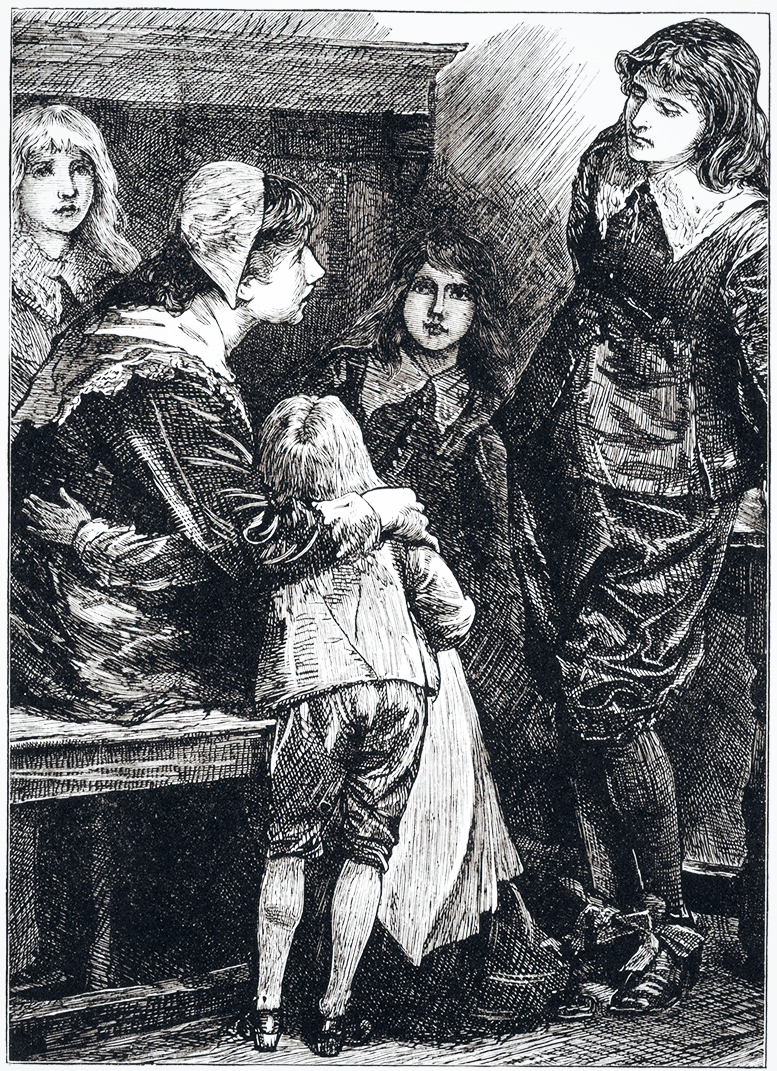
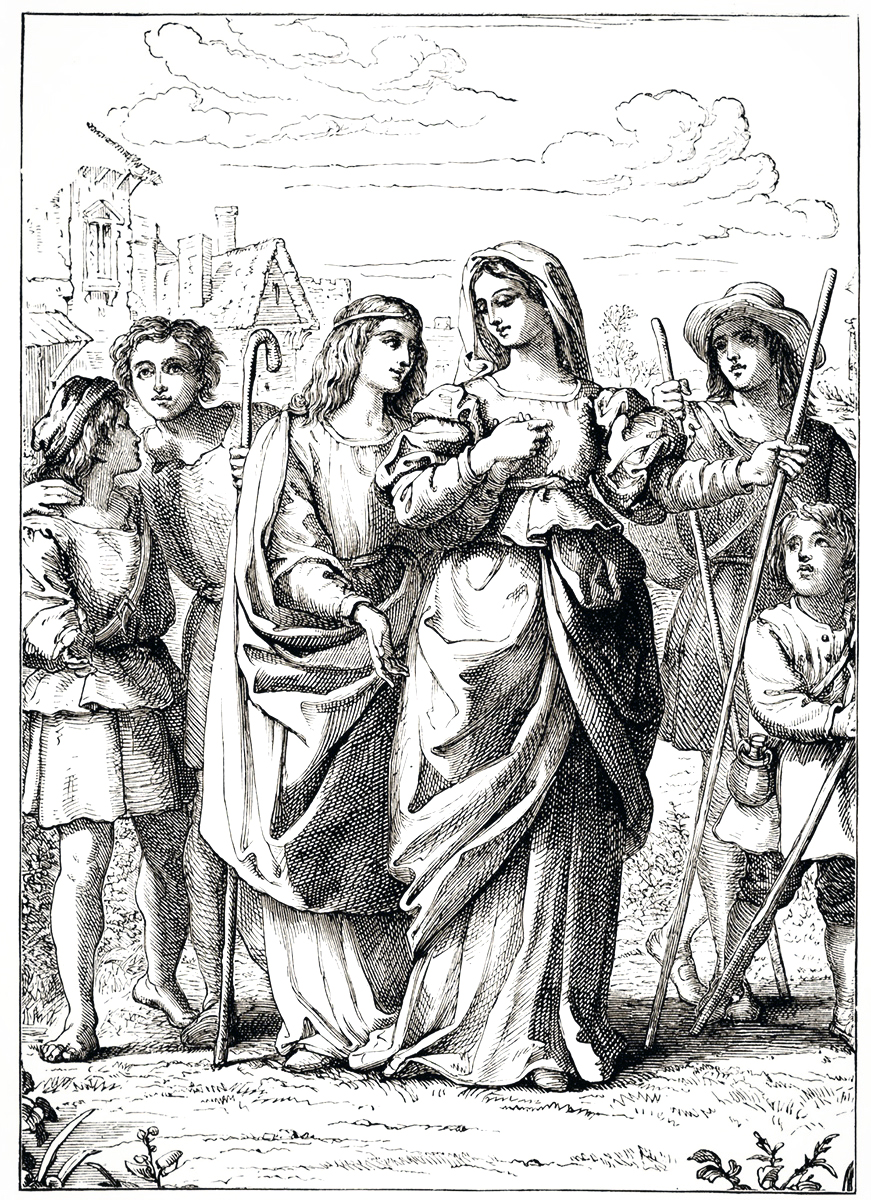
The Pilgrim’s Progress Part II continues John Bunyan’s allegorical narrative, following the journey of Christiana, Christian’s wife, who is motivated by her husband’s successful pilgrimage and the invitation from Evangelist to follow in his footsteps. She decides to journey to the Celestial City, taking her four sons and a neighbor, Mercy, with her. Although the core allegorical structure remains similar to Part 1 — a journey from the City of Destruction to the Celestial City — the narrative is expanded upon by including new characters and incidents, providing a more nuanced perspective on the Christian faith. Part 2 begins with Christiana, who, after receiving a divine revelation in a dream, regrets not having embarked on the journey with her husband. Convinced by her dream and her neighbor, Mrs. Timorous, Christiana decides to follow in Christian’s footsteps, taking their four sons (Matthew, Samuel, Joseph, and James) along with her.

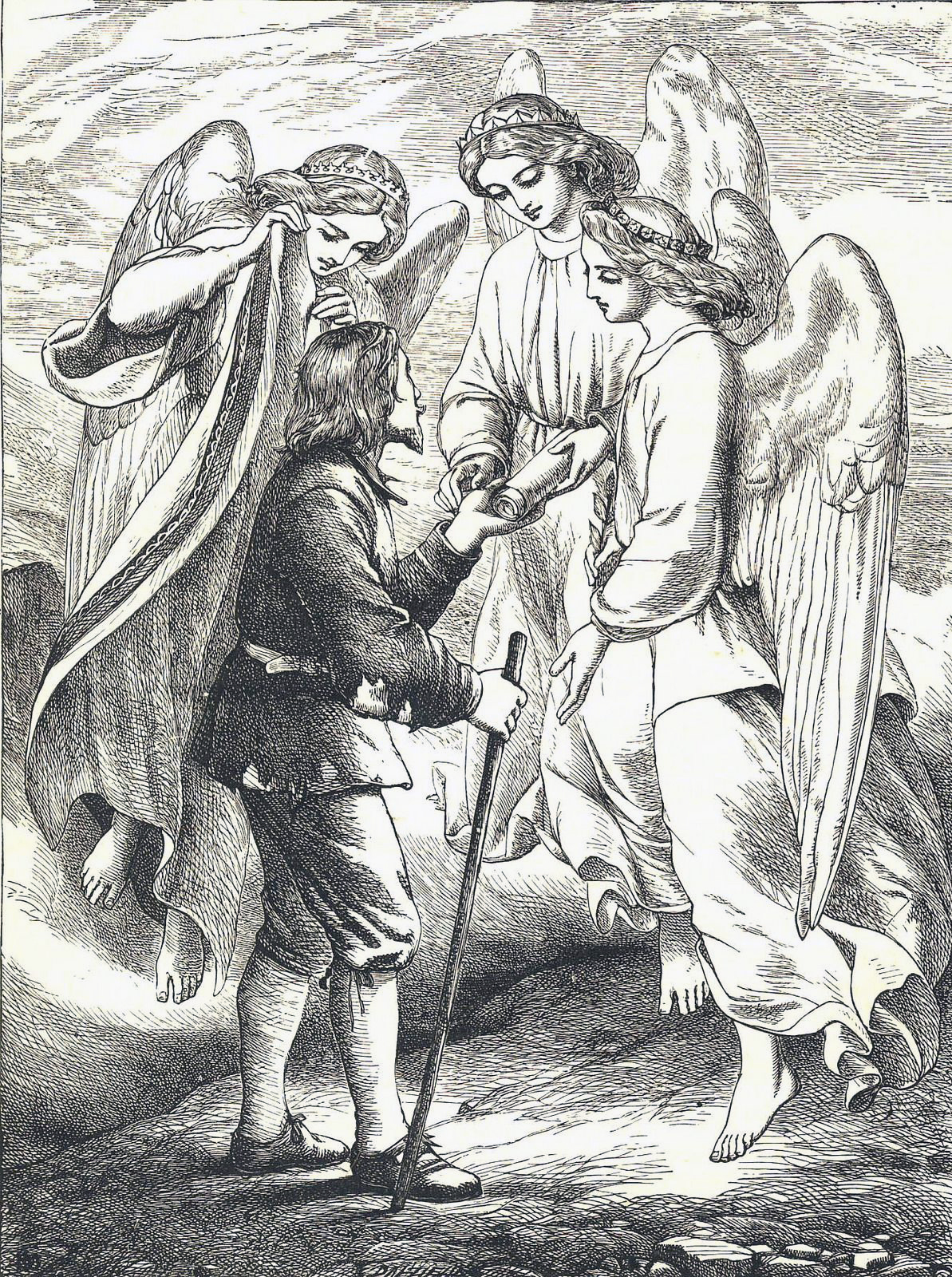
In Part II, Bunyan expands on many themes from the first part, providing additional nuance and depth. He also introduces several new characters and emphasizes the role of women in the Christian faith, reflecting meaningful contributions complementary to the religious and social landscape of his time. Christiana’s journey begins when Secret, a divine messenger, delivers a letter to her. Inspired by the letter and disturbed by dreams of Judgment Day, she decides to set off for the Celestial City with her children. Accordingly, Mercy, Christiana’s young neighbor, asks to join her, despite knowing the journey could be perilous. However, Christiana and her group remain resolute and continue. The journey is not easy, and they have to navigate several challenges and obstacles, such as the Slough of Despond and the Hill Difficulty.

Like Christian in the first part, Christiana and her companions also stop at the Interpreter’s House, where they are given guidance and shown various allegorical pictures and scenes. The House proves to be a place of learning and reflection, helping travelers understand their spiritual journey better. The journey continues, and the group visits several significant sites, such as the Cross, the Sepulchre, and the Hill of Difficulty.

Under Great-Heart’s guidance, the group overcomes many physical and spiritual challenges. These include the fight with Giant Despair at Doubting Castle and the crossing of the Enchanted Ground. Through these trials, the pilgrims learn about the power of faith and the importance of perseverance. In contrast to the first part, the second part greatly emphasizes community and fellowship. Christiana’s group grows throughout the journey, welcoming new members like Standfast and Valiant-for-Truth. These characters contribute their unique insights, reinforcing the idea that all believers have a role in the body of Christ.

Finally, Christiana, Mercy, and the remaining group reach the River of Death, the final barrier before the Celestial City. Christiana crosses first and is joyously welcomed into the City. The others follow each greeted with a similar celebration. The journey of each pilgrim ends in successful entry into the Celestial City, marking the completion of their spiritual journey. “Pilgrim’s Progress Part II” is a rich and complex allegory detailing Christiana’s spiritual journey. Bunyan uses the characters and obstacles Christiana encounters to explore deeper themes of faith, perseverance, fellowship, and the nature of the Christian journey. In contrast to the first part, it provides a broader picture of the Christian experience, reflecting diverse experiences and insights.

Pilgrims’ Locations

  1. The City of Destruction: The journey begins here, which represents the unenlightened world. Christian is distressed by the burden (sin) on his back and is seeking salvation.
  2. Slough of Despond: Christian falls into this swamp of despondency and despair, which represents feelings of guilt and fear due to the recognition of sin.
  3. House of the Interpreter: Here, Christian learns important lessons through several visions and allegorical figures that Interpreter shows him.
  4. Cross and Sepulchre: At this point, Christian loses his burden (sin) at the sight of the Cross, symbolizing the redemption and forgiveness of sins through Christ’s sacrifice.
  5. Hill Difficulty: Christian’s faith is tested when he needs to climb this difficult hill.
  6. Palace Beautiful: Christian receives hospitality, rest, and further instruction in the Christian faith at this place, symbolizing the Church.
  7. Valley of Humiliation: Here, Christian faces and defeats the monster Apollyon, representing Satan.
  8. Valley of the Shadow of Death: Christian continues his journey through this treacherous valley, enduring dangers and darkness.
  9. Vanity Fair: This town represents the worldly temptations. Christian and Faithful, his companion by this point, are put on trial for their beliefs.
  10. Doubting Castle and Giant Despair: Christian and Hopeful, another companion after Faithful’s death, are imprisoned and tortured by Giant Despair, but they escape using the key of Promise.
  11. Delectable Mountains: These represent the joys and comforts of the life of grace. Christian and Hopeful are refreshed and receive more instructions for their journey here.
  12. Enchanted Ground: A dangerous place where drowsiness and laziness threaten to halt the pilgrims’ progress.
  13. Land of Beulah: This land represents spiritual abundance and rest before the final leg of the journey. Here, Christian and Hopeful prepare themselves for their crossing of the River of Death.
  14. River of Death: Christian and Hopeful cross this river to finally reach the Celestial City, symbolizing the passing from life into eternity.
  15. The Celestial City (Heaven): Christian finally reaches his destination, the place of eternal salvation and joy. He and Hopeful are welcomed with trumpets and a chorus of angels.

Continue Reading ·

Confessions by Saint Augustine

A couple of weeks ago, I finished reading Confessions by Augustine. It was the first written work of Augustine I read as a whole, and it is a classic on a personal reading list of patristics. I’ve read sections of Augustine’s more comprehensive work in the City of God for research purposes on topics of theological interest. So there weren’t expectations going into the reading, but only an impression about who Augustine was and what others said and wrote about him. He is cited a lot and followed closely by devoted followers of Christ Jesus among all traditions of Christianity. Catholics often claim Augustine as an early Catholic church father for a time as he served within its early traditions.

The following is a synthesis of Confessions, a book-by-book summary produced by personal research that corresponds to my first reading of Augustine’s entire work.

INTRODUCTION

Augustine of Hippo (354-430 AD), also known as Saint Augustine, was a theologian, philosopher, and bishop of the North African city of Hippo Regius, located in present-day Annaba, Algeria. He is one of the most significant figures in the development of Western Christianity and a key figure in the history of Western philosophy. Augustine was initially a follower of Manichaeism and later Neoplatonism. Still, after converting to Christianity in 386 AD, he became a prominent Christian theologian and eventually the Bishop of Hippo in 396 AD.

Augustine’s writings, including his autobiographical work “Confessions” and his magnum opus “The City of God,” have profoundly impacted the development of Christian doctrine and the Western intellectual tradition. He tackled various theological issues, such as original sin, predestination, the nature of the soul, and the relationship between faith and reason. Augustine’s ideas have influenced many subsequent philosophers and theologians, including Thomas Aquinas, Martin Luther, and John Calvin.

In addition to his theological works, Augustine made important contributions to the fields of ethics, epistemology, and political philosophy. His ideas on the relationship between church and state, the nature of the just war, and the role of government in maintaining peace and order have had a lasting impact on Western political thought.

BOOK I – Childhood

In Book 1 of Confessions, Augustine begins his spiritual autobiography by addressing God and reflecting on the nature of sin and human frailty. The book primarily focuses on his early childhood, exploring how even as a young child, he was prone to sin and driven by desires that led him astray.

Augustine describes his early years in the Roman African city of Thagaste (present-day Souk Ahras, Algeria). He notes that he was born into a Christian family, but was not baptized as an infant due to the cultural practice of waiting until later in life. He also provides an account of his education, recounting his learning of Latin, reading, and writing, as well as his exposure to Roman literature.

Throughout Book 1, Augustine frequently returns to the theme of sin, illustrating it with anecdotes from his childhood. He mentions instances of selfishness, deceit, and disobedience, highlighting the sinful nature inherent in humans. A famous example he provides is the story of stealing pears from a neighbor’s tree, not out of hunger or necessity, but simply for the thrill of doing something forbidden.

Augustine also delves into the topic of human desire and its role in leading people away from God. He explores the idea of “concupiscence,” which he defines as disordered desires or lusts that distract individuals from pursuing God.

Overall, Book 1 of Confessions serves as an introduction to Augustine’s life and thought, setting the stage for his journey towards faith and his eventual conversion to Christianity. It highlights themes of sin, desire, and the human inclination towards wrongdoing, all of which will be further explored in subsequent books.

Book I Synopsis

  1. He admires God’s Majesty and is inflamed with a deep desire to praise him
  2. Man hath his being from God; and that God is in man, and man in God
  3. God is wholly everywhere and is not by parts contained by the Creature
  4. An admirable description of God’s Attributes
  5. He prays for the forgiveness of sins and the Love of God
  6. That he hath received all blessings from God: and how he hath been preserved by him
  7. That even his infancy was subject to sin
  8. A description of his childhood
  9. The hatred that children bear for Learning, and their Love for Playing
  10. How, for his play, he neglected his Parents’ Commandments
  11. How he fell sick and how recovering, his Baptism was deferred
  12. He is forced to his Book: which God turned for good purpose
  13. With what studies he was chiefly delighted
  14. Of the Greek and Latin Tongues
  15. His Prayer to God
  16. Against lascivious fables
  17. The way of exercising youth in repeating and varying verses
  18. That Men care more about observing the Rules of Grammar than the Laws of God
  19. How he was more careful to avoid Barbarisms of Speech than the corruption of Manners
  20. He thanked God for his Benefits

BOOK II – Teen Years

In Book 2 of Confessions, Augustine continues his spiritual autobiography, shifting his focus to his teenage years and examining the nature of lust, the consequences of sinful behavior, and the longing for God’s grace.

During this period of his life, Augustine admits to being heavily influenced by his sensual desires, driven by lust and the impulses of his youth. He recounts the story of stealing pears from a neighbor’s tree, an act that has become emblematic of his exploration of sin. Augustine emphasizes that the theft was motivated not by hunger or need, but by the sheer enjoyment of wrongdoing, which reveals the depths of human depravity.

Augustine also discusses his education and his early interest in literature and rhetoric. Although he acknowledges the value of acquiring knowledge, he criticizes the fact that his studies were often guided by ambition and the pursuit of worldly success, rather than by a desire for truth or closeness to God.

Throughout Book 2, Augustine reflects on the role of human will and its susceptibility to temptation. He recognizes that even though he was aware of the difference between right and wrong, he often chose to act against his better judgment, succumbing to temptation and sin. This realization leads him to contemplate the need for God’s grace to guide and transform human will, allowing individuals to overcome their sinful inclinations.

In summary, Book 2 of Confessions delves into Augustine’s teenage years, examining the pervasiveness of sin, the weakness of human will, and the necessity of God’s grace. It reveals how Augustine’s early experiences with desire and ambition eventually led him to seek a deeper understanding of God and the nature of human existence.

Book II Synopsis

  1. He enters upon the Years and Sins of his Youth
  2. He accuses his youth spent in the heat of Lustfulness
  3. Of his Travels for his Studies’ sake and his Parents’ Purpose in it
  4. How he robbed a Pear-tree
  5. No man sins, but provoked by some Cause
  6. All those things which under the show of Good invite us to sin, are in God alone, to be found True and perfect
  7. He returns thanks to God for remitting these sins, and for keeping him from many others
  8. What he loved in that his theft
  9. Bad Company is infectious
  10. Whatsoever is good, is in God

BOOK III – Teen Years and Early Adulthood

In Book 3 of “Confessions,” Augustine recounts his time as a young man in Carthage, where he pursued his education and grappled with the seductions of worldly desires. This book explores Augustine’s intellectual and moral development, highlighting the influence of Manicheism, a dualistic religion he embraced for nearly a decade, and his struggle with lust.

Upon arriving in Carthage, Augustine is confronted with a city filled with temptations and distractions. He becomes entangled in a passionate love affair and struggles with the allure of lust and sexual desire, which he later sees as a significant obstacle to his spiritual journey.

Augustine also encounters Manicheism, a religious movement that offers an appealing explanation for the existence of evil in the world. Manicheism posits a dualistic cosmos in which two opposing forces, Good (the spiritual realm) and Evil (the material realm), are engaged in an eternal struggle. Augustine is initially drawn to this religion, as it seemingly addresses his concerns about the problem of evil and provides a framework for understanding the human condition. However, over time, he becomes disillusioned with Manicheism due to its intellectual inconsistencies and the inability of its adherents to answer his deeper philosophical questions.

Despite his preoccupation with worldly desires and his involvement with Manicheism, Augustine never loses sight of his thirst for truth and wisdom. He continues to study and explore various intellectual disciplines, including rhetoric, philosophy, and the works of Cicero. His search for truth eventually leads him to discover the beauty and depth of the Christian faith.

In summary, Book 3 of “Confessions” narrates Augustine’s experiences in Carthage, as he wrestles with the temptations of worldly desires, grapples with the allure of Manicheism, and pursues his passion for knowledge. This period of his life lays the groundwork for the profound intellectual and spiritual transformations that await him in the years to come.

Book III Synopsis

  1. He is caught with Love, which he hunted after
  2. Of Stage Plays
  3. His conversation with young Lawyers
  4. How Tully’s Hortensius provoked him to study Philosophy
  5. He sets lightly by the Holy Scriptures because of the simplicity of the style
  6. How he was ensnared by the Manichees
  7. The absurd doctrine of the Manichees
  8. Heinous offenses what be, and how punished
  9. The difference that is betwixt Sins, and betwixt the Judgment of God and Men
  10. He speaks again of the Fig-tree, and derides the Manichees’ foolish conceits about it
  11. His Mother’s Dream
  12. The answer his Mother received from a Bishop, concerning his Conversion

BOOK IV – Early Adult Years

In Book 4 of Confessions, Augustine focuses on his early adult years, specifically his time as a teacher of rhetoric in Carthage and his growing dissatisfaction with the Manichaean religion. He also addresses themes such as ambition, pride, and grief as he delves into his personal relationships and professional life.

During this period, Augustine’s ambition and desire for worldly success drive him to become a successful teacher of rhetoric. However, he acknowledges that his pursuit of material wealth and fame often distracts him from seeking deeper truth and genuine wisdom.

Augustine discusses his continued involvement with Manichaeism, revealing that he began to find inconsistencies in its teachings and became increasingly disillusioned with its explanations of good and evil. As his skepticism grows, he starts to search for a more satisfying spiritual framework.

One of the central events in Book 4 is the death of a close friend, which deeply affects Augustine and causes him to reflect on the impermanence of life and the nature of human attachment. He confronts his own grief and recognizes that his attachment to temporal, earthly things ultimately leaves him unfulfilled and unsatisfied. This realization further motivates him to seek lasting truth and happiness beyond the material world.

Book 4 of Confessions portrays Augustine’s growing awareness of the limitations of worldly ambitions and the inadequacies of the Manichaean religion. Through his personal experiences and his exploration of loss, he becomes increasingly aware of the necessity for a more profound understanding of life and a closer relationship with God. This period in his life marks an important turning point in his spiritual journey, setting the stage for the subsequent phases of his conversion.

Book IV Synopsis

  1. How long, and what ways he seduced others
  2. He teaches Rhetoric, and despiseth a Wizard who promised him the Victory
  3. Giving himself to Astrology, he is reclaimed by an ancient Physician
  4. He relates the sickness and Baptism of his Friend, whom himself had affected with Heresy: he grievously laments his Death
  5. Of Tears in our Prayers for, and Bewailing of, the Thing Beloved
  6. He tells with what great Affection he loved his Friend
  7. The impatientness of grief constrains us to shift our dwellings
  8. Time cures Sorrow
  9. The comparing of Human Friendship with Divine
  10. All Beauty is from God, who is to be prayed for all
  11. All things are created mutable in themselves, and immutable in God
  12. Love of the Creatures is not forbidden, provided that in those which please us, God be loved
  13. Love, whence it comes
  14. Of his Book of Fair and Fit
  15. How his Understanding being overshadowed with corporeal images, he could not discern the spiritual
  16. The admirable Aptness to Learning, and the great Understanding St. Augustine had

BOOK V – Rome, Milan, and Manichaeism

In Book 5 of Confessions, Augustine recounts his departure from Carthage to Rome and then his appointment as a teacher of rhetoric in Milan, Italy. This period in his life is marked by significant events and encounters that play a crucial role in shaping his intellectual and spiritual development.

One key event during this time is Augustine’s disillusionment with Manichaeism. While teaching in Rome, he meets a famous Manichaean bishop named Faustus, hoping to find answers to his doubts about the religion. However, Augustine becomes disappointed when he realizes that Faustus cannot provide the intellectual depth or satisfying explanations he is seeking. This meeting further erodes Augustine’s confidence in Manichaeism and accelerates his journey toward Christianity.

Upon moving to Milan, Augustine encounters the influential Bishop Ambrose, a renowned theologian and preacher. Ambrose’s eloquence, intelligence, and deep understanding of the Christian faith greatly impress Augustine. His exposure to Ambrose’s sermons and teachings, as well as his interpretation of the Scriptures, begins to dismantle Augustine’s previous objections to Christianity. Additionally, Ambrose’s personal kindness toward Augustine fosters a relationship that serves as a significant catalyst for Augustine’s conversion.

While in Milan, Augustine also becomes acquainted with Neoplatonism, a school of philosophy that synthesizes elements of Plato’s thought with other philosophical and religious traditions. Neoplatonism helps Augustine gain a new perspective on the nature of evil, which he comes to understand as the absence of good rather than a positive force in itself. This insight aids in reconciling his previous struggles with the problem of evil in Christian doctrine.

Book 5 of Confessions depicts crucial moments in Augustine’s spiritual journey, as his disillusionment with Manichaeism leads him to engage more deeply with Christian thought. His encounters with Ambrose and Neoplatonism provide him with a new understanding of Christianity, setting the stage for his eventual conversion in Book 8.

Book V Synopsis

  1. He stirs his own Soul to praise God
  2. God’s presence can no man avoid, seeing he is everywhere
  3. Of Faustus the Manichee: and of Astrologies
  4. Only the Knowledge of God makes happy
  5. The rashness of Faustus, in teaching what he knew not
  6. Faustus was eloquent by Nature, rather than by Art
  7. He falls off from the Manichees
  8. He takes a Voyage to Rome, against the will of his Mother
  9. Of a shrewd Fever that he fell into
  10. His Errors before his receiving the Doctrine of the Gospel
  11. How he compared the Manichees’ Tenets with the Catholics
  12. The cunning Tricks put at Rome by Scholars upon their Masters
  13. He goes to Milan to teach Rhetoric, and how St. Ambrose there entertains him
  14. Upon his hearing of St. Ambrose, he by little and little falls off from his errors

BOOK VI – Milan

In Book 6 of Confessions Augustine further explores his time in Milan, focusing on the development of his relationships and the spiritual progress he made while grappling with his attachment to earthly desires.

During this period, Augustine’s mother, Monica, joins him in Milan. Monica is a devout Christian who has long prayed for her son’s conversion. She seeks advice from Bishop Ambrose, who assures her that Augustine will eventually find his way to Christianity. Her faith and prayers play a significant role in Augustine’s spiritual journey.

Augustine also forms friendships with fellow seekers of truth, who engage in discussions about philosophy, religion, and the nature of happiness. These friendships provide intellectual stimulation and foster a sense of community that helps him in his quest for understanding.

Despite his growing attraction to Christianity, Augustine continues to struggle with his desires, particularly lust and ambition. He is involved in a long-term relationship with a woman who has borne him a son, Adeodatus, but he is hesitant to commit to a life of celibacy, which he believes is necessary for genuine conversion.

Augustine’s attachment to material success and worldly ambitions also hinders his full acceptance of Christianity. He finds it difficult to reconcile his desire for professional achievement with the humility and self-denial that he perceives as essential to the Christian life.

In summary, Book 6 of Confessions portrays Augustine’s increasing engagement with Christian thought and the obstacles he faces as he moves closer to conversion. His struggles with lust, ambition, and his attachment to worldly success serve as the backdrop for the deepening of his relationships and his ongoing search for spiritual truth.

Book VI Synopsis

  1. How St. Augustine was neither Manichee, nor good Catholic
  2. His Mother is turned from her country Superstitions
  3. The Employments and Studies of St. Ambrose
  4. Of the Letter and the Spirit
  5. Of the Authority and necessary Use of the Holy Bible
  6. The Misery of the ambitious, shewn by the example of a Beggar
  7. He dissuades Alypius from his excessive delight in the Circensian Games
  8. Alypius is taken with a delight of the Sword-plays, which before he hated
  9. Alypius was apprehended for suspicion of thievery
  10. Of the great Integrity of Alypius, and of Nebridius’ coming
  11. He deliberates what course of life he were best to take
  12. A Contention between Alypius and Augustine, about Marriage and Single Life
  13. Augustine lays out for a Wife
  14. A new Plot is laid and broken
  15. How his old Concubine goes away from him, and he gets another
  16. Of the Immortality of the Soul

BOOK VII – Neoplatonism

In Book 7 of Confessions, Augustine recounts a crucial period in his intellectual and spiritual journey, as he delves deeper into Neoplatonism and comes closer to embracing Christianity. This book details the intellectual breakthroughs that bring him to the threshold of conversion, while also exploring his internal struggles and the obstacles he still needs to overcome.

Augustine’s engagement with Neoplatonism provides him with new philosophical perspectives that help clarify his understanding of the nature of God, evil, and the soul. Through Neoplatonism, he comes to see evil as a privation of good rather than an independent force, which helps resolve his long-standing struggles with the problem of evil. He also gains a deeper understanding of the immaterial nature of God and the human soul, allowing him to better appreciate the spiritual aspects of Christianity.

Simultaneously, Augustine becomes more familiar with the Bible, particularly the writings of Saint Paul, which resonate with his personal experiences and spiritual struggles. He finds solace in the message of divine grace, realizing that human beings are incapable of achieving salvation through their own efforts and need God’s assistance to overcome sin.

Despite these intellectual breakthroughs, Augustine still faces significant obstacles on his path to conversion. He continues to struggle with his desires, particularly lust, and finds it difficult to abandon his old habits and fully commit to a Christian lifestyle. He acknowledges his own internal conflict, expressing a longing for spiritual transformation, yet hesitating due to his attachment to worldly pleasures.

Book 7 of Confessions represents a pivotal stage in Augustine’s spiritual journey. As he grapples with Neoplatonic philosophy and deepens his understanding of Christian teachings, he is brought to the brink of conversion. However, his internal struggles and the lingering attachment to earthly desires still need to be overcome before he can fully embrace the Christian faith.

Book VII Synopsis

  1. How rejecting corporeal Images, he began to know God to be incorporeal
  2. Nebridius confutes the Manichees
  3. Free Will is the cause of Sin
  4. God cannot be compelled
  5. He pursues his enquiries after the root of sin
  6. Divinations made by the Mathematicians are vain
  7. He is miserably tortured in his Enquiry after the Root of Evil
  8. How the Mercy of God at length relieved him
  9. What he found in some Books of the Platonists, agreeable to the Christian Doctrine
  10. Divine things are more clearly discovered unto him
  11. How Creatures are, and yet are not
  12. All that is, is Good
  13. All created Things praise God
  14. To a sober Mind, none of God’s Creatures are displeasing
  15. How there is truth and falsehood in the Creatures
  16. All Things are good, though to some Things not fit
  17. What things hinder us of God’s Knowledge
  18. Only Christ is the Way to Salvation
  19. What he thought of Christ’s Incarnation
  20. Of divers Books of the Platonists
  21. What he found in the Holy Scriptures, which was not in the Platonists

BOOK VIII – Conversion to Christianity

In Book 8 of Confessions, Augustine reaches the climactic point of his spiritual journey – his long-awaited conversion to Christianity. The book focuses on his internal struggle to overcome his remaining barriers to faith, as well as the crucial events and encounters that ultimately lead to his surrender to God’s grace.

Augustine continues to wrestle with his attachment to worldly desires, particularly lust, which prevents him from wholeheartedly embracing the Christian faith. Although he has intellectually accepted the truth of Christianity, his will remains divided, unable to break free from his past habits and fully commit to a new life.

Several key events and encounters in this book play a significant role in Augustine’s ultimate conversion:

  1. The story of Victorinus, a prominent Roman rhetorician and philosopher who converted to Christianity late in life, serves as an inspiration for Augustine, demonstrating that it is possible to leave behind a life of worldly success for the sake of faith.
  2. Augustine meets Simplicianus, a wise and experienced Christian who shares the story of the conversion of St. Ambrose’s mentor, the Neoplatonist philosopher Marius Victorinus. This story further emphasizes the transformative power of Christianity and its ability to transcend philosophical differences.
  3. Augustine hears the account of the conversion of two officials in the imperial court, Ponticianus and his friends, who were deeply moved by the life of St. Antony, a renowned Egyptian hermit. Their transformation after reading the story of Antony challenges Augustine to reexamine his own priorities and confront the barriers that prevent him from embracing Christianity.

The culminating event in Augustine’s conversion occurs in a garden, where he hears the voice of a child singing, “Take up and read.” Interpreting this as a divine command, Augustine picks up a nearby copy of the Bible and reads a passage from St. Paul’s Letter to the Romans (13:13-14), which urges him to cast off his old ways and embrace the teachings of Christ. This powerful, transformative moment marks the beginning of Augustine’s new life as a Christian.

Book 8 of Confessions, captures the final stages of Augustine’s journey to Christianity, detailing the internal struggles, external influences, and divine interventions that culminate in his conversion. With this pivotal transformation, Augustine begins a new chapter in his life, dedicated to the pursuit of truth, wisdom, and holiness through the Christian faith.

Book VIII Synopsis

  1. How being inflamed with the Love of Heavenly Things, he goes to Simplicianus
  2. How Victorinus, the famous Orator, was converted
  3. That God and his Angels do rejoice the more, at the conversion of a greater Sinner
  4. Why we are more to rejoice in the Conversion of a great Sinner
  5. What hindered his Conversion
  6. Ponticianus relates the Life of St. Anthony
  7. He was out of Love with himself upon this Story
  8. What he did in the Garden
  9. Why the Mind is so slow to Goodness
  10. The Will of Man is various
  11. The Combat in him betwixt the Spirit and the Flesh
  12. How he was converted by a voice

BOOK IX – Baptism and Death of Augustine’s Mother

Book 9 of Confessions, marks the beginning of Augustine’s new life as a Christian, focusing on the immediate aftermath of his conversion, his baptism, and the death of his mother, Monica. This book explores themes of spiritual transformation, the power of grace, and the importance of community in his journey of faith.

Following his conversion in Book 8, Augustine decides to resign from his position as a teacher of rhetoric and dedicate his life to serving God. Together with his close friends and his son, Adeodatus, he forms a small Christian community where they devote themselves to prayer, study, and contemplation. This period of retreat allows Augustine to further deepen his understanding of Christianity and prepare for his upcoming baptism.

In Milan, Augustine, Adeodatus, and his close friend Alypius are baptized by Bishop Ambrose during the Easter Vigil. This significant event symbolizes the beginning of their new lives as Christians and their commitment to living according to the teachings of Christ.

One of the central events in Book 9 is the death of Augustine’s mother, Monica, which takes place shortly after his baptism. Augustine reflects on her life, faith, and the profound influence she had on his spiritual journey. He recounts a moving conversation they shared shortly before her death, in which they discussed the nature of eternal life and the joys of heaven. Monica’s passing prompts Augustine to contemplate the transient nature of earthly existence and the promise of eternal life in the presence of God.

In summary, Book 9 of Confessions, narrates the transformative experiences following Augustine’s conversion, including his retreat, baptism, and the death of his mother. This book emphasizes the importance of spiritual growth, the power of divine grace, and the role of supportive relationships in helping individuals navigate the challenges and joys of the Christian faith.

Book IX Synopsis

  1. He praiseth God’s Goodness; and acknowledgeth his own wretchedness
  2. He gives over his Teaching of Rhetoric
  3. Verecundus lends them his Country House
  4. What things he wrote with Nebridius
  5. Ambrose directs him what Books to read
  6. He is Baptized at Milan
  7. A Persecution in the Church miraculously diverted
  8. The Conversion of Euodius. A Discourse of his Mother
  9. His Mother Monica’s carriage towards her Husband. A description of a rare Wife
  10. Of a Conference he had with his Mother about the Kingdom of Heaven
  11. Of the Extasy and Death of his Mother
  12. He laments his Mother’s Death
  13. He prayed for his dead Mother

BOOK X- Theology of Memory, Nature of Prayer, Self Examination

In Book 10 of Confessions, Augustine shifts from recounting his personal narrative to offering a profound meditation on memory, self-examination, and the nature of prayer. He examines his current relationship with God and reflects on the human condition, exploring the various dimensions of human desire and the longing for divine union.

Augustine delves into the concept of memory, marveling at its vastness and complexity. He acknowledges the crucial role of memory in shaping his understanding of God, as well as its function in retaining knowledge and experiences. Augustine sees memory as a repository of his past sins and errors, but also as a space where he can encounter God’s grace and presence.

As he engages in self-examination, Augustine reflects on the nature of temptation and the ongoing struggle against sin, even after his conversion. He acknowledges that while he has made progress in his spiritual life, he still faces the challenge of resisting various forms of desire and attachment, such as the temptations of the senses, pride, and the allure of worldly success. He emphasizes the necessity of God’s grace in overcoming these temptations and maintaining the pursuit of holiness.

Throughout Book 10, Augustine offers a series of prayers and reflections on his relationship with God. He seeks divine guidance and assistance in his quest for spiritual growth, acknowledging his reliance on God’s grace to transform his desires and align them with the divine will. Augustine also meditates on the ultimate goal of human existence, which he sees as a longing for union with God, a state of perfect happiness and eternal fulfillment.

In summary, Book 10 of Confessions represents a departure from the autobiographical narrative of the earlier books, focusing instead on a profound exploration of memory, self-examination, and prayer. Through these meditations, Augustine deepens his understanding of his relationship with God and the ongoing challenges he faces in his spiritual journey, revealing the complexity and dynamism of the human desire for divine union.

Book X Synopsis

  1. The Confessions of the Heart
  2. Secret Things are known unto God
  3. The Confession of our ill deeds, what it helps us
  4. Of the great Fruit of Confession
  5. That Man knoweth not himself thoroughly: and knows not God but in a glass darkly
  6. What God is, and how known
  7. God is not to be found by any Ability in our Bodies
  8. The Force of the Memory
  9. The Memory of divers Sciences
  10. Our Senses convey things into our Memory
  11. The Forms of things are in the Soul
  12. The Memory of Mathematicians
  13. The Memory of Memory
  14. How, when we are not glad, we call to mind things that have made us glad
  15. We remember absent Things also
  16. There is a Memory of Forgetfulness also
  17. A threefold Power of Memory
  18. Of the Remembrance
  19. What Remembrance is
  20. All Men desire Blessedness
  21. We also remember what we never had
  22. True Joy, is this blessed Life
  23. A blessed life; what, and where it is
  24. That the Memory containeth God too
  25. In what degree of the Memory God is found
  26. Whereabouts God is to be found
  27. How God draws us to himself
  28. The Misery of this Life
  29. Our Hope is all in God
  30. The deceitfulness of Dreams
  31. The Temptation of Eating and Drinking
  32. Of our Delight in Smelling
  33. The Pleasures taken in Hearing
  34. The Enticements coming in by the Eyes
  35. Of our Curiosity in knowing
  36. The Sin of Pride
  37. Praise and Dispraise, how they move us
  38. Virtue is endangered by Vain-glory
  39. Of Self-love
  40. His Striving against Sin
  41. God and a Lie cannot stand together
  42. Angels cannot be our Mediators
  43. Christ only is the all-sufficient Intercessor

BOOK XI – Theological Inquiry on Time and Creation

In Book 11 of Confessions, Augustine transitions from an introspective examination of his own life to a broader inquiry into philosophical and theological questions. Focusing primarily on the nature of time and creation, Augustine reflects on the opening verses of the Book of Genesis and offers insights into God’s relationship with the temporal world.

Augustine begins by considering the nature of time, asking what it is and how it can be understood. He acknowledges the complexity and elusiveness of time, examining its properties and the difficulty humans have in grasping its true essence. He distinguishes between past, present, and future, asserting that only the present truly exists, while the past and future are mental constructs.

Turning to the subject of creation, Augustine contemplates the nature of God’s creative act as described in the Book of Genesis. He rejects the idea that God created the world in a temporal sense, as he believes that God exists outside of time, being eternal and unchanging. Instead, Augustine proposes that creation occurred simultaneously with time, both having their origin in God’s creative act.

Throughout his reflections on time and creation, Augustine emphasizes the limitations of human understanding when it comes to comprehending divine realities. He acknowledges that human language and concepts are insufficient to fully grasp the nature of God and the mysteries of creation.

Book 11 of Confessions, marks a significant shift in focus, as Augustine moves from a personal exploration of his own experiences to a broader philosophical and theological inquiry. By contemplating the nature of time and creation, Augustine deepens his understanding of God’s relationship with the temporal world and underscores the limitations of human knowledge in the face of divine mysteries.

Book XI Synopsis

  1. Why we confess unto God who knows all
  2. He sueth to be delivered from his Sins and Errors, and to be guided unto the true Knowledge
  3. He desires to understand the Holy Scriptures
  4. The Creatures proclaim God to be their Creator
  5. How the World was made of Nothing
  6. He disputes curiously what manner of Word the World was created by
  7. The Son of God is the Word co-eternal with the Father
  8. The Word of God is our Teacher in all
  9. How the Word of God speaketh unto the Heart
  10. God’s Will knows no Beginning
  11. God’s Eternity not to be measured by the parts of Time
  12. What God did before the Creation of the World
  13. That before those Times which God created, there was no Time
  14. Of the Nature and three Differences of Time
  15. No Time can be said to be long
  16. Of our measuring of Times
  17. Where Time past, and to come, now are
  18. How Times past, and to come, are now present
  19. He demands of God, how future Things be foreknown
  20. These three differences of Times, how they are to be called
  21. How Time may be measured
  22. He begs of God the Resolution of a Difficulty
  23. He clears this Question, what Time is
  24. Time it is, by which we measure the Motion of Bodies
  25. He prayed again
  26. The Measuring of the Feet and Syllables of a Verse
  27. He begins to resolve the former question, how we measure time
  28. We measure Times in our Mind
  29. How the Mind lengthens out itself
  30. He goes on in the same Discourse
  31. How God is known, and how the creature

BOOK XII – Theology of Creation, Scripture, and Tradition

In Book 12 of Confessions, Augustine continues his in-depth exploration of the Book of Genesis, focusing on the interpretation of Scripture and the theological implications of creation. He emphasizes the importance of humility and charity in approaching the study of Scripture and delves into various perspectives on the creation narrative.

Augustine acknowledges that Scripture can be interpreted in multiple ways, stressing the importance of embracing an attitude of humility and openness when engaging with the text. He suggests that different interpretations can be valid, as long as they do not contradict essential Christian teachings and are guided by the principles of charity and love.

To illustrate the range of interpretations, Augustine examines various understandings of the creation story in Genesis, particularly the phrase “In the beginning, God created the heavens and the earth” (Genesis 1:1). He engages with multiple perspectives, including those that interpret creation as occurring in a literal sequence of days, as well as those that view it allegorically or symbolically.

Through his analysis of creation, Augustine emphasizes the distinction between God’s eternal, unchanging nature and the mutable nature of the created world. He asserts that all things find their origin in God, who transcends time and created everything from nothing (creatio ex nihilo). Augustine also explores the nature of God’s Word (the Logos) and its role in the creation process, recognizing that the Word is the means through which all things were made.

Book 12 of Confessions extends Augustine’s theological inquiry into the interpretation of Scripture and the nature of creation. His emphasis on humility, charity, and intellectual openness when approaching the Bible, as well as his exploration of various interpretations of the Genesis narrative, demonstrate the depth and complexity of Augustine’s thought and the richness of the Christian intellectual tradition.

Book XII Synopsis

  1. ’Tis very difficult to find out the Truth
  2. That the Heaven we see is but Earth, in respect of the Heaven of Heavens, which we see not
  3. Of the Darkness upon the Face of the Deep
  4. Of the Chaos, and what Moses called it
  5. That this Chaos is hard to conceive
  6. What himself sometimes thought of it
  7. Heaven is greater than Earth
  8. The Chaos was created out of nothing, and out of that, all things
  9. What that Heaven of Heavens is
  10. His Desire to understand the Scriptures
  11. What he learned of God
  12. Of two Creatures not within Compass of Time
  13. The Nature of the Heaven of Heavens described
  14. The Depth of Holy Scripture
  15. The Difference betwixt the Creator and the creatures. Some Discourses about the Heaven of Heavens
  16. Against such as contradict divine Truth: and of his own Delight in it
  17. What the Names of Heaven and Earth signify
  18. Divers Expositors may understand one Text several Ways
  19. Of some particular apparent Truths
  20. He interprets Genesis 1:1 otherwise
  21. These Words, the Earth was void &c., diversely understood
  22. That the waters are also contained under the names of Heaven and Earth
  23. In interpreting of Holy Scripture, Truth is to be sought with a charitable Construction
  24. The Scripture is true, though we understand not the uttermost Scope or Depth of it
  25. We are not to break Charity about a different Exposition of Scripture
  26. What Style was fit to write the Scriptures in
  27. The best Drawing at the fountain
  28. How diversely this Scripture is understood by others
  29. How many Ways a Thing may be said to be First
  30. The Scriptures are to be searched, with honorable Respect unto the Penman
  31. Truth is so to be received; whoever speaks it
  32. He prays to obtain right Meaning

BOOK XIII – Theology of Creation, Trinity, and Spiritual Formation

In Book 13, the final book of Confessions, Augustine continues his reflections on the Book of Genesis, focusing on the creation narrative, the nature of the Holy Trinity, and the process of spiritual renewal. Augustine also meditates on the role of Scripture and the Church in guiding individuals on their path to God.

Augustine explores the meaning behind the seven days of creation, offering both literal and allegorical interpretations. He sees the days as representing various stages in the spiritual development of human beings as they progress toward union with God. In his analysis, Augustine emphasizes the role of divine grace in transforming the human soul and enabling spiritual growth.

Throughout his reflections on Genesis, Augustine consistently refers to the doctrine of the Holy Trinity, contemplating the roles of the Father, Son, and Holy Spirit in creation and the process of redemption. He sees the Trinity as the source of all being, goodness, and truth, and highlights its importance in understanding the nature of God and the dynamics of the Christian faith.

Augustine also meditates on the Church as the body of Christ, emphasizing the importance of community and the role of the Church in nurturing spiritual growth. He views the Church as a vehicle through which individuals can receive divine grace, participate in the sacraments, and grow closer to God.

In the concluding passages of Confessions, Augustine offers a prayer of gratitude and praise to God, acknowledging the transformative power of divine grace in his own life and the lives of others. He reaffirms his commitment to a life of faith, seeking to deepen his relationship with God and share the insights he has gained throughout his spiritual journey. In summary, Book 13 of “Confessions” brings Augustine’s work to a close by reflecting on the creation narrative, the Holy Trinity, and the process of spiritual renewal. His emphasis on the importance of Scripture, the Church, and the role of divine grace in guiding individuals toward union with God provides a fitting conclusion to this deeply personal and profoundly theological work.

Book XIII Synopsis

  1. He called upon God
  2. Of the Creatures’ dependency upon their Creator
  3. All is of the Grace of God
  4. God needs not the Creatures, but they Him
  5. His Confession of the Blessed Trinity
  6. Of the Spirit’s moving upon the Waters
  7. Of the Effect or Working of the Holy Spirit
  8. How God’s Spirit cherishes feeble Souls
  9. Why the Spirit only moved upon the Waters
  10. All is of God’s Gift
  11. Of some Impressions or Resemblances of the Blessed Trinity, that be in man
  12. The Water in Baptism is effectual by the Holy Spirit
  13. His devout longing after God
  14. Our Misery is comforted by Faith and Hope
  15. By the word Firmament, is the Scripture meant
  16. God is unchangeable

Continue Reading ·

Errata to Wormwood

This post is a book review of C.S. Lewis’s The Screwtape Letters. To track and understand what Lewis wrote from the perspective of Screwtape in his correspondence to Wormwood, I wrote these summaries in the way that Lewis cast Screwtape. Yet, in the same tone, meaning, voice, and manner to get a slight glimpse of what he had to say. Letter after letter, these are summaries as a review method to understand how they work together and what they intend to do to the reader. This is a role play by prose to get a sense of disgust and alarm that we are meant to understand. The consistent thread among all Screwtape’s letters to Wormwood constitutes areas of attack on the whole person. Whether toward virtue, interests, or values, every area of a person’s life is subject to constant animosity and relentless degradation until final and total separation from God.

SUMMARY OF CORRESPONDENCE

Concerning efforts to secure the damnation of a young man, these are letters from uncle Screwtape to Wormwood outlined for summary understanding. Together, they represent the courses of action between an old devil Screwtape and his young demonic protégé, Wormwood. Following C.S. Lewis’s rationale (and satire) concerning the alarming methods and intentions of adversarial efforts of spiritual enemies, we learn what we’re up against from among Screwtape’s letters.

MACHINATIONS

Erratum 1:

Keep him from science and the ability or interest of proper season. He must remain preoccupied with the ordinary. Your job is to keep him focused on “real life.”

Erratum 2:

On the displeasing news that he becomes a Christian, keep him entangled in improper habits and values as long as possible to impede his spiritual growth. While continuing to think he is doing his church a favor by attending services, his mind must remain occupied with comparisons between what is observed among church congregants and how he thinks church members should be.

Erratum 3:

It is of utmost importance that the relationship between the young man and his mother is a constant series of annoyances. The domestic life of family must be aggravating even in the slightest way possible, but with pin-prick persistence in tone, mannerisms, and words chosen during conversation that does subtle yet cumulative harm. Develop circumstances in which offense and grievance are paramount among family members at the slightest interaction. Pay more attention to the young man’s concern about the spiritual condition of the mother as he is focused on the condition of the soul and sins of the past. If the young man should begin to guide his mother in prayer, or spiritual development, make sure that the effort is fruitless. If he is to pray for his mother, his prayers are to be on the grounds of uniformed and reckless concern.

Erratum 4:

It’s best to keep the young man, the patient, from praying. However, if prayer is to occur, it must be kept inward, informal, and unregularized. Any cognitive effort during prayer shall not be present within the patient, but a vague sense of devotion shall be the main course of prayer. It is unacceptable for the patient to pray out loud or on his knees. Prayer is to be superficial as it is among those very far advanced in the Enemy’s service. As this effort continues, keep the patient focused on their own minds and direct their gaze elsewhere from any service to the Enemy. Try to stimulate feelings within the patient to misdirect his intention. Look into the patient’s mind to find as much dirt as possible while he is praying and focused on God. Finally, keep the patient praying to the object through which his imagination is anchored.

Erratum 5:

The anguish of a human soul is nothing to be exuberant about. Don’t let it go to your head. If you trap the human soul and eternally secure his fate forever, the patient will belong to you while he is in despair, horror, and astonishment. To undermine faith and the development of virtues, it is necessary to render a complete account of the patient’s reactions to the war in Europe about to get underway. Do your best to make the patient an extreme patriot or ardent pacifist, as humans undergo extreme suffering in service of your father below.

Erratum 6:

It is desirable to have the patient in a continuous or periodic state of anxiety and uncertainty. Blocking a human’s mind against the Enemy is of concern as there’s an effort to preoccupy what will happen to him. The Enemy wants the patient to be concerned about what he does and not what he thinks about himself or his state of mind. In the midst of mental suffering, direct the patient’s thoughts and prayers upon himself where he has no interest in directing his attention upon the Enemy or others. Direct the patient’s concentration and mind to the object and circumstances and never upon the Enemy or others.

If the patient does happen to have concern and anguish about the state of society, world affairs, or the war, direct the malice of the patient to those around him. Suppose he should develop compassion or empathy toward people. In that case, they are to be directed to people at a distance among people unknown. Inflamed hatred of immediate surroundings among neighbors begins to transfer to family, friends, fellow students, and the patient’s employer. Distant care and empathy remain imaginary.

Erratum 7:

It is not acceptable to reveal your existence to the patient. The father below does not permit it. If the patient begins to wonder about it, direct his thoughts and passions elsewhere by distraction and suggestive interests. Keep the patient confused and oblivious to the existence of spirits, demons, and devils where no suspicion is permitted to surface. Suggest anything contradictory to the existence of dark influences. Redirect attention to base interest concerning cravings, lusts, and passions. Passivism or patriotism taken to heightened interest can become a source of workable influence on the spiritual demise of the patient. Hatred and pride must be permitted to form and fester where the patient continues to abide by it with people of common interest. Cliques within the church that keep it small with no outreach due to its insular posture against the more immediate community help to shunt access to relief for spiritual, mental, emotional, and physical well-being. So long as the patient is more concerned about his passions rather than his spiritual formation, the sacraments, prayer, scripture, charity, and devotion to the Enemy, he remains in the realm of the father below.

Erratum 8:

Humans are both flesh and spirit, so their interests and imaginations continually change. It is expected that the patient will have seasons of spiritual ups and downs during the course of life. Peaks and valleys of spiritual, emotional, mental, and physical well-being are characteristic of people who are devoted to the Enemy. Intervals of vacant feelings, hopes, and desires will be interspersed with joy, faith, and love. Periods of dry existence are certain. So during these periods, the Enemy will likely use the circumstances for the betterment of the patient. Determine what the Enemy is doing, and make it your efforts to do the opposite. The Enemy relies on hard times to take permanent possession of those He loves. As this is a direct conflict of interest, people to us are cattle who serve as spiritual food. As they are captured and enslaved, they abide by the will of the father below and all his constituents.

It is understood that the Enemy will not override people’s will to assimilate them as He desires them to be one with Him by their choices. By sovereign intent, He will, at times, make His presence known, which will help the patient to overcome temptations with encouragement, peace, and emotional delight in the Enemy. So when the Enemy withdraws from the patient for him to stand on his own, the more temptation you direct toward him, the better. If the Enemy is served and obeyed when the patient is distant or convinced he is forsaken, He is pleased, and that is when significant damage is done to the interests of the father below.

Erratum 9:

During the valleys of spiritual growth, the best areas of temptation are about the sensuality of the patient. When a person’s life is empty and without warmth or the color of life, that is drawn into perversion and disappointing sexuality. Any form of physical defilement is where the temptation for pleasure is focused. Capture the person’s soul through his or her own interests, especially through periods of mental or spiritual dryness. This will lead to doubt about spiritual matters and religion and that it is only helpful to a point. Your efforts at deception would involve terms and accusations that characterize periods of doubt as phases of life. Reason, intellect, and thought were adversaries during this time, whereas platitudes and seeds sown as catchphrases and terminology of popular social interests arose as the paramount concern. Keep the patient’s mind off of notions of true and false with gradations and nuances of meaning.       

Erratum 10:

The vanity of the patient is of considerable use. In the areas of social, intellectual, cultural, and sexual interest, the patient can betray who he really is, and by doing so often and long enough, he might become what he pretends to be. The patient’s life among circles of friends who are different from who he really is (his values, capabilities, understanding, station in life) can become an entanglement that is difficult to get free from. Here, it is useful to attack the patient’s virtues or even his wonder about what they are. Then feed this vanity and do not let the patient think of his friends as circles to which he pretends to be someone he is not. With precipitous reinforcement, the patient will, under false pretenses and treachery, come to feel satisfied with the neglect of himself, his mother, and those responsibilities others rely on.

Erratum 11:

Laughter and joy are not useful to the objectives before you. Nor is music with harmony and rhythm. As fun is associated with joy, it is an undesirable artifact of human existence. It promotes virtues that work against the objectives of what you’re set to do. Laughter, fun, and joy turned in on itself with perverse intent is a course of action that is the better way to go.

Erratum 12:

As the patient is pressed to error and spiritual undoing, make him imagine that all his choices are revokable. He is allowed to retain the habits of a Christian externally, but his spiritual state must remain the same without recognizing sin. Do not allow genuine repentance to develop and inhibit the patient’s desire and interest in the Enemy. Waste his time because the gradual and precipitous slide into Hell is more certain with enough care and attention to detail. Be not as concerned about outright grievous sins, but keep him from doing anything. While efforts are directed to distractions from his purpose, you are to seek numbness of the heart with vanity, flippancy, and habits. Separate the patient from the Enemy into nothing.

Erratum 13:

Simple pleasures that positively affect a person’s faith are disastrous to the cause. It is not acceptable to permit the patient to be satisfied in what makes him sufficiently refreshed or restored, whether of the heart, mind, or spirit. The patient is instead to want the best of anything that appeals to the appetite, contrary to what leads to both repentance and active obedience to the Enemy. The patient can undergo a change of mind or a change of heart, but he must not do anything about it.

Erratum 14:

Make the patient proud. Even if incrementally and conceal the end result of humility. Make him value an opinion for some quality other than Truth. Dishonesty and false belief about a counterfeit virtue as something more prized. Run interference to the Enemy and all His intentions. It is imperative to destroy any self-perceived notion of glorious and excellent things where the desire for consistent attention to the Enemy’s interests is well-served. Virtues that enable Godly self-love that positively affects neighbors is the harm done to the cause.

Erratum 15:

Keep the patient worried. Live in the future or the past, but not the present or the eternal. However, it is better to focus on the future to stir and perpetuate worry. The future is the least like eternity. Nearly all vices are rooted in the future. Fear, lust, avarice, and ambition have interrelated temporality. The sin that is conceived and born happens before it is committed. Conversely, if in the present, the patient’s view and confidence about the future is a source of peace and contentment, that is an area to attack.

Erratum 16:

As a recent convert, it is advisable to send the patient to various churches if he should become dissatisfied with his existing fellowship. Even if the patient is faithful to a church for a long while, it is time and effort well spent to stir up division among congregants and the leadership. Even if the patient were to attend other churches nearby, they practice their faith in an abundance of error. The teaching is mainly erroneous and limited, whereby the spiritual development of congregants is stunted no matter where he goes.

Erratum 17:

Press in on a deadened conscience about gluttony as that is to be concentrated on delicacy and not only excess. Gluttony of this sort is a sensuality that leads to other areas of damage to the soul. It also has a devastating effect on social and interpersonal relationships concerning the patient as he must get exactly what he wants no matter how small or the grief it causes others. While it might appear that the patient is practicing temperance, in reality, the opposite happens on another scale. The stomach represents the appetite for sensual pleasure as it translates to incremental want beyond the interests of others.

Erratum 18:

Marrying for any other reason than love, such as procreation, is to culture a cynical view of what it means to become one flesh for a mutually inward purpose: the Enemy demands either monogamy or complete abstinence. There is a sense of entitlement among those who wish to marry that there must be love that brings them together as the exclusive reason to which they could marry. As it is naturally evident, the method of reproduction comes through copulation between a man and a woman. Yet, the union between them is a physical representation of the members of the three as God. As a couple marries and comes together as one flesh, they represent the tri-unity of the Creator. So as couples do not have mutual feelings of affection and love to give cause for marriage, even while they’re a suitable fit for one another to grow in a fruitful and loving relationship, there is a viable opening to keep any such couple separated.

Erratum 19:

The idea that the Enemy loves people is an impossible proposition. Nevertheless, it is worth your time and effort to make the patient believe that love is both intrinsically meritorious and irresistible if your patient is gullible. Determine what type of man is the point of concentration to which your project seals him in final and eternal condemnation. If he is proud, lead him to asceticism, where the body is disconnected from humanized and physical intimacy. These conditions can set the groundwork for adultery, suicide, and worse. At the very least, please do your best to ensure the patient marries someone you identify from the local community who would make it impossible for him to live out his faith.

Erratum 20:

If it’s impossible to persuade the patient that chastity is unhealthy, it then becomes a priority to bring him into a marriage unsuitable to him and his faith. The preference is to perpetuate the common belief that the only way to get rid of temptation is to yield to it, but there are extenuating circumstances here. If the only option is to make the patient fall in love with a woman, two conditions must follow. You must select one of two types of women. An exceedingly arrogant woman or an excessively withdrawn and cowardly female with a heightened form of feminity will do. In either instance, the likelihood of bearing children is reduced to satisfy our mutual interests.

Erratum 21:

You must ensure that the patient, who is devoted to the Enemy, believes that all his days and hours are exclusively his time. Cultivate within the patient a sense of ownership of time and what he believes rightfully belongs to him.

Erratum 22:

[ Letter 22 from Screwtape to Wormwood was a complete meltdown. Upon learning that the patient has come to a loving relationship with a Godly woman full of the Spirit, with virtue, peace, and grace, Screwtape flies off into a tirade with insults directed at everyone around him. The likeness of Christ within her and the echoes of Heaven in their home set him in a verbal rage when suddenly he is transformed into a centipede (which is reportedly a transformation that arrives from the inner self). Screwtape attributes the unexpected yet periodic shape change to an act of God. As his letter to Wormwood is interrupted, Screwtape’s undersecretary “Toadpipe” takes dictation to finish the written message to Wormwood. Toadpipe signed the letter, For his Abysmal Sublimity Undersecretary Screwtape, TE, BS, Etc. ].

Erratum 23:

While it becomes possible and certain that spirituality cannot be removed from the patient, it becomes necessary to corrupt it. To do that, you must inject a “historical Jesus” centered on interest involving liberalism, humanitarian efforts, Marxism, and social justice. This is to direct people’s devotion off of Jesus and onto other pursuits and interests. Jesus must become just a great moral teacher only. To further corrupt spirituality, the devotional life of people must be destroyed. The root of corruption grows into allowing people to form their political, professional, social, and personal lives for advancement and gain. Efforts toward spiritual revival for the betterment of society are an empty course of practice as the Enemy will not stand for being leveraged in this way. So, this is what you must specifically do in an effort to corrupt the spiritual development of the patient and the believers around him. Even if the effort is to develop a smaller piece of a false and counterfeit form of service and devotion, that is time and energy well spent.

Erratum 24:

[As Wormwood is in charge of the young man’s sought-after demise (the patient), another demonic entity has dark spiritual authority over the young woman the patient has grown to love. Screwtape writes further to Wormwood about correspondence with Slumtrimpet, the dark authority in charge of the malevolence against the young woman.]

As it is observed that the patient is introduced to other believers, he is naturally interested in learning more to grow spiritually. The young girl, in her innocence, could be useful in this regard. As she has an ability to recognize what is authentic and counterfeit, or imitation, this can be made to influence the patient into hideous Spiritual Pride. As the patient learns from more spiritually mature believers, he is to be made that his learning is his own. He earned what he has come to understand, and he has come into a stature where he now belongs to ‘his people.’ He then turns from segments of society as they are beneath him or separate, as they are no longer entertaining or of value. Making the patient believe that by his interpersonal circles, formed through his delight in the young woman, he will come to know his fellowship as “his people.” He must begin to feel entitled to people he believes are “his” people as a unique set and the right kind of people. Sinful social vanity is one thing, but Spiritual Pride is another, and you will want to concentrate on the latter.

Erratum 25:

It is also a particular desire to associate Christianity with some other corresponding interest as an attached and interdependent concern of the faith. Christianity and social justice, Christianity and tradition, Christianity and prosperity, Christianity and social well-being, and so forth are circumstances to cultivate within the patient. Work on their horror for the familiar. It is said that familiarity breeds contempt, and so change must be made with some regularity. Not for change as a pleasurable experience but as a continuity of novelty and demand for gratification. The point is to reduce healthy pleasure for ever-increasing desire with a growing outcome toward avarice (extreme greed for wealth or material gain). The nonsense of the intellect can further corrupt the will on the incessant path of modernity. So, get the patient to ask if faithful interests, Christian practices, and devotion are in step with the progressive trajectory of social and civil order. This philosophy or pattern of thought renders people susceptible to distraction where their wills are bent toward what the father below prescribes.

Erratum 26:

Perpetual self-sacrifice in the form of self-righteous generosity can lead to an inability to seek the needs of others through proper outreach, charity, and love. Watch for opportunities to breed hidden resentment or subtle conflict between the patient, his young woman, and related families.

Erratum 27:

Encourage the patient to reject prayers for help about a wandering mind or distractions as he has become more attuned to temporal happiness now that he has a love for a young woman. As concerns spill over into other areas that work against his more immediate happiness, interject thoughts with intellectual difficulties that lead to flawed rationale about his state of mind during prayer. Through this, you aim to persuade him that petitionary prayers are ineffective. As the patient becomes more familiar with the current state of thinking among scholars and spiritual leaders concerning the historical writings of ancient authors, guide him toward those who assert that history, which comports with Truth and the Enemy’s work throughout Creation, is false.

Erratum 28:

You’re to keep the patient alive as long as you can during his course of life. He would not be consigned to Hell if he were to die today because he has surrendered himself to the Enemy. He has remained close to the Enemy and seeks to obey Him at every turn. The longer the patient is alive after he has given himself to the Enemy, the more hope there is to win him to the father below. If he is permitted to live and remain protected while he settles into earthly living, he might become more susceptible to compromise during attacks until his final demise.

Erratum 29:

Muddle the patient’s virtues. Evaluate the best target for the most favorable outcomes against the patient. Some existing virtue is necessary to develop and magnify a man’s wickedness. Using people with virtues to betray one’s own is a deception and a trade worth making. It is necessary to recognize virtue and what it is or does in order to see it in others and betray it. Even if temporarily by confusion.

Erratum 30:

The continued erosion of virtue while the patient is tired, exhausted, or afraid is of significant interest. Because when he is attacked under these conditions, what is spiritually real can become questionable. Where doubt sets in, different choices can be made with devastating consequences. Blinding people to the existence of virtues or their absence can render individuals aware or oblivious to lapses in moral values and behaviors. With increased fear, there is the potential for anger and anxiety.

Erratum 31:

[ Screwtape is displeased with Wormwood as the patient had escaped their grasp just as he passed away. The patient’s soul has slipped through their temptations despite their machinations. Screwtape is extraordinarily angered by Wormwood getting outmaneuvered. And Screwtape lamented what was revealed to the patient upon death. The patient’s explicit knowledge of sin and what Wormwood and his associates had done faded into shadow as salvation was finally attained. All the temptations and attacks of Wormwood were futile in the end. The patient would encounter pain, suffering, and trial no more. As Screwtape was assured and obnoxious about Wormwood’s failures at tempting the patient to drag him to Hell, he sank into further misery and angst about the rejection of their work.            

As Screwtape signed off on each letter, he wrote, “Your affectionate Uncle SCREWTAPE,” but this time, he made sure that Wormwood would have to settle with him about the loss. Screwtape’s final signoff was especially ominous. ]

SCREWTAPE PROPOSES A TOAST

These were diabolical letters. An exercise in twisting the mind. A projection into a dark view of humanity and its depravity. The use of diabolical ventriloquism was a view of what spiritual temptation looks like with provocateurs of evil origin. As the errata closed, the author returned later with the Screwtape figure as an honored guest in Hell who proposed a toast to his contemporaries within an esteemed academic institution. His gesture of celebration and appeal to mutual congratulation for the work of seasoned professionals and newcomers was a scene of vile contempt with reason and wicked persuasion. Screwtape drew attention at his college address to the individuals, cliques, modern society, and evil systems of government who were quite capable of putting themselves squarely in Hell without any aid of devils, demons, or other evil influences. All those in attendance in Hell were given a discourse on precisely how lost, socially misled, and self-corrupted people are perfectly capable of doing the work of Hell’s appointed occupants.


Continue Reading ·

The Mortification of Sin

For quite a long time, I’ve had an abridged version of John Owen’s The Mortification of Sin published by Banner of Truth. It’s about 130 pages long and spans 14 short chapters, just like the unabridged version. However, it was written in significantly different prose to retain the thoughts throughout the book’s structure and format. As it was so different and written in an “easy to read” style (as indicated by its cover), the editor (Richard Rushing) updated John Owen’s old English to modern terms and phrases. The text changes went far beyond that compared to Owen’s written work. So, I turned my attention to the unabridged version and went through that until completion. The written copy I have is from The Works of John Owen, Volume 6 of 16, part 1 (“The Mortification of Sin in Believers”).1 John Owen wrote this treatise on killing sin many years before this publication date of 1862, but the subject matter was carried forward differently and directly for a more thorough understanding.

While this book section, The Mortification of Sin in Believers, is short, it is highly dense in meaning and urgency. This first pass was an effort to clear through the book (section 1 of volume 6) without analyzing or dwelling on anything. The overall effort was to convey the message and meaning through a read-through of a Puritan’s perspective on what the Apostle Paul wrote to the churches in Rome and Colossae. Specifically, the 17th-century Puritan was deeply concerned about sin in the lives of believers, and he wrote a widely read examination of what it means to put sin to death. While the mortification of sin was John Owen’s pressing concern, he offered encouragement, exhortation, clarity, and guidance on what sin is and what it does. He had specific thoughts about what it is to eradicate its root by the Spirit and the involvement of the believer’s intentional will.

“For if ye live after the flesh, ye shall die: but if ye through the Spirit do mortify the deeds of the body, ye shall live.” – Romans 8:13 KJV.

“Mortify therefore your members which are upon the earth; fornication, uncleanness, inordinate affection, evil concupiscence, and covetousness, which is idolatry: For which things’ sake the wrath of God cometh on the children of disobedience.” – Colossians 3:5-6 KJV.

This is not a book that can be read once and passed through without much contemplation or self-reflection. Sin is so grave that it eternally damns people, according to scripture. Owen, just as Paul did, wrote of “mortifying” it. As mortification is an old English translation, it corresponds to “putting to death” in modern translations (ESV, NIV, NKJV, HCSB, and more). The term “mortify” is translated identically in both references in Romans 8:13 and Colossians 3:5, even though their Greek roots are different.

Furthermore, mortification, or mortify, is understood from multiple perspectives, all of which are consistent in meaning. “The act of self-denial or the ‘putting to death’ of sinful instincts or cravings to have freedom from sin and to live in the power of the Holy Spirit. The NT stresses that this act of humiliation comes about through the grace of God. It is the result of, not the condition for, conversion.” The key passages Paul wrote correspond to numerous principles Owen stressed, and together they support the Reformed tradition.

Mortification:
The process of “putting to death” one’s sinful nature as the old self, which continually struggles because of the reality of indwelling sin. This process takes place in the lives of believers who, while they have been set free from sin’s dominion by the indwelling Holy Spirit who unites them to Christ, are called to live in light of God’s grace as they actively work out their salvation. …. if it is truly part of sanctification, it must be accomplished through the Spirit of Christ in dynamic interplay with a believer’s response of repentance; mere human effort does not result in increased freedom from sin, even if it changes outward behavior.2

To Owen’s point in his book, while a person can successfully overcome sinful behaviors, that doesn’t necessarily mean that the instincts and cravings have been put to death. Compared to Reformed theology, Catholicism also emphasizes Galatians 5:24, where it is necessary to “crucify the flesh.”3 As some English translations render “consider as dead” (NASB, LSB) in a passive sense, many other translations (including various Catholic translations) are active with the “put to death” language. For example, the “Little Rock Catholic Study Bible,” “New American Bible: Revised Edition” (NABRE), “The Revised Standard Version, Catholic Edition” (RSVCE), “Douay-Rheims Bible” as mortify (D-R), and the “Ignatius Bible: Revised Standard Version, Second Catholic Edition” (RSV2CE) all express the same meaning. When delving further into the definition of the terms nekroō (νεκρόω) in Colossians 3:5 and thanatoō (θανατόω) in Romans 8:13, they both correlate to the “put to death” sense of meaning. The Louw-Nida Greek-English Lexicon of the New Testament treats both terms as figurative, with suggestive meanings, where intended readers understood the original root manuscripts as conventional figures of speech to convey the same idea.4

Owen is clear in his book that mortification is not a passive posture of sin in the flesh, nor is it mere recognition or consideration from a believer. He stresses that it is an active, conscious effort on the part of someone who has become a believer by faith and repentance. However, he also recognizes that the process of mortification is lifelong, and it depends solely upon the Spirit of Christ to definitively accomplish the continued crucifixion of sin in the life of a believer. The believer is participative by necessity, but is not the practical and final means of mortification. The Spirit of Christ is who does the work. As sin was put to death in the sacrifice and resurrection of Christ Jesus, the law of death is applied to sin itself in the lives of believers. Where the Spirit lives within believers, there is the law of life by the Spirit as long as there is no yield to sin. That sin is persistently, iteratively, and ruthlessly killed actively against particular offenses. Mortification is “the slaying of the disease of the soul, and by slaying this disease, it restores and invigorates the soul’s true life.” 5

To further give careful thought about directions, general rules, assertions, means, and the heart, it is of salvific concern to camp on Owen’s written views as supported by scripture. He doesn’t attempt to assign weight to tradition or works of the law. Still, that mortification of the flesh is an intentional effort of faith, necessary to sanctify believers who work out their salvation with fear and trembling (Phil 2:12-13). As it is impossible to earn salvation through works or efforts that yield positive outcomes and the removal of sins, if efforts of mortification are not by faith, they are of no spiritual value. Owen asserts that such progress involves replacing sins with others in the absence of the necessary faith, through the heart of a believer, concerning the treacherous and destructive nature of sin. Under the authority of God’s Word as written by the Holy Spirit through the Apostle Paul, those who live by the flesh will die. In contrast, those who live by the Spirit shall live. To be more explicit, regarding the term “flesh” (Rom 8:13 KJV), John Chrysostom (347 – 407 A.D., Archbishop of Constantinople) refers to it as follows: “what Paul means by the flesh in this passage is not the essence of the body but a life which is carnal and worldly, serving self-indulgence and extravagance to the full.” 6

Owen’s readers might also remember Jesus’s parable of the rich man and Lazarus (Luke 16:19-31). And specifically, verse 25: “But Abraham said, ‘Child, remember that you in your lifetime received your good things, and Lazarus in like manner bad things; but now he is comforted here, and you are in anguish (see Luke 6:24; Job 21:13; Ps. 17:14). The comparative man who fared “sumptuously” (Luke 16:19) was condemned. Where the rich man in the parable was delighted, glad, and enjoying himself in celebration and rejoicing by dining and merriment, there was apparent opulence that highlighted the disparity between him and Lazarus.

While this is a short book review on the unabridged version of The Mortification of Sin, it is about the abridged version from Banner of Truth Trust and the more comprehensive version in volume 6 from T&T Clark as part of the sixteen-volume set published in 1862 (MDCCCLXII). The first pass through the book is insufficient for a reader to grasp the necessary points of study and understand the subject matter. A surface reading to get a topical understanding of what Owen wrote doesn’t support the best in terms of retention and application. To more fully grasp what Owen wrote here concerning the killing of sin is a weighty subject. Whether a reader’s immersion in the text is through the abridged or unabridged version, this is a book to iterate upon. My first time through this book thoroughly informed me about why John Owen is so widely read and studied. Nevertheless, his pressing concern about the lifelong urgency of killing sin within is not a daily call to repentance but a persistent and ruthless inward campaign to find and destroy anything innate that raises itself against God and the Spirit of Christ.

Citations

___________________________________________
1 John Owen, The Works of John Owen, ed. William H. Goold, vol. 6 (Edinburgh: T&T Clark, n.d., 1862).
2 Kelly M. Kapic and Wesley Vander Lugt, Pocket Dictionary of the Reformed Tradition, The IVP Pocket Reference Series (Downers Grove, IL: IVP Academic, 2013), 76.
3 Charles G. Herbermann, Edward A. Pace, et al., eds., “Mortification,” The Catholic Encyclopedia: An International Work of Reference on the Constitution, Doctrine, Discipline, and History of the Catholic Church (New York: The Encyclopedia Press; The Universal Knowledge Foundation, 1907–1913).
4 Johannes P. Louw and Eugene Albert Nida, Greek-English Lexicon of the New Testament: Based on Semantic Domains (New York: United Bible Societies, 1996), 660.
5 Ibid. Herbermann.
6 John Chrysostom, “Homilies of St. John Chrysostom, Archbishop of Constantinople, on the Epistle of St. Paul to the Romans,” in Saint Chrysostom: Homilies on the Acts of the Apostles and the Epistle to the Romans, ed. Philip Schaff, trans. J. B. Morris, W. H. Simcox, and George B. Stevens, vol. 11, A Select Library of the Nicene and Post-Nicene Fathers of the Christian Church, First Series (New York: Christian Literature Company, 1889), 434–435.

Continue Reading ·