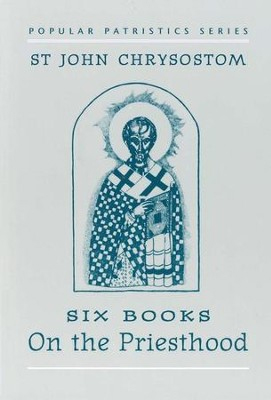
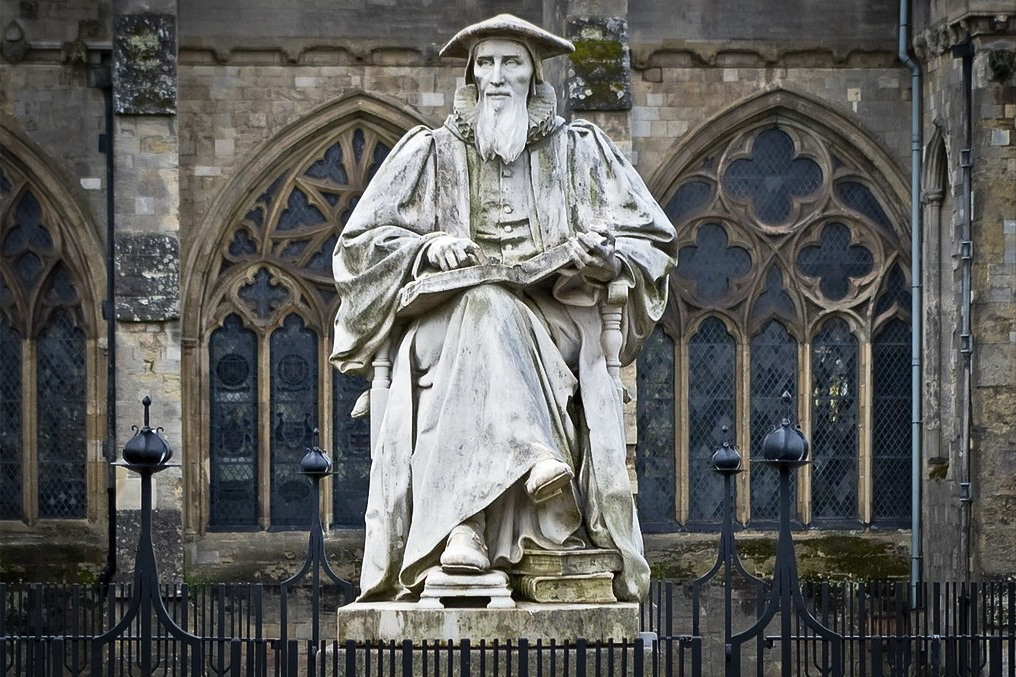
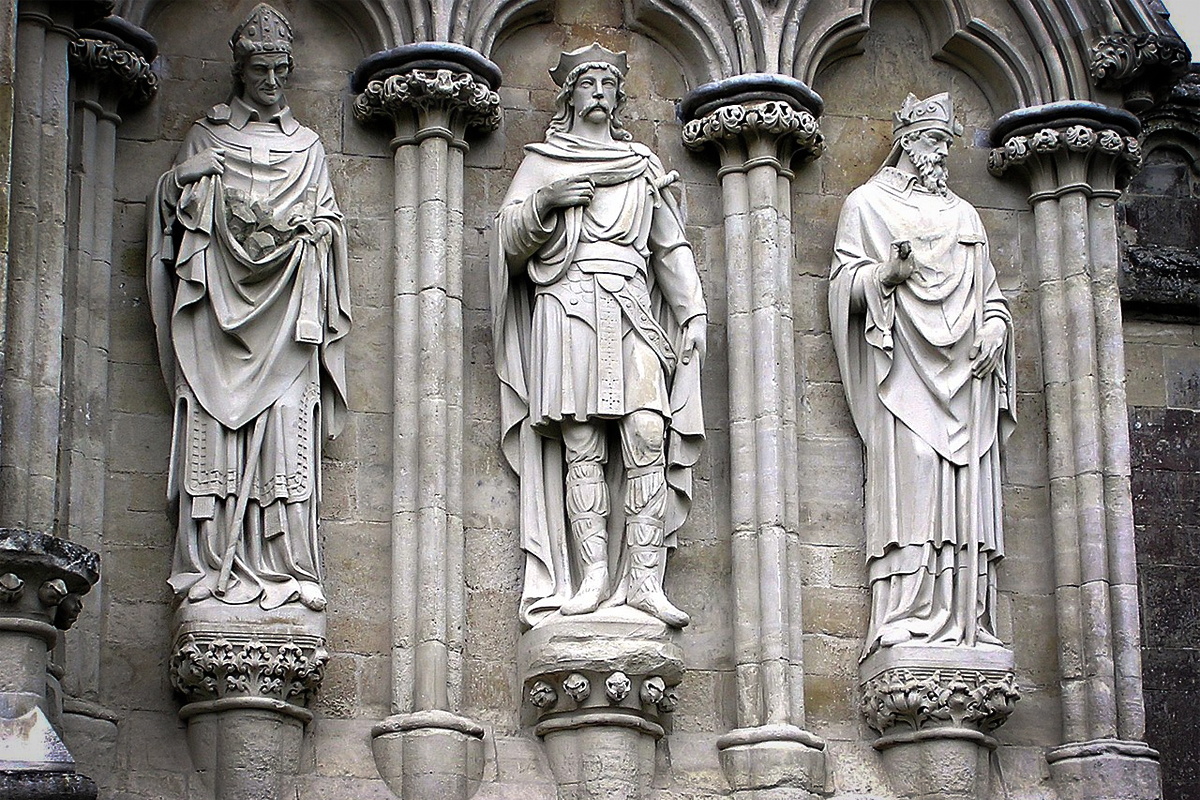
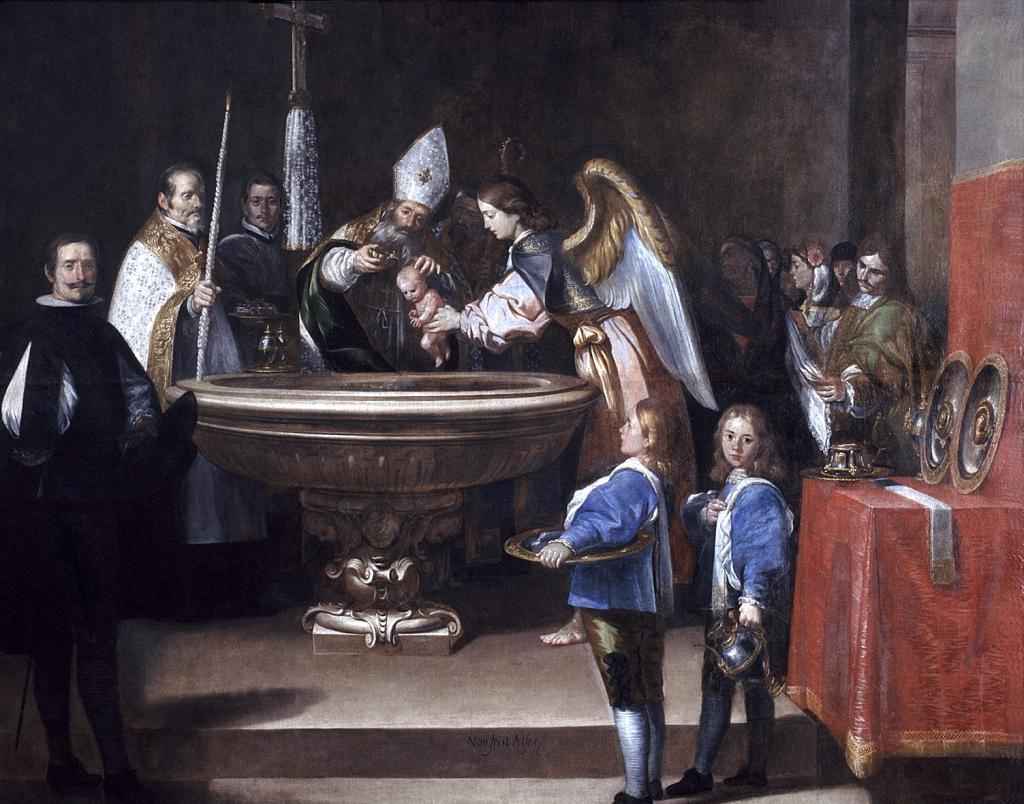
The first book in the Popular Patristics series is entitled “Six Books on the Priesthood.” Today, I finished this book to gain a deeper understanding of Chrysostom’s views on pastoral and priestly ministry and to explore the various books in this series further. The first book I completed within the Popular Patristics Series was “On the Incarnation” by Saint Athanasius.
This translation was rendered by the late Anglican priest Graham Neville (1922-2009). Although the process by which edits and additions were made to incorporate modern sensibilities is unclear, additional translations are available for comparison purposes. However, this reading provides an overall perspective on Chrysostom’s thoughts on the office of the priesthood, incorporating pastoral elements.
Review
John Chrysostom’s “On the Priesthood” stands as one of the most spiritually weighty patristic texts on the pastoral office, written in the fourth century as a defense of his intentional refusal to be ordained. Structured as a series of dialogues between Chrysostom and a fictionalized version of his friend Basil—used as a literary device to frame the treatise—the work lays bare the complexity, burden, and consecrated solemnity of the priestly calling. Rather than presenting a systematic theology of ministry, Chrysostom offers a deeply personal and rhetorical exploration of its moral demands, sacramental gravity, and public accountability. The opening frames the conversation as a justification: Basil is portrayed as indignant that Chrysostom had knowingly pretended to consent to ordination only to deceive and withdraw at the decisive moment, leaving Basil alone to bear the burden. What follows is Chrysostom’s extended and sober exposition on the immense weight of the pastoral office and the reverent fear it stirred in him.
Chrysostom emphasizes the formidable responsibilities of the pastoral office, portraying the priest as a spiritual physician entrusted with the healing of souls. This role demands discernment, vigilance, and profound humility, as the priest must administer correction, comfort, and instruction according to the spiritual needs of each soul (Titus 1:9). The difficulties of pastoral care arise not merely from external challenges but from the priest’s accountability before God, whose judgment is severe upon those who mislead or neglect their flock (James 3:1). This burden, more than any honor or prestige, is what rendered Chrysostom so hesitant to accept ordination. The priest stands in a place of perilous dignity, not because of corruption, but because of the sacred charge to guide others to salvation while contending with his own flaws.
A central theme is the contrast between the priesthood’s outward honor and its inner crucible. Chrysostom warns that many are enticed by the visibility, respect, and ceremonial dignity of the office while failing to grasp the internal vigilance and judgment it entails. He portrays the priest as one who must be as skilled in spiritual healing as the physician is in bodily medicine, knowing when to admonish, when to console, when to rebuke, and when to offer patience (1 Thess. 5:14). Moreover, he is to be a teacher to the wise and a shepherd to the weak. It is no small thing, he says, to be responsible for the spiritual formation of others while contending with one’s own passions and temptations.
Chrysostom devotes considerable attention to the power and danger of rhetoric within the priestly office. Because the priest is often a public speaker and interpreter of Scripture, his words can shape, edify, or destroy. A careless tongue can mislead an entire congregation (Prov. 18:21); a flattering or self-seeking manner can ruin the integrity of the message. The priest, therefore, must strive not only to speak rightly but to embody his message, lest he fall under condemnation as one who preached to others but was himself disqualified (1 Cor. 9:27). This rhetorical emphasis reflects Chrysostom’s own background as an orator and his sensitivity to the power of words.
Equally vivid is Chrysostom’s insistence on the spiritual warfare attendant to the priesthood. He describes the priest as one who stands in the front lines of battle, constantly observed by both angels and demons (1 Pet. 5:8–9). His public failures can scandalize the Church, while his quiet victories often go unnoticed except by God. The devil, he argues, pays particular attention to those in clerical leadership, knowing that their fall can cause the ruin of many. Therefore, the priest must be girded with all virtue, fortified by prayer, and vigilant in humility (Eph. 6:11–18). This sober view reinforces Chrysostom’s initial claim: he did not refuse ordination out of cowardice but out of reverence for its responsibilities.
The dialogue also reflects Chrysostom’s pastoral vision for the Church. Though he defends his initial reluctance to be ordained, he never disparages the priesthood itself. On the contrary, he elevates it as a divine office requiring the utmost spiritual preparation. He praises Basil for his courage in accepting the call and encourages him to fulfill the office with trembling and love (Phil. 2:12). The tone throughout is one of reverence, not rejection; awe, not disdain. Chrysostom’s purpose is to awaken seriousness, not to deter vocation.
In the latter sections, Chrysostom discusses the interplay between human weakness and divine grace. No priest, he acknowledges, is sufficient in himself for so great a task. Yet, it is through weakness that God’s strength is revealed (2 Cor. 12:9). The priest must know his insufficiency and rely wholly upon divine mercy. This reliance does not excuse laxity, but compels diligence (Phil. 3:13–14). The grace given in ordination is not automatic sanctity but a call to deeper sacrifice and sanctification. Chrysostom stresses the necessity of earnest cooperation with grace, counsel, and divine aid, avoiding complacency and urging steadfast effort in all things pertaining to the sacred office.
The final chapter of “On the Priesthood” closes not with lofty celebration but with a sober and restrained hope shaped by vigilance and intercession. Chrysostom urges that the priest must give himself more fully to prayer than to preaching (Acts 6:4), more to being hidden in communion with God than to appearing before others (Matt. 6:6). The sacred charge is not a pursuit of honor but a mission to bring souls safely to eternal life (1 Tim. 4:16). For this cause, the Church must not only revere the priestly office, but continually support her clergy through prayer, spiritual solidarity, and humble fidelity to the gravity of the vocation entrusted to them.
In sum, John Chrysostom’s “On the Priesthood” is both a theological meditation and a stirring spiritual exhortation, spoken from the heart of a man who feared the weight of divine responsibility more than he sought human recognition. It is not a manual for advancement within the Church, but rather a searching examination of the solemn burdens borne by those entrusted with spiritual oversight.
Section Synopses
1. Feigning for Fear John recounts his calculated evasion of ordination by pretending agreement only to withdraw at the critical moment. The narrative introduces the dramatic premise for the entire treatise, presenting John’s refusal not as dishonor but as reverence for the office’s solemn weight.
2. Wounded Friendship Basil expresses grief and indignation at John’s apparent betrayal. His reproofs are tender yet sharp, marking a tension between two spiritual brothers who now see the priesthood through different lenses of readiness.
3. The Weight of Office John responds with humility and fear, explaining that his reluctance is not due to disdain but due to a deep conviction that the pastoral office requires greater sanctity and preparation than he possessed.
4. The Physician of Souls John expands on the immense discernment required to shepherd souls. The priest must rightly divide correction from comfort and bear the burden of judgment upon himself for the sake of others.
5. The Heart of Ministry Pastoral care, John argues, must be rooted in genuine love. Without love, all effort becomes dangerous, even destructive, as the shepherd’s motive corrupts his spiritual influence.
6. God’s Judgment and Human Weakness He confesses his fear of misleading others and emphasizes the terrible accountability borne by those who teach and lead the faithful.
7. Earthly Office, Heavenly Honor John extols the priesthood as a high and glorious calling that surpasses even angelic tasks, because it mediates divine grace through the sacraments and shepherds the people of God.
8. The Sacred Burden The awe of the calling is met with sobering reality. Many seek its honor, but few are willing to endure its interior crucibles and public dangers.
9. Visible Life, Invisible Warfare John outlines the risks faced by bishops: pride, ambition, flattery, and public scrutiny. These temptations make episcopal life more perilous than monastic withdrawal.
10. From Altar to Hearth Practical dimensions of pastoral life are examined:
Promotions: Discerning proper advancement and spiritual maturity.
Widows and the Sick: Compassionate care and administrative oversight.
Virgins: The protection and instruction of consecrated women.
Arbitration—Visiting—Excommunication: Managing disputes, pastoral visits, and grave discipline.
11. Answering Before God The consequences for clerical negligence are spiritual and eternal. Better, says John, to suffer now than to be found wanting at the judgment seat.
12. The Power and Danger of Preaching The Word of God is both fire and healing balm. John insists that preaching demands both purity and precision lest the preacher mislead.
13. Self-Deception and Vainglory The teacher’s heart is exposed to pride, hypocrisy, and the subtle temptation to please rather than convict. John warns of the deadly impact of such vanity.
14. The Vessel Must Be Clean Purity of life, not merely doctrine, qualifies a man to lead others. Without personal holiness, his instruction is hollow and even harmful.
15. Solitude and Shepherding John compares the quieter, guarded life of the monk with the exposed, public, and demanding life of the bishop. The former hides from sin; the latter stands in its breach.
16. Holy Fear and Hope John concludes with a prayerful return to his original point: that his evasion was not treachery but trembling. Yet he commends the priesthood as a grace-filled and sacred office, not to be refused lightly, nor accepted without tears.
Saint John Chrysostom
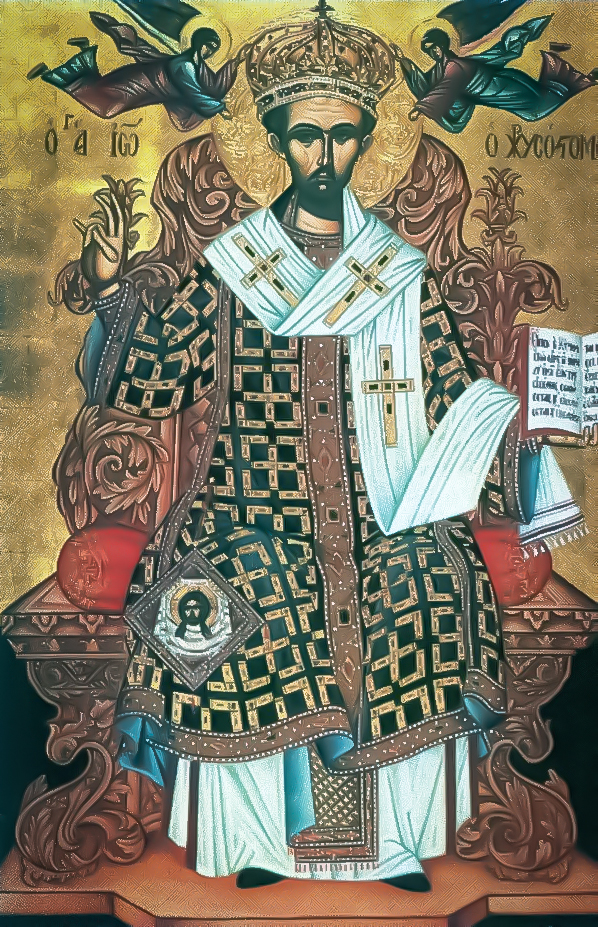
John Chrysostom (349–407 AD) was one of the most revered Church Fathers of the fourth century, known especially for his eloquence in preaching, his ascetical rigor, and his boldness in addressing moral and theological issues of his day. Born in Antioch to a prominent family, he received a classical education under the pagan orator Libanius and later trained in Christian theology under Diodore of Tarsus. Renouncing a promising secular career, Chrysostom embraced the monastic ideal, spending years in ascetical solitude before illness compelled his return to Antioch, where he was ordained a deacon around 381 and a presbyter in 386.
As a priest in Antioch, he gained immense renown for his powerful preaching, which earned him the epithet Chrysostomos, meaning “golden-mouthed.” His sermons—marked by deep scriptural insight, moral urgency, and rhetorical brilliance—drew large audiences and exerted a profound pastoral influence on the city. In 398, he was appointed Archbishop of Constantinople, where his reforming zeal, denunciation of clerical and imperial excesses, and unwavering commitment to spiritual integrity soon aroused both admiration and opposition. His tenure as archbishop was marred by political intrigue and conflicts with Empress Eudoxia and other church leaders, leading to his exile in 403, return shortly after, and final banishment in 404. He died in exile in 407, his last recorded words being, “Glory be to God for all things.”
Chrysostom’s On the Priesthood was written prior to his ordination, likely in the mid-380s, and reflects his early theological convictions and personal struggle with the weight of pastoral calling. His legacy endures not only through this treatise but through his extensive homilies, letters, and liturgical contributions, including the Divine Liturgy of St. John Chrysostom, which remains central to Eastern Orthodox and Byzantine Rite worship to this day. Declared a Doctor of the Church by both East and West, Chrysostom continues to be a model of courageous preaching, ascetical piety, and pastoral seriousness.
The Eastern Orthodox Church claims St. John Chrysostom as one of its own not because of institutional anachronism, but because it sees itself as the organic continuation of the undivided Church of the first millennium, of which Chrysostom was an integral part. Chrysostom lived and ministered during the fourth and early fifth centuries, well before the Great Schism of 1054 divided the Church into Eastern (Orthodox) and Western (Catholic) branches. At that time, the Christian Church was one communion, though regionally diverse, and Chrysostom’s ministry as Archbishop of Constantinople placed him in the very heart of what would later be identified as Eastern Christendom.
His theological orientation, liturgical influence, ascetical emphasis, and ecclesial vision were all embedded in the Eastern Christian tradition that the Orthodox Church later formally inherited. The Divine Liturgy attributed to him is still the normative Eucharistic rite used in the Eastern Orthodox Church to this day. The truths and exhortations within his preaching are shaped by a deep concern for godliness, reverence, and the pursuit of righteousness, reflecting the charge to rightly handle the word of truth (2 Tim. 2:15) and to proclaim the whole counsel of God (Acts 20:27). The themes he develops—especially the transformative power of the sacraments, the ascetical life, and the communion of saints—are not just historically situated but continue to form part of the living tradition of the Orthodox Church. Therefore, the Orthodox do not view Chrysostom as belonging to a “pre-Orthodox” period, but as a father of the same Church they now inhabit in unbroken continuity.
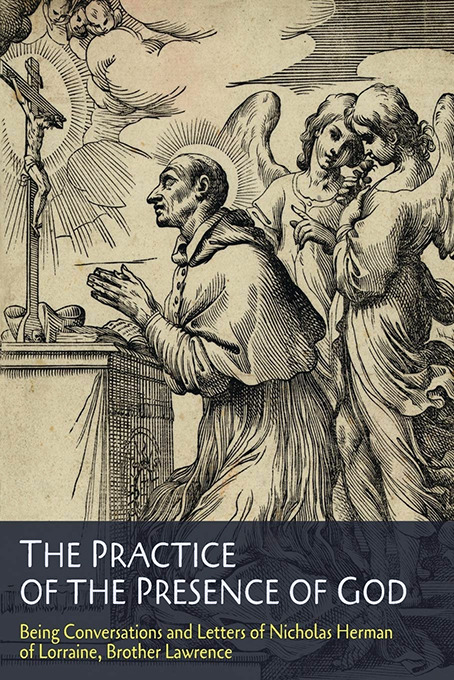
Today, I completed a book about an affective mystic who loved God in every moment, with all his heart, and encouraged others to do the same, wherever they were and whatever they were doing. That quiet consistency drew people to him. He was sought for advice—monks, visitors, even nobles—often left with a sense that knowing God wasn’t just for the few, but for anyone willing to trust Him in the little things. Brother Lawrence lived what he believed: that you could talk to God at any moment, and that doing so, even in small ways, changed everything. His life became proof that deep faith doesn’t require a platform, achievements, status, or asceticism, just a heart set on God.
This book, “The Practice of the Presence of God,” is a spiritual classic that stands as a witness to the message of Brother Lawrence, a 17th-century Carmelite monk (1605–1691). Born Nicolas Herman of Lorraine, Lawrence found his calling in the everyday tasks of monastery life, discovering an extraordinary path to a transcendent spiritual reality while immersed in ordinary daily activities.
Introduction
Joseph de Beaufort titled the compilation of Nicolas Herman’s writings “The Practice of the Presence of God.” This book is a collection of letters, conversations, and spiritual insights, offering readers a unique perspective on cultivating a constant awareness of God’s presence. It surpasses the need for structured prayers or religious rituals, proposing instead that one can reach a deep, ongoing communion with God in every moment of life, even in the most routine tasks. The author’s perspective is rooted in the notion that God is intimately involved in every part of our lives and that awareness of His presence can transform ordinary experiences into profound spiritual activity. Lawrence’s approach is simple, supporting a direct and heartfelt relationship with God, unencumbered by complex theological doctrines.
This reading is a compilation of three separate translations of individual books. The first book was published by H.R. Allenson (1906), the second by Whitaker House (1982), and finally, a reading from a self-published translation, “In Modern English” by Davis (2013; ISBN 978-1-5212997-5-3). The “Spiritual Maxims” notes are omitted from this review, as two of the three books were readings that didn’t closely correspond by prose and word choice to render comparative meaning.
The book is a well-known guide ideal for those seeking a more intimate and continuous connection with God. It appeals to various readers, from devout believers to those interested in growing sanctification in daily life. Lawrence’s gentle wisdom reminds us that God’s presence can be found in every moment and every task, turning the mundane into the spiritual and the ordinary into the extraordinary.
Nicolas Herman, later known as Lawrence, was born around 1614 in Lorraine, now part of modern-day France. Like many of his era, his early years were not well-documented, but what is known provides a deep insight into the life of a man whose humble existence belied an intensely spiritual and influential character. Little is known about Lawrence’s family or upbringing. His early life was largely unremarkable and typical of the time. As a young man, Nicolas Herman enlisted in the army during the Thirty Years’ War, a decision possibly motivated by poverty rather than patriotism or a sense of adventure. His military service, however, was cut short by an injury that left him with a permanent disability.
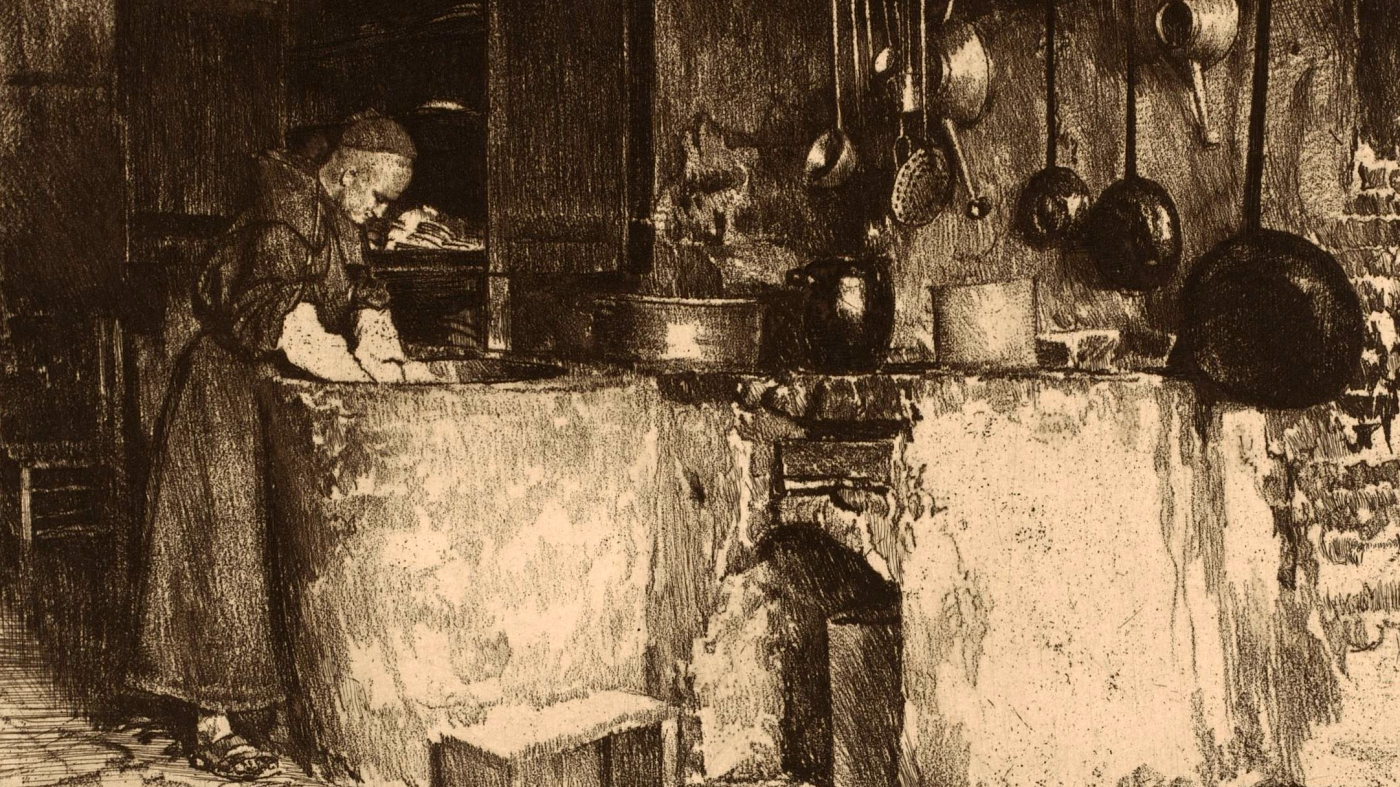
The turning point in Herman’s life came during his recovery. It is said that, while gazing at a barren tree in winter, he experienced a profound spiritual awakening. He became convinced of the steadfast love and presence of God, much like the tree’s potential to bloom in the spring. This epiphany set him on a spiritual path, leading to his decision to dedicate his life to God. In 1666, Nicolas Herman joined the Discalced Carmelite Priory in Paris. His duties were humble, initially assigned to the monastery’s kitchen and later, due to his advancing age and infirmity, to the task of sandal repair.
The Practice of the Presence of God
Lawrence’s approach was not based on rigorous ascetic practices or theological scholarship but on finding God in ordinary and everyday tasks. He believed that one could and should cultivate a constant, loving awareness of God’s presence, regardless of one’s activity or situation.
Lawrence’s ideas were compiled posthumously from his letters and conversations recorded by others, particularly by Father Joseph de Beaufort, the vicar general to the Archbishop of Paris. This compilation, known as “The Practice of the Presence of God,” has since become a classic in Christian literature. Its appeal lies in its simplicity and the universal nature of its message.
Despite his menial position within the monastery, Lawrence’s wisdom and humility significantly impacted those around him, both during his life and long after his death in 1691. His approach to spirituality has influenced many individuals seeking a deeper relationship with God, transcending boundaries of tradition or denomination.
Brother Lawrence mattered deeply to the people around him because he showed them what it looked like to walk closely with God in everyday life. He wasn’t a priest or a scholar, and he didn’t hold a high position in the monastery. He worked in the kitchen, cooking meals and fixing sandals. Yet despite the simplicity of his role, those who met him noticed something rare: a deep, steady peace and joy that flowed from his constant awareness of God’s presence.
The Conversations
The conversations begin with the author’s introduction about Lawrence (likely Joseph de Beaufort). He writes about Lawrence’s conversion and his struggles. He describes his approach to life as one of simplicity and a focus on God’s presence. He tells of his first years in the monastery and how he learned to maintain a sense of God’s presence amidst his daily duties.
First Conversation
In his first recorded conversation, dated August 3rd, 1666, Brother Lawrence recounts his conversion at the age of eighteen, prompted by the sight of a leafless tree in winter. Considering how the tree would soon be renewed with leaves, flowers, and fruit, he was struck by a profound awareness of the providence and power of God—a view that permanently marked his soul. From that moment, he became inwardly detached from the world and filled with such love for God that even after forty years, he could not say whether that love had grown, so complete had it been from the beginning. He shared humbly that he had once served as a footman, clumsy and awkward, breaking whatever he handled. Thinking the monastic life would provide correction through suffering, he was instead surprised to find only satisfaction in the life God had given him.
He exhorted that the soul should be established in the presence of God by continual conversation with Him. It is, he said, a shame to leave this holy company for empty thoughts or distractions. The soul, rather, should be nourished on great and lofty thoughts of God, from which flows joy in devotion. He lamented that faith was so little alive in most Christians, who entertained themselves with changing and superficial devotions instead of letting faith govern their lives. This, he affirmed, was the true spirit of the Church and sufficient to lead one to a high degree of holiness. To be entirely given to God in all things, and to find satisfaction only in His will—this was the pattern of life he urged.
Brother Lawrence also expressed his response to the world’s evils not with surprise, but with peace and prayer, trusting God’s power to heal where He willed. He encouraged careful watch over one’s passions, even in spiritual matters, trusting that God gives light to those who sincerely desire to serve Him. He concluded the conversation by offering to receive the visitor as often as he wished—provided he truly desired to seek and serve God. Otherwise, he advised, it would be better not to return.
Second Conversation
In this second letter, Brother Lawrence reflects on a life governed wholly by love for God, without seeking reward, consolation, or even certainty of salvation. He shares that for years he endured deep interior suffering under the belief that he was lost, a conviction none could dissuade him from. Yet his response to this trial was simple fidelity: he resolved to act always out of love for God, whether saved or condemned. That resolve, maintained over four years of darkness, eventually gave way to a life of inward liberty and joy. He continued to place his sins before God, not to excuse them, but to acknowledge his unworthiness—yet God, in mercy, continued to bless him. What began with effort became habitual, as the love of God stirred him inwardly to continual communion without strain or method.
He notes that all his labors—however mundane, distasteful, or difficult—were offered entirely for God. Whether rolling over wine barrels while lame, working in the kitchen, or praying in obscurity, he found peace by making God the sole object of his attention. He distinguished between the understanding and the will, saying that acts of love and desire for God far surpassed intellectual exercises or bodily mortifications. These, he believed, had value only insofar as they led to union with God through love. Meditation and structured devotions, useful at first, later fell away as unnecessary. He did not burden himself with spiritual directors, for he knew clearly his obligation to love God in all things and trusted the confessional for forgiveness, not for guidance in that love.
He spoke candidly about failure and distraction: when he sinned, he simply acknowledged it, confessed it, and returned to God without discouragement. He cautioned that useless thoughts disrupt communion with God and must be quickly rejected. While he had once struggled in prayer with wandering thoughts, over time, the practice of loving God in all things became steady and natural. He affirmed that the greatest torments or joys of this world could not compare with the inward experiences of union with God, which had made him fearless and content. His only desire was not to offend the One he loved, and whether he failed or stood, he traced all to God—his falls to his own nature, and his strength to divine grace.
Third Conversation
In this conversation dated November 22nd, 1666, Brother Lawrence explains that the foundation of his spiritual life was a profound esteem for God conceived in faith. Once this was firmly established, his sole concern was to reject every other thought so that all his actions might be performed purely for the love of God. He did not become troubled when he realized he had forgotten God for a time; instead, he would humbly acknowledge his poverty and return to God with even greater trust. Such trust, he says, greatly honors God and draws down abundant grace. He affirmed that it is not only impossible for God to deceive, but also that He does not permit a surrendered soul to suffer long without comfort. Through repeated experience, Brother Lawrence had learned to rely on divine grace in every task, approaching each moment without forethought or anxiety, confident that when the time came, God would show him what to do as clearly as looking into a mirror.
His manner of life was marked by simplicity and constancy in the presence of God, so much so that he paid no attention to what he was doing, eating, or accomplishing, but gave thanks that God directed each act. If his mind was momentarily drawn away, a gentle and powerful recollection from God would inflame him anew. He confessed he was often more united to God during his regular work than in times of formal devotion, which left him dry. He expected future trials but feared nothing, assured that God’s goodness would sustain him. Experience had taught him that he gained no help from consulting others about his soul; his inner abandonment to God gave him clarity and courage. He warned that many Christians fail to make progress because they fixate on external disciplines rather than the love of God, which is the true end. The way to God, he insisted, required neither learning nor skill—only a heart wholly resolved to love and seek Him in all things.
Fourth Conversation
In his fourth conversation, he begins by stating plainly that the heart of the spiritual life is a decisive and sincere turning away from everything that does not lead to God. From this renunciation comes the habit of speaking with God simply and constantly. This conversation is neither complicated nor reserved for specific times, but consists in acknowledging God’s nearness and addressing Him at every moment, especially for help in knowing what to do when things are unclear, and for rightly doing what is already known. One offers each action to God beforehand and then gives thanks when it is done. In this simple practice, one remains occupied with God by praise and prayer throughout the day. Even when he forgets God or fails in this, Brother Lawrence is not disturbed, but returns with greater trust, recognizing that God always offers grace if one remembers to ask. He notes that failure to receive grace most often occurs when one forgets God’s presence or neglects to seek Him.
“The whole substance of religion is faith, hope, and love. By the practice of these, we become united to the will of God. Everything else is unimportant and should be used as a means to our end, which is to be swallowed up by faith and love.” – Brother Lawrence
He affirms that the way to live with clarity is to have no other goal but to please God in all things. This aim makes even uncertain matters clear in time. Importantly, he warns that our growth does not come from changing what we do, but from doing what we already do out of love for God instead of for self. Many, he observes, confuse the means with the end—becoming attached to particular religious exercises, but doing them with impure motives. The best method he has found is to perform all tasks, however common, without concern for others’ approval, and as much as possible, for God alone. He rejects any division between prayer and work, saying that one is as bound to attend to God while acting as in prayer. For him, prayer is simply the sense of the presence of God. He states that the time of prayer and the time afterward are no different; both are lived in the same continuous attention to God. This produces lasting joy. Yet he hopes that in time, as he grows stronger, God will give him some suffering to bear.
He insists that one must place full trust in God once and for all and continue on with confidence. Nothing done for God is too small. In the beginning, one will often fail, but with time, the habit will form, and the acts of devotion will flow with ease and delight. The entire content of religion, he says, lies in faith, hope, and love—these unite the soul to the will of God. All other practices are indifferent and only useful as tools for reaching that end. He says that what is possible for the one who believes becomes less difficult with hope, easier with love, and easiest for the one who perseveres. The goal we should set for ourselves is to become, in this life, the best worshippers of God we can, as we hope to be in eternity. Beginning the spiritual life, however, requires honest self-examination: to see ourselves as miserable, changeable, and subject to physical and emotional instability. These troubles, both internal and external, are the means by which God humbles us. Therefore, we should not be surprised when we suffer trials or contradiction, but instead receive them with submission and endurance, for they are good for us.
Finally, he explains how this practice began for him: from the moment he entered the monastery, he resolved that God would be the end and aim of all his thoughts and desires. In the beginning, during his private prayer, he focused not on reasoning but on pressing devout awareness of God deeply into his heart. When he went to his kitchen work, he would prepare his duties thoughtfully, then use every spare moment before and after for prayer. He began each task with a prayer for God’s help, offered each action to Him, and maintained a steady conversation with God throughout his work. Afterward, he examined himself—giving thanks if he had done well, asking pardon if he had not, and returning without discouragement to the practice. Over time, this became so natural that forgetting God was more difficult than remembering Him. His example bore quiet testimony: even in the busiest and noisiest moments, he remained recollected and composed, stating that he found God in the kitchen amidst the noise as clearly as if he were kneeling before the Blessed Sacrament.
The Letters
Lawrence’s letters contain correspondence that offers a window into his deep yet simple spirituality. Written to various individuals seeking spiritual counsel, the letters reveal Lawrence’s commitment to living in continual awareness of God’s presence. With warmth and humility, he encourages his correspondents to develop a habitual, intimate communion with God in all areas of daily life. His advice emphasizes that holiness is not confined to grand or common acts of devotion but is instead found in performing even the smallest tasks out of love for God. Through these letters, Lawrence’s message resonates with an enduring clarity: true peace and contentment come from surrendering oneself to God and remaining constantly attuned to His presence, regardless of life’s challenges or distractions.
First Letter
Brother Lawrence writes to a reverend mother, reluctantly sharing how he came to live with a constant awareness of God’s presence. He emphasizes that he’s only doing so because of her persistent requests and insists the letter remain private. He explains that after reading many spiritual books with differing methods on how to approach God, he found them confusing. Instead, he decided to give himself completely to God—surrendering everything that wasn’t of Him—and began living as though it was just God and himself in the world. Whether seeing God as Judge or Father, he worked to keep his thoughts fixed on Him throughout the day. Even when his mind wandered, he calmly brought it back without distress.
He admits it wasn’t easy, but over time, it became more natural, and he began to feel the blessings of living in God’s presence. He stresses that none of it came from his own ability—it was all God’s mercy. Remaining faithful to this practice helped him avoid sin and gave him a kind of freedom and closeness with God, even in the middle of daily work. By continually turning to God in this way, His presence became a habit. He closes by asking her to join him in thanking God for His kindness to someone as unworthy as himself.
The identity of the Reverend Mother addressed in Brother Lawrence’s letters remains uncertain, as historical records do not provide a definitive name. However, considering the context and the titles used, it’s plausible that she was the Mother Superior of a Carmelite convent in 17th-century France, possibly in Paris, where Brother Lawrence resided. As Mother Superior, she would have been responsible for the spiritual and administrative leadership of her religious community.
Second Letter
June 1st, 1682 –
Brother Lawrence shares with the Reverend Mother the experience of a fellow brother in their religious community who has lived for over forty years devoted to God. This man’s main goal has always been to live in a way that pleases God, not for reward or fear, but purely out of love because he believes God deserves that devotion. Over the years, he has become so used to being in God’s presence that he receives constant help and deep joy from it—so much so that he often has to keep those feelings hidden. Even when he’s distracted by work, he feels God gently calling him back. He responds simply with love—short prayers or inward glances toward God—and immediately feels God settle peacefully in his soul again.
This brother no longer searches for God’s presence because he’s already living in it and drawing from it freely. Lawrence says this brother grieves that most people settle for such small tastes of God’s grace—just a passing feeling—when God wants to pour out so much more. He compares God’s grace to a massive ocean, but says we block its flow through our own blindness or neglect. When faith makes space for it, grace rushes in like a flood. He urges the Reverend Mother not to miss the opportunity while there’s still time. Death comes once, and it’s final. Now is the time to break down anything that holds us back from receiving all God has for us.
Lawrence encourages her to stay alert and not lose heart. He believes she’s taken steps in the right direction, but reminds her that we must keep pressing on—because in the spiritual life, if we’re not moving forward, we’re sliding backward. Even when we’re unaware, the Spirit can lead us forward. And when life gets rough, we should call on Christ, who brings peace. He ends by asking her to reflect on these thoughts, to renew her early fire for God, and to be encouraged by the example of this quiet, unknown brother—known not to the world, but deeply known and loved by God. He promises to pray for her and asks her to pray earnestly in return.
Third Letter
1685 –
In this third letter, the author writes with warmth and spiritual earnestness to a revered Mother Superior, acknowledging the receipt of books and a request for intercession on behalf of a sister preparing for religious profession. He urges that their community’s prayers not be withheld, as the sister is placing great spiritual hope in them. Above all, he emphasizes that her offering must be grounded solely in the love of God, with an unwavering resolve to be wholly His. In that context, he offers to send a book treating on the subject of the Presence of God, which he esteems as encompassing the entirety of the spiritual life. The proper practice of divine presence, he insists, depends on a heart emptied of all but God—since God, being jealous for the heart’s full possession, will not work amidst rival affections.
Brother Lawrence then testifies, from experience, to the ineffable sweetness and delight of walking constantly with God, though he warns that such joy must not be the goal. One must enter this practice not for pleasure’s sake but purely out of love and obedience. Were he given a pulpit or the spiritual direction of others, he says, his singular message would be this abiding in God’s presence, so indispensable and accessible does he consider it. He laments how little people perceive their need for God’s grace and help, urging his correspondent to make, in that very moment, a holy and irrevocable resolution never again to willingly depart from God’s presence. Such a surrender, even if it costs one every earthly pleasure, would be love’s proper offering to the God who seeks such devotion.
He concludes with strong encouragement: should the Reverend Mother undertake this discipline with sincere diligence, she will soon perceive its holy effects. Though he considers his own prayers poor, he assures her of his intercession and earnestly entreats hers and that of her community. In closing, he affirms his affectionate bond with them, expressing humility and belonging as their spiritual companion and servant. Through this simple and reverent appeal, Brother Lawrence draws the soul into the heart of true devotion—a life wholly lived in the presence of God, for His sake alone.
Fourth Letter
November 3rd, 1685 –
In this letter to the same Reverend Mother, Brother Lawrence expresses gentle reproach at her silence concerning a spiritual book he previously sent, urging her to begin its practice even in her old age, insisting that it is never too late to enter into the continual presence of God. He declares his own experience of inward retirement with God at the center of his soul, where he finds peace and immunity from fear; but even the smallest departure from this communion is, for him, intolerable. While the exercise does not burden the body, he encourages the voluntary renunciation of innocent pleasures, since God does not allow the soul wholly given to Him to be satisfied with joy outside His presence—a demand that he affirms as entirely just.
Brother Lawrence warns, however, against harsh austerity or the anxious imposition of rigid devotions. True service to God must be undertaken in holy freedom, with minds gently turned back to Him whenever they wander. Trusting fully in God requires even letting go of some external forms of devotion, which—though good—are but means, and become unnecessary once the soul abides with God Himself, who is the true end. In that abiding, the soul may offer acts of adoration, praise, desire, sacrifice, or thanksgiving in whatever form arises from love. He encourages perseverance through natural reluctance, acknowledging that the beginning often feels fruitless, but assuring that faithful continuation to the end will not be in vain. He concludes, as always, commending himself to the prayers of her and her community.
Fifth Letter
In this fifth letter, he tenderly urges Madame to surrender the burdens of worldly care and spend her remaining years in quiet worship of God, whom he describes as gentle and easily pleased by even the smallest acts of remembrance. He emphasizes that God requires no great effort—only simple prayers, offerings of sorrow, thanksgivings, and moments of humble adoration, even in the midst of meals or company. Encouraging her to make an inner oratory of the heart, he insists that private, loving communion with God is accessible to all, regardless of age or station, and that God may be awaiting only one firm, courageous act of devotion. As both approach the end of their earthly life, he exhorts her to live and die in God’s presence, where even suffering becomes sweet, and all joy without Him is empty. Finally, he urges her to cultivate this devotion with sincerity and freedom, not bound by rigid forms, but by faith, love, and humility.
Sixth Letter
In this correspondence, Lawrence is writing to a spiritual father, wanting feedback on how he’s been living his faith. He says he hasn’t really followed the traditional spiritual methods laid out in books or taught by others. Instead, he just gave himself completely to God early in his religious life, letting go of everything else out of love for Him. At first, he spent his prayer time reflecting on sin, judgment, and eternity, but he also tried to keep his mind on God during his daily work. Over time, this simple awareness of God grew into a natural habit, bringing him great peace and joy—even though, for about ten years, he struggled deeply with doubts, guilt over his sins, and fears of self-deception. But one day, unexpectedly, God gave him a lasting inner calm that changed everything.
Now, after thirty years, he lives constantly aware of God’s presence—not through complicated prayers or rituals, but by staying inwardly attentive to God in love. He sees himself as a sinner standing before a merciful King, who—far from punishing him—welcomes and treasures him like a close friend. Sometimes, his love for God feels so deep and sweet it overwhelms him. He even compares it to the way an infant rests at its mother’s breast. Even when his mind wanders, God gently draws him back. In prayer, he simply presents himself like a stone in the hands of a sculptor, asking God to shape him into His likeness. Some might accuse this way of being too passive or self-focused, but he says he desires only God and trusts Him completely. He ends the letter by asking for the Father’s opinion, saying he values it highly.
The “Reverend Father” addressed in Brother Lawrence’s letters is widely believed to be Father Joseph de Beaufort, a cleric who played a significant role in compiling and preserving Brother Lawrence’s teachings. Father de Beaufort conducted interviews with Brother Lawrence and collected his letters, which were later published as The Practice of the Presence of God after Brother Lawrence’s death in 1691.
In the Catholic Church, the title “Reverend Father” is commonly used to address ordained male clergy, such as priests and monks, as a sign of respect and acknowledgment of their spiritual authority. Therefore, Brother Lawrence’s use of this title in his correspondence aligns with the customary practices of his time.
Seventh Letter
Lawrence writes to the Reverend Mother with a steadfast assurance of his prayers for her, encouraging her to persevere in the search for the spiritual Treasure spoken of in the Gospel—a treasure so infinite that the more one labors to find it, the more abundant it becomes. He exhorts continual, unwearied pursuit of this divine wealth until it is fully possessed. Reflecting personally, he confesses a profound inner tranquility that abides even in sleep, so deep that he would consider purgatory itself bearable so long as this peace remains. Uncertain of God’s future purposes for him, he rests without fear, content in the divine Presence, which he strives to remain within as constantly as he is able, ending in a doxology of praise.
Eighth Letter
October 12th, 1688 –
He again write with assurance that God, Who is infinitely gracious and attentive to every need, has permitted Madame to come to extremity so that He might visit her in His own appointed time, unexpectedly yet faithfully. He encourages her to give thanks for the divine graces already received—especially fortitude and patience amid suffering—as clear signs of God’s care. He also commends M. de —— for his courage and good disposition, though noting that youth and worldly influence still linger in him; thus, his present affliction should be embraced as a healing providence to draw him nearer to God. Lawrence urges that even brief inward remembrances of God—acts of worship while on the march or in peril—are sufficient and strengthen true bravery; these exercises, though hidden and easy, are fitting and essential for a soldier frequently in mortal and spiritual danger. He concludes by exhorting that M. de —— accustom himself to this holy habit, offering his prayers and service to the whole household.
Ninth Letter
In this letter, Lawrence responds to the Reverend Mother’s concern about wandering thoughts in prayer by affirming that such distraction is a common human weakness, not unique to her. He identifies the cause as habitual mental dissipation formed through a lack of early discipline in devotion. Since the will governs the faculties, he encourages her to gently recall her mind to God without distress when it strays, for anxiety only furthers distraction. He likens the posture of prayer to that of a helpless beggar waiting silently before a generous master, urging a disposition of humble perseverance in God’s presence, trusting that God will show mercy to one who persists sincerely.
He further counsels that guarding the mind from unnecessary wandering outside of prayer prepares it to remain settled during prayer. Constant recollection throughout the day strengthens the soul’s ability to rest in God when engaged in direct worship. Brother Lawrence reiterates the value he has previously explained about living in the continual presence of God, urging her to take up this sacred practice seriously. He closes by requesting prayer from the sisters, offering his own in return, and signs off with fraternal affection in the Lord.
Tenth Letter
March 28th, 1689 –
In this letter, commends a sister who shows spiritual eagerness, though he cautions that she seeks to progress more swiftly than grace permits. Holiness, he reminds, is not attained instantly, but through patient, obedient growth. He exhorts the Reverend Mother to assist the sister by counsel and godly example, and to keep him informed of her fervor and obedience. Reflecting on their decades of religious life, Brother Lawrence laments the disproportion between God’s abundant mercies and his own inadequate response, urging that they redeem the remaining time by turning wholly to God in trust and love, casting off all that is not His.
He emphasizes that the Christian life cannot be lived safely or fruitfully without God’s constant assistance. Therefore, prayer must be unceasing, and this necessitates constant recollection of God. He admits repeating himself, yet insists that this simple method—continual remembrance of God—is the surest and most effective path. Knowing God comes through frequent meditation on Him; loving God causes the soul to dwell on Him naturally, for where the treasure is, the heart will be also. Thus, he urges her to form this holy habit of thought, promising that in doing so, she will find the grace to do all things well.
Eleventh Letter
October 29th, 1689 –
In this letter, he shows reluctance to write to M. de —— but consents out of obedience to the wishes of Madame and Mme. de ——. He commends Madame’s trust in God and prays it may increase, affirming that no confidence placed in such a faithful Friend is ever misplaced. Encouraging M. de —— to respond to his loss with faith, he suggests that God, who governs hearts, may soon provide a better friend if his attachment was excessive. Brother Lawrence exhorts Madame to maintain continual remembrance of God throughout all activities, comparing divine presence to that of a visiting friend whom it would be rude to ignore. He urges that thinking often of God is the very calling of a Christian and concludes with a promise of his prayers.
Twelfth Letter
November 17th, 1690 –
Lawrence writes with earnest compassion to the Reverend Mother, not asking that her sufferings be removed, but that she might receive from God the strength and patience to bear them well. He exhorts her to take comfort in the One who has fastened her to the cross and will loose her in His own time, reminding her that to suffer with Christ is a blessing incomprehensible to those who love the world. He contrasts the natural view of sickness with the spiritual: the worldly see only pain, while the devout discern mercy and salvation in the affliction. He urges her to entrust herself wholly to God, the true Physician, who often uses bodily illness to heal the soul. Though remedies may be employed, they serve only as far as God allows. He gently corrects any false sense of his own ease, describing how even his communion with God is mingled with sorrow over his sins and the fear of unpardoned guilt, and yet this sorrow becomes his joy.
He then urges her to be content with her lot, declaring that he envies her suffering, for to suffer with God is to dwell in paradise, while to enjoy pleasure without Him is to taste hell. He longs not for relief but for union with Christ through suffering. He confesses that his own time on earth draws to a close, and what strengthens him is not mere belief, but the vivid apprehension of God by faith—so clear that at times it seems sight rather than faith. This experience, he says, will sustain him in life and in death. He entreats the Reverend Mother to persevere in constant communion with God, who alone can sustain her, and assures her of his prayers.
Thirteenth Letter
November 28th, 1690 –
Lawrence, writing to the Reverend Mother, urges her to embrace the exercise of the Presence of God, particularly amid physical suffering, which he views as a divine means of purification and sanctification. He encourages her to continually offer her afflictions to God, seeking strength and conformity to His will through humble, childlike prayer, and to form the habit of constant interior communion with Him. Though he acknowledges that God may sometimes seem hidden, he insists that faith must remain the soul’s foundation, assuring her that God never forsakes those who do not first forsake Him. He confesses his own joy and peace despite his unworthiness and weakness, affirming that this constancy of joy comes from God’s nearness through faith, not merit. In closing, he entreats her to remain always with God, to live and die in His Presence, and to pray for him as he does for her.
Fourteenth Letter
Brother Lawrence, writing with tender compassion to the Reverend Mother, expresses sorrow at her prolonged suffering but urges her to view her afflictions as signs of God’s deep love. He gently counsels her to cease reliance on ineffective human remedies and instead place complete trust in the providence of God, believing that such resignation may be the very condition God awaits to bring healing. He exhorts her to seek not deliverance from pain, but the strength to endure it with courage and love, reminding her that love renders even suffering sweet when it is borne for God. Encouraging her to draw comfort from the divine Physician, who tenderly governs every affliction, he affirms that God, infinitely loving and merciful, will be her only true and needed relief, and assures her of his continued prayers.
Fifteenth Letter
January 22nd, 1691 –
Lawrence writes with deep spiritual affection to the Reverend Mother, expressing gratitude that the Lord has granted her some relief and sharing that he himself has often been near death, yet entirely content in such moments. Rather than praying for deliverance, he sought strength to suffer with grace and love, proclaiming the sweetness of suffering when borne in God’s presence. He exhorts her to commune humbly and lovingly with God at all times, to make the heart a temple of constant adoration, and to vigilantly guard thoughts, words, and deeds so that nothing offends Him. While he acknowledges the difficulty of beginning this path of faith, he assures her that divine grace will supply what is lacking to the earnest soul. Encouraging her to persist in seeking, he promises that God will open the door in due time, and concludes by committing himself to prayer for her, as he prepares with longing to behold the face of God.
Sixteenth Letter
February 6th, 1691 –
Lawrence writes to his spiritual correspondent with a firm conviction that all things, whether bitter or sweet, come from God’s hand for the soul’s good. He exhorts her to see suffering not as a burden, but as a tender expression from a loving Father, whose afflictions, rightly viewed, transform mourning into joy. He urges that the soul’s chief business is to know God more deeply, for such knowledge will proportionately deepen love, which in turn enables the soul to receive both sorrow and joy alike. Spiritual favors, he warns, should not be sought for their own sake; rather, God must be sought by faith alone, simply and frequently, since He dwells within. Brother Lawrence calls for a wholehearted devotion to God, the expulsion of distractions, and a prayerful petition for grace to give God the heart entirely, promising that such surrender will bring about the inward change longed for. As he nears death, he gives thanks for God’s mercy and expresses his hope of soon beholding the Lord, asking mutual remembrance in prayer.
Afterward, Brother Lawrence passed away within a week.
This table is a comprehensive doctrinal comparison chart that systematically evaluates a wide range of Christian theological themes according to their creedal affirmation, doctrinal tier, alignment with Scripture, key supporting verses, and a concise explanatory detail for each. It includes foundational doctrines such as the Trinity, Incarnation, Resurrection, and Justification, alongside more controversial topics like Papal Infallibility, Purgatory, Sacramental Efficacy, and Marian dogmas. Each entry is assessed through the lens of Scripture’s authorial intent, with references categorized as Affirms, Rejects, or Requires Contextual Analysis. The creedal columns reference their affirmation in the Apostles’, Nicene, and Athanasian creeds, while the tier classification helps distinguish between primary, secondary, and tertiary matters of theological importance.
Introduction
This table is designed to aid readers, teachers, and theological students in discerning the clarity, coherence, and theological grounding of various doctrinal claims as measured by their correspondence to Scripture and the historical confessions of the Church. It is particularly useful for evaluating the degree to which teachings—especially those contested between Roman Catholic, Eastern Orthodox, and Protestant traditions—maintain fidelity to the biblical witness. The inclusion of explanatory notes offers interpretive insight into the theological and practical implications of each doctrine, helping readers understand not only what the Church has historically taught but also how those teachings stand when examined in light of Scripture’s testimony. In sum, this table serves as both a diagnostic and educational resource for those seeking to grow in doctrinal understanding, spiritual maturity, and alignment with the teachings handed down through the apostles and preserved in the canon of Scripture.
Spirit & Truth
According to Scripture, the Holy Spirit is the divine Person who convicts the world of sin, righteousness, and judgment (John 16:8), and it is through His power that the soul is drawn to repentance and faith. While Scripture is the clear and inspired foundation of all truth (2 Tim 3:16-17), the Spirit is not confined to written text alone; He works dynamically through the Church’s corporate life, including people, tradition, and liturgical expression, to lead believers into deeper holiness and communion with God. As seen in Acts 2:42, the early Christians devoted themselves not only to “the apostles’ teaching,” but also to “the fellowship, the breaking of bread, and the prayers”—practices which were deeply communal and rhythmically structured. This shows that the Spirit can and does move within ordered, historical expressions of worship and fellowship, drawing hearts to repentance and shaping them through patterns of faithfulness.
Tradition, when properly subordinate to Christ and aligned with the apostolic gospel, becomes a vessel through which the Spirit preserves and transmits the truths of God across generations. Paul exhorts the Thessalonians, “stand firm and hold to the traditions that you were taught by us, either by our spoken word or by our letter” (2 Thess 2:15). Here, both oral and written instruction are presented as valid conduits of divine truth, passed on through the Church’s memory and practice. The Spirit, who indwells the Church (1 Cor 3:16), is able to guard the apostolic deposit through faithful teachers, creeds, catechisms, and councils that maintain continuity with biblical teaching. While tradition must never override Scripture, it often provides the scaffolding for the faithful interpretation of Scripture and the preservation of doctrinal clarity, shaping hearts toward sanctification and communion with the Triune God.
Furthermore, liturgy and historical continuity provide a sacred context for worship and spiritual formation, allowing believers to participate in rhythms of grace where the Spirit works over time. In Hebrews 12:28–29, the Church is called to offer to God “acceptable worship, with reverence and awe,” implying form and spiritual posture that is shaped by covenant history. When liturgical forms are grounded in Scripture, they become means by which the Spirit fosters humility, repentance, and worship “in spirit and truth” (John 4:24). Through the repetition of ancient prayers, the celebration of the sacraments, and the participation in creedal confession, the believer is catechized into the gospel story. The Spirit uses these tools not merely as aesthetic or cultural expressions, but as spiritually formative practices that deepen our union with Christ (1 Cor 10:16–17), sanctify the soul, and bring about a life of obedient faith empowered by divine grace.
Framework& Grid
This doctrinal comparison table is a structured theological reference designed to assess a wide range of Christian teachings in light of their scriptural foundation, historical affirmation, and theological significance. Its primary purpose is to equip readers with a clear, comparative framework for evaluating core and contested doctrines—particularly those that distinguish Roman Catholic, Eastern Orthodox, and Protestant traditions. Each row addresses a specific doctrinal theme and includes five key categories: (1) Creedal Affirmation, indicating whether the doctrine is explicitly upheld in the Apostles’, Nicene, or Athanasian Creeds; (2) Doctrinal Necessity, classifying the issue as primary, secondary, or tertiary in terms of its necessity for faith and ecclesial unity; (3) Scriptural Fidelity, summarizing whether Scripture affirms, rejects, or requires contextual analysis for that doctrine; (4) Scriptural References, listing representative passages relevant to the issue; and (5) Explanatory Comments, offering a concise theological summary to clarify the issue’s meaning and implications. This table aims to support faithful discernment, doctrinal clarity, and responsible theological engagement grounded in the authority of Scripture and the confession of the historic Church.
Table of Topics
Doctrinal Theme
Creedal Affirmation
Ecumenical Council
Doctrinal Necessity
Scriptural Fidelity
Scriptural References
Explanatory Comments
Trinity
Apostles’, Nicene, Athanasian
Nicaea I (325 AD), Constantinople I
Primary
Affirmed
Matt 28:19; 2 Cor 13:14
Clearly affirmed by the biblical text with direct or repeated scriptural testimony.
Incarnation of Christ
Apostles’, Nicene, Athanasian
Chalcedon (451 AD), Ephesus (431 AD)
Primary
Affirmed
John 1:14; Phil 2:6–8
Clearly affirmed by the biblical text with direct or repeated scriptural testimony.
Death and Resurrection of Christ
Apostles’, Nicene, Athanasian
Nicaea I (325 AD), Constantinople I
Primary
Affirmed
1 Cor 15:3–4; Acts 2:23–24
Clearly affirmed by the biblical text with direct or repeated scriptural testimony.
Second Coming & Judgment
Apostles’, Nicene, Athanasian
Constantinople I
Primary
Affirmed
Acts 17:31; Rev 20:11–15
Clearly affirmed by the biblical text with direct or repeated scriptural testimony.
Forgiveness of Sins
Apostles’, Nicene
Constantinople I
Primary
Affirmed
Luke 24:47; Acts 10:43
Clearly affirmed by the biblical text with direct or repeated scriptural testimony.
Virgin Birth
Apostles’, Nicene
Constantinople I
Primary
Affirmed
Isa 7:14; Luke 1:34–35
Clearly affirmed by the biblical text with direct or repeated scriptural testimony.
Bodily Resurrection of the Dead
Apostles’, Nicene
Constantinople I
Primary
Affirmed
John 5:28–29; 1 Cor 15
Clearly affirmed by the biblical text with direct or repeated scriptural testimony.
Baptism (As sign or sacrament)
Nicene (As sign of faith)
Nicaea I (325 AD), Constantinople I, Ephesus (431 AD, Spain), Chalcedon (451AD), Carthage (418 AD), Orange (529 AD), Lateran Council IV (1215 AD), Florence (1439), Trent (1545-1563)
Primary
Affirmed
Acts 2:38; 1 Pet 3:21
Clearly affirmed by the biblical text with direct or repeated scriptural testimony.
Mode of Baptism (Immersion, Pouring, Sprinkling)
Absent
Nicaea I (325 AD), Constantinople I, Elvira (305 AD, Spain), Carthage (418 AD), Ravenna (1311–1312 AD) Lateran Council V, Didache (70–100 AD)
Secondary
Affirmed
Immersion: Burial and Resurrection Matt 3:16, John 3:23, Acts 8:38-39, Rom 6:3-4
Pouring (Affusion): Valid in patristic contexts. Acts 2:17, Acts 10:44-48, Titus 3:5-6, Didache 7
Sprinkling (Aspersion): Used in cases of necessity. Ezek 36:25, Heb 10:22, Heb 12:24
The New Testament does not explicitly prescribe a singular mode of baptism—immersion, pouring, or sprinkling —but different traditions interpret several passages as supporting one mode or another.
Church (One, Holy, Catholic, Apostolic)
Nicene
Secondary
Affirmed
Eph 4:4–6; 1 Tim 3:15
Clearly affirmed by the biblical text with direct or repeated scriptural testimony.
Justification (Faith Alone vs. Faith & Works)
Absent
Primary
Affirmed
Rom 3:28; James 2:24
Scripture affirms justification by faith, but must be understood with James.
Purgatory
Absent
Secondary
Absent
Luke 16:26; Heb 9:27
No post-mortem purgation described; Heb 9:27 states judgment follows death.
Perpetual Virginity of Mary
Absent
Tertiary
Contradicts
Matt 1:25; Mark 6:3
Matt 1:25 and Mark 6:3 indicate normal marital relations and siblings.
Immaculate Conception of Mary
Absent
Later dogma (1854)
Tertiary
Contradicts
Rom 3:23; Luke 1:47
No Scripture suggests Mary was exempt from original sin (Rom 3:23; Luke 1:47).
Assumption of Mary
Absent
Later dogma (1950)
Tertiary
Absent
Absent
No biblical text records or implies Mary’s bodily assumption into heaven.
Women’s Ordination
Absent
Secondary
Rejected
1 Tim 2:12; 1 Cor 14:34–35; 1 Tim 3:1–2
Scripture explicitly restricts authoritative teaching and pastoral office to qualified men; no precedent for female presbyters or bishops in apostolic witness.
Authority Scripture vs. Scripture & Tradition)
Implied
Condemned by the Council of Orange (529 AD)
Primary & Secondary
Affirmed & Rejected
Mark 7:6–13; 2 Tim 3:16
Scripture affirms its own authority; tradition not to exceed it.
Union with Christ (Theosis vs. Imputation)
Absent
Secondary
Affirmed
John 17:21–23; 2 Pet 1:4
Scripture teaches participation in Christ, but without metaphysical speculation.
Total Depravity
Absent
Not Addressed
Secondary
Affirmed
Rom 3:10–12; Eph 2:1; John 6:44
Human nature is fully corrupted by sin, rendering the will incapable of turning to God without divine regeneration. (Post-Reformation)
Unconditional Election
Absent
Not Addressed
Secondary
Affirmed
Eph 1:4–5; Rom 9:11–16; John 15:16
God elects individuals to salvation not based on foreseen faith but solely on His sovereign will and grace. (Post-Reformation)
Limited Atonement
Absent
Not Addressed
Secondary
Affirmed
John 10:14–15; Eph 5:25; Matt 1:21
Christ’s atonement is effectual and intended specifically for the elect, securing their salvation. (Post-Reformation)
Irresistible Grace
Absent
Not Addressed
Secondary
Affirmed
John 6:37; Rom 8:30; Acts 13:48
God’s call to the elect is effectual; His grace overcomes resistance and brings the sinner to faith. (Post-Reformation)
Perseverance of the Saints
Absent
Not Addressed
Secondary
Affirmed
Phil 1:6; John 10:28–29; Rom 8:38–39
Those truly born of God will persevere in faith and holiness to the end, sustained by God’s power. (Post-Reformation)
Once Saved Always Saved (OSAS)
Absent
Secondary
Affirmed
John 10:28–29; Rom 8:38–39; Phil 1:6
While not historically creedal, OSAS reflects the biblical promise that true believers, once justified, will be preserved by God’s power to the end. Distinct from antinomianism, it requires fruit-bearing faith and sanctification (John 15:1–6). (Modern Evangelical Formulation)
Infralapsarianism
Absent
Tertiary
Affirmed
Rom 8:29–30; Eph 1:4–5; 2 Tim 1:9
God’s decree to elect follows His decree to permit the Fall. This view emphasizes God’s mercy without denying His sovereignty. (Post-Reformation Scholasticism)
Supralapsarianism
Absent
Tertiary
Affirmed
Rom 9:11–23; Eph 1:4–11; Isa 46:10
God’s decree to elect or reprobate logically precedes His decree to permit the Fall, emphasizing His ultimate sovereignty and purpose. (Post-Reformation Scholasticism)
Prevenient Grace
Absent
Condemned by Council of Orange (529 AD)
Secondary
Affirmed & Rejected
John 1:9; Titus 2:11; Acts 7:51
Common in Wesleyan-Arminian theology, it teaches grace that enables all to respond to the gospel. Not affirmed in Reformed traditions due to lack of effectual power in regeneration. (Arminian Theology)
Sacraments (Definition and Number)
Absent
Secondary
Affirmed & Rejected
Luke 22:19–20; 1 Cor 11:23–26
Sacramental grace affirmed; a number of sacraments and operations vary.
Christ’s presence affirmed, but not defined metaphysically.
Eucharistic Adoration
Absent
Secondary
Rejected
John 4:23–24; Heb 9:24
Adoration is due to God, not to elements.
Papal Infallibility
Absent
Secondary
Rejected
Absent
Inconsistent with Acts 15 and Gal 2:11, where Peter is corrected by Paul.
Filioque Clause
Western only
Secondary
Absent
John 15:26
Absent in John 15:26; Spirit proceeds from the Father—not stated from “Father and Son.”
Scholasticism vs. Mysticism
Absent
Secondary
Affirmed & Rejected
1 Cor 2:6–16; Eph 3:18–19
Both present in Scripture; emphasis and balance vary across traditions.
Confession and Absolution
Absent
Secondary
Affirmed
John 20:23; James 5:16
Forgiveness mediated through confession and prayer, not ecclesiastical absolution.
Habitual and Besetting Sin
Absent
Secondary
Affirmed
Heb 12:1; Rom 6:12–14; 1 John 3:6–10
Scripture warns against ongoing, unrepentant sin while acknowledging the believer’s struggle against indwelling sin. Persistent sin without repentance is incompatible with regeneration and sanctification. True believers fight sin by the Spirit’s power (Rom 8:13).
Icons and Veneration of Saints
Absent
Tertiary
Rejected
Ex 20:4–5; Rev 19:10
Image veneration forbidden; worship belongs to God alone.
Monasticism and Asceticism
Absent
Tertiary
Affirmed
Matt 19:21; 1 Tim 4:8
Monastic withdrawal not mandated by Scripture.
Canon of Scripture (Apocrypha / Deuterocanon)
Absent
Secondary
Affirmed
2 Tim 3:16–17; Rom 3:2
Scripture affirmed canon; Apocrypha not treated as equal by Christ or apostles.
Original Sin and Inherited Guilt
Absent
Primary & Secondary
Rejected
Rom 5:12–19; Ps 51:5
Scripture teaches both inherited sin and guilt, especially in Pauline theology.
Merit and Condign Merit
Absent
Secondary
Affirmed
Rom 3:27–28; Eph 2:8–9
Merit is ruled out as a basis for salvation in favor of grace and faith.
Imputed vs. Infused Righteousness
Absent
Primary & Secondary
Rejected
Rom 4:5; Gal 2:16
Justification is described as imputed righteousness through faith, not infused qualities.
Sacramental Efficacy (Ex Opere Operato)
Absent
Not addressed in any early council
Secondary
Rejected
Gal 3:2–5; Heb 11:6
Sacramental grace is mediated by faith, not automatically conferred through ritual alone.
Mary as Mediatrix / Co-Redemptrix
Absent
Tertiary
Rejected
1 Tim 2:5
Christ is the sole mediator; additional mediation contradicts Scripture.
Apostolic Succession and Valid Sacraments
Implied (Nicene, Acts)
Affirmed – Council of Ephesus (431), although not universally defined
Secondary
Affirmed
Acts 1:20–26; 2 Tim 2:2
Apostolic teaching affirmed, but succession not required for valid sacraments.
Visible & Invisible Church
Absent
Secondary
Rejected
Rom 2:28–29; Heb 12:22–24
True church includes all regenerate; not merely visible institution.
Role of Monasticism in Sanctification
Absent
Tertiary
Rejected
1 Cor 7:24; Col 2:20–23
Monastic discipline is commendable but not a requirement for godliness.
Invocation of Saints / Intercession of the Dead
Absent
Secondary
Rejected
Deut 18:10–12; 1 Tim 2:5
Communicating with the dead is forbidden and Christ alone intercedes.
Development of Doctrine
Absent
Secondary
Rejected
Gal 1:8–9; Rev 22:18–19
Doctrinal additions warned against in strong terms (Gal 1:8–9; Rev 22:18–19).
Church-State Relations
Absent
Secondary
Rejected
Matt 22:21; Rom 13:1–7
Obedience to rulers affirmed; not church-state fusion.
Indulgences
Absent
Secondary
Rejected
Rom 3:24; Heb 9:27
No biblical support for reducing post-sin punishment via indulgences.
Sacrifice of the Mass
Absent
Secondary
Rejected
Heb 10:10–14
Christ’s sacrifice was once for all; not to be repeated.
This post provides a 30-day journey of renewal by repentance with scripture, prayer, reflection, and application for each day. If you would like, check off each item daily as you progress in humility and grace. A printable copy of this 30-day time of renewal is given at the bottom of this post.
Day 1: The First Step Toward God
[ ] Old Testament: Joel 2:12–13 “Yet even now,” declares the Lord, “return to me with all your heart, with fasting, with weeping, and with mourning; and rend your hearts and not your garments.” Return to the Lord your God, for he is gracious and merciful, slow to anger, and abounding in steadfast love; and he relents over disaster.
[ ] Gospel: Luke 15:17–20 “But when he came to himself, he said, ‘How many of my father’s hired servants have more than enough bread, but I perish here with hunger! I will arise and go to my father, and I will say to him, ‘Father, I have sinned against heaven and before you. I am no longer worthy to be called your son. Treat me as one of your hired servants.’” And he arose and came to his father. But while he was still a long way off, his father saw him and felt compassion, and ran and embraced him and kissed him.”
[ ] Epistle: 2 Corinthians 7:10 For godly grief produces a repentance that leads to salvation without regret, whereas worldly grief produces death.
[ ] Heart Prayer: Lord God, call me back to You. I come with sorrow for my sins and a longing for Your mercy. Tear from me pride and self-deception, and draw me to Your embrace.
[ ] Application: Kneel in silence for 10 minutes today as a gesture of humility and surrender.
Day 2: Cleansing the Heart
[ ] Old Testament: Psalm 51:10–12 Create in me a clean heart, O God, and renew a right spirit within me. Cast me not away from your presence, and take not your Holy Spirit from me. Restore to me the joy of your salvation, and uphold me with a willing spirit.
[ ] Gospel: Matthew 5:8 “Blessed are the pure in heart, for they shall see God.”
[ ] Epistle: James 4:8 Draw near to God, and he will draw near to you. Cleanse your hands, you sinners, and purify your hearts, you double-minded.
[ ] Heart Prayer: Create in me, O Lord, a heart that desires only You. Let my thoughts, words, and actions be purified by Your Spirit.
[ ] Application: Write down three distractions or habits that cloud your spiritual vision. Pray for grace to remove them.
Day 3: The Mercy of God
[ ] Old Testament: Isaiah 55:6–7 “Seek the Lord while he may be found; call upon him while he is near; let the wicked forsake his way, and the unrighteous man his thoughts; let him return to the Lord, that he may have compassion on him, and to our God, for he will abundantly pardon.”
[ ] Gospel: Luke 18:13–14 “But the tax collector, standing far off, would not even lift up his eyes to heaven, but beat his breast, saying, ‘God, be merciful to me, a sinner!’ I tell you, this man went down to his house justified, rather than the other.”
[ ] Epistle: 1 Timothy 1:15 The saying is trustworthy and deserving of full acceptance, that Christ Jesus came into the world to save sinners, of whom I am the foremost.
[ ] Heart Prayer: Jesus, Son of David, have mercy on me. You came not for the righteous but to call sinners. Count me among them and cover me in Your grace.
[ ] Application: Recite the Jesus Prayer throughout the day: “Lord Jesus Christ, Son of God, have mercy on me, a sinner.”
Day 4: Turning from Evil
[ ] Old Testament: Ezekiel 18:30–31 “Therefore I will judge you, O house of Israel, every one according to his ways, declares the Lord God. Repent and turn from all your transgressions, lest iniquity be your ruin. Cast away from you all the transgressions that you have committed, and make yourselves a new heart and a new spirit!”
[ ] Gospel: John 5:14 Afterward Jesus found him in the temple and said to him, “See, you are well! Sin no more, that nothing worse may happen to you.”
[ ] Epistle: Romans 6:12–13 Let not sin therefore reign in your mortal body, to make you obey its passions. Do not present your members to sin as instruments for unrighteousness, but present yourselves to God as those who have been brought from death to life.
[ ] Heart Prayer: God of holiness, give me strength to turn away from all evil. Let not sin reign in me but cleanse me completely.
[ ] Application: Fast from something today that tempts you toward sin. Replace it with Scripture reading or silent prayer.
Day 5: The Sorrow that Heals
[ ] Old Testament: Lamentations 3:40–41 Let us test and examine our ways, and return to the Lord! Let us lift up our hearts and hands to God in heaven.
[ ] Gospel: Matthew 26:75 And Peter remembered the saying of Jesus, “Before the rooster crows, you will deny me three times.” And he went out and wept bitterly.
[ ] Epistle: Hebrews 12:11 For the moment all discipline seems painful rather than pleasant, but later it yields the peaceful fruit of righteousness to those who have been trained by it.
[ ] Heart Prayer: O Lord, I grieve the pain my sins have caused You. Let my sorrow not end in despair, but in Your healing righteousness.
[ ] Application: If you feel sorrow today, do not hide it. Offer your sorrow to God. If you feel none, pray for a softened heart.
Day 6: The Path of Humility
[ ] Old Testament: Proverbs 3:7 Be not wise in your own eyes; fear the Lord, and turn away from evil.
[ ] Gospel: Matthew 23:12 Whoever exalts himself will be humbled, and whoever humbles himself will be exalted.
[ ] Epistle: Philippians 2:3 Do nothing from selfish ambition or conceit, but in humility count others more significant than yourselves.
[ ] Heart Prayer: O God who dwells with the lowly, help me to humble myself under Your hand. Break my pride and teach me Your gentleness.
[ ] Application: Today, serve someone without seeking recognition. Offer this act in silence as worship to God.
Day 7: Returning with All the Heart
[ ] Old Testament: Deuteronomy 30:2–3 And return to the Lord your God, you and your children, and obey his voice in all that I command you today, with all your heart and with all your soul. Then the Lord your God will restore your fortunes and have mercy on you.
[ ] Gospel: Mark 12:30 And you shall love the Lord your God with all your heart and with all your soul and with all your mind and with all your strength.
[ ] Epistle: Hebrews 10:22 Let us draw near with a true heart in full assurance of faith, with our hearts sprinkled clean from an evil conscience and our bodies washed with pure water.
[ ] Heart Prayer: Lord, I return to You with all that I am. Cleanse my conscience and renew in me full-hearted love for You.
[ ] Application: Examine what competes for your heart. Remove one distraction or idol and dedicate that time to prayer.
Day 8: Bearing the Fruit of Repentance
[ ] Old Testament: Hosea 14:1–2 Return, O Israel, to the Lord your God, for you have stumbled because of your iniquity. Take with you words and return to the Lord; say to him, “Take away all iniquity; accept what is good.”
[ ] Gospel: Matthew 3:8 Bear fruit in keeping with repentance.
[ ] Epistle: Galatians 5:22–23 But the fruit of the Spirit is love, joy, peace, patience, kindness, goodness, faithfulness, gentleness, self-control; against such things there is no law.
[ ] Heart Prayer: Lord of the harvest, let my repentance be seen in the fruit of Your Spirit growing in me.
[ ] Application: Write down which fruit of the Spirit you most lack. Practice it intentionally in one relationship today.
Day 9: The Light of Forgiveness
[ ] Old Testament: Micah 7:18–19 Who is a God like you, pardoning iniquity and passing over transgression for the remnant of his inheritance? He does not retain his anger forever, because he delights in steadfast love. He will again have compassion on us; he will tread our iniquities underfoot.
[ ] Gospel: John 8:11 And Jesus said, “Neither do I condemn you; go, and from now on sin no more.”
[ ] Epistle: Colossians 1:13–14 He has delivered us from the domain of darkness and transferred us to the kingdom of his beloved Son, in whom we have redemption, the forgiveness of sins.
[ ] Heart Prayer: Jesus, thank You for delivering me from darkness. Help me to walk as a forgiven child of light.
[ ] Application: Confess a sin and visualize it being placed at the foot of the Cross. Then walk in that forgiveness throughout your day.
Day 10: Perseverance in the Journey
[ ] Old Testament: Isaiah 40:29–31 He gives power to the faint, and to him who has no might he increases strength… they who wait for the Lord shall renew their strength; they shall mount up with wings like eagles; they shall run and not be weary; they shall walk and not faint.
[ ] Gospel: Matthew 24:13 But the one who endures to the end will be saved.
[ ] Epistle: Romans 5:3–4 We rejoice in our sufferings, knowing that suffering produces endurance, and endurance produces character, and character produces hope.
[ ] Heart Prayer: Lord, grant me the grace to endure the path of repentance. When I am weak, be my strength and stay.
[ ] Application: Do not neglect your devotional today even if weary. Offer your perseverance as an act of love to Christ.
Day 11: A Heart That Listens
[ ] Old Testament: Deuteronomy 5:27 Go near and hear all that the Lord our God will say, and speak to us all that the Lord our God will speak to you, and we will hear and do it.
[ ] Gospel: Luke 11:28 But he said, “Blessed rather are those who hear the word of God and keep it!”
[ ] Epistle: James 1:22 But be doers of the word, and not hearers only, deceiving yourselves.
[ ] Heart Prayer: Lord, open my ears to hear You, and my heart to obey You. Let me not be content with listening alone but grant me the will to act upon Your Word.
[ ] Application: After reading Scripture today, write down one command or promise and live it intentionally.
Day 12: Repentance in Truth
[ ] Old Testament: Psalm 32:5 I acknowledged my sin to you, and I did not cover my iniquity; I said, “I will confess my transgressions to the Lord,” and you forgave the iniquity of my sin.
[ ] Gospel: John 4:24 God is spirit, and those who worship him must worship in spirit and truth.
[ ] Epistle: 1 John 1:8–9 If we say we have no sin, we deceive ourselves, and the truth is not in us. If we confess our sins, he is faithful and just to forgive us our sins and to cleanse us from all unrighteousness.
[ ] Prayer from the Heart: Faithful God, I confess my sin without excuse. Let my repentance be honest and my worship sincere.
[ ] Application: In your journal, confess one hidden sin to God with full honesty. Do not justify—just bring it to Him.
Day 13: Desiring the Things Above
[ ] Old Testament: Ecclesiastes 12:1 Remember also your Creator in the days of your youth, before the evil days come and the years draw near of which you will say, “I have no pleasure in them.”
[ ] Gospel: Matthew 6:33 But seek first the kingdom of God and his righteousness, and all these things will be added to you.
[ ] Epistle: Colossians 3:1–2 If then you have been raised with Christ, seek the things that are above, where Christ is, seated at the right hand of God. Set your minds on things that are above, not on things that are on earth.
[ ] Heart Prayer: Lord, lift my desires from earthly distractions to Your heavenly kingdom. Give me longing for Your righteousness.
[ ] Application: Replace one worldly pursuit today with quiet prayer or reflection on eternity.
Day 14: Broken and Contrite
[ ] Old Testament: Psalm 51:17 The sacrifices of God are a broken spirit; a broken and contrite heart, O God, you will not despise.
[ ] Gospel: Luke 7:38 And standing behind him at his feet, weeping, she began to wet his feet with her tears and wiped them with the hair of her head and kissed his feet and anointed them with the ointment.
[ ] Epistle: 2 Corinthians 12:9 But he said to me, “My grace is sufficient for you, for my power is made perfect in weakness.” Therefore, I will boast all the more gladly of my weaknesses, so that the power of Christ may rest upon me.
[ ] Heart Prayer: God, I bring You not strength but sorrow. Accept the broken offering of my heart and mend me with Your mercy.
[ ] Application: Write a prayer of brokenness today, expressing your grief before God. Offer it without fear.
Day 15: Holding Firm to Grace
[ ] Old Testament: Isaiah 30:15 For thus said the Lord God, the Holy One of Israel, “In returning and rest you shall be saved; in quietness and in trust shall be your strength.”
[ ] Gospel: John 6:37 All that the Father gives me will come to me, and whoever comes to me I will never cast out.
[ ] Epistle: Hebrews 4:16 Let us then with confidence draw near to the throne of grace, that we may receive mercy and find grace to help in time of need.
[ ] Heart Prayer: Jesus, I trust in Your grace. Though I am weak, I come before you in Your mercy.
[ ] Application: Sit quietly for 10 minutes today. Repeat slowly: “Your grace is sufficient for me.” Let the truth settle your soul.
Day 16: Confessing with the Mouth and Heart
[ ] Old Testament: Isaiah 1:18 “Come now, let us reason together, says the Lord: though your sins are like scarlet, they shall be as white as snow; though they are red like crimson, they shall become like wool.”
[ ] Gospel: Matthew 10:32 “So everyone who acknowledges me before men, I also will acknowledge before my Father who is in heaven.”
[ ] Epistle: Romans 10:9–10 Because, if you confess with your mouth that Jesus is Lord and believe in your heart that God raised him from the dead, you will be saved. For with the heart one believes and is justified, and with the mouth one confesses and is saved.
[ ] Heart Prayer: Lord Jesus, I confess You before heaven and earth. Let my heart and mouth together proclaim Your mercy and my need of Your saving grace.
[ ] Application: Speak or write public or private thoughts today about your faith or share your trust with someone who needs hope.
Day 17: The Lord is Near to the Brokenhearted
[ ] Old Testament: Psalm 34:18 The Lord is near to the brokenhearted and saves the crushed in spirit.
[ ] Gospel: Luke 4:18 “The Spirit of the Lord is upon me, because he has anointed me to proclaim good news to the poor. He has sent me to proclaim liberty to the captives and recovering of sight to the blind, to set at liberty those who are oppressed.”
[ ] Epistle: 2 Corinthians 1:3–4 Blessed be the God and Father of our Lord Jesus Christ, the Father of mercies and God of all comfort, who comforts us in all our affliction, so that we may be able to comfort those who are in any affliction…
[ ] Heart Prayer: O Comforter of the sorrowful, draw near to my wounds. Heal me not only in body but in spirit, that I may rise again with joy.
[ ] Application: Write down your what’s sorrowing you. Fold the paper and lay it at the cross, in a journal, or in your Bible as an offering of trust.
Day 18: Walking in Newness of Life
[ ] Old Testament: Ezekiel 36:26 And I will give you a new heart, and a new spirit I will put within you. And I will remove the heart of stone from your flesh and give you a heart of flesh.
[ ] Gospel: John 3:3 Jesus answered him, “Truly, truly, I say to you, unless one is born again he cannot see the kingdom of God.”
[ ] Epistle: Romans 6:4 We were buried therefore with him by baptism into death, in order that, just as Christ was raised from the dead by the glory of the Father, we too might walk in newness of life.
[ ] Heart Prayer: Lord of new beginnings, make me new again today. Let my life be a testimony of Your power to raise the dead in spirit.
[ ] Application: Clean something neglected—your room, desk, inbox—as a symbol of inner renewal. Invite God to make your heart clean as well.
Day 19: Receiving Correction
[ ] Old Testament: Proverbs 3:11–12 My son, do not despise the Lord’s discipline or be weary of his reproof, for the Lord reproves him whom he loves, as a father the son in whom he delights.
[ ] Gospel: Revelation 3:19 “Those whom I love, I reprove and discipline, so be zealous and repent.”
[ ] Epistle: Hebrews 12:10–11 For they disciplined us for a short time as it seemed best to them, but he disciplines us for our good, that we may share his holiness. For the moment all discipline seems painful rather than pleasant…
[ ] Heart Prayer: Father, though correction stings, I know it is love. Give me grace to receive it with humility and grow in holiness.
[ ] Application: Reflect on a recent correction or failure. Journal how it may be God’s tool to refine your soul.
Day 20: Laying Aside Every Weight
[ ] Old Testament: Isaiah 43:18–19 “Remember not the former things, nor consider the things of old. Behold, I am doing a new thing; now it springs forth, do you not perceive it?”
[ ] Gospel: Matthew 11:28–30 “Come to me, all who labor and are heavy laden, and I will give you rest. Take my yoke upon you, and learn from me, for I am gentle and lowly in heart, and you will find rest for your souls.”
[ ] Epistle: Hebrews 12:1–2 Therefore, since we are surrounded by so great a cloud of witnesses, let us also lay aside every weight, and sin which clings so closely, and let us run with endurance the race that is set before us, looking to Jesus…
[ ] Heart Prayer: O Christ, help me lay down the burden of sin and regret. Let me walk free, with eyes fixed only on You.
[ ] Application: Write down one weight you are carrying—spiritually, emotionally, or relationally. Lay it at the Lord’s feet in prayer.
Day 21: A Life of Continual Turning
[ ] Old Testament: Jeremiah 3:12 Return, faithless Israel, declares the Lord. I will not look on you in anger, for I am merciful, declares the Lord; I will not be angry forever.
[ ] Gospel: Mark 1:15 “The time is fulfilled, and the kingdom of God is at hand; repent and believe in the gospel.”
[ ] Epistle: 1 Thessalonians 1:9 For they themselves report concerning us the kind of reception we had among you, and how you turned to God from idols to serve the living and true God.
[ ] Heart Prayer: Faithful Father, I return again to You. Help me walk in repentance daily—not once, but always turning back to You.
[ ] Application: At three points today—morning, midday, and evening—pause to say: “Lord, I return to You again.”
Day 22: Sincere Worship and Holy Fear
[ ] Old Testament: Psalm 130:3–4 If you, O Lord, should mark iniquities, O Lord, who could stand? But with you there is forgiveness, that you may be feared.
[ ] Gospel: John 4:23–24 But the hour is coming, and is now here, when the true worshipers will worship the Father in spirit and truth, for the Father is seeking such people to worship him.
[ ] Epistle: Hebrews 12:28 Therefore let us be grateful for receiving a kingdom that cannot be shaken, and thus let us offer to God acceptable worship, with reverence and awe.
[ ] Heart Prayer: Lord of mercy and majesty, may my worship be sincere, full of awe, and shaped by truth. Let Your forgiveness deepen my reverence.
[ ] Application: Bow before God today when you pray. Offer your body in reverence as you offer your heart in worship.
Day 23: Restoring What Is Broken
[ ] Old Testament: Leviticus 6:4–5 If anyone sins and realizes his guilt and restores what he took by robbery or by oppression or the deposit entrusted to him or the lost thing that he found… he shall restore it in full and shall add a fifth to it.
[ ] Gospel: Luke 19:8 And Zacchaeus stood and said to the Lord, “Behold, Lord, the half of my goods I give to the poor. And if I have defrauded anyone of anything, I restore it fourfold.”
[ ] Epistle: Philemon 1:18–19 If he has wronged you at all, or owes you anything, charge that to my account. I, Paul, write this with my own hand: I will repay it…
[ ] Heart Prayer: God of justice and mercy, teach me to repair what I have broken. Let my repentance restore others as well as myself.
[ ] Application: Make restitution today if possible. If not, write a plan and begin it this week.
Day 24: Hating Sin, Loving Righteousness
[ ] Old Testament: Proverbs 8:13 The fear of the Lord is hatred of evil. Pride and arrogance and the way of evil and perverted speech I hate.
[ ] Gospel: Matthew 6:24 “No one can serve two masters, for either he will hate the one and love the other… You cannot serve God and money.”
[ ] Epistle: Romans 12:9 Let love be genuine. Abhor what is evil; hold fast to what is good.
[ ] Heart Prayer: Lord, give me holy hatred for sin and burning love for what is good. Change what I treasure, that I may truly treasure You.
[ ] Application: Identify one sin you’ve become too comfortable with. Renounce it aloud and ask God to make you hate it.
Day 25: Faith That Bears the Cross
[ ] Old Testament: Isaiah 53:3–5 He was despised and rejected by men; a man of sorrows, and acquainted with grief… But he was pierced for our transgressions; he was crushed for our iniquities… and with his wounds we are healed.
[ ] Gospel: Luke 9:23 “If anyone would come after me, let him deny himself and take up his cross daily and follow me.”
[ ] Epistle: Galatians 2:20 I have been crucified with Christ. It is no longer I who live, but Christ who lives in me. And the life I now live in the flesh I live by faith in the Son of God…
[ ] Heart Prayer: Crucified Lord, I take up my cross with You. Help me walk the way of death to self and life in You.
[ ] Application: Embrace one inconvenience or hardship today for Christ’s sake. Offer it to God in silence.
Day 26: Returning in Weakness
[ ] Old Testament: Hosea 6:1 “Come, let us return to the Lord; for he has torn us, that he may heal us; he has struck us down, and he will bind us up.”
[ ] Gospel: Matthew 11:28 “Come to me, all who labor and are heavy laden, and I will give you rest.”
[ ] Epistle: 2 Corinthians 12:9 But he said to me, “My grace is sufficient for you, for my power is made perfect in weakness.” Therefore I will boast all the more gladly of my weaknesses, so that the power of Christ may rest upon me.
[ ] Heart Prayer: Healing Lord, I return to You not in strength, but in weakness. Let Your grace meet me in my frailty and restore me in Your mercy.
[ ] Application: Reflect today on an area of weakness you usually hide. Offer it openly to God in prayer.
Day 27: Living for God Alone
[ ] Old Testament: Joshua 24:15 And if it is evil in your eyes to serve the Lord, choose this day whom you will serve… But as for me and my house, we will serve the Lord.
[ ] Gospel: Matthew 6:33 But seek first the kingdom of God and his righteousness, and all these things will be added to you.
[ ] Epistle: Galatians 1:10 For am I now seeking the approval of man, or of God? Or am I trying to please man? If I were still trying to please man, I would not be a servant of Christ.
[ ] Heart Prayer: Lord, I choose You again today. Teach me to live only for Your glory and not for the approval of others.
[ ] Application: Do one act of devotion today in secret. Let no one know but God.
Day 28: A New Mindset
[ ] Old Testament: Isaiah 55:8–9 For my thoughts are not your thoughts, neither are your ways my ways, declares the Lord. For as the heavens are higher than the earth, so are my ways higher than your ways and my thoughts than your thoughts.
[ ] Gospel: Mark 8:33 But turning and seeing his disciples, he rebuked Peter and said, “Get behind me, Satan! For you are not setting your mind on the things of God, but on the things of man.”
[ ] Epistle: Romans 12:2 Do not be conformed to this world, but be transformed by the renewal of your mind, that by testing you may discern what is the will of God, what is good and acceptable and perfect.
[ ] Heart Prayer: God of wisdom, renew my mind today. Help me set my thoughts on You and think as You think.
[ ] Application: Take five minutes to examine your thoughts. Write down one that needs to be surrendered to God.
Day 29: Dying to the Old Self
[ ] Old Testament: Ezekiel 18:31 Cast away from you all the transgressions that you have committed, and make yourselves a new heart and a new spirit! Why will you die, O house of Israel?
[ ] Gospel: John 12:24 Truly, truly, I say to you, unless a grain of wheat falls into the earth and dies, it remains alone; but if it dies, it bears much fruit.
[ ] Epistle: Ephesians 4:22–24 Put off your old self, which belongs to your former manner of life and is corrupt through deceitful desires, and… put on the new self, created after the likeness of God in true righteousness and holiness.
[ ] Heart Prayer: Lord, help me die to who I was without You. Clothe me in the new self, formed in Your holiness.
[ ] Application: Identify one part of your life that still reflects the “old self.” Pray for the strength to overcome it.
Day 30: Repentance for Life
[ ] Old Testament: Joel 2:13 Rend your hearts and not your garments. Return to the Lord your God, for he is gracious and merciful, slow to anger, and abounding in steadfast love; and he relents over disaster.
[ ] Gospel: Luke 24:47 …that repentance for the forgiveness of sins should be proclaimed in his name to all nations, beginning from Jerusalem.
[ ] Epistle: Acts 11:18 Then to the Gentiles also God has granted repentance that leads to life.
[ ] Heart Prayer: God of mercy and truth, I thank You for the gift of repentance. Let it lead me not just to sorrow, but to life everlasting in You.
[ ] Application: Review your 30-day journey. Write a prayer of thanksgiving and commit to walk in continual repentance and newness of life.
A printable copy of this 30-day plan is available for download here as a PDF.
I finished all of Deep Anglicanism by Gerald McDermott today, at just under 400 pages. Every word. The book offers a thorough and thoughtful overview of the Anglican tradition. It highlights both the common ground Anglicanism shares with Protestant, Catholic, and Orthodox churches and what sets it apart in its practice and theology. Anglicanism doesn’t claim to be the one true Church unlike Roman Catholicism or Eastern Orthodoxy. However, it strongly affirms the authority of Scripture and the importance of the sacraments, grounded in the teachings of the early Church Fathers. The author presents Anglicanism as both catholic and reformed, with its identity particularly rooted in the English Reformation. The book paints a compelling picture of what the Anglican Church can and should be, especially regarding its biblical foundation, liturgical worship, and sacramental life. While generally supportive of the Anglican Church in North America (ACNA), the author expresses serious concerns about its current direction, warning that it may be on a path similar to that of the Church of England and its demise in recent years.
The book Deep Anglicanism serves as a reference text, comprehensively exploring Anglican thought, faith, and practice. It is a necessary resource for the Church as a whole, addressing topics highly relevant to congregants, clergy, and the broader world. For readers seeking to understand Anglicanism’s background, history, and theological convictions—including its perspectives on doctrine, culture, social turmoil, and ecumenical positioning—this book provides basic biblically centered insights. McDermott’s thoughts rest firmly on the supreme authority of Scripture, interpreted according to the intent of its biblical authors, making it a critical guide for those who wish to engage with Anglicanism authentically and deeply.
Author Gerald McDermott highlights Anglicanism’s roots in the teachings of the patristic fathers, reformed and renewed during the 16th century. He explains how the Reformation corrected errors and abuses within the Roman Catholic Church, influencing churches in Canterbury, Constantinople, Rome, Geneva, and Wittenberg. Although Reformers, Puritans, and Anglicans were labeled “Protestant” as a pejorative, they aimed to recover biblical imperatives for faith and practice. According to McDermott, Anglicanism remains firm when correctly applying Scripture to doctrines like soteriology (sola fide), Christology, and ecclesiology while honoring its tradition.
The author organizes the book around essential segments that he believes are paramount to understanding Anglicanism. He covers topics like liturgy, the Book of Common Prayer (BCP), Anglican spirituality, the sacraments, marriage, death, and how the Anglican tradition compares to others like Lutheranism, Presbyterianism, Roman Catholicism, and Eastern Orthodoxy. The book isn’t trying to be an exhaustive history but rather offers a focused look at how Anglicanism can be understood as part of the broader catholic tradition. Throughout, McDermott encourages readers to think carefully and biblically about Anglican identity and how it is lived out.
As the chapters unfold, McDermott unpacks Anglican practices like prayer and worship, especially as shaped by the Book of Common Prayer. He shows how Anglicanism seeks to hold together Scripture, tradition, and ecclesiology in a way that’s faithful to the creeds and teachings of the English Reformers and the Anglo-Catholic tradition. He also takes on modern theological trends, challenging what he sees as distortions of the faith disguised as social justice. In particular, he critiques liberation theology and individualistic expressions of Christianity, tracing their roots to thinkers like Schleiermacher and arguing that they stray from biblical teaching.
While he doesn’t dwell extensively on harmful ideologies like feminism or egalitarianism, McDermott grounds his discussion in a vision of Anglicanism as a visible expression of God’s Kingdom on Earth. His attention to the Book of Common Prayer is especially prominent, and he explores how its development has shaped Anglican theology and practice.
According to McDermott, the BCP—especially Cranmer’s original version from 1549—was meant to unify the English Church around a common, vernacular liturgy rooted in Scripture. It replaced the Latin Sarum Rite with services people could understand and participate in. He explains how it preserved the sacramental structure of earlier worship but with a clearer focus on the authority of Scripture. The BCP blends prayer, Scripture reading, sacraments, and traditional forms of worship into a cohesive structure that reflects both Reformation priorities and ancient Christian practice.
Historically, the BCP became central to Anglican life and identity, anchoring worship practices in biblical theology while preserving the Church’s link to the catholic tradition. McDermott contrasts the God-centered orientation of the BCP with modern ideologies that, in his view, attempt to weaken biblical authority. He sees the BCP not just as a liturgical tool but as a theological and spiritual foundation for the Anglican way of life.
In specific chapters—such as 6, 10–12, 27, and 30—McDermott goes deeper into Anglicanism’s history, theology, and worship, paying particular attention to the Daily Office and the influence of major theologians. He presents Anglican spirituality as shaped by the Bible and the early Church, as well as the devotional movements of the medieval period and the theological insights of the Reformation. He discusses how Anglicanism navigates between sola scriptura and prima scriptura and how it approaches doctrines like hell.
On the Daily Office, McDermott explains its roots in early Christian monasticism, which itself drew on Jewish prayer traditions. The Benedictine Rule provided a framework for regular prayer, which was later adapted in England through the Sarum Rite. Cranmer’s reforms in the 16th century condensed these hours into Morning and Evening Prayer, making daily worship accessible to all Christians, not just monks. Morning Prayer combined Matins, Lauds, and Prime into a single service focused on thanksgiving, confession, and Scripture. Evening Prayer drew from Vespers and Compline, emphasizing reflection and gratitude. These services structured the day around Scripture and prayer, connecting modern believers to an ancient pattern of devotion.
The 2019 BCP, issued by the Anglican Church in North America, reflects a return to these older traditions while addressing the needs of the contemporary Church. Unlike the 1979 Episcopal version, which included various liturgical experiments, the 2019 edition restores Cranmer’s vision of clear, Scripture-based worship. Its layout—from the Daily Office to the Psalter and lectionary—aims to root Anglican spirituality in Scripture and tradition.
Cranmer’s initial 1549 Prayer Book was itself a careful reform. Drawing from early Christian theologians like Augustine and Basil and monastic traditions like Benedict’s, Cranmer sought to create a common worship life that emphasized order, grace, and Scripture. McDermott highlights how this reform retained sacramental depth while grounding services in the Bible.
He also draws attention to the influence of figures like Augustine, Benedict, and Anselm on Anglican spirituality. Augustine’s theology of grace, Benedict’s focus on disciplined prayer, and Anselm’s blending of devotion and reason all helped shape Anglicanism’s spiritual landscape. These influences were later developed by thinkers like Martin Thornton, who saw Anglican spirituality as a balance of corporate worship, structured devotion, and thoughtful theology.
Medieval English mystics such as Richard Rolle, Walter Hilton, and Julian of Norwich also left their mark on Anglican devotion. In the post-Reformation period, divines like Lancelot Andrewes, Richard Hooker, and Jeremy Taylor continued this tradition, each emphasizing different aspects of sacramental theology, liturgy, and spiritual formation. Hooker, in particular, helped define the Anglican “middle way”—a theology that holds together Protestant and Catholic elements.
McDermott discusses how Anglicanism relates to the principle of sola scriptura. While holding Scripture as the final authority, he argues that Anglicanism traditionally affirms prima scriptura, meaning Scripture is best interpreted within the context of Church tradition and reason. This approach allows Anglican theology to be biblically faithful while engaging the wisdom of the historic Church.
He also explores changing views on the doctrine of hell within Anglicanism. He traces the idea of universal salvation back to Origen, noting its resurgence in modern theology. He outlines three dominant views: eternal conscious torment, annihilationism, and universalism. While the Thirty-Nine Articles affirm the reality of hell, contemporary Anglican thinkers debate its nature and duration. McDermott presents these positions clearly, offering both traditional and alternative interpretations within the bounds of Anglican theological discourse.
On the sacraments, he highlights that they are a visible image or a reflection of the sacred that is itself invisible. A sacred signum, for example, is baptism as a cleansing from sin. The bread and wine represent the sacred signum as the actuality of the body and blood of Christ. As such, these are visible signs of an invisible grace. These are the means by which salvation is made possible to humanity and made real to believers in Christ. The sacraments are the work of Christ himself, and they are independent of the worthiness of the minister serving them. Moreover, according to Aquinas, they are made present to us as it is necessary to know them through our senses (Summa Theologica III.60.I). As the hearts of people are darkened by sin (Romans 1:21), Christ makes holy His people through His grace via the sacraments while He is bodily absent. The sacraments, in this way, are a means of grace.
With more specifics, McDermott informs readers that sacraments inform us about what they do as a means of Christ’s grace. That they are re-enactments of Christ’s passion applied to us as believers. They are lived out within each person as they have a direct bearing and action upon those who live, suffer, and die as Christ did. They apply to us as if we had suffered and died. Similarly, Aquinas wrote that the sacraments cause divine realities to happen where Christ is brought as gifts to the present as his love is communicated to His family. The sacraments are sacred actions that change participants’ lives. They possess a hidden power as they show invisible evidence where they appear in additional things like the Lord’s Prayer and the creeds.
The book Deep Anglicanism covers many topics pertaining to the Anglican tradition and expression of faith. Taken together, McDermott’s work presents a picture of Anglicanism as a tradition grounded in Scripture, shaped by history, and capable of addressing modern challenges without losing its core identity. His writing encourages a deeper appreciation for Anglican worship and spirituality as a living inheritance that continues to speak to today’s Church.
Last week I completed reading The Seven Capital Sins, first published in 1959 by the Benedictine Convent of Perpetual Adoration. Today, it is available from TAN Books, published in 2017 (ISBN978-0-89555-679-0). This post consists of notes I’ve gathered and taken during the reading of the book. Here in this post I am not reviewing the book but attempting to more fully grasp its meaning and how it applies to faithful and obedient believers interested in pursuing and living a holy life.
Introduction
This text presents a deeply reflective and moral examination of the human struggle against self-seeking or self-love, a spiritual “seven-headed monster” represented by the Seven Capital Sins: Pride, Covetousness, Lust, Anger, Envy, Gluttony, and Sloth. Bishop Fulton Sheen metaphorically describes these sins as the “seven pall-bearers of the soul,” highlighting how each vice stems from an inordinate focus on self, leading individuals away from God’s will. Rooted in the consequences of Original Sin, humanity is depicted as inherently inclined to place self-interest above divine purpose, seeking fulfillment in personal gratification rather than recognizing God as the highest good. The text argues that without deliberate spiritual effort, even seemingly righteous actions may be subtly driven by ego, leading to an illusion of godliness while ultimately serving self-centered desires.
The battle against these vices, the book asserts, is not external but internal, fought within the individual’s will and rooted in the struggle between self-love and submission to God’s will. The more one succumbs to selfish desires, the more entrenched these vices become, weakening the individual’s ability to practice virtues such as humility, charity, sacrifice, and patience. This rationale emphasizes that final salvation requires complete sanctification and the purging of all self-centeredness, either through a life of virtue or, for many, through the refining fires of Purgatory according to Roman Catholic doctrine. A soul that dies in unrepentant self-will risks eternal separation from God, resulting in damnation, where the self becomes an isolated and hate-filled prison.
The latter area of the book offers a strategy for combating these capital sins: gaining awareness of their many disguises and practicing the opposite virtues. Drawing from historical analogies, the text compares each sin to an animal—symbolizing the destructive nature of these vices. It explains how the devil tempts individuals toward “spiritual sins” like pride and anger, while the flesh lures them into carnal sins like lust and gluttony. The world, in turn, entices people with false promises of wealth and honor. The key to spiritual victory, according to the text, lies in constant vigilance against even minor sins, as repeated indulgence strengthens sinful habits, making them increasingly difficult to overcome. Only through persistent self-examination and spiritual discipline can individuals resist the gradual corruption of the soul and align their will with God’s purpose.
Background
Thomas Aquinas grounded his discussion of the Seven Capital Sins (or Seven Deadly Sins) in his magnum opus, the Summa Theologica. While much of his views were based on philosophical reasoning and the works of earlier Church Fathers, Aquinas consistently supports his theological positions with specific scriptural references.
Aquinas’ reliance on these specific biblical references grounds his moral theology in both Scripture and Tradition, allowing him to create a comprehensive ethical framework. Each sin, for Aquinas, stems from a disordered love of self over God, and he offers remedies through the opposing virtues and the grace found in Christ’s teachings. His synthesis of biblical texts and classical philosophy remains foundational for Roman Catholic moral theology today.
Below are the specific sins, along with the corresponding scripture and apocryphal texts that Aquinas cited to support his classifications:
Pride
Proverbs 16:18 – “Pride goes before destruction, and a haughty spirit before a fall.”
James 4:6 – “God opposes the proud but gives grace to the humble.”
Sirach 10:12-13 (Ecclesiasticus) – “The beginning of man’s pride is to depart from the Lord.”
Pride (superbia), for Aquinas, is the foundational sin that leads to all others because it reflects an inordinate desire for self-exaltation and independence from God (Summa Theologica, II-II, Q. 162). He frequently cites Proverbs and the Epistle of James to bring attention to pride’s destructive consequences.
Covetousness
1 Timothy 6:10 – “For the love of money is the root of all evils.”
Luke 12:15 – “Take care, and be on your guard against all covetousness, for one’s life does not consist in the abundance of his possessions.”
Exodus 20:17 – “You shall not covet your neighbor’s house…”
Aquinas discusses covetousness (avaritia) in terms of greed for material wealth, drawing from St. Paul’s warnings in 1 Timothy to highlight how the desire for wealth can lead people away from God (Summa Theologica, II-II, Q. 118).
Lust
1 Corinthians 6:18-19 – “Flee from sexual immorality… your body is a temple of the Holy Spirit within you.”
Galatians 5:19-21 – “Now the works of the flesh are evident: sexual immorality, impurity, sensuality…”
Matthew 5:28 – “But I say to you that everyone who looks at a woman with lustful intent has already committed adultery with her in his heart.”
Lust (luxuria) is discussed as a disordered desire for sexual pleasure outside the bounds of reason and divine law. Aquinas cites 1 Corinthians and Christ’s teaching in the Sermon on the Mount to emphasize the internal nature of this sin (Summa Theologica, II-II, Q. 153).
Anger
James 1:20 – “For the anger of man does not produce the righteousness of God.”
Ephesians 4:26-27 – “Be angry and do not sin; do not let the sun go down on your anger…”
Proverbs 29:22 – “A man of wrath stirs up strife, and one given to anger causes much transgression.”
Aquinas makes a distinction between righteous anger (which can be justifiable) and sinful anger (ira), which leads to irrational actions and harm to others (Summa Theologica, II-II, Q. 158). His citations highlight the need for controlling anger and avoiding its sinful excesses.
Envy
Proverbs 14:30 – “A tranquil heart gives life to the flesh, but envy makes the bones rot.”
Galatians 5:21 – “Envy, drunkenness, orgies, and things like these… those who do such things will not inherit the kingdom of God.”
Wisdom 2:24 – “But through the devil’s envy death entered the world, and those who belong to his company experience it.”
Envy (invidia) is described by Aquinas as sorrow at the good of another, rooted in a misguided desire for superiority (Summa Theologica, II-II, Q. 36). He uses Proverbs and Galatians to illustrate how envy corrodes the soul and damages social relationships.
Gluttony
Philippians 3:19 – “Their end is destruction, their god is their belly, and they glory in their shame, with minds set on earthly things.”
Proverbs 23:20-21 – “Be not among drunkards or among gluttonous eaters of meat, for the drunkard and the glutton will come to poverty…”
1 Corinthians 10:31 – “So, whether you eat or drink, or whatever you do, do all to the glory of God.”
Aquinas considers gluttony (gula) as an inordinate desire for food and drink that leads to neglect of spiritual matters (Summa Theologica, II-II, Q. 148). He cites Paul’s epistles and Proverbs to demonstrate the moral dangers of excess.
Sloth
Proverbs 6:6-11 – “Go to the ant, O sluggard; consider her ways, and be wise…”
Revelation 3:15-16 – “I know your works: you are neither cold nor hot… I will spit you out of my mouth.”
2 Thessalonians 3:10 – “If anyone is not willing to work, let him not eat.”
Sloth (acedia), according to Aquinas, is not mere laziness but spiritual apathy—a sorrow at the difficulty of pursuing the good (Summa Theologica, II-II, Q. 35). Scriptural references highlight the dangers of neglecting one’s duties and allowing indifference to undermine spiritual progress.
The Capital Sins
The Catholic doctrine of the Capital Sins teaches that these seven vices—Pride, Envy, Anger, Sloth, Avarice, Gluttony, and Lust—are the root causes of all other sins and lead the soul away from God. They are called “capital” (from the Latin caput, meaning “head”) because they give rise to numerous sinful behaviors and dispositions. Pride, the most severe, is the excessive love of self that opposes humility and submission to God (Proverbs 16:18). Envy resents the blessings of others, contradicting charity (Galatians 5:26), while anger fosters hatred and division (Ephesians 4:31). Sloth, or spiritual laziness, neglects one’s duty to seek God and grace (Revelation 3:16), and avarice (greed or coveteousness) places excessive value on material wealth instead of trusting in divine providence (1 Timothy 6:10). Gluttony misuses bodily pleasures, leading to excess (Philippians 3:19), and lust distorts love by seeking selfish gratification rather than purity and dignity (Matthew 5:28). Catholic teaching holds that these sins corrupt the soul, weaken the will, and darken the intellect, making it more difficult to follow God’s law. The Church urges believers to fight and overcome these sins through prayer, virtue, the Sacraments, and acts of penance, striving for the opposite virtues—humility, kindness, patience, diligence, generosity, temperance, and chastity—to attain holiness and eternal life (Galatians 5:22-23).
Pride
Pride, as described in Scripture, is a deeply rooted inclination within human nature that distances individuals from God and elevates the self above divine authority. This condition affects everyone, though it manifests uniquely according to personal temperament and disposition. The Bible consistently warns against the dangers of pride, reminding believers that humility is the true path to grace and wisdom (James 4:6). When pride takes hold, it distorts the heart’s desires and leads to self-centeredness, rebellion, and spiritual blindness. Recognizing its various expressions is crucial for overcoming sin and aligning one’s will with God’s purposes.
Type of Pride
Category
Description
Explanation
Scripture
Vanity
Sanguine
Excessive desire for admiration and attention
Seeks validation and praise from others, often leading to superficial behavior and self-centeredness.
Proverbs 31:30, Galatians 1:10, Matthew 6:1
Arrogance
Superiority
Overestimation of one’s own importance or abilities
Seeing oneself as superior to others, leading to dismissiveness and condescension toward people perceived as inferior.
Proverbs 16:18, James 4:6, Isaiah 2:12
Conceit
Independence
Inflated sense of self-worth
Belief of being inherently better than others without seeking external validation.
Romans 12:3, Philippians 2:3, Proverbs 3:7
Presumption
Spiritual Vanity
Overconfidence in one’s abilities or spiritual status
Assuming one’s own righteousness or abilities are guaranteed, neglecting the need for humility, growth, or divine grace.
1 Corinthians 10:12, Luke 18:9-14, Romans 11:20
Boastfulness
Ambition
Publicly proclaiming personal achievements
Openly draws attention to personal successes, often to assert dominance or gain admiration.
Unwillingness to admit mistakes or accept new ideas, stemming from the desire not to appear weak or wrong.
Proverbs 29:1, Isaiah 48:4, Hebrews 3:15
Perfectionism
Scrupulosity
Excessive concern with flawlessness
Strives for unattainable perfection, leading to self-criticism and frustration.
Matthew 5:48, 2 Corinthians 12:9, Ecclesiastes 7:20
Timidity
Timidity
Fear of failure or rejection
Avoids action out of fear of being judged or failing, which paradoxically reflects a focus on self.
2 Timothy 1:7, Joshua 1:9, Isaiah 41:10
Emotional Withdrawal
Phlegmatic
Avoidance of emotional engagement
Tends to withdraw from relationships or responsibilities due to fear of vulnerability.
Proverbs 18:1, Galatians 6:2, Hebrews 10:24-25
Pessimism
Melancholic
Focus on negative outcomes and expectations
Maintains a defeatist outlook as a defense mechanism to protect one’s ego from disappointment. Oversensitive, resentful, harbor grudges, suspicion, and unexpressed hostility.
Philippians 4:8, Romans 8:28, John 16:33
Some individuals seek constant attention and admiration, embodying the attitude of those warned about in Matthew 6:1, where Jesus cautions against practicing righteousness for the sake of being seen by others. This form of pride leads people to crave recognition and status, often motivated by the pursuit of fame or worldly glory. In contrast, others display pride through a hardened will and argumentative spirit, resembling those described in Proverbs 16:18—“Pride goes before destruction, and a haughty spirit before a fall.” Such individuals often resist correction, dismiss the wisdom of others, and struggle to accept God’s authority, becoming entrenched in their own opinions and judgments.
There are also those whose pride manifests inwardly, fostering self-pity and resentment, similar to Cain’s bitterness in Genesis 4:5-8. These individuals are overly sensitive to criticism and tend to harbor unspoken grievances, allowing their pain to fuel suspicion and hostility toward others. Another subtle expression of pride is complacency, where individuals grow vain in their perceived sufficiency, forgetting the exhortation of Revelation 3:17: “You say, ‘I am rich, I have prospered, and I need nothing,’ not realizing that you are wretched, pitiable, poor, blind, and naked.” This form of pride leads to spiritual stagnation, as complacency blinds the heart to the need for ongoing growth and transformation.
Scripture also warns against religious arrogance, as illustrated by Jesus’ rebuke of the Pharisees in Matthew 23:27-28, who outwardly appeared righteous but were inwardly corrupt. This form of pride encourages hypocrisy, legalism, and a focus on external acts of piety while neglecting the deeper matters of justice, mercy, and faithfulness (Matthew 23:23). Others exhibit pride through their desire to control and dominate, reflecting the rebellious spirit of those who oppose divine authority, as seen in Exodus 5:2, where Pharaoh’s refusal to submit to God’s will brought ruin upon himself and his nation.
Rebellion also arises from disobedience and insubordination, much like the actions of Saul in 1 Samuel 15:23, who defied God’s command and was ultimately rejected as king. This pride resists guidance, rejects correction, and often leads to isolation and bitterness. A different form emerges when individuals take personal credit for their achievements without acknowledging God’s role, echoing the folly of Nebuchadnezzar in Daniel 4:30-32, who gloried in his accomplishments until God humbled him. This intellectual pride blinds people to their dependence on God’s grace and fosters a false sense of autonomy.
Others become consumed by their pursuit of status and recognition, driven by an excessive desire for power and influence. This is condemned in Jeremiah 9:23-24, where God reminds the proud not to boast in wisdom, might, or riches but to glory in understanding and knowing Him. A more deceptive form of pride arises when individuals consider themselves spiritually superior, mirroring the self-righteous Pharisees in Luke 18:11-14 who thanked God for not being like other sinners, failing to see his own need for mercy and grace.
Still, some are gripped by fear of judgment and rejection, becoming overly anxious about the opinions of others. This kind of pride, rooted in self-concern, is addressed in Galatians 1:10, where Paul asks, “Am I now trying to win the approval of human beings, or of God?” Such fear leads individuals to compromise their faith, catering to human expectations rather than seeking God’s approval. Finally, there are those whose focus on trivial matters blinds them to deeper spiritual concerns, much like the Pharisees who strained out gnats while swallowing camels (Matthew 23:24). This misplaced attention causes individuals to obsess over minor faults while neglecting greater moral responsibilities.
In every form, pride draws people away from God’s grace and obstructs spiritual growth. Scripture repeatedly urges believers to clothe themselves in humility (1 Peter 5:5-6) and to recognize that every good gift comes from God (James 1:17). Only through self-examination, repentance, and submission to God’s will can individuals overcome pride’s many disguises and embrace the humility that leads to eternal life.
Overcoming Pride
The only way to get the better of pride is to practice humility. It may sound like a contradiction, but the humble man realizes that he is proud and earnestly strives to overcome the manifestations of pride in his life.
In striving for humility, we must always have before our eyes the example of Our Lord. We must keep in mind His promises in favor of the humble and the vengeance He reserves for the proud. We must cling to God and do His Will with all our soul. We must have recourse to prayer, again and again, asking for this virtue. We must live in the presence of God and practice self-denial and the other Christian virtues, especially patience, forbearance, charity, meekness, submission, abandonment to God and conformity to His Will, sympathy, confidence in God, compunction for sin, and modesty. We must not seek honors but admit our nothingness and lack of virtue. We must be willing to accept humiliation and strive to seek God in all things.
Avarice
Covetousness, or avarice, is an excessive love of material possessions, leading individuals to pursue wealth through both just and unjust means, reflecting a lack of trust in God’s providence. Greed is a broader term that can refer to an excessive desire for anything—wealth, power, food, time, or even attention. Avarice specifically refers to an excessive and obsessive desire to accumulate material wealth or possessions, often at the expense of ethical behavior or spiritual well-being.
This vice undermines love for God, neighbor, and self, as it prioritizes possessions over spiritual well-being and moral responsibility. As Scripture warns, “The desire of money is the root of all evils” (1 Tim. 6:10), making covetousness a barrier to charity, virtue, and ultimately, salvation.
This capital sin extends beyond money to include an excessive attachment to material possessions such as books, jewelry, or property, affecting both the rich and the poor. This vice reveals itself through stinginess, reluctance to help the poor, or an obsessive focus on accumulating wealth, often leading to a hardening of the heart and spiritual blindness. Even in lesser forms, avarice can weaken faith and devotion, as the relentless pursuit of material gain crowds out the space needed for spiritual growth, echoing St. Paul’s warning that such attachment aligns with some of humanity’s gravest sins (Rom. 1:29-31).
The desire to possess is a powerful force deeply embedded in human nature, often rationalized by legitimate concerns such as providing for family, ensuring future security, or seeking personal comfort and pleasure. However, when this desire becomes disordered through avarice, it can drive individuals to unethical behavior, including lying, cheating, theft, and even violence, all in the pursuit of wealth, power, or status. This relentless pursuit not only blinds individuals to their moral responsibilities but also fosters cruelty toward others, especially the poor, as personal gain becomes the primary focus.
St. Thomas Aquinas emphasizes that when one person accumulates an overabundance of material wealth, it often results in the deprivation of another, highlighting the interconnectedness of human needs and resources. Avarice, therefore, does not just affect the individual’s soul but also disrupts the balance of society, creating friction and discontent between those who have much and those who lack the essentials. This disordered attachment to possessions ultimately leads to moral decay, as the pursuit of wealth becomes a justification for actions that harm both personal virtue and communal well-being.
Scripture
Exodus 20:17 – The Tenth Commandment (Covetousness) “You shall not covet your neighbor’s house; you shall not covet your neighbor’s wife, or his male or female servant, his ox or donkey, or anything that belongs to your neighbor.” This commandment directly forbids the disordered desire for the possessions of others, highlighting covetousness as a fundamental violation of God’s law.
Proverbs 15:27 – Warning Against Greed “The greedy bring ruin to their households, but the one who hates bribes will live.” This verse points out the destructive consequences of greed not just for the individual but for their family and community.
Micah 2:2 – Condemnation of Oppression Through Covetousness “They covet fields and seize them, and houses, and take them. They defraud people of their homes, they rob them of their inheritance.” Here, the prophet condemns those whose greed leads to injustice and oppression.
Luke 12:15 – Jesus’ Warning Against Greed “Watch out! Be on your guard against all kinds of greed; life does not consist in an abundance of possessions.” Jesus directly warns that the meaning of life is not found in material wealth, cautioning against covetousness.
1 Timothy 6:10 – The Root of All Evil “For the love of money is the root of all kinds of evil. Some people, eager for money, have wandered from the faith and pierced themselves with many griefs.” This well-known passage highlights avarice as a root cause of spiritual downfall.
Colossians 3:5 – Covetousness as Idolatry “Put to death therefore what is earthly in you: sexual immorality, impurity, passion, evil desire, and covetousness, which is idolatry.” Covetousness is not just a vice but a form of idolatry that places material desires above God.
Ephesians 5:5 – Exclusion from God’s Kingdom “For of this you can be sure: No immoral, impure or greedy person—such a person is an idolater—has any inheritance in the kingdom of Christ and of God.” This verse directly connects greed with exclusion from salvation, showing its severity as a capital sin.
Hebrews 13:5 – Contentment Over Greed “Keep your lives free from the love of money and be content with what you have, because God has said, ‘Never will I leave you; never will I forsake you.'” A call to trust in God’s provision rather than being consumed by material desires.
James 5:1-3 – Judgment on the Greedy Rich “Now listen, you rich people, weep and wail because of the misery that is coming on you. Your wealth has rotted, and moths have eaten your clothes. Your gold and silver are corroded.” A strong condemnation of those who hoard wealth at the expense of justice and righteousness.
Matthew 6:24 – Serving Two Masters “No one can serve two masters. Either you will hate the one and love the other, or you will be devoted to the one and despise the other. You cannot serve both God and money.” Jesus emphasizes that the love of money competes directly with devotion to God, making greed incompatible with true faith.
The book also warns against a subtler form of spiritual avarice—the desire for personal satisfaction or emotional gratification from religious practices rather than focusing on the true purpose of worship: loving God and fulfilling His will. This form of spiritual self-centeredness, though less obvious, can lead individuals to seek personal consolation rather than selfless devotion. True spiritual maturity requires detachment from both material and self-serving spiritual desires, ensuring that acts of devotion are motivated by love for God rather than personal fulfillment.
Further Reference
Matthew 6:19-21 – “Do not lay up for yourselves treasures on earth, where moth and rust destroy and where thieves break in and steal; but lay up for yourselves treasures in heaven… For where your treasure is, there your heart will be also.”
This passage complements the text’s call for detachment from worldly goods. Christ warns that material wealth is fleeting and ultimately unfulfilling. By focusing on spiritual wealth—acts of love, generosity, and devotion—believers align their hearts with eternal treasures, breaking free from the anxieties and distractions caused by earthly possessions.
Matthew 5:7 – “Blessed are the merciful, for they shall obtain mercy.” This beatitude shows the importance of mercy and generosity as reflections of God’s nature. By practicing mercy and liberality, we imitate God’s own compassion, which draws us closer to Him. The promise of receiving mercy in return serves as both encouragement and a reminder that our actions toward others have eternal significance.
Acts 20:35 – “It is more blessed to give than to receive.” This passage reflects the heart of generosity as an active force against avarice. Giving transforms the giver, fostering humility, detachment, and joy that transcends material possessions. It aligns with the text’s message that even those who lack wealth can cultivate a generous spirit through small acts of charity and sacrificial giving.
Overcoming Avarice
The antidote to avarice (or greed) is the cultivation of generosity, liberality, kindness, and mercy—virtues that reflect a heart aligned with God’s will and concerned with the well-being of others. The focus is not merely on giving material wealth but on fostering a spirit of detachment from worldly possessions, allowing for a deeper connection with God and compassion for one’s neighbor. Even those without significant wealth are encouraged to cultivate generosity by practicing charity and resisting the temptation to prioritize personal gain or material comfort over spiritual growth.
Lust
According to St. Thomas Aquinas, lust is a disordered desire for sensual pleasure, particularly when it exceeds the bounds of reason and moral law. While the pursuit of pleasure in itself is not inherently sinful—since God created human beings with natural desires—Aquinas argues that sin arises when these desires are pursued in ways that contradict divine and natural law. In his Summa Theologica (II-II, Q. 153, Art. 2), Aquinas defines lust as an inordinate craving for sexual pleasure, especially when sought outside the context of marriage, where it fails to serve its natural purposes of unity and procreation. This vice corrupts a faculty that was intended for the good of both individuals and society, turning it toward selfish gratification.
Aquinas views chastity as the virtue that counteracts lust by regulating sensual desires according to reason and divine law. Chastity, whether through abstinence or fidelity within marriage, elevates the soul by aligning human passions with the order intended by God. Aquinas emphasizes that impurity is particularly damaging because it not only defiles the soul but also desecrates the body, which, as St. Paul teaches in 1 Corinthians 6:19-20, is the temple of the Holy Spirit. When lustful desires dominate the will, the intellect becomes clouded, leading individuals away from virtue and toward spiritual decay.
Aquinas also recognizes the broader social and spiritual consequences of lust. He warns that sins of impurity often lead to other vices, such as deceit, injustice, and a loss of rational control, ultimately disrupting both personal holiness and societal harmony. In line with Ephesians 5:3, he asserts that not only the acts themselves but also the indulgence in impure thoughts and words should be avoided, as they degrade the dignity of the human person. Thus, for Aquinas, true moral integrity lies in fostering chastity and modesty, virtues that safeguard both the purity of the body and the sanctity of the soul in their journey toward union with God.
Impurity infiltrates the soul through all the senses, darkening the mind, weakening the will, and leading individuals to place worldly pleasures above God. It manifests through various sinful acts—whether through thoughts, sights, words, or actions—that corrupt the body and spirit by indulging in desires contrary to divine purpose. Regardless of one’s state in life—whether married, consecrated, or single—chastity is a dedication of one’s faculties to God, fostering self-control and serving as a means to uplift both personal virtue and the moral fabric of society.
Impurity often leads to deeper moral decay by corrupting the will and hardening the heart, fostering aversion to God’s law and an unhealthy attachment to worldly pleasures. This vice can result in fear, anxiety, spiritual disobedience, and even the loss of faith, with practices like insincere confessions and sacrilegious communions compounding its spiritual consequences. Contributing factors such as idleness, excessive comfort, immoral entertainment, and inappropriate relationships further nurture impurity, making it a pervasive cause of spiritual ruin and the loss of countless souls.
Overcoming Lust
The book further narrates the struggle against impurity, a consequence of Original Sin, which requires lifelong vigilance over the senses, thoughts, desires, and speech. Safeguarding purity involves modesty, self-discipline, prayer, and frequent participation in the Sacraments, along with actively avoiding occasions of sin, as Catholic Scripture warns, “He that loveth danger shall perish in it.” (Ecclus. 3:27). While impure thoughts themselves are not sinful, consenting to them is; victory over temptation is found in humility, invoking the names of Jesus (and Mary pg.25), using sacramentals like the Sign of the Cross and holy water, and seeking guidance through confession and persistent prayer.
Scripture
Both the Old and New Testaments consistently emphasize the danger of lust as a force that corrupts the heart, dishonors the body, and distances individuals from God’s will. These passages urge believers to practice chastity, self-control, and spiritual vigilance, maintaining purity of both body and mind as a reflection of their devotion to God.
Exodus 20:14 – “You shall not commit adultery.” This commandment explicitly forbids adultery, one of the primary expressions of lustful desire outside of God’s intended order.
Proverbs 6:25-27 – “Do not lust in your heart after her beauty or let her captivate you with her eyes. For a prostitute can be had for a loaf of bread, but another man’s wife preys on your very life.” This passage warns against allowing lustful thoughts to take root, highlighting the spiritual and social dangers of lustful indulgence.
Job 31:1 – “I made a covenant with my eyes not to look lustfully at a young woman.” Job’s personal commitment to purity reflects the importance of guarding one’s thoughts and intentions.
Leviticus 18:22 – “You shall not lie with a male as with a woman; it is an abomination.” This law addresses unlawful sexual desires and emphasizes maintaining purity according to God’s moral laws.
2 Samuel 11:2-4 – The story of David and Bathsheba This narrative illustrates the destructive power of lust, as King David’s illicit desire leads to adultery, deceit, and murder.
Matthew 5:28 – “But I tell you that anyone who looks at a woman lustfully has already committed adultery with her in his heart.” Jesus teaches that sin begins not just in action but in the heart and thoughts, calling believers to purity of mind and intention.
1 Corinthians 6:18-20 – “Flee from sexual immorality. All other sins a person commits are outside the body, but whoever sins sexually, sins against their own body.” Paul urges believers to honor their bodies as temples of the Holy Spirit, warning that sexual sins have profound personal consequences.
Galatians 5:16-17 – “So I say, walk by the Spirit, and you will not gratify the desires of the flesh.” Paul emphasizes the ongoing struggle between the desires of the flesh (including lust) and the Spirit, calling for self-discipline and spiritual vigilance.
1 Thessalonians 4:3-5 – “For this is the will of God, your sanctification: that you abstain from sexual immorality; that each of you know how to control his own body in holiness and honor, not in the passion of lust like the Gentiles who do not know God.” This passage instructs believers to live in purity and self-control, distinguishing themselves from those who live according to worldly desires.
James 1:14-15 – “But each person is tempted when he is lured and enticed by his own desire. Then desire when it has conceived gives birth to sin, and sin when it is fully grown brings forth death.” James warns of the dangerous progression of lustful desires, which can lead to spiritual death if left unchecked.
2 Timothy 2:22 – “Flee the evil desires of youth and pursue righteousness, faith, love, and peace, along with those who call on the Lord out of a pure heart.” A direct call to actively avoid lustful impulses and pursue virtues that lead to spiritual growth and purity.
Anger
Anger is a natural passion that arises from a real or perceived offense and often leads to a desire for revenge. While not all anger is sinful—righteous anger, like Christ’s cleansing of the Temple, can be virtuous—it becomes a vice when it opposes charity and justice, manifesting in resentment, harmful actions, or abusive language. Prolonged anger, especially when it fosters hatred, damages relationships, clouds judgment, and distances the soul from God, making it a destructive force that undermines both reason and moral integrity.
Anger clouds reason, distances the soul from God, and erodes relationships with others. Anger also becomes sinful when it dominates the will, leading to actions driven by impulse rather than reason. The Bible warns that anger does not produce the righteousness God desires, as seen in James 1:19-20, where believers are urged to be slow to anger because human wrath cannot lead to a life of holiness. Similarly, Ecclesiastes 7:9 portrays anger as residing in the hearts of fools, highlighting how it distorts judgment and prevents clarity of thought.
When anger is allowed to grow, it becomes a breeding ground for division and violence. Proverbs warns repeatedly of its destructive potential: Proverbs 15:18 explains how a hot-tempered person stirs up conflict, while Proverbs 29:22 reveals that anger often leads to a multitude of sins, such as slander, hatred, and revenge. This chain reaction reflects how anger, once indulged, can fracture relationships and undermine the virtue of charity, creating division not only between individuals but within communities as well.
The consequences of prolonged anger are even more severe. Ephesians 4:26-27 cautions believers not to let the sun set on their anger, as harboring resentment allows sin to take root and gives the devil a foothold in one’s heart. Matthew 5:21-22 intensifies this warning by equating unrighteous anger with the sin of murder, emphasizing how even internal anger can corrupt the soul and distance a person from God’s grace. Jesus’ teachings emphasize that the spiritual effects of anger go beyond outward actions, affecting the core disposition of the heart.
Theologically, anger is often seen as a gateway sin—a force that blinds individuals to God’s grace while encouraging further vices such as envy, bitterness, and cruelty. It obstructs the flow of charity, the highest of Christian virtues, which calls believers to love God and neighbor with selfless devotion. When anger takes root, it kills that charity, leading to estrangement from both God and fellow human beings. Patience, forgiveness, and humility are thus presented in Scripture as necessary virtues to combat anger’s destructive influence.
In this context, while righteous anger—such as anger at injustice or sin—can be morally justified, Scripture consistently warns of the dangers of indulging in personal vengeance or allowing emotions to cloud reason. Christians are called instead to imitate God’s mercy, practice self-control, and foster peace in their relationships. By doing so, they not only reflect God’s love but also safeguard their own souls from the spiritual decay that unchecked anger inevitably brings.
Overcoming Anger
Anger, as described in the book, is a destructive passion that arises from offended pride or selfishness, often fueled by a desire for control or personal comfort. According to St. Thomas Aquinas in his Summa Theologica (II-II, Q. 158), anger becomes sinful when it is excessive, unjust, or directed toward revenge rather than correction. Aquinas acknowledges that anger itself is a natural emotion, given to humans for the purpose of reacting against injustice. However, it becomes sinful when it leads to irrational action or blinds a person to reason and charity. Scripture reinforces this notion, as Ephesians 4:26-27 advises, “Be angry and do not sin; do not let the sun go down on your anger, and give no opportunity to the devil.” This passage highlights the importance of managing anger without letting it fester, as prolonged anger opens the door to greater sins like hatred or revenge.
The book offers practical spiritual advice for overcoming anger, focusing on the cultivation of meekness, patience, and forgiveness—virtues that directly oppose the destructiveness of uncontrolled anger. Meekness, which Aquinas describes as “the virtue that moderates anger according to right reason” (Summa Theologica, II-II, Q. 157), helps individuals respond to offenses with humility rather than retaliation. Practical steps include creating an internal “retreat” of peace to extinguish rising anger and learning to respond to provocation with silence and compassion, as advised by Proverbs 15:1: “A soft answer turns away wrath, but a harsh word stirs up anger.” Additionally, forgiving from the heart, as taught by Christ in Matthew 6:14-15, ensures that resentment does not take root, fostering both spiritual peace and reconciliation with others.
To develop virtues that counter anger, the book emphasizes the need for self-examination and prayer. Recognizing the catalysts of anger allows for vigilance in moments of temptation, as suggested by Christ’s admonition in Matthew 26:41: “Watch and pray that you may not enter into temptation.” Regular prayer, especially seeking and asking God’s grace for calmness and peace, strengthens the will against impulses of rage. Practicing small acts of patience, avoiding situations that fuel anger, and actively performing good deeds toward those who provoke us—echoing Romans 12:20, “If your enemy is hungry, feed him; if he is thirsty, give him something to drink”—can transform the heart. Through these practices, believers learn to master their emotions and embody Christ-like gentleness, which not only draws them closer to God but also fosters peace in their relationships and communities.
Envy
Envy is a deeply destructive vice that corrupts the heart by fostering resentment toward the blessings, virtues, or achievements of others. According to Proverbs 14:30—“A tranquil heart gives life to the flesh, but envy makes the bones rot”—envy poisons the soul from within, breeding negative emotions such as hatred, malice, jealousy, and ill will. The envious person is not content with what they have but rather becomes distressed at another’s prosperity, whether it be material possessions or spiritual virtues. This reaction reveals a profound ingratitude toward God, who is the ultimate giver of all gifts, both temporal and spiritual. Instead of rejoicing in the blessings God bestows upon others, envy distorts those blessings into sources of bitterness and division.
Rooted in pride, envy arises from the misguided desire for superiority over others. James 3:16 warns, “For where jealousy and selfish ambition exist, there will be disorder and every vile practice.” This highlights the dangerous consequences of envy—it fuels negative attitudes that lead to slander, criticism, and even joy in the misfortunes of others. The envious heart seeks to diminish the perceived greatness of others by belittling their successes or magnifying their failures. This not only damages relationships but also erodes the foundation of charity—the highest Christian virtue that calls for love and goodwill toward all. Envy blinds individuals to the inherent dignity of others and diminishes their capacity to show kindness, mercy, and understanding.
Spiritually, envy blocks the flow of grace and hinders personal growth in holiness. Galatians 5:19-21 explicitly lists envy among the works of the flesh that separate individuals from God’s kingdom, warning that those who persist in such vices will not inherit eternal life. By nurturing resentment, envy stifles gratitude and renders the soul incapable of appreciating God’s blessings—whether those blessings are directed toward oneself or others. To overcome envy, Christians are called to cultivate humility and gratitude, recognizing that every good gift comes from God (James 1:17). Practicing genuine appreciation for the achievements of others and offering prayers of thanksgiving for their blessings help transform envy into love and strengthen the bonds of Christian fellowship.
Overcoming Envy
Envy is a destructive vice that corrodes the soul by fostering resentment toward the blessings, virtues, or successes of others. It disrupts inner peace, damages relationships, and stifles spiritual growth by feeding bitterness, rivalry, and selfish ambition. Galatians 5:19-21 lists envy among the “works of the flesh” that separate individuals from inheriting the Kingdom of God, emphasizing the seriousness of this sin. Overcoming envy requires intentional effort through prayer, humility, and deep reflection on its harmful effects. Scripture advises believers to pursue virtues that weaken envy’s grip, as seen in Colossians 3:12-13, which calls for “compassionate hearts, kindness, humility, meekness, and patience.” Cultivating gratitude for personal blessings, practicing self-awareness, and recognizing the destructive nature of envy help transform the heart, fostering contentment and peace.
The virtue that directly counters envy is charity, which encourages empathy, compassion, and a sincere appreciation for the well-being of others. 1 John 4:20 teaches that love for God cannot coexist with hatred or resentment toward others: “If anyone says, ‘I love God,’ and hates his brother, he is a liar.” This love compels individuals to rejoice in others’ successes and offer support during times of hardship, transforming envy into shared joy. Romans 12:4-5 reinforces the idea that all people are connected through their shared humanity and that the good of one contributes to the good of all. Acts of kindness, forgiveness, and encouragement replace feelings of rivalry with a spirit of unity. Overcoming envy involves recognizing that all blessings ultimately come from God and embracing a mindset that celebrates the prosperity of others. Through prayerful reflection, cultivating gratitude, and fostering compassion, believers can grow in spiritual maturity and reflect the peace and love that God calls all people to embody.
Gluttony
Gluttony, as defined in the text, is an excessive and disordered attachment to food and drink, which distorts the legitimate pleasures God has given to nourishment. When appetite overrules reason, it leads to an abuse of bodily pleasures, dulling the mind and weakening the will. This vice diminishes the faculties that distinguish humans from animals—particularly the intellect and rational self-control. Scripture warns against such excess in Proverbs 23:20-21, which states, “Be not among drunkards or among gluttonous eaters of meat, for the drunkard and the glutton will come to poverty, and slumber will clothe them with rags.” This verse highlights not only the personal consequences of gluttony but also its social and economic repercussions. Overindulgence often fosters laziness and spiritual apathy, making it difficult for individuals to engage in prayer, study, or contemplation.
Beyond dulling the mind, gluttony fosters secondary vices such as impurity, laziness, and foolish speech. Excessive indulgence in food and drink often leads to vulgar behavior and diminishes one’s ability to practice self-discipline, which is essential for spiritual growth. Philippians 3:19 offers a sobering reflection on this vice: “Their end is destruction, their god is their belly, and they glory in their shame, with minds set on earthly things.” This verse illustrates how gluttony reflects a deeper spiritual disorder, wherein physical cravings replace the desire for holiness and communion with God. Intoxication, the most extreme form of gluttony related to alcohol, carries particularly severe consequences. 1 Corinthians 6:9-10 explicitly condemns drunkards, stating that they “shall not inherit the kingdom of God.” Drunkenness impairs reason, leads to reckless behavior such as violence or accidents, and damages both personal reputation and relationships, often leading to familial breakdown, poverty, and spiritual ruin.
Overcoming Gluttony
To overcome gluttony, the book suggests moderation, sobriety, and, for some, complete abstinence as necessary counter acting effort. 1 Peter 5:8 urges believers to “Be sober-minded; be watchful. Your adversary the devil prowls around like a roaring lion, seeking someone to devour.” Sobriety, both literal and spiritual, is essential for remaining vigilant against sin. Practical steps to overcome gluttony include mindful eating, fasting as a form of spiritual discipline, and fostering gratitude for the necessities of life rather than indulging in excess. Additionally, fostering self-control (as highlighted in Galatians 5:22-23, where self-control is listed as a fruit of the Spirit) helps individuals regulate their physical desires. In social contexts, encouraging moderation and respecting the boundaries of others regarding alcohol consumption is necessary, especially since overindulgence can have ripple effects on families, friends, and others. By practicing temperance and cultivating an awareness of the spiritual consequences of gluttony, believers can reorient their desires toward God and away from the fleeting pleasures of earthly indulgence.
The believing faithful are called to practice temperance and self-control, subduing their physical desires with spiritual discipline. Scripture encourages moderation in all things, as seen in 1 Corinthians 9:27, where Paul writes, “But I discipline my body and keep it under control, lest after preaching to others I myself should be disqualified.” This verse shows the importance of self-discipline in mastering bodily appetites and ensuring that physical indulgence does not undermine spiritual growth. Fasting and self-denial, as taught in Matthew 6:16-18, are also practical tools for cultivating this discipline, helping believers detach from overindulgence and focus on their relationship with God. These practices foster humility, strengthen the will, and develop spiritual clarity, making it easier to resist excessive desires for food and drink.
The purpose of eating and drinking should be to sustain life and glorify God rather than to indulge in excess. 1 Corinthians 10:31 commands, “So whether you eat or drink, or whatever you do, do all to the glory of God.” This mindset transforms ordinary acts of nourishment into opportunities for gratitude and worship. Moderation allows individuals to maintain focus on higher spiritual goals, avoiding the pitfalls of overindulgence, laziness, and impurity that often follow gluttony. Additionally, Proverbs 25:16 advises, “If you have found honey, eat only enough for you, lest you have your fill of it and vomit.” This passage warns against excess and reminds believers of the importance of balance. Practicing restraint in consumption not only nurtures physical health but also strengthens the soul, helping Christians grow in holiness and better reflect God’s intention for human flourishing.
Sloth
Sloth, as both spiritual and physical laziness, is a grave sin that stems from a lack of trust in God and a failure to make use of the means of grace provided for sanctification. It manifests as indifference toward prayer, worship, and acts of virtue, leading to the neglect of one’s spiritual duties and a delay in repentance after sin. This procrastination in turning back to God can become a habitual vice, trapping the soul in tepidity and gradually weakening the will, as seen in Revelation 3:16, where Christ warns against lukewarmness: “Because you are lukewarm, and neither hot nor cold, I will spit you out of my mouth.” Those who fall into sloth often replace spiritual diligence with distractions, seeking bodily ease and comfort while avoiding responsibilities. This sin fosters spiritual paralysis, as described in Hebrews 6:12, which exhorts believers: “Do not become sluggish, but imitate those who through faith and patience inherit the promises.” Without repentance and effort to overcome this lethargy, sloth can lead to final impenitence, where one refuses to seek God’s mercy and risks eternal separation from Him.
The parable of the slothful servant (Matthew 25:14–30) illustrates the serious consequences of spiritual laziness. The servant, out of fear and negligence, buries his talent instead of using it for his master’s gain, ultimately facing condemnation. This shows that God expects us to actively cultivate virtue, rather than remain passive or complacent. Proverbs 13:4 affirms this principle: “The soul of the sluggard craves and gets nothing, while the soul of the diligent is richly supplied.” Sloth not only prevents personal spiritual growth but also stifles one’s ability to serve others, making the person self-absorbed and unproductive in God’s kingdom. To overcome this vice, one must develop the habit of diligence in prayer and good works, as taught in Colossians 3:23: “Whatever you do, work heartily, as for the Lord and not for men.” Through daily discipline, seeking grace through the sacraments, and fostering an active love for God, a soul can break free from sloth and embrace a life of joyful service, perseverance, and spiritual progress.
According to the book, sloth manifests in three primary forms: preoccupation with unnecessary things, distraction, and spiritual melancholy. Engaging in trivial matters serves as an escape from confronting our conscience, leading us to ignore the voice of God. Distraction, in particular, weakens spiritual discipline by making prayer and religious duties feel burdensome rather than joyful opportunities for sanctification. As Galatians 6:9 reminds us, “Let us not grow weary in doing good, for in due season we shall reap if we do not give up.” However, sloth blinds us to this promise, filling the soul with weariness, procrastination, and mediocrity, preventing spiritual growth. Instead of embracing our calling to serve God wholeheartedly, we avoid our responsibilities and fall into a cycle of postponement and negligence, seeing religious obligations as an oppressive weight rather than an offering of love to God.
Spiritual melancholy—a form of self-directed anger and despair—leads to further spiritual paralysis. It is a subtle form of self-love that focuses on personal failure rather than God’s mercy, fostering discontent, irritability, and withdrawal. 2 Corinthians 7:10 warns against this state, saying, “For godly grief produces repentance that leads to salvation without regret, whereas worldly grief produces death.” This kind of spiritual sadness dulls the effect of grace and the Sacraments, turning them into obligations rather than means of renewal. Instead of seeking God’s will, the soul craves personal spiritual comfort, making religious practice an exercise in self-seeking rather than a genuine pursuit of holiness. The only remedy for this dangerous condition is a renewal of hope and trust in God, as seen in Psalm 42:11, “Why are you cast down, O my soul? And why are you disquieted within me? Hope in God; for I shall yet praise Him, the help of my countenance and my God.” True spiritual healing comes when one redirects their focus from self-pity to self-giving, placing their confidence in God’s grace rather than in personal perfection.
Further in the book, sloth, warns of it disguised as escapism, as a failure of the will that destroys spiritual love and progress. Many who struggle with spiritual dryness may misidentify their condition, failing to see that it is their own inaction and lack of discipline that keeps them distant from God. This sin keeps people from the Sacraments, prayer, and good works, subtly stunting spiritual growth and hindering acts of charity. As James 4:17 warns, “So whoever knows the right thing to do and fails to do it, for him it is sin.” Sloth leads to missed opportunities for grace, causing one to drift aimlessly rather than actively pursue holiness. In this way, the soul remains stagnant, unaware of the spiritual havoc this vice creates, and may continue indefinitely in a state of indifference toward both God and neighbor.
A lazy mind is particularly dangerous because idleness breeds sin. When the intellect is not engaged in good and useful pursuits, it easily turns toward disordered thoughts, distractions, and temptations. This aligns with Proverbs 19:15, which states, “Laziness brings on deep sleep, and the idle person will suffer hunger.” A person who is mentally or physically inactive is more vulnerable to temptations of impurity, despair, and selfishness, as seen in 2 Samuel 11, where King David’s idleness led him into adultery and murder. When the will is sluggish, the soul drifts further from virtue, falling into a cycle of spiritual lethargy. The neglect of daily responsibilities, prayer, and works of mercy leads to a dullness of heart that renders one spiritually weak and vulnerable to greater sins. Without vigilance, sloth may overtake the soul completely, making it impossible to resist the temptations that accompany it.
Overcoming Sloth
The author wrote that to overcome sloth, one must cultivate zeal and diligence in serving God. As Romans 12:11 urges, “Do not be slothful in zeal, be fervent in spirit, serve the Lord.” The example of Christ, who tirelessly labored, suffered, and endured the Cross, demonstrates the necessity of constant perseverance in faith. To neglect spiritual effort is to risk eternal consequences, or even the loss of salvation. So it is given in the book, the best remedy for sloth is to actively engage in prayer, acts of charity, and the pursuit of holiness, knowing that faith without works is dead (James 2:26). By practicing diligence, one finds joy and fulfillment in serving God, as good works sustain the light of faith and ensure final perseverance.
Conclusions
The Seven Capital Sins are the foundational roots of all vice, each acting as a spiritual disease that corrupts the soul. Pride, the deadliest of these, consumes spiritual vitality like a cancer, while sloth paralyzes the will, leading to indifference and eventual impenitence. Covetousness weakens the soul’s integrity, much like a wasting illness, and lust, compared to leprosy, corrupts purity and defiles the temple of the Holy Spirit (1 Corinthians 6:19-20). Anger, likened to a raging fever, clouds reason and fuels division, whereas envy, described as spiritual blood poisoning, eats away at charity and love. Gluttony lulls the soul into a dangerous lethargy, prioritizing pleasure over discipline and leading to deeper sin. Recognizing these sins as obstacles to holiness and salvation, Scripture exhorts believers to “lay aside every weight, and sin which clings so closely” (Hebrews 12:1) and to take up spiritual arms against these vices, for without self-mastery, we are hindered in our journey toward God.
In contrast to these sins, Christ is presented as the perfect model of virtue, humility, and selflessness. His life was one of gentleness, restraint, and sacrificial love, never seeking earthly power, wealth, or recognition, but instead humbling Himself as a servant (Philippians 2:7-8). His interactions with the poor, the sinner, and even the outcast demonstrated a radical rejection of pride, greed, and self-interest, revealing instead a heart of mercy (Matthew 11:29). Unlike the restless indulgence of gluttony and laziness of sloth, Christ endured hunger, thirst, and fatigue with patience and found strength in prayer (Matthew 4:1-4). Where anger and envy breed division, He exemplified forgiveness and peace, urging His followers to turn the other cheek (Matthew 5:39). His actions, speech, and demeanor reflect a life completely surrendered to the will of the Father, serving as a guide for overcoming sin through imitation of His character.
Overcoming the Seven Capital Sins is found in Christ’s example, calling each person to self-discipline, humility, and service. To fight pride, we must embrace humility; against sloth, we cultivate diligence. Where envy poisons the heart, charity and love must replace it. “Let this be your wisdom, this your meditation, this your study,” calling believers to fix their eyes on Jesus (Hebrews 12:2) and conform their hearts to His virtues. The more we study, contemplate, and imitate Christ, the more we grow in holiness and love for God. By pursuing virtue and rejecting vice, we advance in grace and spiritual strength, for Christ Himself is the Way, the Truth, and the Life (John 14:6), and in His example lies our way of sanctification.
While reading through the book Reformation Anglican Worship, the notes I wrote out and captured were synthesized and recorded here for their primary or major points. The book presents highly informative points of interest concerning Anglican worship and practice, and it’s of high importance to bring together the composite reading to recognize the substantive meaning of the text. Beginning with the introduction, my notes cover each chapter as separate sections are distilled and brought together.
Introduction
Jensen defines worship in his book as the congregation’s reception of the gospel through the reading and preaching of Scripture, the sacraments, prayer, and singing. He emphasizes that worship is not about offering something to God to earn His favor but is a means of experiencing God’s grace and expressing gratitude in response. This perspective aligns with Reformation principles, focusing on God’s initiative in salvation and the believer’s response of faith and thanksgiving. Accordingly, the emphasis on worship as receiving God’s grace rather than offering something to earn His favor communicates the worshiper’s acceptability to God. Jensen highlights that Anglican worship, rooted in the doctrines of the Reformation, centers on the gospel message: believers are accepted by God not through their own merits but through the finished work of Christ. This is made clear in the structure of the liturgy, which proclaims the forgiveness of sins, the assurance of pardon, and the centrality of Christ’s sacrifice.
Through Scripture, the sacraments, and prayer, the liturgy reminds worshipers that their acceptability before God is based on grace alone, received through faith. For instance, participation in Holy Communion visibly enacts the reality of union with Christ and the sufficiency of His atonement. Jensen implies that such worship reassures believers of their standing before God, fostering a confidence made possible by Christ’s work rather than human effort. This focus grounds the worshiper and deepens their gratitude and reverence for God. By aligning worship with the gospel’s proclamation, Anglican liturgy continuously reinforces the believer’s assurance of worship accepted in Christ.
Jensen further writes about the theological and doctrinal framework that shapes Anglican liturgical practices, particularly as they align with the 39 Articles of Religion. He emphasizes that Anglican worship fundamentally responds to God’s revelation through Scripture and is structured around principles within Reformation theology. This worship is ordered with a clear focus on the supreme authority of Scripture, the centrality of Christ, and the doctrines of grace. Jensen highlights how the 39 Articles provide the doctrinal boundaries for worship, rejecting practices like the invocation of saints or transubstantiation while affirming the authority of God’s Word, the efficacy of the sacraments, and the necessity of faith for salvation. Within this framework, worship must be intelligible, edifying, and focused on God’s glory. Jensen wrote that Anglican liturgy, through its prayerful and sacramental structure, reflects a commitment to orderly worship rooted in biblical truth and theological clarity, ensuring that every aspect—from prayers to preaching to sacraments—points participants to rightful worship for God’s glory.
True & False Worship
In chapter one of Reformation Anglican Worship, Michael P. Jensen addresses the foundational questions surrounding worship, beginning with the distinction between true and false worship. He covers humanity’s innate predisposition to worship and highlights how worship can take several forms: worshiping God falsely, worshiping a false god, or worshiping the true God rightly but nullifying it through corrupt behavior. Jensen reminds readers that worship is not merely an expression of religious devotion but a central concern. He challenges worshipers to confront their own practices, asking whether their worship aligns with God’s standards or reflects human misconceptions and moral failings.
Drawing from Israel’s history, Jensen explores the principles of engaging with God on His terms. Through scriptural examples, he emphasizes that worship should be rooted in homage, reverence, and love for God rather than transactional bargaining or self-centered rituals. True worship honors God’s authority, expressing devotion and gratitude in alignment with His revealed will. Unlike the false gods of ancient cultures, worshiping the true God requires an acknowledgment of His holiness and a heartfelt desire to adore and respect Him as the sovereign Creator.
Necessary for Christian worship, Jensen writes, is the role of Jesus Christ as the ultimate high priest and mediator. Drawing on the book of Hebrews, he explains that Jesus intercedes for His people, making worship of the triune God possible (Hebrews 6:20; 7:25–28; 8:6). Worship, therefore, is fundamentally Christ-centered, dependent on His mediation rather than human effort or self-determined approaches. Private and corporate acts of worship are authentic with the indwelling Holy Spirit, who unites believers with the Father through the Son. This means of worship must not only be approached as an individualistic endeavor but as a communal act rooted in Christ’s redemptive work.
Finally, Authentic worship edifies God’s people, calling them to live under the political and spiritual reality of Christ as King over all creation. It also drives believers to participate in the missional call of the church, inviting others into worship and fellowship with the triune God. Worship, in Jensen’s vision, is not an isolated religious act but a profound expression of the Kingdom of God, with implications that shape personal lives, communal relationships, and the church’s global mission. This chapter sets the stage for understanding worship as theologically rich, spiritually formative, and missionally urgent.
Reformation Worship
There were significant changes to English liturgy that occurred during the English Reformation. The author covers numerous historical facts that shaped the changes that have occurred during the Catholic and Protestant eras of English faith and practice within the Church of England. With the influences of Luther and Calvin during the reformation, Thomas Cranmer (Archbishop of Canterbury, 1533 to 1555 AD), retrieved the scriptural and patristic means of worship and liturgical development for the spiritual well-being of believers who would together worship God as He is meant to be honored and praised.
English Worship Reformed
The Reformation of worship involved simplification and the dismissal of traditions and practices from Roman Catholic traditions and dogmas. Parish chapels and chantry houses formed for royalty or the wealthy for prayers for the dead were dissolved, changing theological conditions and redirecting monetary wealth and the funds that supported them. Funds were redirected to war and municipal development at some small level. Cranmer’s objections to liturgies that opposed the gospel and plain reading of Scripture eventually led to the Reformed Church in England.
Before the liturgical errors and abuses in the Church, it was Cranmer’s view that the root problem was the Roman Catholic Church’s notion of the Mass as a sacrifice (c.f., CCC 1367, 1368, 1414). There were errors, superstitions, and corruptions that came from that understanding of the Mass, and worse yet, it formed false ideas about the doctrine of soteriology as made clear by the biblical authors. Selling indulgences to replace the monetary contributions of chantries to fund prayers for the dead was recognized as a way to gain revenues from the populace. Still, worse yet, a deep misunderstanding of sin and salvation through the gospel imperiled the souls of people who sought Church leadership for guidance and truth. Awareness about the extent of wickedness from human depravity by continued and daily repeated thoughts of sinful words, deeds, errors, and omissions didn’t bear upon the people. [1]
Grace Over Works
Finally, according to the author, an additional reason for the Reformation comes from Jerome’s Latin translation of “Metanoeite” (c.f. Matthew 3:2), as “repentance” was rendered as “penance” to influence Catholic theology deeply. Contrary to the definition of the term and its semantic range, this interpretation framed the path to regaining favor with God as one dependent on penitential acts and meritorious works.[2] Over time, this understanding led to the development of various practices within the Church aimed at earning God’s favor through human effort. The focus on penance emphasized external actions as a way to address sin and restore spiritual status, creating a system heavily reliant on individual performance.
However, through his study of Scripture and deep reflection, Martin Luther came to see the futility of this approach. He realized that the weight and breadth of human sin were so vast that no amount of penance or good works could reconcile humanity to God. The sheer immensity of sin rendered any human effort insufficient to regain divine favor. In his anguish, Luther wrestled in prayer and contemplation, eventually understanding that he could do nothing to make up for his sinful condition. This realization set a turning point, redirecting his focus toward a reliance on God’s grace rather than human effort.
Through Luther’s study of Scripture and personal experience, he came to a realization that he had recovered the gospel of grace. This recovery was a departure from the practices of the Roman Catholic Church at the time, making clear that the Church was not infallible. As the author explains, Scripture was the necessary catalyst for nurturing faith rather than relying on mechanical practices to gain meritorious grace. This shift called for a renewed focus on faith as the means of salvation, rather than the accumulation of works.
Cranmer’s Scriptural Reformation
As Thomas Cranmer became increasingly influenced by Luther’s recovery of the gospel, a series of providential events unfolded, including King Henry VIII’s decision to divorce Katherine of Aragon. This decision led to England’s separation from the Roman Catholic Church and coincided with Cranmer’s appointment as Archbishop of Canterbury. While Cranmer’s appointment stemmed directly from the king’s political and religious maneuvers, he used this pivotal moment to elevate the role of Scripture within the Church of England. Cranmer worked to integrate Scripture more deeply into liturgy and worship, ensuring that it became central to the life and practice of the Church.
Guided by Luther’s views on salvation and the authority of Scripture, Cranmer became increasingly intentional about making the Bible accessible and foundational for the Church of England. He sought to establish its authority as surpassing not only that of the Roman Catholic Church but also the ecclesiastical structures of the Church of England itself. This commitment marked a significant shift, placing Scripture at the heart of worship and doctrine and reshaping the spiritual identity of the English Reformation.
Cranmer’s Liturgical Transformation
The death of King Henry VIII in 1547 brought a turning point for the Church of England, providing Cranmer the opportunity to transform how believers encountered God through worship. Cranmer’s vision for liturgy was deeply influenced by Reformation principles, particularly the idea of sola fide, which emphasized faith alone. His liturgies were designed to bring Scripture into a central role in common worship through systematic Bible reading and God-centered practices, recovering what had been lost in centuries of man-centered theology.
Cranmer saw value in preserving ceremonies that promoted church discipline and order, provided they upheld biblical principles. However, he was firm in rejecting any practices that diminished theological integrity or subjected liturgy to abuse. His liturgies reflected a deliberate denial of novelty and innovation, aiming instead for a balance of discipline and order for the purpose of Church unity. Ceremonies that had been misused or misunderstood were removed, and the liturgy was translated into the vernacular to ensure clarity and participation. This shift to worship in the common tongue sought to make liturgical practices accessible for both individual and corporate engagement with God. However, this effort was not without controversy, as debates arose regarding the differences between normative and regulative principles of worship. The normative approach allowed practices not explicitly forbidden by Scripture, whereas the regulative approach permitted only what was directly prescribed by Scripture, a distinction that remains a point of contention among denominations today.
The development and publication of the 1549 and 1552 editions of the Book of Common Prayer had a significant bearing on the English Reformation. These prayer books were a blend of early liturgical sources and carefully introduced reforms. Notable changes included a new approach to absolution and the administration of the sacraments, which articulated God’s redemptive means and intent with the presence of grace over human merit. Cranmer’s liturgies shifted the focus of worship from man-centered practices to a God-centered framework, aiming to glorify God through the edification of believers and the formation of their faith. This transformation of liturgy became a powerful means of spiritual formation, embedding the principles of the Reformation into the daily lives of the faithful and shaping the identity of the Church of England for generations to come.
Conflict, Settlement, & Resolution
The period between Queen Mary I and Queen Elizabeth I was marked by intense conflict and radical shifts in the English Reformation, reflecting the ongoing struggle between Catholicism and Reformed theology. Influences from prominent reformers like Calvin, Beza, and Luther shaped the theological landscape during this time. Elizabeth I, in particular, navigated this turbulent era with a deliberate approach to balancing reformation ideals with the consolidation of State power within the Church of England. Her reign saw the enactment of the Acts of Uniformity, which mandated conformity to Anglican worship practices and led to the expulsion of Puritan leaders—an event later criticized by J.C. Ryle, a 19th-century Anglican priest, as an unjust suppression of biblical faithfulness.
Significant changes were made to the 1552 Book of Common Prayer under Elizabeth’s direction to align it more with her preferences, distancing it from the Puritan movement. While the Puritans sought to live biblically faithful lives, their goals often clashed with the State’s interests in maintaining control over Church policies and financial structures. Elizabeth’s directives reflected a desire to support the broader Reformation movement in Europe while retaining a tight grip on the English Church. This tension between State authority and the Puritans’ desire for freedom to worship according to Scripture created lasting divisions. The Puritans advocated for worship guided by the regulative principle—where only practices explicitly authorized by Scripture are permitted—rejecting the State’s imposition of normative practices and ceremonial traditions not rooted in biblical mandates.
Thomas Cranmer’s theological contributions, such as justification by faith alone and the supremacy of Scripture, were pivotal to the Reformation but often conflicted with the Puritans’ vision of worship. The Puritans objected to what they saw as “priestcraft,” including ceremonial practices and artifacts that they believed undermined the purity of worship. They resisted the State’s directives to conform to the Church of England’s policies, particularly those that upheld normative worship practices inconsistent with their understanding of Scripture. Their opposition highlighted a deeper struggle between a God-centered approach to worship and a man-centered approach influenced by political expediency.
Theological figures such as Richard Hooker provided an Anglican counterpoint to Puritan concerns, much as Ulrich Zwingli had redefined the European Reformation by prioritizing the pulpit over the sacraments for the edification of the congregation. Hooker argued for the flexibility of the prayer book, rites, and ceremonies as tools for spiritual nourishment, seeing them as man-centered aids for worship. In contrast, the Puritans emphasized worship in spirit and truth, insisting that God’s glory must be the central focus. Despite the Elizabethan Settlement’s aim to govern Church affairs in alignment with State interests, divine sovereignty remained a critical theme of the Reformation. Beyond the political and social ambitions of the elite, the English Reformation served as a means for advancing Christ’s Kingdom through the gospel, affirming that Christ is King over both Church and State.
Grace-Centered Worship
The enduring principles of the Reformation emphasize God’s grace as the rightful foundation of worship. At the heart of this is the supremacy of His revealed Word, which serves as the ultimate authority over all earthly governments and powers. Christ’s Kingdom reigns as His people love and worship Him, guided by His Word and Spirit. This worship is characterized by liturgy free from empty ritualism and tradition untainted by rigid traditionalism.
Through the gospel of grace, God is honored in ways that are pleasing to Him—worship that reflects His nature and commands. As the Creator and the source of all life and truth, He is worshiped with hearts overflowing with gratitude. Yet beyond thanksgiving, God is worshiped and adored primarily for who He is, in all His majesty, holiness, and love. This reverence ensures that worship is not merely an act of obligation but a profound expression of devotion and awe.
The Scriptures
Jensen emphasizes that the proclamation of God’s Word is the primary area of concern around the practice of Anglican worship, a principle deeply embedded during the English Reformation. He references Thomas Cranmer’s liturgical reforms, prioritizing Scripture reading and preaching in the vernacular, making the Bible accessible to all congregants. This shift was pivotal in transforming worship from a spectator matter into an engaging, participatory experience.
The chapter highlights the architectural and liturgical changes implemented to elevate the role of Scripture. Pulpits were placed prominently, symbolizing the importance of preaching, and services were restructured to include multiple readings from both the Old and New Testaments. Jensen notes that this emphasis was not merely about disseminating information but aimed at heart transformation, fostering a personal and communal encounter with God’s Word.
Jensen also discusses the theological implications of this focus. By centering worship on Scripture, the Reformers asserted the sufficiency and authority of the Bible in guiding faith and practice. This approach countered medieval practices that often placed tradition on par with Scripture, reaffirming the Reformation principle of sola scriptura. Albeit while McDermott within his book Deep Anglicanism, provides support for prima scriptura, the Reformed Anglican Church and its founding principles placed the final and supreme authority squarely on Scripture alone. Furthermore, the chapter explores the role of the preacher in Anglican worship. Jensen emphasizes that preaching is not merely an educational exercise but a means of grace through which God speaks to His people. He cites examples from Reformation preachers who viewed their sermons as instruments for spiritual renewal and moral exhortation, aiming to convict, comfort, and edify the congregation.
The Sacraments
The concept of sacraments, as a distinct category of ritual signs, is not explicitly found in Scripture but emerged from the Church’s reflection on its practices. The term sacramentum, originally referring to a Roman soldier’s pledge of allegiance, was applied to Christian rites in recognition of their promissory nature—both in declaring God’s promises and in expressing the believer’s commitment. Over time, this classification led to the development of sacramental theology, largely shaped by ecclesiastical tradition rather than direct biblical mandate. By the Middle Ages, the Roman Catholic Church had formalized a system of seven sacraments, as defined by Peter Lombard, which were believed to confer grace ex opere operato, meaning they were efficacious by their very performance. This notion of automatic grace transmission was a primary point of contention during the Reformation, with Protestant reformers challenging its theological legitimacy.
The seven sacraments, as formalized by the Roman Catholic Church and traditionally recognized within medieval Western Christianity, are:
Baptism – The sacrament of initiation into the Christian faith, believed to cleanse original sin and confer regeneration.
Eucharist (Holy Communion) – The sacrament in which believers partake of the Body and Blood of Christ under the forms of bread and wine, commemorating the Last Supper.
Confirmation – The sacrament that strengthens the grace received in baptism through the laying on of hands and anointing with chrism, signifying the reception of the Holy Spirit.
Penance (Confession, Reconciliation) – The sacrament through which sins committed after baptism are forgiven through confession, absolution by a priest, and acts of penance.
Matrimony (Marriage) – The sacrament in which a man and woman are united in a lifelong covenant, reflecting the union of Christ and the Church.
Holy Orders – The sacrament by which men are ordained as deacons, priests, or bishops, conferring upon them the grace and authority for their ministry.
Extreme Unction (Anointing of the Sick) – The sacrament administered to the seriously ill or dying, involving anointing with oil and prayers for healing, strength, and forgiveness.
In medieval theology, these sacraments were understood to be effective signs that conferred grace ex opere operato, meaning they worked by the very fact of being performed. This view was later challenged by Protestant reformers.
The evangelical Reformers of the sixteenth century sought to dismantle what they saw as the medieval church’s distortion of sacramental theology, which they believed had replaced Christ with the priest as mediator, emphasized human effort over divine grace, and relied on an unbroken human succession rather than the power of God’s word. While they agreed that the sacramental system needed to be radically reformed, they struggled to achieve a unified theology of the sacraments. Nowhere was this division more evident than in the debate over the Lord’s Supper. The Colloquy of Marburg in 1529, convened to unite Protestant thought, instead revealed an irreconcilable rift between Martin Luther and Huldrych Zwingli. Luther insisted on the real, bodily presence of Christ in the Eucharist, interpreting “This is my body” literally, while Zwingli, influenced by John 6:63, saw the Supper as a purely spiritual participation in Christ. Their impasse, though recognized in the colloquy’s closing statements as an area for continued prayer and charity, signified a fundamental doctrinal divide that would shape Protestant sacramental theology for centuries.
Despite this disagreement, the Reformers achieved substantial consensus on rejecting the Mass as a repeated sacrifice, affirming that it could not supplement or replace Christ’s once-for-all atonement. They also agreed that the laity should receive both elements of the Eucharist, in contrast to the prevailing Roman Catholic practice of withholding the cup. However, the core dispute over the nature of Christ’s presence in the Lord’s Supper persisted. Luther’s assertion of a real bodily presence conflicted with Zwingli’s symbolic interpretation, while figures like Martin Bucer sought a middle ground, advocating for a “spiritual presence.” This theological fracture would have lasting consequences, shaping not only Lutheran and Reformed traditions but also influencing later debates within the Church of England, where Bucer’s thought played a significant role in shaping Anglican sacramental doctrine.
The English Reformation initially remained cautious in addressing sacramental theology, largely due to Henry VIII’s conservative stance. Though the Ten Articles (1536) introduced elements of justification by faith, they retained traditional teachings on baptism and penance, and the Bishops’ Book (1537) reaffirmed a substantial presence of Christ in the Eucharist. The Six Articles (1539) reinforced Catholic sacramental practices, including withholding the cup from the laity. Yet, theological shifts were beginning to take shape, as the rejection of purgatory undermined the Mass’s sacrificial character, and the doctrine of justification by faith alone diminished the medieval view of sacraments as necessary for salvation. Even before Henry’s death in 1547, radical perspectives circulated in England, particularly through the writings of William Tyndale, who argued that the sacraments were not mechanisms of grace but visible signs of God’s promises, received through faith as the word was preached. This intellectual ferment laid the groundwork for further Protestant influence in the English Church under Edward VI and beyond.
The Eucharist
The doctrine of the mystical real presence of Christ in the Eucharist affirms that, while the bread and wine remain materially unchanged, they become the true body and blood of Christ in a supernatural manner. This view, distinct from both transubstantiation and a merely symbolic interpretation, maintains that Christ’s presence is neither a physical transformation nor a mere memorial but a profound mystery apprehended through faith. Martin Luther articulated this understanding through his doctrine of sacramental union, arguing that Christ is “in, with, and under” the elements of bread and wine (Luther, Confession Concerning Christ’s Supper, 1528). This mystical presence, he insisted, is grounded in the very words of Christ: “This is my body… This is my blood” (Matthew 26:26–28). Luther rejected both the Roman Catholic doctrine of transubstantiation, which he saw as unnecessary philosophical speculation, and Zwingli’s symbolic view, which he believed stripped the sacrament of its divine power. Instead, he upheld that the Eucharist was a true means of grace, in which Christ offers himself to believers for the strengthening of their faith and union with him.
The mystical real presence finds resonance in patristic theology as well. St. Cyril of Jerusalem, for instance, instructed the faithful to “partake of the Body and Blood of Christ with full assurance that they are indeed his” (Catechetical Lectures, 22.6). Similarly, St. Augustine maintained that while the sacramental elements remain perceptible as bread and wine, they become, through the power of Christ’s word, the means by which the believer mystically communes with his true body and blood (Sermons, 227). This sacramental realism shaped much of the Anglican tradition, particularly in the theology of Richard Hooker, who affirmed that “the real presence of Christ’s most blessed body and blood is not denied to them that rightly, worthily, and with faith receive the holy sacrament” (Laws of Ecclesiastical Polity, V.67.6). This perspective underscores that Christ is truly received in the Eucharist, not by physical transformation but through a divine mystery, whereby the faithful partake of his life-giving presence through the elements consecrated by his word and Spirit.
The Roman Catholic doctrine of transubstantiation asserts that in the Eucharist, the substance of the bread and wine is completely transformed into the substance of Christ’s body and blood, while the appearances (species) of bread and wine remain unchanged. This teaching is firmly rooted in Christ’s words at the Last Supper: “This is my body… This is my blood” (Matthew 26:26–28), which the Church interprets literally. The Fourth Lateran Council (1215) formally articulated this belief, stating that “the body and blood are truly contained in the sacrament of the altar under the species of bread and wine, the bread being transubstantiated into the body and the wine into the blood by divine power” (Canon 1). This theological foundation was further solidified at the Council of Trent (1545–1563), which declared that through the consecration by a validly ordained priest, “a conversion is made of the whole substance of the bread into the substance of the body of Christ our Lord, and of the whole substance of the wine into the substance of His blood” (Session 13, Chapter 4). This understanding is grounded in Aristotelian metaphysics, particularly the distinction between substance (what something truly is) and accidents (its outward, perceptible qualities), as developed by St. Thomas Aquinas in his Summa Theologica, where he states, “The presence of Christ’s true body and blood in this sacrament cannot be detected by sense, nor understanding, but by faith alone” (ST III, q. 75, a. 1).
This doctrine ensures that the Eucharist is not merely a symbolic act but the actual participation in Christ’s once-for-all sacrifice, making the Mass a true offering of Christ’s body and blood to the Father. St. Paul’s teaching in 1 Corinthians 10:16–17 supports this claim: “The cup of blessing that we bless, is it not a participation in the blood of Christ? The bread that we break, is it not a participation in the body of Christ?” The Church Fathers also affirmed this realism; St. Ambrose of Milan insisted that “before consecration, it is bread; but where the words of Christ come in, it is the body of Christ” (On the Mysteries, 9.50). Similarly, St. John Chrysostom taught that in the Eucharist, Christ himself is “present on the altar as he was in the manger” (Homily on Matthew, 82.5). For Roman Catholic theology, transubstantiation is essential to preserving the mystery of Christ’s presence, ensuring that in the Eucharist, the faithful receive not a mere sign, but Christ himself—body, blood, soul, and divinity—uniting them with his sacrificial love and the redemptive work of the Cross.
Martin Bucer (1491–1551) was a key figure in the Protestant Reformation, serving as a mediator between Lutheran and Reformed traditions and significantly influencing the development of Protestant sacramental theology. A former Dominican friar turned reformer in Strasbourg, Bucer sought to reconcile the contentious views on the Eucharist, advocating for a middle position between Luther’s insistence on Christ’s bodily presence and Zwingli’s symbolic interpretation. He proposed that Christ was spiritually, yet truly, present in the Lord’s Supper, received by faith through the working of the Holy Spirit (Grund und Ursach, 1524). His conciliatory approach shaped the Wittenberg Concord (1536), a temporary agreement between Lutheran and South German reformers. Later, after fleeing to England during the reign of Edward VI, Bucer played a crucial role in shaping the Anglican understanding of the Eucharist, particularly through his influence on The Book of Common Prayer (1552) and his treatise De Regno Christi (1550). His emphasis on a spiritual but real communion with Christ in the Eucharist laid the groundwork for Anglican sacramental theology, balancing the doctrine of real presence with the rejection of transubstantiation.
Thomas Cranmer’s mature theology of the Eucharist stood in direct contrast to the medieval doctrine of transubstantiation, rejecting the idea that the substance of bread and wine underwent a physical transformation into Christ’s body and blood. His final position, as articulated in the foundational Anglican formularies under Edward VI, sought to maintain the real presence of Christ in the sacrament without resorting to what he saw as unnecessary metaphysical speculation. Unlike Luther, Cranmer denied any notion that Christ’s body and blood coexisted with the elements, and he firmly rejected the Roman Catholic assertion that a priest’s consecration effected a substantial change. Yet, his understanding was also distinct from Zwinglian memorialism, which he saw as reducing the Eucharist to a mere mental recollection. Instead, Cranmer upheld a doctrine of spiritual presence, in which Christ is truly received by the faithful, not through the physical nature of the elements, but through the power of the Holy Spirit uniting believers to Christ by faith. As he stated in his debate with Bishop Stephen Gardiner, the Eucharist is “a spiritual refreshing, wherein our souls be fed and nourished with Christ’s very flesh and blood to eternal life.” The sacramental signs remained bread and wine in their substance, but through faith, they became the effectual means by which believers participated in the reality they signified—Christ himself.
Cranmer’s Eucharistic theology was deeply influenced by the patristic tradition, particularly the Christology of Cyril of Alexandria. Following the Chalcedonian principle that Christ remains indivisibly both divine and human, Cranmer asserted that while Christ’s physical body remains in heaven, the Spirit raises the believer to partake of him there. The sacraments, therefore, were not automatic conduits of grace in themselves but divinely instituted signs through which Christ, in his fullness, is received by those who approach in faith. His final liturgical reforms, culminating in the Book of Common Prayer (1552), reflected this understanding. The Words of Administration—“Take and eat this, in remembrance that Christ died for thee, and feed on him in thy heart by faith, with thanksgiving”—emphasized that the Eucharist was a spiritual feeding, received inwardly through faith rather than by any physical transformation of the elements. Cranmer thus placed the real presence of Christ not in the sacramental elements themselves but in the faithful recipient, an understanding later affirmed by Richard Hooker, who wrote that Christ’s body and blood are “not, therefore, to be sought for in the sacrament, but in the worthy receiver of the sacrament.” By rooting the Eucharist in the divine promise and spiritual participation, Cranmer preserved both the reality of Christ’s presence and the evangelical principle that salvation is appropriated by faith rather than through the external operation of a ritual act.
Cranmer’s Eucharistic theology, as articulated in the Book of Common Prayer (1552) and his debates with figures like Stephen Gardiner, presents a nuanced understanding of Christ’s real presence in the sacrament that both aligns with and diverges from the Lutheran position as codified in the Book of Concord (1580). While both Cranmer and Lutheranism reject transubstantiation and affirm the necessity of faith for proper reception, they differ fundamentally in their understanding of how Christ is present in the Eucharist. Lutheran sacramental theology, particularly as expressed in the Augsburg Confession (1530) and the Formula of Concord (1577), upholds the doctrine of sacramental union, wherein Christ’s body and blood are truly and substantially present “in, with, and under” the elements of bread and wine. According to the Small Catechism, Luther taught that “the Sacrament of the Altar is the true body and blood of our Lord Jesus Christ, under the bread and wine, instituted by Christ Himself for us Christians to eat and to drink” (SC VI). The Large Catechism further asserts that Christ’s words, “This is my body,” are to be taken literally, meaning that all communicants, whether faithful or unfaithful, receive Christ’s body and blood objectively, though to their spiritual benefit or detriment depending on their faith (LC V). This contrasts with Cranmer’s view, which maintains that Christ’s presence is mediated solely through the faith of the believer and that the elements remain unchanged as signs that point to a spiritual reality rather than containing it.
Another key divergence lies in the role of faith in receiving the sacrament. While Cranmer asserted that the Eucharist is a means by which believers are lifted spiritually to partake of Christ in heaven, Lutheran theology maintains that Christ descends to be truly present in the sacrament itself. The Formula of Concord explicitly rejects the Reformed view that the sacrament is merely a sign, declaring that “we believe, teach, and confess that in the Holy Supper, the body and blood of Christ are truly and essentially present” and “are truly given and received with the bread and wine” (FC SD VII.6–7). Unlike Cranmer, who viewed the Eucharist as an instrument that, by faith, enables the believer to partake of Christ spiritually, Lutherans argue that the sacrament itself imparts grace objectively, working faith where it may not yet exist. In this sense, Lutheran catechetical teaching sees the Eucharist as an external means of grace, operating through God’s promise rather than the subjective faith of the recipient. While both traditions affirm the real presence, Cranmer’s Eucharistic theology places emphasis on the faith of the recipient as the means by which Christ is received, whereas Lutheranism affirms the sacrament’s efficacy as rooted in Christ’s word, independent of human faith, ensuring that all who partake receive the true body and blood of Christ, whether to their benefit or judgment.
Reception of the Eucharist
Cranmer articulated three ways in which one may partake of the Lord’s Supper: spiritual only, spiritual and sacramental together, and sacramental only. The fullest and proper reception occurs when both the outward elements and the inward faith unite, bringing true spiritual nourishment. However, one may either receive Christ spiritually without the sacrament or partake of the elements without faith, in which case the sacrament becomes a judgment rather than a means of grace.
1. Spiritual Reception Only
A person may truly feed on Christ without physically partaking of the Eucharist.
The spiritual reality of communion with Christ is independent of the sacramental elements.
This occurs when one receives Christ by faith apart from the physical act of eating and drinking.
2. Spiritual and Sacramental Reception Together
The ideal and full reception of the Lord’s Supper occurs when one partakes of both the elements and the spiritual reality they signify.
This requires both outward participation in the sacrament and inward faith in Christ.
The communicant receives the grace of Christ through the sacramental means as a true spiritual nourishment.
3. Sacramental Reception Only
It is possible to partake of the physical elements of bread and wine without receiving the true spiritual benefits of the sacrament.
This occurs when an unrepentant or unbelieving person outwardly participates in Communion without faith.
Instead of receiving grace, such a person eats and drinks judgment upon themselves (1 Cor. 11:29).
Baptism
The Reformers, despite their doctrinal differences, found common ground in their rejection of the medieval understanding of baptism as an automatic means of salvation (ex opere operato). However, they struggled to formulate a unified positive doctrine, particularly regarding the nature of baptismal regeneration. While the radical Anabaptists rejected infant baptism entirely, arguing for “believer’s baptism” as a conscious profession of faith, the magisterial Reformers—Luther, Calvin, and the English Anglican divines—retained the practice of baptizing infants, though with varying theological emphases. By the time of the 1662 Book of Common Prayer, Anglican liturgy included a service for the baptism of those “of riper years” but maintained the expectation that infant baptism was normative. The central question remained: did baptism, particularly in the case of infants, signify true regeneration? The Anglican formularies avoided the Roman Catholic claim that baptism conferred grace automatically while also resisting the Reformed tendency to make baptism a mere sign of an inward, already completed work of grace. Instead, Cranmer and his successors articulated a middle way, affirming that baptism is both a sign and an instrument of grace, truly incorporating the baptized into the visible Church and making them recipients of God’s covenant promises.
Historically, baptism carried both religious and mundane meanings in Jewish and Greco-Roman contexts. The Greek word baptizō simply referred to washing or immersion, used for common actions such as cleansing hands or vessels. However, ritual washings had long been practiced in Judaism as acts of purification, and by the time of John the Baptist, baptism had taken on a distinct role as a rite of entry into the community of God’s people. John’s baptism, which called Jews to repentance, signified a break from mere ethnic identity and emphasized the necessity of spiritual renewal. His ministry prefigured Christian baptism in its call to repentance but differed in its function. Whereas Jewish purification rites and circumcision served as outward marks of covenant membership, John’s baptism pointed toward an eschatological transformation—a coming reality in which baptism would not only cleanse but also initiate a person into the new covenant established by Christ. The Reformers, particularly the English Anglo-Catholics, saw this continuity in baptism’s role, maintaining the connection between the Old Testament covenantal signs and the Church’s sacrament of initiation, yet insisting that its efficacy was ultimately dependent on God’s promise and the work of the Holy Spirit rather than the mere performance of the rite.
John’s prophecy of one who would baptize “with the Holy Spirit and fire” (Luke 3:16) underscored the transformative nature of Christian baptism, distinguishing it from its Jewish predecessors. While the external washing with water remains essential, it is ultimately a sign pointing to the deeper reality of spiritual regeneration through the work of the Holy Spirit. Anglican theology, influenced by figures such as Richard Hooker and later John Henry Newman, sought to preserve both the sacramental and spiritual dimensions of baptism. It affirmed that in baptism, the Holy Spirit is truly at work, incorporating the baptized into the mystical body of Christ and granting them a real participation in the life of grace. However, this participation is not automatic; it requires faith to be fully effectual in the life of the believer. The Reformers, while rejecting medieval sacerdotalism, did not strip baptism of its sacramental power. Instead, they restored its biblical foundation as both a means of grace and a covenantal sign, in which God’s promises are bestowed upon the baptized and are received in faith, whether immediately or as they mature into their baptismal identity.
J.C. Ryle (1816–1900), the first Anglican Bishop of Liverpool and a staunch advocate of Reformed evangelicalism within the Church of England maintained a view of baptism that contrasted sharply with the Anglo-Catholic and High Church sacramentalism of his time. While he upheld infant baptism as a biblical and historic practice, he strongly resisted the notion that baptism, in itself, automatically conveyed regeneration. In his work Regeneration (1877), Ryle argued that baptism is an outward sign of an inward grace but not the means by which that grace is necessarily imparted. He emphasized that true regeneration—the new birth in Christ—is the work of the Holy Spirit and is evidenced by a life of repentance and faith rather than by the mere reception of the sacrament. He criticized the Tractarian movement and the Oxford theologians, particularly John Henry Newman and Edward Pusey, for reviving a doctrine of baptismal regeneration that, in his view, dangerously obscured the necessity of personal faith and conversion. For Ryle, baptism was a covenantal sign, marking a child as a member of the visible Church and placing them under God’s promises, but it did not itself ensure salvation apart from a living faith in Christ.
In contrast to the Anglo-Catholic position, which emphasized the ex opere operato nature of the sacrament as a means of grace, Ryle aligned more closely with Reformed Anglicanism in insisting that baptism’s efficacy was conditional upon faith. He saw no biblical warrant for the belief that all baptized infants were necessarily regenerated at the moment of baptism, though he did affirm that God could use the sacrament as a means of grace in the life of the elect. This position placed him in continuity with the evangelical tradition of the Church of England, as seen in the Thirty-Nine Articles, particularly Article 27, which describes baptism as a sign of regeneration but does not equate it with regeneration itself. While Anglo-Catholics like Newman saw baptism as effecting spiritual rebirth in all recipients, Ryle maintained that only those who later demonstrated genuine faith and perseverance in Christ could be considered truly regenerated. Thus, his theology of baptism reinforced the primacy of personal conversion, the necessity of a faith that endures, and the danger of trusting in sacramental rituals without a corresponding inward transformation.
J.C. Ryle’s view of baptismal regeneration as a hypothetical declaration based on a charitable supposition reflects his cautious yet pastoral approach to the doctrine (see his book Knots Untied). He maintained that while every baptized child is presumed to be regenerate in a provisional sense—because baptism places them within the covenant community and under the promises of God—this status is not an infallible guarantee of actual spiritual renewal. Instead, the declaration of regeneration in the baptismal service is made on the assumption that the child will later demonstrate true faith and perseverance in Christ. This aligns with his broader evangelical conviction that regeneration is ultimately verified not by the sacrament itself but by the fruits of a transformed life. Ryle thus viewed baptism as a sign of grace given conditionally—that is, effectual only in those who, upon reaching maturity, manifest genuine faith. If a baptized person later rejects the faith, it is evidence that they were never truly regenerated. This perspective allowed Ryle to uphold the historic practice of infant baptism while avoiding both the Anglo-Catholic notion of automatic regeneration and the Reformed Baptist rejection of infant baptism altogether. His position reinforced the necessity of personal conversion while preserving the sacramental language of Anglican tradition, interpreting it within the framework of biblical faith and perseverance.
Liturgical Prayers
Jensen covers the structure and content of prayers within Anglican liturgy, highlighting their theological richness and pastoral sensitivity. He explains that the prayers crafted during the Reformation were designed to reflect the doctrines of grace, human sinfulness, and divine mercy. This intentionality aimed to lead worshippers through a journey of confession, assurance, thanksgiving, and supplication.
Jensen analyzes specific prayers from the Book of Common Prayer, noting their scriptural foundations and rhythmic beauty. He points out that these prayers were constructed to be both theologically profound and accessible, enabling congregants to internalize and articulate their faith. The use of collective language in prayers fostered a sense of communal identity and shared belief, reinforcing the unity of the church body.
The chapter also addresses the balance between set prayers and extemporaneous prayer. Jensen argues that while the fixed forms provide a doctrinally sound framework, there is room for spontaneous expressions, especially in pastoral contexts. This balance ensures that worship remains rooted in the Word and tradition while responsive to the immediate needs of the congregation.
Additionally, Jensen reflects on the posture and attitude of prayer in Anglican worship. He emphasizes humility, reverence, and dependence on God’s grace as essential components. The prayers are designed to orient worshippers’ hearts toward God, acknowledging human frailty and divine sovereignty. In conclusion, chapters 3 and 5 of Jensen’s work illuminate the Reformation Anglican commitment to Scripture and prayer as central elements of worship. By reinstating the supreme authority of God’s Word and crafting prayers that convey deep theological truths, the Reformers sought to create a worship experience that was both edifying and transformative, grounded in grace and expressed through gratitude.
Music, Hymnody, & Psalms
Congregational singing has become an integral aspect of contemporary Christian worship across denominations, influenced significantly by the hymn traditions of the evangelical movement since the 18th century and the Pentecostal and charismatic movements of the 20th century. This influence is particularly evident within global Anglicanism, where congregational singing now accompanies other musical contributions from choirs, orchestras, or bands. In modern times, as Anglicanism has expanded globally, churches in Africa and Asia incorporate local musical styles into worship, moving away from the need to emulate traditional English customs. This diversification reflects a broader acceptance of regional cultural expressions within the framework of Anglican liturgical practices.
The historical relationship between music and worship in the Church of England has been complex and shaped by the theological priorities of the Reformation. Unlike their Continental counterparts, Anglican Reformers did not prioritize congregational hymn singing to the same extent. However, royal support ensured the survival of choral music traditions in cathedrals and college choirs, preserving a distinct strand of Anglican liturgical identity. Central to the Anglican Reformation was the emphasis on the theology of the Word, which shaped worship as a grateful response to God’s grace rather than an exercise in aesthetic display. Reformers such as Thomas Cranmer and John Jewel believed music should serve this spiritual purpose rather than merely offer artistic beauty.
Despite this focus on the Word, opinions on the role of music in worship varied among the European Reformers. Figures like John Calvin and Ulrich Zwingli were wary of music’s potential to distract from spiritual devotion, with Calvin limiting worship music to unaccompanied psalm singing and Zwingli rejecting church music entirely. In contrast, Martin Luther embraced music as a powerful tool for teaching and spreading Reformation theology among the laity. This enthusiasm for hymnody was so influential that it spurred the Roman Catholic Church’s counter-Reformation efforts to compose hymns in response, underscoring music’s role as both a devotional aid and a medium for religious education and reform.
The history of church music in England during the Reformation reflects a significant shift from medieval practices to those aligned with the theological priorities of the Protestant movement. In medieval times, music was largely the domain of trained professionals, performed in Latin by monastic choirs using plainsong and, later, complex polyphony. While these compositions, crafted by figures like John Taverner, were admired for their beauty, they were criticized for being unintelligible to congregants, leading to concerns about whether such music truly served its intended purpose of edifying believers. The Reformation, driven by the doctrine of justification by faith and the emphasis on Scripture’s clarity, sought to make worship more accessible by using vernacular language and simplifying musical forms so that the congregation could understand and participate.
The Reformation in England, influenced by the broader Protestant movements on the Continent, brought about significant reforms in church music, particularly under figures like Thomas Cranmer. Cranmer and other English reformers sought to replace elaborate choral arrangements with simpler, more intelligible music that allowed congregational participation. Although institutions like the Chapel Royal continued to maintain sophisticated choral traditions, the emphasis shifted toward fostering a worship experience rooted in Scripture and community engagement. Influenced by Lutheran practices, English reformers promoted metrical psalms and straightforward hymnody designed for lay participation, which gradually replaced the dominance of professional choirs. By the latter part of the 16th century, composers such as Thomas Tallis and William Byrd adapted their musical styles to align with these reforms, creating music that reflected the theological principles of accessibility and clarity.
Under Queen Elizabeth I’s reign, congregational singing became firmly established as an integral part of English worship. Official injunctions encouraged psalm singing by the laity in a clear and understandable manner. Accounts from contemporaries, such as John Jewel, illustrate the widespread enthusiasm for congregational music, with reports of large gatherings of people singing together in worship. This shift not only transformed the practice of music within the Anglican Church but also reinforced the Reformation’s central principle of making religious worship accessible to all believers, fostering personal devotion, and creating a sense of communal participation in praise and worship. The move from professionalized music to congregational singing reflected the broader theological shift toward individual faith and direct engagement with Scripture.
The theological tension between cathedral music and Reformation principles lies in the purpose of worship and the role of music within it. Critics argue that elaborate choral performances risk becoming an end in themselves, detracting from the gospel’s core message by prioritizing aesthetic beauty over edification. However, proponents maintain that when properly understood, cathedral music can serve as a profound expression of worship, enhancing the proclamation of God’s Word. Reformers like Cranmer sought to adapt traditional forms to align with evangelical theology, ensuring music supported the gospel message rather than obscured it. Today, this tradition retains relevance, especially among younger generations seeking depth and transcendence in worship experiences. The challenge remains to ensure that the beauty of cathedral music complements, rather than competes with, the Reformation’s emphasis on Scripture and congregational participation.
Citations & Notes
[1] The Catechism of the Catholic Church addresses the human condition following original sin, emphasizing that humanity is deprived of original holiness and justice, rather than being utterly depraved. This distinction is evident in several passages:
Paragraph 417: “Adam and Eve transmitted to their descendants human nature wounded by their own first sin and hence deprived of original holiness and justice; this deprivation is called ‘original sin.'” USCCB https://www.usccb.org/sites/default/files/flipbooks/catechism/107/index.html
Paragraph 405: “Although it is proper to each individual, original sin does not have the character of a personal fault in any of Adam’s descendants. It is a deprivation of original holiness and justice…” USCCB https://www.usccb.org/sites/default/files/flipbooks/catechism/107/index.html
These references clarify that, according to Catholic teaching, original sin results in a deprivation—a loss of original righteousness—rather than total depravity. This means human nature is wounded and inclined to sin but retains the capacity for good, especially through divine grace.
[2] Definitions of Metanoeite (root transliteration as nous):
BDAG: Matt. 3:2: To feel remorse, repent, and be converted as a prerequisite for experiencing the Reign of God in John the Baptist’s and Jesus’s preaching. William Arndt et al., A Greek-English Lexicon of the New Testament and Other Early Christian Literature (Chicago: University of Chicago Press, 2000), 640.
LSJ: To perceive afterward and change one’s mind or purpose, change one’s opinion, and think it is not. Henry George Liddell et al., A Greek-English Lexicon (Oxford: Clarendon Press, 1996), 1115.
Louw-Nida: 41.52 μετανοέω; μετάνοια, ας f: to change one’s way of life as the result of a complete change of thought and attitude concerning sin and righteousness—‘to repent, to change one’s way, repentance.’μετανοέω: ἐξελθόντες ἐκήρυξαν ἵνα μετανοῶσιν ‘they went out and preached that the people should repent’ Mk 6:12. Though it would be possible to classify μετανοέω and μετάνοια in Domain 30 Think, the focal semantic feature of these terms is behavioral rather than intellectual. Johannes P. Louw and Eugene Albert Nida, Greek-English Lexicon of the New Testament: Based on Semantic Domains (New York: United Bible Societies, 1996), 509.
Today, I completed reading John Stott and J. Alec Motyer’s Doctrine of Infant Baptism, published by Latimer Trust.
First, this book provides a thorough theological reflection on the sacrament of baptism within the Anglican tradition. It emphasizes that baptism, like all sacraments of the gospel, is fundamentally a sacrament of divine grace and initiative rather than human action. New Testament examples show that baptism is always administered by another, emphasizing the recipient’s passive reception of God’s grace. Furthermore, the Articles of Religion within the Anglican tradition affirm this understanding by defining sacraments as signs of God’s actions rather than human merit.
The theological significance of baptism is explored in three interconnected ways: union with Christ, the forgiveness of sins, and the gift of the Holy Spirit. Baptism symbolizes a profound union with Jesus in His death and resurrection, marking the death of the old self and the birth of a new life grounded in righteousness. This union also signifies the washing away of sins, as reflected in scriptural passages like Acts 2:38 and 1 Corinthians 6:11. The imagery of water cleansing impurities highlights baptism as a transformative act of spiritual renewal and moral purification.
Finally, baptism signifies the reception of the Holy Spirit, aligning the believer with the promises of the New Covenant. This spiritual endowment, foretold by the prophets and fulfilled in Christ, incorporates the baptized individual into the body of Christ—the Church. The Book of Common Prayer supports this interpretation by reinforcing themes of unity with Christ, forgiveness of sins, and regeneration through the Holy Spirit. The sacrament of baptism thus stands as an eschatological sign, marking the believer’s entrance into the new age of God’s redemptive grace and the communal life of the Church.
The effect of baptism explores three primary theological interpretations concerning how the sacrament conveys grace:
ex opere operato
the bare token view
covenant sign view
The first interpretation, ex opere operato, posits that baptism inherently conveys grace simply by being performed, regardless of the faith or disposition of the recipient. This view implies that all baptized individuals, including infants, are automatically regenerated. However, the narrative challenges this belief, highlighting scriptural distinctions between the visible Church (those outwardly baptized) and the invisible Church (those truly regenerated in heart and spirit). Biblical examples, like Simon Magus and the Israelites baptized into Moses but later condemned, illustrate that baptism alone does not guarantee salvation or genuine regeneration without faith.
The second interpretation, the bare token view, argues that baptism serves solely as a symbolic gesture without imparting any grace or spiritual effect. While this understanding reduces baptism to a mere external sign, the narrative dismisses this view as inconsistent with biblical teachings. Verses such as Acts 2:38, Galatians 3:27, and 1 Peter 3:21 suggest that baptism carries a spiritual significance that goes beyond mere symbolism. These passages imply that baptism is intricately connected with the forgiveness of sins, union with Christ, and salvation, indicating that it holds a more profound theological role than being a simple ritual marker.
The covenant sign view—the evangelical or Reformed perspective—offers a more nuanced understanding, aligning baptism with God’s covenant of grace. This view suggests that baptism is both a sign and a seal of the blessings of the New Covenant, granting recipients a title to spiritual gifts rather than conferring the gifts themselves. The grace signified by baptism, such as justification and regeneration, becomes accessible through faith, which may arise before, during, or after the sacrament. Drawing from covenant theology, this understanding parallels baptism with Old Testament circumcision, which signified God’s promise to Abraham and his descendants without being contingent on the recipient’s immediate faith.
The narrative further explains how the timing of grace reception varies between believers. Infants baptized under the covenant sign receive a symbolic promise of grace that matures when they later profess personal faith. For adults, baptism may signify an acknowledgment of grace already received through faith. This approach respects the sacrament’s significance without implying that grace is mechanically conferred, as argued in the ex opere operato view. Historical church practices, such as refraining from rebaptizing those who come to faith after being baptized in unbelief, reflect this understanding by recognizing the validity of the initial baptism as a covenantal sign.
Lastly, the narrative emphasizes that baptism does not operate independently of faith but serves as a divine pledge of grace that believers must actively embrace. Scripture and liturgical traditions assume that the baptized will possess or eventually come to faith, thereby fulfilling the sacrament’s promises. The Church’s liturgical language often assumes the presence of faith, even in cases where it is only anticipated. This raises our awareness that baptism is a means of grace, not by automatic effect, but through a relationship with God’s covenant, awaiting the believer’s faith to fully live its transformative power.
Review and Impressions
Infant baptism within the Evangelical Anglican Church represents a significant theological and liturgical practice, grounded in covenant theology and interpreted through a Reformed evangelical lens. While Evangelical Anglicans maintain a high view of Scripture and emphasize personal faith in Jesus Christ as essential for salvation, they also uphold infant baptism as a legitimate expression of God’s covenantal promises. Theologically, this practice finds its foundation in both the biblical narrative of God’s dealings with His people and the Church’s historical understanding of sacraments as outward signs of inward grace.
Theological Foundation
In the Evangelical Anglican tradition, infant baptism is rooted in the covenant sign view of sacraments, which reflects a continuity between the Old and New Covenants. Just as circumcision was the covenant sign for Jewish infants in the Old Testament (Genesis 17:9-14), baptism now functions as the equivalent sign under the New Covenant, as explained by the Apostle Paul (Colossians 2:11-12). Evangelical Anglicans view the child of believing parents as a member of the covenant community (1 Corinthians 7:14) and, therefore, eligible to receive the outward sign of God’s grace through baptism.
Theologically, this does not imply that baptism automatically regenerates the infant (ex opere operato), nor that the child is immediately justified apart from personal faith. Rather, baptism signifies God’s promises to the child within the context of the covenant of grace and pledges the gift of salvation, which the child must later confirm through personal faith in Christ. In other words, baptism grants the child a title to covenant blessings that must be appropriated through faith when they come of age. This view harmonizes with the Reformation emphasis on salvation by grace through faith (Ephesians 2:8-9).
Of Faith and Regeneration
While infants cannot exercise personal faith at the time of baptism, Evangelical Anglicans believe that baptism anticipates the faith that the child is expected to embrace later in life. Theologically, this resonates with the potential nature of grace conveyed through baptism—it is not a guarantee of regeneration but a sign of inclusion in the covenant community.
The liturgical language of the Book of Common Prayer (1662) reflects this anticipatory faith: the service assumes the child will grow into the promises made on their behalf by parents and godparents. These sponsors, acting on behalf of the infant, vow to raise the child in the Christian faith, ensuring they are nurtured spiritually until they are capable of personally affirming their faith, typically through confirmation. This process mirrors the biblical model seen in Acts 2:38-39, where the promise of salvation is extended not only to individuals who believe but also to their children.
The Covenant Community
Infant baptism in the Evangelical Anglican tradition reflects a corporate understanding of salvation and the Church’s identity as the Body of Christ. Baptism initiates the child into the visible Church, marking them as a member of the Christian community. This mirrors the Old Testament model, where infants were considered part of the covenant people of God by virtue of their parents’ faith. The visible Church, however, contains both regenerate and unregenerate members, and baptism into this community does not guarantee salvation—true membership in the invisible Church (the community of the truly regenerate) requires personal faith and regeneration by the Holy Spirit (John 3:5-8).
This distinction clarifies that while infant baptism places a child within the sphere of God’s covenantal grace and ecclesial fellowship, it does not substitute for a personal conversion experience. Evangelical Anglicans emphasize the need for the baptized child to later respond in faith, typically marked by public profession during confirmation.
The Liturgy of Infant Baptism
In practice, infant baptism within the Evangelical Anglican Church follows the traditional structure outlined in the Book of Common Prayer but with a distinct evangelical emphasis on personal faith. The rite involves parents and godparents making vows on behalf of the child, committing to raise them within the faith, and encouraging their eventual profession of personal belief in Christ. The baptismal formula (“I baptize you in the Name of the Father, and of the Son, and of the Holy Ghost”) signifies both inclusion in the covenant community and the expectation of future regeneration.
The service itself reflects theological clarity about the nature of baptism as a pledge rather than an automatic conveyance of grace. The prayers focus on asking God to bestow grace upon the child in His time, trusting in the promises of Scripture while avoiding any mechanical or superstitious interpretation of the sacrament. Many evangelical parishes also encourage post-baptismal catechesis to ensure the child’s understanding of their baptismal vows as they grow in maturity.
Implications and Practice
Infant baptism in the Evangelical Anglican Church highlights the balance between God’s sovereign grace and human responsibility. It affirms that salvation is entirely by God’s grace, extended to the covenant community, while also insisting on the necessity of personal faith for the realization of the sacrament’s spiritual benefits. The practice serves as both a reminder of God’s covenantal faithfulness and a call to personal conversion.
In this framework, baptism remains a meaningful and necessary sign of the Church’s mission to nurture faith across generations. It reflects the Church’s responsibility to instruct and guide baptized children toward personal belief while honoring God’s promises to the covenant community. Ultimately, infant baptism is a visible testament to the hope that children will one day embrace the faith their parents and godparents have professed on their behalf, fulfilling the spiritual potential signified by their baptismal initiation.
Conclusion
The distinction between the reception of the sacrament of baptism and the grace it signifies holds significant theological and pastoral importance in Evangelical Anglican thought. It is crucial to understand that while baptism entitles the recipient to God’s promises, it does not automatically confer the grace of regeneration without personal repentance and faith. This understanding has implications in three key areas: assurance of salvation, baptismal discipline, and the practice of evangelism. Relying on the mere act of baptism for assurance of salvation risks creating a false sense of security, as true assurance stems from a heartfelt reception of God’s promises through faith. This distinction helps prevent a superficial reliance on outward signs while encouraging believers to seek genuine spiritual transformation.
The lack of discipline surrounding indiscriminate baptism, particularly of infants without proper spiritual upbringing, undermines the gravity of the sacrament and diminishes its significance. Thinkers like Dietrich Bonhoeffer and H.H. Henson criticized this lax approach, warning that it leads to a devaluation of grace and weakens the Church’s moral and spiritual authority. Evangelistically, the misconception that all baptized individuals automatically regenerate stifles efforts to call people to repentance and faith, especially among those who may have received baptism without subsequent spiritual formation. Instead, the Evangelical Anglican perspective encourages teaching the true significance of baptism and recognizing the need for continuous evangelization within the baptized community, urging individuals to embrace the grace promised in their baptism through genuine conversion and commitment to Christ.
The character and reach of the Sequoia really make the forest by how they stand in their prominence. It is not enough to merely witness them in their stature but to feel and experience their being by all your senses. By sense of sight, smell,…
To effectively contextualize meaning from Yahweh through the authors of Scripture, the biblical reader eventually comes to recognize that God inspires all Scripture (2 Tim 3:16). Where along with an indwelling Spirit, a reader gets at intended meaning that takes into account a biblical context.…